
Explore the evolving landscape of the North America NMC Battery Energy Storage System (BESS), focusing on demand drivers, technology impacts, and consumer preferences.
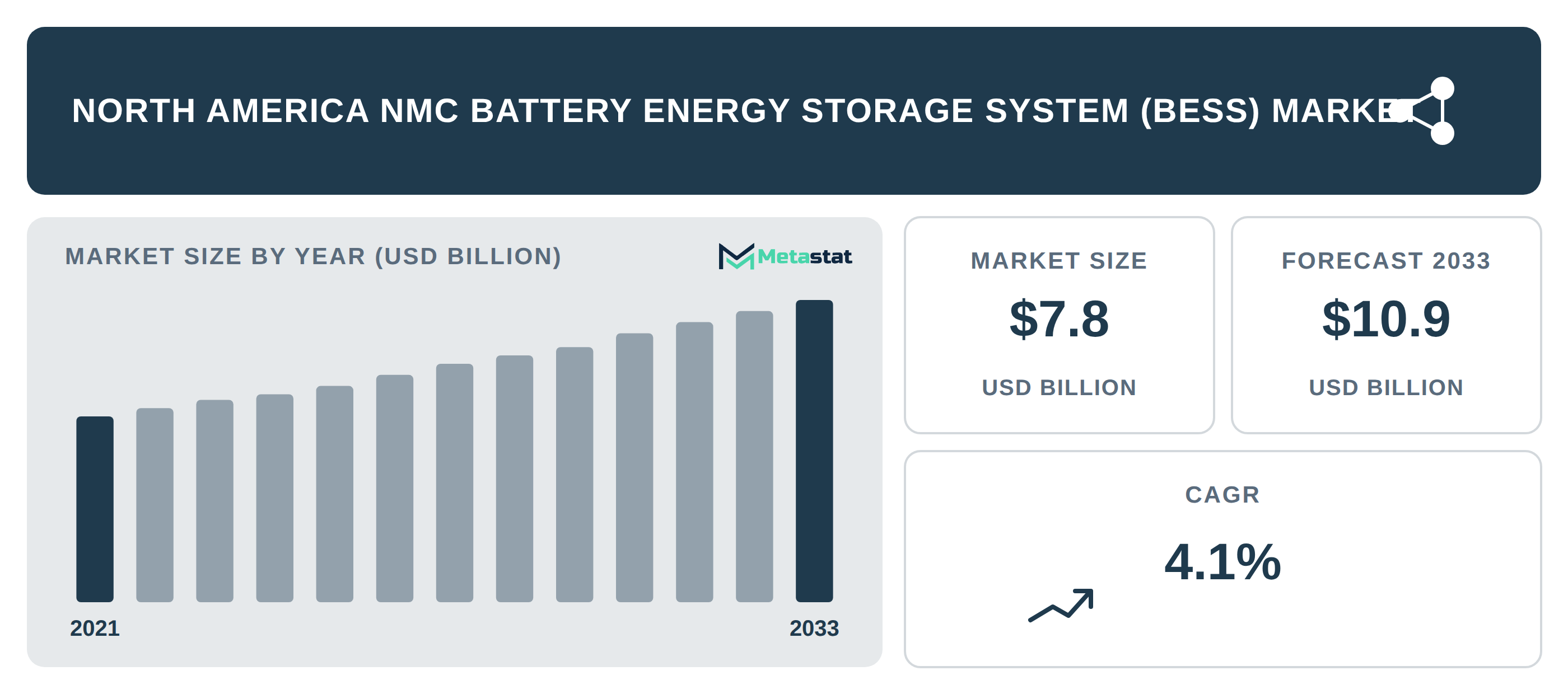
The market for North America NMC Battery Energy Storage System (BESS) is experiencing a transformation influenced by regulatory changes and technological advancements. A prevalent misconception is that rising demand directly indicates an expansion in energy storage capabilities. However, deeper insights reveal that while demand is increasing, the adoption dynamics and procurement strategies are more complex than they appear. The full figures are in our North America NMC Battery Energy Storage System (BESS) market size and forecast report.
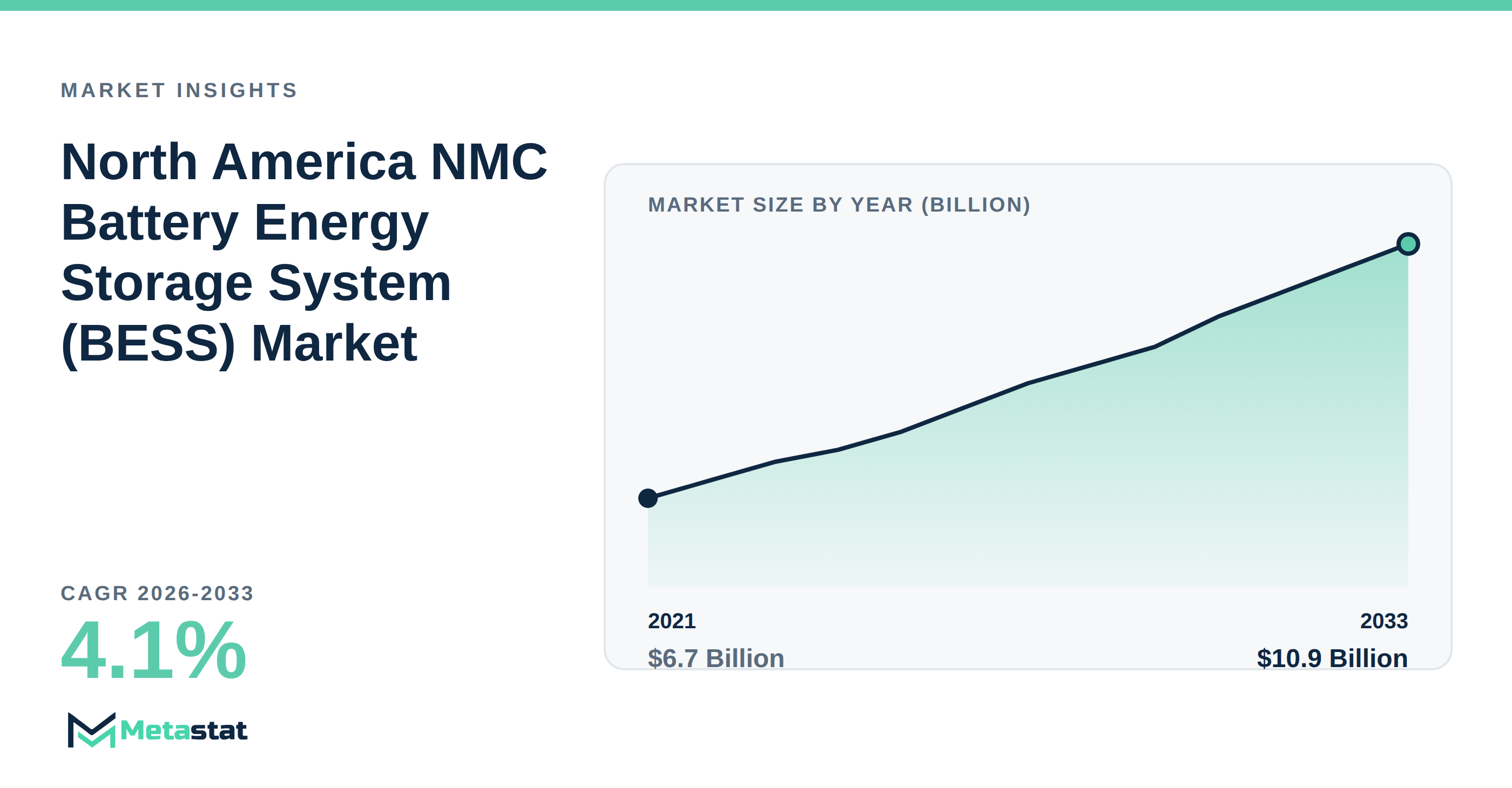
Energy storage solutions employing nickel manganese cobalt (NMC) technology are increasingly recognized as vital for enhancing grid stability and integrating renewable energy sources. Although utilities drive much of the demand, the significant financial burdens linked to high initial costs often hinder widespread adoption. Understanding the underlying factors influencing these decisions is essential for stakeholders operating within this space.
What drives demand for NMC BESS beyond simple need?
The demand for North America NMC Battery Energy Storage Systems (BESS) is not merely a function of necessity; it stems from a blend of regulatory influences and ongoing technological progress. Utilities are striving to enhance grid resilience while incorporating various renewable sources of energy. Compliance with regulatory mandates necessitates innovation, yet the rising costs associated with battery manufacturing and installation counterbalances these efforts. Utilities are shifting their procurement strategies to emphasize performance-based incentives, favoring higher-density battery configurations that optimize efficiency and minimize spatial requirements rather than solely focusing on increasing capacity.
How do technological advancements affect buyer decisions?
Advancements in battery technology, particularly concerning NMC solutions, have led to considerable enhancements in energy density and overall efficiency. These innovations capture the attention of various sectors, including utilities and commercial enterprises, that seek to maximize operational performance. Nevertheless, the challenge persists: the costs associated with advanced technologies deter investment. Stakeholders acknowledge that although these advancements are crucial, they necessitate significant financial investment. This reality compels many companies to consider more affordable alternatives or defer their investments in sophisticated storage technologies, ultimately reshaping the anticipated trajectory of the market.
What is the significance of prismatic batteries in this dynamic?
Prismatic battery designs are becoming increasingly relevant in the North American NMC Battery Energy Storage System (BESS) landscape, expected to attain a notable market value by 2033. This particular design is superior to others due to its effective use of space and enhanced energy density. Utilities and commercial sectors are gravitating towards prismatic solutions for large-scale applications. This preference reflects a wider trend towards advanced technologies that meet growing energy storage demands. The evolution of the market highlights how firms that augment their offerings with prismatic design capabilities achieve significant competitive differentiation. This strategic focus not only addresses current energy requirements but positions these companies advantageously for future developments.
What barriers to entry exist for suppliers in the BESS market?
Increasing costs related to battery materials, including lithium and cobalt, impose significant challenges for suppliers in the North America NMC Battery Energy Storage System (BESS) arena. Factors including geopolitical influences and supply chain interruptions contribute to price volatility, adversely affecting supplier profitability and delivery timelines. In response, businesses are increasingly exploring sustainable sourcing strategies, which include forming partnerships with raw material producers and investing in recycling initiatives. This commitment to sustainable practices aligns with the broader trend toward environmentally friendly solutions and may help alleviate some of the financial constraints associated with obtaining essential components for energy storage systems.
How do evolving consumer preferences shape the future of energy storage?
Consumer interest in achieving energy independence and prioritizing sustainability drives demand for efficient energy management solutions like NMC BESS. The residential segment, although demonstrating slower growth due to cautious investment strategies, shows promising upward trends as renewable energy sources, especially solar panels, become more commonplace. Regulatory incentives that focus on advancing clean energy technologies further support this segment. By understanding these shifting consumer preferences, businesses align their offerings with market needs, paving the way for growth and innovation in energy storage solutions.
The evolving landscape for North America NMC Battery Energy Storage Systems (BESS) presents a multifaceted blend of demand, technology, and regulatory pressures. Stakeholders are tasked with navigating these dynamics to make informed decisions that support growth while aligning with sustainable energy objectives.
Tags
About the Authors

LEAD ANALYST
Utkarsh Khirodkar is a Lead Market Research Analyst at MetaStat Insight, specializing in market intelligence, technology sector assessments, and competitive strategy.

PRINCIPAL CONSULTANT - ENTERPRISE AI & EMERGING TECHNOLOGIES
Banking & Finance · Electronics and Semiconductor · Energy and Power · Healthcare IT · Information & Technology · Professional Services
Vijay Gunti is a Principal Consultant at MetaStat Insight, bringing over two decades of experience across enterprise digital transformation, technology strategy, and intelligent systems.

ENERGY & INFRASTRUCTURE INDUSTRY CONSULTANT
Automotive and Transportation · Electronics and Semiconductor · Energy and Power · Machinery & Equipment
Saurabh Vasant Ganvir consults for Energy & Infrastructure Industry at MetaStat Insight, specializing in renewable energy, solar EPC, and electric vehicle (EV) infrastructure markets.