
Explore the key factors driving growth in the US Home Fragrance market and what they mean for consumers and businesses alike.
The US Home Fragrance market reflects a nuanced understanding of numerous factors that often lead to misconceptions regarding its growth trajectory. While the market shows strong upward momentum, with a projected value increasing from USD 3,273.5 million in 2025 to USD 6,476.9 million by 2033, understanding what truly drives this expansion is essential for stakeholders.
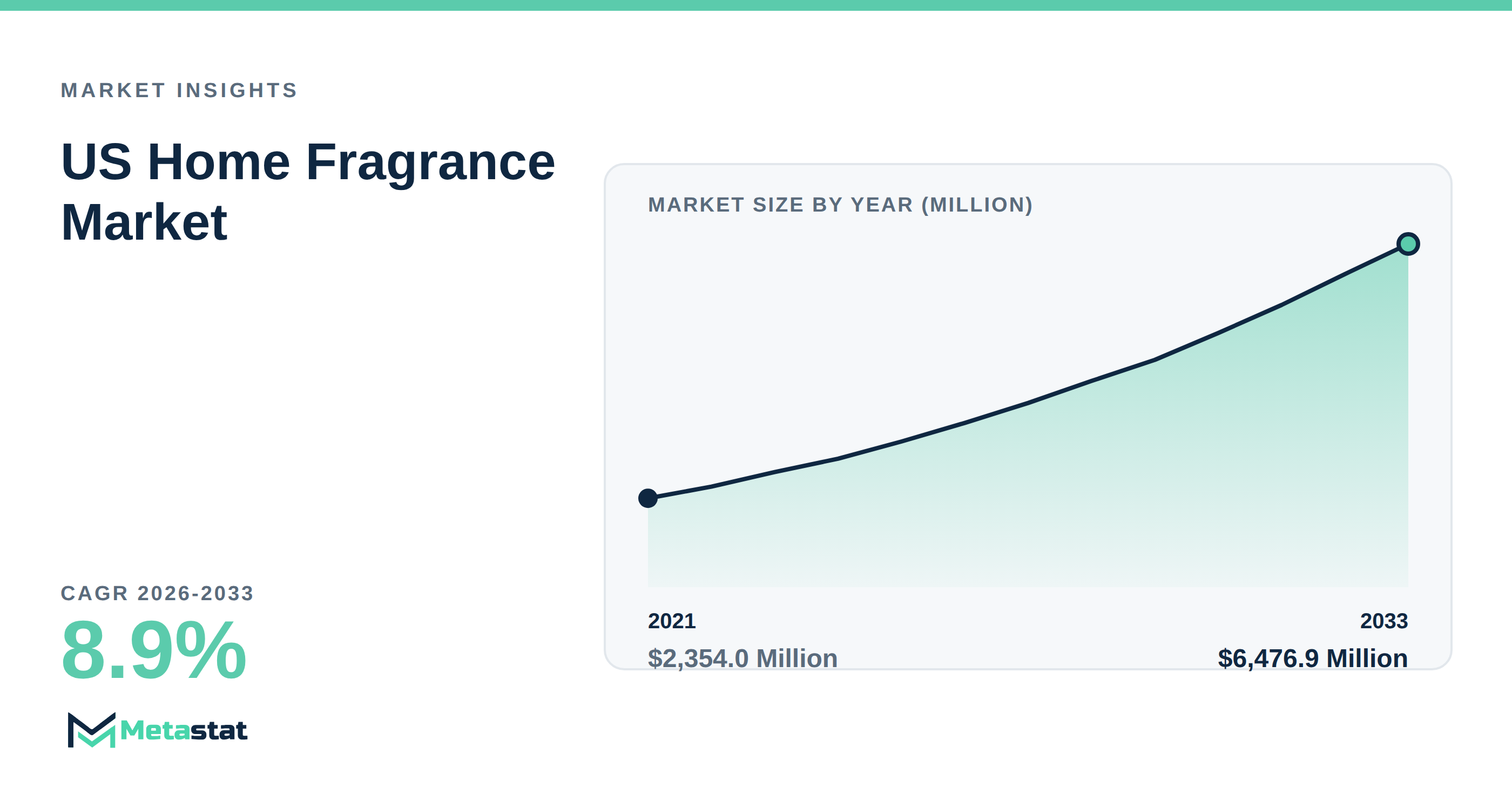
Surprisingly, many analysts focus solely on the dollar figures without examining the underlying dynamics that influence them. A significant aspect influencing demand is the shift towards enhancing home ambiance. This trend stems from a growing awareness among consumers about the significance of cultivating warm and welcoming living environments, coinciding with a heightened interest in personal well-being. Today's consumers actively seek products that contribute to a soothing atmosphere, moving beyond mere aesthetics to prioritize comfort and wellness.
What consumer behavior indicates about market growth
Consumer spending behavior highlights a growing commitment to home fragrance products, particularly in urban areas where compact living spaces demand effective ambiance solutions. Urban residents often seek products that provide both functionality and aesthetics. This dual focus has led to increased sales of innovative fragrance solutions like plug-in scented oils and electric diffusers, which now constitute 13.9% of the market share. The rise in these products illustrates a trend toward convenience that aligns with busy lifestyles.
Demographic trends reveal an aging population willing to invest in premium home fragrance items. Older consumers seek to enhance their living spaces with quality fragrances, which encourages companies to tailor their offerings to meet this demand. Younger demographics, particularly millennials and Generation Z, play a vital role, driven by their preferences for unique and personalized scent profiles. This generational shift compels companies to innovate and diversify their product lines to capture a broader audience.
Regulatory compliance presents challenges
Understanding consumer behavior is essential, but the regulatory environment surrounding the US Home Fragrance market introduces complexities that often impede growth. Stricter compliance requirements raise manufacturing costs and can inhibit innovation, making it challenging for companies to adapt quickly to changing consumer demands. This regulatory landscape not only affects cost structures but limits operational flexibility, compelling firms to navigate these hurdles while balancing product offerings with consumer expectations.
Inflationary pressures compound the strain on manufacturers. Rising costs for raw materials lead to higher retail prices, which deter consumers from investing in premium home fragrance products. These economic conditions complicate financial planning within the industry, because businesses determine pricing strategies that maintain demand without sacrificing profitability.
Technological advancements reshape the market
A notable aspect of the US Home Fragrance market's evolution stems from technological progress. Innovations including smart and connected fragrance diffusers have become key drivers of consumer engagement. These devices integrate seamlessly into smart home systems, offering features like app connectivity and programmable scent schedules that appeal to tech-savvy consumers.
This technology not only enhances the user experience but aligns with rising consumer preferences for convenience and personalization. While consumers increasingly prioritize tailored home experiences, companies invest in next-generation products that cater to these demands. Such shifts present strategic opportunities for growth, particularly for businesses willing to innovate while adhering to regulatory compliance.
Market fragmentation: navigating challenges and opportunities
The US Home Fragrance market remains fragmented, characterized by intense competition among various brands and products. This fragmentation creates both challenges and opportunities for companies seeking to establish themselves in a crowded space. A diverse range of products, from scented candles to room sprays and wax melts, caters to varying consumer preferences and enhances market penetration.
This variety complicates marketing strategies because businesses navigate diverse consumer preferences across regions. Tailored marketing approaches become essential for achieving brand positioning and outreach. Companies investing in strategic partnerships and collaborations leverage these dynamics to expand their market reach and enhance visibility.
Overall, understanding the intricacies of the US Home Fragrance market requires more than just examining dollar figures. It involves recognizing the influence of consumer behavior, regulatory compliance, technological advancements, and market fragmentation. For a more detailed exploration of these dynamics, visit the US Home Fragrance Market report.
Tags
About the Author

LEAD ANALYST
Utkarsh Khirodkar is a Lead Market Research Analyst at MetaStat Insight, specializing in market intelligence, technology sector assessments, and competitive strategy.