
Explore the complex factors driving the Egypt Automotive Lubricants market growth, from vehicle ownership to regulatory compliance and technological advancements.
The primary focus within the Egypt Automotive Lubricants market revolves around the notable growth trajectory that often misleads stakeholders regarding its underlying dynamics. The market reached a valuation of USD 614.8 million in 2025, with projections indicating an increase to USD 968.5 million by 2033, translating to a substantial compound annual growth rate (CAGR) of 5.8% over the forecast period. While these figures present an optimistic outlook, understanding the nuances behind them is essential for making informed business decisions.
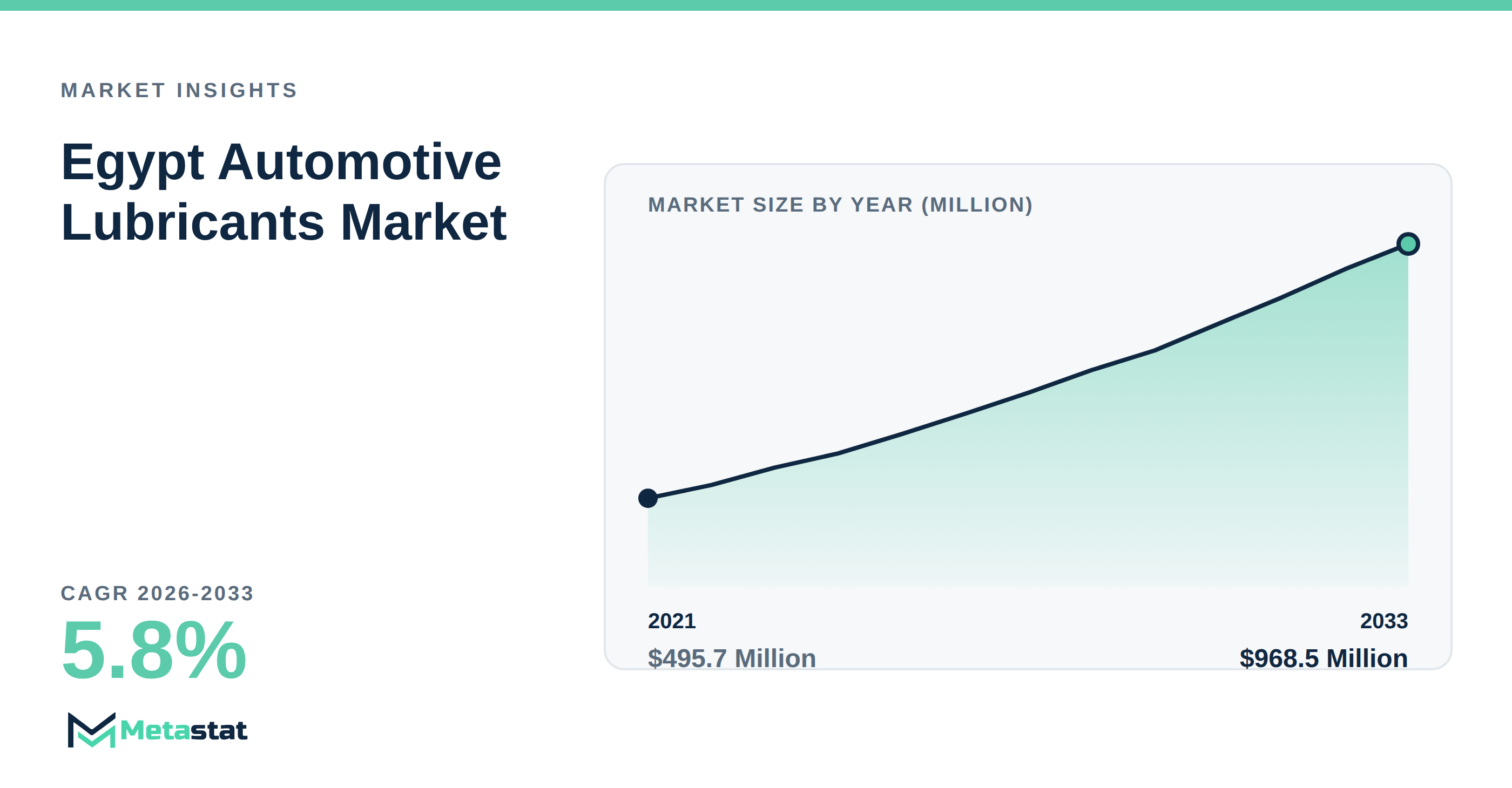
One prevalent misconception is that the market's growth solely stems from increasing vehicle ownership. While this factor plays a critical role, other elements significantly influence lubricant demand. The rapid expansion of Egypt's automotive sector is not just about more cars on the road; it reflects a shifting landscape where maintenance practices, technological advancements, and regulatory compliance converge to shape lubricant consumption patterns.
Is vehicle ownership the only driver of demand?
The prevailing notion that rising vehicle ownership is the primary driver of the Egypt Automotive Lubricants market oversimplifies a multifaceted scenario. Yes, economic growth is fostering higher disposable incomes, enabling more consumers to invest in vehicles. Yet, the impact extends beyond mere ownership. Vehicle maintenance has taken center stage, emphasizing the necessity for quality lubricants that ensure optimal functioning and efficiency.
Market research indicates that engine oils constitute a staggering 65.5% of total lubricant consumption. This statistic highlights the importance of engine performance and longevity, with vehicle owners increasingly recognizing that investing in premium lubricants pays off in the long run. The trend towards synthetic and semi-synthetic lubricants underscores consumer preferences for high-quality products aimed at enhancing performance and reducing engine wear.
How regulatory compliance shapes the market
Regulatory compliance plays a significant role in shaping the dynamics of the Egypt Automotive Lubricants market, contradicting the perspective that growth is solely about increasing vehicle numbers. Stricter regulations surrounding emissions and environmental safety require manufacturers to invest in technology and processes to meet these standards. This need for compliance often imposes significant costs, particularly on smaller firms less equipped to absorb these expenses.
The financial implications of regulatory adherence cannot be underestimated. Inflationary pressures on raw materials further complicate the market landscape, affecting pricing strategies for lubricant manufacturers. Consequently, navigating compliance costs hinders investments in innovative product development, ultimately affecting market growth.
What opportunities arise from technological advancements?
Technological advancements within the Egypt Automotive Lubricants market present substantial opportunities often overshadowed by concerns about compliance and costs. Innovations in synthetic lubricant formulation enhance performance characteristics, appealing to a growing base of consumers interested in eco-friendly alternatives. While consumers increasingly prioritize environmentally responsible options, manufacturers are prompted to invest in green technologies that not only address consumer preferences but align with regulatory requirements.
In addition, the rise of e-commerce platforms transforms purchasing behaviors, enabling consumers to access premium lubricants more conveniently. Retailers leveraging digital channels engage customers through tailored marketing, creating a more dynamic marketplace for lubricants. This digital transformation broadens market reach and presents growth opportunities for manufacturers willing to adapt.
Why understanding market segmentation is crucial
The Egypt Automotive Lubricants market is not a monolith; it encompasses diverse segments including engine oils, automatic transmission fluids, and greases, each with unique dynamics. For instance, while engine oils dominate the market, the automatic transmission fluids segment is anticipated to grow at an impressive CAGR of 8.1% during the forecast period. This escalation aligns with the rising integration of automatic transmission systems in vehicles, signifying the importance of targeted strategies across product segments.
Recognizing the distinct trends within different vehicle types, including passenger cars, light commercial vehicles, and heavy-duty trucks, allows stakeholders to tailor their approaches effectively. For example, the projected growth of lubricants in the light commercial vehicles segment at a CAGR of 6.2% highlights the expanding logistics and transportation sectors in Egypt.
Adapting strategies for sustained growth
The outlook for the Egypt Automotive Lubricants market reflects a landscape characterized by growth driven by various interconnected factors. Understanding that the trajectory of this market is influenced by more than just vehicle ownership remains essential for stakeholders aiming to capitalize on emerging opportunities. By recognizing the impact of regulatory compliance, technological advancements, and market segmentation, businesses formulate effective strategies to navigate this dynamic environment.
For a comprehensive analysis that encompasses growth trends, segmentation, and key players shaping the Egypt Automotive Lubricants market, consider exploring the full report: Egypt Automotive Lubricants Market.
Tags
About the Authors

LEAD ANALYST
Utkarsh Khirodkar is a Lead Market Research Analyst at MetaStat Insight, specializing in market intelligence, technology sector assessments, and competitive strategy.

ENERGY & INFRASTRUCTURE INDUSTRY CONSULTANT
Automotive and Transportation · Electronics and Semiconductor · Energy and Power · Machinery & Equipment
Saurabh Vasant Ganvir consults for Energy & Infrastructure Industry at MetaStat Insight, specializing in renewable energy, solar EPC, and electric vehicle (EV) infrastructure markets.