
LEAD ANALYST
Utkarsh Khirodkar is a Lead Market Research Analyst at MetaStat Insight, specializing in market intelligence, technology sector assessments, and competitive strategy.
Egypt Automotive Lubricants Market Size, Share, By Product Type (Engine Oils, Automatic Transmission Fluids, Manual Transmission & Gear Oils, Hydraulic & Power Steering Fluids, Automotive Greases), By Vehicle Type (Passenger Cars, Light Commercial Vehicles, Medium & Heavy-Duty Trucks, Buses & Coaches, Motorcycles & Three-Wheelers), By Formulation (Mineral, Semi-Synthetic / Synthetic Blend, Fully Synthetic), By Distribution Channel (OEM / Authorized Dealership & Service Networks, Branded Fuel Stations & Lube Centers, Independent Workshops & Quick-Lube Centers, Automotive Parts & Lubricant Retailers), Industry Analysis, Growth, Trends, and Forecast, 2026-2033
Report ID
MSI-5242
Published
September, 2026
Pages
272 Pages
Format
Historical
Base year
Forecast
Forecast period
Report Details
Market Valuation: Valued at $614.8 Million in 2025, projected to reach $968.5 Million by 2033 at a 5.8% CAGR.
Dominant Segment: Engine oils lead the Egypt Automotive Lubricants market, accounting for 65.5% of total consumption, driven by the increasing number of passenger and light commercial vehicles on the roads.
Geographic Lead: The growing vehicle parc in Egypt, fueled by economic growth and rising disposable incomes, significantly enhances the demand for automotive lubricants across all segments.
What's Inside: The report provides a comprehensive analysis of market segmentation by product type, vehicle type, formulation, and distribution channels, along with competitive insights and future forecasts.
Market Opportunity: Technological advancements in lubricant formulations present significant growth opportunities, particularly in synthetic and semi-synthetic products that cater to environmentally conscious consumers.
Choose Your License
Egypt Automotive Lubricants Market
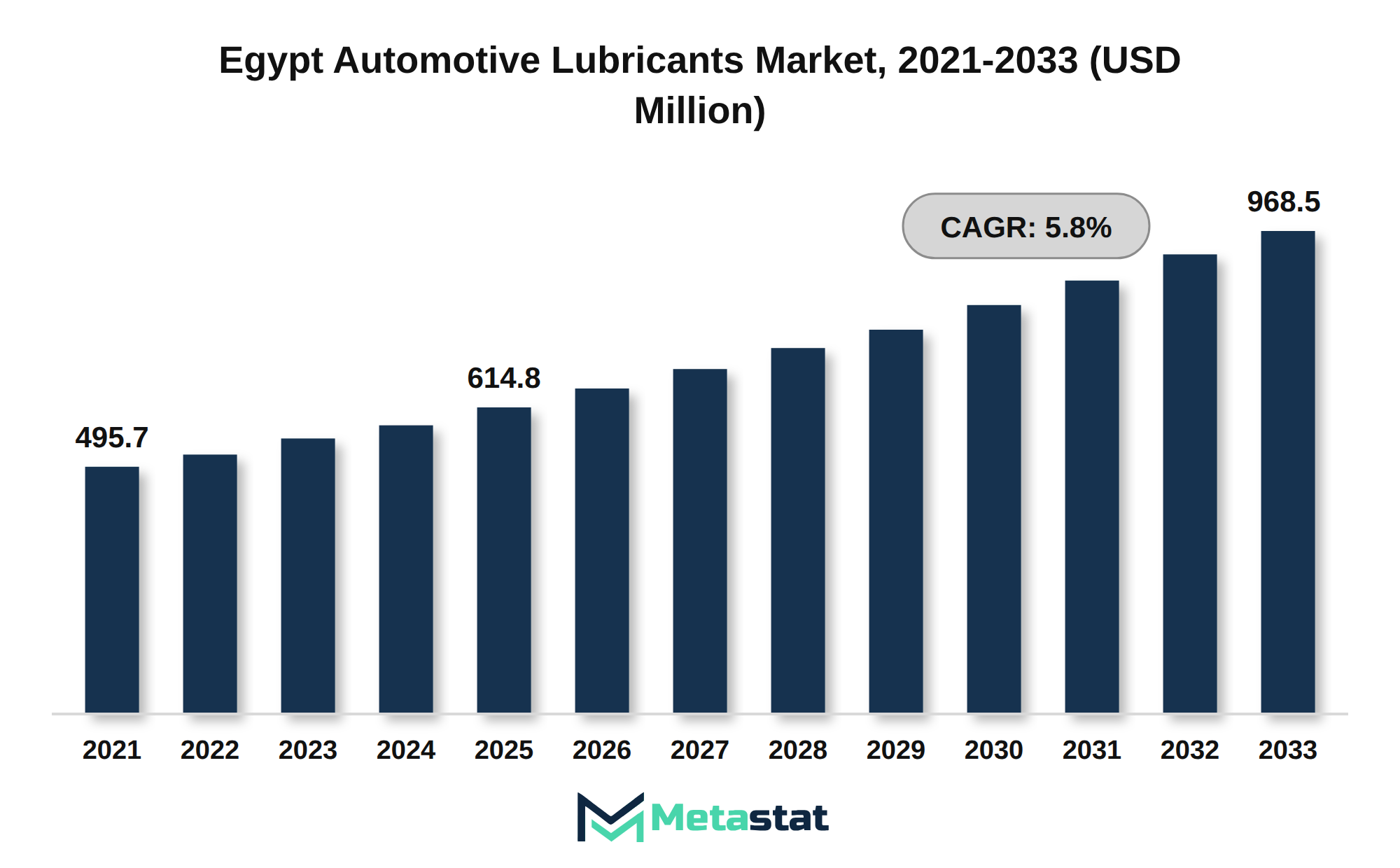
The Egypt Automotive Lubricants market was valued at USD 614.8 million in 2025 and is projected to reach USD 968.5 million by 2033, growing at a CAGR of 5.8% over the forecast period.
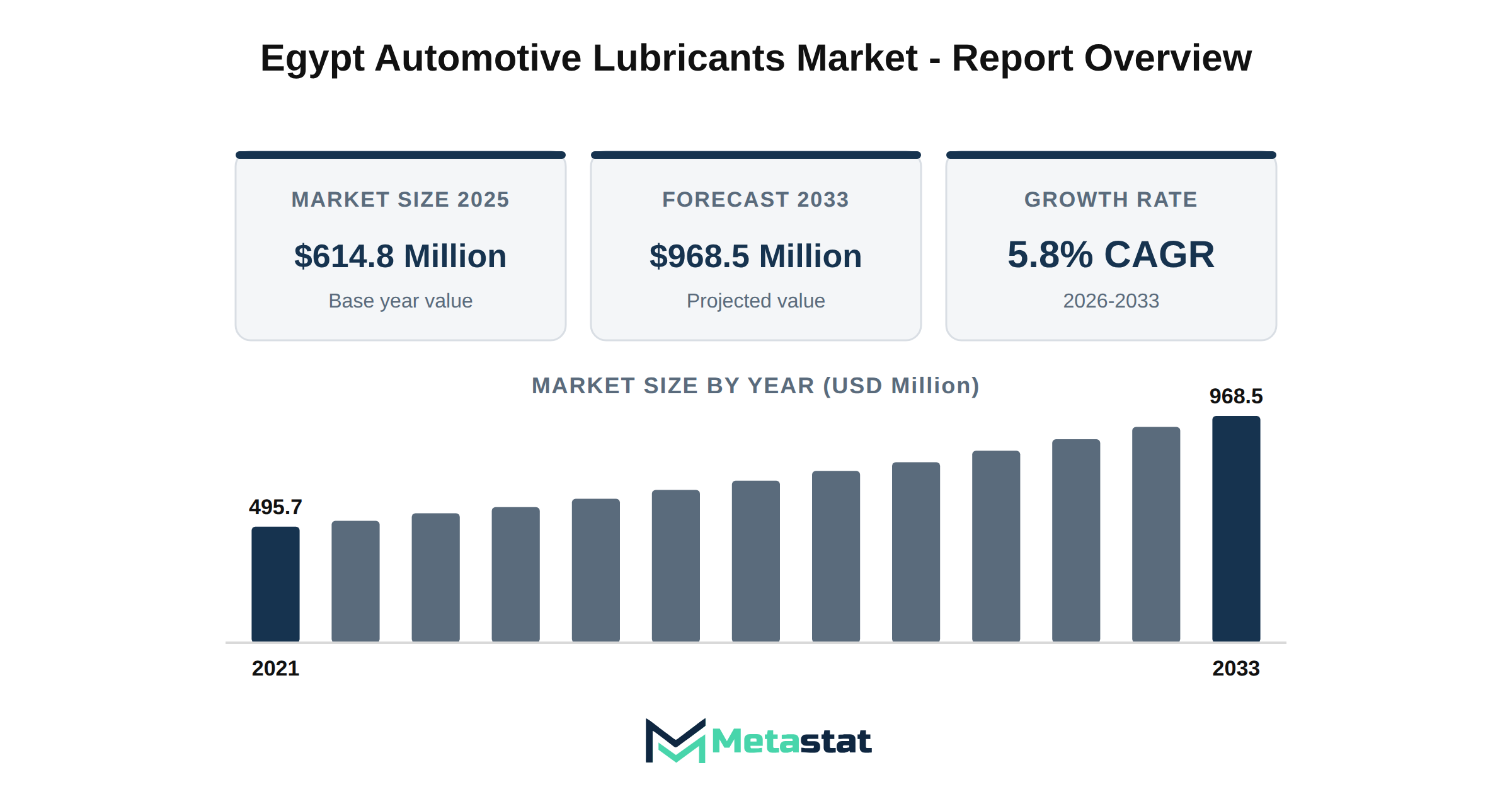
The Egypt Automotive Lubricants market reached a value of USD 614.8 million in 2025. This market is projected to grow to USD 968.5 million by 2033, representing a compound annual growth rate (CAGR) of 5.8% during the forecast period from 2026 to 2033. Historical data indicates an increase in market value from USD 495.7 million in 2021 to USD 578.9 million in 2024, indicating a consistent upward trend in demand for automotive lubricants.
Demand trends in the Egypt Automotive Lubricants market show a significant increase in engine oil consumption, driven by the expanding vehicle parc and increased usage of passenger cars and commercial vehicles. Engine oils accounted for 65.5% of the market share, highlighting their essential role in overall lubricant consumption. The growing preference for synthetic and semi-synthetic lubricants among consumers reflects a shift towards higher-quality products that offer improved performance and longer service intervals.
Passenger car lubricant demand remains robust, with expectations for continued growth attributed to the rising number of registered vehicles. The market for lubricants in light commercial vehicles is projected to grow at a CAGR of 6.2%, indicating strong demand for maintenance and fleet management solutions. Trends in commercial vehicle lubricants highlight the importance of fleet maintenance and the need for efficient lubrication solutions to enhance vehicle performance and reduce downtime.
The automotive aftermarket in Egypt experiences growth driven by independent workshops and quick-lube centers, which play a significant role in distributing automotive lubricants. These channels expand their footprint, catering to the increasing consumer preference for convenient and accessible service options. OEM and authorized service networks contribute significantly to lubricant demand, emphasizing the importance of brand loyalty and quality assurance in the selection of automotive lubricants.
Sales trends at branded fuel stations and lube centers indicate a shift towards convenience-oriented purchasing, with consumers increasingly opting for one-stop service solutions that include lubricant offerings. Pricing and premiumization trends in the automotive lubricant sector illustrate the growing willingness of consumers to invest in higher-quality products that promise enhanced performance and protection for their vehicles.
The expansion of the vehicle parc in Egypt significantly drives the demand for automotive lubricants. Increasing vehicle ownership and maintenance requirements contribute to higher lubricant consumption across various segments, particularly in passenger cars and light commercial vehicles. This trend reflects a growing awareness of the importance of regular vehicle maintenance and the optimal performance of lubricants.
Engine oil consumption trends indicate a shift toward higher-quality products, with engine oils representing 65.5% of the market share. Factors including rising fuel economy standards and the demand for improved engine performance enhance the adoption of synthetic and semi-synthetic lubricants. This shift aligns with the broader industry trend towards premiumization, where consumers prefer high-performance products despite higher price points.
Passenger car lubricant demand continues to grow, primarily driven by the increasing number of vehicles on the roads. The forecast projects passenger car lubricant consumption to reach USD 456.7 million by 2033, supported by the ongoing expansion of the automotive sector in Egypt. The rising number of passenger vehicles necessitates a robust supply of high-quality lubricants to ensure longevity and performance.
Demand for commercial vehicle lubricants reflects the growth of the logistics and transportation sectors. Fleet maintenance trends emphasize the need for reliable, high-performance lubricants to minimize downtime and enhance operational efficiency. The commercial segment captures a significant share of the market, with medium and heavy-duty trucks contributing to this growth.
The automotive aftermarket lubricants segment benefits from various growth drivers, including the increasing preference for independent workshops and quick-lube centers. These channels offer convenience and competitive pricing, appealing to consumers looking for accessible maintenance solutions. The growth of independent workshops enhances the distribution landscape, further expanding market reach.
Demand from OEM and authorized service networks remains strong, driven by established relationships and brand loyalty. These channels provide consumers with assurance regarding product quality and compatibility. The collaboration between lubricant manufacturers and OEMs ensures that vehicles receive the appropriate lubricants, contributing to optimal performance and customer satisfaction.
Sales trends at branded fuel stations and lube centers reveal an upward trajectory, with expectations for continued growth driven by consumers increasingly relying on these outlets for oil changes and routine maintenance. The strategic placement of these centers enhances accessibility and drives consumer confidence in purchasing quality lubricants.
Automotive lubricant pricing trends indicate a shift toward premium products, reflecting consumer preferences for high-performance lubricants. This trend influences market dynamics, with manufacturers focusing on innovation and product differentiation to justify higher price points. The competition among brands intensifies because companies strive to capture the evolving consumer base.
Base oil and additive supply dynamics significantly impact the overall market landscape. Local manufacturing capabilities are essential for meeting growing demand, ensuring a stable supply chain. Investments in blending capacity enhance the availability of high-quality lubricants, enabling manufacturers to respond effectively to market needs.
Egypt's automotive lubricants market experiences a degree of import dependence, necessitating a keen focus on supply chain developments. Efforts to enhance local production capacities contribute to reducing reliance on imports, ensuring better market stability.
Fuel economy standards drive the adoption of low-viscosity lubricants, promoting better fuel efficiency and reduced emissions. This regulatory landscape encourages manufacturers to innovate in formulation, leading to the development of advanced products that meet stringent performance criteria.
Innovation in synthetic engine oils continues to gain traction, with extended drain intervals becoming more prevalent among consumers. This trend aligns with the increasing demand for cost-effective maintenance solutions, allowing consumers to reduce the frequency of oil changes while maintaining vehicle performance.
The rise of electric and hybrid vehicles presents an evolving challenge for the automotive lubricants market. While traditional lubricants remain essential for internal combustion engines, the growth of alternative powertrains necessitates a reevaluation of lubricant formulations and applications.
Demand for automatic transmission fluids experiences notable growth, driven by advancements in transmission technology and increased vehicle complexity. This segment's expansion highlights the importance of specialized lubricants in ensuring smooth operation and longevity of modern vehicles.
Brand competition within the automotive lubricants market intensifies because manufacturers seek to differentiate their products. Companies leverage marketing strategies and technological advancements to strengthen their market positioning, responding to evolving consumer preferences.
Distributor and retail channel strategies play a crucial role in market dynamics. Companies prioritize relationships with distributors to enhance product availability and visibility among consumers, ensuring that quality lubricants remain accessible across various sales channels.
Procurement trends among fleet and institutional customers reflect a focus on bulk purchasing and long-term partnerships. This approach allows companies to secure favorable pricing while ensuring a consistent supply of high-quality lubricants for their fleets.
The regulatory landscape in Egypt emphasizes product quality standards, ensuring that lubricants meet established benchmarks for performance and safety. Compliance with these standards is critical for manufacturers aiming to maintain market credibility and consumer trust.
Counterfeit lubricants present significant challenges, affecting product authenticity and consumer confidence. The market faces increasing scrutiny regarding the integrity of lubricants sold through various channels, necessitating stringent measures to combat counterfeiting.
Sustainability presents opportunities within the automotive lubricants sector, with a growing interest in re-refined lubricants. This trend aligns with global efforts to enhance environmental responsibility, encouraging manufacturers to explore sustainable practices in production and distribution.
Investment in automotive lubricants capacity expansion presents significant opportunities for market participants. Strategic investments in blending facilities and distribution networks enhance the ability to meet growing demand and respond to market dynamics.
The Egypt Automotive Lubricants market outlook through 2033 remains positive, driven by the ongoing expansion of the automotive sector and evolving consumer preferences. Strategic positioning and innovation will play essential roles in shaping the future of the market.
Ongoing economic growth in Egypt contributes to an increase in vehicle ownership, enhancing the demand for automotive lubricants. Rising disposable incomes and urbanization drive consumer purchasing power, leading to greater investments in personal and commercial vehicles. This trend significantly impacts the Egypt Automotive Lubricants market, because a larger vehicle parc correlates with a heightened requirement for various lubricants. Vehicle owners prioritize maintenance and performance, resulting in consistent demand for high-quality lubricants that ensure optimal engine efficiency and durability.
The expansion of the automotive sector encourages manufacturers to innovate and diversify lubricant offerings. Companies in the market develop formulations that meet evolving consumer preferences for performance and sustainability. This shift reflects broader trends in consumer behavior, where an emphasis on long-term savings and vehicle longevity influences purchasing decisions. The market is expected to experience sustained growth driven by the combination of economic factors and shifting consumer priorities.
Infrastructure development in Egypt significantly influences the automotive lubricants market. Public and private investments in transportation, including roads, bridges, and public transit systems, support increased vehicle usage and ownership, contributing to higher lubricant consumption. Improvements in infrastructure enhance the efficiency of logistics and distribution networks, facilitating market access for lubricant suppliers. Enhanced connectivity between urban centers and rural areas supports regional trade, further stimulating demand for automotive lubricants across various vehicle types.
Infrastructure projects often lead to the modernization of existing facilities and vehicles, prompting a shift towards higher-quality lubricants that meet new performance standards. This trend drives growth in both passenger cars and commercial vehicles, increasing sales across segments within the Egypt Automotive Lubricants market. The ongoing commitment to developing transportation infrastructure ensures sustained demand for OEM-quality lubricants, reflecting positively on market expansion through 2033.
Regulatory compliance represents a significant restraint on the Egypt Automotive Lubricants market. The tightening of regulations concerning emissions and environmental safety imposes stringent standards that manufacturers meet. This compliance often necessitates substantial investment in technology and processes, diverting resources from other growth initiatives. Smaller companies face particular challenges in adapting to these regulations, resulting in a competitive disadvantage against larger firms that absorb these costs more effectively.
Inflationary pressures further complicate the situation, impacting the cost structure of lubricant production. Rising raw material costs and increased operating expenses challenge manufacturers, thereby affecting their pricing strategies. Consequently, this environment hinders investment in new product development and market expansion. Economic instability leads to fluctuations in downstream demand, creating uncertainty that impacts the entire supply chain. Such factors collectively create a challenging environment for sustained growth in the market.
Geopolitical fragmentation significantly impacts the Egypt Automotive Lubricants market, creating an environment of uncertainty and volatility. Shifts in global trade dynamics disrupt established supply chains, leading to increased tariffs and trade deficits that raise operational costs for local manufacturers. These conditions strain the ability to secure consistent feedstock and components, which are critical for lubricant production.
Volatility in feedstock prices complicates budgeting and financial forecasting for companies operating in the market, forcing them to adapt rapidly to changing conditions. Rising input costs reduce profit margins and create pricing compression, challenging companies to maintain competitive pricing without sacrificing quality. The market faces pressures from evolving legal liabilities and compliance overhead, with companies navigating a complex regulatory landscape while attempting to innovate and remain compliant.
Technological disruptions and the need for interoperability among various systems create challenges for research and development. Companies seek to implement advanced solutions but encounter difficulties integrating new technologies with existing operations. This situation leads to potential delays in product development and hampers the ability to meet consumer demands efficiently.
While the market adapts to political and economic changes, talent retention pressures and skill gaps within the workforce emerge. Automation displacements further exacerbate these issues, while companies strive to attract and retain skilled personnel capable of supporting innovative practices. The combination of these factors complicates strategic planning and impacts growth prospects in the Egypt Automotive Lubricants market.
The Egypt Automotive Lubricants market experiences a significant opportunity driven by technological disruptions in formulation and application. Innovations in synthetic and semi-synthetic lubricants enhance performance and efficiency, appealing to a growing base of environmentally conscious consumers. This shift toward advanced formulations supports manufacturers in capturing market share and establishing competitive advantages.
Digital transformation significantly shapes consumer purchasing behaviors, with online platforms facilitating easier access to automotive lubricants. The adoption of e-commerce solutions enables retailers to reach broader markets while enhancing customer engagement through tailored marketing strategies. This transition toward digital procurement channels signifies a major shift for the market, meeting the demands of increasingly tech-savvy consumers.
The emphasis on sustainability imperatives advances the market, driven by manufacturers responding to consumer preferences for eco-friendly products. Investments in green technologies and sustainable practices contribute to brand loyalty among users, particularly among younger demographics who prioritize environmental responsibility. The market's alignment with sustainability trends opens avenues for innovation and product diversification.
Strategic consolidation within the industry highlights the potential for growth through mergers and acquisitions. Companies merging forces leverage combined resources and expertise to expand their product offerings and market penetration. This consolidation creates a more resilient competitive landscape, facilitating investment in research and development, ultimately driving the evolution of products within the Egypt Automotive Lubricants market.
The Egypt Automotive Lubricants market is segmented based on Product Type, Vehicle Type, Formulation, and Distribution Channel.
Valued at USD 427 million in 2026, the Engine Oils segment is projected to reach USD 629.3 million by 2033, achieving a CAGR of 5.7% during the forecast period. This segment experiences robust demand driven by the increasing number of passenger vehicles and light commercial vehicles on the roads. Enhanced engine performance and longevity requirements further fuel the consumption of high-quality engine oils.
Technological advancements significantly shape the Engine Oils segment. The shift towards synthetic and semi-synthetic formulations reflects a growing preference among consumers for products that offer improved performance and fuel efficiency. Continuous product evolution, including the development of low-viscosity oils, addresses the need for better fuel economy and reduced emissions.
Regulatory compliance standards create a structured environment for the market, compelling manufacturers to innovate while adhering to environmental guidelines. This regulatory framework drives investment in research and development, facilitating next-generation upgrades in engine oil formulations that align with sustainability goals.
Cost structures within the segment exhibit fluctuations, influenced by raw material sourcing and pricing volatility in the global market. Strategic opportunity windows arise from the growing trend of vehicle maintenance and servicing, with consumers increasingly recognizing the importance of using high-quality lubricants for optimal vehicle performance. The focus on quality lubricants supports the segment's expansion.
The Egypt Automotive Lubricants market presents a resilient landscape for engine oil suppliers, highlighted by a diverse distribution network. OEMs, authorized dealers, and independent workshops represent key channels for market penetration, ensuring that high-quality engine oils reach consumers effectively. This structured distribution strategy enhances brand visibility and consumer trust, contributing to the segment's growth trajectory.
Growth in the Automatic Transmission Fluids segment reflects the increasing adoption of automatic transmission systems in passenger cars and light commercial vehicles within the Egypt Automotive Lubricants market. This shift results from consumer preferences for enhanced driving comfort and improved vehicle performance, leading to a segment value of USD 105.7 million by 2033, at a CAGR of 8.1% during the forecast period. Continuous advancements in transmission technology drive demand, with manufacturers focusing on formulating high-performance fluids that offer superior lubrication and protection under various operating conditions.
Increased vehicle production and sales significantly contribute to the expanding market for Automatic Transmission Fluids. Automakers emphasize efficiency and reliability, prompting the integration of advanced transmission systems, which boosts demand for specialized lubricants. This growth aligns with broader trends in the Egypt Automotive Lubricants market, benefiting from the growing emphasis on vehicle maintenance and performance optimization.
Technological maturation of lubricants enhances functionality, leading to a shift toward next-generation products that meet evolving industry standards. These innovations improve lubrication properties and address regulatory compliance standards, ensuring that products meet stringent environmental and performance criteria. Such advancements position the Automatic Transmission Fluids segment for sustained growth, enhancing its contribution to overall market dynamics.
Growth in the Manual Transmission & Gear Oils segment aligns with the increasing adoption of manual transmission vehicles in Egypt. Affordability and fuel efficiency drive this adoption, appealing to budget-conscious consumers. The market experiences heightened demand from passenger cars and light commercial vehicles, where manual transmissions remain prevalent. This segment is expected to reach USD 99.9 million by 2033.
Technological advancements in lubricant formulations enhance the performance of manual transmission oils and drive product evolution. Manufacturers focus on optimizing viscosity and thermal stability to meet evolving consumer expectations. Regulatory compliance regarding vehicle emissions and environmental standards creates pressures on suppliers to develop formulations that align with sustainability goals.
Competitive dynamics within the Egypt Automotive Lubricants market prompt ongoing innovation. Companies invest in research and development to introduce next-generation upgrades that improve energy efficiency and reduce friction. Growing awareness of the benefits of high-performance manual transmission and gear oils creates strategic opportunities for companies to capture market share.
Pricing volatility in raw materials influences cost structures across the supply chain. Suppliers face challenges in sourcing high-quality base oils and additives, impacting margins. Effective supply chain resilience strategies are essential for companies aiming to navigate these fluctuations while maintaining product quality and competitiveness.
Projected growth of the Hydraulic & Power Steering Fluids segment aligns with the overall expansion of the Egypt Automotive Lubricants market. With a CAGR of 6% anticipated during the forecast period, this segment experiences rising demand driven by factors including increased vehicle usage and advancements in automotive technology. The growing preference for vehicles equipped with power steering systems significantly enhances the consumption of hydraulic fluids.
Technological maturation and the evolution of formulations facilitate the introduction of high-performance fluids, thereby improving efficiency and operational lifespan. Manufacturers innovate and develop advanced hydraulic systems, reinforcing the segment’s growth potential. Regulatory compliance and standards further enhance the adoption of high-quality hydraulic and power steering fluids, ensuring vehicle safety and performance.
Increased focus on cost structures and pricing volatility in the automotive sector presents challenges for suppliers. However, strategic opportunity windows arise through the development of sustainable and efficient fluid formulations. The Hydraulic & Power Steering Fluids segment contributes significantly to the overall growth of the market, reflecting an increasing shift towards enhanced automotive performance and reliability.
Demand for automotive greases in the Egypt Automotive Lubricants market stems from several key factors. The expanding automotive industry in Egypt drives the need for reliable lubricants that ensure optimal performance and longevity of vehicles. Technological advancements in formulation contribute to the development of high-performance greases, enhancing their capabilities and broadening their applications across various automotive systems.
Adoption of automotive greases aligns with increased vehicle production and the growing emphasis on maintenance among vehicle owners. The rising awareness regarding the importance of regular maintenance further stimulates demand, since quality greases play a critical role in reducing wear and tear, thus improving vehicle lifespan.
Various end-use dynamics influence the market, including the increasing utilization of light commercial vehicles, which require specific formulations for different operational conditions. Regulatory compliance standards impact product development, compelling manufacturers to innovate and meet stringent quality criteria. This focus on compliance creates a competitive environment, propelling growth and evolution within the segment.
Shifts in consumption patterns reflect a growing preference for premium-grade lubricants, which highlight performance benefits. This trend positions automotive greases because vital components in ensuring the reliability and efficiency of vehicles. Strategic opportunities arise from the demand for specialized products tailored to meet the needs of different vehicle types, enhancing market potential.
The landscape for automotive greases in Egypt continues to evolve, driven by advancements in technology and changing consumer preferences. Investments in research and development are critical for companies seeking to capture emerging opportunities, ensuring that their product offerings remain relevant and technologically advanced. This focus on innovation supports sustained growth in the segment.
Valued at USD 307 million in 2026, the Passenger Cars segment is projected to reach USD 456.7 million by 2033, at a CAGR of 5.8% during the forecast period. This growth results from rising ownership of passenger vehicles in Egypt, reflecting a growing middle class with increased disposable income. Enhanced consumer awareness of the importance of using quality lubricants to extend vehicle life drives demand for high-performance automotive lubricants. Technological advancements in lubricant formulations support this trend, enabling products that provide better protection and efficiency under various driving conditions.
End-use dynamics show a strong preference for synthetic and semi-synthetic lubricants among consumers, driven by superior performance compared to conventional mineral oils. The market experiences a notable shift towards environmentally friendly products, aligning with global sustainability trends. Regulatory compliance and certifications regarding emissions and environmental impact further influence consumer choices, pushing manufacturers to innovate towards more sustainable lubricant options. Investment in marketing and education about these benefits influences consumer preferences.
Supply chain resilience remains critical, particularly in sourcing raw materials and managing logistics. Disruptive alternatives, including bio-based lubricants, present both a challenge and an opportunity for market players. Strategic opportunity windows for growth in the Egypt Automotive Lubricants market align closely with demand for passenger cars, underpinned by a robust vehicle parc and a rising trend in vehicle maintenance. Capital investment in research and development projects is essential to drive product evolution and meet emerging consumer expectations.
Increased demand for Light Commercial Vehicles in Egypt stems from the expansion of the logistics and transportation sectors. This growth translates into higher requirements for automotive lubricants tailored for these vehicles, highlighting the significance of specialized formulations in the market. The segment is estimated to reach USD 160 million by 2033, at a CAGR of 6.2% during the forecast period.
Technological advancements contribute to the evolution of lubricants designed for Light Commercial Vehicles. Enhanced product formulations improve performance and efficiency, appealing to fleet operators seeking to optimize operational costs. Continuous improvements in formulations align with industry trends emphasizing sustainability and environmental compliance, influencing purchasing decisions within this segment.
The market for automotive lubricants reflects a shift in consumer preferences toward higher performance and longer-lasting products. Increased vehicle utilization in commercial activities drives the demand for advanced lubricants, emphasizing reliability and durability. This trend enhances the competitive landscape, encouraging suppliers to innovate and differentiate their offerings in the Egypt Automotive Lubricants market.
Strategically, enhancing distribution channels plays a critical role in reaching target customers effectively. Partnerships with authorized dealerships and service networks facilitate better access to end-users, while independent workshops increasingly serve because key distribution points. The growth of the Light Commercial Vehicles segment aligns with broader trends in the Egypt Automotive Lubricants market, demonstrating resilience in the face of evolving industry dynamics.
Demand for Medium & Heavy-Duty Trucks contributes significantly to the growth of the Egypt Automotive Lubricants market. This segment is projected to reach USD 166 million by 2033, driven by an increasing focus on logistics and transportation within the region. Rising freight activities and the expansion of supply chains prompt higher lubricant consumption, reflecting a direct correlation between economic activity and lubricant demand.
Technological advancements in lubricant formulations enhance product performance for heavy-duty vehicles. Improved formulations provide better fuel efficiency and extended oil change intervals, appealing to fleet operators seeking to reduce operational costs. The segment benefits from regulatory shifts that mandate compliance with stricter emissions standards, pushing manufacturers to adopt high-performance lubricants that align with environmental regulations.
Pricing volatility in raw materials impacts the cost structures of lubricants for Medium & Heavy-Duty Trucks. Fluctuations in crude oil prices directly affect the formulation costs of base oils, creating margin pressures for manufacturers. Strategic opportunities arise from the shift toward synthetic and semi-synthetic formulations, which provide superior performance and command higher price points. This evolution in product offerings allows suppliers to differentiate themselves in the competitive environment.
The dynamics of the Medium & Heavy-Duty Trucks segment reflect broader trends in the Egypt Automotive Lubricants market, influenced by economic drivers, technological advancements, and evolving regulatory frameworks.
Growth patterns in the Buses & Coaches segment reflect increasing urbanization and the rising need for public transportation options in Egypt. Demand for lubricants tailored to this vehicle type stems from the need for reliable performance and extended service intervals. Operators focus on minimizing downtime and maintenance costs, which encourages the use of high-quality lubricants designed for heavy use.
Valued at USD 166 million in 2033, this segment is projected to grow at a CAGR of 4.6% during the forecast period. Investment in new bus fleets and coach services drives adoption, leading to heightened demand for specialized formulations that enhance engine efficiency and reduce wear. The Egypt Automotive Lubricants market stands to benefit from technological advancements in lubricant formulations, which offer improved thermal stability and protection under extreme conditions.
Efficiency in fuel consumption remains a primary concern for fleet operators, driving the evolution of formulations that optimize performance. Regulatory compliance regarding emissions and environmental impact further shapes lubricant development, encouraging the use of synthetic and semi-synthetic options. Regulatory compliance and environmental considerations shape end-use dynamics, ensuring that lubricants for buses and coaches meet both operational requirements and environmental standards.
Demand for motorcycles and three-wheelers in the Egypt Automotive Lubricants market stems from a growing preference for two-wheeled transport, particularly in urban areas. The shift towards motorcycles reflects rising fuel prices, traffic congestion, and the need for affordable mobility solutions. Consumer behavior increasingly favors motorcycles for their cost-effectiveness and convenience, influencing lubricant consumption patterns in this segment.
Technological advancements in motorcycle engines drive the demand for higher-quality lubricants designed to enhance performance and longevity. Manufacturers focus on developing specialized formulations that cater to the unique requirements of motorcycle engines. This evolution leads to increased competition among lubricant suppliers, requiring continuous innovation to meet consumer expectations.
Regulatory frameworks regarding emissions and fuel efficiency impact product formulations within the market. Compliance with strict environmental regulations drives the development of eco-friendly lubricants, promoting a shift towards sustainable consumption. Enhanced awareness of environmental issues among consumers reinforces demand for lubricants that align with these regulatory standards.
Challenges related to raw material sourcing exist, particularly fluctuations in prices, which affect cost structures and margin pressures. Companies navigate these challenges while balancing competitive pricing strategies. Suppliers that adapt quickly to market dynamics position themselves favorably against competitors, securing their market share within the broader automotive landscape.
Strategic opportunities arise from the increasing penetration of e-commerce platforms, allowing consumers easier access to lubricant products. This trend presents potential for growth in direct-to-consumer sales channels, enabling suppliers to connect with consumers more effectively. The agility of businesses in capitalizing on these opportunities shapes their competitive advantage in the market.
Valued at USD 407.7 million in 2026, the Mineral segment is projected to reach USD 547.6 million by 2033, reflecting a CAGR of 4.3% during the forecast period. Increasing vehicle ownership and maintenance practices drive the demand for mineral-based lubricants, especially among budget-conscious consumers. This formulation offers a cost-effective solution while delivering essential lubrication, making it appealing to various vehicle types.
The evolution of the automotive sector, particularly in passenger cars, boosts the adoption of mineral lubricants. These products effectively cater to the operational requirements of conventional engines, particularly in older vehicle models. The Mineral segment benefits from established supply chains, ensuring consistent availability and pricing stability, which enhances its attractiveness in a competitive market.
Technological advancements play a crucial role in the development of enhanced mineral formulations that meet specific performance standards. Improved refining processes and additive technologies enable better protection and efficiency, expanding the market's appeal. Regulatory compliance reinforces the segment's position, with standards promoting the use of lubricants that enhance fuel economy and reduce emissions.
The Egypt Automotive Lubricants market presents strategic opportunities attributed to manufacturers investing in product innovation and formulation enhancements. While consumer preferences shift towards effective and environmentally sustainable solutions, the Mineral segment adapts to meet these demands, strengthening its role in the overall market growth strategy.
Growth in the Semi-Synthetic / Synthetic Blend segment reflects a shift toward enhanced performance and efficiency in the Egypt Automotive Lubricants market. Rising consumer awareness regarding the benefits of using advanced lubricants drives significant demand increases. The segment is projected to reach USD 258.6 million by 2033, at a CAGR of 7.6% during the forecast period. Consumers increasingly favor semi-synthetic and synthetic blend products for their superior protective properties and ability to extend engine life. This trend aligns with broader market dynamics, where technological advancements in lubricant formulations contribute to enhanced vehicle performance and fuel efficiency.
Producers focus on developing next-generation products that meet stricter regulatory standards, which improves market competitiveness. Adoption of semi-synthetic lubricants aligns with the growing trend of vehicle electrification and hybrid technologies, where improved lubrication properties are critical. Continuous investments in research and development enhance formulation effectiveness, driving further growth in this segment. The market outlook indicates that strategic partnerships between lubricant manufacturers and automotive OEMs strengthen distribution channels, ensuring broader market access and increased consumer penetration.
Interest in the Fully Synthetic segment of the Egypt Automotive Lubricants market stems from its performance advantages, including higher thermal stability and improved fuel efficiency. This segment is projected to reach USD 162.3 million by 2033, driven by increased vehicle performance requirements and rising consumer awareness regarding engine protection. The shift towards high-performance lubricants aligns with trends in the automotive industry focusing on energy efficiency and sustainability.
Technological advancements in synthetic lubricants contribute to this growth. Innovations in formulation enhance oil longevity and reduce wear, appealing to both consumers and manufacturers. Advancements in synthetic lubricants encourage a transition from traditional mineral oils.
Regulatory compliance regarding emissions and fuel efficiency encourages manufacturers to explore fully synthetic options, aligning with global trends towards lower environmental impact. This regulatory landscape affects purchasing decisions, particularly among fleet operators and environmentally conscious consumers in the market.
Consumer preferences evolve, with an increasing focus on product quality and performance. Heightened demand for high-quality lubricants that meet modern performance standards drives the adoption of fully synthetic lubricants across various vehicle types, including passenger cars and light commercial vehicles.
Valued at USD 136.9 million in 2026, the OEM / Authorized Dealership & Service Networks segment is projected to reach USD 198.9 million by 2033, at a CAGR of 5.5% during the forecast period. Demand in this segment derives from the increasing focus on after-sales services and the establishment of strong relationships between manufacturers and consumers. Consumers typically prefer original equipment manufacturer (OEM) products, which enhances the segment's growth potential.
Expansion catalysts include the rising adoption of advanced vehicle technologies, which necessitate specialized lubricants. Technological maturity within the automotive lubricants landscape drives the evolution of product offerings tailored for modern vehicles. The market benefits from continuous innovations in lubricant formulations, aligning with trends toward higher efficiency and performance standards.
Strategic investments in distribution channels, particularly through authorized dealerships, strengthen customer trust. Enhanced service capabilities and technical support offered by OEM networks improve customer satisfaction, further boosting demand. Shifts in consumption patterns toward premium products emphasize the importance of quality, resulting in greater focus on high-performance lubricants.
Regulatory compliance regarding environmental standards influences product formulations, driving manufacturers to innovate while maintaining performance. Cost structures reflect the premium nature of OEM products and associated service offerings, impacting pricing strategies within the segment. Pricing volatility linked to raw material sourcing continues to challenge industry players, necessitating effective supply chain management.
The growth trajectory of the OEM / Authorized Dealership & Service Networks segment within the Egypt Automotive Lubricants market highlights opportunities for companies to capitalize on evolving consumer preferences and technological advancements. Strategic focus on quality, performance, and compliance enhances the segment's resilience and overall market positioning.
Growth in the Branded Fuel Stations & Lube Centers segment reflects increasing consumer preference for convenient, one-stop solutions for automotive maintenance. This preference drives demand for lubricants at these facilities, where customers seek products that offer convenience alongside quality. The segment is projected to reach USD 172.2 million by 2033, at a CAGR of 5.7% during the forecast period. Enhanced services and promotions at branded fuel stations attract customers, contributing to the segment's expansion within the Egypt Automotive Lubricants market.
Technological advancements in lubricant formulations drive product evolution, with consumers increasingly opting for high-performance fluids that ensure optimal vehicle performance. The adoption of next-generation lubricants aligns with the growing emphasis on vehicle longevity and efficiency. Pricing volatility and cost structures remain crucial considerations for operators within this segment. Continuous efforts to improve margins through strategic sourcing and efficient service delivery enhance the profitability of branded fuel stations and lube centers, positioning them favorably within the competitive environment of the market.
Valued at USD 297.9 million by 2033, the Independent Workshops & Quick-Lube Centers segment reflects a strategic shift in consumer preferences towards localized and convenient service options. This segment experiences growth driven by the increasing number of vehicles on the road, leading to heightened demand for regular maintenance and fluid changes. Independent workshops offer competitive pricing and personalized services, attracting customers seeking cost-effective alternatives to authorized dealerships.
Technological advancements in lubricants contribute to the market's expansion, with innovations leading to more efficient and longer-lasting products. These developments enhance the performance of lubricants used in various vehicle types, including passenger cars and light commercial vehicles. Vehicle owners prioritize maintenance, and the uptake of specialized automotive lubricants through independent workshops drives revenue within the market.
Regulatory compliance standards further influence the segment, prompting workshops to adapt to evolving regulations on environmental sustainability and emissions. These shifts prompt operators to source higher-quality lubricants that meet compliance requirements while ensuring optimal vehicle performance. Workshops investing in premium products enhance customer loyalty and expand their market share within the Egypt Automotive Lubricants market.
Retailers specializing in automotive parts and lubricants experience steady demand driven by the increasing vehicle population and growing maintenance needs among consumers. This segment is projected to grow at a CAGR of 4.4% during the forecast period. The rise of independent workshops and quick-lube centers highlights a shift toward localized service and convenience, enhancing the role of retailers in the supply chain. Strengthening relationships between manufacturers and retailers facilitates better product availability and customer access, influencing purchasing decisions in the Egypt Automotive Lubricants market. Customers seek high-quality products for their vehicles, prompting retailers to offer a diverse range of formulations, including both mineral and synthetic options. The ongoing evolution of automotive technologies necessitates that retailers stay informed about product advancements, ensuring they meet customer expectations for performance and reliability. Overall, the segment remains essential in the broader market strategy, capturing value through service excellence and tailored product offerings.
Growth in the segment encompassing fleet and institutional sales, e-commerce, and online retail reflects evolving consumer behaviors and preferences in the Egypt Automotive Lubricants market. The rising trend of online shopping has resulted in increased engagement of consumers with digital platforms, driving demand for automotive lubricants through e-commerce channels. This shift enables customers to access a broader range of products while enjoying the convenience of home delivery.
Institutional buyers, including fleet operators, require reliable and high-performance lubricants to maintain operational efficiency. The requirement for specialized lubricants tailored to the unique needs of various vehicle types supports demand within this sub-segment. While fleet management practices evolve, the focus on cost-effective solutions contributes to a preference for established lubricant brands that guarantee quality and performance.
Technological advancements in formulation and packaging enhance the appeal of lubricants sold through digital channels. The introduction of next-generation lubricants that offer improved performance characteristics aligns with the expectations of modern consumers. Regulatory compliance standards governing lubricant formulations further incentivize manufacturers to innovate and differentiate their products in the market. Strategic partnerships among lubricant manufacturers and e-commerce platforms optimize distribution channels and enhance product visibility.
Strategic opportunity windows arise owing to shifting consumer preferences towards purchasing lubricants online. The focus on convenience and accessibility allows companies to capture a wider audience, promoting growth within this sub-segment. Investments in digital marketing and robust online platforms facilitate engagement with potential buyers, enhancing overall demand in the Egypt Automotive Lubricants market.
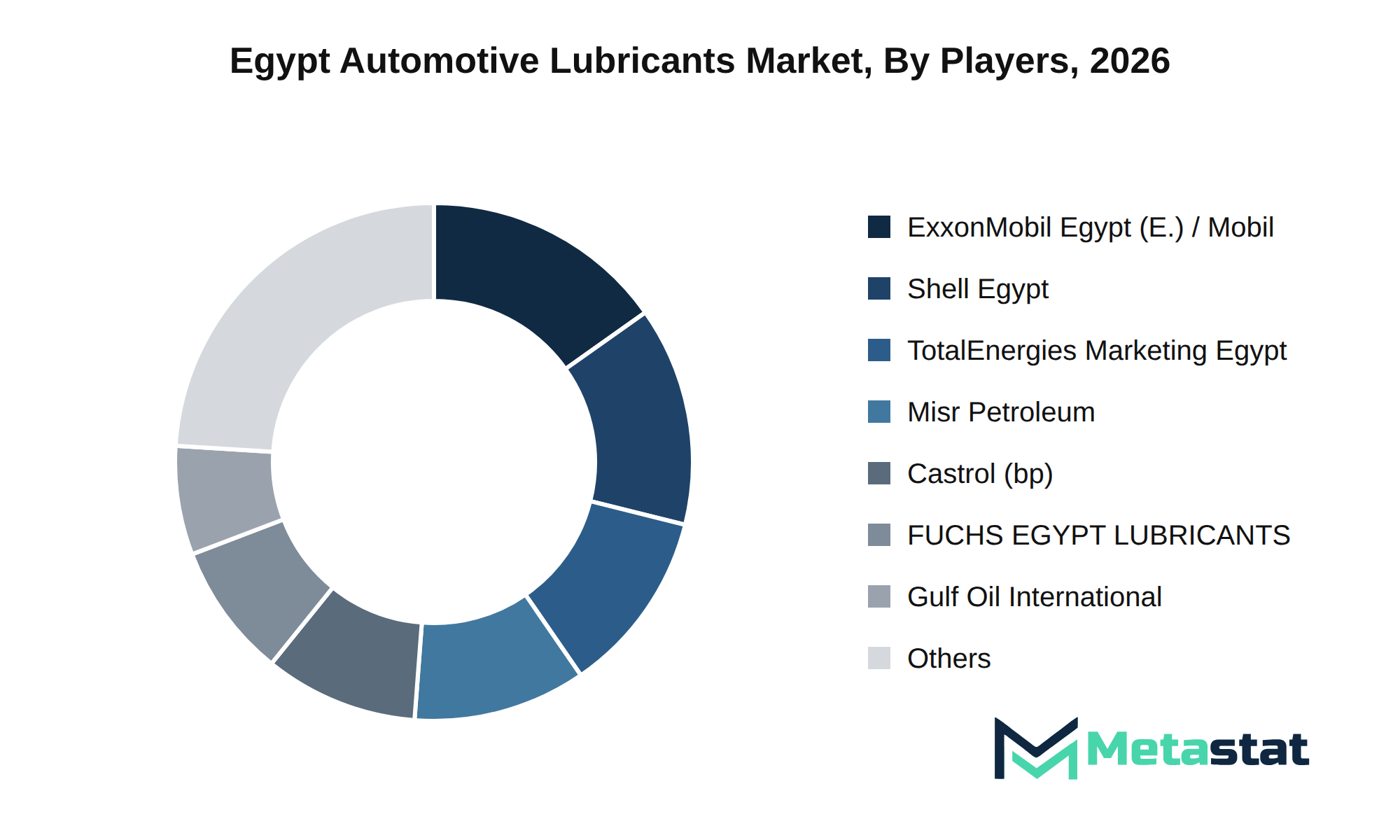
The Egypt Automotive Lubricants market features significant competition among major industry players. Companies including ExxonMobil Egypt (S.A.E.) / Mobil, Shell Egypt, TotalEnergies Marketing Egypt, and Misr Petroleum Company leverage established brand equity and extensive distribution networks to maintain market presence. Strategic alliances and partnerships enhance market reach, while product differentiation through innovative formulations builds customer loyalty.
Regional specialty formulators like FUCHS EGYPT LUBRICANTS LLC and Gulf Oil International - Egypt focus on niche markets, employing proprietary technology and R&D pipelines to develop advanced lubricants that meet specific customer needs. This emphasis on innovation supports competitive positioning against larger multinationals.
The market dynamics reflect a landscape shaped by strategic consolidation, with companies pursuing mergers and acquisitions to enhance operational capabilities and expand product offerings. The competitive outlook indicates ongoing efforts to integrate value chains, optimize procurement leverage, and respond to evolving consumer needs, thereby influencing overall market growth.
Market size is forecast to rise from USD 614.8 million in 2025 to over USD 968.5 million by 2033. The base case presents a growth trajectory at a 5.8% CAGR, reflecting ongoing trends in the Egypt Automotive Lubricants market. In a bull case scenario, increased investments in infrastructure and strategic capital allocation directives could significantly accelerate market expansion. Conversely, a bear case scenario could emerge if geopolitical realignments disrupt supply chains, impacting downstream demand and hindering growth.
The evolution of regulatory frameworks and compliance milestones influences market dynamics. With increasing emphasis on environmental standards, the integration of next-generation technologies and R&D commercialization timelines significantly shapes consumer preferences. Emerging white-space opportunities, alongside unmet enterprise needs, contribute to identifying high-growth pockets within the market.
Strategic imperatives focused on defensibility roadmaps support companies in navigating challenges. Capitalizing on infrastructure commitments and CapEx investment vectors lays the groundwork for sustainable growth in the sector. The combination of these factors will determine the future of the Egypt Automotive Lubricants market.
The report strategically identifies and profiles the key market players and analyses their core competencies in each sub-segment of the Automotive Lubricants market.
Report Attributes | Details |
Study Period | 2021-2033 |
Base Year | 2025 |
Estimated Year | 2026 |
Forecast Period | 2026-2033 |
Historical Period | 2021-2025 |
Growth Rate | CAGR 5.8% from 2026 to 2033 |
Revenue Unit | USD million |
Segmentation | By Product Type, Vehicle Type, Formulation, Distribution Channel, and Region |
Find answers to common questions about this report
The Automotive Lubricants market size in Egypt was valued at USD 614.8 million in 2025.
The Automotive Lubricants market is projected to grow at a CAGR of 5.8% during the forecast period from 2026 to 2033.
Engine Oils lead the Egypt Automotive Lubricants market with a value of USD 427 million in 2026, representing 65.5% of the total market share. This segment's dominance is based on its significant contribution to overall lubricant consumption in the region.
The key drivers for the Egypt Automotive Lubricants market include ongoing economic growth, rising disposable incomes, and urbanization, which enhance vehicle ownership and demand for lubricants. infrastructure development supports increased vehicle usage and ownership, further stimulating lubricant consumption across various vehicle types.
Regulatory compliance poses a significant restraint on the Egypt Automotive Lubricants market, because tightening emissions and environmental safety standards require substantial investment from manufacturers. Smaller companies struggle to adapt to these regulations, facing competitive disadvantages against larger firms. inflationary pressures and rising raw material costs challenge pricing strategies and hinder investment in new product development.
Ongoing economic growth in Egypt increases vehicle ownership, enhancing demand for automotive lubricants. Rising disposable incomes and urbanization drive consumer purchasing power, leading to greater investments in personal and commercial vehicles, which supports the adoption of high-quality lubricants for optimal performance and maintenance.
The Automotive Lubricants market is estimated to reach a valuation of USD 968.5 million by 2033.
Key players in the Egypt Automotive Lubricants market include ExxonMobil Egypt (S.A.E.) / Mobil, Shell Egypt, TotalEnergies Marketing Egypt, Misr Petroleum Company, Cooperation Petroleum Company (Copetrole), and Castrol (bp) - Egypt.
Light Commercial Vehicles exhibit a projected growth rate of 6.2% through 2033, reflecting increased demand driven by expanding logistics and delivery services.
Engine Oils account for 65.5% of the total market share, highlighting their dominance in lubricant consumption among various vehicle types.
The analysts below cover Automotive and Transportation research at Metastat Insights.
LEAD ANALYST
Utkarsh Khirodkar is a Lead Market Research Analyst at MetaStat Insight, specializing in market intelligence, technology sector assessments, and competitive strategy.

ENERGY & INFRASTRUCTURE INDUSTRY CONSULTANT
Automotive and Transportation · Electronics and Semiconductor · Energy and Power · Machinery & Equipment
Saurabh Vasant Ganvir consults for Energy & Infrastructure Industry at MetaStat Insight, specializing in renewable energy, solar EPC, and electric vehicle (EV) infrastructure markets.
Standard industry briefs frequently blur the operational distinctions between isobaric pressure exchangers and centrifugal turbines. In this study, MetaStat Insight categorized mega-scale desalination tenders across the GCC and Mediterranean basins by membrane replacement frequencies and salinity tolerances. Their primary research helped us evaluate local content requirements in Saudi Arabia and the UAE without relying on marketing literature. We found the segment-level equipment replacement estimates grounded and well-reasoned throughout.
The technical breakdown of ISO 20022 migration readiness across correspondent banking corridors was remarkably thorough. Rather than treating cross-border corporate payments as a single block, the report drew a useful distinction between multilateral netting platforms and domestic instant payment rails across ASEAN economies. MetaStat Insight highlighted regulatory constraints on foreign exchange liquidity management that many publications gloss over. The research material offered practical clarity for our platform development roadmap.
Our group needed clearer visibility into out-of-autoclave processing timelines for high-temperature thermoplastic composites. MetaStat Insight delivered an objective assessment that contrasted automated fiber placement scrap rates with traditional thermoset prepreg layup cycles. The supplier landscape mapped out primary resin suppliers and tape slitting capacity across France, Germany, and Japan with solid technical accuracy. Their analyst handled our questions on precursor supply risks during an unscheduled inquiry call, providing clear, unembellished context.
Explore related market intelligence reports worth reading alongside this one.