
Explore the driving factors behind the growth of the Europe Residential and Light Commercial Split Air Conditioning Systems market and the emerging trends shaping its future.
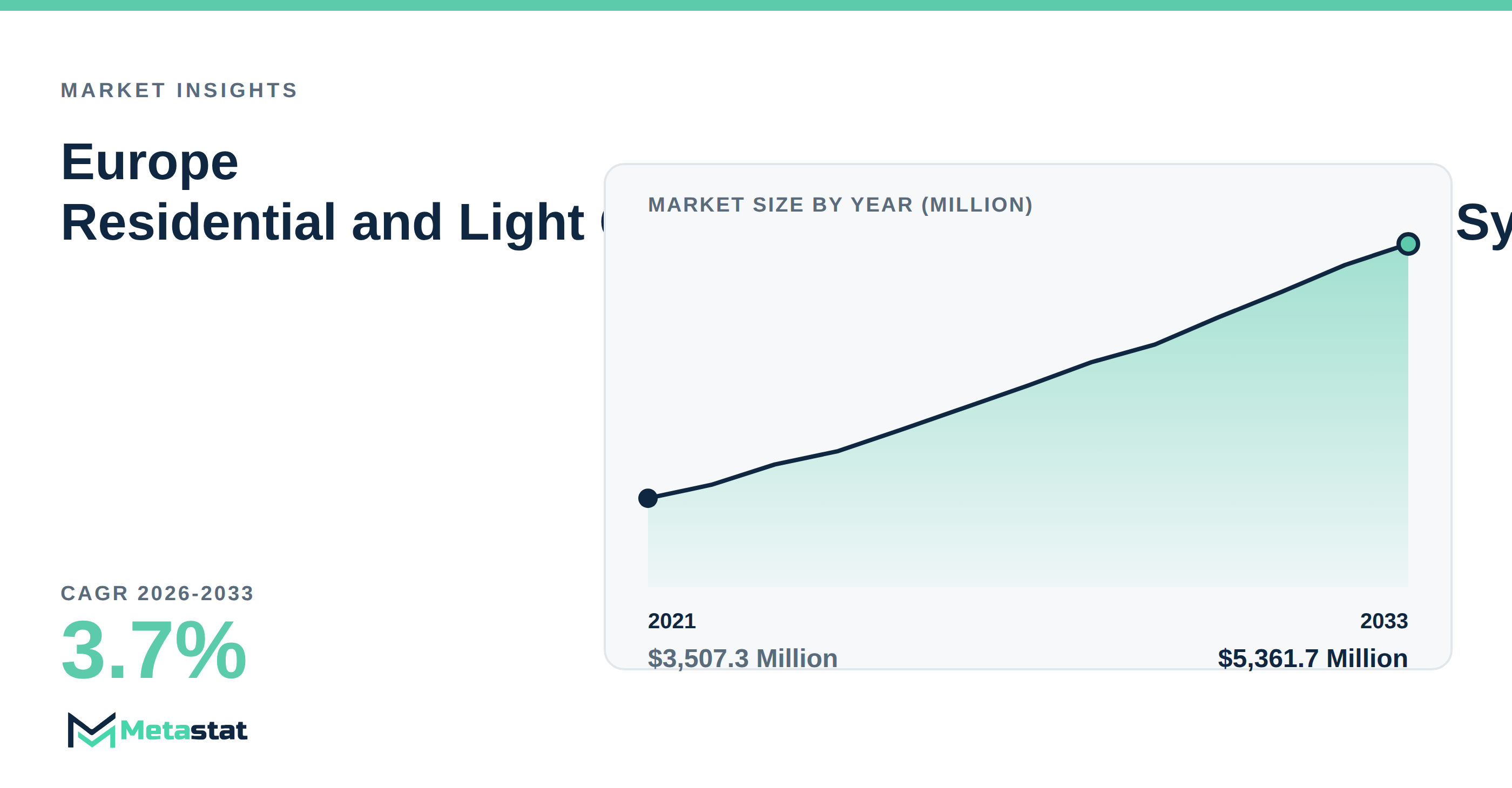
Increasing temperatures and the occurrence of heat waves create a strong demand for cooling solutions in the Europe Residential and Light Commercial Split Air Conditioning Systems market. This shift prompts investments in air conditioning systems that enhance comfort, significantly impacting both residential and commercial sectors. With the market initially assessed at USD 4,008 million in 2025, projections indicate a growth to USD 5,361.7 million by 2033, reflecting a compound annual growth rate (CAGR) of 3.7% during this period. Analyzing the elements driving this growth provides insights beneficial for industry stakeholders.
What factors are driving demand for air conditioning systems?
Rising temperatures and increasing heat waves have a considerable effect on demand for air conditioning units. Consumers prioritize effective cooling solutions, especially in peak summer months. This growing emphasis on climate control aligns with trends observed in the residential and light commercial sectors, including hospitality and healthcare facilities, where maintaining a comfortable environment is crucial. Market expansion highlights increased investments in energy-efficient cooling options, supported by heightened awareness of sustainability and operational cost savings.
The push for enhanced building insulation and retrofitting bolsters market growth. Improved energy efficiency enhances the functionality of split air conditioning systems, attracting consumers who aim to lower energy consumption. The growing preference for energy-efficient products reflects compliance with regulatory standards enforcing stricter energy efficiency guidelines, driving manufacturers toward innovation.
Which regions are leading the Europe Residential and Light Commercial Split Air Conditioning Systems market?
Northern European countries display a robust preference for energy-efficient solutions. These regions emphasize advanced technologies that provide both heating and cooling functionalities, particularly important for consumers experiencing variable temperatures. Conversely, Southern European markets tend to gravitate toward cost-effective options, indicative of regional differences in consumer behavior and economic conditions. The pricing strategy within the entry-to-mid price band demonstrates varied consumer preferences; Northern Europe seeks high-quality products with advanced features, while Southern Europe favors affordability.
Market fragmentation shapes regional dynamics, because numerous players compete for market share, which stimulates innovation and investment. Companies targeting Northern European markets focus on research and development to create solutions that cater specifically to local needs, adapting their offerings to suit distinct climatic conditions. This strategic approach enhances competitiveness and creates opportunities for growth.
What technological advancements are shaping the market?
Technological integration represents a crucial aspect of the ongoing evolution within the Europe Residential and Light Commercial Split Air Conditioning Systems market. Manufacturers increasingly adopt automation and artificial intelligence, improving system efficiency and performance. The integration of software solutions for monitoring and managing air conditioning units enhances operational precision, resulting in reduced energy consumption and lower operating costs.
Digital transformation initiatives allow companies to manage resources more effectively, utilizing data analytics and Internet of Things (IoT) technologies for predictive maintenance and proactive decision-making. This progression not only bolsters customer satisfaction but strengthens loyalty among consumers who favor energy-efficient and user-friendly solutions.
What regulatory challenges confront manufacturers?
While regulatory compliance promotes sustainable practices, it presents challenges for manufacturers. Stricter environmental standards necessitate substantial investments in advanced technologies, increasing production costs. These heightened costs frequently translate into elevated prices for consumers, potentially dampening demand. Manufacturers navigate various regulatory challenges, including adherence to energy efficiency and emissions standards, which inhibit new entrants and drive market consolidation.
Macroeconomic pressures, including inflation and currency volatility, further complicate operational strategies, influencing pricing and shifting consumer purchasing power. Supply chain disruptions, influenced by geopolitical risks, add complexity, hindering manufacturers' ability to consistently meet customer expectations.
How are companies optimizing their strategies for future growth?
Future strategies within the Europe Residential and Light Commercial Split Air Conditioning Systems market will likely center around innovation and adaptability. Companies allocating resources toward research and development, along with enhancing customer engagement, will position themselves to effectively address evolving consumer demands. Prioritizing energy efficiency and environmentally sustainable solutions resonates with increasing consumer consciousness regarding sustainability.
The focus on mergers and acquisitions offers avenues for expanding product portfolios and geographic reach, enabling companies to capture emerging opportunities within niche applications, including small healthcare facilities and educational institutions. Investment in advanced manufacturing technologies signifies the industry's commitment to sustainable transformation, contributing to the overall growth of the market.
For a comprehensive analysis of market dynamics and trends, explore the Europe Residential and Light Commercial Split Air Conditioning Systems Market.
Tags
About the Authors

LEAD ANALYST
Utkarsh Khirodkar is a Lead Market Research Analyst at MetaStat Insight, specializing in market intelligence, technology sector assessments, and competitive strategy.

INDUSTRY CONSULTANT - CHEMICALS & ADVANCED MATERIALS
Chemicals and Materials · Machinery & Equipment · Packaging
Amit Gadhekar Consultant for Chemicals and Materials at MetaStat Insight, directing sector-specific intelligence, research, and strategic consulting across global chemical and processing markets.

PRINCIPAL CONSULTANT - QUALITY SYSTEMS & COMPLIANCE
Electronics and Semiconductor · Machinery & Equipment · Professional Services
Omkar Phadtare is an Industry Consultant at MetaStat Insight, specializing in quality systems, regulatory compliance, and standards benchmarking to drive data-driven market intelligence and strategic industry research.

ENERGY & INFRASTRUCTURE INDUSTRY CONSULTANT
Automotive and Transportation · Electronics and Semiconductor · Energy and Power · Machinery & Equipment
Saurabh Vasant Ganvir consults for Energy & Infrastructure Industry at MetaStat Insight, specializing in renewable energy, solar EPC, and electric vehicle (EV) infrastructure markets.

LEAD CONSULTANT - COMMUNICATION, TELECOM, AND IT
Electronics and Semiconductor · Information & Technology · Machinery & Equipment · Professional Services
Ravindra Sathe Consultants for Communication, Telecom, and IT at MetaStat Insight. He leads the firm's industry research initiatives across telecommunications infrastructure, digital connectivity, enterprise networking, and emerging information technology domains.