
LEAD ANALYST
Utkarsh Khirodkar is a Lead Market Research Analyst at MetaStat Insight, specializing in market intelligence, technology sector assessments, and competitive strategy.

Explore the factors influencing growth differences in the USA Boutique Fitness market, from urban demand to economic challenges faced by rural studios.
The USA Boutique Fitness market exemplifies a fascinating divergence across regions, with distinct patterns emerging in growth and consumer engagement. Understanding why several areas excel while others lag provides critical insights for business owners and investors looking to optimize their strategies.
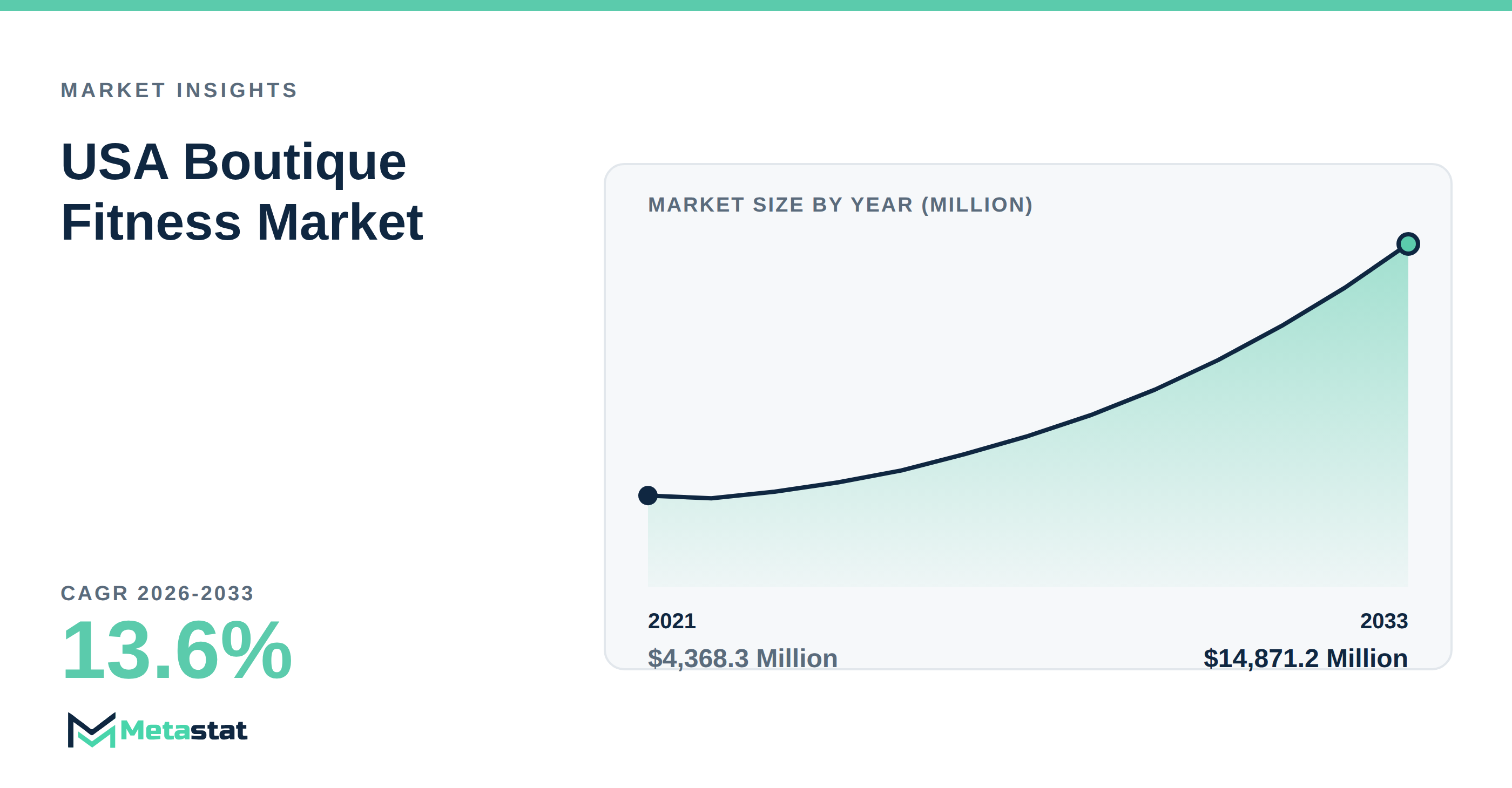
The disparity in the USA Boutique Fitness market primarily stems from demographic trends, economic conditions, and consumer behavior. Urban areas, characterized by higher population density and disposable income, fuel demand for boutique fitness studios. Cities including New York and Los Angeles lead in market growth, driven by a cultural emphasis on health and wellness. Conversely, rural regions often face slower adoption rates due to limited access to specialized fitness options and population constraints.
The consumer base in urban centers frequently seeks personalized fitness experiences, aligning with trends toward niche offerings including yoga, Pilates, and high-intensity interval training (HIIT). Studios that adapt to these preferences capture significant market shares, while those in less populated areas struggle to maintain consistent attendance and revenue streams.
Leading regions in the USA Boutique Fitness market include the Northeast and West Coast, reflecting greater consumer interest and investment. The Northeast, with its strong focus on wellness, boasts a variety of boutique fitness options that cater to diverse demographics, including women's only and co-ed studios. The West Coast follows suit, with cities like San Francisco and Los Angeles embracing innovative fitness trends, including streaming classes and tech-integrated experiences.
The Midwest and Southern regions exhibit slower growth due to traditional fitness culture dominating the landscape. Larger gym chains and low-cost fitness centers have overshadowed boutique studios, limiting market penetration. However, shifting consumer preferences toward specialized fitness experiences encourage boutique studios to start gaining traction in these areas, especially if they adopt effective marketing strategies and community engagement initiatives.
Lagging regions face unique challenges that hamper growth within the USA Boutique Fitness market. Factors including economic instability, lower disposable incomes, and cultural attitudes toward fitness significantly impact consumer participation. In these markets, studios navigate heightened price sensitivity, because membership fees for boutique studios often exceed those of traditional gyms.
Regulatory compliance presents obstacles, particularly for independently owned studios. Meeting health and safety standards diverts resources from growth initiatives, posing further challenges in attracting new clientele. In addition, competition from established gym franchises, which typically enjoy greater brand recognition, complicates market dynamics.
Understanding regional dynamics equips studio owners and investors with valuable insights to drive their strategies. In leading markets, businesses should focus on expanding their service offerings to capitalize on existing consumer interest. For example, integrating technology into fitness offerings - including mobile applications for booking classes - enhances customer engagement and retention.
In contrast, studios in lagging regions should prioritize community-building initiatives aimed at developing loyalty and trust. Collaborations with local businesses, health organizations, and influencers help raise awareness and attract a broader audience. Tailoring marketing campaigns to connect with community values and preferences facilitates the establishment of a strong local presence, ultimately driving growth.
While the USA Boutique Fitness market continues to evolve, regional insights will play a crucial role in shaping business strategies. Entrepreneurs and investors equipped with a nuanced understanding of these dynamics will be better positioned to navigate the complexities of market entry and expansion. For an in-depth analysis, consider exploring the USA Boutique Fitness Market.
Tags
LEAD ANALYST
Utkarsh Khirodkar is a Lead Market Research Analyst at MetaStat Insight, specializing in market intelligence, technology sector assessments, and competitive strategy.