
The Smart Logistics market shows significant growth potential, driven by digital transformation and automation. This blog explores the underlying factors influencing this market's future.
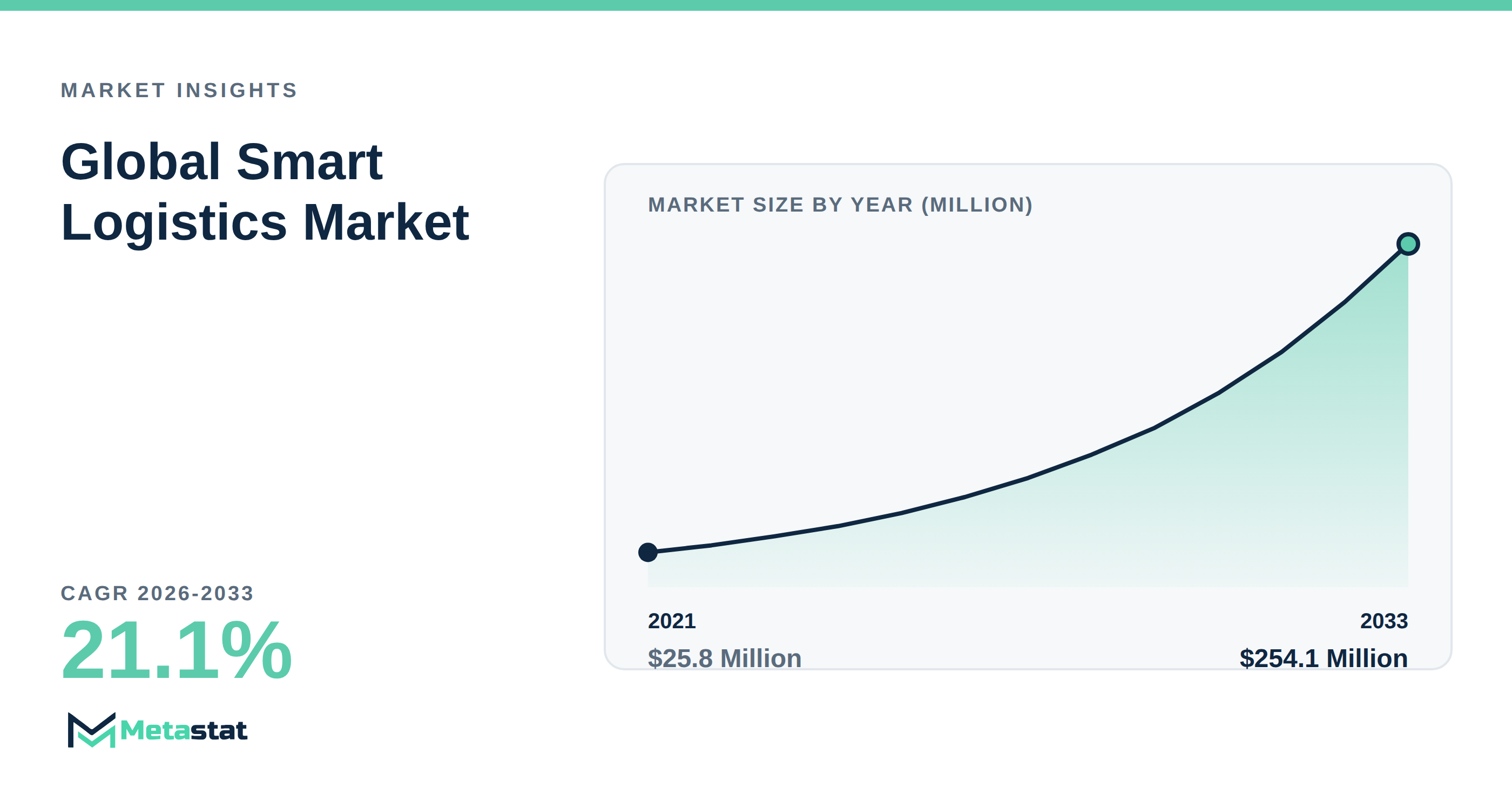
The Smart Logistics market often faces misinterpretation regarding its growth potential and the driving forces behind it. While the projected figures showcase an impressive increase from USD 54.9 million in 2025 to USD 254.1 million by 2033, it is crucial to delve deeper into the factors fueling this expansion, particularly digital transformation initiatives.
What drives growth in the Smart Logistics market?
Technological advancements form the backbone of the Smart Logistics market's growth. Organizations are increasingly adopting innovative solutions that leverage artificial intelligence (AI) and machine learning to enhance operational efficiency. These technologies facilitate improved decision-making and automation across various logistics processes. Sectors including retail and e-commerce are experiencing substantial demand for solutions that streamline operations to stay competitive. This drive for efficiency represents a fundamental shift in how businesses approach logistics.
Why do businesses invest in smart logistics?
Investment in Smart Logistics technologies is primarily driven by the need for automation and optimization in supply chain operations. Companies recognize that improved efficiency leads to better data management and operational success. With the market anticipated to reach USD 254.1 million by 2033, participation in this sector becomes crucial for firms looking to maintain a competitive edge. Retailers, in particular, are focusing on solutions that enhance order processing, inventory management, and customer engagement, directly impacting their overall performance.
How does warehouse automation influence logistics?
Warehouse automation significantly reshapes logistics networks. Automated systems reduce human error and expedite order fulfillment, especially important in the rapidly changing landscape of e-commerce, where consumer expectations for swift delivery are continually rising. Companies are investing in robotic systems and automated storage solutions to enhance operational efficiency and meet these growing demands. The implications extend beyond speed; integrating automation technologies results in substantial cost reductions and improved productivity across various sectors, including manufacturing and distribution.
What benefits does real-time supply chain visibility provide?
Real-time supply chain visibility remains essential for modern logistics operations. Organizations are implementing control towers to monitor logistics dynamics effectively, enabling proactive decision-making. The ability to track shipments and inventory levels in real time fosters better collaboration among supply chain partners, enhancing responsiveness and minimizing delays. This capability is not merely advantageous; it has become essential for companies aiming to navigate increasingly complex supply chains efficiently.
What role does IoT play in connected logistics?
The integration of the Internet of Things (IoT) serves because a significant growth driver in connected logistics solutions. By employing IoT devices, businesses gain valuable insights into asset locations and conditions, which improves inventory management while reducing losses. This technological advancement proves beneficial for sectors including transportation and logistics, where efficiency is critical. The insights derived from IoT analytics enable organizations to make informed decisions, further enhancing operational effectiveness.
How does investment in technology shape the Smart Logistics market?
Investment in technology is a vital factor influencing the Smart Logistics market. Companies leveraging advanced technologies experience enhanced data analytics that support better resource allocation and decision-making. This is particularly true in industries facing substantial competitive pressure, where operational excellence proves vital. The commitment to investing in automated solutions, AI, and cloud-based platforms drives significant market growth, with the software segment projected to attain USD 103.6 million by 2033.
In summary, comprehending the Smart Logistics market necessitates a nuanced perspective that goes beyond surface-level growth statistics. The integration of digital technologies, investment in automation, and the relentless demand for operational efficiency are shaping logistics strategies across various sectors. While organizations strive for agility and responsiveness, a focus on advanced solutions will influence future market dynamics. For more comprehensive insights and analysis, please refer to the Global Smart Logistics Market.
Tags
About the Authors

LEAD ANALYST
Utkarsh Khirodkar is a Lead Market Research Analyst at MetaStat Insight, specializing in market intelligence, technology sector assessments, and competitive strategy.

ENERGY & INFRASTRUCTURE INDUSTRY CONSULTANT
Automotive and Transportation · Electronics and Semiconductor · Energy and Power · Machinery & Equipment
Saurabh Vasant Ganvir consults for Energy & Infrastructure Industry at MetaStat Insight, specializing in renewable energy, solar EPC, and electric vehicle (EV) infrastructure markets.