
LEAD ANALYST
Utkarsh Khirodkar is a Lead Market Research Analyst at MetaStat Insight, specializing in market intelligence, technology sector assessments, and competitive strategy.

Explore the essential drivers of the Meat Analogue market, focusing on consumer trends, innovation, and retail channel dynamics shaping this industry.
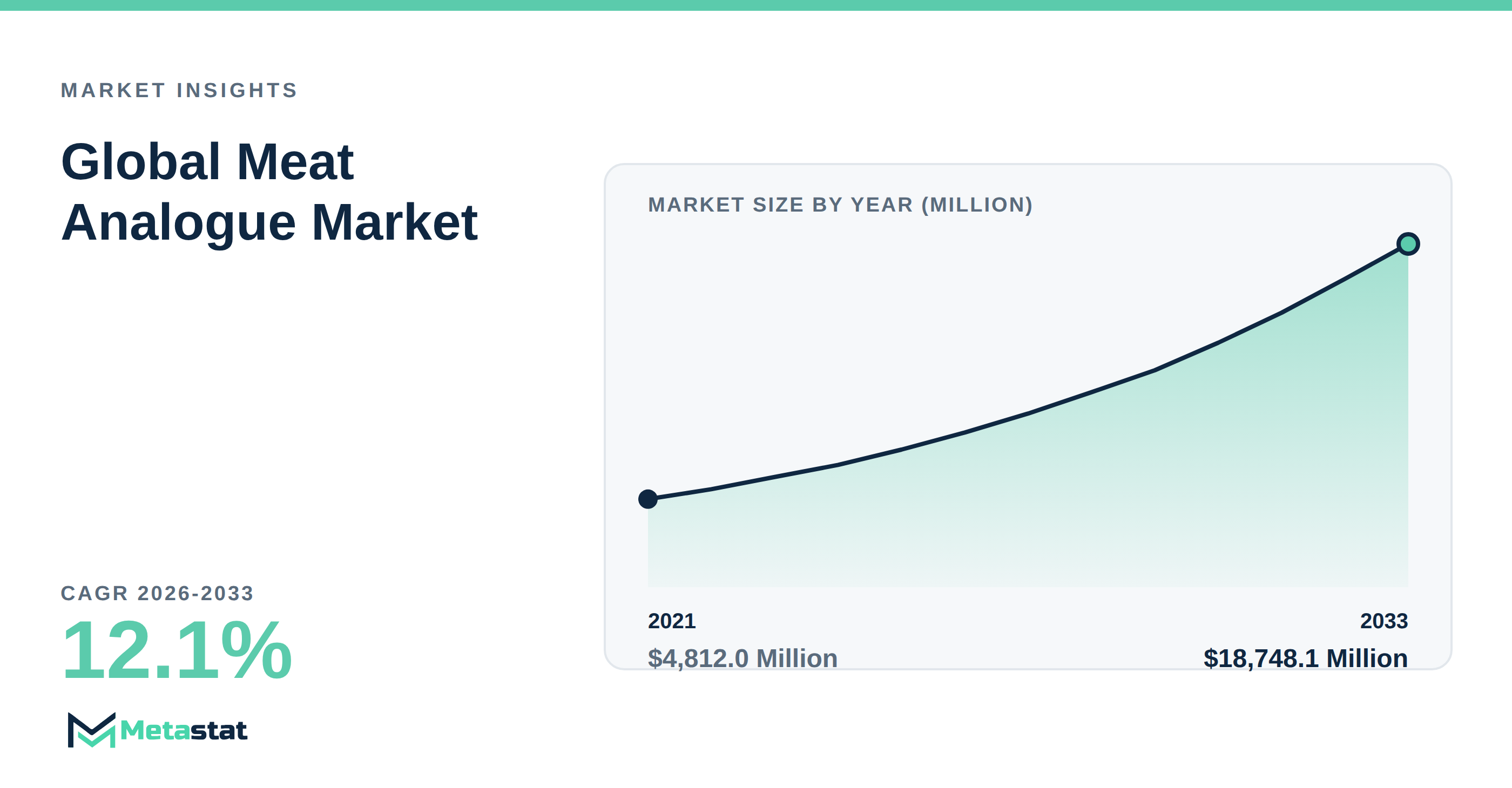
The global Meat Analogue market stands at a significant crossroads, experiencing substantial growth due to shifting consumer preferences and increasing demand for plant-based alternatives. Valued at USD 7,515.9 million in 2025, this market is expected to climb to USD 18,748.1 million by 2033, reflecting a notable compound annual growth rate of 12.1%.
One common misconception about the Meat Analogue market is that its expansion stems solely from health concerns. While health consciousness contributes to this growth, ethical and environmental considerations are equally influential in shaping consumer choices. Younger generations, particularly millennials and Gen Z, emphasize sustainability and ethical sourcing because critical components of their food purchasing decisions. This demographic shift has prompted manufacturers to innovate product offerings to align with these evolving consumer values.
Historically, the meat industry relied on products derived from animal sources. However, the rise of flexitarian diets - where consumers incorporate more plant-based foods without completely eliminating meat - has paved the way for increased interest in meat analogue products. This flexibility encourages a diverse consumer base to explore alternatives, driving demand and motivating brands to enhance the quality and variety within their offerings.
Innovation significantly influences the development of meat analogue products, reshaping perceptions of plant-based alternatives. Manufacturers are exploring various protein sources, including soy, wheat, pea, mycoprotein, and mycelium, to improve the appeal of meat substitutes. Enhancements in taste, texture, and nutritional value of product formulations are critical to meeting rising consumer expectations.
Soy protein continues to be a leading choice, owing to its nutritional benefits and widespread acceptance among consumers. Meanwhile, alternatives like mycoprotein and mycelium are gaining popularity because viable options catering to health-conscious consumers searching for innovative products. This ongoing innovation allows brands to diversify their offerings while reaching various dietary preferences and restrictions.
A significant trend impacting the Meat Analogue market is the increasing consumer preference for clean-label formulations. More shoppers prioritize transparency in ingredient sourcing and processing, actively seeking products that contain fewer additives and preservatives. Responding to this demand, companies are reformulating their products to reflect simplicity and authenticity, thereby building consumer trust.
While the demand for clean-label products escalates, manufacturers face challenges in balancing quality, pricing, and transparency. Achieving clean-label status strengthens brand loyalty and positions companies favorably amid a competitive market where consumer perception increasingly favors sustainable and ethically sourced goods.
Retail channels play a pivotal role in the growth trajectory of the Meat Analogue market, with supermarkets and hypermarkets leading distribution efforts. The surge in online retail channels facilitates direct-to-consumer sales, accommodating evolving shopping behaviors among consumers. Companies that enhance product visibility and accessibility through retail expansion are well-positioned to engage a growing customer base.
Incorporation of meat analogue products within the foodservice industry generates additional growth opportunities, because restaurants and cafes incorporate these alternatives into their menus. This trend caters to an expanding audience of health-conscious diners seeking options aligning with their dietary preferences, further driving market demand.
Despite the positive growth outlook, the Meat Analogue market is not without its challenges. Regulatory compliance concerning food safety and labeling imposes significant costs, which hinder innovation. Rising inflation affecting raw materials and labor influences profit margins, complicating production processes for manufacturers.
Geopolitical factors and supply chain disruptions introduce uncertainties that companies navigate to ensure efficient sourcing of ingredients. Addressing these challenges is essential for market participants aiming to sustain growth and adapt to an evolving landscape.
Ultimately, the Meat Analogue market thrives on a confluence of factors, including changing consumer preferences, innovative product development, and retail expansion. The interaction of these elements shapes the future of the market, encouraging companies to invest in quality, transparency, and sustainability to capture the growing demand for plant-based alternatives. The evolution of consumer behavior indicates a deep-seated interest in healthier, sustainable food options that challenge traditional meat consumption, with broad implications for the industry. For further insights and detailed analysis, the Global Meat Analogue Market report provides comprehensive coverage of market trends and forecasts.
Tags
LEAD ANALYST
Utkarsh Khirodkar is a Lead Market Research Analyst at MetaStat Insight, specializing in market intelligence, technology sector assessments, and competitive strategy.

LEAD PRINCIPAL ANALYST, PHARMA AND HEALTHCARE
Food and Beverages · Healthcare · Healthcare IT · Medical Devices
Ajay Devgire is the Lead Healthcare Analyst at MetaStat Insight, leading strategic research and market intelligence initiatives across the global healthcare domain.

SENIOR RESEARCH ANALYST
Biotechnology · Food and Beverages · Medical Devices · Packaging
Snehal Pasalkar is a Research Analyst at MetaStat Insight, operating at the intersection of life sciences research, competitive strategy, and market intelligence.