
Discover the factors propelling the growth of multi-turn electric actuators, the leading segment in the Smart Electric Actuator market. Understand its advantages and industry applications.
Multi-turn electric actuators are emerging because the leading segment within the Smart Electric Actuator market, projected to increase from USD 3,484.6 million in 2025 to USD 5,514 million by 2033, demonstrating a compound annual growth rate (CAGR) of 5.9% during the forecast period. This growth stems from the rising demand for precision and advanced automation across various sectors, including oil and gas, power generation, and water management.
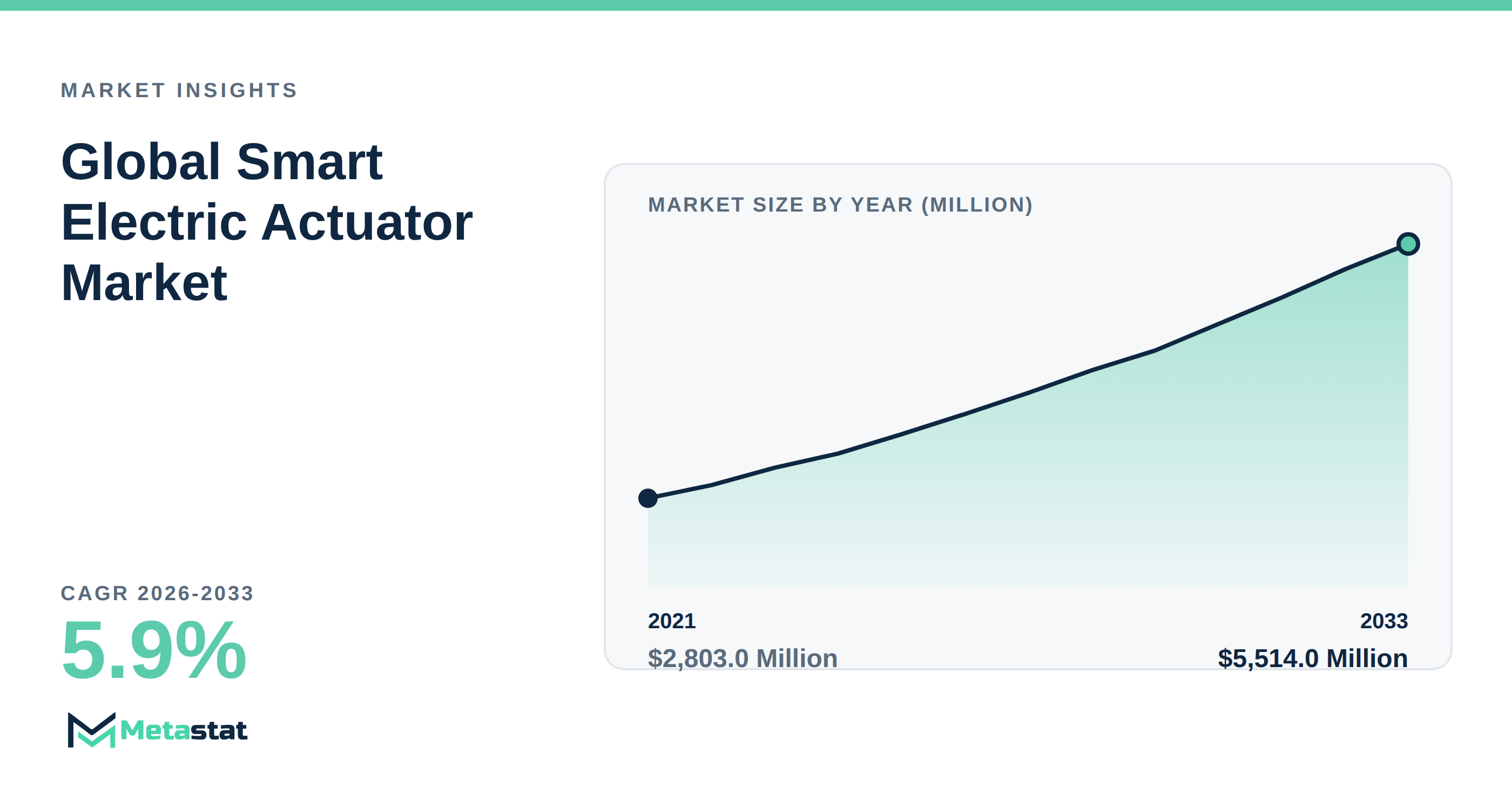
In 2026, the multi-turn electric actuators segment is valued at USD 1,473.3 million and is expected to climb to USD 2,085.4 million by 2033, indicating a CAGR of 5.1%. This remarkable trajectory aligns with industrial trends focused on operational efficiency and reliability. Multi-turn actuators excel in complex applications requiring precise control over rotational and linear movements.
The demand for multi-turn electric actuators is driven by advancements in automation technologies that enable precise control and process monitoring. Industries increasingly integrate these actuators into their operations, providing enhanced performance and reliability crucial for sectors that depend heavily on precise operational control, particularly in oil and gas exploration and production.
Regulatory compliance standards necessitate the adoption of dependable and efficient actuation systems. These standards compel industries to upgrade their control systems, further boosting the growth of multi-turn electric actuators. Their ability to integrate seamlessly with modern control systems enables real-time monitoring and operational adjustments, essential for compliance with environmental and safety regulations.
The versatility of multi-turn actuators significantly contributes to their market dominance. Enhanced functionalities, including remote monitoring and embedded diagnostics, allow for predictive maintenance capabilities. These features effectively minimize downtime, making them appealing to industries committed to maximizing productivity while controlling operational costs.
Rising investments in infrastructure development, particularly in emerging economies, drive industries to seek automation solutions that not only fulfill operational demands but align with sustainability initiatives. The transition from traditional pneumatic systems to electric actuation reflects a broader industry trend toward innovative and efficient solutions that help reduce carbon emissions.
The increasing adoption of industrial IoT technologies significantly enhances the demand for multi-turn electric actuators. Integration with IoT frameworks improves monitoring and control functionalities, further elevating operational capabilities. This innovative approach positions multi-turn actuators because highly sought-after components in the Smart Electric Actuator market.
While the multi-turn segment leads the Smart Electric Actuator market, high initial investment costs pose challenges to broader adoption. These substantial upfront costs associated with purchasing and installing advanced systems limit entry for smaller players and constrain the growth of existing firms, especially in developing regions.
Ultimately, the multi-turn electric actuators segment is critical to the Smart Electric Actuator market, influenced by the need for enhanced precision and operational efficiency across various industries. While technology continues to advance, this segment is expected to sustain its growth trajectory, establishing itself because a pivotal component in the market landscape. Businesses aiming to optimize their operations should consider integrating multi-turn electric actuators into their automation strategies to achieve long-term growth and sustainable operational practices.
The full analysis is in Global Smart Electric Actuator Market.
Tags
About the Authors

LEAD ANALYST
Utkarsh Khirodkar is a Lead Market Research Analyst at MetaStat Insight, specializing in market intelligence, technology sector assessments, and competitive strategy.

INDUSTRY CONSULTANT - CHEMICALS & ADVANCED MATERIALS
Chemicals and Materials · Machinery & Equipment · Packaging
Amit Gadhekar Consultant for Chemicals and Materials at MetaStat Insight, directing sector-specific intelligence, research, and strategic consulting across global chemical and processing markets.

PRINCIPAL CONSULTANT - QUALITY SYSTEMS & COMPLIANCE
Electronics and Semiconductor · Machinery & Equipment · Professional Services
Omkar Phadtare is an Industry Consultant at MetaStat Insight, specializing in quality systems, regulatory compliance, and standards benchmarking to drive data-driven market intelligence and strategic industry research.

ENERGY & INFRASTRUCTURE INDUSTRY CONSULTANT
Automotive and Transportation · Electronics and Semiconductor · Energy and Power · Machinery & Equipment
Saurabh Vasant Ganvir consults for Energy & Infrastructure Industry at MetaStat Insight, specializing in renewable energy, solar EPC, and electric vehicle (EV) infrastructure markets.

LEAD CONSULTANT - COMMUNICATION, TELECOM, AND IT
Electronics and Semiconductor · Information & Technology · Machinery & Equipment · Professional Services
Ravindra Sathe Consultants for Communication, Telecom, and IT at MetaStat Insight. He leads the firm's industry research initiatives across telecommunications infrastructure, digital connectivity, enterprise networking, and emerging information technology domains.