
The India Battery Energy Storage System outlook reveals significant changes driven by technology, policy, and market dynamics. Stakeholders should stay informed to capitalize on upcoming trends.
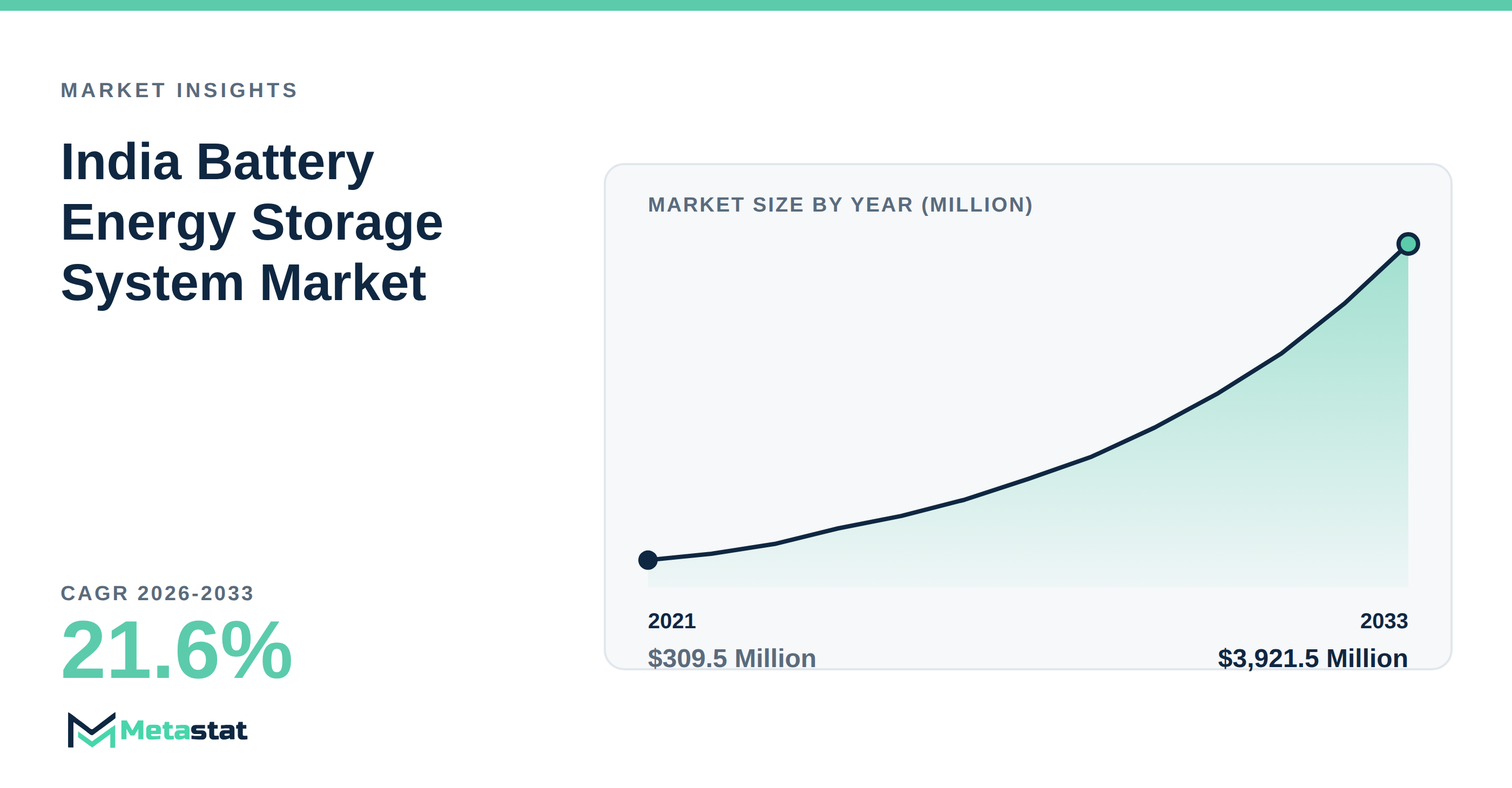
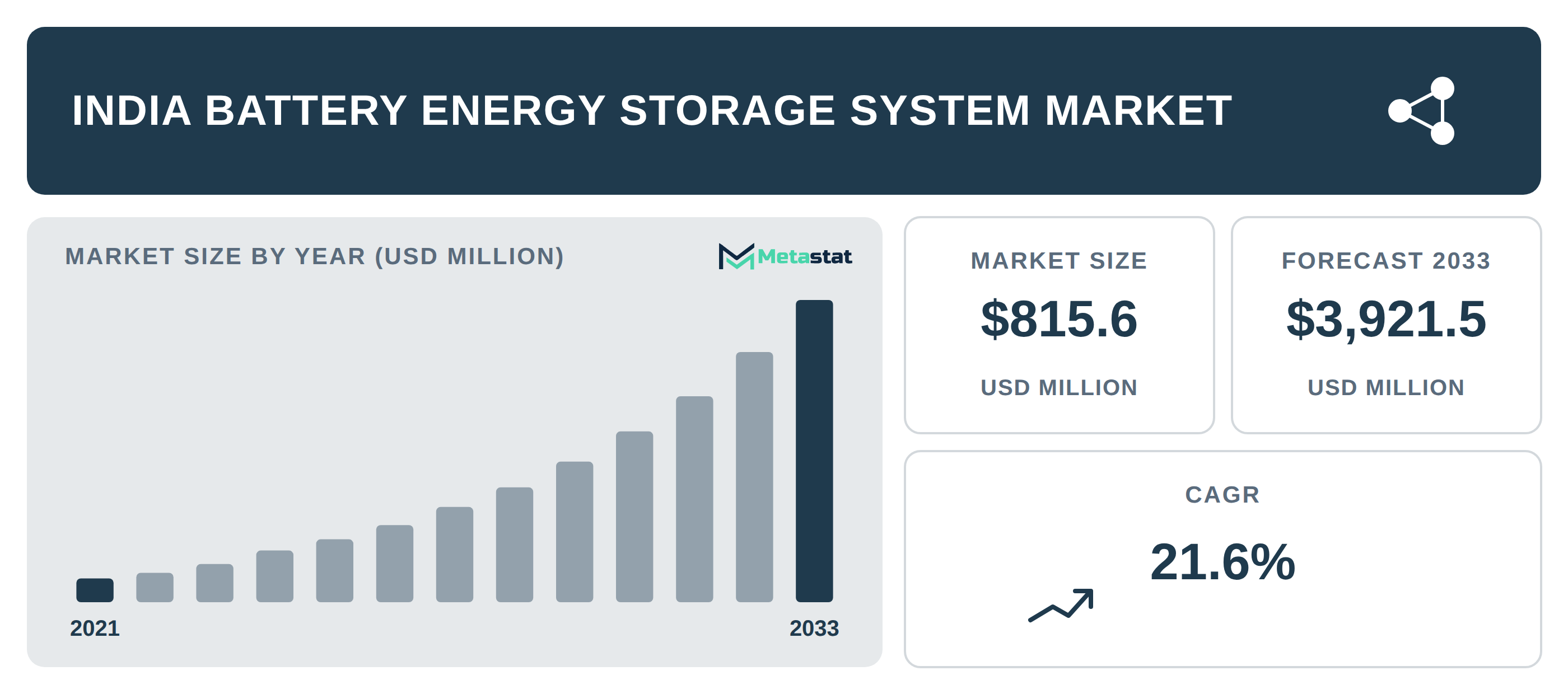
The landscape of the India Battery Energy Storage System is poised for transformation as we approach 2033. Advancements in technology, shifting consumer demands, and regulatory support will significantly affect how energy storage solutions align with the country’s energy landscape. These developments aim to enhance the efficiency and reliability of energy systems across diverse sectors. The full figures are in our India Battery Energy Storage System market size and forecast report.
How will lithium-ion technology drive change?
Lithium-ion batteries are projected to dominate the market for India Battery Energy Storage System applications. This trend is fueled by their increased energy density and declining costs, positioning them as a viable alternative to traditional battery technologies like lead acid. By the end of the forecast period, the segment for lithium-ion batteries is expected to achieve a value of USD 2,958.7 million, with a strong growth rate of 22.3%. Stakeholders in residential, commercial, and utility sectors should keep a close watch on advancements in this technology, as enhancements in efficiency and performance will directly impact adoption rates.
What role will policy play in shaping the market?
Government initiatives, including viability gap funding (VGF), play a critical role in addressing financial barriers for battery storage solution providers. This funding helps bridge the gap between project costs and anticipated financial returns, encouraging investment in battery storage technologies. Tenders that favor long-term contracts attract more participants and stabilize pricing, appealing to end-users. Stakeholders should closely monitor ongoing policy developments that support battery storage deployment, as these will significantly influence project viability throughout the forecast period.
What is the significance of utility-scale applications?
Utility-scale applications for battery storage present a substantial growth opportunity in the market. This segment is anticipated to achieve a value of USD 2,752.8 million by 2033, driven by the rising demand for renewable energy integration and the need for grid stability. Utilities are increasingly leveraging battery storage systems to effectively manage peak loads and accommodate fluctuations in energy supply and demand. With the growing focus on clean energy solutions, participants in this segment should prepare for expanded infrastructure and increased investments, which will shape the future of energy storage in India.
How will falling costs affect buyer behaviors?
The ongoing reduction in battery cell prices directly enhances accessibility for buyers across various segments. While rising input costs present challenges for manufacturers and suppliers, the overall trend remains favorable for buyers looking to invest in energy storage solutions. While prices decrease, both residential and commercial users are more inclined to make these investments, achieving long-term savings and improved energy management. Monitoring trends in battery cell pricing will help potential buyers make informed decisions regarding their energy storage investments.
What should stakeholders watch for in the coming years?
The rapid evolution of battery technologies and their applications should be a primary consideration for stakeholders. With projections indicating that the market for India Battery Energy Storage System will benefit from innovative solutions and regulatory support, staying informed on technological advancements and adapting to changing consumer needs will be vital. Stakeholders should pay attention to strategic partnerships being formed and emerging companies that challenge traditional market dynamics. This proactive approach will enable them to navigate the evolving environment effectively and seize emerging opportunities.
Tags
About the Authors

LEAD ANALYST
Utkarsh Khirodkar is a Lead Market Research Analyst at MetaStat Insight, specializing in market intelligence, technology sector assessments, and competitive strategy.

PRINCIPAL CONSULTANT - ENTERPRISE AI & EMERGING TECHNOLOGIES
Banking & Finance · Electronics and Semiconductor · Energy and Power · Healthcare IT · Information & Technology · Professional Services
Vijay Gunti is a Principal Consultant at MetaStat Insight, bringing over two decades of experience across enterprise digital transformation, technology strategy, and intelligent systems.

ENERGY & INFRASTRUCTURE INDUSTRY CONSULTANT
Automotive and Transportation · Electronics and Semiconductor · Energy and Power · Machinery & Equipment
Saurabh Vasant Ganvir consults for Energy & Infrastructure Industry at MetaStat Insight, specializing in renewable energy, solar EPC, and electric vehicle (EV) infrastructure markets.