
The China Thermal Interface Materials market is set to experience significant growth, influenced by technology and regulations. This blog explores key factors to watch.
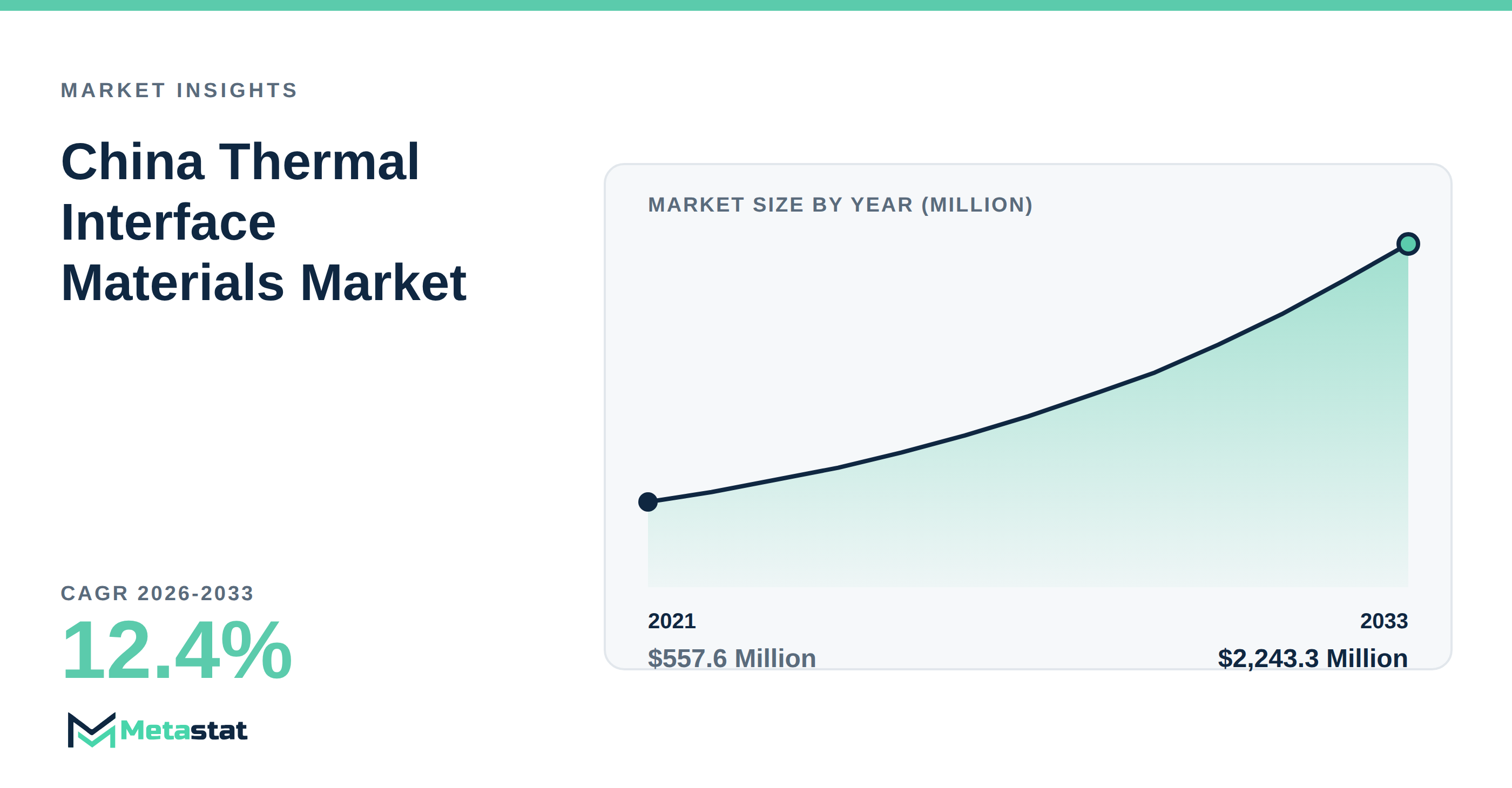
The China Thermal Interface Materials market is on a substantial growth trajectory, projected to expand from USD 880.3 million in 2025 to reach USD 2,243.3 million by 2033. This significant uptick, reflecting a compound annual growth rate (CAGR) of 12.4%, will stem from various technological advancements and evolving regulatory frameworks.
What technological advancements will influence the market?
Technological innovations play a crucial role in shaping the future of the China Thermal Interface Materials market. Ongoing developments in high-conductivity thermal interface materials (TIMs) impact various segments, particularly in computing and automotive applications. Manufacturers emphasize enhancing thermal conductivity while maintaining mechanical integrity, which is essential for the performance of high-density electronic devices.
Advancements in silicone TIMs are notable, showcasing consistent improvements that position them because preferred choices for high-performance electronics. The increasing demand in the electric vehicle sector drives the need for specific TIM products that satisfy stringent qualification requirements for power electronics. Companies seeking to enhance heat dissipation solutions will prioritize research and development efforts toward next-generation materials that meet these rigorous performance benchmarks.
How will regulatory changes affect market dynamics?
Regulatory compliance significantly influences the China Thermal Interface Materials market. The evolution of safety and environmental standards compels manufacturers to invest in sophisticated testing and certification processes. Companies are adapting their offerings to align with these growing demands, particularly within the automotive and electronics sectors.
While firms navigate these regulations, the complexity creates barriers for smaller enterprises lacking the resources to comply. Increased scrutiny from original equipment manufacturers (OEMs) and electronic manufacturing services (EMS) drives a competitive environment in which suppliers prioritize high-quality products that meet stringent requirements.
What market opportunities are emerging through 2033?
The evolving landscape of the China Thermal Interface Materials market presents several opportunities stemming from niche applications and sustainability trends. Manufacturers increasingly integrate eco-friendly materials into their product lines, reflecting a commitment to environmental responsibility. With growing consumer demand for efficient thermal management solutions, companies that innovate in this direction stand to capture a larger market share.
Strategic partnerships between manufacturers and OEMs are emerging from their shared focus on product validation and procurement efficiency. These collaborations streamline processes and enhance trust within the supply chain, essential for maintaining competitive positioning in a dynamic market.
How do geopolitical factors impact supply chain stability?
Geopolitical tensions significantly influence the stability of the supply chain within the China Thermal Interface Materials market. Trade disputes and tariff issues complicate sourcing strategies for manufacturers, leading to increased costs and logistical challenges. Fluctuations in raw material prices attributed to geopolitical instability affect production costs, urging manufacturers to reassess their operational frameworks.
Supply chain disruptions create uncertainty, prompting companies to implement resilience measures that mitigate risks. Strategic capital allocation for infrastructure investments will be critical for maintaining a competitive advantage amid these challenges.
What will drive demand in specific application segments?
Demand for thermal interface materials is set to vary across applications, with significant growth anticipated in computing, automotive electronics, and consumer electronics. The increasing complexity of electronic systems necessitates advanced thermal management solutions, driving the adoption of products including thermal greases, dispensable gap fillers, and conductive adhesives.
Within the automotive sector, the shift towards electric vehicles raises the importance of thermal management technologies. While vehicle power electronics advance, OEMs seek TIMs that deliver improved performance, reliability, and efficiency. Companies that invest in product development tailored to these sectors will be well-positioned to capitalize on growth opportunities through 2033.
The wide range of applications, combined with strategic innovations and regulatory compliance, creates a dynamic environment for the China Thermal Interface Materials market. Stakeholders emphasizing technological advancements and sustainable practices will drive industry growth, ensuring continued relevance in a competitive arena.
For further insights into the evolving dynamics of this market, refer to the complete analysis in the China Thermal Interface Materials Market report.
Tags
About the Authors

LEAD ANALYST
Utkarsh Khirodkar is a Lead Market Research Analyst at MetaStat Insight, specializing in market intelligence, technology sector assessments, and competitive strategy.

INDUSTRY CONSULTANT - CHEMICALS & ADVANCED MATERIALS
Chemicals and Materials · Machinery & Equipment · Packaging
Amit Gadhekar Consultant for Chemicals and Materials at MetaStat Insight, directing sector-specific intelligence, research, and strategic consulting across global chemical and processing markets.