
Discover how DDR5 memory technology is reshaping Server Memory demand. Learn about its growth potential and what drives its adoption.
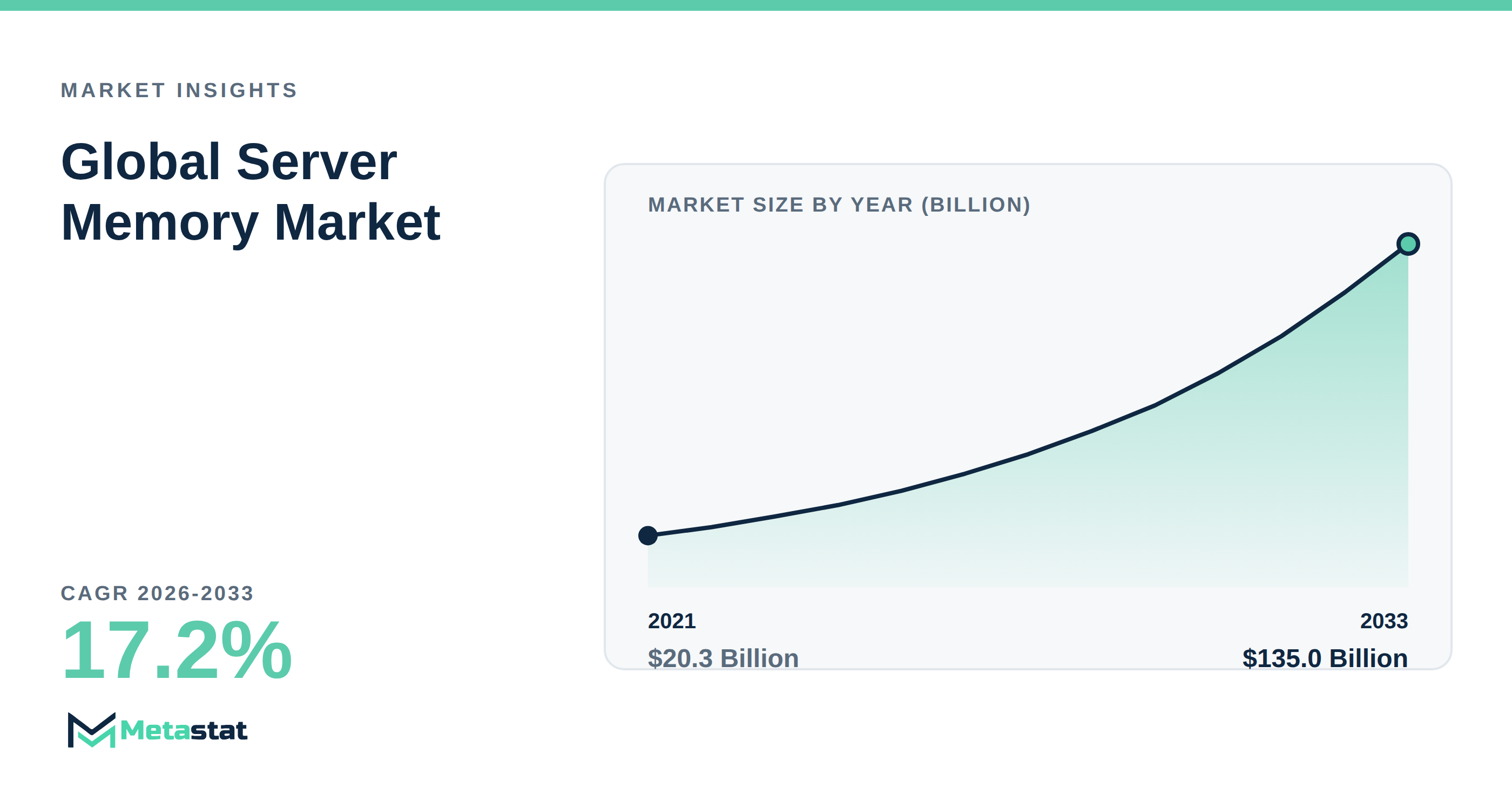
DDR5 memory technology is reshaping Server Memory demand, establishing itself because a clear leader among available memory solutions. The expected growth trajectory for DDR5 is significant; it is forecast to rise from USD 32.8 billion in 2026 to USD 130.1 billion by 2033, translating into a compound annual growth rate of 21.8%. This surge underscores the increasing reliance on high-performance memory solutions within various industries, particularly those emphasizing advanced data processing capabilities. The full figures are in our Server Memory market size and forecast report.
What makes DDR5 stand out?
A primary factor contributing to the growing demand for DDR5 is its capacity to deliver enhanced bandwidth alongside increased capacity. These improvements enable data centers to handle demanding workloads more efficiently, accommodating the rapid pace of digital transformation across sectors including IT and telecommunications. Organizations striving to optimize their operations recognize that transitioning to DDR5 is essential to meet their evolving performance expectations.
How does DDR5 influence enterprise investments?
Enterprises are significantly channeling investments into DDR5 technology to elevate their computing capabilities. The advancements in memory performance align with the rising need for high-capacity memory solutions that support data-intensive applications, including artificial intelligence and big data processing. This investment trend highlights a shift in spending patterns, where organizations prioritize robust memory options that sustain high-level processing demands.
What role do CXL interconnect protocols play?
The emergence of Compute Express Link (CXL) interconnect protocols serves because another critical factor catalyzing the adoption of DDR5 within server architectures. CXL enables quicker connections between CPUs and memory devices, optimizing data throughput while minimizing latency. This technological advancement is vital, because it supports heterogeneous memory configurations that allow servers to implement various memory types based on workload requirements. The effective integration of CXL with DDR5 strengthens the performance enhancements that organizations seek.
What does the future hold for DDR5?
While the demand for high-performance computing continues to escalate, especially in sectors like IT and telecommunications, DDR5 memory technology is well-positioned for future growth. The projected increase in DDR5 adoption corresponds with the expanding requirement for advanced memory solutions, making it a crucial consideration for enterprises aiming to boost operational efficiency. Companies that strategically invest in DDR5 solutions anticipate substantial benefits, including enhanced data management and processing capabilities.
The accelerating adoption of DDR5 memory technology distinctly shapes Server Memory demand, driven by its performance advantages and the necessity for efficient data processing across various industries. Organizations will assess their investment strategies to leverage these advancements effectively, ensuring they remain competitive in a dynamic technological environment.
Tags
About the Authors

LEAD ANALYST
Utkarsh Khirodkar is a Lead Market Research Analyst at MetaStat Insight, specializing in market intelligence, technology sector assessments, and competitive strategy.

PRINCIPAL CONSULTANT - ENTERPRISE AI & EMERGING TECHNOLOGIES
Banking & Finance · Electronics and Semiconductor · Energy and Power · Healthcare IT · Information & Technology · Professional Services
Vijay Gunti is a Principal Consultant at MetaStat Insight, bringing over two decades of experience across enterprise digital transformation, technology strategy, and intelligent systems.

LEAD CONSULTANT - COMMUNICATION, TELECOM, AND IT
Electronics and Semiconductor · Information & Technology · Machinery & Equipment · Professional Services
Ravindra Sathe Consultants for Communication, Telecom, and IT at MetaStat Insight. He leads the firm's industry research initiatives across telecommunications infrastructure, digital connectivity, enterprise networking, and emerging information technology domains.