
The PET recycling segment in the Canada Plastics Recycling market exhibits robust growth, driven by sustainability trends and regulatory support. This blog explores influential factors for this expansion.
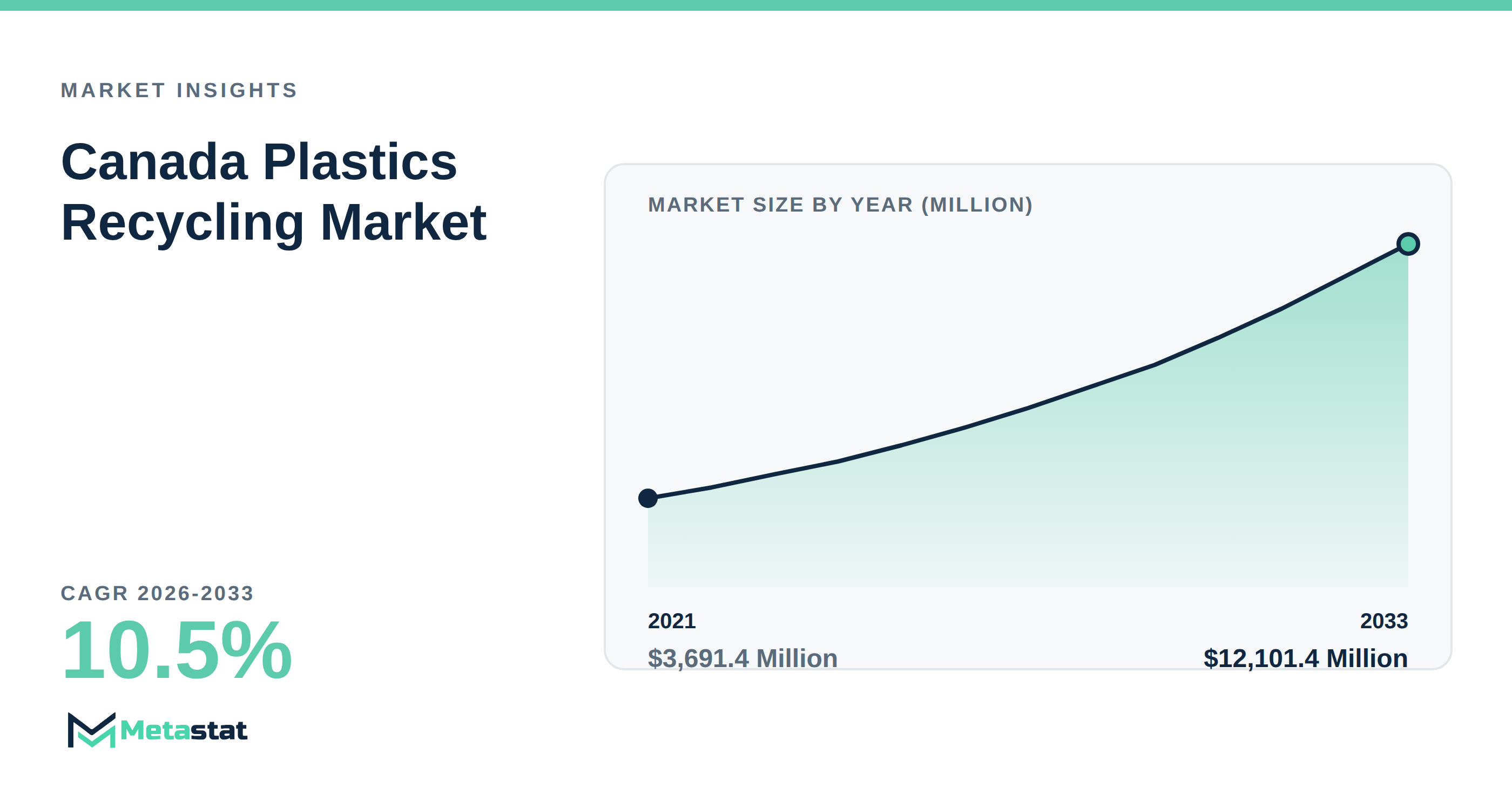
Among various segments of the Canada Plastics Recycling market, Polyethylene Terephthalate (PET) distinguishes itself with substantial growth potential. This segment was valued at USD 1,832.1 million in 2026 and is anticipated to increase to USD 3,811.9 million by 2033, reflecting a compound annual growth rate (CAGR) of 11%. This remarkable growth stems from several interconnected factors, including heightened consumer demand for sustainable packaging, regulatory frameworks promoting circular economy practices, and advancements in recycling technologies.
While the emphasis on sustainability intensifies, both consumers and companies increasingly seek out recycled materials. PET, commonly used in beverage bottles and food containers, has emerged because a key player due to its recyclability and high demand within the packaging sector. With tightening regulatory measures on plastic waste management, many businesses are prioritizing PET recycling to comply with regulations and cater to environmentally aware consumers.
What factors are driving PET's growth in the recycling market?
Several elements contribute to the rapid growth of PET recycling. Primarily, the regulatory environment plays a pivotal role. Governments throughout Canada are enacting rigorous guidelines aimed at minimizing plastic waste, compelling manufacturers to significantly increase the recycled content in their products. This regulatory momentum not only incentivizes companies to enhance their recycling capabilities but aligns with shifting consumer preferences toward sustainable options.
Technological advancements further support this segment's growth trajectory. Innovations in mechanical recycling and dissolution techniques ensure improved efficiency in PET processing, which leads to higher-quality recycled materials. Such advancements enhance the economic viability for manufacturers to utilize recycled PET, reinforcing the demand for this specific type of recycled plastic.
How does consumer behavior influence PET recycling?
Consumer awareness regarding environmental sustainability has notably transformed purchasing behaviors. There is a marked preference for products crafted from recycled materials, especially prevalent among younger consumers. Brands that emphasize sustainability in their offerings not only enhance their market attractiveness but cultivate stronger connections with consumers.
This trend is significantly observable within the packaging industry, where businesses are reshaping their product lines to accommodate the rising demand for eco-friendly alternatives. While consumers gravitate toward brands that demonstrate their commitment to sustainability, those utilizing recycled PET experience greater consumer loyalty and improved sales performance.
What challenges does the Canada Plastics Recycling market face?
Despite the favorable circumstances surrounding PET recycling, various challenges persist. Stringent compliance with regulatory frameworks necessitates considerable investments in technological enhancements, often straining resources, particularly for smaller firms. Inflationary pressures and geopolitical uncertainties complicate the sourcing of raw materials and recycling inputs, adversely impacting overall profitability.
Market fragmentation resulting from these challenges complicates collaborative initiatives crucial for advancing recycling rates across the sector. While established companies navigate these obstacles more effectively, smaller players frequently struggle, leading to a competitive imbalance.
What is the future outlook for the PET recycling segment?
The future of PET recycling within the Canada Plastics Recycling market presents promising prospects. Ongoing investments in state-of-the-art technologies and improvements in infrastructure are expected to boost recycling rates while meeting the increasing demand for sustainable materials. Firms that prioritize sustainability initiatives are better positioned to enhance their competitive advantages in this evolving landscape.
However, regulatory pressures continue to shape the operational environment, and businesses that adapt to these evolving conditions will likely thrive. With consumers increasingly demanding sustainable options, the PET segment will maintain its crucial position in the recycling market, driving significant developments and innovations in the industry.
For a deeper analysis and further insights on other segments, visit the Canada Plastics Recycling Market report.
Tags
About the Authors

LEAD ANALYST
Utkarsh Khirodkar is a Lead Market Research Analyst at MetaStat Insight, specializing in market intelligence, technology sector assessments, and competitive strategy.

INDUSTRY CONSULTANT - CHEMICALS & ADVANCED MATERIALS
Chemicals and Materials · Machinery & Equipment · Packaging
Amit Gadhekar Consultant for Chemicals and Materials at MetaStat Insight, directing sector-specific intelligence, research, and strategic consulting across global chemical and processing markets.