
Phase I Environmental Site Assessments are driving demand in Environmental Due Diligence Services. Explore the reasons behind this trend.
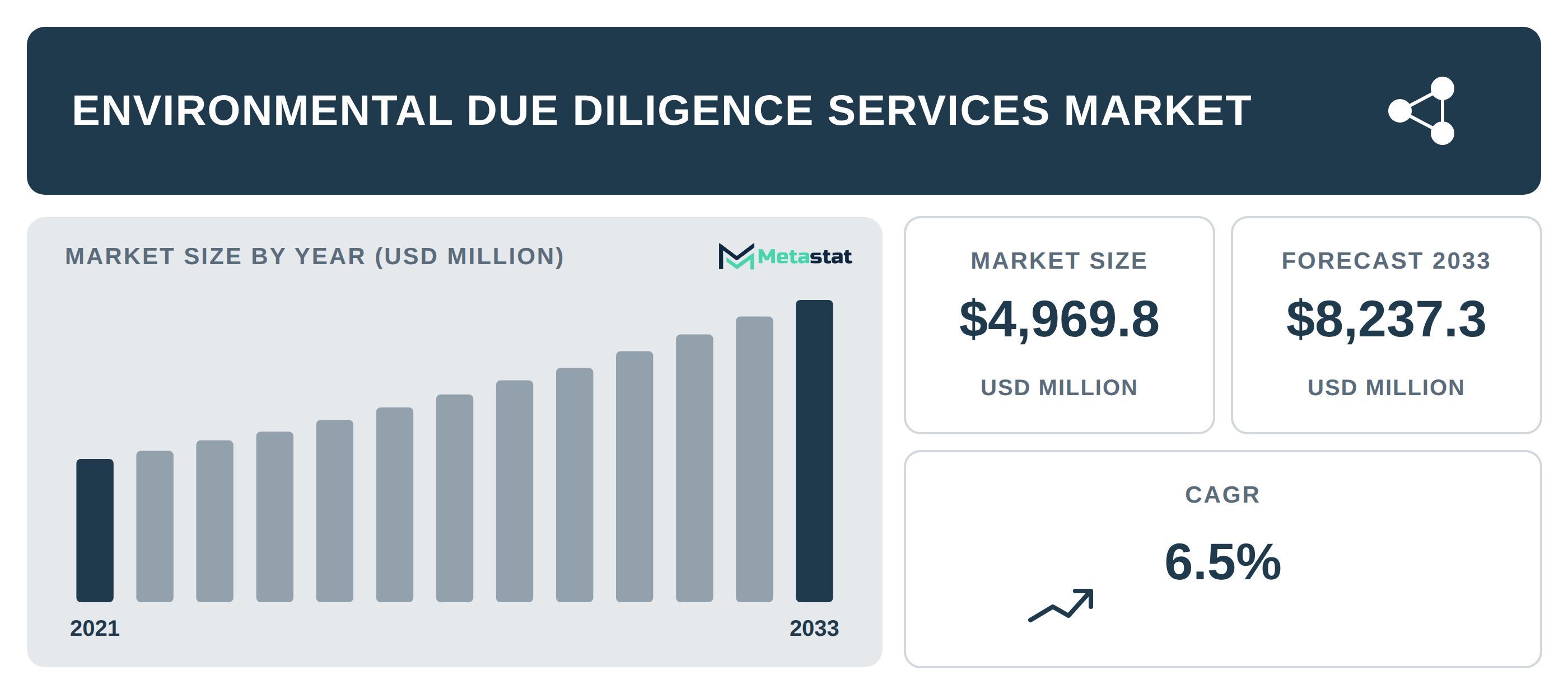
Among the various segments in the market for Environmental Due Diligence Services, Phase I Environmental Site Assessments are leading in demand. This segment, which evaluates potential environmental liabilities associated with properties, is witnessing significant growth driven by regulatory scrutiny and the need for compliance in property transactions. The full figures are in our Environmental Due Diligence Services market size and forecast report.
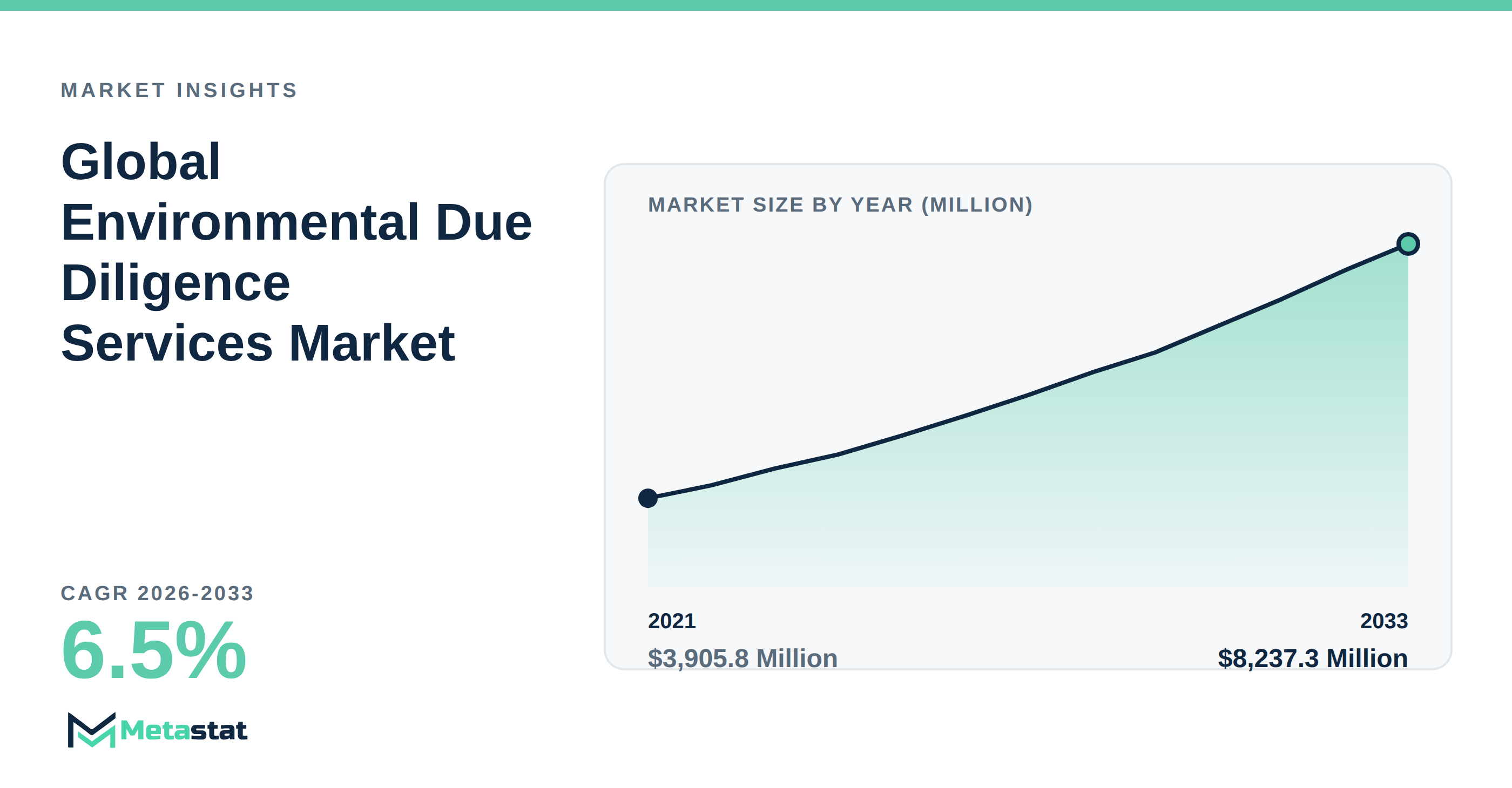
The increase in demand for Phase I Environmental Site Assessments reflects a broader trend toward sustainability and environmental responsibility among businesses. Organizations across sectors including banking and real estate prioritize due diligence practices, enhancing their ability to identify liabilities linked to environmental compliance before completing property transactions. This focus helps mitigate risks that could lead to financial repercussions or reputational harm.
A critical aspect contributing to the demand for Phase I assessments is the ongoing evolution in regulatory frameworks. In recent years, regulations have become more stringent, necessitating comprehensive evaluations within the property transaction process. With strict adherence to environmental compliance increasingly demanded by lenders and investors, the emphasis on Phase I Environmental Site Assessments has gained momentum. This segment is expected to increase from approximately USD 1,813 million in 2026 to nearly USD 2,651 million by 2033.
The heightened scrutiny surrounding per- and polyfluoroalkyl substances (PFAS) contamination is another significant driver. Increased public awareness of potential health risks associated with these substances has prompted businesses to invest more heavily in identifying and addressing environmental liabilities. Consequently, organizations are adopting Phase I Environmental Site Assessments as a proactive measure to safeguard against future legal and remediation costs connected to PFAS contamination. This trend highlights the growing recognition of the importance of environmental due diligence in managing long-term investment risks.
The integration of ASTM E1527-21 has transformed how Phase I Environmental Site Assessments are conducted. This updated standard enhances the rigor of assessments by introducing new definitions and procedures, particularly related to recognized environmental conditions. Implementing this standard increases both the credibility and accuracy of evaluations, fostering greater trust among investors and lenders in the outcomes.
Industry players respond to these shifts by focusing on technological innovations to enhance assessment efficiency and accuracy. Advanced technologies, including geographic information systems (GIS), artificial intelligence, and machine learning, facilitate real-time data analysis and risk assessments. These innovations enable service providers to expedite evaluation processes and deliver more reliable insights concerning environmental liabilities, further reinforcing the need for Phase I assessments.
While demand for Environmental Due Diligence Services continues to grow, organizations involved in these transactions recognize the critical role that comprehensive assessments play in facilitating sustainable practices. By prioritizing Phase I Environmental Site Assessments, businesses gain valuable insights into potential environmental liabilities, empowering them to make informed decisions and improve the overall value of their investments.
This focus on detailed and accurate assessments positions Phase I Environmental Site Assessments as a key component of effective due diligence strategies. As organizations increasingly commit to responsible investment practices and regulatory compliance, the segment's significance is likely to expand, influencing the future of Environmental Due Diligence Services.
Tags
About the Authors

LEAD ANALYST
Utkarsh Khirodkar is a Lead Market Research Analyst at MetaStat Insight, specializing in market intelligence, technology sector assessments, and competitive strategy.

PRINCIPAL CONSULTANT - ENTERPRISE AI & EMERGING TECHNOLOGIES
Banking & Finance · Electronics and Semiconductor · Energy and Power · Healthcare IT · Information & Technology · Professional Services
Vijay Gunti is a Principal Consultant at MetaStat Insight, bringing over two decades of experience across enterprise digital transformation, technology strategy, and intelligent systems.

PRINCIPAL CONSULTANT - QUALITY SYSTEMS & COMPLIANCE
Electronics and Semiconductor · Machinery & Equipment · Professional Services
Omkar Phadtare is an Industry Consultant at MetaStat Insight, specializing in quality systems, regulatory compliance, and standards benchmarking to drive data-driven market intelligence and strategic industry research.

LEAD CONSULTANT - COMMUNICATION, TELECOM, AND IT
Electronics and Semiconductor · Information & Technology · Machinery & Equipment · Professional Services
Ravindra Sathe Consultants for Communication, Telecom, and IT at MetaStat Insight. He leads the firm's industry research initiatives across telecommunications infrastructure, digital connectivity, enterprise networking, and emerging information technology domains.