
LEAD ANALYST
Utkarsh Khirodkar is a Lead Market Research Analyst at MetaStat Insight, specializing in market intelligence, technology sector assessments, and competitive strategy.

Global Environmental Due Diligence Services Market Size, Share, By Service Type (Phase I Environmental Site Assessments, Phase II Environmental Site Assessments, Transaction Screens & Desktop Risk Reviews, Hazardous Building Materials Surveys, EHS Compliance Due Diligence Audits, ESG and Environmental & Social Due Diligence), By Transaction Type (Commercial Real Estate Acquisitions & Sales, Commercial Real Estate Lending & Refinancing, Mergers, Acquisitions & Divestitures, Brownfield Redevelopment & Land Development, Project & Infrastructure Finance), By Property Type (Industrial & Manufacturing Facilities, Commercial Office & Retail Properties, Warehouse & Logistics Facilities, Multifamily & Residential Properties, Fuel Stations & Petroleum Facilities, Energy & Utility Sites, Vacant & Agricultural Land, Data Centers), By End User (Banks & Commercial Lenders, Real Estate Investors, REITs & Property Owners, Private Equity & Corporate Acquirers, Real Estate Developers, Industrial & Energy Companies, Government Agencies & Municipalities), Industry Analysis, Growth, Trends, and Forecast, 2026-2033
Report ID
MSI-5531
Published
October, 2026
Pages
259 Pages
Format
Historical
Base year
Forecast
Forecast period
Report Details
Market Valuation: Valued at $4,969.8 Million in 2025, projected to reach $8,237.3 Million by 2033 at a 6.5% CAGR.
Dominant Segment: Phase I Environmental Site Assessments lead the market due to their critical role in identifying potential environmental liabilities before property transactions. The demand for these assessments is driven by increasing regulatory scrutiny and the necessity for compliance.
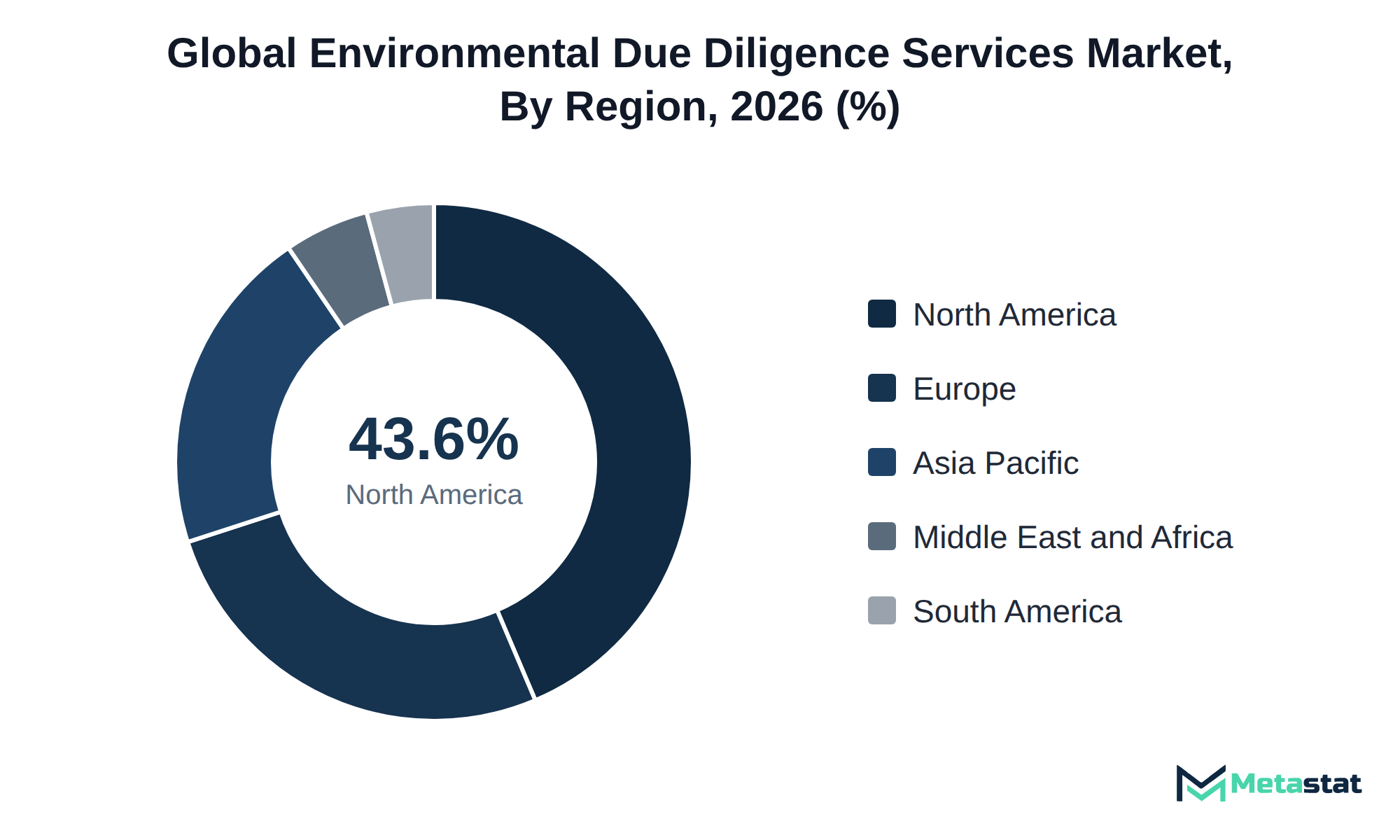
Geographic Lead: North America is the leading region, holding 43.6% of the market in 2025, with the US projected to continue its dominance into 2026. This growth is supported by significant investments in infrastructure and real estate.
What's Inside: The report provides a comprehensive analysis of the Environmental Due Diligence Services market, including competitive coverage, service type segmentation, transaction types, and detailed forecasts for the years 2026 to 2033.
Emerging Trends: The integration of advanced technologies like AI and machine learning is enhancing the efficiency of Environmental Due Diligence Services, streamlining data analysis and improving the accuracy of assessments.
Market Dynamics: Increased regulatory scrutiny and a growing focus on sustainability are driving demand for Environmental Due Diligence Services, as organizations seek to mitigate risks associated with environmental compliance.
Choose Your License
Global Environmental Due Diligence Services Market
The global Environmental Due Diligence Services market was valued at USD 4,969.8 million in 2025 and is projected to reach USD 8,237.3 million by 2033, growing at a CAGR of 6.5% over the forecast period.
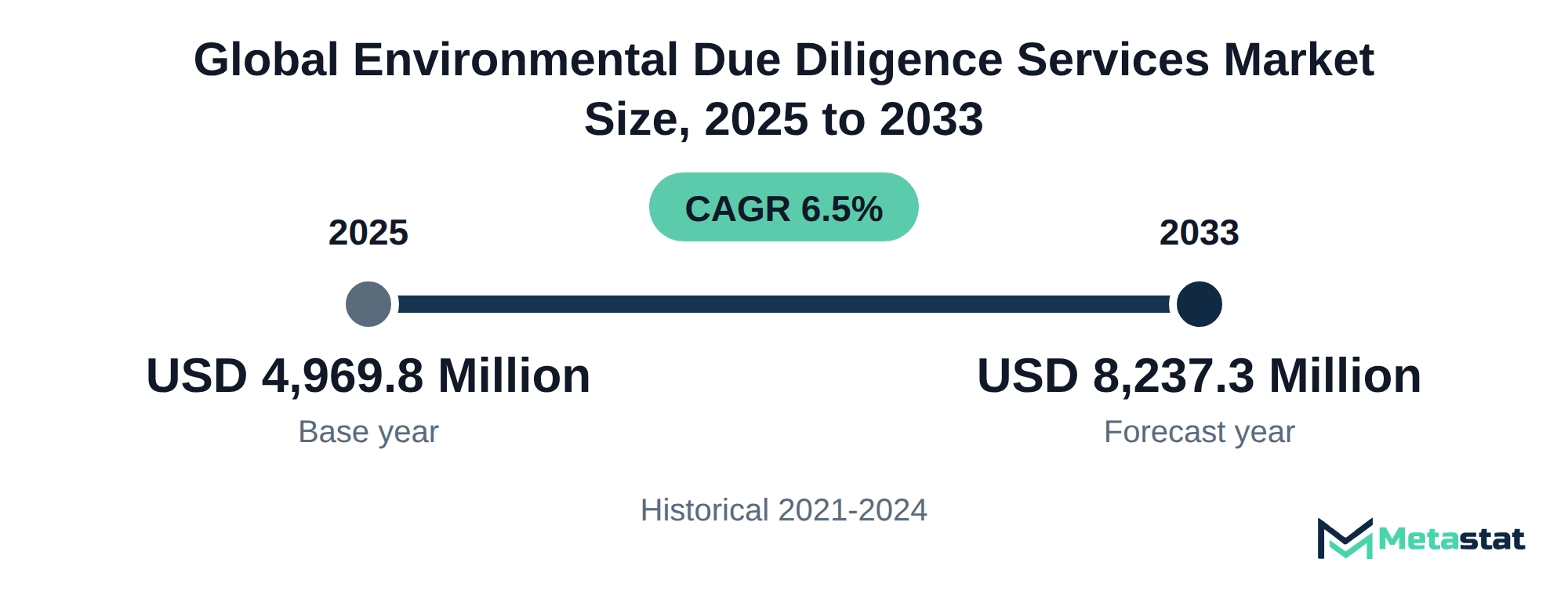
The Environmental Due Diligence Services market encompasses a variety of assessments and reviews aimed at ensuring compliance with environmental regulations and identifying potential liabilities. Buyers invest in these services to mitigate risks associated with property transactions and to meet regulatory requirements. The increasing focus on sustainability and environmental stewardship drives demand, with organizations striving to enhance their corporate reputation and secure financing from environmentally conscious investors.
Growth in the market is fueled by rising awareness of environmental issues and stricter regulations across various industries. Phase I Environmental Site Assessments represent the segment with the most substantial value, reflecting the need for thorough evaluations before property transactions. North America holds 43.6% of the market in 2025, with the US leading in 2026. This region benefits from significant investments in infrastructure and real estate, further supporting demand for these essential services.
The expansion of the Environmental Due Diligence Services market is influenced by the increasing complexity of regulatory frameworks and the need for thorough risk assessments in commercial real estate transactions. Organizations recognize the importance of environmental due diligence in protecting their investments and achieving compliance, leading to sustained growth in service demand. The ongoing trend of sustainable development indicates a long-term commitment to environmental considerations in business practices.
The demand for Environmental Due Diligence Services arises from various industries seeking to mitigate environmental risks associated with real estate transactions and property development. Buyers invest in these services to ensure compliance with environmental regulations, assess potential liabilities, and enhance the overall value of their investments. The market serves diverse sectors, including banking, real estate, and private equity, with each segment requiring tailored assessments to address specific environmental concerns.
Growth in this market is driven by increasing regulatory scrutiny and heightened awareness surrounding environmental issues. The Phase I Environmental Site Assessments segment stands out, reflecting significant value and demand from investors prioritizing due diligence prior to property acquisition. This regional dominance stems from a strong regulatory framework and high investment in commercial real estate, which prompts spending on due diligence services.
With the growing emphasis on sustainability and environmental responsibility, companies increasingly recognize the importance of thorough due diligence. This shift leads to greater adoption of Environmental Due Diligence Services among various end users, including banks, commercial lenders, and real estate developers. The evolving environment drives demand for services that mitigate risks and enhance the long-term viability of projects.
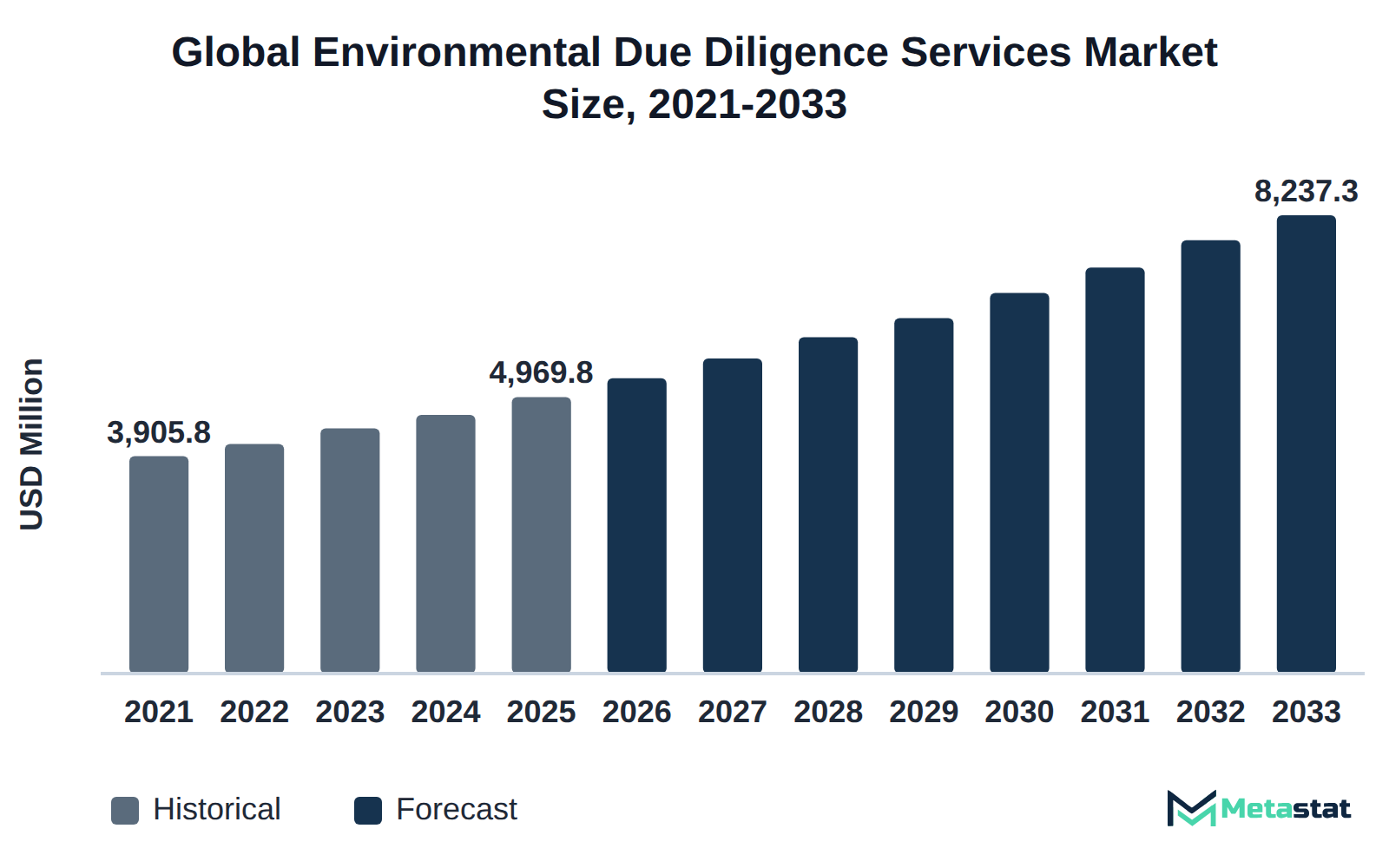
The implementation of ASTM E1527-21 has significantly transformed the scope of Phase I Environmental Site Assessments. This standard enhances the rigor of site assessments by integrating updated definitions and procedures, particularly in relation to recognized environmental conditions. A critical aspect of this transformation involves the scrutiny surrounding per- and polyfluoroalkyl substances (PFAS). The heightened awareness of PFAS contamination has led to an increased demand for comprehensive assessments that effectively identify potential risks associated with these substances. The Phase I Environmental Site Assessments segment is projected to expand from USD 1,813.3 million in 2026 to USD 2,650.8 million by 2033, reflecting a compound annual growth rate (CAGR) of 5.6%. This shift necessitates more detailed evaluations and drives increased investments in advanced testing technologies.
This evolution in assessment practices greatly affects stakeholders within the Environmental Due Diligence Services market, particularly banks and commercial lenders, real estate investors, and property owners. These groups face heightened scrutiny from regulatory bodies and potential liabilities stemming from PFAS contamination. Consequently, the integration of ASTM E1527-21 and the focus on PFAS-related issues enhance the credibility and reliability of environmental assessments, increasing confidence among investors and lenders in the real estate market.
Lender and private equity demands drive a deeper integration of Environmental Health and Safety (EHS) and Environmental, Social, and Governance (ESG) diligence into deal workflows within the Environmental Due Diligence Services market. The need for rigorous assessment reflects an increasing focus on sustainable investment practices and risk management. For instance, banks and commercial lenders are expected to invest an estimated USD 1,909.4 million by 2033, indicating the substantial financial stakes involved in ensuring compliance and sustainability.
Buyers typically engage in detailed negotiations with service providers, focusing on contract models that support ongoing assessments and due diligence throughout the transaction lifecycle. Fixed-price contracts are common, enabling clients to anticipate costs upfront. Alternatively, performance-based pricing structures encourage service providers to deliver high-quality results aligned with client expectations. This flexibility in contract models enhances buyer confidence, particularly in sectors including commercial real estate where due diligence costs are critical to deal viability.
The trend toward comprehensive EHS and ESG assessments positions due diligence firms as key partners in financial transactions. By accommodating diverse pricing models, these firms facilitate smoother negotiations and establish long-term relationships with clients. This alignment helps firms capture new opportunities in the Environmental Due Diligence Services market.
Brownfield reuse initiatives significantly increase demand for Phase II Environmental Site Assessments within the Environmental Due Diligence Services market. The transition from abandoned industrial sites to redeveloped properties attracts real estate investors and developers, who prioritize compliance with environmental regulations. This trend is driven by government policies promoting sustainable development, which incentivize the rehabilitation of contaminated sites. The market anticipates that the value of Phase II assessments will reach USD 1,963.8 million by 2033, reflecting a compound annual growth rate of 6.2% during the forecast period.
Data centers have emerged as another key area, demanding comprehensive environmental investigations to ensure compliance with stringent regulations. These facilities often occupy previously developed land, necessitating thorough assessments to evaluate potential contamination. Investors and developers recognize the importance of addressing environmental risks associated with data center sites, positioning Phase II assessments as critical to successful project outcomes. The focus on these properties aligns with broader trends in technology and infrastructure development.
Logistics real estate sites, particularly in urban areas, drive the growth of Phase II investigations. With increasing pressure on supply chains, companies prioritize the acquisition of properties that meet operational needs while adhering to environmental standards. In this context, Environmental Due Diligence Services help companies manage the complexities of property transactions and support sustainable practices in site development.
The cost of environmental due diligence services for a commercial property transaction varies depending on several factors, including property type and service complexity. For instance, Phase I Environmental Site Assessments, which assess potential environmental hazards, represent a significant portion of the total due diligence expenses.
Investors and lenders seek Phase I assessments to identify potential liabilities associated with a property before closing a transaction. By investing in comprehensive assessments, organizations minimize risks linked to environmental compliance and potential remediation costs. The increasing focus on sustainability and responsible investing drives demand for thorough environmental due diligence within the market.
Stakeholders involved in commercial property transactions need to understand the costs associated with environmental due diligence services. These assessments provide valuable insights into potential risks, enabling informed decision-making while enhancing transparency in investment practices.
The growing emphasis on environmental compliance among banks and commercial lenders drives increased spending on Environmental Due Diligence Services. Financial institutions prioritize sustainability and risk mitigation when evaluating property investments. This shift in buyer behavior results in a demand for thorough environmental assessments to ensure regulatory adherence and reduce potential liabilities associated with property transactions. The market is projected to reach USD 1,909.4 million by 2033, reflecting a compound annual growth rate (CAGR) of 5.7% in the banks and commercial lenders segment. Heightened scrutiny of environmental risks contributes significantly to this trend, compelling lenders to require comprehensive due diligence before committing to financing. Integrating these services into the transaction workflow enhances the value of investments and aligns with broader trends in corporate responsibility and sustainable practices.
The adoption of advanced technologies significantly enhances the efficiency of Environmental Due Diligence Services. Innovations including artificial intelligence, machine learning, and geographic information systems streamline data analysis and risk assessment processes. These technologies enable firms to process large volumes of environmental data quickly, allowing for more accurate evaluations and timely decision-making.
Increased accuracy reduces reliance on traditional methods, improving the quality of assessments conducted by service providers. This shift appeals to various end users, including banks, commercial lenders, and real estate investors, who require reliable insights to mitigate potential risks in real estate transactions.
Developments in remote sensing and data visualization platforms support the identification of environmental liabilities in real-time, contributing to responsible investment strategies. The integration of these technologies into Environmental Due Diligence Services facilitates compliance with evolving regulatory frameworks while promoting environmentally sustainable practices.
The rising costs associated with Environmental Due Diligence Services hinder uptake among banks and commercial lenders. These financial institutions face increased expenses linked to comprehensive assessments, resulting in slower decision-making processes and smaller project budgets. Higher fees for specialized services raise concerns regarding return on investment, particularly for smaller transactions. Consequently, many lenders opt for minimal compliance checks instead of thorough due diligence, leading to potential risks in property transactions. This trend delays critical loan approvals and limits the scope of necessary environmental assessments. Overall, increased costs create barriers for buyers, directly impacting the growth potential of the market. The influence of cost on buyer behavior highlights the need for competitive pricing strategies to enhance service adoption across the sector.
Talent costs represent a significant challenge within the Environmental Due Diligence Services market. Shortages in qualified personnel, driven by increasing demand for specialized skills, increase operational expenses for service providers. The need for experts in environmental assessments creates pressure on margins, affecting profitability. Suppliers respond by implementing competitive compensation packages and investing in training programs to enhance workforce capabilities. This focus on talent retention and development supports long-term operational sustainability and improves service quality. Market trends indicate a shift towards adopting technology-driven solutions to streamline processes and reduce reliance on intensive labor, allowing firms to maintain service levels despite rising costs. Consequently, suppliers adopt innovations that enhance efficiency while managing the challenges of talent acquisition and retention. Overall, these dynamics shape the competitive environment and influence strategic decisions within the market.
Investment in Industrial and Manufacturing Facilities will increase demand for Environmental Due Diligence Services, with a projected compound annual growth rate (CAGR) of 5.8% through 2033. This segment, essential for evaluating environmental risks in industrial operations, attracts substantial attention from banks, commercial lenders, and real estate developers focused on maintaining compliance and reducing liabilities. In 2026, the segment's value stands at USD 1,468 million, increasing to USD 2,172.2 million by 2033. The market response is evident, addressing the growing need for thorough assessments and risk analyses that align with sustainable practices. The shift toward greener industrial operations creates an opportunity for service providers, enhancing their competitive edge while meeting changing regulatory requirements. In this context, the Environmental Due Diligence Services market experiences robust expansion, driven by heightened awareness and investment in industrial sustainability efforts.
The Global Environmental Due Diligence Services market is segmented based on Service Type, Transaction Type, Property Type, and End User.
This assessment identifies potential environmental liabilities associated with properties, primarily used by banks, commercial lenders, and real estate investors to evaluate risk during property transactions. Increasing regulatory scrutiny around environmental compliance drives demand, with banks and lenders prioritizing thorough due diligence to mitigate liability risks. Compared to other segments, this sub-segment exhibits moderate growth, driven by a steady requirement for compliance assessments in varying real estate transactions. While Phase II Environmental Site Assessments experience a higher CAGR of 6.2%, the foundational role of Phase I assessments maintains significance in the market, ensuring that buyers and financial institutions possess crucial information before proceeding with property investments.
This segment involves detailed investigations, including sampling and environmental testing, to identify potential environmental contamination at a site. Real estate investors, banks, and commercial lenders primarily use these assessments to understand environmental liabilities before executing transactions. Increasing regulatory scrutiny surrounding environmental issues drives demand for this segment, ensuring thorough evaluations are conducted for compliance. Compared to other service types, Phase II Environmental Site Assessments exhibit stronger growth due to heightened emphasis on environmental accountability in various industries. The 6.2% CAGR for this segment reflects an urgent response to market pressures and regulatory requirements, distinguishing it from other segments that experience slower growth or different buyer dynamics.
Transaction Screens & Desktop Risk Reviews segment is expected to reach USD 533 million by 2033. This segment assesses potential environmental liabilities in commercial transactions, particularly during the acquisition or refinancing of properties. Common users include banks, commercial lenders, and real estate investors, who employ these services to mitigate risks associated with environmental compliance. Regulatory pressures and increased public awareness regarding environmental issues drive demand for these assessments. Compared to other segments, including Phase I Environmental Site Assessments with a projected CAGR of 5.6%, Transaction Screens & Desktop Risk Reviews exhibit a different growth trajectory, focusing on quicker evaluations that support swift decision-making in real estate transactions. This differentiation enhances its appeal to stakeholders seeking timely insights into environmental risks, enabling more informed investment decisions. The market places a strong emphasis on aligning with environmental, social, and governance criteria, which reinforces the need for thorough due diligence.
Hazardous Building Materials Surveys segment is projected to grow at a CAGR of 5.8% during the forecast period. This assessment identifies hazardous materials, including asbestos and lead, in buildings prior to renovation or demolition. Suspect building materials are typically verified through asbestos testing before work begins. Real estate developers, property owners, and construction companies conduct these surveys to ensure compliance with safety regulations and protect against potential liabilities. The increasing regulatory scrutiny surrounding hazardous materials significantly drives demand for this segment. Compared to other service types, including Phase I or Phase II Environmental Site Assessments, this segment experiences slower growth due to specialized expertise requirements. Consequently, the segment’s focus on specific hazardous materials differentiates it from broader environmental assessments, appealing to a niche market of stakeholders invested in safety and regulatory compliance.
EHS Compliance Due Diligence Audits focus on assessing an organization's adherence to environmental regulations, ensuring compliance with applicable laws and standards. Various industries conduct these audits, particularly those involved in real estate transactions, construction, and manufacturing. Increased regulatory scrutiny around environmental impacts drives demand for these audits, particularly among banks, commercial lenders, and property developers. This segment differs from other assessment types, including Phase I and Phase II Environmental Site Assessments, by providing an ongoing compliance framework rather than transactional assessments. Regulatory pressures intensify, and investment in EHS Compliance Due Diligence Audits increases, reflecting a commitment to sustainable practices. The Environmental Due Diligence Services market benefits from heightened awareness of environmental responsibilities, positioning this segment for strong engagement among stakeholders who prioritize compliance and risk mitigation.
ESG and Environmental & Social Due Diligence encompasses assessments that evaluate environmental, social, and governance factors affecting organizations. This segment is used by various stakeholders, including banks, private equity firms, and corporate acquirers, to ensure compliance with evolving regulatory requirements. Growing awareness surrounding sustainability and corporate responsibility drives demand for ESG diligence, reflecting a broader societal shift toward responsible business practices. Increasing scrutiny from investors and regulators on environmental impacts and social governance enhances the relevance of this segment. Compared to other service types, ESG assessments often command higher fees due to their complexity and the level of expertise required. In contrast to traditional assessments, which focus primarily on environmental compliance, ESG diligence incorporates social and governance factors, differentiating it significantly within the market.
This sub-segment comprises various assessments, including Vapor Intrusion Assessments, Wetland and Ecological Reviews, and Liability Cost Estimation. These assessments verify compliance with environmental regulations, evaluate ecological impacts, and estimate potential liabilities associated with properties. Clients, including financial institutions, real estate developers, and government agencies, apply these services to understand environmental risks and ensure regulatory compliance prior to making investment decisions. Increased regulatory scrutiny drives demand for comprehensive evaluations, as organizations seek to mitigate environmental liabilities and protect investments. This sub-segment typically exhibits a growth rate slower than other service types, reflecting the specialized nature of these assessments and the expertise required to conduct them. Unlike standard assessments, these evaluations often require in-depth analysis and longer timelines, impacting pricing and delivery compared to other segments in the market.
Commercial Real Estate Acquisitions & Sales segment is valued at USD 1,653 million in 2026 and is projected to reach USD 2,459.7 million by 2033, at a CAGR of 5.8% during the forecast period. This segment focuses on providing due diligence services for the acquisition and sale of commercial properties, primarily used by banks, commercial lenders, real estate investors, and property owners. Increasing regulatory scrutiny surrounding environmental issues drives demand for thorough assessments and compliance checks in property transactions. Compared to other transaction types, including Mergers, Acquisitions & Divestitures, this segment exhibits a relatively stable growth rate, ensuring sustained investment interest. Growing awareness of environmental risks and potential liabilities associated with real estate transactions emphasizes its importance within the overall Environmental Due Diligence Services market. Strong market performance is anticipated due to ongoing investments in commercial property development and acquisition.
Commercial Real Estate Lending & Refinancing segment is estimated to reach USD 1,856.7 million by 2033, at a CAGR of 6.1% during the forecast period. This segment is used by banks and commercial lenders to assess the environmental risks associated with financing and refinancing commercial properties. An increasing focus on compliance standards among financial institutions drives demand within this segment. In contrast to other transaction types, this segment displays a moderate growth rate, reflecting escalating scrutiny from regulatory bodies regarding environmental impact. The pricing for services within this segment tends to be higher than that of Transaction Screens & Desktop Risk Reviews, ensuring thorough evaluations of potential liabilities. With a steadily improving investment climate, the Environmental Due Diligence Services market anticipates greater engagement from lending institutions interested in securing their financial interests through careful environmental assessments.
Mergers, Acquisitions & Divestitures segment is expected to reach USD 1,558.5 million by 2033. This segment serves various stakeholders including private equity firms, corporations, and real estate investors who require thorough assessments during transactions. Increasing regulatory scrutiny surrounding environmental risks influences demand in this segment. Private equity and corporate acquirers rely heavily on comprehensive due diligence to uncover potential liabilities associated with acquired assets. The segment shows a slower growth rate compared to others, largely due to its niche focus and the complexities involved in evaluating environmental conditions. In contrast, segments like Commercial Real Estate Acquisitions & Sales experience higher growth, reflecting broader investment trends and increased transaction volumes. The unique needs of buyers in this sub-segment, driven by heightened emphasis on environmental compliance, shape its future trajectory within the Environmental Due Diligence Services market.
Brownfield Redevelopment & Land Development segment is projected to grow at a CAGR of 6.9% during the forecast period. This segment focuses on the assessment and remediation of previously developed land that is contaminated, enabling its reuse for commercial or residential purposes. Real estate developers and investors frequently assess these services to evaluate the environmental risks associated with properties. Increasing regulatory pressure on land redevelopment and rising demand for housing drive growth in this segment. A notable distinction exists between this sub-segment and others, particularly in its targeted user base and growth potential. While several segments reflect slower growth rates, Brownfield Redevelopment stands out due to its specific market dynamics and heightened demand among property developers aiming to transform underutilized sites into viable real estate opportunities. The market remains vital for supporting sustainable development practices.
Project & Infrastructure Finance involves assessments that evaluate the environmental impact of infrastructure projects and financing activities. This sub-segment serves banks, commercial lenders, and real estate developers seeking to comply with environmental regulations and assess the potential risks associated with projects. Increasing scrutiny on environmental sustainability drives demand for these assessments. Investors prioritize due diligence to ensure compliance, addressing both reputational and financial risks. Compared to other transaction types, this segment often experiences slower growth due to the complexities associated with large infrastructure projects. Project & Infrastructure Finance requires a tailored approach, differing from quicker-moving segments including Commercial Real Estate Acquisitions & Sales, which focus on more straightforward transactions. Environmental Due Diligence Services market dynamics highlight the evolving regulatory landscape, driving consistent demand for thorough assessments in financing activities.
This segment encompasses assessments related to Lease Inception & Termination, Insurance Underwriting, and Portfolio Baselines. Typically used by lenders, real estate investors, and property owners, it addresses critical components of transaction-related environmental risks. Demand for this service stems from the increasing complexity of real estate transactions, driven by evolving environmental regulations that influence lending practices. This sub-segment distinguishes itself through its focus on risk management in financial dealings, contrasting with other segments that emphasize comprehensive environmental assessments. The market is expected to gain traction as organizations prioritize due diligence to mitigate potential liabilities associated with environmental concerns.
Industrial & Manufacturing Facilities segment is valued at USD 1,468 million in 2026 and is projected to reach USD 2,172.2 million by 2033, at a CAGR of 5.8% during the forecast period. This segment serves industries involved in production and manufacturing, where environmental assessments support compliance and risk management. Demand for these services is driven by increasing regulatory requirements and the need for sustainable practices within industrial operations. Compared to other segments, Industrial & Manufacturing Facilities exhibit a moderate growth rate, influenced by specific demands from clients including banks and commercial lenders seeking to ensure compliance with environmental standards. The focus on sustainability and environmental responsibility continues to enhance the significance of this sub-segment, affecting investment decisions and operational practices in the broader Environmental Due Diligence Services market.
Commercial Office & Retail Properties segment is estimated to reach USD 1,471.2 million by 2033, at a CAGR of 5.5% during the forecast period. This segment focuses on assessments that ensure environmental compliance and evaluate potential risks associated with properties used for office and retail purposes. Buyers include real estate investors, property owners, and commercial lenders, who rely on these evaluations to make informed decisions regarding acquisitions and financing. Increasing regulation and heightened awareness of environmental liabilities drive demand for these services. Compared to other segments, this category experiences steady growth, reflecting the ongoing expansion of the commercial real estate sector. The combination of growing urbanization and the need for regulatory compliance contributes to its positive outlook within the market.
Warehouse & Logistics Facilities segment is expected to reach USD 1,118.6 million by 2033. This sub-segment primarily serves real estate investors and developers involved in the acquisition, development, and management of warehousing and logistics properties. The increasing demand for efficient supply chain solutions drives growth in this sector, fueled by the expansion of e-commerce and the need for better distribution networks. Compared to other property types, this segment exhibits a competitive growth rate, influenced by a CAGR of 6.9% for related multifamily and residential properties. The focus on sustainability and regulatory compliance significantly impacts operational decisions, reinforcing the importance of due diligence services in mitigating environmental risks associated with property development. Such factors underline the overall dynamics shaping the Environmental Due Diligence Services market.
Multifamily & Residential Properties segment is projected to grow at a CAGR of 6.9% during the forecast period. This segment focuses on conducting thorough environmental assessments related to residential buildings, including multifamily units. Buyers including real estate investors and property owners rely on these assessments to ensure compliance with environmental regulations and to identify potential liabilities. Regulatory pressures drive demand in this segment, with an increasing focus on sustainable development and environmental compliance influencing investment decisions. This segment exhibits faster growth compared to others in the Property Type group, highlighting the expanding emphasis on environmental responsibility and risk management among investors. The increasing adoption of stringent environmental standards contributes to this growth, indicating a shift towards more sustainable property development practices.
Fuel Stations & Petroleum Facilities represent critical infrastructure requiring environmental assessments due to potential contamination and regulatory compliance needs. These facilities undergo various evaluations to identify environmental liabilities and ensure safe operations, primarily serving banks, commercial lenders, real estate investors, and regulatory agencies. Growing regulatory scrutiny regarding environmental impacts drives demand for these assessments, compelling organizations to assess their properties proactively. This segment focuses specifically on the complexities associated with petroleum-related sites, which typically face higher regulatory oversight. Fuel stations and petroleum facilities encounter unique environmental challenges, including soil and groundwater contamination that can require groundwater treatment services, necessitating specialized assessments that distinguish this segment from broader property types.
Energy & Utility Sites involve assessments specifically targeting facilities related to energy production and utility services. These assessments are critical for ensuring compliance with environmental regulations and identifying potential liabilities associated with hazardous materials. Utility companies and energy firms engage these services to mitigate risks tied to environmental liabilities and ensure operational compliance. The demand for these assessments is driven by increasing regulatory scrutiny and the growing importance of sustainability initiatives. This sub-segment differs from others in the Property Type category, primarily focusing on sectors with unique compliance requirements and environmental challenges. In particular, Energy & Utility Sites often face heightened regulations compared to other property types, influencing the cost and frequency of assessments. Overall, the Environmental Due Diligence Services market is expected to see steady growth from this sub-segment while organizations prioritize environmental responsibility.
Vacant & Agricultural Land involves assessments aimed at understanding the environmental conditions of unused or agricultural properties. This segment is used by real estate investors, developers, and government agencies to evaluate potential contamination and environmental risks associated with land use. Demand for these assessments is driven by increasing regulatory scrutiny surrounding land development and environmental protection, particularly in urban areas. This segment differs from others by focusing on properties without immediate development plans, which influences the timing and nature of assessments compared to segments targeting active commercial real estate projects. The Environmental Due Diligence Services market continues to evolve, reflecting the growing importance of sustainable land use and management practices.
Data Centers encompass facilities specifically designed to house computer systems and associated components, including telecommunications and storage systems. Organizations employ these centers for data processing, storage, and management, which are essential for maintaining operational efficiency and data security. The increasing demand for cloud computing and data storage capacity drives growth in this sub-segment. Real estate investors and IT service providers are key stakeholders, seeking to ensure compliance with environmental regulations related to energy consumption and resource management. Compared to other property types, the Data Centers segment faces unique challenges, including higher energy costs associated with cooling systems and heightened scrutiny regarding sustainable practices. This sub-segment's operational dynamics differentiate it from Industrial & Manufacturing Facilities, which prioritize different compliance aspects. The Environmental Due Diligence Services market continues to evolve to address these specific needs while providing critical insights into environmental risks associated with Data Centers.
Assessments related to hospitality, healthcare, and institutional properties focus on identifying potential environmental liabilities and compliance issues. These evaluations support buyers including real estate developers, facility managers, and healthcare operators in making informed decisions regarding property transactions and developments. Regulatory pressures drive demand for thorough due diligence, ensuring that these properties meet environmental standards and mitigate risks associated with contamination. Unlike segments including Industrial & Manufacturing Facilities or Commercial Office & Retail Properties, the hospitality, healthcare, and institutional properties segment faces distinct challenges due to the unique regulatory frameworks governing these sectors. Buyers prioritize these assessments to safeguard against potential liabilities and enhance property value through environmental compliance. Overall, this sub-segment holds significance in the Environmental Due Diligence Services market, emphasizing the importance of environmental considerations in diverse property types.
This segment primarily serves financial institutions evaluating the environmental risks associated with properties before making lending decisions or investments. Increasing regulatory scrutiny regarding environmental impacts drives demand for thorough due diligence assessments, ensuring compliance and reducing financial exposure. However, Banks & Commercial Lenders maintains a distinct focus on financial risk mitigation, distinguishing it from other segments targeting direct property assessments. The Environmental Due Diligence Services market adapts to evolving regulations and increasing environmental awareness among financial stakeholders.
Real Estate Investors, REITs & Property Owners segment is estimated to reach USD 1,805.6 million by 2033, at a CAGR of 6.2% during the forecast period. This segment serves various stakeholders in the real estate market, including investment firms and property management companies, focusing on acquisitions and development projects. Increased scrutiny over environmental risks and regulatory compliance drives demand for due diligence services in this segment. The growth rate for this segment surpasses several others in the market, reflecting a heightened focus by investors on sustainable practices and environmental impacts. Regulatory pressures and the need for extensive assessments during property transactions further enhance service uptake among these buyers, emphasizing its unique position compared to the other segments in the End User category.
Private Equity & Corporate Acquirers segment is expected to reach USD 1,513.2 million by 2033. This segment primarily serves investors and firms seeking to assess potential environmental liabilities associated with acquisition targets. The growing focus on sustainability within investment strategies drives demand for thorough environmental assessments. Enhanced scrutiny from regulatory bodies and an increase in environmental awareness among investors support this trend. Compared to related segments, this segment exhibits stronger growth, with a projected CAGR of 6.3%. In contrast to banks and commercial lenders, private equity firms prioritize comprehensive environmental due diligence to mitigate risk and enhance portfolio value, distinguishing their approach from other end-user categories in the market.
Real Estate Developers segment is projected to grow at a CAGR of 6.3% during the forecast period. This segment encompasses individuals and companies engaged in the development of residential, commercial, and industrial properties. Environmental assessments support developers in identifying potential environmental liabilities and compliance requirements associated with their projects. Increasing regulatory scrutiny and heightened focus on sustainability drive demand in this sector, compelling developers to conduct thorough due diligence. Compared to other end-user segments, this segment exhibits a stronger growth trajectory, reflecting ongoing urbanization and development initiatives globally. Real Estate Developers require reliable environmental data to mitigate risks and enhance project feasibility, distinguishing their needs from other buyers in the market.
Industrial & Energy Companies assess environmental liabilities and regulatory compliance for their operations using Environmental Due Diligence Services. These assessments are critical in identifying potential contamination issues and ensuring adherence to environmental standards, which protect both the environment and public health. Increasing regulatory scrutiny surrounding environmental practices drives demand for these services. Companies in this segment face unique challenges, including the need for comprehensive evaluations due to the complexity of industrial operations. In contrast to other end-user segments, Industrial & Energy Companies require more specialized services to address the specific risks associated with their facilities. This focus on regulatory compliance and risk management significantly influences their purchasing decisions. The Environmental Due Diligence Services market continues to evolve, reflecting the growing importance of sustainability and responsibility in industrial practices.
Government agencies and municipalities rely on Environmental Due Diligence Services to ensure compliance with environmental regulations and to assess potential liabilities associated with property transactions. These entities engage in assessments for public projects, land use planning, and infrastructure development. A notable force driving this segment involves increasing regulatory scrutiny and the need for transparency in environmental impact. This regulatory environment emphasizes environmental accountability, influencing agencies to conduct thorough evaluations. Compared to other segments, this sub-segment experiences slower growth, reflecting its dependency on governmental budgets and public policy priorities. The market adapts to evolving regulations, ensuring that agencies possess the necessary information to make informed decisions regarding environmental risks and site management.
The Others (Law Firms, Insurers, Land Trusts) sub-segment encompasses entities focusing on environmental due diligence for legal and financial assessments. These entities engage services to evaluate environmental liabilities associated with properties and transactions, ensuring compliance and risk mitigation. Demand for these services is driven by increasing regulatory scrutiny and heightened awareness of environmental impacts in financial decisions. Compared to other end users, this sub-segment exhibits slower growth due to the specialized nature of its applications and the specific requirements dictated by legal and financial contexts. This focus on compliance and risk assessment distinguishes it from more general property assessments typically sought by developers and investors. The Environmental Due Diligence Services market continues to evolve, reflecting the complex intersection of environmental responsibility and financial accountability.
Based on geography, the Global Environmental Due Diligence Services market is divided into North America, Europe, Asia-Pacific, South America, Middle East, and Africa.
Demand for Environmental Due Diligence Services remains strong in North America, driven primarily by the commercial real estate sector. This region's regulatory framework emphasizes environmental assessments, particularly for transactions involving industrial and manufacturing facilities. The presence of major financial institutions in the United States and Canada contributes significantly to the growth of the market, with banks and commercial lenders requiring thorough evaluations to mitigate risks associated with contaminated properties. North America is projected to reach USD 3,399.5 million by the end of 2033, reflecting increasing emphasis on sustainability and compliance. The market's growth trajectory aligns with rising investor awareness regarding environmental liabilities and the importance of due diligence in safeguarding long-term investments.
The environmental regulations in Europe emphasize sustainability and compliance, driving demand for Environmental Due Diligence Services. Countries including Germany, France, and the UK prioritize assessments related to commercial real estate transactions. The market in this region benefits from increasing awareness of environmental liabilities, propelling investments in Phase I and Phase II Environmental Site Assessments. Specific sectors, including industrial and manufacturing, require thorough evaluations to ensure compliance with stringent regulations. With a market share of 26.4% in 2025, Europe significantly influences global trends in environmental assessments. The focus on Green Building Certifications further influences demand, encouraging property owners and investors to adopt comprehensive due diligence practices.
The Asia-Pacific region represents a significant segment in the Environmental Due Diligence Services market, contributing 20.5% to global market share in 2025. Increased environmental awareness and stricter regulations drive demand in countries including China, Japan, and India. Various industrial sectors, including manufacturing and real estate, actively seek these services to mitigate environmental liabilities. Infrastructure development projects further necessitate due diligence assessments, ensuring compliance with emerging environmental standards. The region's growing economies present substantial opportunities for market expansion, with stakeholders focusing on sustainable practices and responsible investments. In this context, the Environmental Due Diligence Services market is projected to experience strong growth through 2033, reflecting a commitment to environmental sustainability and regulatory compliance.
In South America, the Environmental Due Diligence Services market experiences growth driven by rising investments in real estate and infrastructure development. Brazil and Argentina play significant roles in this demand, with private equity firms and real estate investors seeking comprehensive assessments. Increased environmental awareness prompts emphasis on compliance with local regulations, stimulating demand for services aimed at identifying potential liabilities. The market in this region represents 4.2% of the global share in 2025. Brazil remains a key player, with its expansive agricultural and industrial sectors necessitating thorough environmental evaluations. Argentina contributes significantly, with a growing focus on sustainable development enhancing the market landscape.
The Middle East and Africa exhibit unique characteristics within the Environmental Due Diligence Services market. With a focus on industrial and commercial sectors, countries like Saudi Arabia and the UAE significantly drive demand through active real estate and construction activities. South Africa stands out due to its emphasis on regulatory compliance concerning environmental impacts, supporting a growing adoption of due diligence practices among local businesses. The market shares a 5.3% stake in the global landscape in 2025, reflecting an emerging recognition of environmental assessments in various industries. An increasing number of projects in brownfield redevelopment and land development further accentuates the relevance of these services, shaping the future trajectory of the market within this region.
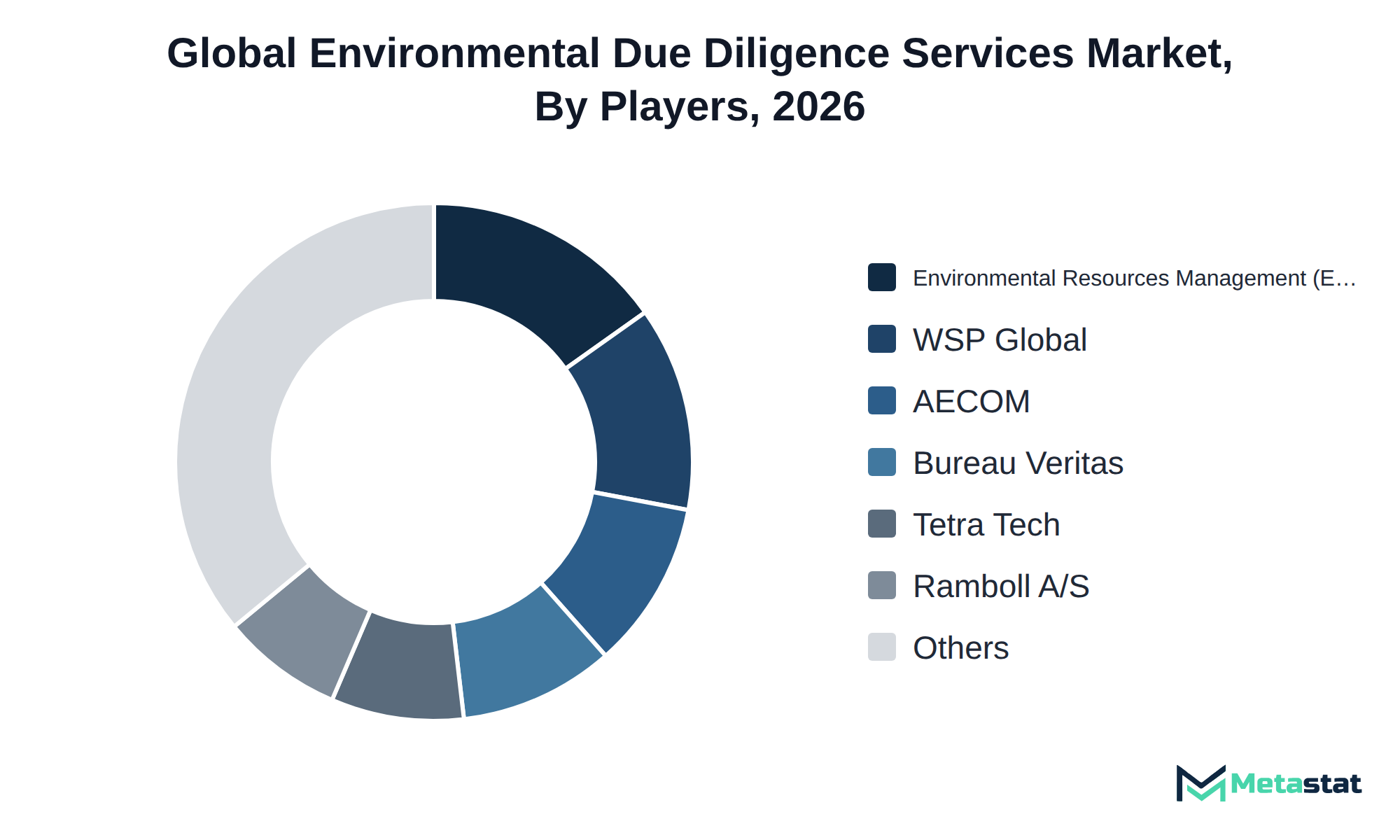
The Environmental Due Diligence Services market comprises various service types, including Phase I and Phase II Environmental Site Assessments, Transaction Screens, and Hazardous Building Materials Surveys. Companies compete based on factors including price, certification, customization, and service quality, with several firms using extensive ecosystems to enhance client offerings.
Environmental Resources Management (ERM) emphasizes a comprehensive suite of environmental consulting services, positioning itself to attract real estate investors and banks focusing on environmental compliance. WSP Global Inc. prioritizes sustainability and innovative solutions, appealing to clients seeking advanced environmental assessments. Tetra Tech, Inc. concentrates on using technology to deliver tailored due diligence services, catering to diverse sectors including industrial and commercial properties.
The growth of the Environmental Due Diligence Services market relies on several key developments. Increased regulatory scrutiny surrounding environmental compliance drives demand, particularly in North America, where the market share stands at 43.6%. Commercial real estate acquisitions and sales expand, leading to a rising need for thorough Phase I Environmental Site Assessments, contributing significantly to revenue growth.
Further, the growing trend of brownfield redevelopment highlights the importance of hazardous building materials surveys and assessment services, supporting a positive outlook for the market. Anticipated demand from banks and commercial lenders, who require diligent risk assessments prior to financing projects, reinforces this upward trajectory.
However, potential economic downturns could hinder growth, particularly impacting spending on due diligence services in sectors sensitive to market fluctuations. A slowdown in commercial real estate activity or tighter budgets among potential buyers could delay project initiation, affecting the overall demand for Environmental Due Diligence Services. Addressing these factors will determine whether the forecasted market size is achieved.
By Service Type: Phase I Environmental Site Assessments, Phase II Environmental Site Assessments, Transaction Screens & Desktop Risk Reviews, Hazardous Building Materials Surveys, EHS Compliance Due Diligence Audits, ESG and Environmental & Social Due Diligence, Others (Vapor Intrusion Assessments, Wetland & Ecological Reviews, Liability Cost Estimation)
By Transaction Type: Commercial Real Estate Acquisitions & Sales, Commercial Real Estate Lending & Refinancing, Mergers, Acquisitions & Divestitures, Brownfield Redevelopment & Land Development, Project & Infrastructure Finance, Others (Lease Inception & Termination, Insurance Underwriting, Portfolio Baselines)
By Property Type: Industrial & Manufacturing Facilities, Commercial Office & Retail Properties, Warehouse & Logistics Facilities, Multifamily & Residential Properties, Fuel Stations & Petroleum Facilities, Energy & Utility Sites, Vacant & Agricultural Land, Data Centers, Others (Hospitality, Healthcare, Institutional Properties)
By End User: Banks & Commercial Lenders, Real Estate Investors, REITs & Property Owners, Private Equity & Corporate Acquirers, Real Estate Developers, Industrial & Energy Companies, Government Agencies & Municipalities, Others (Law Firms, Insurers, Land Trusts)
The report strategically identifies and profiles the key market players and analyses their core competencies in each sub-segment of the Environmental Due Diligence Services market.
Report Attributes | Details |
Study Period | 2021-2033 |
Base Year | 2025 |
Estimated Year | 2026 |
Forecast Period | 2026-2033 |
Historical Period | 2021-2025 |
Growth Rate | CAGR 6.5% from 2026 to 2033 |
Revenue Unit | USD million |
Segmentation | By Service Type, Transaction Type, Property Type, End User, and Region |
By Region | North America (By Service Type, Transaction Type, Property Type, End User, and Country)
|
Europe (By Service Type, Transaction Type, Property Type, End User, and Country)
| |
Asia Pacific (By Service Type, Transaction Type, Property Type, End User, and Country)
| |
South America (By Service Type, Transaction Type, Property Type, End User, and Country)
| |
Middle East and Africa (By Service Type, Transaction Type, Property Type, End User, and Country)
|
Find answers to common questions about this report
The Environmental Due Diligence Services market size was valued at USD 4,969.8 million in 2025.
The market is projected to grow at a CAGR of 6.5% during the forecast period from 2026 to 2033.
The North America Environmental Due Diligence Services market size is estimated to reach USD 3,399.5 million by 2033.
Phase I Environmental Site Assessments lead the Environmental Due Diligence Services market, with a projected value of USD 2,650.8 million by 2033. This segment surpasses others in terms of revenue growth, reflecting a compound annual growth rate of 5.6 percent.
Key drivers for the Environmental Due Diligence Services market include increased emphasis on environmental compliance among banks and commercial lenders, alongside rising investment in Industrial and Manufacturing Facilities. The latter segment is projected to achieve a compound annual growth rate (CAGR) of 5.8% through 2033.
North America holds the dominant share of the Environmental Due Diligence Services market, with a value of USD 3,399.5 million in 2033, representing 43.6 percent of the total market.
Rising costs associated with Environmental Due Diligence Services hinder uptake among banks and commercial lenders. Talent costs represent a significant challenge, with shortages in qualified personnel increasing operational expenses for service providers.
The Environmental Due Diligence Services market is estimated to reach a valuation of USD 8,237.3 million by 2033.
Key players operating in the Environmental Due Diligence Services market include Environmental Resources Management (ERM), WSP Global Inc., AECOM, Ramboll Group A/S, Tetra Tech, Inc., and Arcadis NV.
The Environmental Due Diligence Services market is projected to reach USD 8,237.3 million by 2033.
The analysts below cover Professional Services research at Metastat Insights.
LEAD ANALYST
Utkarsh Khirodkar is a Lead Market Research Analyst at MetaStat Insight, specializing in market intelligence, technology sector assessments, and competitive strategy.

PRINCIPAL CONSULTANT - ENTERPRISE AI & EMERGING TECHNOLOGIES
Banking & Finance · Electronics and Semiconductor · Energy and Power · Healthcare IT · Information & Technology · Professional Services
Vijay Gunti is a Principal Consultant at MetaStat Insight, bringing over two decades of experience across enterprise digital transformation, technology strategy, and intelligent systems.

PRINCIPAL CONSULTANT - QUALITY SYSTEMS & COMPLIANCE
Electronics and Semiconductor · Machinery & Equipment · Professional Services
Omkar Phadtare is an Industry Consultant at MetaStat Insight, specializing in quality systems, regulatory compliance, and standards benchmarking to drive data-driven market intelligence and strategic industry research.

LEAD CONSULTANT - COMMUNICATION, TELECOM, AND IT
Electronics and Semiconductor · Information & Technology · Machinery & Equipment · Professional Services
Ravindra Sathe Consultants for Communication, Telecom, and IT at MetaStat Insight. He leads the firm's industry research initiatives across telecommunications infrastructure, digital connectivity, enterprise networking, and emerging information technology domains.
Enterprise zero-trust network rollouts are often slowed down by multi-cloud transit latency and proprietary hardware retirement schedules. This study provided realistic total cost of ownership models comparing cloud-delivered security edge solutions against traditional hardware refreshes. The analysis of contract renewal lengths and software maintenance fees gave us clear visibility into enterprise replacement cycles over the next three to five years.
Scaling antibody-drug conjugate manufacturing hinges on contract manufacturing availability for high-potency active ingredients. The MetaStat Insight analysis looked closely at global cleanroom slot constraints, bioconjugation batch failure rates, and supply chain redundancies between the US, Europe, and India. The supplier capability matrix proved genuinely useful for our team when mapping secondary source options across our clinical pipeline.
Floating offshore wind feasibility relies heavily on specialized installation vessel availability and port crane limits, which most broad renewable energy forecasts ignore. The report delivered a thorough analysis of dry dock capacity, mooring chain supply constraints, and raw material pricing trends for deepwater anchor installations. It served as a solid independent sanity check for our offshore project capital expenditure assumptions.
Explore related market intelligence reports worth reading alongside this one.