
Explore the driving factors behind the dominance of Polyvinyl Butyral in the Laminated Glass market, showcasing its applications and future prospects.
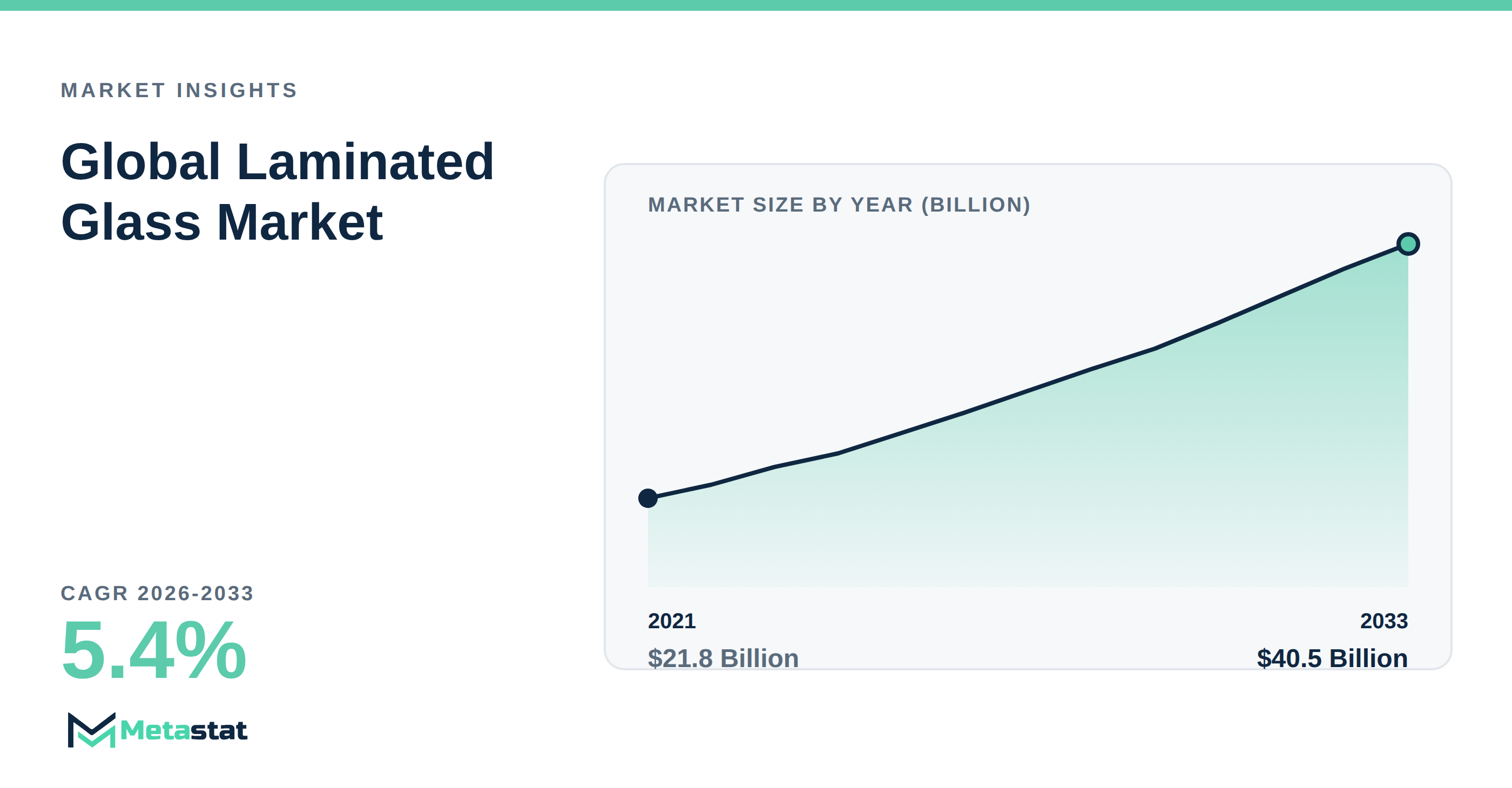
The Polyvinyl Butyral (PVB) segment stands out because the leader in the Laminated Glass market, projected to grow from USD 26.6 billion in 2025 to USD 40.5 billion by 2033, which corresponds to a compound annual growth rate (CAGR) of 5.4%. The PVB segment itself is forecast to reach USD 24.7 billion by 2033, having been valued at USD 18.3 billion in 2026. This success stems from its extensive use across various applications, particularly in construction and automotive sectors, with several factors reinforcing its prominent position.
What drives PVB's market leadership?
A primary factor contributing to the robust growth of the PVB segment involves its exceptional adhesive properties, which enhance safety and structural integrity. In construction applications, PVB is highly valued for its impact resistance and sound insulation capabilities, making it an essential choice for façades, windows, and doors. These properties align seamlessly with evolving regulatory standards that prioritize safety and performance in materials used for construction.
How does PVB compare with other interlayers?
While alternative interlayer types, including Ionoplast and Ethylene Vinyl Acetate (EVA), are gaining traction in the Laminated Glass market, PVB continues to maintain its leading position due to its established history and extensive certifications. The Ionoplast segment, for instance, is expected to attain USD 7.7 billion by 2033, driven by its high-performance characteristics. However, PVB still commands a significant share of the market. Continuous innovations in PVB manufacturing processes further refine its performance, making it a resilient option for both manufacturers and builders.
What are the regulatory impacts on PVB demand?
Regulatory frameworks play a crucial role in driving the demand for PVB. Builders focused on fulfilling increasingly stringent safety regulations frequently find PVB an appealing material choice. Its capacity to meet essential performance benchmarks strongly influences construction companies striving for competitiveness in the market. Regulatory incentives encouraging sustainable and secure building practices promote the adoption of laminated glass solutions featuring PVB, thereby enhancing its market positioning.
What are the future prospects for the PVB segment?
The future for the PVB segment looks promising, particularly because ongoing research into its formulations leads to enhancements in performance characteristics. Manufacturers are positioned to leverage technological advancements to introduce next-generation solutions that cater to changing consumer demands. The anticipated growth in demand for energy-efficient and visually appealing building materials will enable PVB to capture an even larger share of the market across various applications.
In summary, the ongoing emphasis on safety, energy efficiency, and architectural design allows the Polyvinyl Butyral segment to thrive within the Laminated Glass market. Stakeholders should take these dynamics into account when formulating strategies to optimize their opportunities in this expanding market. For further insights, refer to the Global Laminated Glass Market.
Tags
About the Authors

LEAD ANALYST
Utkarsh Khirodkar is a Lead Market Research Analyst at MetaStat Insight, specializing in market intelligence, technology sector assessments, and competitive strategy.

INDUSTRY CONSULTANT - CHEMICALS & ADVANCED MATERIALS
Chemicals and Materials · Machinery & Equipment · Packaging
Amit Gadhekar Consultant for Chemicals and Materials at MetaStat Insight, directing sector-specific intelligence, research, and strategic consulting across global chemical and processing markets.