
The food and beverage segment is driving growth in the Flexographic Printing Machine market, reflecting changing consumer preferences and advanced technology adoption.
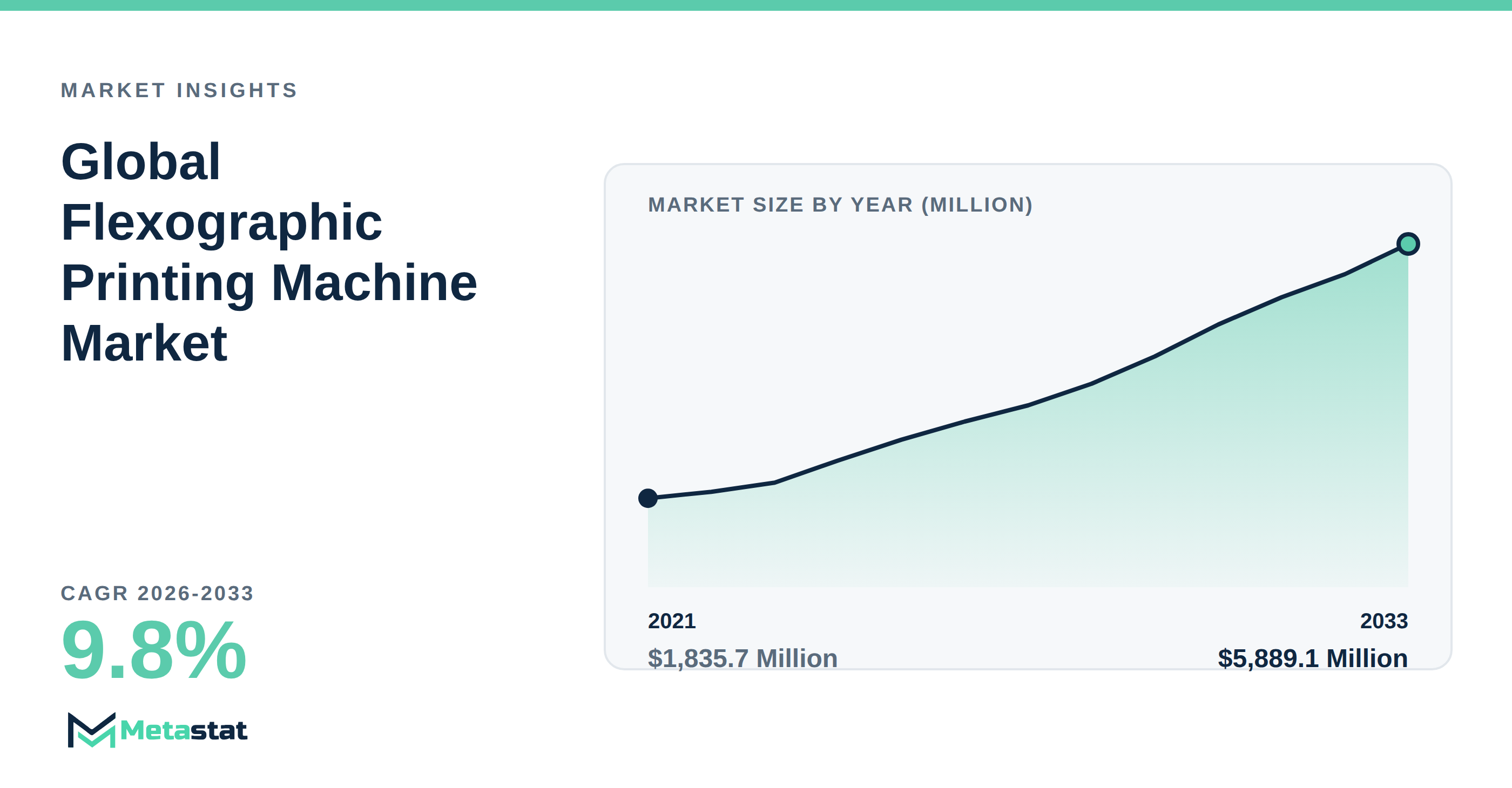
The food and beverage sector is significantly pulling ahead in the Flexographic Printing Machine market, driven by evolving consumer preferences and increasing demand for packaging solutions. Recent projections indicate that the market for flexographic printing machines in this segment is set to increase from USD 1,371.3 million in 2026 to USD 2,571.2 million by 2033. This growth showcases a compound annual growth rate (CAGR) of 9.4%, underscoring the substantial impact of the food and beverage industry on the overall expansion of flexographic printing technology.
What factors are driving growth in the food and beverage segment?
Several key factors contribute to the acceleration of the food and beverage segment within the Flexographic Printing Machine market. Consumer demand for packaged foods is on the rise, fueled by the growing emphasis on convenience and hygiene. Consumers increasingly prefer products that offer easy-to-use packaging, compelling manufacturers to adopt advanced printing solutions that enhance packaging aesthetics and functionality.
The expansion of e-commerce has intensified competition among brands, necessitating high-quality packaging that stands out in the digital marketplace. Companies are responding by investing in flexographic printing technologies, which provide the necessary quality and efficiency to produce eye-catching prints on various substrates, thus capturing consumer attention.
How do technological advancements impact this segment?
Technological advancements play a critical role in enhancing the capabilities of flexographic printing machines used in the food and beverage sector. The introduction of smart features, including IoT integration, facilitates real-time monitoring of production processes, leading to increased operational efficiency and reduced waste. These innovations enable manufacturers to meet stringent regulatory standards while maintaining high quality.
Improvements in automation and digital printing technology allow for faster production rates and greater customization options. This adaptability aligns with the industry's shift toward sustainability and eco-friendly packaging solutions, further driving the adoption of flexographic printing machines among food and beverage manufacturers.
What challenges does the food and beverage segment face?
Despite the optimism surrounding growth in the food and beverage segment, several challenges persist. Companies encounter pressures related to capital expenditures, particularly when investing in advanced flexographic printing technologies. The necessity for well-trained operators to manage sophisticated machinery presents a significant hurdle, because many facilities struggle to find skilled workers.
To counter these challenges, manufacturers increasingly turn to automation solutions and invest in employee training programs. By enhancing workforce capabilities and operational efficiency, companies maintain their competitive edge in a shifting market landscape.
What does the future hold for the food and beverage segment?
The outlook for the food and beverage segment within the Flexographic Printing Machine market remains promising. With projections indicating continued growth and increasing consumer demand for sustainable packaging options, manufacturers are well-positioned to capitalize on these trends. Investment in next-generation upgrades will play a vital role in meeting market demands, enabling manufacturers to deliver innovative packaging solutions that cater to evolving consumer preferences.
Future success in the segment hinges on the ability of companies to navigate challenges while embracing technological advancements. While the food and beverage sector continues to expand and evolve, so too will the opportunities associated with flexographic printing machinery.
For a comprehensive analysis of the market dynamics and trends shaping the Flexographic Printing Machine sector, access the Global Flexographic Printing Machine Market.
Tags
About the Authors

LEAD ANALYST
Utkarsh Khirodkar is a Lead Market Research Analyst at MetaStat Insight, specializing in market intelligence, technology sector assessments, and competitive strategy.

SENIOR RESEARCH ANALYST
Biotechnology · Food and Beverages · Medical Devices · Packaging
Snehal Pasalkar is a Research Analyst at MetaStat Insight, operating at the intersection of life sciences research, competitive strategy, and market intelligence.

INDUSTRY CONSULTANT - CHEMICALS & ADVANCED MATERIALS
Chemicals and Materials · Machinery & Equipment · Packaging
Amit Gadhekar Consultant for Chemicals and Materials at MetaStat Insight, directing sector-specific intelligence, research, and strategic consulting across global chemical and processing markets.