Explore the dynamics driving the Maritime Methanol market, including regulatory pressures, technological advancements, and infrastructure investments. Learn about the challenges companies face and the future outlook for this evolving sector.
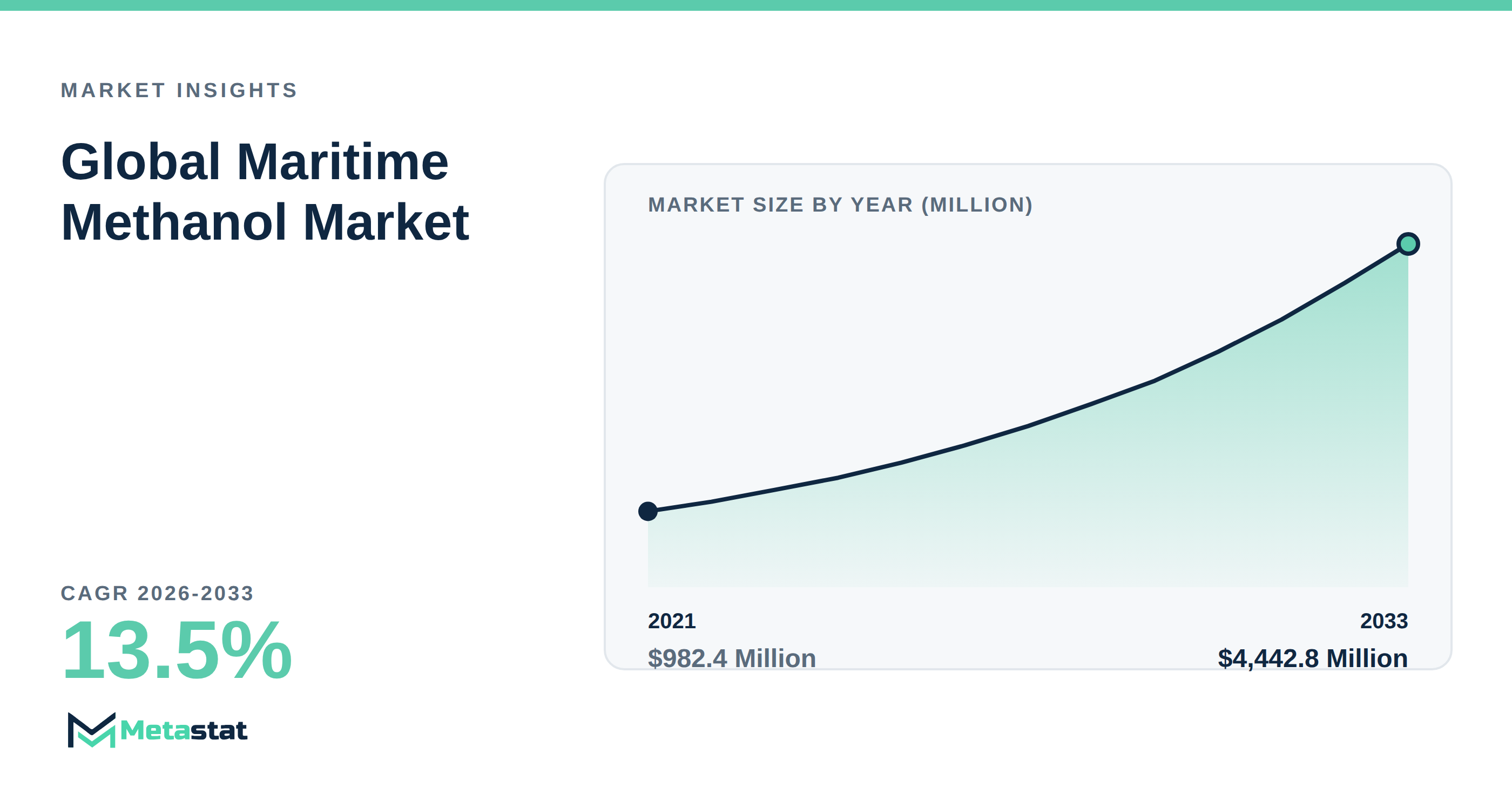
The Maritime Methanol market is on a notable growth trajectory, expected to reach USD 4,442.8 million by 2033, a significant rise from USD 1,612.7 million in 2025. This compelling increase is primarily attributed to a seismic shift toward sustainable fuel alternatives in the maritime shipping industry, driven by stringent regulatory requirements and advancements in technology.
How regulatory pressures are shaping the maritime methanol market
Regulatory pressures play a significant role in accelerating the adoption of maritime methanol. Increasingly stringent emissions regulations enforced by the International Maritime Organization (IMO) compel shipping operators to seek cleaner alternatives to traditional fuels. The heightened focus on reducing carbon footprints drives companies to prioritize methanol because a viable option recognized for its lower emissions compared to conventional fuels. Operators align their strategies with evolving regulatory frameworks, leading to greater investments in maritime methanol solutions.
What technological advancements mean for the maritime methanol market
Technological advancements are a crucial driving force behind the growth of the Maritime Methanol market. Improvements in methanol production processes and fuel cell technology enhance the overall efficiency and viability of methanol because a marine fuel. Innovations including blue and bio-methanol production techniques contribute to a lower carbon footprint, appealing to environmentally conscious stakeholders. The integration of advanced technologies into existing logistics architectures enables smoother transitions to cleaner fuels, further supporting market growth.
How infrastructure investment influences market expansion
Investment in infrastructure significantly influences the Maritime Methanol market's progress. Enhanced port facilities, modernized vessel capabilities, and the construction of energy-efficient refueling stations streamline the adoption of methanol because a primary fuel alternative. Governments and private entities allocate resources toward developing these infrastructures to support low-carbon energy solutions. The emerging infrastructure not only addresses the immediate demands of the maritime sector but creates long-term benefits that enhance operational productivity and reduce overall costs associated with the fuel transition.
What challenges companies face in the maritime methanol market
Despite the favorable growth conditions, companies in the Maritime Methanol market encounter challenges, particularly surrounding high capital investment requirements. The initial costs associated with establishing methanol production facilities and related infrastructure deter smaller enterprises from entering the market. Rising operational costs linked to raw material prices and labor contribute to margin pressures, complicating profitability for operators. Navigating these financial barriers is crucial for companies aiming to secure a competitive advantage in this evolving landscape.
Where the Maritime Methanol market is heading
Looking ahead, the Maritime Methanol market is poised for continued growth. Emerging regional demands, particularly from the Asia-Pacific and European markets, highlight the urgent need for cleaner fuel solutions. Investment dynamics reflect a commitment to sustainability, with companies like Methanex Corporation and Proman AG leading efforts to enhance production capabilities and integrate low-carbon solutions into operations. While the maritime industry prioritizes environmental responsibility, the dynamics of the market will evolve, creating new opportunities for stakeholders committed to the transition toward sustainable practices.
For further insights and detailed analysis, check out the Global Maritime Methanol Market.
Tags
About the Authors

LEAD ANALYST
Utkarsh Khirodkar is a Lead Market Research Analyst at MetaStat Insight, specializing in market intelligence, technology sector assessments, and competitive strategy.

ENERGY & INFRASTRUCTURE INDUSTRY CONSULTANT
Automotive and Transportation · Electronics and Semiconductor · Energy and Power · Machinery & Equipment
Saurabh Vasant Ganvir consults for Energy & Infrastructure Industry at MetaStat Insight, specializing in renewable energy, solar EPC, and electric vehicle (EV) infrastructure markets.