
The onshore segment is set to outpace others in the Oil and Gas Exploration and Production market due to technological advancements and increased production capabilities. Learn more about its growth drivers.
The onshore segment within the Oil and Gas Exploration and Production market is positioned to outperform other segments, demonstrating significant growth prospects through 2033. Estimated at USD 3,214 billion in 2026, this segment is anticipated to rise to USD 4,647.8 billion by 2033, reflecting a compound annual growth rate (CAGR) of 5.4%. This growth stems from advancements in extraction technologies, an increase in domestic production, and ongoing technological innovations.
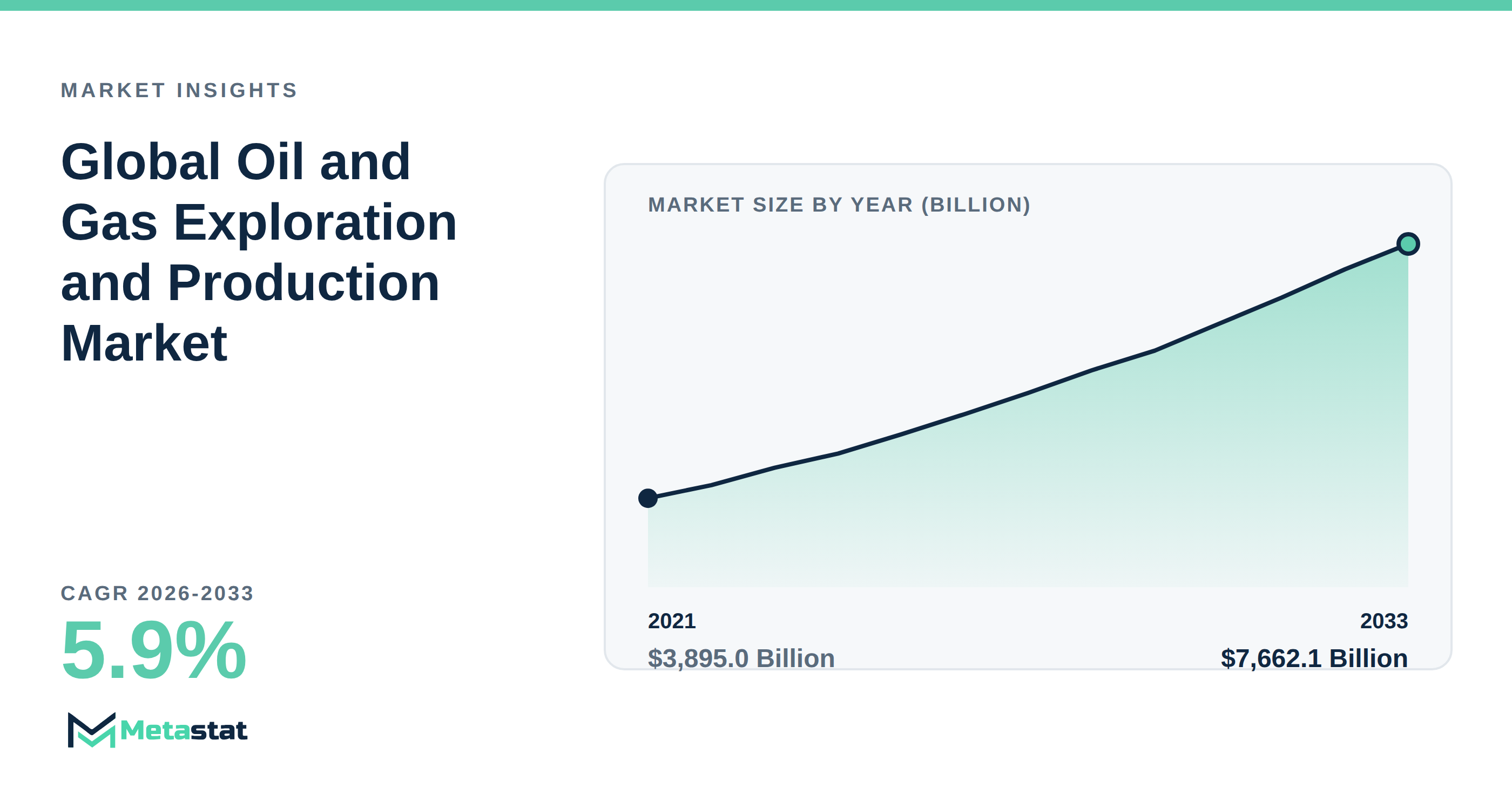
Strong demand for oil and gas persists across numerous industries, particularly in regions rich in resources including North America and the Middle East. Enhanced recovery techniques, including horizontal drilling and hydraulic fracturing, lead to greater efficiency and cost reductions in this segment. These technological advancements enable operators to tap into previously inaccessible reserves, significantly boosting production capabilities.
What factors are driving growth in the onshore segment?
The trajectory of the onshore segment's growth is closely linked to increased domestic production capabilities. Countries with ample onshore reserves emphasize energy independence through substantial investments in exploration and production activities. The optimization of existing resources plays a vital role, allowing companies to improve their operational efficiencies while managing costs effectively.
Technological advancements are crucial to the success of the onshore segment. While extraction technologies advance, operators adopt more efficient methods that contribute to lower operational expenses. Compliance with regulatory standards and sustainability initiatives remains essential, because operators increasingly focus on reducing their environmental footprint while optimizing output.
How do regulatory compliance and sustainability impact the onshore market?
Compliance with regulations significantly shapes operational strategies in the onshore segment. Companies feel the pressure to meet environmental standards, necessitating investments in sustainable practices and advanced technologies. This alignment with environmental initiatives enhances public perception and opens avenues for new capital investments.
The emphasis on sustainability aligns with a broader industry transition toward environmental, social, and governance (ESG) considerations. The growing consumer preference for eco-friendly energy sources compels operators to diversify their product offerings. By adapting to these trends, companies position themselves to capture market share while contributing to a sustainable transformation in the sector.
What challenges do onshore operators face?
Despite the positive outlook for the onshore segment, operators confront challenges related to pricing volatility and rising operational costs. Fluctuating oil prices impact profitability and complicate long-term planning efforts. Supply chain disruptions arising from geopolitical tensions impede the availability of essential resources, influencing project timelines.
The challenge of attracting and retaining skilled talent remains a concern, with a shortage of qualified labor restricting operators' abilities to adapt swiftly to emerging technologies and processes. Companies navigate these complexities to ensure continued operational efficiency and competitiveness.
What opportunities lie ahead for the onshore segment?
The growth potential within the onshore segment presents numerous opportunities for operators. Investments in existing infrastructure, including maintenance upgrades and retrofitting, enhance efficiency and maximize outputs. Strategic exploration of previously untapped resources offers pathways for expansion, enabling firms to respond effectively to increasing energy demands.
While the Oil and Gas Exploration and Production market continues to evolve, the onshore segment's focus on innovation and sustainability positions it favorably for sustained growth. Companies prioritizing advanced technologies and sustainable practices are likely to succeed in this competitive landscape, capitalizing on emerging opportunities while addressing evolving consumer expectations.
To explore more detailed insights into the trends and forecasts impacting the Oil and Gas Exploration and Production market, refer to the Global Oil and Gas Exploration and Production Market report for a comprehensive analysis of various segments and dynamics.
Tags
About the Authors

LEAD ANALYST
Utkarsh Khirodkar is a Lead Market Research Analyst at MetaStat Insight, specializing in market intelligence, technology sector assessments, and competitive strategy.

PRINCIPAL CONSULTANT - ENTERPRISE AI & EMERGING TECHNOLOGIES
Banking & Finance · Electronics and Semiconductor · Energy and Power · Healthcare IT · Information & Technology · Professional Services
Vijay Gunti is a Principal Consultant at MetaStat Insight, bringing over two decades of experience across enterprise digital transformation, technology strategy, and intelligent systems.

ENERGY & INFRASTRUCTURE INDUSTRY CONSULTANT
Automotive and Transportation · Electronics and Semiconductor · Energy and Power · Machinery & Equipment
Saurabh Vasant Ganvir consults for Energy & Infrastructure Industry at MetaStat Insight, specializing in renewable energy, solar EPC, and electric vehicle (EV) infrastructure markets.