
LEAD ANALYST
Utkarsh Khirodkar is a Lead Market Research Analyst at MetaStat Insight, specializing in market intelligence, technology sector assessments, and competitive strategy.

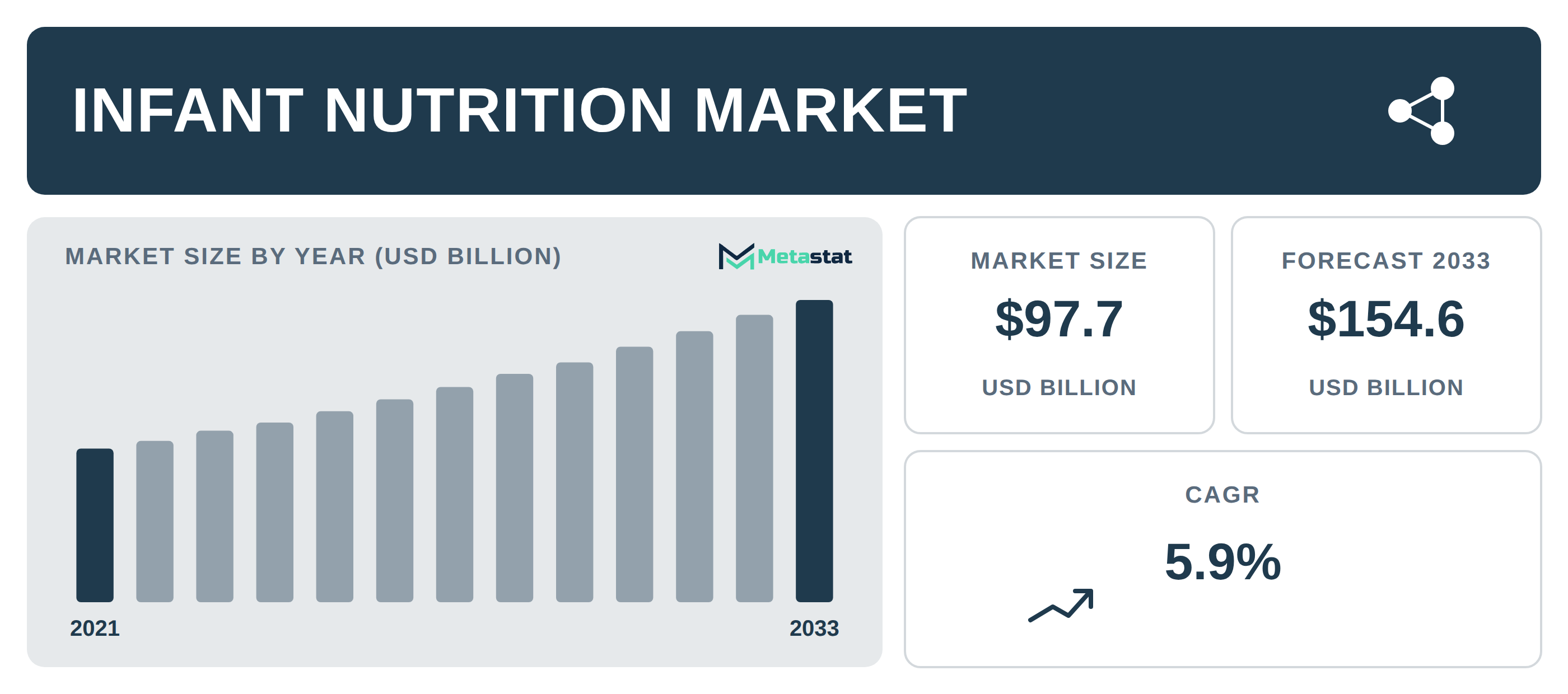
Metastat Insights has published a report on the Global Infant Nutrition market, forecasting growth from USD 97.7 billion in 2025 to USD 154.6 billion by 2033, with a CAGR of 5.9%. Key segments include various ingredient types and age groups.
Metastat Insights has published "Global Infant Nutrition Market Size, Share, By Ingredient Type (Fats & Structured Lipids, Proteins & Amino Acids, Carbohydrates & Prebiotics, Human Milk Oligosaccharides, Vitamins & Minerals and Others (Probiotics, Nucleotides)), By Age Group (0-6 Months, 6-12 Months, 1-2 Years and 2-3 Years), By Product Type (Infant Formula, Follow-on Formula, Growing-up Milk and Others (Baby Food)), By Distribution Channel (Supermarkets & Hypermarkets, Pharmacies & Drugstores, Specialty Baby Stores, Online Retail and Others (Hospitals, Healthcare Facilities, Direct Sales)), Industry Analysis, Growth, Trends, and Forecast, 2026-2033", which indicates the market value was USD 97.7 billion in 2025 and is anticipated to reach USD 154.6 billion by 2033, reflecting a compound annual growth rate (CAGR) of 5.9%.
Growing awareness of health and wellness among parents plays a crucial role in driving demand for premium infant nutrition products. Parents increasingly prioritize nutritious options that provide significant health benefits to their infants. This trend correlates with demographic shifts, including urbanization and changing purchasing behaviors. Rising disposable incomes facilitate increased spending on quality nutrition products. The increasing demand for organic and natural ingredients encourages manufacturers to emphasize clean-label products that align with consumer preferences.
Challenges within the Infant Nutrition market stem from regulatory compliance and economic factors. Stricter regulations in various regions introduce complex compliance requirements for manufacturers, which delay product launches and elevate operational expenses. Legal mandates regarding ingredient sourcing and labeling necessitate extensive documentation, particularly impacting smaller firms. Economic pressures, including inflation, raise raw material and production costs, which lead to prices exceeding what consumers are willing to pay. Supply chain disruptions further complicate logistics and product availability.
The Global Infant Nutrition market is segmented across multiple dimensions, including ingredient type, age group, product type, and distribution channels. Key ingredient segments, including fats and structured lipids, proteins and amino acids, carbohydrates and prebiotics, and human milk oligosaccharides, demonstrate strong growth rates. Regionally, the Asia Pacific leads with a market share of 44.4%, followed by North America at 23.8% and Europe at 20.7%. The segment for infants aged 0-6 months is expected to experience significant growth, projected to rise from USD 37.9 billion in 2026 to USD 54.1 billion by 2033.
Numerous well-known companies operate within the Infant Nutrition market, including Abbott Laboratories, Reckitt, Danone, and Nestlé. These companies consistently invest in research and development to enhance their product offerings and respond to evolving consumer needs. Their strategic initiatives focus on innovation, sustainability, and adherence to regulatory standards, ensuring they remain competitive in this growing market.
For further insights and detailed analysis, readers are invited to explore the full report: Global Infant Nutrition Market.
Related Report
Global Infant Nutrition MarketLEAD ANALYST
Utkarsh Khirodkar is a Lead Market Research Analyst at MetaStat Insight, specializing in market intelligence, technology sector assessments, and competitive strategy.

LEAD PRINCIPAL ANALYST, PHARMA AND HEALTHCARE
Food and Beverages · Healthcare · Healthcare IT · Medical Devices
Ajay Devgire is the Lead Healthcare Analyst at MetaStat Insight, leading strategic research and market intelligence initiatives across the global healthcare domain.

SENIOR RESEARCH ANALYST
Biotechnology · Food and Beverages · Medical Devices · Packaging
Snehal Pasalkar is a Research Analyst at MetaStat Insight, operating at the intersection of life sciences research, competitive strategy, and market intelligence.