
LEAD ANALYST
Utkarsh Khirodkar is a Lead Market Research Analyst at MetaStat Insight, specializing in market intelligence, technology sector assessments, and competitive strategy.

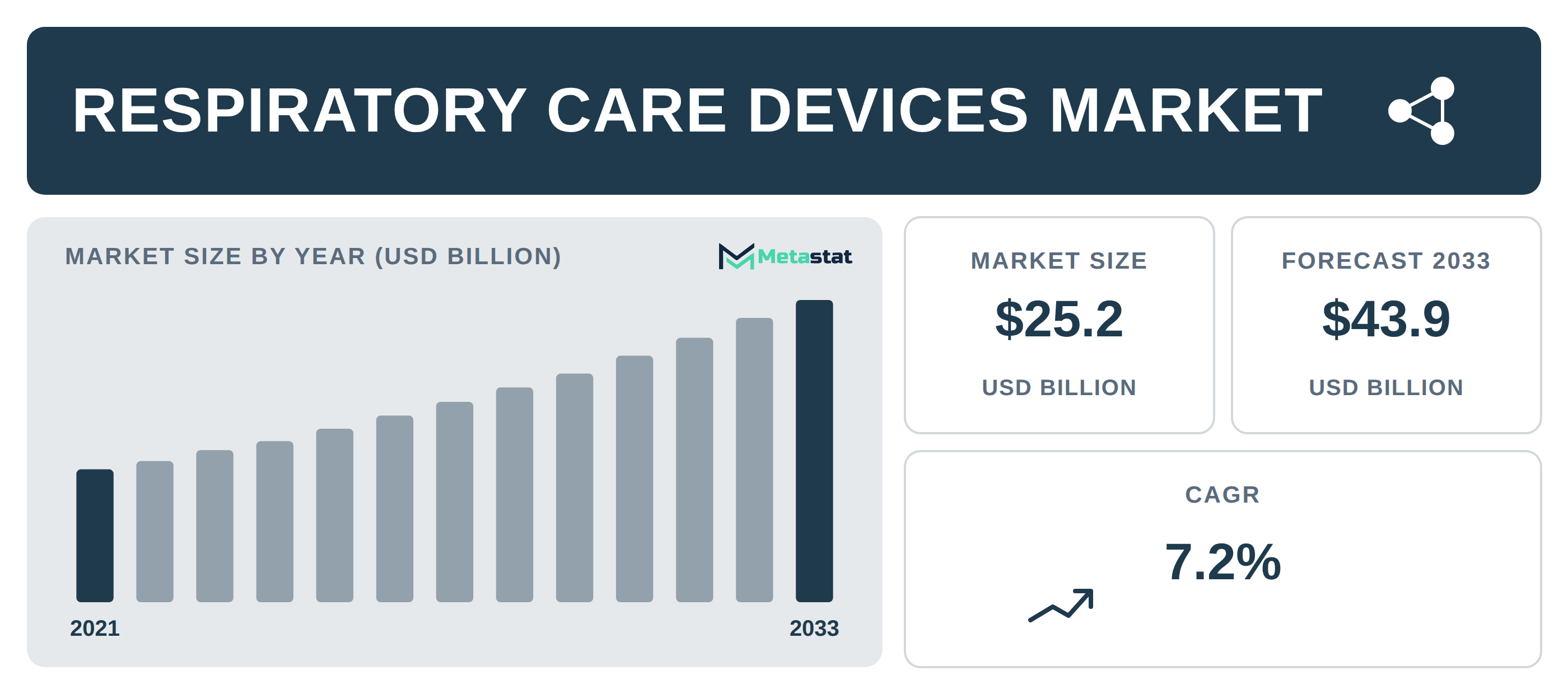
Metastat Insights has released a comprehensive report on the Global Respiratory Care Devices Market, which is projected to grow from USD 25.2 billion in 2025 to USD 43.9 billion by 2033, at a CAGR of 7.2%. This report outlines key trends, challenges, and competitive dynamics in the market.
Metastat Insights has published "Global Respiratory Care Devices Market Size, Share, By Product (Therapeutic Device, Monitoring Devices and Diagnostic Devices), By Application (Chronic Obstructive Pulmonary Disease (COPD), Sleep Apnea, Asthma and Infectious Diseases), By Diagnostic Devices (Spirometers, Polysomnography Devices and Peak Flow Meters), By End Use (Point of Care and Hospitals), Industry Analysis, Growth, Trends, and Forecast, 2026-2033", covering key market figures including a valuation of USD 25.2 billion in 2025 and a projected growth to USD 43.9 billion by 2033, reflecting a CAGR of 7.2% during this period.
The growing elderly population and the rising occurrence of respiratory diseases are crucial factors affecting the respiratory care devices market. Chronic conditions including Chronic Obstructive Pulmonary Disease (COPD) and asthma are becoming more widespread, leading healthcare professionals to pursue effective therapeutic interventions. Public health initiatives aimed at preventive healthcare underscore the necessity of respiratory well-being, resulting in heightened investments in medical technologies. Increasing urbanization leads to greater exposure to pollutants and allergens, which worsen respiratory issues. The development of advanced therapeutic and monitoring devices illustrates a trend toward proactive health management and improved patient outcomes.
Regulatory challenges impose significant constraints on the market's growth trajectory. Adherence to rigorous regulations increases operational complexities and heightens the cost burdens for manufacturers. Legal requirements surrounding product safety and effectiveness necessitate extensive investments in testing and certification. Geopolitical factors disrupt supply chains, potentially causing delays in product availability. Workforce shortages and a lack of skilled labor present operational difficulties, hindering the adoption of new technologies. These elements create an intricate environment that complicates the growth of the respiratory care devices market.
The respiratory care devices market is categorized by product types, applications, diagnostic devices, and end-use settings. Therapeutic devices represent the largest segment, anticipated to increase from USD 19.7 billion in 2026 to USD 31.7 billion by 2033. The monitoring devices segment is projected to achieve USD 6.9 billion by 2033, driven by innovations in remote patient monitoring technologies. The diagnostic devices segment, which includes spirometers and polysomnography devices, is expected to grow in alignment with the rising prevalence of respiratory diseases.
Numerous companies contribute to the competitive environment, including Drägerwerk AG & Co. KGaA, Fisher & Paykel Healthcare Limited, General Electric Company, Masimo, and ResMed. These firms prioritize innovation and significant investments in research and development to improve their product offerings and market presence. Their focus on advancing respiratory care technologies aligns with the increasing need for efficient solutions in managing respiratory conditions.
Readers learn more about market dynamics and forecasts in the full report, available at Global Respiratory Care Devices Market.
Related Report
Global Respiratory Care Devices MarketLEAD ANALYST
Utkarsh Khirodkar is a Lead Market Research Analyst at MetaStat Insight, specializing in market intelligence, technology sector assessments, and competitive strategy.

LEAD PRINCIPAL ANALYST, PHARMA AND HEALTHCARE
Food and Beverages · Healthcare · Healthcare IT · Medical Devices
Ajay Devgire is the Lead Healthcare Analyst at MetaStat Insight, leading strategic research and market intelligence initiatives across the global healthcare domain.

SENIOR RESEARCH ANALYST
Biotechnology · Food and Beverages · Medical Devices · Packaging
Snehal Pasalkar is a Research Analyst at MetaStat Insight, operating at the intersection of life sciences research, competitive strategy, and market intelligence.