
LEAD ANALYST
Utkarsh Khirodkar is a Lead Market Research Analyst at MetaStat Insight, specializing in market intelligence, technology sector assessments, and competitive strategy.

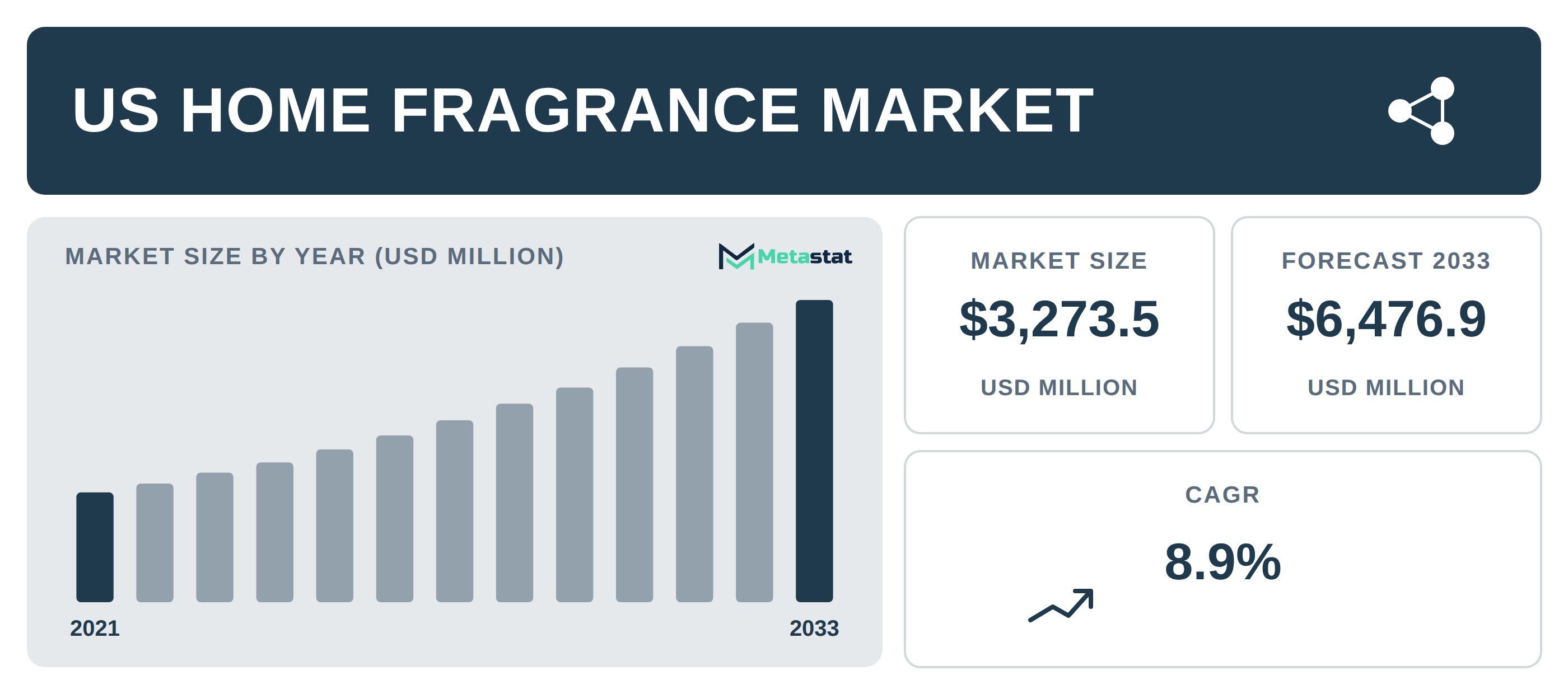
Metastat Insights has released a comprehensive report on the US Home Fragrance market, projecting significant growth from USD 3,273.5 million in 2025 to USD 6,476.9 million by 2033, with a CAGR of 8.9%. The report analyzes market dynamics, trends, and key players shaping this evolving sector.
Metastat Insights has published "US Home Fragrance Market Size, Share, By Product Type (Scented Candles, Wax Melts and Wax Warmers, Plug-In Scented Oils and Electric Diffusers, Reed Diffusers, Smart and Connected Fragrance Diffusers, Room Sprays and Aerosols, Essential Oil and Ultrasonic Diffusers, Potpourri and Sachets, Others), By Fragrance Family (Fresh and Clean, Floral, Fruity, Citrus, Gourmand, Woody, Amber and Musk, Green and Herbal, Others), By Price Range (Economy, Mid-Range, Premium and Luxury), By Distribution Channel (Company-Owned Retail Stores, Specialty Gift and Home Fragrance Stores, Department Stores, Mass Merchandisers, Supermarkets and Grocery Stores, Drugstores and Pharmacies, Online, Others), Industry Analysis, Growth, Trends, and Forecast, 2026-2033", followed by headline figures (USD 3,273.5 million in 2025, USD 6,476.9 million by 2033, 8.9% CAGR).
Growing awareness among consumers regarding home ambiance significantly influences the demand for the US Home Fragrance market. This trend highlights a shift toward enhancing personal well-being, because consumers increasingly seek products that contribute to inviting and pleasant living spaces. Urbanization further supports this growth, resulting from city dwellers looking for effective ways to enhance their environments. The range and convenience of home fragrance products attract busy consumers who appreciate functionality alongside aesthetics. Both older and younger demographics are investing in premium fragrance items, aligning with a broader trend favoring luxury home fragrance products.
The US Home Fragrance market faces notable challenges stemming from regulatory compliance and stricter standards. Such regulations lead to increased production costs that hinder innovation, affecting overall market growth. Macroeconomic factors, including inflationary pressures, complicate conditions, because rising raw material costs result in higher prices and diminished consumer spending on premium offerings. Supply chain disruptions further amplify these challenges, impacting the availability of essential materials and causing delays for manufacturers. Competition from alternative fragrance solutions poses risks, necessitating continual innovation from companies.
The US Home Fragrance market segments into various categories, including product types, fragrance families, price ranges, and distribution channels. Scented candles hold a dominant position with a 42.7% market share, followed by plug-in scented oils and electric diffusers, which account for 13.9%. Fragrance families encompass floral, fruity, citrus, and gourmand options, with diverse consumer preferences driving demand. Regional dynamics are crucial, because urban areas demonstrate higher adoption rates for fragrance products, reflecting a growing focus on home aesthetics, particularly among younger consumers.
Competition in the market features several key players, including ScentAir, Newell Brands Inc. (Yankee Candle), Scentsy, Inc., Reckitt Benckiser Group plc (Air Wick), S. C. Johnson & Son, Inc. (Glade), and The Procter & Gamble Company (Febreze). Other notable firms include NEST New York, Voluspa, Capri Blue, and Bath & Body Works. These companies are adapting to shifting consumer preferences by investing in innovative product lines and emphasizing sustainability to strengthen their market presence.
For a comprehensive overview of the market dynamics and projections, visit the full report: US Home Fragrance Market.
Related Report
US Home Fragrance MarketLEAD ANALYST
Utkarsh Khirodkar is a Lead Market Research Analyst at MetaStat Insight, specializing in market intelligence, technology sector assessments, and competitive strategy.