
LEAD ANALYST
Utkarsh Khirodkar is a Lead Market Research Analyst at MetaStat Insight, specializing in market intelligence, technology sector assessments, and competitive strategy.

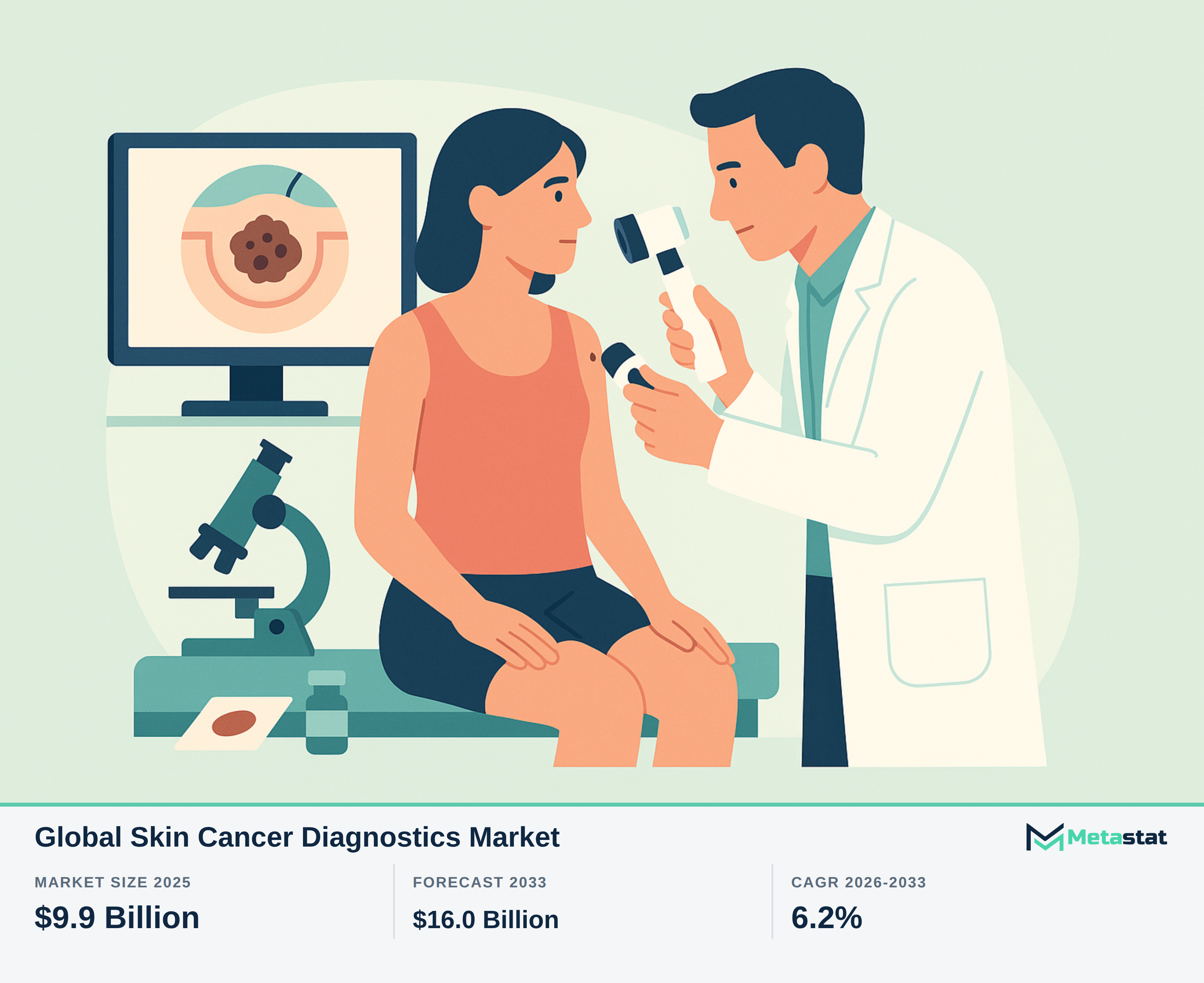
Metastat Insights has published a comprehensive report on the Global Skin Cancer Diagnostics market, which is expected to grow from USD 9.9 billion in 2025 to USD 16 billion by 2033, at a CAGR of 6.2%. The report covers key drivers, challenges, market segmentation, and leading players in the industry.
Metastat Insights has published "Global Skin Cancer Diagnostics Market Size, Share, By Cancer Type (Melanoma and Non-melanoma), By Application Area (Melanoma Detection and Monitoring, Non-Melanoma Skin Cancer Detection, Basal Cell Carcinoma Diagnosis, Squamous Cell Carcinoma Diagnosis, Pre-Cancerous Lesion Identification, Skin Lesion Monitoring and Surveillance, Others (Rare Skin Cancers and Genetic Risk Assessment)), By End User (Dermatology Clinics, Hospitals and Specialty Cancer Centers, Diagnostic Imaging Centers, Primary Care Clinics, Skin Cancer Screening Service Providers, Research and Academic Institutions, Others (Corporate Wellness Screening Providers and Mobile Screening Units)), Industry Analysis, Growth, Trends, and Forecast, 2026-2033", followed by the headline figures (USD 9.9 billion in 2025, USD 16 billion by 2033, 6.2% CAGR).
The increasing occurrence of skin cancer significantly drives the Skin Cancer Diagnostics market. Factors contributing to this trend include demographic shifts, particularly aging populations that face higher risks. Enhanced awareness regarding skin cancer, propelled by educational campaigns, encourages early detection and diagnosis. This awareness leads patients to actively seek diagnostic solutions, boosting demand across various healthcare settings. Investment in advanced diagnostic technologies is critical for market expansion. The integration of artificial intelligence and automation in diagnostic processes improves accuracy and efficiency, making these technologies appealing to healthcare providers.
Regulatory challenges significantly impact the Skin Cancer Diagnostics market. Stringent compliance hurdles and evolving legal mandates create barriers for market players, affecting their ability to innovate and offer new diagnostic solutions. These hurdles often lead to increased operational costs and extended product development timelines, ultimately slowing the pace of technological advancements. Macroeconomic headwinds, including inflationary pressures and currency volatility, complicate the market landscape, affecting pricing strategies and profit margins for companies.
The Skin Cancer Diagnostics market is segmented by cancer type, application area, and end user. By cancer type, the market encompasses melanoma and non-melanoma categories. The melanoma segment is projected to reach USD 6.4 billion by 2033, driven by the rising incidences of melanoma globally. The non-melanoma segment is estimated to reach USD 9.6 billion by 2033, reflecting growing awareness about skin cancer and advancements in diagnostic technologies. Regionally, North America held a significant market share of 40.3% in 2025, with the US leading the market share in 2026.
The competitive environment features a diverse array of participants in the Skin Cancer Diagnostics market. Key organizations include FotoFinder Systems GmbH, 3Gen Inc. (DermLite), and MoleMap, contributing to market fragmentation. The presence of numerous small and mid-sized enterprises encourages innovation and accelerates the introduction of novel diagnostic technologies. Companies increasingly prioritize sustainability and circular economy initiatives, connecting with environmentally conscious consumers. Strategic capital allocation and infrastructure investments will be crucial for maintaining a competitive advantage amid the evolving economic environment.
Readers are invited to explore the complete findings in the full report: Global Skin Cancer Diagnostics Market.
Related Report
Global Skin Cancer Diagnostics MarketLEAD ANALYST
Utkarsh Khirodkar is a Lead Market Research Analyst at MetaStat Insight, specializing in market intelligence, technology sector assessments, and competitive strategy.

LEAD PRINCIPAL ANALYST, PHARMA AND HEALTHCARE
Food and Beverages · Healthcare · Healthcare IT · Medical Devices
Ajay Devgire is the Lead Healthcare Analyst at MetaStat Insight, leading strategic research and market intelligence initiatives across the global healthcare domain.

SENIOR RESEARCH ANALYST
Biotechnology · Food and Beverages · Medical Devices · Packaging
Snehal Pasalkar is a Research Analyst at MetaStat Insight, operating at the intersection of life sciences research, competitive strategy, and market intelligence.