
LEAD ANALYST
Utkarsh Khirodkar is a Lead Market Research Analyst at MetaStat Insight, specializing in market intelligence, technology sector assessments, and competitive strategy.

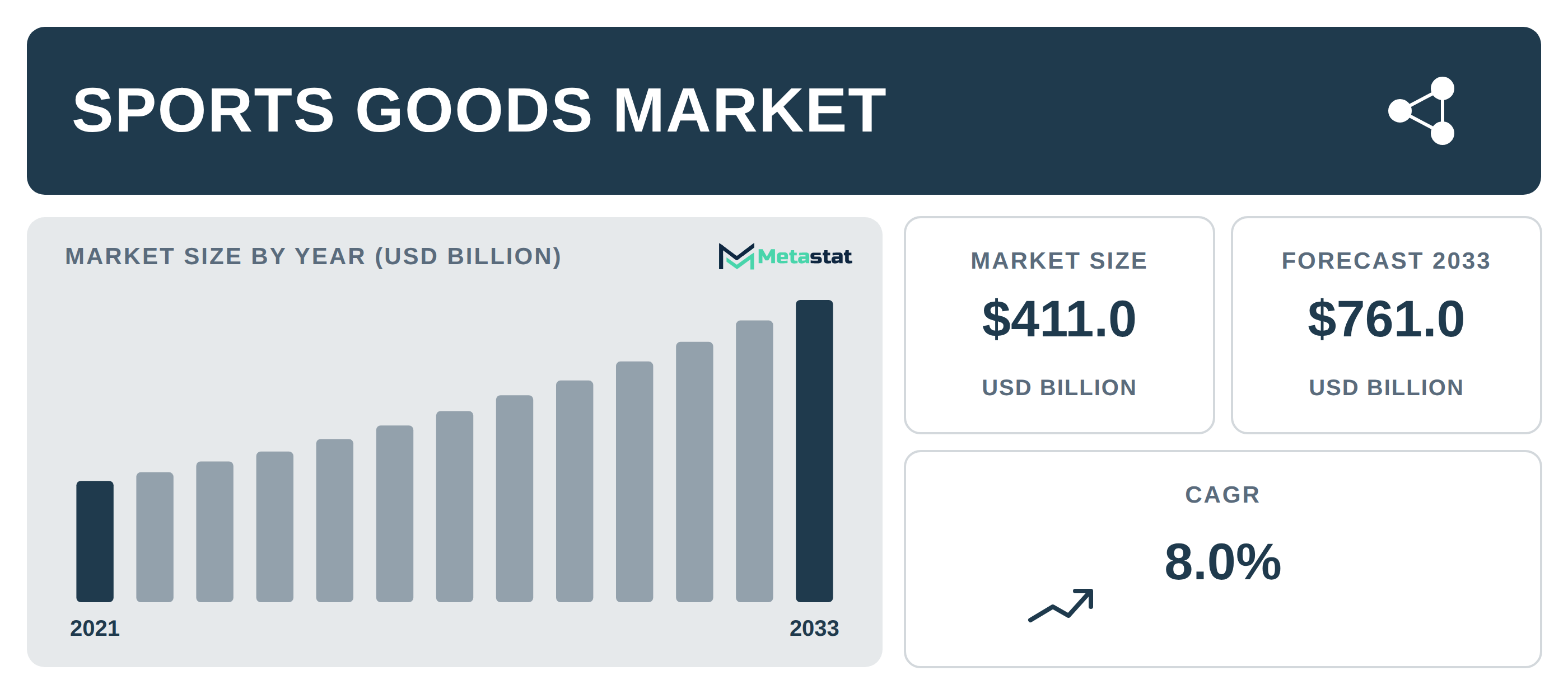
Metastat Insights has published a comprehensive report on the Global Sports Goods market, detailing growth drivers, challenges, segmentation, and competitive landscape. The market is expected to reach USD 761 billion by 2033 at a CAGR of 8.0%.
Metastat Insights has published "Global Sports Goods Market Size, Share, By Product Type (Sports Apparel, Sports Footwear, and Sports Accessories), By Sport (Ball Sports, Racquet Sports, Fitness and Training, Outdoor and Adventure Sports, Water Sports, Winter Sports, Golf, and Others), By Distribution Channel (Specialty Sports Stores, Brand-Owned Stores, Mass Merchandisers, Online Retail, and Others), By End User (Individual Consumers, Professional Athletes and Teams, Amateur and Recreational Athletes, Sports Clubs and Academies, Educational Institutions, and Fitness and Recreational Facilities), Industry Analysis, Growth, Trends, and Forecast, 2026-2033", which indicates the Sports Goods market reached a valuation of USD 411 billion in 2025 and is anticipated to attain USD 761 billion by 2033, reflecting a growth rate of 8.0% CAGR over the forecast period.
Growing interest in health and fitness significantly impacts the Sports Goods market. Increased awareness regarding the benefits of physical activities motivates consumers to engage in sports and recreational pursuits. This trend is particularly pronounced among aging populations, where maintaining an active lifestyle is essential. Urbanization patterns encourage convenient access to sports facilities, leading to heightened demand for sporting goods. The rise of social media platforms further shapes consumer preferences, driven by individuals sharing their fitness journeys, inspiring greater participation.
Regulatory pressures pose challenges for the Sports Goods market by increasing operational complexities and costs for manufacturers. Companies face difficulties in meeting evolving legal mandates, which necessitate investments in new technologies and processes for compliance. Smaller enterprises are particularly affected, resulting from their lack of resources to adapt swiftly. Macroeconomic headwinds including inflation and rising costs of raw materials impact pricing strategies, leading to higher retail prices for consumers, which deter potential buyers.
The Sports Goods market is divided into various product categories, including Sports Apparel, Sports Footwear, and Sports Accessories. The segment related to Sports Apparel is projected to increase from USD 158.4 billion in 2026 to USD 259.6 billion by 2033, while Sports Footwear is expected to reach USD 311.6 billion during the same period. North America holds the largest market share at 31.2%, followed by Asia Pacific at 28.2% and Europe at 26.9%. This distribution indicates that regional preferences significantly influence product development and marketing strategies.
The Sports Goods market remains competitive with numerous players contributing to growth. Key companies include adidas AG, Amer Sports Corporation, Anta Sports Products Limited, ASICS Corporation, Callaway Golf Company, Columbia Sportswear Co., Nike Inc., and PUMA SE. These firms focus on innovation and sustainability, aligning their offerings with evolving consumer expectations while addressing regulatory compliance and environmental standards.
Readers gain deeper insights into these trends and more by accessing the full report, which is available at Global Sports Goods Market.
Related Report
Global Sports Goods MarketLEAD ANALYST
Utkarsh Khirodkar is a Lead Market Research Analyst at MetaStat Insight, specializing in market intelligence, technology sector assessments, and competitive strategy.