
LEAD ANALYST
Utkarsh Khirodkar is a Lead Market Research Analyst at MetaStat Insight, specializing in market intelligence, technology sector assessments, and competitive strategy.

Metastat Insights has published a new report forecasting the Sustainable Farming market to grow from USD 1.9 billion in 2025 to USD 2.8 billion by 2033, at a CAGR of 5.3%.
Metastat Insights has published "Global Sustainable Farming Market Size, Share, By Solution Type (Seeds and Traits, Biopesticides, Biostimulants, Biofertilizers, Organic Fertilizers and Others), By Farming System (Organic Farming, Regenerative Agriculture, Conservation Agriculture, Agroecology and Integrated Farming Systems), By Crop Type (Cereals and Grains, Oilseeds and Pulses, Fruits and Vegetables and Others), By Application (Crop Production, Crop Protection, Nutrient Management and Others), Industry Analysis, Growth, Trends, and Forecast, 2026-2033", highlighting a market valued at USD 1.9 billion in 2025 and expected to reach USD 2.8 billion by 2033, growing at a CAGR of 5.3%.
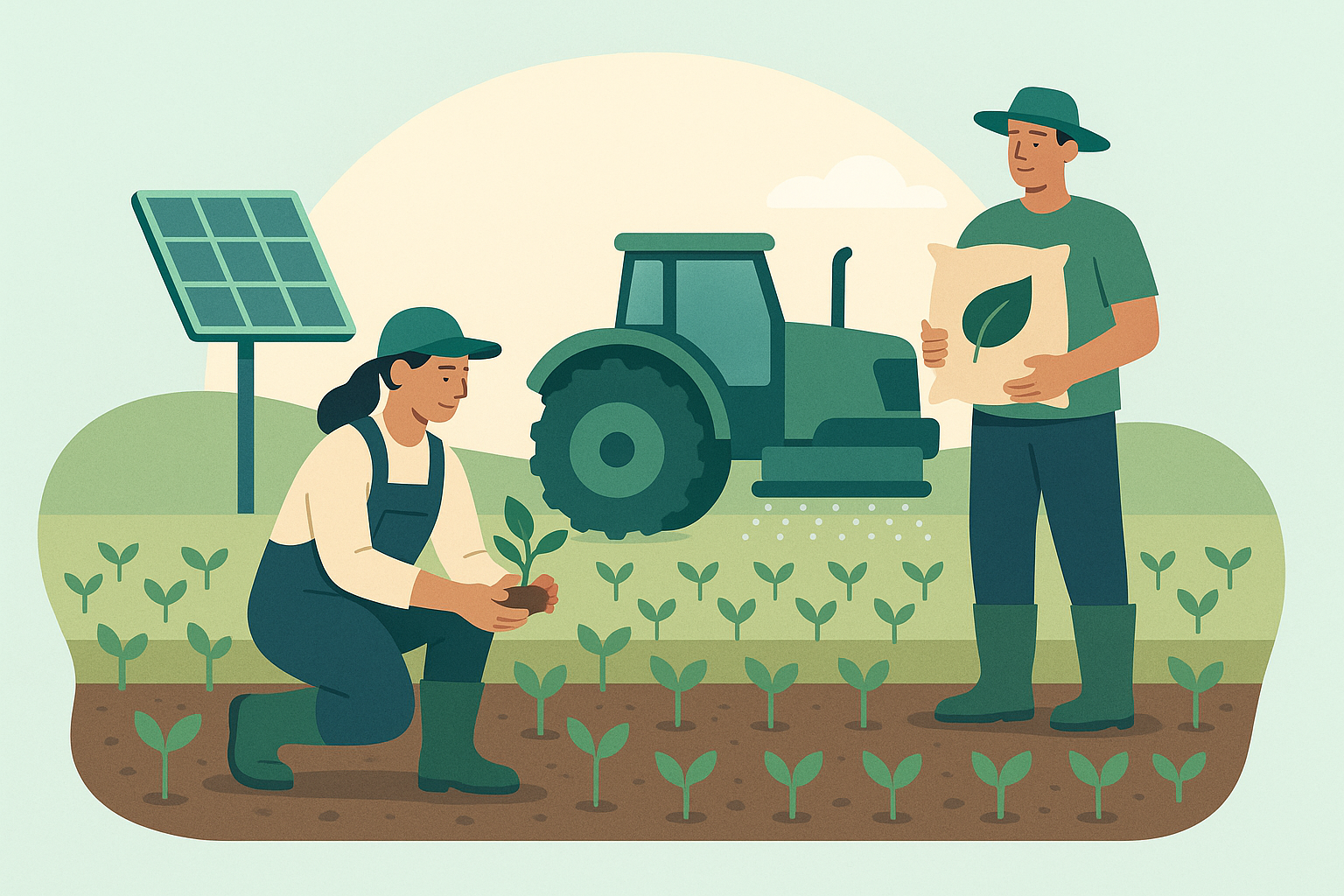
Growing consumer awareness regarding environmental issues significantly drives demand for sustainable farming practices. The increasing focus on sustainable food sources compels agricultural producers to adopt eco-friendly practices, aligning with global sustainability trends. The rise in public-private partnerships enhances investment in sustainable agricultural initiatives, facilitating technological advancements that enhance operational efficiencies. The demand for biopesticides is increasing, with this segment projected to grow at a CAGR of 7.5% due to rising awareness among farmers about the benefits of reducing chemical inputs.
Regulatory tightening poses considerable challenges to the Sustainable Farming market. Producers face increased compliance hurdles, which often necessitate substantial investments in new technologies and processes. These requirements limit the ability of smaller operators to swiftly adopt sustainable practices, thereby restricting market participation. Macroeconomic headwinds, including inflation and fluctuating commodity prices, strain profit margins, complicating the investment landscape. Supply chain disruptions and geopolitical tensions further complicate the operational environment for many agricultural producers.
The Sustainable Farming market exhibits significant regional dynamics. North America holds a market share of 28.8%, closely followed by Asia Pacific at 28.3% and Europe at 25.9%. Variations arise from differing regulatory frameworks and consumer preferences. The market segments include biopesticides, which are anticipated to grow, reflecting increasing adoption among farmers focused on reducing chemical inputs. Organic farming is projected to grow from USD 0.5 billion in 2026 to USD 0.7 billion by 2033, driven by consumer preferences for organic produce.
Several prominent companies operate within the Sustainable Farming market, including Bayer AG, Syngenta Group, Corteva Agriscience, and BASF Agricultural Solutions Deutschland GmbH. These industry players focus on innovation and sustainable practices to differentiate their offerings. Competitive dynamics encourage companies to invest in research and development, enhancing their product portfolios to meet the rising demand for sustainable agricultural solutions. The fragmentation of the market fosters a competitive environment that drives innovation.
For a comprehensive analysis, readers are invited to explore the full report: Global Sustainable Farming Market.
Related Report
Global Sustainable Farming MarketLEAD ANALYST
Utkarsh Khirodkar is a Lead Market Research Analyst at MetaStat Insight, specializing in market intelligence, technology sector assessments, and competitive strategy.