
LEAD ANALYST
Utkarsh Khirodkar is a Lead Market Research Analyst at MetaStat Insight, specializing in market intelligence, technology sector assessments, and competitive strategy.

Global AI in Medical Imaging Market Size, Share, By Imaging Modality (Computed Tomography (CT), Magnetic Resonance Imaging (MRI), X-rays, Mammography and Digital Breast Tomosynthesis, Ultrasound, Nuclear Medicine Imaging (PET and SPECT), Others (Fluoroscopy and Specialty Imaging)), By Deployment Model (Cloud-Based, On-Premises and Hybrid), By Clinical Application (Neurology and Stroke, Oncology, Pulmonary and Chest Imaging, Musculoskeletal Imaging, Breast Imaging, Cardiology and Cardiovascular Imaging, Abdominal Imaging, Emergency and Trauma Imaging, Others (Pediatric and Other Specialty Imaging)), By End User (Hospitals and Health Systems, Independent Diagnostic Imaging Centers, Radiology and Teleradiology Service Providers, Specialty Clinics and Ambulatory Care Centers, Others (Research Institutions and Clinical Trial Imaging Sites)), Industry Analysis, Growth, Trends, and Forecast, 2026-2033
Report ID
MSI-5193
Published
September, 2026
Pages
256 Pages
Format
Historical
Base year
Forecast
Forecast period
Report Details
Choose Your License
Global AI in Medical Imaging Market
The global AI in Medical Imaging market was valued at USD 1,809.1 million in 2025 and is projected to reach USD 20,082.1 million by 2033, growing at a CAGR of 35.1% over the forecast period.
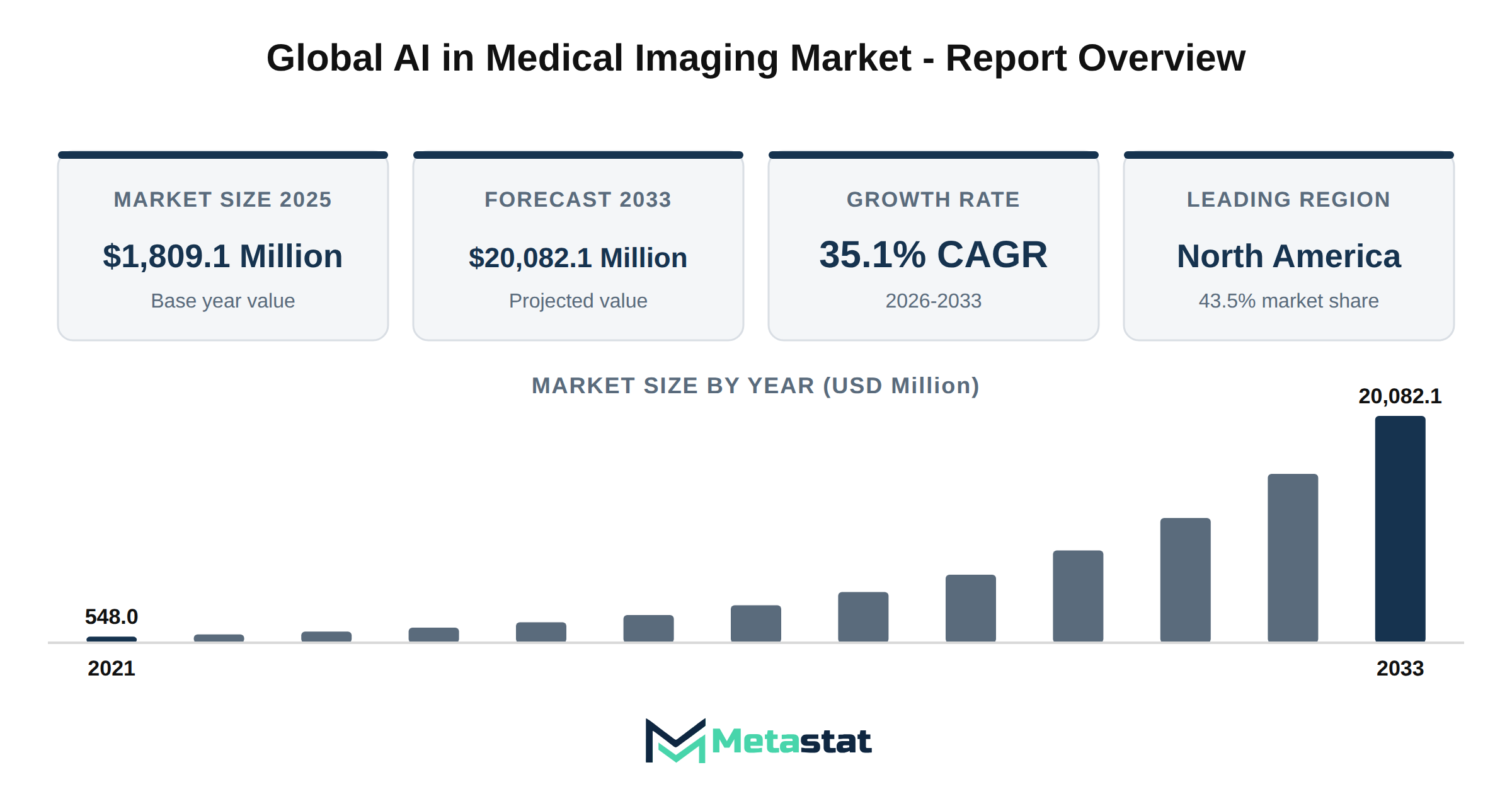
The AI in Medical Imaging market reached a valuation of USD 1,809.1 million in 2025, with growth projected to accelerate during the forecast period from 2026 to 2033. The market is expected to achieve a value of USD 20,082.1 million by the end of 2033, reflecting a compound annual growth rate (CAGR) of 35.1%.
Advancements in deep-learning architecture and foundation models drive innovation in medical imaging solutions. These technologies enhance diagnostic accuracy and operational efficiency, leading to increased adoption among healthcare providers. The integration of AI-powered imaging tools into clinical workflows simplifies the diagnostic process, enabling healthcare professionals to make faster, data-driven decisions.
Hospital AI adoption continues to rise, fueled by the need for improved patient outcomes and streamlined operations. Facilities recognize the potential of AI solutions to transform traditional imaging practices, ultimately enhancing the quality of care provided to patients. This trend highlights a shift in the market, where healthcare institutions actively seek advanced imaging technologies to maintain competitive advantages.
Competitive positioning within the market has evolved significantly, with key players adapting their portfolios to include a diverse range of AI-driven imaging solutions. Companies invest in research and development to strengthen their market presence, focusing on innovative applications and collaborations that enhance their offerings. This strategic evolution reflects a commitment to addressing the growing demand for sophisticated medical imaging technologies.
The AI in Medical Imaging market experiences significant advancements driven by deep-learning architecture and foundation-model innovations. These technologies enhance image analysis capabilities, allowing for increased accuracy and speed in diagnostics. The integration of advanced algorithms improves the ability to detect anomalies and assist healthcare professionals in making informed decisions, thereby boosting overall patient outcomes.
Hospital adoption of artificial intelligence systems progresses rapidly, with a focus on workflow integration. Healthcare facilities implement AI solutions to streamline operations, reduce wait times, and optimize resource allocation. This integration supports improved efficiency in medical imaging processes, allowing clinicians to focus more on patient care rather than administrative tasks.
Competitive positioning within the market evolves owing to companies enhancing their portfolios to include advanced technologies and comprehensive solutions. Players in the AI in Medical Imaging market adapt their strategies to address changing customer needs, focusing on partnerships and collaborations to expand their reach. This market environment drives innovation, ensuring that organizations remain leaders in technological advancements.
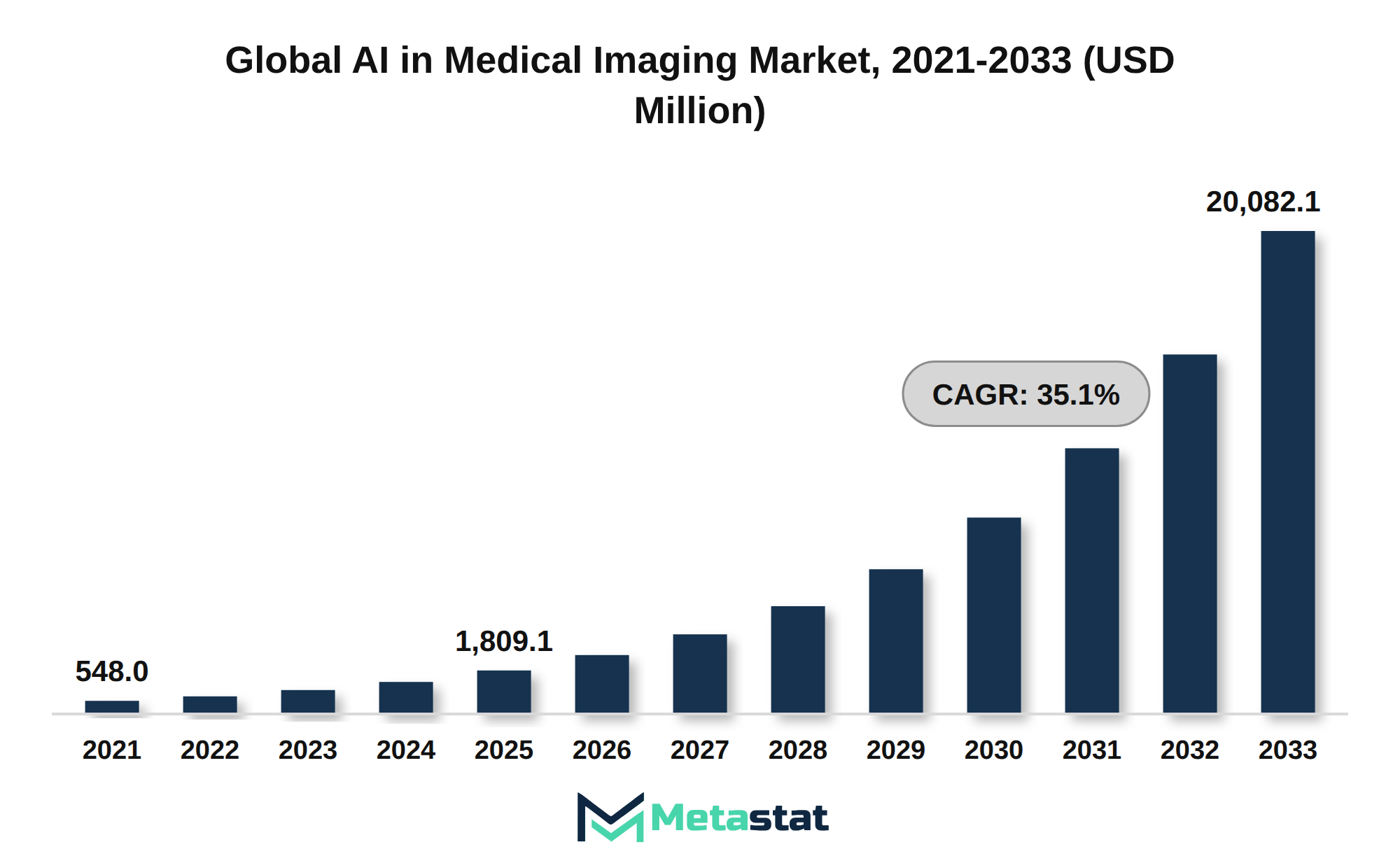
The AI in Medical Imaging market experiences accelerated growth driven by ongoing digital transformation initiatives across healthcare systems. Increased investments in technology integration enhance operational capabilities and streamline processes. Healthcare providers increasingly adopt digital solutions to improve diagnostic accuracy and patient care.
Healthcare organizations implement automation and artificial intelligence solutions to optimize workflow and enhance efficiency. This integration of advanced technologies enables faster diagnostics and reduces the administrative burden on healthcare professionals. Stakeholders across various segments benefit from improved clinical outcomes and cost-effective operations.
Rising demand for efficient imaging solutions aligns with the goal of providing better patient care while managing costs effectively. Increased funding for innovative technologies supports research and development efforts, creating a competitive environment within the market. The focus on digital transformation reshapes the operational landscape and drives growth and investment opportunities in the AI in Medical Imaging market.
The aging population significantly influences the AI in Medical Imaging market, creating heightened demand for advanced imaging technologies. Older demographics typically experience a higher incidence of chronic conditions that require early and accurate diagnosis, thus driving the adoption of sophisticated imaging solutions. This demographic shift stimulates investment in innovative medical imaging technologies, facilitating greater precision and efficiency in diagnostics.
Healthcare systems prioritize operational productivity to accommodate the growing healthcare needs of older citizens. Integration of AI technologies enhances workflow efficiency, reduces diagnostic times, and minimizes the margin for error in medical imaging. Consequently, hospitals and health systems allocate substantial resources to implement AI-driven solutions, translating into increased revenue and improved patient outcomes.
These factors contribute to significant expansion in the AI in Medical Imaging market. Healthcare providers increasingly recognize the importance of advanced imaging solutions, aligning investments with the need for effective care delivery in an aging population.
The AI in Medical Imaging market faces significant constraints due to regulatory hurdles and compliance requirements. Complex regulations surrounding medical data privacy and security create challenges for organizations wishing to deploy AI technologies. Compliance with these regulations involves substantial investments in technology and human resources, impacting operational budgets and hindering the swift adoption of AI solutions.
Legal mandates regarding data handling and patient consent add to the difficulty of implementing AI solutions. The burden of ensuring compliance deters smaller players from entering the market, limiting competition and innovation. This dynamic leads to a concentration of power among a few players, which stifles market diversification and growth.
Macroeconomic headwinds, including inflationary pressures, further exacerbate these challenges. Rising costs associated with regulatory compliance and technology investments strain the financial resources of healthcare providers and diagnostic centers. Consequently, organizations prioritize immediate operational needs over long-term investment in advanced imaging technologies.
The AI in Medical Imaging market experiences additional pressure from supply chain disruptions and geopolitical instability, which affect the availability of necessary technologies and skilled labor. These challenges create delays in the deployment of AI solutions, preventing potential advancements in medical imaging from reaching the market in a timely manner.
Regulatory hurdles and macroeconomic challenges present significant barriers to the growth of the AI in Medical Imaging market. These challenges impact investment decisions and delay the adoption of innovative solutions that could enhance imaging capabilities and improve patient outcomes.
The AI in Medical Imaging market encounters challenges related to geopolitical fragmentation and trade tensions, which disrupt the supply chains essential for technological advancements. Global trade deficits and tariff friction create uncertainties, affecting the cost and availability of critical components. Companies face increasing pressures to adapt to these disruptions, complicating research and development integrations and hindering innovation timelines.
Interoperability friction arises from diverse regulatory requirements across regions, affecting the integration of AI technologies into existing medical systems. Organizations experience difficulties in aligning their solutions with varying standards, which restricts market access and slows down adoption rates. The complexity of navigating these fragmented regulations demands additional compliance overhead, increasing operational costs and diverting resources from product development.
Market saturation further complicates the environment, with multiple players vying for limited market share. This saturation leads to pricing compression, putting significant pressure on margins and profitability for suppliers. Rising input costs, driven by geopolitical factors, challenge the financial viability of many organizations operating within the AI in Medical Imaging market.
Talent retention pressures and workforce skill gaps present another layer of difficulty, driven by technological advancements that require specialized skills often in short supply. Organizations invest heavily in training and development, impacting budget allocations and operational efficiency. The combination of these factors complicates the strategic landscape, necessitating agile responses from stakeholders to navigate evolving market dynamics.
The AI in Medical Imaging market benefits from technological disruptions that enhance diagnostic accuracy and workflow efficiency. Advancements in imaging modalities, including Computed Tomography (CT) and Magnetic Resonance Imaging (MRI), streamline processes and improve patient outcomes. Emerging software solutions leverage artificial intelligence to analyze imaging data, facilitating quicker diagnostic decisions and reducing the burden on healthcare professionals.
Infrastructure modernization plays a critical role in expanding the market's reach. Healthcare facilities increasingly adopt cloud-based deployment models, allowing for scalable and flexible solutions. This shift enables medical institutions to store and process significant amounts of imaging data, supporting the growing demand for remote consultations and telemedicine services.
Geographical expansion further fuels the AI in Medical Imaging market. Developing regions experience heightened investment in healthcare infrastructure, resulting in increased adoption of advanced imaging technologies. The focus on improving healthcare accessibility in these areas creates opportunities for market participants to introduce innovative solutions tailored to local needs.
Strategic consolidation within the industry enhances product integration and broadens service offerings. Collaborations among technology providers and healthcare institutions drive the development of comprehensive solutions that meet diverse clinical applications, including neurology, oncology, and musculoskeletal imaging. This trend strengthens the market position of participants.
Evolving buying behaviors reflect a shift toward digital procurement. Healthcare buyers increasingly prioritize solutions that emphasize operational yield maximization and process automation. The emphasis on evidence-based purchasing decisions shapes the competitive landscape, encouraging market players to innovate continuously and align offerings with customer expectations.
Overall, the combination of technological disruptions, infrastructure modernization, and evolving market dynamics drives growth in the AI in Medical Imaging market. These factors collectively drive demand for advanced solutions that enhance diagnostic capabilities and improve patient care outcomes.
The Global AI in Medical Imaging market is segmented based on Imaging Modality, Deployment Model, Clinical Application, and End User.
Valued at USD 790.8 million in 2026, the Computed Tomography (CT) segment is projected to reach USD 5,962.4 million by 2033, with a CAGR of 33.5% during the forecast period. Rising prevalence of chronic diseases and the increasing need for precise diagnostic imaging drive primary demand for this segment. Enhanced diagnostic accuracy and improved patient outcomes through advanced imaging solutions influence adoption rates within healthcare facilities.
Ongoing technological maturation serves because a catalyst for segment expansion, with developments in AI algorithms enhancing image analysis and enabling faster, more accurate interpretations. Next-gen upgrades introduce features including automated image recognition and real-time data processing, which streamline workflows for radiologists. Product evolution in CT imaging contributes to expanded capabilities, including 3D reconstruction and AI-assisted diagnostics, significantly improving the efficiency of clinical applications.
Considerable engagement from hospitals and health systems characterizes end-use dynamics, because they employ CT imaging for various clinical applications including oncology, neurology, and emergency care. Consumption shifts indicate a growing preference for cloud-based deployment models, facilitating remote access to imaging resources and reducing infrastructure costs. Regulatory compliance standards and stringent policies surrounding medical imaging technologies drive manufacturers to prioritize certifications that align with international safety and quality benchmarks.
Pricing volatility within the segment arises from rapid technological advancements, impacting profit margins for suppliers. Segment players face margin pressures due to competition and the investment in R&D for innovative solutions. Strategic opportunity windows emerge from increasing investments in healthcare infrastructure, particularly in emerging markets, which further supports the growth of the AI in Medical Imaging market.
Significant growth characterizes the Magnetic Resonance Imaging (MRI) segment within the AI in Medical Imaging market. This segment is estimated to reach USD 5,028.6 million by 2033, at a CAGR of 35.7% during the forecast period. Factors driving this expansion include advances in imaging technologies and increased demand for precise diagnostic tools. Hospitals and diagnostic imaging centers adopt MRI solutions to improve patient outcomes and streamline workflows.
Technological maturation of MRI systems enhances image quality and reduces scan times, driving adoption among healthcare providers. Continuous innovations in artificial intelligence enhance MRI capabilities, providing clinicians with tools for faster and more accurate diagnoses. Regulatory compliance standards focusing on patient safety and diagnostic accuracy encourage the integration of AI technologies in MRI systems.
Cost structures associated with MRI adoption reflect the investment in advanced technologies and infrastructure, impacting pricing strategies. Competitive pressures necessitate that providers offer cost-effective solutions to maintain market share. Evolving healthcare reimbursement policies influence the financial viability of MRI technologies, prompting organizations to adapt their offerings to align with changing reimbursement models.
Overall, the MRI segment in the AI in Medical Imaging market presents substantial opportunities for growth, driven by technological advancements, increasing demand for high-quality imaging, and evolving healthcare standards.
Advancements in imaging technology drive significant growth in the X-rays segment of the AI in Medical Imaging market. Emerging applications of artificial intelligence enhance the precision and efficiency of X-ray diagnostics, leading to higher adoption rates among healthcare providers. Factors including the increasing prevalence of chronic diseases and a growing emphasis on early detection accelerate demand for AI-augmented X-ray systems.
Regulatory compliance standards play a crucial role in shaping the market landscape, ensuring that AI solutions meet rigorous safety and effectiveness benchmarks. The focus on enhancing patient outcomes and reducing diagnostic errors fuels investments in next-generation upgrades and product evolution, thereby expanding the segment's potential. Competitive pressures prompt companies to explore strategic opportunity windows to introduce innovative solutions that cater to evolving market needs.
Cost structures within the segment reflect the complexity associated with integrating AI technologies into existing X-ray systems. Pricing volatility, influenced by technological maturation and competitive dynamics, affects profitability and market positioning. Suppliers prioritize supply chain resilience to mitigate risks related to raw material sourcing and logistics vulnerabilities, ensuring steady access to essential components.
The segment is projected to reach USD 3,592.7 million by 2033. The X-rays segment demonstrates strong potential within the broader AI in Medical Imaging market. Increased consumption shifts toward AI-driven solutions highlight the urgency for healthcare providers to enhance diagnostic capabilities and operational efficiencies. The integration of AI into X-ray imaging improves clinical workflows and positions healthcare organizations to remain competitive.
Growth in the Mammography & Digital Breast Tomosynthesis sub-segment is projected to reach a CAGR of 35.1% during the forecast period. Increasing awareness of breast cancer screening and early detection significantly drives demand for advanced imaging solutions. Healthcare providers increasingly adopt these technologies owing to their ability to enhance diagnostic accuracy and improve patient outcomes. Technological advancements in imaging modalities, including the integration of artificial intelligence, streamline workflows and improve efficiency in clinical settings.
Investment in next-generation upgrades is essential for this segment, because hospitals and diagnostic centers seek to enhance their imaging capabilities. The market experiences expansion catalysts, including ongoing research and development efforts aimed at improving imaging techniques and reducing radiation exposure. Regulatory support for advanced breast imaging technologies further supports market growth, creating a favorable environment for innovation and adoption.
The trend toward value-based care influences end-user dynamics, with hospitals and health systems prioritizing diagnostic tools that contribute to better patient management and lower long-term costs. Consequently, the Mammography & Digital Breast Tomosynthesis segment reflects strong market potential, driven by a combination of clinical need and technological evolution. By 2033, this sub-segment is expected to achieve significant market valuation, reflecting the increasing emphasis on early cancer detection and patient-centered care within the broader AI in Medical Imaging market.
Growth in the ultrasound segment within the AI in Medical Imaging market reflects increasing demand for non-invasive diagnostic techniques. This demand arises from the rising prevalence of chronic diseases requiring regular monitoring and assessment. Technological advancements in ultrasound technologies enhance image quality and diagnostic accuracy, leading to greater adoption among healthcare providers.
Developments in artificial intelligence enable more efficient image analysis, reducing the time required for diagnosis and improving patient outcomes. Increased investment in research and development drives innovation, introducing next-generation ultrasound systems with advanced capabilities. The integration of AI-powered tools within ultrasound devices facilitates real-time decision-making, enhancing clinical workflows.
Healthcare institutions prioritize the adoption of ultrasound technologies due to cost-effectiveness compared to other imaging modalities. The competitive landscape encourages manufacturers to innovate, leading to the evolution of ultrasound products that respond to specific clinical needs. Regulatory compliance and adherence to certification standards enhance the credibility of ultrasound systems, building trust among end-users.
Consumer preferences shift towards point-of-care ultrasound solutions, which provide immediate diagnostic results. This shift aligns with the broader trend of personalized medicine, where timely and accurate diagnosis plays a critical role in patient management. Expanding applications in emergency departments and outpatient settings drive additional growth opportunities within the market.
Growing interest in Nuclear Medicine Imaging (PET & SPECT) within the AI in Medical Imaging market stems from the increasing demand for accurate diagnosis and treatment planning. Enhanced imaging techniques enable healthcare professionals to detect diseases earlier and more precisely, improving patient outcomes. The rise in chronic diseases, along with an aging population, contributes to this demand by necessitating advanced imaging solutions.
Technological advancements act because a catalyst for segment expansion. Innovations in AI applications enhance image analysis and interpretation, allowing for faster and more reliable results. The integration of AI with Nuclear Medicine Imaging enhances the efficiency of imaging workflows, reducing the time required for image acquisition and interpretation. This improved efficiency attracts more end users to adopt AI-driven solutions.
Regulatory compliance and certification standards play a crucial role in shaping the market. Adhering to these standards ensures that the technology deployed in Nuclear Medicine Imaging remains safe and effective. Compliance with evolving regulations builds trust among healthcare providers, encouraging investments in AI technologies.
Pricing volatility influences the segment's dynamics, affecting both suppliers and end users. The cost structures associated with AI technologies and imaging equipment fluctuate due to changes in raw material sourcing and production processes. This volatility prompts end users to weigh the cost-benefit aspects of adopting AI technologies, impacting overall market growth.
Strategic opportunities exist for players within this segment. Continuous advancements in AI algorithms create pathways for next-generation upgrades, allowing for the evolution of imaging products. Identifying white-space opportunities in underserved markets drives growth, enabling companies to capture increasing demand and expand their market presence.
Interest in fluoroscopy and specialty imaging emerges from their essential role in various diagnostic procedures, providing critical insights for healthcare professionals. The continuous evolution of imaging technology fuels demand for advanced solutions that enhance diagnostic accuracy and patient outcomes. Increased adoption of artificial intelligence in these modalities facilitates the automation of image analysis, improves workflow efficiency, and reduces turnaround times, making them appealing to healthcare providers.
Regulatory compliance standards, including stringent requirements for patient safety and image quality, influence product development and market dynamics. Manufacturers prioritize certifications that ensure adherence to these standards, enhancing their competitive positioning. The demand for innovative solutions aligns with trends in personalized medicine, driving the evolution of imaging products tailored to specific patient needs, particularly in complex cases.
Cost structures associated with fluoroscopy and specialty imaging reflect the ongoing investment in advanced technology and infrastructure. Pricing volatility in the market arises from fluctuations in raw material costs and competition, impacting profit margins for manufacturers. Strategic opportunity windows appear owing to healthcare systems seeking to optimize their imaging capabilities, allowing market players to introduce next-generation upgrades and disruptive alternatives.
Capital investment outlook points toward increasing funding for research and development activities focused on enhancing imaging technologies. This commitment to innovation ensures that products remain relevant in a rapidly changing healthcare environment. Demand for fluoroscopy and specialty imaging solutions is expected to continue to grow, driven by advancements in technology and evolving healthcare requirements within the AI in Medical Imaging market.
Valued at USD 1,218 million in 2026, the cloud-based deployment model within the AI in Medical Imaging market is projected to reach USD 11,605.4 million by 2033, at a CAGR of 38% during the forecast period. This segment benefits from growing demand for scalable and flexible imaging solutions that support remote access and data sharing. Hospitals and healthcare systems increasingly adopt cloud-based systems to enhance efficiency, improve patient outcomes, and streamline operations.
Advancements in cloud technology drive significant interest in this segment. Providers prioritize developing solutions that enable integration with existing health IT systems and facilitate real-time data analysis. Such integration supports clinical decision-making, enhances diagnostics, and allows for better patient management, leading to higher adoption rates across healthcare institutions.
Cost structures play a critical role in the expansion of cloud-based solutions. Reducing the need for extensive on-premises infrastructure allows healthcare providers to experience lower capital expenditures. This shift towards subscription-based services delivers predictable pricing and enables organizations to allocate resources more efficiently. The market experiences a notable increase in investment, driving innovation and competition among key players.
Regulatory compliance standards influence technology development within the cloud-based segment. Ensuring adherence to data privacy regulations and security certifications remains essential for gaining the trust of end-users. While technology matures, solutions evolve to address these concerns, further propelling growth within the market.
Strategic opportunities arise for companies that offer robust, cloud-based imaging solutions. The focus on interoperability and integration plays a critical role in capturing market share, particularly among independent diagnostic imaging centers and specialty clinics. Leveraging cloud technology enhances service offerings, ultimately contributing to the increasing demand for cloud-based solutions within the AI in Medical Imaging market.
Growth within the On-Premises segment of the AI in Medical Imaging market reflects a strong commitment to secure data management, enhanced control over imaging processes, and regulatory compliance with industry standards. Positive adoption stems from the increasing demand for critical imaging solutions that require stringent data security measures and local control, which aligns with healthcare providers aiming to safeguard patient information while optimizing operational efficiency. Hospitals and health systems, which emphasize data sovereignty and compliance with healthcare regulations, significantly contribute to this segment's expansion.
Technological maturation supports the On-Premises model, driven by advancements in imaging software and hardware that facilitate the integration of AI capabilities directly within facility infrastructures. Innovations in imaging algorithms, data processing capabilities, and user interfaces enhance the functionality and appeal of on-premises solutions. Deployment of these technologies results in improved diagnostic accuracy and treatment planning, ultimately leading to better patient outcomes.
Investment in cloud infrastructure alternatives, while prevalent, has not diminished the commitment to on-premises solutions. The On-Premises segment is estimated to reach USD 5,438.2 million by 2033, at a CAGR of 30.1% during the forecast period. This growth reflects a robust demand for systems that address the specific needs of different healthcare settings while balancing cost structures and operational demands.
Strategic opportunity windows arise from the evolving landscape of healthcare regulations, which increasingly demand compliance with stringent data protection measures. Organizations focusing on integration of on-premises solutions alongside existing workflows strengthen their competitive positioning within the market. The emphasis on customized imaging applications for specialized clinical needs enhances higher satisfaction and loyalty among end-users, further driving growth within this segment.
Significant interest in the Hybrid deployment model within the AI in Medical Imaging market arises from its flexibility in meeting diverse healthcare needs. This model enables healthcare facilities to leverage both cloud-based and on-premises solutions, optimizing their operations while accommodating various regulatory and patient care requirements. Increasing awareness regarding data security and integration capabilities across multiple platforms drives adoption, especially among hospitals and diagnostic imaging centers seeking to enhance their imaging workflows.
Projected growth for the Hybrid segment reaches USD 3,038.4 million by 2033, reflecting a compound annual growth rate (CAGR) that highlights the expanding role of hybrid solutions in imaging practices. Investments in next-generation technology and upgrades further enhance operational efficiency and diagnostic accuracy, promoting ongoing interest among end-users. The market landscape continues to evolve, with advancements in AI algorithms and imaging techniques driving improvements in clinical applications, thereby increasing the segment’s appeal across various healthcare sectors.
End-users increasingly prioritize systems that integrate seamlessly with existing infrastructure, enabling streamlined workflows and improved patient outcomes. The focus on cost-effectiveness, combined with the need for scalable solutions, positions the Hybrid model because a strategic choice for many healthcare providers. This segment contributes to shaping the future of the AI in Medical Imaging market, reinforcing the importance of adaptable and comprehensive imaging solutions.
Valued at USD 533.3 million in 2026, the Neurology and Stroke segment projects significant growth, reaching USD 4,124.9 million by 2033, exhibiting a CAGR of 33.9% during the forecast period. This expansion stems from the increasing prevalence of neurological disorders and strokes globally, driving demand for advanced imaging solutions that enhance diagnosis efficiency and accuracy. Healthcare providers prioritize tools that improve patient outcomes, leading to increased adoption of AI-driven imaging technologies in clinical settings.
Technological maturation significantly impacts this segment, with innovations in AI algorithms enhancing image analysis and interpretation. Advanced imaging techniques facilitate faster and more accurate diagnoses, supporting healthcare professionals in making informed decisions. The demand for next-generation upgrades enables providers to remain competitive by incorporating the latest advancements in imaging technologies.
Growing applications in downstream clinical settings further drive segment growth. Hospitals and specialty clinics prioritize integrating AI solutions that streamline workflows and improve diagnostic capabilities. Enhanced imaging systems provide more detailed insights into neurological conditions, promoting timely and effective treatment strategies.
Regulatory compliance standards influence segment dynamics, requiring adherence to strict guidelines for AI applications in medical imaging. Meeting these standards ensures the safety and efficacy of imaging technologies, which builds confidence among healthcare providers and supports wider adoption.
The AI in Medical Imaging market experiences consumption shifts driven by healthcare stakeholders increasingly investing in digital solutions. Expanding capital investment in the Neurology and Stroke segment reflects the commitment to improving patient care through innovative imaging practices, reinforcing the role of AI in enhancing diagnostic imaging capabilities.
Rapid advancements in the oncology segment of the AI in Medical Imaging market drive demand for enhanced diagnostic capabilities. Healthcare providers increasingly adopt AI technologies to improve cancer detection, monitoring, and treatment planning, thereby addressing the growing prevalence of various cancer types. The rising incidence of cancer worldwide contributes to heightened awareness and urgency around early detection and effective management, leading to increased investment in imaging technologies.
Technological maturation enhances segment expansion, with innovations improving imaging accuracy and efficiency. AI algorithms evolve, offering enhanced image analysis and interpretation, which aids radiologists in making more informed decisions. The integration of AI into oncology imaging streamlines workflows, reducing the time from diagnosis to treatment, thus improving patient outcomes and operational efficiency.
The oncology segment is estimated to reach USD 4,201.2 million by 2033, at a CAGR of 36.5% during the forecast period. Continued investment in research and development fuels the evolution of next-generation imaging systems, ensuring the market remains competitive and responsive to emerging healthcare needs.
End-user dynamics indicate strong adoption patterns among hospitals and health systems, independent diagnostic imaging centers, and specialty clinics. These entities recognize the value of incorporating AI-driven solutions to enhance diagnostic accuracy and expedite patient care. Regulatory compliance standards increasingly emphasize the importance of advanced imaging techniques, prompting healthcare providers to integrate AI solutions that align with these standards.
Capital investment outlook remains positive, with stakeholders focusing on technological advancements that enhance diagnostic capabilities. This strategic focus on innovation positions the oncology segment for significant growth, driven by its critical role in improving cancer care within the broader AI in Medical Imaging market.
Increasing focus on early detection of pulmonary diseases actively drives demand for advanced imaging solutions. The emergence of artificial intelligence enhances diagnostic accuracy and efficiency, leading to improved patient outcomes. Hospitals and diagnostic imaging centers adopt AI technologies to optimize workflows and reduce diagnostic errors in pulmonary and chest imaging.
Investment in next-generation imaging technologies, including AI algorithms, significantly contributes to the overall growth of the market. These advancements enable healthcare providers to identify conditions including pneumonia, lung cancer, and chronic obstructive pulmonary disease with greater precision. Regulatory bodies emphasize the importance of compliance with imaging standards, further encouraging the integration of AI in clinical applications.
Innovations in imaging modalities and deployment models continue to shape the market. The Pulmonary and Chest Imaging segment is expected to reach USD 2,821.5 million by 2033. The combination of cloud-based solutions and on-premises systems provides flexibility for healthcare providers while enhancing data accessibility and security. This dual approach supports diverse clinical environments and promotes continued investment in AI technologies.
The rising prevalence of respiratory diseases and an aging population contribute to heightened demand for effective imaging solutions. Healthcare providers prioritize robust imaging capabilities to manage patient care efficiently, thereby increasing competition among suppliers in the market. AI in Medical Imaging market dynamics indicate a shift toward greater collaboration between technology providers and healthcare facilities to develop tailored solutions that address specific clinical needs.
Valued at USD 533.3 million in 2026, the Musculoskeletal Imaging segment is projected to grow at a CAGR of 35.1% during the forecast period. Demand for advanced imaging solutions in musculoskeletal applications arises from an increasing prevalence of orthopedic disorders and an aging population requiring effective diagnostic tools. Integration of AI technology enhances imaging accuracy, leading to improved patient outcomes and operational efficiency in healthcare settings.
Technological maturation in imaging modalities including MRI and CT scans supports the expansion of this segment, with ongoing developments in deep learning algorithms and image processing techniques. These advancements enable more precise detection of musculoskeletal conditions, fueling demand from hospitals and specialty clinics. The competitive environment of the AI in Medical Imaging market features numerous players focusing on innovations tailored to musculoskeletal applications, driving investments in research and development.
End-use dynamics reflect a growing preference for non-invasive diagnostic techniques, promoting the adoption of AI-driven solutions in hospitals and independent diagnostic imaging centers. Regulatory compliance standards and certifications for AI applications enhance market confidence, ensuring safety and efficacy in clinical settings. Overall, the segment is positioned for significant growth, responding to evolving healthcare needs and technological advancements within the AI in Medical Imaging market.
Recent technological advancements and increasing awareness of breast cancer screening significantly influence the Breast Imaging segment within the AI in Medical Imaging market. The integration of AI technologies enhances diagnostic accuracy and efficiency, driving demand from healthcare providers seeking to improve patient outcomes. Key players in the market focus on developing innovative solutions that address the growing need for early detection and personalized treatment plans.
Regulatory compliance and certification processes play a crucial role in shaping the Breast Imaging segment. The introduction of stringent guidelines ensures that AI systems meet safety and efficacy standards, which builds trust among healthcare professionals and patients. This trend drives the adoption of AI technologies in clinical settings, enhancing overall market growth.
Cost structures associated with AI in breast imaging remain dynamic, influenced by technological advancements and competitive pressures. Pricing volatility arises from the rapid pace of innovation, which encourages ongoing investment in research and development. Strategic opportunity windows emerge because stakeholders seek to capitalize on unmet needs in breast imaging, further propelling market growth.
Investment in the AI in Medical Imaging market continues to expand due to organizations recognizing the value of advanced imaging systems. Capital investment strategies prioritize technologies that enhance diagnostic capabilities and streamline workflows. This focus on continuous improvement positions the Breast Imaging segment for significant advancements in the coming years.
Recent advancements in cardiology and cardiovascular imaging technologies contribute significantly to the AI in Medical Imaging market. Primary demand drivers include an increasing prevalence of cardiovascular diseases and the need for accurate and timely diagnoses. Adoption of AI-driven tools within this segment enhances the efficiency of imaging processes, enabling healthcare providers to deliver better patient outcomes.
Segment expansion catalysts focus on technological maturation, including improved algorithms and imaging techniques that facilitate faster analysis and interpretation of cardiovascular images. Next-generation upgrades often introduce innovative features, enhancing diagnostic capabilities and driving demand among healthcare professionals.
Consumer shifts towards preventative healthcare and early diagnosis further influence the segment, pushing healthcare systems to integrate advanced imaging solutions. Regulatory compliance standards and certifications ensure that AI technologies meet necessary safety and efficacy requirements, building trust among end-users.
End-use dynamics in cardiology and cardiovascular imaging reflect a growing preference for AI solutions among hospitals and independent diagnostic imaging centers. This trend aligns with the shift towards digital transformation in healthcare, positioning AI technologies because essential tools in modern medical practices.
Strategic opportunity windows arise from the increasing focus on personalized medicine and risk assessment, further enhancing the relevance of this segment within the AI in Medical Imaging market. Continuous investment in research and development remains crucial for maintaining competitiveness and addressing evolving market demands.
Advancements in technology significantly enhance the capabilities of abdominal imaging within the AI in Medical Imaging market. Increased emphasis on accuracy and efficiency in diagnosing abdominal conditions drives demand among healthcare providers. Enhanced imaging techniques improve patient outcomes by allowing for earlier and more accurate diagnoses, influencing hospitals and clinics to incorporate advanced AI solutions into their imaging processes.
Widespread adoption of machine learning algorithms and deep learning networks accelerates capabilities in analyzing abdominal images. These technologies improve the detection of abnormalities, streamline workflows, and provide clear insights for clinicians. The integration of AI tools in abdominal imaging aids radiologists by reducing the time required for image interpretation, leading to higher throughput and better utilization of resources.
Regulatory compliance and the establishment of certification standards play critical roles in shaping the market. Ensuring that AI systems in abdominal imaging meet stringent validation requirements builds trust among healthcare providers. Consequently, alignment with these standards enhances market accessibility and encourages investment in innovative solutions.
Competition intensifies due to numerous players exploring opportunities within the abdominal imaging segment. Strategic partnerships between technology firms and healthcare organizations drive innovation and result in comprehensive solutions tailored to meet clinical needs. This collaboration supports the development of specialized AI tools that enhance the diagnostic process in abdominal imaging.
Increased focus on cost-effectiveness influences the adoption of AI solutions in abdominal imaging. By reducing the expenses associated with traditional imaging methods, providers realize financial benefits while improving diagnostic capabilities. This shift in consumption patterns reinforces the importance of AI in enhancing value-based care delivery in the market.
Increasing application of advanced imaging technologies in emergency and trauma situations drives demand for Artificial Intelligence (AI) solutions within the AI in Medical Imaging market. High-pressure environments in emergency departments necessitate quick and accurate diagnostics, prompting healthcare providers to adopt AI-enhanced imaging tools that improve patient outcomes. Integrating AI facilitates faster image analysis, enabling healthcare professionals to make timely decisions that are critical in trauma cases.
Technological advancements contribute significantly to the expansion of this segment in the market. AI algorithms improve image interpretation, reduce human error, and enhance diagnostic accuracy, appealing to healthcare providers focused on optimizing patient care. The growing prevalence of trauma cases, arising from accidents and natural disasters, highlights the importance of effective imaging solutions, further reinforcing the segment's relevance.
Regulatory compliance and standardization play a crucial role in shaping the adoption of AI in emergency and trauma imaging. While healthcare institutions increasingly implement AI solutions, adherence to regulatory standards and certifications ensures the safety and efficacy of the technologies used in critical situations. These factors not only influence spending in the segment but provide opportunities for innovation and improvement in AI-powered imaging products.
Healthcare expenditure on innovative imaging technologies is expected to rise owing to organizations recognizing the potential of AI solutions in emergency settings. Investment in research and development remains vital to push the boundaries of AI in medical imaging, ensuring that the segment remains a leader in technological evolution. Overall, these dynamics will contribute to a significant growth trajectory for the segment within the broader AI in Medical Imaging market.
Increasing attention on pediatric and other specialty imaging reflects a shift towards more personalized healthcare solutions. Demand for advanced imaging technologies in these areas stems from the need for accurate diagnostic tools tailored to specific patient populations. This heightened focus on tailored diagnostics aligns with broader trends in the AI in Medical Imaging market, where precision and efficiency drive adoption rates.
Regulatory compliance and the development of certifications specific to pediatric imaging enhance market dynamics. These certifications assure healthcare providers of quality and safety, building trust in AI applications. With evolving guidelines, the segment faces pressures related to cost structures and margin sustainability.
Technological maturation in AI applications supports the integration of innovative imaging techniques. Advancements in machine learning and deep learning enhance image analysis capabilities, leading to quicker and more accurate diagnostics. The market observes a trend towards next-gen upgrades that improve clinical outcomes while reducing operational inefficiencies.
Investment in research and development within pediatric imaging drives product evolution. Increasing collaborations among technology developers, healthcare providers, and regulatory bodies facilitate product innovation, enhancing the segment's appeal. Strategic opportunity windows arise from technological advancements, leading to significant growth potential in this niche market.
Shifts in consumption patterns indicate a growing preference for non-invasive imaging solutions, enhancing accessibility for younger patients. This trend translates into increased demand for AI-driven capabilities that improve diagnostic accuracy in pediatric cases. The competitive landscape shows players focusing on disruptive alternatives that challenge traditional imaging methods, further shaping the segment.
Overall, the segment's dynamics suggest a robust outlook driven by technological advancements and strategic collaborations that reshape the market. The continued integration of AI in pediatric and other specialty imaging aligns with the growth trajectory of the AI in Medical Imaging market.
Valued at USD 1,252.8 million in 2026, the Hospitals & Health Systems segment is projected to reach USD 9,615.3 million by 2033, reflecting a CAGR of 33.8% during the forecast period. This segment experiences growth driven by increasing demand for accurate diagnostics and the need for enhanced patient care. Hospitals and health systems actively adopt AI technologies to improve imaging processes, reduce operational costs, and enhance patient outcomes. Technological advancements, including improved algorithms and machine learning models, play a crucial role in enhancing imaging accuracy and efficiency, supporting the segment's expansion.
Investment in next-generation upgrades and solutions continues to shape the segment's landscape. Hospitals increasingly explore AI applications in various clinical settings, including neurology, oncology, and musculoskeletal imaging, broadening their use cases. Regulatory compliance standards and certifications surrounding medical imaging technologies influence purchasing decisions, leading hospitals and health systems to seek reliable AI solutions that meet these demands.
Cost structures and pricing volatility significantly impact the adoption rates of AI technologies within hospitals. Strategic opportunities arise from ongoing investments in healthcare infrastructure and digital transformation initiatives. The AI in Medical Imaging market responds to these pressures by delivering solutions that enhance operational efficiencies and support healthcare providers in delivering timely and accurate diagnostics.
Growth in the Independent Diagnostic Imaging Centers segment reflects the increasing need for accurate and timely diagnostic services. The rise in chronic diseases and the aging population fuels demand for advanced imaging solutions within healthcare facilities. Compliance with regulatory standards for imaging procedures enhances adoption rates of AI technologies, ensuring improved diagnostic accuracy and patient outcomes.
Investment in next-generation imaging technologies enables facilities to enhance operational efficiency and reduce patient wait times. The segment's estimated value of USD 4,199.2 million by 2033, at a CAGR of 35.7% during the forecast period, highlights the significant expansion potential driven by technological maturation and product evolution. Independent Diagnostic Imaging Centers serve because key players in the AI in Medical Imaging market, leveraging advanced solutions to meet the increasing demand for high-quality imaging services.
While healthcare systems worldwide prioritize early disease detection, the AI in Medical Imaging market experiences strong growth opportunities. Independent Diagnostic Imaging Centers capitalize on this trend by integrating advanced AI technologies tailored to their operational needs. The focus on reducing costs while maintaining high standards of care positions these centers because vital contributors to the market's overall expansion.
Radiology & Teleradiology Service Providers play a critical role within the AI in Medical Imaging market, with the segment expected to reach USD 3,018.3 million by 2033. An increasing need for efficient remote diagnostic solutions drives the adoption of AI technology among these service providers. The growing trend of telemedicine, accelerated by recent global health challenges, prompts a surge in demand for teleradiology services. This segment benefits from advancements in AI algorithms, which enhance image analysis accuracy and speed, providing significant advantages in patient care.
Regulatory compliance and certification requirements shape operational strategies for Radiology & Teleradiology Service Providers. Ensuring adherence to these standards mitigates risks associated with technological obsolescence. Cost structures within this segment reflect the pressures of maintaining high-quality service while integrating advanced AI solutions. Pricing volatility in technology procurement influences investment decisions, compelling providers to strategically evaluate their technology investments to enhance service delivery effectively.
While competition intensifies, strategic opportunity windows arise for innovation and product evolution, further driving market growth. The commitment to next-generation upgrades positions these providers favorably within the AI in Medical Imaging market, promoting long-term sustainability and competitive advantage.
Growth in the Specialty Clinics & Ambulatory Care Centers segment aligns with increasing demand for accessible and efficient healthcare solutions. This segment is projected to grow at a CAGR of 35.1% during the forecast period, highlighting its potential within the AI in Medical Imaging market. Factors contributing to this expansion include the rising prevalence of chronic diseases, which necessitate advanced diagnostic tools, and the shift towards outpatient care models that emphasize convenience and cost-effectiveness.
Technological advancements play a critical role in enhancing the capabilities of imaging solutions within specialty clinics. Adoption of AI-powered imaging tools significantly improves diagnostic accuracy and workflow efficiency. These tools facilitate quicker decision-making processes, ultimately benefiting patient outcomes. The integration of cloud-based deployment models enables clinics to access advanced imaging technologies without the burden of extensive infrastructure investments.
Policy changes aimed at improving healthcare access support the growth of this segment. Regulatory frameworks increasingly promote telemedicine and remote diagnostics, enhancing the role of specialty clinics in providing timely and efficient care. Investments in training and development for healthcare professionals regarding AI technologies enhance the overall competency and effectiveness of imaging practices.
Competitive dynamics within the market reveal a range of players innovating to capture market share. Companies focus on developing next-generation imaging solutions tailored for specialty clinics, enhancing both functionality and user experience. Investment in research and development remains essential for sustaining growth and addressing evolving healthcare needs.
Research institutions and clinical trial imaging sites increasingly drive innovation in the AI in Medical Imaging market. Rising demand for precise diagnostic tools and the need for enhanced imaging capabilities contribute to their expansion. Ongoing advancements in AI algorithms enable the development of sophisticated imaging techniques, providing researchers with the tools necessary for accurate assessments in clinical trials.
Regulatory compliance standards shape the operational dynamics of this sub-segment. Various certifications are essential for ensuring that imaging technologies meet safety and efficacy requirements. This adherence builds trust among researchers and facilitates smoother integration of AI systems into clinical workflows.
Investment in strategic opportunities and white-space analysis shows significant potential for growth in the AI in Medical Imaging market. Institutions actively seek technologies that improve patient outcomes and streamline research processes. Enhanced imaging capabilities support comprehensive evaluations, thereby increasing the relevance and effectiveness of clinical trials.
Cost structures associated with implementing advanced imaging solutions demonstrate the importance of balancing quality with affordability. Institutions weigh the benefits of technological advancements against potential financial constraints, ensuring sustainable adoption of new systems. The ongoing evolution of imaging technology enhances data acquisition and analysis, reinforcing its importance in clinical research.
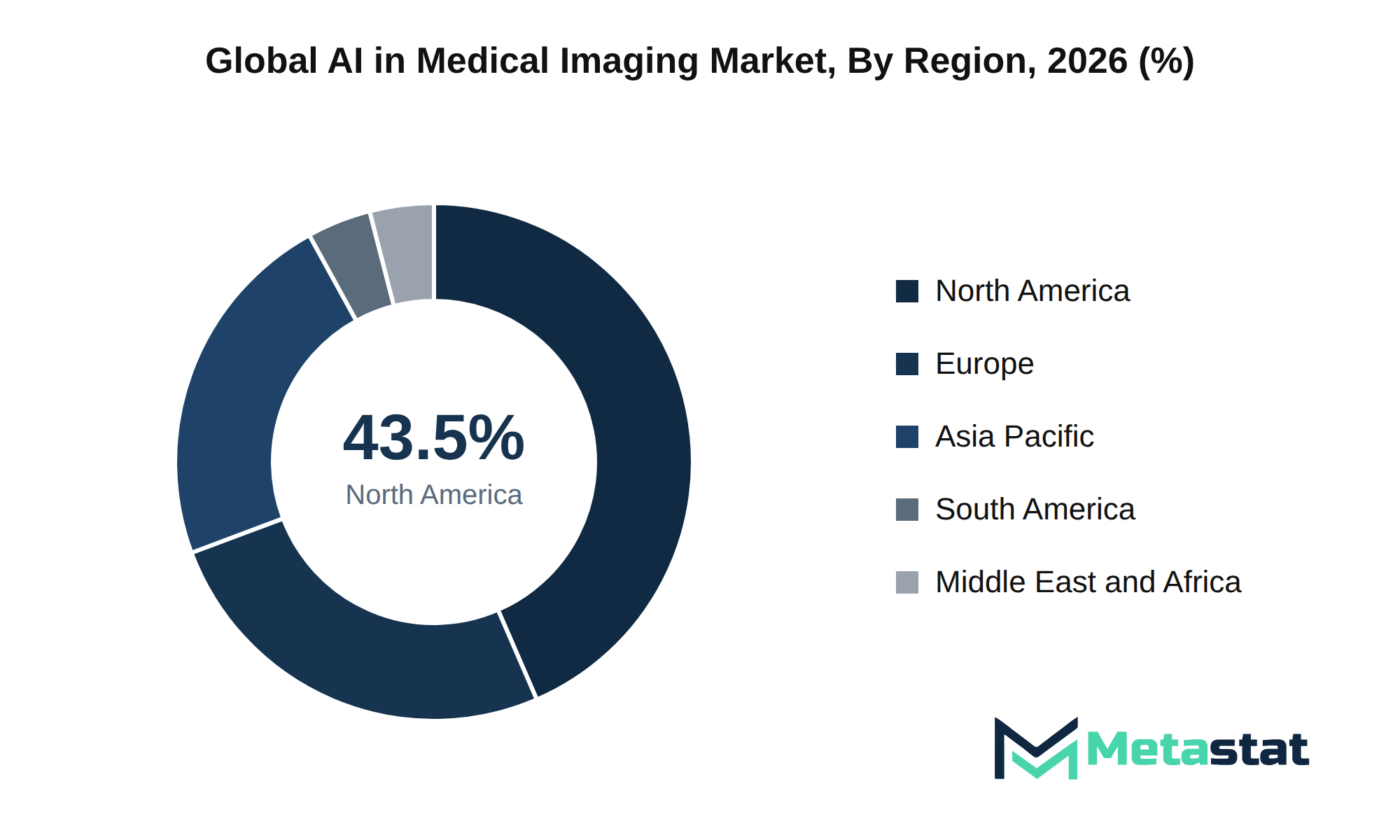
Based on geography, the Global AI in Medical Imaging market is divided into North America, Europe, Asia-Pacific, South America, Middle East, and Africa.
North America accounts for 43.5% of the global AI in Medical Imaging market in 2025. The region expands at a CAGR of 35.1% within the forecast period, reaching a market size (TAM) of USD 7,793.9 million by the end of 2033. Key drivers of this growth include increasing investments in healthcare infrastructure, a rising demand for advanced imaging technologies, and the continuous integration of AI into clinical workflows.
The United States, Canada, and Mexico contribute substantially to market expansion, with the United States leading in technological adoption and innovation. The healthcare system's focus on improving patient outcomes through enhanced diagnostic capabilities supports the adoption of AI-powered imaging solutions. The presence of established domestic players and innovative start-ups in the AI in Medical Imaging market creates a competitive environment, driving further advancements in imaging modalities.
Infrastructure modernization efforts, particularly in hospitals and diagnostic imaging centers, facilitate the deployment of AI technologies. These centers increasingly prioritize cloud-based solutions, enhancing accessibility and efficiency in data management. The high-value replacement cycles associated with legacy imaging systems present significant opportunities for AI integration, further stimulating market growth.
Localized procurement dynamics and regional B2B buying behaviors play critical roles in shaping the market landscape. Healthcare providers exhibit preferences for solutions that not only meet compliance standards but align with regional regulations. This trend highlights the importance of understanding cultural nuances and regional demands in tailoring AI solutions for the North American market.
Europe represents a significant portion of the AI in Medical Imaging market, holding a share of 25.8% in 2025. Countries including Germany, France, the UK, Italy, Spain, and Russia contribute to this robust market landscape. A strong emphasis on healthcare innovation and technological advancements drives the adoption of AI in medical imaging across the region.
Germany leads in the adoption of advanced imaging technologies, supported by substantial investments in healthcare infrastructure. France's commitment to improving healthcare outcomes increases demand for innovative imaging solutions, particularly in oncology and neurology applications. The UK maintains a focus on enhancing diagnostic capabilities, with imaging modalities including Magnetic Resonance Imaging (MRI) gaining traction.
Italy and Spain emphasize the modernization of healthcare facilities, aligning with the deployment of AI solutions in medical imaging. The region experiences a competitive landscape characterized by domestic market leaders and emerging players, promoting collaboration and technological exchange. Russia continues to expand its healthcare capabilities, driving interest in AI-driven imaging technologies.
Overall, the European market benefits from a well-established healthcare system, regulatory frameworks favoring innovation, and an increasing shift towards localized procurement dynamics. The AI in Medical Imaging market in Europe is expected to experience substantial growth driven by healthcare providers seeking to improve patient outcomes and operational efficiency.
The Asia-Pacific region, comprising key markets including China, Japan, India, South Korea, Australia, and Southeast Asia, holds a significant position in the AI in Medical Imaging market, accounting for 22.7% of the global market share in 2025. Increasing investments in healthcare infrastructure modernization support the adoption of advanced imaging technologies across the region. Countries including China and India experience rapid growth in demand for AI-driven solutions, driven by rising patient populations and a focus on improving diagnostic accuracy.
The regional demand is further fueled by a growing emphasis on early diagnosis and personalized treatment plans, particularly in oncology and neurology. Emerging markets within Asia-Pacific present high-value replacement cycles for outdated imaging equipment, generating opportunities for innovative AI solutions. Localized manufacturing capabilities enhance supply chain efficiencies, aligning with the region's increasing inclination towards nearshoring initiatives.
Competitive dynamics within the region highlight the presence of several domestic market leaders. These players actively participate in partnerships and collaborations to consolidate their positions while addressing localized procurement dynamics. Cultural nuances in purchasing behaviors influence the adoption rates of AI technologies, necessitating tailored strategies from vendors operating in the market.
Investment in research and development remains critical, with governments prioritizing initiatives that advance AI applications in medical imaging. Regulatory frameworks in countries like Japan and Australia facilitate the swift introduction of innovative technologies, positioning the Asia-Pacific region because a key player in the AI in Medical Imaging market.
In South America, the AI in Medical Imaging market faces unique challenges and opportunities characterized by varying levels of adoption and investment across countries. Brazil and Argentina lead the region, reflecting a growing interest in advanced imaging technologies. Modernization of healthcare infrastructure drives deployment of AI solutions in medical imaging. Demand for improved diagnostic capabilities fuels interest in imaging modalities, particularly in urban centers where healthcare facilities increasingly integrate AI-driven technologies.
The market benefits from cross-border trade corridors that facilitate the exchange of medical technologies and expertise between countries. Local compliance mandates influence adoption of AI in Medical Imaging, encouraging alignment with international standards while addressing regional healthcare needs. Vendor consolidation trends emerge, with domestic market participants and international players collaborating to enhance service offerings and improve access to advanced imaging technologies.
Investment in localized manufacturing densities enhances availability of AI in Medical Imaging solutions. This focus on regional production addresses underpenetrated territories within South America. While the healthcare system evolves, strategic entry barriers for foreign players diminish, attracting Foreign Direct Investment (FDI) and increasing competition. The AI in Medical Imaging market is projected to grow, reflecting the region's commitment to advancing healthcare through innovation and technology.
The Middle East and Africa region holds a modest share of the AI in Medical Imaging market, accounting for 4.00% in 2025. Significant growth opportunities arise from the increasing focus on healthcare modernization and the demand for advanced imaging solutions within countries including Saudi Arabia, the UAE, and South Africa. Urbanization and rising healthcare expenditures drive investments in medical imaging facilities, enhancing access to advanced diagnostic capabilities.
Saudi Arabia and the UAE exhibit strong government support for healthcare initiatives, contributing to market expansion. The establishment of health-focused regulatory frameworks and compliance mandates encourages the adoption of AI technologies in imaging. South Africa benefits from an expanding healthcare infrastructure, creating avenues for market participants to penetrate and capture demand effectively.
Despite these advancements, challenges persist, including the need for skilled professionals knowledgeable in AI and imaging technologies. These challenges slow adoption across the region. The continual push for healthcare improvement and infrastructure development provides a platform for incremental growth within the market.
Localized procurement dynamics and regional vendor consolidation trends influence competitive factors. Domestic market participants actively pursue partnerships to enhance service offerings. Foreign Direct Investment (FDI) flows into the region strengthen the market, creating strategic entry barriers for new entrants while allowing established players to expand their reach in untapped territories.
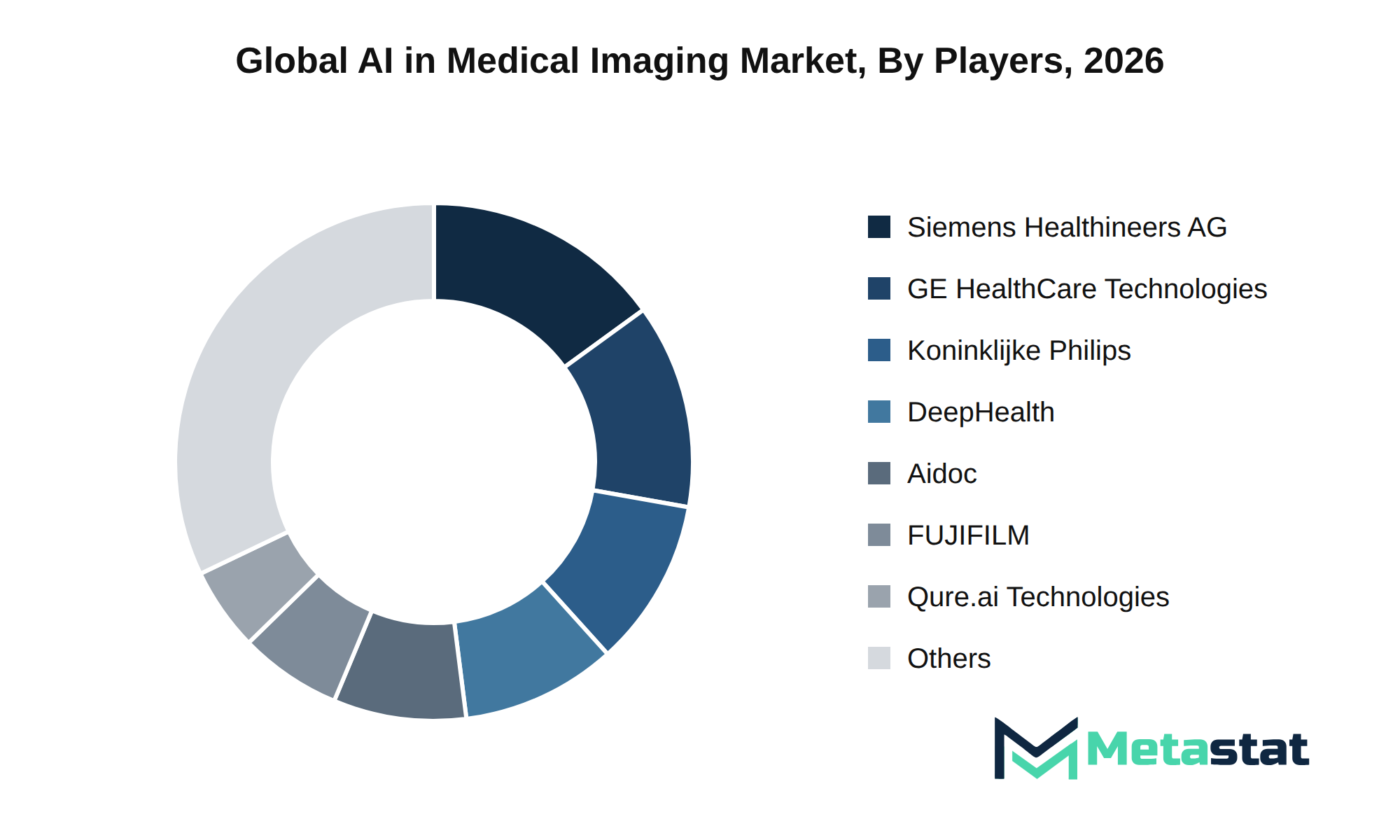
The AI in Medical Imaging market experiences significant strategic consolidation. Companies engage in mergers and acquisitions to strengthen their positions. Major players including Siemens Healthineers AG and GE HealthCare Technologies Inc. actively pursue partnerships to enhance technological capabilities and broaden product offerings. This consolidation drives innovation and contributes to the overall growth of the market.
Product differentiation is essential for maintaining competitive advantage. Firms like Koninklijke Philips N.V. and FUJIFILM Corporation invest in research and development to introduce unique imaging solutions. Proprietary technology moats established by players including NVIDIA Corporation and DeepHealth, Inc. enhance their market presence while ensuring customer retention through advanced offerings.
Strategic alliances and joint ventures further shape the competitive dynamics of the market. Collaborations among firms facilitate access to complementary resources and capabilities, driving the introduction of advanced solutions. Companies including Qure.ai Technologies Private Limited and Harrison.ai actively seek partnerships to leverage expertise and accelerate market entry.
Intellectual property portfolios remain a critical focus for companies aiming to secure market positions. Patent landscapes developed by firms like Brainomix Limited and Blackford Analysis Ltd. provide technological defensibility, protecting innovations and ensuring sustained competitive advantages. The future competitive outlook hinges on the ability to navigate these dynamics and respond effectively to evolving market demands.
Market size is forecast to rise from USD 1,809.1 million in 2025 to over USD 20,082.1 million by 2033. The base case outlines growth at a 35.1% CAGR, driven by advancements in technology integration, increasing investments in research and development, and evolving healthcare demands.
The bull case presents scenarios where accelerated adoption of AI technologies in healthcare and favorable regulatory frameworks enhance market momentum, positioning it for heightened growth. Conversely, the bear case outlines potential challenges, including stringent regulatory compliance timelines, geopolitical tensions affecting supply chains, and economic cycles that could restrict downstream demand.
Strategic capital allocation directives and infrastructure commitments will play a critical role in shaping the future of the market. Organizations that recognize emerging white-space opportunities and unmet enterprise needs will likely capitalize on high-growth pockets within the AI in Medical Imaging market. Future growth recommendations emphasize the need for robust defensibility roadmaps that align with evolving market dynamics.
The report strategically identifies and profiles the key market players and analyses their core competencies in each sub-segment of the AI in Medical Imaging market.
Report Attributes | Details |
Study Period | 2021-2033 |
Base Year | 2025 |
Estimated Year | 2026 |
Forecast Period | 2026-2033 |
Historical Period | 2021-2025 |
Growth Rate | CAGR 35.1% from 2026 to 2033 |
Revenue Unit | USD million |
Segmentation | By Imaging Modality, Deployment Model, Clinical Application, End User, and Region |
By Region | North America (By Imaging Modality, Deployment Model, Clinical Application, End User, and Country)
|
Europe (By Imaging Modality, Deployment Model, Clinical Application, End User, and Country)
| |
Asia Pacific (By Imaging Modality, Deployment Model, Clinical Application, End User, and Country)
| |
South America (By Imaging Modality, Deployment Model, Clinical Application, End User, and Country)
| |
Middle East and Africa (By Imaging Modality, Deployment Model, Clinical Application, End User, and Country)
|
Find answers to common questions about this report
The AI in Medical Imaging market size was valued at USD 1,809.1 million in 2025, according to the Metastat Insights study.
The AI in Medical Imaging market is projected to grow at a CAGR of 35.1% during the forecast period from 2026 to 2033.
The North America AI in Medical Imaging market size is estimated to reach USD 7,793.9 million by 2033.
The segment leading the AI in Medical Imaging market is Imaging Modality, with a projected value of USD 5,962.4 million by 2033. This figure reflects the highest anticipated revenue among the various segments.
The AI in Medical Imaging market experiences accelerated growth driven by ongoing digital transformation initiatives and increased investments in technology integration. The rising demand for efficient imaging solutions aligns with improving diagnostic accuracy and patient care, particularly in response to the needs of an aging population.
North America holds the dominant share of the AI in Medical Imaging market, with a value of USD 7,793.9 million projected for 2033, representing 43.5 percent of the total market.
Regulatory hurdles and compliance requirements significantly restrain the growth of the AI in Medical Imaging market. Complex regulations surrounding medical data privacy create challenges for organizations, leading to substantial investments that impact operational budgets and hinder swift adoption. macroeconomic headwinds, including inflation and supply chain disruptions, further complicate the landscape, delaying the deployment of innovative solutions.
The AI in Medical Imaging market benefits from ongoing digital transformation initiatives within healthcare systems, driving investment in technology integration. the aging population increases demand for advanced imaging technologies, because older demographics require early and accurate diagnosis, enhancing the adoption of AI solutions for improved patient outcomes.
The AI in Medical Imaging market is estimated to reach a valuation of USD 20,082.1 million by 2033.
Key players in the AI in Medical Imaging market include DeepHealth, Inc., Aidoc, Siemens Healthineers AG, GE HealthCare Technologies Inc., Koninklijke Philips N.V., and FUJIFILM Corporation.
The analysts below cover Medical Devices research at Metastat Insights.
LEAD ANALYST
Utkarsh Khirodkar is a Lead Market Research Analyst at MetaStat Insight, specializing in market intelligence, technology sector assessments, and competitive strategy.

LEAD PRINCIPAL ANALYST, PHARMA AND HEALTHCARE
Food and Beverages · Healthcare · Healthcare IT · Medical Devices
Ajay Devgire is the Lead Healthcare Analyst at MetaStat Insight, leading strategic research and market intelligence initiatives across the global healthcare domain.

SENIOR RESEARCH ANALYST
Biotechnology · Food and Beverages · Medical Devices · Packaging
Snehal Pasalkar is a Research Analyst at MetaStat Insight, operating at the intersection of life sciences research, competitive strategy, and market intelligence.
Floating offshore wind feasibility relies heavily on specialized installation vessel availability and port crane limits, which most broad renewable energy forecasts ignore. The report delivered a thorough analysis of dry dock capacity, mooring chain supply constraints, and raw material pricing trends for deepwater anchor installations. It served as a solid independent sanity check for our offshore project capital expenditure assumptions.
Assessing commercial microgrid software adoption requires looking past top-level installation numbers and examining utility interconnection queues. The research provided verifiable data on average permitting timelines, tariff structures, and battery storage integration costs across regional utility territories. That grounded perspective was valuable for our team when building five-year demand projections for industrial microgrid controllers.
Ambulatory surgical centers have very different purchasing cycles for robotic-assisted surgery platforms than major hospital networks. The MetaStat Insight study focused squarely on capital expenditure depreciation, procedural reimbursement pathways, and surgeon training overhead. That operational clarity made it much simpler to validate multi-year procedure growth forecasts against actual ambulatory center adoption patterns.
Explore related market intelligence reports worth reading alongside this one.