
LEAD ANALYST
Utkarsh Khirodkar is a Lead Market Research Analyst at MetaStat Insight, specializing in market intelligence, technology sector assessments, and competitive strategy.

Air Fryer Oven Combination Market Size, Share, By Capacity (Capacity 1-3L, Capacity 3-5L, and Capacity Greater than 5L), By Application (Residential and Commercial), Industry Analysis, Growth, Trends, and Forecast, 2026-2033
Report ID
MSI-3570
Published
March, 2026
Pages
312 Pages
Format
Report Details
Choose Your License
Air Fryer Oven Combination Market
The Global Air Fryer Oven Combination market size was valued at USD 1,354.9 million in 2025. The market is projected to grow from USD 1,452.8 million in 2026 to USD 2384.6 million by 2033, exhibiting a CAGR of 7.3% during the forecast period.
Global Air Fryer Oven Combination market was valued at USD 1,354.9 million in 2025 and is projected to reach USD 2,384.6 million by 2033, at a CAGR of 7.3% from 2026 to 2033.
North America held 26.1% share in 2025, with the United States leading the region.
Capacity 1-3L segment accounted for a market share of 32.8% in 2025.
Key trends driving growth include rising preference for healthier cooking appliances with low-oil or oil-free functionality, accelerating household adoption, and growing demand for space-saving, multifunctional kitchen appliances, propelling replacement of standalone ovens and fryers.
Opportunities include innovation in smart connectivity, preset cooking modes, and premium designs that support product differentiation and premiumization.
Key insight: The Global Air Fryer Oven Combination Market advances through demand for multifunctional kitchen appliances driven by health awareness, space efficiency, and premium home cooking experiences.
The global air fryer oven combination market within the home kitchen appliance industry will shift beyond traditional product positioning and enter a stage shaped by cooking intelligence and spatial efficiency. Product development will no longer focus on claims of speed or oil reduction, as consumer familiarity with these benefits will already be established. Engineering priorities will shift toward predictive cooking calibration driven by adaptive heat circulation logic, internal airflow zoning and usage pattern recognition. Appliance design will increasingly reflect professional culinary equipment, although scaled up for residential environments and integrated into the modular kitchen ecosystem.
Manufacturers will pursue differentiation through form architecture rather than superficial aesthetics. The compact vertical build, retractable rack and silent convection system will redefine premium perception. Materials science will play a big role, with interior coatings designed for thermal memory retention and odour neutralization. Control interfaces will evolve from static presets to learning dashboards capable of refining outputs through repeated user interactions. Therefore, culinary results will reflect personalization rather than standardized presets.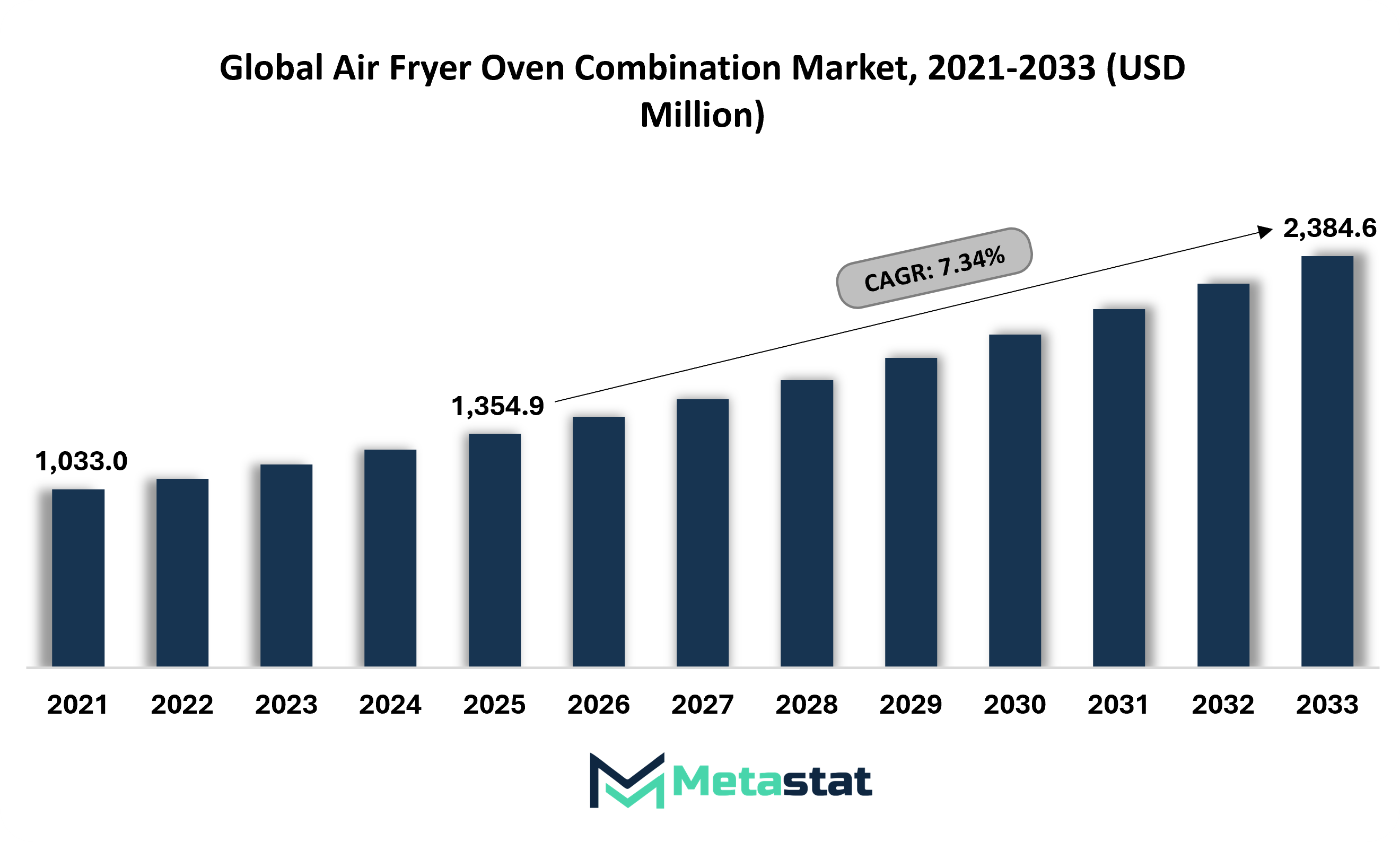
Rising preference for healthier cooking appliances with low-oil or oil-free functionality is accelerating adoption across households.
Health-focused eating patterns will shape purchases of appliances that support low-oil cooking. The global air fryer oven combination market will benefit from consumer focus on calorie control and nutrient retention. Product positioning centered on balanced meal preparation will support adoption across urban and semi-urban kitchens.
Growing demand for space-saving, multifunctional kitchen appliances is propelling replacement of standalone ovens and fryers.
Compact living spaces will increase investment in multifunctional appliances that integrate key cooking functions. Air fryer oven combinations will replace single-purpose appliances through integrated baking, roasting, and frying functions. Kitchen performance dreams will assist frequent replacement cycles, specifically within modern-day apartments searching for prepared countertop layouts.
Higher upfront pricing compared to conventional air fryers or toaster ovens is limiting penetration in price-sensitive consumer segments.
Premium pricing will slow adoption across price-sensitive consumer groups. Budget constraints in developing regions will restrict immediate entry. The perceived price gap between advanced combination units and basic appliances will require pricing alignment, promotional financing, and clear total-cost-of-ownership communication to support broader acceptance.
Larger appliance size and higher power consumption restrict adoption in compact kitchens and regions with energy-cost concerns.
Bulky length factors will lessen suitability for compact kitchens. Higher energy consumption will increase operating cost concerns in energy-conscious markets. Infrastructure obstacles and rising utility expenses will influence shopping hesitancy, prompting producers to prioritize compact engineering and better strength performance requirements.
Innovation in smart connectivity, preset cooking modes, and premium designs that support product differentiation and premiumization.
Technological improvements will spotlight differentiation through app-based controls, adaptive presets, and refined aesthetics. The global air fryer oven combination market will see premiumization driven by lifestyle-oriented consumers seeking connected kitchen ecosystems. Brand-led innovation techniques will support margin growth and make a stronger long-term competitive position.
The Global Air Fryer Oven Combination market is classified based on Type and Application.
By Type, the market is segmented into:
Capacity 1-3L segment was valued at USD 476.4 Million in 2026 and is projected to reach USD 675.3 Million by 2033, at a CAGR of 5.1% during the forecast period.
Capacity 1-3L models will appeal to urban families seeking compact kitchen solutions aligned with space efficiency and energy control. The product development will focus on multifunctional cooking within limited dimensions, thereby aiding in the preparation of healthy meals. The increasing acceptance of smart appliances will encourage innovation focused on precise heating, durability, and affordability within the entry-level price position.
Capacity 3-5L segment was valued at USD 580.9 Million in 2026 and is projected to reach USD 928.3 Million by 2033, at a CAGR of 6.9% during the forecast period.
Capacity 3-5L units will gain momentum through balanced performance and versatility, appealing to medium-sized families and regular meal preparation needs. Manufacturers will prioritize optimized airflow generation and programmable functions. Purchasers will prioritize convenience, ingredient flexibility, and time efficiency, supporting competitive differentiation through design refinement and operational sustainability.
Capacity Greater than 5L segment was valued at USD 395.5 Million in 2026 and is projected to reach USD 780.9 Million by 2033, at a CAGR of 10.2% during the forecast period.
The capacity of over 5L will cater to high-volume cooking requirements and premium consumer segments. Future demand will support advanced automation, robust manufacturing, and advanced security mechanisms. Market expansion will depend on the lifestyle shift towards home-based meals and bulk preparation, which will encourage brands to set up larger units through performance reliability and long-term value perception.
By Application, the market is divided into:
Residential segment is projected to reach USD 1,997.6 Million by 2033, at a CAGR of 6.8% during the forecast period.
Residential use will continue to increase in volume through lifestyle changes in favor of healthy cooking practices and less oil consumption. Future households will prefer appliances that support multiple cooking formats without operational complexity. Technology integration will focus on ease of use, minimal maintenance, and aesthetic compatibility, which will underpin steady adoption across different income groups.
Commercial segment is projected to reach USD 387 Million by 2033, at a CAGR of 10.2% during the forecast period.
Commercial adoption will progress through cafes, quick-service restaurants, and institutional kitchens requiring stability and speed. Equipment reliability, capacity management, and compliance standards will guide purchasing decisions. Future growth will depend on operating cost control and menu innovation, establishing air fryer oven combinations as efficient alternatives within the evolving food service environment.
Based on geography, the Global Air Fryer Oven Combination market is divided into North America, Europe, Asia Pacific, South America, and Middle East and Africa.
North America Air Fryer Oven Combination Market is projected to expand at a CAGR of 7.3% from 2026 to 2033, reaching USD 551.1 million by 2033.
In North America, accelerated replacement cycles in residential kitchens will be driven by demand for counter-space efficiency and appliance consolidation.
In North America, retailer-led product education and warranty-backed premiumization will strengthen consumer confidence in hybrid cooking formats.
Across the Asia Pacific region, urban apartment density will create opportunities for vertically integrated brands offering compact, high-capacity air fryer oven combinations.
Within Asia Pacific, digitally native consumers will find opportunities thanks to app-linked cooking platforms with local recipe intelligence
The analyst context will position the Middle East, Africa, and South America as regions where aspirational domestic upgrades, increasing organized retail penetration, and selective affordability engineering will shape uneven but strategically valuable market momentum.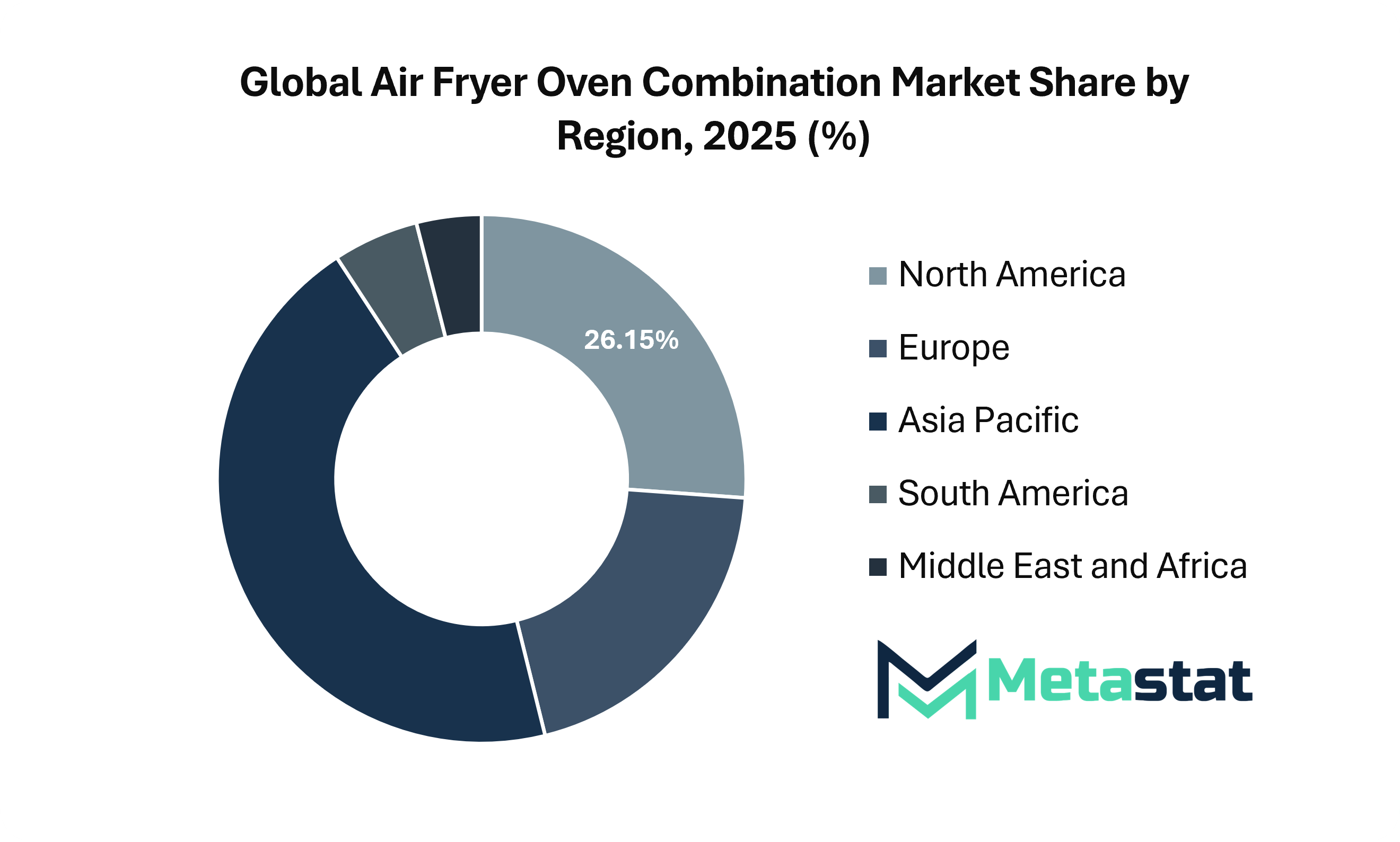
The global air fryer oven combination market is expanding within the countertop appliance category, supported by shifting kitchen habits and preference for multifunctional cooking solutions. Consumers across urban and semi-urban households are prioritizing faster cooking, low-oil preparation, and multiple functions within a single unit. Air fryer oven combinations will continue to attract attention due to their potential to bake, roast, grill, and fry whilst saving counter space. Brands are increasing product innovation focused on compact design, digital controls, and reliable performance, supporting adoption among households seeking convenience with straightforward operation.
Leading brands like SharkNinja, Inc., Instant Brands, Breville Group Limited, and Conair LLC (Cuisinart) hold robust positions because of frequent product enhancements and wide retail reach. Under VeSync, COSORI, Chefman, Hamilton Beach Brands, Inc., Black+Decker from Stanley Black & Decker, Oster from Sunbeam and Newell brands, KitchenAid from Whirlpool Corporation, De’ Longhi S.p.A., and Tefal or T-Fal from Groupe SEB continue to shape customer consider thru long-lasting builds and clean presets. Tower Housewares Ltd, Sage, Gourmia Inc., Kalorik USA, and GoWise USA, in addition, beef up marketplace diversity via offering rate-variant fashions appropriate for special home desires. Innovation in temperature control, cooking abilities and protection features will support the present brand relevance.
Mid-range and emerging players increase competitive pressure by focusing on design simplicity and affordability. Brands like Bella and Bella Pro from Sensio, Dash from Storebound, NuWave, LLC, Elite Gourmet, Emeril Lagasse from Tristar, The Legacy Companies, Proctor Silex, Best Buy Co., Inc. (Insignia), and Farberware Licensing Company LLC goal value-driven consumers without sacrificing core performance. Panasonic, LG Electronics Inc., and GE profiles leverage the large appliance portfolio to promote air fryer oven combos via dependable distribution networks from GE Appliances, Café Appliances (a Haier company), Maytag, Frigidaire, and Electrolux Group.
Premium manufacturers including BSH Home Appliances Group, Siemens Home Appliances, Smeg S.p.A., and Morphy Richards bring sophisticated aesthetics and advanced engineering to the category. These manufacturers appeal to customers seeking long-term reliability mixed with contemporary kitchen styling. Competition among international and nearby players will encourage better pricing techniques and product upgrades through the years. The marketplace will remain fashioned through practical cooking desires, lifestyle changes, and continued interest in wholesome food education, permitting both established leaders and new entrants to stable, sustainable opportunities.
Market size is forecast to rise from USD 1,354.9 million in 2025 to USD 2,384.6 million by 2033.
Regulatory discussions will begin to focus on energy behaviour per cooking cycle rather than appliance wattage labels. The sustainability dialogue will emphasize lifecycle efficiency, repair modularity and component interchangeability across product generations. Supply chain strategies will align around precision assembly hubs supporting rapid customization rather than mass uniform output. Over time, the category boundaries between countertop ovens, convection units and smart cookers will disappear. The global air fryer oven combination market will stand not as a convenience upgrade, but as a central intelligence node within future home food preparation systems, reshaping everyday cooking rituals through engineered adaptability rather than innovation.
Air Fryer Oven Combination Market Key Segments:
By Type:
By Application:
Key Global Air Fryer Oven Combination Industry Players
This research report categorizes the Air Fryer Oven Combination market based on key segments and regions, forecasts revenue growth, and analyses trends in each submarket. The report analyses the key growth drivers, opportunities, and challenges influencing the Air Fryer Oven Combination market. Recent market developments and competitive strategies such as expansion, product launch, product development, partnership, merger, and acquisition.
The report strategically identifies and profiles the key market players and analyses their core competencies in each sub-segment of the Air Fryer Oven Combination market.
|
Report Attributes |
Details |
|
Study Period |
2021-2033 |
|
Base Year |
2025 |
|
Estimated Year |
2026 |
|
Forecast Period |
2026-2033 |
|
Historical Period |
2021-2025 |
|
Growth Rate |
CAGR 7.3% from 2026 to 2033 |
|
Revenue Unit |
USD million |
|
Sales Volume Unit |
Thousand Units |
|
Segmentation |
By Type, Application, and Region |
|
By Region |
North America (By Type, Application, and Country)
|
|
Europe (By Type, Application, and Country)
|
|
|
Asia Pacific (By Type, Application, and Country)
|
|
|
South America (By Type, Application, and Country)
|
|
|
Middle East and Africa (By Type, Application, and Country)
|
Find answers to common questions about this report
Answer: Top players operating in the Air Fryer Oven Combination industry include SharkNinja, Inc., Instant Brands, Breville Group Limited, Conair LLC (Cuisinart), VeSync Co., Ltd. (COSORI), Chefman, and Hamilton Beach Brands, Inc.
Global Air Fryer Oven Combination market is projected to reach USD 2,384.6 million by 2033.
The Global Air Fryer Oven Combination market is projected to grow at a CAGR of 7.3% over the forecast period (2026-2033).
The Capacity 3-5L is the leading type segment in the Global market.
The Metastat Insight analysis shows that the North America Air Fryer Oven Combination market size is projected to reach USD 551.1 million by 2033.
The Metastat Insight study shows that the Global Air Fryer Oven Combination market size was USD 1,354.9 million in 2025.
Rising preference for healthier cooking appliances with low-oil or oil-free functionality is accelerating adoption across households and growing demand for space-saving, multifunctional kitchen appliances is propelling replacement of standalone ovens and fryers are key driving factors, boosting the market.
Asia Pacific region dominates the market.
Higher upfront pricing compared to conventional air fryers or toaster ovens is limiting penetration in price-sensitive consumer segments during the forecast period.
The analysts below cover Consumer Goods research at Metastat Insights.
LEAD ANALYST
Utkarsh Khirodkar is a Lead Market Research Analyst at MetaStat Insight, specializing in market intelligence, technology sector assessments, and competitive strategy.
Evaluating secondary resin quality across post-consumer packaging streams requires reliable technical segmentation. MetaStat Insight delivered an objective assessment that distinguished between extrusion-grade flake pricing and optical sorting throughput limitations across Western Europe. The competitive positioning breakdown for licensed depolymerization technology providers answered several questions during our feedstock feasibility audit. Their team clarified regional trade restrictions on mixed plastic scrap quickly when our team submitted follow-up requests.
Evaluating sovereign cloud deployments for core banking platforms demands a clear view of data residency regulations and migration exit strategies. MetaStat Insight delivered an exhaustive review of regional latency tolerances, mainframe decommission milestones, and third-party vendor concentration risk. The regulatory compliance mapping across European and Asian financial jurisdictions gave our team a dependable baseline for multi-cloud infrastructure discussions.
Replacing petrochemical surfactants with bio-based alternatives requires realistic timelines on industrial precision fermentation scaling. The market research broke down commercialization timelines, feedstock sugar price sensitivities, and regional cosmetic ingredient regulatory approvals in Europe and East Asia. That supplier readiness mapping gave our formulations team reliable context when comparing renewable chemical sourcing roadmaps.
Explore related market intelligence reports worth reading alongside this one.