
LEAD ANALYST
Utkarsh Khirodkar is a Lead Market Research Analyst at MetaStat Insight, specializing in market intelligence, technology sector assessments, and competitive strategy.

Global Berberine HCl Market Size, Share, By Purity (Less than or Equal to 98% and Greater than 98%), By Distribution Channel (Business to Business (B2B) and Business to Consumer (B2C)), By Source (Berberis Aristata, Coptis Chinensis, Phellodendron Amurense, Berberis Vulgaris, Synthetic Berberine Hydrochloride and Others), By Application (Pharmaceuticals, Dietary Supplements, Food & Beverage, Cosmetics and Others), Industry Analysis, Growth, Trends, and Forecast, 2026-2033
Report ID
MSI-4972
Published
August, 2026
Pages
269 Pages
Format
Historical
Base year
Forecast
Forecast period
Report Details
Choose Your License
Global Berberine HCl Market
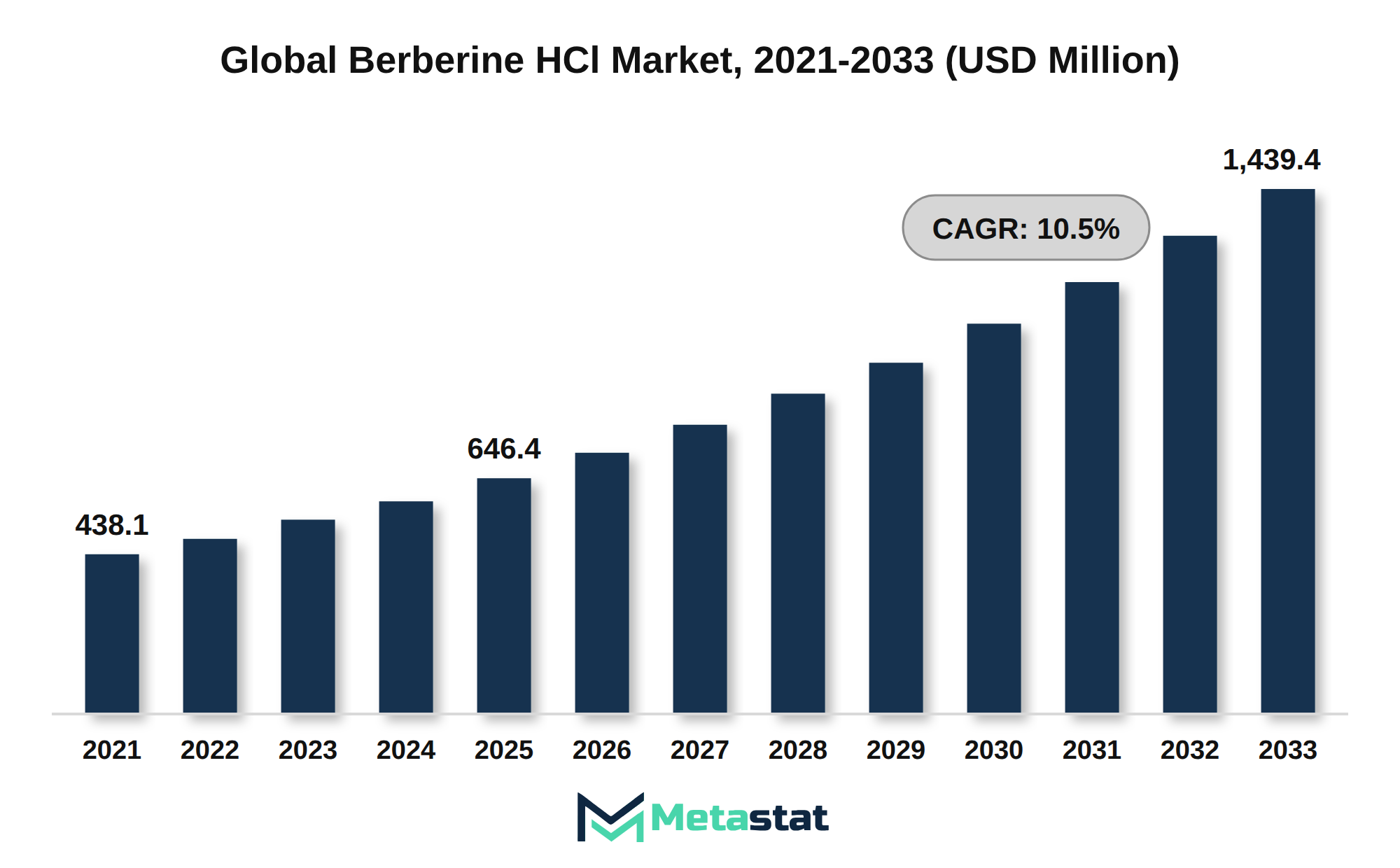
The global Berberine HCl market was valued at USD 646.4 million in 2025 and is projected to reach USD 1,439.4 million by 2033, growing at a CAGR of 10.5% over the forecast period.
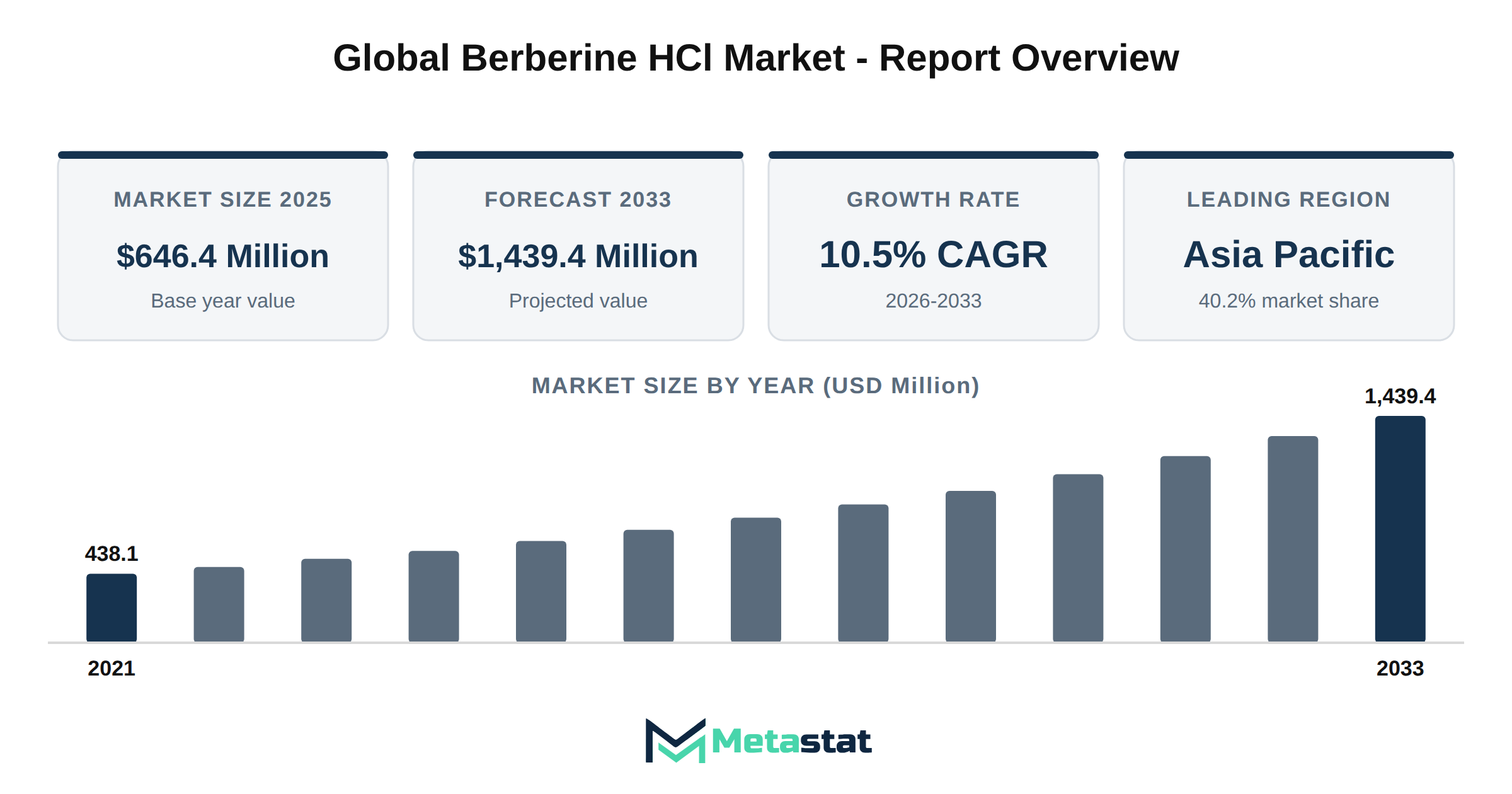
The Berberine HCl market reached a valuation of USD 646.4 million in 2025, following a strong growth trajectory from USD 438.1 million in 2021. This upward trend reflects a compound annual growth rate (CAGR) of 10.5%, with projections indicating an increase to USD 1,439.4 million by 2033.
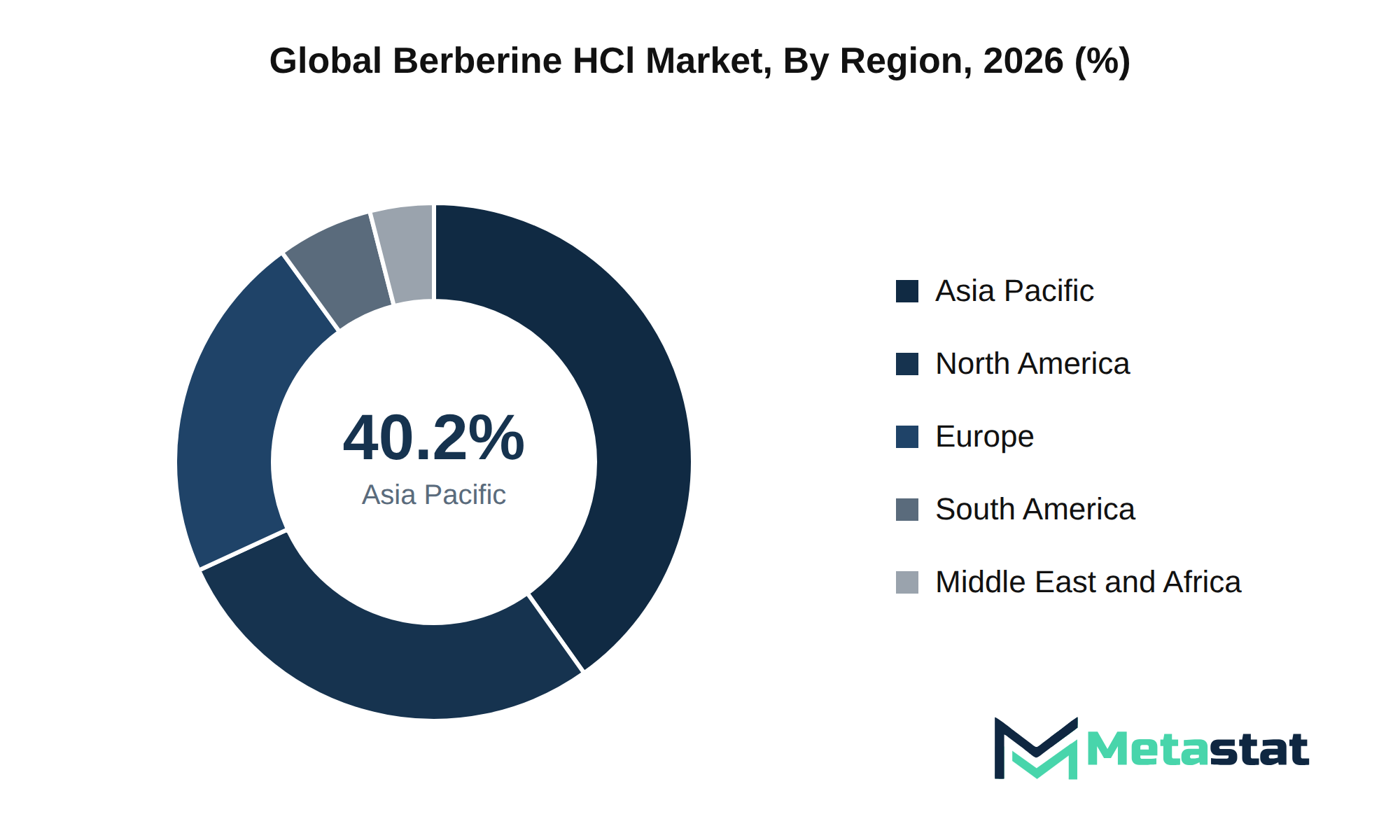
Regional dynamics show that the Asia Pacific region holds the largest market share at 40.2%, followed by North America at 28% and Europe at 21.9%. The Middle East and Africa account for 4%, while South America comprises 6% of the market. This distribution highlights significant opportunities for growth, particularly in the Asia Pacific region, which benefits from increasing demand across various applications.
Segments within the market exhibit distinct growth patterns. The purity segment, specifically the category of greater than 98%, is projected to expand significantly, reaching USD 624.3 million by 2033, reflecting a CAGR of 11.5%. Conversely, the segment of less than or equal to 98% is anticipated to grow from USD 424.6 million in 2026 to USD 815.1 million by 2033, at a CAGR of 9.8%. This variation in growth rates across purity levels suggests differing consumer preferences and market strategies.
In terms of applications, the pharmaceuticals sector represents a crucial driver for the Berberine HCl market, supported by rising consumer awareness regarding health benefits. Dietary supplements and food and beverage applications are expected to contribute significantly to market expansion. The relationship between these applications enhances overall market dynamics, attracting investment and encouraging innovation.
The Berberine HCl market experiences significant growth driven by heightened interest in natural supplements and pharmaceuticals. The consumer shift towards comprehensive health solutions positions the market favorably, attracting investments in research and development. Companies prioritize innovation and product differentiation to meet evolving consumer preferences, which enhances their competitive edge.
Regulatory compliance presents challenges and opportunities within the market. Stringent regulations regarding ingredient sourcing and product safety require companies to invest in quality assurance and transparency. Adhering to these standards ensures consumer safety and builds brand trust, which leads to increased market share.
The supply chain of the market reflects complex dynamics influenced by global sourcing and logistics architecture. Companies navigate fluctuating raw material costs and transportation challenges while maintaining efficient operations. Strategic partnerships with suppliers and distributors enhance resilience and streamline the procurement process, which enables firms to respond swiftly to market demands.
Macroeconomic headwinds, including inflationary pressures and currency volatility, impact operational costs within the market. Companies adjust pricing strategies and explore cost-control measures to sustain profitability amid these economic fluctuations. Capital allocation towards technology and infrastructure investments reinforces competitive positioning, which enables firms to innovate and expand their market reach.
The future strategic outlook for the Berberine HCl market remains optimistic, with projections indicating growth through 2033. Corporate imperatives focus on sustainability and circular economy dynamics, pushing firms to adopt eco-friendly practices in sourcing and production. High-value recommendations for market participants include investing in next-generation innovations, enhancing operational efficiencies, and building collaborations to capture emerging opportunities.
The Berberine HCl market experiences growth driven by increasing consumer interest in health and wellness. Rising awareness regarding the benefits of natural ingredients in dietary supplements and pharmaceuticals fuels demand for Berberine HCl. Consumers are shifting towards preventive healthcare solutions, prioritizing products that support metabolic health, weight management, and cardiovascular wellness. This trend aligns with the global movement towards healthier lifestyles, prompting manufacturers to innovate and expand their offerings in this segment.
Strong demand arises from aging populations seeking effective health solutions. Awareness of the potential of Berberine HCl to manage blood sugar levels and improve overall health attracts a diverse consumer base, including those with chronic conditions. The growing popularity of online retail channels facilitates access to Berberine HCl products, enhancing market reach. This accessibility strengthens competitive dynamics, driven by new players entering the market, striving to capitalize on the favorable consumer shift towards natural health products.
Increased marketing efforts focusing on the benefits of Berberine HCl further stimulate market demand. Companies are investing in educational campaigns highlighting the efficacy and safety of the ingredient, aiming to build consumer trust. These efforts contribute positively to the overall market growth, because informed consumers seek reliable products that align with their health goals, resulting in robust market expansion.
The Berberine HCl market experiences growth propelled by evolving consumer buying preferences and lifestyle changes. A notable shift towards health-conscious choices illustrates the increasing demand for natural supplements. This trend aligns with rising health awareness among consumers, particularly within aging populations seeking preventive health measures.
Urbanization contributes significantly to lifestyle changes, influencing purchasing decisions and accelerating market adoption. Faster-paced lifestyles often promote convenience, driving consumers toward easily accessible health solutions. The popularity of dietary supplements, including Berberine HCl, has surged owing to individuals focusing on maintaining optimal health with busy schedules.
The emergence of online retail channels enhances market access, effectively reaching a broader audience. Enhanced availability encourages consumers to explore various Berberine HCl products, thus fueling market expansion. The combination of changing demographics, urbanization, and increased digital interactions creates a favorable environment for the market's growth.
The Berberine HCl market faces notable challenges from regulatory compliance, which influences operational practices and market entry strategies. Compliance hurdles arise from varying international regulations regarding the safety and efficacy of herbal products, complicating the approval process for new entrants. This situation particularly affects small and medium-sized enterprises, which lack the resources to navigate complex regulatory environments.
Ongoing macroeconomic headwinds contribute to inflationary pressures that increase the costs of compliance and production. Rising operational expenses strain budget allocations for research and development, restricting innovation within the market. Budget constraints hinder companies' capacity to adapt to evolving regulatory frameworks, impacting overall competitiveness.
Supply chain disruptions exacerbate these challenges, leading to delays in obtaining necessary ingredients and materials. Geopolitical instability complicates logistics, resulting in uncertainty that deters investment in the market. Such disruptions limit suppliers' ability to fulfill demand promptly, resulting in potential revenue losses.
High capital investment requirements present additional restraints, particularly for companies looking to expand production capabilities. This financial pressure stifles growth opportunities, making it difficult for new entrants to establish a foothold in the market. Rising workforce overhead complicates talent acquisition, contributing to skill gaps that limit operational efficiency.
Market fragmentation complicates product standardization efforts, leading to inconsistencies in quality and availability across different regions. The Berberine HCl market experiences challenges from cultural barriers that impact consumer acceptance and usage patterns. These factors, along with slowing downstream demand in certain segments, contribute to a maturing industry cycle that limits future growth prospects.
The Berberine HCl market faces challenges stemming from geopolitical fragmentation, which contributes to uncertainties in trade dynamics and supply chain reliability. Fluctuations in international relations affect tariff structures and create trade deficits that complicate access to necessary raw materials. This volatility impacts manufacturers reliant on consistent feedstock availability, driving up input costs because companies seek alternative suppliers or materials.
Technological disruptions introduce complexities in research and development integrations, complicating efforts for firms to align products with rapidly changing market demands. Companies engaged in the Berberine HCl market encounter difficulties in maintaining compliance with tightening global regulatory standards, which require significant investment in compliance overhead and adaptation strategies. Such factors pressure profit margins, forcing businesses to reassess pricing strategies and operational efficiencies.
The evolving landscape of intellectual property protection deficits contributes to uncertainties within the market, creating risks associated with innovation and competitive positioning. Firms in the Berberine HCl market navigate these challenges while striving to meet sustainability demands and adhere to decarbonization mandates, which impose additional operational constraints. These interconnected issues create an environment where businesses remain vigilant and adaptive to maintain their market presence and profitability.
The Berberine HCl market benefits from emerging regional demands, particularly in Asia Pacific, which accounts for 40.2% of the market share. Increasing health awareness, a rising aging population, and growing adoption of dietary supplements drive demand in this region. Countries like China and India exhibit significant potential due to their expanding consumer base and shifting preferences towards natural health products.
Technological advancements play a crucial role in enhancing the efficiency of Berberine HCl production. Innovations in extraction and processing techniques lead to improved product quality and reduced operational costs. This efficiency translates to better profitability for manufacturers and attracts investments into the market. Integration of digital solutions facilitates streamlined operations, enabling companies to respond promptly to market changes and consumer preferences.
Geographical expansion into underdeveloped regions offers new opportunities for market participants. Introducing Berberine HCl products into markets with low penetration rates enables firms to diversify their portfolios and reach untapped consumer segments. Strategic partnerships with local distributors enhance market presence and facilitate smoother entry into these regions.
Sustainability imperatives drive product innovation, prompting companies to focus on eco-friendly sourcing and production methods. The shift towards green transformations aligns with increasing consumer expectations for environmentally responsible products. This trend presents a competitive advantage for businesses that prioritize sustainability in their operations and product offerings, enhancing their market position.
The Berberine HCl market stands to gain from evolving buying behaviors, particularly the shift towards digital procurement. The rise of e-commerce platforms provides consumers with greater access to various Berberine HCl products, expanding market reach. Focusing on niche applications, including in cosmetics and specialty dietary supplements, creates avenues for growth, allowing companies to tailor their offerings to specific consumer needs and preferences.
The Global Berberine HCl market is segmented based on Purity, Distribution Channel, Source, and Application.
Valued at USD 424.6 million in 2026, this segment is projected to reach USD 815.1 million by 2033, at a CAGR of 9.8% during the forecast period. Demand for Berberine HCl in the Less than or Equal to 98% segment largely stems from its applications across pharmaceuticals, dietary supplements, and food and beverage industries. The increasing consumer focus on natural health products stimulates growth in this segment. The evolution of product formulations and innovations in extraction technologies enhances the appeal of lower-purity berberine products.
Regulatory compliance standards influence market dynamics, with stricter regulations favoring high-purity products. However, the cost structure associated with producing higher-purity berberine HCl presents a challenge, impacting pricing strategies across the market. The presence of alternative sources and competitive suppliers facilitates a resilient supply chain, enabling companies to manage raw material sourcing effectively.
Increased awareness regarding the health benefits of berberine has led to greater adoption across various end-use applications, driving market expansion. This segment's growth potential reflects strategic opportunity windows for investors looking to capitalize on the rising trend of health-conscious consumption.
Increasing interest in high-purity ingredients drives demand for the Greater than 98% sub-segment within the Berberine HCl market. This segment is expected to reach USD 624.3 million by 2033, at a CAGR of 11.5% during the forecast period. The rising preference for premium quality in pharmaceuticals and dietary supplements significantly influences the growth trajectory of this segment. Manufacturers focusing on stringent quality standards, certifications, and compliance with regulatory requirements position themselves advantageously in this competitive market.
Technological advancements in extraction and purification processes enhance the purity levels of Berberine HCl, creating a favorable environment for product evolution. The shift toward natural and effective ingredients in various applications fuels consumption patterns, particularly in the healthcare and wellness sectors. End-use dynamics reflect a marked increase in demand for formulations featuring high-purity Berberine HCl, addressing consumer awareness regarding safety and efficacy.
Challenges related to raw material sourcing and pricing volatility impact market dynamics. Companies investing in supply chain resilience strategies and establishing robust relationships with raw material suppliers secure their positions within the market. To mitigate substitution risks from alternative compounds, firms prioritize innovation and product differentiation, ensuring sustained interest in high-purity offerings.
Strategic opportunity windows arise from the ongoing expansion of the dietary supplements market and the increasing integration of Berberine HCl into therapeutic formulations. Capital investment in research and development facilitates next-generation upgrades, integrating advanced technologies that enhance product profiles. Overall, the Greater than 98% sub-segment demonstrates robust potential within the Berberine HCl market, driven by evolving consumer preferences and a commitment to quality.
Demand for Berberine HCl in the Business to Business (B2B) segment arises from various industries focusing on health and wellness solutions, particularly in pharmaceuticals and dietary supplements. Growing awareness surrounding the health benefits of berberine compounds drives interest among businesses looking to incorporate these products into their offerings. Manufacturers recognize the potential for Berberine HCl because an effective ingredient in managing metabolic disorders and supporting cardiovascular health, which aligns with increasing consumer health consciousness.
The evolution of formulations in the market reflects advancements in extraction techniques and product purity levels. Businesses prioritize high-quality ingredients, prompting suppliers to invest in technological maturation and next-generation upgrades that enhance product efficacy. Companies actively seek partnerships with suppliers to secure consistent quality and supply, leading to strategic opportunity windows that strengthen market presence.
Consumption shifts towards natural and plant-based ingredients influence B2B purchasing decisions. Regulatory compliance standards regarding health claims and ingredient safety contribute to heightened scrutiny in ingredient sourcing, compelling businesses to prioritize certified suppliers with transparent sourcing practices. These dynamics create a competitive landscape focused on quality assurance, establishing a reliable supply chain resilient to market fluctuations.
Pricing volatility and margin pressures challenge businesses to optimize their cost structures while maintaining product quality. Strategic sourcing of raw materials and efficient logistics practices play critical roles in mitigating these risks. The growth of the Berberine HCl market presents significant opportunities for businesses willing to adapt and innovate, ensuring strong partnerships and investment in sustainable practices.
Growing health consciousness among consumers significantly influences the Business to Consumer (B2C) segment of the Berberine HCl market. Increasing awareness regarding the benefits of natural supplements contributes to rising demand for Berberine HCl products, particularly in dietary supplements and functional foods. Consumers actively seek alternatives to synthetic products, driving the demand for ethically sourced, high-quality Berberine HCl.
Technological advancements in extraction and purification processes enhance product quality, further propelling market growth. The introduction of next-generation formulations and delivery methods, including capsules and powders, caters to diverse consumer preferences and supports higher adoption rates in the segment. Collaborations between manufacturers and retailers facilitate increased product availability, making Berberine HCl more accessible to end-users.
Shifts in consumption patterns toward preventative healthcare support the expansion of the market. Consumers prioritize health supplements that offer benefits including metabolic support and immune system enhancement, which align with Berberine HCl's properties. Effective marketing campaigns focusing on these benefits connect with the target audience, fueling interest and driving sales in the B2C segment.
Regulatory compliance shapes product offerings, especially within the dietary supplement sector. Manufacturers face pressures to adhere to rigorous standards and certifications, ensuring product safety and efficacy. This focus on compliance enhances consumer trust and positions Berberine HCl favorably in a competitive market.
Strategic opportunities arise from emerging trends in e-commerce, enabling consumers to purchase Berberine HCl products conveniently. Online platforms expand market reach and allow for targeted marketing strategies, effectively engaging potential buyers. Capital investment in digital marketing and distribution channels enhances competitive positioning, driving sustained growth in the B2C segment of the Berberine HCl market.
Growing interest in natural sources drives demand for Berberis Aristata within the Berberine HCl market. This herb has gained recognition for its potential health benefits, including anti-inflammatory and antimicrobial properties, which appeal to health-conscious consumers. The increasing shift towards herbal and plant-based supplements intensifies the competitive landscape, pushing manufacturers to explore diverse formulations. Regulatory compliance remains a critical factor influencing product development and market entry, where adherence to safety and efficacy standards strengthens consumer confidence and brand reliability.
Shifting consumer preferences towards sustainable sourcing impact raw material procurement strategies. Manufacturers focusing on ethical harvesting methods enhance their market position, appealing to environmentally conscious buyers. The emphasis on high-quality ingredients encourages partnerships between suppliers and producers, ensuring a stable supply chain. Expanding research into the benefits of Berberis Aristata furthers product evolution, driving innovation in applications including dietary supplements, pharmaceuticals, and functional foods.
Heightened competition encourages investments in next-generation upgrades, where technological advancements in extraction and formulation processes improve product quality and efficacy. Market participants actively explore strategic opportunity windows created by growing consumer awareness and demand for natural health products. While the segment evolves, robust marketing strategies and effective distribution channels become essential for capturing market share and enhancing visibility within the Berberine HCl market.
Demand for Coptis Chinensis in the Berberine HCl market derives from its various applications in pharmaceuticals and dietary supplements. This source attracts attention due to its potential health benefits, including anti-inflammatory and antimicrobial properties. Growing consumer awareness regarding natural remedies drives the adoption of Coptis Chinensis, particularly among health-conscious consumers seeking alternatives to synthetic solutions.
Regulatory compliance standards increasingly favor natural ingredients, further enhancing the segment's appeal. Evolving regulations surrounding food and pharmaceutical products necessitate adherence to quality and safety certifications for suppliers. This trend encourages producers to focus on sourcing Coptis Chinensis from reputable suppliers, ensuring compliance with industry standards.
Technological maturation in extraction methods contributes to the segment's growth. Advanced techniques improve the efficiency and yield of active compounds from Coptis Chinensis, leading to higher quality products. This development enhances market competitiveness and attracts investments aimed at innovation and product evolution.
Downstream applications in cosmetics and other industries stimulate demand for Coptis Chinensis. The ingredient’s versatility opens strategic opportunities, allowing manufacturers to explore new product lines and expand market reach. Consumption shifts towards natural and organic products position the segment favorably for growth within the broader Berberine HCl market.
Growing recognition of the health benefits associated with Phellodendron Amurense contributes to rising demand in the Berberine HCl market. This botanical source is well-regarded for its potential anti-inflammatory and antimicrobial properties, which align with the increasing consumer trend towards natural and effective health solutions. The segment's position within the larger market benefits from a shift in consumer preferences for plant-based ingredients, highlighting the need for suppliers to focus on quality and purity.
Technological advancements in extraction methods enhance the viability of Phellodendron Amurense, leading to improved yields and efficacy. The focus on sustainable sourcing practices further increases its appeal among environmentally conscious consumers. Regulatory compliance standards related to the use of herbal ingredients in dietary supplements and pharmaceuticals drive manufacturers to prioritize sourcing from reputable suppliers who adhere to stringent quality controls.
End-use dynamics reflect strong interest in incorporating Phellodendron Amurense into various applications, including dietary supplements and pharmaceuticals. This trend aligns with the growing emphasis on preventative health measures, positioning the segment for continued expansion. Consumption shifts towards multifunctional ingredients create strategic opportunity windows for manufacturers aiming to innovate and introduce new product formulations that leverage the benefits of this ingredient.
Price volatility in raw materials and margin pressures impact profitability for suppliers in this segment. A resilient supply chain and effective management of sourcing strategies are crucial for mitigating risks associated with fluctuating costs. Exploration of alternative sourcing options and potential substitutes provides avenues for suppliers to enhance stability in the face of market challenges.
Growing interest in natural sources significantly influences the demand for Berberis Vulgaris within the Berberine HCl market. This interest arises from the perceived health benefits associated with substances derived from this plant, which appeals to health-conscious consumers. The increasing inclination towards herbal and natural remedies has positioned Berberis Vulgaris favorably in the market. The expansion of the dietary supplements sector further enhances the adoption of extracts from Berberis Vulgaris, enhancing its relevance in end-use applications. While consumers prioritize wellness and preventive health strategies, the demand for Berberis Vulgaris extracts rises. This trend aligns with the broader shift towards natural products in pharmaceuticals, dietary supplements, and cosmetics. Regulatory compliance and certifications increase the segment’s credibility, ensuring product safety and efficacy, ultimately driving consumer trust. Emerging opportunities for product innovation and development related to Berberis Vulgaris further strengthen its market presence. Research into the health benefits and potential applications of Berberis Vulgaris will likely lead to the introduction of enhanced formulations, catering to diverse consumer preferences. Overall, the strategic outlook for the segment remains optimistic, positioning Berberis Vulgaris because a vital contributor to the growth and evolution of the Berberine HCl market.
Rapid developments in the pharmaceutical industry highlight the significance of synthetic berberine hydrochloride within the Berberine HCl market. The growing trend toward synthetic compounds stems from their consistent quality and the ability to scale production efficiently. With the push for standardized ingredients, this segment attracts attention from manufacturers seeking reliable sources for active pharmaceutical ingredients.
Regulatory compliance influences the market landscape for synthetic berberine hydrochloride. Increasing scrutiny on product purity and efficacy drives manufacturers to seek materials that meet stringent safety standards. This focus on quality ensures that the segment remains competitive, particularly among pharmaceutical firms that prioritize compliance in product development.
Consumer health trends fuel interest in synthetic berberine hydrochloride, attributed to its reliability because a dietary supplement. The ability to formulate products that cater to specific health benefits enhances its appeal in the market. Brands leveraging synthetic ingredients often highlight their efficacy, aligning with consumer preferences for transparency and performance in health products.
Technological advancements in synthesis processes significantly contribute to the segment's growth. Innovations in manufacturing techniques lead to improved yield and reduced production costs, allowing suppliers to offer competitive pricing. This shift supports broader adoption in various applications, ranging from supplements to pharmaceutical formulations.
Strategic opportunities arise from increasing demand for standardized ingredients, particularly in the nutraceutical space. While the market continues to evolve, stakeholders focusing on synthetic berberine hydrochloride capitalize on these trends to enhance their market presence. The segment's resilience against fluctuations in raw material sourcing positions it favorably for sustained growth.
Interest in the sub-segment incorporating Coscinium Fenestratum, Hydrastis Canadensis, and Tinospora Cordifolia reflects a growing trend among consumers seeking natural alternatives. This shift towards herbal supplementation aligns with broader health and wellness trends, increasing the attractiveness of these sources within the Berberine HCl market. The unique properties of these plants offer diverse applications, including pharmaceuticals and dietary supplements, enhancing their appeal in various consumer segments.
Adoption of these sources sees strong momentum due to rising consumer awareness regarding herbal remedies and natural products. Rising consumer awareness drives manufacturers to explore innovative extraction and formulation techniques, enhancing product efficacy and marketability. The integration of these sources into existing product lines provides opportunities for expansion, particularly in regions prioritizing traditional health approaches.
Regulatory frameworks governing herbal products remain a significant factor in shaping market dynamics. Compliance with safety and quality standards is critical for ensuring consumer trust and product acceptance. While regulations evolve, manufacturers adapt to maintain competitiveness while navigating potential challenges related to sourcing and processing.
Investment in research and development surrounding these lesser-known sources highlights a strategic opportunity for industry players. By focusing on clinical studies and consumer education, companies improve awareness of potential health benefits, driving demand further. This proactive approach enhances the segment's resilience and adaptability, ensuring continued relevance within the Berberine HCl market.
Significant factors driving demand in the Pharmaceuticals segment include increasing investments in drug development and the rising prevalence of chronic diseases. Pharmaceutical companies prioritize innovative ingredients like Berberine HCl due to their potential health benefits, leading to heightened interest in this segment. Ongoing research into the therapeutic applications of Berberine HCl supports growth in the market.
Technological advancements and collaborations within the pharmaceutical sector provide essential catalysts for expansion. Companies are focusing on enhancing the efficacy of Berberine HCl through next-generation formulations, thereby appealing to healthcare providers and consumers alike. This evolution aligns with the market's trajectory towards more effective and reliable health solutions.
Regulatory compliance standards impose significant influence on product acceptance within the Pharmaceutical segment. Meeting rigorous testing and certification requirements enables companies to strengthen their product offerings and build trust among healthcare professionals. Consequently, adherence to these standards contributes to a more resilient supply chain.
The increasing focus on natural ingredients in pharmaceuticals reflects changing consumer preferences, driving a shift towards Berberine HCl because a preferred choice. This consumption shift aligns with broader trends in health and wellness, creating a supportive environment for market growth.
Strategic investments and research initiatives position the Pharmaceuticals segment favorably within the Berberine HCl market. Companies prioritizing innovation and product evolution are well-positioned to capitalize on emerging opportunities, enhancing their competitive edge in this sector.
Growth in the dietary supplements segment of the Berberine HCl market reflects a shift toward preventive health measures among consumers. Increased awareness of health benefits linked to berberine compounds drives demand from health-conscious buyers seeking natural solutions for various health issues. This segment experiences substantial interest in formulations combining berberine with other supplements, enhancing effectiveness and appeal.
Rising consumer preferences for natural and plant-based products fuel market adoption. The dietary supplements sector benefits from a growing trend toward personalized nutrition, with customers seeking tailored solutions to improve overall health. Innovations in product formulations and delivery methods, including capsules and powders, support market expansion by enhancing user experience.
Regulatory compliance shapes the dietary supplements market, ensuring product safety and efficacy. Stricter regulations on labeling and ingredient sourcing raise industry standards, building consumer trust in berberine products. Continued investment in research and development enhances product credibility and supports innovation within the segment.
Price volatility associated with raw material sourcing influences cost structures for manufacturers in the dietary supplements sector. Fluctuations in the costs of sourcing berberine from natural sources require careful management of pricing strategies. Effective supply chain management and strategic partnerships mitigate risks associated with procurement and distribution, ensuring steady availability of berberine HCl for dietary supplements.
Competitive dynamics drive opportunities for growth within the market. Companies focusing on product differentiation through unique formulations or branding strategies capture a larger market share. The potential for innovative and disruptive alternatives in the dietary supplements space presents strategic opportunity windows for industry players looking to enhance their portfolios.
Investment in marketing and education about the benefits of berberine formulations further encourages adoption among consumers. Awareness campaigns that highlight scientific research supporting health claims associated with berberine influence purchasing decisions, reinforcing the segment's growth trajectory within the broader Berberine HCl market.
Growing consumer preferences for health-focused products shape demand within the Food & Beverage sub-segment of the Berberine HCl market. Increasing incorporation of natural ingredients in various food products aligns with a shift towards healthier lifestyle choices. Trends toward clean labels and transparency enhance the appeal of Berberine HCl among manufacturers seeking to meet evolving consumer standards, supporting long-term demand.
Regulatory compliance standards play a significant role in influencing product formulations. Manufacturers adapt to these evolving guidelines to ensure that Berberine HCl aligns with consumer safety expectations and industry regulations. This commitment to compliance builds trust and drives adoption across food and beverage applications, reinforcing the segment's position.
Consumption patterns reflect a shift towards functional foods, where ingredients like Berberine HCl contribute to perceived health benefits. Enhanced awareness of the ingredient's potential advantages encourages manufacturers to explore innovative formulations that leverage these benefits. Strategic opportunities for product evolution arise from ongoing research into Berberine HCl's properties, which is expected to strengthen its position in the market.
Cost structures and pricing dynamics influence the overall landscape. Fluctuations in raw material sourcing impact the pricing strategies of manufacturers, necessitating effective management of supply chain resilience. Addressing these factors will determine how well the Food & Beverage sub-segment of the Berberine HCl market adapts to emerging challenges and opportunities, increasing investment across the value chain.
Consumer trends increasingly favor natural and organic ingredients in cosmetic formulations, positioning Berberine HCl because a valuable component. The growing awareness of skin health and the demand for effective, safer alternatives to synthetic ingredients drive significant interest in this market segment. Manufacturers emphasize the multifunctionality of Berberine HCl, applying its antimicrobial, antioxidant, and anti-inflammatory properties to enhance product efficacy.
Regulatory compliance standards increasingly shape product formulations within the cosmetics sector, focusing on sustainability and safety. Companies face pressure to adhere to stringent regulations, prompting the integration of certified natural ingredients. These compliance measures directly influence product development and market entry strategies, enhancing confidence among consumers.
Technological advancements enable the extraction and formulation of Berberine HCl, leading to new product innovations and improvements in application methods. Research and development efforts focus on optimizing the compound's bioavailability and efficacy in cosmetic products. This progress supports the increasing adoption of Berberine HCl across various cosmetic applications.
Shifts in consumer consumption patterns favor products incorporating health benefits. The emphasis on personal care and wellness enhances the appeal of cosmetics formulated with Berberine HCl. Companies that invest in marketing these benefits position themselves favorably in the competitive market.
Strategic opportunities arise from the evolving landscape of cosmetic products. The expanding interest in multifunctional ingredients creates a favorable environment for Berberine HCl. Companies that identify and leverage these opportunities enhance their market presence and drive revenue growth.
Growing utilization of Berberine HCl in animal health and feed applications enhances the interest within this segment. Increasing awareness regarding the importance of animal health drives demand for natural supplements, which align with the shifting consumer preferences towards organic and natural solutions. Research institutions increasingly adopt Berberine HCl in laboratory studies owing to its potential therapeutic effects, facilitating advancements in medical research and diagnostics.
The segment benefits from technological maturation, allowing for enhanced extraction and processing methods that optimize the quality of Berberine HCl. Evolving regulatory compliance standards in veterinary medicine increase the credibility of products derived from this compound, encouraging wider adoption among producers and researchers. Strategic opportunity windows arise from the demand for high-quality, effective animal health solutions continuing to expand, propelling innovation and investment within the Berberine HCl market.
Based on geography, the Global Berberine HCl market is divided into North America, Europe, Asia-Pacific, South America, Middle East, and Africa.
North America presents a significant opportunity within the Berberine HCl market, driven by a growing interest in health-focused products. The market expansion is supported by increasing consumer awareness regarding the benefits of natural ingredients, particularly in the United States, Canada, and Mexico. The region's market is projected to expand at a CAGR of 10.5% within the forecast period, reaching a market size of USD 401.6 million by the end of 2033.
Increasing demand for dietary supplements and pharmaceuticals significantly influences growth in the market. The rising prevalence of lifestyle-related health issues further fuels interest in Berberine HCl, prompting consumers to seek effective, natural alternatives. This trend highlights the potential for companies to innovate and expand product offerings that align with consumer preferences.
Market dynamics within North America involve a blend of established companies and emerging players, promoting competitive strategies that target specific consumer segments. The presence of domestic market participants enhances the competitive landscape, while localized procurement dynamics enable suppliers to respond effectively to regional preferences. Demand growth presents opportunities for suppliers to capitalize on cross-border trade corridors, enhancing market accessibility.
Regional resource availability, including advanced manufacturing capabilities, supports the infrastructure required for the Berberine HCl market. This factor, combined with strategic foreign direct investment flows, positions North America because a leader in the global landscape. Companies focusing on localized manufacturing and nearshoring initiatives will likely gain a competitive edge, enhancing their responsiveness to market demands.
The Berberine HCl market in Europe exhibits significant growth potential driven by rising awareness of health benefits associated with natural products. Countries including Germany, France, the UK, Italy, Spain, and Russia are key players in this market, demonstrating strong consumer interest in dietary supplements and pharmaceuticals that leverage Berberine HCl. Increasing health consciousness and growing demand for organic ingredients contribute to market expansion.
Several emerging market front-runners thrive in Europe, supported by localized manufacturing and procurement dynamics. The presence of established suppliers aids the development of high-quality products, promoting the adoption of Berberine HCl across various applications. The region benefits from a well-developed infrastructure that enhances distribution channels and improves access to consumers, strengthening long-term demand.
Regulatory frameworks within the European market play a crucial role in shaping product compliance and safety standards. Local mandates drive manufacturers to ensure their products meet high-quality benchmarks, creating a competitive landscape marked by innovation and differentiation. This dynamic encourages investment in research and development, propelling growth in the market.
The cross-border trade corridors across Europe enable efficient supply chain management, allowing players in the market to capitalize on regional synergies. Vendor consolidation trends further streamline operations, enabling suppliers to enhance their market presence while addressing diverse consumer needs. Such developments are expected to reinforce the market's position through 2033.
Strong consumer demand for natural health solutions supports the growth of the Berberine HCl market in the Asia-Pacific region. Key markets, including China, Japan, and India, exhibit increasing interest in dietary supplements and pharmaceuticals that feature Berberine HCl owing to its associated health benefits. Regional investment in health and wellness infrastructure enhances the expansion of this market segment.
Emerging market front-runners including India and Southeast Asia demonstrate significant growth potential driven by rising disposable incomes and evolving consumer preferences. Cultural nuances and heightened awareness of health products further stimulate market activity, encouraging local manufacturers to enhance product offerings and distribution channels. This dynamic contributes to a competitive landscape characterized by both domestic leaders and international players.
Infrastructure modernization efforts play a crucial role in enhancing supply chain efficiencies. Localized manufacturing densities and strategic entry barriers facilitate foreign direct investment flows, enabling companies to penetrate underdeveloped territories more effectively. While the market matures, high-value replacement cycles and incremental growth vectors become evident, strengthening the position of Berberine HCl in various applications.
Regulatory compliance and health policies in countries including Australia and Japan create a structured environment for market expansion. Geographic regulatory frameworks influence product availability and safety standards. This regulatory landscape impacts market dynamics, affecting the competitiveness of local and international suppliers.
The Asia-Pacific region stands because a significant contributor to the Berberine HCl market, buoyed by strong demand drivers, infrastructural enhancements, and a favorable regulatory environment. The next few years will present increased investment opportunities and competitive strategies because companies adapt to evolving market conditions.
In South America, the Berberine HCl market accounts for a 6.00% share of the global market in 2025. Brazil and Argentina emerge because key players within this region, with demand driven by increasing interest in natural health products. A rising population seeking alternative remedies creates growth opportunities, particularly in the dietary supplements sector.
Market dynamics are influenced by a focus on health and wellness, alongside cultural preferences for comprehensive approaches to health management. The regulatory environment regarding natural products presents unique challenges, affecting sourcing and distribution channels local vendors navigate. Improving supply chains through localized manufacturing efforts enhances market accessibility, positioning regional players competitively.
Efforts to modernize regional infrastructure support distribution efficiency, ensuring that Berberine HCl reaches consumers in a timely manner. Increased foreign direct investment (FDI) flows into the health and wellness sector reflect confidence in the market's growth potential, enabling new entrants. Emerging market front-runners prioritize innovation and responsiveness to evolving consumer preferences, strengthening their presence in the Berberine HCl market.
The Berberine HCl market in the Middle East and Africa faces unique dynamics influenced by regional purchasing behaviors and cultural preferences. In countries including Saudi Arabia, UAE, and South Africa, increasing health awareness and a shift toward natural solutions drive demand for Berberine HCl. The market benefits from growing interest in dietary supplements and pharmaceuticals that emphasize natural ingredients, resulting in strengthened long-term demand.
Local supply chains exhibit a trend toward regionalization, promoting localized manufacturing and procurement strategies. This shift enhances accessibility and reduces reliance on imported products while creating a competitive landscape among domestic players. Companies operating in the region adapt to specific demands and regulatory frameworks, ensuring compliance with local mandates, which influences operational efficiency and market positioning.
Investment into health and wellness products continues to grow, creating opportunities for expansion across various applications, including dietary supplements and pharmaceuticals. The Berberine HCl market stands to benefit from these trends, with a projected growth trajectory amid increasing consumer interest in health solutions, reinforcing the segment's position in the market.
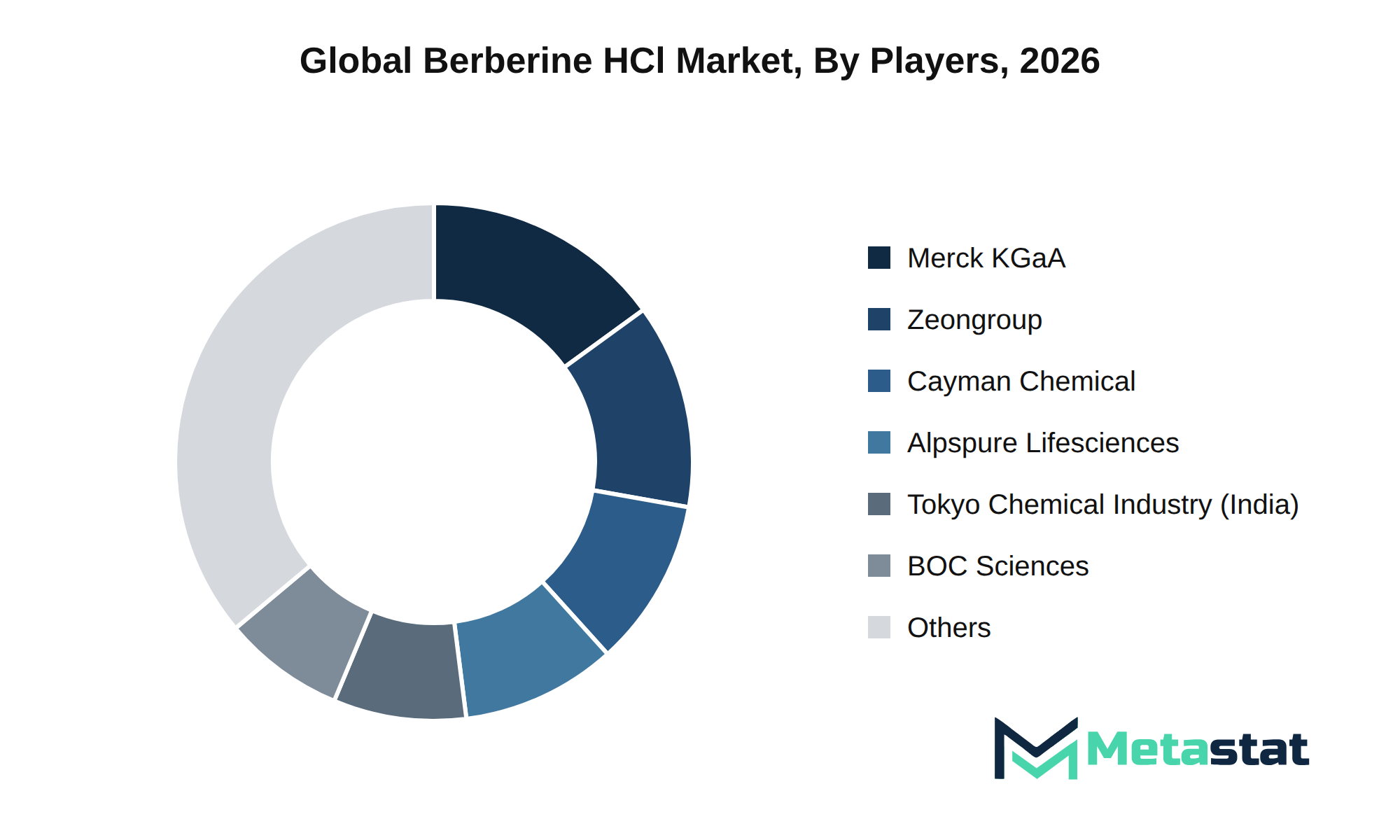
The Berberine HCl market features a diverse set of players, each employing various strategies to enhance their market presence. Companies focus on mergers, acquisitions, and strategic consolidation to strengthen their portfolios and expand their reach. Collaboration through strategic alliances and joint ventures emerges because a common tactic, enabling firms to leverage each other's strengths and technologies.
Product differentiation plays a critical role in the competitive environment. Players invest in research and development to create innovative formulations and proprietary technologies, helping to establish technological defensibility. This emphasis on R&D contributes to brand equity and customer retention, reinforcing competitive positioning across the market.
Pricing architectures influence market dynamics. Companies navigate procurement leverage and supply chain dominance to optimize operational costs. The threat of new entrants and startup disruption dynamics presents challenges for established players, necessitating ongoing adaptation and strategic growth vectors to maintain a competitive edge in the market.
Intellectual property portfolios, including patent landscapes, serve because significant barriers to entry, contributing to the stability and sustainability of the leading companies. By continuing to innovate and consolidate their market positions, these players effectively shape the future competitive outlook of the Berberine HCl market.
Market size is forecast to rise from USD 646.4 million in 2025 to over USD 1,439.4 million by 2033. The base case reflects a steady trajectory from USD 646.4 million in 2025 to USD 1,439.4 million by 2033 at a 10.5% CAGR. The bull case envisions accelerated growth driven by rising applications across pharmaceuticals, dietary supplements, and other sectors, leading to greater market penetration and higher revenue streams. Conversely, the bear case includes potential challenges, including regulatory constraints and fluctuating market dynamics, which could hinder growth in certain regions.
The Berberine HCl market will experience changes in downstream demand due to macroeconomic shifts and evolving consumer preferences. Economic cycles influence purchasing behavior, while core industry maturation prompts a focus on innovation and product diversification. Integration of next-generation technologies in research and development enhances the efficiency of product life cycles, enabling faster commercialization timelines. Regulatory evolution will introduce compliance milestones, necessitating strategic adjustments from manufacturers to maintain market positioning.
Geopolitical realignments and evolving trade corridors significantly impact global supply chain dynamics, affecting the availability of raw materials and the cost structure for producers. Capital allocation directives focus on infrastructure commitments and CapEx investments, driving growth in high-potential regions. Identifying emerging white-space opportunities and addressing unmet enterprise needs will create high-growth pockets within the market, contributing to expanded market presence and profitability.
Strategic imperatives at the executive level prioritize defensibility roadmaps and growth recommendations. While companies adapt to shifting market conditions, aligning resources toward innovation and customer-centric strategies is essential for sustained success in the Berberine HCl market.
The report strategically identifies and profiles the key market players and analyses their core competencies in each sub-segment of the Berberine HCl market.
Report Attributes | Details |
Study Period | 2021-2033 |
Base Year | 2025 |
Estimated Year | 2026 |
Forecast Period | 2026-2033 |
Historical Period | 2021-2025 |
Growth Rate | CAGR 10.5% from 2026 to 2033 |
Revenue Unit | USD million |
Segmentation | By Purity, Distribution Channel, Source, Application, and Region |
By Region | North America (By Purity, Distribution Channel, Source, Application, and Country)
|
Europe (By Purity, Distribution Channel, Source, Application, and Country)
| |
Asia Pacific (By Purity, Distribution Channel, Source, Application, and Country)
| |
South America (By Purity, Distribution Channel, Source, Application, and Country)
| |
Middle East and Africa (By Purity, Distribution Channel, Source, Application, and Country)
|
Find answers to common questions about this report
The Berberine HCl market size was valued at USD 646.4 million in 2025, according to the Metastat Insights study.
The Berberine HCl market is projected to grow at a CAGR of 10.5% during the forecast period from 2026 to 2033.
The North America Berberine HCl market size is estimated to reach USD 401.6 million by 2033.
The segment "Greater than 98%" leads the Berberine HCl market, with a projected value of USD 624.3 million by 2033. This segment shows a higher growth rate compared to "Less than or Equal to 98%", which is expected to reach USD 815.1 million in the same year.
The Berberine HCl market experiences growth driven by increasing consumer interest in health and wellness, particularly among aging populations. Rising awareness of the benefits of natural ingredients in dietary supplements fuels demand, while the shift towards preventive healthcare solutions supports market expansion. Enhanced accessibility through online retail channels further stimulates this growth.
The Berberine HCl market faces challenges from regulatory compliance, which complicates market entry and operational practices, particularly for small and medium-sized enterprises. High capital investment requirements and rising operational expenses further strain innovation and growth opportunities, while supply chain disruptions and geopolitical instability create uncertainties that hinder investment and affect product availability.
Increasing consumer interest in health and wellness drives product adoption in the Berberine HCl market. Rising awareness of the benefits of natural ingredients, along with a shift towards preventive healthcare solutions, supports demand. The growing popularity of online retail channels enhances accessibility, allowing a broader audience to explore and purchase Berberine HCl products.
The Berberine HCl market is estimated to reach a valuation of USD 1,439.4 million by 2033.
Key players operating in the Berberine HCl market include Zeongroup, Alpspure Lifesciences Pvt. Ltd., Merck KGaA, Tokyo Chemical Industry (India) Pvt. Ltd., BOC Sciences, Cayman Chemical, and Santa Cruz Biotechnology Inc.
Asia Pacific holds a significant market share of 40.2% in the Berberine HCl market, reflecting strong demand driven by increasing health awareness.
The analysts below cover Biotechnology research at Metastat Insights.
LEAD ANALYST
Utkarsh Khirodkar is a Lead Market Research Analyst at MetaStat Insight, specializing in market intelligence, technology sector assessments, and competitive strategy.

SENIOR RESEARCH ANALYST
Biotechnology · Food and Beverages · Medical Devices · Packaging
Snehal Pasalkar is a Research Analyst at MetaStat Insight, operating at the intersection of life sciences research, competitive strategy, and market intelligence.
Analyzing the transition from natural gas to green hydrogen in iron ore reduction requires realistic infrastructure timelines. Meta stat insight supplied a detailed regional assessment of DRI plant conversion costs and scrap metal availability in North America and Western Europe. Their report carefully examined pellet quality specs and electrical grid access constraints without making oversimplified market assumptions. The research material served as a practical reference during internal technology roadmap discussions.
Integrating zero-trust access controls across legacy electronic health record systems involves complex compliance overhead. Team produced an analysis that clearly separated identity governance and administration tools from privileged access management platforms. Their evaluation of HIPAA and GDPR compliance features across cloud native solutions gave our architecture group clear baseline criteria. The custom data request regarding biometric authentication adoption in hospital networks was returned promptly with clear documentation.
Evaluating calorific value requirements and air permit compliance across municipal waste facilities requires localized data. Metastat Insight structured their analysis around operational throughput capacity and feedstock composition variations in Latin America and Eastern Europe. Their competitive mapping of sorting equipment vendors helped clarify technology differences between optical separators and heavy media systems. The study provided an objective baseline during our capital expenditure reviews.
Explore related market intelligence reports worth reading alongside this one.