
LEAD ANALYST
Utkarsh Khirodkar is a Lead Market Research Analyst at MetaStat Insight, specializing in market intelligence, technology sector assessments, and competitive strategy.

Global Capacitive Touch Switches Market Size, Share, By Type (Capacitive Touch Switches, Piezo Touch Switches, Resistive Touch Switches, Touchscreen Light Switches, Touchscreen Curtain Switches, Touchscreen Integration Switches and Others (IR/Optical, Proximity, Force-Sensitive and Hybrid Switches)), By Product Type (Single-Touch, Multi-Touch, Industrial-Grade / Rugged and Others (Flexible, Waterproof, Transparent and Customizable Touch Switches)), By Application (Consumer Electronics, Automotive, Medical and Healthcare, Smart Home and Building Automation and Others (Defense and Aerospace, Telecommunications, Data Center and Communication Infrastructure)), By End-User (Residential, Commercial, Industrial, Healthcare and Others (Government, Public Infrastructure and Other Specialized Users)), Industry Analysis, Growth, Trends, and Forecast, 2026-2033
Report ID
MSI-4929
Published
August, 2026
Pages
275 Pages
Format
Historical
Base year
Forecast
Forecast period
Report Details
Choose Your License
Global Capacitive Touch Switches Market
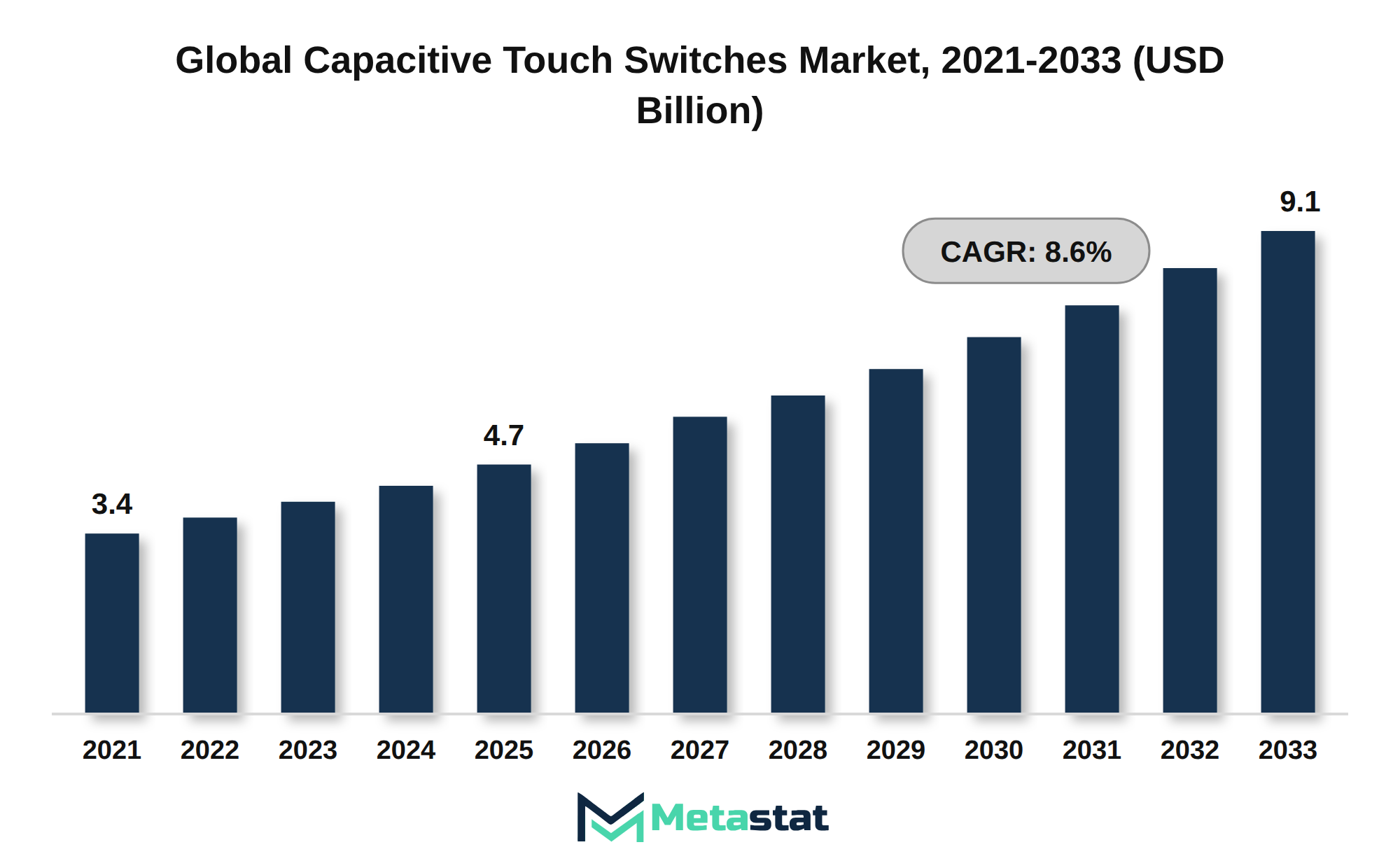
The global Capacitive Touch Switches market was valued at USD 4.7 billion in 2025 and is projected to reach USD 9.1 billion by 2033, growing at a CAGR of 8.6% over the forecast period.
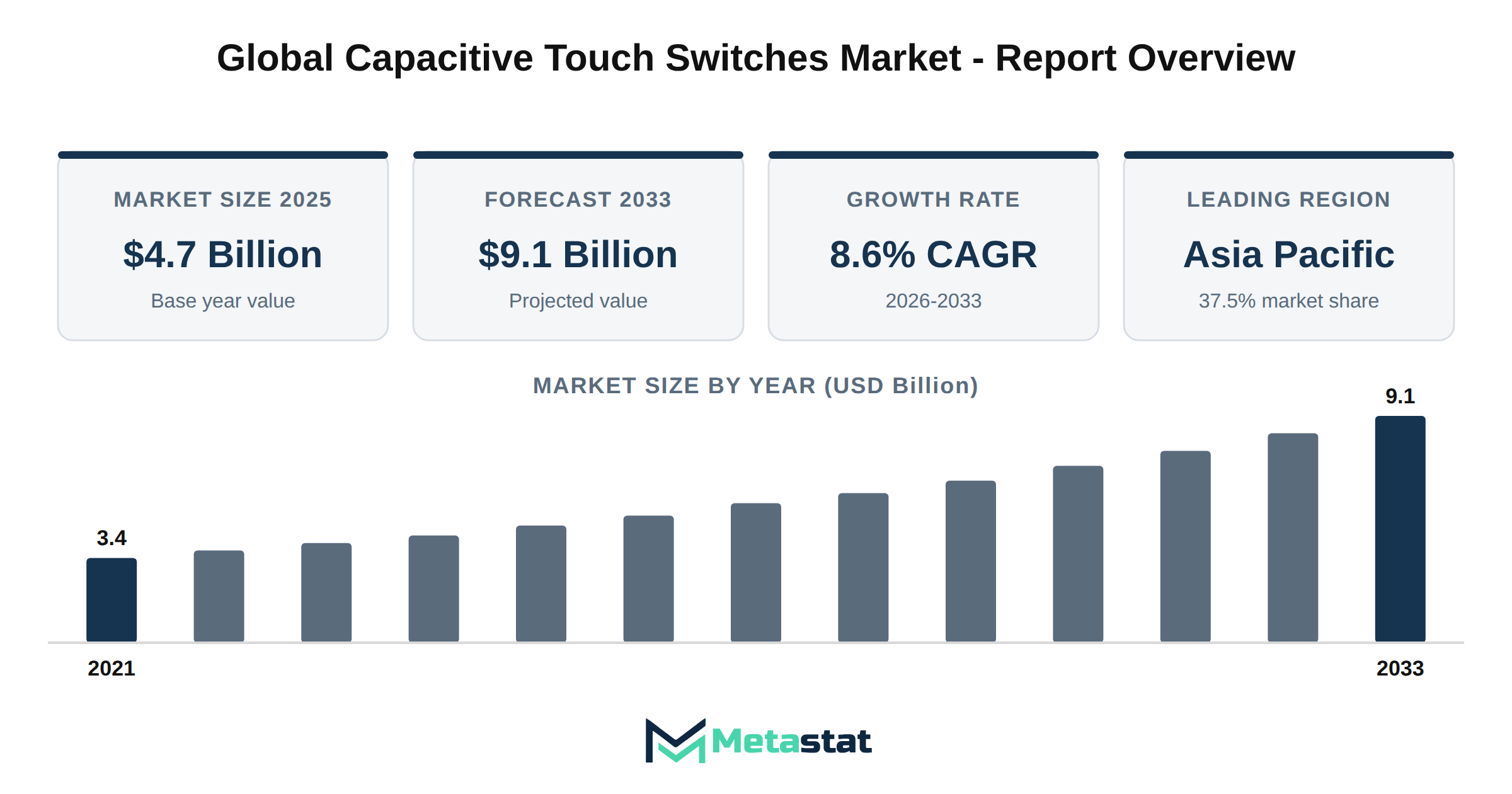
The Capacitive Touch Switches market is projected to experience significant growth, expanding from USD 4.7 billion in 2025 to USD 9.1 billion by 2033, resulting in a compound annual growth rate (CAGR) of 8.6%. Historical data indicates a consistent increase in market value, starting from USD 3.4 billion in 2021 and reaching USD 4.3 billion in 2024. This upward trend reflects rising consumer demand and technological advancements in touch switch applications.
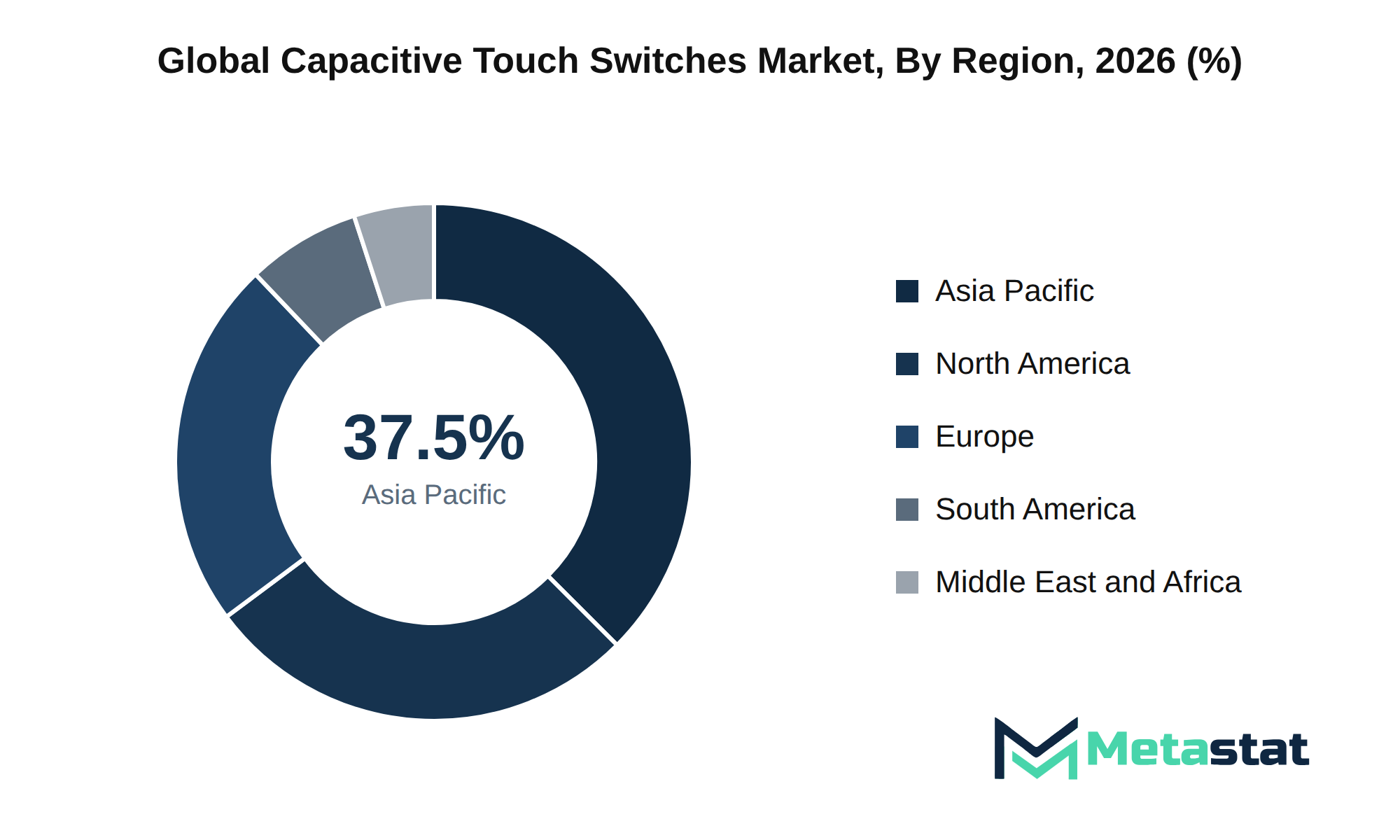
Key regions contributing to the market include North America, Europe, and Asia Pacific, with Asia Pacific leading at a share of 37.5%. North America holds 27.3%, while Europe accounts for 23.1%. This regional distribution highlights varying adoption rates influenced by technological infrastructure, economic conditions, and regulatory environments. The market expansion aligns with increased usage of touch-sensitive devices across multiple sectors, including consumer electronics and automotive industries.
Technological advancements and increasing consumer demand drive the Capacitive Touch Switches market towards substantial growth. The proliferation of smart devices across various sectors, including automotive, consumer electronics, and home automation, requires effective integration of touch technology. This shift results in heightened demand for capacitive touch solutions that offer enhanced functionality and user experience.
Regulatory compliance becomes a critical factor influencing market dynamics. Manufacturers face stringent standards related to safety and performance, which necessitate continual investment in research and development. Companies that align their products with evolving regulations enhance their competitive edge and build customer trust, leading to increased market penetration.
The ongoing shift towards sustainable transformation is important in shaping the Capacitive Touch Switches market. Players focus on reducing environmental impact through the adoption of eco-friendly materials and manufacturing processes. This commitment to sustainability not only meets regulatory requirements but connects with environmentally conscious consumers, driving demand for sustainable products.
Market fragmentation poses challenges and opportunities for participants. With numerous players operating across various segments, competition intensifies, prompting companies to innovate and differentiate their offerings. Strategic partnerships and mergers and acquisitions serve because common tactics to consolidate market positions and expand product portfolios.
Supply chain dynamics significantly affect the operational framework of the market. Fluctuations in the availability of raw materials and components necessitate agile logistics architecture. Companies that effectively manage their supply chains enhance resilience and adaptability, ensuring consistent product delivery during global uncertainties.
Macroeconomic headwinds, including inflationary pressures and currency volatility, impact pricing strategies and profit margins. Organizations that proactively address these challenges through effective capital allocation and cost management strategies position themselves for sustained growth. The future strategic outlook for the Capacitive Touch Switches market hinges on leveraging innovation, regulatory compliance, and sustainable practices to navigate these complexities.
Growth in the Capacitive Touch Switches market stems from rising demand for consumer electronics, driven by advancements in technology and evolving consumer preferences. While sectors including smartphones, tablets, and home automation expand, manufacturers increasingly adopt capacitive touch switches for their ability to offer enhanced user experiences, improved aesthetics, and energy efficiency. This transition reflects a broader trend toward digitization and automation across multiple applications, encouraging investments in innovative products.
In the automotive sector, the shift toward electric vehicles emphasizes the importance of intuitive controls and interfaces, further enhancing the appeal of capacitive touch technologies. The growing interest in smart homes and building automation systems supports market growth, driven by consumers seeking modern solutions that align with their lifestyles. The market's expansion positions it favorably for technological integration and future innovation, creating a landscape ripe for investment and development.
Increasing regulatory focus on energy efficiency and sustainability prompts manufacturers to explore advanced technologies, including capacitive touch switches. This alignment with environmental goals enhances the market's attractiveness, pushing companies to enhance their product offerings for energy-conscious consumers. Overall, the ongoing evolution in consumer electronics and automotive applications significantly contributes to the dynamic growth within the capacitive touch switches market.
Investment in infrastructure development significantly influences the growth of the Capacitive Touch Switches market. Enhanced physical and digital capacities improve operational efficiency across various sectors, including consumer electronics and automotive applications. Increased government and private sector spending on modernizing facilities and upgrading network capabilities creates opportunities for suppliers of capacitive touch technologies, resulting in strengthened long-term demand.
Urbanization and demographic shifts drive the demand for smarter and more efficient building systems, leading to rising adoption of capacitive touch switches. The need for automation in residential and commercial spaces aligns with the ongoing trend of digital transformation, propelling the market forward. Consequently, the integration of these switches into new infrastructure projects supports enhanced user experiences and operational productivity, expanding the addressable base for market participants.
The continued focus on infrastructure development presents significant avenues for growth in the market, establishing a robust framework for sustainable expansion during the forecast period.
The Capacitive Touch Switches market faces challenges due to stringent regulatory compliance and operational hurdles. Regulatory frameworks mandating specific performance standards and safety measures create barriers for manufacturers, raising production costs. Compliance requirements burden suppliers, leading to delays in product launches and increasing operational complexities.
Capital investment requirements restrict new entrants from accessing the market. High initial costs for developing and manufacturing capacitive touch switches deter investment, particularly in regions with limited financial resources. This situation results in market fragmentation, where established players with the necessary capital thrive.
Supply chain disruptions, influenced by geopolitical instability and resource scarcity, complicate operational efficiency. These factors lead to higher input costs and delayed production timelines, impacting the overall capacity to meet market demand. The combination of these elements contributes to an environment where achieving sustainable growth in the Capacitive Touch Switches market presents significant challenges.
The Capacitive Touch Switches market confronts substantial challenges stemming from geopolitical fragmentation and supply chain instability. Trade deficits and tariff friction disrupt manufacturing processes, leading to increased costs for producers and limiting the availability of essential components. Such disruptions particularly impact industries reliant on imported materials, escalating lead times and complicating logistics, resulting in reduced operational efficiency.
Technological disruptions, including rapid advancements in touch technology, create pressures on firms to innovate while managing complex research and development integrations. This scenario results in significant investment requirements, hindering smaller players from competing effectively in the market and limiting the overall pace of innovation.
The ongoing volatility of feedstock and component prices exacerbates cost structures across the market. Producers experience margin pressures due to rising input costs, which lead to pricing compression and reduced profitability. Talent retention pressures and workforce skill gaps complicate operations, restricting firms' ability to meet evolving market demands and diminishing competitive positioning.
Environmental lifecycle footprints and sustainability demands shape the operational framework for manufacturers. Compliance with tightening global regulatory standards increases overhead costs, placing additional burdens on firms and limiting their financial flexibility. The urgency for decarbonization mandates necessitates investments in new technologies and processes, delaying immediate profitability.
Infrastructure gaps and retrofitting barriers create implementation bottlenecks for new projects. These factors slow down the adoption of Capacitive Touch Switches in various applications, including smart home and building automation. Changing downstream demands and market saturation heighten competition, leading to substitution pressures from alternative technologies and impacting market share.
In navigating these multifaceted challenges, market players adopt strategic approaches to ensure sustainable growth in the Capacitive Touch Switches market. Addressing cybersecurity risks and data vulnerabilities remains critical to building consumer trust and maintaining a competitive edge, influencing long-term market dynamics.
The increasing popularity of smart home technologies drives demand for capacitive touch switches in residential sectors. This growth arises from consumers seeking enhanced convenience and automation in home management. The capacitive touch switches market benefits from innovations that facilitate integration with various smart devices, thus providing users with intuitive controls.
Infrastructure modernization efforts, particularly in smart home and building automation, present further opportunities for market expansion. While urbanization trends continue, consumers prioritize energy-efficient and user-friendly solutions, prompting manufacturers to innovate and adapt their offerings. Enhanced features, including customizable interfaces and energy-saving capabilities, attract a broader customer base.
The digital transformation of purchasing behaviors influences market dynamics. An increase in e-commerce platforms and digital procurement channels simplifies access to capacitive touch switches, enabling customers to select products tailored to their specific needs. This shift reflects a broader trend toward online decision-making, providing manufacturers with opportunities to engage directly with end-users and streamline distribution processes.
Next-generation innovations, including the integration of artificial intelligence and machine learning technologies, further enrich the market. These advancements optimize user experiences and operational efficiencies, establishing a competitive edge for businesses investing in R&D for capacitive touch switches. Companies explore strategic partnerships and collaborations to leverage technological advancements, driven by the evolving market landscape.
Amid sustainability imperatives, the capacitive touch switches market aligns with eco-friendly practices through the development of energy-efficient and recyclable products. This alignment caters to the growing consumer preference for sustainable solutions, reinforcing the importance of environmental responsibility in product development and manufacturing processes. Companies that prioritize green transformations will capture increasing market share, reflecting consumers' embrace of environmentally conscious options.
The Global Capacitive Touch Switches market is segmented based on Type, Product Type, Application, and End-User.
Valued at USD 2.8 billion in 2026, the Capacitive Touch Switches segment is projected to reach USD 4.8 billion by 2033, reflecting a CAGR of 8% during the forecast period. Demand for these switches stems from various factors, including the increasing integration of touch-based interfaces in consumer electronics and automotive applications. The growing emphasis on aesthetic design and user experience in products enhances the appeal of capacitive touch technology among manufacturers.
Technological maturation significantly influences market dynamics. Enhanced sensitivity, durability, and the ability to support multi-touch functionalities drive product evolution. Upgrades incorporating advanced features including gesture recognition and customizable interfaces further stimulate market interest. The shift towards smart home applications increases demand for capacitive touch switches, driven by consumer preferences for more intuitive control systems.
End-use dynamics highlight the growing adoption of capacitive touch technology in residential and commercial settings. The expanding smart home and building automation sectors leverage these switches to provide modern solutions, aligning with consumer preferences for convenience. Regulatory compliance standards regarding energy efficiency and user safety contribute to market growth by encouraging manufacturers to adopt advanced technologies.
Supply chain resilience ensures consistent availability of raw materials and components necessary for capacitive touch switch production. Strategic partnerships among suppliers, manufacturers, and technology developers enhance the sector's responsiveness to market shifts. However, pricing volatility, stemming from fluctuations in material costs, poses challenges for profit margins. Overall, the capacitive touch switches market presents significant opportunities for growth, supported by innovation and evolving consumer demands.
Growing interest in touch-sensitive interfaces has positioned the Piezo Touch Switches segment for expansion. This growth stems from their application in various sectors, including consumer electronics and automotive industries, where touch sensitivity enhances user experience. Adoption of Piezo Touch Switches is supported by their ability to function effectively in diverse environmental conditions, leading to increased demand in smart home technologies and healthcare applications.
The segment is estimated to reach USD 0.7 billion by 2033, at a CAGR of 7.2% during the forecast period. Technological maturation in sensor capabilities and product evolution continues to drive developments in this segment. Incorporating innovative features, including customizable interfaces and integration with IoT technologies, strengthens market positioning.
Regulatory compliance and certifications enhance the credibility of Piezo Touch Switches, which builds consumer confidence. The segment demonstrates resilience against substitution risks, attributed to their unique attributes that offer advantages traditional switches do not provide. Continuous capital investment in R&D supports strategic opportunity windows, ensuring the market remains competitive and responsive to evolving consumer preferences.
In the Resistive Touch Switches segment, demand is driven by applications requiring reliable and cost-effective solutions. Industries employing these switches include consumer electronics and industrial automation, where budget constraints prioritize affordability without compromising functionality. This segment is projected to reach USD 1.1 billion by 2033.
Technological maturation drives the market, with manufacturers focusing on innovations that enhance performance and durability. Upgrades to next-generation technologies, including improved sensitivity and lower power consumption, support segment expansion. Adoption of resistive switches in sectors demanding robust and versatile interfaces highlights their relevance in the evolving Capacitive Touch Switches market.
Regulatory compliance and standards significantly impact market dynamics, ensuring that products meet safety and performance criteria. This environment encourages competition among suppliers, prompting enhancements in design and functionality. While the market evolves, the focus on sustainable materials and manufacturing practices becomes increasingly prominent, aligning with global sustainability goals.
End-user dynamics reflect shifts towards smart solutions across various applications, including automotive and home automation. The growing trend towards integrated systems enhances the appeal of resistive switches, providing an entry point for new innovations. Strategic opportunities arise from investments in research and development aimed at creating adaptable and user-friendly interfaces, reinforcing the segment's potential within the broader Capacitive Touch Switches market.
Touchscreen Light Switches segment enjoys strong growth prospects, projected to grow at a CAGR of 10% during the forecast period. This expansion arises from increasing demand for energy-efficient lighting solutions and the integration of smart technologies in residential and commercial applications. While consumers prioritize convenience and modern aesthetics, adoption of touchscreen interfaces enhances user experience and improves product functionality.
Technological maturation plays a key role in driving the segment forward, with advancements in sensor technology and user interface design. Improvements in manufacturing processes reduce costs while enhancing product reliability and performance. The rise of smart home automation systems further increases demand, driven by homeowners seeking smooth integration of lighting controls into their overall home management systems.
The emphasis on energy efficiency contributes significantly to market dynamics, with regulatory compliance standards promoting the use of environmentally friendly products. Consumers increasingly favor solutions that provide enhanced control over energy consumption, aligning with sustainable living trends. This shift in consumption patterns favors touchscreen light switches, strengthening their position within the Capacitive Touch Switches market.
Investment in this segment reflects optimism about future growth, driven by suppliers continuing to innovate and diversify their product offerings. The growing competitive landscape encourages companies to explore white-space opportunities, enhancing product functionality while addressing evolving consumer preferences. Strategic partnerships and collaborations within the industry improve supply chain resilience, ensuring the availability of high-quality components and materials.
Overall, the Touchscreen Light Switches segment demonstrates strong growth potential within the Capacitive Touch Switches market, driven by technological advancements, consumer preferences, and regulatory influences. The segment is expected to experience significant expansion, reflecting broader trends in automation and sustainability.
Technological maturation in the Capacitive Touch Switches market reflects the increasing integration of modern features into touchscreen curtain switches. Many consumers prioritize convenience and aesthetics in their home automation systems, propelling the adoption of this sub-segment. Enhanced functionalities including remote operation and energy efficiency appeal to homeowners, resulting in heightened demand across various residential applications.
Next-gen upgrades, including smart home compatibility and user-friendly interfaces, drive further expansion. These products enable integration with existing home automation systems, creating a cohesive user experience. The widespread trend towards energy-efficient solutions promotes the development of touchscreen curtain switches that cater to eco-conscious consumers.
End-use dynamics indicate a strong preference for integrating touchscreen functionalities in modern homes. The rise of smart homes creates a robust ecosystem for touchscreen curtain switches, driven by homeowners seeking to control lighting and privacy effortlessly. Increasing consumption shifts toward automation in residential settings highlight the importance of this product segment in enhancing living spaces.
Regulatory compliance standards regarding energy efficiency and safety in electrical devices influence the design and manufacturing of touchscreen curtain switches. Adhering to such standards ensures product safety and builds trust among consumers. Strategic opportunities arise for manufacturers willing to innovate while maintaining compliance, allowing them to capture market share in an increasingly competitive landscape.
Supply chain resilience remains vital for maintaining production quality and efficiency. Sourcing raw materials efficiently reduces costs and mitigates pricing volatility, resulting in improved profit margins. Addressing potential substitution risks with alternative technologies requires careful consideration, because disruptive alternatives could affect demand dynamics within the market.
Incorporating innovative designs, Touchscreen Integration Switches enhance user experiences across various applications. Adoption in sectors including consumer electronics and smart home automation reflects growing preferences for intuitive interfaces. These switches facilitate interactions, aligning with consumer expectations for advanced technology integration.
Technological maturation contributes to segment expansion by enabling the development of more sophisticated touch technologies. Next-generation upgrades, incorporating features like multi-touch functionality and haptic feedback, drive interest among manufacturers aiming to differentiate their products in the market. Enhanced product evolution aligns with increasing demand for advanced user interfaces, reinforcing the importance of investment in research and development.
End-use dynamics significantly influence the performance of Touchscreen Integration Switches. The rising trend of automation in residential and commercial sectors supports demand for efficient control systems. Regulatory compliance standards related to product safety and performance further shape the market, ensuring that manufacturers adhere to necessary certifications.
Consumption shifts toward more interactive and responsive devices position Touchscreen Integration Switches because a vital component in modern technology solutions. Strategic opportunity windows arise from the need for manufacturers to innovate continuously. Capital investment outlook remains positive, indicating a sustained commitment to developing advanced touch technologies within the Capacitive Touch Switches market.
A diverse range of technologies contributes to the development of the Others (IR/Optical, Proximity, Force-Sensitive & Hybrid Switches) segment in the Capacitive Touch Switches market. Innovations in optical sensors, proximity detection, and force-sensitive mechanisms enhance user experience and functionality across various applications. Increasing demand for advanced touch interfaces in consumer electronics and automotive sectors drives the adoption of these technologies.
Consumer electronics manufacturers prioritize intuitive user interfaces, which promotes the integration of these advanced touch switch types. The automotive industry identifies significant opportunities for touch technology, particularly in enhancing vehicle controls and infotainment systems. Regulatory compliance standards encourage the development of touch solutions that ensure user safety and reliability.
Technological maturation in the market leads to continuous upgrades and product evolution, with manufacturers investing in research and development to create next-generation solutions. Cost structures fluctuate due to raw material sourcing and technological advancements, impacting pricing dynamics. Strategic opportunities arise from manufacturers exploring new market applications and capitalizing on emerging trends.
Overall, the Others (IR/Optical, Proximity, Force-Sensitive & Hybrid Switches) segment represents a critical component of the Capacitive Touch Switches market, reflecting a shift towards more sophisticated and responsive touch technologies across various end-use dynamics.
Valued at USD 2 billion in 2026, the Single-Touch segment is projected to reach USD 3.2 billion by 2033, growing at a CAGR of 6.9% during the forecast period. Demand for Single-Touch switches stems from the increasing adoption of touch-sensitive interfaces across various applications, particularly within consumer electronics and smart home automation systems. These switches provide user-friendly interfaces that enhance interaction with devices, driving their integration into residential and commercial products.
Technological maturation supports the growth of the Single-Touch segment, with advancements in sensor technologies enabling more responsive and accurate touch inputs. Manufacturers prioritize product evolution, focusing on improved sensitivity, durability, and design versatility. The demand for effective user experiences fuels the evolution of Single-Touch switches, which find applications in a range of industries, including automotive and healthcare.
Regulatory compliance standards influence the market, particularly concerning safety and performance specifications. Adherence to these standards ensures product reliability, enhancing consumer trust and stimulating market growth. Cost structures and pricing volatility impact manufacturers, necessitating efficiency in production processes to maintain competitiveness in the Capacitive Touch Switches market.
The outlook for the Single-Touch segment reflects a strategic opportunity window driven by technological innovations and evolving consumer preferences. Manufacturers invest in next-gen upgrades and explore white-space analysis. The potential for market expansion increases, ensuring continued relevance in an increasingly digital landscape.
Increasing adoption of Multi-Touch technology significantly influences the growth within the Capacitive Touch Switches market. Enhanced interactivity and user engagement drive this segment's expansion, particularly in consumer electronics and smart home applications. The segment is estimated to reach USD 4.7 billion by 2033, at a CAGR of 10.3% during the forecast period. The shift towards next-generation interfaces accelerates the demand for Multi-Touch switches, particularly in automotive and healthcare applications where precise control and responsiveness are critical.
Evolution in product design and functionality positions Multi-Touch switches because essential components in modern devices. Their versatility supports a range of applications, driving growth across various end-user sectors. Regulatory compliance and certification standards further affect adoption rates, pushing manufacturers to innovate while ensuring safety and performance criteria are met. The ongoing pursuit of cost-effective solutions and the integration of advanced materials contribute to competitive pricing structures, enhancing market attractiveness.
Investments in research and development drive technological advancements, leading to improved performance and reliability of Multi-Touch switches. Supply chain resilience is critical in maintaining consistent availability of the components, with manufacturers focusing on local sourcing and logistics optimization to meet growing demand. Overall, the Multi-Touch segment's growth trajectory reflects the dynamic nature of the Capacitive Touch Switches market, aligning with broader trends in digital transformation and consumer preferences.
Growth in the Industrial-Grade / Rugged segment stems from increasing demand for durable and reliable touch interfaces in harsh environments. Industries including manufacturing, automotive, and healthcare drive this demand due to the need for enhanced functionality and user experience. The rise in automation and digitalization in various sectors necessitates robust solutions capable of withstanding extreme conditions. Advancements in materials and design increase the appeal of these switches.
Regulatory compliance standards and certifications play a crucial role in shaping market dynamics, ensuring that these products meet industry-specific requirements for safety and performance. This regulatory landscape supports the adoption of Industrial-Grade / Rugged products across diverse applications, reinforcing their market position. With a projected value of USD 0.8 billion by 2033, the segment reflects a compound annual growth rate (CAGR) of 8 percent, highlighting its significance in the broader Capacitive Touch Switches market.
Investment in research and development remains vital for driving innovation within this sub-segment. Companies focus on next-generation upgrades that enhance performance, offering strategic opportunities for developers and suppliers. The relationship between technological evolution and consumer preferences drives the continuous expansion of the Industrial-Grade / Rugged segment, strengthening its market presence and ensuring alignment with emerging trends.
Valued at USD 1.9 billion in 2026, the Consumer Electronics segment is projected to reach USD 3.3 billion by 2033, at a CAGR of 7.8% during the forecast period. Key drivers for growth in this segment include rising demand for smart devices and integration of touch-sensitive interfaces in consumer electronics. Increasing consumer preference for convenience and enhanced user experiences fuels investments in capacitive touch switch technology.
Technological advancements in capacitive touch switches facilitate significant product evolution, allowing manufacturers to offer innovative features that attract consumers. Strong competition among manufacturers encourages continuous upgrades and next-generation products, driving market expansion. With increasing adoption of smart home technologies, demand for capacitive touch switches in consumer electronics is expected to rise steadily.
The market benefits from a shift towards touch-based controls in consumer devices, highlighting the importance of regulatory compliance standards and certifications in product development. Companies in this segment focus on optimizing cost structures while addressing pricing volatility and margin pressures, ensuring competitive offerings in a dynamic market environment. Overall, the Consumer Electronics segment represents a vital component of the capacitive touch switches market, with considerable growth opportunities anticipated.
Growing advancements in automotive technology drive the demand for capacitive touch switches, reflecting evolving consumer preferences for enhanced user interfaces. The automotive segment is estimated to reach USD 2.6 billion by 2033, at a CAGR of 10.4% during the forecast period. Integration of capacitive touch switches in vehicles contributes to improved functionality, aesthetics, and user experience. Features including increased responsiveness and customization options enhance the appeal of these switches in modern automotive designs.
Investment in smart car technologies fuels the growth of the capacitive touch switches market. Manufacturers focus on the development of innovative solutions that facilitate interaction between vehicles and users. Regulatory compliance with safety and performance standards accelerates the adoption of these switches in automotive applications. The rising demand for electric vehicles and autonomous driving systems creates additional opportunities for capacitive touch switches, reinforcing their significance in the automotive sector.
Market dynamics reflect a shift towards digital interfaces, with manufacturers exploring new designs and applications. Increasing competition encourages continuous product evolution, ensuring that the automotive industry remains responsive to consumer needs. The capacitive touch switches segment benefits from these trends, positioning itself for sustained growth in the coming years.
Advancements in healthcare technology drive demand for innovative solutions within the Medical & Healthcare segment of the Capacitive Touch Switches market. The increasing focus on patient safety and user-friendly interfaces enhances the adoption of these switches in medical devices. With an expected value of USD 1.4 billion by 2033, this segment benefits from the integration of touch-sensitive interfaces in various applications, including diagnostic equipment, surgical tools, and patient monitoring systems.
Regulatory compliance standards significantly influence product development and market dynamics. Manufacturers prioritize certifications to meet stringent requirements, ensuring safety and reliability in medical environments. The push for next-generation upgrades and technological maturation continues to shape the competitive landscape, driving innovation and revenue growth. The market for Capacitive Touch Switches in healthcare applications is projected for substantial expansion, supported by ongoing investments in research and development.
Increasing demand for smart home technology drives significant growth in the Smart Home & Building Automation segment of the Capacitive Touch Switches market. This segment is projected to grow at a CAGR of 9.5% during the forecast period. Enhanced consumer interest in automation and energy efficiency fuels the adoption of advanced touch solutions. Rising disposable incomes and a growing preference for connected devices contribute to the evolving landscape of residential automation.
Investment in smart infrastructure enhances the integration of capacitive touch switches within various applications, including lighting and climate control. Manufacturers focus on developing user-friendly interfaces and energy-efficient designs, promoting further market penetration. Regulatory compliance standards regarding energy efficiency and safety in residential buildings reinforce the demand for innovative touch solutions, compelling manufacturers to enhance product offerings.
Technological advancements in user interface designs streamline integration within smart home ecosystems, making touch switches an attractive option for consumers. The Capacitive Touch Switches market continues to expand, driven by manufacturers exploring new product innovations that satisfy the increasing demand for smart home automation systems.
Growing interest in advanced technologies within defense and aerospace sectors fuels demand for capacitive touch switches. These applications require robust and reliable interfaces, which capacitive touch switches provide, enhancing user interaction while maintaining operational efficiency. Enterprises in telecommunications leverage capacitive touch switches for their versatility, enabling integration into diverse equipment. The evolving data center environment benefits from user-friendly control systems, where touch switches facilitate operations.
Innovation drives product evolution in this sub-segment, with manufacturers focusing on enhancing performance and durability. Regulatory compliance standards play a crucial role, necessitating devices that meet stringent requirements for safety and reliability. The dynamic nature of this market segment highlights opportunities for next-generation upgrades, aligning with advancements in user interface technologies and smart systems integration. Increasing investment in the modernization of aging infrastructure supports market growth, providing strategic opportunity windows for product developers.
Consumer demand shifts toward more efficient and intuitive technology interfaces, prompting manufacturers to explore customizable options. This trend emphasizes the importance of supply chain resilience, particularly in the context of sourcing high-quality materials that meet the unique specifications of defense and telecommunications applications. The capacitive touch switches market evolves, driven by technological advancements and the increasing complexity of user requirements.
Growing interest in advanced technologies within defense and aerospace sectors fuels demand for capacitive touch switches. These applications require robust and reliable interfaces, which capacitive touch switches provide, enhancing user interaction while maintaining operational efficiency. Enterprises in telecommunications leverage capacitive touch switches for their versatility, enabling integration into diverse equipment. The evolving data center environment benefits from user-friendly control systems, where touch switches facilitate operations.
Innovation drives product evolution in this sub-segment, with manufacturers focusing on enhancing performance and durability. Regulatory compliance standards play a crucial role, necessitating devices that meet stringent requirements for safety and reliability. The dynamic nature of this market segment highlights opportunities for next-generation upgrades, aligning with advancements in user interface technologies and smart systems integration. Increasing investment in the modernization of aging infrastructure supports market growth, providing strategic opportunity windows for product developers.
Consumer demand shifts toward more efficient and intuitive technology interfaces, prompting manufacturers to explore customizable options. This trend emphasizes the importance of supply chain resilience, particularly in the context of sourcing high-quality materials that meet the unique specifications of defense and telecommunications applications. The capacitive touch switches market evolves, driven by technological advancements and the increasing complexity of user requirements.
Valued at USD 1.2 billion in 2026, the Residential segment is projected to reach USD 2.3 billion by 2033, reflecting a CAGR of 9% during the forecast period. Increasing interest in smart home technology drives significant demand for capacitive touch switches, enhancing user convenience and comfort. The trend towards home automation and energy-efficient solutions highlights the growing adoption of these technologies across residential applications.
Product evolution continues to play a crucial role, with advancements in touch sensitivity and design aesthetics attracting consumer interest. Next-generation upgrades focus on integrating capacitive touch switches into various smart devices, creating a smooth user experience. Increased awareness of energy sustainability aligns with the growing adoption of capacitive touch switches, positioning them because a preferred option for energy management in residential settings.
End-use dynamics indicate a shift towards more sophisticated and user-friendly interfaces, further benefiting the capacitive touch switches market. Regulatory compliance standards promoting energy efficiency and smart home integration contribute positively to growth prospects. Continuous innovation and product development create strategic opportunity windows for manufacturers, ensuring a competitive edge in the evolving market.
Valued at USD 3.5 billion by 2033, the Commercial segment reflects a strong growth trajectory, with a CAGR of 8.3% during the forecast period. Demand for capacitive touch switches in commercial applications primarily stems from the increasing need for automation and advanced user interfaces across various industries. Businesses prioritize solutions that enhance operational efficiency, improve user experience, and reduce maintenance costs.
Technological maturation drives the adoption of capacitive touch switches, enabling more complex functionalities in commercial environments. The integration of touch interfaces in consumer-facing applications, including kiosks and point-of-sale systems, significantly boosts demand. Evolving product offerings, including multi-touch capabilities, provide opportunities for enhanced interactivity, further expanding the market.
Regulatory compliance and certification standards influence purchasing decisions within the Commercial segment. Companies investing in capacitive touch switches align their operations with industry regulations, ensuring reliability and safety in their systems. This alignment builds confidence among end-users, contributing to market growth.
Downstream applications, particularly in retail and hospitality, demonstrate a significant shift towards touch-enabled devices. The demand for user-friendly interfaces in these sectors generates new business opportunities for manufacturers. Strategic investments in research and development facilitate continuous product evolution and support market expansion.
Primary demand drivers include the rising trend of smart buildings and automation, which enhance the overall efficiency of commercial operations. The capital investment outlook in this segment appears positive, with firms prioritizing the integration of innovative technologies, ensuring sustained growth within the capacitive touch switches market.
Sector growth in the Industrial end-user segment directly correlates with advancements in automation and smart manufacturing processes. Increased investments in Industry 4.0 technologies drive demand for more efficient, user-friendly interfaces like capacitive touch switches, which enhance operational efficiency and safety in various industrial applications. Industrial environments require durable and reliable solutions, boosting the appeal of these switches due to their longevity and robustness.
Projected market value for the Industrial segment is expected to reach USD 2.5 billion by 2033, reflecting strong adoption rates across manufacturing and automation sectors. The trend toward automation in industries including automotive, electronics, and pharmaceuticals creates a significant need for advanced user interfaces, facilitating the integration of capacitive touch switches into machines and devices. These switches provide intuitive control solutions that align with modern operational demands, strengthening long-term demand.
In addition to the technological maturation of capacitive touch switches, evolving regulatory compliance standards regarding workplace safety and equipment usability promote the adoption of such technologies. Manufacturers increasingly prioritize compliance to enhance product offerings, which strengthens the overall market for capacitive touch switches. The confluence of these factors positions the market for sustained growth and innovation, ensuring that capacitive touch switches remain integral to the future of industrial applications.
Demand for capacitive touch switches in the healthcare sector arises from technological advancements in medical devices and equipment. The push for more intuitive user interfaces in healthcare applications drives the need for touch-sensitive controls, resulting in a projected growth rate of 8.8% during the forecast period. Innovations in patient monitoring systems, diagnostic equipment, and smart healthcare solutions contribute to the increasing adoption of capacitive touch switches. These enhancements improve the functionality and usability of medical devices, creating a more efficient workflow for healthcare professionals.
Healthcare facilities seek to modernize their equipment to improve patient outcomes and operational efficiency. The growing emphasis on patient safety and quality of care prompts healthcare providers to adopt more reliable and responsive touch interfaces. Investments in capacitive touch switches within the healthcare segment support ongoing efforts toward automation and user-friendly designs, positioning this segment for significant contributions to the overall capacitive touch switches market.
Government projects and public infrastructure initiatives drive interest in capacitive touch switches. This segment benefits from the demand for reliable and user-friendly interfaces in various applications, including transportation systems and public services. Enhanced user experience and increasing automation in governmental operations create opportunities for capacitive touch switches, enabling improved operational efficiency.
Compliance with regulatory standards remains a critical factor influencing procurement decisions. Agencies prioritize products that meet stringent safety and performance criteria. Manufacturers focusing on obtaining necessary certifications enhance their appeal within this segment, ensuring alignment with evolving regulations.
Technological advancements play a significant role in the evolution of products within the market. Innovations in touch sensing technology, integration capabilities, and durability increase the attractiveness of capacitive touch switches for specialized applications. These factors contribute to the growing adoption of such products in governmental and public sector environments, driving demand.
Strategic investments in infrastructure by governments worldwide create a favorable environment for market expansion. Increased funding for modernization projects and smart city initiatives drives demand for advanced touch technologies. Consequently, manufacturers capable of leveraging these opportunities position themselves competitively within the capacitive touch switches market.
Government projects and public infrastructure initiatives drive interest in capacitive touch switches. This segment benefits from the demand for reliable and user-friendly interfaces in various applications, including transportation systems and public services. Enhanced user experience and increasing automation in governmental operations create opportunities for capacitive touch switches, enabling improved operational efficiency.
Compliance with regulatory standards remains a critical factor influencing procurement decisions. Agencies prioritize products that meet stringent safety and performance criteria. Manufacturers focusing on obtaining necessary certifications enhance their appeal within this segment, ensuring alignment with evolving regulations.
Technological advancements play a significant role in the evolution of products within the market. Innovations in touch sensing technology, integration capabilities, and durability increase the attractiveness of capacitive touch switches for specialized applications. These factors contribute to the growing adoption of such products in governmental and public sector environments, driving demand.
Strategic investments in infrastructure by governments worldwide create a favorable environment for market expansion. Increased funding for modernization projects and smart city initiatives drives demand for advanced touch technologies. Consequently, manufacturers capable of leveraging these opportunities position themselves competitively within the capacitive touch switches market.
Based on geography, the Global Capacitive Touch Switches market is divided into North America, Europe, Asia-Pacific, South America, Middle East, and Africa.
The North America Capacitive Touch Switches market is set to expand at a CAGR of 8.6% within the forecast period, reaching a market size (TAM) of USD 2.3 billion by the end of 2033. The region's share of the global market in 2025 stands at 27.3%, indicating a significant role in overall market dynamics.
Primary demand drivers in North America include the rapid adoption of advanced technologies across consumer electronics, automotive, and smart home applications. Strong consumer preferences for user-friendly, intuitive interfaces lead to a higher demand for capacitive touch switches. Infrastructure modernization initiatives enhance market penetration, particularly in residential and commercial sectors.
High-value replacement cycles contribute to sustained demand within the market, driven by industries seeking to upgrade outdated systems for improved efficiency and performance. Localized procurement dynamics favor domestic suppliers, strengthening the competitive landscape. The presence of established market players in the United States, Canada, and Mexico supports healthy market competition, driving innovation and product development.
Investment in foreign direct investment (FDI) flows enhances localized manufacturing capabilities. This trend aligns with nearshoring initiatives, allowing companies to capitalize on operational efficiencies. Geographic regulatory frameworks promote compliance with evolving industry standards, creating a conducive environment for market growth.
Cultural nuances and regional B2B buying behaviors influence purchasing decisions and supplier relationships. The capacitive touch switches market in North America reflects a robust response to these dynamics, positioning the region because a frontrunner in the global landscape.
Europe contributes a share of 23.1% of the global Capacitive Touch Switches market in 2025. The region exhibits robust demand driven by advancements in consumer electronics and automotive applications. Countries including Germany, France, the UK, Italy, and Spain highlight emerging markets that embrace innovative touch technologies, enhancing user experiences across various devices.
Investment in infrastructure modernization supports the rapid adoption of capacitive touch switches. The growing trend of smart home automation and building management systems in urban areas, particularly within Germany and the UK, drives market expansion. Companies increasingly focus on localized manufacturing and nearshoring initiatives to improve supply chain efficiency and reduce lead times.
Supply chain regionalization influences competitive dynamics in the market, with domestic players gaining traction alongside established global firms. Geopolitical factors and regulatory frameworks impact vendor strategies, emphasizing compliance with local mandates and trade policies. The focus on regional resource availability and energy grid resiliency contributes to a favorable environment for the capacitive touch switches industry.
Market dynamics reflect a mix of mature and emerging segments, with high-value replacement cycles driving incremental growth. The competitive landscape shows a trend toward vendor consolidation, driven by firms seeking to enhance capabilities. Overall, Europe presents a promising environment for the Capacitive Touch Switches market, characterized by innovation, investment, and strategic growth opportunities.
Asia-Pacific represents a growing share of the global Capacitive Touch Switches market, accounting for 37.5% in 2025. Countries including China, Japan, and India serve because major demand centers owing to rapid technological advancements and increasing consumer electronics adoption. The automotive sector in this region shows strong growth, influenced by the push for innovative interfaces and enhanced user experiences. South Korea and Australia exhibit rising trends in smart home technologies, which contribute to the market's expansion.
Infrastructure modernization remains a critical driver, with regional investments enhancing production capabilities and supporting localized manufacturing. The presence of domestic market participants increases competition and drives innovation, resulting in a dynamic environment for capacitive touch switch applications. Emerging markets within Southeast Asia present untapped opportunities, driven by rising disposable incomes and expanding middle-class populations.
Geopolitical factors shape regional trade dynamics, requiring businesses to adapt to evolving regulatory frameworks and compliance mandates. Supply chain regionalization trends encourage nearshoring initiatives, facilitating quicker response times and reduced logistical costs for manufacturers. The Capacitive Touch Switches market in Asia-Pacific is poised for growth, underpinned by these developments and increasing investment in technology-driven solutions.
The Capacitive Touch Switches market in South America presents unique characteristics shaped by regional dynamics. Brazil and Argentina, prominent countries in this market, exhibit increasing adoption rates driven by a growing focus on modernization across various sectors. Infrastructure improvements are supporting demand for capacitive touch switches, particularly in consumer electronics and automotive applications.
The market benefits from ongoing investment in local manufacturing capacities, reflecting a strategic shift towards regional supply chains and reduced reliance on imports. This trend aligns with a broader push for nearshoring initiatives, resulting in enhanced product availability and cost efficiencies that strengthen market positioning.
Brazil experiences high-value replacement cycles, especially within the residential and commercial segments. Urbanization and an expanding middle class are driving the need for advanced technologies, including capacitive touch switches, which further stimulate market growth.
Cultural nuances influence regional B2B buying behaviors, emphasizing the importance of localized procurement strategies. Domestic market participants increase their competitive edge through partnerships and collaborations that enhance service offerings and customer engagement. The Capacitive Touch Switches market in South America is projected to experience steady growth, supported by these factors.
The Capacitive Touch Switches market exhibits promising growth opportunities in the Middle East and Africa, driven by increasing investments in infrastructure modernization. Countries including Saudi Arabia and the UAE prioritize technology integration in urban development projects, enhancing demand for capacitive touch solutions. The presence of emerging market front-runners, particularly in South Africa, further supports growth within the sector.
Localized manufacturing densities play a significant role in shaping market dynamics, with regional players establishing production facilities to cater to the rising demand for capacitive touch products. Cross-border trade corridors facilitate the movement of goods, creating competitive advantages among suppliers. Geopolitical factors influence trade policies and regional compliance mandates, contributing to the evolving landscape.
Cultural nuances and regional B2B buying behaviors impact procurement dynamics, with businesses increasingly favoring suppliers that offer tailored solutions to meet local preferences. The market's high-value replacement cycles reflect ongoing technological advancements and the need for upgraded systems in various applications. Investment in energy grid resiliency strengthens infrastructure readiness, positioning the market for future growth.
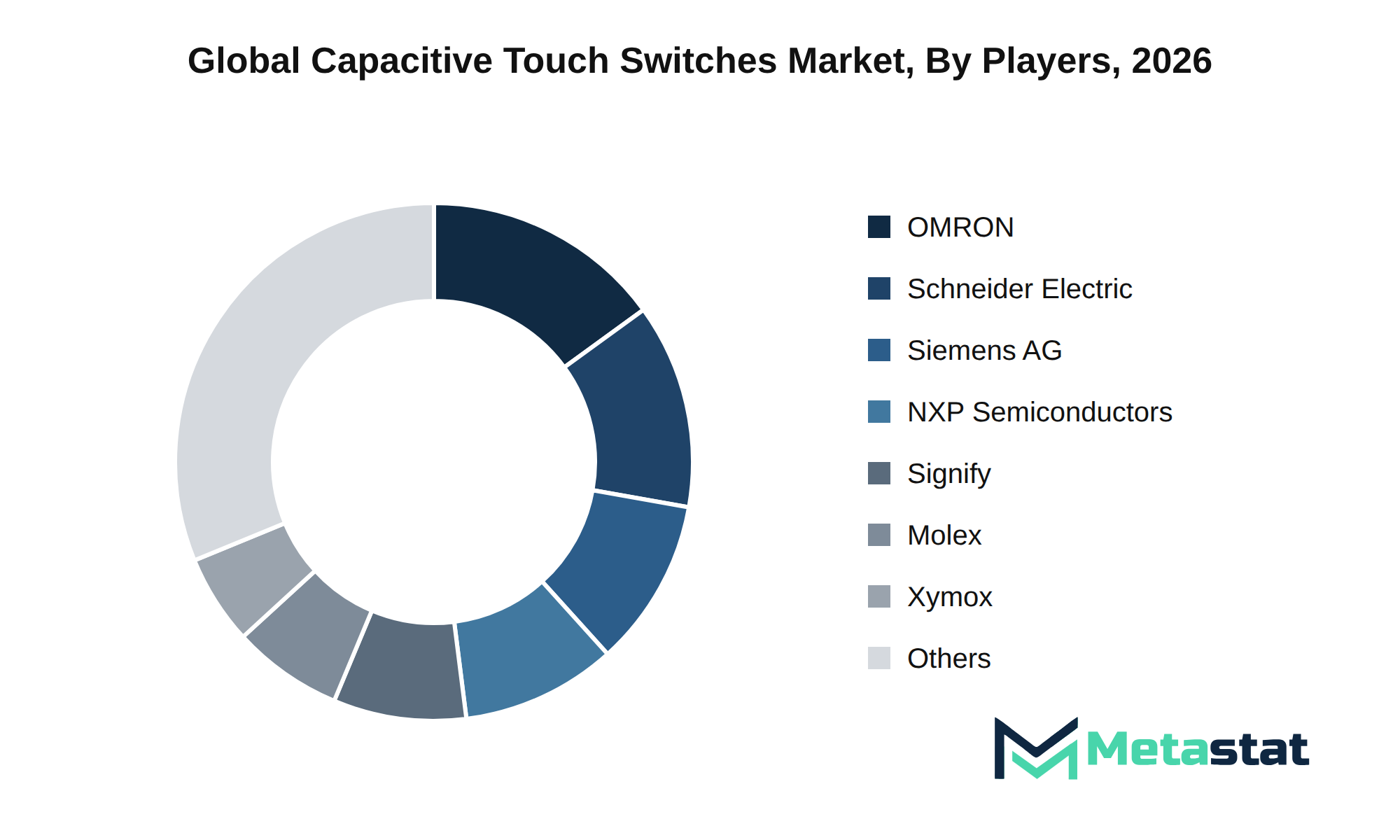
The Capacitive Touch Switches market features a diverse array of players that engage in various strategic behaviors to secure competitive advantages. Companies like OMRON Corporation, Schneider Electric, and Siemens AG have established strong positions through strategic alliances and joint ventures, enhancing their product offerings and market reach.
Product differentiation remains a key focus, with firms including NXP Semiconductors, Molex, and Honeywell International Inc., investing in proprietary technologies and robust R&D pipelines. This investment strengthens intellectual property portfolios that enhance technological defensibility, allowing these companies to maintain their market presence against emerging threats.
Customer retention strategies are vital in the Capacitive Touch Switches market, with significant emphasis on brand equity and switching costs. Firms like Fujitsu Technology Solutions GmbH and Legrand employ targeted go-to-market strategies that emphasize customer loyalty, driving repeat business and stable revenue streams.
Barriers to entry in the market are notable, with established players leveraging supply chain dominance and procurement leverage to create challenges for new entrants. The competitive outlook suggests continual evolution, driven by firms that adapt and innovate to meet changing market dynamics.
Market size is forecast to rise from USD 4.7 billion in 2025 to over USD 9.1 billion by 2033. This growth reflects a compound annual growth rate (CAGR) of 8.6%. Factors influencing this trajectory include macroeconomic conditions, evolving downstream demand, and structural consumption shifts among industries adopting capacitive touch technology.
The capacitive touch switches market responds to core industry maturation, with advancements in next-generation technology integration. Research and development timelines focus on commercializing innovative solutions, enhancing product life cycles and performance standards. Regulatory evolution drives product enhancements and market readiness, with compliance milestones influencing these developments.
Geopolitical realignments and shifting trade corridors affect global supply chains, impacting the availability of materials and components for capacitive touch switches. Strategic capital allocation directives influence investments in infrastructure and capital expenditures, facilitating market expansion in emerging regions.
Identifying unmet enterprise needs and high-growth pockets supports continued market development. Executive-level strategic imperatives encourage investment in defensibility roadmaps and future growth recommendations that align with technological advancements and market demands. The capacitive touch switches market is projected to experience advancements, driven by these multifaceted factors.
The report strategically identifies and profiles the key market players and analyses their core competencies in each sub-segment of the Capacitive Touch Switches market.
Report Attributes | Details |
Study Period | 2021-2033 |
Base Year | 2025 |
Estimated Year | 2026 |
Forecast Period | 2026-2033 |
Historical Period | 2021-2025 |
Growth Rate | CAGR 8.6% from 2026 to 2033 |
Revenue Unit | USD billion |
Segmentation | By Type, Product Type, Application, End-User, and Region |
By Region | North America (By Type, Product Type, Application, End-User, and Country)
|
Europe (By Type, Product Type, Application, End-User, and Country)
| |
Asia Pacific (By Type, Product Type, Application, End-User, and Country)
| |
South America (By Type, Product Type, Application, End-User, and Country)
| |
Middle East and Africa (By Type, Product Type, Application, End-User, and Country)
|
Find answers to common questions about this report
The Capacitive Touch Switches market size was valued at USD 4.7 billion in 2025.
The Capacitive Touch Switches market is projected to grow at a CAGR of 8.6% during the forecast period from 2026 to 2033.
The North America Capacitive Touch Switches market size is estimated to reach USD 2.3 billion by 2033.
The Capacitive Touch Switches segment leads the market with a projected value of USD 4.8 billion by 2033, compared to USD 0.7 billion for Piezo Touch Switches and USD 1.1 billion for Resistive Touch Switches.
Growth in the Capacitive Touch Switches market is driven by rising demand for consumer electronics, advancements in technology, and evolving consumer preferences. The shift towards electric vehicles and smart home solutions further enhances the appeal of capacitive touch technologies, aligning with consumer expectations for modern, efficient, and intuitive interfaces.
Asia Pacific holds the dominant share of the Capacitive Touch Switches market, accounting for 37.5% in 2025. This region's significant share reflects its strong demand and production capabilities compared to other regions.
The Capacitive Touch Switches market faces challenges due to stringent regulatory compliance and operational hurdles, which raise production costs and complicate logistics. supply chain disruptions and geopolitical instability exacerbate these issues, leading to increased costs and delays in production timelines. These factors collectively hinder sustainable growth in the market.
Rising demand for consumer electronics and advancements in technology favor product adoption in the Capacitive Touch Switches market. The shift toward electric vehicles and the growing interest in smart homes drive manufacturers to enhance user experiences, aligning with evolving consumer preferences for modern, energy-efficient solutions.
The Capacitive Touch Switches market is estimated to reach a valuation of USD 9.1 billion by 2033.
Key players in the Capacitive Touch Switches market include OMRON Corporation, Schneider Electric, Signify Holding, Siemens AG, NXP Semiconductors, and Honeywell International Inc. These companies significantly influence the industry's dynamics through their innovative products and strategic initiatives.
The analysts below cover Electronics and Semiconductor research at Metastat Insights.
LEAD ANALYST
Utkarsh Khirodkar is a Lead Market Research Analyst at MetaStat Insight, specializing in market intelligence, technology sector assessments, and competitive strategy.

PRINCIPAL CONSULTANT - ENTERPRISE AI & EMERGING TECHNOLOGIES
Banking & Finance · Electronics and Semiconductor · Energy and Power · Healthcare IT · Information & Technology · Professional Services
Vijay Gunti is a Principal Consultant at MetaStat Insight, bringing over two decades of experience across enterprise digital transformation, technology strategy, and intelligent systems.

PRINCIPAL CONSULTANT - QUALITY SYSTEMS & COMPLIANCE
Electronics and Semiconductor · Machinery & Equipment · Professional Services
Omkar Phadtare is an Industry Consultant at MetaStat Insight, specializing in quality systems, regulatory compliance, and standards benchmarking to drive data-driven market intelligence and strategic industry research.

ENERGY & INFRASTRUCTURE INDUSTRY CONSULTANT
Automotive and Transportation · Electronics and Semiconductor · Energy and Power · Machinery & Equipment
Saurabh Vasant Ganvir consults for Energy & Infrastructure Industry at MetaStat Insight, specializing in renewable energy, solar EPC, and electric vehicle (EV) infrastructure markets.

LEAD CONSULTANT - COMMUNICATION, TELECOM, AND IT
Electronics and Semiconductor · Information & Technology · Machinery & Equipment · Professional Services
Ravindra Sathe Consultants for Communication, Telecom, and IT at MetaStat Insight. He leads the firm's industry research initiatives across telecommunications infrastructure, digital connectivity, enterprise networking, and emerging information technology domains.
Integrating zero-trust access controls across legacy electronic health record systems involves complex compliance overhead. Team produced an analysis that clearly separated identity governance and administration tools from privileged access management platforms. Their evaluation of HIPAA and GDPR compliance features across cloud native solutions gave our architecture group clear baseline criteria. The custom data request regarding biometric authentication adoption in hospital networks was returned promptly with clear documentation.
Evaluating calorific value requirements and air permit compliance across municipal waste facilities requires localized data. Metastat Insight structured their analysis around operational throughput capacity and feedstock composition variations in Latin America and Eastern Europe. Their competitive mapping of sorting equipment vendors helped clarify technology differences between optical separators and heavy media systems. The study provided an objective baseline during our capital expenditure reviews.
Decarbonizing industrial thermal processes hinges on refrigerant regulations and compressor efficiency limits. Metastat Insights delivered a thorough market analysis that evaluated natural refrigerants like CO2 and hydrocarbons against synthetic low-GWP alternatives. The breakdown of utility incentives and grid capacity constraints across key European manufacturing hubs offered valuable perspective. The follow-up conversation with their sector analysts addressed our specific questions on mechanical vapor recompression systems efficiently.
Explore related market intelligence reports worth reading alongside this one.