
LEAD ANALYST
Utkarsh Khirodkar is a Lead Market Research Analyst at MetaStat Insight, specializing in market intelligence, technology sector assessments, and competitive strategy.

Coronary Sinus Reducer Devices Market Size, Share, By Type (Coronary Sinus Reducer Devices, Delivery Systems, Accessories, and Consumables), By Application (Refractory Angina Treatment, Microvascular Angina, Chronic Heart Failure Management, Other Cardiac Ischemia Indications), Industry Analysis, Growth, Trends, and Forecast, 2026-2033
Report ID
MSI-4646
Published
April, 2026
Pages
311 Pages
Format
Report Details
Choose Your License
Coronary Sinus Reducer Devices Market
Global Coronary Sinus Reducer Devices market size is valued at USD 223.7 million in 2025 and projected to grow at a CAGR of 14.7% during the forecast period, reaching USD 657.0 million by 2033.
North America holds 35.9% of the global market in 2025, with the U.S. leading regional revenue share.
Coronary Sinus Reducer Devices segment accounts for a market share of 73.7% in 2025.
Key trends driving growth: Rising prevalence of refractory angina across aging populations increases demand for advanced treatment solutions within the Global Coronary Sinus Reducer Devices Market and growing adoption of minimally invasive cardiac procedures among cardiologists strengthens clinical acceptance of coronary sinus reducer devices worldwide.
Opportunities include increasing burden of refractory angina combined with preference for minimally invasive cardiac interventions strengthens growth momentum and continuous clinical research with improving procedural outcomes encourages wider regulatory approvals across multiple regions.
Key insight: Increasing burden of refractory angina combined with preference for minimally invasive cardiac interventions strengthens growth momentum within the Global Coronary Sinus Reducer Devices Market.
The Global Coronary Sinus Reducer Devices Market will strengthen its relevance within the interventional cardiology device industry as healthcare systems seek alternative strategies to manage refractory angina. The market is gradually moving beyond its niche positioning and is increasingly aligning with structural heart interventions, minimally invasive cardiology programs, and hospital-based chronic ischemic disease management pathways. Over the forecast period, adoption will rise among patients who remain symptomatic despite pharmacological therapy and are not ideal candidates for repeat revascularization procedures.
Future clinical practice will integrate coronary sinus modulation as part of a broader therapeutic framework. Interventional cardiologists will evaluate these implants both as standalone therapies and as adjunct options alongside imaging-guided ischemia management, microvascular assessment, and evolving diagnostic protocols. Academic research centers and tertiary hospitals will support this transition through procedural data evaluating long-term hemodynamic outcomes, myocardial perfusion changes, and quality-of-life improvement in complex cardiac patients.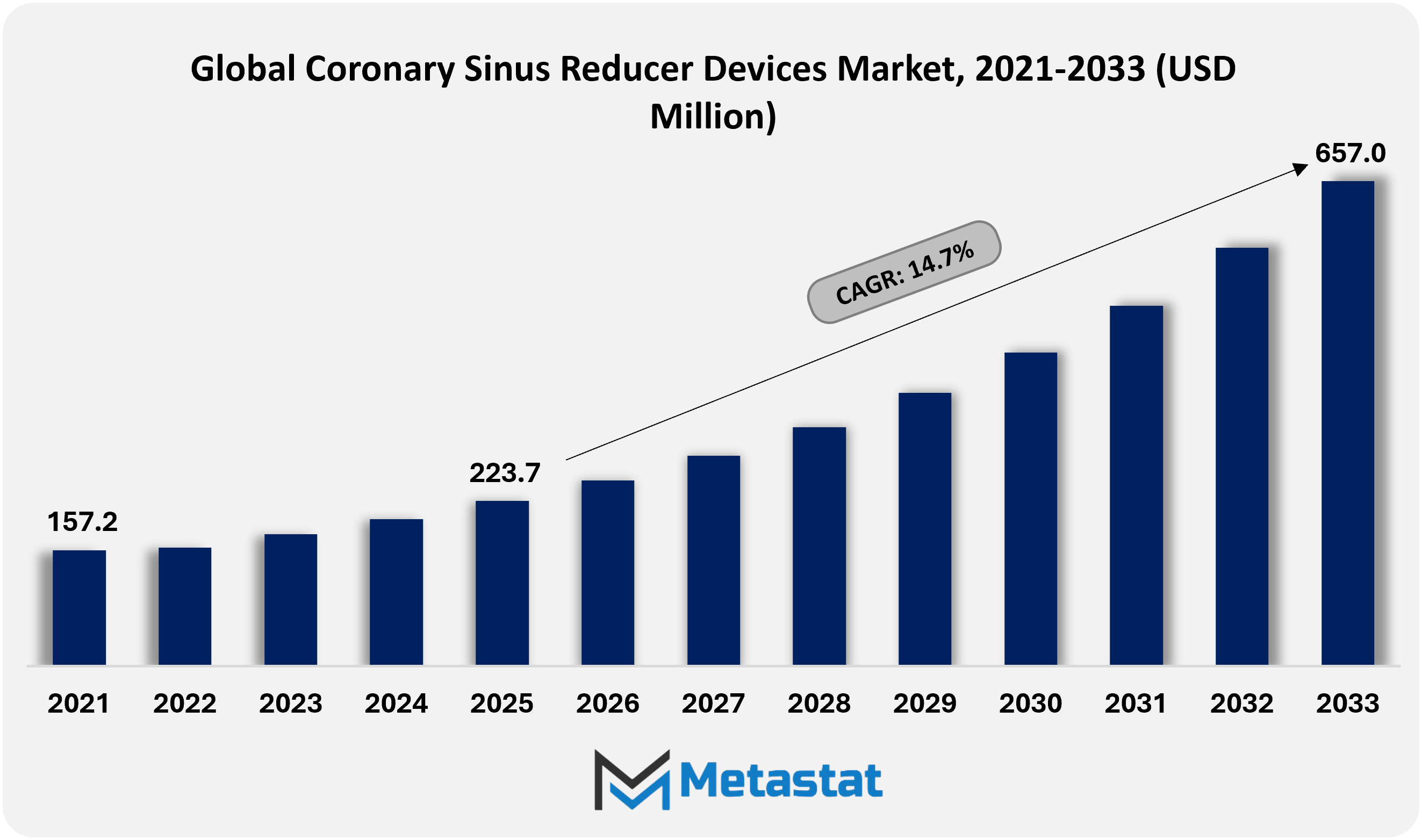
Increasing cases of refractory angina among aging populations continue to create strong demand for specialized cardiac treatment solutions. Rising life expectancy across multiple countries is contributing to a higher prevalence of chronic coronary artery disease. Healthcare providers are increasingly evaluating device-based therapy options, supporting long-term treatment development and clinical utilization within the Global Coronary Sinus Reducer Devices Market.
Growing preference for minimally invasive cardiac procedures is encouraging broader clinical acceptance of coronary sinus reducer technology. Hospitals are investing in advanced catheterization laboratories and training programs that support modern cardiac interventions. Medical specialists are seeking solutions that offer shorter recovery periods and improved patient outcomes, supporting wider adoption across the Global Coronary Sinus Reducer Devices Market.
High procedural costs associated with specialized cardiac implants continue to create financial barriers across many healthcare systems. Limited reimbursement support in several developing economies restricts hospital purchasing capacity and patient access. Healthcare administrators remain cautious during procurement decisions, slowing adoption and moderating growth potential across the Global Coronary Sinus Reducer Devices Market.
Limited clinical awareness of coronary sinus reducer therapy remains a barrier across several healthcare environments. Many medical professionals continue to show stronger familiarity with conventional angina treatment pathways. Educational programs, medical conferences, and long-term clinical studies will expand professional understanding and support broader protocol integration across institutions participating in the Global Coronary Sinus Reducer Devices Market.
Ongoing development of hospitals, cardiac centers, and specialized treatment facilities across emerging economies is creating favorable conditions for device adoption. Government funding programs are supporting modern diagnostic and interventional capabilities within cardiovascular care networks. Expanded healthcare capacity will open new commercial pathways for manufacturers participating in the Global Coronary Sinus Reducer Devices Market.
The Global Coronary Sinus Reducer Devices Market is segmented by Type, Application, and Region.
Coronary Sinus Reducer Devices segment is valued at USD 185.3 million in 2026 and is projected to reach USD 493.9 million by 2033, at a CAGR of 15% during the forecast period.
The Coronary Sinus Reducer Devices segment will benefit from continued technological refinement in coronary sinus narrowing implants designed for controlled pressure redistribution within cardiac venous circulation. Expanding cardiology infrastructure, a rising elderly population, improved diagnostic screening, hospital investment, physician training, and supportive regulatory pathways will support wider therapeutic integration across tertiary cardiac care networks.
Delivery Systems segment is valued at USD 39.3 million in 2026 and is projected to reach USD 98.2 million by 2033, at a CAGR of 14% during the forecast period.
Advanced delivery systems will focus on catheter precision, imaging guidance, and procedural efficiency across interventional cardiology practice. Progress in device navigation technology, flexible materials, miniaturized engineering, and digital procedure planning will improve implantation success rates, support hospital procurement interest, and stimulate segment growth within the Global Coronary Sinus Reducer Devices Market.
Accessories & Consumables segment is valued at USD 26.7 million in 2026 and is projected to reach USD 64.8 million by 2033, at a CAGR of 13.5% during the forecast period.
Accessories and consumables associated with coronary sinus reducer implantation will gain importance through demand for sterile kits, guidewires, imaging catheters, and pressure-monitoring components. Supply chain stability, manufacturing scale, hospital stocking strategies, and procedural standardization will support reliable revenue contribution across the Global Coronary Sinus Reducer Devices Market.
Refractory Angina Treatment segment is projected to reach USD 488.9 million by 2033, at a CAGR of 14.6% during the forecast period.
Refractory Angina Treatment will remain the leading application segment, supported by growing clinical interest in coronary sinus pressure modulation therapy for patients experiencing persistent chest pain despite medication and previous revascularization attempts. Clinical trials, inclusion in cardiology guidelines, hospital specialization programs, and reimbursement progress will strengthen therapy adoption during the forecast period.
Microvascular Angina segment is projected to reach USD 81.0 million by 2033, at a CAGR of 15.1% during the forecast period.
Microvascular Angina will gain clinical attention as understanding of coronary microcirculation dysfunction improves. Coronary sinus reducer therapy offers controlled venous pressure elevation that will support myocardial perfusion redistribution. Future cardiology research, broader patient screening, and specialized catheter laboratories will improve treatment availability for complex angina populations across major healthcare systems.
Chronic Heart Failure Management segment is projected to reach USD 66.5 million by 2033, at a CAGR of 15.6% during the forecast period.
Chronic Heart Failure Management will emerge as an exploratory application area for coronary sinus reducer implantation, particularly where ventricular perfusion stability and symptom improvement remain clinical priorities. Cardiology institutes, biomedical innovation funding, long-term patient registries, and hospital outcome monitoring will guide adoption decisions and open new therapeutic pathways within advanced cardiovascular intervention programs.
Other Cardiac Ischemia Indications segment is projected to reach USD 20.6 million by 2033, at a CAGR of 12.4% during the forecast period.
Other Cardiac Ischemia Indications will generate exploratory interest for coronary sinus pressure modulation technology. Academic hospitals, device manufacturers, and cardiovascular research networks will conduct multicenter studies to evaluate perfusion enhancement potential across additional ischemic conditions.
Based on geography, the Global Coronary Sinus Reducer Devices market is divided into North America, Europe, Asia-Pacific, South America, Middle East, and Africa.
North America shows strong demand for coronary sinus reducer devices owing to the rising prevalence of refractory angina and high adoption of interventional cardiology procedures.
North America benefits from advanced cardiac care infrastructure and a strong presence of medical device innovators, which is accelerating adoption of coronary sinus reducer technology.
Asia Pacific presents significant growth potential, supported by an expanding cardiovascular patient pool and improving access to specialized cardiac treatment.
Asia Pacific will benefit from rising healthcare investment and increasing awareness of minimally invasive solutions for chronic angina management.
South America and the Middle East & Africa will witness gradual adoption, supported by a rising cardiovascular disease burden, improving cardiac care services, and expanding hospital capabilities.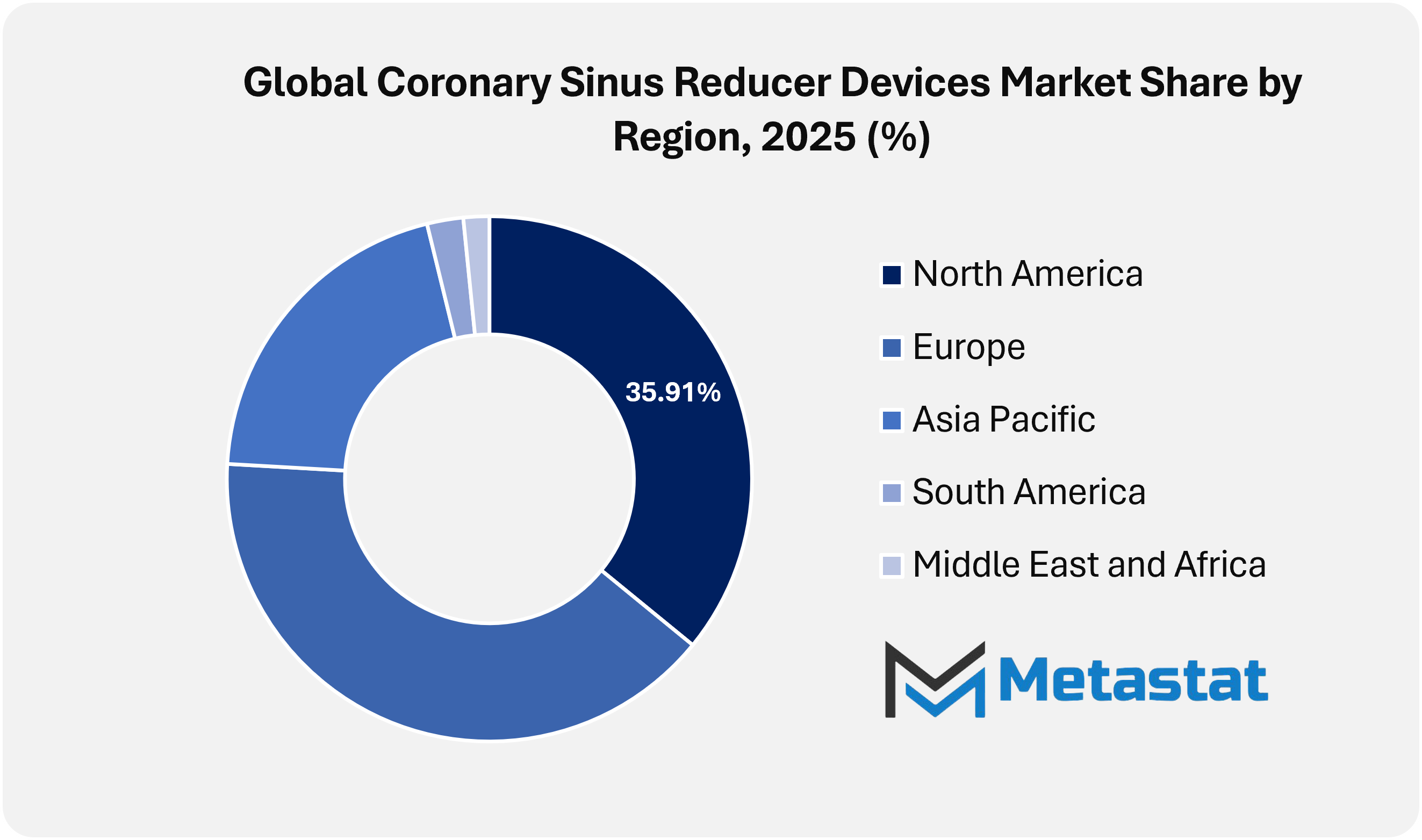
The global coronary sinus reducer devices market is gaining attention as healthcare systems place greater focus on treatment options for chronic angina that does not respond adequately to conventional therapies. Many patients continue to experience chest pain even after medication, angioplasty, or bypass surgery, creating demand for alternative interventional solutions. Coronary sinus reducer devices offer a differentiated treatment approach by improving myocardial perfusion through controlled pressure modulation in the coronary sinus. Rising awareness of advanced cardiac care, increasing diagnostic rates, and the growing burden of cardiovascular disease will support broader market expansion over the coming years.
Technological progress in interventional cardiology will play a major role in shaping the market. Manufacturers are focusing on devices that are safer, easier to implant, and more effective in relieving symptoms. These implants are generally delivered through minimally invasive catheter-based procedures, helping reduce recovery time and hospital stays for patients. Growing physician familiarity, supported by clinical research and long-term patient data, will strengthen confidence among cardiologists and support broader use of coronary sinus reducer devices in specialized cardiac treatment centers.
Healthcare spending and infrastructure development will influence market growth. Countries with well-established healthcare systems are continuing to invest in advanced cardiac technologies, while emerging regions are improving access to modern treatment options. Training programs and partnerships between hospitals and device manufacturers will strengthen physician familiarity with these solutions. As reimbursement coverage expands and regulatory approvals increase across regions, product availability will improve, helping a larger number of refractory angina patients gain access to treatment.
Several medical device companies are active in the global coronary sinus reducer devices market and are focusing on research, product development, and strategic partnerships to strengthen their market positions. Key participants include Shockwave Medical, Inc., Abbott Laboratories, Medtronic, Boston Scientific, Terumo Medical Corporation, Biotronik SE & Co. KG, MicroPort Scientific Corporation, Edwards Lifesciences Corporation, Lepu Medical Technology (Beijing) Co., Ltd., Cook Group Incorporated, Meril Life Sciences, Alvimedica, Balton, and B. Braun Melsungen AG. These companies will continue focusing on innovation, clinical studies, and geographic expansion to strengthen their market presence while supporting progress in cardiac care.
Market size is forecast to rise from USD 223.7 million in 2025 to over USD 657.0 million by 2033.
Technological refinement is expected to remain a key factor influencing market development. Device engineering is likely to focus on improved deliverability, reduced implantation time, and compatibility with evolving catheter-based navigation systems. Hospitals are expected to favor solutions that integrate efficiently with existing catheterization laboratory workflows while maintaining procedural safety and predictable performance. Future product development is therefore likely to emphasize design precision, clinical reliability, and procedural efficiency.
This research report categorizes the Coronary Sinus Reducer Devices market based on key segments and regions, forecasts revenue growth, and analyses trends in each submarket. The report analyses the key growth drivers, opportunities, and challenges influencing the Coronary Sinus Reducer Devices market. Recent market developments and competitive strategies such as expansion, product launch, partnership, merger, and acquisition have been included to draw the competitive landscape in the market.
The report strategically identifies and profiles the key market players and analyses their core competencies in each sub-segment of the Coronary Sinus Reducer Devices market.
|
Report Attributes |
Details |
|
Study Period |
2021-2033 |
|
Base Year |
2025 |
|
Estimated Year |
2026 |
|
Forecast Period |
2026-2033 |
|
Historical Period |
2021-2025 |
|
Growth Rate |
CAGR 14.7% from 2026 to 2033 |
|
Revenue Unit |
USD million |
|
Sales Volume Unit |
Units |
|
Segmentation |
By Type, Application, and Region |
|
By Region |
North America (By Type, Application, and Country)
|
|
Europe (By Type, Application, and Country)
|
|
|
Asia Pacific (By Type, Application, and Country)
|
|
|
South America (By Type, Application, and Country)
|
|
|
Middle East and Africa (By Type, Application, and Country)
|
WHAT REPORT PROVIDES
Find answers to common questions about this report
Top players operating in the Coronary Sinus Reducer Devices industry include Shockwave Medical, Inc, Abbott Laboratories, Medtronic, Boston Scientific, Terumo Medical Corporation, Biotronik SE & Co. KG, and MicroPort Scientific Corporation.
Rising prevalence of refractory angina across aging populations increases demand for advanced treatment solutions within the Global Coronary Sinus Reducer Devices Market and growing adoption of minimally invasive cardiac procedures among cardiologists strengthens clinical acceptance of coronary sinus reducer devices worldwide are key driving factors, boosting the market.
Global Coronary Sinus Reducer Devices market is estimated to reach USD 657.0 million by 2033.
High device cost combined with limited reimbursement policies across developing healthcare systems restricts widespread adoption will hamper the market growth within the forecast period.
Europe region dominates the market.
The Coronary Sinus Reducer Devices is the leading type segment in the Global market.
The Metastat Insights analysis shows that the North America Coronary Sinus Reducer Devices market size is estimated to be USD 238 million by 2033.
The Metastat Insights study shows that the Global Coronary Sinus Reducer Devices market size was USD 223.7 million in 2025.
The Global Coronary Sinus Reducer Devices market is expected to grow at a CAGR of 14.7% over the forecast period (2026-2033).
The analysts below cover Medical Devices research at Metastat Insights.
LEAD ANALYST
Utkarsh Khirodkar is a Lead Market Research Analyst at MetaStat Insight, specializing in market intelligence, technology sector assessments, and competitive strategy.

LEAD PRINCIPAL ANALYST, PHARMA AND HEALTHCARE
Food and Beverages · Healthcare · Healthcare IT · Medical Devices
Ajay Devgire is the Lead Healthcare Analyst at MetaStat Insight, leading strategic research and market intelligence initiatives across the global healthcare domain.

SENIOR RESEARCH ANALYST
Biotechnology · Food and Beverages · Medical Devices · Packaging
Snehal Pasalkar is a Research Analyst at MetaStat Insight, operating at the intersection of life sciences research, competitive strategy, and market intelligence.
Evaluating secondary resin quality across post-consumer packaging streams requires reliable technical segmentation. MetaStat Insight delivered an objective assessment that distinguished between extrusion-grade flake pricing and optical sorting throughput limitations across Western Europe. The competitive positioning breakdown for licensed depolymerization technology providers answered several questions during our feedstock feasibility audit. Their team clarified regional trade restrictions on mixed plastic scrap quickly when our team submitted follow-up requests.
Evaluating sovereign cloud deployments for core banking platforms demands a clear view of data residency regulations and migration exit strategies. MetaStat Insight delivered an exhaustive review of regional latency tolerances, mainframe decommission milestones, and third-party vendor concentration risk. The regulatory compliance mapping across European and Asian financial jurisdictions gave our team a dependable baseline for multi-cloud infrastructure discussions.
Replacing petrochemical surfactants with bio-based alternatives requires realistic timelines on industrial precision fermentation scaling. The market research broke down commercialization timelines, feedstock sugar price sensitivities, and regional cosmetic ingredient regulatory approvals in Europe and East Asia. That supplier readiness mapping gave our formulations team reliable context when comparing renewable chemical sourcing roadmaps.
Explore related market intelligence reports worth reading alongside this one.