
LEAD ANALYST
Utkarsh Khirodkar is a Lead Market Research Analyst at MetaStat Insight, specializing in market intelligence, technology sector assessments, and competitive strategy.

Czech Republic Commercial and Industrial Solar PV Market Size, Share, By Installation Type (Rooftop PV, Ground-Mounted PV, Solar Carports, Building-Integrated PV and Other Installations), By Solution Configuration (PV-Only Systems, PV + Battery Energy Storage Systems, PV + EV Charging Systems, and PV + Battery Energy Storage + EV Charging Systems), By Grid Connection (On Grid and Off Grid), By End-Use Sector (Industrial Manufacturing, Logistics and Warehousing, Retail Facilities, Office and Business Campuses, Hotels, Restaurants and Leisure Facilities, Healthcare Facilities, Agricultural and Agribusiness Facilities and Others), Industry Analysis, Growth, Trends, and Forecast, 2026-2033
Report ID
MSI-4992
Published
August, 2026
Pages
293 Pages
Format
Historical
Base year
Forecast
Forecast period
Report Details
Choose Your License
Czech Republic Commercial and Industrial Solar PV Market
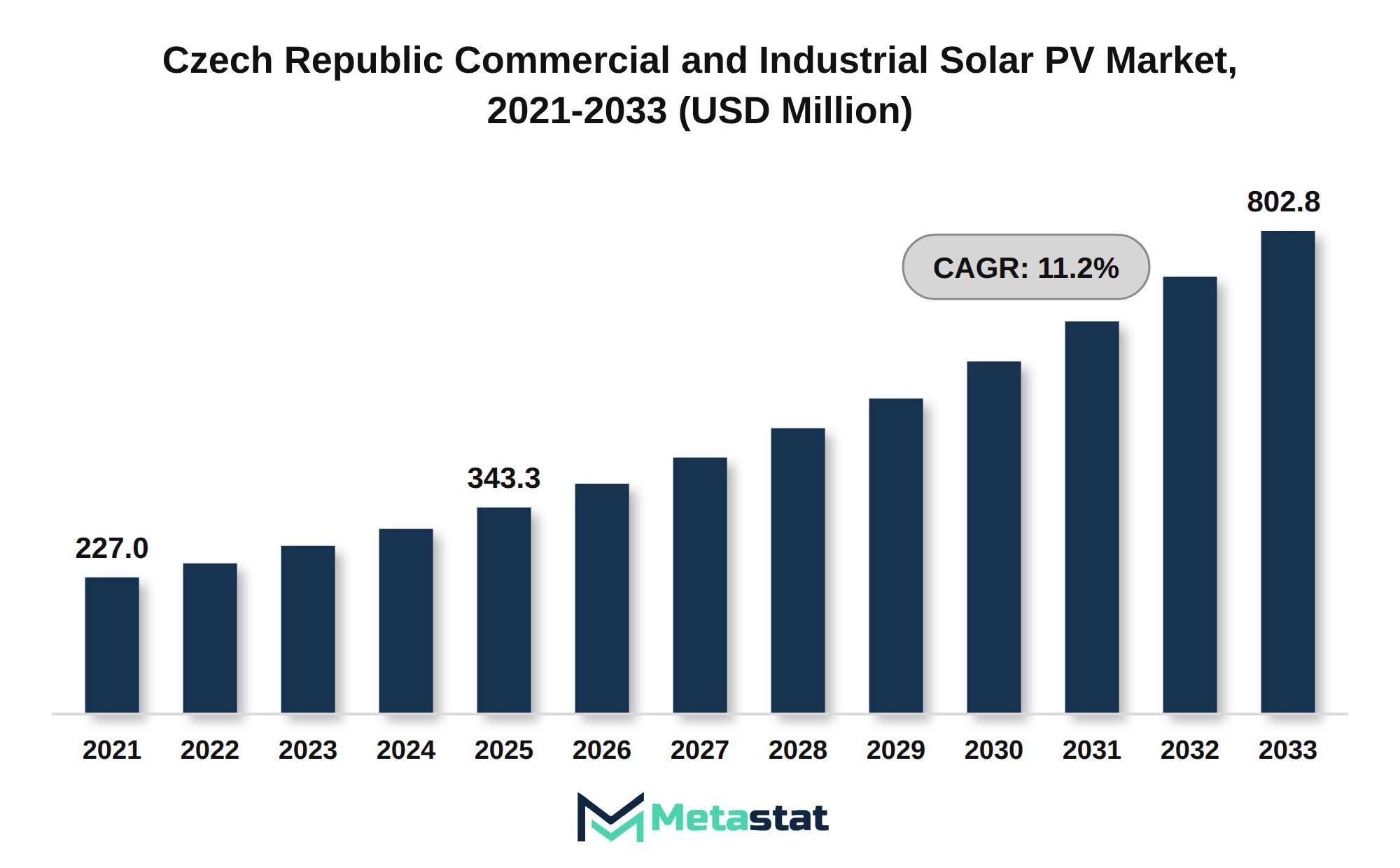
The Czech Republic Commercial and Industrial Solar PV market was valued at USD 343.3 million in 2025 and is projected to reach USD 802.8 million by 2033, growing at a CAGR of 11.2% over the forecast period.
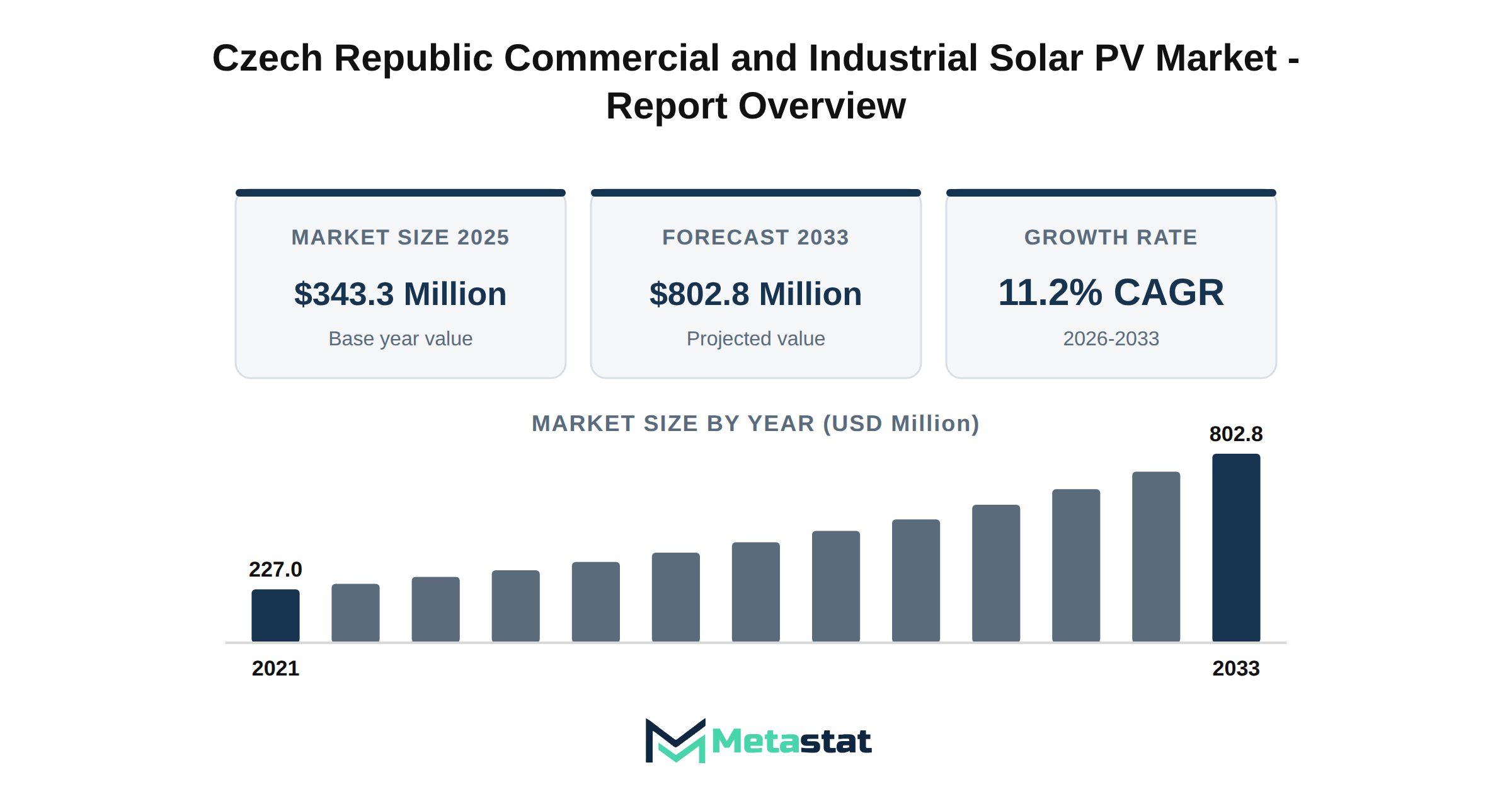
The Czech Republic Commercial and Industrial Solar PV market is positioned for substantial growth, with a base value of USD 343.3 million in 2025. This figure reflects a steady upward trend in adoption and investment, influenced by rising demand for sustainable energy solutions across various sectors. The market is projected to reach USD 802.8 million by 2033, representing a compound annual growth rate (CAGR) of 11.2% during the forecast period.
From a historical perspective, the market value has seen consistent growth, starting from USD 227 million in 2021 and increasing to USD 307.7 million in 2024. This trajectory illustrates the rising recognition of solar energy's role in achieving decarbonization goals and promoting sustainable transformation within the economy. Anticipated advancements in technology and infrastructure are expected to attract significant capital allocation, supporting further development.
Investment in various installation types contributes to the market's expansion. Rooftop PV systems are expected to grow from USD 286.5 million in 2026 to USD 559.6 million in 2033, driven by the increasing number of commercial buildings adopting solar solutions. Ground-mounted PV systems are projected to reach USD 145 million by 2033, with a CAGR of 11.9%, highlighting their growing importance in large-scale energy generation.
The market's diversity encompasses several solution configurations, including PV-only systems and integrated solutions featuring battery energy storage or electric vehicle charging capabilities. The introduction of PV + Battery Energy Storage Systems is anticipated to reach USD 401.9 million by 2033, reflecting a CAGR of 13.4%, driven by demand for enhanced energy reliability and efficiency. This integration aligns with current trends towards next-generation innovation and increased reliance on renewable energy sources.
The projected growth in the Czech Republic Commercial and Industrial Solar PV market reflects significant advancements in technology and increasing adoption among various sectors. Regulatory frameworks designed to support renewable energy adoption are driving investments in solar infrastructure, enhancing market stability.
Research and development trajectories indicate a strong focus on next-generation innovations that aim to improve efficiency and reduce costs associated with solar PV systems. These innovations contribute to the sustainable transformation of energy consumption patterns across industrial sectors, aligning with global decarbonization efforts.
The supply chain landscape is evolving, with logistics architecture adapting to meet the rising demand for solar installations. Strategic sourcing initiatives enhance procurement processes, ensuring that high-quality materials are readily available. This development creates a more resilient market capable of responding to fluctuations in demand.
Capital allocation towards solar energy projects is increasing, driven by the need for infrastructure investments that support long-term energy goals. High initial capital expenditures are offset by lower operational expenditures, leading to favorable economic returns over time. This financial dynamic encourages stakeholders to pursue solar solutions actively.
Macroeconomic headwinds, including inflationary pressures and currency volatility, present challenges that influence investment strategies within the market. Stakeholders are adapting by reassessing risk management approaches and optimizing their financial frameworks to maintain competitiveness in a fluctuating economic environment.
Looking ahead, the Czech Republic Commercial and Industrial Solar PV market presents a strategic outlook for corporate imperatives focused on sustainability and energy independence. High-value recommendations for stakeholders include investing in advanced technologies and embracing innovative business models that enhance value creation.
Increasing emphasis on sustainability significantly influences the Czech Republic Commercial and Industrial Solar PV market. The demand for clean energy solutions aligns with corporate commitments to reduce carbon footprints, prompting investments in solar technology. Businesses actively seek to integrate renewable energy sources into their operations to adhere to stringent environmental standards and enhance brand image.
Investment in solar PV systems provides operational advantages by reducing reliance on traditional energy sources. Organizations recognize the long-term cost savings associated with solar energy, particularly in an environment where energy prices remain volatile. This strategic shift supports a competitive edge by lowering energy expenses and promoting operational efficiency.
The market benefits from growing awareness of the environmental impact of energy consumption. Companies across various sectors increasingly prioritize sustainable practices, leading to higher adoption rates of solar PV technology. This trend is expected to drive further growth in the market, supported by ongoing investments in innovative solar solutions.
Investment in infrastructure development significantly enhances the Czech Republic Commercial and Industrial Solar PV market. Enhanced physical and digital capacity aligns with rising demand for clean energy solutions. Infrastructure upgrades, including modernized energy grids and facilities, support the integration of solar technology across various sectors. These advancements enable businesses to optimize energy production and consumption, thereby enhancing operational productivity and cost efficiency, which strengthens long-term demand.
Growing public and private funding for infrastructure initiatives facilitates the adoption of solar PV systems. Financial support, combined with favorable macro-economic conditions, creates a robust investment environment. Increased availability of venture funding stimulates innovation and adoption within the market, encouraging the development of advanced solar technologies and services. Businesses prioritizing sustainable practices focus on infrastructure investment, which reinforces overall market growth.
The emphasis on modernizing infrastructure extends beyond energy systems, impacting logistics and supply chain resilience. Upgraded facilities allow for more efficient installation and maintenance of solar PV systems, further driving market penetration. Consequently, enhanced infrastructure supports the Czech Republic's transition to a more sustainable energy landscape, positioning the market for continued success through 2033.
The Czech Republic Commercial and Industrial Solar PV market faces significant challenges due to stringent regulatory compliance requirements. These mandates require extensive documentation and adherence to various standards, placing a burden on businesses seeking to adopt solar technologies. Companies absorb the costs associated with meeting these requirements, which deters investment and slows market growth.
Legal mandates surrounding solar installations, including zoning laws and safety regulations, create additional hurdles for market participants. Navigating the complex framework of local, regional, and national regulations complicates project timelines and increases operational costs. This complexity often leads to delays in deployment, restricting overall growth potential in the market.
Macroeconomic headwinds, including inflationary pressures, further exacerbate these issues. Rising costs associated with materials and labor result in higher capital investment requirements, deterring potential adopters from pursuing solar projects. The cumulative effect of these regulatory and economic pressures contributes to slower uptake in the Czech Republic Commercial and Industrial Solar PV market.
The Czech Republic Commercial and Industrial Solar PV market encounters significant challenges due to geopolitical instability, which disrupts investment confidence. Heightened tensions between nations affect cross-border trade relationships, leading to trade deficits and tariff friction that hinder the market's growth potential. Enterprises within the market face increased costs resulting from these trade barriers, which directly influence pricing strategies and profitability.
Technological disruptions further complicate the market, necessitating investments in research and development to integrate advanced solutions. Complexities in interoperability between different systems create friction, requiring additional resources and time to achieve integration. This situation deters several smaller players from entering the market, leading to reduced competition and innovation.
Supply chain instability remains another critical challenge. Fluctuations in the availability and cost of feedstock and components contribute to project delays and budget overruns. Consequently, companies operating within the Czech Republic Commercial and Industrial Solar PV market experience heightened margin pressures, limiting their ability to invest in growth opportunities.
Finally, the evolving legal landscape, characterized by tightening regulatory standards and growing compliance overhead, places additional burdens on market participants. Firms navigate these complexities while maintaining operational efficiency and addressing sustainability demands, which further complicates market dynamics and growth trajectories.
The Czech Republic Commercial and Industrial Solar PV market experiences significant growth driven by rapid advancements in technology. Innovations including battery energy storage systems enhance the efficiency and versatility of solar installations, creating new opportunities for integration within diverse commercial applications. Demand for solutions like PV + Battery Energy Storage Systems, projected to reach USD 401.9 million by 2033, reflects this technological shift. The rise of solar carports and building-integrated PV installations offers unique applications that appeal to various sectors, including retail and logistics.
Digital transformation influences purchasing behaviors, shifting customer preferences toward smart and integrated energy solutions. Commercial buyers increasingly seek systems that not only generate power but optimize energy management. This trend drives the market toward configurations like PV + EV Charging Systems, which are set to capture a greater share of investments owing to organizations adapting to the growing emphasis on sustainability and green practices.
Strategic consolidation and partnerships among industry players enhance market competitiveness. The collaboration between companies facilitates the exchange of expertise and resources, enabling faster adoption of new technologies. The market benefits from these alliances, which promote the development of innovative products and services tailored to emerging customer demands. Overall, the convergence of technology and sustainability reshapes the Czech Republic Commercial and Industrial Solar PV market, setting the stage for sustained growth throughout the forecast period.
The Czech Republic Commercial and Industrial Solar PV market is segmented based on Installation Type, Solution Configuration, Grid Connection, and End-Use Sector.
Significant growth characterizes the Rooftop PV segment within the Czech Republic Commercial and Industrial Solar PV market, with a valuation of USD 286.5 million in 2026. This segment is projected to reach USD 559.6 million by 2033, at a CAGR of 10% during the forecast period. Factors driving adoption include increasing energy efficiency awareness among businesses, rising electricity costs, and strong government incentives promoting renewable energy. Technological advancements in solar energy systems enhance the appeal of rooftop installations for commercial enterprises.
Increased emphasis on sustainability and corporate social responsibility has prompted companies across various sectors to seek renewable energy solutions, further driving demand for rooftop PV systems. Industries including industrial manufacturing, logistics, and healthcare facilities actively pursue solar energy to reduce operational costs and minimize carbon footprints. The segment benefits from favorable regulatory frameworks that support solar installation, creating a conducive environment for growth.
Technological maturation significantly shapes the Rooftop PV segment, leading to improved efficiency and reduced costs of solar panels and associated equipment. Innovations in solar technology and energy storage solutions contribute to enhancing system performance, making rooftop installations a viable option for a broader range of applications. While the market evolves, commercial entities increasingly recognize the long-term financial benefits of investing in solar energy systems, positioning rooftop PV because an essential component of their energy strategy.
Demand for Ground-Mounted PV installations in the Czech Republic Commercial and Industrial Solar PV market is influenced by various factors, including a shift towards renewable energy sources and corporate sustainability goals. Increased public awareness regarding the environmental impact of traditional energy production continues to drive organizations toward adopting solar technology for their facilities. This trend aligns with governmental policies promoting renewable energy use and providing incentives for solar energy projects.
Ground-Mounted PV segment is estimated to reach USD 145 million by 2033, at a CAGR of 11.9% during the forecast period. The segment expansion is supported by advancements in solar technology, leading to improved efficiency and reduced installation costs. Technological maturation supports the deployment of more effective solar panels, enhancing the appeal of ground-mounted solutions for commercial and industrial applications.
Regulatory compliance standards for emissions and energy consumption play a significant role in shaping investment decisions. Many businesses prioritize compliance with these regulations, leading to an increase in demand for Ground-Mounted PV systems. The segment's growth trajectory aligns with the broader trends within the Czech Republic Commercial and Industrial Solar PV market, where sustainability and reduced operational costs drive investment in renewable energy solutions.
Investors observe strategic opportunity windows resulting from the market maturation, with capital flowing toward innovative solar projects. The relationship between technological advancements and supportive policies enhances the viability of Ground-Mounted PV systems, reinforcing their role in the energy landscape. This segment's growth reflects a comprehensive approach to energy sourcing, balancing environmental responsibility with economic viability.
Adoption of Solar Carports in the Czech Republic Commercial and Industrial Solar PV market reflects a growing trend towards innovative solutions that integrate energy generation with vehicle parking. The demand stems from heightened awareness of sustainability and the need for multifunctional infrastructure that enhances space efficiency. By providing a dual purpose - energy generation and vehicle protection - solar carports appeal to several sectors, including commercial, retail, and logistics.
The segment is expected to reach USD 57.2 million by 2033, driven by increased investments in renewable energy projects and favorable regulatory frameworks promoting green technologies. These developments encourage businesses to explore sustainable energy solutions, aligning with corporate social responsibility initiatives. Technological maturation in solar panel efficiency further supports this growth, allowing for enhanced performance and reduced installation costs specific to solar carports.
End-use dynamics signal a shift towards energy independence, motivating various sectors to adopt solar carports owing to reliable energy sources. The integration of advanced features including EV charging stations within solar carports positions them because a vital component of the evolving energy ecosystem. Overall, the growth trajectory of the Solar Carports segment contributes significantly to the overall expansion of the market.
Rapid growth within the Building-Integrated PV and Other Installations segment reflects a robust shift towards innovative architectural solutions that incorporate solar technologies seamlessly into building designs. This segment is projected to grow at a CAGR of 17.9% during the forecast period, driven by heightened awareness of environmental sustainability and energy efficiency among commercial and industrial end-users. The integration of photovoltaic technologies directly into building materials meets both functional and aesthetic needs, appealing to architects and developers aiming for modern, eco-friendly designs.
Technological advancements play a crucial role in this segment's expansion. Innovations in materials and installation techniques enhance performance and reduce costs associated with Building-Integrated PV systems. These systems offer attractive financing options, enabling building owners to offset initial investments through energy savings, thereby improving long-term return on investment. Regulatory compliance standards increasingly favor renewable energy solutions, providing incentives for businesses to adopt Building-Integrated PV systems.
Commercial sectors, particularly in urban areas, show a significant shift towards this segment due to space constraints and the need for sustainable energy solutions. Market participants are increasingly focusing on product evolution and next-generation upgrades to meet the specific demands of various industries. This strategic focus aligns with broader trends observed in the Czech Republic Commercial and Industrial Solar PV market, where energy efficiency and sustainability are critical.
Valued at USD 162.3 million in 2026, the PV-Only Systems segment is projected to reach USD 255.9 million by 2033, with a CAGR of 6.7% during the forecast period. Demand for PV-Only Systems arises from increasing adoption in sectors including industrial manufacturing and logistics. This growth results from a focus on energy independence and cost-efficiency, driving businesses to invest in renewable energy solutions. Technological maturation in PV systems enhances performance and lowers costs, accelerating adoption across various industries within the Czech Republic Commercial and Industrial Solar PV market.
Regulatory compliance standards supporting renewable energy adoption play a significant role in stimulating demand. While businesses seek to align with government sustainability initiatives, investments in PV-Only Systems enable compliance while reducing operational costs. End-use dynamics indicate that sectors prioritizing energy efficiency and sustainability, including healthcare and agricultural facilities, actively pursue solar investments. Increased awareness of environmental impact and energy costs will influence consumption shifts, further propelling growth in this sub-segment.
Capital investment outlook for PV-Only Systems signals robust opportunities for expansion. Strategic opportunity windows arise from companies exploring innovative financing models and partnerships that enhance the attractiveness of solar energy solutions. With a favorable regulatory environment and evolving market conditions, the PV-Only Systems segment stands poised for significant development within the Czech Republic Commercial and Industrial Solar PV market.
Market dynamics for PV + Battery Energy Storage Systems align with current trends in energy consumption and sustainability. Primary demand drivers include the growing need for energy independence and the increasing adoption of renewable energy solutions among businesses. These factors encourage organizations to invest in energy storage alongside solar PV systems. This segment is estimated to reach USD 401.9 million by 2033, at a CAGR of 13.4% during the forecast period.
Technological maturation plays a significant role in expanding penetration across various end-use sectors, including industrial manufacturing, logistics, and healthcare facilities. Advanced battery technologies enhance performance, leading to higher efficiency and longer lifespans. This evolution attracts commercial entities seeking reliable energy solutions that align with sustainability goals. Regulatory compliance standards promote investments in energy storage systems, driving growth within the Czech Republic Commercial and Industrial Solar PV market.
Cost structures around battery technology continue to evolve, impacting pricing volatility and margins in the market. While competition increases, suppliers focus on innovation and improved manufacturing processes, which contribute to reduced overall costs. Strategic opportunity windows arise from businesses pivoting toward integrated energy solutions that combine solar PV with battery energy storage. This trend emphasizes the need for robust supply chain management to mitigate risks associated with raw material sourcing and logistics vulnerabilities.
Increasing focus on electric vehicles (EVs) drives demand for PV + EV Charging Systems in the Czech Republic Commercial and Industrial Solar PV market. This segment benefits from rising consumer interest in sustainable transportation solutions and the integration of solar energy in charging infrastructure. Businesses adopting EV charging systems enhance their sustainability profiles and respond to growing regulatory requirements for emissions reductions.
Investment in charging infrastructure expands opportunities in various sectors, including logistics, retail, and hospitality. Many businesses recognize the competitive advantage of offering EV charging options, which attract environmentally conscious consumers and enhance customer experience. Advancements in battery technology and solar panel efficiency contribute to operational cost reductions, enhancing profitability within this segment.
PV + EV Charging Systems is expected to reach USD 73.2 million by 2033. This growth reflects a strong alignment with national and European goals for reducing carbon emissions and promoting renewable energy sources. The market capitalizes on strategic opportunities attributed to local and regional governments implementing favorable policies and incentives for adopting renewable energy solutions.
Projected growth of the PV + Battery Energy Storage + EV Charging Systems segment reaches a CAGR of 18.6% during the forecast period. This expansion stems from increasing integration of electric vehicle (EV) charging infrastructure alongside renewable energy solutions, driven by heightened consumer preference for sustainable energy alternatives. Businesses across various sectors, particularly in logistics, retail, and manufacturing, invest in these systems to reduce operational costs and enhance energy efficiency. Regulatory frameworks support this trend, emphasizing the transition to greener energy sources and facilitating investments in energy storage technologies.
Market participants focus on technological advancements, leading to enhancements in the efficiency and capacity of battery systems. Continuous innovation facilitates improved performance of energy storage solutions, offering businesses reliable power sources that align with their sustainability goals. Collaboration among stakeholders in the Czech Republic Commercial and Industrial Solar PV market encourages knowledge sharing and resource pooling, strengthening market resilience.
Valued at USD 255.9 million by 2033, the robust demand for PV + Battery Energy Storage + EV Charging Systems reflects a broader shift toward comprehensive energy solutions that integrate multiple functionalities. This segment's growth potential positions it because a critical player in the evolving commercial and industrial energy management, contributing to overall market expansion.
Valued at USD 376.4 million in 2026, the On Grid segment is projected to reach USD 785.2 million by 2033, at a CAGR of 11.1% during the forecast period. This growth results from rising demand for renewable energy solutions driven by environmental regulations and corporate sustainability initiatives. Industries including logistics, manufacturing, and retail increasingly adopt solar PV systems to reduce energy costs and enhance operational efficiency. Technological advancements, including smart grid integration, optimize energy distribution and consumption.
Investment in solar infrastructure aligns with regulatory compliance standards pushing for increased renewable energy sourcing. The Czech Republic Commercial and Industrial Solar PV market benefits from favorable policies that encourage solar adoption. These initiatives create a robust environment for investors seeking opportunities in solar energy, highlighting the importance of grid-connected systems. Suppliers face cost structures influenced by raw material sourcing and pricing volatility, impacting margins and overall profitability.
The On Grid segment exemplifies strategic opportunity windows for companies entering the market. Innovations in technology, including energy storage solutions and grid management systems, enhance the value proposition for end-users. With energy prices fluctuating, businesses prioritize reliable energy solutions, leading to expanded adoption of grid-connected solar PV systems. Overall, the On Grid segment represents a significant aspect of the evolving Czech Republic Commercial and Industrial Solar PV market.
Rapid expansion within the Off Grid segment reflects increasing demand for energy independence, particularly in remote and rural areas. These regions often lack access to centralized power infrastructure, driving interest in decentralized solar solutions. The growth of this segment aligns with rising costs of traditional energy sources, encouraging businesses to seek alternatives that offer reliability and sustainability.
The Off Grid segment is projected to reach USD 17.6 million by 2033, at a CAGR of 15.8% during the forecast period. This growth stems from advancements in solar technology and decreasing equipment costs, which enhance the attractiveness of Off Grid solar solutions for various sectors, including agriculture and remote industrial applications. Efficient energy storage systems further facilitate the viability of solar installations in off-grid scenarios, ensuring a consistent energy supply.
Regulatory frameworks increasingly support the adoption of renewable energy solutions, contributing positively to the Off Grid segment's trajectory. Incentives and subsidies for solar installations reinforce the economic appeal, making these systems more accessible to a wider range of commercial and industrial users. The Czech Republic Commercial and Industrial Solar PV market anticipates continued investment in Off Grid solutions, driven by the need for sustainable energy management and reduced operational costs.
In the Czech Republic Commercial and Industrial Solar PV market, the Industrial Manufacturing sector shows strong potential driven by the increasing focus on sustainability and energy efficiency. This segment seeks reliable energy sources to power operations, prompting manufacturers to adopt solar photovoltaic solutions. The push towards greener manufacturing practices aligns with both regulatory frameworks and consumer expectations, further driving adoption rates.
Technological advancements enhance the appeal of solar PV systems, enabling higher efficiency and lower costs over time. Key players within the sector continuously explore next-generation upgrades, including integrating energy storage solutions, which improve energy management and resilience. This evolution in product offerings addresses the unique energy consumption patterns of industrial facilities, supporting substantial operational cost savings.
Regulatory compliance and certifications play critical roles in shaping demand, with manufacturers prioritizing systems that meet or exceed energy standards. The market's growth trajectory benefits from favorable policies promoting renewable energy adoption and investment incentives designed to lower entry barriers for industrial players.
Investment in solar PV infrastructure reflects a strategic opportunity for manufacturers looking to enhance their competitive advantage. By leveraging solar energy, companies in the Industrial Manufacturing sector not only reduce their carbon footprint but realize significant long-term financial benefits. The market's development aligns with broader trends in energy consumption, positioning solar PV because a vital component in the future of sustainable industrial operations.
Growth in the Logistics & Warehousing segment of the Czech Republic Commercial and Industrial Solar PV market arises from rising energy costs and increasing emphasis on sustainability. Businesses in this sector recognize solar PV installations because a viable solution to enhance energy efficiency while reducing operational expenses. Adoption aligns with national and European Union policies aimed at promoting renewable energy sources and achieving carbon neutrality targets.
Technological advancements in solar PV systems enhance efficiency and decrease installation costs, further incentivizing logistics and warehousing facilities to integrate these solutions. Companies are increasingly focusing on energy independence, leveraging solar PV technology to offset grid dependency, which helps shield against energy price volatility. This shift enhances operational resilience and contributes positively to corporate sustainability goals.
Competitive pressure among logistics providers encourages investment in renewable energy technologies. Companies that prioritize sustainability gain a competitive edge by attracting environmentally conscious clients and improving their brand reputation. This trend reflects a broader industry movement toward integrating green technologies into everyday operations, fundamentally altering the energy consumption landscape in the Czech Republic Commercial and Industrial Solar PV market.
Regulatory compliance further drives adoption, because firms align with evolving energy regulations and sustainability certifications. This compliance fuels demand for solar PV installations, positioning organizations to leverage potential incentives associated with green energy investments. While the market evolves, strategic opportunity windows arise for companies that navigate the complexities of solar energy integration, ensuring they remain leaders in the logistical landscape.
In the Czech Republic Commercial and Industrial Solar PV market, the Retail Facilities segment shows strong potential driven by increasing energy efficiency demands and consumer preferences for sustainable practices. Retailers increasingly adopt solar technologies to lower operational costs, enhance brand image, and comply with evolving environmental regulations. Rising electricity costs further incentivize retailers to invest in solar PV solutions, contributing to a steady shift towards renewable energy sources.
Technological advancements play a crucial role in the segment's dynamics, with innovations in solar panel efficiency and energy storage systems enhancing the attractiveness of solar investments for retail establishments. Next-generation upgrades enable retailers to optimize energy consumption, improve reliability, and reduce dependence on grid electricity. The integration of solar PV with electric vehicle charging infrastructure aligns with the growing trend of sustainable logistics, attracting a broader customer base.
Regulatory compliance significantly influences market operations. Stringent government standards encourage retail facilities to transition to renewable energy. Certifications for energy efficiency and environmental impact further motivate retailers to adopt solar solutions, enhancing their competitive edge in a crowded marketplace. Consequently, strategic opportunity windows expand, allowing businesses to capitalize on financial incentives and enhance overall profitability.
Cost structures within the segment reflect the evolving landscape of solar technology. Competitive pricing of solar PV systems and incentives for installation reduce initial investment barriers, promoting wider adoption among retailers. Fluctuations in raw material costs and potential supply chain vulnerabilities pose challenges, necessitating effective risk management strategies. Despite these challenges, the segment remains poised for growth, driven by increasing consumer demand for sustainable retail practices and the broader shift towards greener energy solutions.
Demand for solar energy solutions in office and business campuses reflects a growing recognition of sustainability and energy efficiency. Corporations increasingly pursue solar photovoltaic (PV) systems to reduce operational costs and enhance their green credentials, aligning with corporate social responsibility goals. The transition towards renewable energy sources drives investments in solar technology, ensuring long-term energy cost savings. Regulatory frameworks and incentives aimed at promoting renewable energy adoption support this trend, providing a stable environment for investment and implementation.
Technological maturation in solar PV systems facilitates the integration of advanced features, enhancing energy output and reliability. Next-generation upgrades, including energy storage solutions, improve energy management for office and business campuses, allowing for optimized energy use and increased resilience against grid fluctuations. These upgrades contribute to the segment's attractiveness, compelling more organizations to invest in solar installations.
Shift in consumption patterns toward renewable energy supports market expansion. Businesses prioritize sustainability, prompting a reevaluation of traditional energy sources in favor of solar solutions. This evolution creates opportunities for suppliers and service providers within the Czech Republic Commercial and Industrial Solar PV market. Engagement with various stakeholders, including government entities and environmental organizations, supports an ecosystem that promotes sustainable energy practices.
Regulatory compliance standards and certifications contribute to the segment's growth, enhancing confidence among businesses considering solar investments. Price volatility in traditional energy markets and the potential for rising energy costs highlight the value proposition of solar energy solutions. Strategic opportunity windows arise from firms seeking to mitigate risks associated with energy expenses while capitalizing on the benefits of solar energy.
Challenges related to cost structures and margin pressures persist within the segment, necessitating careful pricing strategies from suppliers. Market participants navigate raw material sourcing issues and explore resilient supply chains to sustain competitive pricing. The emergence of disruptive alternatives could reshape market dynamics, compelling existing players to innovate and adapt.
The office and business campuses segment within the Czech Republic Commercial and Industrial Solar PV market demonstrates robust demand driven by sustainability initiatives, regulatory support, and technological advancements. Continued investment in solar solutions will significantly influence the future of energy consumption in this sector.
In the Czech Republic Commercial and Industrial Solar PV market, the Hotels, Restaurants & Leisure Facilities segment experiences increasing interest driven by rising consumer preferences for sustainable and environmentally friendly practices. This shift aligns with a broader trend among consumers prioritizing green solutions when choosing accommodations and dining experiences. Adoption is fueled by regulatory frameworks that incentivize renewable energy usage, enhancing the appeal of solar PV systems among hotel and restaurant operators.
Technological advancements play a critical role in driving segment expansion. Innovations in solar technology improve efficiency and reduce installation costs, creating a favorable environment for new projects. Facilities in this segment benefit from integrating solar systems into existing structures, contributing to lower energy bills and enhanced operational sustainability.
Regulatory compliance standards significantly impact market dynamics. Government policies promoting renewable energy adoption incentivize hotels and restaurants to invest in solar energy solutions. Meeting these standards fulfills regulatory requirements while enhancing corporate social responsibility profiles, appealing to a growing base of environmentally conscious consumers.
The market faces challenges related to cost structures and pricing volatility. Fluctuations in raw material prices affect installation costs, impacting project viability for several operators. However, ongoing investments in solar technology and infrastructure development create strategic opportunity windows for businesses willing to innovate and adapt to market conditions.
Overall, the relationship between consumer demand for sustainability and regulatory incentives steering the Czech Republic Commercial and Industrial Solar PV market creates fertile ground for growth in the Hotels, Restaurants & Leisure Facilities segment. This alignment highlights the strategic importance of solar energy investments in enhancing operational efficiency and fulfilling market expectations.
Demand for solar energy solutions within healthcare facilities reflects increased awareness of sustainability and energy efficiency. Hospitals and clinics prioritize renewable energy to lower operational costs, enhance energy independence, and align with regulatory frameworks promoting environmental responsibility. The integration of solar photovoltaic systems supports facilities in achieving energy resilience, particularly during peak demand periods.
Next-generation upgrades in solar technology contribute to improved efficiency and affordability. Adoption of advanced PV systems enables healthcare facilities to optimize energy consumption while reducing grid reliance. Technological maturation within the sector ensures that healthcare providers benefit from reliable energy sources in critical operations. Innovations in energy storage and smart grid integration enhance overall system performance.
Regulatory compliance standards further influence investment in solar solutions. Healthcare facilities respond to governmental incentives and policies designed to facilitate renewable energy adoption. Grants and subsidies for solar installations present strategic opportunity windows, enabling facilities to capitalize on financial support while pursuing energy sustainability goals.
Healthcare facilities operating within the Czech Republic Commercial and Industrial Solar PV market increasingly prioritize energy management strategies that incorporate solar technologies. This strategic shift reflects a comprehensive understanding of long-term cost structures and the potential for price stability in energy sourcing. Healthcare providers embrace renewable energy, driving demand for solar solutions and positioning the market for future growth.
In the Czech Republic, rising awareness of sustainable agricultural practices drives demand for solar energy solutions in agricultural and agribusiness facilities. Enhanced focus on energy self-sufficiency encourages these facilities to adopt solar photovoltaic systems, thereby decreasing reliance on traditional energy sources. The ongoing transition to renewable energy aligns with regulatory trends aimed at reducing carbon footprints, prompting investments in solar technology.
Integration of next-generation solar technologies, including building-integrated photovoltaic systems and solar carports, presents opportunities for agricultural facilities to optimize space and enhance energy efficiency. These innovations contribute to both energy generation and aesthetic appeal, attracting modern agribusinesses aiming to engage eco-conscious consumers.
Cost structures remain a critical factor influencing the expansion of solar solutions in this sector. Decreasing prices of photovoltaic modules and improved system efficiencies enhance the economic feasibility of solar adoption. An increasing number of agricultural facilities recognize the potential for long-term savings, strengthening the inclination to invest in solar infrastructure.
Regulatory compliance further influences market dynamics. Government incentives and support for renewable energy projects create a supportive environment for agribusinesses to transition to solar solutions. These incentives include tax benefits, grants, or subsidies, which reduce the upfront investment costs associated with solar installations.
Technological advancements contribute to the resilience of the supply chain within the sector. Improved manufacturing processes and sourcing strategies enhance the availability of solar components, while robust logistics networks facilitate the timely delivery of equipment and installation services. Such developments ensure that agricultural facilities implement solar projects efficiently, optimizing their operational workflows.
The agricultural and agribusiness segment within the Czech Republic Commercial and Industrial Solar PV market benefits from a combination of demand drivers, regulatory support, and technological advancements. These factors collectively support the growth trajectory of solar energy solutions in this vital sector.
Segments encompassing education, sports, and mixed-use commercial sites exhibit significant potential within the Czech Republic Commercial and Industrial Solar PV market. Increasing awareness regarding sustainable practices influences demand for solar solutions across these sectors. Educational institutions and sports facilities seek to lower operational costs while enhancing their environmental credentials. This trend aligns with broader societal shifts toward sustainability and energy efficiency.
Adoption of solar photovoltaic systems in mixed-use developments stems from a desire for energy independence and long-term savings. Developers recognize the advantages of integrating solar solutions into their projects, thus positioning these properties because environmentally responsible choices. Regulatory frameworks supporting renewable energy initiatives further enable this adoption. Educational and sports facilities particularly benefit from these incentives, resulting in improved financial feasibility.
Technological advancements play a crucial role in segment expansion. Innovations in solar technology yield higher efficiency and lower costs, enhancing the appeal of solar solutions for diverse applications. The trend toward next-generation upgrades, including energy storage and smart grid integration, transforms how these segments harness solar energy. Educational institutions increasingly incorporate solar energy into their curricula, reinforcing their commitment to sustainability while cultivating future generations of environmentally conscious individuals.
End-use dynamics reflect a notable shift toward renewable energy solutions. Consumption patterns within educational and sports sectors increasingly favor solar installations due to their ability to meet energy needs sustainably. Regulatory compliance standards drive these sectors to adopt solar energy to align with national and international sustainability targets. The combination of these factors cultivates a conducive environment for continued growth within the Czech Republic Commercial and Industrial Solar PV market.
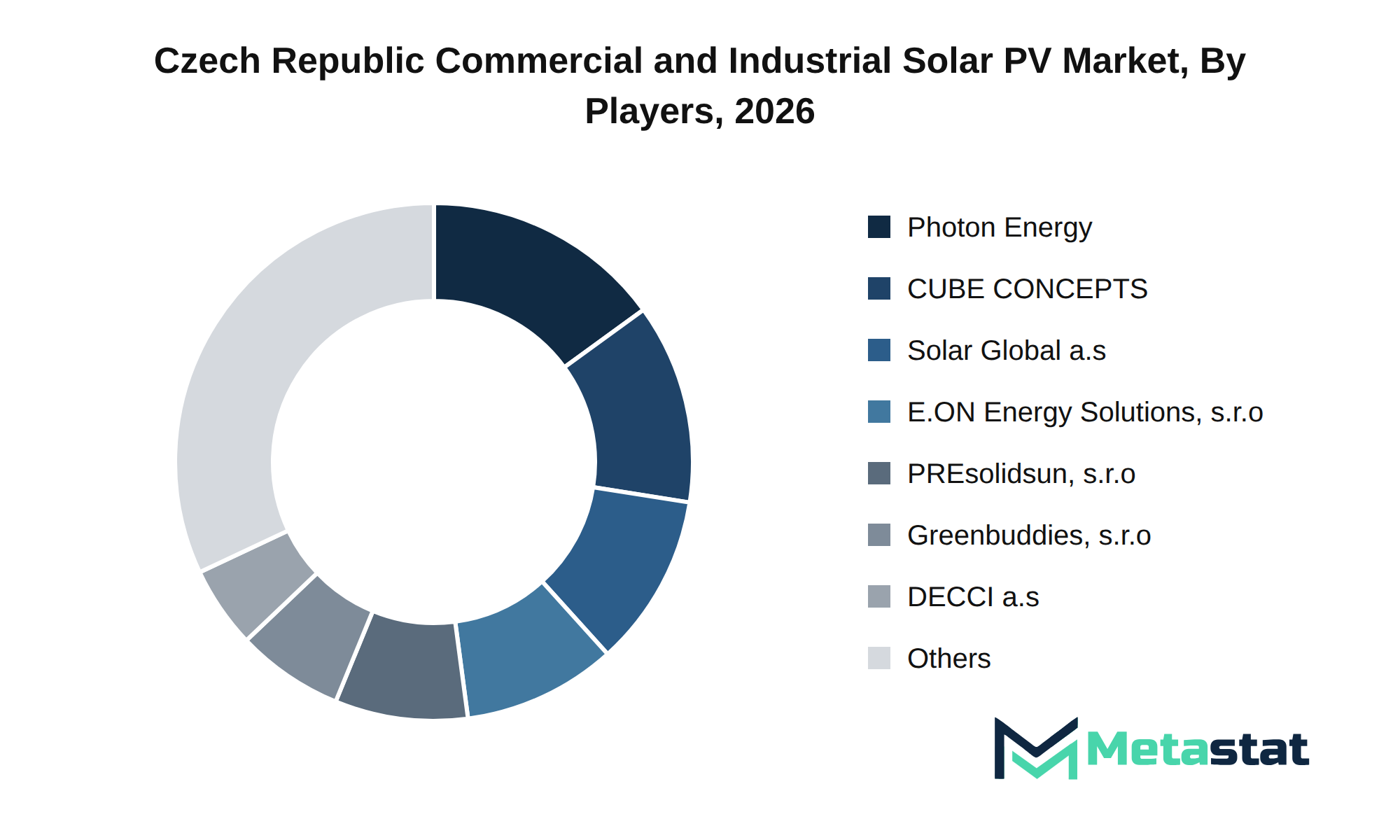
The Czech Republic Commercial and Industrial Solar PV market features a dynamic competitive environment characterized by strategic consolidation and partnerships. Companies including CUBE CONCEPTS GmbH, E.ON Energy Solutions, s.r.o., and Photon Energy N.V. actively pursue strategic alliances to enhance their market positioning and expand their service offerings. These collaborations provide access to new technologies and customer segments, driving competitive advantages through enhanced value propositions.
Innovation is significant in the market, with firms like S-Power Energies and Solar Global a.s. investing in R&D pipelines to differentiate their product offerings. Emphasis on proprietary technology moats supports sustainable competitive advantages, allowing companies to offer unique solutions tailored to the specific needs of various end-use sectors, including industrial manufacturing and healthcare facilities.
Value chain integration has emerged because a focal point for several players, enhancing procurement leverage and creating operational efficiencies. Companies including DECCI a.s. and TEDOM a.s. leverage their supply chain dominance to streamline operations while maintaining competitive pricing architectures. This approach strengthens customer retention strategies, ensuring brand loyalty in a competitive landscape.
The future competitive outlook for the Czech Republic Commercial and Industrial Solar PV market indicates continued growth opportunities driven by technological advancements and market demand shifts. Companies will adapt to emerging trends and potential startup disruptions, enhancing agility in their strategic growth vectors.
Market size is forecast to rise from USD 343.3 million in 2025 to over USD 802.8 million by 2033. This growth reflects a compound annual growth rate (CAGR) of 11.2%. Key factors influencing this trajectory include evolving regulatory frameworks, advancements in technology integration, and shifts in downstream demand across various sectors.
The base case scenario represents a robust outlook for the Czech Republic Commercial and Industrial Solar PV market, supported by increasing investments in renewable energy infrastructure and commitments from government policies aimed at sustainability. In contrast, a bear case could arise from potential geopolitical tensions or economic slowdowns that disrupt supply chains and hinder investment momentum. Conversely, a bull case emerges from accelerated innovation in solar technology and favorable regulatory reforms, driving higher-than-expected adoption rates.
Technological advancements, particularly in battery storage and energy efficiency, are expected to play a critical role in enhancing the market's appeal to industrial and commercial users. Strategic capital allocation towards research and development will further enable the commercialization of next-generation solar solutions, addressing unmet needs within the market.
Infrastructure commitments and capital expenditures will significantly influence market dynamics, shaping growth trajectories across various installation types, including rooftop PV and solar carports. The evolving macroeconomic scenario will likely create high-growth pockets, presenting unique opportunities for stakeholders within the Czech Republic Commercial and Industrial Solar PV market.
The report strategically identifies and profiles the key market players and analyses their core competencies in each sub-segment of the Commercial and Industrial Solar PV market.
Report Attributes | Details |
Study Period | 2021-2033 |
Base Year | 2025 |
Estimated Year | 2026 |
Forecast Period | 2026-2033 |
Historical Period | 2021-2025 |
Growth Rate | CAGR 11.2% from 2026 to 2033 |
Revenue Unit | USD million |
Segmentation | By Installation Type, Solution Configuration, Grid Connection, End-Use Sector, and Region |
Find answers to common questions about this report
The Commercial and Industrial Solar PV market size in the Czech Republic was valued at USD 343.3 million in 2025.
The Commercial and Industrial Solar PV market is projected to grow at a CAGR of 11.2% during the forecast period from 2026 to 2033.
Rooftop PV leads the Czech Republic Commercial and Industrial Solar PV market, with a projected value of USD 559.6 million by 2033. This segment's growth reflects a significant demand for solar energy solutions in commercial applications.
Key drivers for the Czech Republic Commercial and Industrial Solar PV market include increasing emphasis on sustainability, which aligns with corporate commitments to reduce carbon footprints, and significant investments in solar technology. Infrastructure development and growing public and private funding further support market growth by enhancing energy production and consumption efficiency.
The Czech Republic Commercial and Industrial Solar PV market faces significant challenges from stringent regulatory compliance requirements, which increase operational costs and complicate project timelines. geopolitical instability disrupts investment confidence and creates trade barriers, further hindering market growth. Macroeconomic pressures, including inflation, contribute to rising costs, deterring potential adopters from pursuing solar projects.
Increasing emphasis on sustainability and the demand for clean energy solutions favor product adoption in the Czech Republic Commercial and Industrial Solar PV market. Businesses seek to integrate renewable energy to enhance brand image and reduce operational costs, while ongoing infrastructure investments support the integration of solar technology across various sectors.
The Commercial and Industrial Solar PV market is estimated to reach a valuation of USD 802.8 million by 2033.
Key players in the Czech Republic Commercial and Industrial Solar PV market include CUBE CONCEPTS GmbH, E.ON Energy Solutions, s.r.o., Photon Energy N.V., Solar Global a.s., ČEZ ESCO, a.s., and BayWa r.e. AG.
Rooftop PV systems are expected to grow at a CAGR of 10% from 2026 to 2033, reaching USD 559.6 million by 2033.
The PV + Battery Energy Storage Systems segment is projected to reach USD 401.9 million by 2033.
The analysts below cover Energy and Power research at Metastat Insights.
LEAD ANALYST
Utkarsh Khirodkar is a Lead Market Research Analyst at MetaStat Insight, specializing in market intelligence, technology sector assessments, and competitive strategy.

PRINCIPAL CONSULTANT - ENTERPRISE AI & EMERGING TECHNOLOGIES
Banking & Finance · Electronics and Semiconductor · Energy and Power · Healthcare IT · Information & Technology · Professional Services
Vijay Gunti is a Principal Consultant at MetaStat Insight, bringing over two decades of experience across enterprise digital transformation, technology strategy, and intelligent systems.

ENERGY & INFRASTRUCTURE INDUSTRY CONSULTANT
Automotive and Transportation · Electronics and Semiconductor · Energy and Power · Machinery & Equipment
Saurabh Vasant Ganvir consults for Energy & Infrastructure Industry at MetaStat Insight, specializing in renewable energy, solar EPC, and electric vehicle (EV) infrastructure markets.
When evaluating distributed energy resource management systems, standard research summaries tend to gloss over the operational differences between front-of-the-meter utility deployments and behind-the-meter industrial sites. The MetaStat Insight report addressed those distinctions directly, especially regarding software interoperability standards and grid interconnection backlogs. The five-year market sizing across regional transmission organizations provided actionable context for our grid modernization strategy.
Most industry reports on warehouse automation bundle autonomous mobile robots and fixed conveyor installations into the same top-level numbers, which complicates advisory work. This study split the market cleanly by payload tiers, navigation technology, and fleet management software layers. The regional forecast for Western Europe gave our team defensible adoption benchmarks when evaluating capital allocation for logistics clients, saving us days of secondary data scrubbing.
Analyzing the transition from natural gas to green hydrogen in iron ore reduction requires realistic infrastructure timelines. Meta stat insight supplied a detailed regional assessment of DRI plant conversion costs and scrap metal availability in North America and Western Europe. Their report carefully examined pellet quality specs and electrical grid access constraints without making oversimplified market assumptions. The research material served as a practical reference during internal technology roadmap discussions.
Explore related market intelligence reports worth reading alongside this one.