
LEAD ANALYST
Utkarsh Khirodkar is a Lead Market Research Analyst at MetaStat Insight, specializing in market intelligence, technology sector assessments, and competitive strategy.

Europe Fruit-based Smoothies Market Size, Share, By Type (Organic Smoothies and Inorganic Smoothies), By Distribution Channel (Supermarkets and Hypermarkets, Convenience Stores, Gas Stations, Kiosks and Others), By Price Range (Economy Segment, Mid-range Segment and Premium Segment), By Region (Germany, Czechia, Poland, UK, Netherlands, France, Italy and Rest of Europe), Industry Analysis, Growth, Trends, and Forecast, 2026-2033
Report ID
MSI-4939
Published
August, 2026
Pages
277 Pages
Format
Historical
Base year
Forecast
Forecast period
Report Details
Choose Your License
Europe Fruit-based Smoothies Market
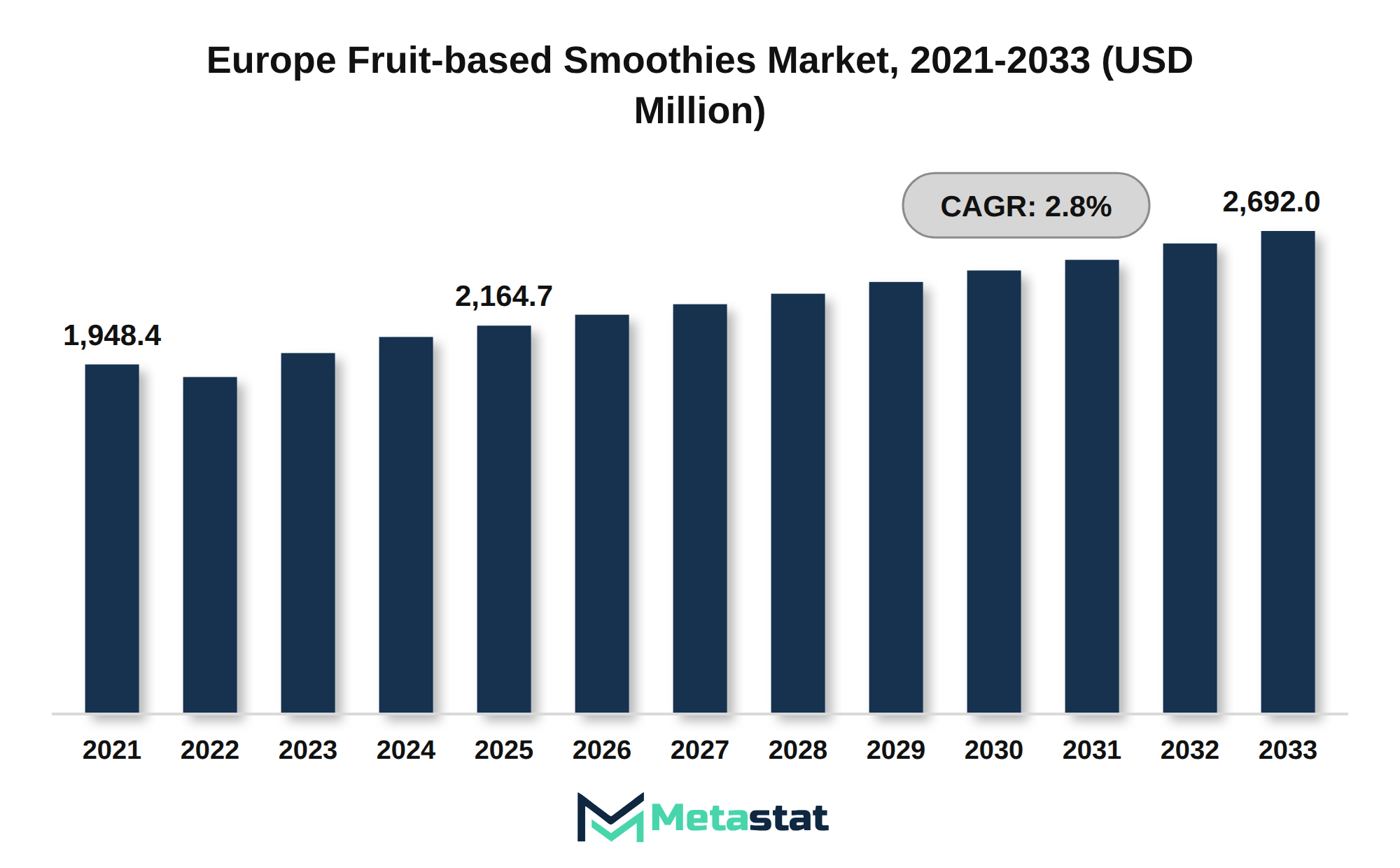
The Europe Fruit-based Smoothies market was valued at USD 2,164.7 million in 2025 and is projected to reach USD 2,692 million by 2033, growing at a CAGR of 2.8% over the forecast period.
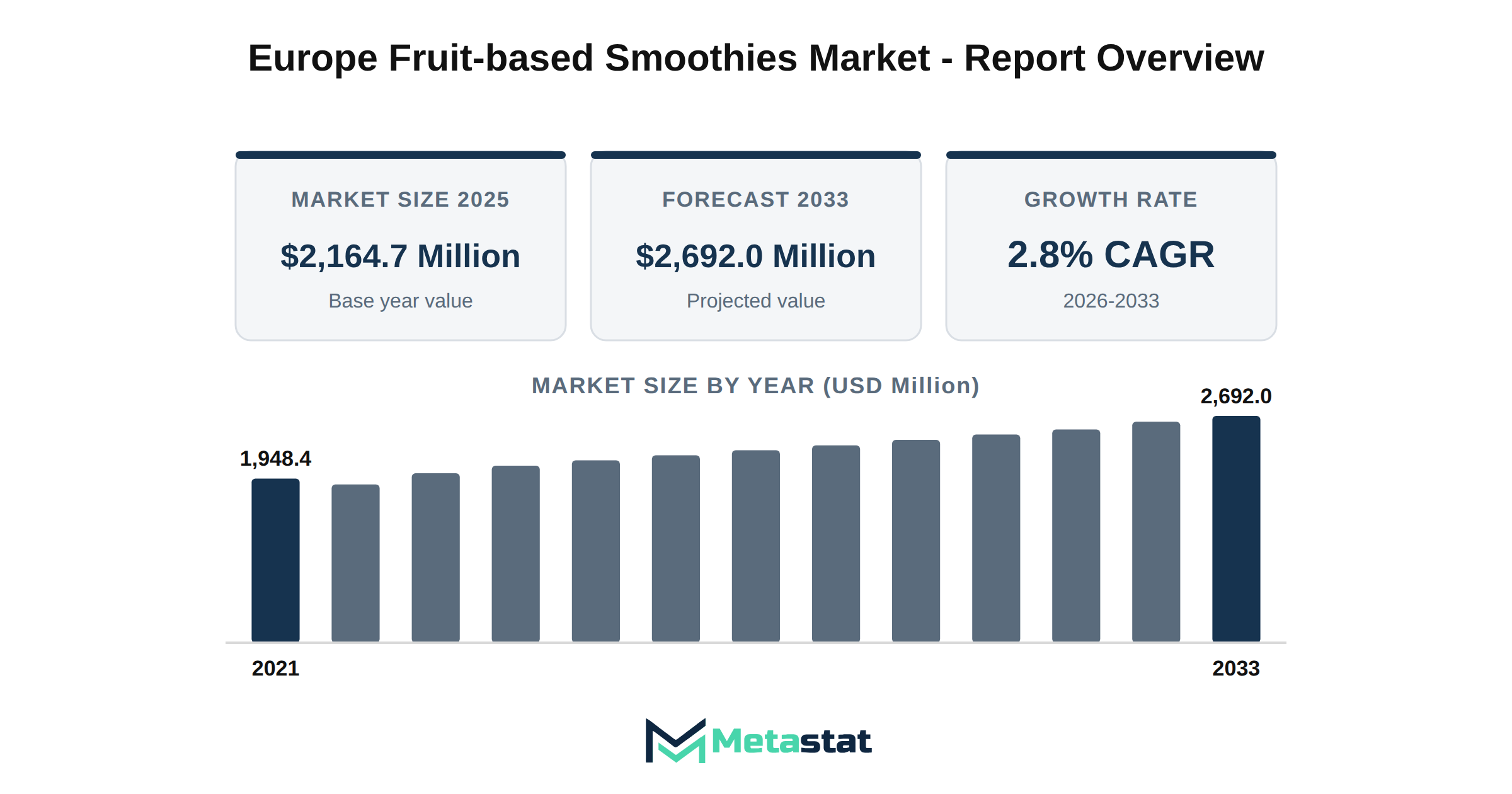
The Europe Fruit-based Smoothies market reached a value of USD 2,164.7 million in 2025, with projections indicating growth to USD 2,692 million by 2033, reflecting a compound annual growth rate (CAGR) of 2.8%. Historical data shows that the market value was USD 1,948.4 million in 2021, USD 1,878.5 million in 2022, and USD 2,011.6 million in 2023. Continued expansion in consumer preferences for healthy beverages contributes to this upward trend, particularly through the increasing popularity of organic options.
Organic smoothies represent a significant growth segment within the market, increasing from USD 471.8 million in 2026 to USD 642.1 million by 2033, achieving a CAGR of 4.5%. Inorganic smoothies, while not experiencing the same rapid growth, will see an increase, reaching USD 2,050 million by 2033, with a CAGR of 2.3%. This segmentation illustrates diverse preferences among consumers, highlighting the ongoing shift toward healthier beverage choices.
Throughout Europe, the market benefits from heightened awareness of health and wellness, driving demand for fruit-based smoothies. Factors influencing this trend include the appeal of protein-enriched and ready-to-drink options, which align well with the busy lifestyles of consumers. The market reflects a combination of established players and emerging brands, each contributing to a dynamic competitive environment.
The increasing focus on sustainability and health has led to innovations in product offerings, prompting manufacturers to invest in research and development. Companies explore new formulations and ingredients to meet consumer expectations, particularly in the organic and protein-enriched segments. This focus on innovation supports future growth prospects within the Europe Fruit-based Smoothies market.
Despite the positive outlook, challenges including regulatory compliance and geopolitical risks require careful navigation. Companies operating in this market stay informed about evolving regulations and standards that impact production and distribution. These factors contribute to a complex supply chain landscape, necessitating strategic planning and investment to mitigate potential disruptions.
The Europe Fruit-based Smoothies market experiences significant growth driven by consumer demand for health-oriented products. Increasing awareness surrounding the health benefits of smoothies, particularly those enriched with organic ingredients and proteins, contributes to this trend. Health-conscious consumers prioritize nutrition and convenience, propelling the demand for ready-to-drink fruit smoothies.
The regulatory environment surrounding food and beverage products significantly influences market dynamics. Compliance with safety standards and regulations affects product formulations and marketing strategies. Companies operating in the market navigate complex regulatory frameworks to ensure product acceptance across various European nations, impacting their operational costs and market access.
Research and development trajectories focus on next-generation innovation, emphasizing sustainable transformation and the circular economy. Companies invest in creating environmentally friendly packaging and leveraging local sourcing to reduce carbon footprints. This shift toward sustainability aligns with broader consumer preferences for eco-conscious products, enhancing brand loyalty and expanding market share.
The supply chain landscape reflects evolving logistics architecture, facilitating efficient sourcing and distribution. Streamlined operations enable companies to respond swiftly to market demands while managing costs effectively. The market's fragmented nature encourages mergers and acquisitions, creating competitive advantages and expanding product offerings, which strengthens overall market positioning.
Macroeconomic headwinds, including inflationary pressures and currency volatility, impact operational realities. Companies face challenges in capital allocation and infrastructure investments, influencing their overall financial strategies. Strategic outlooks focus on adapting to economic fluctuations while pursuing high-value recommendations to enhance market positioning and maintain competitiveness.
The Europe Fruit-based Smoothies market experiences growth driven by rising consumer awareness regarding health and wellness. A shift towards healthier lifestyles prompts increased demand for nutritious beverages, including smoothies that emphasize natural ingredients. Consumers actively seek products with health benefits, prompting manufacturers to innovate in formulation and ingredient sourcing.
Health-conscious individuals prioritize products that incorporate organic and natural components, influencing their purchasing decisions. This trend aligns with broader demographic patterns, including aging populations and urbanization, which increase the focus on dietary choices and overall well-being. The market's expansion reflects the growing alignment between consumer preferences and product offerings.
In response to evolving buying habits, manufacturers invest in research and development to enhance product formulations, ensuring they meet the standards of health-oriented consumers. This investment drives competition among brands, establishing a competitive environment within the Europe Fruit-based Smoothies market. Enhanced product diversity encourages consumer engagement and stimulates sales growth, reinforcing long-term demand within the market.
Growing consumer interest in organic products significantly influences the Europe Fruit-based Smoothies market. The trend toward healthier lifestyles and a preference for natural ingredients drives demand for organic smoothies. Increased awareness of the benefits of organic ingredients, including potential health advantages and environmental sustainability, reinforces this shift. This interest leads consumers to seek products that align with their values regarding health and sustainability.
Investments in organic farming and production methods support this trend, enhancing product availability and variety. Manufacturers increasingly focus on sourcing organic ingredients, thereby improving the quality and appeal of their product offerings. Consequently, the market experiences a boost in growth rates, with organic smoothies projected to achieve a compound annual growth rate through 2033.
While the market continues to expand, companies strive to innovate their offerings, introducing new flavors and blends that highlight organic ingredients. This strategy attracts health-conscious consumers and positions brands because leaders in the competitive landscape of the Europe Fruit-based Smoothies market. Enhanced product differentiation through organic certification influences consumer purchasing behavior, driving overall market growth.
Regulatory challenges significantly hinder growth within the Europe Fruit-based Smoothies market. Compliance hurdles arise from stringent health and safety standards imposed on food and beverage products, necessitating rigorous testing and certification processes. These requirements increase operational costs for manufacturers, constricting profit margins and limiting investment in product innovation.
Macroeconomic headwinds contribute to a challenging environment. Inflationary pressures drive up ingredient and production costs, creating a burden for producers who struggle to maintain competitive pricing. Geopolitical instability creates uncertainties in supply chains, affecting the availability and costs of raw materials used in smoothie production.
Technological obsolescence presents a further challenge. Companies within the market invest in modernizing their production and distribution systems to remain viable. Failure to adopt advanced technologies results in decreased efficiency and competitiveness against rivals that embrace innovation.
Market fragmentation complicates the competitive landscape. A high number of small players with limited resources leads to inconsistent product quality and consumer trust issues. This fragmentation prevents the development of strong brand loyalty, restricting market growth.
Cultural barriers influence consumer acceptance of fruit-based smoothies across different regions. Variations in taste preferences and dietary habits restrict the penetration of new products into local markets, limiting overall expansion within the Europe Fruit-based Smoothies market.
The Europe Fruit-based Smoothies market faces significant challenges due to geopolitical fragmentation, which disrupts trade relationships and creates uncertainty in supply chains. These disruptions include rising trade deficits and tariff friction, impacting the availability and pricing of key ingredients. Suppliers experience volatility in feedstock and component availability, complicating production processes and increasing operational costs, which limits growth potential.
Technological disruptions, including rapid advancements in automation and digital processes, introduce a layer of complexity in research and development integrations. Companies encounter interoperability friction when attempting to align new technologies with existing systems, hindering efficiency and slowing market responsiveness. The ongoing threat of cybersecurity risks and data vulnerabilities undermines consumer confidence and overall market stability, resulting in reduced demand.
The market experiences rising input cost structures alongside pricing compression and margin pressures, challenging profitability. Companies confront talent retention pressures associated with workforce skill gaps, limiting innovation and growth potential. Environmental lifecycle footprints and sustainability demands exert further pressure on companies, requiring investments in greener practices and technologies, which increase operational costs.
Infrastructure gaps and retrofitting barriers present additional obstacles for firms attempting to modernize operations. Implementation bottlenecks in adopting new technologies or processes stifle market growth. Overall, these combined factors create a challenging environment for the Europe Fruit-based Smoothies market, impacting both operational capabilities and competitive positioning, and limiting long-term growth prospects.
The Europe Fruit-based Smoothies market presents growth opportunities driven by emerging consumer preferences for healthier beverage options. An increasing trend towards wellness and nutritious diets has led to heightened demand for fruit-based smoothies, reflecting a shift in consumer behavior towards plant-based and organic products. The growing health-conscious demographic prioritizes functional ingredients, resulting in an expansion of product offerings that cater to these preferences, strengthening long-term demand.
Infrastructure modernization supports this demand, with advancements in production techniques enabling manufacturers to enhance product quality and maintain freshness. The introduction of innovative processing technologies allows for greater preservation of nutrients, appealing to consumers seeking healthier beverage alternatives. This technology-driven approach facilitates new product development, ensuring that offerings align with evolving consumer expectations, thereby increasing investment across the value chain.
Geographical expansion represents another avenue for growth within the market. Increasing distribution networks and the rise of e-commerce platforms enhance accessibility for consumers across various regions. This shift allows brands to tap into new markets, maximizing reach and diversifying revenue streams in the Europe Fruit-based Smoothies market, reinforcing the segment's position.
Digital transformation influences purchasing behaviors. An increasing number of consumers engage in online shopping for health-oriented products. This trend allows brands to streamline their marketing strategies and adopt targeted approaches to reach specific demographics, enhancing customer engagement and loyalty, which is expected to support market expansion.
Environmental sustainability initiatives play a vital role in shaping market dynamics. Consumers increasingly seek brands that prioritize eco-friendly practices, prompting companies to adopt sustainable sourcing and packaging solutions. This focus on sustainability aligns with consumer values, strengthening brand loyalty and driving growth opportunities within the market.
The Europe Fruit-based Smoothies market is segmented based on Type, Distribution Channel, Price Range, and Region.
Valued at USD 471.8 million in 2026, the Organic Smoothies segment is projected to reach USD 642.1 million by 2033, at a CAGR of 4.5% during the forecast period. Growing health consciousness among consumers drives demand for organic products, aligning with broader trends focusing on natural ingredients and sustainable practices. This segment benefits significantly from the increasing preference for beverages perceived because healthier alternatives to sugary drinks.
Investment in organic farming techniques and supply chain enhancements supports the expansion of the market. Manufacturers adapt to evolving consumer preferences by introducing innovative flavors and functional ingredients, ensuring product evolution aligns with market demands. The trend towards clean labels and transparency in ingredient sourcing influences purchasing decisions, further propelling growth because consumers seek products they recognize and trust.
Regulatory compliance regarding organic certifications remains crucial for market participants. Adhering to these standards establishes credibility and builds consumer trust, contributing to the segment's appeal. The competitive landscape within the Europe Fruit-based Smoothies market reflects a surge in new entrants focusing on organic offerings, intensifying rivalry and encouraging innovation.
Established players and new entrants alike face pressures related to pricing volatility and margin constraints amid fluctuating raw material costs. Strategic collaborations and investments in marketing help navigate these challenges, ensuring that brands maintain visibility and consumer engagement. The organic smoothies category stands poised for sustained growth, driven by increasing consumer demand for nutritious and responsibly sourced products.
Growing demand for convenient and nutritious options drives the Inorganic Smoothies segment within the Europe Fruit-based Smoothies market. Consumers increasingly seek ready-to-drink beverages that offer health benefits without sacrificing taste. Factors contributing to this demand include a busy lifestyle, heightened awareness of health and wellness, and the expanding availability of Inorganic Smoothies in various distribution channels. Supermarkets and hypermarkets play a significant role in the distribution of these products, providing consumers with easy access to a wide range of options.
Innovation within the segment focuses on product evolution, incorporating various flavors and formulations to cater to diverse consumer preferences. Manufacturers continuously invest in next-gen upgrades, enhancing product quality and nutritional value, which attracts health-conscious buyers. Inorganic Smoothies are expected to reach USD 2,050 million by 2033, at a CAGR of 2.3% during the forecast period. This growth reflects an adaptation to consumer trends emphasizing convenience, taste, and health attributes.
Pricing strategies remain crucial for market participants, owing to the need for maintaining competitive pricing while managing cost structures that influence profit margins. Fluctuations in raw material sourcing and supply chain resilience significantly impact operational efficiency. Manufacturers face challenges related to pricing volatility, which directly affects their ability to meet consumer expectations while sustaining profitability. Addressing these factors will determine the competitive landscape and growth trajectory of the Inorganic Smoothies segment within the Europe Fruit-based Smoothies market.
Growth in the Supermarkets and Hypermarkets segment of the Europe Fruit-based Smoothies market aligns with shifting consumer preferences toward convenience and health-focused products. Increasing awareness of the health benefits of fruit-based smoothies drives demand within these retail channels, encouraging frequent purchases by health-conscious consumers. This segment benefits from strategic positioning and expansive distribution networks, allowing easy access for buyers looking for nutritious options.
Technological advancements in supply chain management enhance product freshness and availability, directly impacting consumer satisfaction. Supermarkets and hypermarkets increasingly focus on offering a diverse range of smoothie options, catering to various dietary preferences, including organic and functional blends. Such product evolution supports the shifting consumption dynamics, with consumers seeking not only flavor but nutritional value.
Pricing strategies within this segment significantly influence consumer choices. Competitive pricing, particularly in the economy and mid-range segments, attracts a broader audience. Premium offerings address upscale consumer demands. These pricing dynamics contribute to market responsiveness, ensuring that various consumer segments engage with the product effectively.
Compliance with evolving regulatory standards regarding health and nutrition informs product formulation and marketing strategies. Adherence to certification requirements enhances brand trustworthiness among consumers, further driving market engagement. Strategic opportunity windows arise owing to brands innovating and adapting to regulatory changes, ensuring continued relevance in a competitive environment.
Supply chain resilience becomes increasingly vital owing to raw material sourcing challenges including quality fluctuations and price volatility. These challenges influence product consistency and availability, impacting overall market performance. Brands that successfully navigate sourcing challenges position themselves advantageously within the market, attracting loyal customers in rising competition.
Growing consumer preferences for on-the-go nutrition heavily influence the Convenience Stores sub-segment within the Europe Fruit-based Smoothies market. This demand arises from busy lifestyles, prompting consumers to seek quick and healthy beverage options while shopping. The availability of fruit-based smoothies at convenience stores aligns with this trend, catering to health-conscious individuals seeking immediate access to nutritious choices.
Technological advancements facilitate the development of new flavors and packaging solutions, enhancing the appeal of smoothies offered in convenience stores. Innovations in preservation and distribution methods ensure product freshness, contributing to consumer satisfaction. Enhanced product quality encourages repeat purchases, reinforcing brand loyalty within this segment.
Strategic partnerships between convenience stores and smoothie brands enhance product visibility and accessibility. Collaborations often include marketing initiatives that promote smoothies because a healthy snack alternative, positioning them favorably against competing beverages. This strategic alignment drives customer engagement and boosts sales performance.
Health awareness continues to rise, and consumers increasingly prioritize nutritional value in their choices. Regulatory compliance regarding ingredient transparency and health claims influences product formulations, pushing manufacturers to enhance the nutritional profile of smoothies. These regulatory standards prompt brands to innovate, ultimately benefiting consumers who seek healthier options.
Cost structures significantly impact pricing strategies within the Convenience Stores segment. Fluctuations in raw material costs affect profit margins, necessitating strategic pricing to maintain competitiveness. Manufacturers focus on optimizing supply chain operations to mitigate these pressures, allowing for stable pricing without compromising product quality.
Overall, the Convenience Stores sub-segment of the Europe Fruit-based Smoothies market demonstrates strong potential, driven by evolving consumer preferences, technological advancements, and strategic partnerships. These dynamics position the segment favorably for future growth, aligning with broader market trends.
Growth in the Gas Stations segment of the Europe Fruit-based Smoothies market stems from changing consumer preferences towards on-the-go nutrition. Increasing health awareness among consumers drives demand for healthy beverage options, including fruit-based smoothies, at convenient locations including gas stations. This trend aligns with shifts in end-use dynamics, where consumers prioritize accessible nutritious choices while traveling or during commutes.
Adoption of fruit-based smoothies at gas stations benefits from the expanding network of convenience-oriented retail outlets. Strategic partnerships between smoothie brands and gas station operators enhance product visibility and availability, catering to a consumer base that values quick and health-conscious options. Heightened competition among brands striving to establish a presence in this segment leads to innovative flavor combinations and product offerings that attract diverse customer preferences.
Regulatory compliance surrounding food safety and labeling standards influences operations within gas stations. Smoothie providers adhere to stringent quality regulations, ensuring products meet safety and nutritional guidelines. This regulatory environment promotes consumer trust and satisfaction, driving repeat purchases and brand loyalty within the market.
Cost structures in the gas station segment reflect competitive pricing strategies implemented to attract customers. Pricing volatility arises from raw material sourcing challenges, impacting profit margins for smoothie suppliers. Consistent demand for healthy beverages supports price stabilization, encouraging further investment in product innovation and supply chain resilience.
Strategic opportunity windows emerge for brands seeking to expand their footprint within gas stations. Developing targeted marketing campaigns that emphasize convenience and health benefits presents a pathway for increasing market share. The growing variety of smoothie options available at gas stations aligns with broader consumption shifts favoring healthier lifestyles, positioning the market for continued expansion and innovation.
Consumer preferences for quick and healthy refreshments drive the Kiosks segment within the Europe Fruit-based Smoothies market. The convenience of kiosks, often located in high foot-traffic areas, positions them because accessible options for health-conscious individuals seeking nutritious beverages. Increasing awareness around health and wellness further increases demand for fruit-based smoothies, aligning with the growing trend of on-the-go consumption.
Adoption of kiosks benefits from advancements in technology, including the introduction of automated vending solutions. These innovations enhance customer experience by providing speed and efficiency in service delivery. Product evolution within kiosks includes offerings that cater to diverse dietary needs, demonstrating the segment's responsiveness to changing consumer demands.
Regulatory compliance remains a critical factor influencing operations within this segment. Meeting health and safety standards builds consumer trust and supports market expansion. Pricing volatility, driven by raw material sourcing and production costs, presents challenges that operators navigate to maintain margins. Strategic partnerships with suppliers mitigate these pressures.
Competitive dynamics in the Kiosks segment generate opportunities for new entrants to capture market share. The rise of health-focused startups emphasizes the importance of innovative product offerings and unique customer experiences. Overall, the segment shows potential for growth, contributing to the broader trends observed in the Europe Fruit-based Smoothies market.
Growing interest in health-conscious options drives demand within the Others (Online, Health Food Stores, Cafés, Restaurants) segment of the Europe Fruit-based Smoothies market. Consumers increasingly seek convenient and nutritious products, contributing to a favorable environment for this distribution channel. Enhanced online shopping experiences enable consumers to access a wide variety of smoothie options, reinforcing the role of e-commerce in the overall market.
Product evolution supports the segment, with brands introducing innovative flavors and formulations that cater to changing consumer preferences. Nutritional value and ingredient transparency significantly influence purchasing decisions, prompting suppliers to adopt cleaner labels and organic offerings. This trend aligns with a broader shift towards health and wellness in the marketplace.
Regulatory compliance standards play a critical role. Manufacturers adhere to food safety and labeling regulations. Certifications related to organic and natural ingredients enhance product credibility and consumer trust. Suppliers that navigate these standards efficiently gain a competitive edge in the market.
Cost structures and pricing strategies directly impact the segment's growth trajectory. Competitive pricing, combined with promotional activities in health food stores and cafés, enhances product visibility and attracts consumers. Strategic partnerships with health-focused retailers and cafés expand distribution channels and enhance customer outreach, strengthening long-term demand.
Consumer demand for accessible and affordable nutrition drives interest in the Economy Segment of the Europe Fruit-based Smoothies market. Price-sensitive consumers increasingly seek budget-friendly options that do not compromise on taste or health benefits. This segment attracts a broad demographic ranging from students to families, emphasizing convenience and value.
Product innovation is important for expanding the Economy Segment, with brands introducing new flavors and formulations tailored to price-conscious consumers. Promotional strategies, including limited-time offers and discount bundling, enhance visibility and shopper engagement within this segment, encouraging trial and repeat purchases.
Distribution channels remain essential, with supermarkets and hypermarkets serving because key platforms for the Economy Segment. The accessibility of these retail environments reinforces consumer retention and attraction. Online sales channels are gaining traction, enabling brands to reach wider audiences while maintaining competitive pricing, aligning with shifting consumer buying behaviors.
Cost structures significantly influence pricing in this segment. Producers focus on optimizing supply chains and sourcing raw materials that balance quality and cost efficiency. Pricing volatility remains a challenge, with fluctuations in raw material costs impacting margins. Strategic partnerships with suppliers aim to mitigate risks and ensure a steady supply of ingredients.
In response to evolving consumer preferences, brands invest in marketing campaigns highlighting nutritional benefits and affordability. This strategic positioning aims to capture a larger market share while enhancing brand loyalty. The growing emphasis on health and wellness among consumers positions the Economy Segment for continued relevance in the market.
Consumer preferences increasingly focus on health-conscious choices, driving demand for mid-range fruit-based smoothies. This segment attracts consumers seeking quality products that balance taste and affordability. Growing awareness of nutritional benefits associated with fruit-based smoothies contributes to the segment's appeal.
Product evolution is important for attracting new customers. Manufacturers focus on enhancing flavor profiles and incorporating functional ingredients, appealing to health-oriented consumers. Innovations in packaging support the segment by providing convenience and extending shelf life, aligning with consumer lifestyles.
Consumption shifts toward versatile beverage options drive growth in the mid-range segment. Consumers opt for smoothies because meal replacements or snacks, contributing to increased demand across various distribution channels, including supermarkets and convenience stores. This versatility aligns with modern consumer habits favoring quick and nutritious options.
Pricing volatility impacts consumer purchasing decisions, with the mid-range segment positioned to attract value-seeking customers. Strategic pricing strategies enable manufacturers to offer competitive products without compromising quality. Such approaches build brand loyalty among consumers prioritizing both taste and affordability.
Strategic opportunity windows arise from rising consumer interest in sustainability and health. Brands that emphasize organic ingredients and eco-friendly practices appeal to a growing segment of environmentally conscious consumers. Capital investment in sustainable sourcing and production processes enhances brand reputation and drives market expansion.
The evolving regulatory landscape influences product formulations and marketing strategies. Compliance with health and safety standards is essential for maintaining consumer trust. Brands that proactively address regulatory requirements position themselves favorably within the competitive environment, further enhancing their market presence.
Growing consumer interest in premium products drives the Premium Segment within the Europe Fruit-based Smoothies market. Health-conscious consumers increasingly seek high-quality, nutrient-dense options that align with their lifestyle choices. This trend leads to an uptick in demand for smoothies featuring high-quality organic ingredients, appealing to affluent buyers willing to pay a premium for perceived health benefits.
Innovation within the segment becomes apparent through the introduction of unique flavor combinations and functional ingredients, including superfoods, which enhance the nutritional profiles of smoothies. Manufacturers focusing on ingredient transparency and sustainable sourcing practices attract discerning consumers who prioritize quality and ethical production. This shift promotes brand loyalty and influences purchasing decisions across various distribution channels.
Pricing strategies play a significant role, driven by premium products often experiencing higher margin pressures resulting from sourcing costs and production standards. Effective communication of the benefits associated with premium offerings offsets pricing volatility and supports market positioning. Consequently, strategic marketing efforts highlighting health benefits and quality attributes facilitate consumer engagement and drive sales, enhancing the overall growth potential of the segment.
Competition intensifies within the Premium Segment, with multiple players vying for market share through product differentiation and innovative marketing tactics. This competition encourages continuous product evolution and adaptation, allowing brands to respond to shifting consumer preferences effectively. The Europe Fruit-based Smoothies market is expected to experience ongoing developments in premium offerings, reflecting emerging trends and consumer demands.
Consumer interest in healthy lifestyle choices significantly influences the Germany segment of the Europe Fruit-based Smoothies market. The increasing awareness regarding nutrition and wellness drives consumers toward fruit-based smoothies, seen because a convenient option for maintaining a balanced diet. This trend highlights a shift towards organic and natural ingredients, prompting manufacturers to innovate their product offerings to align with consumer preferences.
Investments in technology and production capabilities present strategic opportunity windows for suppliers operating within this segment. Enhanced production processes and next-generation upgrades enable firms to create high-quality smoothies that meet evolving consumer demands. The focus on product evolution emphasizes the importance of flavor variety and functional ingredients, attracting health-conscious consumers.
Regulatory compliance standards shaping food safety and labeling practices impact product development and marketing strategies. Suppliers in Germany remain proactive in ensuring adherence to these regulations while pursuing certifications that enhance product credibility and consumer trust. Pricing volatility, driven by raw material sourcing challenges, affects profit margins, prompting firms to optimize their supply chains and seek alternative sourcing strategies.
Changing consumption patterns reflect an increasing preference for on-the-go options, making fruit-based smoothies an appealing choice for busy consumers. This shift encourages manufacturers to explore diverse distribution channels, including supermarkets and convenience stores, to maximize reach. By understanding these market dynamics, stakeholders in the Germany segment position themselves for future growth within the larger Europe Fruit-based Smoothies market.
Increased health awareness among consumers rapidly drives demand for fruit-based smoothies in Czechia. Shifting dietary preferences towards natural and nutritious beverages reflect changes in lifestyle patterns, prompting manufacturers to innovate and diversify product offerings. The rising popularity of organic ingredients aligns with health-conscious consumer behavior, influencing market dynamics. The growth of retail channels, including supermarkets, boosts accessibility and convenience, enhancing consumer engagement with the Europe Fruit-based Smoothies market.
Czechia experiences a trend towards premium product offerings, appealing to consumers seeking quality and unique flavor profiles. This trend corresponds with the expansion of distribution channels, where convenience stores and online platforms play significant roles in reaching diverse consumer segments. Competitive pricing strategies among suppliers contribute to market penetration, creating an environment conducive to growth and increased consumer choice.
The market's evolution emphasizes technological advancements in production processes. Improved methods for sourcing and preserving ingredients enable manufacturers to enhance product quality while maintaining competitive pricing structures. Regulatory compliance with food safety standards furthers consumer confidence in fruit-based smoothies, promoting sustained demand and encouraging loyalty among buyers.
Demand for eco-friendly packaging solutions emerges because a critical factor influencing purchasing decisions, aligning with broader sustainability trends. This shift towards environmentally responsible practices enhances brand perception, driving further interest in the Europe Fruit-based Smoothies market. Opportunities for strategic partnerships between suppliers and retailers arise, optimizing distribution efficiency and expanding market reach.
In Poland, the market benefits from a rising trend of health and wellness awareness among consumers, leading to increased interest in nutritious beverage options. Consumers increasingly prioritize products that offer convenience alongside health benefits, driving growth in the fruit-based smoothies segment. The growing popularity of organic ingredients further influences demand, driven by consumers shifting towards products perceived because natural and healthier.
Retail channels including supermarkets and hypermarkets serve because primary distribution points for smoothies in Poland, ensuring widespread accessibility. Increased interest in premium products shapes purchasing behaviors, influenced by consumers seeking higher-quality options that align with their health-focused lifestyles. This trend creates strategic opportunity windows for brands to innovate and expand their product offerings within the Europe Fruit-based Smoothies market.
Regulatory compliance and standards related to food safety and ingredient transparency play significant roles in shaping the market dynamics in Poland. Adherence to these standards helps build consumer trust and loyalty, directly impacting sales performance. Continuous investment in product evolution, including the introduction of new flavors and functionalities, enhances competitive positioning and attracts a broader consumer base.
Overall, Poland's segment in the Europe Fruit-based Smoothies market presents a promising landscape characterized by health-driven demand, diverse distribution channels, and evolving consumer preferences.
Increasing health consciousness among consumers significantly influences the UK segment of the Europe Fruit-based Smoothies market. The demand for nutritious and convenient beverage options continues to grow, driven by busy lifestyles and a heightened focus on wellness. Consumers increasingly seek beverages that offer both taste and health benefits, prompting suppliers to innovate and introduce new flavors and formulations. The trend towards plant-based diets further supports the adoption of fruit-based smoothies, aligning with the preferences of health-conscious individuals.
Distribution channels play a crucial role in reaching consumers effectively. Supermarkets and hypermarkets remain dominant, providing easy access to various smoothie options. Emerging channels, including online sales and convenience stores, offer additional avenues for growth, catering to consumers seeking convenience and quick purchasing solutions. This shift in shopping behavior increases the demand for fruit-based smoothies, resulting in a competitive landscape that encourages brands to enhance their product offerings.
Regulatory compliance standards regarding health claims and ingredient transparency significantly shape market dynamics. Brands navigate these regulations while ensuring product quality and consumer trust. This focus on regulatory adherence promotes a competitive edge for companies that prioritize transparency and authenticity in their offerings.
Investment in product innovation remains essential for capturing market share. Companies actively explore next-generation upgrades, integrating technology and sustainability into their production processes. This strategic approach aligns with consumer preferences for eco-friendly and health-oriented products, enhancing brand loyalty and market presence.
The UK segment of the Europe Fruit-based Smoothies market exhibits growth potential, driven by evolving consumer preferences, innovative offerings, and strategic distribution. Companies leveraging these factors capitalize on the increasing demand for fruit-based smoothies in a competitive landscape.
The rising popularity of health-conscious and convenient refreshments significantly impacts the Netherlands segment within the Europe Fruit-based Smoothies market. Innovations in product offerings, including organic and nutrient-rich smoothies, attract consumers seeking healthier alternatives. Consumer preferences increasingly favor products that offer natural ingredients and transparent sourcing, driving demand for organic smoothies.
Market growth in the Netherlands stems from an increasing number of distribution channels, including supermarkets and convenience stores, which provide easier access to these products. Heightened awareness of dietary choices and their health implications influences purchasing decisions, further supporting the segment's expansion. Brands invest in marketing campaigns that emphasize the health benefits and quality of their smoothies to capture consumer interest.
Regulatory compliance regarding health and safety standards plays a critical role in shaping product offerings. Smoothie brands that adhere to stringent regulations build consumer trust and enhance their market position. Certifications for organic products strengthen brand credibility and encourage purchases among health-conscious consumers.
Pricing strategies remain a vital consideration, with fluctuations affecting consumer choices between premium and economy segments. Smoothies priced competitively attract a broader customer base, while premium offerings appeal to those willing to pay for higher quality. Manufacturers evaluate cost structures and supply chain resilience to maintain profitability amid these dynamics.
Strategic opportunity windows arise from shifts in consumer behavior toward healthy living, providing brands the chance to innovate and diversify their product lines. Engaging in white-space analysis identifies gaps in the market, allowing companies to tailor their offerings to meet evolving consumer demands. Adapting to these trends positions players favorably within the competitive environment of the Europe Fruit-based Smoothies market.
Shifts in consumer purchasing behavior heavily influence the France segment of the Europe Fruit-based Smoothies market. A growing focus on health and wellness prompts buyers to seek convenient and nutritious options. Increased awareness of the benefits of fruit-based nutrition drives the demand for smoothies, with consumers gravitating towards products that offer natural ingredients and fewer artificial additives.
Challenges within the segment include pricing pressures stemming from raw material sourcing and production costs. While manufacturers strive to maintain competitive pricing, fluctuations in ingredient costs create pricing volatility. This dynamic impacts profit margins for suppliers, necessitating operational adjustments to sustain profitability while meeting market demand.
Strategic opportunities exist for innovation and product evolution within the France market. Companies focus on developing next-generation smoothie formulations that emphasize sustainability, health benefits, and unique flavor profiles. These enhancements align with evolving consumer preferences for personalized nutrition solutions and drive growth and expansion in this segment.
Increased emphasis on regulatory compliance and certifications further shapes the market landscape. Compliance with health and safety standards positions brands favorably among discerning consumers, enhancing trust and loyalty. Ultimately, these factors contribute to a positive outlook for the France segment within the Europe Fruit-based Smoothies market.
Increasing demand for nutritious and convenient beverage options significantly impacts the Italy segment of the Europe Fruit-based Smoothies market. This trend aligns with a broader shift toward healthier lifestyles, prompting consumers to seek products that offer both taste and health benefits. The market experiences growth owing to rising health awareness among consumers, who prioritize natural ingredients and functional benefits in their food and beverage choices.
Product innovation attracts consumers. Brands introduce a variety of flavors and formulations, catering to diverse taste preferences and dietary requirements. The expansion of organic smoothies appeals to health-conscious individuals, enhancing market dynamics. The introduction of innovative packaging solutions, including single-serve sizes, supports on-the-go consumption, which aligns with the busy lifestyles of modern consumers.
Distribution strategies contribute to market growth. Supermarkets and hypermarkets serve because primary channels for fruit-based smoothies, providing visibility and accessibility for brands. This segment further benefits from the increasing presence of convenience stores and kiosks, which offer consumers quick access to these beverages. The combination of effective distribution and product variety strengthens competitive positioning in the market.
Regulatory compliance and certification standards shape the operational framework for brands. Adherence to food safety regulations ensures product quality and consumer trust, influencing purchasing decisions. Brands that attain certifications for organic products enhance their appeal, thereby expanding their customer base within the market.
Shifts in consumer behavior indicate a preference for premium products. While consumers become more discerning about their beverage choices, willingness to pay a higher price for quality ingredients emerges. This trend positions premium fruit-based smoothies favorably against lower-priced alternatives, promoting growth within the segment.
The market outlook in Italy reflects opportunities for strategic investment. Brands focusing on sustainability and ethical sourcing attract environmentally conscious consumers, thereby enhancing their market presence. The combination of evolving consumer preferences and innovative product offerings continues to drive the Italy segment's development within the Europe Fruit-based Smoothies market.
Growing health consciousness continues to encourage consumers in the Rest of Europe to seek nutritious and convenient beverage options. The increasing focus on wellness is shaping purchasing behaviors, leading to a rise in demand for fruit-based smoothies within this sub-segment. Health trends and consumer preferences toward natural ingredients significantly influence product offerings in the region. The evolution of smoothie formulations, incorporating cleaner labels and organic ingredients, aligns with these shifting consumer expectations, enhancing market appeal.
Strategic opportunities arise from the expansion of distribution channels, including supermarkets and health food stores, allowing producers to reach a broader audience. Retailers prioritize product diversity to meet consumer demands for both organic and inorganic smoothies. The market reflects a growing trend toward premium offerings, indicating consumers' willingness to invest in high-quality products that emphasize health benefits.
Regulatory compliance regarding labeling and ingredient sourcing influences market dynamics. Adhering to these standards ensures that products meet consumer safety and quality expectations. Pricing volatility in raw materials presents challenges that suppliers navigate to maintain competitive margins. Despite these pressures, the potential for innovation in product development remains strong, supporting market resilience and positioning the Europe Fruit-based Smoothies market for continued growth.
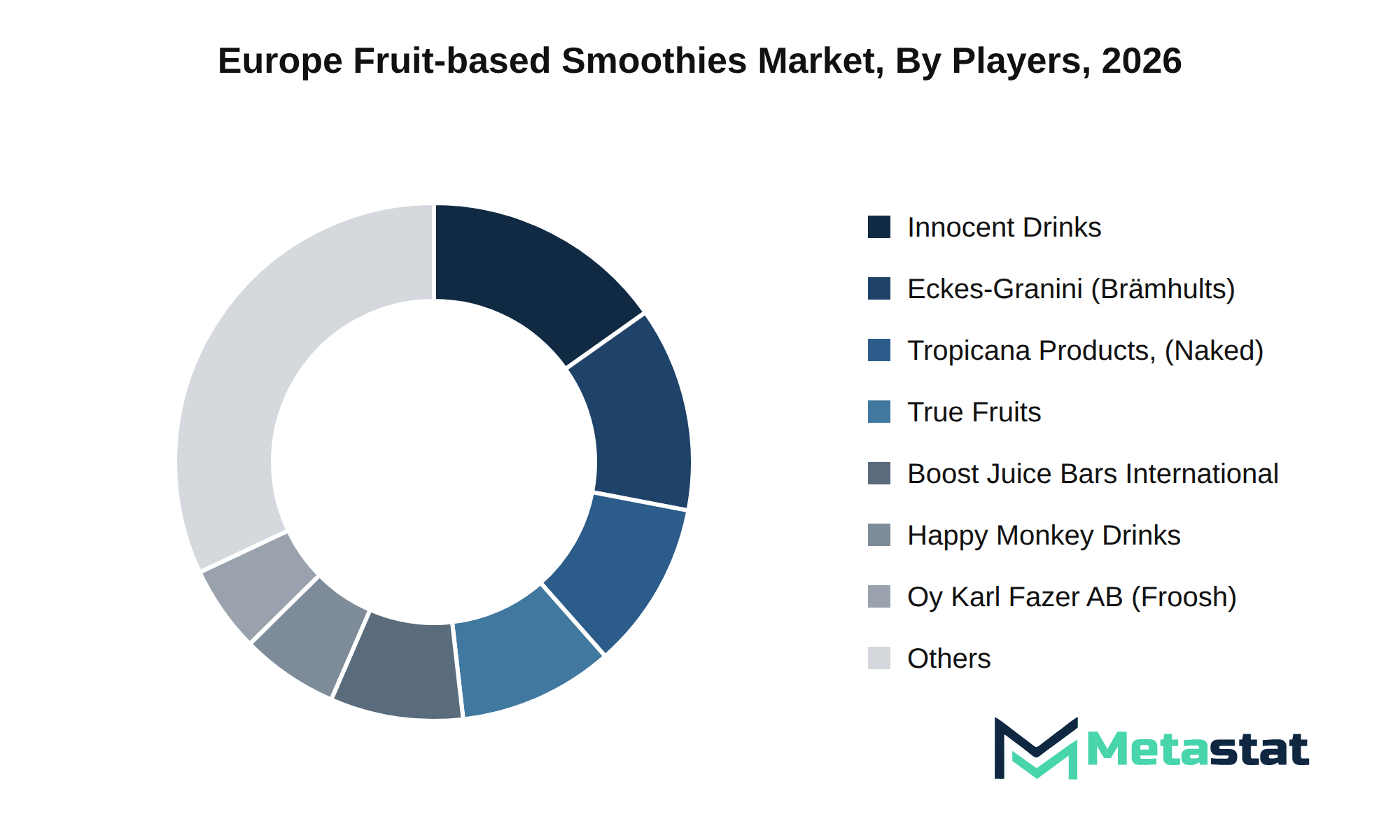
Competitive pressures in the Europe Fruit-based Smoothies market stem from various strategies employed by key players. Innocent Drinks, Happy Monkey Drinks, and True Fruits GmbH leverage product differentiation to cater to health-conscious consumers, focusing on organic offerings that align with current wellness trends. Larger players including Tropicana Products, Inc. (Naked) and Eckes-Granini Group GmbH (Brämhults) emphasize extensive distribution networks to enhance market reach and customer accessibility.
Strategic alliances and partnerships strengthen competitive positioning within the market. Firms like Oy Karl Fazer AB (Froosh) and Riedel B.V. (CoolBest) collaborate with retailers to secure shelf space and promote brand visibility. This tactic, combined with effective customer retention strategies, influences brand loyalty and purchasing decisions. Barriers to entry, including established brand equity and significant capital requirements, deter new entrants from challenging incumbents.
Future competitive outlooks indicate that established players will continue to focus on innovation and sustainability to capture emerging consumer preferences. Companies including The Smoothie Factory, Inc. and Boost Juice Bars International are expected to invest in R&D pipelines to develop new flavor profiles and healthier formulations. This focus on innovation, alongside effective pricing architectures, supports the growth trajectory of the Europe Fruit-based Smoothies market.
Market size is forecast to rise from USD 2,164.7 million in 2025 to over USD 2,692 million by 2033. The base case anticipates growth at a 2.8% CAGR, reflecting steady demand for fruit-based smoothies across various segments. Factors influencing this growth include shifts in consumer preferences towards healthier options, increasing disposable incomes, and advancements in distribution channels.
In a bull case scenario, heightened consumer awareness regarding health benefits could lead to accelerated adoption of organic smoothies, resulting in faster market expansion. In a bear case, economic downturns or supply chain disruptions could hinder growth, particularly affecting the inorganic smoothie segment. Strategic capital allocation, focusing on innovation and R&D, positions players to navigate these fluctuations, ensuring they capitalize on high-growth pockets within the Europe Fruit-based Smoothies market.
Next-generation technology integration, including improved preservation methods, enhances product life cycles and supports evolving consumer demands. Regulatory evolution and compliance milestones impact operational frameworks, necessitating agility among producers and suppliers. Geopolitical realignments and trade corridors shift, prompting firms to adapt to ensure consistent supply chains and mitigate risks associated with sourcing and distribution.
The market outlook remains positive, driven by structural consumption shifts and emerging white-space opportunities. Companies investing in infrastructure commitments and CapEx strengthen their market positions, catering to unmet consumer needs and reinforcing their competitive edge.
The report strategically identifies and profiles the key market players and analyses their core competencies in each sub-segment of the Fruit-based Smoothies market.
|
Report Attributes |
Details |
|
Study Period |
2021-2033 |
|
Base Year |
2025 |
|
Estimated Year |
2026 |
|
Forecast Period |
2026-2033 |
|
Historical Period |
2021-2025 |
|
Growth Rate |
CAGR 2.8% from 2026 to 2033 |
|
Revenue Unit |
USD million |
|
Segmentation |
By Type, Distribution Channel, Price Range, Region, and Region |
Find answers to common questions about this report
The Fruit-based Smoothies market size in Europe was valued at USD 2,164.7 million in 2025.
The Fruit-based Smoothies market is projected to grow at a CAGR of 2.8% during the forecast period from 2026 to 2033.
In the Europe Fruit-based Smoothies market, the Inorganic Smoothies segment leads with a projected value of USD 2,050 million by 2033, compared to the Organic Smoothies segment, which is expected to reach USD 642.1 million in the same year.
The Europe Fruit-based Smoothies market experiences growth driven by rising consumer awareness regarding health and wellness. Increased demand for nutritious beverages, particularly those emphasizing organic and natural ingredients, reflects changing consumer preferences aligned with health-oriented lifestyles. Manufacturers invest in product innovation to meet these evolving demands, enhancing competition and stimulating market growth.
Regulatory challenges hinder growth in the Europe Fruit-based Smoothies market, because stringent health and safety standards increase operational costs for manufacturers. Macroeconomic headwinds, including inflation and geopolitical instability, further complicate production and supply chain dynamics, impacting profitability and investment in innovation.
Rising consumer awareness regarding health and wellness drives product adoption in the Europe Fruit-based Smoothies market. Increased demand for nutritious beverages, particularly those emphasizing natural and organic ingredients, aligns with evolving dietary preferences and lifestyle choices, encouraging manufacturers to innovate and enhance product offerings.
The Fruit-based Smoothies market is estimated to reach a valuation of USD 2,692 million by 2033.
Key players in the Europe Fruit-based Smoothies market include Innocent Drinks, Happy Monkey Drinks, True Fruits GmbH, Oy Karl Fazer AB (Froosh), Eckes-Granini Group GmbH (Brämhults), and Riedel B.V. (CoolBest).
Organic smoothies are projected to achieve a compound annual growth rate of 4.5 percent through 2033.
Supermarkets and hypermarkets serve because the primary distribution channel for fruit-based smoothies in Europe.
The analysts below cover Food and Beverages research at Metastat Insights.
LEAD ANALYST
Utkarsh Khirodkar is a Lead Market Research Analyst at MetaStat Insight, specializing in market intelligence, technology sector assessments, and competitive strategy.

LEAD PRINCIPAL ANALYST, PHARMA AND HEALTHCARE
Food and Beverages · Healthcare · Healthcare IT · Medical Devices
Ajay Devgire is the Lead Healthcare Analyst at MetaStat Insight, leading strategic research and market intelligence initiatives across the global healthcare domain.

SENIOR RESEARCH ANALYST
Biotechnology · Food and Beverages · Medical Devices · Packaging
Snehal Pasalkar is a Research Analyst at MetaStat Insight, operating at the intersection of life sciences research, competitive strategy, and market intelligence.
Enterprise zero-trust network rollouts are often slowed down by multi-cloud transit latency and proprietary hardware retirement schedules. This study provided realistic total cost of ownership models comparing cloud-delivered security edge solutions against traditional hardware refreshes. The analysis of contract renewal lengths and software maintenance fees gave us clear visibility into enterprise replacement cycles over the next three to five years.
Scaling antibody-drug conjugate manufacturing hinges on contract manufacturing availability for high-potency active ingredients. The MetaStat Insight analysis looked closely at global cleanroom slot constraints, bioconjugation batch failure rates, and supply chain redundancies between the US, Europe, and India. The supplier capability matrix proved genuinely useful for our team when mapping secondary source options across our clinical pipeline.
Floating offshore wind feasibility relies heavily on specialized installation vessel availability and port crane limits, which most broad renewable energy forecasts ignore. The report delivered a thorough analysis of dry dock capacity, mooring chain supply constraints, and raw material pricing trends for deepwater anchor installations. It served as a solid independent sanity check for our offshore project capital expenditure assumptions.
Explore related market intelligence reports worth reading alongside this one.