
LEAD ANALYST
Utkarsh Khirodkar is a Lead Market Research Analyst at MetaStat Insight, specializing in market intelligence, technology sector assessments, and competitive strategy.

Europe Pallets Market Size, Share, By Type (Wood, Plastic, Metal and Corrugated Paper), By Application (Food and Beverages, Machinery and Metal, Chemicals and Pharmaceuticals, Construction and Others), By Structural Design (Block and Stringer), By Region (Germany, France, United Kingdom, Italy, Spain and Rest of Europe), Industry Analysis, Growth, Trends, and Forecast, 2026-2033
Report ID
MSI-5131
Published
September, 2026
Pages
260 Pages
Format
Historical
Base year
Forecast
Forecast period
Report Details
Choose Your License
Europe Pallets Market
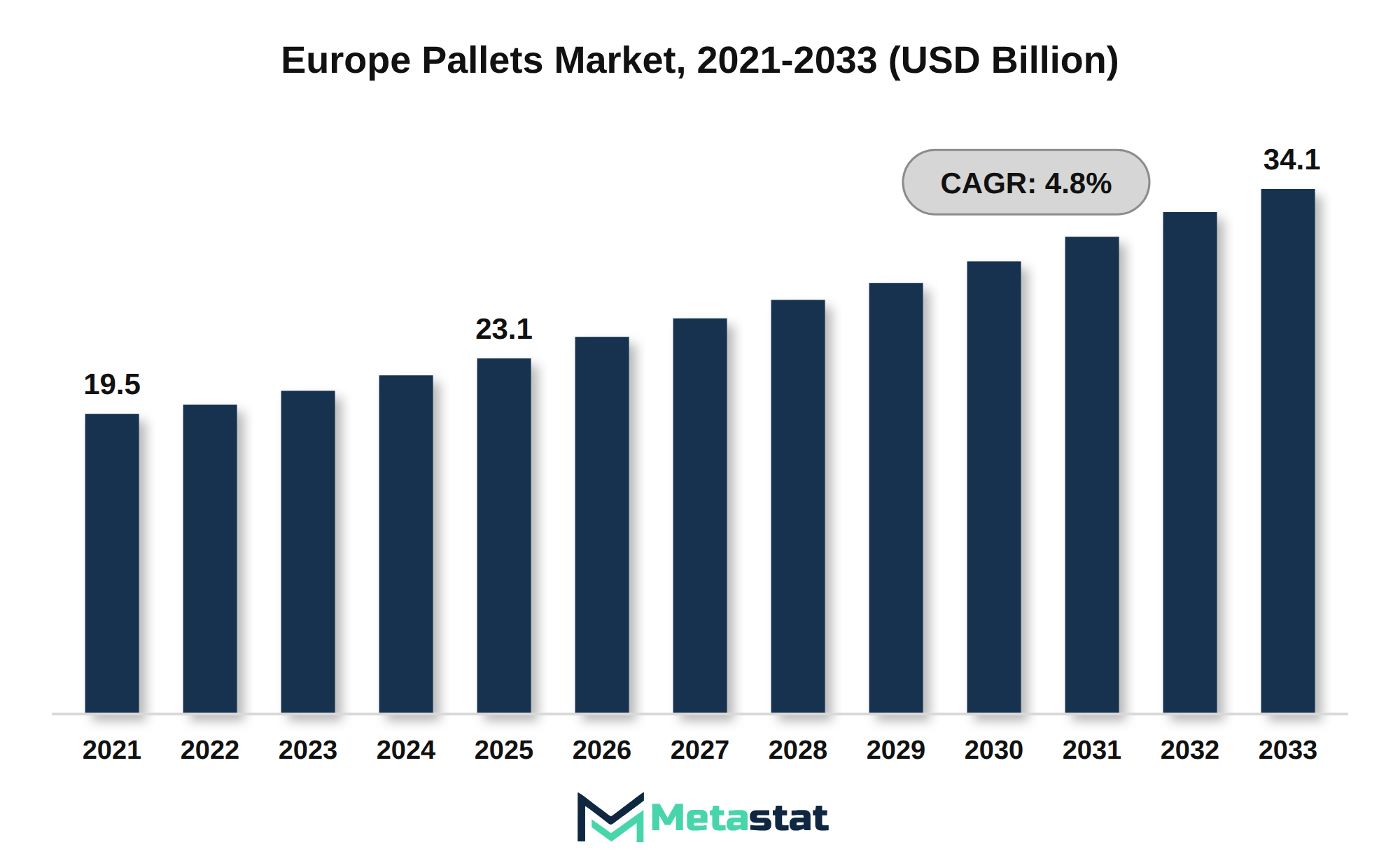
The Europe Pallets market was valued at USD 23.1 billion in 2025 and is projected to reach USD 34.1 billion by 2033, growing at a CAGR of 4.8% over the forecast period.
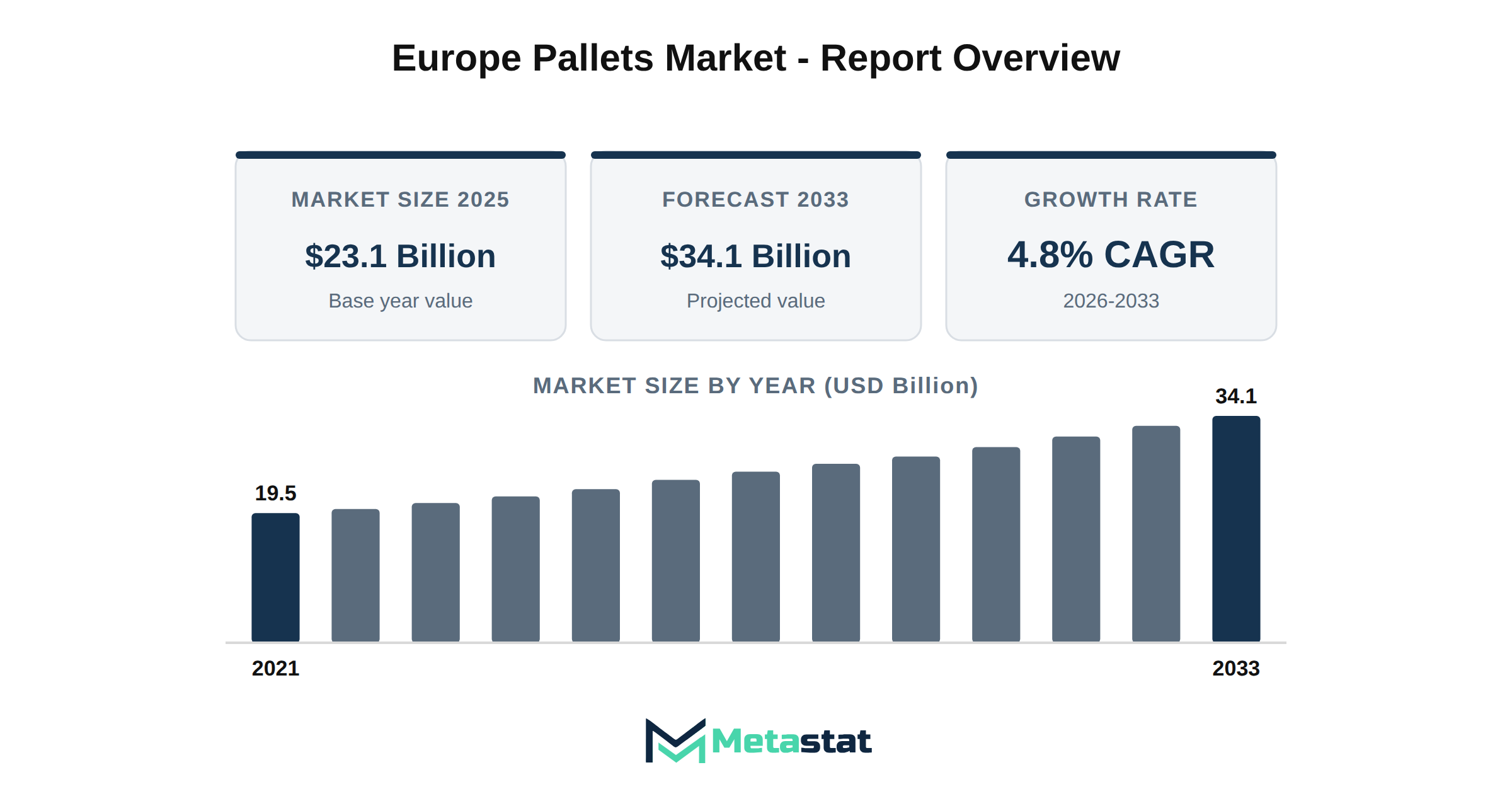
The Europe Pallets market reached a valuation of USD 23.1 billion in 2025, with a projected growth to USD 34.1 billion by 2033, reflecting a compound annual growth rate (CAGR) of 4.8%. Historical data indicates a steady increase in market value, starting from USD 19.5 billion in 2021 and rising to USD 22 billion in 2024.
Regional dynamics show that wooden pallets dominate the market, holding a 74.4% share, followed by plastic at 16.2%, metal at 6%, and corrugated paper at 3.4%. Growth expectations for wooden pallets are significant, with values anticipated to reach USD 25.1 billion by 2033, representing a CAGR of 4.7%. Plastic pallets exhibit a quicker growth trajectory, with a projected value of USD 5.9 billion by 2033, reflecting a CAGR of 5.7%.
Application sectors including food and beverages are crucial for market expansion, with values expected to grow from USD 9.3 billion in 2026 to USD 13.7 billion by 2033, marking a CAGR of 5.6%. Other sectors, including machinery and metal, contribute with an expected value of USD 8.6 billion by 2033.
The competitive landscape features prominent players, including AUER Packaging GmbH, CABKA Group GmbH, and Brambles Ltd (CHEP), among others. These companies engage in strategic initiatives that enhance their market positions and improve customer offerings. The diverse landscape of companies within the Europe Pallets market highlights the importance of innovation and sustainability in product development.
The market experiences significant fragmentation, with a diverse array of players operating across various segments. Key participants include AUER Packaging GmbH, CABKA Group GmbH, and Brambles Ltd (CHEP), among others. This competitive environment encourages innovation and drives companies to differentiate their offerings while striving for operational efficiencies.
Regulatory compliance and sustainability initiatives drive the evolution of the Europe Pallets market. Growing consumer awareness regarding environmental impact influences manufacturers to adopt eco-friendly materials and practices. Companies prioritize sustainable transformation, aligning operations with circular economy principles and reducing carbon footprints.
Inflationary pressures and currency volatility present challenges, impacting costs and pricing strategies. Fluctuations in raw material prices create uncertainty in procurement, necessitating agile sourcing strategies. Companies focus on building resilient supply chains to mitigate risks associated with geopolitical disruptions and market variability.
Investment in research and development trajectories supports next-generation innovation within the market. Companies explore advanced materials and technologies, enhancing product performance and meeting evolving customer demands. This focus on innovation positions firms to capitalize on emerging opportunities and maintain competitive advantages.
The future strategic outlook for the Europe Pallets market emphasizes the importance of capital allocation toward infrastructure investments. Companies are expected to enhance logistics architecture, improving operational capabilities and responsiveness. High-value recommendations center around adopting adaptive strategies that align with market trends and customer expectations, ensuring long-term sustainability and growth.
The expansion of the Europe Pallets market aligns with macroeconomic growth factors, particularly driven by GDP rises across the region. Increasing industrial production, particularly in manufacturing and logistics, generates higher demand for pallets used in the transportation and storage of goods. Growth in e-commerce significantly influences this trend, because businesses require efficient packaging solutions to manage inventory and facilitate shipping processes.
Investment in infrastructure development enhances logistics capabilities, providing companies with improved access to transportation networks. This investment contributes to heightened efficiency within supply chains, further supporting the market. The drive towards automation in warehousing and distribution centers necessitates advanced pallet solutions that enhance operational productivity while reducing labor costs.
Shifting consumer behavior toward sustainable practices and environmentally friendly products influences pallet procurement strategies. The market adapts to these consumer preferences by increasing the use of recyclable and reusable pallet materials, aligning with broader sustainability initiatives across various industries.
The focus on sustainability initiatives significantly influences the Europe Pallets market. Organizations prioritize reducing carbon footprints and embracing circular economy principles, which increases the demand for eco-friendly pallet solutions. This trend arises from heightened consumer awareness and shifting government policies aimed at promoting environmentally responsible practices. Manufacturers respond by developing wood, plastic, and metal pallets that minimize waste and enhance recyclability.
Investments in renewable materials and production processes strengthen sustainability efforts. Companies prioritizing these initiatives experience a competitive advantage, increasing their market share and attracting environmentally conscious buyers. The integration of sustainable practices fulfills regulatory requirements and aligns with evolving consumer preferences for responsible sourcing and production.
The market benefits from these initiatives through enhanced brand reputation and customer loyalty. While businesses commit to sustainability, the demand for innovative pallet solutions rises, driving growth opportunities throughout the region. Overall, sustainability initiatives serve because a key growth driver, shaping market dynamics in the Europe Pallets market.
The Europe Pallets market faces significant operational challenges stemming from regulatory compliance and legal mandates. Stricter regulations compel manufacturers to adapt their practices, often leading to increased operational costs. Compliance hurdles create barriers for smaller players, limiting their market entry and growth potential. This situation contributes to a landscape where larger companies benefit from economies of scale, intensifying competition.
Macroeconomic headwinds, including inflationary pressures and resource scarcity, compound these issues. Rising material costs directly impact profitability, forcing companies to reevaluate their pricing strategies. Supply chain disruptions resulting from geopolitical instability create uncertainties that hinder consistent production and distribution. These factors collectively restrict the market's potential for growth.
Investment in advanced technologies poses a challenge, with high capital requirements for upgrading equipment and processes deterring companies from innovating. The risk of technological obsolescence further complicates strategic planning. Substitution risks arise from alternative materials being explored, influencing the demand for traditional pallets. The market navigates these complexities while ensuring compliance, maintaining competitive pricing, and securing supply chains.
The dynamic regulatory environment introduces a level of unpredictability that impacts long-term planning and investment decisions. Companies engaged in the Europe Pallets market remain agile to respond to evolving regulations and market conditions. Addressing these challenges effectively results in improved market share and enhanced competitiveness.
Geopolitical fragmentation significantly impacts the Europe Pallets market, creating uncertainty in supply chains and trade relationships. Fluctuations in trade agreements and tariffs disrupt the import and export of raw materials, leading to increased costs and pricing pressures. This instability affects manufacturers and suppliers, prompting an urgent need for adaptive strategies to navigate the evolving environment.
Technological disruptions further complicate market dynamics. Innovations in pallet design and materials demand substantial investment in research and development, creating challenges for companies that struggle with operational adaptability. Complex integration processes hinder the swift adoption of advanced technologies, resulting in higher costs and delayed product launches.
Supply chain instability presents another critical challenge. The market experiences frequent logistics disruptions, stemming from various factors including labor shortages and transportation issues. These disruptions increase lead times, impacting customer satisfaction and overall market competitiveness. Companies face mounting pressure to ensure reliable supply chains while managing rising input costs and fluctuating demand.
The Europe Pallets market encounters significant competition, driving pricing compression that affects profit margins. With numerous players in the market, maintaining competitive pricing while ensuring quality and sustainability remains a challenging task. This competitive pressure often leads to reduced margins, compelling companies to seek operational efficiencies and cost reduction strategies.
Workforce skill gaps hinder progress in automation and innovation. Many companies struggle to find skilled labor capable of handling advanced technologies, limiting their ability to enhance productivity. This challenge impacts talent retention, complicating efforts to remain competitive in a rapidly changing market environment. Addressing these skill gaps is crucial for sustaining growth and navigating future market demands.
Environmental concerns and sustainability demands shape market expectations, adding further complexity. Companies face increasing pressure to comply with tightening regulatory standards and to minimize their environmental footprint. Balancing operational efficiency with sustainable practices requires significant investment and strategic planning, impacting overall market dynamics and growth potential.
The Europe Pallets market experiences growth due to several emerging demands across various sectors. The food and beverages application segment anticipates substantial expansion, projected to increase from USD 9.3 billion in 2026 to USD 13.7 billion by 2033, reflecting a compound annual growth rate (CAGR) of 5.6%. This uptick arises from rising consumer preferences for convenience and sustainability, compelling manufacturers to adopt innovative packaging solutions. The machinery and metal application segment demonstrates growth potential, with a forecasted value of USD 8.6 billion by 2033.
Infrastructure modernization significantly shapes the market landscape. Many companies invest in advanced pallet designs and materials to enhance durability and efficiency. The shift towards digital transformation encourages the adoption of smart pallets, integrating technologies like RFID and IoT for real-time tracking and inventory management. Such advancements contribute to operational yield maximization, benefiting suppliers and buyers alike.
The market further benefits from geographical expansion, with significant opportunities in Germany, France, and the United Kingdom. For instance, Germany's market value is projected to rise from USD 7.3 billion in 2026 to USD 10.6 billion by 2033, showing a CAGR of 5.4%. This growth reflects increasing industrial activities and a strong emphasis on sustainable logistics solutions.
Strategic consolidation within the market enhances competitiveness, enabling companies to leverage resources and expand product portfolios. Cross-industry partnerships support the development of niche applications and eco-friendly solutions, aligning with consumer trends towards sustainability. The focus on green transformations and ESG-driven alignments strengthens the market's commitment to environmental responsibility.
Overall, the combination of emerging demands, technological disruptions, and strategic initiatives creates a robust environment for innovation and growth within the Europe Pallets market. The industry's ability to adapt to evolving consumer preferences and incorporate sustainable practices positions it for success in the coming years.
The Europe Pallets market is segmented based on Type, Application, Structural Design, and Region.
Valued at USD 18.2 billion in 2026, the Wood segment is projected to reach USD 25.1 billion by 2033, at a CAGR of 4.7% during the forecast period. This growth results from increased demand for durable and sustainable materials in various applications, particularly in the food and beverages sector. The expansion of e-commerce and logistics services drives the demand for wooden pallets, enhancing their market presence. Environmental considerations boost adoption rates, since wooden pallets offer advantages including recyclability and lower carbon footprints compared to alternatives.
Investments in advanced technologies for manufacturing and treatment of wooden pallets contribute to product evolution. Innovations that improve durability and performance respond to changing consumer preferences and regulatory compliance standards, promoting broader adoption across industries. The Wood segment's resilience stems from its established supply chain and raw material sourcing, maintaining competitiveness in the face of potential substitution risks from plastic and metal alternatives.
End-use dynamics illustrate significant shifts, with industries recognizing the benefits of wooden pallets for transporting a variety of goods. The Wood segment within the Europe Pallets market experiences growth due to its alignment with both environmental goals and evolving market demands. Manufacturers are positioned strategically to capitalize on these opportunities, ensuring continued relevance and market share in the coming years.
Projected growth within the Europe Pallets market sees the Plastic segment reaching USD 5.9 billion by 2033, at a CAGR of 5.7% during the forecast period. This expansion is driven by increased adoption across various industries owing to the lightweight nature and durability of plastic pallets compared to traditional materials. The food and beverage sector significantly influences this demand, because businesses prioritize hygiene and ease of cleaning, enhancing the appeal of plastic pallets.
Technological advancements in the production of plastic pallets contribute to improved performance metrics, including weight reduction, enhanced load-bearing capacity, and better resistance to environmental factors. Regulatory compliance regarding sustainable practices encourages manufacturers to shift towards recyclable and reusable materials, which supports the adoption of plastic options in the market. This transition aligns with growing environmental awareness and corporate sustainability goals.
Challenges related to raw material sourcing and price volatility present ongoing issues for plastic pallet manufacturers. Fluctuations in crude oil prices directly impact production costs, influencing overall market pricing structures. Despite these challenges, strategic investments in research and development drive innovation in product design and material efficiency, presenting opportunities for growth and differentiation.
The evolving dynamics within the Europe Pallets market position the Plastic segment favorably for significant growth, supported by technical advancements and rising demand in key industries. This trajectory reflects broader trends toward sustainable solutions and operational efficiency in supply chains across Europe.
Growth within the Metal segment of the Europe Pallets market is driven by its increasing application in industries including machinery and chemicals, where durability and strength are essential. The Metal segment is expected to reach USD 2.1 billion by 2033, reflecting a strategic response to the rising demand for robust pallet solutions. Factors contributing to this growth include the push for compliance with stricter safety and regulatory standards, which encourage the adoption of metal pallets that offer enhanced reliability.
Technological maturation is important, driven by advancements in manufacturing processes that improve the efficiency and cost-effectiveness of metal pallets. This evolution supports the segment's expansion by enabling producers to deliver high-quality products that meet evolving market expectations. Increasing concern about environmental sustainability pushes industries to explore metal pallets, which often have a longer lifespan compared to alternatives.
Competition within the market intensifies because suppliers innovate to meet diverse customer needs. Enhanced product features, including corrosion resistance and customizable designs, cater to a broader range of applications. This competitive landscape encourages continuous improvement and further drives market penetration.
Investment in the Metal segment has seen a notable increase, particularly from companies prioritizing sustainability and operational efficiency. This strategic focus on capital investment is expected to yield beneficial outcomes, including improved supply chain resilience and reduced costs associated with frequent replacements. Overall, the Metal segment shows strong potential for sustained growth within the Europe Pallets market, supported by strategic opportunities and evolving end-use dynamics.
The Corrugated Paper segment shows promising growth potential, projected to expand at a CAGR of 3.8% during the forecast period. Increasing adoption of environmentally friendly packaging solutions significantly drives demand within the segment. Industries focused on sustainability lean towards corrugated paper pallets due to their recyclable nature and reduced carbon footprint, appealing to eco-conscious consumers. The food and beverages sector, a major contributor to the Europe Pallets market, employs these pallets extensively for their lightweight yet sturdy characteristics, enhancing efficiency in logistics and transportation. Strengthening regulatory compliance regarding packaging waste continues to enhance the market position of corrugated paper solutions, positioning this segment favorably with rising environmental awareness. The ongoing evolution of product designs, catering to specific user requirements, further enhances the appeal of corrugated paper products. Investment in technological advancements to improve production processes contributes to cost-effectiveness, ensuring competitive pricing in the market.
Valued at USD 9.3 billion in 2026, the Food and Beverages segment is projected to reach USD 13.7 billion by 2033, at a CAGR of 5.6% during the forecast period. This segment experiences growth driven by increasing demand for efficient and sustainable packaging solutions in food logistics. Rising consumer preferences for fresh and organic products push manufacturers to adopt advanced pallet solutions that ensure product safety and integrity.
Technological maturation influences the evolution of pallet designs, leading to enhanced durability and cost-effectiveness. The introduction of next-generation materials, including biodegradable plastics, responds to regulatory compliance standards aimed at reducing environmental impact. Consumption shifts toward convenience and sustainability further increase the demand for innovative pallet solutions in the Food and Beverages segment.
Investment in strategic opportunity windows, including automation and digitalization within supply chains, supports operational efficiency. Increased capital investment in infrastructure enhances the market's capability to meet rising demand. The need for compliance with stringent food safety standards drives manufacturers to prioritize quality and reliability in pallet production, ultimately shaping the competitive environment within the market.
Demand for pallets in the Machinery and Metal segment demonstrates strong growth potential, driven primarily by the rising production and consumption of machinery and metal products within Europe. This segment is estimated to reach USD 8.6 billion by 2033, at a CAGR of 4.6% during the forecast period. Increased manufacturing activities and a growing focus on automation significantly influence the demand for efficient material handling solutions, including pallets.
Technological advancements in pallet design and materials contribute to enhancing performance and durability, aligning with industry requirements. Manufacturers prioritize next-generation upgrades and product evolution to meet the specific needs of the machinery and metal sectors. This evolution enables greater efficiency in supply chain operations, allowing companies to improve their overall productivity.
End-use dynamics further illustrate a shift in consumption patterns, with industries increasingly seeking innovative solutions to streamline their operations. Regulatory compliance standards surrounding safety and environmental considerations challenge manufacturers to adapt their offerings continuously. These factors create a favorable environment for growth within the Machinery and Metal segment of the Europe Pallets market.
Strategic opportunity windows arise from the need for improved supply chain resilience and raw material sourcing. Players actively invest in developing advanced pallet solutions tailored to the unique challenges faced by the machinery and metal industries. This proactive approach positions the segment for sustained growth, reflecting evolving market dynamics.
Demand for pallets in the Chemicals and Pharmaceuticals segment reflects the industry's reliance on efficient and compliant packaging solutions. Regulatory compliance standards drive purchasing decisions, with strict guidelines surrounding the transportation and storage of chemicals and pharmaceuticals. These regulations necessitate the use of pallets that ensure product safety, structural integrity, and traceability during transit.
Growth in this segment relies on increasing demand for pharmaceuticals, driven by an aging population and heightened health awareness. The market is projected to reach USD 4.8 billion by 2033, indicating strong potential for suppliers engaging in this sector. Innovations in pallet design and materials enhance product protection and optimize logistics operations throughout the supply chain.
Technological advancements, including the integration of tracking systems and smart pallets, facilitate improved inventory management and operational efficiency. These enhancements lead to greater supply chain resilience, allowing businesses to respond swiftly to fluctuations in demand. Strategic investment in sustainable materials aligns with evolving consumer preferences and reinforces market competitiveness.
Companies within the Europe Pallets market that actively pursue next-generation upgrades position themselves favorably for growth. The transition to more sustainable practices mitigates risks associated with regulatory compliance while catering to environmentally conscious consumers. The segment expands, and continuous adaptation to market dynamics proves essential for long-term success.
Growth within the Construction application of the Europe Pallets market aligns with several infrastructure initiatives. Increased investments in construction projects are driving the demand for pallets specifically designed for this sector. The segment is projected to grow at a CAGR of 4% during the forecast period. Wood pallets dominate the market due to their strength and cost-effectiveness, supporting the transportation and storage of construction materials. Regulatory compliance surrounding safety standards influences pallet selection, ensuring that they meet the required durability for heavy loads. The focus on sustainable practices within the construction industry encourages the adoption of eco-friendly pallet solutions, enhancing market expansion. Overall, the construction sector's growth trajectory reinforces the prospects for the Europe Pallets market.
Market dynamics illustrate a diverse range of applications within the Others segment, characterized by unique user requirements across various industries. Specific demand drivers include the pursuit of cost-effective and durable packaging solutions, addressing distinct needs that traditional segments do not fully satisfy. Adoption trends highlight a shift towards customization and flexibility, enabling clients to optimize logistics and enhance operational efficiency.
Segment expansion catalysts encompass technological advancements and evolving consumer preferences. The integration of innovative materials and designs allows for enhanced product performance, which attracts users seeking alternatives to conventional pallets. End-use dynamics reflect an increasing need for versatile solutions that adapt to fluctuating market demands, leading to a re-evaluation of traditional pallet offerings.
Consumption shifts towards sustainable materials influence purchasing decisions, driven by organizations striving to meet regulatory compliance standards and enhance their environmental footprint. Compliance with certifications related to sustainability boosts confidence in the market, driving interest in alternative solutions. Pricing volatility and margin pressures compel businesses to explore cost-effective options in the Others segment, which creates growth opportunities.
Supply chain resilience emerges because a critical factor, emphasizing the need for reliable raw material sourcing and logistics management. Companies face challenges associated with disruption risks and technological obsolescence, prompting strategic investments in next-generation upgrades. This focus opens strategic opportunity windows for innovation and product evolution, positioning the Others segment because a vital component of the Europe Pallets market.
Valued at USD 16.6 billion in 2026, the Block segment is projected to reach USD 23 billion by 2033, at a CAGR of 4.8% during the forecast period. This growth reflects increased adoption driven by the need for efficient storage and transportation solutions across various industries. The expanding e-commerce sector significantly contributes to demand for robust packaging solutions, particularly in the food and beverages industry, where Block pallets provide the required strength and stability for heavy loads.
Technological advancements enhance the segment's appeal, leading to product evolution and the introduction of next-generation materials that improve durability and reduce weight. Evolving regulatory compliance standards influence companies to seek pallets that meet these requirements, further driving demand in the Europe Pallets market. Supply chain resilience becomes a critical factor, with businesses prioritizing reliable and sustainable packaging solutions to mitigate risks associated with logistics vulnerabilities.
Pricing volatility and margin pressures remain challenges within the segment, influenced by fluctuations in raw material costs and competition among suppliers. However, strategic opportunities emerge for manufacturers to innovate and differentiate their products. Investment in advanced production techniques and sustainable materials positions players to capture market share, driving growth in this segment of the market.
Projected growth for the Stringer segment in the Europe Pallets market reflects rising demand for efficient and robust packaging solutions. Expanding adoption across various industries, driven by the need for optimal space utilization and load-bearing capacities, supports this trend. Stringer pallets provide enhanced structural integrity, appealing to sectors including food and beverages, machinery, and pharmaceuticals, which prioritize safety and reliability in their supply chains.
Valued at USD 7.5 billion by 2033, the Stringer segment is estimated to reach this level at a CAGR of 4.7% during the forecast period. This growth stems from increasing technological maturation and innovations in pallet design, which improve performance and lower production costs. Companies invest in next-generation upgrades to enhance the durability and versatility of Stringer pallets, ensuring alignment with evolving industry standards and consumer demands.
Market dynamics indicate significant shifts in consumption patterns, emphasizing compliance with regulatory standards and certifications. These factors enhance the segment's appeal, driving strategic opportunities for manufacturers and suppliers. Continued investment in supply chain resilience fortifies the market position of Stringer pallets, allowing for sustained growth driven by industries adapting to changing operational landscapes.
Significant opportunities exist within the Others sub-segment of the Europe Pallets market, projected to reach USD 3.5 billion by 2033. Factors driving demand include evolving product designs tailored to specific customer requirements, enhancing functionality and durability while maintaining cost-effectiveness. Technological advancements facilitate the production of innovative pallet designs, appealing to a broader range of industries.
Strategic shifts in end-user preferences highlight the increasing adoption of customized solutions beyond traditional pallet offerings, positioning this sub-segment for growth. Compliance with regulatory standards drives manufacturers to invest in advanced materials and technologies, reinforcing product integrity and safety. Emerging trends in sustainability influence purchasing decisions, prompting manufacturers to explore eco-friendly alternatives.
Continuous investment in research and development supports product evolution, enabling the introduction of next-generation pallet solutions. Market players are expected to capitalize on strategic opportunity windows arising from evolving consumer preferences and regulatory landscapes, positioning the Others segment for significant growth within the expanding market. The convergence of these factors enhances the Others sub-segment's relevance and potential within the broader context of the market.
Valued at USD 7.3 billion in 2026, the Germany segment is projected to reach USD 10.6 billion by 2033, at a CAGR of 5.4% during the forecast period. Increasing demand for pallets stems from the robust industrial sector in Germany, particularly within the manufacturing and logistics industries. Adoption of pallets aligns with the growing need for efficient transportation and storage solutions, driven by advancements in supply chain management. Technological maturation further supports this trend, with innovations in pallet design and materials enhancing performance, leading to greater acceptance among users.
Segments including food and beverages experience heightened demand for pallets, with projections indicating growth from USD 9.3 billion in 2026 to USD 13.7 billion by 2033. Regulatory compliance standards play a crucial role in shaping the market, because companies strive to meet sustainability goals and enhance operational efficiency. Cost structures reflect the varying demands for different pallet types, including wood, plastic, and metal, each catering to specific industry needs.
Pricing volatility influences purchasing decisions, compelling buyers to seek cost-effective alternatives while maintaining quality. The presence of established players in the region allows for competitive pricing strategies, enhancing market dynamics. Strategic opportunity windows arise from emerging trends in sustainable materials and design, offering avenues for innovation and growth within the market.
France holds a significant position within the Europe Pallets market, estimated to reach USD 4.1 billion by 2033, at a CAGR of 4.4% during the forecast period. This growth stems from increased demand in sectors including food and beverages, where pallets play a critical role in packaging and transportation efficiency. The application of pallets in various industries highlights the versatility and necessity of these products.
Growing regulations surrounding sustainability and eco-friendly packaging significantly influence pallet production methods, driving the adoption of recyclable materials. France's commitment to environmental standards encourages manufacturers to explore innovative designs, enhancing operational efficiency while complying with regulatory frameworks. The shift towards sustainable practices aligns with consumer preferences for greener alternatives, prompting significant changes in procurement strategies within the market.
Technological advancements contribute to the overall maturation of product offerings, with innovations in material science and design engineering. These developments enable enhanced durability and functionality, catering to diverse end-user requirements across the region. Strategic investments in next-generation upgrades position manufacturers to better serve emerging market demands while optimizing cost structures. The growth projected for the France segment demonstrates its capacity to adapt to evolving market conditions and consumer expectations.
Valued at USD 3.7 billion by 2033, the United Kingdom segment reflects a strong market position within the Europe Pallets market. Factors driving demand include the continuous growth in e-commerce and the food and beverage industry, which require efficient transportation and storage solutions. The adoption of wooden pallets, which comprise a significant portion of the market, aligns with sustainability trends and regulatory compliance standards that favor renewable materials. Technological advancements in manufacturing processes enhance pallet durability and design, contributing to market expansion.
Competitive pricing pressures influence cost structures, prompting suppliers to optimize operations while maintaining product quality. The strong demand from various sectors, particularly food and beverages, machinery, and chemicals, supports ongoing investment in pallet infrastructure. Strategic opportunity windows arise from the increasing focus on supply chain resilience and raw material sourcing, driven by companies seeking to mitigate risks associated with logistics vulnerabilities and fluctuating pricing. Overall, the United Kingdom segment demonstrates growth potential driven by evolving end-use dynamics and consumption shifts within the broader market.
Italy ranks because a notable segment within the Europe Pallets market, projected to grow at a CAGR of 4.7% during the forecast period. This growth stems from increasing demand in various industries, particularly in food and beverages, which drives the adoption of pallets. The application of pallets in food and beverages is expected to see growth, with anticipated expansion from USD 9.3 billion in 2026 to USD 13.7 billion by 2033, reflecting a CAGR of 5.6%. Strong performance in the machinery and metal sector further supports the market, with growth prospects leading to a projected value of USD 8.6 billion by 2033. This segment aligns with rising industrial demand and the need for efficient logistics solutions. Ongoing investments in construction support the market's trajectory, with a solid commitment to advancing technologies and improving supply chain resilience. Regulatory compliance standards and certifications shape pallet adoption in Italy. Compliance with these standards drives investment in high-quality materials, ensuring safety and reliability across industries. Pricing volatility and margin pressures impact manufacturers, prompting a focus on optimizing cost structures. Strategic opportunity windows emerge for companies that successfully navigate these challenges and leverage market trends. Italy's segment within the Europe Pallets market presents substantial growth potential, fueled by evolving demand drivers, technological advancements, and increasing application diversity.
Spain represents a vital aspect of the Europe Pallets market, characterized by growing demand driven by increased industrial activity and evolving consumer preferences. Several sectors, including food and beverages, machinery, and construction, heavily influence this demand, requiring efficient and reliable pallet solutions to streamline operations.
The rising emphasis on sustainability has shifted preferences towards eco-friendly materials, playing a significant role in shaping consumer choices. This trend encourages the adoption of recycled and reusable pallets, enhancing environmental compliance across industries and creating a competitive advantage.
Technological advancements support product evolution, with innovations in pallet design and materials contributing to enhanced performance. Manufacturers in Spain focus on upgrading existing products to better cater to market needs, integrating features that improve durability and load capacity. These developments create strategic opportunities for suppliers seeking to expand their market presence.
Regulatory compliance standards continue to impact the operational landscape, prompting companies to align with evolving policies. This alignment influences cost structures and pricing strategies, reflecting the growing importance of adhering to safety and sustainability regulations in pallet production.
Consumption shifts toward automated solutions enhance supply chain resilience, addressing logistics vulnerabilities. Companies investing in advanced technology experience improved efficiency and reduced operational risks, further strengthening their positions within the market.
The Spain segment of the Europe Pallets market presents a dynamic environment, characterized by strong demand drivers, technological maturation, and evolving consumer preferences. Suppliers navigating these factors effectively stand ready to capitalize on emerging opportunities within this market.
Growth in the Rest of Europe segment of the Europe Pallets market aligns with increased demand for efficient and sustainable logistics solutions. Adoption of pallets reflects trends in various industries, including food and beverages, machinery and metal, and construction. Factors driving growth include the expansion of e-commerce, rising consumer expectations for packaging, and evolving regulatory standards aimed at improving sustainability practices.
Consumption shifts indicate a notable preference for advanced pallet types, particularly those made from recycled materials and designed for reuse. The emphasis on environmental sustainability influences purchasing decisions across industries. While companies seek to enhance supply chain resilience, investment in pallet technology and design becomes critical. Companies increasingly focus on developing next-generation pallets that meet emerging industry standards and customer expectations.
Regulatory compliance shapes the pallet market, with various certifications influencing product selection. Pricing volatility and margin pressures stemming from material costs challenge manufacturers while navigating evolving supply chain dynamics. Strategic opportunity windows arise for companies leveraging innovative designs and materials to capture market share. Overall, the Rest of Europe segment demonstrates robust potential for growth within the broader Europe Pallets market.
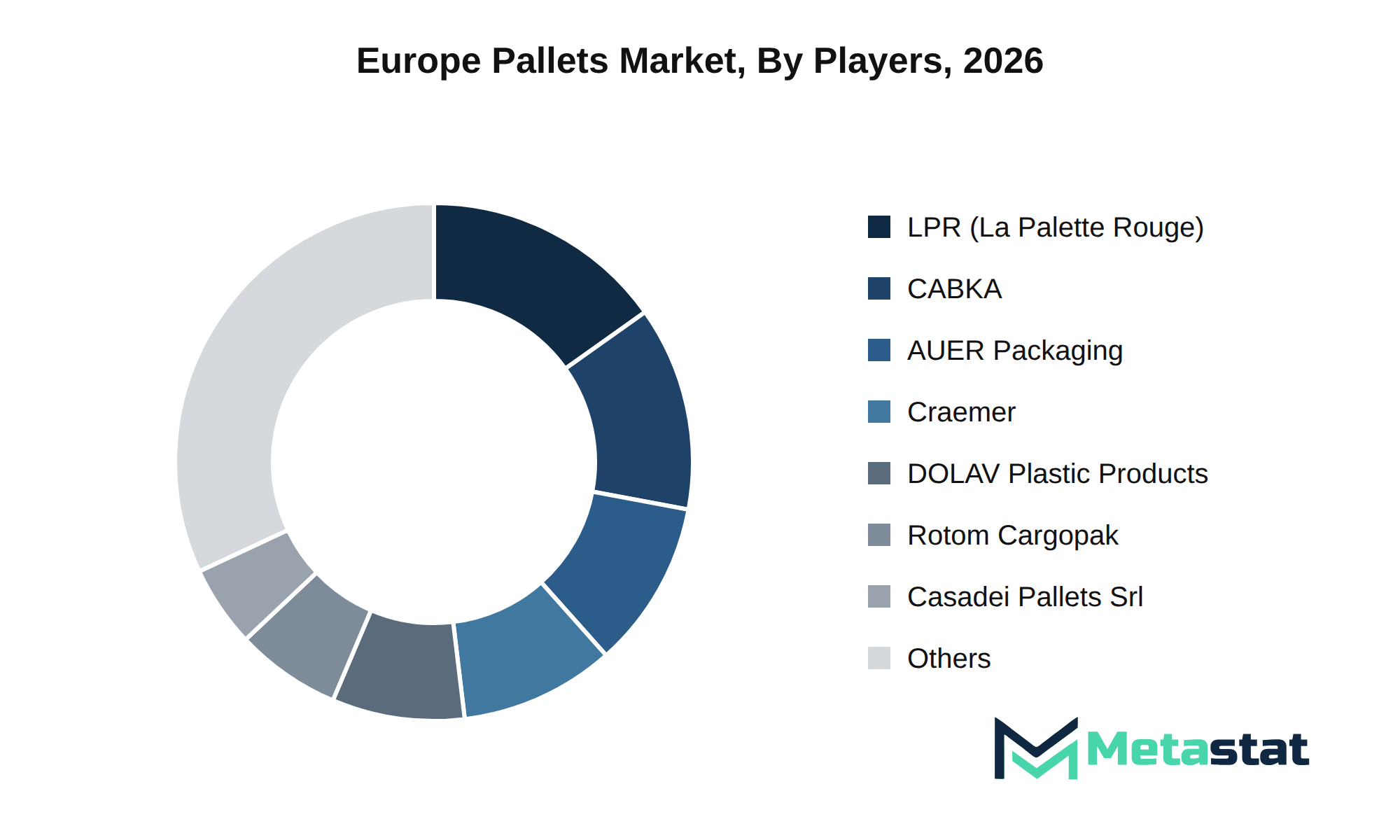
The Europe Pallets market features a diverse array of players, each employing distinct strategic behaviors to secure their position. Companies engage in mergers, acquisitions, and strategic consolidation to enhance their market presence and expand their service offerings. Players including AUER Packaging GmbH and Brambles Ltd (CHEP) leverage extensive portfolios to create competitive advantages through product differentiation and innovative commercial models.
Companies invest heavily in research and development to strengthen proprietary technology moats. This focus on innovation enables firms like CABKA Group GmbH and DOLAV Plastic Products to introduce new solutions tailored to market demands. Strategic alliances and joint ventures among key players strengthen supply chain dominance, allowing for effective procurement leverage and improved customer retention strategies in this competitive landscape.
Market size is forecast to rise from USD 23.1 billion in 2025 to over USD 34.1 billion by 2033. This growth reflects a compound annual growth rate (CAGR) of 4.8%. The base case scenario indicates steady demand, driven by consistent industrial activity and increased reliance on pallets for logistics and transport. Bull case scenarios suggest accelerated growth due to advancements in next-generation technologies, enhancing efficiency in pallet usage and integration. In contrast, bear cases consider potential downturns arising from economic fluctuations, geopolitical tensions, and supply chain disruptions, which could hinder market expansion.
The Europe Pallets market experiences ongoing shifts influenced by macroeconomic factors, including evolving consumer preferences and environmental regulations. Rising demand in specific applications, particularly food and beverages, contributes to increased investment in sustainable pallet solutions. Structural consumption shifts toward materials including plastic and metal indicate a diversification in pallet types, reflecting changing industry needs.
Investment in infrastructure and strategic capital allocation supports market growth, with companies focusing on innovation and R&D commercialization. Regulatory evolution and compliance requirements shape operational practices, compelling suppliers to adapt to new policies. Geopolitical realignments and trade corridor shifts impact supply chains, influencing costs and availability.
Emerging white-space opportunities exist within sectors seeking advanced pallet solutions, facilitating unmet enterprise needs. Companies prioritizing strategic imperatives and defensibility roadmaps position themselves favorably in this competitive landscape. The future of the market hinges on these dynamics, reflecting how participants respond to challenges and opportunities while navigating the complexities of the evolving economic environment.
The report strategically identifies and profiles the key market players and analyses their core competencies in each sub-segment of the Pallets market.
|
Report Attributes |
Details |
|
Study Period |
2021-2033 |
|
Base Year |
2025 |
|
Estimated Year |
2026 |
|
Forecast Period |
2026-2033 |
|
Historical Period |
2021-2025 |
|
Growth Rate |
CAGR 4.8% from 2026 to 2033 |
|
Revenue Unit |
USD billion |
|
Segmentation |
By Type, Application, Structural Design, Region, and Region |
Find answers to common questions about this report
The rise in adoption of pallets in Europe is driven by increasing industrial production, particularly in manufacturing and logistics, along with the growth of e-commerce. Investment in infrastructure development and a shift toward sustainable practices further enhance demand for efficient pallet solutions.
The Europe Pallets market faces challenges from regulatory compliance, increasing operational costs, and supply chain disruptions due to geopolitical instability. rising material costs and competition exert pressure on profit margins, complicating strategic planning and operational adaptability for companies in the industry.
The Europe Pallets market increasingly emphasizes sustainable and reusable pallet solutions. Companies are adopting recyclable and reusable materials in response to consumer preferences for eco-friendly products and regulatory requirements, enhancing brand reputation and customer loyalty while fulfilling sustainability initiatives. This shift drives demand for innovative pallet designs that minimize waste and improve recyclability.
E-commerce growth significantly influences pallet demand in Europe because businesses require efficient packaging solutions to manage inventory and facilitate shipping processes. This trend arises from increasing industrial production in manufacturing and logistics, driving the need for pallets used in the transportation and storage of goods.
Automation in the European pallet market necessitates advanced pallet solutions that enhance operational productivity while reducing labor costs. The drive towards automation in warehousing and distribution centers influences demand for innovative pallet designs and materials, aligning with the broader trends of efficiency and sustainability in supply chains.
Stricter regulatory standards compel manufacturers in the Europe Pallets market to adapt their practices, often leading to increased operational costs. Compliance challenges create barriers for smaller players, limiting their market entry and growth potential, while larger companies benefit from economies of scale.
The Europe Pallets market size was valued at USD 23.1 billion in 2025.
The Europe Pallets market is projected to grow at a CAGR of 4.8% during the forecast period from 2026 to 2033.
The wood segment leads the Europe Pallets market with a value of USD 18.2 billion in 2026. This segment represents the largest share compared to plastic, metal, and corrugated paper segments.
Key drivers for the Europe Pallets market include rising GDP, increased industrial production, and the growth of e-commerce, which boost demand for efficient packaging solutions. Sustainability initiatives and investments in infrastructure enhance logistics capabilities, further supporting market expansion and aligning with consumer preferences for eco-friendly products.
The Europe Pallets market faces significant operational challenges from regulatory compliance and legal mandates, which increase operational costs and create barriers for smaller players. Macroeconomic headwinds, including inflation and resource scarcity, further hinder growth potential by impacting profitability and forcing companies to reevaluate pricing strategies. Supply chain disruptions and geopolitical instability contribute to uncertainties, complicating production and distribution.
Increasing industrial production, particularly in manufacturing and logistics, along with the growth of e-commerce, drives demand for efficient pallet solutions. the shift toward sustainability initiatives influences procurement strategies, because companies prioritize eco-friendly materials that align with consumer preferences and regulatory requirements.
The Pallets market is estimated to reach a valuation of USD 34.1 billion by 2033.
Key players in the Europe Pallets Market include AUER Packaging GmbH, CABKA Group GmbH, Rotom Cargopak Ltd, Casadei Pallets Srl, Craemer GmbH, and Brambles Ltd (CHEP).
The analysts below cover Packaging research at Metastat Insights.
LEAD ANALYST
Utkarsh Khirodkar is a Lead Market Research Analyst at MetaStat Insight, specializing in market intelligence, technology sector assessments, and competitive strategy.

SENIOR RESEARCH ANALYST
Biotechnology · Food and Beverages · Medical Devices · Packaging
Snehal Pasalkar is a Research Analyst at MetaStat Insight, operating at the intersection of life sciences research, competitive strategy, and market intelligence.

INDUSTRY CONSULTANT - CHEMICALS & ADVANCED MATERIALS
Chemicals and Materials · Machinery & Equipment · Packaging
Amit Gadhekar Consultant for Chemicals and Materials at MetaStat Insight, directing sector-specific intelligence, research, and strategic consulting across global chemical and processing markets.
Assessing commercial microgrid software adoption requires looking past top-level installation numbers and examining utility interconnection queues. The research provided verifiable data on average permitting timelines, tariff structures, and battery storage integration costs across regional utility territories. That grounded perspective was valuable for our team when building five-year demand projections for industrial microgrid controllers.
Ambulatory surgical centers have very different purchasing cycles for robotic-assisted surgery platforms than major hospital networks. The MetaStat Insight study focused squarely on capital expenditure depreciation, procedural reimbursement pathways, and surgeon training overhead. That operational clarity made it much simpler to validate multi-year procedure growth forecasts against actual ambulatory center adoption patterns.
When planning edge sensor rollouts across refinery environments, generic IoT reports typically miss the harsh-environment certification bottlenecks. MetaStat Insight gave an objective evaluation of ATEX and Class 1 Division 2 hardware availability, along with realistic five-year maintenance cycle cost projections. The comparison of wireless mesh versus private cellular backhaul helped our team pressure-test network reliability models for remote processing facilities.
Explore related market intelligence reports worth reading alongside this one.