
LEAD ANALYST
Utkarsh Khirodkar is a Lead Market Research Analyst at MetaStat Insight, specializing in market intelligence, technology sector assessments, and competitive strategy.

Europe Power Cable Terminations and Joints Market Size, Share, By Product Category (Cable Terminations and Cable Joints), By Voltage Level (Low Voltage, Medium Voltage, High Voltage and Extra High Voltage), By Installation Type (Heat Shrink Cable Joints, Cold Shrink Cable Joints, Resin Cast Cable Joints and Pre-Molded Cable Joints), By End-Users (Utilities, Renewable Energy, Industrial, Oil & Gas, Railways, Infrastructure and Data Centres), Industry Analysis, Growth, Trends, and Forecast, 2026-2033
Report ID
MSI-5284
Published
September, 2026
Pages
292 Pages
Format
Historical
Base year
Forecast
Forecast period
Report Details
Market Valuation: Valued at $9,234.2 Million in 2025, projected to reach $11,935.4 Million by 2033 at a 3.3% CAGR.
Dominant Segment: The cable joints segment leads the market, accounting for 67.5% of total revenue, driven by rising investments in renewable energy projects and the need for efficient infrastructure solutions.
Geographic Lead: The Europe region is the primary market for power cable terminations and joints, with significant growth attributed to increased infrastructure investments and the transition to renewable energy sources.
What's Inside: This report includes a comprehensive analysis of market segmentation by product category, voltage level, installation type, and end-users, along with competitive coverage and future forecasts through 2033.
Emerging Demands: Growing demands for renewable energy solutions are significantly influencing market growth, as industries seek reliable cable terminations and joints to support sustainable energy initiatives.
Choose Your License
Europe Power Cable Terminations and Joints Market
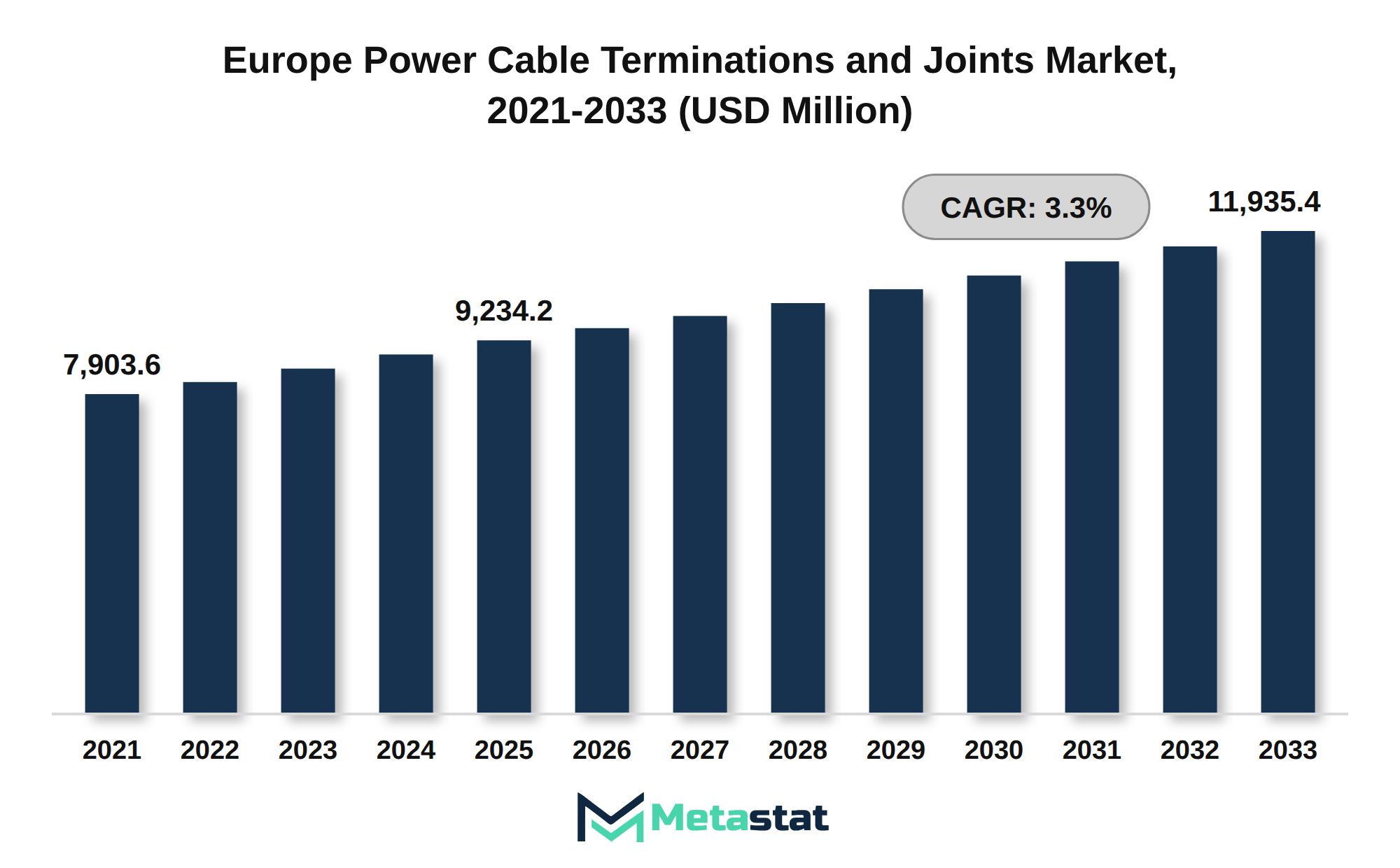
The Europe Power Cable Terminations and Joints market was valued at USD 9,234.2 million in 2025 and is projected to reach USD 11,935.4 million by 2033, growing at a CAGR of 3.3% over the forecast period.
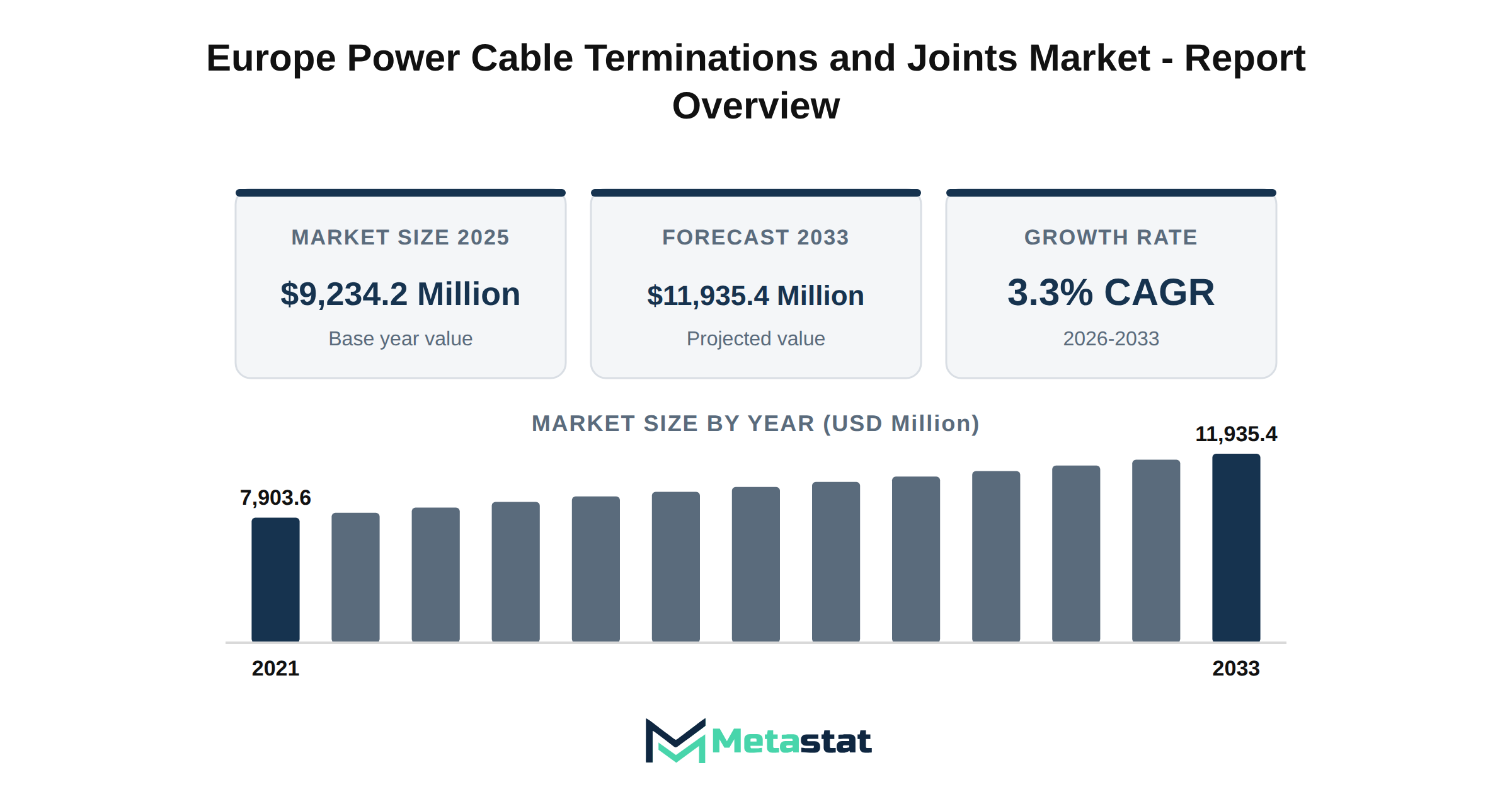
The Europe Power Cable Terminations and Joints market reached a valuation of USD 9,234.2 million in 2025, with the forecast estimating a growth to USD 11,935.4 million by 2033. This growth represents a compound annual growth rate (CAGR) of 3.3% throughout the forecast period from 2026 to 2033. Historical data shows an increase from USD 7,903.6 million in 2021 to USD 8,884 million in 2024, indicating a steady upward trend in market demand.
In terms of product segmentation, cable joints account for 67.5% of the market, while cable terminations make up 32.5%. This distribution highlights the preference for cable joints among end-users, driven by their operational efficiency in various applications. The market's structure reflects the diverse needs of industries, including utilities and renewable energy sectors, which exhibit distinct preferences for specific product types.
Forecasts indicate that the cable terminations segment expands from USD 3,107.2 million in 2026 to USD 3,926.8 million in 2033, achieving a CAGR of 3.4%. Meanwhile, cable joints are projected to reach USD 8,008.7 million by 2033, with a CAGR of 3.2%. This sustained growth in both segments demonstrates robust demand for power cable solutions across various applications.
The Europe Power Cable Terminations and Joints market features distinct segments, including cable terminations and cable joints. The cable joints segment holds a significant portion of the market, accounting for 67.5% of total revenue. This segment benefits from increasing investments in infrastructure development and the growing need for reliable power distribution systems.
In terms of product categories, cable terminations are projected to reach USD 3,926.8 million by 2033, growing at a compound annual growth rate (CAGR) of 3.4%. The cable joints segment is anticipated to achieve a value of USD 8,008.7 million by 2033, with a CAGR of 3.2%. This growth reflects rising demand for efficient power transfer solutions across various sectors.
Voltage level segmentation shows that low voltage applications are expected to expand from USD 2,575.8 million in 2026 to USD 3,013.2 million by 2033, at a CAGR of 2.3%. Medium voltage solutions will reach USD 4,842.6 million by 2033, with a CAGR of 2.9%. High voltage products will hold a steady position, while extra high voltage applications are projected to experience the fastest growth, with a CAGR of 5.3%.
The installation type analysis shows that heat shrink cable joints will grow from USD 4,687.2 million in 2026 to USD 5,507.2 million by 2033, achieving a CAGR of 2.3%. Cold shrink cable joints are expected to reach USD 3,502.5 million by 2033, with a CAGR of 2.9%. Resin cast cable joints will maintain a stable presence, while pre-molded cable joints will see a gradual increase in adoption.
End-user segmentation indicates that the utilities sector will experience growth from USD 2,824.2 million in 2026 to USD 3,041.3 million by 2033, reflecting a CAGR of 1.1%. The renewable energy sector is projected to grow significantly, reaching USD 2,967.7 million by 2033, with a robust CAGR of 5.8%. The industrial segment remains steady, while the oil and gas sector will see modest growth.
Investment in infrastructure development significantly enhances the growth of the Europe Power Cable Terminations and Joints market. Increased governmental and private sector spending on upgrading electrical grids and expanding renewable energy sources drives demand for advanced power cable solutions. Investments targeted at modernizing aging infrastructure improve energy efficiency and reliability, creating a favorable environment for power cable terminations and joints. This trend is particularly evident in sectors including utilities and renewable energy, where the need for robust and efficient power transmission systems is critical.
Companies involved in the production and supply of power cable terminations and joints benefit from heightened capital expenditures aimed at infrastructure projects. Increased funding for renewable energy initiatives further stimulates the market, driven by energy providers requiring advanced connectors and joints capable of handling higher output levels and ensuring system integrity. These factors contribute to a projected compound annual growth rate (CAGR) of 3.3% for the market through 2033.
While organizations prioritize sustainability and energy efficiency, investment in modern power cable systems becomes essential. The growing emphasis on renewable energy sources, coupled with the need for dependable power transmission, enhances the market's prospects. In turn, this investment drives innovation in product development and diversification, positioning the Europe Power Cable Terminations and Joints market for sustainable growth in the coming years.
The integration of advanced technologies within the Europe Power Cable Terminations and Joints market enhances operational efficiency and product quality. Automation, artificial intelligence, and software adoption streamline manufacturing processes, significantly reducing production costs. This shift toward digitizing legacy processes enables suppliers to respond to market demands more swiftly, improving service delivery and customer satisfaction.
Investments in technological solutions lead to improved product offerings that cater to the evolving preferences of end-users. The adoption of innovative materials and designs enhances performance standards, aligning with the increasing demand for durable and reliable power cable terminations and joints. These advancements favorably influence market growth, particularly within sectors including renewable energy, where efficiency and safety remain critical.
The rise of smart grid technologies supports market expansion. Enhanced connectivity through digital platforms allows for better monitoring and management of electrical systems, leading to reduced downtime and improved operational reliability. Consequently, stakeholders within the Europe Power Cable Terminations and Joints market experience heightened operational productivity, providing a competitive edge while accommodating the transition toward sustainable energy solutions.
Increasing regulatory constraints significantly challenge the Europe Power Cable Terminations and Joints market. Compliance hurdles related to stringent environmental and safety standards require substantial investments from manufacturers and suppliers in the industry. These obligations create high operational costs, deterring new entrants and limiting the expansion of existing players.
Macroeconomic headwinds, including inflationary pressures, complicate market dynamics. Rising material costs affect profit margins and lead to a reevaluation of pricing strategies. Supply chain disruptions stemming from geopolitical instability and resource scarcity create uncertainties that hinder production schedules, impacting timely project completion.
Capital investment requirements for deploying power cable terminations and joints remain high, posing challenges for budget-constrained entities. Infrastructure gaps in certain European regions exacerbate connectivity deficits, making it difficult for suppliers to meet demand efficiently. These issues contribute to deployment bottlenecks, limiting the market's growth potential.
Skilled labor deficiencies in the sector create talent gaps critical for maintaining quality and operational efficiency. Rising workforce overhead further pressures organizations, leading to potential delays in project timelines. Data security vulnerabilities and privacy concerns related to implementing new technologies add another layer of complexity for stakeholders within the Europe Power Cable Terminations and Joints market.
Market fragmentation caused by varying regional adoption rates introduces cultural barriers that slow the acceptance of new products. Slowing downstream demand in certain sectors signals potential maturation within the industry cycle, affecting long-term investment attractiveness. Addressing these multifaceted restraints is vital for creating a more sustainable growth environment in the market.
Geopolitical fragmentation in Europe significantly disrupts the supply chain for the Europe Power Cable Terminations and Joints market. Trade deficits and tariff friction complicate cross-border commerce, leading to increased costs for manufacturers and suppliers. This instability affects operational efficiency, resulting in delays and shortages of critical components needed for power cable terminations and joints, ultimately limiting market growth.
Technological disruptions challenge the market, with rapid advancements necessitating constant innovation and adaptation among industry players. Complex research and development integrations create barriers for companies attempting to keep pace with evolving technology. Supply chain instability exacerbates these challenges, leading to pricing compression and margin pressures that threaten profitability and hinder competitive positioning.
Rising input costs and workforce skill gaps represent additional hurdles for stakeholders in the market. Labor shortages hinder production capabilities, while increased costs for raw materials strain budgets. Environmental lifecycle footprints heighten pressures on companies to adopt sustainable practices, with decarbonization mandates influencing investment decisions and operational strategies that impact long-term viability.
Infrastructure gaps create significant retrofitting barriers, complicating the implementation of new technologies and systems within existing frameworks. This situation stifles growth opportunities and hinders overall market progress, affecting the competitive landscape in the Europe Power Cable Terminations and Joints market.
Growing demands for renewable energy solutions significantly influence the Europe Power Cable Terminations and Joints market. The shift towards sustainable energy sources increases investment in power infrastructure, leading to a rising need for reliable cable terminations and joints. This transition aligns with the objectives of various industries striving for environmental, social, and governance (ESG) compliance, further enhancing the demand for innovative cable solutions.
Infrastructure modernization initiatives across Europe emphasize the importance of upgrading existing electrical systems. Older installations require enhancements to meet contemporary efficiency standards and safety regulations. This situation creates opportunities for manufacturers to meet the evolving needs of utilities and industrial applications, stimulating growth within the market.
Geographical expansion into emerging markets presents further opportunities for stakeholders. Countries investing in energy infrastructure development are likely to adopt advanced power cable technologies, expanding the customer base for suppliers. This expansion increases revenue and diversifies product offerings, allowing companies to cater to various regional needs.
Technological disruptions continue to reshape the market landscape. Innovations in materials and manufacturing processes enhance the performance and lifespan of power cables, attracting customers seeking efficient and long-lasting solutions. Such advancements increase competition among manufacturers, driving down prices while improving quality, which benefits end-users.
The rise of digital transformation across industries influences purchasing behaviors. Stakeholders increasingly favor digital procurement methods, streamlining the buying process and minimizing operational inefficiencies. These shifts lead to more strategic sourcing of cable terminations and joints, ensuring that products align with specific project requirements and timelines.
Long-term growth in the Europe Power Cable Terminations and Joints market hinges on continuous adaptation to emerging demands and technological advancements. Companies that align their strategies with industry trends and focus on sustainability maintain a competitive edge in this evolving market.
The Europe Power Cable Terminations and Joints market is segmented based on Product Category, Voltage Level, Installation Type, and End-Users.
Cable Terminations segment is valued at USD 3,107.2 million in 2026 and is projected to reach USD 3,926.8 million by 2033, at a CAGR of 3.4% during the forecast period. The increasing demand for reliable power distribution across various sectors drives market growth, particularly within renewable energy and utility applications. These end-users prioritize efficient and safe energy transmission, which directly impacts the adoption rate of cable terminations.
The ongoing transition towards sustainable energy sources encourages investments in new cable termination technologies. Technological advancements, including improved materials and designs, enhance the performance and reliability of products in this segment. The push for energy efficiency aligns with regulatory compliance standards, stimulating market growth.
In addition to technological maturation, strategic partnerships among manufacturers and service providers strengthen supply chain resilience. Companies focus on optimizing raw material sourcing while addressing potential disruptions in logistics. This emphasis on collaboration enables participants within the Europe Power Cable Terminations and Joints market to mitigate risks associated with supply chain vulnerabilities.
Pricing volatility remains a key factor affecting market dynamics. Fluctuations in raw material costs influence product pricing and profit margins. Effective cost structures and strategies for managing price pressures enhance competitive positioning, supporting growth within the segment.
Cable Joints segment is estimated to reach USD 8008.7 million by 2033, at a CAGR of 3.2% during the forecast period. Demand for cable joints experiences significant growth due to rising investments in renewable energy projects. Utilities and renewable energy sectors seek reliable and efficient infrastructure solutions, resulting in increased adoption of cable joints in various applications.
Technological maturation of cable joint products enhances their performance and reliability. Innovations in materials and manufacturing processes contribute to improved life cycles and lower maintenance costs. End-users benefit from reduced operational disruptions and enhanced system efficiency, further propelling demand in the Europe Power Cable Terminations and Joints market.
Regulatory compliance standards focused on safety and environmental impact influence market dynamics. Stringent regulations prompt manufacturers to improve product quality and performance while ensuring environmental sustainability. Adherence to these standards provides strategic advantages and builds consumer confidence.
Cable joints serve diverse applications across various end-user segments, including utilities and renewable energy. The increasing integration of renewable sources into the energy grid necessitates robust and flexible cable joint solutions to ensure system reliability. This integration contributes to the segment's growth and strengthens its position within the broader Europe Power Cable Terminations and Joints market.
Market pricing dynamics fluctuate based on raw material costs and technological advancements. Manufacturers face pressures related to cost structures, influencing pricing strategies and profit margins. Strategic investments in innovation and supply chain resilience enable companies to navigate these challenges effectively.
Valued at USD 2,575.8 million in 2026, the Low Voltage segment is projected to reach USD 3,013.2 million by 2033, reflecting a CAGR of 2.3% during the forecast period. Primary demand drivers include rising residential and commercial construction, which leads to increased demand for low voltage infrastructure. This segment benefits from technological maturation and product evolution, enabling enhanced performance and reliability in power distribution systems.
End-use dynamics emphasize the growing reliance on low voltage solutions within various industries, particularly in utilities and renewable energy sectors. Regulatory compliance and standards enhance the adoption of advanced low voltage cable terminations and joints, ensuring safety and efficiency in electrical installations. Cost structures are influenced by raw material sourcing and pricing volatility, necessitating strategic management among suppliers.
The Europe Power Cable Terminations and Joints market experiences consumption shifts toward energy-efficient and sustainable solutions. Increased focus on innovation drives the introduction of next-generation upgrades in low voltage applications. Strategic opportunity windows arise from the need for modernization and enhancement of existing infrastructure, presenting potential for capital investment and market expansion.
Growth in the Medium Voltage segment aligns with increasing investments in renewable energy projects and infrastructure modernization across Europe. These investments drive demand for reliable and efficient power distribution systems, particularly in urban areas experiencing population growth and industrial expansion. The segment is estimated to reach USD 4,842.6 million by 2033, at a CAGR of 2.9% during the forecast period.
Technological maturation further influences the market dynamics. Advancements in materials and installation techniques enhance the performance and longevity of Medium Voltage products. This evolution supports the transition toward smarter grid solutions, which increase the efficiency of the electrical network. Increased adoption of advanced grid technologies, alongside regulatory compliance standards promoting sustainability, strengthens demand for Medium Voltage solutions.
End-use dynamics reflect a growing emphasis on integrating renewable energy sources into existing power grids, requiring more Medium Voltage installations. Utilities and renewable energy sectors represent key contributors to this segment's expansion, seeking to improve energy distribution capabilities. The shift in consumption patterns towards cleaner energy solutions highlights the strategic importance of Medium Voltage products in future energy infrastructure.
Supply chain resilience remains crucial, with manufacturers focusing on sourcing high-quality raw materials to mitigate risks associated with price volatility and potential disruptions. Strategic opportunity windows arise from industries pursuing partnerships that enhance innovation and efficiency in product development. These factors collectively position the Europe Power Cable Terminations and Joints market for continued growth in the Medium Voltage segment.
Growing investments in high voltage infrastructure drive significant demand within the Europe Power Cable Terminations and Joints market. Power generation from renewable sources increases the need for reliable high voltage solutions, particularly in wind and solar energy sectors. Technological advancements enhance the capability of high voltage cables, facilitating better efficiency and reliability. Adoption of smart grid technologies and the transition towards decentralised energy systems further support the market's growth. Regulatory compliance and standards prompt utilities to upgrade existing high voltage systems, ensuring safety and performance. The High Voltage segment is expected to reach USD 2,500.6 million by 2033. Increased focus on reducing transmission losses and improving energy distribution efficiency influences investment decisions. Utility companies prioritise high voltage solutions to support the expansion of renewable energy projects, driving long-term growth. Challenges including cost pressures from raw materials and installation complexities require strategic planning from stakeholders. Competition within the market intensifies due to established players innovating to offer next-generation high voltage solutions, enhancing product reliability and performance. Market dynamics indicate an evolving landscape, where supply chain resilience and strategic partnerships emerge because critical factors for success. The increasing focus on grid modernisation and the integration of digital solutions position high voltage cable terminations and joints because essential components in the overall energy infrastructure, further reinforcing their relevance in the Europe Power Cable Terminations and Joints market.
Growth in the Extra High Voltage segment occurs amid increasing demand for efficient power transmission systems. Expansion in renewable energy projects drives investments in high-capacity infrastructure, supporting the market's evolution. Regulatory policies favoring renewable energy sources fuel this demand, leading to greater adoption of robust power transmission solutions.
Technological maturation within the industry enhances product offerings, enabling improved performance and reliability in high-voltage applications. Innovations in materials and design contribute to the segment's resilience, aligning with the latest standards and certifications essential for market entry. The segment is projected to grow at a CAGR of 5.3% during the forecast period, reflecting strong market commitment to advanced infrastructure.
End-users including utilities and renewable energy companies increasingly opt for Extra High Voltage products, driven by the need for efficient energy distribution. This shift in consumption patterns reflects a broader trend toward sustainability and energy efficiency within the Europe Power Cable Terminations and Joints market. Investment in this segment yields significant returns, positioning stakeholders favorably in a competitive landscape and enhancing long-term market growth.
Valued at USD 4,687.2 million in 2026, the Heat Shrink Cable Joints segment is projected to reach USD 5,507.2 million by 2033, at a CAGR of 2.3% during the forecast period. Demand for heat shrink cable joints originates from their effectiveness in providing reliable insulation and protection in various applications, particularly in utility and industrial sectors. The increasing focus on infrastructure development and the transition to renewable energy sources enhances the necessity for robust cable installations, driving adoption within the market.
Technological maturation in materials used for heat shrink cable joints contributes to the segment's growth. Ongoing advancements improve performance and durability. Manufacturers invest in next-generation technologies that reduce installation time and enhance safety, benefiting end-users seeking efficient solutions. Regulatory compliance standards emphasize the importance of quality and safety, compelling suppliers to innovate and meet evolving requirements.
Adoption among utilities and renewable energy sectors illustrates the segment's alignment with broader industry trends. While energy demands increase, operators prioritize reliable connections to withstand operational stresses, thereby increasing the value of heat shrink cable joints within the Europe Power Cable Terminations and Joints market. Cost structures remain favorable, despite fluctuations in raw material prices, allowing competitive pricing strategies that attract diverse clientele.
Strategic opportunity windows exist for market players, particularly in regions experiencing significant expansion of electrical infrastructure. The continuous shift towards renewable energy applications creates further demand for heat shrink cable joints, emphasizing their role in sustainable energy solutions. With the ongoing evolution of the industry, investment in this segment promises substantial returns over the forecast period.
Demand for Cold Shrink Cable Joints aligns with advancements in installation technologies that enhance efficiency and reliability in electrical networks. These joints offer distinct advantages including reduced installation time and improved performance in various environmental conditions. Adoption of these solutions occurs within sectors focusing on renewable energy, where robust infrastructure is essential to connect various energy sources.
Cold Shrink Cable Joints segment is projected to reach USD 3,502.5 million by 2033, at a CAGR of 2.9% during the forecast period. Product evolution driven by technological maturation supports the segment's growth, enabling manufacturers to develop innovative solutions that meet the evolving demands of end-users. Enhanced performance characteristics lead to greater integration of these joints in critical applications across utilities and renewable energy sectors.
Regulatory compliance standards play a significant role in shaping the market landscape. The increasing emphasis on safety and operational efficiency promotes the adoption of Cold Shrink Cable Joints, driven by compliance with stringent certification requirements. This trend encourages manufacturers to invest in research and development, leading to continuous improvements in product functionality and performance within the Europe Power Cable Terminations and Joints market.
End-use dynamics shift towards renewable energy solutions, creating substantial opportunities for Cold Shrink Cable Joints. Countries commit to sustainability goals, driving demand for reliable cable joints in renewable energy infrastructure. This transition influences consumption patterns, resulting in heightened interest in innovative products that offer long-term operational advantages.
Investments in resin cast cable joints drive significant growth within the Europe Power Cable Terminations and Joints market. Increasing demand for durable and reliable connections in electrical installations supports this trend. The segment is projected to reach USD 2,363.2 million by 2033, reflecting a commitment to enhancing grid resilience and safety standards. Technological maturation in resin casting techniques contributes to improved product performance, enabling greater adoption among utilities and industrial end-users.
Continuous advancements in material science lead to the development of next-generation upgrades within the segment. Enhanced properties, including superior insulation and moisture resistance, improve the application of resin cast cable joints in diverse environments. Regulatory compliance standards influence market dynamics, with stricter requirements promoting the adoption of high-quality and certified products. Competitive cost structures surrounding resin cast cable joints enable broader market penetration and growth.
End-use dynamics reflect a shift toward renewable energy sources, with increased installations of solar and wind energy projects. These projects necessitate robust and reliable cable joint solutions, positioning the resin cast cable joints segment favorably within the market. Overall, the combination of technological advancements, regulatory influences, and evolving end-user needs supports the positive outlook for the resin cast cable joints segment in the Europe Power Cable Terminations and Joints market.
Growth in the Pre-Molded Cable Joints segment is projected to grow at a CAGR of 2.8% during the forecast period. Technological advancements and the growing need for efficient and reliable electrical connections drive significant attention within the Europe Power Cable Terminations and Joints market. The shift toward renewable energy sources increases demand for robust solutions, with pre-molded joints playing a vital role in modernizing electrical infrastructures.
Demand for these joints is primarily influenced by their ability to improve connection reliability and reduce installation times. Utilities and renewable energy developers favor pre-molded cable joints due to ease of installation and durability, contributing to lower long-term operational costs. Emerging applications in various sectors, including industrial and infrastructure, present additional avenues for growth, further emphasizing their importance in the market.
Increasing investments in infrastructure development and a focus on upgrading aging electrical systems fuel the expansion of this segment. The Europe Power Cable Terminations and Joints market experiences an ongoing evolution of products that cater to specific voltage requirements and installation environments, positioning pre-molded joints favorably among competitive alternatives.
Valued at USD 2,824.2 million in 2026, the Utilities segment is projected to reach USD 3,041.3 million by 2033, at a CAGR of 1.1% during the forecast period. Demand for power cable terminations and joints within the utilities sector arises from the ongoing modernization and expansion of electrical infrastructure across Europe. Utilities require reliable and efficient connections to support growing energy demands, driving the adoption of advanced cable termination and joint solutions.
Regulatory compliance standards significantly influence product specifications and quality requirements for utilities. Increased focus on energy efficiency and sustainability pushes utilities to invest in next-generation upgrades, enhancing the overall reliability and performance of power distribution systems. The ongoing transition to renewable energy sources further increases the need for robust cable terminations and joints, ensuring effective integration with existing power grids.
Cost structures and pricing volatility in raw materials impact the overall expenditure of utilities when procuring power cable terminations and joints. Fluctuations in materials including copper and aluminum directly affect pricing strategies. Utilities focus on long-term contracts with suppliers to mitigate risks associated with price volatility, ensuring cost stability while maintaining quality.
Technological maturation plays a critical role in shaping the market dynamics for utilities. Innovations in cable joint technology, including advancements in heat shrink and cold shrink solutions, enhance installation efficiency and reduce maintenance needs. These developments enable utilities to optimize operational performance while minimizing downtime, ultimately leading to improved service reliability. This segment experiences notable changes due to these advancements.
Strategic opportunity windows arise from the need for utilities to enhance their infrastructure resilience against potential disruptions. Investments in power cable terminations and joints facilitate the modernization of aging networks, aligning with broader goals of energy reliability and safety. The Europe Power Cable Terminations and Joints market is expected to see continued growth driven by these factors, reinforcing the importance of this segment within the broader energy landscape.
Investments in renewable energy infrastructure drive significant demand for power cable terminations and joints within the Europe Power Cable Terminations and Joints market. Enhanced focus on sustainability and the transition toward cleaner energy sources strongly influence this segment's performance. Renewable energy projects, including wind, solar, and hydropower, require advanced cable solutions to ensure efficient power transmission and distribution, supporting the segment's growth.
The Renewable Energy segment is projected to reach USD 2,967.7 million by 2033, reflecting a compound annual growth rate (CAGR) of 5.8% during the forecast period. Rising adoption of renewable energy across various sectors underpins the increasing demand for reliable power cable solutions. Regulatory support and financial incentives accelerate investments in renewable projects, reinforcing the segment's importance in the market. Continuous advancements in cable technology enhance performance, contributing to improved operational efficiency and reliability.
While the market evolves, strong emphasis on regulatory compliance and certifications facilitates the deployment of innovative solutions that align with industry standards. The growing focus on energy efficiency and sustainability will continue to shape the Europe Power Cable Terminations and Joints market, driving further opportunities for growth within the Renewable Energy segment.
Industrial applications drive a significant portion of the Europe Power Cable Terminations and Joints market, with the segment expected to reach USD 1,866.8 million by 2033. Increased investments in industrial infrastructure and modernization initiatives contribute to this growth. The emphasis on automation and efficiency within manufacturing processes creates heightened demand for reliable power cable solutions.
Technology adoption within the industrial sector influences consumption patterns. Enhanced energy efficiency regulations and sustainability initiatives prompt industries to upgrade existing power infrastructure. These trends create a shift toward higher-quality power cable terminations and joints, supporting advanced manufacturing capabilities and renewable energy integration.
Cost structures within the industrial segment reflect fluctuations in raw material prices and labor costs, impacting overall pricing strategies. Manufacturers and end-users adapt to these changes through strategic sourcing and investments in innovative solutions that enhance performance while minimizing operational expenses.
Regional dynamics and competitive positioning influence market trajectories. Numerous players engage in developing tailored products to address specific industrial requirements, enhancing their market share within the Europe Power Cable Terminations and Joints market. The focus on strategic partnerships and collaborations strengthens supply chain resilience, facilitating improved product delivery and customer satisfaction.
Projected growth in the Oil & Gas segment occurs at a CAGR of 0.7% during the forecast period. This segment reflects steady demand driven by ongoing operations and maintenance within existing infrastructure. Factors including the need for reliability and safety standards in power delivery systems significantly influence investment decisions in power cable terminations and joints. In the context of the Europe Power Cable Terminations and Joints market, the Oil & Gas sector prioritizes robust solutions that ensure minimal downtime and operational efficiency.
Investment in technology upgrades plays a critical role in enhancing performance metrics within the segment. Operators continuously seek advanced jointing solutions to meet stringent regulatory compliance standards and improve overall system efficiency. Expansion in renewable energy applications within the Oil & Gas sector contributes to the segment's dynamics, where integration of sustainable practices drives a shift in consumption patterns.
Valued at USD 1,866.8 million by 2033, the segment's evolution aligns with strategic opportunities in capital investments. The emphasis on resilience in supply chains, coupled with the need for innovative product evolution, positions the market for steady growth. Downstream applications within oil and gas operations create sustained demand, even amid pressures from pricing volatility and margin considerations.
Investment in railway infrastructure significantly influences demand within the Europe Power Cable Terminations and Joints market. The transition to more efficient and sustainable transportation solutions creates a robust requirement for advanced electrical systems. This trend aligns with the growing emphasis on electrification, where railway operators seek to improve energy efficiency and reduce operational costs.
Technological innovation drives the evolution of cable terminations and joints specifically designed for railway applications. Enhanced safety standards and regulatory compliance compel operators to upgrade existing systems, creating opportunities for suppliers within this segment. Consequently, an increasing focus on integrating next-generation technologies enhances performance and reliability.
Adoption of renewable energy sources in railway operations increases demand for specialized cable solutions. Growing public and private investments in rail networks encourage the deployment of advanced power distribution systems. This strategic shift toward sustainable energy sources supports the expansion of system capabilities that align with industry needs.
Production and sourcing strategies within the railway segment emphasize supply chain resilience and efficiency. Suppliers face challenges related to raw material availability and logistics vulnerabilities, which impact pricing strategies and margin pressures. Addressing these issues through innovative approaches creates significant growth potential in the market.
Increasing investments in infrastructure projects drive demand for power cable terminations and joints in Europe. This segment benefits from the continued expansion of urban areas and the modernization of existing facilities, necessitating advanced electrical installations. The transition towards smart cities and the integration of renewable energy sources into the grid enhances the need for reliable power distribution systems. Regulatory compliance standards and certifications surrounding energy efficiency and safety contribute to the demand for high-quality cable terminations and joints, ensuring that installations meet stringent requirements.
The construction and infrastructure sectors experience growth in cable termination and joint adoption due to rising energy consumption and the push for sustainable development. A focus on infrastructure resilience and the need for upgrades in aging networks supports increased capital investment in new projects. End-use dynamics within this segment reflect a shift towards more efficient energy systems, driving advancements in technology and product evolution. The Europe Power Cable Terminations and Joints market aligns with these developments, presenting significant opportunities for manufacturers and suppliers to innovate and address the evolving needs of the market.
Data centres experience an increasing demand for reliable power systems, driven by the growing need for digital infrastructure and data processing capabilities. The rise of cloud computing, big data analytics, and IoT applications intensifies the requirements for uninterrupted power supply, leading to heightened investments in power cable terminations and joints. This segment thrives on advancements in technology that promote efficient and high-capacity electrical systems, enhancing performance while reducing operational risks.
Investment in next-gen upgrades becomes essential for data centres to handle the increasing volume of data. Product evolution focuses on improving the reliability and efficiency of power cable solutions, increasing the overall stability of power systems. Regulatory compliance standards related to energy efficiency and safety in electrical installations compel operators to seek high-quality terminations and joints.
Supply chain resilience plays a critical role in ensuring the timely availability of materials for installations. Manufacturers emphasize raw material sourcing and logistics vulnerabilities to maintain steady production and delivery times. A strategic approach to managing these factors enhances market competitiveness and creates a strong environment for growth in the Europe Power Cable Terminations and Joints market.
Investment outlook in the data centre segment reflects a positive trend, with significant capital allocated towards upgrading infrastructure. This focus on innovation ensures that data centres remain equipped to meet future demands, securing a central position within the broader Europe Power Cable Terminations and Joints market.
Demand from the Other End-Users segment reflects diverse applications across various industries that employ power cable terminations and joints. This segment encompasses various entities outside the conventional categories of utilities, renewable energy, industrial, and oil and gas. Growth in this area arises from increased infrastructure investments and technological advancements that enhance compatibility with existing systems.
Regulatory compliance standards and certifications influence purchasing decisions, driving entities to adopt high-quality cable solutions that meet stringent requirements. These factors contribute to evolving consumption patterns. Businesses prioritize efficiency and reliability in their operations. Strategic opportunity windows exist for suppliers to innovate and evolve their product offerings to meet the specific needs of this varied end-user group.
The Europe Power Cable Terminations and Joints market experiences shifts in demand based on fluctuations in market conditions and competitive dynamics. Companies enhance supply chain resilience, focusing on raw material sourcing and logistics to mitigate vulnerabilities. This focus ensures steady product availability and responsiveness to market trends.
Technological obsolescence poses a risk in the sector, prompting continuous upgrades and the introduction of next-generation solutions that align with modern requirements. Disruptive alternatives arise, compelling traditional suppliers to adopt innovative practices to maintain relevance and market share. Monitoring these trends proves essential for stakeholders aiming to capitalize on upcoming opportunities in the Other End-Users segment.
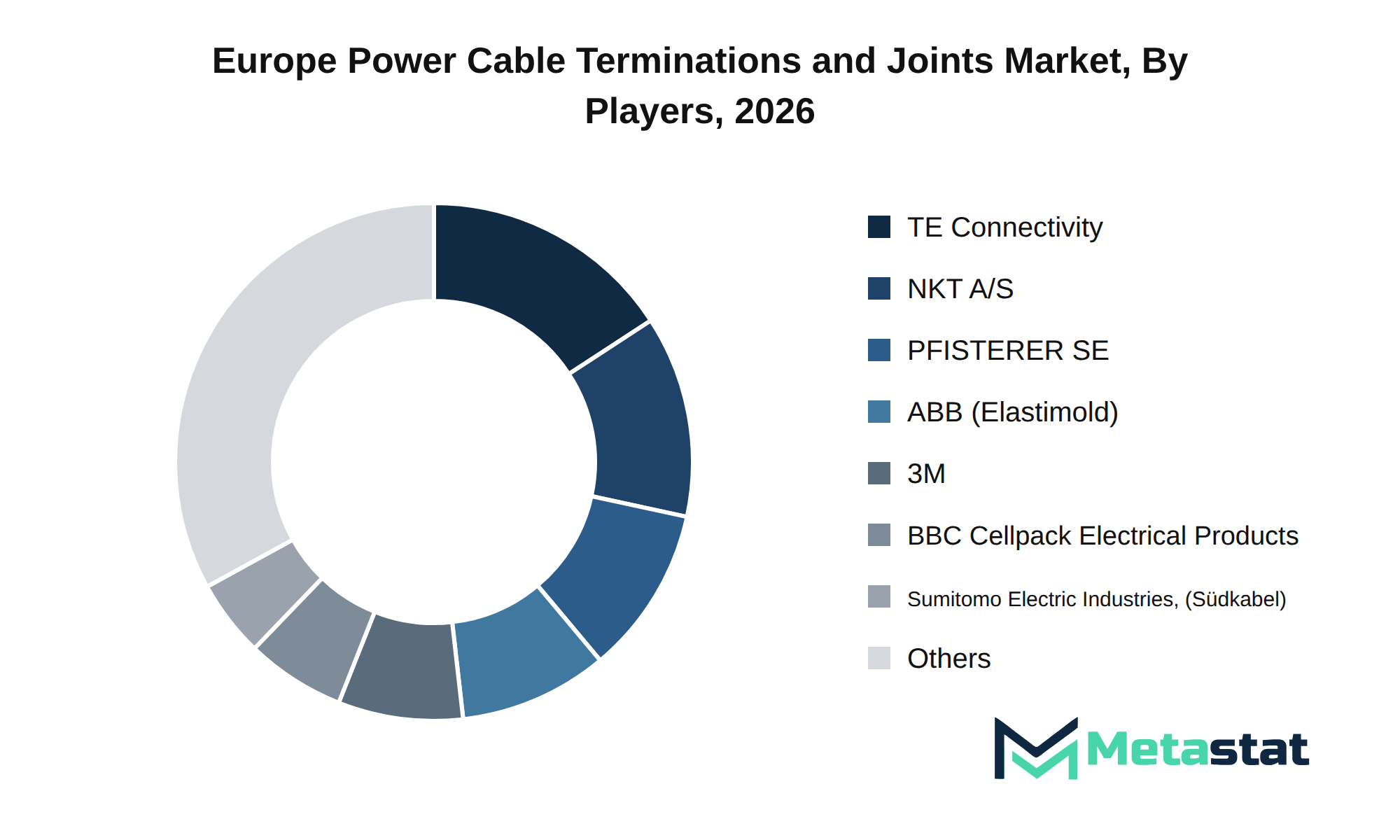
The Europe Power Cable Terminations and Joints market features several key players, including NKT A/S, BBC Cellpack Electrical Products, and PFISTERER Holding SE, which compete through strategic alliances and product differentiation. Companies leverage proprietary technologies and R&D pipelines to develop innovative solutions that enhance performance and reliability.
Market participants including TE Connectivity plc, 3M Company, and ABB Ltd. (Elastimold) focus on value chain integration and supply chain dominance to improve procurement leverage. The competitive outlook emphasizes customer retention strategies and barriers to entry, which shape market dynamics. Companies including Nexans S.A. and Prysmian S.p.A. pursue joint ventures and cross-industry partnerships to expand their presence and enhance offerings in the market.
Market size is forecast to rise from USD 9,234.2 million in 2025 to over USD 11,935.4 million by 2033. The base case projects growth at a 3.3% CAGR, reflecting a stable economic recovery and increasing investments in energy infrastructure. Growth will be supported by advancements in technology integration, particularly driven by new solutions emerging within the Europe Power Cable Terminations and Joints market.
In a bull case scenario, heightened infrastructure spending and favorable regulatory changes could accelerate market expansion beyond current forecasts. Increased demand from the renewable energy sector drives growth, fueled by government incentives and heightened emphasis on sustainable practices. Conversely, a bear case scenario could arise from economic downturns, leading to reduced capital expenditures and delayed project timelines. Supply chain disruptions and geopolitical tensions complicate market dynamics, affecting downstream demand.
Overall, the Europe Power Cable Terminations and Joints market stands poised for steady growth, influenced by a range of macroeconomic factors, regulatory developments, and evolving industry needs. Market participants adapt to changing conditions, focusing on strategic investments and innovations to maximize growth potential.
The report strategically identifies and profiles the key market players and analyses their core competencies in each sub-segment of the Power Cable Terminations and Joints market.
Report Attributes | Details |
Study Period | 2021-2033 |
Base Year | 2025 |
Estimated Year | 2026 |
Forecast Period | 2026-2033 |
Historical Period | 2021-2025 |
Growth Rate | CAGR 3.3% from 2026 to 2033 |
Revenue Unit | USD million |
Segmentation | By Product Category, Voltage Level, Installation Type, End-Users, and Region |
Find answers to common questions about this report
The Power Cable Terminations and Joints market size in Europe was valued at USD 9,234.2 million in 2025, according to the Metastat Insights study.
The Power Cable Terminations and Joints market is projected to grow at a CAGR of 3.3% during the forecast period from 2026 to 2033.
Cable Joints lead the Europe Power Cable Terminations and Joints market, with a projected value of USD 8,008.7 million by 2033, representing a larger share compared to Cable Terminations, which is expected to reach USD 3,926.8 million in the same year.
Investment in infrastructure development significantly drives the Europe Power Cable Terminations and Joints market. Increased spending from governmental and private sectors on electrical grid upgrades and renewable energy expansion creates demand for advanced power cable solutions, enhancing energy efficiency and reliability.
Increasing regulatory constraints pose significant challenges to the Europe Power Cable Terminations and Joints market. Compliance with stringent environmental and safety standards raises operational costs, deterring new entrants and limiting the expansion of existing players. macroeconomic headwinds, including inflation and supply chain disruptions, further complicate market dynamics and hinder growth potential.
Investment in infrastructure development and the growing emphasis on renewable energy sources significantly favor product adoption in the Europe Power Cable Terminations and Joints market. Enhanced governmental and private sector spending on modernizing electrical grids drives demand for advanced power cable solutions, improving energy efficiency and reliability across critical sectors.
The Power Cable Terminations and Joints market is estimated to reach a valuation of USD 11,935.4 million by 2033.
Key players in the Europe Power Cable Terminations and Joints market include NKT A/S, TE Connectivity plc, 3M Company, ABB Ltd. (Elastimold), Nexans S.A., and Prysmian S.p.A.
The projected market value for cable terminations is USD 3,926.8 million by 2033.
The extra high voltage segment is anticipated to grow at a compound annual growth rate (CAGR) of 5.3% through 2033.
The analysts below cover Energy and Power research at Metastat Insights.
LEAD ANALYST
Utkarsh Khirodkar is a Lead Market Research Analyst at MetaStat Insight, specializing in market intelligence, technology sector assessments, and competitive strategy.

PRINCIPAL CONSULTANT - ENTERPRISE AI & EMERGING TECHNOLOGIES
Banking & Finance · Electronics and Semiconductor · Energy and Power · Healthcare IT · Information & Technology · Professional Services
Vijay Gunti is a Principal Consultant at MetaStat Insight, bringing over two decades of experience across enterprise digital transformation, technology strategy, and intelligent systems.

ENERGY & INFRASTRUCTURE INDUSTRY CONSULTANT
Automotive and Transportation · Electronics and Semiconductor · Energy and Power · Machinery & Equipment
Saurabh Vasant Ganvir consults for Energy & Infrastructure Industry at MetaStat Insight, specializing in renewable energy, solar EPC, and electric vehicle (EV) infrastructure markets.
Scaling antibody-drug conjugate manufacturing hinges on contract manufacturing availability for high-potency active ingredients. The MetaStat Insight analysis looked closely at global cleanroom slot constraints, bioconjugation batch failure rates, and supply chain redundancies between the US, Europe, and India. The supplier capability matrix proved genuinely useful for our team when mapping secondary source options across our clinical pipeline.
Floating offshore wind feasibility relies heavily on specialized installation vessel availability and port crane limits, which most broad renewable energy forecasts ignore. The report delivered a thorough analysis of dry dock capacity, mooring chain supply constraints, and raw material pricing trends for deepwater anchor installations. It served as a solid independent sanity check for our offshore project capital expenditure assumptions.
Assessing commercial microgrid software adoption requires looking past top-level installation numbers and examining utility interconnection queues. The research provided verifiable data on average permitting timelines, tariff structures, and battery storage integration costs across regional utility territories. That grounded perspective was valuable for our team when building five-year demand projections for industrial microgrid controllers.
Explore related market intelligence reports worth reading alongside this one.
Starting from
$2950