
LEAD ANALYST
Utkarsh Khirodkar is a Lead Market Research Analyst at MetaStat Insight, specializing in market intelligence, technology sector assessments, and competitive strategy.

Global Power and Utilities MLCC Market Size, Share, By Dielectric Type (Class 1 MLCC (C0G/NP0), Class 2 MLCC (X5R/X7R), Other Class 2 MLCC (X6S/X7S/X8R/X8G)), By Rated Voltage (Up to 100 V, 101-630 V, 631-1,000 V, 1,001-2,000 V, Above 2,000 V), By MLCC Form Factor (Surface-Mount MLCC, Leaded/Stacked MLCC, High-Voltage MLCC, Soft-Termination MLCC, Low-ESL/Reverse-Geometry MLCC, High-Reliability/Fault-Tolerant MLCC), By Power & Utility Application (Power Generation, Power Transmission & Distribution, Renewable Energy, Energy Storage, Power Conversion & Power Supplies, Grid Monitoring, Metering & Automation, Utility Communications & Control, EV Charging Infrastructure), Industry Analysis, Growth, Trends, and Forecast, 2026-2033
Report ID
MSI-5231
Published
September, 2026
Pages
298 Pages
Format
Historical
Base year
Forecast
Forecast period
Report Details
Market Valuation: Valued at $707.1 Million in 2025, projected to reach $1,867.2 Million by 2033 at a 12.9% CAGR.
Dominant Segment: The Class 1 MLCC (C0G/NP0) segment leads the market, driven by increasing requirements for high-stability capacitors in power generation and renewable energy applications. This segment is projected to grow significantly, reflecting a CAGR of 13.5% from 2026 to 2033.
Geographic Lead: The Asia Pacific region is poised for the fastest growth, fueled by rapid industrialization and infrastructure development. This region's focus on sustainability and technological integration enhances demand for MLCCs in power and utility applications.
What's Inside: The report provides a comprehensive analysis of the competitive landscape, market segmentation, and growth trends. It covers a forecast window from 2026 to 2033, detailing insights into various dielectric types, rated voltages, and MLCC form factors.
Emerging Regional Demands: Significant opportunities arise from growing regional demands, particularly in South America and parts of Africa, where energy infrastructure development is ongoing. This aligns with the global shift towards renewable energy sources and improved energy transmission systems.
Choose Your License
Global Power and Utilities MLCC Market
The global Power and Utilities MLCC market was valued at USD 707.1 million in 2025 and is projected to reach USD 1,867.2 million by 2033, growing at a CAGR of 12.9% over the forecast period.
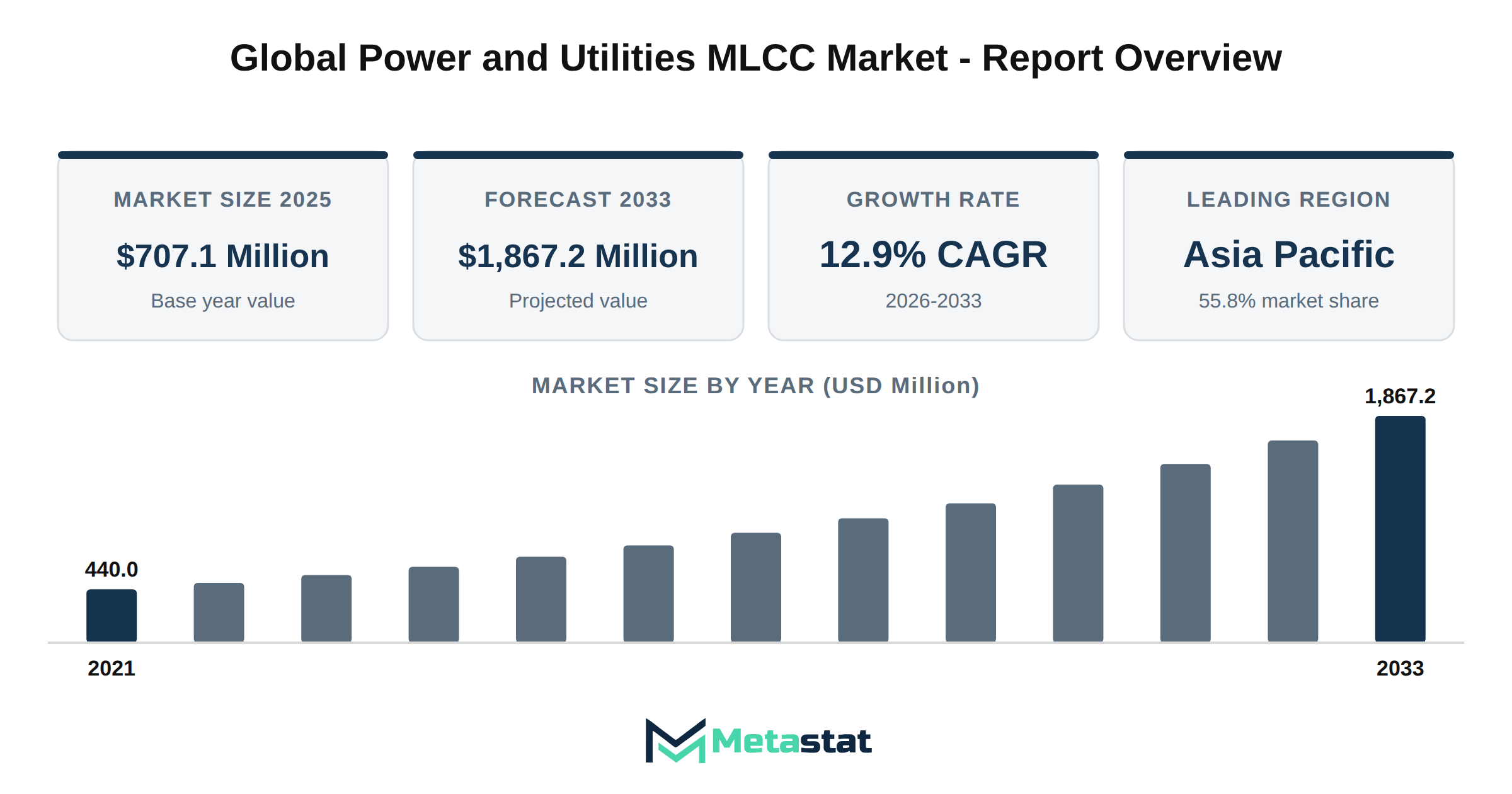
The Power and Utilities MLCC market is positioned for significant growth, with a base value of USD 707.1 million in 2025 and a projected value of USD 1,867.2 million by 2033. This growth reflects a compound annual growth rate (CAGR) of 12.9%. Historical values from 2021 to 2025 show a progressive increase in market size, starting from USD 440 million in 2021 and reaching USD 707.1 million by 2025.
Market dynamics are influenced by various factors, including increasing demand for high-voltage MLCCs across power grid applications. Evolving power grids create a need for reliable and efficient components. Demand for MLCCs in renewable energy and energy storage systems continues to rise, driven by global efforts toward sustainable energy solutions.
Adoption of MLCCs in power conversion and power supply equipment reflects the industry's focus on enhancing efficiency and reliability. Innovations in MLCC technology support high reliability, catering to harsh utility environments. Emerging technologies contribute to grid modernization efforts, addressing the need for advanced solutions in energy distribution.
The supply chain for MLCC manufacturing faces numerous developments, including pricing fluctuations and raw material costs. These factors shape market dynamics and influence the competitive landscape of the Power and Utilities MLCC market. Strategic investments and capacity expansion efforts among key players enhance manufacturing capabilities, responding to growing market demand.
The Power and Utilities MLCC market experiences significant trends driven by the increasing demand for high voltage MLCCs across power grid applications. This demand arises from the need for enhanced reliability and efficiency in power transmission, contributing to the overall growth of the market.
Renewable energy and energy storage systems represent key areas for MLCC adoption. The transition to sustainable energy sources necessitates reliable components that withstand fluctuating loads and harsh conditions, further boosting market demand.
Power conversion and power supply equipment require advanced MLCC technologies to optimize performance. Innovations in this sector focus on enhancing efficiency and reliability, which aligns with the growing emphasis on energy efficiency in various applications.
High reliability and durability are critical in utility environments, prompting manufacturers to develop MLCCs tailored for harsh conditions. These innovations support the market's expansion due to utilities seeking components that withstand extreme temperatures and other challenging factors.
Emerging MLCC technologies play a vital role in grid modernization initiatives. These advancements contribute to improved grid stability and efficiency, ensuring that the market remains competitive and innovative.
The supply chain and manufacturing landscape for MLCCs continues to evolve, influenced by shifts in raw material costs and production dynamics. Manufacturers focus on optimizing their operations to meet the rising demand while maintaining cost efficiency.
Pricing strategies in the MLCC market reflect the complexities of raw material sourcing and supply chain constraints. Fluctuations in material costs directly impact pricing, influencing overall market dynamics.
The competitive landscape of the Power and Utilities MLCC market features several key players, each vying for market share through strategic investments and capacity expansions. This competitive environment encourages innovation and enhances product offerings.
Regional opportunities highlight distinct growth trajectories across different markets. The Asia Pacific region, in particular, stands out for its robust demand, driven by rapid industrialization and infrastructure development.
North America shows promising demand trends, with a focus on upgrading existing infrastructure and integrating renewable energy sources into the grid. This trend supports overall growth in the Power and Utilities MLCC market.
In Europe, market opportunities arise from ongoing regulatory changes and modernization efforts within energy sectors. These developments create a favorable environment for MLCC adoption, further stimulating market growth.
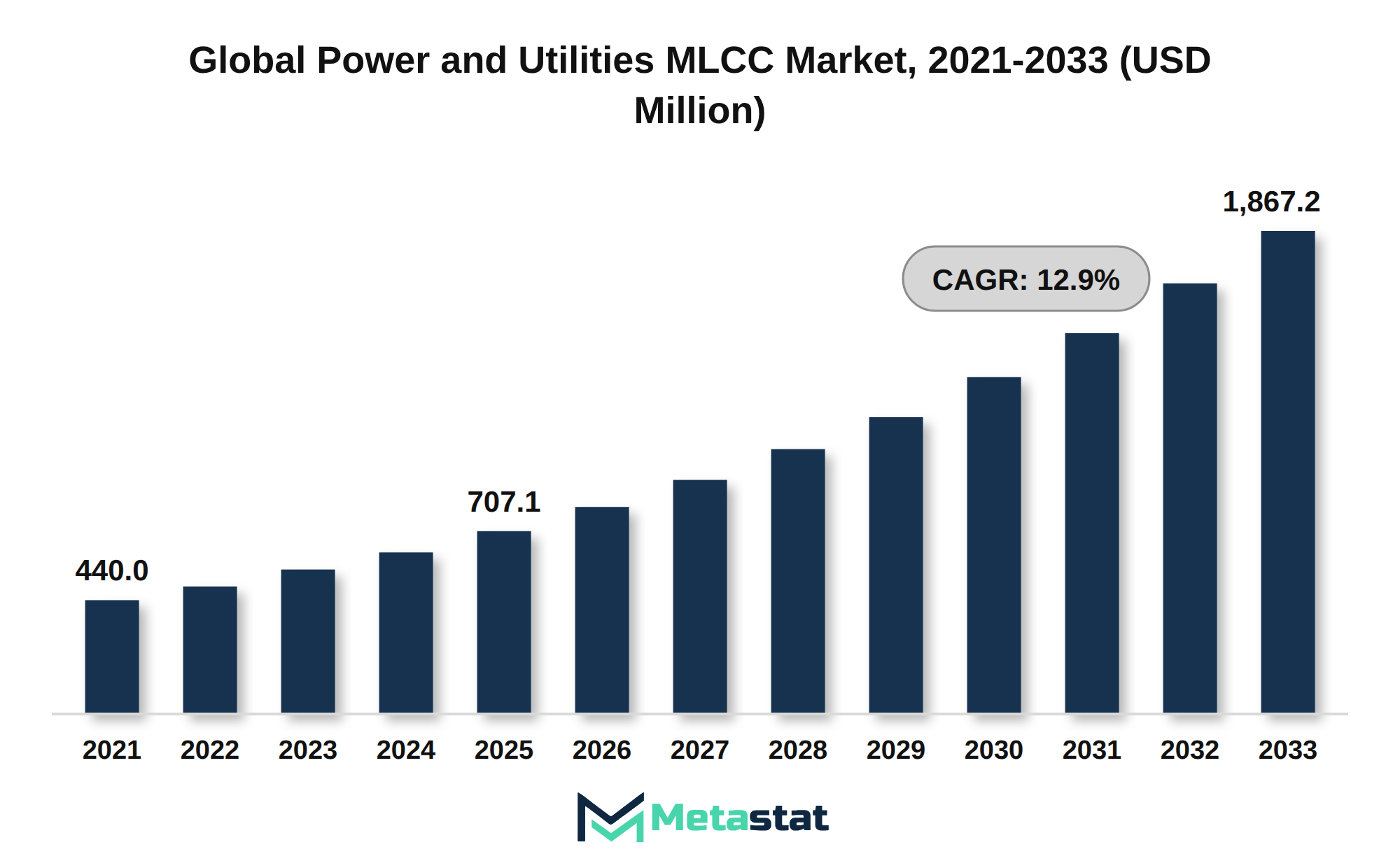
Investment in infrastructure development significantly influences the growth of the Power and Utilities MLCC market. Nations enhance their physical and digital capacities, leading to increased spending on power generation, transmission, and distribution systems. This investment trend arises from rising energy demands, necessitating modernized facilities and upgraded networks.
Regions focused on sustainability and technological integration experience substantial capital influx for upgrading infrastructure. Public and private entities prioritize initiatives aimed at improving energy efficiency and reliability, resulting in increased utilization of multi-layer ceramic capacitors (MLCCs) in these applications. The forecast period anticipates a robust compound annual growth rate (CAGR) of 12.9% for the market from 2026 to 2033, driven by these infrastructure enhancements.
Regional variations in spending power and economic development influence the adoption of MLCCs within various applications. Areas with high investments in renewable energy and smart grid technologies demonstrate greater demand for advanced components, enhancing operational productivity and cost efficiency. Infrastructure development plays a critical role in shaping the trajectory of the Power and Utilities MLCC market.
Technological integration significantly influences the Power and Utilities MLCC market by enhancing operational productivity and efficiency. The adoption of advanced technologies, including automation and artificial intelligence, supports the optimization of manufacturing processes and supply chains. These technologies enable companies to streamline operations, reduce production costs, and improve product quality, resulting in higher profitability.
The ongoing digital transformation within the power and utilities sector creates a demand for more sophisticated components, including multi-layer ceramic capacitors (MLCCs). This trend is evident because organizations prioritize investments in innovative solutions that digitize legacy processes and enhance overall productivity. The market experiences consistent growth driven by the need for modernized infrastructure and improved energy management systems.
Technological integration drives the development of new applications and use cases for MLCCs across various segments, including renewable energy and energy storage systems. With an increasing focus on sustainability, organizations leverage these advancements to meet evolving consumer preferences while adhering to environmental standards. This dynamic environment further influences the Power and Utilities MLCC market, presenting opportunities for market participants to capture value through innovation and technology-driven solutions.
The Power and Utilities MLCC market faces significant regulatory challenges that impede growth. Regulatory tightening, compliance hurdles, and legal mandates contribute to a complex operational environment for manufacturers. These factors increase the cost of adherence, which ultimately affects the pricing strategies of suppliers. Compliance with stringent regulations requires substantial investment in technology and processes for monitoring and reporting, diverting financial resources away from innovation and market expansion.
Macroeconomic headwinds further exacerbate these challenges, leading to capital stagnation and inflationary pressures. Rising operating costs reduce profit margins for companies within the market, making it difficult to sustain growth. Supply chain disruptions and geopolitical instability hinder production timelines, complicating effective market access. These issues create uncertainty in pricing and supply, affecting both manufacturers and end-users.
Technological obsolescence poses a risk for companies that fail to innovate in alignment with regulatory expectations. The market encounters competition from alternative offerings that adhere to evolving standards, putting pressure on traditional players to adapt. Resource scarcity leads to increased competition for essential materials, further escalating costs and complicating the supply chain. Infrastructure gaps and connectivity deficits create deployment bottlenecks that slow market adoption, particularly in regions with less developed utility frameworks.
Regulatory challenges significantly impact the Power and Utilities MLCC market by increasing operational complexity and costs while hindering innovation and market penetration. These factors collectively contribute to an environment where growth potential remains constrained, ultimately affecting long-term market viability.
Geopolitical fragmentation creates complexities in the Power and Utilities MLCC market, affecting supply chain stability and operational efficiency. Trade deficits and tariff friction disrupt the flow of materials and components essential for manufacturing, leading to delays and increased costs for producers. The resulting instability in the supply chain impacts the availability of critical inputs, raising production costs and compressing profit margins.
Technological disruptions exacerbate these challenges. Rapid advancements often require complex R&D integrations that present barriers for companies in this sector. Inefficient integration of new technologies leads to interoperability issues, hindering the adoption of innovative solutions. This situation creates a competitive disadvantage for firms struggling to keep pace with evolving industry demands and technological standards.
Rising input cost structures contribute to pricing compression within the market. Fluctuations in feedstock and component prices, driven by geopolitical events or economic instability, create uncertainty for manufacturers. Tightening global regulatory standards further compound the pressure on companies to comply with new requirements, incurring additional overhead costs and complicating operational processes.
Talent retention pressures and workforce skill gaps present further complications. The industry requires specialized skills to navigate these challenges effectively. The ongoing need for automation displacements in response to labor market changes strains resources, reducing the available skilled workforce required for efficient operations. Ultimately, these factors collectively influence the growth trajectory of the Power and Utilities MLCC market, necessitating strategic adjustments for long-term sustainability.
Growing regional demands for power and utility solutions significantly influence the Power and Utilities MLCC market. Regions including Asia Pacific exhibit strong growth prospects due to rapid industrialization and increasing energy consumption. Infrastructure modernization initiatives in these regions increase the need for advanced capacitors that support energy efficiency and reliability.
Geographical expansion into emerging markets offers substantial potential for manufacturers. Market players explore opportunities in South America and parts of Africa, where energy infrastructure development is ongoing. This expansion aligns with efforts to tap into the rising demand for renewable energy sources and improved energy transmission systems.
Technological disruptions continue to reshape the market. Innovations in manufacturing processes and materials enhance capacitor performance, meeting the evolving needs of energy sectors. Digital transformation initiatives across industries drive the integration of intelligent monitoring and control systems, increasing the adoption of high-performance MLCCs.
Sustainability imperatives push manufacturers to align their strategies with eco-friendly practices. This alignment enhances brand reputation and attracts environmentally-conscious customers. By investing in green transformations and ESG-driven initiatives, companies in the market differentiate themselves and capture additional market share.
Shifts in buying behaviors influence how organizations procure Power and Utilities MLCCs. Digital procurement platforms streamline the purchasing process, facilitating faster transactions and enhanced supplier relationships. This shift supports greater efficiency and transparency in the supply chain.
Investment in asset life-cycle extensions and maintenance upgrades presents additional opportunities. Companies focusing on retrofitting existing infrastructure increase demand for reliable MLCCs that enhance system longevity and performance. This trend drives growth in the market, resulting from operators seeking to optimize existing assets while minimizing disruptions.
The Global Power and Utilities MLCC market is segmented based on Dielectric Type, Rated Voltage, MLCC Form Factor, and Power & Utility Application.
Valued at USD 493.8 million in 2026, the Class 1 MLCC (C0G/NP0) segment is projected to reach USD 1,195 million by 2033, reflecting a CAGR of 13.5% during the forecast period. This substantial growth stems from increasing requirements for high-stability capacitors in various applications, particularly in power generation and renewable energy sectors. The ongoing transition towards more efficient energy systems drives demand for Class 1 MLCCs due to their superior thermal stability and lower loss characteristics.
Technological maturation in manufacturing processes has enhanced production efficiency, contributing to cost reductions and improved product availability. The segment benefits from stringent quality standards, which reinforce the demand for high-performance Class 1 MLCCs across critical power and utility applications. While energy systems evolve, the adoption of advanced MLCC technologies supports the trend towards higher reliability and performance, further driving market growth.
Adoption of Class 1 MLCCs aligns with the industry's push towards sustainability, ensuring compliance with regulatory standards aimed at reducing energy consumption. This segment's expansion reflects the broader dynamics within the power and utilities MLCC market, wherein innovation and regulatory compliance drive market activity. Investors focusing on this segment recognize significant opportunities for growth linked to strategic advancements in product design and application development.
Demand for Class 2 MLCC (X5R/X7R) components derives from their widespread application in power electronics and consumer devices, driving growth in the Power and Utilities MLCC market. The increasing integration of electronic systems in power generation and distribution systems creates a landscape conducive to the segment's expansion. Enhanced performance requirements in energy efficiency and reliability contribute to the transition towards advanced materials and manufacturing techniques, strengthening demand for these components.
Class 2 MLCC (X5R/X7R) segment is estimated to reach USD 522.8 million by 2033, at a CAGR of 12% during the forecast period. The evolving landscape of renewable energy technologies and energy storage solutions significantly impacts adoption rates, driven by the need for capacitors that perform reliably under varying temperature and voltage conditions. The shift towards sustainable energy sources drives manufacturers to innovate and develop more efficient MLCC solutions tailored for specific applications.
Consumer electronics represent another primary driver for the Class 2 MLCC (X5R/X7R) segment, particularly in smartphones, tablets, and other portable devices. These applications demand components with superior miniaturization and high capacitance values, reinforcing the segment's role in the overall market. Regulatory compliance and evolving industry standards necessitate continuous innovation and adherence to quality certifications, which shape the competitive dynamics within the market.
Price volatility in raw materials and supply chain challenges present risks to manufacturers relying on Class 2 MLCC (X5R/X7R) components. Strategic sourcing of materials and enhanced supply chain resilience become critical to mitigate these risks and ensure consistent product availability. The market adapts to these challenges, creating opportunities for players to capitalize on advancements in manufacturing and material science, driving the segment toward greater profitability and market share.
Primary demand drivers for the Other Class 2 MLCC (X6S/X7S/X8R/X8G) segment stem from increasing applications in various electronic devices and power management systems. Technological maturation in materials and manufacturing processes enhances product reliability and performance, leading to wider adoption in sectors like renewable energy and energy storage. The market experiences segment expansion catalysts due to a surge in demand for compact and efficient components, especially in consumer electronics and automotive applications.
Investment in next-generation upgrades is evident, with manufacturers focusing on optimizing dielectric properties and enhancing temperature stability. This evolution supports downstream applications that require high-capacity energy storage and transmission solutions. End-use dynamics shift towards sustainable energy solutions, driving the need for advanced components in power generation and distribution systems.
Regulatory compliance standards and certifications influence the segment, ensuring products meet stringent safety and performance criteria. Cost structures reflect fluctuations in raw material prices, impacting profit margins. The market anticipates pricing volatility, which could affect strategic planning for manufacturers owing to adjustments in response to changing supply chain dynamics.
Disruptive alternatives present risks, particularly from emerging technologies that could impact traditional MLCC usage. Strategic opportunity windows for the Other Class 2 MLCC (X6S/X7S/X8R/X8G) segment appear solid, supported by capital investment in enhancing manufacturing capabilities. Other Class 2 MLCC (X6S/X7S/X8R/X8G) segment is expected to reach USD 149.4 million by 2033, reflecting the segment's potential and alignment with market demands.
Valued at USD 462.4 million in 2026, the Up to 100 V segment is projected to reach USD 989.6 million by 2033, at a CAGR of 11.5% during the forecast period. Primary demand drivers include the rising need for efficient power supply solutions in various applications, particularly in renewable energy and energy storage sectors. Growing focus on enhancing the reliability and performance of electrical systems supports the expansion of this segment. Segment expansion catalysts encompass technological maturation, where advancements in materials and manufacturing processes lead to improved product capabilities and reduced costs.
Next-generation upgrades in MLCC technology play a critical role in enhancing performance metrics, including capacitance and voltage ratings, catering to evolving industry standards. Regulatory compliance standards necessitate the adoption of high-voltage capacitors to meet stringent energy efficiency and safety regulations. Pricing volatility remains a concern, with fluctuations in raw material costs impacting production expenses and profit margins across the market.
Supply chain resilience significantly affects the Up to 100 V segment, with manufacturers focusing on diversifying sourcing strategies to mitigate risks associated with disruptions. Disruptive alternatives, including emerging capacitor technologies, present challenges while offering strategic opportunities for innovation and market differentiation. The overall capital investment outlook continues to strengthen, reflecting confidence in the growth potential of the Power and Utilities MLCC market, particularly within this critical voltage rating segment.
Growth in the 101-630 V segment of the Power and Utilities MLCC market reflects increasing application in various power and utility sectors. This segment is expected to reach USD 504.1 million by 2033, at a CAGR of 13.8% during the forecast period. Demand arises primarily from advancements in power transmission and distribution systems, where these components provide essential voltage regulation and stability. The ongoing shift towards smart grid technologies and enhanced energy efficiency drives investments in medium voltage applications, further fueling segment expansion.
Technological maturation of MLCCs, particularly in dielectric materials, enhances performance and reliability, contributing to increasing adoption rates. Manufacturers focus on next-generation upgrades that improve energy density and thermal stability, aligning product evolution with system demands. Regulatory compliance standards emphasizing energy efficiency and sustainability influence the market dynamics, reflecting end-users' pursuit of components that meet stringent performance criteria.
Price volatility in raw materials, especially dielectric and conductive materials, exerts pressure on profit margins within this segment. However, manufacturers adopt strategic sourcing and supply chain resilience initiatives to mitigate these impacts. The ability to adapt to fluctuating costs while maintaining quality positions key players favorably in a competitive landscape.
Overall, the 101-630 V segment exhibits robust potential for growth, driven by regulatory support for modernization and an increasing focus on reliable electrical infrastructure. Continued investment and innovation within the Power and Utilities MLCC market will reinforce this segment's role in addressing the evolving needs of the energy sector.
Power and Utilities MLCC market dynamics increasingly focus on the 631-1,000 V segment, projected to reach USD 168 million by 2033. This growth stems from rising demand for high-voltage applications in power generation and transmission systems. Adoption of advanced technologies enhances the efficiency and reliability of these systems, driving manufacturers to invest in higher-rated voltage capacitors. The segment's expansion aligns with the broader industry trend towards increased reliance on renewable energy solutions and energy storage systems, which require robust and reliable components. Regulatory compliance standards further support this trend, reflecting industries' efforts to meet stringent performance and safety requirements. With ongoing technological evolution, manufacturers develop innovative products tailored to meet the needs of various applications, reinforcing the segment's role in the market. Demand for 631-1,000 V components reflects overall positive trajectories in the Power and Utilities MLCC market and highlights strategic opportunities for capital investment and market participation.
Valued at USD 168 million, the 1,001-2,000 V segment is projected to grow at a CAGR of 17.2% during the forecast period. Increasing adoption of high-voltage applications in sectors including renewable energy and power transmission drives demand for components in this voltage range. Enhanced efficiency and reliability in energy management and distribution systems sustain this trend. Technological advancements in materials and manufacturing processes contribute to improved performance characteristics, aligning with the evolving needs of the power and utilities sector. The segment's growth reflects a shift towards sustainable energy solutions, illustrating the market's responsiveness to emerging energy paradigms.
Demand for MLCC components rated at Above 2,000 V hinges on the increasing need for high-performance capacitors in electrical and electronic applications. The expansion of renewable energy sources and the advancement of power generation technologies drive significant demand within this segment. A growing focus on energy efficiency and the transition to smart grids intensifies the requirement for reliable high-voltage components. The competitive market environment features innovation in dielectric materials and design, which play crucial roles in product evolution.
Adoption of Above 2,000 V MLCCs links closely to strategic investment in infrastructure by various sectors, including power generation and transmission. Regulatory compliance standards influence design and manufacturing processes, ensuring that products meet safety and performance criteria. Cost structures within this segment reflect the complexity of production, with manufacturers optimizing raw materials and logistics to enhance supply chain resilience. Ongoing technological maturation supports the integration of these capacitors into advanced electrical systems, reinforcing their essential role in powering future innovations.
Growth in the Surface-Mount MLCC segment reflects increasing demand for compact and efficient electronic components across various applications. This sub-segment is valued at USD 331.3 million in 2026 and is projected to reach USD 720.7 million by 2033, at a CAGR of 11.7% during the forecast period. The rise in the adoption of advanced technologies, including IoT devices, consumer electronics, and renewable energy systems, drives demand for Surface-Mount MLCCs. Their ability to offer high capacitance in a small form factor aligns with the industry's shift towards miniaturization and enhanced performance.
Technological maturation facilitates continual improvements in Surface-Mount MLCC design and manufacturing processes, ultimately enhancing product reliability and efficiency. The evolution of next-generation upgrades in performance specifications attracts investment and drives innovation, allowing manufacturers to meet the needs of increasingly sophisticated applications. End-use dynamics across sectors including power generation, transmission, and renewable energy highlight the critical role of Surface-Mount MLCCs in energy-efficient solutions.
The regulatory landscape shapes the market, compelling manufacturers to adhere to stringent compliance standards and certifications. These factors, including cost structures and pricing volatility, influence profit margins within the segment. Ongoing challenges related to the supply chain and raw material sourcing emphasize the need for resilient strategies to mitigate disruptions and maintain competitiveness. Strategic opportunities arise from expanding applications in electric vehicles and automation technologies, positioning the Surface-Mount MLCC segment because a key contributor to the overall growth trajectory of the Power and Utilities MLCC market.
Growing interest in Leaded/Stacked MLCC offerings aligns with the increasing demand for efficient power management solutions in various applications. This segment is estimated to reach USD 242.7 million by 2033, at a CAGR of 10.3% during the forecast period. While the market evolves, technological maturation enables the development of more compact and reliable components. Innovations in product design enhance performance, catering to the needs of sectors like renewable energy and energy storage.
End-use dynamics significantly affect the adoption of Leaded/Stacked MLCC, driven by the need for higher efficiency and lower energy consumption. Increased focus on regulatory compliance standards further drives demand, resulting from industries adopting components that meet stringent performance criteria. Consumption shifts towards electronic devices necessitate reliable and high-performance capacitors, reinforcing the segment's relevance in the Power and Utilities MLCC market.
To support this growth, supply chain resilience remains critical, with raw material sourcing becoming a focal point in maintaining production efficiency. Escalating prices for certain raw materials and potential logistics vulnerabilities could pose challenges. Nonetheless, strategic opportunity windows emerge for manufacturers who invest in sustainable practices and innovative technologies. This proactive approach enables companies to capture market share and meet the evolving demands of the Power and Utilities MLCC market.
Valued at USD 317.4 million by 2033, the High-Voltage MLCC segment reflects growing adoption in power and utilities applications, driven by increasing voltage requirements in renewable energy and energy storage systems. Demand for High-Voltage MLCC components aligns with advancements in power transmission and distribution technologies, enhancing efficiency and reliability. Strategic investments in infrastructure expansion across various regions, particularly in Asia Pacific, contribute to the market's positive outlook.
Technological maturation in materials science supports the development of higher voltage ratings and improved performance characteristics. Manufacturers focus on next-generation upgrades that enhance voltage stability and thermal performance, meeting the evolving needs of the power and utilities sector. Consequently, the market experiences heightened competition among key players, leading to innovations that refine product offerings and improve cost structures.
Market dynamics indicate a shift towards sustainable energy solutions, propelling the adoption of High-Voltage MLCCs in electric vehicle charging infrastructure and grid automation systems. Regulatory compliance standards and certifications drive manufacturers to enhance their product specifications, ensuring alignment with industry requirements. This environment creates strategic opportunity windows for market participants seeking growth.
Supply chain resilience remains essential in managing raw material sourcing for High-Voltage MLCC production. Market players actively assess risks associated with material availability and pricing volatility, promoting strategies to mitigate disruptions. Firms strategically invest in technology and processes that enhance overall operational efficiency while addressing potential competition from disruptive alternatives.
The High-Voltage MLCC segment within the Power and Utilities MLCC market presents significant potential for growth, propelled by technological advancements, evolving regulatory landscapes, and strategic investments in infrastructure and renewable energy applications.
Increasing adoption of Soft-Termination MLCC aligns with the growing emphasis on performance and reliability in various applications within the power and utilities sector. This sub-segment is projected to grow at a CAGR of 14.1% during the forecast period. Demand stems from the need for components that provide enhanced durability and voltage tolerance, especially in high-stress environments. Industries shift towards more efficient energy solutions, making the integration of Soft-Termination MLCC in renewable energy applications and energy storage systems vital. The market recognizes the evolving standards for quality and performance, prompting manufacturers to innovate and cater to these requirements.
Investment in next-generation upgrades and technological maturation supports the expansion of the market. Manufacturers focus on evolving product capabilities, enhancing thermal stability, and improving dielectric properties. This focus directly impacts end-use dynamics, with increased demand for reliable components in power generation and transmission infrastructures. Regulatory compliance standards drive innovation, ensuring that products meet safety and performance benchmarks, which further boosts adoption.
Cost structures and pricing volatility influence market dynamics, driven by competition that compels manufacturers to optimize production processes and raw material sourcing. Addressing supply chain resilience becomes critical, particularly in securing essential materials for Soft-Termination MLCC production. Identifying strategic opportunity windows allows companies to optimize their operations and enhance product offerings, contributing positively to market growth. By aligning with industry trends and customer expectations, the Soft-Termination MLCC segment positions itself for significant advancement in the evolving Power and Utilities MLCC market.
The increasing emphasis on energy efficiency drives demand for Low-ESL/Reverse-Geometry MLCC, connecting to broader trends within the Power and Utilities MLCC market. Innovations in design and materials lead to enhanced performance, allowing for applications in high-frequency circuits and power management systems. Adoption of these components aligns with the shift toward more sustainable energy practices. End-users prioritize reliable and efficient solutions.
While regulatory compliance standards evolve, manufacturers face pressures to meet stricter guidelines, particularly regarding environmental impacts. This shift promotes the development of Low-ESL/Reverse-Geometry MLCC, which supports the growing demand for compact and efficient electronic devices. The focus on technological maturation fuels competitive dynamics within the market and stimulates investments in research and development.
Downstream applications for Low-ESL/Reverse-Geometry MLCC span various sectors, including renewable energy, automotive, and telecommunications. These segments require components that deliver superior performance while minimizing space and weight constraints. The transition toward electric vehicles and advanced grid technologies enhances the relevance of this sub-segment within the overall Power and Utilities MLCC market.
Challenges related to raw material sourcing and pricing volatility impact production costs and margins for manufacturers. Strategic opportunity windows exist for producers that effectively manage supply chain resilience, ensuring consistent quality and availability of Low-ESL/Reverse-Geometry MLCC. The ongoing evolution of technology and emerging alternatives positions the market for significant growth over the coming years.
Increasing demand for High-Reliability/Fault-Tolerant MLCC aligns with the growing emphasis on reliability in critical applications, particularly within power generation and distribution. This segment addresses the need for components that withstand harsh operating conditions, essential in sectors requiring uninterrupted performance. Enhanced operational efficiency and reduced downtime drive the adoption of these components, particularly in renewable energy and energy storage systems.
Technological maturation in the Power and Utilities MLCC market leads to advancements in material science and manufacturing processes, resulting in products that exhibit greater reliability and performance. Continuous product evolution addresses the specific requirements of various power and utility applications, enabling more robust and efficient designs. End-use dynamics reflect a trend towards sustainable energy solutions, creating significant opportunities for high-reliability capacitors in energy systems.
Regulatory compliance standards increasingly mandate higher reliability, pushing manufacturers to innovate and enhance product offerings. These developments influence cost structures and pricing strategies within the market, driven by suppliers investing in research and development to meet stringent standards. Supply chain resilience becomes crucial, with raw material sourcing and logistics vulnerabilities impacting the ability to deliver high-quality components.
Strategic opportunity windows arise from the shift towards fault-tolerant designs, positioning manufacturers to capture additional market share. The emphasis on high-reliability solutions supports wider adoption across various applications, including grid monitoring and automation solutions, utility communications, and EV charging infrastructure. This segment's growth trajectory benefits from increasing capital investments aimed at enhancing system resilience and efficiency in power and utility environments.
Market dynamics for Others (MLCC Arrays and Specialty Constructions) reflect a growing shift toward specialized applications within the broader Power and Utilities MLCC market. This sub-segment benefits from advancements in technology that enhance product performance, allowing for innovative designs and increased functionality. The rise of custom solutions in the MLCC landscape highlights the importance of adapting components to meet specific requirements of diverse applications, including energy storage and renewable energy systems.
Adoption of these specialized constructions aligns with the evolving demands of end-users seeking reliable and efficient energy solutions. The focus on sustainability drives interest in products that support renewable energy initiatives, leading to heightened investment in MLCC Array technology. This shift enhances energy efficiency and contributes to reducing overall costs associated with power generation and distribution.
Regulatory compliance standards and certifications play a critical role in shaping product development within the Others sub-segment. Manufacturers navigate complex guidelines to ensure their offerings meet industry requirements, influencing design and production processes. Strategic collaboration between suppliers and manufacturers strengthens supply chain resilience, enabling the market to respond effectively to disruptions while promoting innovation.
Technological maturation in this segment presents opportunities for next-generation upgrades, pushing the boundaries of what is achievable with MLCC Arrays. Companies prioritize research and development efforts to pioneer solutions that incorporate advanced materials and manufacturing techniques, enhancing product reliability and performance. While competition intensifies, players in the market focus on identifying strategic opportunity windows to capitalize on emerging trends and consumer preferences.
Overall, the Others (MLCC Arrays and Specialty Constructions) sub-segment is poised for growth within the Power and Utilities MLCC market, driven by evolving technologies, increasing demand for specialized applications, and a commitment to regulatory compliance. This evolution highlights the significance of innovation and adaptability in a rapidly changing marketplace.
Valued at USD 156.6 million in 2026, the Power Generation segment is projected to reach USD 328.6 million by 2033, at a CAGR of 11.2% during the forecast period. Increasing demand stems from the global transition toward cleaner energy sources, where the integration of renewable technologies plays a critical role in driving investment in power generation facilities. Enhanced regulatory frameworks and incentives for renewable energy further stimulate growth in this segment, resulting in increased demand for MLCCs optimized for energy generation applications.
Rapid technological advancements enhance the functionality and efficiency of power generation systems, necessitating the deployment of high-performance MLCCs. The shift toward advanced power generation technologies leads to increased requirements for compact, reliable components capable of operating under extreme conditions. Competitive pressures within the power and utilities MLCC market compel manufacturers to innovate continuously, ensuring products meet evolving industry standards.
End-use dynamics reflect a notable demand shift toward sustainable and efficient energy solutions. Investments in energy storage technologies and smart grid systems contribute to a robust market outlook. The market anticipates further growth opportunities through strategic partnerships and collaborations that expand product portfolios and enhance market presence.
Cost structures remain a significant consideration, particularly with fluctuating raw material prices impacting overall profitability. Manufacturers in the power generation segment focus on optimizing supply chains and sourcing materials that align with sustainability goals. Strategic investment in research and development positions companies to address increasing consumer expectations for high-quality, environmentally friendly products.
Increasing focus on the efficiency and reliability of power transmission and distribution systems drives demand for MLCCs within this segment. Investments in modernizing infrastructure and expanding grid capabilities contribute to anticipated market growth. The Power Transmission & Distribution segment is estimated to reach USD 448.1 million by 2033, at a CAGR of 12.4% during the forecast period. This growth reflects heightened emphasis on renewable energy integration and smart grid technologies, which require advanced MLCC solutions for effective operation. The ongoing transition to more sustainable energy sources results in greater demand for components that support efficient energy management and distribution. This segment's evolution aligns with the growing needs of electric utilities and industrial players seeking to enhance system performance while managing costs effectively. The market adapts to regulatory changes aimed at promoting energy efficiency and reducing carbon emissions, further influencing demand dynamics.
Growth in the Renewable Energy segment of the Power and Utilities MLCC market aligns with the global push towards sustainable energy solutions. Increasing investments in renewable technologies drive demand for capacitors that support energy generation, storage, and conversion processes. A focus on reducing carbon emissions and transitioning to cleaner energy sources contributes to expanding applications, particularly in solar and wind energy sectors. Regulatory mandates promoting renewable energy usage reinforce this trend, ensuring that manufacturers prioritize advanced MLCC solutions capable of withstanding the unique demands of these environments.
Valued at USD 392.1 million by 2033, the segment reflects significant potential for expansion. Continuous improvements in manufacturing processes and materials enhance the performance characteristics of MLCCs tailored for renewable applications. Technological maturation is essential in achieving higher efficiency and reliability, further attracting investments in this sector. Companies developing products that meet these evolving standards are likely to gain a competitive edge, capturing greater market share in the renewable energy arena.
Increased focus on renewable energy solutions drives significant investment in energy storage technologies, propelling demand within the Power and Utilities MLCC market. Energy storage systems play a crucial role in balancing energy supply and demand, enhancing grid reliability, and integrating renewable energy sources. The segment is projected to grow at a CAGR of 15.2% during the forecast period, reflecting an attractive opportunity for manufacturers and suppliers.
Technological advancements and innovation in energy storage solutions enhance operational efficiency while optimizing costs. The rising adoption of electric vehicles and the corresponding need for efficient charging infrastructure further stimulate market expansion. This trend indicates a shift toward advanced energy management systems, allowing utilities to leverage stored energy effectively during peak demand periods.
While energy storage solutions evolve, manufacturers align their product offerings with evolving regulatory compliance standards, enhancing their market positioning. Challenges related to pricing volatility and material sourcing remain relevant, influencing production costs and profit margins. Amid these dynamics, strategic investment in research and development is expected to support the emergence of next-generation energy storage products, enabling greater market penetration.
Investment in power conversion and power supplies remains critical within the Power and Utilities MLCC market. The demand stems from the ongoing transition towards more efficient and reliable electrical systems, driven by technological advancements and the increasing integration of renewable energy sources. This segment benefits from growing applications in smart grids and electric vehicles, which push innovation and energy management solutions.
Technological maturation facilitates the adoption of next-generation power supplies, enhancing performance and reducing energy losses. End-use dynamics reflect a shift towards energy-efficient devices, prompting manufacturers to focus on upgrading existing power conversion solutions. Regulatory compliance standards play a significant role in shaping product specifications, pushing providers to innovate and meet stringent requirements.
Pricing volatility remains a concern within the segment, influenced by raw material sourcing challenges and market fluctuations. Effective supply chain resilience is essential for players to navigate these pressures and maintain competitive margins. The introduction of disruptive alternatives introduces risks, compelling manufacturers to continuously evolve their product offerings to stay relevant.
Strategic opportunity windows emerge due to industries seeking to transition to greener technologies, creating a favorable environment for investments in this segment. Capital investment outlook remains positive, reflecting confidence in the sustained demand for advanced power conversion solutions essential for modern energy systems.
Technological advancements significantly influence the Grid Monitoring, Metering & Automation segment within the Power and Utilities MLCC market. The integration of smart grid technologies enhances efficiency and reliability in energy management, driving demand for specialized MLCC solutions. Regulatory compliance standards push utilities to adopt advanced metering infrastructure, creating opportunities for innovative MLCC products tailored to energy monitoring and automation applications.
Increased investment in grid modernization increases the need for advanced metering and automation solutions. Utilities focus on real-time data collection and analysis, which strengthens the demand for MLCC components that support high-performance monitoring systems. The evolving environment emphasizes the importance of interoperability and integration among various systems, leading to significant opportunities for MLCC developers to introduce next-generation solutions.
Downstream applications increasingly require reliable and efficient components for energy consumption monitoring. The shift towards decentralized energy generation and consumption further accentuates the importance of robust grid monitoring solutions. Strategic opportunity windows emerge owing to utilities seeking to enhance operational efficiency, requiring innovative MLCC solutions tailored to meet specific application demands.
Supply chain resilience remains critical in addressing raw material sourcing challenges. The volatility of raw material prices necessitates strategic partnerships and long-term contracts to stabilize costs and ensure consistent supply. Disruptive alternatives including emerging technologies and competitive materials pose challenges but present opportunities for MLCC manufacturers to innovate and differentiate their products within the market.
Overall, the combination of regulatory compliance, technological maturation, and evolving end-use dynamics drives significant growth in the Grid Monitoring, Metering & Automation segment. The Power and Utilities MLCC market is poised for expansion due to stakeholders prioritizing investment in next-generation upgrades and smart grid solutions.
Investment in Utility Communications & Control emerges due to its essential role in modernizing power systems. This segment aligns with heightened demand for reliable communication technologies within utility networks. The integration of advanced communication tools facilitates efficient data exchange, enabling utilities to enhance operational efficiency and responsiveness.
Technological maturation drives advancements in communication protocols and systems, ensuring utilities effectively manage infrastructure. Upgrades to existing communication networks support improved grid monitoring, facilitating real-time data analysis and proactive maintenance strategies. These developments enhance the overall resilience of the market by reducing downtime and increasing service reliability.
Adoption of next-generation communication solutions drives growth within the Utility Communications & Control segment. Utilities actively seek solutions that integrate with existing systems while offering scalability for future expansions. Enhanced interoperability among different communication platforms ensures that utilities adapt to evolving operational requirements and regulatory mandates.
Regulatory compliance standards influence the market because utilities strive to meet stringent guidelines on data management and security. Compliance with these standards engenders trust among consumers and stakeholders, reinforcing the importance of investing in robust communication infrastructure. The market evolves in response to shifting regulatory landscapes, creating opportunities for innovative communication technologies.
Strategic opportunity windows emerge because utilities identify areas for improvement within their communication networks. Focus on enhancing customer engagement through improved data accessibility is crucial. This emphasis on consumer interaction leads to increased investment in communication technologies that facilitate real-time feedback and service delivery.
Overall, the Utility Communications & Control segment significantly contributes to the Power and Utilities MLCC market by enhancing operational capabilities and ensuring compliance with regulatory standards. The ongoing evolution of communication technologies presents utilities with opportunities to innovate, optimize, and respond to market demands effectively.
Investment in EV charging infrastructure aligns with the global shift toward electric vehicles and sustainable energy solutions. Increasing government support and regulatory frameworks drive this transition, enhancing the need for reliable charging networks. Manufacturers of power and utilities MLCC seek to improve energy efficiency and reduce downtime, positioning MLCCs because essential components in these systems. Adoption of advanced technologies in the segment supports the development of fast-charging capabilities, benefiting both consumers and service providers. The growing focus on enhancing user experience in electric vehicle charging influences product evolution, with an emphasis on reliability and safety metrics. Ensuring compliance with emerging regulatory standards and certifications becomes crucial, affecting cost structures and pricing strategies. Strategic opportunity windows for investment in this area expand due to rising demand for EVs, emphasizing the importance of robust supply chains and material sourcing to mitigate risks. This dynamic environment drives growth within the power and utilities MLCC market, encouraging innovation in response to consumer expectations and market trends.
Based on geography, the Global Power and Utilities MLCC market is divided into North America, Europe, Asia-Pacific, South America, Middle East, and Africa.
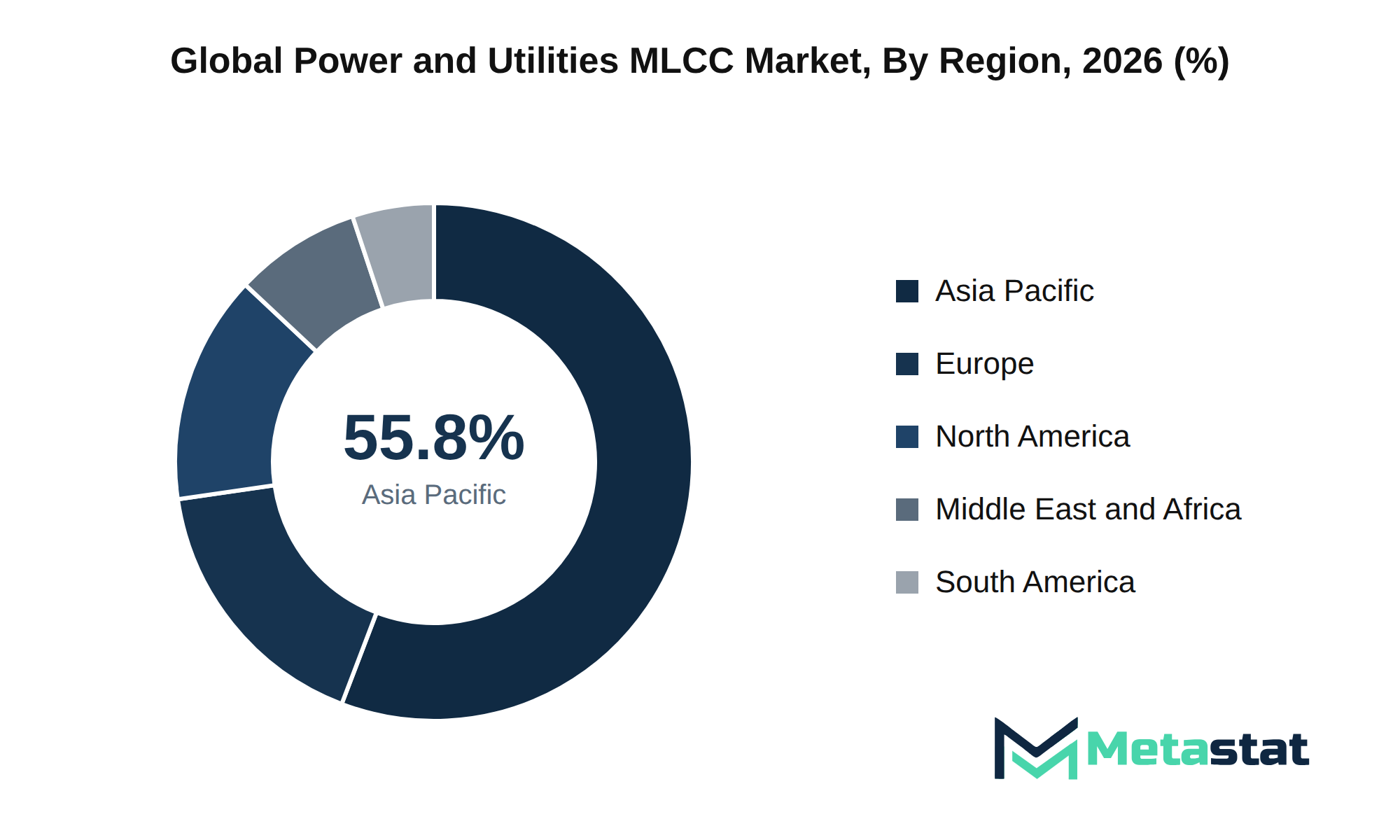
North America Power and Utilities MLCC market is set to expand at a CAGR of 12.9% within the forecast period, reaching a market size (TAM) of USD 317.4 million by the end of 2033. The region, comprising the United States, Canada, and Mexico, accounts for 14.3% of the global market in 2025. Demand drivers in this market include investments in infrastructure modernization and an ongoing transition towards renewable energy sources. The growing emphasis on energy efficiency and grid resilience further drives growth in segments including Power Generation and Power Transmission & Distribution.
Localized manufacturing densities and nearshoring initiatives enhance supply chain efficiencies, positioning North America favorably for vendors aiming to meet the rising demand for Power and Utilities MLCC products. Domestic market participants, including key players like KYOCERA AVX Components Corporation and Murata Manufacturing Co., Ltd., leverage regional advantages to strengthen their competitive positions. Regulatory compliance and local mandates create an environment conducive to market expansion, ensuring that the offerings align with the evolving needs of regional procurement dynamics.
Europe maintains a share of the Power and Utilities MLCC market, accounting for 16.9% in 2025. The region's focus on transitioning to sustainable energy sources drives demand for advanced MLCC technologies, particularly in countries including Germany, France, and the UK. Regulatory frameworks supporting renewable energy initiatives enhance the market's growth potential, with ongoing infrastructure modernization projects further intensifying the demand for reliable components.
Investment in energy grid resiliency has become a priority for European countries, necessitating the adoption of high-performance MLCCs in power transmission and distribution applications. The strong presence of domestic market participants, including significant players in semiconductor and capacitor manufacturing, facilitates localized procurement dynamics, providing a competitive edge against global suppliers.
Emerging market front-runners in the region focus on enhancing their manufacturing capabilities, aligning with cross-border trade corridors that promote collaboration and technology transfer. Growth vectors, including high-value replacement cycles and the need for localized manufacturing densities, support the ongoing expansion of the market. Regional B2B buying behaviors reflect a growing preference for suppliers that deliver innovative solutions tailored to specific energy sector needs, further driving the market forward.
The Power and Utilities MLCC market in Europe continues to evolve, shaped by geopolitical fragmentation and local compliance mandates. These factors create strategic entry barriers for new entrants, reinforcing the position of established players and encouraging vendor consolidation trends within the region.
Asia-Pacific dominates the global Power and Utilities MLCC market, accounting for 55.8% of market share in 2025. Growth in this region stems from increasing investments in renewable energy and infrastructure modernization, particularly in countries including China, Japan, and India. Rising demand for energy-efficient solutions drives expansion of the power generation and transmission sectors, enhancing the need for advanced MLCC technologies.
Emerging market front-runners demonstrate strong adoption rates of MLCC, particularly in South Korea and Australia. Local compliance mandates and regulatory frameworks support the development of energy storage and grid resiliency initiatives. Cultural nuances and regional B2B buying behaviors influence procurement dynamics, with an increasing preference for localized manufacturing and supply chain regionalization.
Investment in foreign direct investment (FDI) flows into the Asia-Pacific region signals significant growth potential for the Power and Utilities MLCC market. Geopolitical fragmentation and cross-border trade corridors shape competitive landscapes, creating opportunities for domestic market participants and vendor consolidation trends. Incremental growth vectors further enhance market dynamics, strengthening the region's prominence in the global landscape.
The Power and Utilities MLCC market in South America is characterized by a developing infrastructure and the increasing adoption of advanced technologies. Brazil and Argentina represent the principal markets within this region, with Brazil emerging because a significant player in the overall market dynamics. This market accounts for a 5.1% share of the global Power and Utilities MLCC market in 2025.
Investment in localized manufacturing and supply chain regionalization supports market growth in South America. The increasing focus on renewable energy sources, particularly solar and wind, drives demand for MLCCs used in power generation and energy storage applications. Regional players actively pursue partnerships and collaborations to enhance their competitive positioning and capture emerging market opportunities.
Factors including energy grid resiliency and local infrastructure readiness contribute to the market's expansion. Domestic market leaders continue to invest in innovative products that meet growing regulatory compliance mandates, thereby strengthening their market presence. Overall, the Power and Utilities MLCC market in South America is on a trajectory of steady growth, backed by strategic investments and evolving consumer needs.
Middle East and Africa represents a growing segment of the Power and Utilities MLCC market. Countries including Saudi Arabia and the UAE are investing significantly in infrastructure modernization, driven by increasing demand for reliable energy solutions and advancements in technology. South Africa experiences a shift toward sustainable energy practices, enhancing the adoption of MLCCs in various applications.
Regional competitive dynamics highlight the presence of domestic market participants who consolidate their positions through strategic partnerships and localized manufacturing initiatives. These efforts optimize supply chains and enhance procurement dynamics within the market. The region's resource availability and energy grid resiliency create a conducive environment for continuous growth and development.
Investment flows into the region increase foreign direct investment (FDI) opportunities, creating potential for geographic expansion windows. Local compliance mandates and trade policy shifts impact market operations, influencing how companies approach their strategies in the Power and Utilities MLCC market. Understanding these regional nuances becomes crucial for stakeholders aiming to capitalize on emerging opportunities.
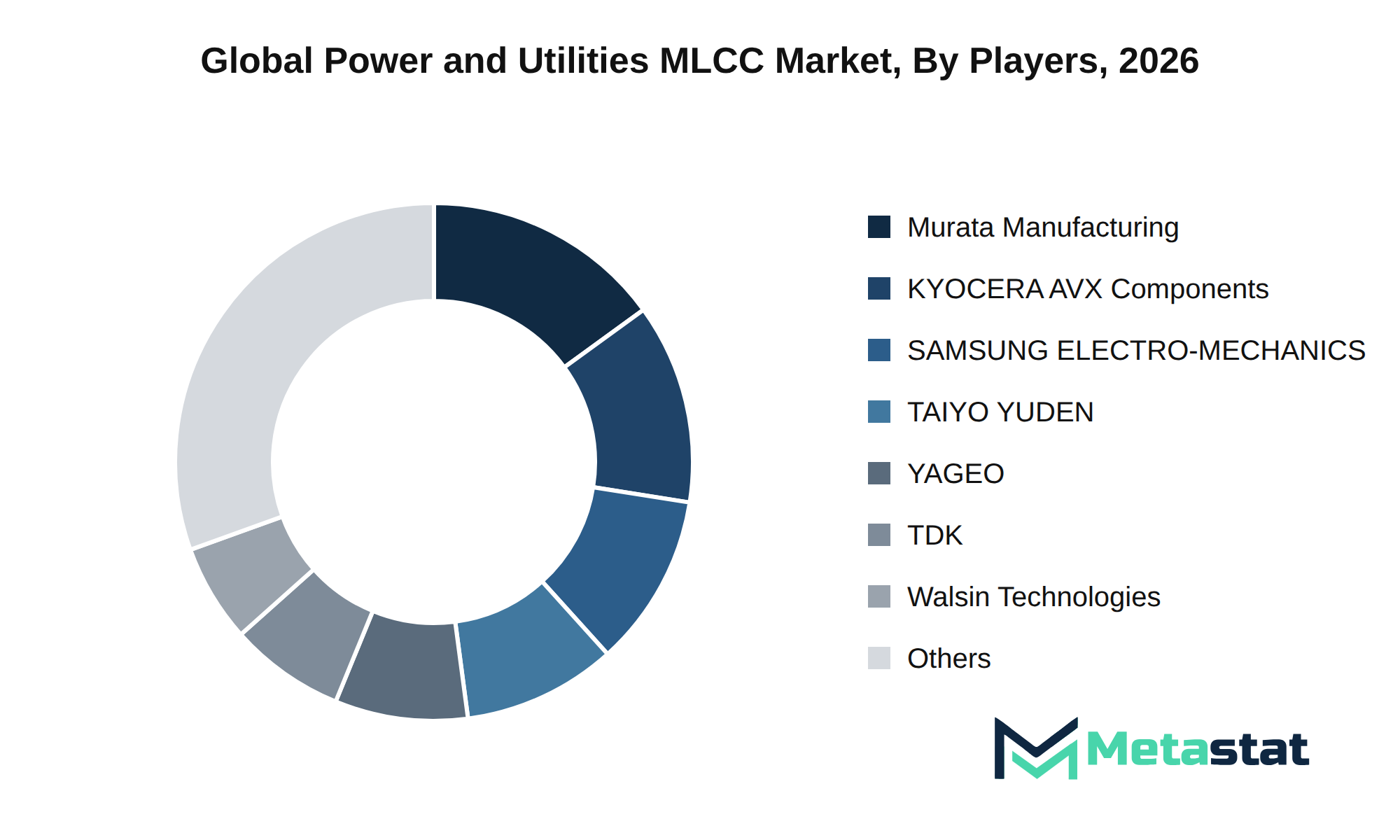
The Power and Utilities MLCC market experiences significant activity in mergers and acquisitions, with companies pursuing strategic consolidation to enhance their competitive positions. Players including KYOCERA AVX Components Corporation and TAIYO YUDEN CO., LTD. focus on integrating their capabilities to expand market reach. This consolidation often leads to improved product differentiation and technological advancements, contributing to enhanced customer retention strategies.
Pricing architectures in the market vary, with firms like YAGEO Group and SAMSUNG ELECTRO-MECHANICS employing diverse commercial models. These strategies optimize pricing while maintaining competitive edge and addressing barriers to entry posed by emerging players. The presence of established players alongside potential new entrants drives innovation and reinforces strategic growth vectors across the market.
Research and development pipelines remain crucial for maintaining technological defensibility. Companies including Murata Manufacturing Co., Ltd. and TDK Corporation invest heavily in proprietary technology, securing their intellectual property portfolios. This focus on innovation not only creates barriers to entry but cultivates a competitive outlook that benefits the overall Power and Utilities MLCC market.
Joint ventures and strategic alliances play a significant role in shaping the market dynamics. Collaborations among players, including Walsin Technologies Corporation and Vishay Intertechnology, Inc., enhance cross-industry partnerships that improve product offerings and expand market presence. Such partnerships act because a catalyst for growth, enabling companies to navigate evolving market demands effectively.
Market size is forecast to rise from USD 707.1 million in 2025 to over USD 1,867.2 million by 2033. This growth translates to a compound annual growth rate (CAGR) of 12.9%. The base case scenario reflects a steady increase driven by ongoing demand in sectors like power generation and renewable energy. In a bull scenario, accelerated adoption of next-generation technologies coupled with increased investment in infrastructure could lead to a more robust market environment. A bear scenario could emerge from potential geopolitical tensions and shifts in trade corridors, which disrupt supply chains and alter downstream demand patterns.
Key factors influencing future growth in the Power and Utilities MLCC market include the maturation of core industries, structural consumption shifts, and evolving regulatory landscapes. Executives prioritize strategic capital allocation and infrastructure commitments to address unmet enterprise needs and seize emerging white-space opportunities. R&D commercialization timelines affect product life cycles, shaping market dynamics driven by companies striving to meet imminent compliance milestones and navigate policy enforcement horizons. Understanding these elements is essential for stakeholders aiming to capitalize on high-growth pockets within the market.
The report strategically identifies and profiles the key market players and analyses their core competencies in each sub-segment of the Power and Utilities MLCC market.
Report Attributes | Details |
Study Period | 2021-2033 |
Base Year | 2025 |
Estimated Year | 2026 |
Forecast Period | 2026-2033 |
Historical Period | 2021-2025 |
Growth Rate | CAGR 12.9% from 2026 to 2033 |
Revenue Unit | USD million |
Segmentation | By Dielectric Type, Rated Voltage, MLCC Form Factor, Power & Utility Application, and Region |
By Region | North America (By Dielectric Type, Rated Voltage, MLCC Form Factor, Power & Utility Application, and Country)
|
Europe (By Dielectric Type, Rated Voltage, MLCC Form Factor, Power & Utility Application, and Country)
| |
Asia Pacific (By Dielectric Type, Rated Voltage, MLCC Form Factor, Power & Utility Application, and Country)
| |
South America (By Dielectric Type, Rated Voltage, MLCC Form Factor, Power & Utility Application, and Country)
| |
Middle East and Africa (By Dielectric Type, Rated Voltage, MLCC Form Factor, Power & Utility Application, and Country)
|
Find answers to common questions about this report
The Power and Utilities MLCC market size was valued at USD 707.1 million in 2025, according to the Metastat Insights study.
The Power and Utilities MLCC market is projected to grow at a CAGR of 12.9% during the forecast period from 2026 to 2033.
The North America Power and Utilities MLCC market size is estimated to reach USD 317.4 million by 2033.
Class 1 MLCC (C0G/NP0) leads the Power and Utilities MLCC market with a projected value of USD 1,195 million by 2033, based on its higher growth rate compared to other dielectric types.
Investment in infrastructure development and technological integration are key drivers for the Power and Utilities MLCC market. Rising energy demands and modernization efforts lead to increased spending, while advanced technologies enhance operational productivity, creating a consistent growth trajectory for MLCC adoption.
Regulatory challenges significantly restrain the Power and Utilities MLCC market growth by increasing operational complexity and costs. Compliance with stringent regulations diverts financial resources from innovation and market expansion, while geopolitical fragmentation disrupts supply chains, raising production costs and compressing profit margins. These factors collectively limit the market's long-term viability.
Investment in infrastructure development and technological integration favor product adoption in the Power and Utilities MLCC market. Enhanced spending on power generation and the adoption of advanced technologies improve operational productivity and efficiency, driving demand for multi-layer ceramic capacitors in various applications.
The Power and Utilities MLCC market is estimated to reach a valuation of USD 1,867.2 million by 2033.
Key players in the Power and Utilities MLCC market include KYOCERA AVX Components Corporation, TAIYO YUDEN CO., LTD., YAGEO Group, SAMSUNG ELECTRO-MECHANICS, Murata Manufacturing Co., Ltd., TDK Corporation, and Vishay Intertechnology, Inc.
The Power and Utilities MLCC market is expected to experience a compound annual growth rate (CAGR) of 12.9% from 2026 to 2033.
The analysts below cover Energy and Power research at Metastat Insights.
LEAD ANALYST
Utkarsh Khirodkar is a Lead Market Research Analyst at MetaStat Insight, specializing in market intelligence, technology sector assessments, and competitive strategy.

PRINCIPAL CONSULTANT - ENTERPRISE AI & EMERGING TECHNOLOGIES
Banking & Finance · Electronics and Semiconductor · Energy and Power · Healthcare IT · Information & Technology · Professional Services
Vijay Gunti is a Principal Consultant at MetaStat Insight, bringing over two decades of experience across enterprise digital transformation, technology strategy, and intelligent systems.

ENERGY & INFRASTRUCTURE INDUSTRY CONSULTANT
Automotive and Transportation · Electronics and Semiconductor · Energy and Power · Machinery & Equipment
Saurabh Vasant Ganvir consults for Energy & Infrastructure Industry at MetaStat Insight, specializing in renewable energy, solar EPC, and electric vehicle (EV) infrastructure markets.
Evaluating sovereign cloud deployments for core banking platforms demands a clear view of data residency regulations and migration exit strategies. MetaStat Insight delivered an exhaustive review of regional latency tolerances, mainframe decommission milestones, and third-party vendor concentration risk. The regulatory compliance mapping across European and Asian financial jurisdictions gave our team a dependable baseline for multi-cloud infrastructure discussions.
Replacing petrochemical surfactants with bio-based alternatives requires realistic timelines on industrial precision fermentation scaling. The market research broke down commercialization timelines, feedstock sugar price sensitivities, and regional cosmetic ingredient regulatory approvals in Europe and East Asia. That supplier readiness mapping gave our formulations team reliable context when comparing renewable chemical sourcing roadmaps.
Tracking ceramic matrix composite adoption in high-bypass aero engines requires strict attention to material qualification cycles and FAA airworthiness testing milestones. The MetaStat Insight team provided a detailed timeline of silicon carbide fiber manufacturing capacity and commercial foundry lead times. Having clear visibility into upstream thermal barrier coating supply helped us stress-test our long-term component procurement strategy.
Explore related market intelligence reports worth reading alongside this one.
Starting from
$2950