
LEAD ANALYST
Utkarsh Khirodkar is a Lead Market Research Analyst at MetaStat Insight, specializing in market intelligence, technology sector assessments, and competitive strategy.

Global 5G Capacitor Market Size, Share, By Capacitor Type (Multilayer Ceramic Capacitors (MLCCs), RF/Microwave Capacitors, Aluminum Electrolytic Capacitors, Polymer Aluminum Capacitors, Tantalum and Tantalum Polymer Capacitors, Film Capacitors, and Silicon Capacitors), By 5G Infrastructure Application (Remote Radio Units (RRU), Active Antenna Units (AAU), Baseband Units (BBU), Small Cells, RF Power Amplifiers, 5G Telecom Power Supplies, Microwave and mmWave Backhaul Equipment, and Edge and MEC Equipment), By Capacitor Function (DC-Link and Bulk Energy Storage, Decoupling and Bypass, EMI and Noise Suppression, RF Coupling and DC Blocking, RF Impedance Matching and Tuning, RF Filtering, and Power Amplifier Stabilization), By 5G Network Deployment (Macrocell Base Stations, Small Cell Networks, Distributed RAN, Centralized RAN, Massive MIMO Networks, Private 5G Networks, and Industrial 5G Networks), Industry Analysis, Growth, Trends, and Forecast, 2026-2033
Report ID
MSI-5049
Published
August, 2026
Pages
272 Pages
Format
Historical
Base year
Forecast
Forecast period
Report Details
Choose Your License
Global 5G Capacitor Market
The global 5G Capacitor market was valued at USD 7.2 billion in 2025 and is projected to reach USD 23.1 billion by 2033, growing at a CAGR of 15.8% over the forecast period.
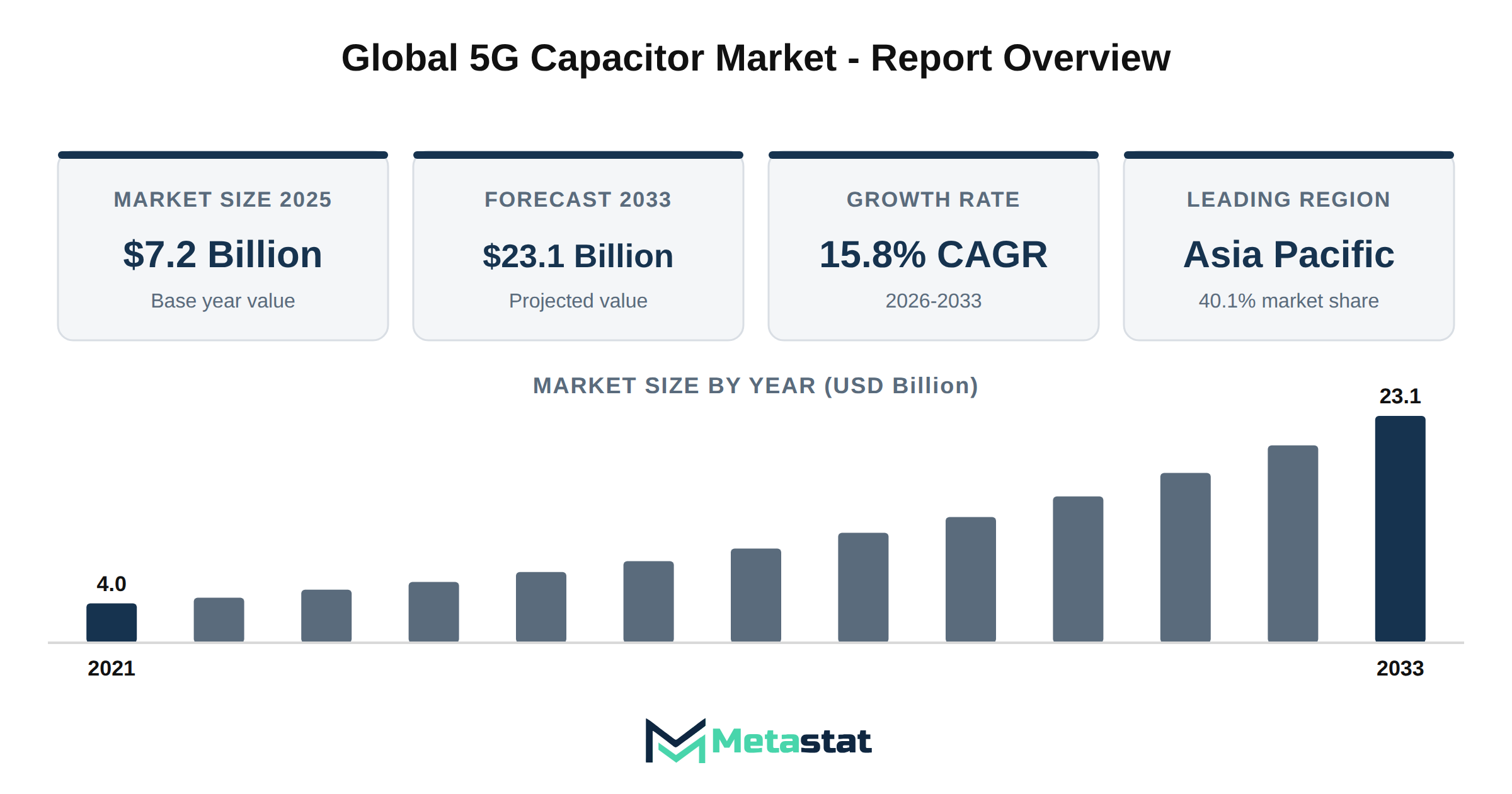
The global 5G Capacitor market was valued at USD 7.2 billion in 2025, with projections indicating expansion to USD 23.1 billion by 2033, reflecting a compound annual growth rate (CAGR) of 15.8%. The market demonstrates strong growth driven by escalating demand for advanced telecommunications infrastructure, resulting from the rollout of 5G technology across various sectors.
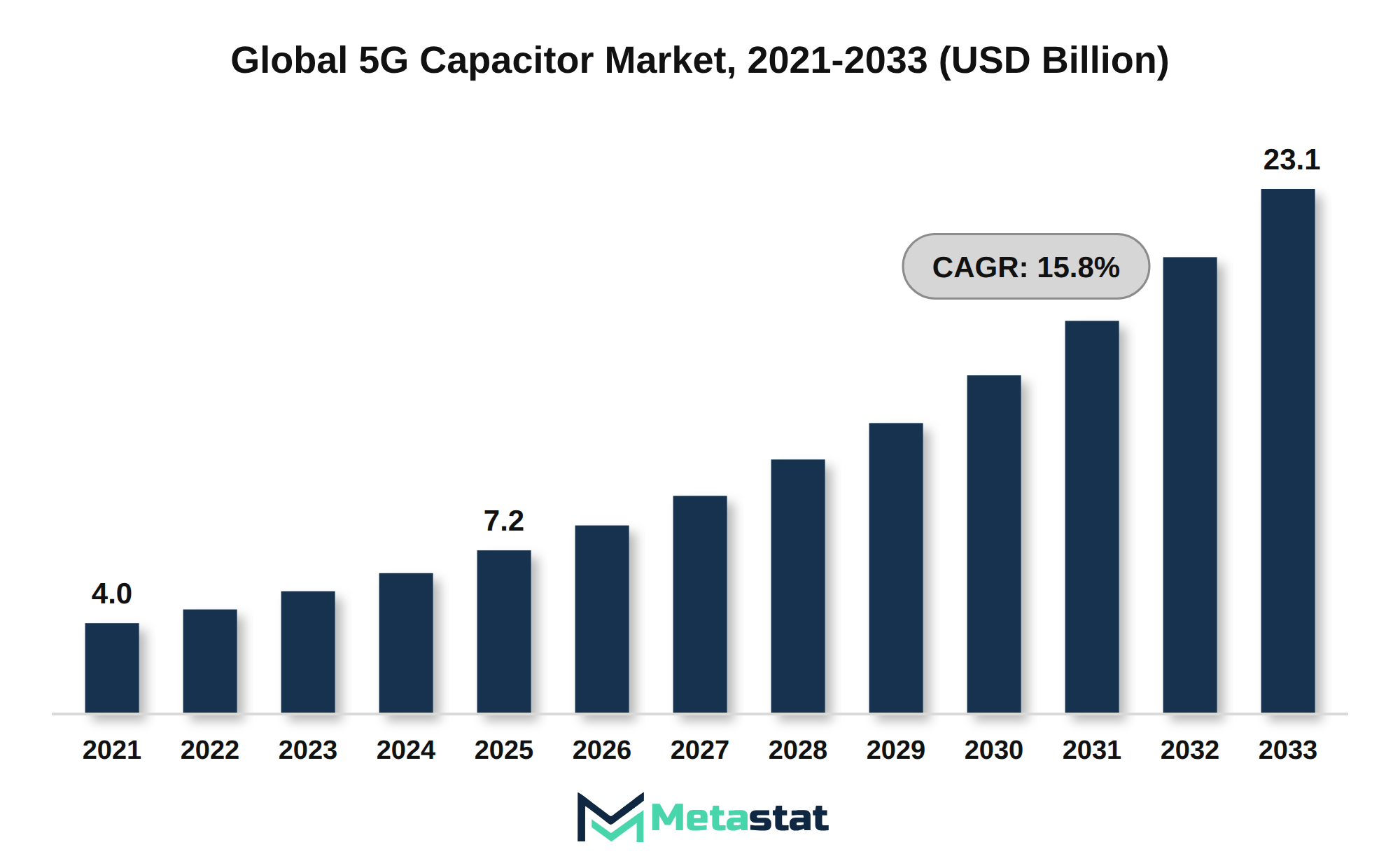
In 2021, the market was valued at USD 4 billion, which rose to USD 4.6 billion in 2022 and reached USD 5.4 billion in 2023. This upward trajectory continued with a valuation of USD 6.2 billion in 2024, leading to the base year figure of USD 7.2 billion in 2025. The forecast period from 2026 to 2033 indicates growth, with values expected to reach USD 8.3 billion in 2026, USD 9.6 billion in 2027, and USD 11.2 billion in 2028. By 2033, the market is projected to achieve a value of USD 23.1 billion.
The demand for 5G capacitors arises from various applications including Remote Radio Units (RRU), Active Antenna Units (AAU), and Baseband Units (BBU), fueled by increasing deployment of 5G networks. The Asia Pacific region leads the market with a share of 40.1%, followed by North America at 28.8% and Europe at 20%. South America and the Middle East and Africa hold smaller shares at 6.7% and 4.4%, respectively.
Investment in research and development remains critical for driving innovation in the 5G Capacitor market. Companies focus on creating advanced capacitor technologies to meet evolving requirements of high-frequency applications and improve energy efficiency. This focus on next-gen innovation aligns with broader industry trends towards sustainable transformation and decarbonization efforts, which are increasingly important in the electronics and telecommunications sectors.
The 5G Capacitor market faces a framework shaped by regulatory compliance and standards that influence operational practices and product development. Companies navigate geopolitical risks that impact supply chain dynamics, positioning firms to adapt strategies in response to global market conditions.
Disruption in traditional business models drives a focus on research and development trajectories, promoting next-generation innovations that enhance product offerings. Sustainable transformation initiatives support decarbonization efforts and circular economy dynamics, encouraging manufacturers to adopt eco-friendly practices and materials.
The supply chain reflects complexities in logistics architecture and sourcing, requiring companies to refine procurement strategies. Market fragmentation presents challenges for players, emphasizing the significance of strategic partnerships and mergers and acquisitions to strengthen competitive positioning.
Capital allocation trends indicate a focus on infrastructure investments, crucial for supporting growth in the market. Companies assess capital expenditure and operational expenditure realities to optimize resource deployment effectively.
Macroeconomic headwinds, including inflationary pressures and currency volatility, create a challenging environment for the market. Firms develop strategies to mitigate risks associated with fluctuating economic conditions while maintaining profitability.
The strategic outlook for the 5G Capacitor market highlights corporate imperatives that drive innovation and operational efficiency. High-value recommendations emphasize the necessity for companies to remain agile and responsive to evolving market demands, ensuring sustained growth and competitiveness.
Increasing capital investment serves because a key driver for the growth of the 5G Capacitor market. Strong growth in GDP and favorable interest rates fuel investments in advanced telecommunications infrastructure. Countries prioritize digital transformation, leading to higher demand for 5G technology, which directly impacts the market for capacitors. The push for technological integration and automation accelerates this trend, requiring robust and reliable capacitor solutions for new applications.
Investment in infrastructure development, including 5G network deployment, creates opportunities for capacitor manufacturers. Enhanced operational productivity and cost-efficiency initiatives among telecommunications providers emphasize the need for high-performance capacitors to support new technologies and applications. The ongoing modernization of existing networks and assets, driven by the demand for faster and more reliable services, contributes to the market's expansion.
Overall, the combination of increasing capital investment, coupled with the need for advanced technologies, drives growth in the 5G Capacitor market. This upward trajectory is anticipated to continue because more regions adopt 5G networks and infrastructure investments grow in response to global digital demands.
Investment in infrastructure development significantly impacts the growth of the 5G Capacitor market. The ongoing expansion of digital networks and associated technologies requires substantial capital expenditure. This situation influences various sectors, including telecommunications and smart city initiatives, where enhanced connectivity and data transmission capabilities are critical. Increased funding for upgrading physical and digital infrastructure accelerates the adoption of 5G technologies, directly affecting the demand for capacitors.
Growth in the market results from rising public-private partnerships that facilitate access to funding and resources necessary for infrastructure projects. Financial commitments to modernizing network capabilities create opportunities for suppliers to provide advanced capacitor solutions that meet new performance standards. Enhanced infrastructure improves communication networks and supports emerging technologies, including Internet of Things (IoT) devices and autonomous systems, further driving demand within the market.
The increasing focus on efficiency and operational productivity necessitates the integration of innovative capacitor technologies. Companies seek solutions that offer improved performance and reliability while reducing overall costs. This emphasis on cost efficiency aligns with ongoing efforts to digitize legacy processes, driving the development and deployment of advanced capacitors within the market. The outcome of these investments is expected to lead to expanded revenue streams for manufacturers and enhanced capabilities for end users.
The 5G Capacitor market experiences significant challenges owing to stringent regulatory compliance requirements and ongoing economic pressures. Regulatory frameworks surrounding electronic components impose high standards for safety, environmental impact, and performance, leading to increased costs for manufacturers. Compliance hurdles delay product launches, impacting market entry timelines and reducing competitive positioning.
Macroeconomic factors contribute further to market constraints. Inflationary pressures and rising operational costs heighten the financial burden on suppliers, leading to capital stagnation. High capital investment requirements deter new entrants, creating barriers to market expansion. Supply chain disruptions, influenced by geopolitical instability and resource scarcity, complicate the procurement of essential materials and limit production capacity.
Deployment bottlenecks represent a significant challenge. Infrastructure gaps and connectivity deficits hinder the rollout of 5G networks, affecting demand for capacitors. The market faces skilled labor deficiencies, which obstruct adequate staffing for manufacturing and innovation. Rising workforce overhead adds to operational costs, squeezing profit margins for producers.
Data security vulnerabilities and privacy concerns surrounding 5G technology create apprehension among potential adopters, impacting overall market growth. Intellectual property theft risks deter investment, resulting from companies hesitating to allocate funds without assurance of asset protection. Market fragmentation, cultural barriers, and regional adoption resistors complicate efforts to standardize products across diverse markets, stifling growth opportunities within the 5G Capacitor market.
The 5G Capacitor market experiences significant challenges stemming from geopolitical fragmentation and trade deficits, creating an environment of uncertainty for manufacturers and suppliers. Tariff friction between leading economies disrupts supply chains, resulting in increased production costs and pricing pressures. This situation compels manufacturers to navigate complex conditions marked by trade restrictions and shifting regulatory requirements, impacting operational efficiency and profit margins.
Technological disruptions, including rapid advancements in semiconductor technologies, impose additional operational challenges. Companies face the necessity of integrating new technologies into existing systems, leading to interoperability friction that complicates product development and market entry. Tight labor markets exacerbate workforce skill gaps, hindering talent retention and innovation within organizations.
Environmental lifecycle footprints and decarbonization mandates create pressures on manufacturers to adopt more sustainable practices. Compliance with evolving legal liabilities complicates operational strategies, affecting the overall competitiveness of players in the market. These multifaceted challenges require agile responses and strategic planning to sustain growth within the 5G Capacitor market.
The ongoing digital transformation across various industries accelerates the demand for the 5G Capacitor market, particularly driven by organizations modernizing infrastructure to leverage next-generation capabilities. Rapid advancements in technologies including artificial intelligence, Internet of Things, and cloud computing create opportunities for manufacturers and suppliers to develop innovative capacitor solutions tailored for specific applications. This trend influences multiple sectors including telecommunications and automotive, where enhanced performance and reliability are essential. Investment in new technologies drives market expansion, resulting in substantial revenue growth.
Geographical expansion is another critical factor contributing to market potential. Rapid urbanization in emerging economies increases the need for robust communication networks, thereby boosting investments in 5G infrastructure. Regions like Asia Pacific, which holds a considerable share of the market, experience a strong focus on developing advanced telecommunications systems. This regional demand creates opportunities for local and international players to establish a foothold and cater to the evolving needs of various industries.
Sustainability imperatives shape the market landscape. Growing attention towards eco-friendly practices leads companies to invest in green technologies and materials for capacitor production. This shift aligns with consumer preferences for environmentally conscious products, enabling manufacturers to differentiate offerings within the market. While firms prioritize energy-efficient solutions, the 5G Capacitor market positions itself because a key player in facilitating this transition.
Strategic consolidation through mergers and acquisitions enhances competitive positioning among market participants. Companies are seeking partnerships to combine resources, share innovations, and expand product portfolios. This trend contributes to market resilience and adaptation in response to evolving consumer demands, ultimately creating a competitive environment that drives growth and accelerates advancements across the 5G capacitor landscape.
The Global 5G Capacitor market is segmented based on Capacitor Type, 5G Infrastructure Application, Capacitor Function, and 5G Network Deployment.
Valued at USD 5.9 billion in 2026, the Multilayer Ceramic Capacitors (MLCCs) segment is projected to reach USD 16.1 billion by 2033, reflecting a CAGR of 15.3% during the forecast period. The expansion of this segment results from the increasing demand for high-frequency and high-density applications, particularly in the telecommunications sector, driven by the rollout of 5G infrastructure. Enhanced performance characteristics, including lower equivalent series resistance and improved thermal stability, increase the appeal of MLCCs in advanced electronic devices, including smartphones and IoT applications.
Technological maturation influences this segment significantly, with ongoing advancements contributing to the miniaturization of electronic components. This trend matches the industry's demand for compact and efficient solutions, driving the adoption of MLCCs in next-generation devices. Downstream applications encompass a diverse range of end-use dynamics, including consumer electronics, automotive electronics, and industrial equipment. These sectors increasingly rely on MLCCs for their high reliability and performance, which supports the segment's growth trajectory.
Cost structures and pricing volatility present challenges that affect margin pressures within the MLCCs segment. Fluctuations in raw material prices, particularly for precious metals used in capacitor manufacturing, impact the overall cost of production. Strategic opportunity windows arise from the increasing demand for high-capacity MLCCs, which accommodate the growing power requirements of modern devices. The 5G Capacitor market benefits from this shift, positioning MLCCs because critical components in the evolving electronics landscape, enhancing their role in sustaining robust market growth.
RF/Microwave Capacitors play a critical role in the evolving 5G Capacitor market, driven by increasing demand for high-frequency applications and enhanced signal integrity. The segment is closely tied to advancements in telecommunication technologies, particularly within 5G infrastructure, where the need for reliable and efficient components is significant. This demand arises from the deployment of sophisticated network systems that require improved performance and reliability.
Technological maturation within semiconductor and telecommunications industries contributes to the rapid adoption of RF/Microwave Capacitors. Innovations in materials and manufacturing processes have led to enhanced performance characteristics, including lower losses and higher power handling capabilities. These improvements enable components to meet the rigorous demands of modern communication systems. This directly benefits end-users, including telecom operators and equipment manufacturers.
The growing emphasis on miniaturization and efficiency in electronic devices drives segment expansion. While consumer electronics evolve, the need for compact and efficient components becomes essential, fueling investments in RF/Microwave Capacitors. Downstream applications, particularly in high-speed data transmission and wireless communication platforms, witness an upsurge in need for these capacitors, highlighting their significance in the market.
The RF/Microwave Capacitors segment is estimated to reach USD 0.8 billion by 2033, at a CAGR of 17.3% during the forecast period. This growth reflects increasing complexity of network infrastructures and rising standards for performance and reliability across various applications. The segment's potential for growth aligns with broader trends in the 5G Capacitor market, which anticipates substantial expansion driven by ongoing technological advancements.
Demand for Aluminum Electrolytic Capacitors within the 5G Capacitor market arises from their essential role in high-frequency applications, particularly in 5G infrastructure. The growing need for efficient energy storage solutions emphasizes the use of these capacitors in various telecommunications equipment, especially because networks transition to higher bandwidth capabilities. Their ability to handle higher voltage and current levels positions them favorably in applications that require stability and reliability.
Technological advancements contribute significantly to the expansion of this segment. Innovations in design and materials enhance performance characteristics, which in turn attract investment from manufacturers aiming to meet the increasing requirements of modern electronics. The market for Aluminum Electrolytic Capacitors is projected to reach USD 1.1 billion by 2033, reflecting a strong growth trajectory fueled by these advancements.
End-use dynamics shift owing to industries adopting faster and more reliable communication technologies. Manufacturers focus on ensuring compliance with regulatory standards, which further influences product development. The ability of Aluminum Electrolytic Capacitors to adapt to these evolving demands enhances their attractiveness in the supply chain.
Raw material sourcing and supply chain resilience remain critical, especially considering potential fluctuations in costs associated with aluminum and electrolyte materials. Strategic investments in production capacity and technology upgrades within this market segment support long-term growth, aligning with the broader trends observed in the 5G Capacitor market.
Significant growth characterizes the Polymer Aluminum Capacitors segment within the 5G Capacitor market, projected to expand at a CAGR of 19.2% during the forecast period. This segment benefits from increasing demand for lightweight and efficient components, which aligns with the technological requirements of 5G infrastructure. Enhanced performance characteristics, including higher capacitance and lower equivalent series resistance, drive adoption across various applications, including remote radio units and small cells.
Technological advancements contribute to segment expansion by enabling manufacturers to produce more compact and efficient capacitors. The shift towards energy-efficient solutions in telecommunications fuels the uptake of polymer aluminum capacitors, driven by these components' superior performance while reducing overall system energy consumption. This trend aligns with broader industry movements toward sustainability and operational efficiency.
Regulatory compliance standards regarding energy efficiency and safety in electronic components further influence the growth trajectory of this segment. End-users increasingly demand high-performance capacitors, while manufacturers face pressure to innovate and meet stringent specifications. This environment creates strategic opportunity windows for companies that invest in research and development to enhance product offerings.
The Polymer Aluminum Capacitors segment demonstrates resilience against cost pressures associated with raw material sourcing. A focus on supply chain robustness and local sourcing mitigates the impact of price volatility in essential materials. Continuous evaluation of market dynamics ensures that manufacturers navigate potential substitution risks effectively, maintaining a competitive edge in the 5G Capacitor market.
Growing interest in Tantalum and Tantalum Polymer Capacitors arises from their unique properties, including high capacitance and excellent stability under varying temperatures and frequencies. These capacitors play a critical role in high-performance applications within the 5G ecosystem, where reliable performance and efficiency are essential. The demand for advanced communication technologies drives manufacturers to integrate these capacitors into various components, enhancing performance in devices including remote radio units and active antenna units.
Technological maturation accelerates the adoption of Tantalum and Tantalum Polymer Capacitors, with ongoing innovations and improvements in manufacturing processes leading to higher efficiency and reduced costs. This evolution attracts investment into research and development, enabling advancements in design and materials that optimize functionality. The segment's expansion creates opportunities for manufacturers to explore new applications in the growing 5G Capacitor market, supporting diverse end-use industries, including telecommunications and consumer electronics.
Increased regulatory compliance standards surrounding electronic components enhance the focus on high-quality capacitors, reinforcing Tantalum and Tantalum Polymer Capacitors because essential for meeting stringent performance criteria. This focus on compliance adds strategic value for manufacturers, driving them to prioritize sustainability and reliability. Consumption shifts toward advanced electronic devices reinforce the importance of these capacitors, because consumers demand higher performance and greater energy efficiency, aligning with trends in the broader 5G Capacitor market.
Supply chain resilience factors into the market dynamics for Tantalum and Tantalum Polymer Capacitors, with raw material sourcing becoming increasingly crucial. Disruptive alternatives, along with substitution risks, challenge manufacturers to maintain a competitive edge. Strategic opportunity windows emerge because companies navigate these complexities, highlighting the importance of innovation and adaptability in securing market positioning.
Significant demand for Film Capacitors arises from their vital role in 5G infrastructure, particularly within applications that require high-frequency and high-performance characteristics. This segment thrives owing to the ongoing technological maturation of the telecommunications sector, which drives the adoption of advanced materials and designs that enhance the efficiency and reliability of electronic components.
While industries transition toward next-generation upgrades, Film Capacitors play a key role in improving energy efficiency and performance, which aligns with consumer demands for greener technology solutions. The evolution of this product segment corresponds with increased investments in R&D, which drives innovation to meet emerging challenges in 5G network deployment.
Changes in downstream applications reflect a shift toward more complex electronic systems requiring compact and efficient energy storage solutions. Regulatory compliance standards continue to push manufacturers toward higher quality and performance benchmarks, influencing the direction of product development in the market.
Supply chain resilience presents critical opportunities for the growth of Film Capacitors. Sourcing raw materials for production, including high-grade polymers and ceramics, necessitates strategic partnerships to mitigate risks associated with price volatility and availability. Disruptive alternatives, including ceramic capacitors and aluminum electrolytic capacitors, remain a consideration. The unique attributes of Film Capacitors ensure their relevance in high-performance applications.
Strategic opportunity windows for investment exist, particularly in light of increasing consumer electronics and renewable energy system demands. Enhanced performance and compliance with evolving industry standards position Film Capacitors because essential components in the 5G Capacitor market, contributing to operational efficiencies and competitive advantages for manufacturers.
Technological advancements in semiconductor materials significantly impact the adoption of Silicon Capacitors within the 5G Capacitor market. Increased demand for high-performance electronic devices drives innovation in this segment, leading to the development of miniaturized and efficient capacitor solutions. The evolution of 5G infrastructure applications necessitates robust components that withstand higher voltages and frequencies, creating a favorable environment for Silicon Capacitors.
Downstream applications in telecommunications, automotive electronics, and consumer electronics influence consumption patterns for these capacitors. Enhanced functionalities, including improved energy efficiency and faster charging capabilities, align with industry trends toward sustainability and performance optimization. Regulatory compliance standards increasingly emphasize energy efficiency, prompting manufacturers to invest in Silicon Capacitors that meet stringent requirements.
Strategic opportunity windows arise through collaborations and partnerships among key players in the market. These alliances facilitate knowledge sharing and resource allocation, enhancing product development and market penetration. Capital investment outlooks reflect an upward trajectory, with companies focusing on expanding their production capacities and advancing technological capabilities to address the growing demand for Silicon Capacitors in the evolving 5G ecosystem.
Demand for Other (Vacuum and Specialized RF Capacitors) in the 5G Capacitor market derives primarily from their unique capabilities in high-frequency applications. These capacitors provide essential performance in environments that require high reliability and efficiency, particularly within telecommunications and advanced electronic systems. The evolution of 5G technology drives the adoption of these specialized components, driven by the need for enhanced signal integrity and reduced interference, which becomes increasingly critical.
Technological maturation within the sector drives innovation and product development. Manufacturers focus on improving materials and designs to enhance performance characteristics, leading to an expanded range of applications. This ongoing evolution aligns with the growing demand for miniaturization and integration within the 5G infrastructure, where space and weight constraints are significant factors.
Downstream applications, particularly in RF and microwave technology, dictate the performance specifications for these capacitors. The shift towards more sophisticated telecommunication solutions emphasizes the role of vacuum and specialized RF capacitors in stabilizing signals and ensuring optimal operation in high-frequency circuits. Regulatory compliance and industry certifications further influence market dynamics, necessitating adherence to standards that ensure both safety and efficacy in end-use applications.
While investment in 5G infrastructure continues, strategic opportunity windows emerge for manufacturers of these capacitors. The focus on enhanced capabilities and performance positions them well to capture market share in an expanding ecosystem. Supply chain resilience remains crucial, particularly regarding raw material sourcing and logistics. Ensuring a steady supply of high-quality materials supports continued innovation and responsiveness to market demands, reinforcing the role of Other (Vacuum and Specialized RF Capacitors) within the competitive landscape of the 5G Capacitor market.
Growth in the Remote Radio Units (RRU) segment is driven by the deployment of 5G technology across various regions. Valued at USD 1.4 billion in 2026, this segment is projected to reach USD 3.6 billion by 2033, at a CAGR of 14.2% during the forecast period. The expansion of 5G infrastructure fuels demand for RRUs, which enhance network performance and coverage. This segment attracts investment due to its critical role in enabling high-speed data transmission and supporting the growing number of connected devices.
Technological maturation of RRUs contributes to their adoption in urban and rural areas, with advancements including integrated antennas and improved energy efficiency. These innovations enable operators to lower operational costs while enhancing user experience. Regulatory compliance standards and policies promoting 5G deployment create opportunities for manufacturers in the market. Participants in the 5G Capacitor market benefit from robust demand for RRUs, ensuring a steady path for growth and development.
Growing deployment of Active Antenna Units (AAU) drives the expansion of this segment within the 5G Capacitor market. These units enhance network performance by integrating multiple functions, leading to increased demand for capacitors designed specifically for their applications. The Active Antenna Units (AAU) segment is estimated to reach USD 5.9 billion by 2033, at a CAGR of 17.6% during the forecast period.
Technological maturation in high-frequency applications supports the shift towards AAUs, which require advanced capacitors to meet stringent performance standards. Increased reliance on these units in 5G network deployment enhances demand for capacitors that efficiently handle power management and signal integrity. The resulting consumption shifts highlight the importance of innovative capacitor designs that cater to the specific needs of AAUs, driving both development and investment in this area.
Strategic opportunity windows arise from growing adoption of 5G technologies across various sectors, prompting manufacturers to focus on capacitors with higher reliability and efficiency. Regulatory compliance standards necessitate certifications for components used in AAUs, influencing the sourcing of materials and suppliers involved in the production process. Overall, these dynamics reflect a positive outlook for the segment, contributing significantly to the overall growth trajectory of the market.
Significant growth in the Baseband Units (BBU) segment aligns with the increasing demand for efficient 5G infrastructure. A shift towards advanced mobile communication systems drives investment in this area, particularly because telecommunications companies seek to enhance service quality and capacity. Enhanced data processing capabilities and reduced latency requirements fuel demand for BBUs, which serve because essential components of the 5G network architecture.
The segment is projected to reach USD 1.9 billion by 2033, reflecting a robust expansion trajectory. This growth stems from the rising number of 5G deployments globally, because network operators upgrade their infrastructure to meet the needs of modern consumers and businesses. Competitive pressures within the market encourage manufacturers to innovate and improve operational efficiencies in product development, further supporting segment growth.
Investment in next-generation technologies contributes to evolving product specifications, ensuring that BBUs remain aligned with contemporary requirements. The continuous evolution of mobile applications and services necessitates higher performance from the underlying infrastructure, which in turn increases the demand for high-quality capacitors within the 5G Capacitor market.
Increasing data traffic and the implementation of new communication standards ensure that the BBU segment maintains its relevance within the broader 5G ecosystem. Market participants face challenges related to pricing volatility and margin pressures. Strategic opportunities exist for those who adapt quickly to technological advancements and changing customer needs.
Growth in the Small Cells segment aligns with the broader shift towards enhanced mobile connectivity and high data rates in urban environments. This segment is projected to grow at a CAGR of 19% during the forecast period. Increased deployment of small cell networks addresses the rising demand for capacity and coverage, particularly in densely populated areas. The proliferation of Internet of Things (IoT) devices and the need for reliable connectivity further drive investment in small cells, driven by these solutions enabling efficient network densification. Integration of advanced technologies, including beamforming and MIMO, enhances the performance of small cells, making them an attractive solution for mobile network operators.
Capital investment in this segment is expected to rise due to increased competition among service providers aiming to improve service quality and reduce latency. Regulatory compliance standards supporting the deployment of small cells contribute to the expansion of this market, ensuring that new installations meet necessary safety and performance requirements. The evolving dynamics of the 5G Capacitor market reflect these factors, with demand for capacitors specifically tailored for small cells expected to grow correspondingly.
Increasing demand for RF Power Amplifiers arises from the growing requirements of 5G infrastructure applications, which include enhanced data rates and reduced latency. This segment experiences expansion due to advancements in telecommunications technology, driving the need for higher performing components. Adoption of RF Power Amplifiers aligns with the rising deployment of 5G networks globally, generating substantial interest from telecommunications operators and infrastructure providers.
Investment in next-generation upgrades facilitates the integration of RF Power Amplifiers in various applications, enhancing their performance and efficiency. Product evolution focuses on developing innovative solutions that meet the complexities of modern communication needs. The downstream applications of RF Power Amplifiers extend to areas including consumer electronics, automotive systems, and smart infrastructure, highlighting their significance across multiple sectors.
End-use dynamics indicate a shift toward more advanced RF technologies, with users increasingly seeking high-efficiency components that enhance overall system performance. Regulatory compliance standards play a vital role in shaping the market, influencing design and manufacturing practices to meet specific performance criteria. Cost structures reflect the competitive landscape, with pricing volatility impacting market dynamics and influencing manufacturers' strategies.
Strategic opportunity windows arise from the accelerating demand for high-performance components, prompting players in the market to innovate and improve their offerings. Supply chain resilience holds significance, driven by manufacturers navigating challenges related to raw material sourcing and logistics vulnerabilities. The potential for substitution risks emphasizes the importance of maintaining competitive advantages through technological advancements and product differentiation.
Technological obsolescence remains a concern within the RF Power Amplifiers segment, necessitating ongoing investment in research and development to stay ahead of industry trends. Capital investment outlook suggests a robust future for RF Power Amplifiers, driven by the continuous evolution of the 5G infrastructure market and the increasing reliance on sophisticated telecommunications systems.
Significant advancements in the 5G Telecom Power Supplies segment align with the growing demand for efficient power management solutions within the 5G Capacitor market. Increasing deployment of network infrastructure and the expansion of 5G applications contribute to this demand. The integration of advanced materials and technologies enhances the performance and reliability of power supplies, driving adoption among manufacturers.
Technological maturation within the segment results from ongoing investments in research and development activities aimed at improving energy efficiency and reducing costs. This evolution supports the transition to next-generation power supply solutions, vital for powering remote radio units and baseband units. Enhanced performance capabilities lead to efficient energy consumption, reducing operational costs for network operators.
End-use dynamics highlight the necessity for robust power management in 5G applications, with downstream demand from telecommunications companies and equipment manufacturers. The shift towards decentralized energy systems, particularly in small cell deployments, creates opportunities for innovative power supply solutions that adapt to various operational environments.
Regulatory compliance standards influence product development within this segment, establishing benchmarks that manufacturers meet to ensure efficient and safe operations. The segment experiences pressures related to pricing volatility, driven by fluctuating raw material costs and supply chain vulnerabilities. Strategic opportunities arise for manufacturers investing in sustainable sourcing and production processes, enabling mitigation of risks associated with supply chain disruptions.
Overall, the 5G Telecom Power Supplies segment plays a fundamental role in supporting the infrastructure growth of the 5G Capacitor market. Its advancement facilitates enhanced performance, reliability, and efficiency, aligning with increasing demands of modern telecommunications systems.
Technological advancements in microwave and mmWave backhaul equipment drive demand within the 5G Capacitor market. The shift towards higher frequency bands enhances network performance, enabling faster data transmission and improved latency. Increased adoption of 5G technology across various sectors, including telecommunications and manufacturing, results in a greater requirement for reliable and efficient backhaul solutions.
Investment in next-generation upgrades supports the segment's expansion. Mobile network operators focus on optimizing their infrastructure to manage the increasing volume of data traffic. This demand incentivizes innovation, driving the evolution of backhaul equipment that supports diverse applications, from urban centers to rural deployments.
Regulatory compliance and standards further influence development trends, ensuring that equipment meets specific performance criteria. Manufacturers align their offerings with certification requirements to enhance market penetration and customer trust. Cost structures remain crucial, driven by producers balancing pricing strategies against the rising costs of raw materials and technological components.
Strategic opportunities arise from the need for supply chain resilience. Companies adapt to sourcing challenges and logistics vulnerabilities by diversifying suppliers and enhancing inventory management practices. This adaptability positions firms favorably within the evolving market, ensuring they meet the increasing demand for advanced backhaul solutions.
Growing adoption of Edge and MEC Equipment supports the broader expansion of the 5G Capacitor market. The increasing need for low-latency processing and real-time data management drives demand, particularly in urban environments. While more enterprises deploy edge computing solutions, the necessity for advanced capacitors becomes critical to ensure efficiency and reliability in data transmission and processing.
Technological maturation of edge computing infrastructure acts because a catalyst for market growth. Enhanced capabilities in data processing at the edge facilitate improvements in various applications, including IoT and smart city technologies. This evolution creates a competitive landscape where manufacturers focus on developing capacitors that meet stringent performance and reliability standards.
Next-generation upgrades in networking equipment, particularly those related to MEC, create strategic opportunity windows for suppliers within the market. Innovations in capacitor design and functionality will play a significant role in addressing the requirements of these advanced systems, resulting in improved performance metrics and reduced operational costs for end users.
Regulatory compliance standards surrounding data privacy and security further impact the landscape. Manufacturers ensure that their products align with these regulations, which influences design and production processes. This adherence enhances product appeal and supports market entry into various regions, impacting overall growth trajectories.
Downstream applications in sectors including telecommunications and cloud computing significantly influence consumption patterns. The integration of edge computing with existing network architectures leads to a shift in demand dynamics. Companies that effectively adapt to these changes will capture a greater share of the market.
Cost structures and pricing volatility remain critical considerations for manufacturers in the 5G Capacitor market. Fluctuations in raw material prices and supply chain challenges affect profitability margins. Addressing these issues through strategic sourcing and operational efficiencies enhances competitiveness and supports sustained growth.
Overall, the Edge and MEC Equipment segment presents substantial potential within the expanding context of the 5G Capacitor market. An emphasis on innovation, compliance, and adaptability will drive future developments and enhance opportunities for stakeholders in this sector.
Growing advancements in digital communication technologies fuel demand within the segment focused on Others (DU, CU, RF Front-End Modules, Network Switches and Routers, Timing and Synchronization Equipment). The increasing need for efficient data processing and reliable connectivity drives investment in these components, supported by their crucial roles in enhancing network performance. Integration of these devices into existing infrastructures supports expanded capabilities, aligning with the overall growth trajectory of the 5G Capacitor market.
Regulatory compliance standards and certifications are critical for ensuring product reliability and performance in this segment. Adherence to these standards mitigates risks associated with operational reliability and enhances market acceptance. Innovations in material science and design practices contribute to the evolution of products tailored for these applications, augmenting the development of sophisticated systems within the broader market.
End-use dynamics reflect a shift toward more advanced network architectures, with a growing emphasis on small cell deployments and distributed RAN environments. This shift facilitates improved coverage and capacity, propelling the demand for robust and efficient components. Strategic opportunity windows emerge for manufacturers focused on delivering high-performance solutions that meet evolving market needs within the 5G Capacitor market.
Valued at USD 1.2 billion in 2026, the DC-Link and Bulk Energy Storage segment experiences projected growth to USD 3 billion by 2033, with a CAGR of 13.6% during the forecast period. Increasing demand for energy-efficient solutions in 5G infrastructure drives adoption, driven by the need for reliable energy storage critical in supporting the deployment of advanced telecommunications technologies. Enhanced performance capabilities offered by these capacitors, combined with stringent regulatory compliance standards, stimulate investment and innovation within the segment.
Technological maturation in energy storage solutions leads to improvements in capacitor efficiency and reliability, which influences consumption shifts across various applications. Strategic opportunities emerge for manufacturers to develop next-generation products that align with evolving market demands, reflecting an upward trajectory in the 5G Capacitor market. Capital investments focus on refining production processes and sourcing high-quality raw materials, ensuring supply chain resilience in a competitive landscape.
Demand for decoupling and bypass capacitors in the 5G Capacitor market exhibits a strong upward trajectory, underpinned by technological advancements in electronics. These capacitors play a critical role in maintaining signal integrity and reducing noise in high-frequency applications, driving their adoption across various sectors. The expansion of devices requiring robust power management and signal processing capabilities contributes to the anticipated growth in this segment.
Decoupling and Bypass segment is estimated to reach USD 7.1 billion by 2033, at a CAGR of 16.9% during the forecast period. Increasing deployment of advanced wireless communication infrastructure further boosts the demand for decoupling capacitors, essential for stabilizing voltage and ensuring reliable performance in 5G networks. The ongoing transition towards more sophisticated applications in telecommunications intensifies the focus on high-performance capacitors.
Investment in next-generation technologies continues to create opportunities for product evolution, positioning decoupling and bypass capacitors because key components of innovation. Enhanced performance requirements drive manufacturers to develop capacitors with improved specifications, catering to the needs of advanced telecommunications systems. This evolution reflects broader consumption shifts within the market, where high-quality components are increasingly valued for their contribution to overall system reliability.
Strategic focus on compliance with regulatory standards shapes the competitive dynamics of the market. Manufacturers prioritize certifications that guarantee product quality and performance, addressing the expectations of end-users across various industries. The emphasis on robust supply chain resilience ensures a steady flow of raw materials, mitigating risks associated with market fluctuations and disruptions.
The outlook for decoupling and bypass capacitors remains optimistic, supported by ongoing investment in the 5G ecosystem. While demand for high-speed connectivity and advanced applications continues to rise, the segment stands poised for sustained growth within the broader 5G Capacitor market.
Demand for EMI and Noise Suppression capacitors reflects the increasing need for effective electromagnetic interference management in high-frequency applications. Technological maturation in 5G networks increases the requirement for reliable noise suppression solutions, essential for maintaining signal integrity across communication channels. The segment is projected to reach USD 2.8 billion by 2033, driven largely by the expansion of devices reliant on 5G technology.
Adoption of EMI and Noise Suppression capacitors gains momentum from the integration of advanced materials and manufacturing techniques, leading to enhanced performance and compact designs. Industries including telecommunications, automotive, and consumer electronics prioritize these capacitors to mitigate interference and ensure compliance with stringent regulatory standards. This trend reflects a broader industry shift towards greater operational efficiency, influencing production costs and investment strategies.
5G applications proliferate, and the market confronts challenges related to pricing volatility and raw material sourcing. Supply chain resilience emerges because a critical factor, with manufacturers focusing on establishing diversified supply networks to mitigate risks associated with material shortages. This strategic approach aims to enhance capacity and reduce dependency on single suppliers, ultimately supporting market expansion.
Innovative product evolution continues to drive the segment, with manufacturers investing in research and development to deliver capacitors that meet the demands of next-generation applications. This evolution addresses the growing need for enhanced performance in environments characterized by high levels of electromagnetic noise, further reinforcing the role of EMI and Noise Suppression capacitors within the 5G Capacitor market.
Increasing reliance on advanced communication technologies drives demand for the RF Coupling and DC Blocking segment in the 5G Capacitor market. This segment is projected to grow at a CAGR of 16.3% during the forecast period. Key applications include supporting high-frequency signals and ensuring stable performance in increasingly complex electronic systems. The need for efficient signal transmission and reduced electromagnetic interference in devices has created significant opportunities for manufacturers in this segment.
Technological advancements in capacitor materials and design contribute to enhanced performance characteristics, aligning with the growing complexity of 5G infrastructure. Regulatory compliance standards related to performance and safety encourage manufacturers to innovate and improve product offerings. Capital investment in research and development enables players to refine their products and capture market share effectively.
End-use dynamics reflect a shift towards smaller, more efficient electronic components, prompting a reevaluation of capacitor specifications and capabilities. Manufacturers embracing this trend position themselves favorably within the market, ensuring they meet the demands of various applications. Ongoing product evolution focuses on achieving high reliability and efficiency in RF Coupling and DC Blocking applications.
Demand for RF Impedance Matching and Tuning components within the 5G Capacitor market stems from the increasing complexity of 5G network designs. Heightened data rates and the need for efficient signal transmission drive the demand for capacitors that manage impedance and improve performance in RF applications. These components play a crucial role in reducing signal distortion and enhancing overall system reliability.
Technological maturation in communication technologies fuels interest in RF impedance matching solutions. While networks evolve, manufacturers focus on developing sophisticated capacitors that support next-generation upgrades and innovations. The ongoing evolution in product design reflects the necessity for advanced RF components that meet the rigorous demands of 5G infrastructures.
Adoption of these capacitors is evident across various downstream applications, particularly in active antenna units and small cell networks. Rigorous performance requirements across these applications necessitate reliable RF impedance matching and tuning capabilities, improving the overall performance of 5G systems. Ongoing shifts in consumption patterns towards higher frequency operations increase the significance of this sub-segment within the market.
Regulatory compliance standards and certifications surrounding the deployment of 5G technologies impact market dynamics. Manufacturers face challenges in meeting these standards, which require rigorous testing and validation of RF components. Adhering to these regulations enhances product credibility, directly influencing purchasing decisions among end-users.
Strategic opportunity windows arise from the increasing investment in 5G infrastructure development. While telecommunications providers focus on expanding their networks, the demand for high-performance RF impedance matching capacitors is projected to grow. This investment climate encourages innovation and product evolution, enabling manufacturers to capture a larger share of the market.
Supply chain resilience plays an important role in the availability of raw materials crucial for producing RF impedance matching components. Fluctuations in the availability of these materials introduce pricing volatility, impacting manufacturers' margins. Addressing these vulnerabilities is essential for ensuring a consistent supply of quality capacitors to meet the market's growing needs.
Increasing reliance on RF Filtering technologies stems from the need for superior signal integrity and minimal interference in high-frequency applications. The expansion of 5G networks emphasizes the requirement for advanced filtering solutions capable of managing complex signals in various environments.
Technological maturation in RF filtering techniques drives innovation, leading to improved performance characteristics and reduced form factors. Enhanced product evolution, focusing on higher frequencies and improved bandwidth, reflects ongoing demands in the 5G Capacitor market.
End-use dynamics indicate a growing need for RF Filtering in multiple sectors, including telecommunications, automotive, and consumer electronics. This shift results from the increasing integration of RF technologies into various applications, requiring enhanced filtering capabilities to maintain performance standards.
Regulatory compliance standards and certifications play a crucial role in dictating specifications for RF Filtering components, ensuring reliability and safety in applications. This compliance influences product development and shapes competitive strategies among manufacturers within the market.
Supply chain resilience remains vital for sourcing raw materials essential for RF Filtering capacitors. Manufacturers adapt to fluctuations in raw material availability and pricing volatility, which directly impact production costs.
Substitution risks pose a challenge for RF Filtering products, driven by the emergence of alternative technologies. Robust demand in the 5G Capacitor market for reliable and efficient filtering solutions emphasizes the importance of sustained innovation and adaptation within the sector.
Advancements in 5G technology increase the demand for Power Amplifier Stabilization capacitors. These capacitors play a critical role in ensuring optimal performance, stability, and reliability of power amplifiers, which are essential for transmitting signals in high-frequency applications. The growing integration of 5G networks across various industries drives significant consumption of these capacitors, particularly in applications that require high efficiency and minimal signal distortion.
Technological maturation within the 5G Capacitor market supports the evolution of Power Amplifier Stabilization solutions. Manufacturers focus on enhancing capacitor performance, leading to innovations in materials and design. This evolution aligns with the broader trend of next-gen upgrades across communication infrastructure. Increased performance requirements lead to greater investments in R&D, creating competitive advantages and enabling suppliers to cater to diverse applications.
Downstream applications, including telecommunications and IoT, significantly drive demand for Power Amplifier Stabilization capacitors. While industries expand their reliance on connected devices, the need for reliable power transmission becomes critical. Regulatory compliance standards exert pressure on manufacturers to deliver capacitors that meet stringent performance and safety guidelines, further shaping market dynamics.
Cost structures and pricing volatility impact the profitability of manufacturers in this segment. Suppliers face margin pressures due to fluctuating raw material costs, influencing pricing strategies. Strategic opportunity windows arise owing to manufacturers seeking to stabilize their supply chains and mitigate risks associated with sourcing materials. This resilience is crucial for sustaining growth within the Power Amplifier Stabilization segment of the 5G Capacitor market.
While demand continues to surge, emerging alternatives and disruptive technologies challenge traditional capacitor solutions. Manufacturers that focus on innovation and adaptability will position themselves favorably within the market. By addressing consumption shifts and evolving end-use dynamics, companies capture strategic opportunities, ensuring sustained growth in Power Amplifier Stabilization solutions.
Advancements in energy storage technologies drive interest in Hold-up and Ride-through Energy Storage within the 5G Capacitor market. These capacitors play a critical role in ensuring system reliability and stability during power interruptions, making them essential for various applications. Increasing deployment of 5G networks necessitates robust energy storage solutions that support uninterrupted service for users and devices.
Heightened focus on regulatory compliance and industry standards influences the segment's development. Companies seek to meet stringent performance requirements and certifications that dictate energy efficiency and reliability. This trend encourages innovation in materials and construction techniques, which enhances the performance of Hold-up and Ride-through Energy Storage capacitors.
Technological maturation in capacitor design and manufacturing techniques contributes to improved product reliability and efficiency. Integration of advanced materials and production methodologies allows for enhanced energy density and reduced form factors, which aligns with the needs of the market. End-users increasingly prioritize energy storage solutions that provide dependable performance while optimizing space and cost.
The market experiences shifts in consumption patterns resulting from industries moving towards greener technologies and sustainable practices. Demand for energy-efficient products significantly influences purchasing decisions, prompting manufacturers to focus on eco-friendly designs and materials. This trend aligns with broader industry movements towards sustainability and energy conservation.
Investment in research and development continues to present strategic opportunities within the segment. Companies striving to differentiate their offerings often invest in innovative solutions that enhance performance and functionality. A focus on next-generation upgrades ensures that Hold-up and Ride-through Energy Storage capacitors remain competitive in a changing market.
Demand for capacitors in snubber and resonance applications reflects the increasing complexity of electronic systems within the 5G Capacitor market. This segment experiences growth driven by the critical role of snubber circuits in protecting sensitive components from voltage spikes and ensuring stable operational performance. The evolution of resonance applications in telecommunications enhances signal integrity and minimizes interference, contributing to enhanced system reliability. Key drivers include the push for efficient power management solutions and the need for improved electromagnetic compatibility in advanced communication systems.
Investment in research and development to create innovative snubber and resonance capacitor solutions aligns with ongoing technological maturation. Manufacturers focus on optimizing materials and designs that enhance performance in high-frequency applications. The demand landscape is shaped by end-user industries prioritizing reliability, leading to increased adoption of specialized capacitors. The market experiences shifts resulting from users recognizing the necessity for compliance with regulatory standards, further supporting the expansion of this segment.
Strategic opportunity windows emerge for players able to deliver high-performance solutions tailored to the unique challenges posed by emerging technologies. The emphasis on optimizing supply chain resilience and sourcing quality raw materials stands critical because manufacturers navigate market dynamics. Sustainable sourcing strategies play a significant role in mitigating risks associated with material shortages and price fluctuations, ensuring consistent product availability. Overall, the segment of snubber and resonance applications contributes to the broader growth trajectory of the 5G Capacitor market.
Valued at USD 2.6 billion in 2026, the Macrocell Base Stations segment is projected to reach USD 6.2 billion by 2033, at a CAGR of 13.5% during the forecast period. The rapid expansion of 5G networks necessitates enhanced infrastructure capabilities, significantly influencing demand for capacitors in macrocell base stations. The shift towards higher data transmission rates and lower latency requires robust components that support these advanced functionalities. Technological maturation in this sector drives investments in next-generation infrastructure, propelling the adoption of new technologies that rely heavily on efficient energy storage and power management solutions.
Investment in macrocell base stations aligns with the broader trends within the 5G Capacitor market, driven by companies focusing on improving efficiency and performance. Enhanced requirements for energy efficiency create opportunities for capacitor types specifically designed for high-frequency applications, including multilayer ceramic capacitors (MLCCs) and RF microwave capacitors. Transitioning to these advanced capacitors supports the operational efficiency of macrocell base stations, ensuring they meet the demands of modern communication systems.
Emerging applications within the macrocell base station sector drive further innovation. The increasing integration of smart technology and IoT devices necessitates the deployment of more sophisticated energy storage solutions. Regulatory compliance standards regarding energy efficiency and environmental sustainability influence capacitor selection, with manufacturers working to produce certified components that meet these criteria. Developments in this segment reflect a proactive approach to addressing both current operational challenges and future growth opportunities within the 5G Capacitor market.
Significant growth in Small Cell Networks reflects increasing demand for enhanced mobile broadband and wireless connectivity. Urban areas become densely populated, and the need for reliable and high-capacity network infrastructure drives the expansion of small cell deployments. This segment is projected to reach USD 5.2 billion by 2033, with a CAGR of 18.7% during the forecast period. Factors influencing this growth include the proliferation of Internet of Things devices and the rise in data traffic, necessitating efficient network solutions. Technologies supporting smaller, denser cell installations enhance overall network performance and user experience, attracting investments across various industries seeking to improve connectivity.
Investment in small cell technology supports the transition to 5G, allowing operators to deliver high-speed services in urban environments. Manufacturers recognize the importance of capacitors within these systems, ensuring efficient power management and signal processing. The demand for capacitors tailored to small cell applications has expanded, driven by the requirement for improved energy efficiency and miniaturization. Optimizing performance while reducing costs aligns with broader market trends, creating opportunities for innovation and collaboration among key players in the 5G Capacitor market.
Expansion of Distributed RAN capabilities significantly impacts the 5G Capacitor market. The shift towards decentralized network architectures drives demand for efficient and high-performance components that support effective connectivity. Increasing mobile data traffic and the growing trend of remote connectivity contribute to the rising adoption of Distributed RAN technologies. Enhanced performance requirements for network reliability and capacity necessitate advanced capacitor solutions designed for high-frequency applications.
The Distributed RAN segment is expected to reach USD 2 billion by 2033. Continued investment in telecommunications infrastructure fuels this growth, enabling the deployment of more robust 5G networks. The ongoing transition to next-generation upgrades influences the product evolution of capacitors, with an emphasis on miniaturization and improved thermal management. This trend aligns with the increasing emphasis on energy efficiency and performance optimization within the market.
Rapid advancements in communication technologies create strategic opportunity windows for suppliers in the capacitor ecosystem. Manufacturers focusing on the evolving needs of Distributed RAN applications position themselves advantageously in the competitive environment. Regulatory compliance standards and certifications related to electromagnetic interference drive innovation and product testing requirements, enhancing the overall quality and reliability of capacitors in this segment.
Investment in centralized Radio Access Network (RAN) technologies strongly influences the growth of the 5G Capacitor market. Centralized RAN architectures enhance operational efficiencies and reduce infrastructure costs, driving demand for capacitors tailored to support these systems. Valued at USD 2.0 billion in 2026, the segment is projected to grow at a CAGR of 13.1% during the forecast period. The transition from traditional RAN to centralized models facilitates better resource allocation and management, prompting operators to invest in advanced capacitive solutions.
Technological maturation accelerates the adoption of centralized RAN solutions. Innovations in software-defined networking (SDN) and network function virtualization (NFV) enable operators to deploy centralized RAN more effectively, requiring capacitors that ensure reliability and performance longevity. Increasing demand for high-capacity data transmission and low-latency communication creates significant growth opportunities within this segment. In this context, the strategic focus on optimizing network performance directly correlates with an uptick in the demand for specific capacitor types within the market.
Enhanced demand for MIMO Networks arises from the need for increased capacity and improved spectral efficiency in 5G networks. Transitioning to these advanced networks enables telecom operators to manage high traffic loads and enhance user experiences. Adoption largely stems from the mobile telecommunications sector, where operators invest significantly in infrastructure to support next-generation services.
Technological maturation plays a critical role in expanding this segment. Innovations in antenna technologies and signal processing techniques contribute to the development of MIMO systems, leading to significant improvements in data throughput. Upgrading systems influences the requirements for high-performance capacitors, creating opportunities for suppliers in the 5G Capacitor market.
End-use dynamics reflect the growing reliance on cloud services, IoT applications, and real-time data processing. These factors increase the need for robust network architectures, compelling stakeholders to invest in enhanced infrastructure. Consequently, strategic opportunities for capacitor suppliers arise, allowing them to cater to the evolving specifications of MIMO networks.
Consumption shifts driven by increased data traffic and demand for low-latency services further support market expansion. Regulatory compliance standards promote the adoption of energy-efficient and high-performance components, influencing procurement decisions among manufacturers. Strong partnerships among key players enhance supply chain resilience, ensuring adequate raw material sourcing and efficient logistics.
Strategic opportunity windows exist for businesses aiming to capitalize on the growing demand for MIMO technologies. Substitution risks related to alternative technologies highlight the importance of continuous innovation in capacitor development. The competitive environment emphasizes a focus on product evolution and next-gen upgrades, positioning stakeholders to benefit from the increasing investments directed towards advanced network deployments.
Adoption of Private 5G Networks emerges from the growing need for enhanced connectivity and data management in various industries. Companies seek improved performance and reliability, driving demand for specialized infrastructure that supports these networks. Industries including manufacturing, healthcare, and logistics increasingly recognize the advantages of deploying private networks to enhance operational efficiencies and secure data transmission.
Technological maturation significantly influences segment expansion, with advancements in network slicing, edge computing, and AI integration providing significant capabilities for private 5G. These technologies enhance data processing and analysis, enabling real-time decision-making and operational agility.
The evolution of products tailored for Private 5G Networks reflects the industry's focus on delivering customized solutions that meet specific business needs. This includes the development of energy-efficient hardware and software that optimize network performance while reducing operational costs. Consequently, businesses experience improved productivity and reduced latency, which further supports the growth of the 5G Capacitor market.
Regulatory compliance standards and certifications contribute to the adoption of private networks, ensuring that companies adhere to data privacy and security regulations. This regulatory framework builds confidence among potential adopters, facilitating investment in new technologies.
Increasing competition among technology providers drives innovation within the segment, driving down prices for essential components. This trend enables broader access to advanced solutions, allowing smaller enterprises to deploy private networks and leverage the benefits of 5G technology.
Strategic opportunity windows arise from businesses recognizing the potential of private 5G to transform operations and enhance customer experiences. Companies investing in this area gain a competitive advantage by adopting advanced capabilities that traditional networks cannot provide, reinforcing the growth trajectory of the 5G Capacitor market.
Growing interest in Industrial 5G Networks arises from the push towards automation and smart manufacturing. Companies prioritize enhanced connectivity to support real-time data processing and machine-to-machine communication. This connectivity aligns with Industry 4.0 initiatives, driving demand for efficient and reliable infrastructure, which impacts the 5G Capacitor market. High-performance capacitors support critical functions in various industrial applications, including robotics, IoT devices, and advanced sensors.
Technological maturation in semiconductor and capacitor technologies enhances the capabilities of Industrial 5G Networks. The integration of next-generation upgrades facilitates improved performance and energy efficiency in industrial operations. Manufacturers focus on evolving product offerings to meet the specific needs of this segment, reflecting a broader trend of customization and specialization in capacitor design.
Regulatory compliance and certification standards increasingly dictate the adoption of specific capacitor technologies in industrial settings. Enhanced scrutiny on environmental impacts necessitates the use of advanced materials and production processes, encouraging manufacturers to innovate while adhering to these guidelines. This environment presents strategic opportunities for suppliers who align their products with regulatory expectations.
Supply chain resilience plays a critical role in the Industrial 5G Networks segment. Fluctuations in raw material sourcing and logistics vulnerabilities affect pricing and availability. Companies seek to mitigate these risks through diversified supply chains and strategic partnerships, allowing for greater stability in the face of global challenges. Awareness of disruptive alternatives encourages continuous improvement and adaptation within the capacitor industry.
Investment in Industrial 5G Networks continues to grow owing to companies recognizing the potential returns from enhanced operational efficiency and productivity. The evolution of end-use dynamics indicates a shift towards more sophisticated and integrated systems, reinforcing the importance of capacitors in these applications. The market is poised for developments resulting from stakeholders adapting to the rapidly changing industrial landscape.
Investment in Fixed Wireless Access (FWA) infrastructure supports the expansion of the 5G Capacitor market. Several factors drive demand for this sub-segment, including advancements in communication technology and the growing need for high-speed internet connectivity in underserved areas. Stakeholders within telecommunications and broadband sectors recognize the significance of FWA in enhancing connectivity, which directly influences their capital allocation for 5G deployments.
Technological maturation influences the uptake of Fixed Wireless Access systems. Enhanced equipment capabilities enable operators to provide reliable, high-speed connections to residential and business customers. This reliability attracts more users, facilitating market penetration and expanding service offerings. Next-generation upgrades to existing networks enhance operational efficiency and performance, generating further interest in FWA.
Regulatory compliance standards and policy headwinds shape the operational landscape for Fixed Wireless Access. Supportive government initiatives focusing on broadband expansion minimize barriers to entry, encouraging investment in FWA solutions. These regulations align with broader goals of achieving digital equity and improving access to high-speed internet nationwide, driving adoption in various regions.
Cost structures and pricing volatility within the market impact decision-making among service providers. Competitive pricing for FWA solutions prompts providers to optimize their financial strategies to capture market share while maintaining profitability. This dynamic environment necessitates careful analysis of supply chain resilience and raw material sourcing to mitigate risks and ensure timely delivery of components.
Fixed Wireless Access represents a strategic opportunity window for capital investment, particularly in regions with high demand for enhanced connectivity. Stakeholders in the telecommunications ecosystem focus on leveraging innovative technologies to address consumption shifts and evolving user expectations. This sub-segment's growth contributes significantly to the overall progress of the 5G Capacitor market, highlighting its relevance in the ongoing transition to digital infrastructure.
Diverse applications characterize the Other (Specialized 5G Networks) sub-segment within the 5G Capacitor market. The growing complexity of network demands drives the necessity for specialized solutions that address unique operational challenges. Advanced technologies in communications require high-performance capacitors capable of supporting various specialized network components. This sub-segment benefits from innovations in design and manufacturing, enabling enhanced performance in specialized applications.
End-use dynamics play a vital role in shaping demand within this sub-segment. Companies seek to optimize network efficiency and reliability, prompting the integration of specialized capacitors in diverse applications including edge computing and private networks. Regulatory compliance standards influence the market, with firms focusing on certifications that ensure product quality and safety in specialized network deployments. Capital investment outlooks reflect commitment to advancing specialized technologies, strengthening the overall resilience and efficiency of the supply chain within the market.
Based on geography, the Global 5G Capacitor market is divided into North America, Europe, Asia-Pacific, South America, Middle East, and Africa.
North America exhibits a robust trajectory in the 5G Capacitor market, set to expand at a CAGR of 15.8% within the forecast period, reaching a market size (TAM) of USD 6.4 billion by the end of 2033. The region holds a significant share of the global market, driven by investments in advanced telecommunications infrastructure and increasing demand for high-performance electronic components. The presence of key players, including Murata Manufacturing Co., Ltd. and Samsung Electro-Mechanics Co., Ltd., strengthens the competitive landscape, enhancing innovation and product development tailored to the needs of the telecommunications sector.
Investment in 5G infrastructure, particularly in the United States, reflects a heightened focus on enhancing network capabilities, which directly influences the adoption of various capacitor types, including Multilayer Ceramic Capacitors (MLCCs) and RF/Microwave Capacitors. The expansion of remote radio units and active antenna units further drives the demand for capacitors optimized for high-frequency applications. In Canada and Mexico, several local manufacturers align their product offerings with the growing market trends, contributing to the overall market growth and facilitating localized procurement dynamics.
Strategic entry barriers in North America, coupled with favorable regulatory frameworks, encourage foreign direct investments, enhancing local manufacturing capabilities. The emphasis on energy grid resiliency and infrastructure modernization aligns with the increased demand for capacitors designed for energy storage and noise suppression functions. Emerging trends in localized supply chains and nearshoring initiatives support the competitive positioning of domestic players, ensuring that the market adapts effectively to evolving technological demands.
The 5G Capacitor market in Europe anticipates steady growth, driven by increasing investments in telecommunications infrastructure and the rollout of advanced 5G technologies. Countries including Germany, France, the UK, Italy, and Spain play important roles in driving this demand, supported by robust government initiatives aimed at enhancing connectivity and digital transformation.
This region exhibits a strong focus on high-value replacement cycles, particularly in established markets, where upgrading existing systems remains a priority. This trend reflects the need for improved efficiency and performance in 5G applications, leading to consistent demand for capacitors across various functions.
Localized manufacturing densities in Europe enhance supply chain efficiency, improving regional procurement dynamics. Companies establish operational bases closer to their customer demographics to meet the growing demand for 5G solutions more effectively. The presence of domestic market participants, along with increased foreign direct investment (FDI) flows, contributes to the competitive landscape of the market.
Emerging market front-runners in Eastern Europe demonstrate significant potential, driven by infrastructure modernization and the adoption of advanced technologies. Regional resource availability, coupled with energy grid resiliency, supports the deployment of 5G networks, further enhancing the market's growth prospects.
Geopolitical factors and regulatory frameworks influence trade dynamics within Europe, impacting the market landscape. Compliance with local mandates and trade policy shifts creates both challenges and opportunities for market participants. Overall, the 5G Capacitor market in Europe is positioned for incremental growth, driven by a variety of factors, including technological advancements and regional collaboration.
The Asia-Pacific region, commanding a substantial 40.1% share of the global market in 2025, sees growth driven by significant advancements in telecommunications infrastructure. Countries including China, Japan, and India lead in the adoption of 5G technologies, spurred by ongoing investments in network modernization and increasing demand for high-speed connectivity.
Emerging markets within Southeast Asia and Australia exhibit a strong inclination toward deploying 5G infrastructures, motivated by a growing need for enhanced mobile services and industrial applications. The drive for local manufacturing densities in capacitors creates a competitive environment, encouraging domestic players to innovate and meet regional demand efficiently.
Infrastructure readiness across the Asia-Pacific region highlights the strategic importance of localized procurement dynamics. Increased foreign direct investment (FDI) flows target areas with potential for growth, enhancing the overall environment of the 5G Capacitor market. Regional vendors benefit from rising emphasis on energy grid resiliency, which influences capacitor function adaptations to support various applications.
High-value replacement cycles associated with existing technologies promote incremental growth vectors, particularly in sectors including telecommunications and consumer electronics. Competitive dynamics among established domestic players include companies that prioritize compliance with local regulations and market demands. This scenario contributes to a favorable environment for the expansion of the 5G Capacitor market across Asia-Pacific.
South America contributes 6.7% to the global 5G Capacitor market in 2025. Key markets within the region include Brazil and Argentina, which exhibit varying adoption rates driven by infrastructure modernization efforts. Major investment in telecommunications infrastructure supports the expansion of 5G technologies, influencing demand for capacitors in both countries.
The region faces challenges related to local manufacturing capabilities and supply chain efficiencies. Increased focus on localized production and procurement dynamics enhances competitive advantage, particularly because regional vendors seek to establish a presence in the market. These dynamics contribute to the overall growth potential of the 5G Capacitor market in South America.
Emerging local players drive competition and innovation, changing the dynamics. Strategic entry barriers exist, but foreign direct investment flows into the region highlight confidence in future demand. With energy grid resiliency and infrastructure readiness, South America presents opportunities for growth within the 5G Capacitor market.
The Middle East and Africa region holds a 4.4% share of the global 5G Capacitor market in 2025. This market faces unique challenges, including varying levels of technology adoption and infrastructure readiness across countries including Saudi Arabia, UAE, and South Africa. Investment in telecommunications infrastructure modernization drives growth, with nations prioritizing upgrades to support 5G deployment.
Saudi Arabia has emerged because a front-runner in 5G infrastructure, demonstrating a commitment to enhance its connectivity capabilities. The UAE follows closely, focusing on innovative applications of technology within urban settings. South Africa exhibits steady progress, particularly in urban areas. Rural regions require significant development to achieve parity with more advanced markets.
Localized manufacturing initiatives and nearshoring trends contribute to supply chain regionalization, ensuring that production aligns with local demand trends. Cross-border trade corridors play an essential role in facilitating the movement of 5G components. Geopolitical factors influence market dynamics. Compliance with local regulations and trade policies remains critical for market participants seeking to establish a foothold in the region.
The competitive landscape in the Middle East and Africa includes various domestic players and international firms that have strategically entered the market. Understanding regional cultural nuances and B2B buying behaviors is crucial for firms aiming to tailor their strategies effectively. Energy grid resiliency and overall infrastructure readiness impact the adoption and deployment of 5G technologies, influencing the overall market growth trajectory.
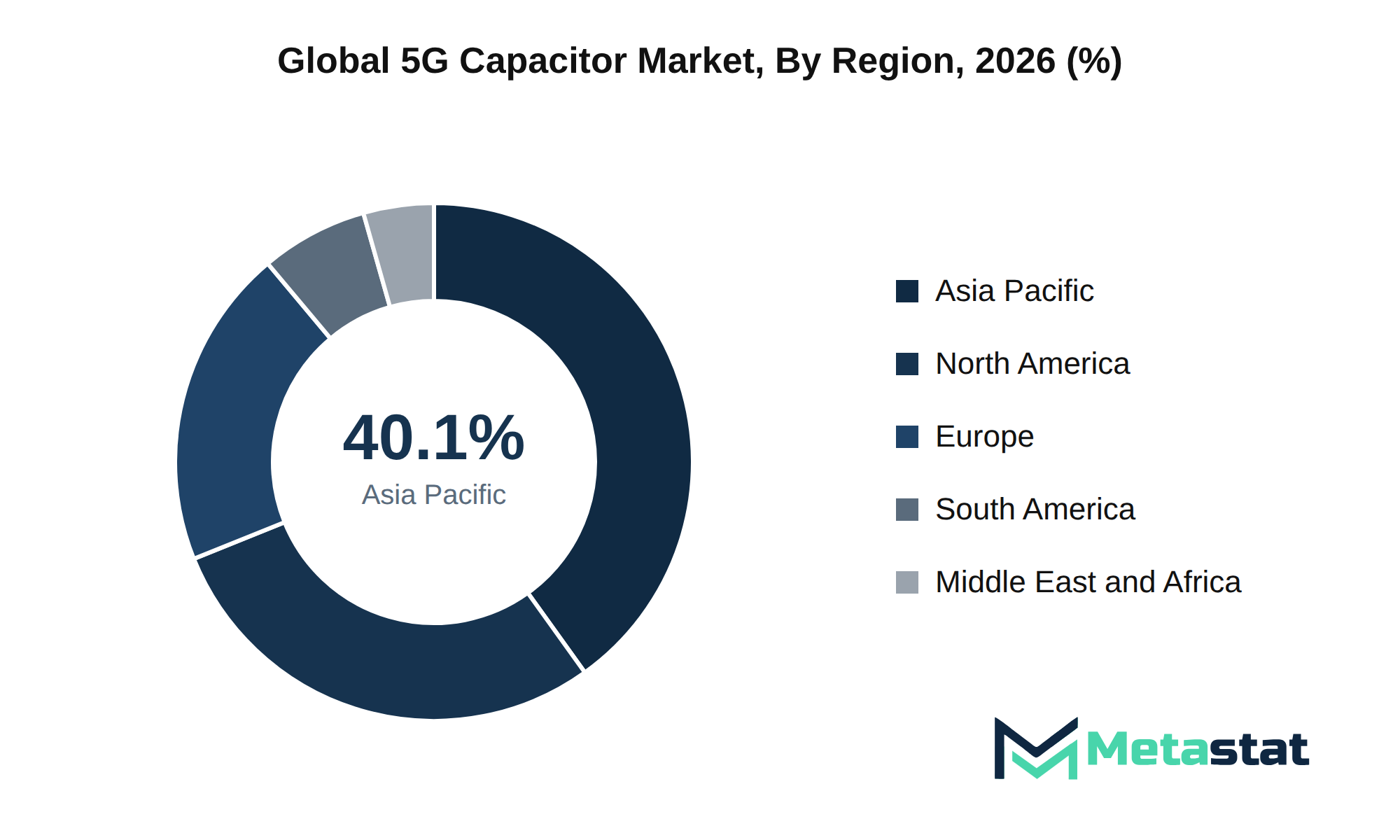
The competitive landscape of the 5G Capacitor market features a variety of strategic behaviors among key players. Companies including Murata Manufacturing Co., Ltd., Samsung Electro-Mechanics Co., Ltd., and Taiyo Yuden Co., Ltd. engage in product differentiation through technological advancements and proprietary technologies. Their R&D pipelines emphasize innovation, enabling them to establish a competitive edge and maintain customer loyalty.
Strategic alliances and joint ventures play a significant role in shaping market dynamics. Corporations including TDK Corporation and Vishay Intertechnology, Inc. pursue collaborations that enhance supply chain dominance and procurement leverage. This strategy reduces barriers to entry for new participants and increases market share through enhanced operational efficiencies.
The competitive outlook emphasizes the importance of intellectual property portfolios and patent landscapes. Companies like Panasonic Corporation and KYOCERA Corporation protect technological advancements, ensuring defensibility against potential market disruptions. Future growth vectors focus on customer retention strategies and brand equity dynamics, positioning these companies favorably for sustained expansion in the 5G Capacitor market.
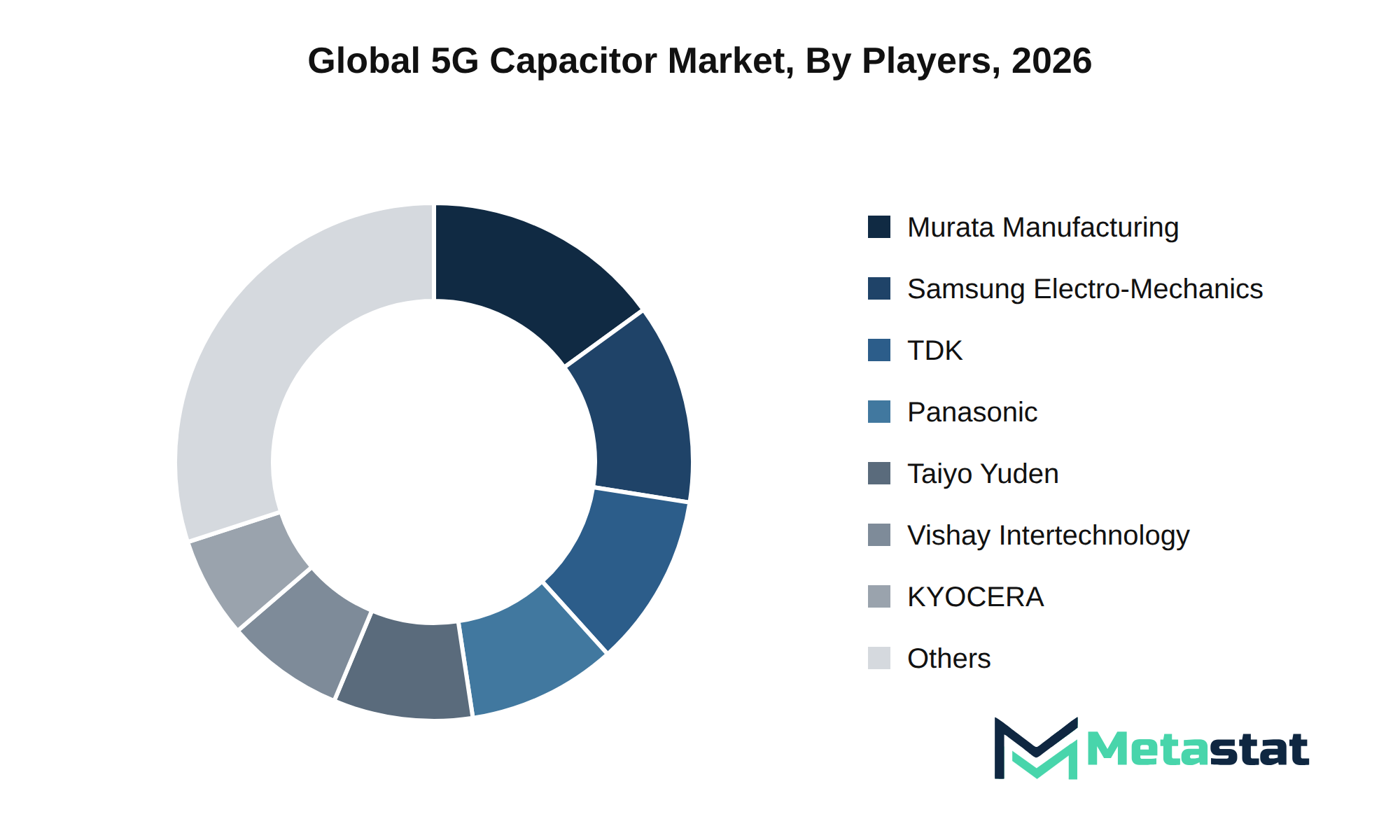
Market size is forecast to rise from USD 7.2 billion in 2025 to over USD 23.1 billion by 2033, reflecting a 15.8% CAGR during the forecast period. Various factors influence this growth trajectory, including macroeconomic conditions, technological advancements, and evolving regulatory landscapes. Economic cycles and downstream demand shifts drive investment in next-generation technologies, while industry maturation strengthens the market foundation.
The bull case anticipates accelerated adoption of 5G technologies, leading to enhanced demand for capacitors across multiple applications. The bear case highlights potential challenges in supply chains or geopolitical tensions that could temper growth rates. Strategic capital allocation and infrastructure commitments will play significant roles in shaping the market future, positioning companies to capitalize on emerging opportunities and meet unmet enterprise needs.
The 5G Capacitor market stands at a critical juncture. Integration of innovative technologies and adherence to regulatory compliance will dictate the pace of advancement. With a strong focus on research and development timelines, the market is poised for substantial growth, driven by strategic imperatives that prioritize sustainability and efficiency. The environment will evolve, presenting businesses with high-growth pockets and opportunities for enhanced defensibility through robust roadmaps for future growth.
The report strategically identifies and profiles the key market players and analyses their core competencies in each sub-segment of the 5G Capacitor market.
Report Attributes | Details |
Study Period | 2021-2033 |
Base Year | 2025 |
Estimated Year | 2026 |
Forecast Period | 2026-2033 |
Historical Period | 2021-2025 |
Growth Rate | CAGR 15.8% from 2026 to 2033 |
Revenue Unit | USD billion |
Segmentation | By Capacitor Type, 5G Infrastructure Application, Capacitor Function, 5G Network Deployment, and Region |
By Region | North America (By Capacitor Type, 5G Infrastructure Application, Capacitor Function, 5G Network Deployment, and Country)
|
Europe (By Capacitor Type, 5G Infrastructure Application, Capacitor Function, 5G Network Deployment, and Country)
| |
Asia Pacific (By Capacitor Type, 5G Infrastructure Application, Capacitor Function, 5G Network Deployment, and Country)
| |
South America (By Capacitor Type, 5G Infrastructure Application, Capacitor Function, 5G Network Deployment, and Country)
| |
Middle East and Africa (By Capacitor Type, 5G Infrastructure Application, Capacitor Function, 5G Network Deployment, and Country)
|
Find answers to common questions about this report
The 5G Capacitor market size was valued at USD 7.2 billion in 2025.
The 5G Capacitor market is projected to grow at a CAGR of 15.8% during the forecast period from 2026 to 2033.
The North America 5G Capacitor market size is estimated to reach USD 6.4 billion by 2033.
The segment of Multilayer Ceramic Capacitors (MLCCs) leads the 5G Capacitor market, with a projected value of USD 16.1 billion by 2033. This segment demonstrates significant growth potential, with a compound annual growth rate (CAGR) of 15.3%.
Increasing capital investment drives the growth of the 5G Capacitor market. Strong GDP growth and favorable interest rates fuel investments in telecommunications infrastructure, while the demand for advanced technologies and modernization of networks further enhance market expansion.
The 5G Capacitor market faces challenges from stringent regulatory compliance requirements and ongoing economic pressures, leading to increased costs for manufacturers. supply chain disruptions and skilled labor deficiencies hinder production capacity and innovation, further restraining market growth.
Increasing capital investment and the push for technological integration are favoring product adoption in the 5G Capacitor market. The demand for advanced telecommunications infrastructure, alongside the modernization of existing networks, drives the need for high-performance capacitors, creating opportunities for manufacturers to provide innovative solutions.
The 5G Capacitor market is estimated to reach a valuation of USD 23.1 billion by 2033.
Key players in the 5G Capacitor market include Murata Manufacturing Co., Ltd., Samsung Electro-Mechanics Co., Ltd., Taiyo Yuden Co., Ltd., TDK Corporation, Vishay Intertechnology, Inc., Panasonic Corporation, and KYOCERA Corporation.
The 5G Capacitor market experiences a compound annual growth rate (CAGR) of 15.8%. This growth reflects increasing investments in 5G technology and infrastructure.
The analysts below cover Electronics and Semiconductor research at Metastat Insights.
LEAD ANALYST
Utkarsh Khirodkar is a Lead Market Research Analyst at MetaStat Insight, specializing in market intelligence, technology sector assessments, and competitive strategy.

PRINCIPAL CONSULTANT - ENTERPRISE AI & EMERGING TECHNOLOGIES
Banking & Finance · Electronics and Semiconductor · Energy and Power · Healthcare IT · Information & Technology · Professional Services
Vijay Gunti is a Principal Consultant at MetaStat Insight, bringing over two decades of experience across enterprise digital transformation, technology strategy, and intelligent systems.

PRINCIPAL CONSULTANT - QUALITY SYSTEMS & COMPLIANCE
Electronics and Semiconductor · Machinery & Equipment · Professional Services
Omkar Phadtare is an Industry Consultant at MetaStat Insight, specializing in quality systems, regulatory compliance, and standards benchmarking to drive data-driven market intelligence and strategic industry research.

ENERGY & INFRASTRUCTURE INDUSTRY CONSULTANT
Automotive and Transportation · Electronics and Semiconductor · Energy and Power · Machinery & Equipment
Saurabh Vasant Ganvir consults for Energy & Infrastructure Industry at MetaStat Insight, specializing in renewable energy, solar EPC, and electric vehicle (EV) infrastructure markets.

LEAD CONSULTANT - COMMUNICATION, TELECOM, AND IT
Electronics and Semiconductor · Information & Technology · Machinery & Equipment · Professional Services
Ravindra Sathe Consultants for Communication, Telecom, and IT at MetaStat Insight. He leads the firm's industry research initiatives across telecommunications infrastructure, digital connectivity, enterprise networking, and emerging information technology domains.
Evaluating secondary resin quality across post-consumer packaging streams requires reliable technical segmentation. MetaStat Insight delivered an objective assessment that distinguished between extrusion-grade flake pricing and optical sorting throughput limitations across Western Europe. The competitive positioning breakdown for licensed depolymerization technology providers answered several questions during our feedstock feasibility audit. Their team clarified regional trade restrictions on mixed plastic scrap quickly when our team submitted follow-up requests.
Evaluating sovereign cloud deployments for core banking platforms demands a clear view of data residency regulations and migration exit strategies. MetaStat Insight delivered an exhaustive review of regional latency tolerances, mainframe decommission milestones, and third-party vendor concentration risk. The regulatory compliance mapping across European and Asian financial jurisdictions gave our team a dependable baseline for multi-cloud infrastructure discussions.
Replacing petrochemical surfactants with bio-based alternatives requires realistic timelines on industrial precision fermentation scaling. The market research broke down commercialization timelines, feedstock sugar price sensitivities, and regional cosmetic ingredient regulatory approvals in Europe and East Asia. That supplier readiness mapping gave our formulations team reliable context when comparing renewable chemical sourcing roadmaps.
Explore related market intelligence reports worth reading alongside this one.
Starting from
$2950