
LEAD ANALYST
Utkarsh Khirodkar is a Lead Market Research Analyst at MetaStat Insight, specializing in market intelligence, technology sector assessments, and competitive strategy.

Global MLCC Capacitors Market Size, Share, By Dielectric Type (X7R, X5R, C0G (NP0), X8R, Y5V), By Rated Voltage (Up to 16 V, Above 16 V to 200 V, Above 200 V), By Case Size (EIA Inch Code) (Below 0603, 0603 to 1206, Above 1206), By End-Use Industry (Consumer Electronics, Automotive, IT and Telecommunications, Industrial and Energy, Healthcare and Medical Devices, Aerospace and Defense), Industry Analysis, Growth, Trends, and Forecast, 2026-2033
Report ID
MSI-2873
Published
October, 2026
Pages
267 Pages
Format
Historical
Base year
Forecast
Forecast period
Report Details
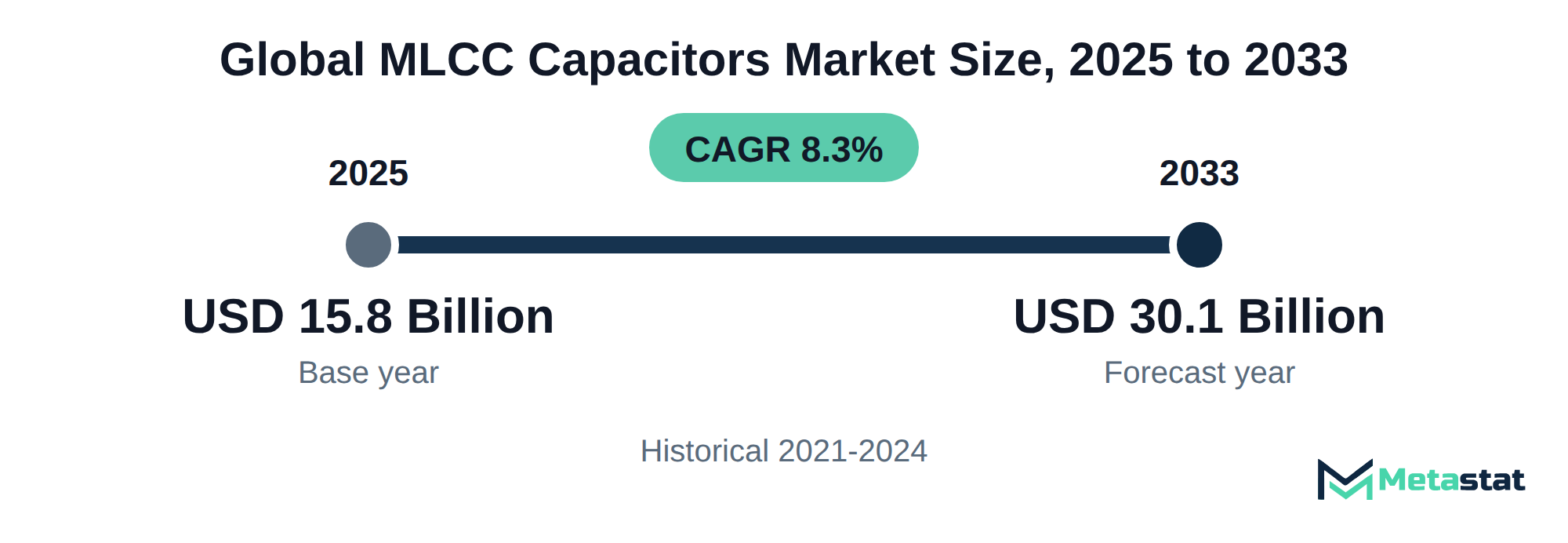
Market Valuation: Valued at $15.8 Billion in 2025, projected to reach $30.1 Billion by 2033 at a 8.3% CAGR.
Dominant Segment: The X5R dielectric type segment leads the market, driven by its favorable capacitance characteristics and stability under varying temperatures, appealing to manufacturers in consumer electronics and automotive sectors.
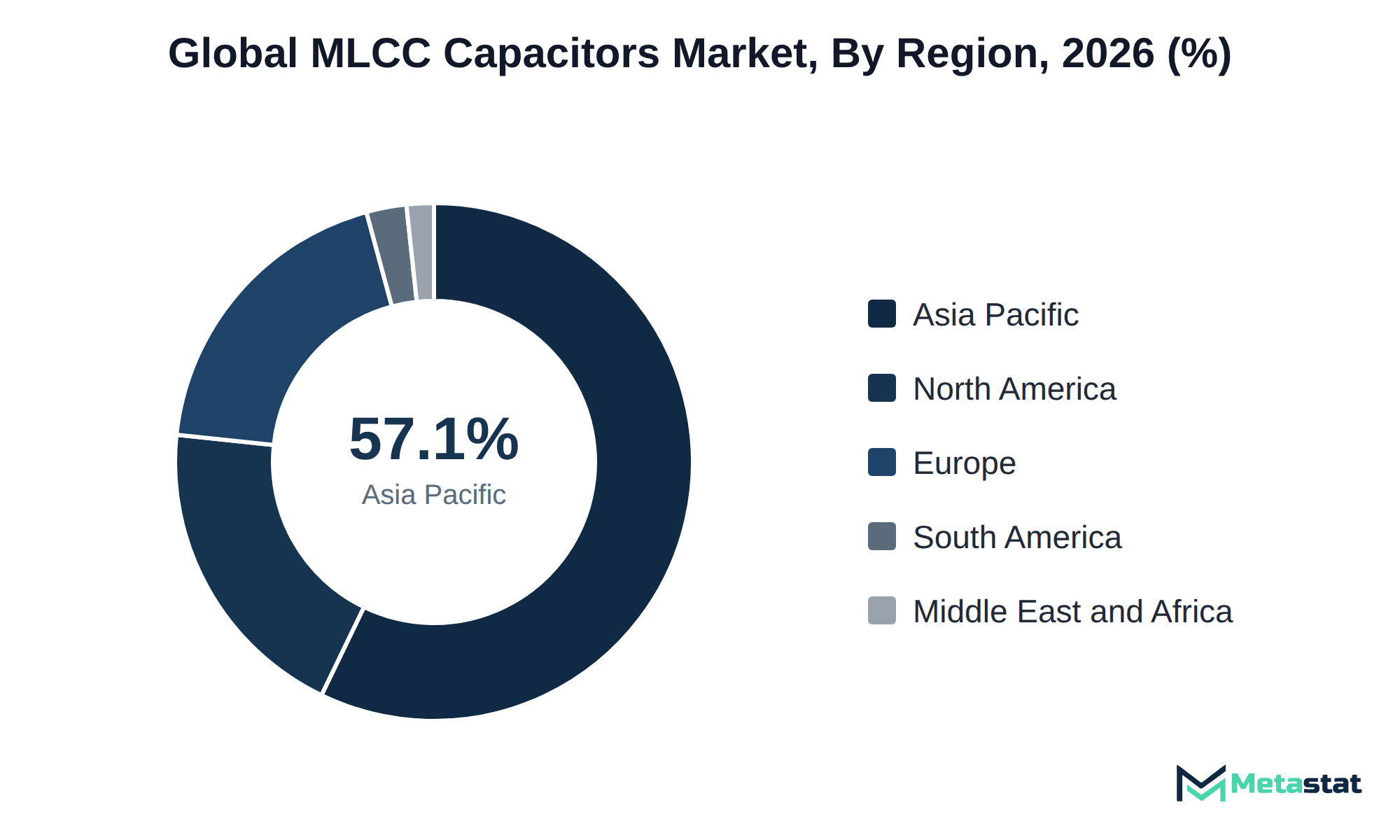
Geographic Lead: Asia Pacific dominates the market with a 57.1% share, fueled by its strong production capabilities and growing consumption driven by advancements in technology and electric vehicle adoption.
What's Inside: The report provides a comprehensive analysis of the MLCC Capacitors market, covering competitive insights, detailed segmentations by dielectric type, rated voltage, case size, and end-use industry, along with forecasts through 2033.
Growing Demand: The automotive sector exhibits robust growth with a CAGR of 10.3%, reflecting the increasing integration of MLCCs in advanced electronic systems and the push for enhanced functionality and reliability.
High-Capacitance Opportunity: The X5R dielectric capacitors are projected to reach USD 9.9 billion by 2033, indicating a strong market opportunity driven by rising applications in consumer electronics and automotive industries.
Choose Your License
Global MLCC Capacitors Market
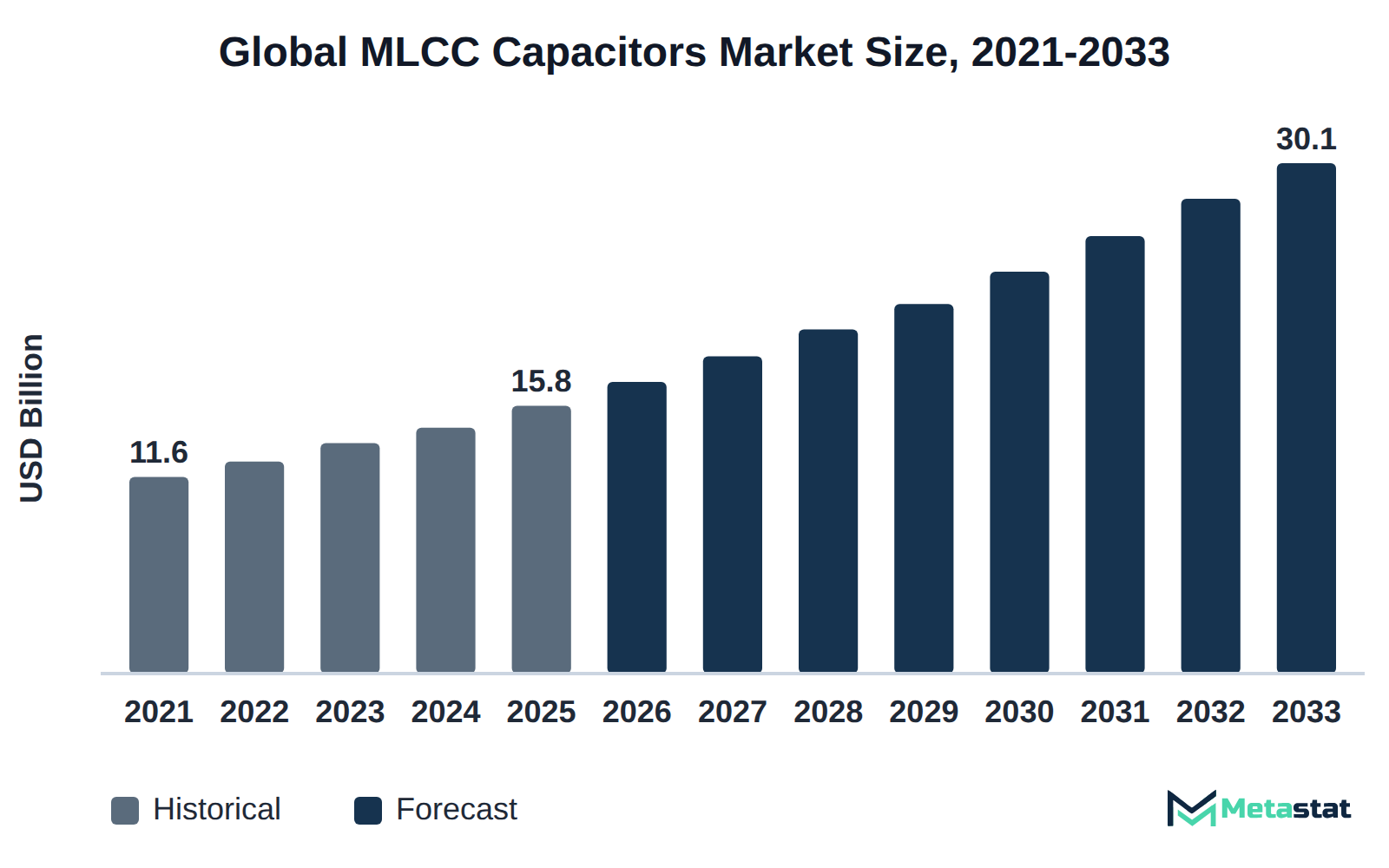
The global MLCC Capacitors market was valued at USD 15.8 billion in 2025 and is projected to reach USD 30.1 billion by 2033, growing at a CAGR of 8.3% over the forecast period.
The MLCC Capacitors market encompasses a range of multilayer ceramic capacitors used across various electronic applications. Buyers invest in these components to improve circuit performance, energy efficiency, and device miniaturization. The increasing demand for consumer electronics and automotive applications drives substantial spending in this sector, reflecting a growing reliance on advanced electronic systems.
Growth in the market is propelled by advancements in technology and increasing adoption of electronic devices. The X5R dielectric type segment stands out with significant market value, highlighting the demand for capacitors that offer reliability and performance. Asia Pacific commands the largest market share at 57.1%, reflecting its dominance in production and consumption, while North America holds 19.5% of the market in 2025, with the US leading in 2026.
Key drivers contributing to this expansion include the rising integration of MLCCs in automotive applications, where manufacturers seek to enhance functionality and reliability. The increasing need for capacitors that meet stringent industry standards drives market growth. Ongoing technological advancements and shifting consumer preferences continue to fuel strong market growth.
The MLCC Capacitors market includes various types of capacitors that fulfill essential roles in electronic devices. Buyers invest in these components to enhance device performance, reliability, and efficiency across industries including consumer electronics, automotive, and telecommunications. The increasing dependency on electronic applications, coupled with the need for compact and efficient components, drives spending in this market.
Growth in the market is propelled by advancements in technology and rising demand for high-performance capacitors. The X7R dielectric type segment holds the most value, reflecting its widespread application in various electronic devices. Asia Pacific represents the largest regional share at 57.1%, significantly outpacing other regions.
Technological innovations and the shift towards electric vehicles and renewable energy applications are key factors supporting market expansion. The automotive industry experiences considerable growth, driven by the demand for advanced electronic systems. These developments create opportunities for manufacturers to enhance product offerings and cater to evolving consumer preferences.
AI server power delivery is reshaping the requirements for high-capacitance MLCC capacitors. The increasing demand for higher efficiency in AI workloads drives the need for capacitors that handle high voltage and capacitance levels. This shift is evident in the rated voltage segment, where the category "Above 16 V to 200 V" is projected to reach USD 13.2 billion by 2033, illustrating significant growth potential. The integration of AI technologies necessitates the deployment of advanced power management solutions, which directly influence MLCC specifications. These requirements are closely linked to data center power infrastructure.
Manufacturers focusing on developing high-capacitance MLCCs respond to these evolving needs by enhancing their product lines. AI applications require more robust power delivery systems, and suppliers in the MLCC capacitors market prioritize materials and designs that improve performance under high load conditions. This responsiveness to technological shifts positions manufacturers competitively and expands the adoption of high-capacitance solutions across various industries.
Automotive qualification processes impose significant barriers for suppliers in the MLCC Capacitors market. Rigorous standards demand that components meet strict reliability and performance metrics, limiting the pool of potential substitutes. For instance, the automotive sector exhibits a compound annual growth rate (CAGR) of 10.3% through 2033, indicating robust demand for qualified components, which strengthens the negotiation power of established suppliers.
The use of soft terminations in automotive applications increases the complexity of supplier substitution. Soft terminations provide enhanced reliability under thermal and mechanical stress conditions, essential for automotive environments. Manufacturers prioritize long-term relationships with suppliers that consistently deliver these specialized components.
These factors support higher pricing models, where suppliers use their qualifications to negotiate terms that reflect their value. Buyers face challenges in switching suppliers due to the stringent requirements of automotive qualification, resulting in a market landscape where established players maintain a competitive edge through proven reliability and performance. This dynamic prompts buyers to place higher value on long-term contracts, influencing purchasing strategies and overall market dynamics.
The demand for miniature case sizes in the MLCC Capacitors market presents distinct challenges concerning DC bias, capacitance, and supply assurance. Buyers within the automotive and consumer electronics sectors prioritize compact components for space-constrained applications, necessitating thorough consideration of performance trade-offs. In 2026, capacitors with case sizes below 0603 will generate a market value of USD 7.0 billion, expanding to USD 13.5 billion by 2033, reflecting a CAGR of 9.9%. This growth signals strong interest in smaller components, but the resulting trade-offs affect performance metrics significantly.
For instance, capacitors with miniature sizes often exhibit reduced capacitance levels when subjected to DC bias. This phenomenon leads to capacitance drop, which affects circuit reliability, particularly in critical applications within automotive systems that require stable performance under varying voltage conditions. Buyers evaluate product specifications carefully to ensure that the selected components meet their operational requirements while adhering to the limitations posed by size constraints. This balancing act influences procurement strategies, as companies prioritize suppliers who provide detailed performance data alongside reliable supply chains.
Stakeholders in the MLCC Capacitors market need to understand how miniature case sizes affect DC bias and capacitance when optimizing designs. Suppliers who address these concerns effectively position themselves favorably against competitors, reinforcing their appeal to buyers seeking both performance and reliability in compact solutions.
X7R dielectric capacitors serve high-voltage applications in automotive and industrial designs, ensuring reliable performance under demanding conditions. By 2033, the market for X7R capacitors is projected to reach USD 11.3 billion, reflecting a compound annual growth rate (CAGR) of 8.1%. This growth stems from the increasing adoption of high-voltage systems in electric vehicles and industrial automation, which require capacitors that withstand greater stress and temperature variations.
For automotive applications, the X7R dielectric provides the necessary stability and capacitance retention over varying temperatures, a critical factor for components used in powertrains and safety systems. In industrial settings, these capacitors support essential functions in energy management and control systems, driving efficiency and reliability. X7R dielectrics maintain performance under harsh conditions, which makes them a preferred choice among MLCC capacitors. They enhance overall system performance while meeting stringent regulatory standards.
Growing consumer demand for advanced electronic devices drives significant spending on components within the market. The rise in smartphone and wearable technology adoption has prompted manufacturers to enhance product performance, leading to an increased focus on high-quality capacitors. This trend is particularly evident in the consumer electronics segment, which is projected to reach USD 9.7 billion by 2033, reflecting a compound annual growth rate of 6.2%. Improved functionality and miniaturization of devices necessitate capacitors with superior performance characteristics, resulting in increased volume and pricing pressures on suppliers. The shift towards more sophisticated electronics highlights the vital role of MLCC capacitors in meeting the evolving needs of consumers and manufacturers.
Advancements in manufacturing techniques significantly enhance the performance characteristics of MLCC capacitors. Increased precision in dielectric materials facilitates higher capacitance values and improved voltage ratings, appealing to industries requiring robust electronic components. The integration of advanced automated processes streamlines production, reducing costs and enabling competitive pricing within the market.
The automotive sector particularly benefits from these innovations, demanding capacitors with stringent performance requirements to support advanced electronic systems. Efficient supply chains and optimized production methodologies attract new entrants, increasing market competition. These dynamics drive investments in research and development, pushing suppliers to explore alternative materials and innovative designs.
While the market evolves, the continuous enhancement of MLCC capabilities positions suppliers to meet growing demands across various applications, including consumer electronics and industrial energy solutions. This drive for innovation shapes the competitive landscape and keeps suppliers responsive to rapid technological shifts and consumer expectations.
Price sensitivity among buyers impacts demand for MLCC capacitors. In particular, industries including consumer electronics experience slower uptake due to cost considerations, which affects the adoption of advanced components. Price fluctuations, driven by raw material costs and production expenses, restrict purchasing frequency and volume. This trend is evident in the automotive sector, where budget constraints lead to smaller orders and delayed projects. Buyers focusing on cost-effective solutions often opt for lower-priced substitutes, further challenging market dynamics. These factors contribute to a cautious approach in acquiring MLCC capacitors, ultimately limiting overall growth potential within the market. Pricing and demand remain closely linked, which challenges manufacturers and suppliers trying to hold competitive positions as market conditions fluctuate.
Suppliers in the MLCC Capacitors market face significant challenges due to escalating input costs. Raw material prices, including ceramic powders and metal electrodes, have seen notable increases. This situation impacts profit margins for manufacturers, necessitating strategic responses to maintain competitiveness. In response, suppliers implement cost-control measures, including optimizing production processes and sourcing materials from diversified suppliers. These strategies help mitigate the pressure from rising costs while maintaining product quality.
In addition, several manufacturers explore innovative materials and processes to reduce reliance on traditional inputs. By investing in research and production efficiency, suppliers identify opportunities to differentiate offerings in the market. Enhanced collaboration with raw material providers further strengthens supply chain resilience, aiding in stabilizing costs over time. This proactive approach enables suppliers to manage margins effectively while catering to demand across various sectors.
Growing interest in high-capacitance MLCC capacitors presents a significant opportunity within the market. The segment of X5R dielectric capacitors exhibits a strong compound annual growth rate (CAGR) of 8.8%, projected to reach a market value of USD 9.9 billion by 2033. This growth is driven by increasing applications in consumer electronics and automotive sectors, where higher capacitance and stable performance under varying temperatures are essential. Buyers in these industries prioritize reliability and compactness, leading to a higher demand for smaller form factors with increased capacitance. Companies focusing on developing advanced manufacturing techniques to produce high-capacitance MLCCs are well-positioned to benefit from this market dynamic. Expansion in this segment supports overall market growth, contributing to the anticipated rise in the MLCC Capacitors market value to USD 30.1 billion by 2033.
The Global MLCC Capacitors market is segmented based on Dielectric Type, Rated Voltage, Case Size (EIA Inch Code), and End-Use Industry.
This type of dielectric serves in various electronic applications, particularly in consumer electronics and automotive sectors, where high capacitance and temperature stability are essential. Growth in the automotive industry, driven by electric vehicle adoption and advanced driver assistance systems, increases demand for X7R capacitors. Compared to other dielectric types, including X5R, which exhibits a CAGR of 8.8%, X7R shows a slightly slower growth rate, but it holds a significant position due to its performance characteristics. Price fluctuations of raw materials impact production costs, influencing market dynamics. Technological advancements in manufacturing are expected to enhance the efficiency of X7R dielectric capacitors, facilitating broader adoption across various end-use applications.
These capacitors find extensive application in consumer electronics, automotive, and IT sectors due to their favorable capacitance characteristics and stability under varying temperatures. Rising demand for compact electronic devices drives purchasing decisions, particularly among manufacturers focusing on performance and efficiency. A notable driver influencing the X5R segment stems from advancements in technology, which promote the integration of capacitors into smaller circuit designs. Comparatively, the X5R segment exhibits a higher growth rate than other dielectric types, reflecting its appeal to buyers seeking a balance between performance and value. This segment's ability to maintain capacitance stability under applied voltage differentiates it from alternatives like X7R, which, while robust, experiences slower growth due to its broader applications and typically higher cost. The market continues to expand due to ongoing innovation and demand across multiple industries.
C0G (NP0) segment is expected to reach USD 5.3 billion by 2033. This type is primarily applied in applications requiring stable capacitance over a wide temperature range, including precision timing circuits and filters. Manufacturers in the consumer electronics and telecommunications industries frequently choose C0G (NP0) capacitors due to their low loss characteristics, contributing to high-frequency performance. The growth of this segment is driven by increasing demand for devices including smartphones and computers, which require reliable capacitors for efficient operation. Compared to other dielectric types like X7R and X5R, C0G (NP0) capacitors experience slower growth, reflecting a lower price point and specific application focus that appeals to niche markets. The stability of this segment offers advantages in critical applications, reinforcing its position within the overall market.
X8R capacitors are projected to grow at a CAGR of 10.4% during the forecast period. These capacitors find application in high-temperature and high-voltage environments, making them suitable for sectors including automotive and industrial applications. Increasing demand for reliable components in harsh conditions drives growth in this segment. Compared to other dielectric types, X8R capacitors typically offer higher performance at high temperatures, thus commanding a premium price. Enhanced capabilities attract buyers focused on sophisticated electronic systems that require robust and durable solutions, differentiating this segment from others with lower performance profiles and growth rates. The trend toward electrification in automotive and energy systems further fuels demand, underpinning the segment's rapid expansion in the market.
Y5V capacitors serve specific applications where stability and performance under varying conditions are essential. These components find significant use in consumer electronics, providing the necessary capacitance for devices with less stringent performance requirements. Demand for Y5V capacitors is driven by the growing need for cost-effective solutions in basic electronic applications. Compared to other dielectric types, Y5V capacitors generally exhibit slower growth rates, reflecting a preference for more advanced options like X7R and X5R in high-performance contexts. Y5V capacitors remain important in the market, though their price and performance characteristics set them apart from other dielectric segments.
Others (X6S, X7S, X7T) comprise a category of dielectric types within the MLCC Capacitors market. These capacitors serve various electronic applications, particularly in environments demanding specific performance characteristics and reliability. The segment finds usage in sectors including consumer electronics, automotive, and industrial applications, where performance consistency is essential. Demand for these capacitors derives from advancements in technology that require components capable of operating under diverse conditions. Differentiating factors include pricing and performance attributes compared to established dielectrics like X7R and X5R. While established segments feature higher growth rates driven by broader adoption in high-demand industries, others reflect niche applications that focus on specialized requirements, influencing overall purchasing strategies among several buyers.
Valued at USD 7.3 billion in 2026, this segment is projected to reach USD 11.8 billion by 2033, at a CAGR of 7.2% during the forecast period. Low-voltage ceramic capacitors in the "Up to 16 V" category primarily serve consumer electronics, automotive, and IT applications. The increasing demand for compact and efficient devices drives growth in this segment, highlighting the need for capacitors that perform reliably under lower voltage conditions. Compared to other rated voltage segments, the "Up to 16 V" segment exhibits slower growth, reflecting the preference for higher voltage capacitors in emerging technologies. The growth rate of 7.2% contrasts with segments like "Above 16 V to 200 V," which displays a CAGR of 8.7%. Supply chain dynamics and technological advancements significantly influence this segment, shaping the trajectory of the market.
This segment finds its application in high-voltage electronic devices, including industrial and automotive systems, demanding stable performance under fluctuating conditions. The growing utilization of electric vehicles and renewable energy systems drives heightened demand for capacitors in this voltage range. Compared to other segments, this category exhibits significant growth, driven by increasing focus on energy efficiency and power management solutions. The price point for capacitors in this segment typically remains high due to specialized manufacturing processes and materials required, distinguishing it from both lower voltage segments and dielectric types.
Above 200 V segment is expected to reach USD 5.1 billion by 2033. This segment finds applications primarily in high-voltage environments, including industrial machinery and energy infrastructure, where reliability and performance under high voltage are critical. Demand for products in this category is driven by advancements in electronic systems that require robust components capable of handling higher voltages. Compared to other voltage segments, the Above 200 V segment experiences slower growth rates, with a projected CAGR that lags behind lower voltage segments. This segment presents distinct challenges, including higher manufacturing costs and stringent safety regulations, which hinder adoption compared to more commonly used voltage ranges. Overall, the Above 200 V segment caters to specialized applications, targeting industries with specific requirements for high-voltage performance, differentiating it from other segments in terms of growth dynamics and market focus.
Valued at USD 7 billion in 2026 and projected to reach USD 13.5 billion by 2033, at a CAGR of 9.9% during the forecast period, the Below 0603 segment caters to the growing demand for compact electronic components in various applications. This segment finds extensive use in consumer electronics, automotive, and telecommunications, where space constraints and weight considerations are critical. The rising trend toward miniaturization in these industries drives increased adoption of smaller case sizes. Because these compact components are mounted on boards, the segment is closely tied to the printed circuit board industry. Rapid advancements in technology and the need for higher performance in smaller packages support growth in this segment, distinguishing it from larger case size segments that experience slower growth rates. While other segments target different price points or applications, Below 0603 capacitors specifically address the requirements of modern electronic designs, enhancing overall functionality and efficiency in the market.
0603 to 1206 segment is estimated to reach USD 12.3 billion by 2033, at a CAGR of 7.1% during the forecast period. This segment serves various applications within consumer electronics, automotive, and industrial devices, where size constraints dictate design choices. Demand for this segment is driven by increased adoption of compact electronic devices, which require smaller components without sacrificing performance. Compared to other case sizes, the 0603 to 1206 segment exhibits solid growth, but it experiences slightly slower expansion relative to the below 0603 segment, which has a CAGR of 9.9%. The ability to integrate advanced features into smaller packages enhances its appeal, while pricing pressures from larger case sizes limit growth potential. Ultimately, the 0603 to 1206 segment reflects a balance of size efficiency and performance in the broader MLCC Capacitors market.
Segment Above 1206 is projected to reach USD 4.3 billion by 2033. This segment serves applications requiring larger capacitance values, particularly in high-performance electronics including telecommunications and automotive systems. Demand for higher capacity MLCC capacitors reflects the trend toward more complex and power-intensive devices. The growth in this segment is driven by advancements in technology that increase the use of such capacitors in various end-use industries. Compared to other case sizes, the Above 1206 segment exhibits slower growth, influenced by the higher cost associated with larger capacitors. In contrast, segments like Below 0603 experience faster growth at a CAGR of 9.9%. The unique requirements of specific applications, alongside the cost factors, differentiate this segment from others in the market.
This segment finds extensive applications in smartphones, tablets, laptops, and other electronic devices, catering to consumers and manufacturers alike. A significant driver for this segment stems from increasing demand for advanced electronic products, which require efficient and compact capacitors to enhance performance. Compared to other segments, the Consumer Electronics segment exhibits slower growth when measured against the Automotive segment, which has a CAGR of 10.3%. The emphasis on miniaturization in electronic devices stimulates innovation in MLCCs, influencing overall market dynamics and ensuring compliance with rigorous quality standards set by manufacturers. This segment shapes the future of electronics, creating a competitive landscape for suppliers in the market.
The automotive segment is estimated to reach USD 9.3 billion by 2033, at a CAGR of 10.3% during the forecast period. This segment plays a critical role in modern vehicle electronics, catering to the increasing demand for advanced driver-assistance systems, infotainment units, and electric vehicle components. The push for electric vehicles and the integration of smart technologies drive demand for high-performance capacitors in automotive applications. Compared to other segments, the automotive segment experiences faster growth, attributed to the rapid evolution of the automotive industry and the emphasis on innovation. Suppliers focus on delivering capacitors that meet strict automotive standards, influencing price structures and operational practices. Market expansion reflects the transition toward electric mobility and the need for more electronic functions in vehicles.
The IT and Telecommunications segment is expected to reach USD 5.8 billion by 2033. This segment serves various applications, including network infrastructure, data centers, and communication devices, which are critical to modern connectivity. The growth of cloud computing and the increasing demand for high-speed internet drive the need for advanced electronic components in this sector. Compared to other segments, IT and Telecommunications demonstrates slower growth, with a CAGR of 5.8%, reflecting a more mature market landscape. In contrast, sectors like Automotive exhibit faster growth rates, indicating varying dynamics across the market. Suppliers focus on developing capacitors that meet stringent performance requirements, ensuring reliability and efficiency in high-frequency applications. The emphasis on miniaturization and enhanced performance further influences purchasing decisions in this segment.
The Industrial and Energy segment is projected to grow at a CAGR of 8.1% during the forecast period. This segment caters to manufacturers in sectors including renewable energy, utilities, and heavy machinery, where capacitors play a critical role in power management and stabilization. Demand is driven by the transition towards sustainable energy solutions, which increases the necessity for advanced electronic components. Compared to other segments, including Automotive, which is anticipated to grow at a faster rate of 10.3%, the Industrial and Energy segment demonstrates steady growth due to robust applications across various infrastructures. The pricing structure in this segment remains competitive, influenced by increasing adoption of automation and smart manufacturing technologies within industrial settings, enhancing demand for high-performance capacitors.
Healthcare and Medical Devices encompass a critical segment within the MLCC Capacitors market. This segment finds extensive applications in medical equipment and devices, employed by manufacturers focusing on patient safety and precision. Ongoing advances in medical technology drive demand for capacitors capable of operating reliably in various conditions. Regulatory requirements for higher safety and performance standards contribute to this segment's growth dynamics. Unlike other segments, this category often experiences slower growth due to stringent testing and certification processes. Manufacturers prioritize high-quality components to ensure compliance with healthcare regulations, which creates a different pricing structure compared to consumer electronics and automotive segments. Reliability and performance requirements in healthcare technology shape purchasing decisions in this specialized market.
Aerospace and Defense encompasses applications that demand high reliability and performance in critical conditions. This segment serves industries involved in military, aviation, and space exploration, requiring components that operate efficiently under extreme conditions. The push for advanced technologies drives demand within this group, influenced by global defense spending and ongoing innovation in aerospace technology. Compared to other segments, this category experiences slower growth, with unique specifications and higher quality requirements leading to higher price points. Buyers in this segment prioritize reliability and durability, differentiating it from consumer-oriented applications where cost and volume play larger roles. Demanding requirements and a focus on specialized applications set the aerospace and defense segment apart in the MLCC Capacitors market.
This segment includes applications in scientific instruments and education. Users encompass research institutions, laboratories, and educational facilities that require reliable and precise electronic components. Growth in this segment is driven by advancements in scientific research and increased funding for educational technologies. Demand for high-performance capacitors from these industries highlights the importance of precision and reliability, distinguishing it from other sub-segments. The pricing dynamics differ due to the specialized nature of applications, often resulting in higher costs compared to standard consumer electronics. This sub-segment experiences a slower growth trajectory, influenced by specific technological needs and budget allocations in educational and scientific pursuits. Such factors position it uniquely within the broader MLCC Capacitors market, reflecting the specialized requirements that demonstrate the significance of these components.
Based on geography, the Global MLCC Capacitors market is divided into North America, Europe, Asia-Pacific, South America, Middle East, and Africa.
Demand for MLCC Capacitors in North America largely stems from the consumer electronics and automotive industries, which require advanced components for a range of applications. The increasing adoption of electric vehicles drives significant growth within the automotive sector, while innovations in consumer electronics fuel demand for high-capacity capacitors. By the end of 2033, North America is projected to reach USD 6.2 billion. The region holds a 19.5% share of the global market in 2025. Manufacturers in this area benefit from established supply chains and advanced production capabilities, ensuring the market remains competitive. Regulatory frameworks supporting automotive advancements further enhance opportunities within the sector, promoting the integration of innovative technologies into MLCC Capacitors.
In Europe, demand for MLCC Capacitors is driven by robust manufacturing sectors, particularly in automotive and consumer electronics. Germany and France stand out as leading markets, with a strong emphasis on innovation and quality standards. The region benefits from significant investments in technology and infrastructure, enhancing production capabilities and efficiency. Regulations focused on energy efficiency and sustainability support the growth of the market, emphasizing the importance of high-performance components. By 2025, Europe is expected to capture 19.1% of the global market share, reflecting a competitive landscape where manufacturers strive to meet evolving consumer demands. The focus on advanced applications in various industries reinforces the growth trajectory of the market.
Asia Pacific accounted for 57.1% of the MLCC Capacitors market in 2025. Key drivers of demand include the robust consumer electronics and automotive sectors, with organizations pursuing advanced technologies and higher efficiency. China, Japan, India, and South Korea emerge as primary users, propelled by rapid technological advancements and increasing production capacities. The region benefits from strong infrastructure development and investment in electronic manufacturing, creating a favorable environment for market growth. The increasing adoption of electric vehicles in countries including Japan and South Korea drives the demand for specialized capacitors, enhancing overall market dynamics. The expansion of telecommunications networks, particularly in India, further supports growth in the market.
The South American market exhibits a growing interest in MLCC Capacitors, primarily driven by the consumer electronics and automotive sectors. Brazil and Argentina represent key countries, with rising demand correlating with increased production of electronic devices and vehicles. Challenges related to infrastructure and supply chains persist, particularly in remote areas, affecting access to advanced capacitor technologies. Despite these challenges, the market is projected to thrive due to expanding industries and improvements in manufacturing capabilities. By 2025, this region is expected to hold a 2.5% share of the global MLCC Capacitors market, signaling significant potential for growth in the coming years.
The Middle East and Africa region contributes a modest share of 1.7% to the global MLCC Capacitors market in 2025. Demand in this region primarily arises from the automotive and industrial sectors, which increasingly rely on high-performance capacitors for various applications. Saudi Arabia and the UAE focus on diversifying their economies, driving investments in technology and infrastructure that influence demand for advanced electronic components. South Africa's growing automotive industry has led to increased adoption of MLCC Capacitors, reflecting regional trends toward modernization and innovation. Challenges related to limited manufacturing capabilities impact the competitiveness of local suppliers, restricting growth potential in the market.
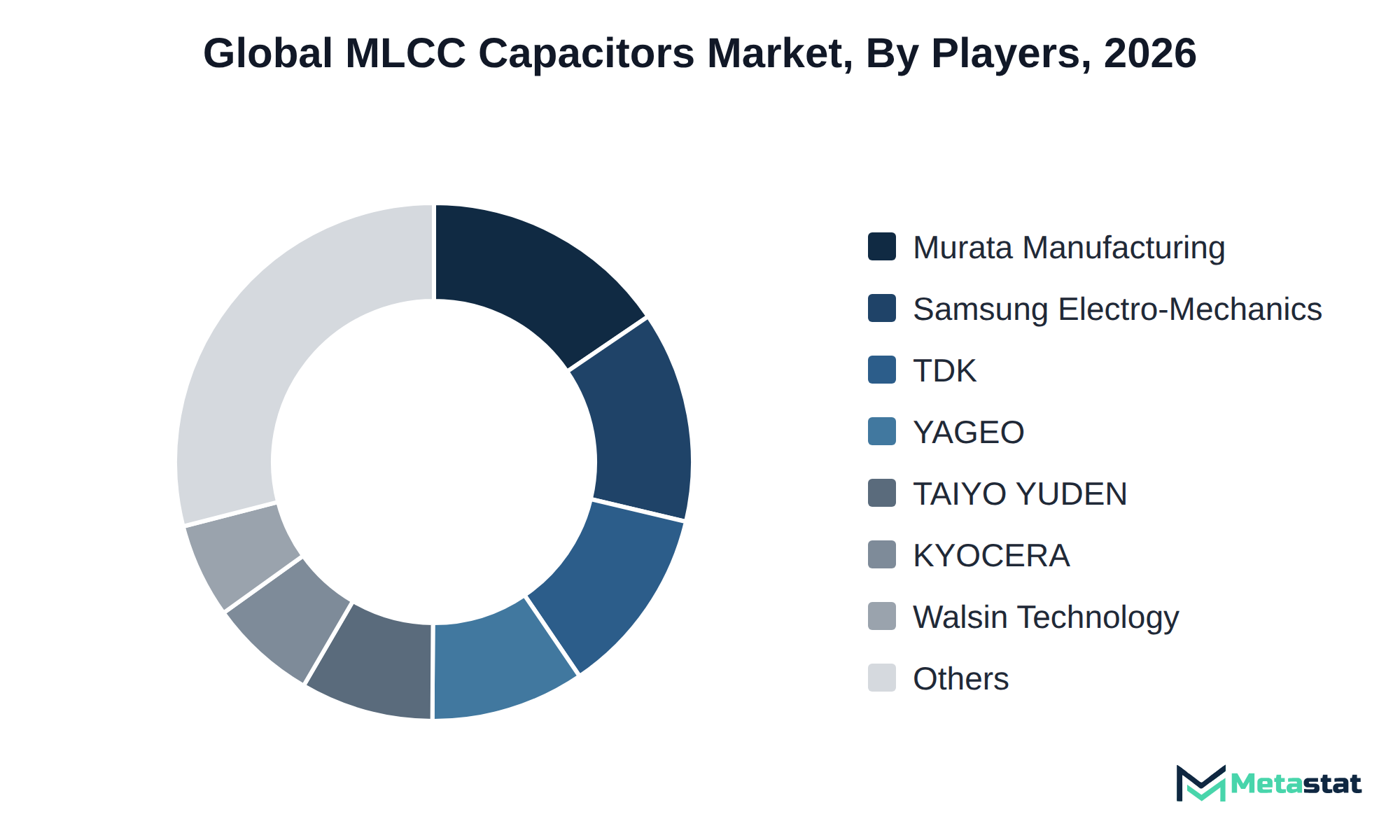
Competition within the MLCC Capacitors market reflects diverse strategies among key players. Companies differentiate through product specifications, pricing, and customer service. Buyers prioritize quality, price, and certification, alongside tailored solutions and robust supply chains.
Murata Manufacturing Co., Ltd. focuses on high-performance capacitors, particularly in the automotive and consumer electronics sectors. TDK Corporation emphasizes innovation in dielectric materials while expanding its product range to meet evolving market demands. Samsung Electro-Mechanics Co., Ltd. targets the consumer electronics industry, leveraging extensive R&D capabilities to enhance product offerings and customer satisfaction.
Achieving this growth depends on several key developments within the MLCC Capacitors market. First, the increasing demand for X5R dielectric types is expected to drive significant revenue growth. Second, the automotive sector's expansion, projected to reach USD 9.3 billion in the same timeframe, will significantly influence overall market performance, driven by advancements in electric vehicles and smart technologies. Third, the rise in demand for capacitors rated above 16 V to 200 V, targeting applications in high-performance electronics, is projected to contribute to the market's upward trajectory with an 8.7% CAGR. However, potential supply chain disruptions, particularly in Asia Pacific, present a risk that could slow growth. The region, accounting for 57.1% of market share, secures stable sourcing of raw materials to maintain momentum.
By Dielectric Type: X7R, X5R, C0G (NP0), X8R, Y5V, Others (X6S, X7S, X7T)
By Case Size (EIA Inch Code): Below 0603, 0603 to 1206, Above 1206
By End-Use Industry: Consumer Electronics, Automotive, IT and Telecommunications, Industrial and Energy, Healthcare and Medical Devices, Aerospace and Defense, Others (Scientific Instruments, Education)
The report strategically identifies and profiles the key market players and analyses their core competencies in each sub-segment of the MLCC Capacitors market.
|
Report Attributes |
Details |
|
Study Period |
2021-2033 |
|
Base Year |
2025 |
|
Estimated Year |
2026 |
|
Forecast Period |
2026-2033 |
|
Historical Period |
2021-2025 |
|
Growth Rate |
CAGR 8.3% from 2026 to 2033 |
|
Revenue Unit |
USD billion |
|
Segmentation |
By Dielectric Type, Rated Voltage, Case Size (EIA Inch Code), End-Use Industry, and Region |
|
By Region |
North America (By Dielectric Type, Rated Voltage, Case Size (EIA Inch Code), End-Use Industry, and Country)
|
|
Europe (By Dielectric Type, Rated Voltage, Case Size (EIA Inch Code), End-Use Industry, and Country)
|
|
|
Asia Pacific (By Dielectric Type, Rated Voltage, Case Size (EIA Inch Code), End-Use Industry, and Country)
|
|
|
South America (By Dielectric Type, Rated Voltage, Case Size (EIA Inch Code), End-Use Industry, and Country)
|
|
|
Middle East and Africa (By Dielectric Type, Rated Voltage, Case Size (EIA Inch Code), End-Use Industry, and Country)
|
Find answers to common questions about this report
The MLCC Capacitors market size was valued at USD 15.8 billion in 2025.
The market is projected to grow at a CAGR of 8.3% during the forecast period from 2026 to 2033.
The North America MLCC Capacitors market size is estimated to reach USD 6.2 billion by 2033.
The X7R segment leads the MLCC Capacitors market with a projected value of USD 11.3 billion by 2033, based on its growth rate compared to other dielectric types.
Growing consumer demand for advanced electronic devices drives significant spending on components within the market. Price sensitivity among buyers impacts demand for MLCC capacitors, particularly in the consumer electronics and automotive sectors, where budget constraints lead to smaller orders and delayed projects.
Price sensitivity among buyers impacts demand for MLCC capacitors, particularly in consumer electronics, where cost considerations slow uptake of advanced components. Escalating input costs for raw materials, including ceramic powders and metal electrodes, further challenge manufacturers, affecting profit margins and necessitating strategic responses to maintain competitiveness.
Growing interest in high-capacitance MLCC capacitors drives adoption, particularly in the X5R dielectric segment, which is projected to reach USD 9.9 billion by 2033. Increasing applications in consumer electronics and automotive sectors highlight the demand for reliable, compact components with higher capacitance and stable performance.
The MLCC Capacitors market is estimated to reach a valuation of USD 30.1 billion by 2033.
Key players operating in the MLCC Capacitors market include Murata Manufacturing Co., Ltd., Samsung Electro-Mechanics Co., Ltd., TDK Corporation, TAIYO YUDEN CO., LTD., YAGEO Corporation, and KYOCERA Corporation.
The X7R dielectric capacitors segment is projected to reach USD 11.3 billion by 2033, reflecting a compound annual growth rate of 8.1 percent.
The analysts below cover Electronics and Semiconductor research at Metastat Insights.
LEAD ANALYST
Utkarsh Khirodkar is a Lead Market Research Analyst at MetaStat Insight, specializing in market intelligence, technology sector assessments, and competitive strategy.

PRINCIPAL CONSULTANT - ENTERPRISE AI & EMERGING TECHNOLOGIES
Banking & Finance · Electronics and Semiconductor · Energy and Power · Healthcare IT · Information & Technology · Professional Services
Vijay Gunti is a Principal Consultant at MetaStat Insight, bringing over two decades of experience across enterprise digital transformation, technology strategy, and intelligent systems.

PRINCIPAL CONSULTANT - QUALITY SYSTEMS & COMPLIANCE
Electronics and Semiconductor · Machinery & Equipment · Professional Services
Omkar Phadtare is an Industry Consultant at MetaStat Insight, specializing in quality systems, regulatory compliance, and standards benchmarking to drive data-driven market intelligence and strategic industry research.

ENERGY & INFRASTRUCTURE INDUSTRY CONSULTANT
Automotive and Transportation · Electronics and Semiconductor · Energy and Power · Machinery & Equipment
Saurabh Vasant Ganvir consults for Energy & Infrastructure Industry at MetaStat Insight, specializing in renewable energy, solar EPC, and electric vehicle (EV) infrastructure markets.

LEAD CONSULTANT - COMMUNICATION, TELECOM, AND IT
Electronics and Semiconductor · Information & Technology · Machinery & Equipment · Professional Services
Ravindra Sathe Consultants for Communication, Telecom, and IT at MetaStat Insight. He leads the firm's industry research initiatives across telecommunications infrastructure, digital connectivity, enterprise networking, and emerging information technology domains.
Standard industry briefs frequently blur the operational distinctions between isobaric pressure exchangers and centrifugal turbines. In this study, MetaStat Insight categorized mega-scale desalination tenders across the GCC and Mediterranean basins by membrane replacement frequencies and salinity tolerances. Their primary research helped us evaluate local content requirements in Saudi Arabia and the UAE without relying on marketing literature. We found the segment-level equipment replacement estimates grounded and well-reasoned throughout.
The technical breakdown of ISO 20022 migration readiness across correspondent banking corridors was remarkably thorough. Rather than treating cross-border corporate payments as a single block, the report drew a useful distinction between multilateral netting platforms and domestic instant payment rails across ASEAN economies. MetaStat Insight highlighted regulatory constraints on foreign exchange liquidity management that many publications gloss over. The research material offered practical clarity for our platform development roadmap.
Our group needed clearer visibility into out-of-autoclave processing timelines for high-temperature thermoplastic composites. MetaStat Insight delivered an objective assessment that contrasted automated fiber placement scrap rates with traditional thermoset prepreg layup cycles. The supplier landscape mapped out primary resin suppliers and tape slitting capacity across France, Germany, and Japan with solid technical accuracy. Their analyst handled our questions on precursor supply risks during an unscheduled inquiry call, providing clear, unembellished context.
Explore related market intelligence reports worth reading alongside this one.