
LEAD ANALYST
Utkarsh Khirodkar is a Lead Market Research Analyst at MetaStat Insight, specializing in market intelligence, technology sector assessments, and competitive strategy.

Global Extruded Snacks Market Size, Share, By Raw Material (Peanut, Wheat, Potato, Corn, Rice, Multigrain, Oats and Others), By Type (Sweet and Savory), By Extrusion Technique (Single-Screw Extrusion and Twin-Screw Extrusion), By Distribution Channel (Supermarkets/Hypermarkets, Convenience Stores, Online Retail Stores and Specialty Stores), Industry Analysis, Growth, Trends, and Forecast, 2026-2033
Report ID
MSI-5306
Published
September, 2026
Pages
285 Pages
Format
Historical
Base year
Forecast
Forecast period
Report Details
Market Valuation: Valued at $63.2 Billion in 2025, projected to reach $95.7 Billion by 2033 at a 5.3% CAGR.
Dominant Segment: The Savory segment leads the market, projected to reach USD 76.3 billion by 2033, driven by consumer preferences for flavor diversity and convenience.
Geographic Lead: The Asia Pacific region shows the fastest growth due to rising demand for unique flavors and innovative snack options, supported by infrastructure modernization.
What's Inside: The report includes comprehensive competitive coverage, detailed analyses of market dynamics, and forecasts from 2026 to 2033 across various segments and regions.
Emerging Trends: Health consciousness is reshaping product offerings, with manufacturers focusing on clean label, high-protein, and functional ingredients to meet evolving consumer demands.
Technological Advancements: Innovations in single-screw and twin-screw extrusion techniques enhance production efficiency and product quality, driving market growth through improved snack offerings.
Choose Your License
Global Extruded Snacks Market
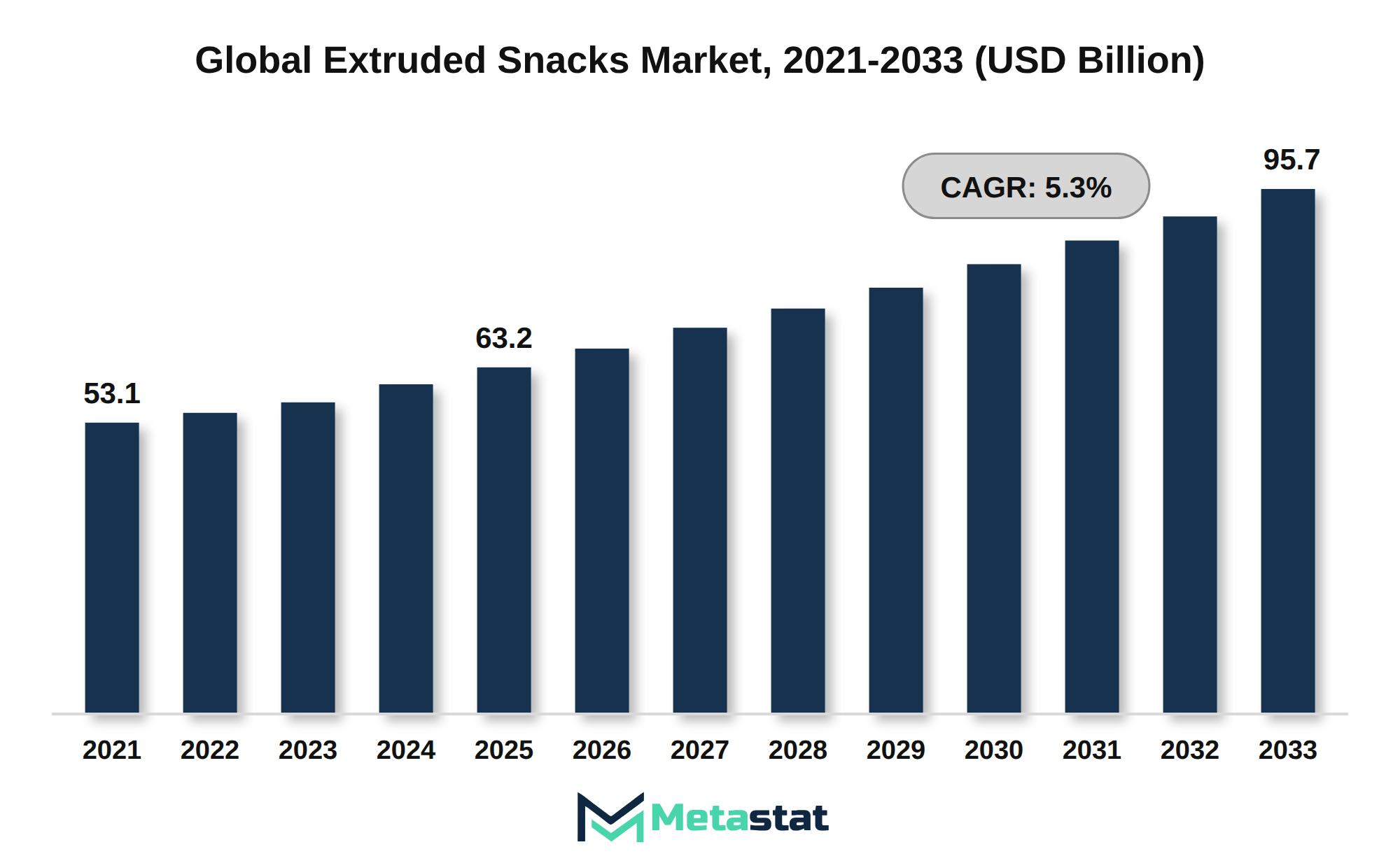
The global Extruded Snacks market was valued at USD 63.2 billion in 2025 and is projected to reach USD 95.7 billion by 2033, growing at a CAGR of 5.3% over the forecast period.
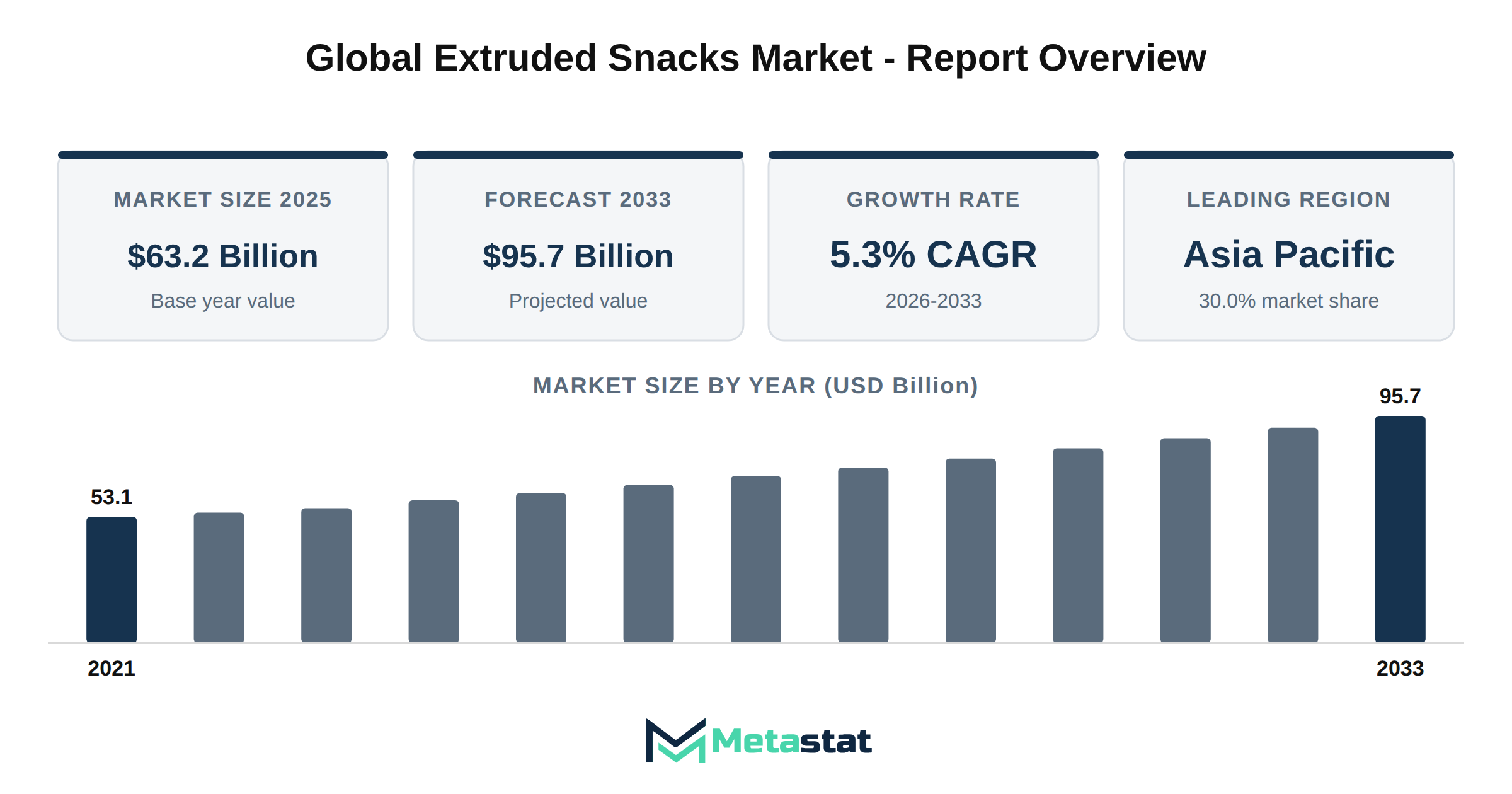
The global Extruded Snacks market reached a value of USD 63.2 billion in 2025 and is projected to grow to USD 95.7 billion by 2033, reflecting a compound annual growth rate (CAGR) of 5.3%. Historical data shows the market's growth trajectory, starting from USD 53.1 billion in 2021, increasing to USD 54.9 billion in 2022, and further rising to USD 60.1 billion in 2024. The market's expansion highlights increasing consumer preference for convenient, flavorful, and innovative snacking options.
Key growth drivers accelerating global demand for extruded snacks include rising interest in clean label products, which emphasize transparency in ingredient sourcing. Consumers increasingly seek snacks with high-protein content and functional ingredients that align with health-conscious trends. This shift influences manufacturers to reformulate products, focusing on nutritional benefits while maintaining taste and convenience.
Technological advancements in manufacturing methods, specifically single-screw versus twin-screw extrusion technology, enhance yield efficiency and product quality. Single-screw extrusion, accounting for a significant portion of production, offers cost-effective processing for various snack formulations. In contrast, twin-screw extrusion supports more complex recipes, enabling incorporation of a wider range of ingredients and textures.
A notable shift in consumer snacking habits drives rising demand for baked and air-expanded savory snacks. This trend reflects a broader movement towards healthier snacking alternatives. Consumers prioritize snacks that offer guilt-free indulgence and align with lifestyle choices, impacting product development and marketing strategies across the market.
Raw material price volatility poses challenges for the market, particularly in managing supply chains for grains, starches, and flavorings. Fluctuations in raw material costs impact profit margins for manufacturers, necessitating strategic sourcing and inventory management practices to mitigate risks. Effective management of these supply chains remains essential for sustaining competitive pricing and product availability.
The global Extruded Snacks market is experiencing a significant shift driven by evolving consumer preferences and innovative product formulations. The demand for clean label, high-protein, and functional ingredients is reshaping snack formulations, appealing to health-conscious consumers seeking nutritious options. This trend influences manufacturers, requiring them to adapt formulations to meet new consumer expectations, ultimately boosting market expansion.
Technological advancements in single-screw and twin-screw extrusion methods enhance manufacturing efficiency and output quality. Single-screw extrusion provides cost-effective production with flexibility in product shapes, while twin-screw extrusion offers superior mixing capabilities and texture control. Competition between technologies leads to improved yield efficiency and product diversity, benefiting manufacturers and consumers alike.
Shifting consumer snacking habits significantly influence market dynamics, with a growing preference for baked and air-expanded savory snacks. This trend reflects a broader move towards healthier snacking options, prompting manufacturers to innovate and diversify their offerings. The increase in demand for these snack types encourages brands to invest in marketing strategies that highlight product health benefits.
Raw material price volatility poses challenges in managing supply chains for grains, starches, and flavorings. Fluctuations in raw material costs affect pricing strategies and profit margins for manufacturers, leading to a need for strategic sourcing and inventory management. Effective supply chain management ensures product availability and cost-efficiency, supporting sustained market expansion.
Product innovation across expanded, pelleted, and co-extruded snack categories continues to drive competition in the market. Manufacturers focus on developing unique flavors and textures, catering to diverse consumer preferences. This emphasis on innovation builds brand loyalty and enhances the overall consumer experience in the Extruded Snacks market.
The competitive landscape reflects strategic moves, brand consolidations, and capacity expansions among key players. Companies pursue mergers and acquisitions to enhance market share and streamline operations. This consolidation facilitates resource sharing and enhances product offerings, positioning brands to meet increasing consumer demand.
Regional market hotspots, particularly in North America, Europe, and the Asia-Pacific region, present cross-border growth opportunities. These regions exhibit varying consumer preferences and market dynamics, providing avenues for targeted marketing strategies. Companies that effectively navigate these regional differences position themselves for success in a competitive environment.
Distribution channel dynamics highlight the importance of penetration across modern grocery, convenience, and e-commerce platforms. The shift towards online retail continues to reshape consumer purchasing behavior, prompting manufacturers to enhance their digital presence and optimize distribution strategies. This adaptation supports broader market accessibility and aligns with changing consumer shopping habits.
Regulatory compliance regarding sodium targets and front-of-package labeling standards influences product development and marketing strategies. Manufacturers prioritize compliance to avoid penalties and enhance product appeal, thereby ensuring alignment with consumer health trends. These regulations shape product formulations and labeling practices within the market.
Sustainable packaging innovations and eco-friendly processing techniques play a crucial role in the extruded food manufacturing landscape. Companies increasingly adopt environmentally friendly practices to appeal to consumers prioritizing sustainability. This shift towards responsible manufacturing enhances brand image and builds consumer trust, ultimately driving market expansion.
The future outlook for the Extruded Snacks market remains positive, with emerging commercial opportunities on the horizon. Continued innovation, coupled with strategic marketing efforts, positions the market for growth. Companies that remain agile and responsive to consumer trends will thrive in this evolving landscape.
The growth of health consciousness among consumers significantly influences the Extruded Snacks market. This trend reflects a shift toward healthier snacking options, with consumers prioritizing nutritional value in their food choices. Increased awareness of dietary impacts on health and a desire for convenient yet nutritious snacks that fit into busy lifestyles drive this shift.
In response, manufacturers innovate their product offerings to align with health trends, introducing snacks fortified with essential nutrients, using whole grains, and incorporating natural ingredients. This emphasis on healthier alternatives caters to a demographic that values both taste and health, driving demand for extruded snacks that meet these criteria.
The market experiences a notable rise in product launches featuring unique flavors and healthier raw materials, satisfying evolving consumer preferences. While the trend toward healthy eating continues, the extruded snacks segment is expected to thrive, supported by investments in research and development aimed at creating innovative, health-focused products.
The Extruded Snacks market experiences increased demand for innovative flavors and ingredients driven by changing consumer preferences. A focus on diverse and unique taste profiles reflects the evolving lifestyle choices of consumers, particularly among younger demographics. Shifting consumer behaviors emphasize the importance of convenience and variety in snack options, prompting manufacturers to invest in product development and innovation.
The integration of technology supports this innovation. Automation and advanced production techniques allow for efficient scaling of new product lines, enabling manufacturers to respond swiftly to trends and consumer feedback. This responsiveness enhances competitive positioning within the market, because brands that swiftly adapt to consumer tastes capture greater market share.
In addition, the rise of digital marketing channels increases awareness of new products. Social media platforms serve because vital spaces for brands to engage with consumers, promoting unique offerings and building brand loyalty. This trend drives overall market growth by encouraging trial and repeat purchases.
While manufacturers focus on product innovation and strategic marketing, the market is positioned for robust expansion. The combination of shifting consumer preferences and effective technological integration creates a dynamic environment where brands thrive and adapt, leading to sustainable demand for extruded snacks.
The Extruded Snacks market experiences significant challenges stemming from regulatory compliance hurdles and economic headwinds. Stricter regulations surrounding food safety and labeling compel manufacturers to invest in compliance measures, ultimately increasing operational costs. These regulatory requirements disproportionately affect smaller and mid-sized players who lack the resources to adapt swiftly, leading to market fragmentation and a competitive disadvantage.
Macroeconomic pressures, including inflation, create additional strain on production costs. Rising ingredient prices and labor expenses challenge manufacturers to maintain profitability while offering competitive pricing. Such inflationary trends lead to reduced consumer spending, impacting overall demand for extruded snacks.
Supply chain disruptions, exacerbated by geopolitical instability, further complicate the operational landscape. Manufacturers of extruded snacks face hurdles related to sourcing raw materials and ensuring timely deliveries, which hinder production efficiency. These challenges pose threats to market stability, because fluctuating availability affects pricing and product offerings.
The market encounters technological obsolescence, driven by ongoing advancements in food processing techniques that necessitate continual investment in new equipment and technologies. Companies that fail to adopt these innovations risk falling behind, affecting their competitiveness in a changing market. This cycle of investment strains resources, particularly for smaller firms.
Lastly, cultural barriers and regional adoption resistors limit market penetration in certain areas. Variations in consumer preferences and tastes across different regions create obstacles for standardizing product offerings. Companies navigate these barriers to successfully introduce their products in diverse markets, which adds complexity to market strategies and further influences growth potential.
The global Extruded Snacks market faces challenges stemming from geopolitical fragmentation and increasing trade tensions. These factors create uncertainties in international trade, leading to fluctuating tariffs that impact pricing strategies. Manufacturers often experience margin pressures due to rising import costs for raw materials and components, resulting in tighter profit margins.
Volatility in feedstock prices adds further strain on production costs, complicating the financial situation for suppliers. Disruptions in logistics, driven by geopolitical issues, result in delays and increased expenditures for transportation, which directly affects supply chain stability. Such factors contribute to an environment where operational efficiency becomes crucial for maintaining competitiveness.
Technological disruptions continue to challenge the market, driven by companies investing in advanced processing techniques to enhance product quality and reduce operational costs. However, integrating these technologies involves significant R&D investments, which strain resources and limit smaller players' ability to compete effectively. This situation creates a competitive atmosphere where businesses in the Extruded Snacks market continuously adapt to shifting conditions to sustain growth.
Environmental sustainability demands contribute to the complexity of market operations. Companies face increasing pressure to align with sustainability goals, which require retrofitting existing facilities or investing in new technologies. These efforts, while essential for compliance with tightening global standards, add to the overall cost structure and present implementation challenges for manufacturers.
The relationship between changing downstream demands and market saturation influences product offerings within the Extruded Snacks market. While consumers seek novel flavors and healthier options, brands innovate while managing the costs associated with new product development. This dual focus on innovation and cost control defines the current competitive environment, driving both challenges and opportunities for stakeholders in the market.
The Extruded Snacks market experiences robust opportunities driven by emerging regional demands and a push for geographical expansion. The increasing popularity of unique flavors and innovative snack options across various regions indicates a shift in consumer behavior, particularly in the Asia Pacific and South America. Brands focusing on regional taste preferences and local ingredients capture a growing customer base, enhancing market penetration and revenue generation.
Infrastructure modernization plays a critical role in supporting market growth. Investments in production facilities and distribution networks facilitate faster delivery and improved product availability. Efficient supply chain management enhances operational effectiveness, allowing firms to respond swiftly to changing consumer preferences.
Technological disruptions impact the market through the introduction of advanced manufacturing techniques and automation. These innovations streamline production processes, leading to cost reductions and improved product quality. The integration of digital technologies enables firms to enhance customer engagement and facilitate personalized marketing strategies, aligning with current consumer trends.
Sustainability imperatives drive brands toward eco-friendly practices and green transformations. Consumers increasingly favor products that align with their values, including environmentally conscious sourcing and packaging. This trend encourages companies to innovate and diversify their offerings, meeting the demands of a socially responsible market.
The Extruded Snacks market benefits from downstream diversification because firms explore niche applications and related sectors. By expanding product lines and investing in cross-industry collaborations, companies enhance their competitive advantage and establish a broader market presence. Strategic consolidation and M&A initiatives strengthen market positions, allowing significant players to leverage synergies and optimize resource allocation.
Evolving buying behaviors and digital procurement shifts impact traditional retail models, leading to the growth of e-commerce channels. The increasing adoption of online shopping influences distribution strategies, compelling firms to enhance their online presence and optimize digital marketing efforts. This transition supports greater accessibility to products and aligns with the preferences of tech-savvy consumers.
Investment in asset life-cycle extensions, maintenance upgrades, and retrofitting dynamics ensures long-term operational efficiency. Companies that prioritize value-chain optimization and process automation enhance yield maximization, leading to improved profitability. These strategic initiatives position firms favorably within the changing Extruded Snacks market.
The Global Extruded Snacks market is segmented based on Raw Material, Type, Extrusion Technique, and Distribution Channel.
Valued at USD 4.7 billion in 2026, the Peanut segment is projected to reach USD 8.5 billion by 2033, reflecting a CAGR of 8.7% during the forecast period. Increasing consumer preference for healthier snacking options drives demand for peanut-based products, known for their nutritional benefits, including high protein content and healthy fats. Innovations in product formulations and flavors cater to diverse consumer tastes, supporting segment expansion.
Technological advancements in extrusion techniques enhance the production efficiency of peanut-based snacks, allowing for greater variety in texture and flavor. These developments enhance the competitive positioning of manufacturers within the Extruded Snacks market. Rising disposable incomes in emerging markets facilitate access to premium snacks, promoting consumption of peanut products.
Regulatory compliance regarding food safety and quality standards influences manufacturers in this segment. Ensuring adherence to these regulations provides a competitive advantage, allowing companies to build trust with consumers. While the segment evolves, opportunities arise for brands to differentiate their offerings through unique flavor profiles and health-oriented marketing strategies, enhancing market penetration.
Increased focus on sustainability practices among consumers leads to higher demand for responsibly sourced peanuts. Companies investing in sustainable sourcing and production practices gain an edge in the market. Overall, the Peanut segment presents strong growth potential, driven by evolving consumer preferences, technological advancements, and strategic opportunities within the Extruded Snacks market.
Wheat serves because a vital raw material in the production of extruded snacks, benefiting from a strong consumer preference for healthier snack options. Increased awareness regarding the nutritional value of wheat has led to heightened interest among manufacturers to incorporate it into their product lines. The rising trend towards plant-based diets drives demand for wheat-based snacks, aligning with consumer shifts towards more wholesome, less processed food choices.
Adoption of wheat in the market experiences stimulation from technological advancements in extrusion processes. These innovations enhance the quality and texture of extruded snacks, ensuring a more appealing product for consumers. Evolving flavor profiles and the introduction of multi-grain options contribute to segment expansion, catering to diverse consumer tastes and preferences.
Regulatory compliance standards regarding food safety and health claims influence the wheat segment, necessitating that manufacturers adhere to strict guidelines. This focus on compliance builds consumer trust and enhances brand loyalty within the market. Margin pressures resulting from fluctuating raw material prices challenge producers in maintaining profitability while delivering high-quality products. Effective raw material sourcing strategies help mitigate these pressures, ensuring a stable supply chain.
Technological obsolescence poses a risk in this segment, urging manufacturers to continuously innovate and upgrade their production capabilities. Strategic opportunity windows arise because companies explore wheat's application in various snack formats, including gluten-free options. The overall capital investment outlook remains positive, with companies recognizing the potential of wheat-based snacks to capture a larger market share in the evolving landscape of the extruded snacks market.
Potato serves because a significant raw material in the Extruded Snacks market, contributing to its overall growth trajectory. The segment is projected to reach USD 0 billion by 2033, highlighting a consistent demand from consumers for familiar snack options. This demand stems from the popularity of traditional potato-based snacks, which remain a staple in various markets worldwide.
Technological maturation in processing techniques enhances product quality, influencing consumer preferences. Innovations in flavor profiles and healthier formulations continue to drive adoption among health-conscious consumers. The segment benefits from a robust supply chain, ensuring steady availability of quality raw materials, while cost structures remain competitive.
Shifts in consumption patterns towards convenience foods and snacking culture support growth in the potato segment. Regulatory compliance and certifications related to food safety standards align with consumer expectations, further strengthening market presence. Overall, the potato sub-segment stands poised for expansion, directly contributing to the broader dynamics of the Extruded Snacks market.
Corn proves a valuable raw material within the Extruded Snacks market, offering unique taste profiles and textures that appeal to consumers. Rising interest in healthier snack alternatives drives demand for corn-based products, which align with health trends promoting whole foods and natural ingredients. Product innovation focuses on expanding the variety of corn-based snacks, contributing to growth in this segment.
Advancements in extrusion technology enhance the efficiency and quality of corn-based snacks, leading to improved texture and flavor. The growing versatility of corn allows manufacturers to create a wider range of products catering to diverse consumer preferences. Strong demand for gluten-free options further supports the appeal of corn because a primary ingredient.
Competitive pressures in the market encourage players to explore new formulations and flavors, increasing consumer interest and retention. The entrance of new brands and products diversifies the offerings available, creating a dynamic environment where corn-based snacks gain traction. Strategic opportunities arise from capital investment in research and development, leading to innovations that capture emerging consumer trends.
Supply chain considerations influence corn sourcing, with resilience in the agricultural sector critical for maintaining consistent quality and availability. Fluctuations in pricing and potential substitution risks are monitored to ensure sustained profitability in the corn segment. Overall, the corn sub-segment is critical in shaping the future of the Extruded Snacks market, driven by evolving consumer preferences and advancements in technology.
Rice represents a significant opportunity within the Extruded Snacks market, driven by shifting consumer preferences towards healthier snacking options. Increasing awareness regarding the nutritional benefits of rice, particularly its gluten-free nature and versatility, enhances its appeal among health-conscious consumers. The rising trend of plant-based diets promotes the adoption of rice-based snacks, reflecting a growing demand for alternative ingredients.
Technological advancements support the evolution of rice-based extruded snacks, facilitating the development of innovative flavors and textures. Enhanced production techniques allow manufacturers to create diverse product offerings that cater to varying consumer tastes and preferences. This ongoing product evolution creates market expansion opportunities.
Regulatory compliance regarding food safety and labeling influences rice sourcing and processing standards within the market. Adhering to these regulations not only ensures product quality but builds consumer trust. The emphasis on transparency in sourcing further highlights the importance of rice because a raw material.
Price fluctuations in raw materials impact the overall cost structure of rice-based snacks. Manufacturers face challenges in maintaining profit margins amid these variations. However, the strong demand for extruded snacks drives investments in rice processing capabilities, promoting supply chain resilience and strategic opportunities for growth.
Identifying substitution risks is essential because alternative grains and ingredients enter the market. Nonetheless, rice maintains a competitive edge due to its established position and widespread acceptance among consumers. The outlook for the rice segment remains positive, with potential for significant contributions to the overall growth of the Extruded Snacks market.
The Multigrain raw material segment within the Extruded Snacks market presents significant growth opportunities driven by increasing consumer preferences for healthier snack options. This shift toward health-conscious eating habits emphasizes whole grains and natural ingredients, encouraging product innovation in this specific category. The rise in awareness of nutritional benefits associated with multigrain products has led to heightened demand, particularly among health-oriented consumers.
Technological advancements in extrusion techniques enhance the production of multigrain snacks, enabling manufacturers to optimize texture and flavor while maintaining nutritional integrity. The segment's expansion aligns with the growing trend toward gluten-free and high-fiber options, appealing to various dietary preferences and restrictions.
Market players invest in developing multigrain products that cater to diverse consumer needs, including ready-to-eat snacks and baked goods. This innovation enhances product offerings while addressing the demand for functional snacks that deliver health benefits alongside taste. End-use dynamics shift toward convenience, with multigrain snacks becoming popular choices for on-the-go consumers.
Regulatory compliance regarding food safety and labeling standards shapes the multigrain segment. Adhering to these standards builds consumer trust and encourages market growth. The segment's resilience in the supply chain ensures consistent availability of raw materials, further supporting expansion efforts.
Pricing strategies within the multigrain segment reflect fluctuations in raw material sourcing and production costs. Price volatility influences consumer purchasing behavior, prompting manufacturers to develop competitive pricing models while maintaining product quality. Overall, the multigrain segment demonstrates strategic opportunity windows for market players seeking to capitalize on the increasing demand for extruded snacks that prioritize health and wellness.
Oats represent a versatile and nutritious raw material within the Extruded Snacks market. The increasing consumer preference for healthy snacking options drives demand for oats, which are recognized for their health benefits, including high fiber content and potential for heart health. This trend aligns with the overall movement towards healthier eating habits and clean label products. Innovations in product formulation incorporating oats enable the development of new snack varieties that cater to health-conscious consumers.
Technological advancements in processing techniques enhance the quality and texture of oat-based snacks, leading to greater market acceptance. The growing interest in gluten-free options enhances the appeal of oats, benefiting manufacturers and expanding the market landscape. Various end-use applications, including the production of extruded snacks, capitalize on oats' nutritional profile, supporting a shift in consumption patterns towards more wholesome foods. Regulatory compliance regarding food safety and labeling further strengthens the market's foundations, ensuring product integrity and consumer trust.
Challenges including sourcing quality oats and managing price volatility in raw material markets influence production costs and margins. Strategic opportunities arise from increasing investments in oat-based products and collaborations among stakeholders. This dynamic environment positions oats because a key player in the evolving landscape of the Extruded Snacks market, promising growth and innovation for years to come.
The raw material segment categorized "Others" within the Extruded Snacks market encompasses a diverse array of ingredients that enhance product variety and attract niche consumer segments. This segment experiences growth driven by evolving consumer preferences for alternative snack options and an increasing interest in health-oriented ingredients. Innovations in product formulations contribute significantly to the expansion of this category, allowing manufacturers to explore unique combinations that cater to dietary needs and flavor preferences. Technological advancements in processing techniques enable the effective incorporation of various raw materials, thus enhancing product appeal. The incorporation of these unique ingredients supports the development of new snack offerings, which increases competition and stimulates demand in the market. Shifting consumption patterns, influenced by health trends and lifestyle changes, further enhance interest in this segment, driven by consumers seeking snacks that align with their dietary choices. Regulatory considerations surrounding food safety and ingredient sourcing influence the dynamics of the "Others" segment. Adherence to compliance standards ensures product integrity while addressing consumer concerns regarding ingredient transparency. Strategic opportunities arise from examining market gaps and assessing consumer feedback, facilitating the introduction of new products that align with evolving market demands. Investment in research and development remains crucial for players targeting this sub-segment, supported by continuous innovation and product evolution playing important roles in capturing consumer interest. The adaptability in raw material sourcing strengthens supply chain resilience, mitigating risks associated with fluctuating ingredient availability and pricing. Overall, the "Others" segment presents significant avenues for growth within the broader context of the Extruded Snacks market.
Valued at USD 14.3 billion in 2026, the Sweet segment is projected to reach USD 19.4 billion by 2033, at a CAGR of 4.5% during the forecast period. Growing consumer preferences for sweet snacks drive demand, with increased spending on convenience foods influencing market dynamics. Innovations in flavors and ingredients contribute to expansion, attracting a diverse range of consumers. The segment benefits from the rising popularity of healthier alternatives and organic options, enhancing product appeal.
Technological advancements in extrusion techniques enhance production efficiency and product quality, aligning with consumer trends toward more unique textures and flavors. While the market evolves, brands emphasize product differentiation, responding to shifts in consumption patterns and dietary preferences. Regulatory compliance and certifications regarding health and safety standards play significant roles, guiding manufacturers in developing products that meet consumer expectations.
Strategic opportunities arise with the introduction of novel ingredients and formulations, catering to niche markets including gluten-free or lower-calorie options. Supply chain resilience strengthens due to suppliers adapting to varying raw material availability, ensuring consistent production. Continued investment in marketing and branding initiatives supports segment growth, positioning the Sweet segment because a key player within the broader Extruded Snacks market.
Savory snacks represent a dominant and evolving segment within the Extruded Snacks market. Valued at USD 76.3 billion by 2033, this segment exhibits a CAGR of 5.6% during the forecast period. Demand for savory snacks stems from shifting consumer preferences towards flavor diversity and convenience. Growing interest in on-the-go snacking drives market expansion, appealing to busy lifestyles. Technological maturation in production processes enhances flavor profiles and textures, improving consumer satisfaction. Companies invest in product evolution, introducing innovative flavors and healthier options, which attract health-conscious consumers. Downstream applications within the foodservice industry further increase market demand because restaurants incorporate savory extruded snacks into their offerings. Consumption shifts reflect a preference for savory snacks, particularly among younger demographics. Regulatory compliance and certifications regarding food safety influence product development, ensuring quality and safety standards are met. Pricing volatility and cost structures concerning raw materials, including potato and corn, impact profit margins within the segment. Strategic opportunity windows exist for brands to capitalize on emerging trends by leveraging marketing efforts and diversifying product lines. Overall, the savory segment's growth reflects a dynamic relationship of consumer preferences, technological advancements, and market strategies, reinforcing its position within the Extruded Snacks market.
Single-Screw Extrusion segment is valued at USD 32.7 billion in 2026 and is projected to reach USD 44.7 billion by 2033, at a CAGR of 4.6% during the forecast period. Demand for this technique stems from its efficiency in producing a variety of snack products, appealing to manufacturers aiming for cost-effective processing and high output. Innovations in extrusion technology enhance product quality and texture, leading to increased consumer satisfaction and driving market growth.
Investments in next-generation upgrades focus on reducing energy consumption and enhancing operational flexibility, allowing manufacturers to adapt to changing consumer preferences. The emergence of healthier snack options provides a significant opportunity for Single-Screw Extrusion techniques, with producers focusing on natural ingredients and innovative flavor profiles. Regulatory compliance becomes critical due to producers seeking to meet evolving health standards while maximizing production efficiency.
Supply chain dynamics play a crucial role in the segment's development, with raw material sourcing impacting production costs. Fluctuations in raw material availability create pricing volatility, pressuring margins and encouraging manufacturers to seek alternative sourcing strategies. The market for Single-Screw Extrusion experiences resilience through established supplier relationships, enabling consistent access to quality materials.
Strategic opportunities arise from expanding distribution channels, particularly in supermarkets and online retail stores, which align with evolving consumer shopping habits. Enhanced focus on marketing and brand positioning contributes to segment visibility within the Extruded Snacks market, supporting sustained growth and market penetration.
Twin-Screw Extrusion segment is estimated to reach USD 51 billion by 2033, at a CAGR of 6% during the forecast period. This segment thrives owing to the increasing demand for high-quality snacks that require greater precision in the manufacturing process. Twin-screw extruders provide better mixing, improved texture, and enhanced flavor profiles, making them attractive to manufacturers focused on product differentiation. The ongoing trend toward healthier snacking options drives investments into innovative extrusion techniques, allowing for the incorporation of nutritious ingredients while maintaining desirable taste and texture.
Adoption within the Twin-Screw Extrusion segment benefits from advancements in technology that enhance production efficiency and reduce operational costs. The competitive landscape encourages manufacturers to explore next-generation upgrades, which include automation and smart technologies that optimize processes. While consumer preferences shift toward diverse and unique flavors, the market leverages these technological improvements to develop new products that cater to evolving tastes and lifestyles.
Cost structures specific to this segment influence pricing strategies and margins. Efficient raw material sourcing and effective supply chain management enable producers to mitigate pricing volatility and enhance profitability. The introduction of regulatory compliance standards further shapes operational practices, compelling manufacturers to adopt sustainable practices and transparency in sourcing. Strategic opportunity windows emerge because companies respond to consumer demand for healthier snacks, facilitating innovative product development within the Twin-Screw Extrusion segment of the Extruded Snacks market.
Valued at USD 34 billion in 2026, the Supermarkets/Hypermarkets segment is projected to reach USD 45.9 billion by 2033, at a CAGR of 4.4% during the forecast period. A growing preference for convenient shopping experiences drives demand for extruded snacks in this distribution channel. Increasing consumer inclination towards health-conscious snack options contributes to the expansion of product offerings in supermarkets and hypermarkets. Retailers enhance their snack aisles with innovative and diverse product ranges to cater to evolving consumer tastes, significantly impacting purchasing decisions.
Technological advancements in packaging and shelf-life extension enhance the attractiveness of extruded snacks in these retail environments. Improved product visibility and extended freshness support consumer confidence and encourage purchases. The focus on sustainable packaging solutions aligns with regulatory compliance standards, appealing to environmentally conscious consumers. Competitive pricing strategies enable supermarkets and hypermarkets to attract a broader customer base, driving sales growth in the market.
While consumer behavior continues to shift towards convenience and health, supermarkets and hypermarkets adapt their strategies to maintain relevance. Emphasizing product innovation and leveraging promotional tactics, retailers facilitate increased engagement with their customers. Sustained growth in the Supermarkets/Hypermarkets segment contributes to the overall expansion of the extruded snacks market.
Popularity for convenience stores within the Extruded Snacks market reflects changing consumer behaviors, emphasizing the demand for quick and accessible snack options. This segment is estimated to reach USD 15.9 billion by 2033, at a CAGR of 3.8% during the forecast period. The convenience of these stores aligns with the increasing preference for on-the-go snacking, catering to busy lifestyles.
Product diversification in convenience stores enhances consumer choices, including healthier options and innovative flavors. This trend drives segment expansion, attracting health-conscious customers seeking nutritious yet tasty snacks. Marketing strategies focusing on convenience and variety enable stores to capture a larger share of the market.
Distribution strategies targeting urban areas significantly impact the segment's growth, driven by convenience stores that capitalize on high foot traffic and consumer demand for immediate availability. Maintaining competitive pricing while offering promotional deals sustains customer loyalty and drives repeat purchases.
The convenience stores segment within the Extruded Snacks market presents substantial growth potential due to evolving consumer preferences for accessible snacking options and effective distribution strategies. The alignment of product offerings with market trends enhances the segment's competitive position.
Growth in the Online Retail Stores segment of the Extruded Snacks market reflects ongoing shifts in consumer purchasing behavior toward digital platforms. Increased internet penetration and smartphone usage contribute significantly to this trend, allowing consumers easier access to a variety of snack options from the comfort of their homes. The convenience factor drives demand, driven by consumers prioritizing quick, accessible shopping experiences.
Forecasts indicate that this segment is expected to reach USD 14.5 billion by 2033. Enhanced logistics and distribution capabilities strengthen the segment's position, supported by retailers optimizing their supply chains to accommodate the growing demand for online snack purchases. Innovations in packaging and product delivery further support segment growth, ensuring product freshness and quality upon arrival.
Marketing strategies targeting online consumers play a crucial role in segment expansion. Engaging social media campaigns and influencer partnerships help brands capture consumer interest, translating online engagement into sales. These efforts enhance brand visibility and encourage trial among new customers, ultimately driving volume growth in the market.
Specialty Stores within the Extruded Snacks market reflect unique consumer preferences for niche products, driving targeted marketing strategies. This segment is projected to grow at a CAGR of 3.2% during the forecast period. Factors contributing to this growth include increasing demand for specialty and premium snack offerings, along with consumers' desire for unique flavors and healthier options. Brands positioned within these stores emphasize product quality and distinctiveness, attracting health-conscious and trend-focused consumers.
Product innovation is essential to the evolution of this segment, where companies regularly introduce new flavors and healthier alternatives. This trend aligns with the broader consumer shift toward wellness-oriented products, encouraging manufacturers to emphasize high-quality ingredients. Growth in the specialty stores segment highlights a strategic opportunity for brands to capture market share by catering to evolving consumer preferences.
The focus on local and artisanal products within specialty stores enhances their appeal, allowing them to differentiate from mass-market options. Such positioning contributes to increased customer loyalty and repeat purchases, vital for sustained growth in the competitive landscape. Expansion of specialty stores within the market reflects a dynamic shift in consumer behavior, presenting significant opportunities for brands that align their offerings with these evolving trends.
Distribution channels categorized under "Others" within the Extruded Snacks market encompass various retail avenues not typically highlighted in major channels. These platforms serve niche markets and attract specific consumer demographics, contributing to a diverse purchasing experience. Shifts in consumer behaviors influence demand across these channels, with growing preferences for unique and artisanal snack options. Factors including technological maturation and product evolution enhance offerings, providing opportunities for suppliers to innovate and diversify their portfolios. Regulatory compliance standards help ensure product quality and safety, further supporting consumer confidence in these channels. Strategic opportunity windows arise from companies exploring untapped distribution methods, potentially increasing brand visibility and market penetration. Capital investment outlook remains positive, with companies focusing on expanding their reach into these alternative channels to capitalize on emerging trends in snack consumption.
Based on geography, the Global Extruded Snacks market is divided into North America, Europe, Asia-Pacific, South America, Middle East, and Africa.
North America holds a significant position in the global Extruded Snacks market. The region is characterized by increasing consumer demand for snack products, driven by busy lifestyles and the preference for on-the-go food options. The rising trend of health-conscious eating influences product formulation, with consumers favoring snacks that offer nutritional benefits.
Infrastructure modernization across North America facilitates efficient distribution channels, enhancing access to various retail formats. This development supports growth in the Supermarkets/Hypermarkets and Online Retail Stores segments, driven by consumer demand for convenience and variety. Investment in localized manufacturing strengthens supply chains and reduces reliance on imports, aligning with the region's focus on sustainability and efficiency.
The Extruded Snacks market in North America is set to expand at a CAGR of 5.3% within the forecast period, reaching a market size of USD 21.6 billion by the end of 2033. Domestic players actively innovate to meet emerging consumer preferences, driving intense competition. Key market participants leverage their established brand presence and distribution networks to capture a larger share of the market.
Cultural nuances influence purchasing behaviors, with consumers gravitating toward snacks that reflect regional flavors and preferences. This trend presents opportunities for companies to introduce localized products, catering to diverse consumer tastes. The ongoing focus on health and wellness encourages manufacturers to explore functional ingredients, driving product differentiation and expansion in the market.
The European market for extruded snacks demonstrates significant growth potential, driven by evolving consumer preferences and increasing demand for convenient snack options. Countries including Germany, France, the UK, Italy, and Spain contribute to this growth, reflecting a robust appetite for both sweet and savory flavors. The rising trend of health-conscious consumption fuels innovation within the market, prompting suppliers to explore new ingredients and healthier formulations.
Infrastructure modernization enhances the distribution networks across Europe. Efficient supply chains and localized manufacturing help meet the rising demand while ensuring freshness and quality. Domestic market participants like Balaji Wafers Private Limited and General Mills, Inc. capitalize on regional strengths, tapping into cultural nuances and local preferences to tailor products effectively.
Adoption rates for extruded snacks continue to rise, with consumers increasingly turning to online retail stores and supermarkets for convenience. The segment demonstrates strong growth in distribution channels, particularly in convenience stores and specialty stores, allowing brands to reach diverse consumer bases effectively. The market is positioned for incremental growth, supported by strategic entry barriers and favorable foreign direct investment flows.
Competitive dynamics within the market highlight a trend toward vendor consolidation, driven by companies seeking to enhance operational efficiencies and expand their market footprint. Regional resource availability, coupled with energy grid resiliency, supports ongoing production efforts. While consumer habits evolve, the European extruded snacks market is poised for sustained growth, reflecting both regional demand and innovative product offerings.
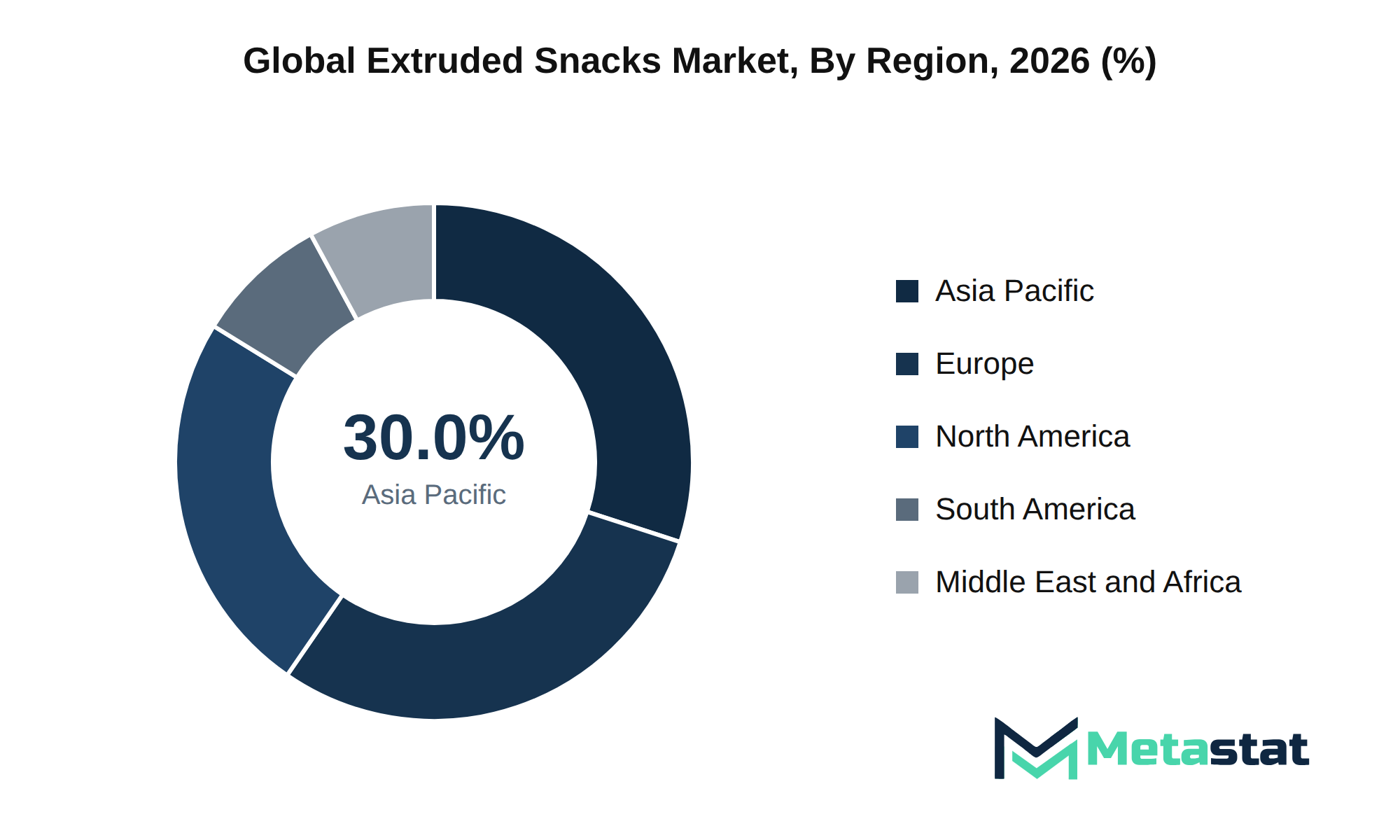
Asia Pacific represents a significant portion of the global Extruded Snacks market, contributing 30.0% to the overall share in 2025. Rapid urbanization and changing consumer preferences in countries including China, Japan, India, and South Korea fuel demand for innovative snack options, driving market growth. Growing disposable incomes in this region enable consumers to explore a wider variety of snacks, enhancing the market's potential.
The emergence of health-conscious consumers has led to increased interest in nutritious and high-quality extruded snacks. This shift creates opportunities for manufacturers to develop products that align with evolving consumer preferences for healthier options. Consequently, regional players focus on expanding their product portfolios to include snacks made from alternative raw materials, including multigrain and peanuts, which appeal to health-oriented buyers.
Infrastructure modernization improves distribution channels and enhances market access across the region. Investment in logistics and supply chain efficiencies supports the transition of products from manufacturers to consumers. Enhanced logistics infrastructure facilitates the growth of online retail stores, increasing accessibility to a diverse range of extruded snacks.
Local compliance mandates and regional regulations impact market entry strategies for foreign companies. Familiarity with local regulations allows international brands to navigate compliance efficiently and establish a foothold in the Asia Pacific market. Observing domestic market players provides valuable insights into effective strategies for product development and distribution.
Geopolitical factors and cross-border trade corridors influence the movement of goods and the establishment of supply chains. Regionalization efforts have led to localized manufacturing densities, optimizing production capabilities in response to demand fluctuations. This strategic approach enhances the competitiveness of players in the market and supports incremental growth vectors.
South America comprises an emerging market in the global Extruded Snacks market, characterized by its unique consumption patterns and regional preferences. Brazil and Argentina emerge because key players in this region, driving growth through an expanding middle class and increasing disposable incomes. The demand for convenient and affordable snack options continues to rise, reflecting a shift in consumer behavior. Infrastructure development in urban areas enhances distribution capabilities, allowing for better access to products across various segments.
The market benefits from localized production, which reduces import dependencies and enhances supply chain efficiencies. Domestic companies focus on innovation in product offerings, catering to local tastes and preferences, which significantly contributes to market expansion. The competitive landscape in South America features several local vendors who align their strategies with consumer trends, creating a robust environment for growth.
With a market share of 8.3% in 2025, South America presents significant opportunities for investment. The region's evolving demographic factors combined with rising health consciousness among consumers are expected to drive the growth of the Extruded Snacks market. The increasing presence of retail channels, including supermarkets and convenience stores, provides consumers with diverse product choices, further driving market dynamics.
The Middle East and Africa region plays a significant role in the global Extruded Snacks market in 2025. Key drivers of demand include the rising urban population and changing dietary preferences, leading to increased consumption of snacks across various demographics. Countries including Saudi Arabia, UAE, and South Africa exhibit a growing appetite for innovative snack options, supported by increasing disposable incomes and a youthful population. Localized manufacturing initiatives enhance market accessibility, improving the supply chain dynamics while addressing consumer preferences for fresh and high-quality products. The region experiences diverse cultural influences, thus shaping unique flavor profiles and product offerings that appeal to local consumers. Emerging players within the market focus on expanding product ranges, leveraging regional tastes and preferences to capture greater market share. The growing trend towards healthy snacking contributes to the expansion of segments, including peanut and multigrain-based snacks. Continued investment in infrastructure modernizations and retail expansions strengthens distribution channels, facilitating market growth. Overall, the potential for growth in the Middle East and Africa region remains robust, driven by the market's evolution to meet emerging consumer needs and preferences within the Extruded Snacks market.
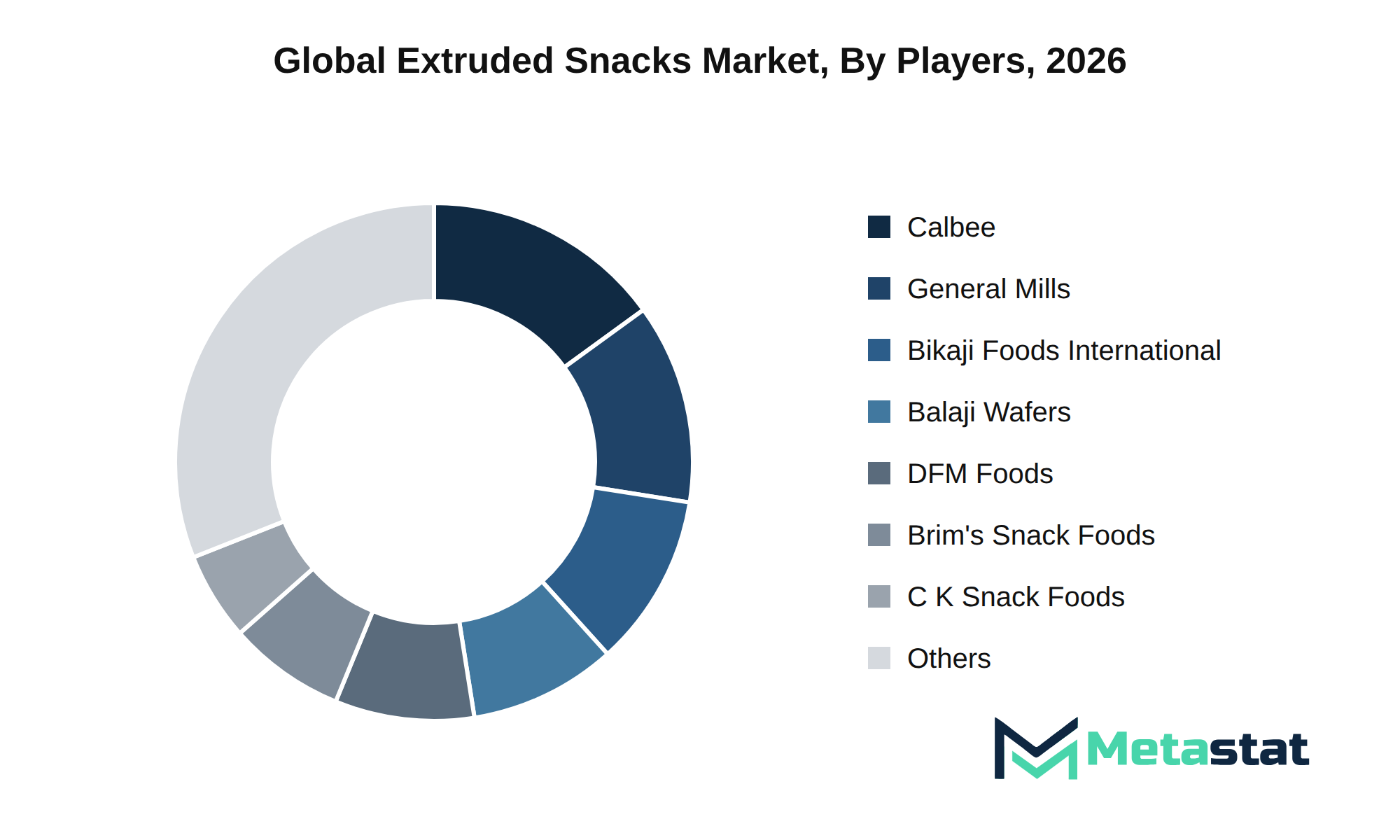
The extruded snacks market features significant activity in mergers, acquisitions, and strategic consolidations among key players. Companies including Calbee, Inc., and General Mills, Inc. engage in strategic alliances that strengthen their market positions and expand product lines. Competitive dynamics include innovative go-to-market strategies that enhance visibility and accessibility of products, particularly through online retail channels.
Product differentiation plays an essential role in maintaining competitive advantage. Firms like Balaji Wafers Private Limited and Intersnack Group GmbH & Co. KG focus on unique flavor profiles and health-conscious offerings, which cater to evolving consumer preferences. Research and development pipelines contribute to proprietary technology moats that protect market share.
Barriers to entry in the extruded snacks market include high capital requirements and established brand equity dynamics. Companies including KP Snacks Limited and Herr Foods Inc. build customer retention strategies that leverage switching costs associated with brand loyalty. The presence of diverse distribution channels, including supermarkets and specialty stores, ensures broad market access and supports revenue growth.
Future competitive outlooks will depend on effective supply chain management and procurement leverage. Companies like OHO GROUP UAB and Old Dutch Foods, Inc. enhance operational efficiencies through vertical integration strategies. Navigating challenges posed by new entrants and startup disruptions shapes long-term growth trajectories within the market.
Market size is forecast to rise from USD 63.2 billion in 2025 to over USD 95.7 billion by 2033. The base case reflects a growth trajectory at a 5.3% CAGR. In a bullish scenario, increased consumer interest and innovation in flavors could accelerate this growth, reflecting heightened demand for diverse snack options. A bearish outlook could arise from economic downturns affecting disposable income, limiting spending on non-essential items, which suppresses market expansion.
Several factors influence the growth of the Extruded Snacks market, including macroeconomic conditions and structural consumption shifts. The integration of next-generation technologies and ongoing R&D commercialization significantly impacts product life cycles, enhancing the quality and variety of offerings. Regulatory evolution and compliance milestones continue to shape market dynamics, requiring agility among stakeholders. Geopolitical realignments and evolving trade corridors affect supply chain structures, influencing pricing and availability.
Strategic capital allocation and infrastructure commitments are essential for supporting market growth. Investments in manufacturing capabilities and distribution channels address emerging white-space opportunities, capturing unmet enterprise needs. High-growth pockets in various regions represent lucrative targets for investment, aligning with executive-level strategic imperatives aimed at long-term market defensibility and growth.
The report strategically identifies and profiles the key market players and analyses their core competencies in each sub-segment of the Extruded Snacks market.
Report Attributes | Details |
Study Period | 2021-2033 |
Base Year | 2025 |
Estimated Year | 2026 |
Forecast Period | 2026-2033 |
Historical Period | 2021-2025 |
Growth Rate | CAGR 5.3% from 2026 to 2033 |
Revenue Unit | USD billion |
Segmentation | By Raw Material, Type, Extrusion Technique, Distribution Channel, and Region |
By Region | North America (By Raw Material, Type, Extrusion Technique, Distribution Channel, and Country)
|
Europe (By Raw Material, Type, Extrusion Technique, Distribution Channel, and Country)
| |
Asia Pacific (By Raw Material, Type, Extrusion Technique, Distribution Channel, and Country)
| |
South America (By Raw Material, Type, Extrusion Technique, Distribution Channel, and Country)
| |
Middle East and Africa (By Raw Material, Type, Extrusion Technique, Distribution Channel, and Country)
|
Find answers to common questions about this report
The Extruded Snacks market size was valued at USD 63.2 billion in 2025, according to the Metastat Insights study.
The Extruded Snacks market is projected to grow at a CAGR of 5.3% during the forecast period from 2026 to 2033.
The North America Extruded Snacks market size is estimated to reach USD 21.6 billion by 2033.
The savory type segment leads the Extruded Snacks market, with a projected value of USD 76.3 billion by 2033. This figure significantly surpasses the sweet type segment, which is expected to reach USD 19.4 billion in the same year.
Key drivers for the Extruded Snacks market include the growth of health consciousness among consumers, leading to a demand for nutritious and convenient snack options. The emphasis on innovative flavors and ingredients, supported by technological advancements in production, enhances competitive positioning and supports market expansion.
Asia Pacific holds the dominant share of the Extruded Snacks market, accounting for 30 percent in 2025. This region surpasses others, including Europe at 29.6 percent and North America at 24.2 percent.
The Extruded Snacks market growth faces significant challenges from regulatory compliance hurdles and economic pressures. Stricter food safety regulations increase operational costs, particularly for smaller manufacturers, while inflation and rising ingredient prices strain profitability and consumer spending. supply chain disruptions hinder production efficiency and market stability.
The growth of health consciousness among consumers significantly influences product adoption in the Extruded Snacks market. Increased awareness of dietary impacts and a desire for convenient, nutritious options drive demand for innovative snacks that align with health trends, leading manufacturers to invest in product development and unique flavor offerings.
The Extruded Snacks market is estimated to reach a valuation of USD 95.7 billion by 2033.
Key players operating in the Extruded Snacks market include Alisha Snacks Pvt. Ltd., Balaji Wafers Private Limited, Bikaji Foods International Limited, Calbee, Inc., General Mills, Inc., KP Snacks Limited, Orkla ASA, and Prataap Snacks Limited (Yellow Diamond).
The analysts below cover Food and Beverages research at Metastat Insights.
LEAD ANALYST
Utkarsh Khirodkar is a Lead Market Research Analyst at MetaStat Insight, specializing in market intelligence, technology sector assessments, and competitive strategy.

LEAD PRINCIPAL ANALYST, PHARMA AND HEALTHCARE
Food and Beverages · Healthcare · Healthcare IT · Medical Devices
Ajay Devgire is the Lead Healthcare Analyst at MetaStat Insight, leading strategic research and market intelligence initiatives across the global healthcare domain.

SENIOR RESEARCH ANALYST
Biotechnology · Food and Beverages · Medical Devices · Packaging
Snehal Pasalkar is a Research Analyst at MetaStat Insight, operating at the intersection of life sciences research, competitive strategy, and market intelligence.
In the biological seed treatment space, registration timelines vary drastically between the European Union, Brazil, and North America. The MetaStat Insight research handled these cross-border regulatory barriers with genuine nuance, mapping commercialization pathways alongside historical field adoption rates. The segmentation between microbial strains and biochemical active ingredients was particularly well structured.
Our team was tracking whether regional recycling infrastructure could realistically absorb the growing volume of lithium iron phosphate batteries over the next decade. The report did a solid job separating announced hydrometallurgical plant capacity from active, permitted operational throughput. That distinction made the feedstock availability projections and regional recovery rate models far more credible than standard commercial overviews.
Tracking capacity expansion in single-use bioprocessing requires dependable data on raw material availability and cleanroom-grade polymer supply chains. The competitive landscape chapter gave a grounded evaluation of secondary component suppliers across North America and Asia-Pacific rather than simply reprinting press releases. Having that level of supplier benchmarking helped clarify dual-sourcing considerations for our clinical pipeline planning.
Explore related market intelligence reports worth reading alongside this one.