
LEAD ANALYST
Utkarsh Khirodkar is a Lead Market Research Analyst at MetaStat Insight, specializing in market intelligence, technology sector assessments, and competitive strategy.

France Corporate Syndicated Loan Market Size, Share, By Financing Facility Type (Revolving Credit Facilities (RCFs), Amortising Term Loan Facilities, Bullet Term Loan Facilities, Bridge Loan Facilities, Guarantee / Letter-of-Credit Facilities and Others (Swingline and Ancillary Facilities)), By Borrower Industry (Industrials & Manufacturing, Consumer & Retail, Energy & Utilities, Technology, Media & Telecommunications, Healthcare & Pharmaceuticals, Transportation & Logistics, Real Estate & Construction, Chemicals, Materials & Mining and Business & Professional Services), By External Credit Rating (AAA to AA-, A+ to A-, BBB+ to BBB-, BB+ to BB-, B+ to B-, CCC+ and Below and Unrated Borrowers), Industry Analysis, Growth, Trends, and Forecast, 2026-2033
Report ID
MSI-5127
Published
September, 2026
Pages
308 Pages
Format
Historical
Base year
Forecast
Forecast period
Report Details
Choose Your License
France Corporate Syndicated Loan Market
The France Corporate Syndicated Loan market was valued at USD 60.8 billion in 2025 and is projected to reach USD 94.8 billion by 2033, growing at a CAGR of 5.7% over the forecast period.
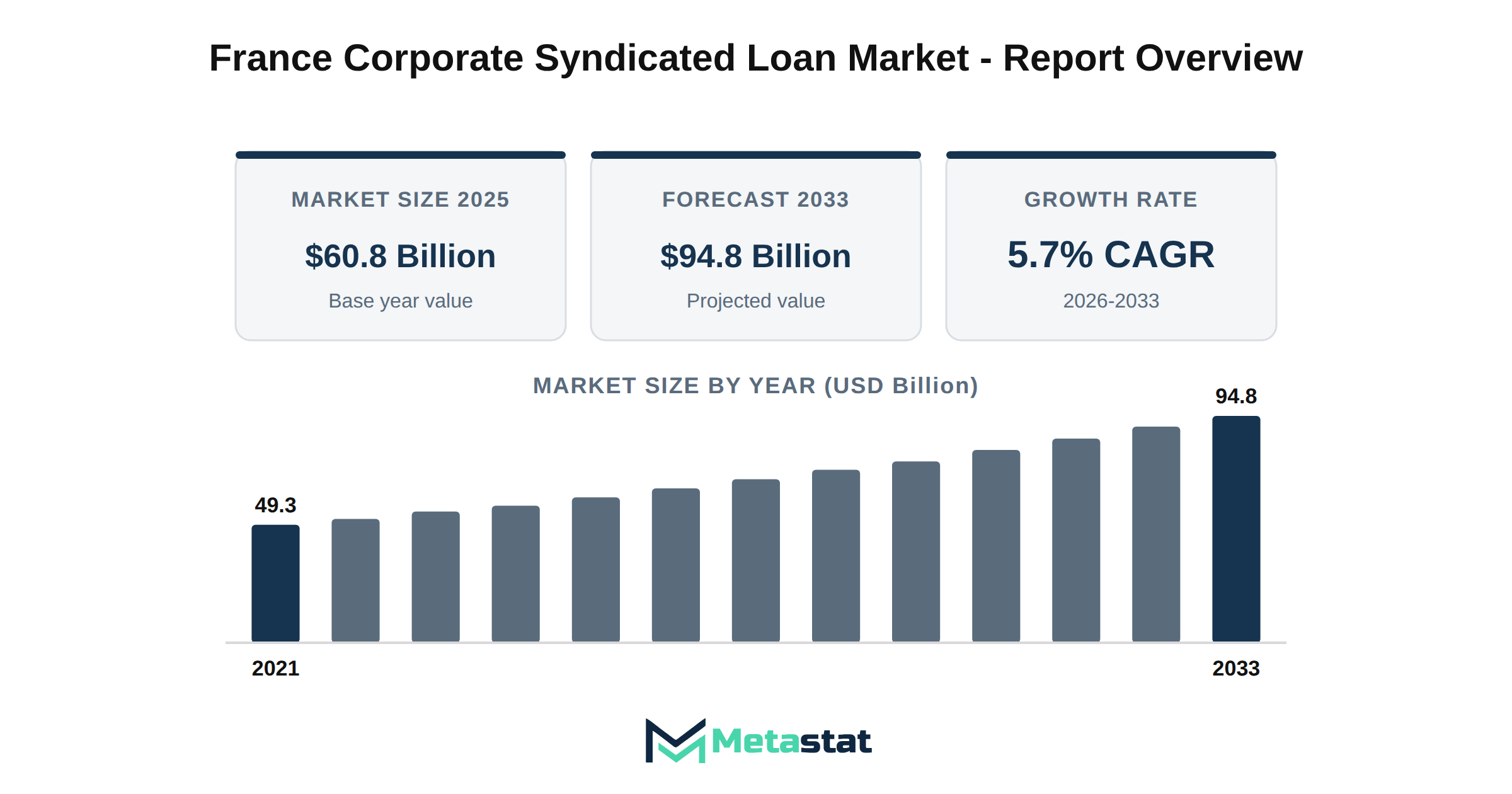
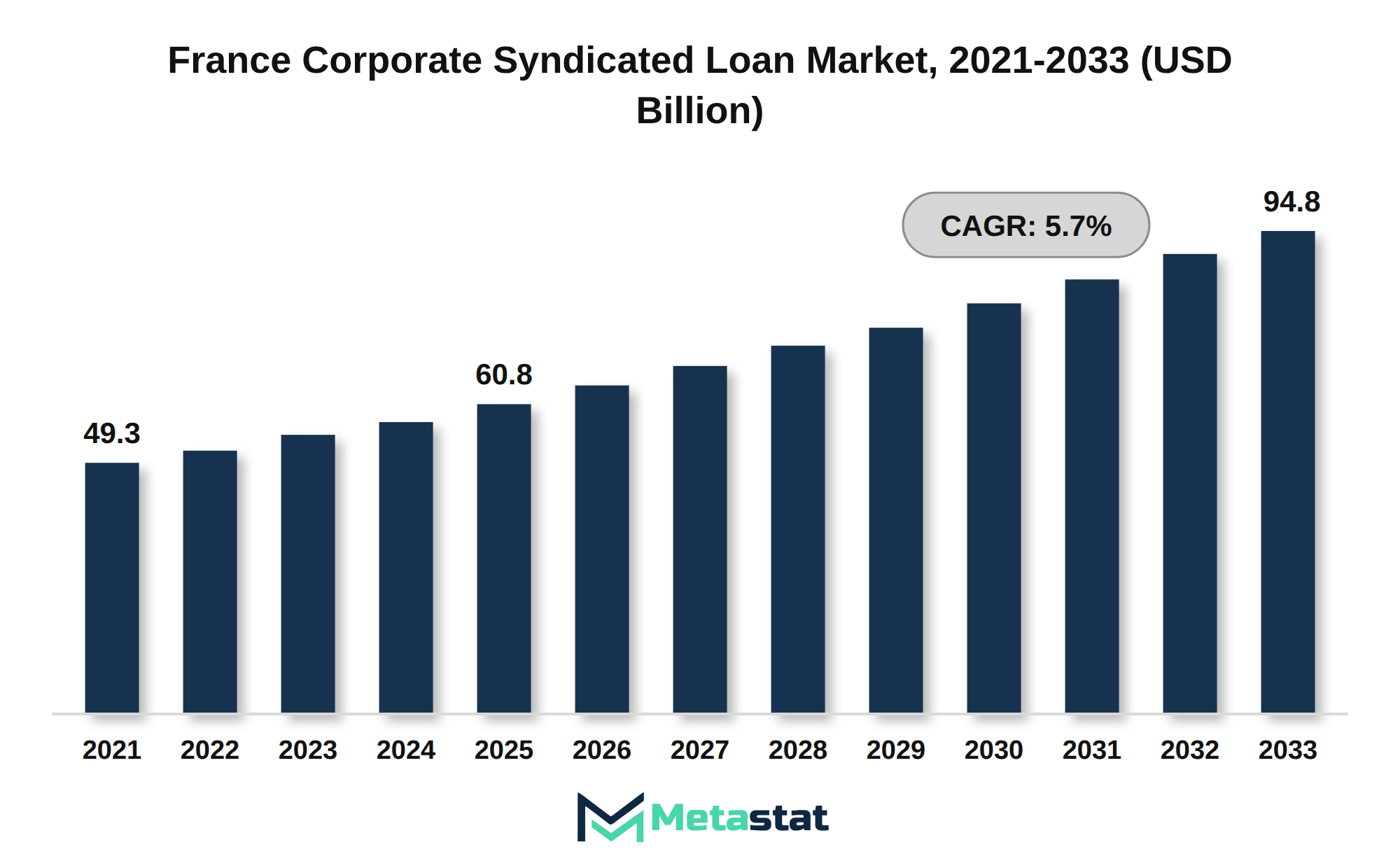
The France Corporate Syndicated Loan market reached a value of USD 60.8 billion in the base year of 2025, demonstrating a steady increase from USD 49.3 billion in 2021. This upward trend continued with values of USD 51.7 billion in 2022 and USD 54.8 billion in 2023. By 2024, the market value increased to USD 57.3 billion. Forecasts indicate an anticipated growth to USD 94.8 billion by 2033, resulting in a compound annual growth rate (CAGR) of 5.7% throughout the forecast period from 2026 to 2033.
Syndicated loan activity in the market includes diverse financing facility types, including Revolving Credit Facilities (RCFs), Amortising Term Loan Facilities, Bullet Term Loan Facilities, and Bridge Loan Facilities. RCFs hold the largest share at 42%, indicating strong demand for flexible borrowing options. The projected value for RCFs is expected to rise from USD 27 billion in 2026 to USD 39.3 billion by 2033, marking a CAGR of 5.5%. Amortising Term Loan Facilities and Bullet Term Loan Facilities are set to grow, with anticipated values of USD 16.2 billion and USD 15.9 billion, respectively, by 2033.
The borrower industry landscape shows significant participation from Industrials & Manufacturing, Consumer & Retail, and Energy & Utilities sectors. The Industrials & Manufacturing segment is forecasted to grow from USD 13.3 billion in 2026 to USD 18.3 billion by 2033, reflecting a CAGR of 4.6%. The Consumer & Retail sector is projected to reach USD 9.5 billion by 2033, while Energy & Utilities is expected to achieve a value of USD 15.7 billion in the same year. The Technology, Media & Telecommunications segment demonstrates a strong growth trajectory with a CAGR of 7.4%.
External credit ratings play a significant role in determining borrowing terms within the market. Loans rated from AAA to AA are anticipated to increase from USD 4.4 billion in 2026 to USD 5.8 billion by 2033, indicating a CAGR of 4.1%. A+ to A rated loans are projected to reach USD 15.9 billion by 2033, while BBB+ to BBB rated loans are expected to achieve a value of USD 30.5 billion. The BB+ to BB segment shows a promising CAGR of 6.4%, reflecting a dynamic borrowing profile among market participants.
The France Corporate Syndicated Loan market exhibits significant trends in syndicated loan activity, reflecting a steady increase in demand. The overall margin and fee structures have shown a tendency toward stabilization, with all-in pricing benchmarks aligning with historical averages. This environment supports borrowers in negotiating favorable terms while maintaining lender confidence.
Analysis of tenor, covenant, and documentation benchmarks indicates a preference for longer maturities among borrowers, aligning with broader market trends. The borrower-profile loan terms matrix reveals distinct differences across sectors, with industries including technology and energy seeking tailored financing solutions that cater to specific operational needs.
Syndication structures and lender appetite demonstrate increasing collaboration among financial institutions, enhancing the overall liquidity within the market. This cooperative approach contributes to a robust refinancing environment, effectively addressing the challenges posed by maturity walls, which remain a concern for many borrowers.
Medium-term pricing projections suggest a gradual increase, influenced by macroeconomic factors including inflationary pressures and currency volatility. Regulatory compliance continues to shape lender practices, ensuring adherence to evolving standards while navigating geopolitical risks.
Market fragmentation remains a defining characteristic, with numerous players competing for market share. The dynamics surrounding mergers and acquisitions contribute to a shifting environment, impacting the value chain and procurement strategies employed by borrowers. Strategic capital allocation and infrastructure investments highlight the focus on sustainable transformation, with companies emphasizing decarbonization and circular economy initiatives.
Future strategic outlooks for the France Corporate Syndicated Loan market highlight corporate imperatives focused on innovation and resilience. High-value recommendations emphasize the importance of adaptive strategies in a changing financial environment, ensuring continued growth and competitiveness.
The France Corporate Syndicated Loan market experiences growth driven by macro-economic factors and evolving corporate financing needs. The current landscape reflects rising interest in diverse financing structures, including Revolving Credit Facilities (RCFs) and Amortising Term Loan Facilities, which cater to the requirements of various industries. Companies seek flexible financial arrangements to support expansion, capital investment, and operational efficiency.
Economic conditions play a significant role in shaping borrowing behaviors. Factors including GDP growth, interest rates, and public-private spending power influence corporate investment decisions. Businesses increasingly seek capital to fund projects that enhance productivity and support digital transformation, leading to an uptick in syndicated loan activity. The anticipated growth in the market highlights an expanding appetite for customized financial solutions that align with strategic objectives.
Industries including Technology, Media & Telecommunications, and Energy & Utilities show heightened engagement in the market. These sectors pursue innovative financing options to drive technological integration and streamline legacy processes, which enhances overall efficiency. The emphasis on operational productivity and cost-efficiency initiatives illustrates the market's role in facilitating corporate strategies that align with broader economic trends.
While corporate borrowers look to optimize their capital structures, the France Corporate Syndicated Loan market positions itself because a vital resource. The increasing reliance on syndicated loans reflects an adaptive response to changing economic conditions and the demand for tailored financial solutions, ensuring sustained growth and development within the market.
Infrastructure development serves because a significant driver for the France Corporate Syndicated Loan market, facilitating increased access to financing for large-scale projects. Heightened public and private investment in infrastructure projects fuels demand for syndicated loans, allowing companies to secure necessary capital for expansion and modernization initiatives. This trend results from government initiatives aimed at enhancing national infrastructure, which creates opportunities for borrowers across various industries.
Investment in infrastructure translates to substantial project financing requirements, particularly in sectors including construction, transportation, and utilities. Corporations engaged in these sectors leverage syndicated loans to support their capital-intensive projects, promoting operational efficiency and overall productivity. While infrastructure development progresses, the market experiences a positive impact, leading to increased financing activities and loan volumes.
The French government's commitment to infrastructure enhances market confidence, prompting lenders to engage in syndication practices. The collaboration among financial institutions in providing comprehensive financing solutions strengthens the market, contributing to its projected growth. Overall, rising infrastructure development significantly shapes the France Corporate Syndicated Loan market, with implications for investment, demand, and competitiveness over the forecast period.
The France Corporate Syndicated Loan market faces significant challenges stemming from regulatory tightening and macroeconomic pressures. Increasing compliance hurdles create barriers for borrowers, complicating the borrowing process and leading to delays in capital access. These challenges disproportionately affect smaller firms, which struggle to meet stringent requirements, limiting their participation in the market. This situation often results in reduced loan volumes, impacting overall market growth.
Macroeconomic headwinds, including inflationary pressures and stagnant capital investment, further constrain market activity. Rising inflation increases operating costs for businesses, limiting their capacity to take on new debt, thereby affecting borrowing trends. This environment creates uncertainty, leading firms to delay investment decisions, resulting in slower demand for syndicated loans.
Geopolitical instability and supply chain disruptions exacerbate these challenges. Companies exposed to international markets face increased risks, leading to cautious approaches regarding new financing. The France Corporate Syndicated Loan market navigates these turbulent conditions, potentially hindering growth and adoption rates across various sectors.
The France Corporate Syndicated Loan market encounters challenges driven by geopolitical fragmentations, which lead to increased financing risks. Trade deficits and tariff frictions impede cross-border transactions, resulting in uncertainty for borrowers and lenders. This turbulence creates a cautious lending environment, affecting the availability of capital for corporate borrowers.
Technological disruptions further complicate the situation, owing to firms facing challenges in integrating complex research and development processes. Interoperability friction among various technological platforms hampers efficient collaboration, increasing project timelines and costs. Consequently, businesses struggle to maintain competitive financing structures because market demands fluctuate.
Evolving legal liabilities and compliance overhead contribute additional burdens to the market. Tightening regional regulatory standards necessitate adherence to extensive compliance measures, diverting resources away from core business functions. These factors create operational challenges for financial institutions and borrowers alike, influencing the overall attractiveness of the France Corporate Syndicated Loan market.
The rising input cost structures, including labor and materials, place further margin pressures on corporate borrowers. Increasing costs associated with talent retention and workforce skill gaps complicate operational stability. This environment compels companies to reconsider their financing strategies, affecting growth potential within the market.
Environmental lifecycle footprints and sustainability demands increasingly influence lending decisions. Companies that fail to align with decarbonization mandates face heightened scrutiny from lenders, which impacts their access to credit. Thus, the evolving expectations around sustainability contribute to the overall complexity and risk profile of the France Corporate Syndicated Loan market.
The France Corporate Syndicated Loan market gains momentum owing to evolving buyer preferences and strategic integrations. Increasing adoption of sustainable practices influences borrowers to seek financing options aligned with environmental, social, and governance (ESG) criteria. This trend leads to enhanced demand for green financing solutions, which provide opportunities for lenders to diversify their offerings and cater to environmentally conscious industries.
Simultaneously, technological disruptions and digital transformations reshape transaction processes within the market. Emphasis on digital procurement shifts allows borrowers to streamline financing processes, enhancing efficiency and reducing transaction costs. The integration of advanced technologies within lending practices positions financial institutions to better serve various sectors, including energy, technology, and consumer services.
The market benefits from geographical expansion because companies seek to penetrate new markets and diversify their portfolios. Increased cross-industry mergers and acquisitions create additional financing requirements, strengthening the demand for syndicated loans. This activity results in a broader array of investment opportunities for lenders, driving competition and innovation in the financing landscape.
Asset life-cycle extensions and retrofitting strategies further support market growth by enabling companies to optimize their existing facilities. Investments in infrastructure modernization yield substantial financial benefits for borrowers, driving increased participation in the syndicated loan market. Overall, the France Corporate Syndicated Loan market is positioned to grow owing to strategic adaptations and emerging buyer behaviors shaping financial practices across industries.
The France Corporate Syndicated Loan market is segmented based on Financing Facility Type, Borrower Industry, and External Credit Rating.
Valued at USD 27 billion in 2026, the Revolving Credit Facilities (RCFs) segment is projected to reach USD 39.3 billion by 2033, reflecting a CAGR of 5.5% during this forecast period. This growth stems from increasing demand among businesses for flexible financing solutions, enabling them to manage cash flow fluctuations and seize growth opportunities. Industries including Industrials & Manufacturing and Technology, Media & Telecommunications significantly contribute to this demand, leveraging RCFs for operational efficiency and to finance various projects.
The adoption of RCFs within the France Corporate Syndicated Loan market aligns with broader economic dynamics, including rising interest rates that prompt borrowers to secure financing options that offer adaptability. Companies prioritize access to capital, particularly during periods of economic uncertainty, making RCFs an attractive choice. The segment benefits from a trend towards digitalization, driven by financial institutions enhancing their offerings with technological upgrades, streamlining application processes, and improving customer experience.
Overall, the evolution of the Revolving Credit Facilities (RCFs) segment demonstrates a response to changing market demands, positioning it because a key component in the financing strategies of various industries in the France Corporate Syndicated Loan market. The anticipated growth reflects a strong alignment between borrower needs and the evolving financial landscape.
Continued growth in the Amortising Term Loan Facilities segment reflects a robust demand from various industries. This segment is estimated to reach USD 16.2 billion by 2033, at a CAGR of 5.1% during the forecast period. Primary drivers include the increasing need for financing solutions that allow borrowers to manage repayment schedules effectively. Industrial and manufacturing sectors emerge due to significant users seeking financial products that align with their capital structure and cash flow management strategies.
Technological maturation encourages lenders to innovate their offerings, enhancing the appeal of amortising loans. These developments provide borrowers with more flexibility and tailored financial solutions, supporting segment expansion. Regulatory compliance influences market dynamics, because institutions adapt to evolving standards while managing credit risk. Cost structures and pricing volatility impact the competitive landscape, influencing borrower choices and lenders' strategies.
With an increased focus on sustainable financing options, the France Corporate Syndicated Loan market anticipates further shifts in borrower preferences. The segment benefits from strong institutional backing, building investor confidence and driving demand for products that meet diverse financing needs. Overall, the Amortising Term Loan Facilities segment positions itself for steady growth in a changing financial landscape.
Growth within the Bullet Term Loan Facilities segment is driven by various factors, including increasing demand for financing options among businesses seeking flexibility and efficiency. Companies across multiple industries, particularly those requiring short-term capital for immediate operational needs, contribute significantly to this demand. Bullet term loans, characterized by their structure of a single principal repayment at maturity, appeal to firms seeking cost-effective financing solutions that minimize interest payments over the loan's duration.
Adoption of bullet term loans is expected to accelerate due to the stability and reliability of the financial environment. Companies with strong credit ratings are more likely to secure favorable terms, enhancing the attractiveness of this financing option. Investors and lenders recognize the lower risk associated with borrowers exhibiting strong financial health, a trend that supports growth in the segment.
The Bullet Term Loan Facilities segment is expected to reach USD 15.9 billion by 2033. This growth aligns with trends observed in the France Corporate Syndicated Loan market, where a rising number of borrowers seek tailored financial products to meet their capital needs. Enhanced competition among lenders further contributes to innovation in product offerings and pricing strategies, creating a healthier lending ecosystem.
Pricing dynamics in this segment reflect broader market conditions, including fluctuations in interest rates and competition among financial institutions. Lenders focusing on customer-centric services and diversified product offerings strengthen their market position, while borrowers increasingly prioritize terms that align with their financial strategies. Consequently, favorable conditions in the financial landscape encourage sustained growth in the market.
Bridge Loan Facilities in the France Corporate Syndicated Loan market display a strong growth trajectory, projected to expand at a CAGR of 6.7% during the forecast period. Increasing demand for short-term financing solutions, particularly in transitional funding scenarios, drives this growth. Borrowers seeking immediate capital to bridge funding gaps often turn to bridge loans, which provide a viable solution, positioning these facilities because essential financial instruments across various industries.
Industrials and manufacturing sectors prominently use bridge loans for financing critical projects, highlighting their reliance on timely access to funds. The technology, media, and telecommunications industries exhibit significant engagement with bridge loans, leveraging these facilities to support rapid innovation cycles and capitalize on market opportunities. This dynamic emphasizes the importance of bridge loans in enabling companies to respond effectively to changing market conditions.
Investment in technology and next-generation upgrades within the financing landscape enhances the appeal of bridge loan facilities. Financial institutions increasingly adopt digital solutions for loan origination and management, improving the borrowing process and customer experiences. This trend reflects broader technological maturation within the industry, which supports the growing adoption of bridge loans.
Cost structures related to bridge loans remain competitive, allowing borrowers to access necessary capital without incurring excessive financial burdens. Economic conditions influencing capital markets and interest rates will continue to shape pricing volatility and margin pressures associated with bridge loans. The strategic opportunity windows for financial institutions to capture market share through innovative lending solutions appear promising.
The outlook for the bridge loan segment reflects a strong combination of increasing demand, technological advancements, and favorable economic conditions, contributing to the overall growth of the France Corporate Syndicated Loan market. Continued investment in this segment presents significant potential for both lenders and borrowers, reinforcing the critical role of bridge loans in facilitating financial transactions.
Demand for Guarantee / Letter-of-Credit Facilities in the France Corporate Syndicated Loan market derives from the need for financial security in various commercial transactions. These facilities provide assurance to lenders that repayment will occur, which is crucial for financing operations across multiple industries. Adoption among borrowers in sectors including Industrials & Manufacturing, Consumer & Retail, and Energy & Utilities reflects a trend toward minimizing risk in capital-intensive projects. The growing emphasis on cash flow management and financial stability among businesses supports the expansion of this segment.
Regulatory compliance standards and certifications influence the landscape for Guarantee / Letter-of-Credit Facilities. Organizations increasingly seek to align with international financial regulations, prompting demand for these facilities to support cross-border transactions and enhance credibility. Increased scrutiny from regulators leads to a greater reliance on formal credit documentation, further reinforcing the role of these facilities in the market.
Technological maturation contributes to the evolution of Guarantee / Letter-of-Credit Facilities. Advancements in financial technology streamline the process of issuance and management, making it easier for borrowers to access these financial products. Enhanced digital platforms and tools improve transparency and efficiency, leading to increased adoption among businesses looking to optimize their financing strategies. This evolution aligns with the broader trend of digitization in the financial services industry.
Pricing volatility and margin pressures impact the attractiveness of Guarantee / Letter-of-Credit Facilities. Fluctuating interest rates and economic uncertainties compel organizations to carefully evaluate their financial commitments. The need for flexible and adaptive financing solutions drives innovation and customization in these facilities, allowing financial institutions to meet the diverse needs of their clients.
The France Corporate Syndicated Loan market experiences significant competition among financial institutions offering Guarantee / Letter-of-Credit Facilities. Financial institutions continuously seek to enhance their value propositions through tailored solutions, competitive pricing, and robust customer support. This competitive environment creates strategic opportunity windows for institutions willing to innovate and differentiate their offerings.
Demand for Others (Swingline and Ancillary Facilities) within the France Corporate Syndicated Loan market reflects evolving financial strategies among corporations. Adoption of these facilities arises from businesses seeking flexible financing options that align with short-term funding requirements. The urgency for liquidity solutions drives usage, enabling firms to address immediate cash flow needs without long-term commitment.
Segment expansion catalysts include increasing economic activity and a rising number of corporate transactions. These factors contribute to heightened reliance on ancillary facilities, particularly for businesses experiencing seasonal or project-based fluctuations in funding requirements. Regulatory compliance standards influence market dynamics, driven by companies prioritizing financing options that comply with changing financial regulations.
Cost structures within this segment require careful consideration. Pricing volatility associated with short-term financing impacts overall borrowing costs, influencing corporate strategies around capital allocation. Companies navigate these dynamics to optimize financial positions while addressing short-term liquidity needs.
Strategic opportunity windows emerge because firms seek to leverage ancillary facilities for operational flexibility. Financial institutions play a critical role by offering tailored solutions that meet the unique requirements of various industries. Continuous innovation in product offerings enhances competitiveness, ensuring that these facilities remain attractive options for businesses within the France Corporate Syndicated Loan market.
Valued at USD 13.3 billion in 2026, the Industrials & Manufacturing segment is projected to reach USD 18.3 billion by 2033, at a CAGR of 4.6% during the forecast period. This growth results from increasing demands for financing to support operational enhancements and technological advancements within the sector. Manufacturers invest in innovative technologies and sustainable practices, driving the need for accessible credit solutions in the France Corporate Syndicated Loan market.
The trend of automation and digital transformation significantly influences borrowing patterns. Companies seek funding to adopt advanced manufacturing technologies, enhancing productivity and competitiveness. Regulatory pressures regarding sustainability and environmental compliance further impact financial strategies, prompting manufacturers to pursue syndicated loans for necessary upgrades.
While the market evolves, strategic investments targeting energy efficiency and resource optimization enhance margins for businesses operating within this segment. Cost pressures stemming from fluctuating raw material prices and supply chain vulnerabilities challenge profit margins; hence, securing favorable credit facilities becomes crucial for maintaining operational viability. Firms within the Industrials & Manufacturing segment leverage financing opportunities to navigate these challenges effectively while pursuing growth strategies.
The anticipated transition towards greener practices influences financing decisions, with institutions increasingly favoring borrowers committed to sustainability. This shift towards environmentally responsible production aligns with regulatory trends and attracts investment, contributing to the evolving landscape of the France Corporate Syndicated Loan market.
Within the France Corporate Syndicated Loan market, the Consumer & Retail segment reflects a robust trajectory of growth, driven primarily by increasing consumer spending and evolving retail dynamics. This segment is estimated to reach USD 9.5 billion by 2033, at a CAGR of 4.6% during the forecast period. The expansion of e-commerce and digital retail platforms drives demand for financial solutions, enabling businesses to adapt to changing consumer preferences and operational models.
Technological advancements have led to the evolution of financial products tailored specifically for the Consumer & Retail industry. Next-gen upgrades in payment processing and supply chain financing continue to enhance operational efficiency and improve access to capital. Regulatory compliance standards, particularly in consumer protection and data security, influence how financial institutions structure their offerings in this segment.
Pricing volatility and margin pressures in the retail sector necessitate resilient financing strategies. Companies in the Consumer & Retail segment face challenges related to fluctuating consumer demand and economic uncertainty. Strategic investments in technology and innovative financial solutions are crucial for maintaining competitive advantage and seizing emerging opportunities in the market.
Growth in the Energy & Utilities segment of the France Corporate Syndicated Loan market reflects increasing demand for financing to support infrastructure developments and sustainable energy initiatives. Investments in renewable energy projects and upgrades to existing utility infrastructures drive this demand, driven by companies seeking to enhance efficiency and meet regulatory requirements. The segment is expected to reach USD 15.7 billion by 2033, indicating a consistent upward trajectory.
Technological advancements further enhance operational capabilities within the energy sector, leading to increased investment in next-generation upgrades. Companies in this segment prioritize modernization to reduce operational costs and improve service delivery. End-use dynamics, including shifts towards cleaner energy sources, influence borrowing behavior. Businesses actively seek financial support for transition projects.
Regulatory compliance standards impose additional pressures on energy companies, necessitating significant capital investment for adaptation. These compliance requirements create both challenges and opportunities, encouraging firms to explore innovative financing solutions. Strategic opportunity windows arise through partnerships and collaborations that help mitigate risks associated with evolving energy policies.
Overall, the Energy & Utilities segment demonstrates resilience, with robust capital investment outlooks supporting growth in the France Corporate Syndicated Loan market. Enhanced focus on sustainability and compliance ensures this segment remains a crucial player in the broader financial landscape.
Demand within the Technology, Media & Telecommunications segment reflects a robust trajectory, projected to grow at a CAGR of 7.4% during the forecast period. Increasing investment in digital infrastructure and advancements in technology drive this growth, particularly owing to businesses modernizing their operations and enhancing service delivery. The segment benefits from high consumer demand for digital content, cloud services, and telecommunications efficiency, positioning it favorably within the France Corporate Syndicated Loan market.
Strategic opportunities arise from the need for next-generation upgrades, including 5G technology and enhanced data security measures. These upgrades influence capital investment decisions, encouraging businesses to secure funding through syndicated loans. The ongoing evolution of products and services within this sector supports sustained adoption, with companies pursuing innovative solutions to meet shifting consumer preferences.
Regulatory compliance plays a critical role, because businesses adapt to new standards that govern data protection and telecommunications services. This regulatory landscape affects operational costs, encouraging participants to seek financing solutions that support compliance and mitigate risks. Overall, the Technology, Media & Telecommunications segment in the market experiences strong growth prospects, driven by consumer demand and technological advancements.
Growth in the Healthcare & Pharmaceuticals segment reflects strong demand driven by advancements in medical technology and increasing healthcare expenditure. The market benefits from ongoing innovation in pharmaceuticals, which encourages investment in clinical trials and research and development. Regulatory compliance standards play a crucial role, ensuring that products meet safety and efficacy requirements. This compliance builds trust among consumers and healthcare providers, further stimulating market expansion.
Consumption shifts towards personalized medicine and biologics are evident, influencing the types of financing required by companies within this segment. Increasing pressure to keep costs low while maintaining high-quality products challenges profit margins, pushing companies to seek more flexible financing options. Strategic opportunity windows emerge for firms that adapt quickly to evolving consumer needs and regulatory landscapes. Investment in digital health technologies continues to reshape the market, enhancing operational efficiency and patient engagement.
Supply chain resilience becomes critical amid disruptions from global events, prompting companies to re-evaluate sourcing and logistics strategies. The risk of substitution remains relevant, reflecting alternative therapies gaining traction. Companies that successfully navigate these challenges position themselves favorably within the competitive environment of the France Corporate Syndicated Loan market.
Growth in the Transportation & Logistics segment reflects a combination of increasing demand for efficient supply chain solutions and advancements in technology. Firms within the segment prioritize operational efficiency, prompting significant investment in logistics infrastructure and the adoption of innovative transport solutions. The rising importance of regulatory compliance regarding emissions and sustainability drives companies to seek financing for upgrades and technological enhancements.
The market experiences shifts in consumption patterns driven by customers increasingly favoring swift delivery options. These dynamics influence financing strategies, with companies seeking flexible loan structures to accommodate fluctuating demand. Competitive pressures necessitate resilience in supply chains, leading to strategic capital investments to mitigate logistics vulnerabilities and enhance operational agility.
While firms innovate, adoption of next-generation technologies, including automation and data analytics, represents a crucial factor in segment expansion. Increased digitization enhances visibility across supply chains, enabling companies to optimize operations and respond effectively to market changes. Investment in these technologies positions firms favorably for future growth within the France Corporate Syndicated Loan market.
Demand for loans in the Real Estate & Construction sector is driven by several factors, including urbanization, population growth, and increasing consumer confidence. Expanding urban areas require substantial investment in residential and commercial properties, leading to heightened demand for syndicated loans to finance these projects. Developers and investors seek financing solutions that match the scale and duration of their projects, prompting a shift toward tailored lending products that accommodate the unique risks associated with real estate investments.
Technological advancements in construction practices, including modular building and sustainable materials, play a significant role in segment expansion. These innovations improve project efficiency and reduce costs, thereby attracting more borrowers into the market. Regulatory compliance, particularly concerning environmental standards and safety regulations, influences borrowing patterns within this sector. Companies seeking to adhere to these regulations require financial support to implement necessary changes, thereby increasing reliance on syndicated loans.
Intensifying competition prompts lenders to focus on offering more flexible terms and innovative financing structures. This strategic shift aligns with the evolving needs of borrowers in the Real Estate & Construction sector. Shifts in consumer preferences towards sustainable and energy-efficient properties compel developers to seek financing for projects that meet these expectations, further driving demand in the France Corporate Syndicated Loan market.
Raw material sourcing challenges, coupled with price volatility, impact the overall cost structures associated with construction projects. These dynamics place pressure on profit margins, influencing funding strategies for real estate development. The capital investment outlook remains positive, propelled by government initiatives aimed at stimulating infrastructure development and housing projects, thereby supporting the growth trajectory of the segment within the broader market.
Investment in the Chemicals, Materials & Mining segment within the France Corporate Syndicated Loan market benefits from several demand drivers. Increasing industrial activities and a shift towards sustainable practices influence the adoption of advanced technologies within this sector. Companies seek financing to support innovations in product development, enhancing efficiency and reducing environmental impact.
Regulatory compliance and environmental standards present both challenges and opportunities for firms operating in this segment. Adhering to stringent regulations compels companies to invest in cleaner technologies and sustainable processes, which often necessitates external financing solutions. This trend aligns with broader industry movements toward sustainability, creating a more resilient supply chain.
Pricing volatility in raw materials significantly affects the cost structures within this segment. Fluctuations in the prices of key inputs lead to margin pressures, prompting companies to explore strategic financial options, including syndicated loans, to maintain operational stability. Effective management of these cost dynamics influences overall market growth.
Technological advancements play a critical role in shaping the future of the Chemicals, Materials & Mining segment. Companies embracing next-generation technologies improve their market positions, leveraging innovations to enhance productivity and reduce costs. Strategic opportunities continue to arise owing to firms adapting to changing market conditions and investing in capital projects aimed at expansion.
The Chemicals, Materials & Mining segment within the France Corporate Syndicated Loan market presents evolving conditions, driven by regulatory demands, technological advancements, and changing market dynamics. Companies that navigate these complexities secure a competitive advantage in the years to come.
Interest in the Business & Professional Services segment stems from the increasing demand for advisory, consulting, and operational services across various industries. This growth is primarily driven by the evolving needs of businesses seeking operational efficiency and innovative solutions to complex challenges. Clients prioritize high-quality services that enhance productivity and ensure compliance with regulatory standards.
The market sees significant investments in technology to support service delivery. Automation and digital transformation initiatives shape service offerings, enabling firms to respond swiftly to changing client requirements. Strategic partnerships and collaborations improve service capabilities, allowing firms to broaden their market reach and enhance service quality.
Regulatory compliance demands further influence market dynamics. Businesses in this sector navigate complex regulatory environments, prompting a focus on risk management and compliance services. This heightened focus drives demand for specialized consulting, thereby expanding the overall service portfolio within the France Corporate Syndicated Loan market.
Cost structures remain a critical consideration for firms within the Business & Professional Services segment. Fluctuations in pricing and evolving market conditions challenge profitability, prompting firms to adapt their strategies. Investment in workforce development ensures that talent aligns with industry demands, enhancing competitive positioning and resilience against market volatility.
Overall, the Business & Professional Services segment experiences a competitive environment characterized by continuous adaptation to market changes and client needs. Firms that successfully navigate these dynamics capitalize on emerging opportunities, achieving sustained growth and profitability in the market.
Investment within the Others (Leisure & Hospitality, Agribusiness) sub-segment of the France Corporate Syndicated Loan market reflects a focus on diverse financial solutions tailored to unique industry demands. The dynamic nature of the leisure and hospitality sectors, along with the agricultural industry's evolving needs, drives various financing opportunities. Increased tourism, changing consumer preferences, and sustainable practices in agribusiness present avenues for growth and funding. These industries observe shifts in consumption patterns, with a rising inclination towards experiential offerings in leisure and an emphasis on sustainable sourcing in agriculture. Regulatory compliance and environmental standards significantly influence financial strategies, leading to innovative financing solutions that align with industry-specific goals. Ongoing technological maturation within these sectors prompts investments in next-generation upgrades and product evolution. Financial institutions actively seek opportunities to enhance their portfolios, particularly in segments experiencing rapid transformation. Strategic opportunities arise through partnerships and collaborations aimed at strengthening supply chain resilience and addressing potential vulnerabilities. The ability of businesses in the leisure and agribusiness sectors to adapt to changing market dynamics dictates their success in securing necessary funding, shaping the overall landscape of the market.
Valued at USD 4.4 billion in 2026, the AAA to AA segment is projected to reach USD 5.8 billion by 2033, at a CAGR of 4.1% during the forecast period. Demand within this segment derives from borrowers with higher credit quality, which translates to lower default risk and more favorable loan terms. Financial institutions often prefer lending to highly rated borrowers, reflecting stable demand for these loans amid changing economic conditions.
Investment in this segment experiences support from the increasing number of corporations seeking to strengthen their liquidity positions. Borrowers in the AAA to AA category typically exhibit strong operational stability, which encourages lenders to offer competitive rates. This trend prompts more corporations to consider refinancing existing debts and pursuing new credit facilities to finance growth opportunities.
In the France Corporate Syndicated Loan market, regulations aimed at maintaining financial stability and promoting transparency play significant roles in shaping demand for AAA to AA rated loans. Compliance with these regulations influences borrowing behaviors, driven by corporations prioritizing maintaining high credit ratings to secure favorable financing terms. Consequently, firms actively manage their credit profiles, contributing to a positive growth trajectory for this segment.
In the France Corporate Syndicated Loan market, the segment rated A+ to A demonstrates significant growth potential. This segment is expected to reach USD 15.9 billion by 2033, at a CAGR of 4.8% during the forecast period. Demand arises from businesses seeking stable financial backing, particularly in high-quality credit environments. Increasing investor confidence in borrowers with strong credit ratings drives growth in this segment, attracting funds to these entities. Companies in various sectors, especially in consumer goods and technology, secure financing through this credit rating, supporting expansion and innovation.
Regulatory compliance standards, including stringent requirements for creditworthiness, continue to enhance the appeal of A+ to A rated loans. These loans reflect lower risk profiles, which attract conservative investors looking for secure investment opportunities. The competitive landscape within the market supports borrower access to capital, enabling strategic initiatives that capitalize on market trends and consumer demands. Continued investment in technology and infrastructure by borrowers rated A+ to A positions them favorably, enhancing resilience against economic fluctuations.
In the France Corporate Syndicated Loan market, the segment rated BBB+ to BBB shows growth influenced by an increase in borrowing among mid-tier corporations. Such firms seek financing for operational expansion, capital expenditures, and strategic acquisitions. This sub-segment reflects an environment where businesses actively pursue funding to enhance their competitive positioning. Factors contributing to this demand include favorable credit conditions and a gradual recovery in market confidence following economic disruptions.
Capital investment plays a critical role in the segment's expansion, with firms increasingly looking to secure loans that align with their growth strategies. Anticipated demand stems from the industrial and manufacturing sectors, which rely on reliable financing sources to support ongoing projects and innovations. Companies within this rating bracket benefit from more favorable interest rates compared to lower-rated counterparts, making this segment attractive for both lenders and borrowers.
Regulatory compliance standards and credit rating evaluations shape the landscape, influencing lender willingness to extend credit. Borrowers rated BBB+ to BBB encounter lower margin pressures compared to those in riskier categories, which supports consistent growth within this segment. Economic stability and improved market dynamics are expected to facilitate access to financing, making the segment a focal point for investors and financial institutions operating within the France Corporate Syndicated Loan market.
Growth within the BB+ to BB segment aligns with increased risk appetite among lenders, particularly appealing to financial institutions targeting higher yields. Borrowers within this credit range often possess established track records and face challenges in accessing lower-rated financing options. Stricter regulatory compliance standards push several borrowers towards this segment, seeking favorable terms while managing their credit risk. The segment is projected to grow during the forecast period.
Opportunities arise from an expanding need for capital among industries including Energy & Utilities and Consumer & Retail, where credit ratings within this range offer accessibility to essential financing. Investors in the France Corporate Syndicated Loan market recognize the potential for solid returns, leading to increased competition among lenders for these borrowers. The evolving corporate financing environment, coupled with adjustments in pricing volatility, affects loan structuring and borrower negotiations.
Strategic opportunities emerge from borrowers actively seeking to improve their credit ratings, enhancing their appeal to potential lenders. This proactive approach encourages financial institutions to reevaluate their risk models, thereby influencing lending strategies. The capacity for investment in higher-rated credit segments allows lenders to capture greater market share within the France Corporate Syndicated Loan market, ultimately driving growth and enhancing overall market dynamics.
Demand for loans in the B+ to B sub-segment of the France Corporate Syndicated Loan market stems from various factors influencing borrower creditworthiness and risk assessment. Borrowers in this category often face increased scrutiny from lenders, which impacts their access to capital. The segment attracts attention from industries characterized by moderate risk profiles, where companies exhibit stable cash flows but do not meet the higher standards associated with investment-grade ratings.
The adoption of syndicated loans by B+ to B rated borrowers reflects a strategic approach to managing financing needs. Companies in sectors including consumer and retail, energy, and industrials view these loans because viable options for funding growth and transitioning through economic fluctuations. This sub-segment experiences demand fluctuations due to broader economic conditions, influencing financing strategies across various sectors.
Regulatory compliance standards significantly impact the operations of the market, particularly for lower-rated borrowers. Increased regulatory scrutiny surrounding lending practices necessitates enhanced due diligence from financial institutions, which directly affects pricing and access to capital for B+ to B rated borrowers. Fluctuations in pricing volatility contribute to margin pressures, compelling firms to carefully evaluate their financing strategies.
The B+ to B segment enhances supply chain resilience, because businesses with these ratings seek to maintain liquidity and operational stability amid economic uncertainties. Strategic opportunity windows arise because firms in this rating category capitalize on market conditions to secure favorable terms, improving their competitive position within the France Corporate Syndicated Loan market.
Demand for loans in the CCC+ and Below segment of the France Corporate Syndicated Loan market reflects the financial challenges faced by borrowers with lower credit ratings. These borrowers encounter stricter lending terms and higher interest rates attributed to perceived risks, impacting their capacity to secure financing. This environment leads to limited access to capital, which affects operational capabilities and market competitiveness for businesses in this rating category.
Adoption of alternative financing solutions grows because borrowers seek more favorable conditions. Expansion catalysts for this segment include increasing financial inclusion initiatives and tailored loan products aimed at supporting less traditional borrowers. The availability of specialized lenders focusing on this segment provides additional opportunities for businesses that encounter difficulties in securing conventional loans.
Technological maturation contributes to the evolution of risk assessment tools, enabling lenders to better evaluate the creditworthiness of borrowers rated CCC+ and Below. Enhanced data analytics and machine learning models facilitate informed decision-making, helping to mitigate risks associated with lending to lower-rated entities. This advancement creates a dynamic lending environment, influencing borrower behavior and lender strategies.
Increased focus on regulatory compliance ensures that lenders adhere to appropriate risk management frameworks. Compliance standards impact lending practices, influencing pricing volatility and margin pressures for loans extended to this segment. While regulatory scrutiny tightens, lenders adjust their risk appetite, shaping the dynamics within the market.
Strategic opportunity windows arise for lenders willing to explore partnerships and innovative financing models tailored for borrowers with lower credit ratings. Increased capital investment in technology and process improvements enhances the ability to serve this segment efficiently. By leveraging these opportunities, lenders strengthen their market position while supporting the growth potential of businesses operating within the CCC+ and Below rating category.
Demand within the Unrated Borrowers segment of the France Corporate Syndicated Loan market stems from a diverse group of entities that lack established credit ratings. These borrowers often represent emerging companies or those in growth phases, demonstrating a willingness to engage in financing despite the absence of a formal credit profile. Primary drivers include the need for operational capital and the pursuit of funding for expansion projects, which are crucial for maintaining competitive positioning in various industries. Adoption of syndicated loans in this segment reflects a strategic choice by lenders to diversify their portfolios by including higher-risk profiles, with potential for substantial returns.
Several factors contribute to segment expansion, including increased liquidity in the market and a growing appetite for risk among financial institutions. This trend aligns with broader economic conditions, where investment in innovative and promising sectors gains traction. Strategic opportunity windows arise for lenders willing to collaborate with unrated borrowers, building relationships that lead to long-term financial benefits. Advancements in technology facilitate more efficient credit assessments, enhancing lenders' ability to evaluate risks associated with these borrowers.
End-use dynamics play a significant role in shaping demand within the segment. Unrated borrowers often operate in fast-evolving sectors including technology, renewable energy, and healthcare, where capital requirements are substantial. Consumption shifts toward innovative products and services further increase the need for financing, urging lenders to consider the potential of unrated borrowers, driven by viable clients. Regulatory compliance standards continue to evolve, influencing how financial institutions approach lending practices, particularly for those without established credit histories.
Pricing volatility and margin pressures present additional challenges specific to unrated borrowers. Lenders face inherent risks in financing these entities, which lead to adjustments in pricing structures. Competitive interest rates in the France Corporate Syndicated Loan market create opportunities for unrated borrowers to access favorable lending conditions. The ability to manage cost structures while navigating these pressures remains crucial for sustaining growth in this segment. Overall, ongoing developments in the market indicate a commitment from financial institutions to explore and support unrated borrowers, contributing to the sector's growth trajectory.
Competitive dynamics within the France Corporate Syndicated Loan market reflect significant strategic behaviors among key players. Major institutions focus on mergers and acquisitions to consolidate market presence, enhancing their capabilities through increased scale and resource allocation. These actions lead to stronger market positioning and improved value propositions for clients, particularly in a competitive landscape with evolving borrower demands.
Strategic alliances dominate the market, with companies collaborating to strengthen their product offerings and expand geographical reach. Such partnerships enhance value chain integration, allowing firms to leverage their combined strengths. This strategy supports customer retention efforts and reduces switching costs, contributing to a more resilient market environment.
In response to emerging threats from new entrants, established players invest in proprietary technologies and intellectual property portfolios. This focus on research and development drives innovation while creating barriers to entry for potential competitors. Overall, the competitive outlook for the France Corporate Syndicated Loan market highlights a strong emphasis on strategic growth vectors and defensive imperatives to secure market share.
Market size is forecast to rise from USD 60.8 billion in 2025 to over USD 94.8 billion by 2033. This projection reflects a base case scenario with a compound annual growth rate (CAGR) of 5.7%. Bull cases suggest stronger demand driven by robust economic recovery and increased corporate financing activities, leading to potential growth exceeding current expectations. Conversely, bear cases highlight risks including economic downturns, regulatory changes, and geopolitical tensions, which could suppress market growth and limit access to financing.
The France Corporate Syndicated Loan market experiences influences from several macroeconomic factors, including shifts in downstream demand and the maturation of core industries. These elements create evolving needs for corporate financing, prompting lenders and borrowers to adjust strategies accordingly. Structural consumption shifts play a significant role, driven by enterprises seeking innovative financing solutions that better align with their operational requirements.
Next-generation technology integration and the timelines for R&D commercialization significantly impact the market. Companies investing in technological advancements enhance their operational efficiencies, thus improving their credit profiles and expanding access to financing options. Regulatory evolution, encompassing compliance milestones and policy enforcement horizons, further shapes the landscape by promoting transparency and risk management practices among participants.
Geopolitical realignments and evolving trade corridors introduce new dynamics that affect the France Corporate Syndicated Loan market. Shifts in regional supply chains compel organizations to reassess their financing strategies, potentially leading to increased capital allocation towards local partnerships and investments in infrastructure. This adaptation signifies a broader trend towards strategic capital allocation directives, where firms aim to optimize their CapEx investment vectors.
Emerging white-space opportunities and unmet enterprise needs present high-growth pockets within the market. Executive-level strategic imperatives drive firms to identify and capitalize on these areas, encouraging innovation and competitiveness. While the market evolves, organizations focusing on defensibility roadmaps and future growth recommendations will likely strengthen their market positions and enhance their resilience in an increasingly complex financial environment.
The report strategically identifies and profiles the key market players and analyses their core competencies in each sub-segment of the Corporate Syndicated Loan market.
Report Attributes | Details |
Study Period | 2021-2033 |
Base Year | 2025 |
Estimated Year | 2026 |
Forecast Period | 2026-2033 |
Historical Period | 2021-2025 |
Growth Rate | CAGR 5.7% from 2026 to 2033 |
Revenue Unit | USD billion |
Segmentation | By Financing Facility Type, Borrower Industry, External Credit Rating, and Region |
Find answers to common questions about this report
The Corporate Syndicated Loan market in France was valued at USD 60.8 billion in 2025.
The Corporate Syndicated Loan market is projected to grow at a CAGR of 5.7% during the forecast period from 2026 to 2033.
Revolving Credit Facilities (RCFs) lead the France Corporate Syndicated Loan market, with a projected value of USD 39.3 billion by 2033. This segment holds the largest share at 42 percent of the total market.
Key drivers for the France Corporate Syndicated Loan market include rising infrastructure development, which enhances access to financing for large-scale projects, and evolving corporate financing needs, leading companies to seek flexible financial arrangements. Economic conditions, including GDP growth and interest rates, significantly influence borrowing behaviors and corporate investment decisions.
Regulatory tightening and macroeconomic pressures significantly restrain the France Corporate Syndicated Loan market growth. Increasing compliance hurdles complicate the borrowing process, particularly for smaller firms, while inflationary pressures and geopolitical instability create uncertainty, leading to delayed investment decisions and reduced loan volumes. These factors collectively hinder market activity and participation.
Rising interest in diverse financing structures, including Revolving Credit Facilities and Amortising Term Loan Facilities, supports product adoption in the France Corporate Syndicated Loan market. Companies seek flexible financial arrangements to enhance operational efficiency and fund capital investments, driven by macroeconomic factors and evolving corporate financing needs.
The Corporate Syndicated Loan market is estimated to reach a valuation of USD 94.8 billion by 2033.
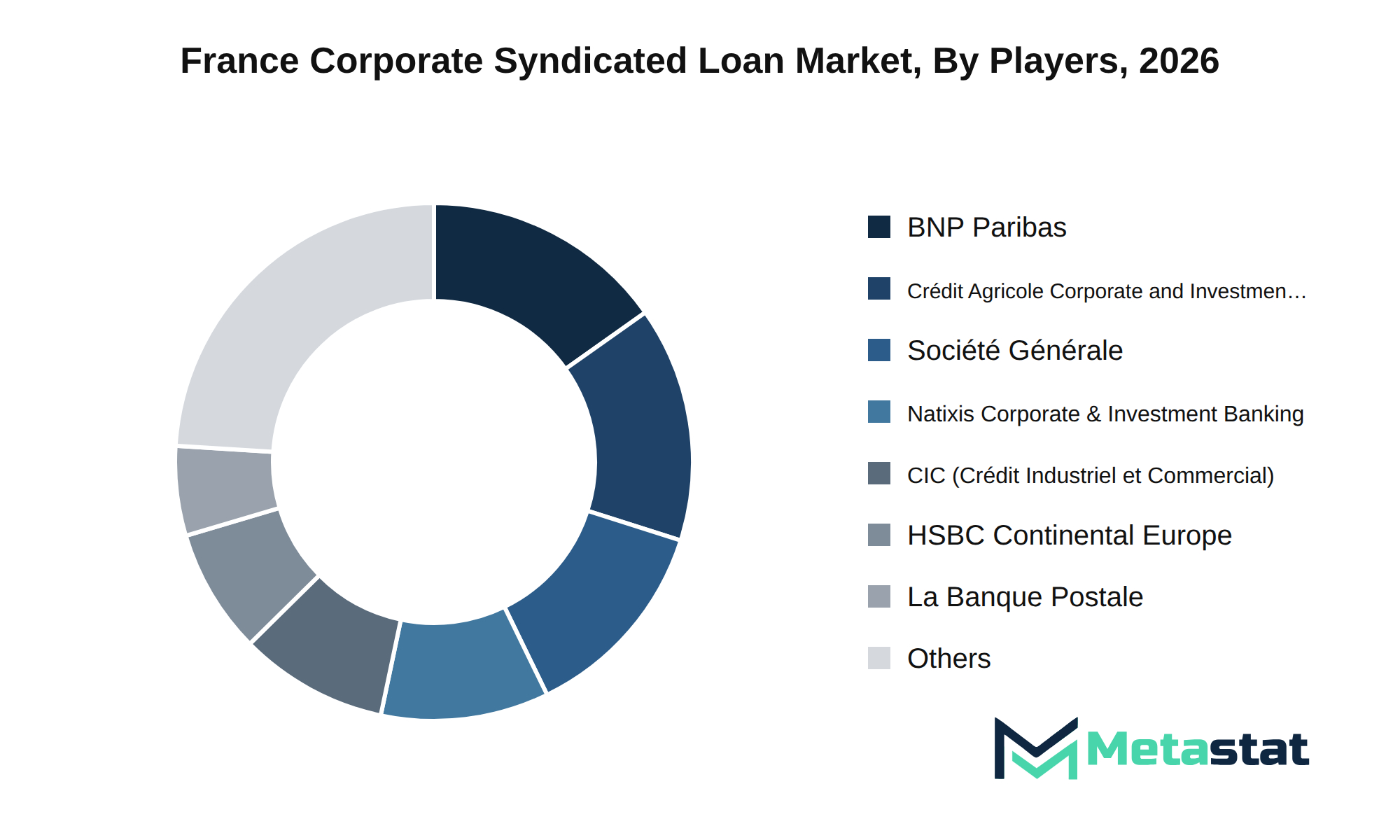
Key players in the France Corporate Syndicated Loan market include Crédit Agricole Corporate and Investment Bank (Crédit Agricole CIB), BNP Paribas, Société Générale, Natixis Corporate & Investment Banking, CIC (Crédit Industriel et Commercial), and HSBC Continental Europe.
The France Corporate Syndicated Loan market shows trends towards increased interest in sustainability-linked loans and digitalization of loan processes, enhancing efficiency and transparency.
Industries including Technology, Media & Telecommunications, and Energy & Utilities display heightened engagement, seeking innovative financing options to support technological integration and operational efficiency.
The analysts below cover Banking & Finance research at Metastat Insights.
LEAD ANALYST
Utkarsh Khirodkar is a Lead Market Research Analyst at MetaStat Insight, specializing in market intelligence, technology sector assessments, and competitive strategy.

PRINCIPAL CONSULTANT - ENTERPRISE AI & EMERGING TECHNOLOGIES
Banking & Finance · Electronics and Semiconductor · Energy and Power · Healthcare IT · Information & Technology · Professional Services
Vijay Gunti is a Principal Consultant at MetaStat Insight, bringing over two decades of experience across enterprise digital transformation, technology strategy, and intelligent systems.
Transitioning ultra-class mining haul trucks to alternative power requires concrete data on remote hydrogen refueling infrastructure economics. The report evaluated megawatt-scale electrolyzer installation expenses, onsite storage safety mandates, and heavy-duty fuel cell stack degradation under continuous duty cycles. That technical rigor helped our engineers benchmark realistic total operating cost horizons for off-highway fleet decarbonization.
Enterprise zero-trust network rollouts are often slowed down by multi-cloud transit latency and proprietary hardware retirement schedules. This study provided realistic total cost of ownership models comparing cloud-delivered security edge solutions against traditional hardware refreshes. The analysis of contract renewal lengths and software maintenance fees gave us clear visibility into enterprise replacement cycles over the next three to five years.
Scaling antibody-drug conjugate manufacturing hinges on contract manufacturing availability for high-potency active ingredients. The MetaStat Insight analysis looked closely at global cleanroom slot constraints, bioconjugation batch failure rates, and supply chain redundancies between the US, Europe, and India. The supplier capability matrix proved genuinely useful for our team when mapping secondary source options across our clinical pipeline.
Explore related market intelligence reports worth reading alongside this one.