
LEAD ANALYST
Utkarsh Khirodkar is a Lead Market Research Analyst at MetaStat Insight, specializing in market intelligence, technology sector assessments, and competitive strategy.

Germany Auto Insurance Market Size, Share, By Coverage (Third-Party Liability Coverage, Partial Comprehensive Coverage, Full Comprehensive Coverage and Others), By Vehicle Type (Passenger Cars, Light Commercial Vehicles and Vans, Medium and Heavy Commercial Vehicles, Buses and Coaches, Agricultural Vehicles and Tractors, Special-Purpose and Utility Vehicles and Others), By Distribution Channel (Insurance Agents and Brokers, Direct Sales, Bancassurance, Online / Digital Platforms and Others), By Customer Type (Personal and Commercial), Industry Analysis, Growth, Trends, and Forecast, 2026-2033
Report ID
MSI-5087
Published
August, 2026
Pages
272 Pages
Format
Historical
Base year
Forecast
Forecast period
Report Details
Choose Your License
Germany Auto Insurance Market
The Germany Auto Insurance market was valued at USD 38.6 billion in 2025 and is projected to reach USD 53.3 billion by 2033, growing at a CAGR of 4.1% over the forecast period.
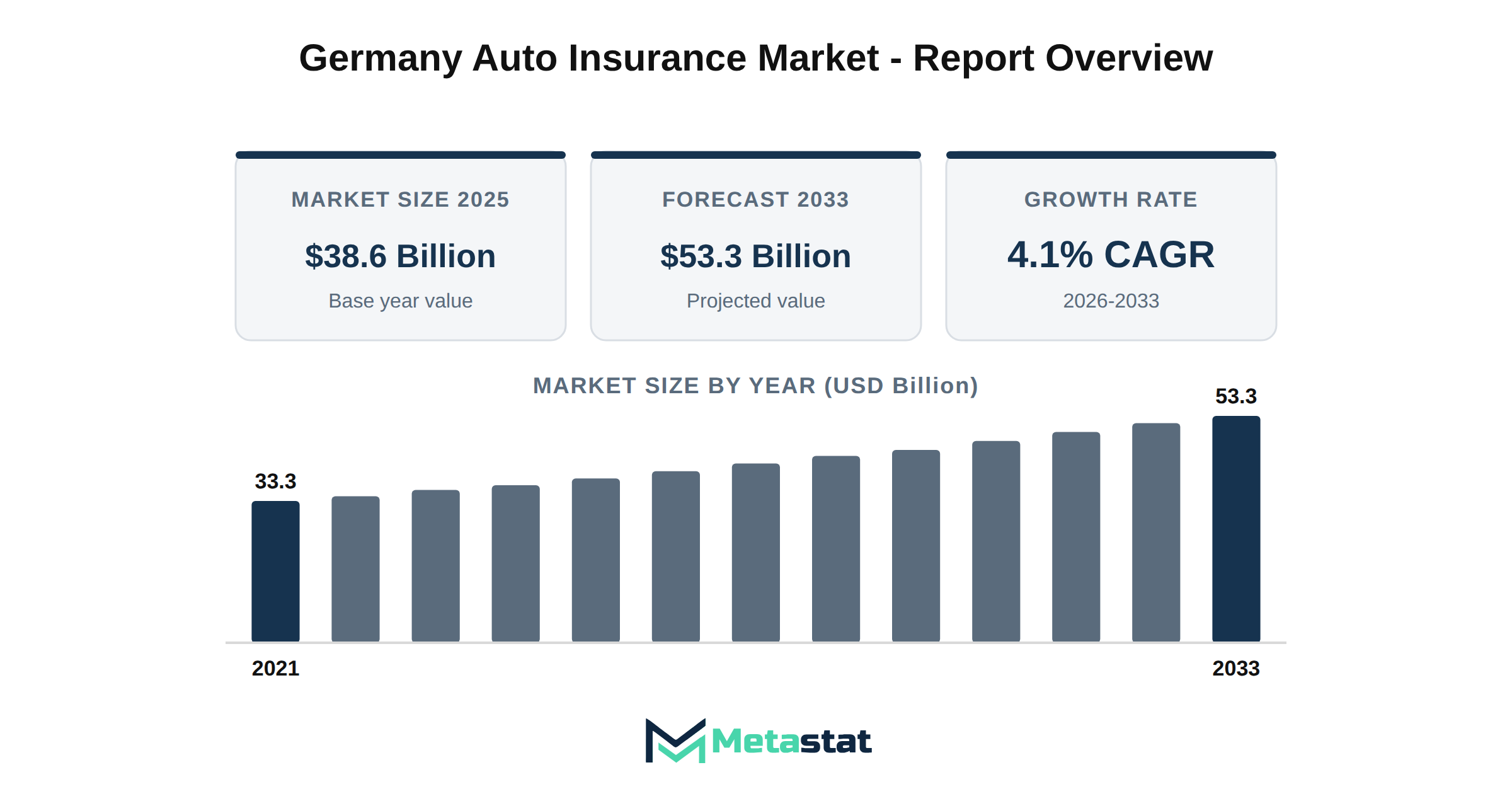
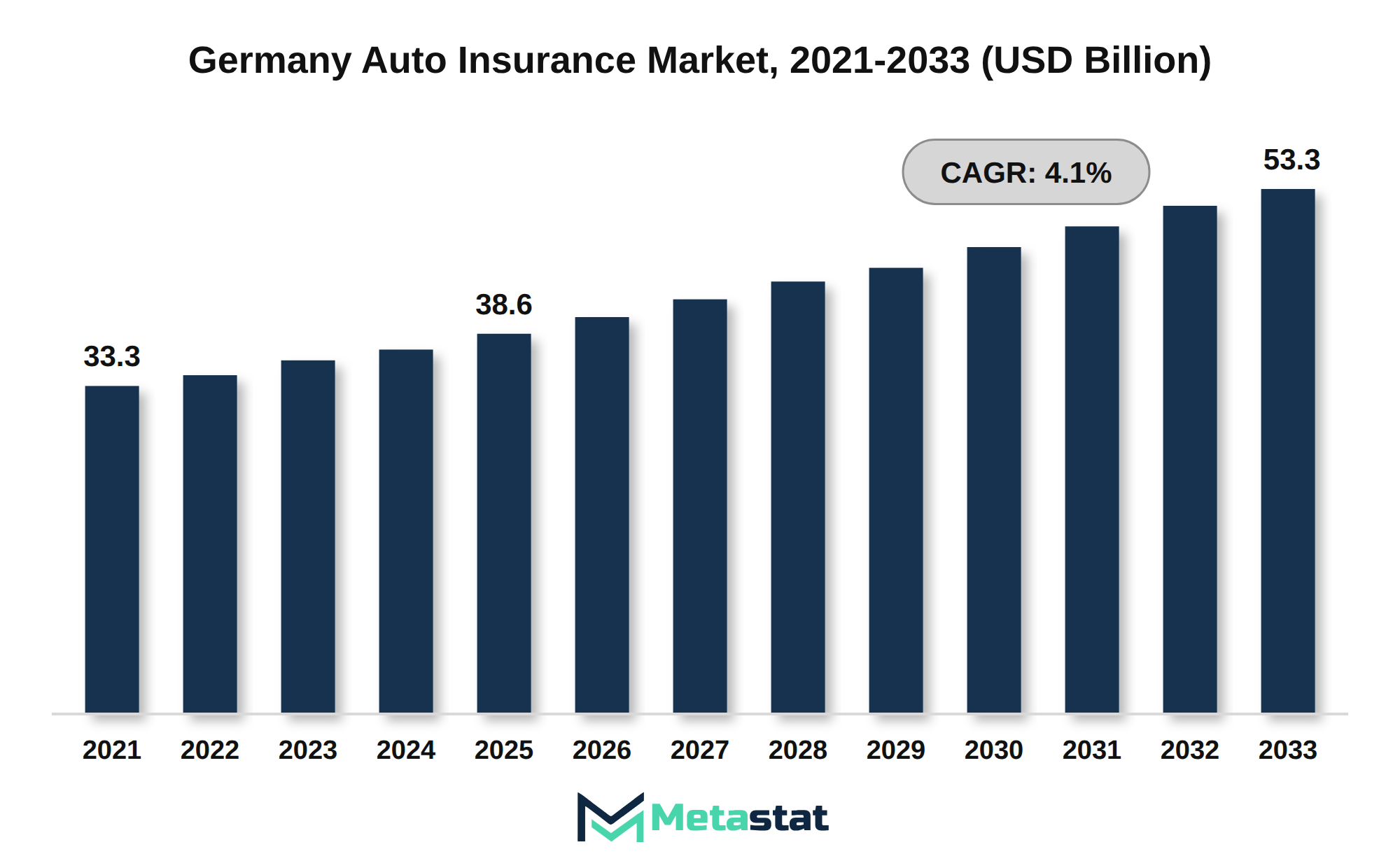
The Germany Auto Insurance market is projected to reach USD 53.3 billion by 2033, growing from a base value of USD 38.6 billion in 2025. This growth represents a compound annual growth rate (CAGR) of 4.1% over the forecast period from 2026 to 2033. Historical data indicates an increase from USD 33.3 billion in 2021, USD 34.4 billion in 2022, USD 35.9 billion in 2023, and USD 37 billion in 2024. The market experiences steady growth, reflecting ongoing trends in vehicle usage, regulatory changes, and evolving customer preferences.
The segments within the Germany Auto Insurance market include various coverage types, vehicle classifications, distribution channels, and customer demographics. Third-party liability coverage is projected to expand from USD 19.1 billion in 2026 to USD 24.2 billion by 2033, at a CAGR of 3.4%. Partial comprehensive coverage is expected to reach USD 8.4 billion, while full comprehensive coverage will achieve USD 19.8 billion by the end of the forecast period. Other specialized and statutory coverages grow at a CAGR of 2.9%, reflecting niche market opportunities.
Passenger cars dominate the market, with expected growth from USD 29 billion in 2026 to USD 37.9 billion by 2033, achieving a CAGR of 3.9%. Light commercial vehicles and vans will reach USD 4.8 billion, while medium and heavy commercial vehicles will see growth up to USD 3.6 billion. Buses and coaches contribute to the market dynamics with a CAGR of 4.4%, indicating robust demand across various vehicle categories.
The distribution channels for the Germany Auto Insurance market encompass insurance agents and brokers, direct sales, bancassurance, and online/digital platforms. Insurance agents and brokers are projected to grow from USD 19.1 billion in 2026 to USD 24 billion by 2033, at a CAGR of 3.3%. Direct sales will reach USD 10.5 billion, while bancassurance will attain USD 3.4 billion by 2033. The online/digital platforms segment grows at a CAGR of 6%, reflecting the increasing shift towards digitalization in insurance services.
Customer types in the market include personal and commercial segments. Personal insurance is expected to grow from USD 30.9 billion in 2026 to USD 40 billion by 2033, achieving a CAGR of 3.7%. The commercial segment will reach USD 13.4 billion, with a CAGR of 5%, highlighting the importance of insurance solutions tailored to business needs.
The dynamics within the Germany Auto Insurance market reflect significant trends in customer preferences and regulatory frameworks. A growing emphasis on digital platforms influences purchasing behaviors, with online channels expected to capture an increasing share of the market. This shift aligns with the broader trend of consumers seeking convenient and accessible insurance solutions.
Regulatory compliance continues to shape operational strategies within the market. Insurers adapt to evolving regulations, ensuring that products meet the necessary standards while addressing customer demands for transparency and fairness in pricing. This focus on compliance enhances customer trust and loyalty, driving sustained growth.
The market experiences fragmentation, with numerous players competing for market share. This environment encourages innovation, compelling companies to differentiate their offerings through enhanced customer service, tailored coverage options, and competitive pricing strategies. Consequently, firms invest in research and development to enhance product features and improve customer engagement.
Inflationary pressures impact the market, affecting operational costs and pricing strategies. Insurers navigate these challenges by optimizing their value chain, focusing on efficiency and cost control measures. Strategic capital allocation towards technology and infrastructure investments ensures that companies remain competitive while managing cost pressures effectively.
The Germany Auto Insurance market's future outlook hinges on the ability of players to adapt to changing consumer expectations and regulatory landscapes. Companies that strategically position themselves to leverage digital transformation and enhance customer experiences are projected to thrive in this evolving environment.
Growing consumer awareness regarding the importance of auto insurance significantly influences the Germany Auto Insurance market. Rising accident rates and increasing vehicle ownership contribute to heightened consumer interest in comprehensive protection. This awareness leads to a shift in purchasing behavior, with consumers prioritizing coverage options that offer enhanced security and financial protection.
Demographic shifts, including urbanization and an aging population, play a vital role in altering consumer preferences. Younger generations exhibit a strong inclination toward digital platforms for purchasing insurance products. Older consumers value personalized services offered by agents. This divergence in preferences influences distribution strategies across the market, prompting insurers to adapt their offerings to meet diverse consumer needs.
Overall, increased consumer awareness and changing demographics create a robust environment for growth in the market. Insurers that effectively address these evolving demands and preferences are positioned for competitive advantage, driving overall market expansion.
Investment in digital transformation significantly impacts the Germany Auto Insurance market. Companies increasingly integrate technology to enhance operational efficiency and customer engagement. The adoption of automation and artificial intelligence optimizes claims processing and improves risk assessment accuracy. Digital platforms enable efficient customer experiences, allowing clients to manage policies and claims easily.
Shifts in consumer behavior towards digital solutions drive demand for innovative services. Younger demographics prioritize convenience and accessibility, leading insurers to invest in advanced software solutions and mobile applications. This transition is expected to support market growth by meeting evolving consumer preferences and capturing a broader customer base.
Increased venture funding for InsurTech startups further drives digital innovation. These startups introduce new business models and technologies that challenge traditional insurers, prompting established players to adopt similar strategies. This competitive pressure accelerates technological integration across the market, encouraging further investment in digital capabilities and enhancing overall service delivery.
Investment in technology not only streamlines operations but addresses cost-efficiency initiatives. By reducing overhead through automation, companies enhance their competitive edge while maintaining service quality. The combined effect of these transformations positions the Germany Auto Insurance market for growth, aligning with broader macro-economic trends and shifting consumer expectations.
Regulatory compliance within the Germany Auto Insurance market strains operational efficiency, leading to increased costs for providers. Stricter requirements regarding data protection and privacy necessitate investments in IT infrastructure and systems that enhance security, resulting in significant capital expenditures. The burden of compliance falls disproportionately on smaller insurers, which lack the resources of larger entities, affecting their competitive positioning and limiting their market share.
Macroeconomic headwinds, including rising inflation and stagnating economic growth, contribute to challenges within the market. These conditions impact consumers' purchasing power, leading to a slowdown in demand for new policies. Supply chain disruptions, particularly for vehicle parts, delay vehicle availability, decreasing the overall demand for insurance coverage. Consequently, the interconnected effects of these economic factors hinder growth potential within the Germany Auto Insurance market, resulting in reduced revenue for insurers.
Technological obsolescence poses a significant challenge. Rapidly advancing technologies require insurers to continuously update their systems and processes. Failure to adapt leads to reduced competitiveness and customer attrition. Market fragmentation, driven by the presence of numerous providers, complicates customer navigation and decision-making, resulting in reduced policy uptake. Together, these factors create a challenging environment for sustained growth in the market, limiting investment opportunities for new entrants.
Geopolitical fragmentation introduces significant challenges within the Germany Auto Insurance market. This environment creates uncertainty, leading to fluctuating trade relationships and increased tariff friction, which impacts the cost structures for insurers. With trade deficits rising, companies encounter heightened costs for imported materials and components, driving pricing compression pressures across the market.
Technological disruptions further complicate the landscape, driven by interoperability friction among various systems and platforms. This friction complicates R&D integrations, creating barriers to innovation that limit service offerings and efficiency improvements. Insurers allocate resources to navigate these complexities, leading to increased compliance overhead and evolving legal liabilities.
Rising input costs and margin pressures stem from fluctuating feedstock prices and supply chain instability. The ongoing volatility in logistics exacerbates these challenges, making it difficult for insurers to maintain competitive pricing while ensuring profitability. In this context, market saturation adds pressure, limiting growth opportunities and compelling companies to explore substitution vectors to attract new customers.
Talent retention pressures contribute to workforce skill gaps, affecting companies' ability to implement advanced solutions and maintain service quality. These issues highlight the necessity for strategic investments in employee development and automation to improve operational efficiency. The resulting strain on resources directly impacts the overall performance of the market.
Geopolitical fragmentation, technological disruptions, and rising costs significantly shape the landscape of the Germany Auto Insurance market, influencing competitive dynamics and strategic decision-making for insurers. Companies adapt to these challenges to sustain growth and meet evolving customer demands.
Transformation within the Germany Auto Insurance market arises from evolving consumer expectations and technological advancements. Shifts in customer preferences towards personalized and flexible coverage options create opportunities for insurers to innovate their product offerings. The emergence of digital platforms enables insurers to enhance customer engagement and streamline claims processes, ultimately improving customer satisfaction.
Infrastructure modernization presents a significant opportunity for market expansion. Investments in advanced data analytics and artificial intelligence facilitate improved risk assessment and underwriting processes. This technological disruption enhances operational efficiencies and reduces costs, creating a competitive environment where companies gain a distinct advantage through innovative solutions.
Geographical expansion drives market growth through increased penetration in underserved regions. Urbanization and changes in transportation patterns contribute to rising insurance needs in these areas. Insurers that strategically position themselves to cater to these regions are likely to experience substantial revenue growth.
Next-generation innovations, including eco-friendly policies and offerings that align with sustainability imperatives, appeal to environmentally conscious consumers. The growing emphasis on ESG-driven practices creates avenues for companies to develop products that not only meet regulatory standards but attract a broader customer base focused on sustainability.
The dynamics within the market reflect strategic consolidation trends, where mergers and acquisitions enhance competitive positioning. Integrating diverse capabilities and resources allows companies to diversify their product portfolios, streamline operations, and capitalize on emerging opportunities within the Germany Auto Insurance market.
Shifts in buying behaviors, particularly in the digital procurement space, indicate a need for insurers to adapt their sales strategies. Consumers increasingly prefer online channels for purchasing insurance, prompting insurers to adopt digital-first approaches. This transition allows companies to reach wider audiences and improve operational yield.
Overall, the convergence of these factors creates a robust environment for growth and innovation in the Germany Auto Insurance market. Companies that align their strategies with these emerging trends are likely to achieve significant competitive advantages and capture new market segments.
The Germany Auto Insurance market is segmented based on Coverage, Vehicle Type, Distribution Channel, and Customer Type.
Valued at USD 19.1 billion in 2026, the Third-Party Liability Coverage segment is projected to reach USD 24.2 billion by 2033, at a CAGR of 3.4% during the forecast period. The increasing number of vehicles on the road in Germany drives the demand for third-party liability coverage, driven by consumers prioritizing financial protection against potential damages and injuries caused to third parties. Regulatory requirements mandate that all vehicle owners maintain at least a basic level of liability coverage, reinforcing this segment's importance within the broader Germany Auto Insurance market.
Growing awareness regarding the implications of uninsured or underinsured driving creates consistent demand for this coverage type. Consumers recognize the financial repercussions of accidents, leading to a trend where many opt for comprehensive liability policies that extend beyond basic requirements. This trend enhances market growth, because insurers respond by offering competitive pricing and innovative policy options tailored to diverse customer needs.
Investment in technology enhances underwriting processes and claims management within the segment. Insurers leverage data analytics to assess risk profiles more accurately, resulting in more tailored pricing strategies. Improved technology adoption streamlines operational efficiency, supporting growth within the market and improving customer retention through improved service delivery.
Competitive pressures prompt insurers to enhance product offerings and customer engagement strategies. The focus on digital channels and direct sales channels aligns with shifting consumer preferences, enabling quicker access to information and purchasing options. Overall, these dynamics contribute positively to the anticipated growth trajectory of the Third-Party Liability Coverage segment, reinforcing its role within the Germany Auto Insurance market.
Forecasts indicate that the Partial Comprehensive Coverage segment is estimated to reach USD 8.4 billion by 2033, at a CAGR of 3.8% during the forecast period. Factors driving demand include a growing emphasis on protection against theft, vandalism, and damage caused by natural events. Increasing vehicle ownership, along with heightened awareness regarding the importance of comprehensive insurance coverage among consumers, strengthens the growth of this segment. The expansion of online and digital platforms for purchasing insurance enhances accessibility, facilitating more consumers in opting for Partial Comprehensive Coverage.
Technological maturation within the industry cultivates opportunities for enhanced product offerings, allowing insurers to develop more flexible and tailored policies. The adoption of next-generation upgrades in policy management systems improves customer engagement and streamlines claims processing, thereby improving customer satisfaction. This evolution in product features supports the broader trend of personalization in the Germany Auto Insurance market.
Cost structures and pricing dynamics significantly affect consumer buying behavior. Competitive pricing strategies by insurers encourage higher adoption rates driven by customers seeking value for their investment. Segment expansion is further supported by regulatory compliance standards that mandate specific coverage levels, compelling consumers to consider Partial Comprehensive Coverage because a viable option.
Overall, the segment's growth aligns with shifts in consumption patterns, where consumers increasingly prioritize comprehensive coverage in their auto insurance decisions. Strategic opportunity windows appear because insurers enhance their offerings to meet evolving consumer needs while navigating pricing volatility and margin pressures. This approach positions the segment favorably in the competitive environment of the Germany Auto Insurance market.
Projected growth in the Full Comprehensive Coverage segment indicates a significant market trajectory, with expectations to reach USD 19.8 billion by 2033. Increasing consumer preference for coverage that includes protection against a wide range of risks drives demand within the Germany Auto Insurance market. This preference aligns with a broader trend toward comprehensive policies that offer extensive security to vehicle owners.
Several factors contribute to the expansion of this segment. The evolving automobile landscape, characterized by advancements in technology and changes in vehicle types, influences consumer choices toward full comprehensive coverage. The increasing incidence of accidents and the associated financial implications further motivate consumers to seek robust insurance solutions, leading to greater demand for comprehensive policies.
Competitive pressures within the market generate strategic opportunities for insurance providers. Companies focus on enhancing product offerings and streamlining claims processes, ensuring customer satisfaction while adapting to changing consumer needs. Regulatory compliance pertaining to coverage standards encourages firms to innovate, providing consumers with more comprehensive and tailored products that meet evolving legal requirements.
Technological advancements, including digital platforms for policy management and claims processing, contribute to the growth of the Full Comprehensive Coverage segment. The integration of user-friendly interfaces promotes easier access to information and enhances customer engagement. Such developments in the market create pathways for increased investment and market penetration, enabling insurance companies to capture a larger share of the evolving consumer base.
Full Comprehensive Coverage in the Germany Auto Insurance market reflects a dynamic combination of consumer preferences, competitive strategies, and regulatory frameworks. This segment's projected growth highlights its importance, driven by insurers adapting to the changing landscape of consumer expectations and technological advancements.
Growth in the Others (Specialized & Statutory Coverages) segment is projected to occur at a CAGR of 2.9% during the forecast period. This segment encompasses various specialized insurance options that cater to unique customer requirements, highlighting the increasing demand for tailored coverage. Regulatory compliance standards shape the offerings within this segment, driven by insurers adapting to evolving legal and statutory requirements. The emergence of specialized products targets niche markets, allowing providers to enhance their portfolios and attract diverse customer bases.
Investment in technology and data analytics aids insurance providers in understanding specific customer needs, facilitating better product development. Continuous evolution in product offerings influences customer preferences, with insurers responding to the market's demand for innovative solutions. The unique characteristics of this segment provide strategic opportunity windows for companies operating within the Germany Auto Insurance market, driving competition and encouraging investment in specialized coverage. Increasing awareness of these coverages within the insurance ecosystem strengthens the market's growth trajectory.
Valued at USD 29 billion in 2026, the Passenger Cars segment is projected to reach USD 37.9 billion by 2033, at a CAGR of 3.9% during the forecast period. Increasing vehicle ownership, alongside the rising importance of comprehensive insurance coverage, drives demand within this segment. The ongoing shift towards more advanced safety features in vehicles enhances the perceived value of insurance products, prompting consumers to invest in more comprehensive policies. Technological advancements, including telematics and usage-based insurance models, further motivate consumers to consider enhanced coverage options. These technological innovations enable insurers to provide tailored products, improving customer engagement and retention.
Robust competition characterizes the market among key players, with a strong focus on customer-centric offerings. Insurers explore next-generation upgrades to their policy structures, ensuring alignment with consumer expectations for flexibility and affordability. The regulatory landscape in the Germany Auto Insurance market imposes compliance standards that influence pricing strategies and cost structures, requiring companies to navigate complex regulatory requirements while maintaining competitiveness. Market players emphasize strategic opportunity windows through investment in digital platforms and innovations, ensuring greater accessibility for consumers seeking insurance for passenger cars.
Growth in the Light Commercial Vehicles & Vans segment reflects the increasing demand for versatile transport solutions across various industries in Germany. This segment addresses the needs of businesses seeking efficient logistics and delivery options, enhancing operational productivity. Technological advancements in vehicle efficiency and safety features drive adoption among consumers, prompting investments in insurance coverage for these vehicles.
Projected growth for the segment supports expectations of reaching USD 4.8 billion by 2033, at a CAGR of 4.8% during the forecast period. This upward trend illustrates the segment's importance in the broader Germany Auto Insurance market. Rising use of light commercial vehicles, including delivery vans and utility vehicles, leads to increased insurance penetration owing to businesses prioritizing risk management and compliance with regulatory standards.
Competition within the market intensifies because insurers innovate coverage options tailored for light commercial vehicles, addressing unique operational risks. Enhanced service offerings and flexible policy structures strengthen customer loyalty, contributing to overall market expansion. The segment's growth trajectory reflects not only insurance demand but a robust economic environment supporting the automotive sector.
In the Germany Auto Insurance market, the Medium & Heavy Commercial Vehicles segment displays growth driven by several factors. Increasing e-commerce activities alongside the rising demand for goods transportation enhance the need for insurance coverage tailored to commercial vehicles. This segment is expected to reach USD 3.6 billion by 2033, reflecting a strong trajectory of expansion fueled by strategic investments in fleet management technologies and improved risk assessment methodologies.
The focus on regulatory compliance and safety standards further influences the market, driven by companies prioritizing meeting requirements to operate efficiently. Insurance providers are adapting policies to encompass advanced technologies including telematics and driver-assistance systems, which contribute to better risk management. This technological maturation supports the growth of the Medium & Heavy Commercial Vehicles segment, aligning with broader trends in the automotive and logistics industries.
Increased competition among insurers encourages innovative product development and pricing strategies, promoting customer engagement. This dynamic strengthens market resilience while allowing players to differentiate their offerings. Enhanced data analytics capabilities enable underwriters to refine pricing models, further driving the segment's growth potential within the larger context of the Germany Auto Insurance market.
Demand for insurance coverage in the Buses & Coaches segment reflects a robust outlook within the Germany Auto Insurance market. Projected growth at a CAGR of 4.4% during the forecast period highlights increasing utilization of buses and coaches for public transport and commercial purposes. This segment benefits from rising urbanization and the subsequent demand for efficient mass transit solutions, contributing to heightened insurance needs.
Regulatory compliance plays a critical role in shaping the market dynamics, with various mandates aimed at enhancing safety standards for public transportation vehicles. Insurers adapt to these regulations by offering tailored products that address specific risks associated with operating buses and coaches, thus driving market expansion. Advancements in vehicle technology, including improvements in safety features, reduce operational risks and influence insurance premiums positively.
Investment in next-generation upgrades, including connectivity and automation, enhances operational efficiency in the segment. These advancements not only reduce accident rates but encourage competitiveness among insurers to provide innovative coverage solutions. The increasing focus on environmental sustainability further encourages the adoption of eco-friendly vehicles, which alter risk assessment and insurance pricing structures. Overall, these factors collectively influence growth patterns and operational strategies within the market.
Demand for insurance coverage for agricultural vehicles and tractors within the Germany Auto Insurance market stems from the increasing reliance on mechanization in farming practices. This reliance drives the need for comprehensive protection against potential risks associated with operating these vehicles. Rising costs of agricultural machinery and heightened awareness regarding liability risks influence the adoption of insurance solutions in this segment.
Technological advancements contribute to segment expansion, with next-generation upgrades enhancing the functionality and safety of agricultural vehicles. These developments attract interest from farmers and agricultural enterprises seeking robust protection. Evolving regulations regarding safety and environmental compliance create opportunities for insurance products tailored specifically for agricultural applications. Adherence to these regulations emphasizes the importance of specialized coverage.
Cost structures associated with insuring agricultural vehicles reflect the unique challenges faced by this segment. Fluctuations in pricing lead to varying premium rates based on risk assessments linked to vehicle usage and operational environments. Insurers evaluate factors including vehicle age, maintenance history, and usage patterns to determine pricing, impacting overall market dynamics. Strategic investment in risk management solutions enhances the viability of agricultural insurance offerings, supporting the stability of the segment.
Interest in environmental sustainability influences consumption shifts within the market. Farmers increasingly prioritize eco-friendly practices, prompting insurers to develop products that align with these values. This alignment creates a strategic opportunity for insurers to expand their offerings, catering to a growing customer base focused on sustainable agriculture and responsible farming practices.
Increasing recognition of the economic importance of Special-Purpose & Utility Vehicles drives demand within the Germany Auto Insurance market. These vehicles serve various applications, including construction, agriculture, and emergency services, necessitating tailored insurance solutions to mitigate unique risks associated with their usage. The evolving landscape of regulatory compliance enhances the need for specific coverage, with operators seeking protection against liabilities and damages.
Advancements in technology influence the adoption of insurance products designed for Special-Purpose & Utility Vehicles. Enhanced safety features and telematics integration provide data that enables insurers to offer more accurate risk assessments, leading to personalized policies that cater to the specific needs of vehicle operators. This technological maturation creates a competitive environment where insurers innovate to attract customers.
Market dynamics, including shifts in consumption patterns, impact the growth of specialized insurance offerings. The increasing use of these vehicles in diverse sectors contributes to a growing customer base requiring insurance coverage. While operational requirements evolve, insurers adapt their product offerings to ensure comprehensive protection for users in industries relying on Special-Purpose & Utility Vehicles.
Regulatory standards impose additional compliance measures on operators, further shaping insurance requirements within this segment. Operators engaging with specialized vehicles navigate complex regulations, prompting demand for insurance products that guarantee adherence while providing adequate protection against potential liabilities. This regulatory pressure creates strategic opportunity windows for insurers to refine their offerings and establish stronger market positions.
The relationship of cost structures and pricing volatility influences profitability within the market. Insurers face challenges related to underwriting and claims management, which pressure margins. Providers focusing on the Special-Purpose & Utility Vehicles segment remain vigilant regarding market fluctuations and adjust pricing strategies accordingly to maintain competitiveness while ensuring sustainable growth.
Investment in raw material sourcing and supply chain resilience is crucial for insurers serving this segment. The availability of reliable information regarding vehicle usage and operational environments enhances underwriting processes, reducing risks associated with claims. Insurers that effectively leverage data analytics and market intelligence are likely to capture greater market share by addressing the specific needs of customers operating Special-Purpose & Utility Vehicles.
Insurance coverage for motorcycles, trikes, and quads contributes to the diversification of the Germany Auto Insurance market. Increasing interest in two-wheeled and three-wheeled vehicles reflects changing consumer preferences, particularly among younger demographics who prioritize mobility and cost-effectiveness. This shift drives demand for specialized insurance products tailored to these vehicle types.
Technological advancements further influence the segment, with innovations in safety features and vehicle tracking systems enhancing the appeal of motorcycles and similar vehicles. Consumers increasingly prioritize these features when selecting insurance, pushing insurers to develop comprehensive packages that include benefits including roadside assistance and theft protection.
Regulatory frameworks impact the segment's evolution, with specific compliance standards established for motorcycles, trikes, and quads. Insurers navigate these regulations, ensuring that offerings align with legal requirements while remaining competitive within the market. This environment creates strategic opportunity windows, allowing insurers to capture market share through targeted offerings and marketing efforts.
While preferences shift toward more eco-friendly transportation options, the carbon footprint of motorcycles and similar vehicles attracts attention. This trend aligns with broader sustainability goals, prompting insurers to consider eco-conscious policies that appeal to environmentally aware consumers. Such initiatives not only enhance brand reputation but strengthen customer loyalty in a competitive environment.
Valued at USD 19.1 billion in 2026, the Insurance Agents & Brokers segment is projected to reach USD 24 billion by 2033, at a CAGR of 3.3% during the forecast period. This segment experiences growth driven by an increasing preference for personalized insurance solutions among consumers, enhancing customer engagement and satisfaction. The trend toward digitization facilitates better communication and information access, allowing agents and brokers to tailor policies to individual needs effectively. The rise of online platforms supports the distribution of insurance products, creating a competitive environment that drives innovation.
Adoption of advanced technologies in sales processes significantly influences this segment. Integration of data analytics and customer relationship management (CRM) systems enhances operational efficiency and informs strategic decision-making. Brokers strengthen their market positions by offering differentiated services, thus attracting more clients in the Germany Auto Insurance market. Regulatory changes aimed at protecting consumer interests shape the landscape, requiring agents to maintain transparency and clarity in policy offerings.
Cost pressures stemming from operational expenses and regulatory compliance impact profit margins for insurance agents and brokers. The demand for expert advice on complex insurance products sustains the segment's relevance and importance in the market. Emphasis on training and upskilling brokers ensures adaptation to changing market dynamics, thus reinforcing their value proposition. The segment's growth reflects a robust commitment to service excellence and innovation within the Germany Auto Insurance market.
Growth in the Direct Sales segment reflects a strong consumer preference for direct engagement with insurance providers. This trend results from increasing demand for personalized services and the desire for clarity in insurance products. The segment is projected to reach USD 10.5 billion by 2033, at a CAGR of 3.8% during the forecast period. Enhanced online platforms contribute to this growth, offering consumers easy access to policy information and streamlined purchasing processes. Customers favor direct channels for their ability to simplify interactions and provide competitive pricing, reinforcing the importance of this segment within the Germany Auto Insurance market. Rising cost consciousness among consumers emphasizes the need for transparent pricing, which direct sales models accommodate effectively.
Bancassurance remains a key element in the distribution channels of the Germany Auto Insurance market. This segment is projected to reach USD 3.4 billion by 2033, reflecting a growing preference among consumers for integrated banking and insurance services. Financial institutions leverage existing customer relationships to provide insurance products, enhancing customer convenience and increasing loyalty.
Increased competition among banks to offer comprehensive financial solutions contributes to the segment's growth. Strategic partnerships between banks and insurance providers facilitate access to a broader customer base, enabling insurance products to be marketed alongside traditional banking services. The trend toward digital banking further accelerates the adoption of bancassurance, allowing customers to manage insurance policies conveniently through online platforms.
Regulatory compliance and evolving consumer expectations drive banks to enhance their insurance offerings. Customers seek tailored products that meet specific needs, prompting banks to develop innovative insurance solutions, further contributing to the expansion of the market. The bancassurance segment is a key factor in the overall growth of the Germany Auto Insurance market, with its integration into established banking operations making it a strategic priority for many financial institutions.
Projected growth in the Online / Digital Platforms segment reflects evolving consumer preferences towards digital engagement and purchasing processes in the Germany Auto Insurance market. Increased smartphone penetration and internet accessibility facilitate higher adoption rates among consumers seeking convenience and streamlined experiences. This segment is projected to grow at a CAGR of 6% during the forecast period.
Insurance providers enhance their digital offerings, focusing on user-friendly interfaces and comprehensive online services. Features including instant quotes and policy management tools significantly improve customer experiences. The demand for efficient digital solutions aligns with the broader trend towards technological maturation within the market.
Investment in next-gen upgrades and innovative digital marketing strategies enables carriers to capture a larger market share. Data analytics and artificial intelligence support personalized service offerings, enhancing retention and attracting new customers. This strategic opportunity encourages ongoing capital investment to strengthen competitive positioning and market penetration.
With an anticipated increase in consumer reliance on online platforms, the market experiences a shift in consumption dynamics. Regulatory compliance standards surrounding data protection and consumer rights further influence the evolution of digital service models. Ultimately, the shift towards online platforms signifies a significant phase in the Germany Auto Insurance market.
Distribution through Others (Automobile Dealers/OEMs) in the Germany Auto Insurance market connects consumers with various insurance products. This segment experiences growth driven by the increasing need for comprehensive coverage among consumers purchasing vehicles. Partnerships between insurance providers and automobile dealers enhance accessibility, simplifying the insurance acquisition process for customers.
Technological advancements contribute to the evolution of distribution strategies within this segment. Digital platforms enable automobile dealers to streamline the insurance process, offering automated solutions that improve customer experience. The integration of these technologies results in more efficient service delivery and increased customer satisfaction.
Regulatory compliance influences operational practices within the segment. Dealers and insurance companies work closely to ensure adherence to evolving local regulations, which impact product offerings and pricing strategies. Adapting to these requirements ensures that the distribution of auto insurance remains competitive and compliant.
Increased consumer awareness of insurance options contributes to demand within the segment. Consumers increasingly seek tailored insurance solutions, leading to enhanced engagement between automobile dealers and insurers. This dynamic creates an environment where innovative products emerge, aligning with consumer expectations in the Germany Auto Insurance market.
Strategic collaboration between automobile dealers and insurers opens opportunities for product differentiation. Customized insurance packages appeal to various customer demographics, potentially enhancing market penetration. This segment is positioned for expansion, reflecting broader trends in consumer behavior and technological integration.
Valued at USD 30.9 billion in 2026, the Personal segment accounts for a substantial portion of the Germany Auto Insurance market. Projected growth to USD 40 billion by 2033, at a CAGR of 3.7% during the forecast period, reflects increasing demand for personal insurance coverage driven by rising vehicle ownership and a heightened focus on personal safety. Growing consumer awareness of comprehensive coverage options increases demand within this segment, encouraging customers to seek policies that provide extensive protection.
Regulatory compliance standards affecting personal insurance policies influence the dynamics of the market. Stricter vehicle safety regulations and higher liability requirements shape consumer purchasing decisions. These factors create opportunities for insurers to enhance their product offerings, adapting to evolving consumer preferences and regulatory mandates, which supports segment expansion. The increasing prevalence of digital platforms facilitates easier access to policy comparisons, allowing consumers to make informed choices.
Strategic investment in technology and process improvements creates competitive advantages for insurers operating in the market. Enhanced customer engagement tools and streamlined claims processes contribute to improved customer satisfaction and retention rates. Continuous evolution of product offerings, including customizable policies, aligns with emerging consumer expectations and drives consumption shifts. The relationship between regulatory frameworks, consumer preferences, and technological advancements shapes a dynamic environment for growth in the Personal segment of the Germany Auto Insurance market.
Valued at USD 30.9 billion in 2026, the Commercial segment in the Germany Auto Insurance market exhibits strong growth potential. The segment is projected to reach USD 13.4 billion by 2033, at a CAGR of 5% during the forecast period. Increased adoption of commercial vehicles and the expansion of business activities drive demand for insurance products tailored to commercial users. Enhanced awareness regarding risk management and regulatory compliance standards further fuels the segment's growth. Commercial customers seek comprehensive coverage solutions for various vehicle types, including light commercial vehicles and buses, which influences insurers to innovate their offerings.
Demand for commercial vehicle insurance corresponds to the rising number of businesses engaging in transportation and logistics. This trend creates a need for customized insurance products that address unique risks associated with commercial operations. Regulatory changes in vehicle safety and environmental standards require companies to ensure compliance, promoting the uptake of appropriate insurance coverage. Insurers focus on enhancing their service offerings through next-gen upgrades and technology integration, which contributes to segment expansion within the market.
Companies operating in the Commercial segment prioritize digital solutions for policy management and claims processing. This shift towards digital platforms streamlines customer interactions and improves operational efficiency. While the market evolves, strategic opportunities emerge for insurers to cater to diverse customer needs, aligning coverage with specific business requirements. The growing emphasis on risk assessment and proactive measures in commercial vehicle management enhances the competitive environment, enabling insurers to refine their strategies and capture market share effectively.
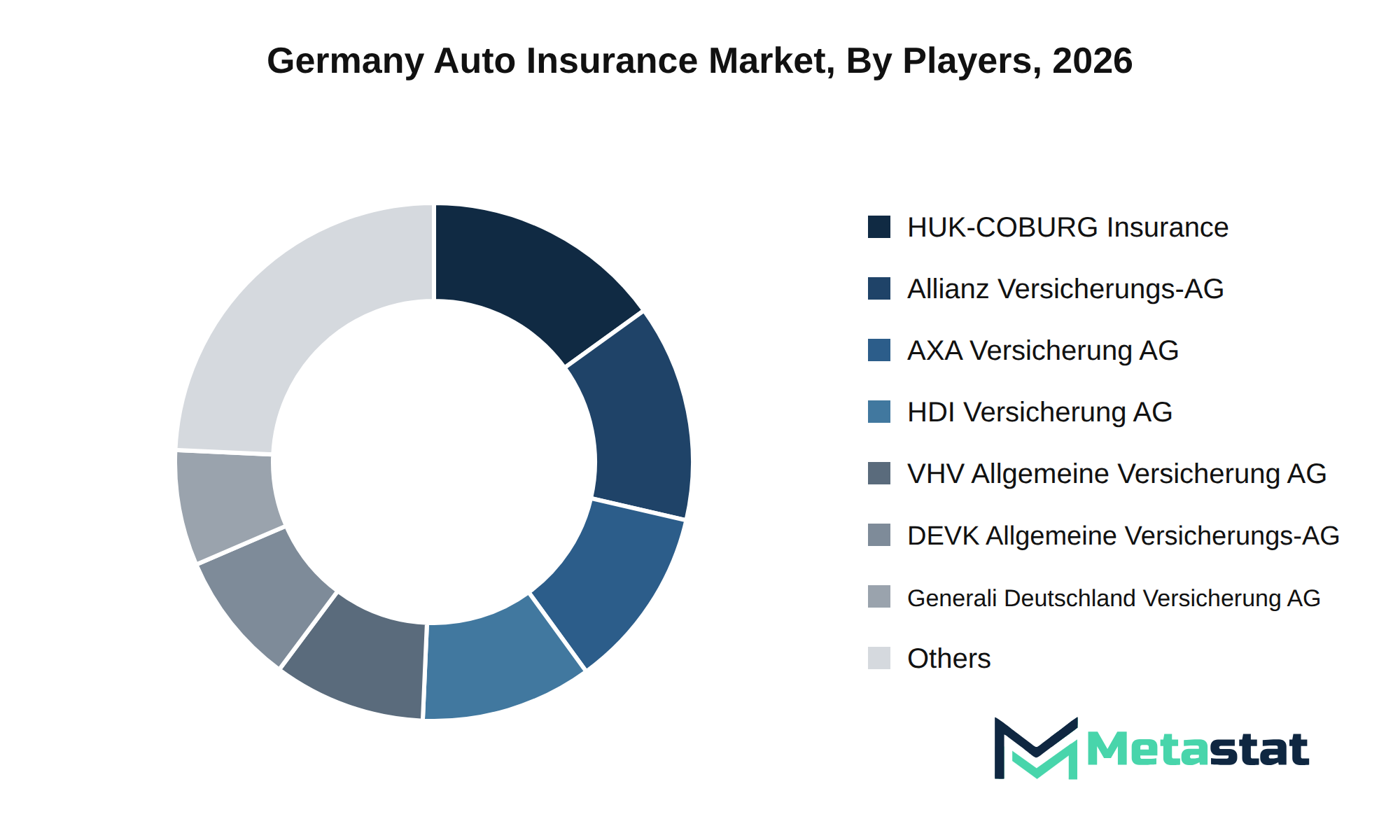
The Germany Auto Insurance market comprises several key players that adopt various strategies to enhance their market positions. Companies including Allianz Versicherungs-AG, AXA Versicherung AG, and HUK-COBURG Insurance Group emphasize product differentiation and customer retention strategies. They leverage established brand equity and extensive distribution networks, which include insurance agents, brokers, and direct sales channels.
Strategic alliances and partnerships play a crucial role in shaping the competitive dynamics. Collaborations among companies including Generali Deutschland Versicherung AG and VHV Allgemeine Versicherung AG strengthen market presence and improve service offerings. The competitive landscape includes emerging startups that introduce disruptive innovations, challenging established players through agile commercial models and competitive pricing architectures.
The market experiences barriers to entry that protect existing firms from new entrants. High capital requirements, regulatory complexities, and the necessity for a robust customer base hinder potential competitors. Companies including ERGO Versicherung AG and Zurich Gruppe invest significantly in R&D to develop proprietary technologies, fortifying competitive moats. The Germany Auto Insurance market is projected to evolve, with companies adapting strategies to address shifting consumer preferences and technological advancements.
Market size is forecast to rise from USD 38.6 billion in 2025 to over USD 53.3 billion by 2033. The base case estimates a growth rate of 4.1% CAGR, reflecting stable demand dynamics and a maturing industry environment. Factors influencing this trend include evolving consumer preferences, regulatory developments, and advancements in technology integration.
In a bullish scenario, rapid adoption of next-generation technologies, robust economic recovery, and significant capital investment in infrastructure could accelerate growth beyond initial projections. In a bearish outlook, economic downturns, increased regulatory burdens, and geopolitical uncertainties hinder market expansion, leading to slower growth rates.
Strategic capital allocation and investments in innovation are essential for stakeholders within the Germany Auto Insurance market to capture emerging opportunities. Companies focus on addressing unmet enterprise needs and identifying high-growth pockets within the market. Continuous adaptation to regulatory changes and strategic compliance strengthens market positioning and promotes sustainable growth.
The report strategically identifies and profiles the key market players and analyses their core competencies in each sub-segment of the Auto Insurance market.
Report Attributes | Details |
Study Period | 2021-2033 |
Base Year | 2025 |
Estimated Year | 2026 |
Forecast Period | 2026-2033 |
Historical Period | 2021-2025 |
Growth Rate | CAGR 4.1% from 2026 to 2033 |
Revenue Unit | USD billion |
Segmentation | By Coverage, Vehicle Type, Distribution Channel, Customer Type, and Region |
Find answers to common questions about this report
The Germany Auto Insurance market size was valued at USD 38.6 billion in 2025.
The Auto Insurance market is projected to grow at a CAGR of 4.1% during the forecast period from 2026 to 2033.
The segment leading the Germany Auto Insurance market is Third-Party Liability Coverage, with a value of USD 19.1 billion in 2026. This segment represents the largest share compared to other coverage types.
Growing consumer awareness regarding the importance of auto insurance, alongside rising accident rates and increasing vehicle ownership, drives demand in the Germany Auto Insurance market. demographic shifts, particularly urbanization and an aging population, influence consumer preferences, prompting insurers to adapt their offerings to meet diverse needs.
Regulatory compliance strains operational efficiency, increasing costs for providers, particularly smaller insurers. Macroeconomic headwinds, including rising inflation and stagnating economic growth, impact consumers' purchasing power, leading to a slowdown in demand for new policies. supply chain disruptions delay vehicle availability, further decreasing the demand for insurance coverage.
Growing consumer awareness of auto insurance's importance, driven by rising accident rates and increasing vehicle ownership, favors product adoption in the Germany Auto Insurance market. demographic shifts, including urbanization and an aging population, influence consumer preferences, prompting insurers to adapt their offerings to meet diverse needs.
The Auto Insurance market is estimated to reach a valuation of USD 53.3 billion by 2033.
Key players in the Germany Auto Insurance market include HUK-COBURG Insurance Group, Allianz Versicherungs-AG, AXA Versicherung AG, VHV Allgemeine Versicherung AG, DEVK Allgemeine Versicherungs-AG, and Generali Deutschland Versicherung AG.
The Germany Auto Insurance market is projected to grow at a compound annual growth rate (CAGR) of 4.1% from 2026 to 2033.
The Online / Digital Platforms distribution channel is expected to experience significant growth, with a CAGR of 6% during the forecast period.
The analysts below cover Automotive and Transportation research at Metastat Insights.
LEAD ANALYST
Utkarsh Khirodkar is a Lead Market Research Analyst at MetaStat Insight, specializing in market intelligence, technology sector assessments, and competitive strategy.

ENERGY & INFRASTRUCTURE INDUSTRY CONSULTANT
Automotive and Transportation · Electronics and Semiconductor · Energy and Power · Machinery & Equipment
Saurabh Vasant Ganvir consults for Energy & Infrastructure Industry at MetaStat Insight, specializing in renewable energy, solar EPC, and electric vehicle (EV) infrastructure markets.
Floating offshore wind feasibility relies heavily on specialized installation vessel availability and port crane limits, which most broad renewable energy forecasts ignore. The report delivered a thorough analysis of dry dock capacity, mooring chain supply constraints, and raw material pricing trends for deepwater anchor installations. It served as a solid independent sanity check for our offshore project capital expenditure assumptions.
Assessing commercial microgrid software adoption requires looking past top-level installation numbers and examining utility interconnection queues. The research provided verifiable data on average permitting timelines, tariff structures, and battery storage integration costs across regional utility territories. That grounded perspective was valuable for our team when building five-year demand projections for industrial microgrid controllers.
Ambulatory surgical centers have very different purchasing cycles for robotic-assisted surgery platforms than major hospital networks. The MetaStat Insight study focused squarely on capital expenditure depreciation, procedural reimbursement pathways, and surgeon training overhead. That operational clarity made it much simpler to validate multi-year procedure growth forecasts against actual ambulatory center adoption patterns.
Explore related market intelligence reports worth reading alongside this one.