Global Automotive Plastics Market Size, Share, By Material Type (Polypropylene (PP), Polyurethane (PU, excluding TPU), Polyvinyl Chloride (PVC), Acrylonitrile Butadiene Styrene (ABS), Polyamide (PA), Polycarbonate (PC), Polybutylene Terephthalate (PBT), Polymethyl Methacrylate (PMMA), Thermoplastic Elastomers (TPE, including TPU, TPV, TPO and TPS), Others), By Vehicle Type (Passenger Vehicles, Commercial Vehicles, Electric Vehicles (EVs), Hybrid Vehicles), By Processing Technology (Injection Molding, Extrusion, Blow Molding, Thermoforming, Compression Molding, Reaction Injection Molding (RIM), Resin Transfer Molding (RTM), Rotational Molding, Additive Manufacturing), By Application (Interior & Cockpit Components, Exterior Body & Trim Components, Seating & Occupant Comfort Components, Powertrain & Under-the-Hood Components, Electrical & Electronic Components, Lighting & Optical Components, HVAC & Thermal Management Components, EV Battery & High-Voltage Components, Chassis, Structural & Safety Components), Industry Analysis, Growth, Trends, and Forecast, 2026-2033
Report ID
MSI-4951
Published
August 18, 2026
Updated
Pages
255 Pages
Format
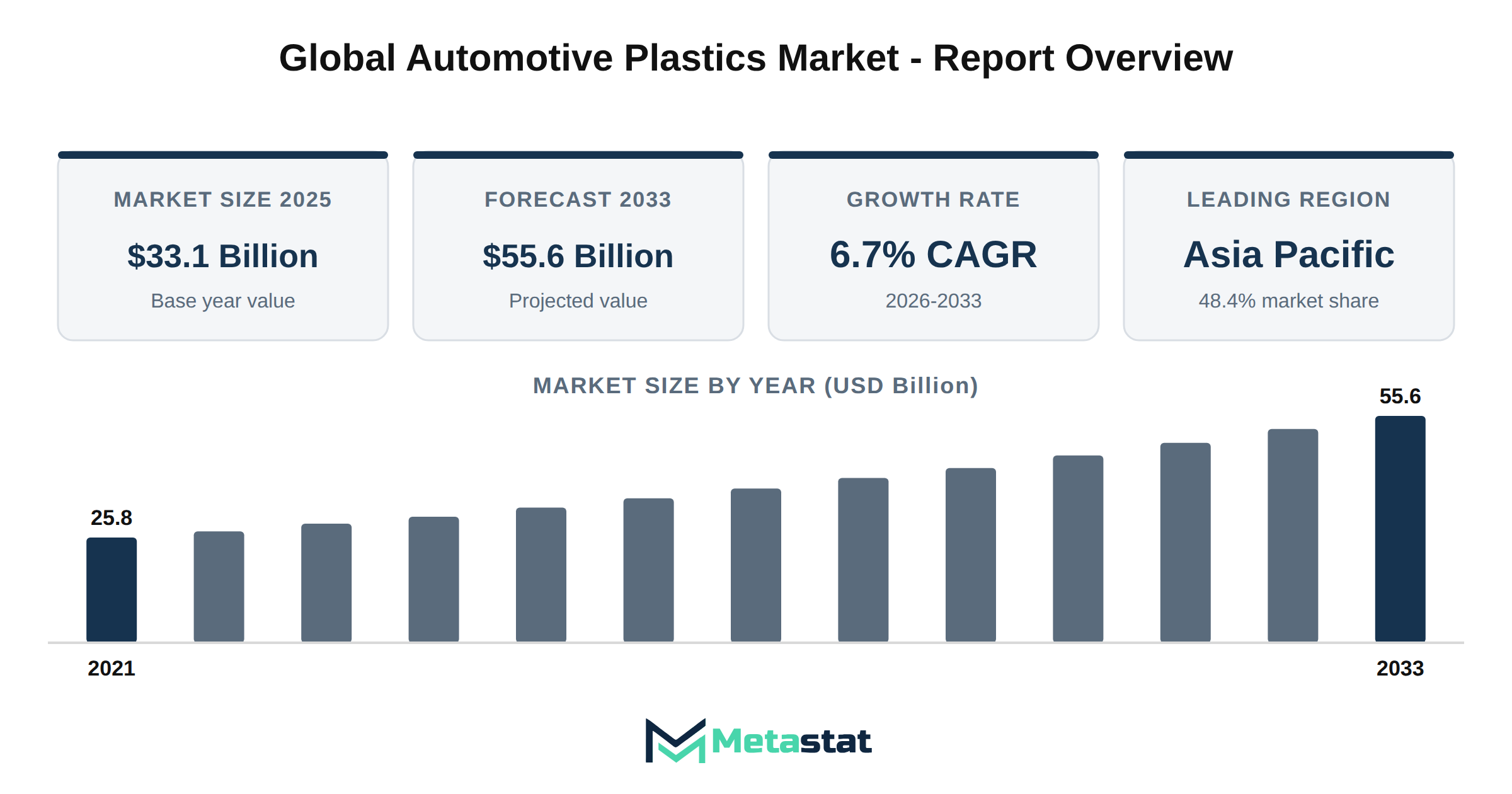
Market Size 2021
$25.8 Billion
Historical
Market Size 2025
$33.1 Billion
Base year
Market Size 2033
$55.6 Billion
Forecast
CAGR 2025-2033
6.7%
Forecast period
Report Details
Comprehensive Market Analysis And Insights
Market Overview
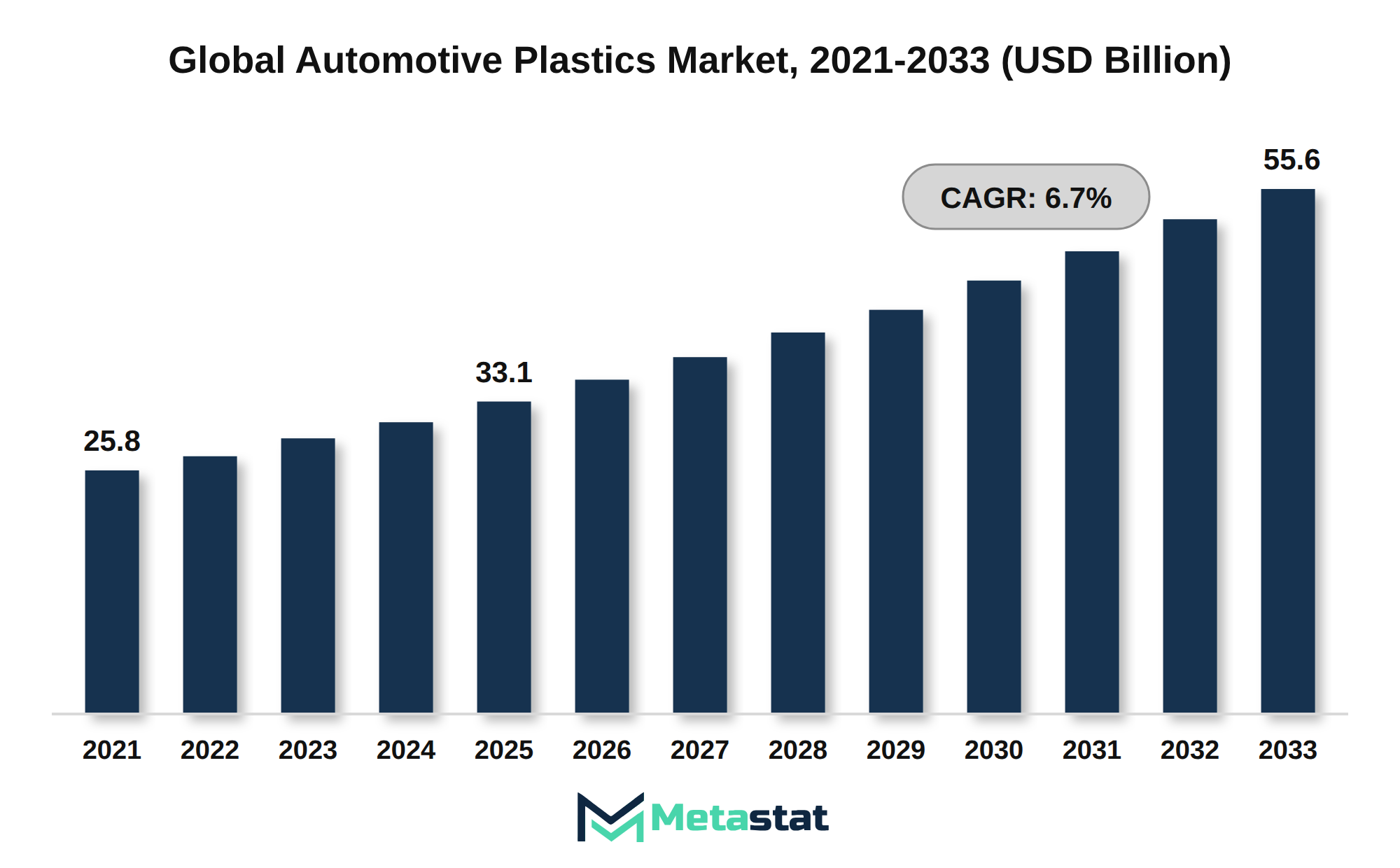
The global Automotive Plastics market was valued at USD 33.1 billion in 2025 and is projected to reach USD 55.6 billion by 2033, growing at a CAGR of 6.7% over the forecast period.
The global Automotive Plastics market reached a value of USD 33.1 billion in 2025, with projections indicating significant growth to USD 55.6 billion by 2033. This expansion reflects a compound annual growth rate (CAGR) of 6.7% during the forecast period. Factors driving growth include lightweighting trends and the increasing adoption of high-performance polymers, which enhance fuel efficiency and reduce emissions across various vehicle types.
Lightweighting and metal-replacement trends gain momentum owing to manufacturers prioritizing fuel efficiency and performance. The automotive industry increasingly adopts advanced polymer technologies to achieve these objectives, resulting in enhanced vehicle performance and reduced weight. The shift toward electric vehicles (EVs) further accelerates the demand for specific materials that contribute to energy efficiency and overall vehicle performance.
Innovation in high-performance polymers continues to shape the Automotive Plastics market, with manufacturers investing in research and development to create materials that meet stringent performance criteria. These innovations support the production of components that withstand various environmental conditions while maintaining structural integrity. The commitment to EV-specific materials supports the broader transition toward sustainable automotive solutions.
Shifts in material specifications among OEMs and Tier-1 suppliers reflect a growing emphasis on regulatory compliance and sustainability. These suppliers increasingly prioritize materials that align with evolving environmental standards, driving demand for more sustainable options. Regulatory compliance necessitates a focus on sustainable transformation and decarbonization, influencing procurement strategies and material selection across the industry.
The supply chain landscape for Automotive Plastics experiences significant changes, driven by geopolitical risk frameworks and market fragmentation. The logistics architecture adapts to meet the challenges posed by inflationary pressures and currency volatility, impacting sourcing strategies. Companies invest in infrastructure to mitigate potential disruptions while streamlining their value chains to enhance operational efficiency.
Lightweighting and metal-replacement trends have gained traction within the Automotive Plastics market, driven by the need for improved fuel efficiency and performance in vehicles. Manufacturers focus on substituting traditional materials with advanced polymers, leading to lighter and more efficient designs. This shift lowers overall vehicle weight, enhances fuel economy and reduces emissions, aligning with global sustainability goals.
High-performance polymer innovation significantly influences the market landscape. Developments in materials including Polypropylene (PP) and Polyurethane (PU) provide enhanced durability and resistance to harsh automotive environments. These innovations enable manufacturers to meet stringent performance standards while addressing consumer demands for reliability and longevity.
Electric vehicle (EV)-specific material adoption presents new opportunities within the Automotive Plastics market. The growth of the EV segment drives demand for specialized materials that support battery housing, lightweight structures, and thermal management. This trend aligns with the broader transition to sustainable transportation solutions, promoting investment in research and development of next-generation materials.
Component material substitution trends highlight a growing preference for advanced polymers over metals and traditional materials. This preference stems from the need for improved performance characteristics, including thermal stability, impact resistance, and design flexibility. Such substitutions positively impact manufacturing processes and overall vehicle performance, thereby enhancing competitive positioning within the market.
OEM and Tier-1 material specification shifts reflect the evolving landscape of regulatory compliance and standards. Manufacturers increasingly align their materials with environmental regulations, emphasizing sustainable sourcing and production practices. This shift necessitates continuous adaptation to changing compliance frameworks and geopolitical risks, influencing sourcing strategies and supplier relationships.
The evolving supply chain landscape for the Automotive Plastics market incorporates logistics architecture and sourcing dynamics. Manufacturers face challenges in material availability and cost fluctuations, requiring innovative procurement strategies. Collaborations with suppliers evolve to ensure a stable supply of high-quality materials, which is critical for maintaining production efficiency and meeting demand.
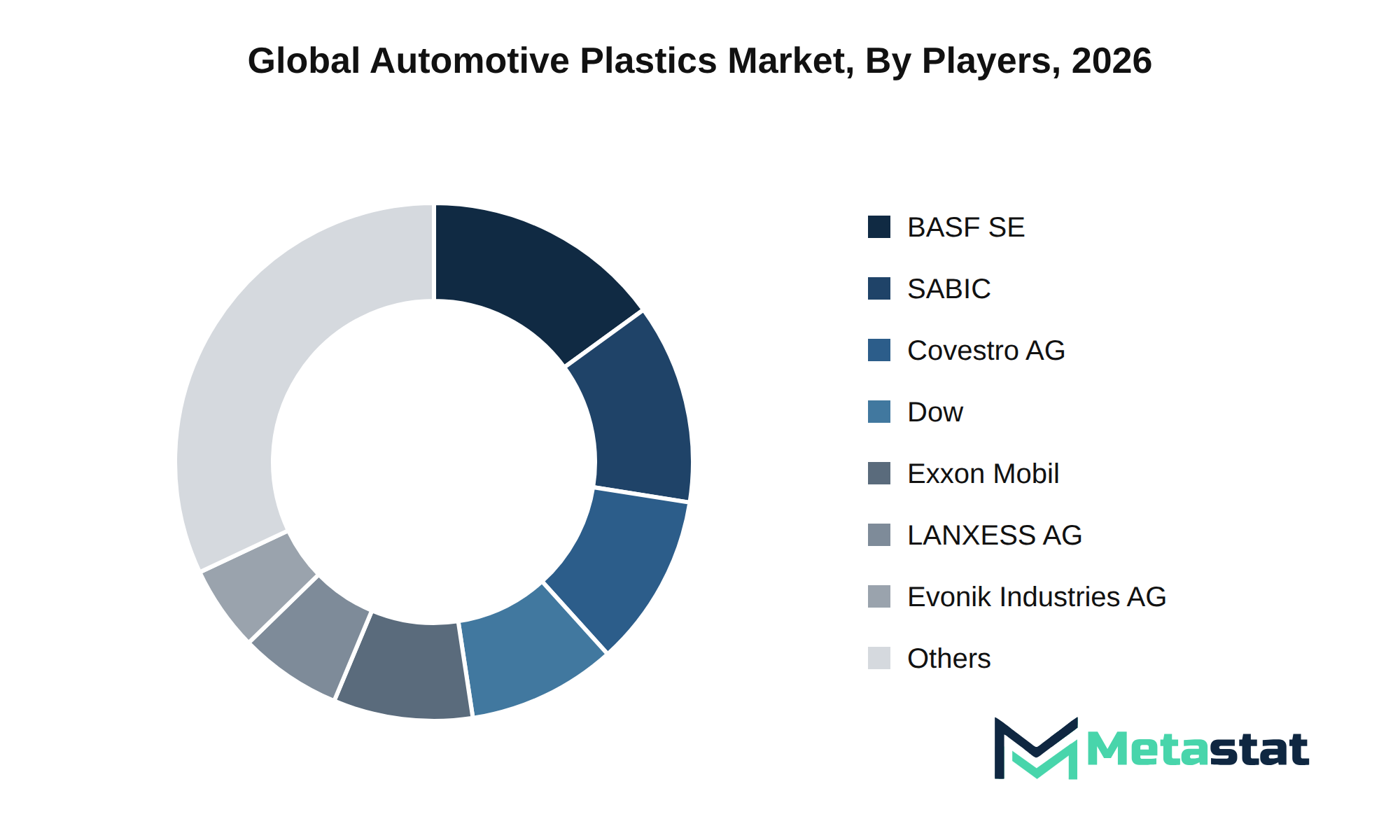
Market fragmentation and M&A dynamics shape the competitive environment, leading to strategic partnerships and collaborations aimed at enhancing capabilities and market reach. Companies pursue acquisitions to strengthen their portfolios and access new technologies, driving growth and innovation within the market. This trend highlights the importance of agility and adaptability in responding to market demands.
Capital allocation and infrastructure investments significantly influence the market's trajectory. Companies allocate resources toward advancements in processing technologies, including injection molding and extrusion, to enhance production efficiency and reduce costs. These investments ensure that manufacturers remain competitive in an evolving market landscape characterized by rapid technological advancements.
Macroeconomic headwinds, including inflationary pressures and currency volatility, present challenges for the Automotive Plastics market. Fluctuations in raw material prices and shifts in consumer demand require strategic management to mitigate risks and maintain profitability. Companies develop robust strategies to navigate these economic uncertainties, ensuring sustainability and resilience in operations.
The future strategic outlook for the Automotive Plastics market involves a focus on sustainable transformation and decarbonization efforts. Companies emphasize circular economy dynamics, exploring opportunities to incorporate recycled materials and reduce waste. This commitment to sustainability aligns with evolving consumer preferences and regulatory expectations, positioning the market for long-term growth.
Corporate imperatives drive high-value recommendations for stakeholders in the Automotive Plastics market. Companies prioritize innovation, sustainability, and strategic partnerships to enhance their competitive edge and address changing consumer demands. By focusing on these areas, organizations strengthen their market position and achieve sustainable growth in the evolving automotive landscape.
Market Dynamics
Emission limits drive closed-loop adoption
Growing environmental awareness drives the adoption of sustainable practices within the Automotive Plastics market. Increasingly stringent emission limits compel manufacturers to explore and implement closed-loop recycling systems. These systems facilitate the reuse of plastic materials, minimizing waste and reducing the carbon footprint associated with production processes.
This shift towards sustainability influences demand among automotive manufacturers seeking to align with eco-friendly initiatives. Manufacturers investing in advanced recycling technologies enhance operational efficiency and reduce production costs. Ultimately, these developments contribute to the market's expansion, driven by companies prioritizing compliance with evolving environmental standards.
The emphasis on sustainability attracts consumers who value eco-conscious products, leading to a shift in purchasing preferences. The integration of recycled plastics into vehicle production aligns with consumer expectations for environmentally responsible choices, fueling growth in the Automotive Plastics market.
Infrastructure development drives market growth
Infrastructure development significantly influences the Automotive Plastics market, particularly through investments in upgrading facilities and enhancing production capabilities. Increased public and private spending on infrastructure enables automotive manufacturers to expand operations, thereby boosting demand for plastic components. The integration of advanced technologies in manufacturing processes improves efficiency and lowers costs, attracting further capital investments.
A surge in urbanization leads to higher demand for passenger and commercial vehicles, directly impacting the consumption of automotive plastics. The trend towards digitization in manufacturing processes improves operational productivity, allowing for quicker response times to changing consumer preferences. This aspect is crucial in a competitive environment where manufacturers seek to maintain market share and enhance profitability.
Investments in sustainable infrastructure contribute to the development of new materials and production techniques in the automotive sector. Manufacturers increasingly focus on lightweight materials to improve fuel efficiency and reduce emissions. The emphasis on sustainability aligns with evolving consumer behaviors that prioritize eco-friendly products, driving the adoption of innovative plastic solutions in vehicles.
Overall, infrastructure development creates a favorable environment for growth in the Automotive Plastics market, promoting advancements in technology and supporting sustainable practices that appeal to consumers and manufacturers.
Regulatory compliance remains a significant hurdle in the Automotive Plastics market. Stringent environmental regulations and safety standards impose limitations on material selection and processing methods. Manufacturers face increased costs associated with achieving compliance, which affects their pricing structures and profit margins. These financial pressures restrict smaller firms from entering the market, leading to reduced competition and innovation.
Macroeconomic headwinds, including inflationary pressures and stagnating capital investments, further constrain growth. Rising raw material costs and labor expenses impact the overall operational expenditures of manufacturers, compelling them to reevaluate their production strategies. Economic challenges lead to delays in product launches and limit investments in research and development.
Supply chain disruptions, exacerbated by geopolitical instability and resource scarcity, create additional uncertainties for market participants. Fluctuating availability of critical materials delays production timelines and increases lead times, causing manufacturers to struggle with meeting customer demand. These disruptions hinder the overall efficiency of the market and result in lost sales opportunities.
Technological obsolescence presents another challenge, driven by rapid advancements that require continuous investment in new production technologies and processes. Firms that fail to keep pace with innovation risk losing market share to more technologically adept competitors. This competitive pressure leads to further market fragmentation, complicating the situation for existing players while presenting barriers for new entrants.
Overall, these factors collectively restrain the Automotive Plastics market from achieving its full growth potential, demanding strategic adjustments from manufacturers to navigate these complex challenges effectively.
Geopolitical fragmentation significantly affects the Automotive Plastics market by creating instability in supply chains. Heightened trade tensions and tariff frictions disrupt the flow of raw materials and finished products, leading to delays and increased costs for manufacturers. Trade deficits complicate access to critical feedstocks, while instability in relationships between nations generates uncertainties for companies reliant on global supply networks.
Technological disruptions present additional challenges, especially in integrating new processing methodologies into existing frameworks. Complex research and development integrations often require significant investment, diverting resources from production and affecting timelines. Companies face interoperability friction driven by adapting to changing technologies while striving to maintain product consistency and quality across diverse markets.
Logistics disruptions further complicate operational dynamics, resulting in unpredictable shipping times and higher transportation costs. Supply chain instability creates pressures on profit margins, compelling firms to reassess operational strategies and explore alternative sourcing options while navigating increasing pricing pressures on raw materials.
Workforce skill gaps present challenges arising from industries transitioning toward more automated processes. Talent retention pressures arise during fierce competition for skilled labor, making it challenging for companies to maintain productivity levels. Environmental lifecycle footprints and sustainability demands from consumers and regulators compel manufacturers to invest in greener technologies, often leading to higher initial costs and potential delays in product rollout.
These market dynamics highlight the importance of strategic planning and adaptability within the Automotive Plastics market, because stakeholders seek to mitigate risks associated with geopolitical fragmentation and other pressing challenges.
Emerging technologies drive innovation in automotive plastics
The Automotive Plastics market experiences significant opportunities driven by rapid technological advancements and innovations in material science. Increased efforts to develop advanced polymers and composites enhance product performance and durability, attracting manufacturers focused on improving vehicle efficiency and reducing overall weight. These advancements lead to the creation of lightweight components, allowing for better fuel efficiency and decreased emissions across various vehicle types.
Digital transformation within manufacturing processes further supports market growth. Automation and smart manufacturing technologies enable companies to streamline operations, reducing costs while maintaining high-quality production standards. This shift results in improved operational yields and creates competitive pricing, appealing to established and emerging players in the automotive sector.
Investment in research and development drives the emergence of niche applications within the market. Companies increasingly focus on creating specialized products tailored to specific vehicle segments, including electric and hybrid vehicles. This targeted approach enhances customer satisfaction by offering tailored solutions that meet the evolving needs of the automotive industry.
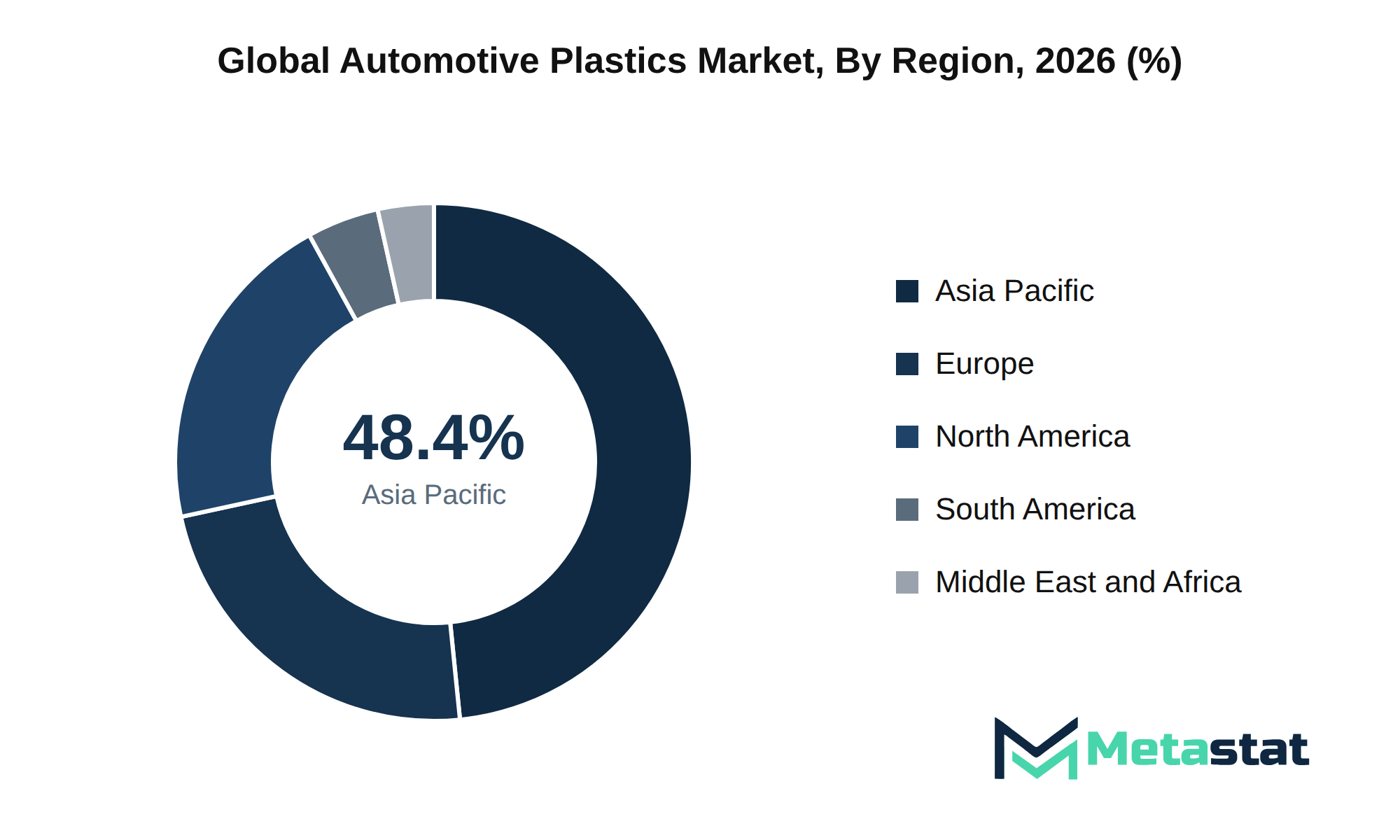
Geographic expansion remains a crucial factor in the market's evolution. Emerging economies in Asia Pacific and South America experience increasing demand for automotive plastics due to rising disposable incomes and greater investments in infrastructure. This trend encourages manufacturers to localize production, ensuring that supply chains remain flexible and responsive to regional market dynamics.
Incorporating sustainability practices into product development aligns with global environmental initiatives. The market observes a shift towards eco-friendly materials and production processes, driven by consumer demand for greener alternatives. This trend emphasizes the importance of sustainability in enhancing brand reputation and capturing new customer segments, contributing to the market's growth trajectory.
Market Segmentation Analysis
The Global Automotive Plastics market is segmented based on Material Type, Vehicle Type, Processing Technology, and Application.
By Material Type, the market is further segmented into:
Polypropylene (PP)
Polyurethane (PU, excluding TPU)
Polyvinyl Chloride (PVC)
Acrylonitrile Butadiene Styrene (ABS)
Polyamide (PA)
Polycarbonate (PC)
Polybutylene Terephthalate (PBT)
Polymethyl Methacrylate (PMMA)
Thermoplastic Elastomers (TPE, including TPU, TPV, TPO and TPS)
Others (PE, POM, PET, PPS and ASA)
Polypropylene (PP)
Valued at USD 11.3 billion in 2026, the Polypropylene (PP) segment is projected to reach USD 17.6 billion by 2033, exhibiting a CAGR of 6.5% during the forecast period. Demand for polypropylene in the Automotive Plastics market stems from its lightweight properties and versatility, which align with the automotive industry's ongoing efforts to enhance fuel efficiency and reduce emissions. Increasing production of passenger vehicles, particularly those prioritizing sustainability, drives growth in this segment. Adoption of advanced processing technologies, including injection molding, supports the efficient manufacturing of polypropylene components, further contributing to market expansion.
Product evolution within this segment emphasizes the development of high-performance grades of polypropylene that withstand rigorous automotive requirements. Innovations in polymer formulations and additives enhance durability, UV resistance, and overall performance in automotive applications. Regulatory compliance with standards aimed at environmental sustainability influences manufacturers to seek materials that not only meet performance criteria but comply with legislative mandates, enhancing the adoption of polypropylene.
Consumption shifts towards electric and hybrid vehicles present strategic opportunities for the polypropylene segment, driven by these vehicle types increasingly incorporating lightweight materials to optimize battery efficiency. Cost structures in the polypropylene market reflect fluctuations in raw material pricing and supply chain dynamics, which impact profitability. Ongoing investments in production facilities and research into new applications ensure a resilient market outlook.
Polyurethane (PU, excluding TPU)
Growth in the Polyurethane (PU, excluding TPU) segment stems from increasing demand for lightweight and flexible materials in the automotive sector. Automotive manufacturers prioritize materials that enhance fuel efficiency while providing durability and comfort. This trend aligns with the broader lightweighting objectives seen across the industry, strengthening long-term demand for Polyurethane.
Technological advancements in processing techniques for Polyurethane contribute to segment expansion. Innovations in application methods, including advanced injection molding, enable more efficient production and greater design flexibility, positively impacting operational costs. Increased investment in research and development facilitates the evolution of these products, leading to new applications and improved performance characteristics, which enhances competitive positioning.
Consumer preferences towards eco-friendly solutions drive demand for materials with lower environmental impact. This shift influences the adoption of Polyurethane, particularly in interior and exterior components, where aesthetics and functionality align with sustainability goals. Regulatory compliance standards further encourage manufacturers to adopt environmentally friendly materials, enhancing the segment's appeal and widening commercial adoption.
The Polyurethane (PU, excluding TPU) segment is expected to reach USD 6.8 billion by 2033, at a CAGR of 5.9% during the forecast period. Such growth reflects the broader trends in the Automotive Plastics market, highlighting the critical role of this material in meeting evolving market needs.
Polyvinyl Chloride (PVC)
Growth in the demand for Polyvinyl Chloride (PVC) within the Automotive Plastics market stems from its versatility and cost-effectiveness. This material is extensively applied in various automotive applications, including interior components, wiring insulation, and exterior trims. The segment is expected to reach USD 4.5 billion by 2033, reflecting an increasing focus on lightweight materials that enhance fuel efficiency while maintaining durability. Strategies to enhance production efficiency and reduce environmental impact drive further adoption of PVC across automotive applications.
Technological advancements in PVC processing methods contribute significantly to the segment's expansion. Innovations in formulations and manufacturing techniques lead to improved material properties, facilitating greater acceptance among manufacturers. Regulatory compliance regarding emissions and sustainability pushes the industry toward adopting more environmentally friendly alternatives, positioning PVC positively within the broader context of evolving automotive design and engineering standards.
Market participants experience competitive advantages through strategic investments in research and development, focusing on next-generation PVC materials that meet evolving consumer preferences. The resilience of the supply chain for PVC proves crucial, ensuring steady access to necessary raw materials and minimizing disruptions. This stability enhances market confidence and drives growth opportunities across various automotive applications, reinforcing the ongoing importance of PVC in the Automotive Plastics market.
Acrylonitrile Butadiene Styrene (ABS)
Acrylonitrile Butadiene Styrene (ABS) holds a significant role in the Automotive Plastics market, characterized by its robust properties and versatility. This segment is projected to grow at a CAGR of 6% during the forecast period. Demand primarily arises from the automotive industry's emphasis on lightweight materials, enhancing fuel efficiency and performance. The shift towards electric vehicles (EVs) further drives interest in ABS, demonstrating its suitability for high-performance applications.
Technological maturation in processing techniques, including injection molding, facilitates the production of complex ABS components, catering to diverse automotive applications. The material's resilience against chemicals and heat enhances its appeal in powertrain and under-the-hood components. ABS's adaptability for interior and exterior components aligns with evolving consumer preferences for aesthetics and functionality, supporting its market position.
Regulatory compliance regarding emissions and safety standards significantly influences ABS adoption, driven by manufacturers seeking materials that meet stringent requirements. The segment benefits from ongoing investments in research and development to innovate formulations, improving performance characteristics and sustainability. While end-use dynamics shift towards increased electrification and automation in vehicles, ABS's role in the market is set to expand, creating opportunities for manufacturers and suppliers.
Polyamide (PA)
Polyamide (PA) contributes significantly to the Automotive Plastics market, particularly owing to its mechanical strength, thermal stability, and resistance to chemicals. The material's attributes align well with the growing demand for lightweight components in automotive applications. Increased vehicle performance standards, alongside heightened consumer expectations for durability and safety, drive the adoption of Polyamide (PA) across various vehicle types.
Technological advancements in processing methods, including injection molding and extrusion, enhance the production efficiency of Polyamide (PA) components, contributing to broader segment expansion. The automotive industry increasingly integrates polyamide in applications including under-the-hood components, electrical connectors, and structural elements, driven by its lightweight nature and ability to meet stringent regulatory compliance standards.
Shifts in consumption trends reflect a growing preference for materials that support fuel efficiency and reduce emissions. Polyamide (PA) fulfills these requirements, enabling manufacturers to create lighter vehicles that comply with evolving environmental regulations. While the market progresses, investment in next-generation upgrades and innovations within the polyamide segment is expected to maintain its relevance and competitiveness during shifting dynamics.
Supply chain resilience remains critical in addressing challenges related to raw material sourcing and logistical vulnerabilities within the market. Fluctuations in pricing and margin pressures associated with polyamide production necessitate strategic planning and investment to mitigate risks. In this context, opportunities for capital investment arise, focused on enhancing production capabilities and driving innovation in material development.
Polycarbonate (PC)
Market dynamics reflect a shift towards advanced materials, with Polycarbonate (PC) gaining ground owing to its unique properties, including high impact resistance and optical clarity. Automotive manufacturers increasingly adopt PC for applications like interior components, lighting systems, and exterior parts, driven by the demand for lightweight materials that enhance fuel efficiency. The segment benefits from technological advancements, with innovations in processing techniques enabling the production of complex geometries and improved surface finishes.
The adoption of PC aligns with sustainability initiatives, because it offers a recyclable alternative to traditional materials. Regulatory compliance encourages the use of materials that reduce overall vehicle weight and improve energy efficiency. Consequently, end-use dynamics indicate a preference for lightweight vehicles, compelling manufacturers to explore innovative applications of PC across various vehicle types.
Market players face challenges related to the cost structures associated with raw material sourcing and production processes. Pricing volatility for PC creates margin pressures, impacting profitability. Nevertheless, strategic opportunity windows arise from the increasing demand for electric vehicles, where PC contributes significantly to reducing weight and enhancing performance. Companies investing in research and development are likely to capitalize on the evolving landscape of the Automotive Plastics market.
With the ongoing evolution of automotive design and engineering, the segment is poised for expansion. While manufacturers prioritize advanced materials, Polycarbonate (PC) will play a critical role in shaping future vehicle designs, aligning with both performance and sustainability goals. The market's focus on innovation and efficiency will drive the continued evolution of this important material type.
Polybutylene Terephthalate (PBT)
Significant interest in Polybutylene Terephthalate (PBT) arises from its favorable properties that align with the demands of modern automotive applications. High thermal stability and excellent chemical resistance make PBT a preferred choice for both interior and exterior components in vehicles. Automotive manufacturers increasingly seek materials that contribute to lightweighting efforts while ensuring durability and performance, which presents a solid demand driver for PBT.
The market experiences a surge in adoption due to advancements in processing technologies. Innovations in injection molding and extrusion processes enable the efficient production of PBT components, thus enhancing its integration in various automotive applications. This technological maturation facilitates broader use in passenger vehicles, commercial vehicles, and electric vehicles, aligning with evolving automotive design and engineering standards.
Downstream applications of PBT focus on several critical areas, including connectors, housing components, and structural elements, which benefit from the material's strength and versatility. Industry shifts towards electric and hybrid vehicles emphasize the need for high-performance plastics, encouraging manufacturers to explore PBT for its potential to meet stringent requirements for weight reduction and energy efficiency.
Regulatory compliance standards regarding vehicle emissions and material safety contribute to a landscape where PBT’s attributes become increasingly valuable. Automotive manufacturers prioritize materials that fulfill performance criteria while adhering to sustainability practices and safety regulations. This dynamic influences procurement strategies, positioning PBT because a competitive option within the Automotive Plastics market.
Investment in research and development accelerates the evolution of PBT formulations, enabling the creation of grades that offer enhanced performance characteristics tailored for specific automotive needs. This proactive approach supports product evolution and positions PBT to capture strategic opportunity windows in the expanding Automotive Plastics market.
Polymethyl Methacrylate (PMMA)
Increasing application of Polymethyl Methacrylate (PMMA) in the automotive industry reflects its robust properties, including high transparency and durability. This material is favored for automotive lighting and interior components, driven by consumer demand for aesthetics and functionality.
Technological maturation in manufacturing processes enhances the efficiency of PMMA production, reducing costs and increasing accessibility. Innovations in injection molding and extrusion techniques facilitate complex designs, allowing manufacturers to optimize product performance.
End-use dynamics indicate a shift towards electric vehicles (EVs) and advanced driver-assistance systems (ADAS), where PMMA’s lightweight characteristics provide significant advantages. The growth of EVs contributes to increased demand for lightweight materials, enhancing overall vehicle efficiency.
Regulatory compliance regarding vehicle safety and environmental standards drives adoption of PMMA due to its recyclability and low environmental impact. Manufacturers emphasize sustainable practices, reflecting changing consumer preferences and compliance with stringent regulations.
Pricing volatility in raw materials presents challenges, impacting the overall cost structure of PMMA. Fluctuations in the prices of acrylic monomers affect production costs, prompting manufacturers to seek strategic sourcing solutions.
Strategic opportunity windows exist for companies investing in PMMA, particularly within emerging markets where automotive production is expanding. Capital investments in research and development yield next-generation PMMA formulations, enhancing performance and expanding application areas.
Thermoplastic Elastomers (TPE, including TPU, TPV, TPO and TPS)
Increasing demand for Thermoplastic Elastomers (TPE), including TPU, TPV, TPO and TPS, stems from their versatility and performance characteristics suitable for various automotive applications. These materials provide excellent flexibility, durability, and resistance to environmental factors, which aligns with the evolving preferences of manufacturers and consumers for high-quality automotive components.
Market expansion is fueled by significant advancements in processing technologies, enabling more efficient production methods and enhancing product customization. Innovations in TPE formulations result in improved performance, driving adoption across various vehicle types, including electric vehicles and hybrids, where performance and weight reduction are critical.
End-use dynamics indicate a trend towards increasing utilization of TPE in interior and exterior components, driven by their aesthetic appeal and functional properties. Regulatory compliance standards support the integration of TPE in applications requiring high safety and environmental performance, further enhancing its appeal in the Automotive Plastics market.
Shifts in consumption patterns towards sustainable materials contribute to the demand for TPE, aligning with broader industry goals of reducing carbon footprints. Capital investment in TPE production facilities reflects the market's growth potential, offering strategic opportunities for manufacturers to enhance capacity and meet the rising demand for these innovative materials.
Others (PE, POM, PET, PPS and ASA)
Sub-segment Others (PE, POM, PET, PPS and ASA) (By Material Type)
Consumer preferences shift towards lightweight and durable materials, driving demand for alternative plastics in the Automotive Plastics market. The "Others" segment, which includes Polyethylene (PE), Polyoxymethylene (POM), Polyethylene Terephthalate (PET), Polyphenylene Sulfide (PPS), and Acrylonitrile Styrene Acrylate (ASA), meets specific application requirements due to the unique properties each polymer offers.
Technological advancements contribute to the evolving landscape of the Automotive Plastics market. Innovations in processing techniques enhance the efficient production of these materials, improving their performance characteristics for various automotive applications. The adoption of next-generation upgrades ensures that these polymers maintain relevance in a market that increasingly prioritizes sustainability and performance.
End-use dynamics reflect a growing trend towards incorporating advanced materials in vehicle manufacturing, particularly for components that require high strength-to-weight ratios. Consumers increasingly favor vehicles that use lightweight materials to enhance fuel efficiency and reduce emissions, further supporting the demand for these alternative plastics.
Regulatory compliance standards shape the market, driven by manufacturers seeking materials that align with environmental regulations. Certifications related to sustainability and recyclability influence sourcing decisions, pushing manufacturers to explore innovative solutions within this sub-segment.
Pricing volatility, stemming from fluctuations in raw material costs, poses challenges for manufacturers in the Automotive Plastics market. This volatility impacts profit margins, leading companies to implement strategic sourcing practices to mitigate risks associated with supply chain disruptions.
Strategic opportunity windows emerge for manufacturers seeking to capitalize on the growing demand for these materials. Investment in research and development will be crucial for driving innovation, ensuring that the market remains competitive and responsive to evolving consumer needs.
By Vehicle Type, the market is further segmented into:
Passenger Vehicles
Commercial Vehicles
Electric Vehicles (EVs)
Hybrid Vehicles
Others
Passenger Vehicles
Projected growth in the Passenger Vehicles segment reflects a strong demand trajectory within the Automotive Plastics market. Valued at USD 21.3 billion in 2026, this segment is anticipated to reach USD 31.5 billion by 2033, achieving a CAGR of 5.7% during the forecast period. Factors driving demand include increasing vehicle production rates and consumer preferences for lightweight materials that enhance fuel efficiency. Heightened focus on sustainability encourages the adoption of eco-friendly plastics, further propelling market expansion.
Market dynamics indicate a shift towards advanced manufacturing processes, enabling the integration of innovative materials tailored to the specifications of passenger vehicles. Technological maturation facilitates the development of next-generation automotive plastics, allowing for enhanced durability and performance while meeting evolving regulatory standards. This evolution in product offerings aligns with the automotive industry's transition towards electric and hybrid vehicles, which increasingly incorporate specialized plastics for components.
Consumption shifts within the automotive sector emphasize the importance of interior and exterior components, which necessitate high-performance plastics that combine aesthetics with functionality. While the market continues to evolve, strategic opportunities arise from the need for supply chain resilience and raw material sourcing, ensuring a steady flow of high-quality inputs necessary for production. Investment in research and development strengthens the competitive landscape, positioning key players to capitalize on emerging trends in the Automotive Plastics market.
Commercial Vehicles
Demand for automotive plastics in the Commercial Vehicles segment experiences growth driven by rising production levels and increasing focus on fuel efficiency. Manufacturers increasingly prioritize lightweight materials to enhance overall vehicle performance and reduce emissions. This shift toward weight reduction directly influences the demand for automotive plastics, enabling manufacturers to comply with stringent emissions regulations while simultaneously improving fuel economy.
The Commercial Vehicles segment is estimated to reach USD 10.6 billion by 2033, at a CAGR of 6.1% during the forecast period. Next-generation upgrades in vehicle design and technology further increase the demand for advanced materials, optimizing safety and performance in commercial applications. The evolving dynamics of logistics and transportation support market expansion, driven by stakeholders seeking to leverage innovative materials in vehicle assembly to improve durability and maintenance costs.
Product evolution in the Commercial Vehicles segment aligns with the increasing adoption of electric and hybrid vehicle technologies. The integration of advanced materials allows manufacturers to produce vehicles that meet emerging consumer preferences for sustainability. While the market continues to evolve, strategic opportunities arise for stakeholders focused on enhancing supply chain resilience and addressing raw material sourcing challenges.
Electric Vehicles (EVs)
Increasing focus on sustainability and stringent regulatory standards drive significant growth in the Electric Vehicles (EVs) segment. This sector benefits from advancements in battery technology, which enhances vehicle performance and longevity. Manufacturers prioritize lightweight materials to improve energy efficiency, positioning automotive plastics because a critical component in EV design and production.
The Electric Vehicles (EVs) segment is projected to reach USD 7.8 billion by 2033. A shift towards eco-friendly practices influences downstream applications, leading to a rise in demand for high-performance plastics that comply with environmental regulations. This market responds to consumer preferences for innovative and efficient vehicle designs, which supports overall market expansion.
Investment in research and development facilitates technological maturation and next-generation upgrades, further enhancing the performance and appeal of EVs. The ongoing evolution of automotive plastics aligns with the industry's transition towards electric mobility, creating strategic opportunities for manufacturers. By leveraging advanced materials, the market adapts to the changing environment, ensuring competitive positioning in an increasingly electrified automotive sector.
Hybrid Vehicles
Projected growth in the Hybrid Vehicles segment at a CAGR of 8.7% during the forecast period reflects a notable shift in consumer preferences towards more environmentally friendly transportation options. This growth is attributed to increased awareness of climate change and the push for reduced emissions, compelling manufacturers to develop vehicles that combine traditional fuel engines with electric components.
Technological advancements in battery efficiency and hybrid systems drive further adoption. Automakers prioritize innovation in this sector, focusing on enhancing fuel efficiency and reducing operational costs. Consequently, the expansion of hybrid vehicles significantly influences the Automotive Plastics market, with manufacturers incorporating advanced plastic materials to lower vehicle weight and improve fuel economy.
Demand for lightweight and durable materials in hybrid vehicles leads to increased consumption of specific plastic types, including Polypropylene (PP) and Polyurethane (PU). The integration of these materials supports both vehicle performance and compliance with evolving regulatory standards aimed at reducing emissions.
Capital investments in R&D for hybrid technology continue to rise, presenting strategic opportunities for industry players. This investment momentum creates a competitive landscape, encouraging suppliers to innovate and diversify their product offerings. Manufacturers' efforts to enhance hybrid vehicle functionalities contribute positively to the overall growth trajectory of the market.
Others
Interest in the "Others" sub-segment under Vehicle Type reflects diversification in automotive applications, catering to niche markets that require specialized solutions. This segment encapsulates various vehicle types that do not fit into the traditional classifications of passenger or commercial vehicles, presenting unique demand characteristics driven by specific consumer needs.
Technological maturation plays a critical role in enhancing the appeal of this sub-segment. Innovations in materials and manufacturing processes enable the production of lightweight, durable components that align with evolving consumer preferences for efficiency and sustainability. Next-generation upgrades influence product evolution, attracting buyers seeking advanced solutions for emerging vehicle categories.
End-use dynamics indicate a growing inclination towards integrating advanced features into vehicles classified within this sub-segment. Increased focus on regulatory compliance and certifications adds to market complexity, shaping product development initiatives. Companies investing in this space navigate stringent standards while addressing cost structures and pricing volatility that affect profitability.
Strategic opportunity windows arise from shifts in consumption patterns, encouraging manufacturers to explore untapped markets within the automotive plastics landscape. Investment in supply chain resilience and raw material sourcing remains vital to mitigate potential vulnerabilities. The automotive plastics market evolves, fueled by a drive for innovative applications and increased demand across diverse vehicle types.
By Processing Technology, the market is further segmented into:
Injection Molding
Extrusion
Blow Molding
Thermoforming
Compression Molding
Reaction Injection Molding (RIM)
Resin Transfer Molding (RTM)
Rotational Molding
Additive Manufacturing
Others (Foam Molding and Casting)
Injection Molding
Valued at USD 20.5 billion in 2026, the Injection Molding segment is projected to reach USD 32.1 billion by 2033, at a CAGR of 6.6% during the forecast period. This growth is driven by increasing adoption of lightweight materials in automotive manufacturing, enhancing fuel efficiency and performance. Key end-users, including automotive manufacturers, emphasize the need for materials that reduce overall vehicle weight while maintaining structural integrity.
The segment experiences significant expansion due to advancements in processing technologies. Innovations in injection molding techniques enable production of complex geometries and integration of multiple functionalities into single components. This evolution aligns with the automotive industry's push for more efficient production processes and reduction of material waste.
Regulatory compliance and environmental considerations play crucial roles in shaping the market landscape. Stringent regulations regarding emissions and vehicle safety standards compel manufacturers to explore sustainable and high-performance materials, driving demand within the Injection Molding segment. The market benefits from a shift towards electric and hybrid vehicles, which require components designed for optimized energy efficiency and reduced weight.
Investment in technological upgrades and production capacity remains essential for players in the market. Enhanced capabilities in injection molding provide opportunities for companies to differentiate their product offerings and capture greater market share. The ongoing evolution of automotive design and engineering creates a strategic opportunity for growth within the broader Automotive Plastics market.
Extrusion
Sub-segment Extrusion (By Processing Technology)
Increasing adoption of extrusion technology in the Automotive Plastics market results from its efficiency in producing complex designs with consistent quality. This processing method allows for the manufacturing of various automotive components, which contributes significantly to demand. Advancements in extrusion technology are fueling market growth by making it more adaptable to diverse material types and enhancing production capabilities.
The extrusion segment is projected to reach USD 5.3 billion by 2033, at a CAGR of 6.2% during the forecast period. Demand for lightweight and durable plastic components in vehicles has surged, with extrusion processes providing a viable solution for producing large volumes at lower costs. Companies prioritize investment in this segment to enhance production efficiency and meet evolving consumer preferences.
Regulatory compliance standards increasingly emphasize the need for sustainable manufacturing practices. Manufacturers are exploring biodegradable materials and recycling processes in the extrusion segment. This shift creates strategic opportunities for companies seeking to align with environmental policies while addressing market demands effectively.
Competitive pressures in the market compel companies to innovate continuously. Investment in next-generation upgrades and product evolution through extrusion technology enables manufacturers to adapt their offerings to meet changing end-use dynamics. This focus on innovation improves product performance and enhances overall market growth.
Blow Molding
In the Automotive Plastics market, the Blow Molding segment demonstrates growth potential, driven by the increasing demand for lightweight and flexible components used in vehicle manufacturing. This segment is expected to reach USD 4.2 billion by 2033, reflecting a growing interest among manufacturers in advanced production techniques that enhance efficiency and reduce waste. The technology's adaptability in creating complex shapes and designs caters to various applications, including fuel tanks, bumpers, and interior components.
While vehicle manufacturers emphasize cost-effective production methods, the Blow Molding segment benefits from technological maturation and continuous innovations. These advancements enable the production of high-quality products that meet stringent regulatory compliance standards while ensuring optimal performance. The rising adoption of electric and hybrid vehicles further stimulates demand for blow-molded components, owing to the specific design features these vehicles require that align with modern engineering standards.
End-use dynamics indicate a shift towards sustainable materials and production practices within the industry. Manufacturers increasingly prioritize sourcing materials that align with eco-friendly initiatives, positioning the Blow Molding segment favorably in the context of environmental compliance. This trend influences broader market growth, because consumers and businesses alike advocate for greener alternatives in automotive production.
Strategic opportunity windows exist for suppliers in the Blow Molding segment to invest in next-generation upgrades and innovations. Continuous improvements in production processes and material formulations enhance product offerings, allowing manufacturers to respond swiftly to evolving market needs. Overall, the Blow Molding segment contributes to the future of the Automotive Plastics market, driven by demand for efficient, sustainable, and innovative solutions.
Thermoforming
Projected growth for the Thermoforming segment stands at a CAGR of 6.5% during the forecast period. This expansion results from increased demand for lightweight and cost-effective materials, particularly within the Automotive Plastics market. Manufacturers emphasize the advantages of thermoformed plastics, including design flexibility and reduced production time, which align with evolving automotive design trends.
The trend towards electric vehicles (EVs) significantly influences the adoption of thermoforming technology, driven by the need for efficient battery housings and lightweight components. This shift reflects a broader movement within the automotive industry towards sustainability and fuel efficiency, further encouraging investment in this processing technology. The increasing focus on custom designs and rapid prototyping enhances thermoforming's appeal, supporting its growth in the market.
Cost structures linked to raw materials and technological advancements contribute to the competitive landscape of the Thermoforming segment. Price volatility in raw material sourcing necessitates strategic planning and adaptability among manufacturers. Successful companies leverage innovations in materials and processes to enhance product offerings, which aligns with market expectations for performance and sustainability.
The Thermoforming segment's growth trajectory points toward a robust investment outlook, with opportunities for technological maturation and next-generation upgrades. While manufacturers refine their processes, the ability to meet stringent regulatory compliance standards becomes critical. This dynamic environment shapes the future of the Automotive Plastics market, emphasizing the importance of strategic opportunity windows in ensuring long-term growth.
Compression Molding
Compression Molding serves because a critical processing technology in the Automotive Plastics market, facilitating the creation of complex shapes and components vital for vehicle production. This method enjoys popularity owing to its ability to produce high-quality parts with minimal waste, aligning with the industry's sustainability goals. The technology supports the integration of various materials, enhancing product versatility and enabling manufacturers to innovate in design and functionality.
Innovation within compression molding reflects technological maturation, with advancements in machinery and techniques driving efficiency and reducing production costs. This segment benefits from a growing focus on lightweight materials, essential for improving fuel efficiency and reducing emissions in vehicles. Manufacturers prioritize the adoption of compression molding to meet evolving consumer demands and regulatory standards.
Downstream applications of compression molding span various automotive components, including interior and exterior parts, contributing significantly to overall vehicle aesthetics and functionality. The technology's adaptability to different materials, including thermoplastics and elastomers, enables manufacturers to cater to diverse market needs effectively. This flexibility supports the growth of various sub-segments within the Automotive Plastics market.
Regulatory compliance remains a crucial factor driving the adoption of compression molding. Stringent automotive standards necessitate the use of high-performance materials. Manufacturers investing in this technology position themselves strategically to leverage opportunities arising from increased regulatory scrutiny. The segment experiences steady growth, supported by continuous advancements and evolving market dynamics.
Reaction Injection Molding (RIM) technology plays an important role in the Automotive Plastics market, offering unique advantages for producing lightweight components with intricate designs. This process enables manufacturers to create durable and flexible parts that meet the evolving needs of the automotive industry, particularly in the context of electric and hybrid vehicles. The increasing emphasis on fuel efficiency and performance enhancement drives the adoption of RIM, supported by its ability to create complex geometries that traditional methods do not achieve.
Technological maturation in RIM has led to improvements in processing efficiency and product quality, further encouraging its use in various automotive applications. Innovations continue to enhance the capabilities of RIM, promoting its integration into new vehicle designs and production processes. Demand for RIM-compatible materials, alongside advancements in processing technologies, supports the evolving landscape of automotive manufacturing, ensuring compliance with stringent regulatory standards and material performance requirements.
The shift towards electric and hybrid vehicles significantly influences end-use dynamics within the Automotive Plastics market, creating a demand for lightweight materials that contribute to overall vehicle efficiency. This trend promotes the exploration of RIM because a viable option for producing components in these vehicles, ultimately shaping future production strategies. Strategic investment in RIM technology positions manufacturers to capture emerging market opportunities while addressing consumer preferences for sustainability and enhanced vehicle performance.
Resin Transfer Molding (RTM)
Resin Transfer Molding (RTM) technology continues to gain traction in the Automotive Plastics market, driven by its ability to produce lightweight and complex geometries. Manufacturers increasingly adopt RTM for applications that require high strength-to-weight ratios, particularly in electric and hybrid vehicle components. The segment demonstrates significant potential due to advancements in resin formulations and curing techniques, enhancing the overall performance and durability of the molded parts.
Investment in research and development supports the evolution of RTM processes, enabling the production of components that meet the stringent requirements of modern automotive designs. Downstream applications reflect a growing reliance on RTM for both structural and aesthetic components in vehicles, illustrating its versatility across various vehicle segments. Regulatory compliance standards push manufacturers to optimize material usage, with RTM providing an efficient solution by minimizing waste during production.
Supply chain dynamics play a crucial role in shaping the RTM segment, with raw material sourcing focusing on sustainable options to meet environmental standards. The resilience of the supply chain ensures a steady flow of materials necessary for RTM, allowing manufacturers to scale operations efficiently. Cost structures surrounding RTM processes continue to improve, driven by innovations that reduce production times and enhance profitability, reinforcing its position within the Automotive Plastics market.
Rotational molding technology receives attention due to its ability to create complex hollow shapes without seams. This method aligns with the increasing demand for lightweight components within the automotive sector, driven by manufacturers seeking to enhance fuel efficiency and reduce overall vehicle weights. The versatility of rotational molding supports applications across various vehicle types, including passenger vehicles and commercial vehicles, catering to diverse market needs.
Shifts in consumer preferences toward customizability and aesthetic appeal drive the adoption of rotational molding. The technology allows for a range of finishes and colors, enhancing the visual aspects of interior and exterior automotive components. This adoption supports market expansion, enabling manufacturers to respond swiftly to changing consumer demands.
Regulatory compliance standards increasingly influence the choice of processing technologies. Rotational molding offers the advantage of using recyclable materials, aligning with environmental regulations and sustainability goals within the automotive plastics market. This compliance creates a more favorable perception among consumers and industry stakeholders alike.
Investment in next-generation upgrades plays a critical role in the evolution of rotational molding technology. Continuous advancements in machinery and materials enhance efficiency, reduce costs, and improve product quality. Such enhancements position rotational molding because an attractive option for manufacturers aiming to gain a competitive edge in the market.
Technological maturation in additive manufacturing significantly influences the Automotive Plastics market. Innovations in 3D printing technologies enable manufacturers to produce complex geometries and customized designs, which align with the automotive industry's shift towards personalization and efficiency. The integration of additive manufacturing supports rapid prototyping, streamlining product development cycles and reducing time-to-market for new automotive components.
Adoption of this technology increases owing to the growing demand for lightweight materials. Automakers require solutions that enhance fuel efficiency while ensuring safety and performance. Additive manufacturing addresses these needs by facilitating the production of lightweight parts without compromising structural integrity.
Regulatory compliance standards further drive the adoption of environmentally friendly practices within the market. Additive manufacturing aligns with sustainability goals by reducing waste during production and allowing the use of recyclable materials. This shift towards greener manufacturing processes enhances attractiveness to stakeholders focused on environmental impact.
Strategic opportunity windows arise from the need for customization in automotive applications including interior and exterior components. The flexibility offered by additive manufacturing enables automotive plastic suppliers to respond to market trends efficiently, adapting to consumer preferences and emerging technologies.
Investment in additive manufacturing technologies reflects a commitment to innovation and future growth in the Automotive Plastics market. Companies that emphasize research and development in this area position themselves to capitalize on evolving consumer demands and industry shifts.
Others (Foam Molding and Casting)
Foam molding and casting technologies represent a niche segment within the Automotive Plastics market. Demand for these processes arises from their ability to produce lightweight parts with complex geometries, which aligns with the automotive industry's pursuit of fuel efficiency and performance enhancements. The ongoing shift toward electric and hybrid vehicles further drives interest in innovative manufacturing methods that support the design of energy-efficient components.
Technological maturation in foam molding and casting enables manufacturers to create diverse automotive applications, including interior components and structural parts. The evolution of raw materials and formulations enhances the performance characteristics of these products, supporting their integration into vehicle designs. End-use dynamics reflect a growing acceptance of these technologies, driven by automotive OEMs increasingly prioritizing durability and weight reduction in their designs.
Regulatory compliance standards regarding emissions and environmental impact stimulate investments in alternative processing technologies, including foam molding and casting. This segment faces challenges from potential substitution risks, with traditional materials and processes continuing to hold market share. However, strategic opportunity windows exist for manufacturers who innovate and adapt to consumer demands for sustainable and efficient vehicle solutions within the expanding Automotive Plastics market.
By Application, the market is further segmented into:
Interior & Cockpit Components
Exterior Body & Trim Components
Seating & Occupant Comfort Components
Powertrain & Under-the-Hood Components
Electrical & Electronic Components
Lighting & Optical Components
HVAC & Thermal Management Components
EV Battery & High-Voltage Components
Chassis, Structural & Safety Components
Others (Fuel-System, Fluid-Handling and Fastening Components)
Interior & Cockpit Components
Valued at USD 9.8 billion in 2026, the Interior & Cockpit Components segment is projected to reach USD 14.8 billion by 2033, at a CAGR of 6% during the forecast period. Demand for interior and cockpit components stems from the increasing focus on enhancing vehicle aesthetics and functionality. Consumers prioritize comfort and technology integration within vehicles, driving manufacturers to incorporate advanced designs and materials. Technological advancements in polymer processing contribute to improved efficiency and customization, propelling market growth.
Regulatory compliance regarding vehicle safety and emissions encourages manufacturers to adopt lightweight materials, which boost fuel efficiency. The push towards electric vehicles (EVs) heightens the need for lightweight interior components, enhancing performance and energy efficiency. The integration of smart technologies, including infotainment systems and driver assistance features, influences the evolution of interior and cockpit components, driving demand for high-performance plastics.
Consumer preferences reflect a shift towards sustainable materials, motivating players in the Automotive Plastics market to explore bio-based and recyclable options. Economies of scale in manufacturing processes reduce production costs, enhancing the competitive landscape. Price volatility in raw materials poses challenges, compelling manufacturers to innovate and seek alternative sourcing strategies. Overall, the segment is positioned for substantial growth, driven by evolving consumer expectations, technological advancements, and increasing regulatory pressures.
Exterior Body & Trim Components
Strong demand for lightweight materials drives growth in the Exterior Body & Trim Components segment within the Automotive Plastics market. The automotive industry increasingly incorporates plastics to enhance fuel efficiency and reduce vehicle weight, aligning with environmental targets. This segment is projected to reach USD 8.7 billion by 2033, at a CAGR of 6.3% during the forecast period.
Technological advancements in material formulations and processing techniques contribute to expanding application opportunities. Enhanced performance characteristics of plastics, including impact resistance and durability, support their use in exterior body components. Automotive manufacturers increasingly adopt innovative materials to improve vehicle aesthetics and functionality, creating a competitive environment for suppliers.
Regulatory compliance standards require manufacturers to reduce vehicle emissions, further driving demand for lightweight plastic components. The shift towards electric and hybrid vehicles increases the importance of weight reduction, positioning the Exterior Body & Trim Components segment for significant growth. Evolving vehicle designs necessitate the integration of advanced materials in body and trim components to maintain competitive advantage.
Shifts in consumer preferences towards more sustainable vehicles influence material selection processes. Manufacturers prioritize recyclable and eco-friendly materials, aligning product offerings with consumer expectations. This transition presents strategic opportunities for players in the Automotive Plastics market to innovate and capture market share.
Seating & Occupant Comfort Components
A growing interest in passenger comfort and safety drives demand for seating and occupant comfort components in the Automotive Plastics market. Innovations in design and materials enhance comfort levels. Manufacturers invest in advanced technologies that improve consumer experiences. Enhanced manufacturing processes and the introduction of smart seating solutions contribute to segment growth.
Seating and occupant comfort components are projected to reach USD 5.7 billion by 2033. The increasing focus on ergonomics and customization allows automotive manufacturers to meet diverse consumer preferences while adhering to stringent safety standards. Evolving regulations surrounding vehicle safety and occupant protection influence demand for high-performance materials in this segment.
Cost structures and pricing volatility impact the segment, reflecting fluctuations in raw material prices and supply chain dynamics. Strategic partnerships with material suppliers and technology providers enable manufacturers to mitigate risks associated with sourcing and logistics vulnerabilities. The ongoing evolution of consumer preferences toward sustainable and lightweight materials positions the segment for continued growth.
Powertrain & Under-the-Hood Components
Growth in the Powertrain & Under-the-Hood Components segment stems from advancements in fuel efficiency and a shift towards lightweight materials. Increasing regulatory pressure for emissions reduction drives automakers to adopt plastics that contribute to overall vehicle weight savings. This segment is projected to grow at a CAGR of 5.5% during the forecast period. Technological maturation in the development of high-performance plastics enhances material properties, allowing for improved durability and heat resistance in automotive applications.
Significant investments in electric vehicles (EVs) influence the demand for Powertrain & Under-the-Hood Components, driven by the requirement for specialized materials to support their unique performance characteristics. The market experiences a trend towards integrating more electronic components, necessitating plastics that provide electrical insulation and thermal management. Consequently, manufacturers focus on developing innovative solutions that align with the evolving landscape of automotive technologies.
Regulatory compliance standards regarding safety and emissions further impact material selection in this segment. Enhanced focus on performance and energy efficiency results in increasing demand for advanced polymer solutions. While the market continues to evolve, manufacturers are positioned to capitalize on strategic opportunities to enhance their product offerings and meet the changing needs of the automotive industry.
Electrical & Electronic Components
Growth in the Electrical & Electronic Components segment of the Automotive Plastics market arises from the increasing integration of advanced technologies in vehicles. Demand for innovative electronic systems, including infotainment, navigation, and driver assistance technologies, drives manufacturers to seek lightweight and durable materials that enhance performance and efficiency. These components require materials with high electrical insulation properties, heat resistance, and lightweight characteristics, aligning with the shift towards electric and hybrid vehicles.
Technological maturation significantly shapes the segment, particularly with advancements in polymer science, enabling the development of specialized compounds tailored for electronic applications. Innovations in material composition, including enhanced polycarbonate and polyamide formulations, support the production of components that meet stringent industry standards for safety and reliability. Regulatory compliance standards increasingly dictate the use of certain materials, prompting manufacturers to adopt advanced plastics that comply with environmental and safety regulations.
Market dynamics experience shifts due to evolving consumer preferences for smart and connected vehicles. This trend increases the demand for sophisticated electrical and electronic components, creating opportunities for suppliers of automotive plastics. Strategic opportunity windows for this segment lie in the development of next-generation materials that offer enhanced performance and sustainability, addressing both consumer and regulatory demands.
Supply chain resilience becomes essential for manufacturers facing sourcing challenges for raw materials. Fluctuations in raw material availability and pricing volatility impact production costs for electrical and electronic components. Organizations focusing on strengthening their supply chains mitigate risks associated with logistics vulnerabilities and substitution risks from competing materials. Investing in sustainable sourcing practices and developing alternative materials enhances competitiveness within the market.
Increasing demand for advanced lighting solutions drives the growth of the Lighting & Optical Components segment within the Automotive Plastics market. Enhanced vehicle aesthetics and functionality lead manufacturers to integrate high-quality plastic materials into lighting systems. Technologies including LED and laser lighting offer improved energy efficiency and longevity, leading to a shift in consumer preferences towards these innovations.
The transition to electric vehicles (EVs) influences the adoption of advanced lighting technologies. EVs emphasize energy efficiency, prompting manufacturers to explore lightweight and durable plastic materials that optimize performance without compromising quality. Significant investments in research and development focus on enhancing the performance and functionality of lighting components.
Regulatory compliance standards regarding energy consumption and safety affect the segment. Stricter regulations stimulate advancements in material science, promoting the use of innovative plastics that meet or exceed regulatory requirements. This environment encourages manufacturers to focus on product evolution, leading to the development of next-generation lighting solutions that demonstrate better performance metrics.
Supply chain resilience remains a key factor within the Lighting & Optical Components segment. Raw material sourcing issues and logistics vulnerabilities impact production timelines and costs. Manufacturers invest in diversifying supply chains to mitigate risks associated with material shortages and fluctuations in raw material pricing.
The ongoing technological maturation of plastics enhances the durability and functionality of lighting components. Innovations in processing techniques create opportunities for manufacturers to produce intricate designs that enhance the overall vehicle aesthetic. Capital investment in this segment continues to grow, reflecting a commitment to meet the evolving demands of the Automotive Plastics market.
HVAC & Thermal Management Components
Demand for HVAC and thermal management components within the Automotive Plastics market is increasing due to a heightened focus on passenger comfort and energy efficiency. Consumers prioritize advanced climate control systems that employ lightweight materials, enabling manufacturers to meet these demands while optimizing vehicle performance.
Technological maturation in thermal management solutions supports the adoption of innovative materials designed for improved heat resistance and thermal insulation. The automotive sector experiences a shift toward integration of smart technologies, with these components enhancing overall vehicle functionality.
End-use dynamics indicate a growing integration of HVAC systems in electric and hybrid vehicles, aiming to balance enhanced performance with reduced energy consumption. Regulatory compliance standards shape the development of these components to meet stringent emissions regulations, driving innovation within the market.
Fluctuations in raw material sourcing and supply chain resilience remain significant factors influencing the pricing structure of thermal management components. Producers focus on strategic opportunity windows to innovate and capture market share, ensuring that product evolution aligns with consumer preferences and regulatory requirements.
EV Battery & High-Voltage Components
A surge in demand for electric vehicles (EVs) drives the focus on the EV Battery & High-Voltage Components segment within the Automotive Plastics market. Increased consumer interest in sustainability, along with government incentives promoting EV adoption, contributes to this growth. The shift towards battery electric vehicles necessitates the development of lightweight, durable materials that enhance battery performance and safety.
Technological advancements in materials science facilitate the evolution of components designed for EV battery applications. Innovations enable enhanced thermal stability, improved electrical insulation, and weight reduction, all vital for optimizing battery efficiency. These enhancements support the transition towards next-generation battery solutions, which deliver higher energy densities and faster charging times.
Regulatory compliance standards impact the development of high-voltage components. Adhering to stringent safety regulations ensures that materials used in battery systems withstand significant thermal and mechanical stress. The continuous evolution of industry standards drives manufacturers to invest in advanced materials and processing technologies that align with regulatory requirements.
Cost structures within this segment remain influenced by raw material sourcing and pricing volatility. Fluctuations in the availability and cost of critical polymers impact overall production costs. Increased emphasis on supply chain resilience mitigates potential disruptions, ensuring a steady flow of materials essential for high-voltage component manufacturing.
Strategic opportunity windows emerge for players investing in innovative polymer solutions tailored for EV batteries. Companies focusing on product evolution and next-gen upgrades position themselves to capture market share by addressing specific performance requirements of electric vehicles. The emphasis on product development aligned with consumer and regulatory demands presents a dynamic environment with potential for growth in the Automotive Plastics market.
Growth in the Chassis, Structural & Safety Components segment results from heightened regulatory compliance standards and increasing focus on passenger safety. The automotive industry prioritizes innovations that enhance structural integrity while reducing vehicle weight, achieving better fuel efficiency. Demands for advanced materials that provide strength without adding excess weight promote the adoption of innovative polymer solutions, driving development within the Automotive Plastics market.
Technological maturation in polymer processing techniques boosts the segment's expansion. Injection molding and extrusion technologies evolve to deliver precise components at scalable production rates, meeting the growing needs of vehicle manufacturers. The integration of smart technologies into chassis components enhances safety features, aligning with the automotive industry's movement towards smart vehicles.
Investment in next-generation upgrades transforms the segment. Continuous material innovations focus on enhancing energy absorption and impact resistance, which are critical for chassis and safety components. Strategic collaborations between material suppliers and automotive manufacturers facilitate the development of customized solutions, positioning participants favorably in the competitive landscape.
Market participants address downstream application dynamics by developing materials that meet diverse safety certifications and performance standards. The growing interest in electric and hybrid vehicles drives the urgency for lightweight yet robust components, ensuring that the segment remains aligned with evolving industry trends. An increasing emphasis on sustainability leads to demand for recycled and bio-based plastics, reflecting shifting consumption patterns.
Understanding cost structures and pricing volatility serves because a critical factor for stakeholders engaged in this sub-segment. Fluctuations in raw material prices impact production costs, influencing pricing strategies for finished products. Manufacturers focus on supply chain resilience to mitigate risks associated with sourcing and logistics, ensuring uninterrupted production capabilities in response to market demands.
Others (Fuel-System, Fluid-Handling and Fastening Components)
Sub-segment Others (Fuel-System, Fluid-Handling and Fastening Components) (By Application)
Interest in lightweight materials drives innovation in the Others segment, encompassing Fuel-System, Fluid-Handling, and Fastening Components. This sub-segment benefits from advancements in material technology and processing capabilities, addressing the automotive industry's focus on enhancing fuel efficiency and reducing overall vehicle weight. Increasing regulatory pressures to meet emissions standards stimulate demand for components that support operational efficiency and sustainability.
Product evolution in this sector focuses on integrating high-performance plastics that withstand varying environmental conditions, contributing to greater durability and reliability. The diversification of automotive applications prompts manufacturers to explore advanced material options, leading to increased competition and potential market expansion. Regulatory compliance standards influence material selection and component design, affecting production costs and pricing structures within the market.
Consumption shifts towards eco-friendly alternatives encourage suppliers to innovate and adopt sustainable practices. These dynamics create opportunities for strategic investments and collaborations among players in the Automotive Plastics market. While the industry evolves, the need for supply chain resilience becomes evident, particularly in sourcing raw materials and managing logistics vulnerabilities. Addressing substitution risks remains essential, ensuring that product offerings align with shifting consumer preferences and regulatory demands.
By Region
Based on geography, the Global Automotive Plastics market is divided into North America, Europe, Asia-Pacific, South America, Middle East, and Africa.
North America
The Automotive Plastics market in North America is projected to experience significant growth, expanding at a CAGR of 6.7% within the forecast period, ultimately reaching a market size of USD 10.5 billion by the end of 2033. The market's robust expansion is attributed to increasing demand for lightweight materials and advanced manufacturing processes, particularly in the United States, Canada, and Mexico.
Mature market dynamics drive demand for high-value replacement cycles in established segments, including Passenger Vehicles and Interior & Cockpit Components. The need for innovative solutions and enhanced vehicle performance influences competition among domestic market participants, including BASF SE, Dow Inc., and SABIC. Geographic regulatory frameworks and local compliance mandates encourage manufacturers to adopt environmentally friendly materials, further stimulating market growth.
Localized procurement dynamics influence buyers' behaviors, emphasizing the importance of regional resource availability and energy grid resiliency. Strategic entry barriers, coupled with foreign direct investment flows, create opportunities for new entrants seeking to establish localized manufacturing densities. The Automotive Plastics market stands poised for continued growth. Cross-border trade corridors enhance collaboration among regional players, allowing for a more integrated supply chain.
Europe
The Automotive Plastics market in Europe accounts for 23.2% of the total market in 2025. Countries including Germany, France, the UK, Italy, and Spain contribute prominently to this value through robust automotive manufacturing and established supply chains. The region's strong focus on sustainability encourages the adoption of lightweight materials, promoting efficiency in vehicle production.
Market dynamics reflect a trend towards advanced manufacturing processes, which enhance production capabilities and meet the increasing demand for higher performance plastics. Local compliance mandates and regulations drive manufacturers to innovate, particularly in the areas of safety and environmental impact, ensuring compliance while enhancing product quality.
Competitive landscapes in Europe feature various domestic market participants, leveraging localized resources to optimize production efficiency. Strategic entry barriers, including stringent regulatory frameworks and market saturation, challenge new entrants while benefiting established players capable of navigating these complexities effectively.
Investment in localized manufacturing densities strengthens supply chain resilience, enabling companies to adapt quickly to changing market conditions. This trend reflects a broader movement towards regionalization and nearshoring initiatives, which enhance operational agility and reduce dependency on global supply chains.
Overall, the market in Europe is poised for incremental growth driven by evolving consumer preferences and technological advancements, positioning the region because a key player in the global Automotive Plastics market.
Asia-Pacific
Asia-Pacific holds a dominant position in the Automotive Plastics market, representing 48.4% of the global share in 2025. Rapid industrialization and urbanization in the region fuel strong demand for automotive plastics, particularly in countries like China, India, and Japan. The automotive industry in these nations increasingly focuses on lightweight materials to enhance fuel efficiency and reduce emissions. This focus drives the adoption of plastic components.
China continues to lead in automotive production, with substantial investments in electric vehicle (EV) manufacturing. This trend creates significant opportunities for automotive plastics, particularly in new applications for EVs, including lightweight battery casings and interior components. The rise of domestic manufacturers in India contributes to market expansion, reflecting an increasing focus on affordable and innovative automotive solutions.
Japan's technological advancements in processing technologies, including injection molding and extrusion, enhance the efficiency of automotive plastics production. South Korea plays a critical role, with major automotive manufacturers investing in plastic component development to optimize vehicle performance. Australia and Southeast Asia represent emerging markets, with growing automotive sectors and increasing demand for plastic applications in vehicles.
The region's competitive landscape reflects a mix of established domestic players and global suppliers. Local manufacturers leverage regional procurement dynamics and cultural nuances to meet specific market needs. Strategic entry barriers, including regulatory frameworks and compliance mandates, influence foreign direct investment flows and shape the market's evolution.
Investment in infrastructure modernization and localized manufacturing densities supports the growth of the Automotive Plastics market. Continued demand for innovative solutions amid evolving consumer preferences and regulatory pressures highlights the importance of adapting to market needs. The region's focus on sustainable production processes and materials positions it favorably for growth opportunities.
South America
The Automotive Plastics market exhibits a steady growth trajectory in South America, driven by increasing automotive production in key countries like Brazil and Argentina. The region's automotive sector is undergoing significant expansion, primarily fueled by rising consumer demand for lightweight and durable materials to enhance vehicle efficiency and safety. Brazil, being the largest automotive producer in South America, contributes substantially to the market's growth dynamics, supported by investments in local manufacturing facilities and modernization initiatives.
Argentina is experiencing growth in the automotive sector, supported by government incentives aimed at enhancing domestic production. Trends in localized manufacturing and supply chain regionalization are becoming increasingly prominent, enabling manufacturers to respond swiftly to market changes and consumer preferences. The market benefits from cross-border trade corridors, which facilitate the movement of goods between South American countries and enhance regional collaboration.
The share of the global automotive plastics market in South America stands at 4.5% in 2025, indicating a strong potential for future growth. The ongoing transformations in the automotive industry, including a shift towards electric and hybrid vehicles, further create opportunities for innovation in the market, leading to the development of advanced materials. Manufacturers in South America are focusing on enhancing their product offerings and operational efficiencies to capitalize on these emerging trends, positioning themselves favorably within the global landscape.
Middle East and Africa
In the Middle East and Africa, the Automotive Plastics market accounts for 3.5% of the global share in 2025. Regional demand is driven by the increasing focus on vehicle lightweighting and fuel efficiency. Countries including Saudi Arabia and the UAE exhibit significant investments in automotive manufacturing, enhancing local production capabilities. South Africa contributes to this growth with its established automotive industry and expanding vehicle assembly plants.
Infrastructure modernization initiatives throughout the region support the expansion of the automotive sector. Emerging market front-runners prioritize localized manufacturing to reduce dependency on imports, creating a competitive landscape. Foreign direct investment flows into the automotive plastics market further stimulate growth and innovation, enhancing the appeal of the region for international players.
The supply chain regionalization trend enables manufacturers to optimize their operations by sourcing materials locally. This strategy aligns with geopolitical fragmentation, which encourages nations to develop self-sufficient industries. Cultural nuances and regional B2B buying behaviors significantly influence procurement dynamics, shaping vendor relationships and market entry strategies for suppliers. This trend enhances operational efficiency and cost management.
The automotive plastics landscape benefits from strategic entry barriers, with established domestic market participants dominating the sector. The presence of multiple players enhances competition, encouraging advancements in materials and processing technologies. Incremental growth vectors include rising demand for electric and hybrid vehicles, highlighting the potential for future expansion within the market.
Competitive Landscape and Strategic Insights
The Automotive Plastics market exhibits a diverse competitive landscape characterized by significant activity among established players. Companies like BASF SE, SABIC, and Covestro AG leverage extensive research and development pipelines to enhance product differentiation and strengthen their market positions. Strategic alliances and joint ventures among these entities facilitate innovation and expand their reach within various applications and processing technologies.
Pricing architectures in the market reflect competitive dynamics, with firms including Dow Inc. and Exxon Mobil Corporation focusing on value chain integration to optimize procurement leverage. The presence of regional specialty formulators, including Evonik Industries AG and DSM Engineering, contributes to a robust supply chain, enhancing customer retention strategies through tailored solutions. The growing emphasis on intellectual property portfolios and technological defensibility serves because a barrier to entry for potential newcomers, ensuring established firms maintain a stronghold in the market.
Future competitive outlook indicates that players like LyondellBasell Industries Holdings B.V. and Asahi Kasei Corporation will continue to pursue strategic growth vectors, focusing on sustainability and advancements in polymer technologies. The Automotive Plastics market remains poised for expansion, driven by evolving consumer preferences and regulatory pressures that demand innovation and efficiency.
Forecast and Future Outlook
Market size is forecast to rise from USD 33.1 billion in 2025 to over USD 55.6 billion by 2033. The base case anticipates this growth at a 6.7% CAGR. Bull case scenarios suggest stronger economic recovery and increased investment in infrastructure and electric vehicles could lead to accelerated growth in the market. Conversely, bear case scenarios involve potential economic downturns, supply chain disruptions, and regulatory challenges that could hinder expansion.
Macro trends indicate a structural shift in consumption patterns, driven by technological advancements in next-generation materials and manufacturing processes. Integration of R&D into commercial applications enhances product capabilities. Regulatory evolution and imminent compliance milestones shape the competitive landscape, influencing strategic capital allocation and investment vectors within the market.
Geopolitical realignments impact global trade corridors, necessitating adaptations in supply chain strategies. Emerging white-space opportunities identified across regions highlight unmet enterprise needs in electric and hybrid vehicle segments. Executive-level strategic imperatives direct focus towards innovation and sustainability, establishing defensibility roadmaps to secure market position and profitability.
Automotive Plastics Market Key Segments
By Material Type:
Polypropylene (PP)
Polyurethane (PU, excluding TPU)
Polyvinyl Chloride (PVC)
Acrylonitrile Butadiene Styrene (ABS)
Polyamide (PA)
Polycarbonate (PC)
Polybutylene Terephthalate (PBT)
Polymethyl Methacrylate (PMMA)
Thermoplastic Elastomers (TPE, including TPU, TPV, TPO and TPS)
Others (PE, POM, PET, PPS and ASA)
By Vehicle Type:
Passenger Vehicles
Commercial Vehicles
Electric Vehicles (EVs)
Hybrid Vehicles
Others
By Processing Technology:
Injection Molding
Extrusion
Blow Molding
Thermoforming
Compression Molding
Reaction Injection Molding (RIM)
Resin Transfer Molding (RTM)
Rotational Molding
Additive Manufacturing
Others (Foam Molding and Casting)
By Application:
Interior & Cockpit Components
Exterior Body & Trim Components
Seating & Occupant Comfort Components
Powertrain & Under-the-Hood Components
Electrical & Electronic Components
Lighting & Optical Components
HVAC & Thermal Management Components
EV Battery & High-Voltage Components
Chassis, Structural & Safety Components
Others (Fuel-System, Fluid-Handling and Fastening Components)
The report strategically identifies and profiles the key market players and analyses their core competencies in each sub-segment of the Automotive Plastics market.
Report Attributes
Details
Study Period
2021-2033
Base Year
2025
Estimated Year
2026
Forecast Period
2026-2033
Historical Period
2021-2025
Growth Rate
CAGR 6.7% from 2026 to 2033
Revenue Unit
USD billion
Segmentation
By Material Type, Vehicle Type, Processing Technology, Application, and Region
By Region
North America (By Material Type, Vehicle Type, Processing Technology, Application, and Country)
United States
Canada
Mexico
Europe (By Material Type, Vehicle Type, Processing Technology, Application, and Country)
Germany
France
UK
Italy
Spain
Russia
Rest of the Europe
Asia Pacific (By Material Type, Vehicle Type, Processing Technology, Application, and Country)
China
Japan
India
South Korea
Australia
Southeast Asia
Rest of Asia Pacific
South America (By Material Type, Vehicle Type, Processing Technology, Application, and Country)
Brazil
Argentina
Rest of South America
Middle East and Africa (By Material Type, Vehicle Type, Processing Technology, Application, and Country)
Saudi Arabia
UAE
South Africa
Rest of Middle East and Africa
What Report Provides
Key Company Market Share, Revenue and Ranking for the Automotive Plastics Market
Key Market Leaders in the Automotive Plastics Industry
Full In-Depth Analysis of the Parent Industry
Industry Statistics and Trends Affecting Automotive Plastics
Important Changes in Market Dynamics and Their Impact
Segmentation Details of the Automotive Plastics Market
Historical, Ongoing and Projected Market Analysis
Key Strategies of Major Players in the Automotive Plastics Market
End of Report Overview
Frequently Asked Questions
Find answers to common questions about this report
The Automotive Plastics market size was valued at USD 33.1 billion in 2025, according to the Metastat Insights study.
The Automotive Plastics market is projected to grow at a CAGR of 6.7% during the forecast period from 2026 to 2033.
The North America Automotive Plastics market size is estimated to reach USD 10.5 billion by 2033.
The Passenger Vehicles segment leads the Automotive Plastics market, with a projected value of USD 31.5 billion by 2033. This segment's growth reflects a compound annual growth rate of 5.7 percent from 2026 to 2033.
Growing environmental awareness and stringent emission limits drive the adoption of sustainable practices in the Automotive Plastics market. infrastructure development and investments in advanced technologies enhance operational efficiency, supporting market expansion and aligning with consumer preferences for eco-friendly products.
Several factors restrain the Automotive Plastics market growth, including stringent regulatory compliance, rising raw material costs, and supply chain disruptions. Increased costs associated with environmental regulations limit competition and innovation, while geopolitical instability and inflationary pressures create uncertainties that hinder production efficiency and delay product launches.
Growing environmental awareness and stringent emission limits drive the adoption of sustainable practices in the Automotive Plastics market. Manufacturers invest in advanced recycling technologies and lightweight materials to enhance operational efficiency and align with eco-friendly initiatives, attracting consumers who prioritize environmentally responsible products.
The Automotive Plastics market is estimated to reach a valuation of USD 55.6 billion by 2033.
Key players in the Automotive Plastics market include BASF SE, SABIC, Covestro AG, Dow Inc., Exxon Mobil Corporation, and LyondellBasell Industries Holdings B.V.
The Automotive Plastics market is expected to grow at a compound annual growth rate (CAGR) of 6.7% from 2026 to 2033.
High Voltage (HV) Battery Management System (BMS) Market
High Voltage (HV) Battery Management System (BMS) market size is valued at USD 4.5 billion in 2025 and projected to reach USD 9.5 billion by 2033.
High Voltage (HV) Battery Management System (BMS) market, High Voltage (HV) Battery Management System (BMS) Market Size, High Voltage (HV) Battery Management System (BMS) Market Share, High Voltage (HV) Battery Management System (BMS) Market Analysis, High Voltage (HV) Battery Management System (BMS) Market Growth, High Voltage (HV) Battery Management System (BMS) Market Trends, High Voltage (HV) Battery Management System (BMS) Market Research Report, High Voltage (HV) Battery Management System (BMS) Market Forecast, High Voltage (HV) Battery Management System (BMS), High Voltage (HV) Battery Management System (BMS) Market Research, High Voltage (HV) Battery Management System (BMS) Industry, High Voltage (HV) Battery Management System (BMS) Industry Report, High Voltage (HV) Battery Management System (BMS) Market Data, High Voltage (HV) Battery Management System (BMS) Statistics, High Voltage (HV) Battery Management System (BMS) Market Statistics, High Voltage (HV) Battery Management System (BMS) Industry Trends, High Voltage (HV) Battery Management System (BMS) Market Report, High Voltage (HV) Battery Management System (BMS) Market Trends, High Voltage (HV) Battery Management System (BMS) Market News, High Voltage (HV) Battery Management System (BMS) Forecasts, High Voltage (HV) Battery Management System (BMS) Market Intelligence Report, High Voltage (HV) Battery Management System (BMS) market 2033, High Voltage (HV) Battery Management System (BMS) market outlook, High Voltage (HV) Battery Management System (BMS) market segmentation, High Voltage (HV) Battery Management System (BMS) market drivers, High Voltage (HV) Battery Management System (BMS) market restraints, High Voltage (HV) Battery Management System (BMS) market opportunities, High Voltage (HV) Battery Management System (BMS) market CAGR, High Voltage (HV) Battery Management System (BMS) suppliers, High Voltage (HV) Battery Management System (BMS) manufacturers, High Voltage (HV) Battery Management System (BMS) market by region, North America High Voltage (HV) Battery Management System (BMS) market, Asia Pacific High Voltage (HV) Battery Management System (BMS) market, Europe High Voltage (HV) Battery Management System (BMS) market, High Voltage (HV) Battery Management System (BMS) market competitive landscape, High Voltage (HV) Battery Management System (BMS) market key players, High Voltage (HV) Battery Management System (BMS) market by battery capacity, High Voltage (HV) Battery Management System (BMS) market by battery type, High Voltage (HV) Battery Management System (BMS) market by voltage, High Voltage (HV) Battery Management System (BMS) market by application.
Automotive Headlight Bulb market size is valued at USD 22.7 billion in 2025 and projected to reach USD 31.4 billion by 2033, growing at a CAGR of 4.1%.