Global Carbon Offset and Credit Market Size, Share, By Credit Type (Voluntary Carbon Credits, Compliance Carbon Credits, and Others), By Project Type (Nature-Based Solutions, Renewable Energy, Energy Efficiency, Waste & Methane Management, Industrial & Process Emission Reduction, Carbon Removal, and Others), By Buyer Type (Large Corporations, Small & Medium-Sized Enterprises, Financial Institutions, Government & Public-Sector Entities, Non-Profit & Voluntary Organizations, Individual / Retail Buyers, and Others), By End-User Industry (Power & Utilities, Oil & Gas, Industrial Manufacturing, Aviation, Transportation & Logistics, Technology, Financial Services, Buildings & Real Estate, Consumer Goods & Retail, and Others), Industry Analysis, Growth, Trends, and Forecast, 2026-2033
Report ID
MSI-4955
Published
August 18, 2026
Pages
298 Pages
Format
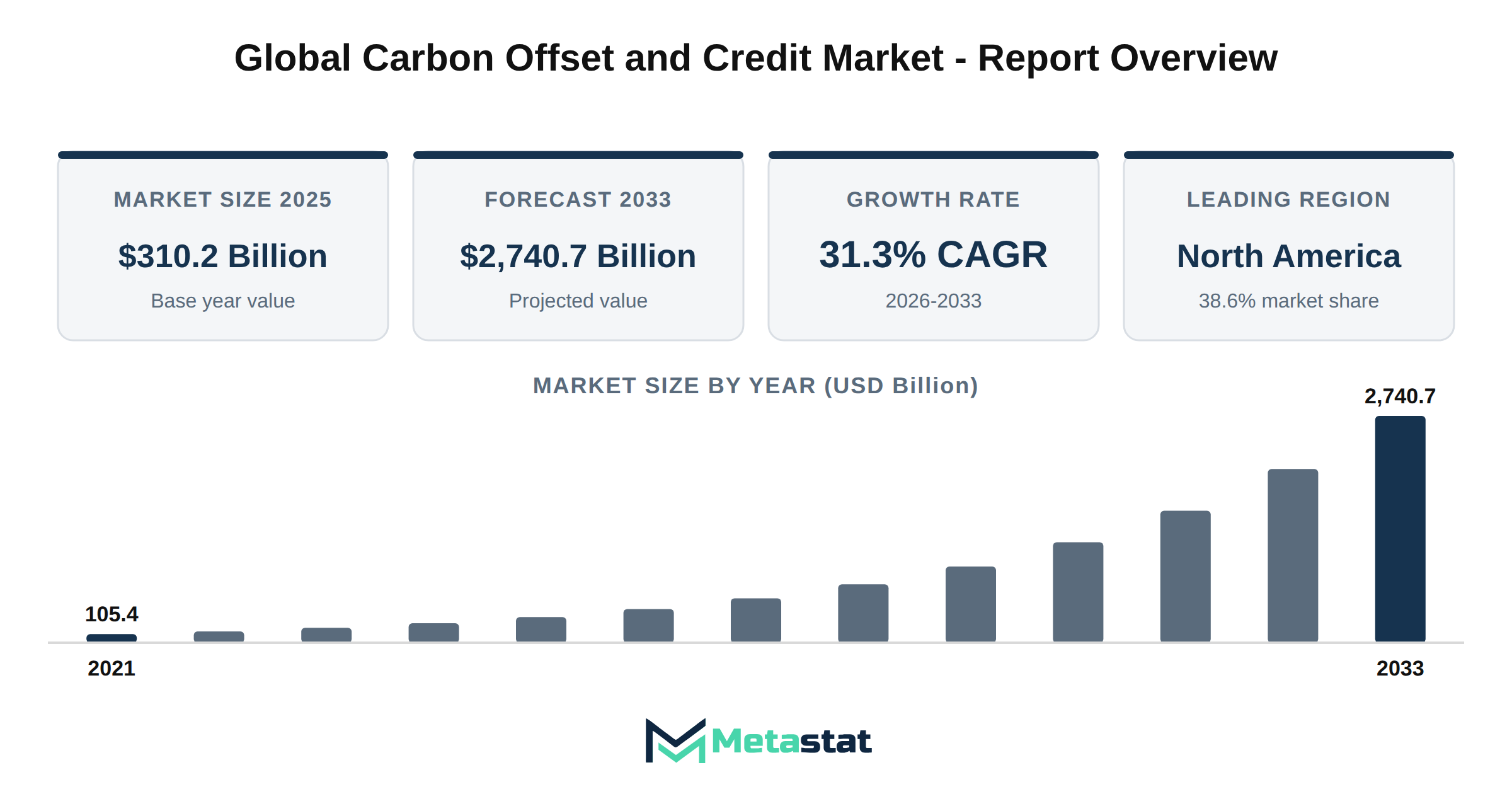
Market Size 2021
$105.4 Billion
Historical
Market Size 2025
$310.2 Billion
Base year
Market Size 2033
$2,740.7 Billion
Forecast
CAGR 2025-2033
31.3%
Forecast period
Report Details
Comprehensive Market Analysis And Insights
Market Overview
The global Carbon Offset and Credit market was valued at USD 310.2 billion in 2025 and is projected to reach USD 2,740.7 billion by 2033, growing at a CAGR of 31.3% over the forecast period.
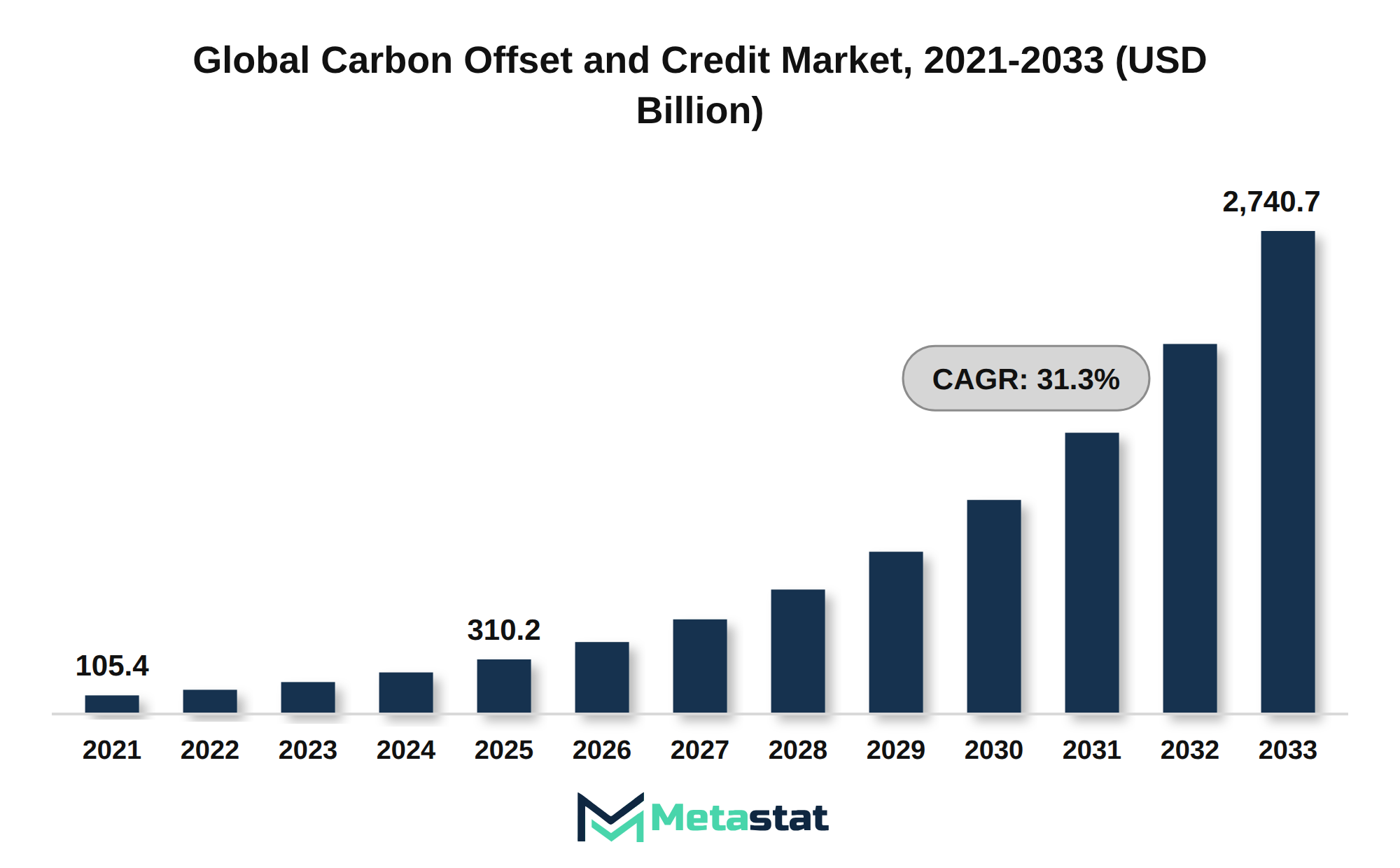
The Carbon Offset and Credit market, valued at USD 310.2 billion in 2025, is projected to reach USD 2,740.7 billion by 2033, demonstrating a compound annual growth rate (CAGR) of 31.3%. Historical data shows growth from USD 105.4 billion in 2021 to USD 180.9 billion in 2023, with an increase to USD 235.6 billion in 2024. The market experiences robust demand driven by an urgent need for decarbonization and sustainable practices across various sectors.
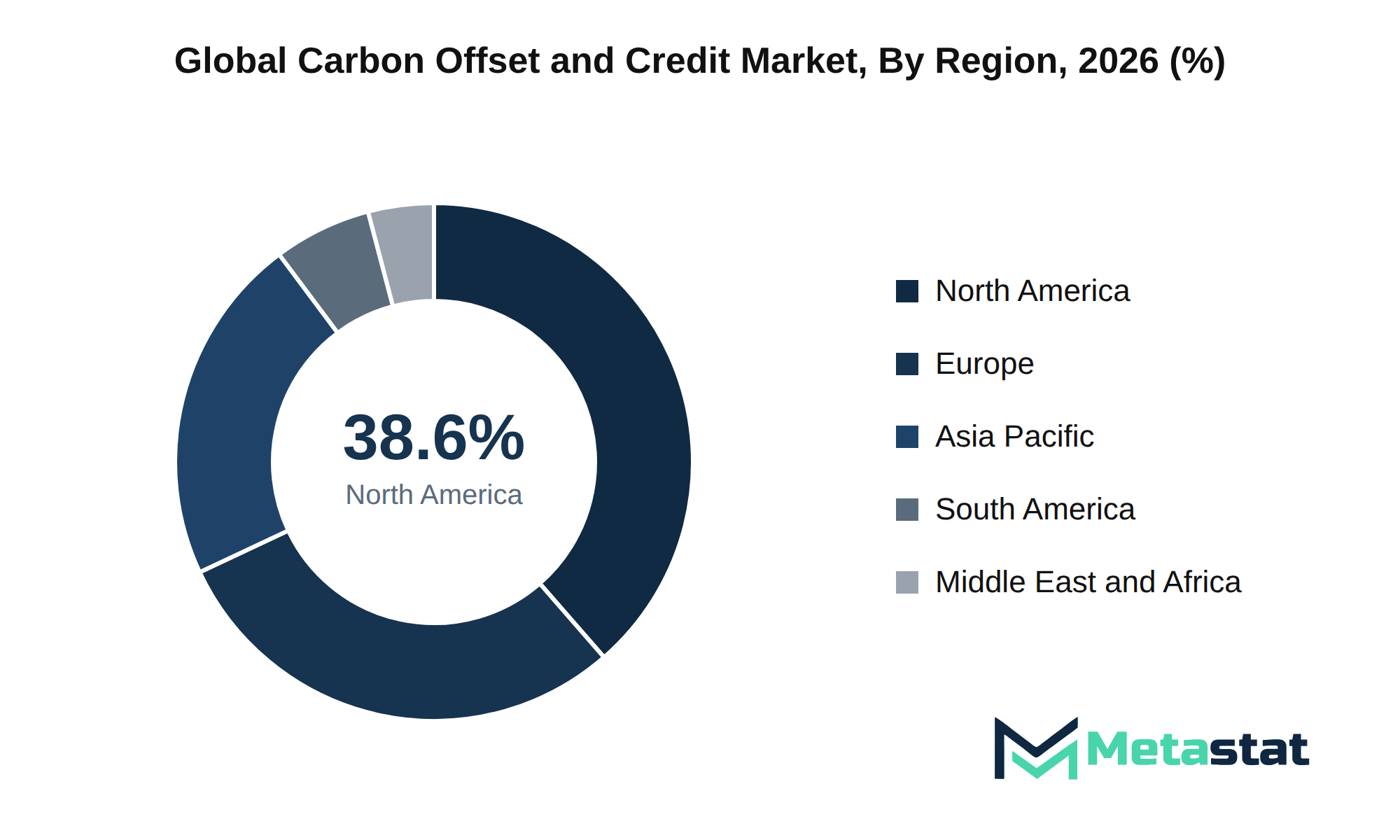
North America accounts for 38.6% of total revenue. By 2033, North America is expected to generate USD 1,047.8 billion, reflecting a CAGR of 31.3%. Europe follows closely, holding a 29.4% market share, while Asia Pacific contributes 21.8%. South America and the Middle East and Africa account for 6.1% and 4.1% respectively, indicating emerging opportunities within these regions.
The segmentation of the Carbon Offset and Credit market includes voluntary carbon credits, compliance carbon credits, and other types including Article 6 and international carbon credits. Voluntary carbon credits are anticipated to grow from USD 30.4 billion in 2026 to USD 342.6 billion in 2033, representing a CAGR of 41.4%. In contrast, compliance carbon credits are forecasted to reach USD 2,137.8 billion by 2033, with a CAGR of 28.9%.
Market dynamics reflect the increasing regulatory compliance and standards that encourage sustainable transformations, especially in industries like power and utilities, oil and gas, and industrial manufacturing. The shift towards a circular economy and decarbonization strategies aligns with corporate imperatives and capital allocation decisions across sectors.
The Carbon Offset and Credit market faces increasing regulatory scrutiny aimed at enhancing transparency and accountability among participants. This regulatory compliance landscape drives organizations to adopt robust frameworks for managing geopolitical risks associated with carbon credit trading. Compliance with evolving standards builds trust among stakeholders, facilitating smoother transactions and encouraging participation from various sectors.
Disruption in traditional energy markets spurs innovation in carbon offset strategies, prompting companies to explore next-generation technologies in sustainable transformation. Organizations increasingly invest in decarbonization initiatives, aligning their operational practices with circular economy dynamics, which emphasize resource efficiency and waste reduction. This shift not only meets regulatory requirements but enhances brand equity among environmentally conscious consumers.
Market fragmentation characterizes the supply chain landscape, driven by numerous players operating across various segments, including voluntary and compliance carbon credits. Mergers and acquisitions (M&A) dynamics play a critical role in shaping competitive positioning, allowing firms to consolidate capabilities and expand market reach. These strategic movements enhance the overall value chain, optimizing procurement processes and enriching customer journeys.
Capital allocation strategies evolve in response to inflationary pressures and macroeconomic headwinds, compelling firms to prioritize infrastructure investments that support long-term sustainability goals. The relationship between operational expenditures (OpEx) and capital expenditures (CapEx) reflects a strategic focus on enhancing efficiency while managing costs effectively. Currency volatility remains a concern for international transactions, impacting pricing strategies and profit margins across the market.
The future strategic outlook for the Carbon Offset and Credit market emphasizes the importance of corporate imperatives that align with sustainability objectives. High-value recommendations for stakeholders include building collaborations that leverage shared knowledge and resources, enabling the market to adapt swiftly to changing conditions while maximizing growth opportunities.
Market Dynamics
Emission limits drive closed-loop adoption
The increasing stringency of emission limits drives the Carbon Offset and Credit market, reflecting a global shift toward sustainable practices. Regulatory frameworks aimed at reducing greenhouse gas emissions incentivize businesses to invest in carbon offset projects. Companies face pressure from stakeholders, including consumers and investors, to adopt sustainable operations. This climate-conscious sentiment creates demand for carbon credits, establishing a market where companies actively seek ways to offset their carbon emissions through verified projects.
Investment in carbon offset initiatives supports the development of technologies that enhance emission reductions across various industries. Businesses in the industrial manufacturing and energy sectors, among others, prioritize compliance with tightened regulations, driving the adoption of carbon credits. By integrating sustainable practices into their operations, firms not only mitigate environmental impact but improve their overall market competitiveness. The Carbon Offset and Credit market is expected to experience significant growth driven by companies increasingly aligning their strategies with global sustainability efforts.
Investment in digital transformation spurs market growth
The Carbon Offset and Credit market experiences significant growth driven by investment in digital transformation initiatives. Companies across various sectors recognize the importance of adopting advanced technologies, including automation, artificial intelligence, and software innovations, to enhance operational efficiency. The shift towards digital solutions enables better tracking and management of carbon credits, facilitating compliance and optimizing offset strategies.
Increased venture funding and public-private spending power contribute to this trend, enabling businesses to invest in the tools necessary for effective carbon management. Enhanced transparency and accessibility of data allow buyers and suppliers to make informed decisions regarding carbon offset purchases. This shift reduces costs associated with manual processes and accelerates the pace of adoption within the market.
The emphasis on operational productivity and cost-efficiency initiatives highlights the market's evolution. Organizations prioritize resource stewardship and sustainability, seeking to reduce their carbon footprints while navigating the complexities of compliance. Consequently, the integration of digital technologies into carbon management processes represents a crucial factor in market expansion throughout the forecast period, driving demand and creating a competitive environment.
Regulatory compliance complexities hinder growth
The Carbon Offset and Credit market encounters challenges owing to stringent regulatory compliance requirements, which create obstacles for market participants. Firms face the necessity of adhering to various legal mandates that vary significantly across jurisdictions, complicating operational strategies and delaying project implementation. Increased scrutiny surrounding carbon credit transactions demands robust documentation and verification processes, leading to heightened operational costs for suppliers and buyers alike.
Regional adoption resistors contribute to market fragmentation, with diverse regulatory environments impacting the uniformity of compliance frameworks. This fragmentation results in inconsistencies that deter investment in carbon offset projects, because companies navigate the complexities of meeting differing legal and operational standards. The market experiences slower growth rates due to these compliance hurdles that hinder streamlined operations and market entry.
Macroeconomic headwinds, including inflationary pressures and capital stagnation, further exacerbate these challenges. Increased costs of materials and labor impact the profitability of projects, leading to potential investment pullbacks. Geopolitical instability and supply chain disruptions delay project timelines and increase project costs, limiting the market's capacity to respond to growing demand effectively.
These regulatory compliance complexities, coupled with prevailing macroeconomic challenges, impede the Carbon Offset and Credit market's growth potential. Addressing these issues requires a concerted effort from stakeholders to streamline processes and enhance regulatory clarity, ultimately creating a more conducive environment for market expansion.
Rising input costs challenge market stability
The Carbon Offset and Credit market confronts challenges stemming from rising input costs, impacting operational margins. Fluctuations in feedstock prices and component availability introduce volatility that affects both producers and buyers. Increased costs for raw materials and technological components pressure pricing strategies, hindering efforts to maintain competitive pricing without sacrificing profitability.
Talent retention pressures compound the challenge, driven by the market's need for skilled professionals capable of navigating complex carbon credit transactions and managing compliance requirements. A skilled workforce is essential for adapting to evolving market dynamics and fulfilling sustainability demands. Failure to attract and retain talent results in operational inefficiencies that further strain margins.
Infrastructure gaps and retrofitting barriers hinder the adoption of innovative solutions needed for effective carbon offset strategies. Inadequate infrastructure limits project scalability and delays implementation timelines. These barriers create uncertainty, deterring potential investors and complicating the overall market outlook.
The culmination of rising input costs, workforce skill gaps, and infrastructure challenges threatens the stability of the Carbon Offset and Credit market. Addressing these issues is critical for creating a resilient market environment that supports sustainable growth and investment. Without strategic initiatives to mitigate these challenges, achieving long-term goals for carbon neutrality and environmental sustainability becomes increasingly difficult.
Emerging technologies drive market expansion
The Carbon Offset and Credit market experiences momentum fueled by advancements in emerging technologies. Innovations in blockchain, artificial intelligence, and data analytics enhance transparency and efficiency in carbon credit trading mechanisms. Such technologies enable real-time tracking and verification of carbon offset projects, appealing to buyers seeking reliable and verified credits. This operational enhancement leads to increased adoption among financial institutions, large corporations, and non-profit organizations focused on sustainability. The market benefits from heightened investor confidence due to improved credibility, ultimately driving revenue growth.
Infrastructure modernization supports the accessibility of carbon credits through digital platforms. Enhanced digital procurement shifts enable efficient trading and integration of carbon credits into corporate sustainability strategies. The ease of access to carbon offset opportunities encourages participation from small and medium-sized enterprises, further diversifying the buyer landscape. This diversification creates competitive dynamics that encourage market players to innovate and improve their service offerings, contributing to overall market growth.
The geographical expansion of carbon offset initiatives opens new avenues for investment. Regions with developing economies increasingly recognize the importance of carbon credits because a tool for sustainable development. Emerging markets in Asia Pacific and Latin America experience a surge in demand for voluntary and compliance carbon credits, strengthening the market's overall growth trajectory. Strategic consolidation among market players facilitates market entry and expansion efforts, ensuring comprehensive coverage across various regions.
Sustainability imperatives and ESG-driven alignments shape the market's future. Corporations prioritize environmental responsibility, compelling them to invest in carbon offset projects. This demand creates collaborations between businesses and project developers, enhancing project viability and scalability. The Carbon Offset and Credit market stands poised for significant growth, driven by a confluence of technological advancements, regional diversification, and evolving corporate strategies focused on sustainability.
Market Segmentation Analysis
The Global Carbon Offset and Credit market is segmented based on Credit Type, Project Type, Buyer Type, and End-User Industry.
By Credit Type, the market is further segmented into:
Voluntary Carbon Credits
Compliance Carbon Credits
Others (Article 6, International Carbon Credits, etc.)
Voluntary Carbon Credits
Valued at USD 30.4 billion in 2026, the Voluntary Carbon Credits segment is projected to reach USD 342.6 billion by 2033, at a CAGR of 41.4% during the forecast period. A strong focus on corporate sustainability initiatives drives demand for voluntary carbon credits, particularly among large corporations and small to medium-sized enterprises. Growing awareness of climate change impacts influences organizations to offset their carbon footprints, resulting in increased participation in this segment.
Regulatory frameworks supporting emissions reduction initiatives enhance the appeal of voluntary carbon credits. Compliance with environmental regulations often leads businesses to explore voluntary credits, reflecting an additional strategy for offsetting their greenhouse gas emissions. This trend has led to expanded participation from various sectors, including power and utilities, industrial manufacturing, and transportation.
Technological advancements in carbon credit methodologies, verification processes, and reporting standards increase confidence in the legitimacy of voluntary credits. Continued innovation in tracking and monitoring carbon offset projects strengthens the market's credibility, supporting growth. The increased integration of blockchain technology for enhanced transparency provides a competitive edge, attracting investment from stakeholders seeking reliable carbon offset solutions.
Price stability remains a critical factor impacting the adoption of voluntary carbon credits. Fluctuations in credit prices influence purchasing decisions among organizations, particularly those with limited budgets. However, ongoing demand from corporations aiming to achieve net-zero targets typically results in sustained investment in this segment, contributing to future growth in the Carbon Offset and Credit market.
While global priorities shift towards sustainable practices, the Voluntary Carbon Credits segment is positioned for significant expansion. The emphasis on corporate responsibility and environmental stewardship among businesses leads to increased interest in voluntary credits, creating strategic opportunities for market players. Partnerships between organizations and carbon credit providers create access to innovative solutions, driving further segment development.
Compliance Carbon Credits
Compliance Carbon Credits signify an essential component of the Carbon Offset and Credit market, driven by the need for companies and organizations to adhere to regulatory requirements regarding greenhouse gas emissions. A rise in regulatory frameworks worldwide, particularly in regions like North America and Europe, increases the demand for these credits. Companies engaging in regulated sectors including oil and gas, transportation, and manufacturing adopt compliance credits to offset their emissions and comply with national and international standards.
Compliance Carbon Credits segment is estimated to reach USD 2,137.8 billion by 2033, at a CAGR of 28.9% during the forecast period. Market growth stems from expanding regulations and increasing penalties for non-compliance. The enforcement of stricter regulations creates a strong market for compliance credits, mandating businesses to invest in such solutions to meet their environmental obligations.
Technological advancements in carbon management solutions enhance the efficiency of compliance credit acquisition and trading. Innovations in blockchain and digital platforms streamline the monitoring and verification processes, making compliance credits more accessible and trustworthy. This technological maturation supports increased transaction volumes within the market, further driving segment growth.
Downstream applications for compliance credits extend beyond mere regulatory adherence; they encompass corporate social responsibility initiatives. Firms apply compliance credits to improve their sustainability profiles, thereby appealing to environmentally conscious consumers and investors. This strategic positioning provides a competitive advantage in the marketplace.
Overall, the Compliance Carbon Credits segment represents a significant opportunity within the Carbon Offset and Credit market, driven by evolving regulatory landscapes and technological innovations that shape the operational frameworks for businesses in various industries.
Others (Article 6, International Carbon Credits, etc.)
Projected to reach USD 260.4 billion by 2033, the Others (Article 6, International Carbon Credits, etc.) segment experiences significant interest from organizations seeking to enhance their sustainability profiles. This growth stems from an increasing need for companies to comply with international climate agreements and regulatory frameworks, which drives demand for diverse types of carbon credits.
Shifts in corporate responsibility and consumer preferences towards environmentally friendly practices create a fertile environment for the Others sub-segment. Industries including manufacturing and energy, which face stringent emission regulations, actively seek compliance solutions through international carbon credits. The regulatory landscape encourages these sectors to invest in carbon offset initiatives to meet their commitments, further propelling market expansion.
Technological advancements in tracking and verifying carbon credits enhance transparency and credibility, attracting more participants to the carbon offset and credit market. International collaboration on climate action creates opportunities for companies to leverage Article 6 mechanisms for cross-border carbon credit trading. This strategic opportunity facilitates market penetration and supports price stabilization in the segment.
The global focus on sustainability intensifies, prompting organizations exploring innovative solutions to meet their emissions targets to find value in the Others segment. Investments in this area indicate a clear commitment to addressing climate challenges and aligning with international climate agreements, ensuring continued growth and relevance in the evolving carbon offset and credit market.
By Project Type, the market is further segmented into:
Nature-Based Solutions
Renewable Energy
Energy Efficiency
Waste & Methane Management
Industrial & Process Emission Reduction
Carbon Removal
Others (Agriculture & Land Use, Blue Carbon, Household Energy)
Growing awareness of climate change drives demand for Nature-Based Solutions within the Carbon Offset and Credit market. Organizations seek to offset their carbon footprints through projects focused on reforestation, afforestation, and sustainable land management. These solutions contribute significantly to biodiversity conservation while enhancing local ecosystems.
Regulatory compliance standards strongly influence the adoption of Nature-Based Solutions. Governments around the world implement initiatives that incentivize carbon offsetting through natural processes. Organizations engaging in sustainable practices gain competitive advantages, prompting a shift in consumption patterns toward environmentally responsible approaches.
Technological advancements support the maturation of Nature-Based Solutions, enabling improved monitoring and verification methods. These innovations enhance the credibility and effectiveness of carbon offset projects. Enhanced data collection and analysis capabilities reduce barriers for participants and streamline project implementation.
Investment in Nature-Based Solutions creates strategic opportunity windows for diverse stakeholders, including non-profit organizations and corporate entities. Engaging in these initiatives aligns with corporate social responsibility goals and meets growing consumer expectations for sustainability. Commitment to ecological preservation and carbon reduction strengthens brand loyalty and customer trust.
While environmental awareness increases, the market for Nature-Based Solutions becomes increasingly vital. The focus on sustainable practices enhances market resilience, encouraging consistent growth within the Carbon Offset and Credit market. Through continuous innovation and regulatory support, Nature-Based Solutions are expected to remain an important segment in the fight against climate change.
Renewable Energy
The shift towards renewable energy sources drives substantial interest within the Carbon Offset and Credit market. Increasing global awareness of climate change and the quest for sustainable energy solutions motivate businesses and governments to invest in renewable energy projects. This segment focuses on projects including solar, wind, and biomass energy, which significantly reduce greenhouse gas emissions. Demand arises from large corporations aiming to meet sustainability targets, alongside small and medium-sized enterprises looking to enhance their environmental credentials.
Technological maturation supports the expansion of renewable energy initiatives. Advancements in energy storage solutions and efficiency improvements in renewable technologies enhance project viability and profitability. Significant investments in next-generation upgrades, including smart grids and energy management systems, support the broader adoption of renewable energy projects. These upgrades often come with lower operational costs, providing a compelling business case for stakeholders.
End-use dynamics significantly influence the growth of renewable energy projects. Industries including power and utilities, technology, and transportation increasingly incorporate renewable energy solutions within their operational strategies. Regulatory compliance standards drive organizations to adopt cleaner energy sources, leveraging carbon credits to offset emissions and demonstrate commitment to sustainability. Governments worldwide implement supportive policies and incentives, further encouraging renewable energy investments.
Strategic opportunity windows emerge owing to businesses adapting to evolving market conditions. Supply chain resilience and raw material sourcing present additional considerations, especially for companies relying on specific technologies or materials. The shift towards circular economies and sustainable practices influences project development, creating pathways for innovative solutions. The combination of these factors positions the renewable energy segment because a dynamic and essential component of the Carbon Offset and Credit market.
Energy Efficiency
Energy efficiency plays a critical role in the Carbon Offset and Credit market, driven by increasing awareness of energy conservation practices. The emphasis on reducing energy consumption significantly influences corporate responsibility initiatives, leading many organizations to actively pursue energy-efficient solutions. Businesses across various sectors adopt state-of-the-art technologies that enhance operational efficiency, aiming to reduce emissions and lower operational costs. This trend aligns with global environmental goals and reflects a shift toward sustainability in energy usage.
Adoption of energy-efficient technologies expands due to favorable regulatory frameworks that promote investments in energy-saving initiatives. Governments implement incentives and standards to encourage businesses to adopt energy-efficient practices, reinforcing compliance with carbon reduction targets. This regulatory support enhances the market's attractiveness for investors, driving innovation and substantial capital flows toward energy efficiency projects.
Technological maturation is evident in the energy efficiency segment, with advancements in smart technologies and automation. Energy management systems enable real-time monitoring and optimization of energy usage, proving instrumental in reducing consumption. These innovations boost consumer confidence, encouraging increased participation in the market. Organizations recognize the long-term benefits associated with energy efficiency initiatives.
End-use dynamics demonstrate a growing focus on energy efficiency across various industries, including manufacturing, transportation, and residential sectors. Industries actively pursue energy-efficient solutions to reduce their carbon footprint while responding to market demands for sustainable practices. The transition toward energy-efficient systems reflects a broader commitment to sustainability, aligning business objectives with environmental responsibility.
Strategic opportunity windows arise in energy efficiency due to continued investment in research and development. Organizations recognize the potential for improved technologies to drive significant cost savings and contribute to carbon offset goals. The alignment of corporate strategies with energy efficiency initiatives positions businesses competitively in the market, enhancing their reputation and building customer loyalty.
Growing emphasis on waste reduction and methane mitigation significantly influences the Waste & Methane Management segment within the Carbon Offset and Credit market. Governments and organizations increasingly recognize the environmental and economic benefits of capturing methane emissions from landfills, agricultural operations, and wastewater treatment plants. This recognition drives investment and innovation in technologies aimed at reducing methane emissions, including anaerobic digestion and landfill gas recovery systems.
Regulatory compliance standards play an important role in promoting waste and methane management initiatives. Stricter regulations concerning landfill operations and methane emissions push industries to adopt effective management strategies. Compliance not only helps meet legal obligations but enhances corporate sustainability profiles, attracting environmentally conscious investors and consumers.
Technological maturation within the segment is evident through advanced solutions for waste management. Innovations in carbon capture and storage, alongside improvements in waste processing technologies, enable more efficient methane recovery and utilization. These advancements position the segment for substantial growth, providing strategic opportunities for companies focused on sustainable waste management practices.
Downstream applications of waste and methane management are broad, encompassing industries including energy production, agriculture, and waste management services. The resultant energy generation from captured methane contributes to cleaner energy portfolios, enhancing energy security while reducing greenhouse gas emissions. This integration of waste management practices into energy production frameworks further enhances the value proposition of the Carbon Offset and Credit market.
Cost structures in the Waste & Methane Management segment are influenced by factors including technology adoption, regulatory compliance, and the availability of financial incentives. Companies investing in these technologies experience initial capital expenditures, balanced by long-term savings from efficient management of waste and emissions. This economic rationale positively affects investment outlooks, encouraging further participation in the market.
Industrial & Process Emission Reduction
Increasing regulatory pressure on industries to reduce greenhouse gas emissions drives demand for Carbon Offset and Credit market solutions. Companies across various sectors invest in Industrial & Process Emission Reduction strategies to comply with stringent regulations. These efforts enhance corporate sustainability profiles and align with broader environmental goals.
Technological advancements in carbon capture and storage and process optimization contribute significantly to segment expansion. Innovations in equipment and processes facilitate greater efficiency, leading to reduced emissions and improved margins for businesses. The shift towards sustainable practices influences the adoption of these technologies, providing a competitive edge in eco-conscious markets.
Firms that successfully implement these emission reduction strategies benefit from improved operational efficiencies and reduced compliance costs. Increased consumer awareness of environmental issues drives the need for transparent sustainability practices, pushing organizations to adopt new methods for reducing carbon footprints. This trend highlights the importance of the Industrial & Process Emission Reduction segment in the overall dynamics of the market.
Regulatory compliance standards present challenges and opportunities for businesses. Companies that invest in compliant technologies often find strategic opportunity windows that enhance their market positioning. The evolving landscape of environmental regulations necessitates continuous adaptation, making ongoing investment in Industrial & Process Emission Reduction essential for long-term success.
Carbon Removal
Growing interest in carbon removal strategies significantly influences the Carbon Offset and Credit market. This interest derives from the recognition of the essential role that carbon removal plays in mitigating climate change impacts. Various industries, including energy, manufacturing, and transportation, actively seek innovative methods to capture and permanently store carbon emissions. Governments and regulatory bodies increasingly emphasize the necessity for carbon removal solutions within their climate action frameworks, driving demand for related projects.
Technological maturation in carbon removal processes enhances efficiency and scalability, enabling wider adoption across sectors. The development of advanced carbon capture technologies, including direct air capture and bioenergy with carbon capture and storage, presents opportunities for project expansion. Increased project funding from both private and public sectors supports advancements in these technologies, promoting further engagement within the market.
While end-user industries become more aware of the benefits associated with carbon removal, shifts in consumption patterns emerge. A growing number of corporations and organizations adopt carbon removal initiatives within their sustainability strategies. This trend reflects a broader commitment to achieving net-zero emissions goals, shaping the strategic direction of the market.
Regulatory compliance standards play an important role in shaping market dynamics, with many jurisdictions establishing frameworks that incentivize carbon removal investments. Certifications and standards for carbon removal projects enhance credibility and facilitate access to funding avenues. While regulatory pressures intensify, robust support for carbon removal initiatives is expected to strengthen, creating a favorable outlook for project development.
Market participants face several challenges related to cost structures and pricing volatility, which impact the feasibility of carbon removal projects. Fluctuations in raw material prices and technological investment costs influence project economics. Nevertheless, strategic opportunity windows exist for innovative companies that address these challenges through efficient processes and competitive pricing models.
Overall, the carbon removal segment exhibits a promising trajectory within the Carbon Offset and Credit market. Continued investment and innovation in project types will likely expand opportunities, positioning carbon removal because a vital component of global efforts to combat climate change.
Others (Agriculture & Land Use, Blue Carbon, Household Energy)
Awareness surrounding climate resilience and sustainable practices drives interest in the Others (Agriculture & Land Use, Blue Carbon, Household Energy) sub-segment within the Carbon Offset and Credit market. Stakeholders increasingly recognize the importance of integrating agricultural practices and land use management strategies to enhance carbon sequestration capabilities. This integration addresses the growing demand for carbon credits that originate from environmentally beneficial activities, positioning the sub-segment for growth.
Technological advancements in carbon measurement and verification techniques support the development of projects within this sub-segment. Innovations in remote sensing, satellite imagery, and data analytics facilitate accurate tracking of carbon stocks, ensuring transparency and credibility. These advancements encourage participation from various buyers seeking reliable and effective solutions for offsetting their emissions.
Regulatory compliance and certifications associated with sustainable practices create a supportive environment for project developers. Governments and institutions increasingly implement policies aimed at promoting land conservation, reforestation, and sustainable agricultural practices. Adherence to these frameworks enhances the value proposition of projects within this sub-segment, attracting interest from diverse industries looking to meet compliance standards.
The dynamic nature of consumer preferences in the energy sector influences the adoption of household energy solutions that contribute to carbon offsetting. Individuals are more inclined towards renewable energy sources and energy-efficient technologies, driving growth in household-level projects that generate carbon credits. This shift in end-use dynamics aligns with broader trends aiming for sustainability at the community level.
Strategic investment in the Others sub-segment reflects an understanding of the long-term benefits associated with sustainable practices. Investors recognize the potential for substantial returns attributed to rising demand for carbon credits. This outlook encourages capital allocation aimed at supporting innovative projects that target carbon reductions through agriculture, land use, and household energy initiatives.
By Buyer Type, the market is further segmented into:
Large Corporations
Small & Medium-Sized Enterprises
Financial Institutions
Government & Public-Sector Entities
Non-Profit & Voluntary Organizations
Individual / Retail Buyers
Others (Industry Associations, Educational Institutions, Research Organizations)
Large Corporations
Large corporations represent a significant force within the Carbon Offset and Credit market, driven by strong commitments to sustainability and the reduction of carbon footprints. These organizations increasingly recognize the importance of aligning their operations and reputations with environmental, social, and governance (ESG) principles. This shift results in heightened investments in carbon credit purchases and environmental initiatives aimed at mitigating climate change impacts.
Adoption of carbon offset strategies stems from multiple factors, including stakeholder pressure, consumer demand for greener practices, and regulatory compliance. Many large corporations face mounting scrutiny from investors and the public regarding their environmental performance, prompting them to actively seek carbon credits because a means of demonstrating accountability and building goodwill. This pressure not only influences purchasing decisions but establishes a strategic imperative to incorporate sustainability into core business practices.
Technological advancements further drive the expansion of this segment. The development of robust platforms for tracking and purchasing carbon credits enhances transparency and accessibility for large corporations. Emerging technologies allow for better measurement of carbon emissions and the effectiveness of offset projects, ensuring that investments yield tangible environmental benefits. Consequently, organizations increasingly consider these solutions viable for achieving their sustainability goals.
Regulatory compliance remains a crucial factor affecting large corporations’ engagement with the market. Governments impose stricter emissions targets and provide incentives for offset initiatives, thereby accelerating demand for carbon credits. This regulatory landscape creates a more structured approach to carbon management, aligning corporate strategies with legal requirements and environmental expectations.
Strategic opportunity windows arise because industries evolve toward lower carbon profiles. Large corporations often leverage partnerships with carbon offset providers to enhance their sustainability efforts and diversify their portfolios. Such collaborations allow for the exploration of innovative projects, including nature-based solutions and renewable energy initiatives, which align with corporate social responsibility objectives.
Overall, the dynamics within the Carbon Offset and Credit market illustrate a profound shift driven by large corporations, because they adapt to a landscape defined by sustainability goals, regulatory frameworks, and technological innovations. This evolution enhances market participation and strengthens the commitment to combatting climate change through meaningful action.
Small & Medium-Sized Enterprises
In the Carbon Offset and Credit market, Small & Medium-Sized Enterprises (SMEs) exhibit significant interest in acquiring carbon credits to enhance sustainability efforts. The growing recognition of corporate social responsibility among consumers drives SMEs to adopt environmentally friendly practices. Increased regulatory frameworks focused on emissions reduction create compelling reasons for SMEs to engage in carbon offset activities.
Technological maturation supports SMEs in accessing carbon credit markets more effectively. Platforms offering streamlined processes for purchasing, trading, and tracking carbon credits have emerged, enabling SMEs to participate efficiently. The evolution of voluntary carbon credit offerings allows SMEs to tailor their purchases to specific sustainability goals.
Consumption shifts towards greener products influence the purchasing decisions of SMEs, leading to a greater emphasis on engaging in the carbon offset market. Partnering with third-party organizations for certifications ensures credibility in sustainability claims, enhancing brand reputation among environmentally conscious consumers.
Cost structures present a dual challenge for SMEs in the carbon offset market. While initial investment in carbon credits poses a barrier, long-term savings through improved operational efficiencies and enhanced brand loyalty provide economic incentives. Pricing volatility in carbon markets necessitates strategic planning, requiring SMEs to remain agile in their purchasing strategies.
Supply chain resilience becomes crucial for SMEs seeking to participate in the carbon offset market. Raw material sourcing strategies that prioritize sustainability often align with carbon offset initiatives, enhancing overall operational integrity. The potential for disruptive alternatives in carbon management solutions encourages SMEs to explore innovative strategies for emissions reduction.
Strategic opportunities exist for SMEs to leverage their participation in the carbon offset market for competitive advantage. Engaging with industry associations and educational institutions encourages collaboration and knowledge sharing, ultimately enriching the market landscape.
Financial Institutions
Financial institutions increasingly prioritize sustainability, driving significant interest in the Carbon Offset and Credit market. This focus stems from heightened awareness of environmental impacts and the role that financial activities play in promoting sustainable practices. Regulatory compliance standards enforce stringent environmental, social, and governance (ESG) criteria, compelling financial institutions to integrate carbon offset strategies into their operational frameworks.
Investment in carbon credits represents a strategic opportunity for financial institutions aiming to enhance their sustainability profiles. This segment experiences substantial adoption driven by institutions seeking to align portfolios with long-term climate goals. The evolution of regulatory frameworks enhances the attractiveness of carbon credits, positioning them because viable instruments for risk management and investment diversification within financial portfolios.
Competition within this segment intensifies owing to various players adapting their offerings to meet the evolving needs of buyers. Financial institutions that actively engage in the carbon offset market enhance their reputations and attract environmentally conscious clients. The integration of technology into investment strategies facilitates the assessment of carbon credit projects, streamlining the process and improving decision-making.
Cost structures in the carbon offset market influence pricing volatility, impacting investment returns for financial institutions. Institutions that effectively manage these costs through strategic partnerships and innovative financing models enhance their competitive positioning. Regulatory compliance remains a critical factor, influencing operational strategies and investment decisions across the segment.
Government & Public-Sector Entities
Government and public-sector entities increasingly recognize the significance of carbon offsetting in addressing climate-related issues. Growing regulatory frameworks and policies heighten the urgency for these entities to achieve emissions reduction targets. Enhanced collaboration between governments and private sectors supports the adoption of sustainable practices, increasing the market's expansion potential.
Investments in carbon offset projects by government bodies lead to substantial environmental benefits while supporting local economies. Funding initiatives focus on Nature-Based Solutions and renewable energy projects, creating lasting impacts on communities and ecosystems. This alignment of environmental priorities with public policy frameworks drives demand within the Carbon Offset and Credit market.
The integration of advanced technologies into carbon offset initiatives enhances transparency and traceability. Digital platforms streamline the monitoring and reporting processes, establishing credibility in carbon credits. While governments emphasize accountability in emissions reporting, the shift towards verified and certified carbon credits builds trust in the market.
Policy headwinds, including stringent emissions regulations and climate commitments, significantly influence market dynamics. Governments are pressured to implement effective measures and align with international climate agreements, increasing the market's credibility. This focus on compliance fuels demand for carbon credits, with public entities playing a critical role in driving growth.
Investment opportunities arise due to government entities exploring partnerships with the private sector for carbon offset projects. Collaborations with NGOs and private firms facilitate knowledge exchange and resource sharing, enhancing project success rates. These strategic partnerships enable innovation and scalability, expanding the market's reach into diverse sectors.
Non-Profit & Voluntary Organizations
Commitment to sustainability generates significant interest among Non-Profit and Voluntary Organizations within the Carbon Offset and Credit market. These entities increasingly engage in carbon offset initiatives within their missions to address climate change and promote environmental stewardship. Demand for carbon credits arises from a need for organizations to demonstrate their commitment to sustainability objectives, while simultaneously contributing to global emissions reduction efforts.
Many Non-Profit and Voluntary Organizations adopt carbon offsetting because a tool for enhancing their credibility and impact. Emphasizing transparency and accountability, these organizations often seek certifications to validate their efforts, aligning with regulatory compliance standards. Participation in the market offers a dual benefit: facilitating projects that contribute to environmental goals and strengthening the organization's reputation in the eyes of stakeholders.
Collaboration within the sector drives innovative approaches to carbon offset projects. Non-Profit and Voluntary Organizations often partner with private companies or governments to implement nature-based solutions, renewable energy projects, and community initiatives. Such collaborations enhance the effectiveness of carbon offsetting efforts while ensuring a broader reach and impact within the market.
Engagement from these organizations supports the growth of carbon offset projects targeting various industries. They increasingly focus on enabling reductions in sectors like transportation, energy, and agriculture, contributing to a diverse portfolio of carbon reduction strategies. The involvement of Non-Profit and Voluntary Organizations ensures that market initiatives align with community values and social responsibility, reinforcing the importance of sustainability across all sectors.
Individual / Retail Buyers
Awareness regarding environmental impact drives interest among Individual and Retail Buyers in the Carbon Offset and Credit market. These buyers increasingly seek options to mitigate their carbon footprints through the purchase of carbon credits. A shift towards sustainable consumption patterns influences this segment, with individuals and small retail buyers desiring to contribute positively to climate action.
Multiple factors act because catalysts for segment expansion, including technological advancements that simplify the purchasing and management of carbon credits. Platforms offering user-friendly interfaces and transparent reporting mechanisms enhance buyer confidence, encouraging participation in voluntary carbon markets. The evolution of certified credits, alongside growing demand for accountability and traceability, supports consumer trust.
End-use dynamics reflect a notable trend where consumers prioritize sustainability in their purchasing decisions. This trend aligns with broader environmental goals, prompting regulatory bodies to establish compliance standards that promote carbon offset initiatives. Compliance certifications enhance market integrity, appealing to buyers interested in verifiable climate action.
Pricing volatility within the carbon credit market affects Individual and Retail Buyers because they navigate cost structures associated with different credit types. Despite financial constraints, many buyers recognize the long-term value of investing in sustainable practices. Awareness of climate issues continues to grow, positioning the segment for substantial expansion within the broader Carbon Offset and Credit market.
Others (Industry Associations, Educational Institutions, Research Organizations)
Awareness surrounding the benefits of sustainability influences engagement from industry associations, educational institutions, and research organizations in the Carbon Offset and Credit market. These entities prioritize research and advocacy, promoting carbon offset initiatives and methodologies that align with their goals of environmental stewardship and educational outreach.
Demand for innovative solutions, including educational programs and research projects focused on climate mitigation, generates significant interest in carbon offset strategies. Regulatory compliance standards further encourage these organizations to integrate carbon credits into their sustainability agendas, enhancing public image and reinforcing commitment to climate action.
Investment in next-generation technologies and methodologies plays a critical role in expanding the capacity of these buyers to engage with the market. Strategic opportunities arise from collaborations with private sector players and governmental agencies, enhancing the impact of initiatives and driving collective progress towards carbon neutrality.
Factors including technological maturation and product evolution lead to a more robust offering of carbon offset products tailored to the specific needs of these buyers. Enhanced certification processes and transparency in carbon credit generation contribute to higher trust and credibility in the market, facilitating broader participation.
By End-User Industry, the market is further segmented into:
Power & Utilities
Oil & Gas
Industrial Manufacturing
Aviation
Transportation & Logistics
Technology
Financial Services
Buildings & Real Estate
Consumer Goods & Retail
Others (Agriculture, Mining, Healthcare)
Power & Utilities
Sub-segment Power & Utilities (By End-User Industry)
Utilities face increasing pressure to lower greenhouse gas emissions, driving demand for carbon offsets. The growing need for compliance with regulatory standards significantly influences market dynamics. Utilities explore various carbon credit options to meet sustainability goals while maintaining operational efficiency.
Technological advancements in renewable energy production and energy efficiency contribute to segment expansion. Utilities invest in next-generation upgrades, enhancing capabilities to integrate sustainable practices. Demand for innovative solutions supports the evolution of carbon offset products tailored to the sector's unique requirements.
End-use dynamics reflect a shift towards cleaner energy sources, influencing consumption patterns. Utilities adopt comprehensive strategies to align with environmental goals, establishing collaboration with project developers to secure necessary carbon credits. This strategic approach strengthens market position while addressing regulatory compliance standards.
Margin pressures associated with traditional energy production methods heighten the appeal of carbon offsets. Utilities recognize the significance of integrating sustainability into operations, driving capital investment towards carbon offset initiatives. The relationship between regulatory frameworks and market demands shapes the future of the Carbon Offset and Credit market within the utilities sector.
Oil & Gas
Demand for carbon offsets within the Oil & Gas sector intensifies due to heightened scrutiny from regulatory bodies. Stricter emissions targets and compliance requirements compel companies to invest in carbon offset initiatives, promoting sustainable practices within their operations. This trend aligns with corporate strategies focused on enhancing environmental accountability and reputation. Growing public awareness of climate change drives consumers to favor companies that demonstrate a commitment to sustainability, pushing oil and gas firms to incorporate carbon credits into their business practices.
Technological advancements in emission reduction technologies further drive adoption within the sector. Innovative solutions including carbon capture and storage (CCS) enhance operational efficiency while minimizing greenhouse gas emissions. This technological maturation enables firms to meet regulatory standards and consumer expectations more effectively. Strategic investment in next-generation upgrades supports companies in remaining competitive in a changing market. The focus on continuous improvement cultivates a culture of sustainability that engages stakeholders across various industries.
Market dynamics reflecting consumption shifts indicate a growing inclination toward renewable and clean energy sources. Traditional oil and gas companies increasingly diversify their portfolios to include renewable energy projects, thereby reducing reliance on fossil fuels. This evolution aligns with global efforts to transition toward a low-carbon economy, reinforcing the significance of carbon offset projects. Regulatory compliance standards shape investment strategies, compelling firms to adopt practices that reflect their commitment to environmental stewardship.
In the context of pricing volatility, oil and gas firms face margin pressures due to fluctuating operational costs and market uncertainties. The financial implications of compliance with emissions regulations necessitate a strategic approach to carbon offset investments. Companies explore innovative financing mechanisms to support their sustainability initiatives while maintaining profitability. This balancing act highlights the importance of resilience and adaptability within the supply chain, ensuring long-term viability in the Carbon Offset and Credit market.
Industrial Manufacturing
Increasing focus on sustainability within the industrial manufacturing sector drives demand for carbon offset solutions. This sector faces stringent regulatory compliance standards aimed at minimizing emissions, leading to heightened interest in carbon credits and offsets. Adoption stems from a growing recognition of the environmental impact associated with manufacturing processes, which prompts organizations to seek innovative methods for emissions reduction.
Investment in technological maturation advances carbon offset strategies. Manufacturers actively pursue next-generation upgrades to their production and operational processes, aligning with sustainability goals. This evolution allows for improved energy efficiency and reduced waste, enabling more effective utilization of carbon credits.
Downstream applications of carbon offsets further enhance the market. Manufacturers increasingly recognize the value of integrating carbon credits into their supply chains, reflecting a larger trend toward sustainability. This shift influences purchasing decisions and collaboration with suppliers who prioritize sustainability, creating a competitive advantage.
Consumption shifts within the industrial manufacturing sector reflect a growing demand for low-carbon products. Buyers increasingly favor suppliers that demonstrate commitment to carbon neutrality, creating pressure on manufacturers to adopt carbon offset strategies. The emphasis on green certifications and compliance standards motivates companies to engage more proactively in carbon offset initiatives.
Strategic opportunity windows arise owing to manufacturers navigating the evolving regulatory environment. Companies investing in carbon offset technologies position themselves favorably within the market, attracting environmentally conscious consumers. The relationship between cost structures and pricing volatility remains critical, because manufacturers seek to balance operational costs with the benefits of sustainability.
Raw material sourcing strategies increasingly incorporate sustainability criteria, enhancing supply chain resilience. By choosing suppliers that align with environmental goals, manufacturers mitigate risks associated with disruptive alternatives and technological obsolescence. This proactive approach supports long-term viability in the competitive environment of the carbon offset and credit market.
Aviation
Demand for carbon offsets within the aviation sector arises from increasing regulatory requirements aimed at reducing carbon emissions. Airlines face scrutiny regarding their environmental impact, prompting investments in carbon offset initiatives. These initiatives help companies comply with emissions regulations while appealing to environmentally conscious consumers, strengthening long-term demand.
Technological advancements play a crucial role in the evolution of carbon offset projects designed for aviation. Innovations in fuel efficiency and alternative energy sources promote the adoption of carbon credits, facilitating emission reductions. Integrating carbon offsetting into corporate sustainability strategies has become essential for airlines striving to enhance brand reputation and customer loyalty, influencing competitive positioning.
Cost structures linked to carbon offset programs in the aviation industry reflect broader market dynamics. Fluctuations in pricing influence adoption rates, with airlines seeking affordable solutions that align with business objectives. Emerging partnerships between airlines and carbon credit providers enhance supply chain resilience, ensuring access to high-quality credits that meet regulatory standards, resulting in increased investment across the value chain.
Downstream applications of carbon offsets within aviation include investments in nature-based solutions and renewable energy projects. Airlines increasingly focus on promoting sustainable practices through these initiatives, which contribute to overall industry efforts to achieve carbon neutrality. The aviation sector's evolving landscape highlights strategic opportunity windows, encouraging investments in technologies and practices that drive meaningful reductions in carbon footprints, reinforcing the segment's position.
Transportation & Logistics
Growing demand for carbon offsets in the transportation and logistics sector stems from increasing regulatory pressures to reduce greenhouse gas emissions. Governments and regulatory bodies enforce stringent regulations, prompting companies to adopt carbon offset strategies to maintain compliance. This trend significantly influences the market, because organizations within this sector recognize the importance of sustainable practices to adhere to regulations and enhance their corporate image while meeting consumer expectations.
Technological advancements contribute to the evolution of carbon offset solutions tailored for transportation and logistics. Innovative platforms facilitate the tracking and management of emissions, enabling companies to implement effective carbon offset strategies. Companies actively explore next-generation upgrades and product evolution to enhance sustainability efforts, demonstrating a commitment to reducing their carbon footprint.
Market players increasingly emphasize supply chain resilience in the context of carbon offset initiatives. By incorporating sustainable practices, transportation and logistics companies mitigate risks associated with environmental impact and potential regulatory penalties. Strategic opportunities for investment in carbon offset programs align with a broader industry shift towards sustainable practices and responsible sourcing of materials.
Consumption shifts towards greener alternatives drive companies to adopt carbon offset measures. End-use dynamics evolve because consumers and businesses favor environmentally responsible options, prompting transportation and logistics companies to align their operations with these values. This shift enhances customer loyalty and positions organizations favorably within the competitive landscape of the Carbon Offset and Credit market.
Technology
Technological advancements significantly impact the Carbon Offset and Credit market, particularly within the technology segment. Rapid adoption of innovative solutions enhances the efficiency of carbon offset initiatives, attracting investment and driving growth. Industries increasingly integrate advanced technologies, including blockchain and artificial intelligence, to track, verify, and manage carbon credit transactions effectively. This integration streamlines processes, reduces costs, and improves the transparency of carbon offset programs.
Regulatory compliance and certification standards drive demand for technology solutions that facilitate adherence to environmental regulations. Organizations invest in technologies that enable precise measurement and reporting of carbon emissions, ensuring compliance while enhancing credibility in the market. The emphasis on sustainability and environmental responsibility encourages companies to seek technological upgrades that align with corporate social responsibility objectives.
Shifts in consumer preferences toward sustainable products and services highlight the importance of technological innovation in the market. Companies leveraging technology to demonstrate commitment to carbon neutrality gain a competitive edge. Strategic investments in technology improve operational efficiency and strengthen brand reputation among eco-conscious consumers.
Increased capital investment in technology solutions presents strategic opportunities for market participants. Companies expanding technological capabilities enhance service offerings, attracting a broader customer base. Promoting collaboration with tech firms enables organizations to access innovative tools that improve carbon management strategies, ultimately driving adoption and growth within the market.
Financial Services
Financial services institutions increasingly recognize the importance of carbon offsetting and credits in mitigating climate risk and meeting regulatory requirements. Growing consumer demand for sustainability influences financial institutions to integrate environmentally responsible practices into their portfolios. This trend aligns with global initiatives aimed at reducing carbon footprints, providing a competitive edge in attracting eco-conscious investors.
Technological maturation plays a role in enhancing transparency and traceability in carbon credit transactions, allowing financial services to offer more reliable investment opportunities. The adoption of blockchain and other innovative technologies enables real-time tracking of carbon credits, ensuring compliance with industry standards and certifications. This development promotes stakeholder trust and encourages further investment in the market.
Cost structures and pricing volatility present challenges within the financial services sub-segment. Institutions face pressure to maintain competitive pricing while ensuring profitability amid fluctuating carbon credit prices. Regulatory compliance standards continue to evolve, requiring financial institutions to adapt their strategies to navigate complex regulatory landscapes effectively.
Strategic opportunity windows arise from financial services adapting to changing consumer preferences and regulatory environments. Investment in carbon offset projects enhances a firm's sustainability profile and opens avenues for new revenue streams. This integration of environmental, social, and governance (ESG) criteria into investment strategies aligns with the growing trend of responsible investing.
Market participants within the financial services sub-segment are well-positioned to capitalize on emerging trends and shifts in consumer behavior. By embracing sustainability and innovative technologies, financial institutions contribute to the overall growth of the carbon offset and credit market while strengthening their competitive advantages in a changing environment.
Buildings & Real Estate
In the Buildings & Real Estate sector, increasing regulatory compliance standards drive demand for carbon offsets. Governments worldwide implement stricter emissions regulations, prompting companies within the sector to seek carbon credits because a means to meet these standards. This regulatory environment creates a growing acceptance of carbon offsets because a viable solution for enhancing sustainability in building practices.
The carbon offset purchases enable real estate companies to improve their environmental credibility, appealing to a more environmentally conscious consumer base. Investors now emphasize sustainability metrics, influencing firms to invest in projects that align with green building standards. This trend enhances the segment's attractiveness by aligning financial and environmental objectives.
Technological advancements play a critical role in shaping the market. Innovations in sustainable building materials and energy-efficient technologies provide opportunities for firms to reduce their carbon footprint. These technological developments not only support compliance but enhance operational efficiencies, further driving the adoption of carbon offsets.
Increasing consumer awareness regarding climate change influences purchasing decisions in the real estate sector. Buyers prioritize properties that incorporate sustainable practices, compelling builders to engage in carbon offsetting to appeal to this demographic. This shift presents a strategic opportunity for companies that adapt proactively to these changing preferences.
Overall, the Buildings & Real Estate sector demonstrates a robust commitment to sustainability, positioning itself because a key player within the Carbon Offset and Credit market. Enhanced regulatory frameworks, technological innovations, and evolving consumer preferences collectively create an environment where carbon offsets become an integral part of building strategies and investment decisions.
Consumer Goods & Retail
Growing consumer awareness surrounding sustainability drives demand for carbon offsets within the consumer goods and retail sector. Companies prioritize sustainable practices to enhance their brand image and align with the expectations of environmentally conscious customers. This focus on sustainability pushes businesses to seek carbon credits because a means to offset their emissions and contribute to climate initiatives.
Regulatory compliance significantly influences purchasing behavior within this segment. Stricter regulations on emissions compel companies to explore carbon credits to meet compliance standards, thereby supporting sustainable supply chains. In addition, certifications related to carbon neutrality further encourage businesses to invest in carbon offset programs, enhancing their market competitiveness.
Technological advancements in carbon offset projects enhance the appeal of this segment. Innovations including blockchain for transparent tracking and verification of carbon credits improve trust and credibility among consumers. While the market evolves, ongoing investment and development in next-generation technologies facilitate smoother transactions and more accessible participation in carbon offsetting.
Shifts in consumption patterns indicate a willingness among consumers to support brands that commit to sustainability. This trend leads companies to incorporate carbon offsets into their offerings, creating a competitive advantage within the carbon offset and credit market. Strategic partnerships with carbon credit providers further expand market opportunities, enabling businesses to engage more effectively with a diverse customer base.
While challenges including pricing volatility and margin pressures exist, strategic investment in carbon offset initiatives translates into long-term benefits. Companies recognizing the strategic opportunity windows related to sustainability differentiate themselves, thereby enhancing customer loyalty and driving growth in the consumer goods and retail segment of the market.
Others (Agriculture, Mining, Healthcare)
Awareness of environmental impacts drives engagement from agriculture, mining, and healthcare sectors in the Carbon Offset and Credit market. Growing recognition of carbon offsetting because a mechanism for achieving sustainability targets promotes adoption among these industries. The agriculture sector, responsible for significant greenhouse gas emissions, actively pursues carbon offset solutions through initiatives including reforestation and sustainable farming practices. Similarly, mining companies explore carbon credits to mitigate their environmental footprint while improving community relations.
Healthcare facilities increasingly integrate carbon offset strategies to align with corporate social responsibility goals. Implementing renewable energy solutions and investing in carbon-neutral projects enhances their reputation and supports regulatory compliance. Regulatory frameworks across various regions continue to influence decision-making, prompting these industries to seek carbon credit options to ensure adherence to evolving standards. The market's dynamics reflect a collective movement towards sustainable practices, driven by investment in technology and innovative approaches to carbon management.
Technological advancements play a critical role in the development of carbon offset projects within these sectors. Investment in next-generation solutions, including precision agriculture and energy-efficient technologies, enhances carbon sequestration capabilities. Strategic collaboration among businesses, technology providers, and policymakers creates an environment conducive to growth, enabling the agriculture, mining, and healthcare industries to capitalize on the opportunities present in the Carbon Offset and Credit market.
By Region
Based on geography, the Global Carbon Offset and Credit market is divided into North America, Europe, Asia-Pacific, South America, Middle East, and Africa.
North America
The Carbon Offset and Credit market in North America experiences significant growth driven by rigorous regulatory compliance and heightened corporate sustainability objectives. Companies across various sectors, including power and utilities, industrial manufacturing, and transportation, prioritize carbon offset strategies within broader environmental initiatives. The market benefits from a robust infrastructure that supports investment in carbon credit projects, enhancing regional capacity to meet evolving compliance standards.
The United States, Canada, and Mexico play important roles in driving market expansion, accounting for 38.6% of the global share in 2025. The presence of established financial institutions and a growing number of voluntary and compliance market participants creates a competitive environment, encouraging innovation and new project development. Increased awareness about climate change among consumers and businesses motivates investment in carbon offset projects, positioning the region for significant growth.
By 2033, the market is projected to expand at a CAGR of 31.3%, reaching a total addressable market size of USD 1,047.8 billion. The diversity of project types, including nature-based solutions and renewable energy initiatives, enhances the market's attractiveness to investors and buyers. A strong emphasis on localized procurement and supply chain regionalization further strengthens market dynamics, ensuring that North America maintains its leading position in the global Carbon Offset and Credit market.
Europe
The Carbon Offset and Credit market in Europe is driven by robust regulatory frameworks aimed at reducing carbon emissions. Countries including Germany, France, and the UK exhibit strong adoption rates, influenced by stringent compliance mandates and ambitious climate objectives. Significant investments from both private and public sectors enhance infrastructure readiness, supporting the growth of carbon offset initiatives.
The market benefits from a high concentration of large corporations and financial institutions that increasingly prioritize sustainability within their operational strategies. This focus leads to higher demand for both voluntary and compliance carbon credits, particularly in energy-intensive industries. Emerging players and established firms collaborate to create innovative solutions that cater to the evolving needs of various sectors.
Localized procurement dynamics play a critical role, with regional players strengthening their positions through partnerships and collaborations. Geographic fragmentation often influences buying behaviors, necessitating tailored approaches to meet specific local demands. The presence of domestic market participants, including those operating in Germany, France, and the UK, facilitates competition and drives innovation within the market.
The combination of these factors positions Europe because a significant player in the global Carbon Offset and Credit market, with expectations for continued growth through the forecast period. By 2025, Europe holds a share of 29.4% of the global market, reflecting its role in the advancement of carbon offset solutions.
Asia-Pacific
Asia-Pacific represents a significant portion of the global Carbon Offset and Credit market, accounting for 21.8% in 2025. Rapid urbanization and industrialization across countries including China, India, and Japan drive increased demand for carbon credits. Regulatory frameworks implemented by governments in these nations aim to reduce carbon emissions, strengthening the market's foundation. Emerging economies, particularly in Southeast Asia, exhibit substantial growth potential. Businesses adopt sustainability measures to meet international standards, enhancing their competitive position.
The region's diverse energy mix, including renewable sources, supports the expansion of carbon offset projects. Local compliance mandates encourage participation from various sectors, including technology and financial services. Companies operating in these markets recognize the economic benefits associated with carbon credits, leading to increased investment in offset initiatives, which enhances long-term demand.
Localized procurement dynamics influence purchasing behaviors, with businesses seeking domestic suppliers for carbon credits. This trend highlights the importance of regional market participants and their strategic approaches to capturing market share. Enhanced infrastructure and energy grid resiliency in nations like South Korea and Australia contribute to the feasibility of implementing carbon offset projects, reinforcing the segment's position.
Overall, the Asia-Pacific market's growth trajectory hinges on continued regulatory support, rising corporate sustainability commitments, and the increasing importance of carbon offsets in achieving environmental goals. The evolving landscape presents opportunities for both established players and new entrants in the Carbon Offset and Credit market, expanding the addressable base.
South America
South America represents a developing market for carbon offsets, contributing 6.1% to the global Carbon Offset and Credit market in 2025. Regional demand originates primarily from Brazil and Argentina, with growing participation from the Rest of South America. Increasing regulatory requirements regarding emissions and heightened corporate sustainability commitments fuel interest in carbon credits across various industries.
Local firms and international players drive market dynamics, with established entities engaging in projects focused on nature-based solutions and renewable energy initiatives. More companies adopting carbon management strategies necessitates investments in infrastructure modernization to improve local compliance and enhance project viability. This evolution creates opportunities for both domestic and foreign investments, highlighting the region’s potential.
Cultural nuances of procurement and B2B buying behaviors in South America shape market interactions. Understanding local preferences and building relationships between suppliers and buyers significantly influence market growth and the successful execution of carbon offset projects. This regional analysis outlines a market poised for incremental growth, driven by specific demand drivers and emerging market front-runners.
Middle East and Africa
The Carbon Offset and Credit market in the Middle East and Africa experiences distinct dynamics influenced by regional resource availability and energy grid resiliency. Countries like Saudi Arabia and the UAE exhibit increasing investments in renewable energy projects, driven by government initiatives aimed at diversifying economies and reducing carbon footprints. South Africa's commitment to environmental sustainability enhances participation in carbon offset programs, creating new opportunities for growth.
Localized procurement dynamics shape buyer behavior, with a growing emphasis on supporting domestic markets. Significant foreign direct investment flows into these countries enhance infrastructure readiness, facilitating the development of carbon offset projects. Emerging market front-runners in this region demonstrate a commitment to compliance with international standards, enhancing attractiveness to global investors and buyers.
Geopolitical factors influence trade policies that affect the Carbon Offset and Credit market. Countries in the region navigate compliance mandates while adapting to evolving regulatory frameworks, influencing operational strategies for market participants. Vendor consolidation trends emerge in response to competitive pressures, driving efficiency and innovation within the market.
Competitive Landscape and Strategic Insights
Competitive dynamics within the Carbon Offset and Credit market reflect a changing landscape shaped by strategic consolidation and innovative alliances. Key players, including South Pole, 3Degrees, Inc., and Finite Carbon, actively pursue partnerships that enhance their service offerings and expand geographic reach. This trend signifies a robust response to increasing demand and regulatory pressures, resulting in heightened competition among existing firms.
Market strategies and trends
Companies are adopting diverse go-to-market strategies to differentiate their offerings. For instance, BNP Paribas and ClimatePartner GmbH focus on developing proprietary technologies and unique commercial models that enhance customer engagement and retention. Organizations like Verra and EcoAct (Schneider Electric) strengthen their intellectual property portfolios to secure competitive advantages within the market, reinforcing their positions amid growing competition.
Barriers to entry for new entrants remain significant, driven by established players' supply chain dominance and procurement leverage. This environment necessitates new market participants to innovate and offer unique value propositions to compete effectively. The market's future outlook suggests continued growth driven by advancements in carbon credit mechanisms and increased corporate sustainability initiatives, expanding opportunities for both established and emerging players.
Forecast and Future Outlook
Forecast and Future Outlook
Market size is forecast to rise from USD 310.2 billion in 2025 to over USD 2,740.7 billion by 2033. This growth reflects a compound annual growth rate (CAGR) of 31.3%. Several factors influence the future trajectory of the Carbon Offset and Credit market, including macroeconomic conditions and evolving regulatory frameworks.
In a bullish scenario, heightened governmental and corporate commitments to carbon neutrality will drive demand for carbon credits, leading to accelerated market growth. A focus on next-generation technologies, including blockchain for tracking carbon credits, aligns with increasing investment in research and development. This integration of innovative technologies enhances operational efficiencies and increases market participation across different sectors.
Conversely, a bearish outlook could stem from stringent regulatory changes or economic downturns, which limit investment and slow market adoption. Compliance challenges and geopolitical shifts disrupt trade corridors and supply chains, impacting the overall demand for carbon credits. Ongoing policy enforcement horizons play a significant role in shaping market dynamics, driven by organizations adapting to new compliance milestones and environmental regulations.
Strategic capital allocation and infrastructure commitments are critical for capturing emerging white-space opportunities within the market. Companies emphasizing sustainability and environmental responsibility are likely to gain a competitive edge, responding effectively to unmet enterprise needs and high-growth pockets. Proactive executive-level strategic imperatives will be essential for navigating the complex environment of the Carbon Offset and Credit market, ensuring long-term growth and resilience.
Carbon Offset and Credit Market Key Segments
By Credit Type:
Voluntary Carbon Credits
Compliance Carbon Credits
Others (Article 6, International Carbon Credits, etc.)
By Project Type:
Nature-Based Solutions
Renewable Energy
Energy Efficiency
Waste & Methane Management
Industrial & Process Emission Reduction
Carbon Removal
Others (Agriculture & Land Use, Blue Carbon, Household Energy)
By Buyer Type:
Large Corporations
Small & Medium-Sized Enterprises
Financial Institutions
Government & Public-Sector Entities
Non-Profit & Voluntary Organizations
Individual / Retail Buyers
Others (Industry Associations, Educational Institutions, Research Organizations)
By End-User Industry:
Power & Utilities
Oil & Gas
Industrial Manufacturing
Aviation
Transportation & Logistics
Technology
Financial Services
Buildings & Real Estate
Consumer Goods & Retail
Others (Agriculture, Mining, Healthcare)
By Region:
North America
Europe
Asia-Pacific
South America
Middle East and Africa
Key Global Carbon Offset and Credit Industry Players
The report strategically identifies and profiles the key market players and analyses their core competencies in each sub-segment of the Carbon Offset and Credit market.
Report Attributes
Details
Study Period
2021-2033
Base Year
2025
Estimated Year
2026
Forecast Period
2026-2033
Historical Period
2021-2025
Growth Rate
CAGR 31.3% from 2026 to 2033
Revenue Unit
USD billion
Segmentation
By Credit Type, Project Type, Buyer Type, End-User Industry, and Region
By Region
North America (By Credit Type, Project Type, Buyer Type, End-User Industry, and Country)
United States
Canada
Mexico
Europe (By Credit Type, Project Type, Buyer Type, End-User Industry, and Country)
Germany
France
UK
Italy
Spain
Russia
Rest of the Europe
Asia Pacific (By Credit Type, Project Type, Buyer Type, End-User Industry, and Country)
China
Japan
India
South Korea
Australia
Southeast Asia
Rest of Asia Pacific
South America (By Credit Type, Project Type, Buyer Type, End-User Industry, and Country)
Brazil
Argentina
Rest of South America
Middle East and Africa (By Credit Type, Project Type, Buyer Type, End-User Industry, and Country)
Saudi Arabia
UAE
South Africa
Rest of Middle East and Africa
What Report Provides
Company Market Share, Revenue and Ranking for the Carbon Offset and Credit Market
Key Company Market Share and Positioning Insights
Full In-Depth Analysis of the Carbon Offset and Credit Industry
Historical, Ongoing and Projected Market Analysis
Segmentation Details of the Carbon Offset and Credit Market
Key Strategies of Major Players in the Market
Emerging Segments and Regional Growth Potential
Competitive Benchmarking of Leading Market Participants
End of Report Overview
Frequently Asked Questions
Find answers to common questions about this report
The Carbon Offset and Credit market size was valued at USD 310.2 billion in 2025, according to the Metastat Insights study.
The Carbon Offset and Credit market is projected to grow at a CAGR of 31.3% during the forecast period from 2026 to 2033.
The North America Carbon Offset and Credit market size is estimated to reach USD 1,047.8 billion by 2033.
Voluntary Carbon Credits lead the Carbon Offset and Credit market, with a projected value of USD 342.6 billion by 2033, reflecting a compound annual growth rate of 41.4%. This segment outpaces others in growth potential and market size.
The Carbon Offset and Credit market experiences growth driven by stringent emission limits and regulatory frameworks that incentivize businesses to invest in carbon offset projects. the shift towards digital transformation enhances operational efficiency and compliance, further propelling demand for carbon credits across various industries.
North America holds the dominant share of the Carbon Offset and Credit market, with a projected value of USD 1,047.8 billion in 2033, representing 38.6 percent of the total market.
The Carbon Offset and Credit market faces growth restraints due to stringent regulatory compliance requirements and rising input costs. Variations in legal mandates across jurisdictions complicate operational strategies, while increased costs for materials and labor pressure pricing strategies, hindering profitability and investment potential. These challenges create a fragmented market environment that deters participation and slows growth.
Investment in carbon offset initiatives and the increasing stringency of emission limits support product adoption in the Carbon Offset and Credit market. Companies prioritize compliance with regulations and seek to enhance operational efficiency through advanced technologies, driving demand for carbon credits and creating a competitive landscape.
The Carbon Offset and Credit market is estimated to reach a valuation of USD 2,740.7 billion by 2033.
Key players operating in the Carbon Offset and Credit market include South Pole, 3Degrees, Inc., Finite Carbon, BNP Paribas, Native, and Verra.
AI in Asset Management Market Size, Share, Trends, 2033
AI in Asset Management market size is valued at USD 113 billion in 2025 and projected to reach USD 809.3 billion by 2033, growing at a CAGR of 27.9%.
AI in Asset Management market, AI in Asset Management Market Size, AI in Asset Management Market Share, AI in Asset Management Market Analysis, AI in Asset Management Market Growth, AI in Asset Management Market Trends, AI in Asset Management Market Research Report, AI in Asset Management Market Forecast, AI in Asset Management, AI in Asset Management Market Research, AI in Asset Management Industry, AI in Asset Management Industry Report, AI in Asset Management Market Data, AI in Asset Management Statistics, AI in Asset Management Market Statistics, AI in Asset Management Industry Trends, AI in Asset Management Market Report, AI in Asset Management Market Trends, AI in Asset Management Market News, AI in Asset Management Forecasts, AI in Asset Management Market Intelligence Report, AI in Asset Management market outlook, AI in Asset Management market segmentation, AI in Asset Management market drivers, AI in Asset Management market restraints, AI in Asset Management market opportunities, AI in Asset Management market CAGR, AI in Asset Management suppliers, AI in Asset Management manufacturers, AI in Asset Management market by region, North America AI in Asset Management market, Asia Pacific AI in Asset Management market, Europe AI in Asset Management market, AI in Asset Management market competitive landscape, AI in Asset Management market key players, AI in Asset Management market by technology, AI in Asset Management market by asset type, AI in Asset Management market by application, AI in Asset Management market by end use.
Small Business Insurance Market Size, Share, Trends, 2033
Small Business Insurance market is valued at USD 178.7 billion in 2025 and projected to reach USD 246.6 billion by 2033, growing at a CAGR of 4.1%.
Small Business Insurance market, Small Business Insurance Market Size, Small Business Insurance Market Share, Small Business Insurance Market Analysis, Small Business Insurance Market Growth, Small Business Insurance Market Trends, Small Business Insurance Market Research Report, Small Business Insurance Market Forecast, Small Business Insurance, Small Business Insurance Market Research, Small Business Insurance Industry, Small Business Insurance Industry Report, Small Business Insurance Market Data, Small Business Insurance Statistics, Small Business Insurance Market Statistics, Small Business Insurance Industry Trends, Small Business Insurance Market Report, Small Business Insurance Market Trends, Small Business Insurance Market News, Small Business Insurance Forecasts, Small Business Insurance Market Intelligence Report, Small Business Insurance Market 2033, Small Business Insurance Market Outlook, Small Business Insurance Market Segmentation, Small Business Insurance Market Drivers, Small Business Insurance Market Restraints, Small Business Insurance Market Opportunities, Small Business Insurance Market CAGR, Small Business Insurance Suppliers, Small Business Insurance Manufacturers, Small Business Insurance Market by Region, North America Small Business Insurance Market, Asia Pacific Small Business Insurance Market, Europe Small Business Insurance Market, Small Business Insurance Market Competitive Landscape, Small Business Insurance Market Key Players, General Liability Insurance Market, Commercial Property Insurance Market, Workers' Compensation Insurance Market, Cyber Insurance Market, Retail & Wholesale Small Business Insurance, Construction Small Business Insurance, Healthcare Small Business Insurance, Digital/Online Platforms Small Business Insurance.
Global Casino market size reached USD 328.6 billion in 2025 and is forecast to hit USD 540 billion by 2033 at a 6.4% CAGR. Segment and regional analysis.
Casino market, Casino Market Size, Casino Market Share, Casino Market Analysis, Casino Market Growth, Casino Market Trends, Casino Market Research Report, Casino Market Forecast, Casino, Casino Market Research, Casino Industry, Casino Industry Report, Casino Market Data, Casino Statistics, Casino Market Statistics, Casino Industry Trends, Casino Market Report, Casino Market Trends, Casino Market News, Casino Forecasts, Casino Market Intelligence Report, Casino market 2033, Casino market outlook, Casino market segmentation, Casino market drivers, Casino market restraints, Casino market opportunities, Casino market CAGR, Casino suppliers, Casino manufacturers, Casino market by region, North America Casino market, Asia Pacific Casino market, Europe Casino market, Casino market competitive landscape, Casino market key players, Land-Based Casino Gaming market, Online Casino Gaming market, Electronic Gaming Machines market, Table Games market, Poker Rooms market, Sports Betting market, Race Wagering market, Bingo & Keno market, Skill-Based & Electronic Table Games market, Dabblers in Casino market, Gambling Enthusiasts in Casino market, Lottery Loyalists in Casino market, Social Exuberant in Casino market, Unengaged Audience in Casino market.