
Global Impeller Fan Market
Global Impeller Fan Market Size, Share, By Fan Type (Centrifugal Impeller Fans, Axial Impeller Fans, Mixed-Flow Impeller Fans, and Cross-Flow / Tangential Impeller Fans), By Impeller Blade Design (Forward-Curved, Backward-Curved, Backward-Inclined, Airfoil, Radial / Radial-Blade, and Radial-Tip), By Application (HVAC and Building Ventilation, Industrial Process Ventilation, Automotive and Transportation Cooling, Aerospace and Defense Cooling, Data Center and Electronics Cooling, Dust and Fume Extraction, Material Handling and Pneumatic Conveying, Air Pollution Control and Filtration, and Boiler, Furnace and Combustion Systems), By End-User (Residential, Commercial, Industrial, and Automotive and Transportation), Industry Analysis, Growth, Trends, and Forecast, 2026-2033
MSI-5033
August 25, 2026
266 Pages
Historical
Base year
Forecast
Forecast period
Report Details
Comprehensive Market Analysis And Insights
Market Overview
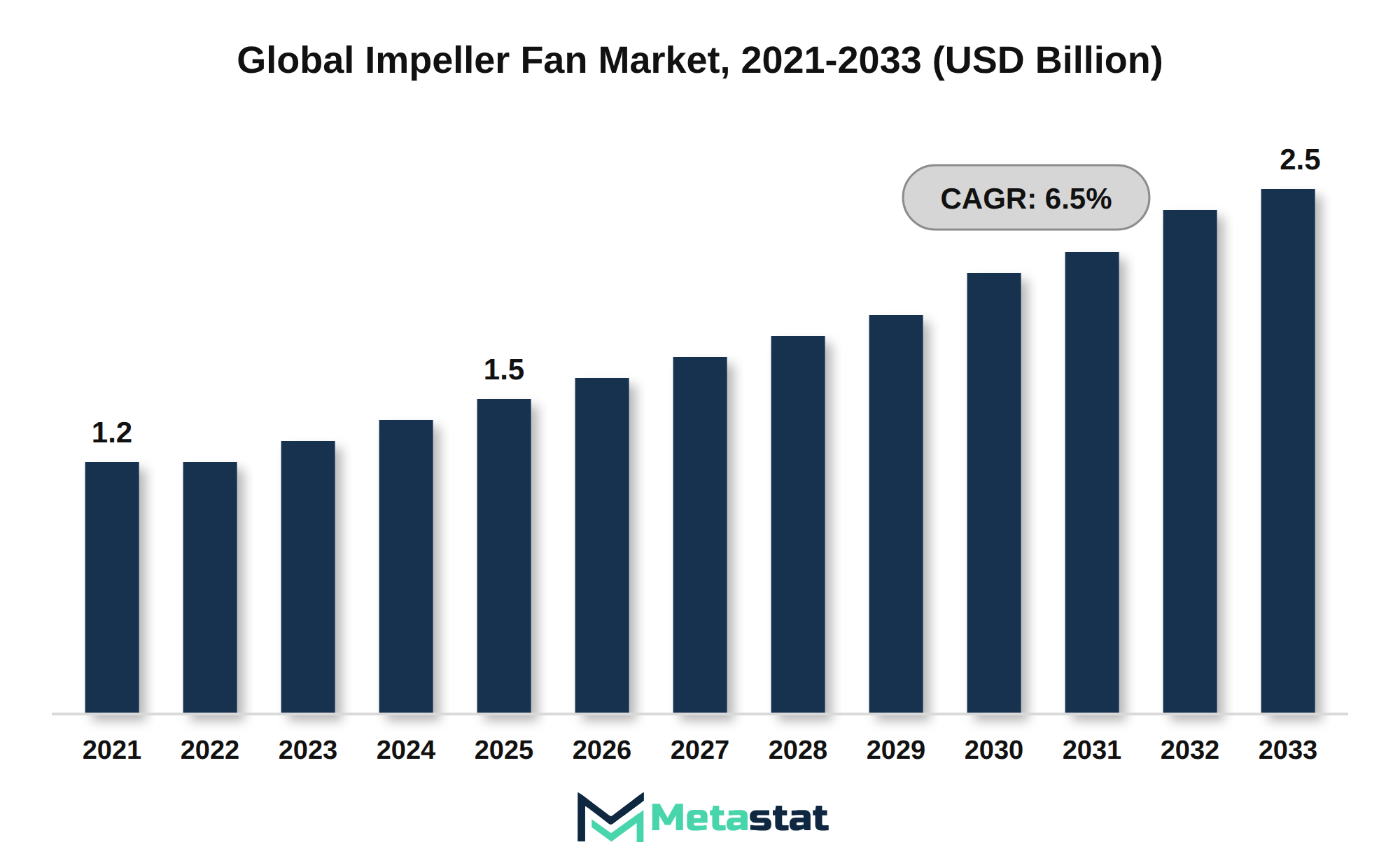
The global Impeller Fan market was valued at USD 1.5 billion in 2025 and is projected to reach USD 2.5 billion by 2033, growing at a CAGR of 6.5% over the forecast period.
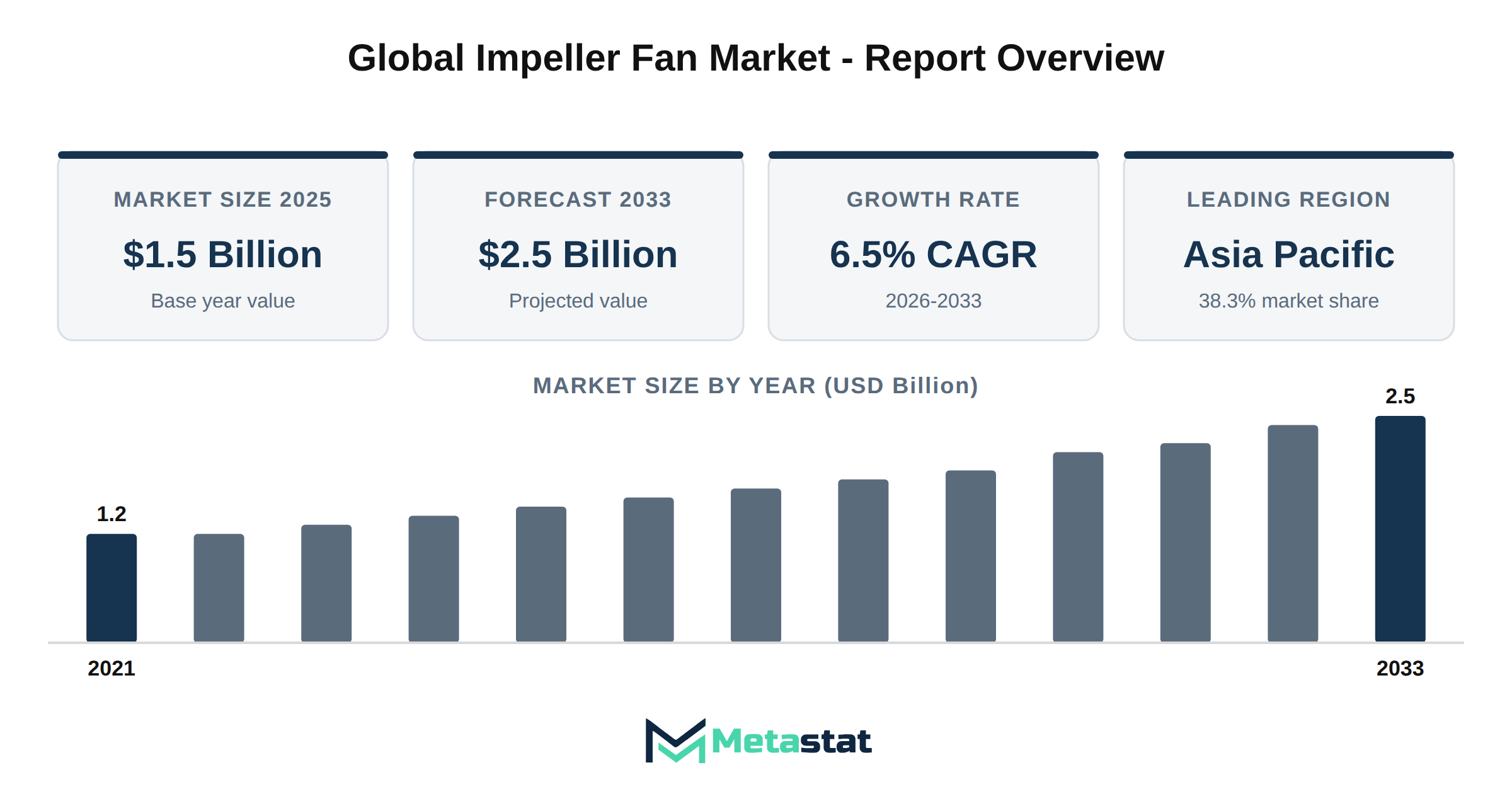
The Impeller Fan market is projected to experience significant growth from a base value of USD 1.5 billion in 2025 to USD 2.5 billion by 2033, reflecting a compound annual growth rate (CAGR) of 6.5%. Historical data indicates a steady increase in market value, starting from USD 1.2 billion in 2021, with a gradual rise to USD 1.4 billion in 2024. This trend highlights the growing demand for efficient ventilation solutions across various applications.
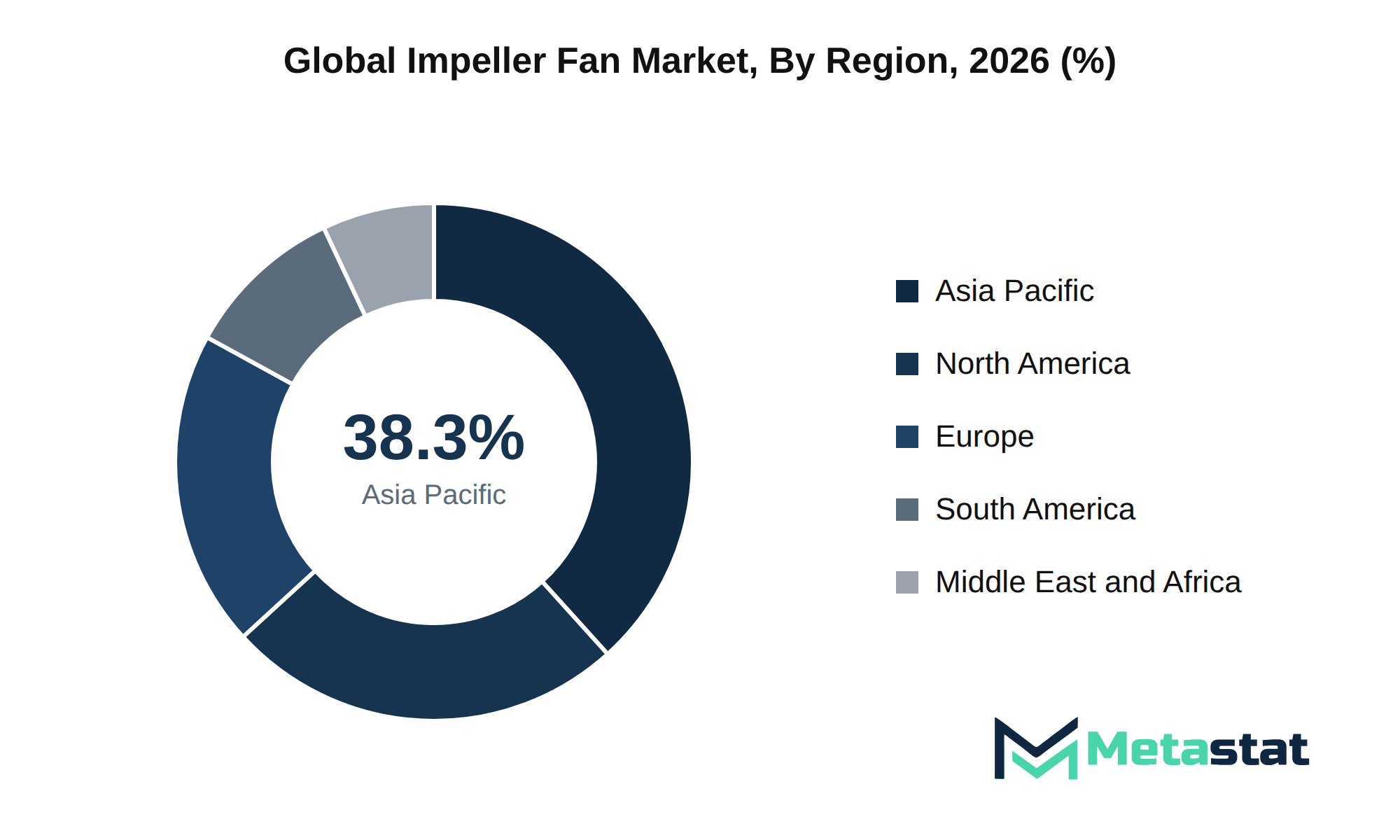
Key regions contributing to the growth of the market include North America, Europe, Asia Pacific, South America, and the Middle East and Africa. Asia Pacific holds the largest share of the market at 38.3%, driven by rapid industrialization and urbanization. North America follows with 24.9%, supported by advancements in HVAC technologies. The increasing focus on energy efficiency and sustainable practices in the built environment significantly influences market dynamics.
Segments within the market exhibit diverse growth trajectories. Centrifugal Impeller Fans are expected to expand from USD 0.7 billion in 2026 to USD 1.1 billion by 2033, displaying a CAGR of 6%. Axial Impeller Fans will reach USD 0.8 billion by 2033, with a CAGR of 6.3%. This segment growth is attributed to rising requirements in HVAC and industrial applications, where efficient airflow management is essential.
The Impeller Blade Design segment shows promising developments. Forward-Curved designs will increase from USD 0.4 billion in 2026 to USD 0.6 billion by 2033, while Backward-Curved designs will achieve a value of USD 0.9 billion by 2033. The emphasis on innovative designs that enhance performance and energy efficiency drives this segment's growth.
Applications of impeller fans span multiple industries, including HVAC and building ventilation, industrial process ventilation, and aerospace cooling. The HVAC and building ventilation application segment is anticipated to grow from USD 0.5 billion in 2026 to USD 0.8 billion by 2033, reflecting a CAGR of 5.8%. This growth stems from increasing investments in energy-efficient building systems and climate control technologies.
The Impeller Fan market experiences a complex environment shaped by evolving regulatory frameworks and compliance requirements. Companies operating in this space navigate a variety of standards that influence product design, safety, and efficiency. This regulatory environment impacts operational costs and investment strategies, prompting firms to allocate resources effectively to meet compliance demands.
Technological advancements drive ongoing research and development trajectories within the market. Innovative solutions focus on enhancing energy efficiency and performance, addressing the growing emphasis on sustainability and decarbonization. Companies investing in next-generation technologies position themselves favorably in a competitive environment, catering to the increasing demand for eco-friendly products.
The supply chain reflects ongoing shifts influenced by macroeconomic factors, including inflationary pressures and currency volatility. These dynamics affect sourcing strategies and logistics architecture, compelling firms to optimize their procurement processes to maintain cost-effectiveness. Strengthening relationships with suppliers and diversifying sourcing options emerge because critical strategies to mitigate risks associated with these external pressures.
Market fragmentation presents both challenges and opportunities for stakeholders. A diverse range of players, including established manufacturers and emerging entrants, contributes to a competitive environment. This fragmentation leads to varying levels of innovation and customer service, impacting buyer decisions and creating a complex customer journey. Companies that successfully navigate this environment enhance their market positioning through tailored solutions that meet specific end-user needs.
Future strategic outlooks for the Impeller Fan market focus on high-value recommendations that prioritize infrastructure investments and capital allocation. Companies aligning their strategies with evolving customer expectations, environmental considerations, and technological advancements are better positioned for sustained growth. The combination of these factors defines the market trajectory, presenting opportunities for proactive participants to capitalize on emerging trends.
Market Dynamics
Emission limits drive closed-loop adoption
Growing emphasis on emission control drives significant demand for impeller fans, particularly in sectors where environmental regulations are stringent. Industries including HVAC and automotive require systems that enhance energy efficiency while minimizing carbon footprints. This regulatory push prompts organizations to invest in advanced technologies, including impeller fans that facilitate improved airflow management and reduction of hazardous emissions.
Capital investment in eco-friendly infrastructure reflects a broader trend towards sustainability. Governments and private entities prioritize green initiatives, accelerating the adoption of impeller fans in applications including industrial process ventilation and commercial cooling systems. These sectors benefit from increased operational efficiency, leading to lower energy consumption and compliance with evolving environmental standards.
A direct correlation exists between emission targets and the performance specifications of impeller fans. Enhanced designs that focus on maximizing airflow while minimizing noise and energy usage attract interest from manufacturers aiming to fulfill market demands. Rising consumer awareness regarding environmental impact leads to heightened activity and innovation in fan technology.
Investment in research and development is imperative for firms seeking to advance their offerings in this competitive landscape. Companies explore new impeller blade designs and fan types that align with sustainability goals. Anticipated growth in the impeller fan market reflects compliance with emission regulations and the pursuit of operational excellence in various industrial applications.
Investment in infrastructure development fuels growth
Significant investment in infrastructure development increases demand within the Impeller Fan market. Expansion and modernization of facilities, particularly in sectors including HVAC and industrial processes, drive the need for advanced ventilation solutions. Upgrading physical and digital capacities requires efficient airflow management, positioning impeller fans because essential components. This increase in demand is particularly noticeable in urban areas where population growth intensifies the need for effective building ventilation systems.
Capital investment environments characterized by rising GDP enhance public and private spending power. These economic conditions facilitate projects that involve the deployment of modern impeller fans, particularly in commercial and residential buildings. Enhanced energy efficiency and operational productivity remain key considerations for stakeholders, prompting investments that incorporate innovative fan technologies.
Technological integration further supports this growth through automation and digitization of legacy processes. By applying advanced control systems, businesses optimize airflow and reduce energy consumption, aligning with sustainability targets. This trend creates a competitive advantage for companies adopting such technologies, contributing positively to the overall growth trajectory of the market.
Regulatory constraints hinder market expansion
The Impeller Fan market faces significant challenges owing to regulatory constraints that affect operational flexibility and increase compliance costs. Stringent environmental legislation surrounding emissions and energy efficiency requires manufacturers to invest heavily in technology upgrades and process changes. Such investments strain financial resources, particularly for smaller organizations that struggle to meet these standards. Increased operational expenses stemming from compliance requirements restrict competitiveness and overall market growth.
Macroeconomic headwinds, including inflationary pressures and capital stagnation, complicate the market dynamics. Rising material costs and labor expenses hinder manufacturers' ability to invest in new technologies or expand production capacities. High capital investment requirements create barriers for new entrants in the impeller fan sector, causing a slow pace of innovation. This situation diminishes the market's attractiveness for potential investors, leading to challenges in driving demand.
Supply chain disruptions and geopolitical instability exacerbate these issues, limiting access to essential components and materials. Such disruptions impact production timelines and create uncertainty in pricing strategies. Talent gaps and skilled labor deficiencies in the sector restrict operational efficiency and the ability to respond to market demands promptly.
Infrastructure gaps and connectivity deficits hinder the deployment of advanced fan systems, limiting their adoption in critical applications. The risk of technological obsolescence increases owing to newer, more efficient technologies emerging, putting pressure on existing products in the Impeller Fan market. Heightened competition from alternative offerings poses risks of substitution, impacting overall market penetration and profitability.
These factors collectively contribute to a fragmented market landscape, where cultural barriers and regional adoption resistors create further challenges. Overall, these constraints shape the dynamics of the Impeller Fan market, influencing growth trajectories and competitive strategies in the coming years.
Geopolitical tensions affect supply chain stability
The Impeller Fan market encounters challenges due to geopolitical fragmentation, which disrupts traditional supply chains and leads to delays in the procurement of essential components. Trade deficits and tariff friction between nations create additional barriers, resulting in increased costs for manufacturers. This environment forces companies to reassess their sourcing strategies, impacting production timelines and overall market dynamics. The interconnectedness of global operations means that disruptions in one region have a ripple effect on supply and demand in other areas, leading to instability in the market.
Technological disruptions further complicate the market, with rapid advancements in materials and manufacturing processes creating uncertainty. Firms investing in complex research and development initiatives face significant challenges in integrating new technologies, which strain financial resources and delay product launches. The need for interoperability among various technologies adds another layer of complexity, discouraging integration and innovation.
Environmental sustainability concerns influence operational decisions, compelling companies to adopt more rigorous standards throughout the product lifecycle. Stricter regulations surrounding decarbonization efforts and lifecycle footprints increase compliance overhead, placing additional burdens on manufacturers. These factors contribute to rising input costs, reducing profit margins and heightening competitive pressures within the Impeller Fan market.
Workforce skill gaps impact the ability of companies to adapt to these evolving demands. Shortages in skilled labor hinder the implementation of advanced manufacturing techniques and automation, limiting production efficiency. Companies face challenges in talent retention amid a competitive labor market, further exacerbating operational difficulties. Together, these challenges create a complex environment for stakeholders in the Impeller Fan market, influencing their strategic decisions and overall growth potential.
Emerging applications drive new market growth
The Impeller Fan market benefits from emerging applications across various industries, including HVAC systems, industrial processes, and transportation cooling. Increased demand for efficient and reliable cooling solutions drives the market forward. The modernization of existing infrastructure supports the adoption of advanced impeller fan technologies, enhancing operational efficiency and reducing energy consumption.
Geographical expansion into developing regions fuels market growth owing to industries seeking improved ventilation and cooling solutions. Technological disruptions, including digital transformation and automation, enhance the capabilities of impeller fans, allowing for better performance and integration into smart systems. Next-generation innovations, including eco-friendly designs and energy-efficient components, attract environmentally conscious buyers.
Growing sustainability imperatives increase the importance of green transformations within the market. Companies align strategies with environmental, social, and governance (ESG) objectives, driving investments in sustainable technologies. Downstream market diversification leads to new opportunities for impeller fan applications, including niche markets like aerospace and defense cooling, because industries pursue tailored solutions.
Strategic consolidation through cross-industry mergers and acquisitions enhances competitive positioning and expands product portfolios. Evolving buying behaviors reflect a shift towards digital procurement and new commercial models, influencing how buyers engage with suppliers. Supply chain localization and strategic buffering improve resilience and responsiveness to market fluctuations.
Finally, asset life-cycle extensions, maintenance upgrades, and retrofitting dynamics play crucial roles in maintaining market relevance. Value-chain optimization through process automation and operational yield maximization becomes essential for companies aiming to compete effectively in the growing Impeller Fan market.
Market Segmentation Analysis
The Global Impeller Fan market is segmented based on Fan Type, Impeller Blade Design, Application, and End-User.
By Fan Type, the market is further segmented into:
- Centrifugal Impeller Fans
- Axial Impeller Fans
- Mixed-Flow Impeller Fans
- Cross-Flow / Tangential Impeller Fans
Centrifugal Impeller Fans
Centrifugal Impeller Fans segment is valued at USD 0.7 billion in 2026 and is projected to reach USD 1.1 billion by 2033, at a CAGR of 6% during the forecast period. Increased adoption of energy-efficient solutions drives demand for centrifugal designs across various sectors, particularly HVAC and industrial applications. These fans exhibit superior performance in handling air and gases, contributing to efficiency improvements in ventilation systems.
Technological advancements play a crucial role in the evolution of centrifugal impeller fans, with notable innovations enhancing performance, noise reduction, and energy consumption. The continuous push for improved efficiency aligns with regulatory standards focusing on reducing energy consumption and emissions, creating a favorable environment within the market.
Investment in infrastructure projects worldwide significantly influences market dynamics, particularly in regions including Asia Pacific and North America. The demand in these areas reflects the shift towards modernized facilities that require advanced ventilation solutions. OEMs and end-users increasingly prioritize reliability and performance, creating an environment conducive to the growth of centrifugal impeller fans.
The market experiences a notable shift towards automation and smart technologies, positioning centrifugal fans because integral components in next-generation HVAC systems. This trend highlights the importance of adapting to evolving consumer preferences for intelligent building solutions, further propelling the market forward.
Axial Impeller Fans
Growing demand for Axial Impeller Fans is driven by their efficiency in various applications, particularly in HVAC and ventilation systems. Energy efficiency trends and the shift towards sustainable technologies support the adoption of these fans across residential, commercial, and industrial segments. The segment is estimated to reach USD 0.8 billion by 2033, at a CAGR of 6.3% during the forecast period.
Technological advancements enhance the performance of Axial Impeller Fans, enabling next-gen upgrades that meet evolving consumer and regulatory requirements. Innovations in blade design and motor efficiency contribute to improved airflow and reduced energy consumption, enhancing market competitiveness. The focus on minimizing operational costs through energy-efficient solutions positions this segment favorably against traditional fan technologies.
End-use dynamics demonstrate a growing preference for Axial Impeller Fans in commercial buildings, where effective air circulation is critical for occupant comfort and system performance. Regulatory compliance standards related to energy use and air quality further influence consumer preference, pushing manufacturers towards developing products that align with these guidelines.
Consumption shifts reflect a broader trend towards sustainable building practices and energy-efficient solutions. The rise in construction activities in emerging economies opens strategic opportunity windows, creating increased demand for effective ventilation solutions. The Impeller Fan market benefits from these trends, reflecting stakeholders' prioritization of investments in energy-efficient technologies.
Overall, the Axial Impeller Fans segment illustrates significant potential for growth, spurred by technological maturation, evolving consumer preferences, and stringent regulatory standards. This segment's trajectory aligns with broader market trends focused on sustainability and energy efficiency, reinforcing its role in the overall growth of the Impeller Fan market.
Mixed-Flow Impeller Fans
Growth in the Mixed-Flow Impeller Fans segment stems from several factors, including increasing demand for energy-efficient ventilation solutions across various industries. These fans deliver a balanced performance between centrifugal and axial fans, making them suitable for applications requiring both high flow rates and static pressure. Industries including HVAC and industrial process ventilation benefit from the efficiency of mixed-flow designs, which contribute to reduced operational costs.
Investment in advanced manufacturing technologies supports the evolution of mixed-flow impeller fans, enabling enhanced design features and improved performance metrics. Innovations in blade design and materials result in greater efficiency and lower noise levels, appealing to end users focused on sustainability and operational excellence. Regulatory pressures surrounding energy consumption drive adoption among commercial and industrial users.
The Mixed-Flow Impeller Fans segment is projected to reach USD 0.4 billion by 2033, reflecting a positive trend in market dynamics. Strategic opportunities arise from increased awareness of energy-efficient solutions and the ongoing trend toward automation in industrial settings. This growth trajectory provides a favorable outlook for manufacturers aiming to expand their product offerings in the Impeller Fan market.
Cross-Flow / Tangential Impeller Fans
Cross-Flow / Tangential Impeller Fans are experiencing a notable increase in demand, driven by their unique ability to manage airflow in compact spaces efficiently. This design facilitates versatility across various applications, including HVAC systems and industrial processes, where efficient airflow control is essential. The segment is projected to grow at a CAGR of 7.2% during the forecast period. Advancements in technology that enhance energy efficiency and performance contribute to this growth. The ongoing emphasis on reducing energy consumption and improving indoor air quality fuels further adoption of this segment within the Impeller Fan market.
Regulatory compliance standards focusing on energy efficiency and emissions control play a significant role in shaping market dynamics. Manufacturers increasingly prioritize the development of Cross-Flow / Tangential Impeller Fans that align with these standards, creating a more favorable environment for market expansion. The introduction of next-generation upgrades in design and materials supports this trajectory, allowing for improved performance characteristics while maintaining cost-effectiveness.
End-use dynamics indicate a growing preference for these fans in both commercial and industrial settings, reflecting shifts in consumption patterns toward more sustainable and energy-efficient solutions. The segment's ability to adapt to various applications enhances its market relevance, positioning it well amid competitive pressures. Continued investment in research and development is likely to result in innovative product offerings that further capitalize on strategic opportunity windows within the market environment.
By Impeller Blade Design, the market is further segmented into:
- Forward-Curved
- Backward-Curved
- Backward-Inclined
- Airfoil
- Radial / Radial-Blade
- Radial-Tip
Forward-Curved
Valued at USD 0.4 billion in 2026, the Forward-Curved segment is projected to reach USD 0.6 billion by 2033, reflecting a CAGR of 5.7% during the forecast period. This segment benefits from its efficiency in various applications, particularly in HVAC systems where airflow control is crucial. The increasing focus on energy efficiency and sustainable building practices fuels demand for forward-curved impellers, driven by their optimized performance for ventilation and air circulation.
Technological advancements in manufacturing processes enhance the reliability and operational performance of forward-curved blades. Innovations lead to improvements in materials and design, allowing for greater flexibility in application across residential and commercial sectors. End-users prioritizing energy-efficient solutions contribute to the growth within this segment.
Regulatory compliance regarding energy consumption and emissions standards further drives the adoption of forward-curved impeller fans. Companies investing in compliance-ready technologies position themselves competitively within the impeller fan market by meeting stringent requirements. While industries evolve towards greener solutions, the market outlook for forward-curved impeller fans remains positive, supported by ongoing technological maturation and strategic investments.
With a strong focus on reducing operational costs and enhancing performance, manufacturers engage in research and development to create next-generation upgrades for forward-curved fans. This evolution in product design aligns with market demands, ensuring that suppliers meet the changing requirements of end-users across diverse applications. Increased capital investments in this area indicate a strategic opportunity window, driving growth and expansion of the segment.
Backward-Curved
Backward-Curved impeller fans have gained traction due to their efficiency and reliability in various applications. Increasing demand for energy-efficient solutions in HVAC systems and industrial processes drives this segment forward. The design of backward-curved fans enables higher airflow rates while minimizing energy consumption, making them attractive to end-users focused on operational efficiency and cost savings. These fans are particularly favored in applications like ventilation and air conditioning, where efficient air movement is critical.
The Backward-Curved segment is estimated to reach USD 0.9 billion by 2033, at a CAGR of 6.9% during the forecast period. Ongoing technological maturation in fan design allows for continuous improvements in performance, further stimulating adoption across different sectors. Industries are increasingly investing in advanced backward-curved fan technologies to enhance system performance and meet stringent regulatory compliance standards related to energy efficiency and emissions.
End-user dynamics significantly influence this segment, with a growing preference among commercial and industrial users for reliable airflow solutions. Robust interest from sectors like HVAC drives the market, where backward-curved fans facilitate efficient heating, cooling, and ventilation processes. While the market evolves, ongoing advancements in design and materials will likely create new applications, reinforcing the position of backward-curved impeller fans within the broader Impeller Fan market.
Backward-Inclined
Demand for Backward-Inclined impeller fans stems from their ability to provide a stable airflow and maintain efficiency across various applications. These fans exhibit advantages in operational reliability, which aligns well with industries focusing on energy efficiency and performance improvement. The market for this segment is expected to reach USD 0.4 billion by 2033, reflecting a strong growth trajectory driven by increased adoption in HVAC and other industrial applications.
Technological maturation in fan design and manufacturing enhances product offerings, enabling suppliers to introduce advanced features that improve performance and reduce energy consumption. This evolution supports the market, driven by end-users increasingly prioritizing environmentally friendly solutions. Regulatory compliance standards surrounding energy efficiency further increase the demand for high-performing systems, driving investment toward the development of innovative Backward-Inclined fan solutions.
End-use dynamics influence the segment's expansion, with significant uptake in commercial and industrial sectors that require reliable ventilation systems. Consumption shifts towards high-efficiency products highlight the importance of Backward-Inclined fans in meeting modern operational standards. Strategic opportunity windows for suppliers arise, reflecting demand for improved airflow solutions becoming more pronounced across multiple industries, reinforcing the segment's position within the broader Impeller Fan market.
Airfoil
Airfoil blade designs exhibit robust characteristics that enhance operational efficiency and performance in various applications. This design achieves a streamlined airflow pattern, resulting in reduced energy consumption and improved airflow management. The market for airfoil impeller fans benefits significantly from the increasing emphasis on energy-efficient solutions across industries, particularly in HVAC systems and industrial cooling processes. Rising energy costs and stringent environmental regulations drive the need for advanced designs that optimize performance while minimizing energy usage.
Investment in research and development enables advancements in airfoil technology, allowing manufacturers to introduce innovative products that meet the evolving demands of end-users. End-user dynamics shift towards sustainability and energy conservation, leading to heightened interest in products that align with these goals. The airfoil segment is projected to grow at a CAGR of 7.3% during the forecast period, reflecting increasing adoption across sectors including aerospace, automotive, and industrial applications.
Regulatory compliance standards increasingly emphasize energy efficiency and emissions reduction, prompting manufacturers to prioritize the development of airfoil designs. These designs not only comply with regulations but enhance operational performance, creating competitive advantages in the market. The segment's growth trajectory reflects a strategic opportunity window for investments and innovations that align with sustainability objectives.
Radial / Radial-Blade
Radial / Radial-Blade impeller fans play a crucial role in applications requiring efficient air movement and energy conservation. The shift towards energy-efficient designs is supporting demand in the market, prompting manufacturers to innovate and enhance their offerings. Adoption of these fans in various sectors, including HVAC and industrial processes, demonstrates their versatility and effectiveness. Regulatory compliance standards increasingly emphasize energy efficiency, creating an environment conducive to the growth of this sub-segment.
Technological maturation facilitates advancements in fan design, allowing for improved performance metrics and reduced operational costs. Next-generation upgrades in materials and design methodologies contribute to enhanced durability and performance, increasing the appeal of Radial / Radial-Blade fans in competitive markets. End-use dynamics reflect a growing preference for solutions that align with sustainability goals, accelerating the transition towards advanced fan technologies.
The market experiences shifts in consumption patterns driven by an increasing focus on reducing carbon footprints. Strategic opportunity windows arise from the need for replacement and upgrades of existing systems, providing manufacturers with avenues to expand their product lines. Cost structures remain a consideration, while advancements in manufacturing processes help alleviate pricing volatility, thereby enhancing market stability.
Supply chain resilience remains vital for ensuring consistent availability of raw materials, with sourcing strategies evolving to mitigate risks associated with supply disruptions. Substitution risks are present, particularly from alternative technologies that offer similar benefits. The established reputation and operational reliability of Radial / Radial-Blade fans maintain their position in the market, driving ongoing capital investment in this sub-segment.
Radial-Tip
Technological maturation in the impeller fan market drives interest in Radial-Tip designs due to their performance and efficiency characteristics. These designs demonstrate effectiveness in various applications, particularly in HVAC systems and industrial ventilation. Manufacturers focus on optimizing blade geometry to enhance airflow and reduce energy consumption, contributing to the appeal of Radial-Tip configurations.
Market expansion is influenced by demand for energy-efficient solutions across multiple sectors. Customers increasingly prioritize sustainability, propelling the adoption of Radial-Tip fans that deliver higher efficiency levels. This shift in consumption patterns aligns with regulatory compliance standards aimed at reducing environmental impact and improving energy efficiency in industrial applications.
Investment in research and development supports the evolution of Radial-Tip blade designs. Innovations in materials and manufacturing processes enhance the performance and durability of these fans, positioning them favorably against alternative designs. Such advancements create strategic opportunities for manufacturers to capture market share through next-generation products that meet specific application requirements.
Downstream applications for Radial-Tip fans span various end-user categories, including residential, commercial, and industrial sectors. The versatility of this design allows for integration into a wide range of systems, further enhancing its market presence. Companies that effectively navigate the pricing volatility and cost structures associated with Radial-Tip fans leverage these trends to maximize margins and strengthen their competitive position.
By Application, the market is further segmented into:
- HVAC and Building Ventilation
- Industrial Process Ventilation
- Automotive and Transportation Cooling
- Aerospace and Defense Cooling
- Data Center and Electronics Cooling
- Dust and Fume Extraction
- Material Handling and Pneumatic Conveying
- Air Pollution Control and Filtration
- Boiler, Furnace and Combustion Systems
- Others (Mining and Tunnel Ventilation, Drying and Dehumidification, Agricultural Ventilation, Marine Ventilation)
HVAC and Building Ventilation
Valued at USD 0.5 billion in 2026, the HVAC and Building Ventilation segment is projected to reach USD 0.8 billion by 2033, at a CAGR of 5.8% during the forecast period. Increasing demand for energy-efficient solutions drives adoption within the segment, driven by commercial and residential buildings prioritizing sustainability and cost reductions. Technological advancements enhance product efficiency, enabling manufacturers to meet evolving customer requirements. The increasing focus on indoor air quality increases demand for impeller fans, positioning the HVAC and Building Ventilation segment because a critical component of modern infrastructure.
Regulatory compliance standards regarding energy consumption and emissions significantly influence market dynamics. Stricter regulations encourage the integration of advanced impeller fan solutions that optimize performance while minimizing environmental impact. This trend drives innovation and prompts manufacturers to invest in the development of next-generation products that align with green building practices. Consumer preferences for smart technology and automation in HVAC systems contribute to the segment's growth, signaling a shift toward intelligent solutions.
Market players strategically explore opportunities to enhance their product offerings, focusing on customization and adaptability to different building types. The evolution of impeller fan designs, including forward-curved and backward-curved blades, allows manufacturers to cater to diverse applications across various sectors. While the segment continues to evolve, investments in R&D will remain crucial to address emerging challenges and capitalize on growth opportunities within the HVAC and Building Ventilation sector.
Industrial Process Ventilation
In the context of the Impeller Fan market, the Industrial Process Ventilation segment is gaining traction due to heightened awareness of indoor air quality and safety standards across various industries. Regulatory compliance focused on environmental health drives the adoption of advanced ventilation solutions, ensuring that facilities meet necessary air quality benchmarks. Increased industrial activities and the expansion of manufacturing sectors contribute to rising demand for efficient ventilation solutions, enhancing operational efficiency and worker comfort.
The Industrial Process Ventilation segment is projected to reach USD 0.4 billion by 2033, at a CAGR of 6.3% during the forecast period. Technological advancements in fan design and smart control systems facilitate energy savings and improved airflow management, appealing to end-users seeking cost-effective solutions. The integration of IoT and automation trends leads to smarter ventilation systems, optimizing performance and reducing energy consumption.
End-user dynamics reflect a shift towards sustainable practices, pushing industries to invest in energy-efficient technologies. Companies focus on reducing their carbon footprints, and the demand for environmentally friendly ventilation systems is expected to grow. This trend presents strategic opportunity windows for manufacturers and suppliers aiming to innovate and provide enhanced industrial process ventilation solutions.
Automotive and Transportation Cooling
Growth in the Automotive and Transportation Cooling segment is driven by increasing demand for reliable cooling solutions in vehicles and transport systems. Technological advancements in vehicle design and efficiency standards fuel the need for high-performance impeller fans, ensuring optimal engine cooling and passenger comfort. Regulatory requirements surrounding emissions and fuel efficiency further increase the demand for efficient cooling mechanisms.
Valued at USD 0.3 billion by 2033, this segment enhances automotive performance. The integration of next-generation impeller fan technologies aligns with the industry's shift towards electric and hybrid vehicles, necessitating innovative cooling solutions. Investments in research and development focus on improving the performance and efficiency of impeller fans, contributing to overall market growth.
Shifts in consumer preferences towards energy-efficient vehicles encourage manufacturers to adopt advanced cooling systems. Consequently, the market experiences a rise in collaborations between automotive manufacturers and impeller fan suppliers, enhancing product offerings and driving competitive advantage. Overall, the Automotive and Transportation Cooling segment contributes significantly to the broader Impeller Fan market dynamics.
Aerospace and Defense Cooling
Aerospace and Defense Cooling benefits from various factors driving demand within the Impeller Fan market. Increased focus on advanced cooling solutions for aircraft and defense systems supports rising interest in specialized cooling technologies. Military applications require reliable cooling systems to ensure optimal performance and safety. With aerospace projects expanding, investment in efficient cooling solutions becomes essential.
This segment is projected to grow at a CAGR of 5.8% during the forecast period. Companies in the aerospace and defense sectors prioritize technological advancements to enhance cooling efficiency and reduce energy consumption. Regulatory compliance standards regarding operational safety further drive demand for high-performance impeller fans.
Next-generation upgrades in aerospace technology involve integrating advanced materials and designs into cooling systems. These developments aim to improve the overall efficiency of cooling solutions while addressing environmental concerns. Consequently, manufacturers are expected to invest in innovative product evolution to meet the stringent requirements of the aerospace and defense industries. This investment aligns with the growing emphasis on sustainability and performance.
The growing need for reliable cooling solutions within the aerospace and defense sectors significantly contributes to the expansion of the Impeller Fan market. With projected growth driven by technological advancements and regulatory compliance, this segment offers strategic opportunities for suppliers and manufacturers in the coming years.
Data Center and Electronics Cooling
Rapid advancements in data centers and electronics drive strong demand for efficient cooling solutions. This segment experiences significant growth owing to the increasing amount of data processed and stored, necessitating effective heat management strategies. Adoption of impeller fans focuses on maintaining optimal temperatures in high-performance computing environments, ensuring equipment reliability and longevity.
Technological maturation drives innovation in cooling technologies, resulting in designs that improve energy efficiency and reduce operational costs. Next-generation upgrades in data center infrastructure emphasize the importance of energy-efficient solutions, influencing the choice of impeller fans. Product evolution aligns with industry trends prioritizing sustainability and environmental compliance, further fueling market expansion.
End-use dynamics within the electronics sector highlight the critical role of effective cooling in preventing overheating and ensuring operational efficiency. With regulatory compliance standards becoming increasingly stringent, investment in advanced cooling solutions gains importance. This pressure encourages organizations to explore innovative and reliable cooling technologies.
Consumption shifts toward more efficient and eco-friendly options contribute to rising demand for specific impeller fan designs. Strategic opportunities emerge because businesses seek to optimize their cooling systems while addressing environmental concerns, promoting the growth of the impeller fan market. Investments focus on enhancing supply chain resilience, ensuring a steady flow of materials required for manufacturing advanced cooling solutions.
Dust and Fume Extraction
Increasing regulatory compliance standards drive demand for dust and fume extraction solutions within the Impeller Fan market. Industries including manufacturing, food processing, and pharmaceuticals emphasize maintaining air quality, influencing the adoption of advanced extraction systems. Enhanced focus on worker safety and environmental sustainability creates a favorable environment for investment in effective dust and fume extraction technologies.
Technological maturation facilitates the evolution of impeller fans, with innovations improving efficiency and performance. Next-generation upgrades incorporate smart technologies, allowing for real-time monitoring and enhanced operational control. Adoption of these technologies enhances user experience by reducing maintenance costs and extending equipment lifespan.
Consumption shifts towards energy-efficient solutions further promote growth in this segment. Businesses invest in systems that comply with regulations while reducing operational costs. Strategic opportunities emerge for manufacturers that align product portfolios with evolving market demands, positioning themselves because leaders in the extraction technology space.
Supply chain resilience remains vital, particularly in securing raw materials that meet quality standards. Manufacturers face pressures from pricing volatility, requiring effective management strategies to maintain competitive margins. Addressing the demands of the Impeller Fan market presents opportunities for innovation and market expansion.
Material Handling and Pneumatic Conveying
Growth in the Material Handling and Pneumatic Conveying segment of the Impeller Fan market stems from increasing demand for efficient material movement solutions within various industries. Key factors driving this demand include the expansion of manufacturing activities, heightened automation in production processes, and the need for enhanced operational efficiency. Industries including food and beverage, pharmaceuticals, and bulk material handling leverage these fans to ensure smooth and reliable transport of materials, boosting productivity and reducing downtime.
Technological advancements in fan designs and materials contribute significantly to the segment's expansion. Ongoing innovations focus on improving airflow efficiency and reducing energy consumption, aligning with broader trends of sustainability and cost management. The introduction of smart technologies, including IoT integrations, enhances system performance and monitoring capabilities, creating opportunities for upgraded solutions tailored to specific applications.
Shifting consumption patterns towards automated and integrated systems highlight the importance of impeller fans in modern material handling. Increased regulatory compliance standards mandate higher efficiency and safety measures, prompting industries to adopt advanced fan technologies. This evolution in downstream applications emphasizes growth potential within the larger landscape of the Impeller Fan market.
The threat of substitution from alternative technologies drives manufacturers to innovate continuously. Emerging materials and designs that promise enhanced performance challenge traditional fan configurations, necessitating strategic investments in research and development. Market participants focus on capital investment strategies to strengthen their competitive position and capture emerging opportunities in the evolving landscape.
Air Pollution Control and Filtration
Regulatory compliance standards concerning air quality significantly influence the demand for air pollution control and filtration solutions within the Impeller Fan market. Heightened awareness of environmental issues drives investment in systems that mitigate emissions in various industrial processes. This growing emphasis on sustainability compels industries to adopt advanced filtration technologies that enhance air quality, positioning air pollution control because a crucial application of impeller fans.
Investment in next-generation upgrades serves because a key catalyst for segment expansion. Innovations in impeller fan design lead to increased energy efficiency and reduced operational costs, making air pollution control systems more attractive to end-users. The evolution of products tailored for specific applications ensures that solutions meet rigorous performance standards while adhering to environmental regulations.
End-use dynamics indicate a shift towards more stringent regulations, prompting industries to prioritize compliance in their operations. Sectors including manufacturing, automotive, and energy face mounting pressure to implement effective air pollution management strategies. This regulatory environment creates a competitive landscape where businesses invest in advanced technologies to maintain compliance and enhance operational efficiency.
Technological maturation within the market enables continuous improvement in air pollution control systems, facilitating the adoption of more advanced filtration methods. Companies that prioritize research and development strengthen their market position by delivering innovative solutions that address evolving regulatory requirements. Such advancements in technology not only enhance system reliability but reduce the environmental impact of industrial processes.
Strategic opportunity windows emerge because industries seek to enhance their environmental performance and comply with tightening regulations. The potential for collaboration between technology providers and end-users creates avenues for developing tailored solutions that meet specific air pollution control needs. While the market evolves, the focus on sustainability and regulatory compliance will continue to drive the demand for effective air pollution control and filtration systems.
Boiler, Furnace and Combustion Systems
Demand for impeller fans within Boiler, Furnace, and Combustion Systems arises from the need for efficient airflow solutions in heating applications. Growth in this segment connects to increasing industrial activity and a focus on energy efficiency in combustion processes. Technological advancements enhance fan performance, allowing for better temperature control and improved system reliability. Enhanced efficiency in fuel combustion leads to reduced emissions, meeting environmental standards and regulatory compliance. End-user dynamics influence demand, particularly in sectors including industrial heating and power generation. The market experiences shifts in consumption patterns driven by a transition towards more sustainable energy practices and a growing emphasis on reducing carbon footprints.
Investment in next-generation upgrades and product evolution ensures that impeller fans meet the latest efficiency standards and operational requirements. Expectations for improved performance target increasing operational demands while addressing cost structures and margin pressures specific to this segment. Supply chain resilience plays a critical role, with manufacturers focusing on raw material sourcing and logistics vulnerabilities to maintain competitive pricing in the market. Strategic opportunity windows arise through innovation, enabling companies to differentiate their offerings and capture emerging trends in energy-efficient heating systems.
Others (Mining and Tunnel Ventilation, Drying and Dehumidification, Agricultural Ventilation, Marine Ventilation)
Growing interest in mining and tunnel ventilation contributes to the demand for specialized impeller fans. Increased mineral extraction activities and the need for efficient air circulation in confined spaces drive this trend. Drying and dehumidification applications benefit from advancements in technology, enabling enhanced moisture control in various industries, including agriculture and food processing. Evolving agricultural ventilation requirements arise from the expansion of modern farming techniques, emphasizing energy-efficient solutions to maintain optimal conditions for crop growth.
Marine ventilation applications reflect rising maritime activities, focusing on maintaining air quality and cooling systems in vessels. Compliance with environmental standards influences the selection of effective ventilation solutions, ensuring adherence to regulations across sectors. These dynamics shape the market's evolving landscape, creating opportunities for innovation and growth in impeller fan technologies.
By End-User, the market is further segmented into:
- Residential
- Commercial
- Industrial
- Others (Automotive and Transportation, Aerospace and Defense, Marine, Agriculture)
Residential
Residential applications drive demand for impeller fans, supported by the need for effective ventilation and cooling solutions in homes. This segment is valued at USD 0.5 billion in 2026 and is projected to reach USD 0.7 billion by 2033, with a CAGR of 5.7% during the forecast period. Factors influencing this growth include rising consumer awareness of energy-efficient solutions, which boosts adoption of advanced impeller fan technologies. Innovations in fan design, including quieter operation and improved airflow efficiency, enhance product appeal in the residential market.
Changing consumer preferences toward smart home technologies contribute to segment expansion. The integration of impeller fans in smart home systems increases their functionality and convenience, aligning with broader trends in home automation. Regulations promoting energy efficiency standards in residential buildings compel manufacturers to develop compliant products, further stimulating market demand. Companies focusing on these evolving trends capitalize on growth opportunities within the residential segment of the impeller fan market.
Commercial
Increasing urbanization and infrastructure development significantly drive demand for impeller fans in the commercial segment. This segment benefits from the need for efficient HVAC systems, improved indoor air quality, and ensured energy efficiency in commercial buildings. End-users prioritize advanced technologies that enhance system performance and reduce operational costs. Regulatory pressures surrounding energy efficiency and environmental compliance play a crucial role in shaping market dynamics.
The commercial segment is estimated to reach USD 1 billion by 2033, at a CAGR of 6.5% during the forecast period. Growing investment in smart building technologies and automation systems supports the adoption of high-efficiency impeller fans. Competitive pricing strategies among manufacturers influence market accessibility, enabling broader use across various commercial applications. A focus on sustainability and energy-efficient solutions is expected to further stimulate growth in this sector.
Technological advancements in impeller design and materials enhance product performance, contributing to ongoing demand in the market. Manufacturers explore innovative solutions to meet the evolving requirements of end-users. These factors combined position the commercial segment for significant growth in the coming years.
Industrial
Demand for impeller fans in the Industrial segment reflects increasing automation and efficiency requirements across various industrial processes. The need for reliable ventilation and cooling solutions in manufacturing and production sites drives this demand. Significant growth in industries including food and beverage, pharmaceuticals, and chemical processing fuels the adoption of impeller fans, enabling optimal operational environments.
The Industrial segment is expected to reach USD 0.6 billion by 2033. Regulatory compliance regarding air quality and worker safety creates an environment that supports investment in advanced ventilation systems. This segment's evolution aligns with technological advancements, resulting in the development of high-efficiency, energy-saving impeller fans that meet stringent performance standards.
Strategic investments in infrastructure and the expansion of manufacturing capabilities further enhance the market outlook. Increased focus on sustainable practices leads to a preference for eco-friendly impeller fan options, influencing product evolution within the market. Overall, the Industrial segment demonstrates strong growth potential driven by a combination of technological maturation, regulatory compliance, and evolving end-use dynamics.
Others (Automotive and Transportation, Aerospace and Defense, Marine, Agriculture)
Growth within the Others (Automotive and Transportation, Aerospace and Defense, Marine, Agriculture) segment is projected to expand at a CAGR of 7.8% during the forecast period. This segment reflects a diverse range of applications, including transportation systems, aerospace technologies, and agricultural machinery, which rely on efficient airflow and cooling mechanisms. Demand for impeller fans in these sectors stems from increasing operational efficiency and the necessity for reliable thermal management solutions.
Technological advancements drive improvements in fan designs, enhancing performance and energy efficiency. Innovations in materials and blade designs contribute to greater aerodynamic efficiency, attracting investment in next-generation upgrades. The segment experiences heightened interest due to rising demand for environmentally friendly solutions and more stringent regulations governing emissions and energy consumption, impacting product specifications.
Operational dynamics within transportation and aerospace sectors emphasize reliability and performance. Compliance with regulatory standards for emissions and noise makes high-quality impeller fans essential in these applications. Agriculture faces challenges, including the need for efficient machinery that contributes to sustainable practices. These factors collectively reinforce the segment's growth trajectory within the broader impeller fan market.
Increased capital investment in research and development supports ongoing product evolution, positioning manufacturers to meet evolving customer demands. The competitive landscape becomes increasingly dynamic, driven by companies seeking to capture market share through innovation and improved supply chain resilience. This ongoing transformation positions the segment for sustained growth, with evolving consumer preferences and technological advancements shaping the market.
By Region
Based on geography, the Global Impeller Fan market is divided into North America, Europe, Asia-Pacific, South America, Middle East, and Africa.
North America
In North America, the Impeller Fan market is set to expand at a CAGR of 6.5% within the forecast period, reaching a market size (TAM) of USD 0.6 billion by the end of 2033. The region accounts for a considerable share of the global market. Primary demand drivers include the increasing adoption of energy-efficient HVAC systems and industrial processes, which significantly enhance the operational efficiency of various applications.
Infrastructure modernization across the United States, Canada, and Mexico is essential for expanding the market. Investments in upgrading ventilation systems and adapting to stringent environmental regulations contribute to growth. Emerging market front-runners, particularly in the HVAC and Building Ventilation segment, show promising adoption rates driven by heightened consumer awareness regarding energy efficiency.
Localized manufacturing densities facilitate a more responsive supply chain, allowing companies to adapt quickly to changing market demands. Nearshoring initiatives strengthen local production capabilities, aligning with the trend of businesses seeking greater control over their supply chains. This dynamic leads to increased competition among regional players, enhancing market opportunities for domestic manufacturers.
Incremental growth vectors are evident in the ongoing replacement cycles of older ventilation systems, driven by evolving regulatory frameworks. Compliance mandates regarding air quality and energy consumption drive investments in newer, advanced impeller fan technologies. Regional competitive landscapes are characterized by domestic market participants who continue to innovate, ensuring their offerings meet local and international standards.
Overall, North America's Impeller Fan market is positioned for growth, supported by a combination of technological advancements, regulatory compliance, and strategic investments in infrastructure development.
Europe
The Impeller Fan market in Europe reflects a diverse landscape shaped by various factors, including established industrial frameworks and growing demand across multiple applications. Countries including Germany, France, the UK, Italy, Spain, and Russia play crucial roles in driving market dynamics. The strategic focus on energy efficiency and sustainability initiatives accelerates the adoption of impeller fans, particularly in HVAC and building ventilation applications.
Regulatory compliance mandates across the region promote advancements in technologies, enhancing the performance of impeller fans. Countries exhibit strong market potential due to their commitment to infrastructure modernization and investments in energy-efficient systems. The region's domestic market participants leverage localized manufacturing capabilities, allowing them to address specific customer needs more effectively.
Interest in emerging applications, including industrial process ventilation, contributes to the ongoing expansion of the market. The presence of established players encourages competitive dynamics while driving innovation within the sector. The Impeller Fan market benefits from incremental growth vectors driven by the increasing importance of localized procurement and regional resource availability.
Asia-Pacific
The Asia-Pacific region accounts for 38.3% of the global Impeller Fan market in 2025. Rapid industrialization and urban development drive substantial demand for impeller fans across various applications in countries including China and India. The HVAC and building ventilation sector particularly benefits from increasing investments in infrastructure and modernization efforts.
Countries within Southeast Asia are expanding manufacturing capabilities, resulting in heightened demand for axial and centrifugal impeller fans. This region's emphasis on energy efficiency and sustainable practices influences the adoption of advanced fan technologies, leading to increased competition among local and international players.
Japan's focus on automation in manufacturing processes enhances demand for high-efficiency impeller fans, particularly in industrial applications. The market is characterized by evolving consumer preferences, where energy-efficient solutions dominate purchasing decisions.
Local compliance mandates regarding air quality and energy efficiency standards push manufacturers to innovate, creating opportunities for growth within the market. The presence of domestic market participants facilitates a competitive landscape that drives technological advancements and consumer trust.
Investment in localized manufacturing and supply chain regionalization supports market dynamics, allowing businesses to respond swiftly to changing demand patterns. The market outlook for Asia-Pacific remains positive, driven by continuous development and strategic initiatives that emphasize sustainability and efficiency in fan technologies.
South America
South America holds a 10.00% share of the global Impeller Fan market in 2025, with Brazil and Argentina representing the primary markets. Growth in this region stems from expanding industrial activities, particularly in construction and manufacturing sectors, which demand efficient ventilation solutions. Rising emphasis on energy efficiency and sustainability drives innovation in fan technology, further boosting market demand. Infrastructure modernization efforts across South America, especially in urban areas, enhance the need for advanced cooling systems.
Localized manufacturing initiatives present opportunities for growth, enabling companies to cater to regional preferences while reducing logistics costs. Domestic manufacturers focus on developing tailored products that meet the specific requirements of various applications, including HVAC and industrial process ventilation. This shift towards localized production aligns with broader trends in supply chain regionalization and nearshoring, enhancing competitiveness in the market.
Emerging technologies in impeller fan design, including advancements in materials and energy-efficient blades, support market expansion. Strong preference for energy-efficient solutions among environmentally conscious consumers encourages the adoption of these innovative products. Consequently, manufacturers in South America are likely to invest in research and development to stay ahead of market trends and fulfill customer demands.
Middle East and Africa
The Impeller Fan market in the Middle East and Africa demonstrates growth potential driven by emerging market front-runners including Saudi Arabia and the UAE. Increasing investments in infrastructure modernization contribute to demand for advanced ventilation solutions, particularly in industrial and commercial applications. South Africa and the rest of the Middle East and Africa present diverse energy needs, stimulating interest in sustainable and efficient impeller fan technologies.
High-value replacement cycles within existing installations further support growth in the market. Regional resource availability and energy grid resiliency influence operational dynamics, prompting investment in localized manufacturing densities. Geopolitical fragmentation and evolving trade policies create opportunities for companies operating in this region, enabling strategic entry barriers and foreign direct investment flows.
Cultural nuances impact regional B2B buying behaviors, necessitating tailored approaches from manufacturers. The competitive landscape in the market includes both domestic participants and international players, who seek to consolidate their positions through targeted strategies. Overall, the Middle East and Africa presents a unique environment for the Impeller Fan market, characterized by incremental growth vectors and diverse application demands.
Competitive Landscape and Strategic Insights
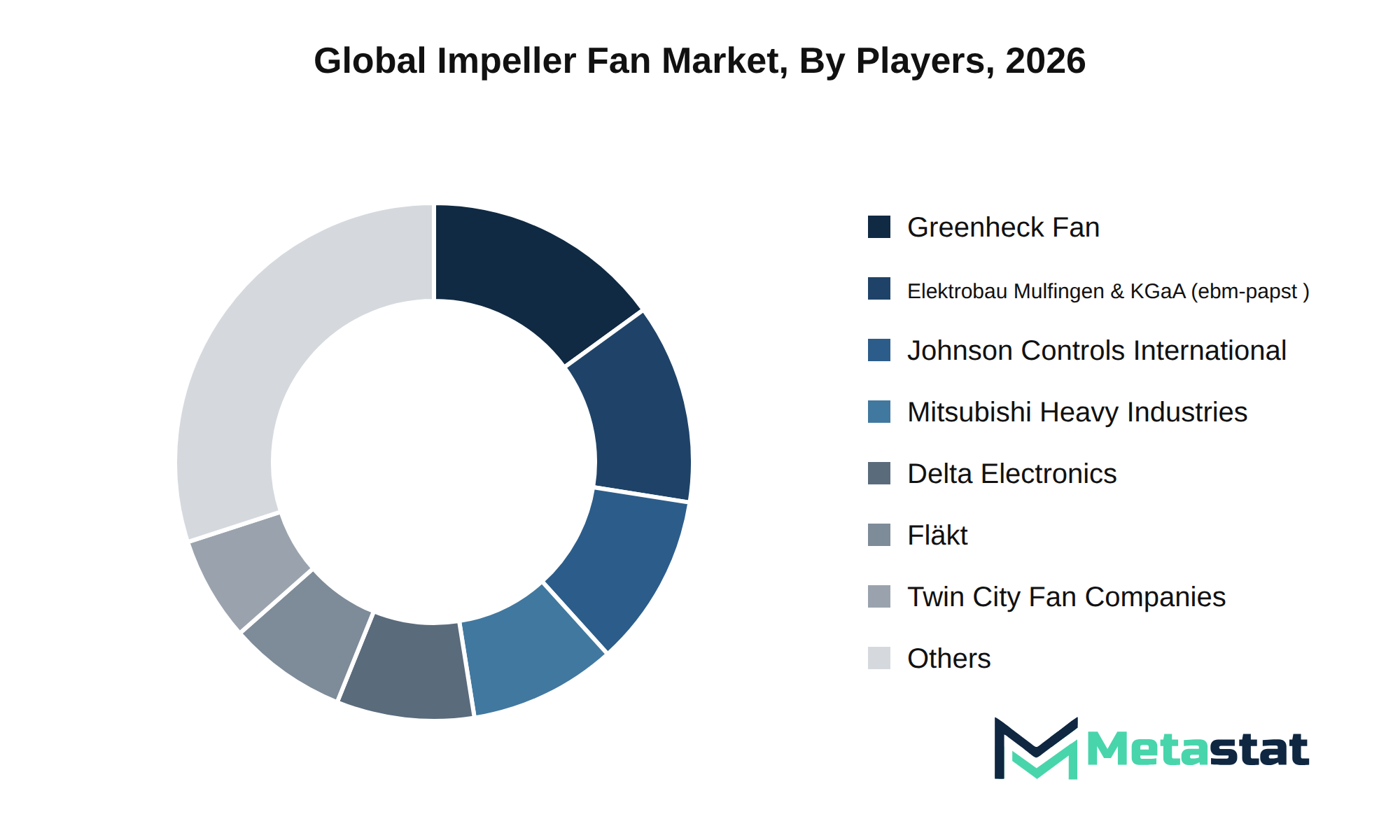
The competitive landscape for the Impeller Fan market includes several key players focusing on a variety of strategic initiatives. Companies prioritize product differentiation through innovative designs and proprietary technology, which enhances market positioning. Strategic alliances and joint ventures enable firms to leverage complementary strengths and extend market reach.
Market dynamics and competitive strategies
Market participants employ various go-to-market strategies to gain a competitive edge. Pricing architectures reflect the technological sophistication of the products offered, with higher value placed on advanced features and energy efficiency. Intellectual property portfolios play a significant role in maintaining a competitive advantage, enabling firms to protect innovations and ensure technological defensibility.
Barriers to entry for new entrants include established brand equity and customer retention strategies that existing players implement effectively. The presence of strong supply chain dominance and procurement leverage among leading companies complicates entry into the market. Future competitive outlooks indicate a focus on enhancing operational efficiencies and exploring new growth vectors to sustain market relevance.
Forecast and Future Outlook
Market size is forecast to rise from USD 1.5 billion in 2025 to over USD 2.5 billion by 2033. This expansion reflects a base case with a compound annual growth rate (CAGR) of 6.5%. Downstream demand shows growth driven by investments in infrastructure and operational efficiency across industries using impeller fans, including HVAC, automotive, and aerospace sectors. Strategic capital allocation focuses on next-generation technology integration, enhancing efficiency and lifespan of products.
The bull case anticipates accelerated growth, fueled by significant advancements in R&D and commercialization timelines, resulting in the introduction of innovative fan designs and energy-efficient models. Conversely, the bear case indicates potential slowdowns due to economic uncertainties and regulatory challenges that impact capital expenditures. Regulatory evolution timelines play a critical role in shaping market dynamics, compelling manufacturers to adapt to new compliance milestones.
Geopolitical realignments and global supply chain shifts are expected to further influence the market landscape. Evolving trade corridors shape sourcing strategies and affect pricing structures. While the industry matures, unmet enterprise needs emerge, creating white-space opportunities for manufacturers focused on niche applications and custom solutions.
The outlook for the impeller fan market appears strong, with strategic imperatives guiding investment decisions and future growth recommendations. Companies that navigate these challenges effectively enhance their market positions and capitalize on the anticipated growth.
Impeller Fan Market Key Segments
By Fan Type:
- Centrifugal Impeller Fans
- Axial Impeller Fans
- Mixed-Flow Impeller Fans
- Cross-Flow / Tangential Impeller Fans
By Impeller Blade Design:
- Forward-Curved
- Backward-Curved
- Backward-Inclined
- Airfoil
- Radial / Radial-Blade
- Radial-Tip
By Application:
- HVAC and Building Ventilation
- Industrial Process Ventilation
- Automotive and Transportation Cooling
- Aerospace and Defense Cooling
- Data Center and Electronics Cooling
- Dust and Fume Extraction
- Material Handling and Pneumatic Conveying
- Air Pollution Control and Filtration
- Boiler, Furnace and Combustion Systems
- Others (Mining and Tunnel Ventilation, Drying and Dehumidification, Agricultural Ventilation, Marine Ventilation)
By End-User:
- Residential
- Commercial
- Industrial
- Others (Automotive and Transportation, Aerospace and Defense, Marine, Agriculture)
By Region:
- North America
- Europe
- Asia-Pacific
- South America
- Middle East and Africa
Key Global Impeller Fan Industry Players
- Greenheck Fan Corporation
- Elektrobau Mulfingen GmbH & Co. KGaA (ebm-papst Group)
- Systemair AB
- Twin City Fan Companies, Ltd.
- Fläkt Group Holding GmbH
- NIDEC CORPORATION
- Mitsubishi Heavy Industries, Ltd.
- Johnson Controls International plc
- Delta Electronics, Inc.
- ZIEHL-ABEGG SE
- AeroVironment, Inc.
- S&P Global (Soler & Palau Ventilation Group)
- Comefri Group
- Elektror airsystems GmbH
- Reitz Holding GmbH & Co. KG (Reitz Group)
- Continental Fan
- Indofan Pvt. Ltd.
- Cleantek
- Oriental Motor Co., Ltd.
- Marvel Air Flow
Report Coverage
The report strategically identifies and profiles the key market players and analyses their core competencies in each sub-segment of the Impeller Fan market.
Report Attributes | Details |
Study Period | 2021-2033 |
Base Year | 2025 |
Estimated Year | 2026 |
Forecast Period | 2026-2033 |
Historical Period | 2021-2025 |
Growth Rate | CAGR 6.5% from 2026 to 2033 |
Revenue Unit | USD billion |
Segmentation | By Fan Type, Impeller Blade Design, Application, End-User, and Region |
By Region | North America (By Fan Type, Impeller Blade Design, Application, End-User, and Country)
|
Europe (By Fan Type, Impeller Blade Design, Application, End-User, and Country)
| |
Asia Pacific (By Fan Type, Impeller Blade Design, Application, End-User, and Country)
| |
South America (By Fan Type, Impeller Blade Design, Application, End-User, and Country)
| |
Middle East and Africa (By Fan Type, Impeller Blade Design, Application, End-User, and Country)
|
What Report Provides
- Key Company Market Share, Revenue and Ranking for the Impeller Fan Market
- Key Market Leaders and Their Competitive Positioning
- Full In-Depth Analysis of the Parent Industry
- Industry Statistics and Important Market Dynamics
- Segmentation Details of the Impeller Fan Market
- Historical, Ongoing, and Projected Market Analysis
- Assessment of Niche Industry Developments
- Key Strategies of Major Players in the Market
Frequently Asked Questions
Find answers to common questions about this report
The Impeller Fan market size was valued at USD 1.5 billion in 2025, according to the Metastat Insights study.
The Impeller Fan market is projected to grow at a CAGR of 6.5% during the forecast period from 2026 to 2033.
The North America Impeller Fan market size is estimated to reach USD 0.6 billion by 2033.
Centrifugal Impeller Fans lead the Impeller Fan market with a projected value of USD 1.1 billion by 2033, based on the highest growth rate among the fan type segments.
Key drivers for the Impeller Fan market include a growing emphasis on emission control and the need for energy-efficient systems across industries including HVAC and automotive. Increased capital investment in eco-friendly infrastructure and advanced technologies further accelerates demand, enabling compliance with stringent environmental regulations and enhancing operational efficiency.
Asia Pacific holds the dominant share of the Impeller Fan market, accounting for 38.3% in 2025. This region's significant share reflects its strong demand and industrial activity compared to other regions.
The Impeller Fan market faces significant challenges due to stringent regulatory constraints, increasing compliance costs, and macroeconomic headwinds including inflation and rising material expenses. These factors limit operational flexibility and restrict competitiveness, particularly for smaller organizations, ultimately hindering overall market growth.
Growing emphasis on emission control and sustainability drives product adoption in the impeller fan industry. Industries including HVAC and automotive increasingly seek advanced technologies that enhance energy efficiency and minimize carbon footprints, leading to significant investments in eco-friendly infrastructure and innovative fan designs.
The Impeller Fan market is estimated to reach a valuation of USD 2.5 billion by 2033.
Key players operating in the Impeller Fan market include Greenheck Fan Corporation, Elektrobau Mulfingen GmbH & Co. KGaA (ebm-papst Group), Systemair AB, Twin City Fan Companies, Ltd., Fläkt Group Holding GmbH, and NIDEC CORPORATION.
Choose Your License
Global Impeller Fan Market
Related Reports
Explore related market intelligence reports worth reading alongside this one.
Europe Residential and Light Commercial Split Air Conditioning Systems Market
Starting from
$2950