Global Industrial RFID Reader Market Size, Share, By Reader Type (Fixed RFID Readers, Compact RFID Read/Write Devices, Antenna-Integrated RFID Readers, Handheld RFID Readers, RFID Gate Readers and Others), By Technology (UHF RFID Readers, HF RFID Readers, LF RFID Readers, RAIN RFID / EPC Gen2 Readers, Multi-Frequency RFID Readers and Others), By Application (Warehouse and Conveyor Automation, Track and Trace In Logistics, Production and Work-In-Process Tracking, Vehicle and Container Identification, Tool Identification and Machine Setup Validation, Inventory and Asset Tracking and Others), By End-Use Industry (Logistics and Warehousing, Automotive Manufacturing, Industrial Manufacturing, Food and Beverage, Pharmaceutical and Healthcare and Retail and E-Commerce Fulfillment), Industry Analysis, Growth, Trends, and Forecast, 2026-2033
Report ID
MSI-4901
Published
August 12, 2026
Pages
267 Pages
Format
Market Size 2021
USD 2,460.3 Million
Historical
Market Size 2025
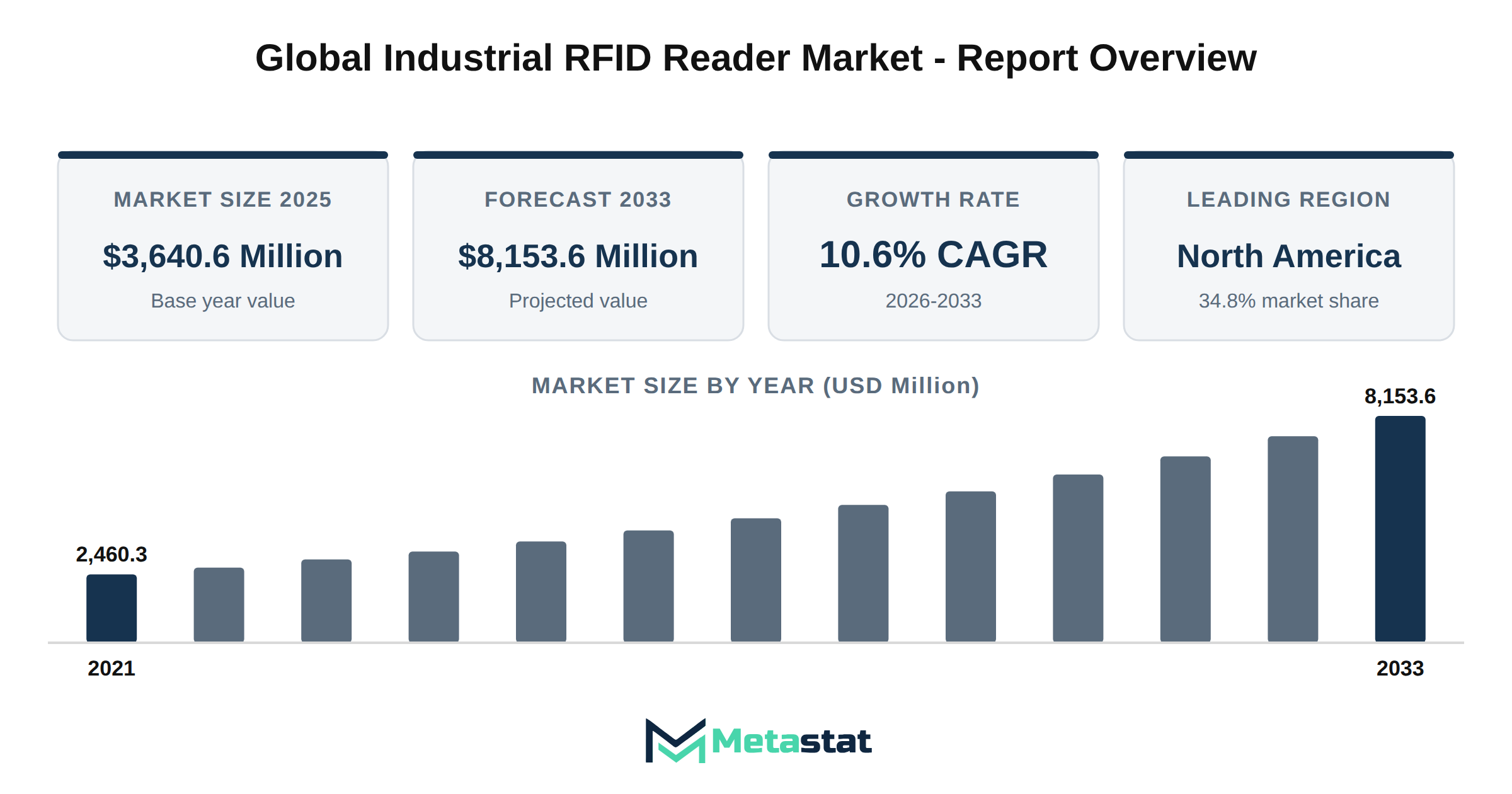
USD 3,640.6 Million
Base year
Market Size 2033
USD 8,153.6 Million
Forecast
CAGR 2025-2033
10.6%
Forecast period
Report Details
Comprehensive Market Analysis And Insights
Market Overview
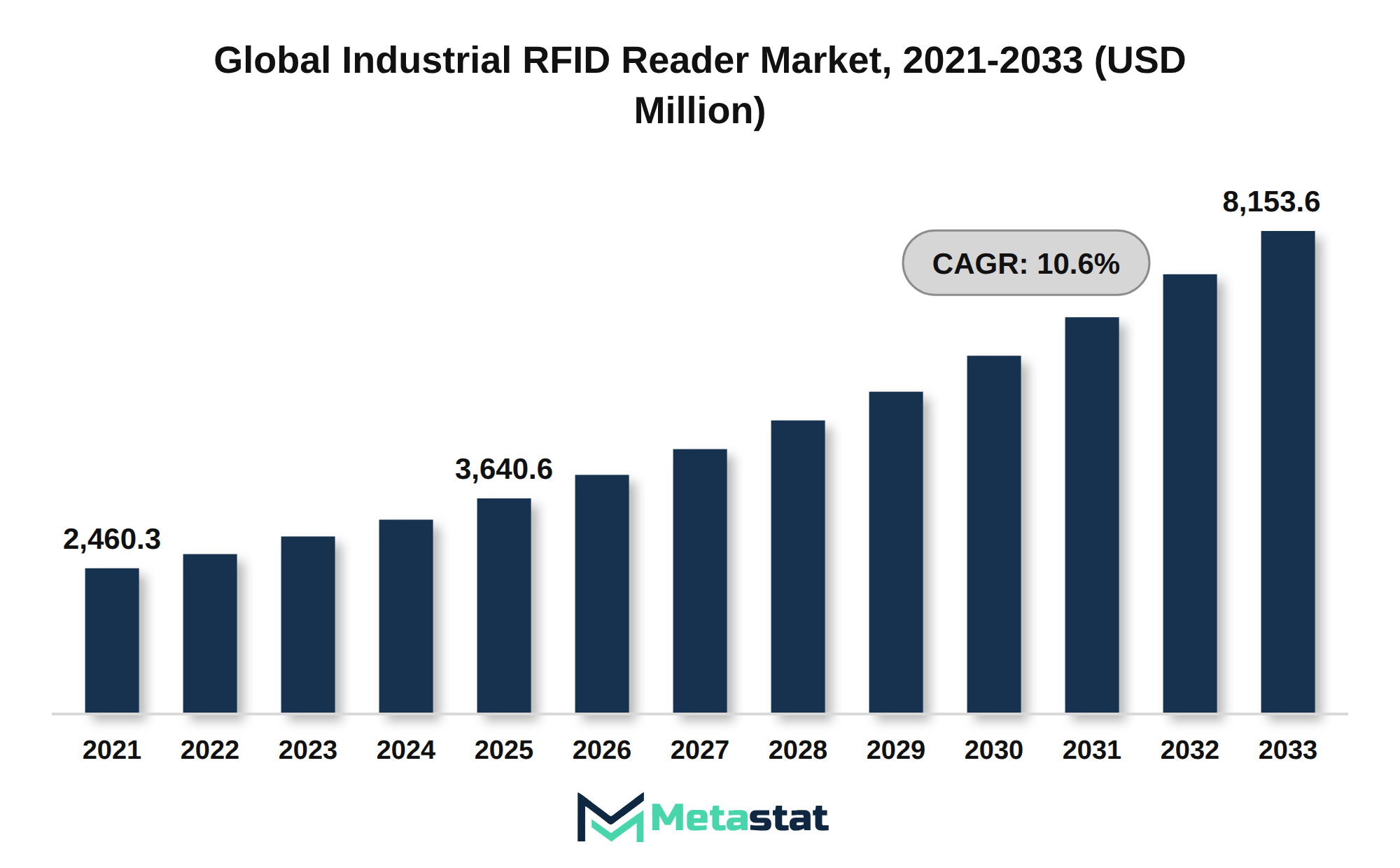
The global Industrial RFID Reader market was valued at USD 3,640.6 million in 2025 and is projected to reach USD 8,153.6 million by 2033, growing at a CAGR of 10.6% over the forecast period.
The global Industrial RFID Reader market is experiencing consistent growth driven by demand for real-time asset visibility, inventory accuracy, and operational efficiency across industrial environments. RFID readers play a critical role in tracking items, equipment, and personnel without direct line-of-sight requirements, making them valuable in manufacturing plants, warehouses, transportation hubs, and distribution facilities. Rising investments in digital transformation initiatives and smart factory infrastructure are accelerating market adoption worldwide.
Advancements in RFID technology have significantly improved analyzing accuracy, processing speed, and integration capabilities with enterprise resource planning and industrial IoT systems. Industries increasingly deploy fixed and handheld RFID readers to enhance supply chain transparency, reduce labor costs, and limit operational errors. Growing demand from the automotive, aerospace, healthcare, retail logistics, and food processing industries is expanding the customer base for industrial RFID reader manufacturers. The emergence of cloud-connected RFID systems further strengthens data-driven decision-making capabilities.
The demand for real-time asset visibility, inventory accuracy, and operational efficiency continues to drive the growth of the Industrial RFID Reader market across various industrial environments. RFID readers facilitate the tracking of goods, equipment, and personnel without requiring a direct line of sight, which proves invaluable in manufacturing plants, warehouses, transportation hubs, and distribution centers. Increased investments in digital transformation initiatives and smart factory infrastructure are enhancing market adoption globally.
Technological advancements in RFID systems have significantly enhanced analytical accuracy, processing speed, and integration capabilities with enterprise resource planning and industrial Internet of Things frameworks. Industries increasingly deploy fixed and handheld RFID readers to improve supply chain transparency, reduce labor costs, and minimize operational errors. The automotive, aerospace, healthcare, retail logistics, and food processing sectors demonstrate a growing appetite for RFID solutions, expanding the customer base for industrial RFID reader manufacturers. The rise of cloud-connected RFID systems further improves data-driven decision-making capabilities.
Ongoing regulatory compliance and standards shape market dynamics, while geopolitical risks influence supply chain operations. Research and development trajectories focus on next-generation innovations, including sustainable transformation initiatives that support decarbonization and circular economy practices. The evolving logistics architecture and sourcing landscape necessitate strategic planning, impacting capital allocation and infrastructure investments. A combination of macroeconomic headwinds, inflationary pressures, and currency volatility presents challenges while creating opportunities for future growth within the market.
Market Dynamics
Increasing adoption of automation accelerates RFID reader deployment
The growth of the industrial RFID reader market reflects the increasing adoption of industrial automation and smart manufacturing practices across various sectors. This trend is driven by the necessity for advanced tracking technology to enhance operational efficiency, particularly in computerized production environments. Organizations prioritize quick asset identification, production tracking, and workflow control, which drives the need for RFID readers in their operations. The integration of these readers within smart manufacturing infrastructure facilitates real-time data access, enabling organizations to make informed decisions that optimize their processes.
Rising demand for real-time inventory visibility plays a significant role in enhancing operational efficiency across industrial supply chains. Companies emphasize accurate inventory tracking to improve control and reduce operational delays, resulting in broader adoption of RFID technologies. Continuous data collection from RFID readers throughout warehouses and distribution centers generates insights that support improved inventory management. Future supply chain networks that focus on immediate visibility and data-driven strategies are expected to stimulate growth in the industrial RFID reader market, reinforcing the technology's role in modern manufacturing environments.
Investment in digital transformation drives growth
The surge in digital transformation initiatives significantly impacts the Industrial RFID Reader market. Companies increasingly embrace automation, artificial intelligence, and software integration to enhance operational efficiency. These advancements facilitate the shift from traditional processes to more streamlined, digitized operations, addressing the growing demand for real-time data access and improved asset management.
Industries including logistics, manufacturing, and retail demonstrate a strong focus on integrating RFID technology into their systems. Investments in automation and digitizing legacy processes result in improved productivity and reduced operational costs. In logistics, for instance, the implementation of RFID readers enhances inventory tracking and asset visibility, enabling companies to respond swiftly to market demands.
The expansion of the Industrial RFID Reader market correlates with increased capital investments in technology infrastructure. Businesses prioritize funding for digital solutions that support efficiency, productivity, and data analytics capabilities. This trend leads to a compound annual growth rate of 10.6% for the market, reflecting a robust shift toward enhanced technological integration across various sectors.
While organizations seek to optimize operations, the adoption of RFID technology becomes a strategic priority. By leveraging these advanced solutions, businesses capitalize on operational productivity and cost-efficiency initiatives. The integration of RFID readers significantly supports broader digital transformation efforts across industries.
High initial deployment costs hinder adoption
High initial deployment costs present a significant barrier to entry for small and medium-sized industrial enterprises aiming to adopt Industrial RFID Reader technology. Implementing RFID infrastructure requires substantial investment in hardware, software, device integration, and employee training. Budget constraints often prevent several smaller companies from pursuing technological advancements, limiting their competitiveness in the market. Future reductions in costs could alleviate financial pressures, but value concerns will likely persist for numerous organizations.
Signal interference in metal-rich environments presents another challenge, diminishing the performance and reliability of RFID systems. Industrial facilities typically contain metallic equipment and storage units that obstruct signal transmission. These performance inconsistencies impact data accuracy and operational confidence, leading businesses to hesitate in adopting RFID technology. Continuous research focusing on enhancing reader capabilities and improving signal management is essential for boosting performance across the Industrial RFID Reader market.
Expansion of smart warehouses drives demand
The rapid advancement of smart warehousing centers generates significant demand for advanced RFID tracking solutions, influencing the Industrial RFID Reader market. Enhanced capabilities in tracking and inventory management emerge owing to their essential role in efficient operations. RFID readers facilitate automatic identification, location tracking, and movement monitoring of goods within expansive storage facilities. These capabilities enhance operational efficiency, allowing organizations to optimize their supply chains and react swiftly to market changes.
Challenges arise from geopolitical fragmentation and tariff friction, complicating global supply chain dynamics. Such disruptions impact the sourcing of RFID components and technologies, leading to potential delays in deployment and increased costs for manufacturers. Competition intensifies because companies strive to innovate and integrate advanced technologies into their RFID offerings. This competitive environment creates pressure to maintain profit margins while managing rising input costs associated with technological advancements.
Workforce skill gaps contribute to the challenge. The transition to smart warehousing requires personnel with specialized knowledge in RFID technologies and data management systems. Organizations face difficulties in recruiting and retaining talent, impacting their ability to fully leverage RFID solutions. The ongoing evolution of industry standards and compliance requirements adds layers of complexity, prompting companies to invest in training and development, further straining resources.
The combined effect of these factors results in a dynamic market, where the Industrial RFID Reader market navigates complex challenges while pursuing growth opportunities. The focus on automation and smart technologies drives interest, but organizations address these challenges to realize the full potential of RFID solutions in their operations.
Market opportunity through technological disruptions
Technological disruptions significantly influence the Industrial RFID Reader market, presenting numerous opportunities for growth. Innovations in RFID technologies, including enhancements in UHF RFID and RAIN RFID systems, drive demand across various sectors. Industries including logistics, automotive manufacturing, and industrial manufacturing benefit from improved efficiency and accuracy in tracking assets and inventory.
Infrastructure modernization drives increased adoption of Industrial RFID Readers. Upgrades in warehouse systems and supply chain management infrastructures provide a conducive environment for integrating these technologies. The need for real-time data and operational transparency fuels investments in RFID solutions, enabling businesses to optimize their processes and reduce operational costs.
Geographical expansion of RFID technologies plays a crucial role in market growth. Regions including Asia Pacific and South America experience rising demand due to rapid industrialization and increasing awareness of automation benefits. Companies targeting these emerging markets gain a competitive edge by catering to specific local needs while expanding their global footprint.
Next-generation innovations in RFID devices, including compact read/write devices, enhance functionality and drive niche application growth. These advanced solutions address unique challenges in various industries, including healthcare, retail, and e-commerce fulfillment, enabling improved tracking and management of products.
Sustainability imperatives drive businesses to adopt eco-friendly RFID solutions, aligning with broader ESG-driven strategies. Companies focus on green transformations, incorporating sustainable practices into their operations, which enhances brand reputation and attracts environmentally conscious consumers. This shift towards sustainability opens new avenues for innovation and collaboration within the market.
Strategic consolidation through mergers and acquisitions strengthens market positioning for key players. By aligning complementary technologies and resources, companies enhance their capabilities, driving innovation and streamlining product offerings. This trend is expected to support long-term growth and increase market competitiveness while meeting evolving customer demands.
Digital procurement shifts and changing buying behaviors influence how businesses source RFID technologies. Organizations increasingly prioritize digital solutions, looking for integrated systems and efficient purchasing experiences. Adapting to these changes is critical for suppliers aiming to capture emerging opportunities in the Industrial RFID Reader market.
Market Segmentation Analysis
The Global Industrial RFID Reader market is segmented based on Reader Type, Technology, Application, and End-Use Industry.
By Reader Type, the market is further segmented into:
Fixed RFID Readers
Compact RFID Read/Write Devices
Antenna-Integrated RFID Readers
Handheld RFID Readers
RFID Gate Readers
Others
Fixed RFID Readers
Growth in the Fixed RFID Readers segment directly correlates with the increasing demand for continuous monitoring in automated industrial environments. Enhanced capabilities in information collection drive adoption across production centers, distribution centers, and processing equipment. Advancements in connectivity, improved processing speeds, and integration with control systems promote broader deployment within extensive operational networks. This segment is valued at USD 1,357.3 million in 2026 and is projected to reach USD 2,609.2 million by 2033, at a CAGR of 9.8% during the forecast period.
The evolution of technology within this segment supports operational efficiency, ensuring precise identification and tracking without interruptions. Key demand drivers include the necessity for real-time data access and the reduction of operational costs through optimized workflows. Regulatory compliance standards further enhance the commitment to deploying effective RFID solutions, allowing industries to maintain competitiveness in the market. While businesses strive to meet these standards, investments in Fixed RFID Readers are expected to increase, reinforcing their importance in various sectors.
Several players in the Industrial RFID Reader market are actively pursuing innovation in Fixed RFID Readers, focusing on product evolution to adapt to changing customer needs. This strategic focus enhances the capability of these readers, resulting in better performance and reliability. The unfolding technological landscape facilitates the introduction of next-generation solutions, which is anticipated to accelerate market growth and adoption rates.
Compact RFID Read/Write Devices
Compact RFID Read/Write Devices attract interest from industries searching for space-efficient identification solutions. Smaller form factors support installation in equipment with limited mounting areas. Advancements in durability, faster communication protocols, and improved operational reliability enhance suitability for production environments requiring precise identification without occupying significant installation space. Market growth is driven by rising demand for efficient inventory management and real-time tracking across various sectors. Enhanced connectivity features facilitate integration with existing industrial control systems, encouraging broader deployment within large-scale operational networks. This segment is estimated to reach USD 1,508.4 million by 2033, at a CAGR of 11.6% during the forecast period. Continued technological maturation and next-generation upgrades contribute to product evolution, ensuring these devices meet evolving operational objectives.
Antenna-Integrated RFID Readers
Adoption of antenna-integrated RFID readers experiences growth driven by simplified setup and reduced infrastructure requirements. Industrial operators prefer integrated designs that minimize deployment complexity while ensuring efficient operations. Enhanced reading accuracy, wider coverage areas, and lower maintenance needs support usage across warehouses, meeting centers, and logistics hubs. This segment is projected to reach USD 1,304.6 million by 2033. The move towards integrated solutions aligns with trends in automation and real-time data collection across various industries, contributing to the overall expansion of the Industrial RFID Reader market.
Handheld RFID Readers
Handheld RFID readers remain essential for mobile workforce operations requiring flexibility and immediate access to asset data. Demand rises across inventory verification, maintenance activities, and field inspections. Improved battery performance, wireless communication capabilities, and user-friendly interfaces support increased productivity while facilitating faster decision-making within business environments. This segment is projected to grow at a CAGR of 9.6% during the forecast period. Enhanced functionality aligns with the operational requirements of various industries, contributing to the expansion of the Industrial RFID Reader market.
RFID Gate Readers
RFID gate readers experience increasing utilization at access and exit checkpoints where high-volume tracking remains essential. Industrial centers depend on automated identification strategies to enhance operational visibility. Future advancements in reading range, accuracy under challenging conditions, and integration with organizational platforms support broader deployment across logistics operations. Enhanced connectivity and improved processing speed encourage adoption within extensive operational networks. The segment's growth aligns with the rising demand for efficient monitoring systems that facilitate streamlined access control. Industries are expected to invest in RFID gate readers to optimize workflow, reduce delays, and improve security measures across various applications within the industrial RFID reader market.
Others
Specialized commercial necessities drive adoption of other reader categories. General solutions often fail to meet specific operational desires, creating opportunities for innovation in tailored applications. Custom-designed tracking, monitoring, and authentication functionalities emerge, addressing unique industry requirements. Technological development continues, with industry-specific products evolving to support changing operational objectives. Enhanced capabilities in the market allow for more efficient identification and tracking processes, further integrating with existing workflows. This segment illustrates resilience by aligning with advancements in regulations, compliance standards, and evolving market dynamics. Future growth is expected to hinge on strategic opportunity windows and capital investments that enhance product relevance across diverse applications.
By Technology, the market is further segmented into:
UHF RFID Readers
HF RFID Readers
LF RFID Readers
RAIN RFID / EPC Gen2 Readers
Multi-Frequency RFID Readers
Others
UHF RFID Readers
UHF RFID Readers segment is valued at USD 1,308.1 million in 2026 and is projected to reach USD 2,527.6 million by 2033, at a CAGR of 9.9% during the forecast period. Long reading distances and high-speed data capture capabilities drive demand for UHF RFID technology across various industrial applications. Increasing industrial automation initiatives enhance adoption in logistics and asset management operations. Continuous improvements in signal performance, reliability, and scalability facilitate broader implementation within complex business ecosystems targeting operational efficiency. The market experiences significant growth resulting from these developments, positioning UHF RFID readers because a crucial component in modern industrial processes.
HF RFID Readers
Demand for HF RFID readers reflects growth in applications requiring reliable short-range communication and consistent data exchange. Industries specializing in controlled access, product authentication, and process validation contribute to market expansion. Future advancements aimed at enhancing compatibility and processing capabilities will strengthen utilization across commercial sectors seeking dependable identity solutions. The HF RFID Readers segment is estimated to reach USD 1,223 million by 2033, at a CAGR of 8.3% during the forecast period. Continued technological maturation and next-generation upgrades are expected to drive adoption, facilitating broader implementation within various sectors. Increased focus on regulatory compliance and certification standards shapes the operational landscape, further influencing demand dynamics within the Industrial RFID Reader market.
LF RFID Readers
Solid performance under challenging conditions characterizes LF RFID Readers, making them relevant in various industrial sectors. Environments with metal surfaces, moisture exposure, and demanding manufacturing settings drive the ongoing adoption of this technology. Ongoing product enhancements focused on efficiency and durability strengthen deployment within specialized business applications. The LF RFID Readers segment is projected to reach USD 448.4 million by 2033, reflecting increased industrial automation initiatives and technological maturation across the market. Numerous industries, including logistics and manufacturing, increasingly rely on LF RFID solutions to improve asset management and operational efficiency.
RAIN RFID / EPC Gen2 Readers
Growing demands for large-scale asset visibility and supply chain transparency significantly influence the RAIN RFID / EPC Gen2 Readers segment within the Industrial RFID Reader market. Industrial organizations increasingly depend on advanced tracking systems to enhance operational efficiency. Continuous innovation in interoperability, reading accuracy, and data management capabilities accelerates adoption across multiple industrial sectors. The segment is projected to grow at a CAGR of 14.2% during the forecast period, reflecting a strong commitment to improving tracking accuracy and system integration. Increasing investments in automation and real-time data analytics further support the surge in demand, positioning RAIN RFID technology because a key player in industrial applications.
Multi-Frequency RFID Readers
Multi-frequency RFID readers attract industries seeking flexible solutions capable of supporting diverse operational requirements. Functionality across multiple frequency bands enhances adaptability and reduces infrastructure constraints. Trends emphasizing performance optimization and compatibility create additional opportunities within various business environments. Deployment of these readers aligns with demands for enhanced operational efficiency and increased visibility in asset management and logistics. Industries including logistics, manufacturing, and retail recognize the potential of multi-frequency solutions to streamline processes and improve resource tracking.
Technological maturation in multi-frequency readers drives innovation, positioning these devices because versatile options for complex ecosystems. The ongoing evolution of product features, including enhanced data processing capabilities and integrated communication functions, further strengthens their appeal. While industries evaluate their tracking and identification needs, multi-frequency RFID readers present compelling advantages that align with emerging operational strategies. This segment's growth reflects a broader trend in the Industrial RFID Reader market, where adaptability and efficiency are essential.
Advancements in technology significantly impact the Others segment of the Industrial RFID Reader market. Increased focus on specialized applications drives demand for unique reader solutions, addressing specific operational needs across various industries. Emerging trends highlight the necessity for integration and adaptability, allowing businesses to enhance their operational efficiency through tailored solutions. Ongoing development in product functionality and compatibility supports broader adoption among firms seeking effective identification technologies.
Primary demand drivers include technological maturation and evolving end-use dynamics, where industries pursue innovative solutions that streamline processes and improve data accuracy. Adoption within specialized sectors creates growth opportunities, emphasizing the importance of strategic investments in advanced RFID technologies. The market landscape continues to evolve owing to companies prioritizing supply chain resilience and exploring new applications for RFID solutions, thereby expanding competitive advantages.
By Application, the market is further segmented into:
Warehouse and Conveyor Automation
Track and Trace In Logistics
Production and Work-In-Process Tracking
Vehicle and Container Identification
Tool Identification and Machine Setup Validation
Inventory and Asset Tracking
Others
Warehouse and Conveyor Automation
Valued at USD 987.9 million in 2026, the Warehouse and Conveyor Automation segment is projected to reach USD 2,038.4 million by 2033, reflecting a compound annual growth rate (CAGR) of 10.9% during the forecast period. Demand for RFID readers in this application arises from increasing automation in warehousing and logistics, aimed at enhancing operational efficiency and accuracy. The trend towards digital transformation within supply chains drives the integration of RFID technology, enabling real-time asset tracking and inventory management.
Technological maturation significantly influences the expansion of this segment. Next-generation upgrades, including advanced RFID reader capabilities, improve data acquisition speeds and accuracy, facilitating smoother warehouse operations. The shift from manual processes to automated systems greatly influences end-user dynamics, particularly in industries focusing on logistics and warehousing.
Regulatory compliance standards regarding inventory accuracy and traceability further necessitate the adoption of RFID solutions. Companies investing in these technologies experience reduced operational costs and improved margins, enhancing their competitive position in the market. The Warehouse and Conveyor Automation segment is projected to contribute substantially to the overall growth of the Industrial RFID Reader market, driven by these primary demand drivers and adoption catalysts.
Track and Trace In Logistics
Growth in the Track and Trace In Logistics segment reflects a significant increase in demand for efficient supply chain management solutions. This surge stems from the need for companies to enhance visibility and accountability throughout their logistics processes, promoting more streamlined operations. Industries including logistics and warehousing increasingly prioritize real-time tracking to reduce errors and improve inventory management. The segment is estimated to reach USD 2,038.4 million by 2033, at a CAGR of 12.1% during the forecast period.
Technological advancements in RFID systems drive improvements in tracking accuracy and data management capabilities, facilitating integration with existing logistics infrastructure. Companies adopting next-generation RFID readers experience enhanced operational efficiency, which translates into reduced costs and improved customer satisfaction. Increased regulatory requirements for supply chain transparency further drive the adoption of RFID technologies across various sectors, reinforcing the strategic importance of this segment within the broader Industrial RFID Reader market.
Competitive pressures compel businesses to invest in advanced tracking solutions, contributing to the segment's strong growth. Players operating in this space focus on product evolution and next-gen upgrades to address changing market dynamics and consumer expectations. The outlook for this segment signals expansive opportunities owing to firms seeking to enhance supply chain resilience and mitigate operational vulnerabilities.
Production and Work-In-Process Tracking
Increasing emphasis on real-time visibility into production processes drives the demand for RFID solutions within the Production and Work-In-Process Tracking segment. Industries focusing on enhancing operational efficiency benefit from adopting RFID technology, ensuring accurate tracking of materials and products throughout the manufacturing cycle. This segment supports manufacturers in reducing lead times, minimizing errors, and improving inventory management.
Utilization of RFID readers allows companies to monitor production workflows effectively, addressing challenges including bottlenecks or delays. The growth of automation in manufacturing plays a significant role in stimulating interest in these tracking solutions, particularly among automotive and industrial manufacturing sectors. Companies investing in production optimization increasingly rely on RFID solutions, which leads to a substantial increase in market value.
With the global market for Industrial RFID Reader expected to reach USD 1,386.1 million by 2033, the segment gains traction due to businesses recognizing the necessity for advanced tracking systems. Rapid technological advancements further enhance the appeal of RFID solutions, promoting integration with Industry 4.0 initiatives, which emphasize the importance of data-driven decision-making in manufacturing environments.
While operational complexities rise, the importance of RFID in mitigating inefficiencies becomes evident, ensuring that production lines operate smoothly. The segment expands in response to the increasing demand for real-time data analytics and process control, positioning itself because a critical component in modern manufacturing ecosystems.
Vehicle and Container Identification
Significant growth in the Vehicle and Container Identification segment stems from increasing demands for efficient tracking and management of assets in various industries. Adoption of RFID technology simplifies the identification process, reduces human error, and enhances operational efficiency. Industries including logistics, transportation, and manufacturing benefit from these solutions, prompting firms to invest in advanced identification systems. The segment is projected to grow at a CAGR of 9.1% during the forecast period, reflecting a strong commitment to improving asset visibility and inventory management.
Technological advancements play a crucial role in driving adoption within this segment. Innovations including enhanced read ranges, improved data processing capabilities, and compatibility with various container types contribute to the growth trajectory. The evolution of RFID technology facilitates integration into existing supply chain processes, thereby enhancing productivity and reducing costs for end-users. This trend indicates a robust investment outlook for the Industrial RFID Reader market, particularly in the Vehicle and Container Identification application.
Regulatory compliance and standards significantly influence the segment's expansion. Industries are increasingly required to adhere to stringent identification protocols for safety and efficiency, prompting the adoption of RFID solutions. Compliance with these regulations creates a secure and streamlined operational environment, encouraging investments in advanced tracking technologies. Overall, the Vehicle and Container Identification segment stands out in the market for its potential to enhance efficiency, comply with regulations, and drive sustainable growth.
Tool Identification and Machine Setup Validation
Tool identification and machine setup validation improve RFID technology to enhance operational efficiency and accuracy in industrial environments. The demand for this application stems from the increasing need for precise tracking of tools and equipment, which minimizes errors and reduces downtime in production processes. Enhanced visibility into tool usage promotes better inventory management and operational planning, driving adoption across various manufacturing sectors.
Technological maturation within the RFID landscape enables next-generation upgrades that enhance performance and reliability, contributing to the growth of this application segment. Innovations in RFID technology facilitate integration with existing industrial systems, allowing companies to utilize advanced data analytics for improved decision-making. This evolution supports a transition towards automation, creating a more agile and responsive manufacturing environment.
Regulatory compliance standards influence the tool identification and machine setup validation segment. Adhering to safety and operational regulations necessitates accurate tracking and validation of tools within industries including automotive manufacturing and industrial production. Compliance with these standards enhances operational integrity while mitigating risks associated with tool mismanagement.
Downstream application dynamics reflect a shift toward more automated and technology-driven operations. While industries embrace digital transformation, the integration of RFID technology for tool identification and validation aligns with broader trends toward Industry 4.0. This alignment promotes significant capital investment in RFID systems, allowing businesses to enhance their operational capabilities and maintain competitive advantage.
Supply chain resilience remains crucial, particularly in sectors experiencing disruptions. RFID technology offers a solution for maintaining visibility and control over tool inventories, thereby reducing the risks associated with supply chain vulnerabilities. The ability to swiftly adapt to changing conditions enhances operational efficiency and supports sustained business growth.
Inventory and Asset Tracking
Growing attention on inventory and asset visibility significantly influences the adoption of RFID technology across various sectors. Industries including logistics, manufacturing, and retail increasingly prioritize real-time tracking of assets to enhance operational efficiency and reduce losses. This trend stems from a heightened demand for streamlined operations, reducing discrepancies in inventory counts, and improving resource utilization.
Technological advancements drive the evolution of inventory and asset tracking solutions. The integration of next-generation RFID readers with enhanced capabilities, including improved read ranges and faster processing speeds, enables more reliable inventory management. These innovations facilitate accurate tracking, which is critical for organizations striving for optimal efficiency in their operations.
End-use dynamics demonstrate a strong preference for automated tracking systems that minimize human error and improve data accuracy. While sectors adapt to new technologies, the ability to leverage RFID for effective asset management becomes a vital competitive advantage. The move towards digital transformation accelerates investments in RFID solutions, driven by businesses seeking to modernize their operations.
Regulatory compliance standards further drive the necessity for precise inventory tracking methods. Companies face increasing pressure to adhere to industry regulations that mandate accurate reporting and accountability. This compliance landscape enhances the market's attractiveness, pushing organizations to implement reliable RFID systems to avoid penalties and maintain operational integrity.
Cost structures remain a critical consideration for companies evaluating RFID investments. While initial implementation costs for RFID systems are significant, long-term savings manifest through improved inventory accuracy and reduced labor costs. Organizations recognize the return on investment associated with efficient asset tracking, and the adoption of these technologies is anticipated to strengthen.
Strategic opportunity windows indicate that firms focusing on inventory and asset tracking stand to benefit from the growing demand for supply chain resilience. Heightened awareness of supply chain vulnerabilities prompts organizations to invest in effective tracking solutions. This focus on resilience positions the market for sustained growth, driven by companies prioritizing the integration of advanced RFID technology into their operations.
Overall, the inventory and asset tracking segment within the industrial RFID reader market demonstrates significant growth potential. The combination of technological advancements, regulatory demands, and evolving end-use applications contributes to a dynamic market that supports ongoing investment and innovation.
Increasing interest in diverse applications drives the Others segment of the Industrial RFID Reader market. This sub-segment encompasses various use cases, including specialized asset tracking and niche industrial processes. Adoption by industries seeking tailored solutions for unique operational challenges significantly influences growth. Technological advancements enhance compatibility with emerging systems and applications, facilitating integration into existing workflows. Awareness of regulatory compliance further increases demand, attributed to industries prioritizing adherence to standards in their operational practices.
A focus on cost structures and pricing volatility impacts decisions regarding RFID technology investments. Companies explore innovative alternatives and disruptive technologies that offer enhanced functionalities or cost efficiencies, highlighting the importance of strategic opportunity windows. The resilience of supply chains remains critical, ensuring that RFID solutions align with broader operational goals and logistics strategies. Overall, the Others segment presents unique challenges and opportunities that contribute to the evolving landscape of the Industrial RFID Reader market.
By End-Use Industry, the market is further segmented into:
Logistics and Warehousing
Automotive Manufacturing
Industrial Manufacturing
Food and Beverage
Pharmaceutical and Healthcare
Retail and E-Commerce Fulfillment
Others
Logistics and Warehousing
Valued at USD 1,155.9 million in 2026, the Logistics and Warehousing segment is projected to reach USD 2,446.1 million by 2033, achieving a CAGR of 11.3% during the forecast period. Increasing demand for improving supply chain efficiency drives investments in RFID technology across logistics and warehousing operations. Enhanced tracking and real-time data access significantly optimize inventory management and reduce operational costs.
Adoption of advanced RFID solutions benefits organizations by streamlining warehouse operations and minimizing errors. The transition toward automation in logistics contributes to the demand for more integrated RFID systems, enabling organizations to efficiently manage assets and inventory. Manufacturers focus on next-generation upgrades that enhance reader performance and compatibility with evolving technologies.
Competition within the market prompts companies to invest in research and development, leading to innovative product evolution tailored to the unique needs of the logistics and warehousing sector. Supply chain vulnerabilities, including disruptions caused by global events, heighten the importance of resilient inventory management systems. This increased focus on reliability drives demand for robust RFID solutions that provide consistent performance.
Technological maturation of RFID systems supports integration with complementary technologies, including the Internet of Things (IoT) and artificial intelligence (AI). These integrations enhance data analytics capabilities, providing businesses with insights to drive operational improvements. The Logistics and Warehousing segment stands to benefit significantly from these advancements, supporting sustained growth in the Industrial RFID Reader market.
Automotive Manufacturing
Growth in the automotive manufacturing sector is driven by increasing automation, efficiency demands, and the need for enhanced tracking and identification solutions. The integration of Industrial RFID readers supports manufacturers in maintaining accurate inventory levels and streamlining production processes. Enhanced visibility into the supply chain enables automotive manufacturers to respond swiftly to market changes and optimize resource allocation. This significantly impacts operational efficiency.
The automotive industry is experiencing a shift towards advanced technologies, including next-gen RFID solutions that facilitate real-time data exchange and improve overall productivity. Adoption of these technologies supports compliance with regulatory standards while minimizing errors in vehicle assembly and parts management. This trend leads to reduced operational costs and enhanced production timelines, ultimately benefiting the market.
The automotive manufacturing segment is projected to reach USD 1,345.3 million by 2033, at a CAGR of 9.5% during the forecast period. Ongoing investments in automation and the evolving landscape of manufacturing processes that prioritize speed and accuracy drive this growth.
Strategic partnerships among key players in the market enhance the availability of innovative solutions tailored to automotive manufacturing needs. Companies including Zebra Technologies, Impinj, Honeywell, and Datalogic actively contribute to advancing RFID technology. These efforts position them to capture an increasing share of the automotive manufacturing segment within the broader Industrial RFID Reader market.
Industrial Manufacturing
Increasing investments in automation and real-time data management significantly drive the demand for RFID solutions in the industrial manufacturing sector. Adoption of RFID technology enhances operational efficiency by streamlining production processes and improving inventory management. Industries including automotive and aerospace increasingly leverage RFID for improved tracking of materials and components, resulting in reduced lead times and enhanced quality control. Manufacturers prioritize regulatory compliance and quality assurance, reinforcing the market's expansion by integrating RFID systems that facilitate traceability and adherence to industry standards.
Technological maturation continues to impact the adoption rates of RFID systems. Next-generation upgrades offer improved functionalities, including enhanced data capture and processing capabilities, which attract a wider range of applications within industrial manufacturing. The market benefits from innovations in UHF RFID technology, which provide greater read ranges and faster data transmission rates, further supporting industry needs. The ongoing evolution of RFID products ensures compatibility with emerging technologies, including IoT and cloud computing, enhancing the overall value proposition.
Cost structures in the industrial manufacturing segment focus on balancing the initial investment against long-term operational savings. Pricing volatility in raw materials and components presents challenges; however, the efficiency gains realized through RFID technology often justify the expenditures. The potential for reduced labor costs and improved accuracy in inventory management contributes to a strong return on investment, promoting further market expansion. By 2033, the Industrial Manufacturing segment is projected to reach USD 1,549.2 million, reflecting significant growth driven by these factors.
Supply chain resilience features prominently in strategic discussions. Industries assess vulnerabilities and seek to mitigate risks. RFID technology enhances visibility throughout the supply chain, enabling manufacturers to quickly identify and respond to disruptions. This capability is essential for maintaining competitiveness in a global marketplace characterized by rising expectations for rapid fulfillment and quality assurance. Strategic opportunity windows arise from industries that systematically integrate RFID solutions into their operations, positioning themselves to capitalize on emerging market trends and consumer demands.
Food and Beverage
Demand for Industrial RFID Readers within the food and beverage sector is driven by increasing requirements for enhanced traceability, inventory management, and quality assurance throughout production processes. Compliance with stringent regulatory standards concerning food safety necessitates the adoption of advanced tracking technologies. Manufacturers strive to optimize supply chain efficiency and reduce operational costs, creating an environment conducive to RFID technology integration.
The segment's growth is projected at a CAGR of 9.9% during the forecast period. This expansion reflects the industry's ongoing technological maturation and the continuous evolution of RFID solutions tailored for food and beverage applications. Companies increasingly recognize the value of real-time data visibility in managing logistics and production workflows, further propelling market demand.
Strategic partnerships and collaborations among key players enhance innovation and product offerings, resulting in improved functionalities and lower costs. Market participants include notable firms including Zebra Technologies, Honeywell, and Datalogic, each contributing unique solutions to address the specific needs of the food and beverage sector. The commitment to continuous improvement and investment in next-generation upgrades positions this segment favorably within the broader Industrial RFID Reader market.
Pharmaceutical and Healthcare
Growing demand for advanced tracking and inventory management systems significantly influences the adoption of Industrial RFID Readers in the pharmaceutical and healthcare sector. Increasing regulatory requirements for tracking medications and ensuring patient safety drive investments in RFID technology. Healthcare facilities leverage RFID solutions to enhance supply chain efficiency, reduce errors in medication administration, and improve overall operational effectiveness.
Technological maturation in RFID technology facilitates integration into existing healthcare systems, promoting the expansion of this segment. The emergence of next-generation upgrades ensures enhanced functionality, including real-time data analytics and improved readability, further supporting market growth.
Product evolution, characterized by the development of specialized RFID tags and readers for medical applications, meets the unique requirements of the pharmaceutical industry. Downstream applications in areas including patient identification, asset tracking, and inventory management emphasize the critical role of RFID technology in enhancing healthcare operations.
Shifts in consumption patterns, particularly the increasing emphasis on automated solutions, contribute to heightened demand for RFID systems. Regulatory compliance standards regarding the traceability of pharmaceuticals necessitate robust tracking solutions, propelling market growth.
Strategic opportunity windows arise from ongoing investments in healthcare infrastructure and technology, creating a favorable environment for RFID adoption. Capital investment outlook remains positive, with stakeholders recognizing the potential benefits of integrating RFID technology to streamline processes and improve patient care.
Retail and E-Commerce Fulfillment
Increasing demand for efficient inventory management and real-time tracking fuels the Retail and E-Commerce Fulfillment segment. Adoption of Industrial RFID Readers optimizes supply chain processes, enhancing accuracy and reducing errors during order fulfillment. The retail sector increasingly focuses on improving customer experience, driving investments in technology that streamline operations.
Technological maturation supports the integration of RFID systems into existing infrastructures, offering scalable solutions for businesses. Next-generation upgrades, including enhanced read ranges and faster processing speeds, contribute to wider adoption across retail environments. Product evolution in RFID technology, including compact and handheld readers, caters to the diverse needs of e-commerce and retail applications.
End-use dynamics demonstrate a shift towards automated inventory management systems, which improve inventory accuracy and reduce labor costs. Regulatory compliance standards increasingly influence investment in RFID solutions, promoting traceability and accountability within the retail sector. Pricing volatility and margin pressures continue to challenge businesses, emphasizing the need for solutions that enhance operational efficiency.
Capital investment outlook in the Retail and E-Commerce Fulfillment segment remains positive, driven by the need for supply chain resilience and the increasing importance of logistics vulnerabilities. Companies seek to mitigate risks associated with delays and disruptions, which strengthens the case for RFID technology adoption. Strategic opportunity windows emerge owing to firms looking to leverage RFID systems for competitive advantage in a changing market.
Demand for the Others segment within the Industrial RFID Reader market arises from diverse applications that do not fall under traditional categories. Industries including pharmaceuticals, healthcare, retail, and e-commerce fulfillment apply RFID technology for various purposes, enhancing tracking and management capabilities. Adoption of RFID solutions in these sectors is driven by the need for improved efficiency and accuracy in inventory management and asset tracking.
This sub-segment benefits from advancements in RFID technology, including miniaturization and cost reduction, enabling broader implementation across smaller-scale operations. The continued evolution of RFID products, including multi-frequency and specialized readers, supports enhanced functionality tailored to specific industry requirements.
Regulatory compliance standards in industries like pharmaceuticals and healthcare necessitate robust tracking systems, further propelling demand for RFID solutions. Companies increasingly invest in strategic opportunities to leverage RFID technology for improved operational efficiency, security, and data accuracy.
Consumption shifts toward digital transformation and automation in various industries create a favorable environment for the expansion of the Others segment. Organizations seeking to modernize their processes find the integration of RFID technology increasingly relevant.
Strategic investments in research and development lead to innovative applications of RFID systems, positioning the Others segment for growth within the broader Industrial RFID Reader market. The focus on enhancing supply chain resilience and adopting disruptive alternatives will continue to drive market expansion.
By Region
Based on geography, the Global Industrial RFID Reader market is divided into North America, Europe, Asia-Pacific, South America, Middle East, and Africa.
North America
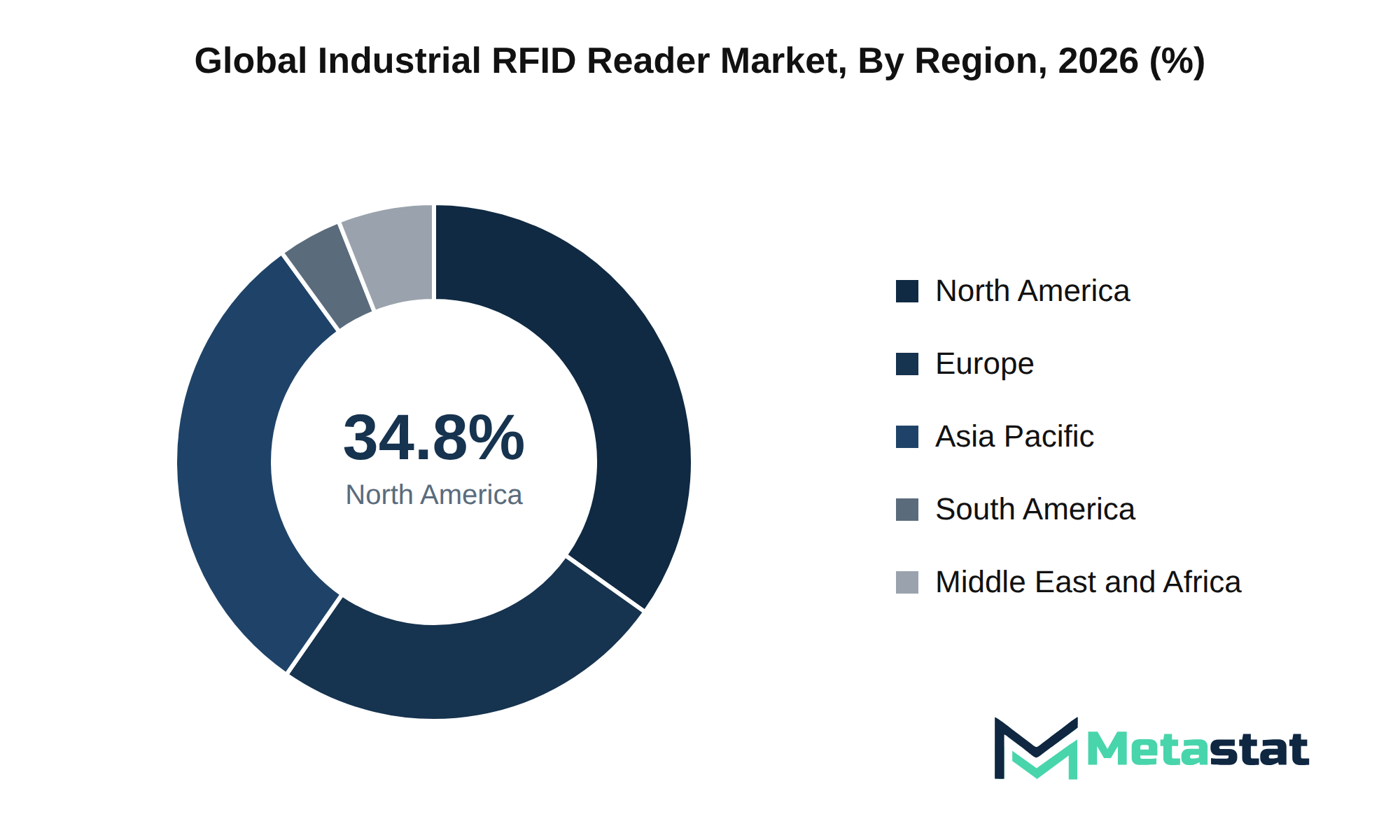
North America holds a significant position in the Industrial RFID Reader market, with a projected market size of USD 2,723.3 million by the end of 2033, expanding at a CAGR of 10.6% throughout the forecast period. This region accounts for a large share of the global market in 2025, underscoring its important role in the overall industry.
Continuous modernization of infrastructure across the United States, Canada, and Mexico supports the increasing adoption of Industrial RFID Readers. Key industries, including logistics and manufacturing, benefit from enhanced operational efficiencies and improved tracking capabilities. The implementation of RFID technology leads to significant cost reductions and operational improvements, driving demand for advanced solutions.
The United States remains the largest contributor to market growth, driven by high-value replacement cycles and a mature market. Canadian enterprises are increasingly investing in localized manufacturing and supply chain optimization, further propelling market expansion. Mexico's emerging market dynamics, combined with nearshoring initiatives, create additional opportunities for growth within the region.
Major players, including Zebra Technologies, Honeywell, and Impinj, actively compete for market share through innovative product offerings and strategic partnerships. The competitive landscape encourages continuous improvements in technology and application diversity, enhancing the overall value proposition of the market.
Investment in domestic manufacturing capabilities and foreign direct investment flows signify a robust outlook for the Industrial RFID Reader market in North America. The region's strong focus on automation and real-time data management is expected to further support growth, ensuring the market remains a critical player in the global context.
Europe
The Industrial RFID Reader market in Europe exhibits significant growth potential, fueled by increasing investments in automation and real-time tracking solutions. Countries including Germany, France, and the UK serve because critical hubs for technology adoption, driven by their advanced manufacturing sectors and robust supply chain infrastructures. The presence of established players like Zebra Technologies and Honeywell enhances competitive dynamics, encouraging innovation and product development.
Germany leads in market share within Europe, with its strong focus on Industry 4.0 initiatives. France and the UK follow closely, supported by governmental policies encouraging digital transformation across industries. Italy and Spain demonstrate rising adoption rates, particularly in logistics and warehousing applications, where efficiency and accuracy are essential.
Emerging markets in the region, including Eastern European countries, present opportunities for growth because businesses modernize their infrastructures and integrate RFID solutions. The region's diverse end-use industries, from automotive manufacturing to food and beverage, highlight the versatile applications of RFID technology, further propelling market expansion.
Europe stands positioned for sustained growth, driven by technological advancements, evolving consumer behaviors, and increasing regulatory compliance demands. Collaboration among local vendors and international players will play a crucial role in shaping the future of the market.
Asia-Pacific
The Industrial RFID Reader market in the Asia-Pacific region exhibits a significant share, driven by rapid industrialization, particularly in countries including China, India, and Japan, where manufacturing sectors increasingly adopt automation technologies. This shift facilitates enhanced supply chain management and real-time tracking capabilities, addressing the growing need for operational efficiency.
Infrastructure modernization is essential in the region, with investments directed towards upgrading logistics and manufacturing facilities. Countries like South Korea and Australia are leading in adopting advanced RFID solutions, enhancing their competitive edge in various sectors, including automotive and logistics. The increasing focus on localized manufacturing and supply chain regionalization further supports the market's expansion, driven by companies seeking to reduce lead times and improve responsiveness to customer demands.
Emerging market front-runners including India show substantial potential for growth, driven by rising investments in technology and a growing emphasis on digital transformation across industries. The presence of domestic market participants, including Zebra Technologies and Honeywell, creates a competitive environment that encourages continuous innovation and the introduction of advanced RFID solutions tailored to regional needs.
Geopolitical factors, including trade policies and regulatory frameworks, shape the market dynamics throughout Asia-Pacific. Companies navigate complex compliance mandates while adapting to the varying cultural nuances and regional buying behaviors. While industries continue to seek efficient tracking and identification solutions, the Industrial RFID Reader market in the Asia-Pacific region is projected to experience significant growth over the forecast period, reaching an estimated value of USD 8,153.6 million by 2033.
South America
The Industrial RFID Reader market in South America is valued at USD 3,640.6 million in 2025, representing a 4.00% share of the global market. Brazil and Argentina serve because the primary markets in the region, with Brazil leading in adoption driven by increased investments in technology and automation across various sectors. Argentina follows with notable growth in logistics and industrial manufacturing, resulting from modernization initiatives and a growing emphasis on supply chain efficiency.
The industry anticipates growth owing to rising demand for advanced tracking systems, particularly in logistics and warehousing. The region's infrastructure modernization efforts play a vital role in enhancing the operational capabilities of companies that implement Industrial RFID Readers. High-value replacement cycles align with the need for more efficient equipment, thereby supporting market expansion. Investment in localized manufacturing and nearshoring initiatives further strengthens the market position, facilitating better service delivery and supply chain responsiveness.
Geopolitical factors contribute to a complex competitive landscape, where local compliance mandates and trade policies influence procurement strategies. The presence of established vendors including Zebra Technologies, Honeywell, and Datalogic enables a robust offering of RFID solutions tailored to meet regional demands. This dynamic drives competition and innovation in product development, ultimately benefiting end-users across various sectors.
Middle East and Africa
Saudi Arabia, UAE, and South Africa serve because key markets for the Industrial RFID Reader market within the Middle East and Africa. The region holds a 6.00% share of the global market in 2025, indicating a growing interest in RFID technology across various sectors. Demand for inventory management, tracking solutions, and automation significantly influences this growth, particularly in retail, logistics, and manufacturing. Infrastructure modernization efforts, particularly in urban areas, further enhance the adoption of Industrial RFID Readers.
Investment in technological advancements drives the enhancement of local supply chains, creating opportunities for companies engaging in localized manufacturing. Emerging markets within the region, especially in the UAE and Saudi Arabia, experience growth due to strategic initiatives aimed at diversifying economies and encouraging innovation. The competitive landscape includes several players, including Zebra Technologies, Impinj, and Honeywell, which strengthen their presence through strategic partnerships and product innovation.
Challenges related to regulatory frameworks and compliance mandates persist. Adapting to diverse local regulations requires investment but ultimately creates a more efficient market environment. Increasing preferences for enhanced tracking solutions among businesses boost demand for Industrial RFID Readers, leading to incremental growth in the region. With a projected market value of USD 8,153.6 million by 2033, opportunities for expansion in underpenetrated territories promise significant returns.
Competitive Landscape and Strategic Insights
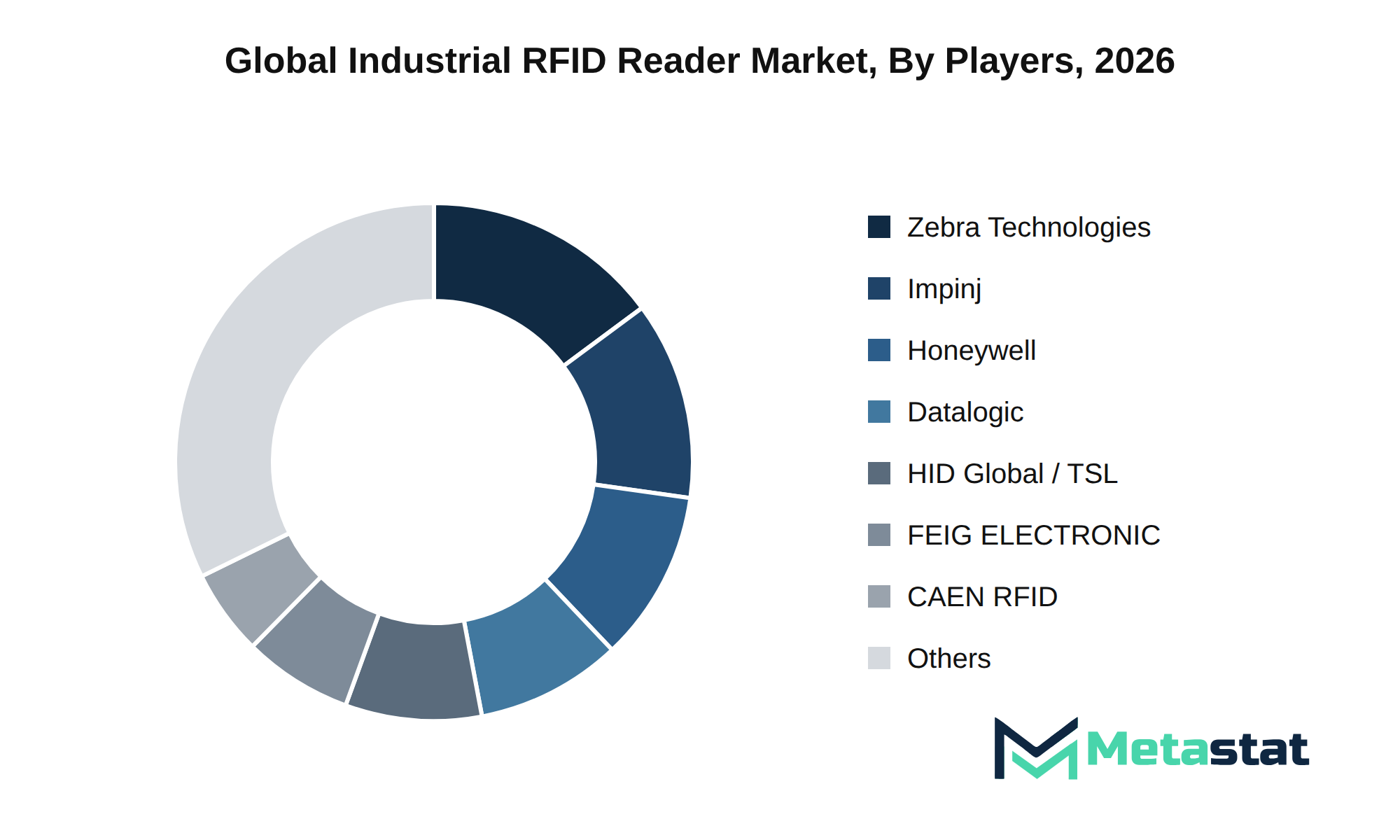
The Industrial RFID Reader market exhibits varied competitive behaviors driven by strategic consolidation, product differentiation, and innovation in technology. Leading players including Zebra Technologies, Honeywell, and Impinj focus on developing proprietary technologies while expanding their research and development pipelines. This approach enhances their market presence and allows them to offer advanced features that appeal to various end-use industries including logistics, automotive manufacturing, and industrial manufacturing.
Strategic alliances and partnerships have emerged owing to key growth vectors among participants. Companies like Datalogic and HID Global / TSL engage in collaborations to enhance their supply chain dominance and streamline procurement processes. This trend enables firms to leverage shared resources and expertise, resulting in improved customer retention strategies and heightened brand equity in a competitive marketplace.
The threat of new entrants remains a consideration, with established companies maintaining robust intellectual property portfolios that create barriers to entry. Players including Alien Technology and FEIG ELECTRONIC invest heavily in patent landscapes to safeguard their innovations and defend their market positions. The future competitive outlook indicates a focus on technological defensibility, further enhancing the strategic frameworks within the Industrial RFID Reader market.
Forecast and Future Outlook
Market size is forecast to rise from USD 3,640.6 million in 2025 to over USD 8,153.6 million by 2033, reflecting a compound annual growth rate (CAGR) of 10.6%. The base case outlines that growth is expected to occur consistently, driven by advancements in technology and increasing adoption in various industries including logistics, automotive, and industrial manufacturing. Investments in infrastructure, strategic capital allocation, and integration of next-generation technologies will support this growth trajectory.
In a bull case scenario, heightened demand for automation and data accuracy leads to accelerated growth in the Industrial RFID Reader market. Industries focusing on digital transformation and efficiency gains are likely to push market revenues beyond initial projections, highlighting the importance of rapid R&D commercialization timelines to meet evolving consumer needs.
Conversely, the bear case anticipates potential challenges arising from economic fluctuations, regulatory changes, and geopolitical uncertainties. Such factors could hinder growth, particularly in regions heavily reliant on global supply chains. Strategic adjustments by companies in the market are necessary to mitigate risks and align with emerging trade corridors and compliance requirements.
Industrial RFID Reader Market Key Segments
By Reader Type:
Fixed RFID Readers
Compact RFID Read/Write Devices
Antenna-Integrated RFID Readers
Handheld RFID Readers
RFID Gate Readers
Others
By Technology:
UHF RFID Readers
HF RFID Readers
LF RFID Readers
RAIN RFID / EPC Gen2 Readers
Multi-Frequency RFID Readers
Others
By Application:
Warehouse and Conveyor Automation
Track and Trace In Logistics
Production and Work-In-Process Tracking
Vehicle and Container Identification
Tool Identification and Machine Setup Validation
Inventory and Asset Tracking
Others
By End-Use Industry:
Logistics and Warehousing
Automotive Manufacturing
Industrial Manufacturing
Food and Beverage
Pharmaceutical and Healthcare
Retail and E-Commerce Fulfillment
Others
By Region:
North America
Europe
Asia-Pacific
South America
Middle East and Africa
Key Global Industrial RFID Reader Industry Players
The report strategically identifies and profiles the key market players and analyses their core competencies in each sub-segment of the Industrial RFID Reader market.
Report Attributes
Details
Study Period
2021-2033
Base Year
2025
Estimated Year
2026
Forecast Period
2026-2033
Historical Period
2021-2025
Growth Rate
CAGR 10.6% from 2026 to 2033
Revenue Unit
USD million
Segmentation
By Reader Type, Technology, Application, End-Use Industry, and Region
By Region
North America (By Reader Type, Technology, Application, End-Use Industry, and Country)
United States
Canada
Mexico
Europe (By Reader Type, Technology, Application, End-Use Industry, and Country)
Germany
France
UK
Italy
Spain
Russia
Rest of the Europe
Asia Pacific (By Reader Type, Technology, Application, End-Use Industry, and Country)
China
Japan
India
South Korea
Australia
Southeast Asia
Rest of Asia Pacific
South America (By Reader Type, Technology, Application, End-Use Industry, and Country)
Brazil
Argentina
Rest of South America
Middle East and Africa (By Reader Type, Technology, Application, End-Use Industry, and Country)
Saudi Arabia
UAE
South Africa
Rest of Middle East and Africa
WHAT REPORT PROVIDES
Key Company Market Share, Revenue and Ranking for the Industrial RFID Reader Market
Key Market Leaders and Their Strategies in the Industrial RFID Reader Market
Full In-Depth Analysis of the Parent Industry of Industrial RFID Readers
Industry Statistics and Important Changes in Market Dynamics
Segmentation Details of the Industrial RFID Reader Market
Historical, Ongoing and Projected Market Analysis for Industrial RFID Readers
Assessment of Niche Industry Developments in the RFID Sector
Competitive Benchmarking of Major Players in the Industrial RFID Reader Market
Find answers to common questions about this report
The Industrial RFID Reader market size was valued at USD 3,640.6 million in 2025, according to the Metastat Insights study.
The Industrial RFID Reader market is projected to grow at a CAGR of 10.6% during the forecast period from 2026 to 2033.
The North America Industrial RFID Reader market size is estimated to reach USD 2,723.3 million by 2033.
Compact RFID Read/Write Devices lead the Industrial RFID Reader market with a projected value of USD 1,508.4 million by 2033. This segment surpasses others based on its growth potential and market demand.
The key drivers for the Industrial RFID Reader market include the increasing adoption of industrial automation and smart manufacturing practices, which enhance operational efficiency through advanced tracking technology. Rising demand for real-time inventory visibility and digital transformation initiatives further stimulate growth, because companies seek to improve productivity and reduce costs across various sectors.
North America holds the dominant share of the Industrial RFID Reader market, with a projected value of USD 2,723.3 million in 2033, representing 34.8% of the total market share.
High initial deployment costs and signal interference in metal-rich environments significantly restrain the Industrial RFID Reader market growth. Smaller enterprises often face budget constraints that limit their ability to adopt RFID technology, while performance inconsistencies due to environmental factors hinder operational confidence.
The increasing adoption of industrial automation and smart manufacturing practices drives demand for RFID readers. Organizations prioritize quick asset identification, production tracking, and real-time inventory visibility, which enhances operational efficiency. This trend leads to broader integration of RFID technology across various industries, supporting improved decision-making and optimized processes.
The Industrial RFID Reader market is estimated to reach a valuation of USD 8,153.6 million by 2033.
Key players in the Industrial RFID Reader market include Zebra Technologies, Impinj, Honeywell, Datalogic, HID Global, and FEIG ELECTRONIC.
Global Online Dating market size reached USD 3.7 billion in 2025 and is forecast to hit USD 7.8 billion by 2033 at a 9.6% CAGR. Segment and regional data.
Online Dating market, Online Dating Market Size, Online Dating Market Share, Online Dating Market Analysis, Online Dating Market Growth, Online Dating Market Trends, Online Dating Market Research Report, Online Dating Market Forecast, Online Dating, Online Dating Market Research, Online Dating Industry, Online Dating Industry Report, Online Dating Market Data, Online Dating Statistics, Online Dating Market Statistics, Online Dating Industry Trends, Online Dating Market Report, Online Dating Market Trends, Online Dating Market News, Online Dating Forecasts, Online Dating Market Intelligence Report, Online Dating market 2033, Online Dating market outlook, Online Dating market segmentation, Online Dating market drivers, Online Dating market restraints, Online Dating market opportunities, Online Dating market CAGR, Online Dating suppliers, Online Dating manufacturers, Online Dating market by region, North America Online Dating market, Asia Pacific Online Dating market, Europe Online Dating market, Online Dating market competitive landscape, Online Dating market key players, Online Dating Apps market, Online Matchmaking Services market, Subscription-Based Online Dating market, Mobile Applications Online Dating market.
Global Containers-As-A-Service (CAAS) market size: USD 7.8 billion in 2025, forecast USD 83.9 billion by 2033 at a 34.4% CAGR. Segment and regional data.