
Global InGaAs Avalanche Photodiodes Market
Global InGaAs Avalanche Photodiodes Market Size, Share, By Operating Mode (Linear-Mode InGaAs APDs and Geiger-Mode InGaAs APDs), By Wavelength Range (900-1100 nm, 1100-1300 nm, 1300-1550 nm and 1550-1700 nm), By Application (Optical Communication, Laser Rangefinding & LiDAR, Optical Time-Domain Reflectometry (OTDR), Free-Space Optical Communication, Missile Warning Systems, Muzzle Flash Detection, Wafer Defect Inspection and Others (Fiber-Optic Sensing, Quantum & Single-Photon Detection)), By End-Use Industry (Telecommunications & Optical Networking, Aerospace & Defense, Automotive & Mobility, Industrial & Manufacturing, Semiconductor & Electronics, Scientific Research & Instrumentation, Healthcare and Others (Energy, Environmental Monitoring and Security)), Industry Analysis, Growth, Trends, and Forecast, 2026-2033
MSI-5011
August 21, 2026
Updated
250 Pages
Historical
Base year
Forecast
Forecast period
Report Details
Comprehensive Market Analysis And Insights
Market Overview
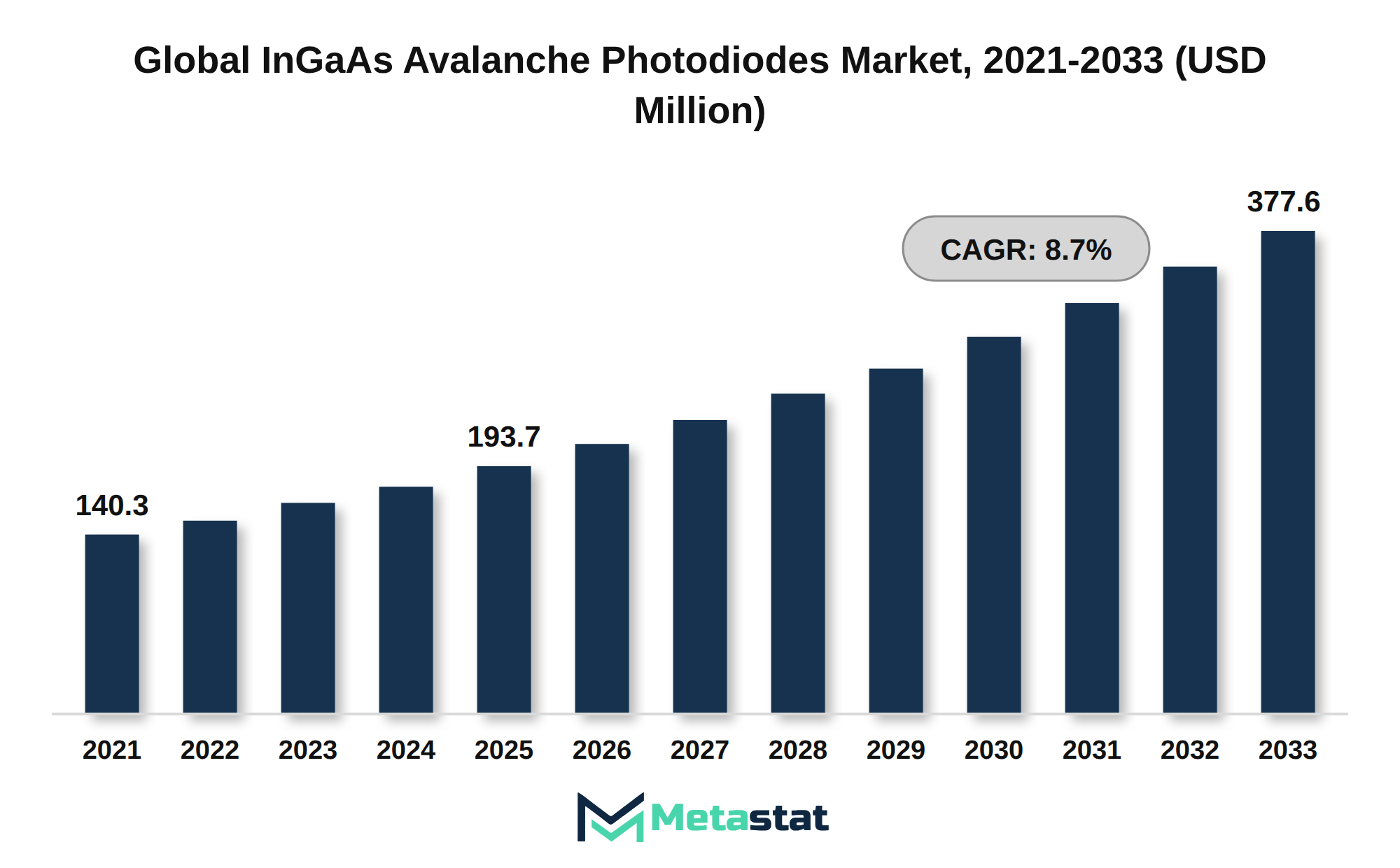
The global InGaAs Avalanche Photodiodes market was valued at USD 193.7 million in 2025 and is projected to reach USD 377.6 million by 2033, growing at a CAGR of 8.7% over the forecast period.
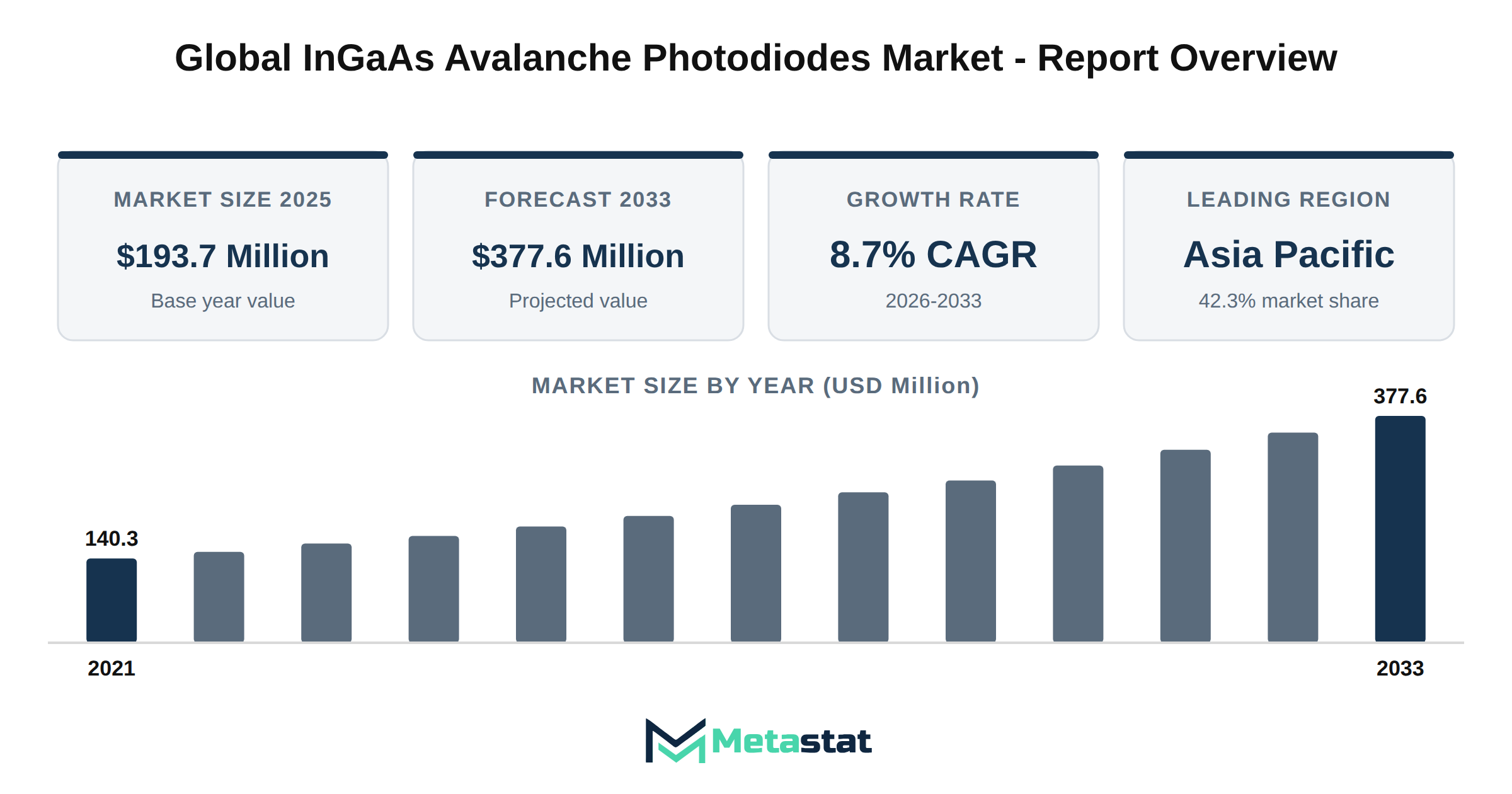
The InGaAs Avalanche Photodiodes market achieved a valuation of USD 193.7 million in 2025, reflecting a steady growth trajectory since the historical value of USD 140.3 million in 2021. The market is projected to reach USD 377.6 million by 2033, indicating a compound annual growth rate (CAGR) of 8.7%. This growth is driven by increasing demand in various applications, particularly in telecommunications, optical networking, and aerospace sectors.
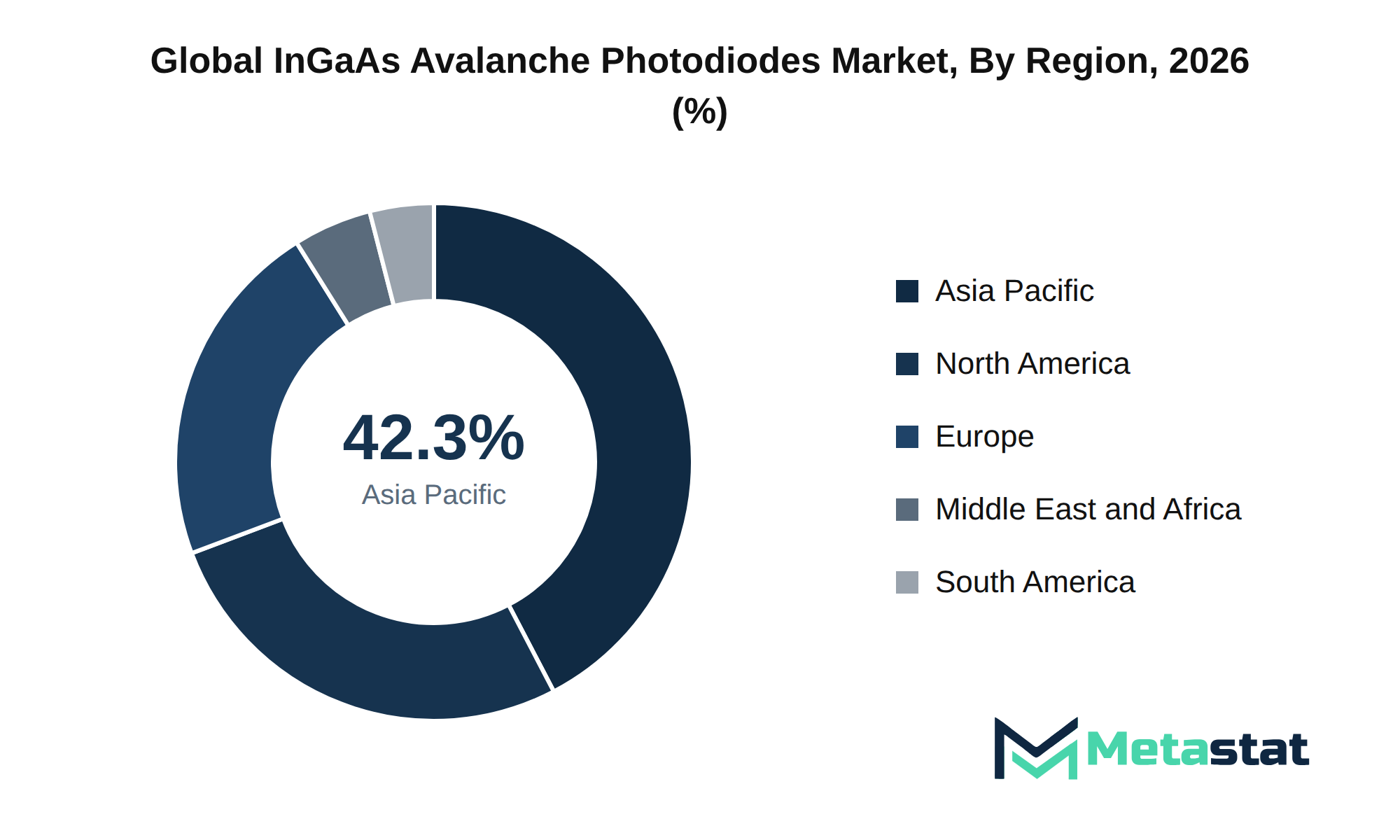
Regional distribution indicates that Asia Pacific holds the largest share at 42.3%, followed by North America at 26.9% and Europe at 21.8%. The North American market is expected to reach USD 98.1 million by 2033, with a CAGR of 8.7%. This regional dynamic highlights the increasing adoption of InGaAs Avalanche Photodiodes across diverse industries, influenced by technological advancements and investment in research and development.
Segment analysis shows significant differentiation within the market. Linear-Mode InGaAs APDs are anticipated to grow from USD 170.6 million in 2026 to USD 287.2 million by 2033, achieving a CAGR of 7.7%. Conversely, Geiger-Mode InGaAs APDs are projected to reach USD 90.4 million by 2033, with a robust CAGR of 12.2%. These insights highlight the market's potential for innovation and adaptation in response to evolving application requirements.
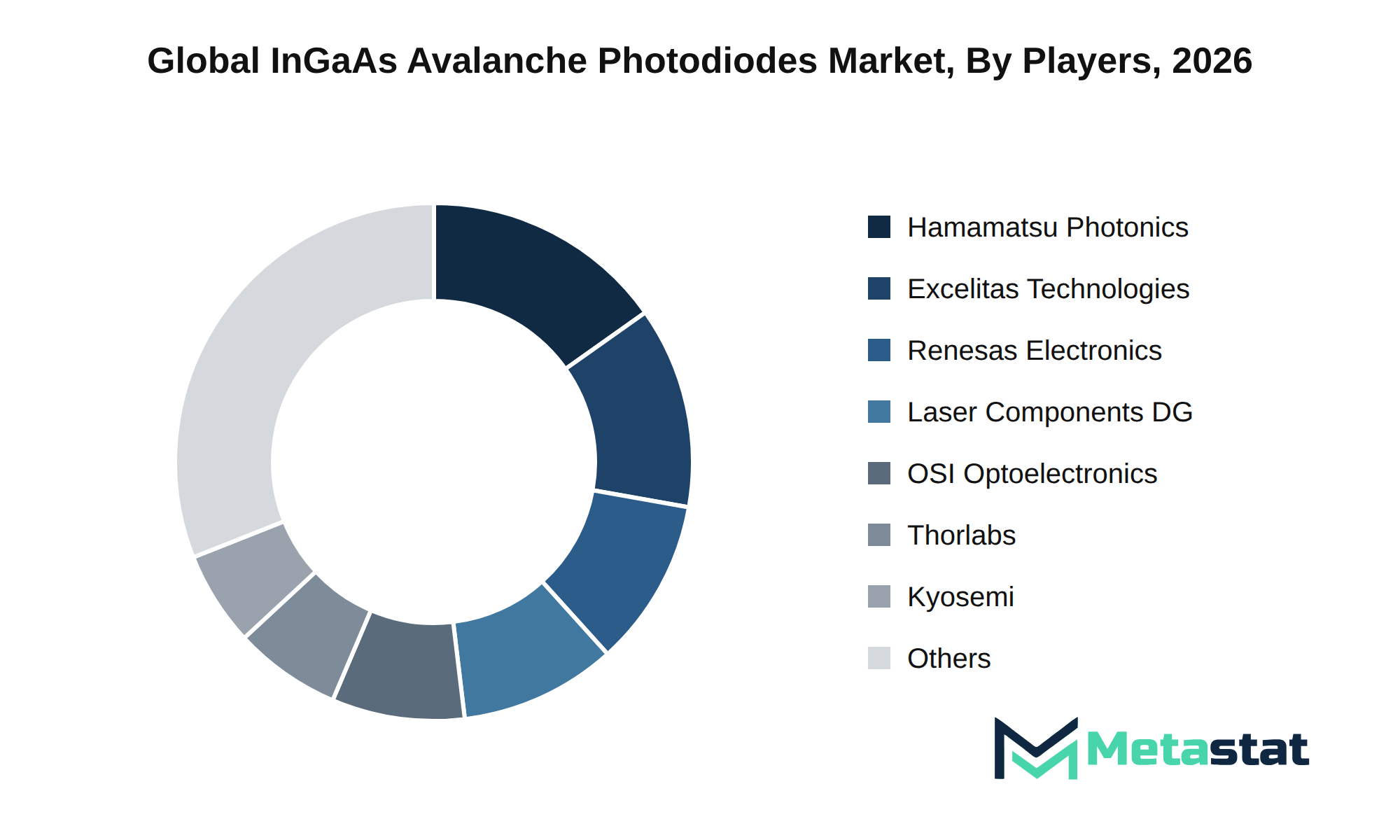
Key players in the InGaAs Avalanche Photodiodes market include Hamamatsu Photonics, Laser Components DG, Inc., OSI Optoelectronics, and Excelitas Technologies Corp., among others. These companies engage in strategic initiatives to enhance their product offerings and expand their market presence, contributing to the competitive landscape of the market.
The InGaAs Avalanche Photodiodes market experiences significant advancements driven by the increasing demand for high-performance optical devices across various industries. Factors influencing this growth include expanded applications in telecommunications, aerospace, and healthcare, which require precise and reliable photodetection solutions. Rising demand for efficient optical communication systems prompts manufacturers to invest in research and development to enhance the capabilities of InGaAs avalanche photodiodes.
Regulatory compliance and standards for performance in optical technologies play a critical role in shaping the market landscape. Manufacturers focus on meeting these requirements to secure their position in competitive environments while ensuring product reliability and safety. The growing emphasis on sustainable practices influences corporate strategies, pushing firms to adopt eco-friendly manufacturing processes and materials.
Market fragmentation remains a challenge, with numerous players operating across different regions. This diversity leads to varied pricing strategies and product offerings, enhancing competition among suppliers. Mergers and acquisitions within the industry are expected to increase owing to companies seeking to consolidate their market presence and innovate their product lines.
Capital allocation towards infrastructure investments continues to rise, with companies prioritizing the development of advanced manufacturing facilities. This trend enables the production of next-generation photodiodes, allowing firms to meet evolving customer demands effectively. Macroeconomic headwinds, including inflationary pressures and currency volatility, impact procurement strategies and operational costs, necessitating adaptive financial planning.
The future strategic outlook for the InGaAs Avalanche Photodiodes market points toward sustained growth driven by technological advancements and expanding applications. Companies prioritize high-value recommendations that align with emerging market trends and consumer preferences, ensuring long-term viability and profitability in an increasingly competitive environment.
Market Dynamics
Capital investment environments drive technological advancements
Increasing capital investment environments significantly influence the InGaAs Avalanche Photodiodes market. Favorable interest rates and GDP growth enhance the financial capabilities of businesses, enabling investment in advanced technologies. This trend in investment creates a conducive atmosphere for the development and adoption of InGaAs avalanche photodiodes, primarily in sectors including telecommunications, aerospace, and industrial manufacturing.
Digital transformation initiatives further accelerate this development. Companies prioritize automation and software adoption, necessitating the integration of high-performance photodetectors for improved operational efficiencies. This integration supports the ongoing shift towards digitizing legacy processes, enhancing the performance metrics of various applications including optical communication and laser rangefinding.
The market's growth is driven by the urgency to modernize infrastructure and upgrade existing assets. Organizations seek to enhance their capabilities to remain competitive, driving demand for advanced photodiodes that meet evolving technological standards. Investments in infrastructure development yield enhanced productivity and operational efficiency, leading to greater market penetration for InGaAs avalanche photodiodes.
Collectively, these capital investment dynamics and technological integration significantly shape the trajectory of the InGaAs Avalanche Photodiodes market, encouraging innovation and driving sustained growth throughout the forecast period.
Investment in infrastructure development supports growth
Increasing investment in infrastructure development significantly influences the InGaAs Avalanche Photodiodes market. Enhanced infrastructure creates demand for advanced optical technologies, particularly in telecommunications and networking applications. Governments and private sectors prioritize upgrades to physical and digital assets, allowing for the integration of InGaAs photodiodes in various systems.
The push for modernization attracts substantial capital, enhancing research and development efforts in the field. Upgrading network capabilities and facilities facilitates the deployment of high-speed communications, impacting both operational efficiency and market competitiveness. The focus on sustainability and resource stewardship further encourages investment, promoting technologies that optimize energy consumption and reduce environmental impact.
Infrastructure enhancements create opportunities for new products and services, driving revenue streams within the market. While countries expand their digital infrastructure, demand for high-performance semiconductor devices, including InGaAs Avalanche Photodiodes, is expected to rise. This trend is anticipated to drive long-term growth, positioning the market favorably within the broader technological context.
High capital investment requirements challenge growth
High capital investment requirements pose a significant restraint on the InGaAs Avalanche Photodiodes market. The manufacturing and development of these photodiodes necessitate substantial financial resources, which hinder smaller firms from entering the market or expanding operations. Many manufacturers focus on advanced technologies, driving up initial costs and creating a barrier for potential entrants. This situation creates an environment where only well-established companies or those with extensive funding compete effectively.
Escalating operating costs increase the financial burden on firms. Increased expenses related to raw materials, labor, and technological updates translate into higher prices for end-users. Customers in key sectors, including telecommunications and defense, face budget limitations, leading to cautious procurement strategies. Consequently, this dynamic restricts revenue growth opportunities within the market and limits overall adoption rates.
The impact of high capital investment requirements is particularly evident in regions with developing economies. In these markets, the lack of funding and financial resources constrains technological advancements and infrastructure development. The InGaAs Avalanche Photodiodes market experiences slower growth compared to regions with more favorable economic conditions.
Geopolitical fragmentation and trade deficits
Geopolitical fragmentation presents a significant challenge for the InGaAs Avalanche Photodiodes market, influencing trade relationships and leading to increased tariffs on components. Countries pursuing protectionist trade policies create supply chain disruptions, complicating the procurement of essential materials. This fragmentation contributes to trade deficits, raising costs for manufacturers and hindering competitive pricing strategies.
Technological disruptions further complicate the landscape of the InGaAs Avalanche Photodiodes market. Rapid advancements in optical technologies necessitate continuous adaptation by manufacturers, while complex research and development integrations strain resources. The need for interoperability across varying platforms and systems adds another layer of difficulty, often resulting in increased development timelines and costs.
Logistics disruptions are prevalent due to fluctuating global trade policies and regional conflicts. These disruptions impact the timely delivery of components and raw materials, affecting overall production schedules. Supply chain instability creates uncertainties in pricing, leading to margin pressures that challenge profitability within the market.
Tightening global regulatory standards around environmental sustainability and product compliance create additional overhead for firms involved in the InGaAs Avalanche Photodiodes market. Compliance with evolving legal liabilities entails substantial investments in quality assurance and regulatory adherence, diverting resources from innovation and product development efforts.
Workforce skill gaps impact the market, driven by the demand for highly specialized technicians and engineers in optical and electronic fields. The challenge of talent retention intensifies amid competitive labor markets, complicating recruitment efforts. Coupled with rising input costs and external pressures related to decarbonization mandates, these factors create a challenging operational environment for firms.
Overall, these challenges necessitate strategic adaptations from market participants, influencing growth trajectories and competitive dynamics across the InGaAs Avalanche Photodiodes market.
Emerging regional demands drive growth
The InGaAs Avalanche Photodiodes market experiences notable opportunities due to increasing regional demands, particularly in Asia Pacific and North America. The Asia Pacific region, accounting for 42.3% of the market share, presents significant growth potential driven by advancements in telecommunications, industrial applications, and scientific research. Governments and private enterprises in these regions actively invest in infrastructure modernization, increasing the demand for high-performance photodiodes.
Technological disruptions across various industries further enhance the market environment. Innovations in optical communication and laser technology create niche applications, driving both product integration and downstream market diversification. The growing emphasis on sustainability initiatives leads to heightened demand for eco-friendly solutions, including the adoption of InGaAs Avalanche Photodiodes in green transformations and ESG-driven alignments.
Strategic consolidation efforts and cross-industry mergers enable companies to expand their capabilities and market reach. This trend enhances operational efficiencies and positions players to better respond to evolving customer needs and preferences. The shift toward digital procurement practices and commercial model transitions reflects changing buying behaviors, influencing how buyers source InGaAs Avalanche Photodiodes.
Supply chain localization emerges because a critical factor, allowing manufacturers to mitigate risks associated with international trade fluctuations. Companies are increasingly investing in localized production to enhance operational yield and ensure timely delivery, further supporting market growth. The combination of these factors creates a favorable outlook for the InGaAs Avalanche Photodiodes market, with projections indicating a robust compound annual growth rate of 8.7% through 2033.
Market Segmentation Analysis
The Global InGaAs Avalanche Photodiodes market is segmented based on Operating Mode, Wavelength Range, Application, and End-Use Industry.
By Operating Mode, the market is further segmented into:
- Linear-Mode InGaAs APDs
- Geiger-Mode InGaAs APDs
Linear-Mode InGaAs APDs
Valued at USD 170.6 million in 2026, the Linear-Mode InGaAs APDs segment is projected to reach USD 287.2 million by 2033, with a CAGR of 7.7% during the forecast period. Demand for Linear-Mode InGaAs APDs is driven by their application in telecommunications, particularly for optical communication systems requiring high-speed data transmission. While industries increasingly adopt advanced optical networking solutions, the market experiences noticeable growth.
Technological maturation significantly influences segment expansion. Innovations in manufacturing processes and materials enhance the performance characteristics of Linear-Mode InGaAs APDs. These advancements lead to improved sensitivity and reduced noise levels, making them suitable for various downstream applications, including laser rangefinding and optical time-domain reflectometry (OTDR).
End-use dynamics significantly influence the market landscape. Industries including aerospace and defense, automotive, and healthcare prioritize reliable and efficient photodetection technologies. The increasing demand for high-performance components in these sectors supports the growth trajectory of the Linear-Mode InGaAs APDs segment.
Regulatory compliance standards further impact the market. Stringent regulations regarding optical communication technologies compel manufacturers to ensure their products meet specific performance criteria. This need for compliance influences investment in research and development, driving continuous improvement and innovation within the segment.
Pricing volatility and margin pressures pose challenges for manufacturers. Fluctuations in raw material costs affect profitability, requiring companies to adopt efficient cost structures. Strategic investments in supply chain resilience and raw material sourcing play an essential role in mitigating risks associated with pricing volatility.
Overall, the outlook for Linear-Mode InGaAs APDs remains positive, driven by robust demand from various end-use industries and ongoing advancements in technology. The InGaAs Avalanche Photodiodes market benefits from these dynamics, reflecting companies' efforts to enhance product offerings and meet evolving market requirements.
Geiger-Mode InGaAs APDs
Increasing demand for Geiger-Mode InGaAs APDs drives significant growth within the InGaAs Avalanche Photodiodes market. This segment is estimated to reach USD 90.4 million by 2033, at a CAGR of 12.2% during the forecast period. Factors contributing to this trend include advancements in optical communication technologies and enhanced capabilities in laser rangefinding and LiDAR applications. The ability of Geiger-Mode InGaAs APDs to operate efficiently at high photon detection rates positions them favorably for applications requiring precision and reliability.
The growing adoption of Geiger-Mode InGaAs APDs in various end-use industries, including telecommunications and aerospace, reflects a shift towards more efficient and sensitive detection methods. These photodiodes offer enhanced performance in environments where traditional detection methods struggle, ensuring their relevance in critical applications. Continuous technological maturation in semiconductor fabrication processes supports the development of next-generation upgrades and product evolution, which further spurs market expansion.
Increased awareness of regulatory compliance standards in industries including healthcare and defense further facilitates demand for Geiger-Mode InGaAs APDs. Manufacturers that comply with stringent regulations enhance their market positions through improved trust and reliability among consumers. Strategic opportunity windows arise from the need for innovative solutions in quantum and single-photon detection, which positions Geiger-Mode InGaAs APDs because key enablers in these advanced applications.
The combination of strong demand drivers and evolving application requirements shapes the competitive landscape, encouraging continuous investment in the segment. Market players focus on strengthening their supply chain resilience to mitigate risks associated with raw material sourcing and price volatility. Overall, the Geiger-Mode InGaAs APDs segment plays a crucial role in the growth trajectory of the InGaAs Avalanche Photodiodes market, contributing to advancements across multiple industries.
By Wavelength Range, the market is further segmented into:
- 900-1100 nm
- 1100-1300 nm
- 1300-1550 nm
- 1550-1700 nm
900-1100 nm
Technological evolution drives the demand for InGaAs Avalanche Photodiodes across various applications, particularly within the 900-1100 nm wavelength range. This segment finds extensive use in optical communication and sensor technologies, supporting robust data transmission and enhanced detection capabilities. The trend toward miniaturization and increased performance requirements in electronic systems fuels innovation, leading to advanced photodiode designs that cater to these needs.
Adoption of these devices is closely linked to developments in telecommunications and aerospace sectors, where high-speed data transfer and precise measurements remain critical. The market experiences heightened growth driven by industries prioritizing efficiency and reliability in their operations. Regulatory compliance standards play a vital role in shaping product specifications, ensuring that devices meet stringent performance criteria.
Shifts in consumption patterns, particularly towards more efficient and higher-performing components, contribute to steady demand. Competitive pricing pressure encourages manufacturers to optimize production processes, enhancing yield and reducing costs. Strategic opportunities arise from ongoing research and development efforts targeting next-generation applications including quantum computing and advanced sensing technologies, positioning the market favorably for future growth.
1100-1300 nm
Growth in the 1100-1300 nm sub-segment of the InGaAs Avalanche Photodiodes market arises from increasing applications in optical communication and advanced technologies. Demand for optical networking solutions drives interest in this wavelength range, particularly within telecommunications and data transmission sectors. Enhanced data rates and improved bandwidth efficiency contribute to the growing adoption of InGaAs Avalanche Photodiodes, aligning with industry needs for higher performance in communication systems.
Technological advancements facilitate the development of next-generation optical devices operating within the 1100-1300 nm range. Innovations in fabrication processes and material science lead to improvements in efficiency and sensitivity, enhancing the overall performance of devices that operate within this wavelength. The ongoing evolution of applications including laser rangefinding and LiDAR further stimulates interest in the market.
End-use dynamics indicate a shift toward more sophisticated applications within the aerospace, defense, and automotive industries. Increased focus on precision measurement and detection technologies reinforces the role of InGaAs Avalanche Photodiodes in these sectors. Regulatory compliance standards and certifications necessitate high-performance components, compelling manufacturers to invest in advanced solutions and maintain competitiveness.
Investment in research and development remains critical in this sub-segment. Companies seek to enhance their product offerings by integrating advanced technologies and encouraging innovation. Strategic opportunity windows emerge owing to organizations recognizing the potential for growth within the market, prompting capital investments in product evolution and next-generation upgrades.
1300-1550 nm
InGaAs Avalanche Photodiodes operating in the 1300-1550 nm wavelength range experience increasing demand from sectors including telecommunications and optical networking. This segment benefits from advancements in optical communication technologies, which enhance data transmission speeds and efficiencies. Rapid technological maturation in photonic devices supports the adoption of InGaAs Avalanche Photodiodes across various applications, including free-space optical communication and optical time-domain reflectometry (OTDR).
Investment in next-generation upgrades drives the evolution of products within this wavelength range. Enhanced performance capabilities, including improved sensitivity and faster response times, reinforce the position of these photodiodes in critical applications. The end-use dynamics favor industries that require high-performance photon detection and measurement, creating significant opportunities for growth within the market.
Regulatory compliance standards, particularly in sectors like aerospace and defense, influence the adoption of InGaAs Avalanche Photodiodes. Certifications related to safety and performance standards enhance consumer confidence and facilitate market penetration. Evolving cost structures, along with pricing volatility, affect profit margins. Advancements in manufacturing processes provide pathways to maintain competitive pricing strategies.
The segment remains resilient in its supply chain management, addressing potential vulnerabilities through strategic partnerships and raw material sourcing. Disruptive alternatives pose challenges. The unique features of InGaAs Avalanche Photodiodes maintain relevance in an increasingly competitive environment. Strategic opportunity windows arise from the growing demand for high-speed data communication, positioning the segment for growth in the coming years.
1550-1700 nm
The development of the 1550-1700 nm sub-segment within the InGaAs Avalanche Photodiodes market is driven by increasing demand for high-performance optical components in applications including telecommunications and advanced sensing technologies. The shift toward more efficient and reliable communication systems fuels the adoption of these devices, which are crucial for long-distance optical communication links.
Technological maturation enables the enhancement of the performance characteristics of InGaAs Avalanche Photodiodes operating in this wavelength range. This improvement supports broader deployments across multiple sectors, including aerospace, defense, and industrial applications. The demand for next-generation upgrades in existing systems drives research and development activities aimed at increasing the capabilities of these photodiodes.
End-use dynamics further influence consumption, with industries prioritizing high sensitivity and quick response times in their optical components. Regulatory compliance standards increasingly mandate the adoption of reliable and efficient photonic devices, driving manufacturers to innovate and improve their product offerings. The cost structures associated with production and distribution impact pricing strategies and margin pressures within this sub-segment.
Supply chain resilience remains a focal point, with manufacturers exploring raw material sourcing to mitigate any vulnerabilities that could disrupt production. The market continually evaluates risks associated with substitution and disruptive alternatives, ensuring that advancements in technology do not render existing products obsolete. Strategic opportunity windows arise due to industries recognizing the value of integrating advanced photonic solutions, leading to increased capital investment in this area.
By Application, the market is further segmented into:
- Optical Communication
- Laser Rangefinding & LiDAR
- Optical Time-Domain Reflectometry (OTDR)
- Free-Space Optical Communication
- Missile Warning Systems
- Muzzle Flash Detection
- Wafer Defect Inspection
- Others (Fiber-Optic Sensing, Quantum & Single-Photon Detection)
Optical Communication
Growing demand for high-speed data transmission drives the adoption of InGaAs Avalanche Photodiodes in optical communication. This segment serves critical applications in telecommunications and high-speed networking, where efficiency and performance are essential. The increasing shift toward fiber-optic networks enhances the necessity for reliable photodiodes that facilitate signal detection in optical links.
Technological advancements in optical communication systems drive the evolution of InGaAs Avalanche Photodiodes. Enhanced sensitivity and improved response times contribute to heightened performance in long-distance data transfer. Continuous innovations in product design enable better integration into existing infrastructures, appealing to sectors focused on upgrading their communication capabilities.
End-use dynamics show a strong preference for InGaAs Avalanche Photodiodes among telecommunications and optical networking industries. While these sectors expand, demand for components that ensure effective signal processing and transmission increases. The rise of smart technologies and Internet of Things applications further highlights the critical nature of reliable optical communication solutions.
Consumption shifts within the market reflect a growing emphasis on high-performance networking solutions. Increased data traffic, driven by the proliferation of cloud computing and mobile broadband, necessitates enhancements in optical communication technologies. This trend positions InGaAs Avalanche Photodiodes because essential components for achieving higher data rates and improved network reliability.
Regulatory compliance standards play a vital role in shaping the market landscape. Compliance with international and regional standards governs the performance characteristics of optical communication components. Meeting these standards is essential for manufacturers aiming to maintain competitiveness and ensure product acceptance in various markets.
Strategic opportunity windows arise from ongoing developments in next-generation optical technologies. Investments directed toward research and development enhance the market's capacity to deliver innovative solutions that meet the evolving needs of users. While the focus shifts toward sustainability and energy efficiency, manufacturers producing InGaAs Avalanche Photodiodes are likely to gain a competitive edge.
The optical communication application segment of the InGaAs Avalanche Photodiodes market experiences significant growth driven by technological progress and evolving end-user demands. Strategic investments in next-gen upgrades and adherence to compliance standards further strengthen the market's position because a leader in optical communication solutions.
Laser Rangefinding & LiDAR
Technological advancements increase the demand for InGaAs Avalanche Photodiodes in the Laser Rangefinding & LiDAR segment. The integration of advanced photonic technologies enhances precision and operational efficiency, appealing to industries that rely on accurate distance measurement and mapping capabilities. Increasing applications in automotive, aerospace, and defense sectors drive significant adoption rates, reflecting the growing emphasis on autonomous systems and precision-guided technologies.
Market dynamics indicate a trend towards the development of next-generation upgrades, which emphasize enhanced performance characteristics. Innovations focus on improving sensitivity and reducing noise, qualities vital for effective LiDAR systems. While manufacturers prioritize product evolution, the introduction of more compact and efficient designs aligns with the needs of end-users, expanding the segment's footprint within the broader InGaAs Avalanche Photodiodes market.
Regulatory compliance standards in various industries necessitate adherence to stringent safety and performance benchmarks. This requirement influences purchasing decisions and shapes product development strategies, ensuring compatibility with emerging technological standards. Increased scrutiny on environmental impact and energy efficiency mandates drives innovation, creating a competitive landscape that benefits end-users.
Cost structures remain a critical consideration for manufacturers, influenced by raw material sourcing and global supply chain resilience. Fluctuations in pricing volatility for essential components impact production costs, compelling firms to adopt more strategic sourcing practices. Market participants identify strategic opportunity windows within the segment. The emphasis on high-performance applications facilitates a focus on niche markets, including specialized military and automotive applications, enhancing revenue potential.
Optical Time-Domain Reflectometry (OTDR)
Optical Time-Domain Reflectometry (OTDR) serves because a critical application for InGaAs Avalanche Photodiodes, primarily used in fiber-optic communication systems. Increasing adoption of optical networks across telecommunications and data centers drives demand for precise measurement tools like OTDRs. This growing emphasis on advanced communication infrastructure necessitates reliable testing and monitoring capabilities, thus fueling market expansion.
Technological maturation in the field of photonics enhances the performance of InGaAs Avalanche Photodiodes used in OTDR applications. Next-generation upgrades focus on improving sensitivity and speed, allowing for better detection of faults in optical fibers. This evolution supports efficient network management and maintenance, ultimately benefiting end-users through reduced downtime and increased reliability.
Adoption within various end-use industries, including telecommunications and aerospace, highlights the significance of OTDR systems. Compliance with regulatory standards for network performance and safety increases investment in testing equipment, ensuring that manufacturers meet necessary certifications. These factors contribute to the market's resilience against potential disruptions and strengthen the supply chain.
Pricing volatility associated with raw material sourcing and manufacturing processes remains an ongoing challenge. Strategic opportunity windows created by rising demand for high-performance photodiodes facilitate the development of innovative solutions. The InGaAs Avalanche Photodiodes market reflects the necessary adjustments in cost structures, ensuring competitiveness while addressing margin pressures.
Free-Space Optical Communication
Demand for Free-Space Optical Communication stems from various sectors, including telecommunications and aerospace. The push for higher bandwidth and faster data transfer fuels growth in applications that require reliable wireless communication solutions. Technological maturation in this area leads to increasing adoption of advanced systems that employ InGaAs Avalanche Photodiodes. These systems are instrumental in applications including laser rangefinding and environmental monitoring, which require precise and efficient optical communication capabilities.
Investment in infrastructure to support high-speed data transmission enhances the relevance of Free-Space Optical Communication. The evolution of products tailored to meet the stringent requirements of various end-use applications indicates a shift towards more specialized solutions. Strategic opportunities arise from the demand for high-performance photodetectors, driven by the growing need for secure, high-capacity data links and the increasing deployment of LiDAR systems in multiple industries.
Regulatory compliance standards focusing on data integrity and security further influence market dynamics. Companies developing products that meet these standards position themselves advantageously in the competitive environment. Consumption shifts towards environmentally sustainable solutions lead to the exploration of new materials and technologies, ensuring ongoing relevance in the market.
Supply chain resilience plays a critical role in maintaining product availability amid fluctuating demand. Raw material sourcing becomes essential, affecting pricing and margin pressures. Companies address these challenges by optimizing their supply chains and investing in long-term partnerships with reliable suppliers, which ultimately strengthens their market position.
Missile Warning Systems
Growing attention towards missile defense systems escalates demand for InGaAs Avalanche Photodiodes in military applications, particularly in missile warning systems. These systems rely on advanced detection technologies to identify missile launches rapidly and accurately, securing national safety and defense interests. The shift towards more sophisticated and automated defense mechanisms is increasing the adoption of high-performance photodiodes capable of operating under challenging environmental conditions.
Technological maturation within defense electronics creates opportunities for enhanced photodiode functionalities, including improved sensitivity and faster response times. Innovations in product design, particularly concerning Geiger-Mode InGaAs APDs, enhance the capabilities of missile warning systems, enabling them to operate effectively in various atmospheric conditions. The trend towards next-generation upgrades emphasizes the development of lightweight and compact systems, which aligns with the evolving needs of defense contractors.
Regulatory compliance and certification standards play a critical role in shaping the market. Defense systems requiring adherence to stringent military regulations create a space for high-quality, reliable components. This environment increases the competitive edge for suppliers that focus on meeting or exceeding these standards, further influencing the dynamics of the supply chain.
Downstream application growth remains heavily influenced by geopolitical tensions and defense spending initiatives across regions. Countries investing in advanced defense technologies tend to channel more resources into missile warning systems, enhancing the overall market potential. This upward trend reflects a broader commitment to national security, ultimately driving demand for InGaAs Avalanche Photodiodes in this vital application sector.
Muzzle Flash Detection
Technological advancements in imaging and detection capabilities significantly influence the adoption of InGaAs Avalanche Photodiodes within the Muzzle Flash Detection application. The increasing focus on enhancing weapon systems and defense capabilities contributes to heightened demand for efficient detection technologies. Military and law enforcement agencies prioritize accuracy and reliability, driving investment in advanced photodiode solutions tailored for real-time detection of muzzle flashes.
Growing interest in integrating InGaAs Avalanche Photodiodes into next-generation weapon systems encourages manufacturers to innovate and refine product offerings. The potential for these devices to offer enhanced sensitivity and faster response times supports their appeal in critical applications. While these technologies mature, the market is projected to experience continued evolution and upgrades, aligning with the demands of modern combat and tactical environments.
Regulatory compliance standards related to weaponry and detection technologies increase the need for reliable and precise solutions. Ensuring compatibility with existing systems while adhering to stringent regulations remains a priority for developers. The supply chain faces scrutiny, with a focus on raw material sourcing and logistics vulnerabilities impacting production timelines and costs. Addressing these challenges becomes essential for maintaining competitive pricing and protecting profit margins.
Demand for Muzzle Flash Detection technologies aligns with broader defense industry trends prioritizing operational efficiency and effectiveness. Strategic opportunity windows emerge for companies capable of delivering innovative solutions that address existing gaps in performance and reliability. Capital investments in research and development play a critical role in shaping the future of detection technologies, ultimately driving growth within the InGaAs Avalanche Photodiodes market.
Wafer Defect Inspection
Demand for high-precision wafer defect inspection drives significant interest in InGaAs Avalanche Photodiodes, particularly within advanced manufacturing sectors. Increasing complexity in semiconductor manufacturing necessitates robust inspection technologies, ensuring quality and yield in production processes. The trend towards miniaturization of electronic components intensifies the need for effective defect detection solutions, pushing manufacturers to adopt InGaAs Avalanche Photodiodes for their superior sensitivity and resolution capabilities.
Technological maturation in imaging systems enhances the performance of InGaAs Avalanche Photodiodes, improving their role in wafer defect inspection. Advancements in detection algorithms and imaging techniques create opportunities for next-generation applications, leading to improved accuracy in identifying defects at micro and nanoscale levels. This evolution corresponds with a growing shift towards automation in manufacturing processes, where real-time monitoring and inspection become essential.
Several end-use industries, including semiconductor and electronics, prioritize stringent quality assurance standards, thus boosting demand for wafer defect inspection solutions. Regulatory compliance mandates drive the adoption of sophisticated inspection systems, resulting in increased deployment of InGaAs Avalanche Photodiodes in manufacturing environments. This trend increases competition among suppliers, encouraging innovation and advancements within the market.
Cost structures associated with wafer defect inspection technology influence purchasing decisions among manufacturers. Increased investments in inspection systems pose initial barriers; however, long-term operational savings achieved through enhanced defect detection present a compelling case. This cost-benefit analysis shapes the purchasing landscape, prompting manufacturers to allocate resources towards integrating advanced inspection solutions.
Strategic opportunity windows emerge due to manufacturers seeking to enhance their production capabilities with advanced inspection technologies. The ongoing development of InGaAs Avalanche Photodiodes aligns with these opportunities, enabling companies to improve yield rates and reduce production costs. The growing emphasis on quality and efficiency within the semiconductor industry positions the market for continued expansion, driven by innovations in wafer defect inspection applications.
Others (Fiber-Optic Sensing, Quantum & Single-Photon Detection)
Innovative applications in fiber-optic sensing, quantum detection, and single-photon detection contribute to the evolving landscape of the InGaAs Avalanche Photodiodes market. Increased deployment of fiber-optic technologies enhances communication systems, facilitating high-bandwidth data transmission. Consequently, these advancements create demand among telecommunications and networking industries looking to improve data transfer capabilities. The integration of quantum detection technologies presents opportunities for scientific research and instrumentation sectors, leading to more precise measurements and analyses in various applications.
End-use dynamics reflect a shift towards advanced detection methods, driven by industries including aerospace, defense, and healthcare adopting advanced technologies for improved system reliability and efficiency. The growing emphasis on regulatory compliance drives investments in high-performance detection solutions, highlighting the importance of certifications that align with industry standards. Organizations strive to utilize advancements in this sub-segment, ensuring enhanced performance while navigating challenges related to cost structures and pricing volatility.
Strategic opportunities are expected to focus on technological maturation and next-generation upgrades, driving innovations designed to meet the evolving needs of customers. Capital investment into research and development supports breakthrough technologies that address specific market demands. Continuous enhancements in product evolution enable manufacturers to develop more efficient and reliable InGaAs Avalanche Photodiodes tailored to meet the requirements of fiber-optic sensing, quantum detection, and single-photon detection applications.
By End-Use Industry, the market is further segmented into:
- Telecommunications & Optical Networking
- Aerospace & Defense
- Automotive & Mobility
- Industrial & Manufacturing
- Semiconductor & Electronics
- Scientific Research & Instrumentation
- Healthcare
- Others (Energy, Environmental Monitoring and Security)
Telecommunications & Optical Networking
Rapid advancements in telecommunications infrastructure drive significant demand for InGaAs Avalanche Photodiodes. This segment experiences substantial growth due to the increasing need for high-speed data transmission and reliable optical networking solutions. Emerging technologies within this sector, including 5G networks and optical fiber communication, enhance the need for high-performance photodetectors, enabling improved connectivity and data rates.
Adoption of InGaAs Avalanche Photodiodes within this segment is influenced by regulatory compliance standards that emphasize the necessity for high-quality and reliable components in communication systems. Stringent guidelines regarding performance and safety drive manufacturers to innovate and enhance product offerings, ensuring alignment with market demands.
Investments in research and development contribute to the evolution of these photodiodes, supporting technological maturation and the introduction of next-generation products designed for enhanced efficiency and performance. Industries increasingly focus on digital transformation initiatives, leading to a continuous shift towards advanced optical networking solutions.
Competition among key players intensifies, with companies striving to differentiate their products through improved specifications and enhanced capabilities. Strategic opportunity windows emerge for manufacturers that leverage innovative technologies to address evolving customer needs and preferences within the market.
Aerospace & Defense
Growing interest in defense technologies stimulates demand for InGaAs Avalanche Photodiodes. The military sector increasingly requires advanced imaging capabilities for applications including missile warning systems and target identification. Enhanced performance characteristics allow these photodiodes to fulfill stringent operational requirements, driving their adoption across various aerospace and defense programs.
Technological maturation in photonic devices leads to next-generation upgrades, improving sensitivity and response times. The integration of InGaAs Avalanche Photodiodes into sophisticated systems enhances detection accuracy and reliability. Organizations prioritize these attributes to maintain competitive advantages in surveillance and reconnaissance operations.
Strategic opportunity windows arise from increasing defense budgets worldwide, particularly in regions with heightened geopolitical tensions. This trend encourages investment in advanced technologies, leading to higher demand for high-performance photodiodes. Compliance with regulatory standards further influences market dynamics, compelling manufacturers to innovate and adhere to evolving specifications.
Cost structures in the aerospace and defense sector reflect the critical nature of reliability and performance. Pricing volatility remains a concern, particularly for materials used in the production of photodiodes. Supply chain resilience is vital, with manufacturers focusing on secure sourcing and logistics to mitigate risks associated with international trade fluctuations.
Overall, the aerospace and defense segment within the InGaAs Avalanche Photodiodes market positions itself because a key growth driver attributed to its critical applications and continuous technological advancements. Organizations increasingly look to enhance operational efficiencies through the integration of these photonic devices, reinforcing their role in future defense strategies.
Automotive & Mobility
Technological advancements in automotive applications drive demand for InGaAs Avalanche Photodiodes, particularly in systems requiring precise detection and measurement. The integration of these photodiodes enhances capabilities in various automotive technologies, including advanced driver-assistance systems (ADAS) and LiDAR sensors. An increasing focus on safety and efficiency in mobility solutions drives investments in high-performance photonics, ensuring reliable performance in challenging environments.
Regulatory compliance regarding emissions and safety standards in the automotive sector creates a favorable backdrop for the adoption of InGaAs Avalanche Photodiodes. These devices support advanced imaging systems, enabling accurate environmental sensing and improving overall vehicle automation. The need for enhanced precision and reliability in automotive sensors fuels market growth.
Vehicle electrification expands, resulting in a shift towards integration with electronic systems that reinforces the role of InGaAs Avalanche Photodiodes in modern automotive architectures. This evolution aligns with industry trends toward smarter and more connected vehicles, resulting in strategic investment opportunities for players in the market.
Industrial & Manufacturing
Industrial and manufacturing sectors increasingly adopt InGaAs Avalanche Photodiodes for applications requiring high sensitivity and precision. The integration of these photodiodes enhances the performance of various industrial processes, including optical communication systems and laser rangefinding. Factors driving demand include the need for improved data processing capabilities and advancements in automation technologies within manufacturing environments.
Technological maturation of InGaAs Avalanche Photodiodes significantly impacts adoption within industrial settings. Upgrades to next-generation photodiodes lead to enhanced performance characteristics, including faster response times and greater efficiency in light detection. This evolution corresponds with a growing trend towards automation and smart manufacturing, where accuracy and speed are essential.
End-use dynamics demonstrate a shift towards higher-quality components in the industrial sector. Manufacturers prioritize reliability and efficiency, contributing to the demand for advanced photodiodes. Regulatory compliance standards governing operational safety and efficiency compel this shift, ensuring that only high-performance components are deployed in critical applications.
Investment in research and development drives the evolution of InGaAs Avalanche Photodiodes. Strategic opportunities arise within sectors focusing on industrial automation and advanced manufacturing, driving significant capital investment. Developments in supply chain resilience and raw material sourcing directly influence market dynamics, reinforcing the need for innovative solutions that address potential vulnerabilities and risks.
Consumption shifts towards higher-performance photodiodes align with the continuous evolution of industrial applications. The market responds to these trends by enhancing product offerings, emphasizing the importance of adapting to changing technological needs. Overall, the industrial and manufacturing sector presents a compelling opportunity for the advancement of InGaAs Avalanche Photodiodes, reflecting an ongoing commitment to innovation and quality within the market.
Semiconductor & Electronics
Growth in the Semiconductor & Electronics sector stems from its role in advancing electronic devices and systems. Increasing demand for high-performance sensors and communication devices significantly influences the adoption of InGaAs Avalanche Photodiodes. Enhanced capabilities in optical communication, combined with rising data rates, drive this trend, resulting in technological advancements across various applications.
Investment in next-generation electronic systems and the push for miniaturization of components accelerate the demand for InGaAs Avalanche Photodiodes. Market participants focus on developing products that offer improved efficiency and performance, highlighting the importance of product evolution within the sector. Regulatory compliance standards surrounding electronic devices further emphasize the need for reliable and efficient photodiodes, reinforcing their acceptance within the industry.
End-use dynamics within the Semiconductor & Electronics segment indicate a shift towards integrated solutions that streamline operations and enhance performance. Strategic opportunity windows emerge from the increasing reliance on advanced technologies, where InGaAs Avalanche Photodiodes play a significant role in various applications, including telecommunications and high-speed data transmission. The capital investment outlook remains positive. Companies recognize the potential benefits of adopting these advanced photodiodes to enhance competitiveness in the market.
Scientific Research & Instrumentation
In the field of scientific research, the utilization of InGaAs Avalanche Photodiodes enhances measurement precision and detection capabilities across various applications. Researchers require high-performance devices that provide accurate data in experiments involving optical communication and photonics. The growing complexity of research projects, including quantum optics and advanced sensing technologies, fuels interest in innovative detection solutions.
Technological maturation facilitates the advancement of InGaAs Avalanche Photodiodes, with ongoing improvements in sensitivity and response times. Such enhancements enable more effective data collection in scientific studies, attracting investments from academic and private research institutions. This segment thrives on the need for equipment that meets rigorous performance standards, aligning with stringent regulatory compliance and certification requirements specific to scientific applications.
Adoption in the scientific research sector reflects evolving consumer preferences for more efficient and reliable instruments. The market observes a notable shift towards integrating advanced technologies, which promote enhanced functionality and versatility in research tools. Strategic opportunity windows arise for manufacturers to innovate, focusing on developing next-generation photodiodes tailored to the demands of scientific experimentation.
With the expansion of applications in various fields, including telecommunications and healthcare, the market for InGaAs Avalanche Photodiodes experiences considerable growth. This trend opens avenues for collaboration among research entities and industry players, creating an ecosystem that supports ongoing advancements and product evolution. Research institutions increasingly prioritize high-performance components, contributing to a robust investment outlook that characterizes the segment.
Healthcare
Healthcare applications drive an increasing requirement for InGaAs Avalanche Photodiodes, particularly in diagnostics and imaging systems. The ability of these photodiodes to detect low levels of light enhances the effectiveness of various medical instruments, including those used in optical coherence tomography and fluorescence imaging. Advancements in medical technology push for integration of high-sensitivity detection systems, further enhancing the role of InGaAs devices in the market.
Regulatory compliance standards and certifications play a critical role in shaping adoption rates within healthcare settings. Meeting stringent safety and performance benchmarks influences manufacturers to invest in high-quality InGaAs Avalanche Photodiodes, ensuring reliability and efficacy in medical applications. The increasing emphasis on precise imaging techniques further highlights the importance of these photodiodes in maintaining rigorous standards.
Technological maturation of InGaAs devices opens avenues for next-generation upgrades, presenting opportunities for enhanced performance in medical applications. Innovations including improved wavelength sensitivity and miniaturization of devices attract significant interest from healthcare providers. These enhancements enable more versatile applications, ranging from portable diagnostic tools to sophisticated laboratory equipment.
Downstream applications evolve rapidly, reflecting shifts in consumption patterns and technological advancements within healthcare. Increased investment in research and development accelerates the introduction of novel medical devices that leverage InGaAs Avalanche Photodiodes. This trend creates a more competitive environment, encouraging manufacturers to differentiate their products through advanced features and enhanced capabilities.
Strategic opportunity windows arise owing to healthcare providers seeking solutions that utilize the benefits of InGaAs technology. Capital investment outlook remains positive, driven by the ongoing need for advanced medical imaging and diagnostic solutions. The potential for these devices to deliver significant improvements in patient outcomes supports sustained demand, reinforcing the growth trajectory of the market.
Others (Energy, Environmental Monitoring and Security)
Growing awareness of energy efficiency and environmental sustainability increases demand for InGaAs Avalanche Photodiodes within applications focused on energy management, environmental monitoring, and security. Industries emphasize the need for advanced sensors capable of detecting and analyzing environmental parameters, resulting in increased deployment of InGaAs technology in various monitoring systems.
Regulatory compliance standards related to emissions and environmental monitoring drive investments in innovative sensor technologies. This landscape encourages companies to integrate InGaAs Avalanche Photodiodes into their systems to meet stringent regulations while enhancing operational capabilities, reinforcing the demand for these photodiodes.
Consumption shifts toward renewable energy solutions further support the integration of InGaAs in applications targeting energy efficiency. Organizations seek technologies that support sustainability initiatives, enhancing the value proposition of InGaAs in the market and driving long-term growth.
The potential for next-generation upgrades in sensor technology presents significant opportunities for manufacturers. Ongoing advancements ensure that InGaAs Avalanche Photodiodes maintain leadership in performance and reliability, attracting attention from sectors focused on environmental monitoring and security, which is expected to expand the addressable market.
By Region
Based on geography, the Global InGaAs Avalanche Photodiodes market is divided into North America, Europe, Asia-Pacific, South America, Middle East, and Africa.
North America
North America represents a substantial segment of the InGaAs Avalanche Photodiodes market. The market is projected to expand at a CAGR of 8.7% during the forecast period, reaching a market size (TAM) of USD 98.1 million by the end of 2033. Key drivers include a robust telecommunications infrastructure and increasing demand for high-performance sensors in defense applications. The region's focus on modernization and efficiency in various sectors, including aerospace and automotive, supports market growth.
Local manufacturers in the United States, Canada, and Mexico enhance their capabilities through investments in advanced technologies and localized production. This approach improves supply chain efficiency and aligns with nearshoring initiatives that prioritize regional procurement. The presence of domestic manufacturers establishes a competitive landscape, encouraging innovation and driving adoption rates across multiple applications.
Regulatory frameworks and compliance mandates influence market dynamics, encouraging adherence to local standards. This environment creates opportunities for foreign direct investment (FDI) flows into the region, expanding geographic footprints for suppliers and enhancing the overall market landscape. With a growing emphasis on energy resiliency and infrastructure readiness, the North American market for InGaAs Avalanche Photodiodes is positioned for sustained growth throughout the forecast period.
Europe
The InGaAs Avalanche Photodiodes market in Europe experiences steady growth, driven by increasing investments in telecommunications and defense sectors. Countries including Germany, France, and the UK position themselves because key players by enhancing their optical networking capabilities and defense technologies. The rising demand for high-speed communication systems fuels the adoption of InGaAs Avalanche Photodiodes, essential for optical communication applications.
While industries in Italy and Spain modernize their infrastructure, the need for advanced photodetectors becomes critical. Russia, with its focus on defense enhancements, contributes to the market's expansion by investing in missile warning systems and related technologies. The market benefits from a mature ecosystem that encourages innovation and enables localized manufacturing, resulting in high-value replacement cycles and incremental growth vectors.
Cross-border trade corridors facilitate the movement of technology and expertise within the region, further strengthening the competitive landscape. Domestic market participants, focused on compliance with local regulatory frameworks, leverage their capabilities to meet the growing demand for InGaAs Avalanche Photodiodes across various applications. The collaboration among regional players creates a robust environment for innovation, ensuring sustained growth for the market.
Asia-Pacific
In the Asia-Pacific region, the share of the InGaAs Avalanche Photodiodes market is projected to reach 42.3% by 2025, highlighting its significance in the global landscape. The region benefits from a robust manufacturing base, particularly in countries like China, Japan, and South Korea, where advanced semiconductor technologies drive substantial demand. Ongoing investments in telecommunications infrastructure and optical networking enhance market expansion, reflecting an increasing need for high-speed data transmission.
Emerging economies within Southeast Asia exhibit a growing awareness of advanced detection systems and their applications across various sectors, including automotive, aerospace, and defense. The region's focus on technological modernization and infrastructure improvements supports adoption rates, particularly for applications related to missile warning systems and free-space optical communication.
Localized manufacturing densities and foreign direct investment contribute to competitive advantages in the market. Domestic players leverage regional resources to enhance production capabilities, enabling them to meet increasing customer demands effectively. The mix of mature market dynamics and opportunities for incremental growth positions Asia-Pacific because a critical area for investment and development within the InGaAs Avalanche Photodiodes market.
South America
The InGaAs Avalanche Photodiodes market experiences challenges in South America, characterized by a limited adoption rate compared to other regions. Economic fluctuations and varying levels of technological investment across the countries contribute to this situation. Brazil and Argentina lead in market activity, supported by their growing telecommunications and defense sectors. Overall market share for South America stands at 4.00% in 2025, reflecting underdeveloped infrastructure and slower advancements in localized manufacturing capabilities.
Domestic market participants face competition from international players, influencing pricing structures and procurement dynamics. Cultural nuances and regional B2B buying behaviors impact decision-making processes for companies within the region. Strategic entry barriers include regulatory frameworks and compliance mandates related to the purchase of high-tech components. These factors create a unique environment for the market, necessitating tailored approaches to capture opportunities and drive growth.
Investment in infrastructure modernization trends shapes the market. Localized manufacturing densities increase, supporting supply chain regionalization efforts. Cross-border trade corridors enable access to advanced technologies and create potential partnerships. The InGaAs Avalanche Photodiodes market in South America presents opportunities for expansion driven by improved infrastructure and increasing demand for specific applications.
Middle East and Africa
The InGaAs Avalanche Photodiodes market in the Middle East and Africa faces unique dynamics driven by increasing demand for advanced technologies in sectors including telecommunications and aerospace. Countries like Saudi Arabia and the UAE are intensifying investments in digital infrastructure, supporting the integration of InGaAs Avalanche Photodiodes in optical communication systems. South Africa demonstrates strong potential due to its growing industrial base and focus on enhancing communication networks.
Challenges related to regional supply chains and localized manufacturing densities influence market dynamics. The presence of domestic market participants plays a critical role in shaping competitive landscapes across the region. Collaborations among local vendors and international suppliers enhance market penetration, attracting foreign direct investment (FDI) that supports infrastructure modernization initiatives.
Adoption rates of InGaAs Avalanche Photodiodes reflect a gradual increase, driven by sector-specific applications including laser rangefinding and environmental monitoring. Countries strive to comply with local regulations and standards while procurement dynamics evolve, aligning with regional preferences and cultural nuances. The market experiences steady growth despite challenges, supported by strategic entry barriers and the need for technologically advanced solutions.
Competitive Landscape and Strategic Insights
Strategic behavior within the InGaAs Avalanche Photodiodes market involves various approaches to maintain competitive advantages. Companies including Hamamatsu Photonics, Excelitas Technologies Corp., and OSI Optoelectronics focus on product differentiation through advanced R&D pipelines and proprietary technologies. This competitive positioning allows these companies to cater to niche applications within sectors like telecommunications and aerospace.
Strategic alliances and partnerships enhance capabilities and access to broader markets. Firms like GPD Optoelectronics Corp. and Renesas Electronics Corporation engage in joint ventures to leverage complementary expertise, promoting growth and innovation. This approach reinforces their market presence, particularly in specialized applications including optical communication and laser rangefinding.
Barriers to entry in the InGaAs Avalanche Photodiodes market include established intellectual property portfolios and technological defensibility, which challenge potential new entrants. Players like Thorlabs, Inc. and Albis Optoelectronics AG maintain strong brand equity that contributes to customer retention strategies, ensuring consistent demand and loyalty within their target sectors.
The future competitive outlook indicates a landscape where ongoing technological advancements drive demand for newer applications. Companies including ID Quantique SA and Micro Photon Devices S.r.l. are positioned to capitalize on emerging opportunities, reinforcing their strategic growth vectors and securing their market share.
Market size is forecast to rise from USD 193.7 million in 2025 to over USD 377.6 million by 2033. The base case reflects a growth trajectory at an 8.7% CAGR, driven by advancements in technology and increasing applications across various sectors. Factors influencing this growth include macroeconomic scenarios, evolving trade corridors, and structural consumption shifts that reshape demand dynamics in the InGaAs Avalanche Photodiodes market.
The bull case anticipates accelerated growth driven by rapid technological advancements and increased adoption in high-demand applications, particularly in telecommunications and defense industries. Conversely, the bear case considers potential setbacks from geopolitical tensions and regulatory changes that hinder investment and slow market expansion. Overall, strategic capital allocation and infrastructure commitments play crucial roles in shaping the future outlook of the market.
Next-generation technology integration and R&D commercialization timelines significantly influence market maturation. Timelines for regulatory evolution and compliance milestones require stakeholders to adapt swiftly to avoid disruptions. Emerging white-space opportunities and unmet enterprise needs across core industries indicate potential high-growth pockets within the InGaAs Avalanche Photodiodes market, presenting avenues for competitive differentiation and strategic imperatives for manufacturers and suppliers.
InGaAs Avalanche Photodiodes Market Key Segments
By Operating Mode:
- Linear-Mode InGaAs APDs
- Geiger-Mode InGaAs APDs
By Wavelength Range:
- 900-1100 nm
- 1100-1300 nm
- 1300-1550 nm
- 1550-1700 nm
By Application:
- Optical Communication
- Laser Rangefinding & LiDAR
- Optical Time-Domain Reflectometry (OTDR)
- Free-Space Optical Communication
- Missile Warning Systems
- Muzzle Flash Detection
- Wafer Defect Inspection
- Others (Fiber-Optic Sensing, Quantum & Single-Photon Detection)
By End-Use Industry:
- Telecommunications & Optical Networking
- Aerospace & Defense
- Automotive & Mobility
- Industrial & Manufacturing
- Semiconductor & Electronics
- Scientific Research & Instrumentation
- Healthcare
- Others (Energy, Environmental Monitoring and Security)
By Region:
- North America
- Europe
- Asia-Pacific
- South America
- Middle East and Africa
Key Global InGaAs Avalanche Photodiodes Industry Players
- Hamamatsu Photonics
- Laser Components DG, Inc.
- OSI Optoelectronics
- Excelitas Technologies Corp.
- Albis Optoelectronics AG
- Kyosemi Corporation
- Thorlabs, Inc.
- Renesas Electronics Corporation
- Andanta GmbH
- GPD Optoelectronics Corp.
- Phlux Technology Ltd.
- MACOM Technology Solutions Inc.
- CMC Electronics Inc.
- Opto Diode Corporation
- Dexerials Corporation
- ID Quantique SA
- GT Photonics Co., Ltd.
- Micro Photon Devices S.r.l.
- Lasermate Group, Inc.
- Optoway Technology Inc.
- LD-PD PTE. LTD.
- Optilab, LLC
- YB Photonics
- Vitex LLC
- Licel GmbH
- Optocom Corporation
- Analog Modules, Inc.
- Agiltron Inc.
- Hofei-Link Technology
- Xiamen Synthron Junte Communication Technology Co.,Ltd
Report Coverage
The report strategically identifies and profiles the key market players and analyses their core competencies in each sub-segment of the InGaAs Avalanche Photodiodes market.
|
Report Attributes |
Details |
|
Study Period |
2021-2033 |
|
Base Year |
2025 |
|
Estimated Year |
2026 |
|
Forecast Period |
2026-2033 |
|
Historical Period |
2021-2025 |
|
Growth Rate |
CAGR 8.7% from 2026 to 2033 |
|
Revenue Unit |
USD million |
|
Segmentation |
By Operating Mode, Wavelength Range, Application, End-Use Industry, and Region |
|
By Region |
North America (By Operating Mode, Wavelength Range, Application, End-Use Industry, and Country)
|
|
Europe (By Operating Mode, Wavelength Range, Application, End-Use Industry, and Country)
|
|
|
Asia Pacific (By Operating Mode, Wavelength Range, Application, End-Use Industry, and Country)
|
|
|
South America (By Operating Mode, Wavelength Range, Application, End-Use Industry, and Country)
|
|
|
Middle East and Africa (By Operating Mode, Wavelength Range, Application, End-Use Industry, and Country)
|
What Report Provides
- Company Market Share, Revenue and Ranking for the InGaAs Avalanche Photodiodes Market
- Key Market Leaders in the InGaAs Avalanche Photodiodes Industry
- Full In-Depth Analysis of the Parent Industry
- Industry Statistics and Important Market Changes
- Segmentation Details of the InGaAs Avalanche Photodiodes Market
- Historical, Ongoing and Projected Market Analysis
- Assessment of Niche Industry Developments
- Key Strategies of Major Players in the Market
Frequently Asked Questions
Find answers to common questions about this report
The InGaAs Avalanche Photodiodes market size was valued at USD 193.7 million in 2025, according to the Metastat Insights study.
The InGaAs Avalanche Photodiodes market is projected to grow at a CAGR of 8.7% during the forecast period from 2026 to 2033.
The North America InGaAs Avalanche Photodiodes market size is estimated to reach USD 98.1 million by 2033.
Linear-Mode InGaAs APDs lead the InGaAs Avalanche Photodiodes market, with a projected value of USD 287.2 million by 2033, compared to Geiger-Mode InGaAs APDs, which are expected to reach USD 90.4 million in the same year.
Increasing capital investments significantly drive the InGaAs Avalanche Photodiodes market. Factors including favorable interest rates, GDP growth, and digital transformation initiatives create a conducive environment for advanced technology adoption, particularly in telecommunications, aerospace, and industrial manufacturing sectors. Enhanced infrastructure investments further generate demand for high-performance photodetectors, supporting sustained market growth.
High capital investment requirements significantly restrain the InGaAs Avalanche Photodiodes market growth. Substantial financial resources are necessary for manufacturing and development, hindering smaller firms from entering or expanding in the market. escalating operating costs related to raw materials and labor impose further constraints on revenue growth opportunities.
Increasing capital investment environments significantly favor product adoption in the InGaAs Avalanche Photodiodes market. Enhanced financial capabilities allow businesses to invest in advanced technologies, particularly in telecommunications, aerospace, and industrial manufacturing, driving demand for high-performance photodetectors. digital transformation initiatives further accelerate the integration of these photodiodes, enhancing operational efficiencies across various applications.
The InGaAs Avalanche Photodiodes market is estimated to reach a valuation of USD 377.6 million by 2033.
Key players in the InGaAs Avalanche Photodiodes market include Hamamatsu Photonics, Laser Components DG, Inc., OSI Optoelectronics, Excelitas Technologies Corp., Albis Optoelectronics AG, and Renesas Electronics Corporation.
Linear-Mode InGaAs APDs are projected to reach USD 287.2 million by 2033, reflecting a compound annual growth rate of 7.7%.
Choose Your License
Global InGaAs Avalanche Photodiodes Market
Related Reports
Explore related market intelligence reports worth reading alongside this one.
Global Quantum Computing and Communications Market
Starting from
$2950