
LEAD ANALYST
Utkarsh Khirodkar is a Lead Market Research Analyst at MetaStat Insight, specializing in market intelligence, technology sector assessments, and competitive strategy.

Global Kraft Paper Market Size, Share, By Grade (Unbleached Kraft Paper, Semi-Bleached Kraft Paper and Bleached Kraft Paper), By Product Type (Virgin Natural Kraft Paper and Recycled Kraft Paper), By Application (Corrugated Boxes, Grocery and Shopping Bags, Multiwall Sacks and Carryout Bags), By End Use Industry (Food and Beverages, Electronics, Construction, Cosmetics and Personal Care, Textile Manufacturing and Others), Industry Analysis, Growth, Trends, and Forecast, 2026-2033
Report ID
MSI-4828
Published
July, 2026
Updated
Pages
258 Pages
Format
Report Details
Choose Your License
Global Kraft Paper Market
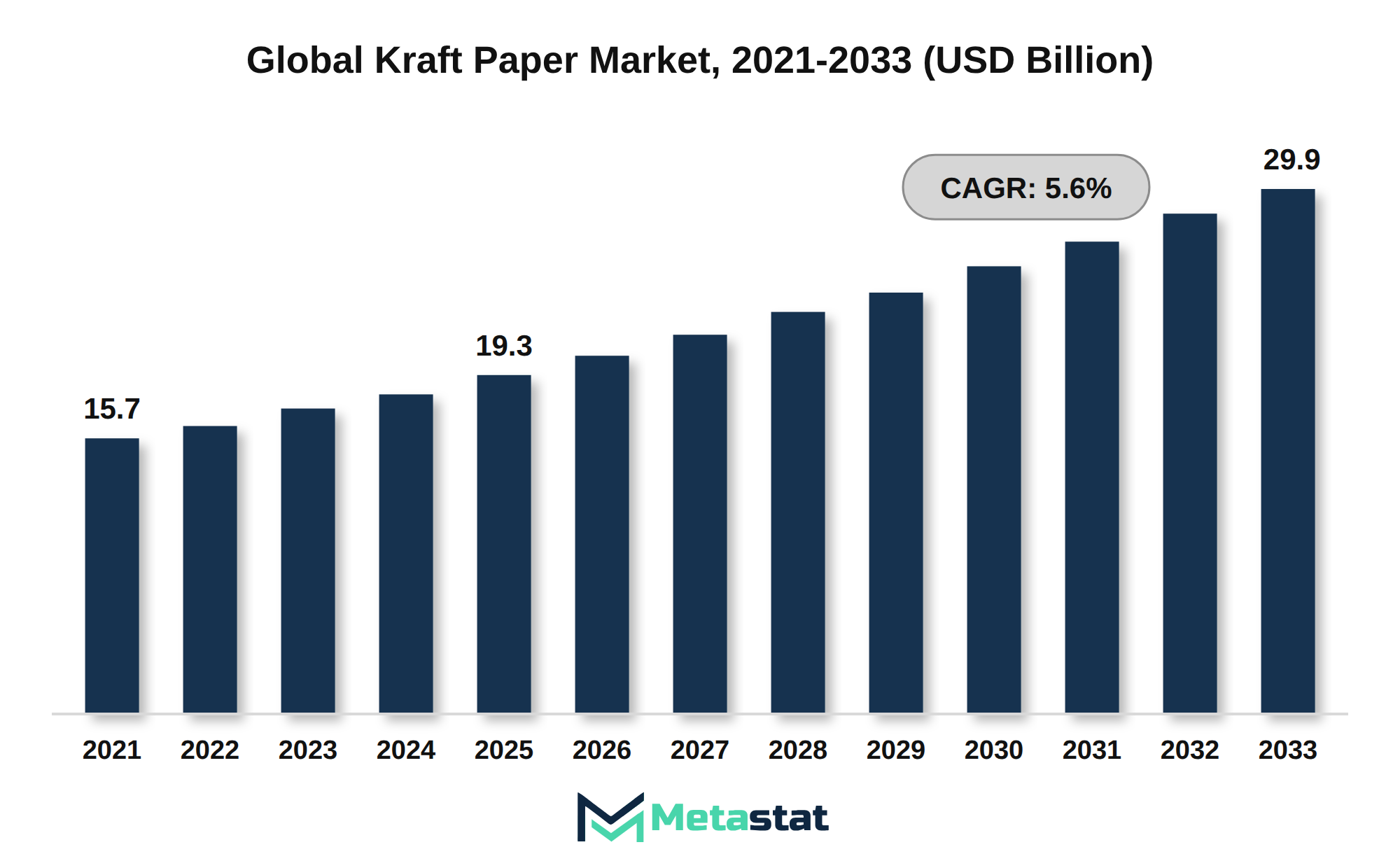
The global Kraft Paper market was valued at USD 19.3 billion in 2025 and is projected to grow at a CAGR of 5.6% during the forecast period, reaching USD 29.9 billion by 2033.
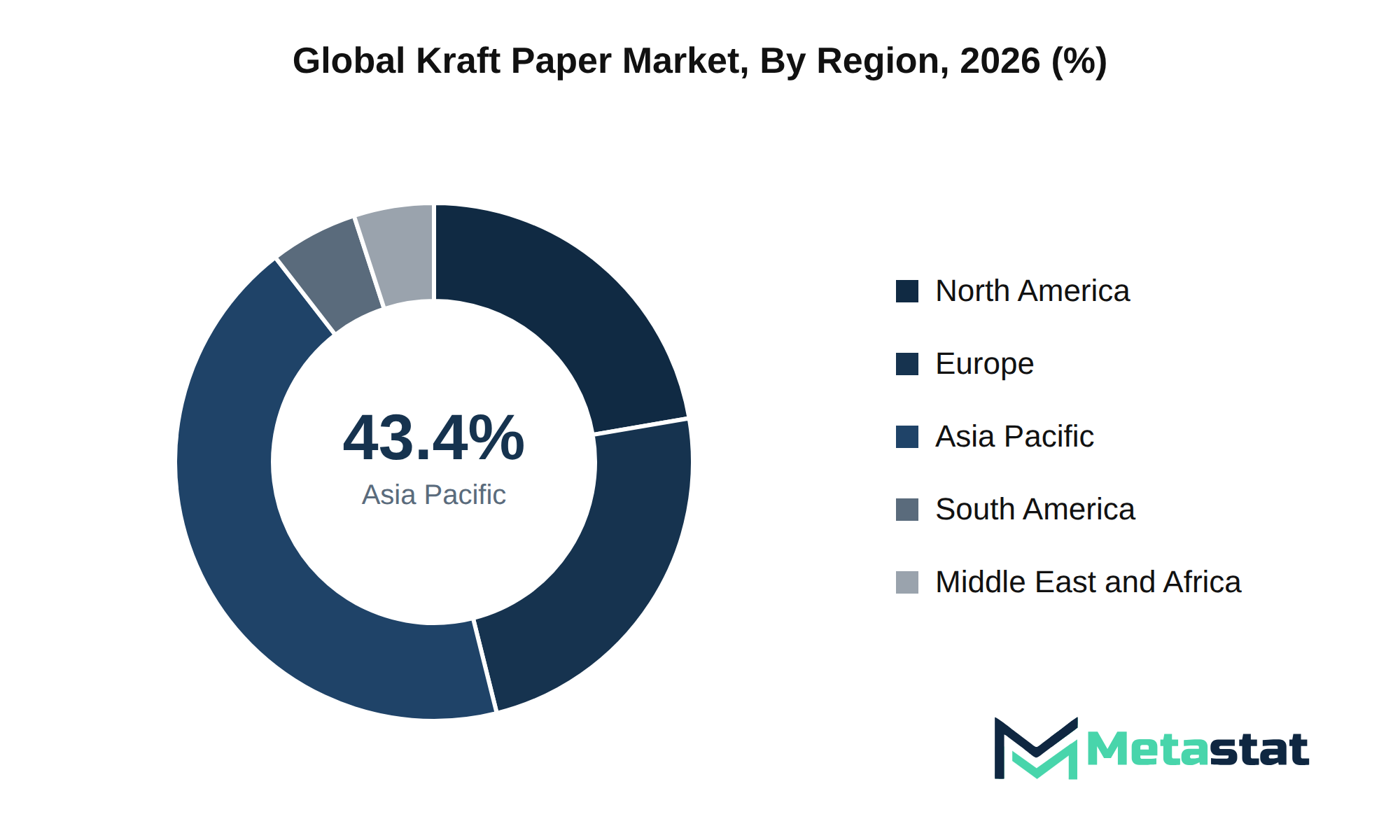
The Kraft Paper market is positioned for growth, with a base value of USD 19.3 billion in 2025 and a projected value of USD 29.9 billion by 2033, reflecting a compound annual growth rate (CAGR) of 5.6%. The regional distribution indicates that North America holds a market share of 22.3% in 2025, with the United States leading this segment in 2026.
Europe follows closely, accounting for 23.8% of the market, while Asia Pacific dominates with a substantial share of 43.4%. The remaining market segments are divided between South America, which holds 5.5%, and the Middle East and Africa, contributing 5%. This distribution highlights the varied demand for Kraft Paper across different regions, influenced by local industrial and economic factors.
North America is expected to reach a market value of USD 6.1 billion by 2033, maintaining a steady CAGR of 5.6%. Within this region, the demand for unbleached Kraft Paper is projected to grow from USD 11.7 billion in 2026 to USD 16.4 billion by 2033, with a CAGR of 4.9%. In contrast, semi-bleached Kraft Paper is anticipated to reach USD 5.4 billion by 2033, growing at a CAGR of 6.2%. The market for bleached Kraft Paper is also on the rise, with an estimated value of USD 8.1 billion by 2033.
The increasing demand for Kraft Paper is driven by its applications in various industries, including food and beverages, electronics, construction, and cosmetics. The rising trend towards sustainable packaging solutions has further spurred demand for Kraft Paper, as it is often seen as a more environmentally friendly alternative to plastic. Companies across the globe are increasingly focusing on innovation and sustainability to meet changing consumer preferences and regulatory requirements.
In the competitive environment, several key players dominate the Kraft Paper market. Companies such as Mondi plc, Billerud AB, and Stora Enso Oyj are leading, leveraging their extensive product offerings and supply chains. This competitive environment encourages continuous improvement and innovation, as firms strive to enhance product quality while reducing environmental impacts.
As sustainability becomes a central theme in the packaging industry, Kraft Paper manufacturers are investing in research and development to create next-generation products. This includes advancements in production processes that minimize waste and enhance the recyclability of their products. The move towards a circular economy is shaping strategies in the Kraft Paper market, with companies looking to incorporate more recycled materials into their offerings.
The Kraft Paper market is expected to record sustained growth, supported by regional demand patterns, competitive developments, and rising adoption of sustainable packaging solutions. Evolving consumer preferences, stricter environmental regulations, and continued product innovation are shaping market expansion and creating new growth opportunities across key application segments.
Regulatory compliance plays a critical role in the Kraft Paper market, influencing production practices, material sourcing, and environmental impacts. The industry has seen an increase in standards aimed at promoting sustainability and responsible sourcing. These regulations often focus on the environmental footprint of paper production, including emissions and waste management. Compliance with these standards is essential for market players to maintain competitiveness and ensure product acceptance in various regions.
The Kraft Paper market is characterized by a diverse competitive environment featuring numerous players across various regions. Major companies include Mondi plc, Billerud AB, and Stora Enso Oyj. The presence of large manufacturers and smaller regional producers contributes to fragmentation across the Kraft Paper market, intensifying product innovation, pricing competition, and portfolio differentiation. Market consolidation through mergers, acquisitions, and strategic partnerships is expected to strengthen production capabilities, expand geographic reach, increase market share, and broaden Kraft Paper product portfolios.
Inflationary pressures have been significant in shaping the cost structures within the Kraft Paper market. Rising raw material prices, energy costs, and labor expenses contribute to overall increases in production costs. Currency volatility influences pricing stability and profit margins across the Kraft Paper market, particularly for companies involved in international trade. Diversified supplier networks, strategic procurement planning, and optimized sourcing structures are reducing exposure to foreign exchange fluctuations and supporting greater cost resilience.
The supply chain for Kraft Paper is complex and interdependent, involving multiple stakeholders from raw material suppliers to end-users. Disruptions in supply chains, whether due to geopolitical tensions or natural events, affects the availability and pricing. Agile supply chain strategies are essential for addressing these challenges, maintaining a reliable flow of materials, and reducing production downtime.
There is a growing emphasis on sustainable transformation within the Kraft Paper market, driven by consumer demand for eco-friendly products. Companies are increasingly adopting practices that align with circular economy principles, focusing on recycling and the use of renewable resources. This shift reduces environmental impacts and opens new market opportunities for businesses that prioritize sustainability in their product offerings.
The value chain in the Kraft Paper market encompasses various stages, from raw material sourcing to production and distribution. Effective capital allocation is crucial for companies aiming to invest in new technologies and processes that enhance efficiency and product quality. Firms that prioritize research and development are likely to gain a competitive edge, as innovation in product types and applications is expected to drive the market growth.
Macroeconomic factors, including economic downturns and shifts in consumer spending habits, present challenges for the Kraft Paper market. Economic uncertainty will lead to fluctuations in demand, impacting production levels and pricing strategies. Macroeconomic conditions continue to influence operational priorities and marketing strategies, driving adjustments across the market in response to evolving dynamics.
As the Kraft Paper market evolves, it faces several constraints and dependencies that could affect growth trajectories. Dependence on raw material availability, compliance with increasingly stringent regulations, and the need for sustainable practices are all critical factors. Effective management of these challenges is strengthening competitive positioning and supporting long-term growth across the Kraft Paper market.
Changes in demographic patterns, particularly urbanization and lifestyle shifts, are driving growth in the Kraft Paper market. As populations move towards urban centers, there is an increase in consumer demand for sustainable packaging solutions that align with modern environmental standards. This trend is particularly evident among younger consumers who prioritize eco-friendly products in their purchasing decisions. In addition, aging populations are influencing the market by increasing the need for more accessible packaging options, such as easy-to-handle grocery and shopping bags. The growing preference for sustainability in product offerings creates a stronger demand for Kraft Paper, which is perceived as a more environmentally responsible packaging alternative compared to plastic and other materials.
The demand for Kraft Paper is most pronounced in the Asia Pacific region, where rapid urbanization and rising disposable incomes are leading to increased consumption of packaged goods. This region accounts for 43.4% of the market share, with significant growth projected in countries like China and India. Urban consumers in these markets are increasingly opting for Kraft Paper packaging for various applications, including grocery bags and corrugated boxes. This trend is also reflected in the growing middle class, which is more inclined to support brands that embrace sustainability and ethical practices. As a result, the Kraft Paper market is experiencing a shift in consumer behavior, with preferences leaning towards products that contribute to a circular economy.
Demographic shifts are reshaping demand patterns in the Kraft Paper market, with evolving consumer preferences increasing emphasis on sustainable production methods and product recyclability. These factors are strengthening the market position of suppliers offering environmentally aligned product portfolios.In addition, suppliers need to focus on developing innovative packaging solutions that meet the requirements of various end-use industries, particularly food and beverages, cosmetics, and textiles. These initiatives will not only help suppliers capture a larger market share but also contribute to the overall growth of the Kraft Paper market over the forecast period.
Growing environmental awareness has led to a shift in consumer preferences toward sustainable materials, impacting various industries including packaging and construction. As businesses and consumers increasingly prioritize eco-friendly practices, Kraft Paper is gaining traction due to its renewable and recyclable properties. This change drives demand for products made from recycled and unbleached Kraft Paper, appealing to environmentally conscious buyers. Companies are seeking to reduce their carbon footprints, positioning Kraft Paper as a favorable option in the market.
The demand for sustainable packaging solutions is most pronounced in regions with stringent environmental regulations and a high concentration of eco-conscious consumers. Asia Pacific, accounting for 43.4% of the market, is particularly affected by this trend, driven by countries such as China and India, where urbanization and expanding middle-class populations are fueling demand for eco-friendly alternatives. North America and Europe also exhibit significant interest in Kraft Paper, supported by governmental policies promoting sustainability and recycling initiatives.
The growing emphasis on sustainability is creating both operational challenges and market opportunities for Kraft Paper suppliers. Shifting consumer preferences are accelerating investment in sustainable production practices, recycled paper processing efficiency, and environmentally responsible raw materials. Product development is increasingly focused on recyclable kraft paper, reduced environmental impact, and improved resource utilization. Rising buyer preference for sustainable packaging solutions is strengthening the competitive position of suppliers with advanced recycling capabilities and sustainability-focused Kraft Paper portfolios.
High capital requirements represent a major restraint in the Kraft Paper market. Establishing or expanding Kraft Paper production capacity requires substantial investment in machinery, manufacturing technology, processing infrastructure, and facility development. Limited access to financing restricts market entry, capacity expansion, and plant modernization, particularly among smaller manufacturers and companies operating in emerging economies. These financial constraints widen capability gaps between established producers and new entrants, reducing competitive participation and slowing regional Kraft Paper market development.
Segments that absorb the most damage from these high capital costs include the unbleached Kraft paper segment, projected to reach USD 16.4 billion by 2033, and semi-bleached Kraft paper, expected to grow to USD 5.4 billion in the same period. Regions such as Asia Pacific, which accounts for 43.4% of the market, are particularly affected. The high costs associated with scaling production can hinder the ability of manufacturers in these areas to compete effectively on a global scale, especially against companies in regions with more favorable investment climates.
To address these capital constraints, companies in the Kraft Paper market are exploring various strategies, such as partnerships and joint ventures to share the financial burden of new projects. While these collaborations will ease pressure, they do not fully resolve the issue of high costs. Investment in advanced Kraft Paper manufacturing technologies and production processes involves substantial upfront capital, despite potential long-term efficiency gains. Limited access to investment funding continues to constrain modernization, capacity expansion, and sustainable production upgrades, placing smaller manufacturers at a competitive disadvantage amid rising market demand and intensifying industry competition.
Firms in the Kraft Paper market face significant challenges due to logistics disruptions that complicate their operational processes. These disruptions arise from various factors, including geopolitical factors, trade deficits, and fluctuating transportation costs. The complexities of global supply chains have made it difficult to maintain consistent delivery schedules and manage inventory levels effectively, leading to increased costs and inefficiencies. Logistical constraints continue to affect production continuity and distribution efficiency in the Kraft Paper market, increasing the importance of resilient supply chain coordination and disruption mitigation.
The Asia Pacific Kraft Paper market faces pronounced logistics challenges due to high regional demand, infrastructure limitations, and dependence on complex cross-border supply chains. Shipping delays, port congestion, and extended customs clearance periods increase the risk of inventory shortages, distribution disruptions, and lost sales. North America and Europe encounter similar supply chain pressures, although more developed transportation, warehousing, and logistics infrastructure supports greater operational resilience and reduces the impact of regional distribution constraints.
To address logistics disruptions, companies are investing in enhanced supply chain management systems and diversified transportation options. This often entails higher operational costs, which can affect profit margins. Firms are also exploring strategic partnerships with third-party logistics providers to improve efficiency and reliability. These solutions require substantial financial commitments, which can strain resources, particularly for smaller operators in the market. The ongoing challenges presented by logistics disruptions continue to be a significant concern for Kraft Paper market participants as they strive to meet evolving demand while managing costs effectively.
The Kraft Paper market is experiencing a growing opportunity driven by evolving consumer preferences and technological advancements in production processes. As businesses and consumers increasingly prioritize eco-friendly materials, the demand for innovative applications of Kraft Paper is rising. This shift is characterized by the development of specialty products, such as sustainable packaging solutions and biodegradable materials, which cater to environmentally conscious buyers. Infrastructure modernization projects across various regions are creating a need for durable and versatile paper products suitable for diverse applications, further supporting market growth.
Companies that adopt innovative manufacturing technologies and focus on product diversification are well-positioned to capture this opportunity. A capability to integrate sustainable practices into production processes will be essential for market players aiming to meet the increasing demand for eco-friendly products. Firms that invest in research and development, along with strategic partnerships for technological advancements, can enhance their competitive edge. The ability to offer customized solutions for various end-use industries, such as food and beverages, cosmetics, and construction, will also be crucial in appealing to a broader customer base.
The market opportunity for Kraft Paper is becoming increasingly time-sensitive due to intensifying competition, emerging packaging materials, and evolving environmental regulations. Stricter sustainability standards across key regions are accelerating product innovation and portfolio realignment toward recyclable and environmentally responsible Kraft Paper solutions. Companies with early regulatory alignment, advanced sustainable production capabilities, and differentiated product offerings are gaining stronger competitive positioning. Delayed adaptation increases exposure to market share erosion as buyers shift toward alternative packaging materials that better meet sustainability and compliance requirements.
The Global Kraft Paper market is segmented based on Grade, Product Type, Application, and End Use Industry.
In 2026, the Unbleached Kraft Paper segment is valued at USD 11.7 billion and is projected to grow to USD 16.4 billion by 2033, representing a CAGR of 4.9% during the forecast period. This segment's growth is driven by increasing demand for sustainable packaging solutions. As businesses and consumers alike seek environmentally friendly options, unbleached kraft paper, which is made from natural fibers without chemical bleaching processes, has gained favor due to its reduced environmental impact.
Downstream applications in the food and beverages sector significantly influence demand, as unbleached kraft paper is ideal for packaging due to its durability and compostability. The rise of e-commerce has created a heightened need for reliable packaging materials, further supporting the segment's growth. Companies in this segment are also focusing on product evolution and next-gen upgrades that enhance the performance of unbleached kraft paper in various applications.
Cost structures and pricing volatility present challenges, as fluctuations in raw material prices can impact profitability. However, the market's growth prospects and increasing adoption across multiple industries create strategic opportunity windows for manufacturers. As businesses pivot towards sustainable practices, unbleached kraft paper is set to capture a significant share of the overall Kraft Paper market in the coming years.
By 2033, the Semi-Bleached Kraft Paper segment is projected to reach USD 5.4 billion, growing at a CAGR of 6.2% during the forecast period. This growth trajectory can be attributed to several key factors. Increasing demand in the packaging industry, particularly for food and beverage applications, is a significant driver. Semi-bleached kraft paper offers a balance between strength and appearance, making it a suitable choice for various packaging requirements.
Consumer preferences are shifting towards sustainable and recyclable materials, which enhances the attractiveness of semi-bleached kraft paper. As brands increasingly focus on eco-friendly packaging solutions, this segment is expected to benefit from a heightened emphasis on sustainability. Adoption is particularly strong in regions where environmental regulations are stringent, compelling manufacturers to adopt greener alternatives.
Technological advancements also play a role in the segment's expansion. Innovations in production processes are enabling manufacturers to enhance the quality and reduce the costs associated with semi-bleached kraft paper. As production techniques mature, the market is likely to see improved efficiency and reduced pricing volatility, which further supports its growth.
End-use dynamics highlight strong demand from sectors such as food and beverages, which continue to drive the consumption of semi-bleached kraft paper for applications like grocery and shopping bags. As the Kraft Paper market evolves, the semi-bleached segment is well-positioned to capitalize on these trends, ensuring sustained growth in the coming years.
By 2033, the Bleached Kraft Paper segment is projected to reach USD 8.1 billion. This growth is driven by several factors, including the increasing demand for eco-friendly packaging solutions and the rising adoption of sustainable practices across various industries. The segment's expansion is further supported by the growing preference for high-quality, durable, and aesthetically pleasing packaging materials in end-use industries such as food and beverages, cosmetics, and electronics.
As consumers become more environmentally conscious, the shift towards sustainable packaging options intensifies. Bleached Kraft Paper, known for its superior strength and smooth surface, is gaining traction in applications requiring high-quality printing and design. This preference aligns with the broader trend within the Kraft Paper market, where sustainability is becoming a key competitive advantage.
Advances in production technologies are enhancing the efficiency and quality of Bleached Kraft Paper, making it more attractive to manufacturers. These technological improvements not only optimize production processes but also contribute to cost reductions, which are essential in a market facing pricing volatility and margin pressures.
The segment is poised for growth as businesses seek to meet stringent regulatory compliance standards regarding packaging materials. This compliance creates strategic opportunity windows for manufacturers of Bleached Kraft Paper, allowing them to capture market share in a landscape increasingly focused on sustainable and regulatory-friendly solutions.
Increasing demand for eco-friendly packaging solutions is a primary driver for the Virgin Natural Kraft Paper segment. This type of paper, made from virgin fibers, is preferred in industries such as food and beverage, cosmetics, and construction due to its strength and biodegradable properties. As consumers become more environmentally conscious, companies are seeking sustainable packaging alternatives, which boosts adoption of virgin natural kraft paper in various applications.
Technological advancements also contribute to the segment's growth. Innovations in production techniques have led to improved efficiency and quality in manufacturing virgin natural kraft paper, making it a more attractive option for businesses. These upgrades support better performance in end-use applications. This increases its appeal among manufacturers seeking reliable and durable materials.
Regulatory compliance is important in shaping the market dynamics. Stricter environmental regulations globally are encouraging businesses to shift towards sustainable materials, further driving the demand for virgin natural kraft paper. Compliance with these standards not only helps companies reduce their environmental footprint but can also enhance brand reputation.
Overall, the Virgin Natural Kraft Paper segment is positioned for growth as it aligns with rising consumer preferences and regulatory trends towards sustainability. The Kraft Paper market will continue to benefit from these factors, making virgin natural kraft paper a key material in future packaging solutions.
Adoption of recycled Kraft paper is influenced by increasing environmental regulations and consumer demands for sustainable packaging solutions. The focus on reducing waste and promoting recycling initiatives encourages manufacturers to integrate recycled materials into their product offerings. This shift aligns with global sustainability goals and enhances brand reputation among environmentally conscious consumers.
Market expansion for recycled Kraft paper benefits from advancements in production technologies. These innovations enhance the quality and performance of recycled paper, making it a viable alternative to virgin pulp. As technological maturation continues, producers can achieve greater efficiency and cost-effectiveness, which supports competitive pricing in the market.
Downstream applications reflect a growing preference for recycled Kraft paper in various sectors, including food and beverages, cosmetics, and retail. These industries favor packaging solutions that align with sustainability initiatives, driving demand for recycled products. Consumer consumption shifts towards eco-friendly options further promote the adoption of recycled Kraft paper.
Regulatory compliance standards also play a significant role in shaping the market dynamics. Governments worldwide are implementing stricter regulations on single-use plastics, pushing companies to seek alternative materials. As a result, recycled Kraft paper emerges as a favorable substitute, reinforcing its position in the Kraft Paper market.
Corrugated boxes represent a significant application within the Kraft Paper market, driven primarily by the growing demand for sustainable packaging solutions. The increasing emphasis on eco-friendly materials has led manufacturers to adopt Kraft Paper due to its recyclability and biodegradable properties. As consumers become more environmentally conscious, industries are shifting towards packaging that minimizes environmental impact. This shift enhances the appeal of corrugated boxes made from Kraft Paper.
Adoption of Kraft Paper in the production of corrugated boxes is influenced by advancements in manufacturing technologies. Innovations in paper production and processing have enhanced the strength and durability of Kraft Paper, making it suitable for various packaging needs. These technological advancements support the creation of next-generation corrugated boxes that can withstand transport and handling stresses. They maintain lightweight characteristics, which are crucial for efficiency.
Downstream application trends stimulate demand for corrugated boxes, particularly in retail and e-commerce sectors. The growth of online shopping has resulted in a surge in packaging requirements, prompting companies to seek reliable and resilient packaging solutions. Consequently, this trend positions Kraft Paper as a favorable choice for producing corrugated boxes that cater to the evolving demands of consumers and businesses.
In terms of cost structures, the affordability of Kraft Paper compared to alternative materials plays a role in its competitive advantage. The market benefits from a diverse range of sourcing options, which helps mitigate pricing volatility. This aspect is vital for manufacturers aiming to maintain profitability while meeting consumer demands and improving supply chain resilience.
Growing consumer preference for eco-friendly packaging solutions is a significant demand driver in the Kraft Paper market, particularly for grocery and shopping bags. As businesses aim to meet sustainability goals, there is a noticeable shift towards materials that reduce environmental impact. This trend is coupled with increasing regulations that promote the use of recyclable and biodegradable products, further propelling the adoption of kraft paper in this application.
Adoption rates within this segment are influenced by changing consumer behaviors, where shoppers increasingly prefer reusable and recyclable bags over traditional plastic options. This shift is evident in various retail environments, from grocery stores to boutiques, where kraft paper bags are being favored for their durability and aesthetic appeal. Retailers benefit from the ability to customize these bags, enhancing brand visibility while adhering to green initiatives.
Technological advancements in manufacturing processes are also contributing to segment expansion. Innovations in production techniques have led to the development of stronger and more sustainable kraft paper grades, which meet the diverse needs of retailers. These advancements ensure that kraft paper remains competitive against alternative packaging materials.
Overall, the grocery and shopping bags application segment is positioned for growth as consumer trends align with sustainability initiatives, regulatory compliance, and technological developments within the market.
Demand for multiwall sacks is driven by their applications in various industries, including food and beverages, construction, and agriculture. These sacks provide effective solutions for packaging bulk materials. They ensure product integrity during transportation and storage. As sustainability concerns rise, manufacturers are increasingly focusing on eco-friendly materials and processes, enhancing the appeal of multiwall sacks in the market.
Adoption rates are influenced by the ongoing shift towards sustainable packaging options. Many companies are looking for alternatives to plastic, and multiwall sacks made from recycled Kraft paper present a viable solution. This trend is particularly strong in regions such as North America and Europe. Regulatory pressures and consumer preferences are steering businesses toward more sustainable practices.
Technological advancements are contributing to the evolution of multiwall sacks. Innovations in printing, sealing, and material science are improving the functionality and aesthetic appeal of these products. Enhanced durability and moisture resistance are essential features for end-users. This is particularly true in the food and beverage sector, where product protection is critical.
Overall, multiwall sacks represent a significant growth opportunity within the Kraft Paper market. Demand for sustainable solutions and technological improvements drives this segment. It is poised for continued development as manufacturers adapt to changing consumer preferences and regulatory landscapes.
In the Kraft Paper market, the Carryout Bags segment is significantly influenced by the growing emphasis on sustainability and eco-friendly materials. Consumers are increasingly seeking alternatives to plastic, driving demand for carryout bags made from recyclable and biodegradable Kraft paper. This shift in consumer preferences aligns with broader environmental initiatives aimed at reducing plastic waste, which presents a critical demand driver for this sub-segment.
Adoption of Kraft paper carryout bags is also being spurred by regulatory measures and policy headwinds targeting plastic use. Many governments are enacting legislation aimed at reducing single-use plastics, further supporting the market for sustainable packaging solutions. As these regulations become more widespread, businesses are motivated to transition to Kraft paper options to ensure compliance and meet consumer expectations.
Segment expansion is driven by the evolution of product designs and functionality. Manufacturers are innovating with Kraft paper to develop durable, lightweight, and aesthetically appealing carryout bags that cater to the diverse needs of retailers and consumers. Enhanced printing capabilities enable brands to use these bags for marketing, enhancing their visual appeal while promoting eco-friendly practices.
As the market evolves, the ability to effectively source raw materials while maintaining cost structures will be crucial. Fluctuations in pricing and margin pressures can impact profitability, making efficient supply chain management essential for stakeholders in the Kraft Paper market. Overall, the Carryout Bags segment will continue to align closely with environmental trends and regulatory influences, shaping its growth in the coming years.
Adoption of various forms of Kraft paper for applications such as wrapping paper, envelopes and mailers, paper tapes and labels, protective packaging, and industrial liners is influenced by evolving consumer preferences and increased demand for sustainable packaging solutions. This segment of the Kraft Paper market plays a critical role in meeting the needs of diverse industries that prioritize eco-friendly materials. With heightened awareness of environmental issues, businesses are increasingly seeking biodegradable and recyclable packaging options, driving growth in this sub-segment.
The continuous evolution of product offerings is also a significant factor. Innovations in manufacturing processes and materials have led to the development of next-generation Kraft paper products that exhibit enhanced durability and functionality. These advancements facilitate better performance in protective packaging and labeling applications, increasing the segment's appeal among manufacturers.
Regulatory compliance standards regarding packaging materials are tightening globally, prompting companies to shift towards sustainable alternatives. This regulatory landscape is acting as a catalyst for growth, as businesses aim to align with sustainability goals and consumer expectations.
End-use dynamics reflect a shift towards online retail and e-commerce, where robust protective packaging solutions are essential for product safety during transit. As online shopping continues to grow, demand for Kraft paper products suitable for protective applications will likely see further expansion in the coming years.
Growing consumer awareness regarding health and sustainability drives the demand for Kraft paper in the food and beverages sector. This trend reflects a broader shift towards eco-friendly packaging, with many companies prioritizing recyclable materials to meet evolving consumer preferences. Increased scrutiny over single-use plastics has also contributed to a heightened interest in Kraft paper products, which are often perceived as a more sustainable alternative.
In addition, regulations promoting sustainable packaging practices are influencing the market dynamics. Governments and organizations are increasingly endorsing standards that favor biodegradable and recyclable materials, aligning with environmental objectives. These regulatory compliance standards create a favorable environment for the adoption of Kraft paper, particularly in food packaging applications.
Technological advancements in the production processes of Kraft paper are enhancing its appeal in the food and beverages sector. Innovations are focused on improving the quality, durability, and barrier properties of Kraft paper, making it suitable for various food products. Next-generation upgrades in production methodologies contribute to cost reductions and efficiency improvements, further enhancing Kraft paper's position in the market.
Downstream applications also demonstrate a growing trend toward customization, as businesses seek to differentiate their products in a competitive environment. Custom-branded Kraft paper packaging solutions appeal to consumers, providing opportunities for brand loyalty while enhancing the overall customer experience.
In the Kraft Paper market, the Electronics segment is important in addressing packaging needs for various electronic components and devices. Demand in this sector is driven by the rapid growth of consumer electronics, which requires reliable and protective packaging solutions. As electronic devices become more compact and sophisticated, the need for high-quality Kraft paper packaging that ensures product safety during transportation and storage becomes essential.
Adoption rates for Kraft paper in the electronics industry are influenced by a combination of environmental considerations and the push for sustainable packaging solutions. Manufacturers are increasingly recognizing the importance of eco-friendly materials, which enhances the appeal of Kraft paper as a recyclable and biodegradable option. This shift towards sustainability is evident as companies aim to meet consumer expectations for environmentally responsible products.
Technological advancements also contribute to segment expansion, with innovations in Kraft paper production processes enhancing product performance. Improvements in strength and moisture resistance make Kraft paper a viable choice for protecting sensitive electronic components. The evolution of packaging design and the advent of smart packaging solutions indicate a strategic opportunity window for Kraft paper manufacturers to cater to the evolving demands of the electronics sector.
In the construction industry, the use of Kraft paper serves multiple essential functions, significantly influenced by trends in sustainable building practices. Increased awareness of environmental concerns has led to a greater adoption of eco-friendly materials, including Kraft paper, for various applications such as insulation, moisture barriers, and protective packaging for construction materials. This shift is driven by a demand for materials that minimize environmental impact while still meeting performance standards.
Product evolution in Kraft paper is also notable, with advancements focusing on enhancing durability and moisture resistance. Innovations in manufacturing processes enable the production of Kraft paper that maintains structural integrity under varying conditions, making it suitable for demanding construction environments. In addition, strategic investments in next-generation upgrades are becoming common among manufacturers, aiming to meet the specific needs of the construction sector.
Regulatory compliance is another critical factor affecting this segment. As building codes evolve to include stricter environmental guidelines, the construction industry is increasingly required to use materials that comply with these standards. This trend opens strategic opportunity windows for Kraft paper producers, who can leverage their products' eco-friendly attributes to cater to an environmentally conscious market.
Overall, the construction sector's dynamics are shifting towards greater sustainability, with Kraft paper positioned as a viable material that aligns with these changes. As industries continue to evolve, the Kraft Paper market is likely to adapt, promoting growth in this essential end-use segment.
As consumer preferences evolve, the Kraft Paper market benefits from shifts toward sustainable packaging options in the cosmetics and personal care sector. Increasing awareness regarding environmental impact drives manufacturers to adopt Kraft paper for product packaging, aligning with eco-conscious consumer values. This trend is evident as brands seek materials that reflect their commitment to sustainability.
Regulatory compliance standards also play a significant role in this segment. Stricter regulations surrounding single-use plastics encourage companies to explore biodegradable alternatives, increasing the demand for Kraft paper solutions. The need to meet these regulations drives innovation and adaptation within the market.
Technological maturation in production processes enhances the quality and versatility of Kraft paper used in cosmetics and personal care applications. Manufacturers are investing in next-gen upgrades to improve the functionality and aesthetic appeal of packaging, leading to a wider range of product offerings that cater to diverse consumer preferences. This investment supports the overall growth of the segment.
Downstream applications of Kraft paper extend beyond primary packaging to include promotional materials and secondary packaging solutions. This multifaceted application enhances the market's appeal, as brands recognize the importance of cohesive branding and customer experience. Through these dynamics, the cosmetics and personal care sub-segment continues to thrive within the larger Kraft Paper market.
Growing awareness regarding sustainable manufacturing processes is shaping the dynamics in textile manufacturing, influencing the demand for Kraft paper. The shift towards eco-friendly materials is evident as manufacturers seek alternatives to synthetic fibers, which often present environmental challenges. Kraft paper, being biodegradable and recyclable, appeals to producers aiming to improve their sustainability credentials.
Adoption of Kraft paper in textile manufacturing is further driven by industry regulations that promote environmentally sound practices. Compliance with these standards not only encourages the use of sustainable materials but also positions companies favorably in the market. This trend aligns with increasing consumer preferences for sustainable products, prompting textile manufacturers to incorporate Kraft paper into their packaging solutions.
Expansion in this segment is also driven by advancements in production technologies. Innovations that improve the properties of Kraft paper, such as enhanced strength and versatility, help meet the specific needs of textile applications. This allows manufacturers to explore new uses and effectively replace traditional packaging materials, thereby supporting growth in the Kraft Paper market.
Additionally, the cost structures associated with Kraft paper production are becoming more competitive. With the rising costs of synthetic materials and environmental taxes, Kraft paper offers a viable and economically sustainable alternative. This cost-effectiveness, paired with its ecological advantages, positions Kraft paper favorably within textile manufacturing, reinforcing its role in the evolving market.
Based on geography, the Global Kraft Paper market is divided into North America, Europe, Asia-Pacific, South America, Middle East, and Africa.
The North America Kraft Paper market is projected to grow at a compound annual growth rate (CAGR) of 5.6% during the forecast period, ultimately reaching a market size of USD 6.1 billion by the end of 2033. This region accounted for 22.3% of the global market share in 2025, highlighting its significant position in the overall dynamics of the Kraft Paper sector.
Primary demand drivers in North America include the rising demand for sustainable packaging solutions across various industries, including food and beverages. The increasing emphasis on environmentally friendly materials in consumer goods is also shaping purchasing decisions, leading to heightened adoption of Kraft Paper. The market benefits from evolving consumer preferences that prioritize recyclable and biodegradable options, thereby supporting growth.
Emerging front-runners in the North American Kraft Paper market include the United States, Canada, and Mexico, each contributing uniquely to market dynamics. The United States, in particular, is a substantial contributor, driven by its large-scale manufacturing sector and consumer base that prioritizes eco-friendly products. Canada and Mexico are also seeing rising demand, particularly in applications such as grocery and shopping bags as well as corrugated boxes.
Infrastructure modernization is essential for facilitating market growth. Investments in local manufacturing capabilities and supply chain regionalization are enabling companies to meet increasing demand more effectively. Localized procurement dynamics are strengthening relationships between manufacturers and buyers, which is important for enhancing distribution efficiency.
The competitive landscape features a range of domestic leaders, including significant players who drive innovation and efficiency in production processes. These companies are leveraging their capabilities to address local market needs while ensuring compliance with regional regulations. As the market evolves, strategies that emphasize sustainable practices and product enhancements will likely dominate the efforts of these market leaders.
The Kraft Paper market in Europe is characterized by its substantial share of the global market in 2025. Key countries, including Germany, France, the UK, Italy, and Spain, significantly contribute to this share, driven by strong demand for sustainable packaging solutions. Russia and the Rest of Europe also play a role in shaping market dynamics within the region.
Germany leads as a mature market with well-established manufacturing capabilities and a focus on eco-friendly products. The high-value replacement cycles in this market are visible as companies transition towards more sustainable packaging materials. France follows closely, where consumer preferences favor recyclable products, further driving the adoption of Kraft paper.
The UK exhibits a robust market due to growing awareness regarding sustainability and environmental impact. This trend reflects in various applications, particularly in grocery and shopping bags, which are increasingly preferred by consumers seeking greener options. Italy and Spain demonstrate a rising demand for unbleached Kraft paper, driven by its applications in food and beverage packaging.
Emerging market front-runners, particularly in Eastern Europe, are beginning to show increased adoption rates of Kraft paper products. These territories are underpenetrated but exhibit potential for growth, as local manufacturers seek to align with European sustainability goals. Infrastructure modernization initiatives in these countries are expected to create opportunities for localized manufacturing and procurement dynamics.
Geopolitical factors and regulatory frameworks also influence the Kraft Paper market in Europe. Compliance with local mandates regarding sustainability and waste reduction pressures manufacturers to innovate and adapt their product offerings. This environment creates a competitive atmosphere, where domestic leaders strive to strengthen their positions and explore strategic entry barriers through foreign direct investment (FDI) and geographic expansion windows.
Asia-Pacific holds a significant position in the Kraft Paper market. This dominance is driven by several factors, including increased industrial production, evolving packaging demands, and a shift towards sustainable practices across countries such as China, Japan, and India.
In China, rapid urbanization and economic development have led to a surge in demand for various packaging solutions, including Kraft paper products. The rising e-commerce sector also contributes to increased consumption of Kraft paper, particularly for packaging and shipping purposes. Likewise, Japan continues to invest in advanced recycling technologies, which enhances the adoption of recycled Kraft paper, aligning with the country's focus on sustainability and waste reduction.
India's Kraft Paper market is experiencing notable growth as businesses adopt environmentally friendly options to meet consumer expectations. The government’s initiatives to promote sustainable packaging further support this trend. The demand for unbleached Kraft paper is on the rise in the region, with applications spanning multiple sectors, including food and beverages, electronics, and textiles.
South Korea presents another emerging market front-runner, driven by a tech-savvy population and increasing awareness of eco-friendly products. The country's focus on innovation and modernization in manufacturing processes supports the growth of Kraft paper consumption.
Australia and Southeast Asia demonstrate a growing interest in Kraft paper, particularly for grocery and shopping bags. The region's commitment to reducing plastic waste and implementing strict regulations on single-use plastics creates a favorable environment for Kraft paper alternatives. As a result, market players are increasingly focusing on product development and localization to cater to these evolving consumer preferences.
Brazil and Argentina are key players in the South American Kraft Paper market, contributing significantly to the region's overall share of the global market. Brazil is noted for its substantial production capabilities, supported by a favorable forestry resource base, while Argentina follows with a growing demand for Kraft paper across various sectors.
Emerging trends in the region reflect a shift towards sustainable packaging solutions, driven by increasing consumer awareness regarding environmental issues. This trend is expected to further enhance the adoption rates of Kraft paper products, particularly in applications such as grocery bags and corrugated boxes. As businesses strive to meet both local and global sustainability standards, the market is likely to see a surge in the demand for unbleached and semi-bleached Kraft papers.
Infrastructure modernization is important for enhancing production efficiency. Investments in local manufacturing facilities and advancements in production technology are anticipated to boost the output of Kraft paper in Brazil and Argentina. Localized procurement dynamics are becoming increasingly relevant as businesses seek to optimize supply chains and reduce costs associated with imported materials.
The South America Kraft Paper market demonstrates favorable growth potential, supported by evolving consumer preferences, expanding demand for sustainable packaging, and changing regulatory frameworks. Competition from alternative packaging materials and volatility in raw material prices continue to influence market expansion. Despite these constraints, the regional outlook remains positive, with incremental growth expected across key Kraft Paper applications and end-use industries.
The Middle East and Africa region is expected to contribute a 5.00% share of the global Kraft Paper market in 2025. This region presents diverse opportunities, driven by the increasing demand for sustainable packaging solutions across various industries, including food and beverages and retail. Saudi Arabia and the UAE are leading players in this trend, with investments in eco-friendly practices gaining momentum.
In Saudi Arabia, robust government initiatives aimed at promoting sustainable development have driven growth in the market. The UAE is experiencing a surge in demand for Kraft paper products, particularly in packaging applications, as brands seek to adopt environmentally friendly materials. South Africa also has an important role, with a growing awareness of sustainability among consumers and businesses alike. This shift encourages local manufacturers to enhance their product offerings to meet evolving market needs.
Infrastructure modernization in the region complements market growth. Countries such as Saudi Arabia and the UAE are investing significantly in their logistics and manufacturing capabilities, which supports efficient production and distribution of Kraft paper products. This enhancement in infrastructure is expected to enable higher adoption rates across various applications, including grocery and shopping bags.
Emerging market front-runners in the Middle East and Africa are focusing on localized manufacturing densities, which help to reduce dependency on imports. Such initiatives are vital, particularly in South Africa and the Gulf Cooperation Council (GCC) countries, where government support for local industries is robust. As a result, domestic players are strengthening their market positions while also responding to rising demand for recycled and virgin Kraft paper.
Overall, the regional dynamics indicate a steady growth trajectory for the Kraft Paper market, shaped by local compliance mandates and cultural nuances that influence procurement behaviors. Companies operating in this landscape are expected to benefit from incremental growth vectors, leveraging emerging opportunities to enhance their market presence.
The Kraft Paper market exhibits a diverse competitive environment where several key players operate across various segments. The market structure is characterized by a mix of multinational corporations and regional players, each vying for market share. Notable companies such as Mondi plc, Billerud AB, and Stora Enso Oyj lead in scale and resources, enabling them to invest significantly in research and development. Smaller entities like Genus Paper & Boards Limited and Dev Priya Products Private Limited, while lacking the same level of financial muscle, focus on niche applications and regional distribution to carve out their market presence.
Strategic consolidation has been a prominent theme, as companies seek to enhance their competitive positioning through mergers and acquisitions. This pattern is evident in the activities of giants such as Smurfit Westrock plc and DS Smith plc, which have pursued strategic alliances to expand their product portfolios and regional reach. Such consolidation efforts often aim to create synergies that improve operational efficiencies and reduce costs, reinforcing their competitive edge in a market projected to grow from USD 19.3 billion in 2025 to USD 29.9 billion by 2033, representing a compound annual growth rate (CAGR) of 5.6%.
Pricing strategies within the market reflect varying approaches based on product differentiation. Companies like Nippon Paper Industries Co., Ltd. and Oji Holdings Corporation leverage their technological advancements to offer premium products, which command higher price points. Conversely, players focusing on cost leadership often compete on pricing by optimizing their supply chains and production processes. This trend is creating a dynamic pricing environment in the Kraft Paper market, with product value increasingly assessed against customer expectations across key application segments, including grocery bags and corrugated boxes.
Barriers to entry in the Kraft Paper market are significant, driven by high capital requirements and the complexity of establishing a reliable supply chain. New entrants face challenges related to securing raw materials and achieving economies of scale, particularly in an industry dominated by established players with vertical integration capabilities. For instance, companies like Klabin S.A. and CMPC S.A. benefit from direct control over raw material sources, which provides them with a competitive advantage in terms of pricing and supply chain robustness.
Switching costs for customers can also be considerable, particularly for businesses that require specific grades of Kraft Paper tailored to their operational needs. This factor enhances brand loyalty among established manufacturers, as customers are less likely to transition to new suppliers without compelling incentives. The proprietary technology moats established by key players in the market further complicate the entry of newcomers, as these technologies often underpin product quality and performance.
The future competitive outlook for the Kraft Paper market indicates continued growth driven by increasing demand for sustainable packaging solutions. As environmental concerns gain prominence, companies are likely to invest in innovative and eco-friendly product offerings. Strategic partnerships and joint ventures can be expected to proliferate, enabling firms to combine expertise and resources to develop advanced materials that meet evolving consumer preferences.
Overall, the Kraft Paper market landscape is shaped by a mix of competitive strategies, with leaders focusing on innovation and differentiation while navigating the complexities of customer retention and market dynamics. As the market evolves, companies will need to remain agile, leveraging their strengths to adapt to emerging trends and competitive pressures.
The global Kraft Paper market is projected to expand from USD 19.3 billion in 2025 to USD 29.9 billion by 2033, registering a compound annual growth rate of 5.6%. Market growth is supported by macroeconomic conditions, changing downstream demand, evolving consumption patterns, and rising adoption of sustainable packaging solutions. Shifts in consumer preferences, regulatory developments, and product innovation are expected to influence competitive dynamics and create new opportunities across key Kraft Paper application segments.
Emerging white-space opportunities exist particularly in the Asia Pacific region, which holds a significant share of the market at 43.4%. Companies can explore unmet enterprise needs within sectors such as cosmetics and personal care, where sustainable packaging is gaining traction. By understanding regional nuances and tailoring offerings accordingly, businesses can tap into high-growth pockets that drive overall market expansion.
As the Kraft Paper market matures, executive-level strategic imperatives should include developing defensibility roadmaps that account for potential geopolitical realignments and changes in trade corridors. Companies should qualify multiple suppliers to mitigate risks associated with supply chain disruptions. This approach will enhance resilience against future market fluctuations and ensure continuity of supply.
Future growth prospects in the Kraft Paper market are closely linked to compliance with evolving sustainability regulations and packaging waste policies. Stricter regulatory frameworks, upcoming compliance milestones, and enhanced enforcement are expected to influence production practices, material selection, and investment priorities across the industry. Early alignment with environmental standards is strengthening competitive positioning within the global Kraft Paper market.
The projected expansion from USD 19.3 billion in 2025 to USD 29.9 billion by 2033 is supported by several underlying conditions, including economic stability, consistent demand across major end-use industries, continued technological development, and sustained investment in recyclable and sustainable packaging solutions. Alignment between product innovation, regulatory requirements, and consumer preferences remains central to the long-term growth outlook for the Kraft Paper market.
The report strategically identifies and profiles the key market players and analyses their core competencies in each sub-segment of the Kraft Paper market.
|
Report Attributes |
Details |
|
Study Period |
2021-2033 |
|
Base Year |
2025 |
|
Estimated Year |
2026 |
|
Forecast Period |
2026-2033 |
|
Historical Period |
2021-2025 |
|
Growth Rate |
CAGR 5.6% from 2026 to 2033 |
|
Revenue Unit |
USD billion |
|
Sales Volume Unit |
Kilotons |
|
Segmentation |
By Grade, Product Type, Application, End Use Industry, and Region |
|
By Region |
North America (By Grade, Product Type, Application, End Use Industry, and Country)
|
|
Europe (By Grade, Product Type, Application, End Use Industry, and Country)
|
|
|
Asia Pacific (By Grade, Product Type, Application, End Use Industry, and Country)
|
|
|
South America (By Grade, Product Type, Application, End Use Industry, and Country)
|
|
|
Middle East and Africa (By Grade, Product Type, Application, End Use Industry, and Country)
|
Find answers to common questions about this report
The Kraft Paper market size was valued at USD 19.3 billion in 2025, according to the Metastat Insights study.
The Kraft Paper market is expected to grow at a CAGR of 5.6% during the forecast period from 2026 to 2033.
According to Metastat Insights analysis, the North America Kraft Paper market size is projected to reach USD 6.1 billion by 2033.
Unbleached Kraft Paper leads the Kraft Paper market with a value of USD 11.7 billion in 2026. This segment is expected to grow to USD 16.4 billion by 2033.
Changes in demographic patterns, particularly urbanization and lifestyle shifts, are driving growth in the Kraft Paper market. Increased consumer demand for sustainable packaging, especially among younger populations, is evident in the Asia Pacific region, which holds a market share of 43.4%.
The Kraft Paper market faces constraints due to high capital investment requirements for production facilities and technology. These financial barriers can deter new entrants and limit expansion for existing players, particularly in regions with less access to financing or investment. Logistics disruptions also complicate operational processes, impacting market growth.
Changes in demographic patterns, particularly urbanization and lifestyle shifts, are driving growth in the Kraft Paper market. Increased consumer demand for sustainable packaging solutions, especially among younger and more eco-conscious buyers, is favoring product adoption. This trend is most pronounced in the Asia Pacific region, where urbanization and rising disposable incomes are leading to greater consumption of Kraft Paper.
The Kraft Paper market is estimated to reach a valuation of USD 29.9 billion by 2033.
Key players in the Kraft Paper market include Mondi plc, Billerud AB, Stora Enso Oyj, Smurfit Westrock plc, DS Smith plc, and Georgia-Pacific LLC. These companies are recognized for their significant contributions to the industry.
Asia Pacific accounts for 43.4% of the Kraft Paper market share, driven by urbanization and rising disposable incomes in countries like China and India.
The analysts below cover Packaging research at Metastat Insights.
LEAD ANALYST
Utkarsh Khirodkar is a Lead Market Research Analyst at MetaStat Insight, specializing in market intelligence, technology sector assessments, and competitive strategy.

SENIOR RESEARCH ANALYST
Biotechnology · Food and Beverages · Medical Devices · Packaging
Snehal Pasalkar is a Research Analyst at MetaStat Insight, operating at the intersection of life sciences research, competitive strategy, and market intelligence.

INDUSTRY CONSULTANT - CHEMICALS & ADVANCED MATERIALS
Chemicals and Materials · Machinery & Equipment · Packaging
Amit Gadhekar Consultant for Chemicals and Materials at MetaStat Insight, directing sector-specific intelligence, research, and strategic consulting across global chemical and processing markets.
Last Updated: August, 2026
Evaluating sovereign cloud deployments for core banking platforms demands a clear view of data residency regulations and migration exit strategies. MetaStat Insight delivered an exhaustive review of regional latency tolerances, mainframe decommission milestones, and third-party vendor concentration risk. The regulatory compliance mapping across European and Asian financial jurisdictions gave our team a dependable baseline for multi-cloud infrastructure discussions.
Replacing petrochemical surfactants with bio-based alternatives requires realistic timelines on industrial precision fermentation scaling. The market research broke down commercialization timelines, feedstock sugar price sensitivities, and regional cosmetic ingredient regulatory approvals in Europe and East Asia. That supplier readiness mapping gave our formulations team reliable context when comparing renewable chemical sourcing roadmaps.
Tracking ceramic matrix composite adoption in high-bypass aero engines requires strict attention to material qualification cycles and FAA airworthiness testing milestones. The MetaStat Insight team provided a detailed timeline of silicon carbide fiber manufacturing capacity and commercial foundry lead times. Having clear visibility into upstream thermal barrier coating supply helped us stress-test our long-term component procurement strategy.
Explore related market intelligence reports worth reading alongside this one.