
LEAD ANALYST
Utkarsh Khirodkar is a Lead Market Research Analyst at MetaStat Insight, specializing in market intelligence, technology sector assessments, and competitive strategy.

Global Lubricants Manufacturing Market Size, Share, By Product Type (Engine Oils, Hydraulic Fluids, Gear and Transmission Oils, Greases and Others), By Base Oil (Mineral Oil-Based Lubricants, Synthetic Lubricants, Semi-Synthetic Lubricants and Bio-Based Lubricants), By End-Use Industry (Automotive and Transportation, Industrial Manufacturing and Machinery, Oil and Gas, Marine and Shipping), By Manufacturing Model (Own-Brand Manufacturing, Private-Label Manufacturing, Contract and Toll Blending and Bulk Export Manufacturing), Industry Analysis, Growth, Trends, and Forecast, 2026-2033
MSI-4819
July, 2026
Updated
258 Pages
Report Details
Comprehensive Market Analysis And Insights
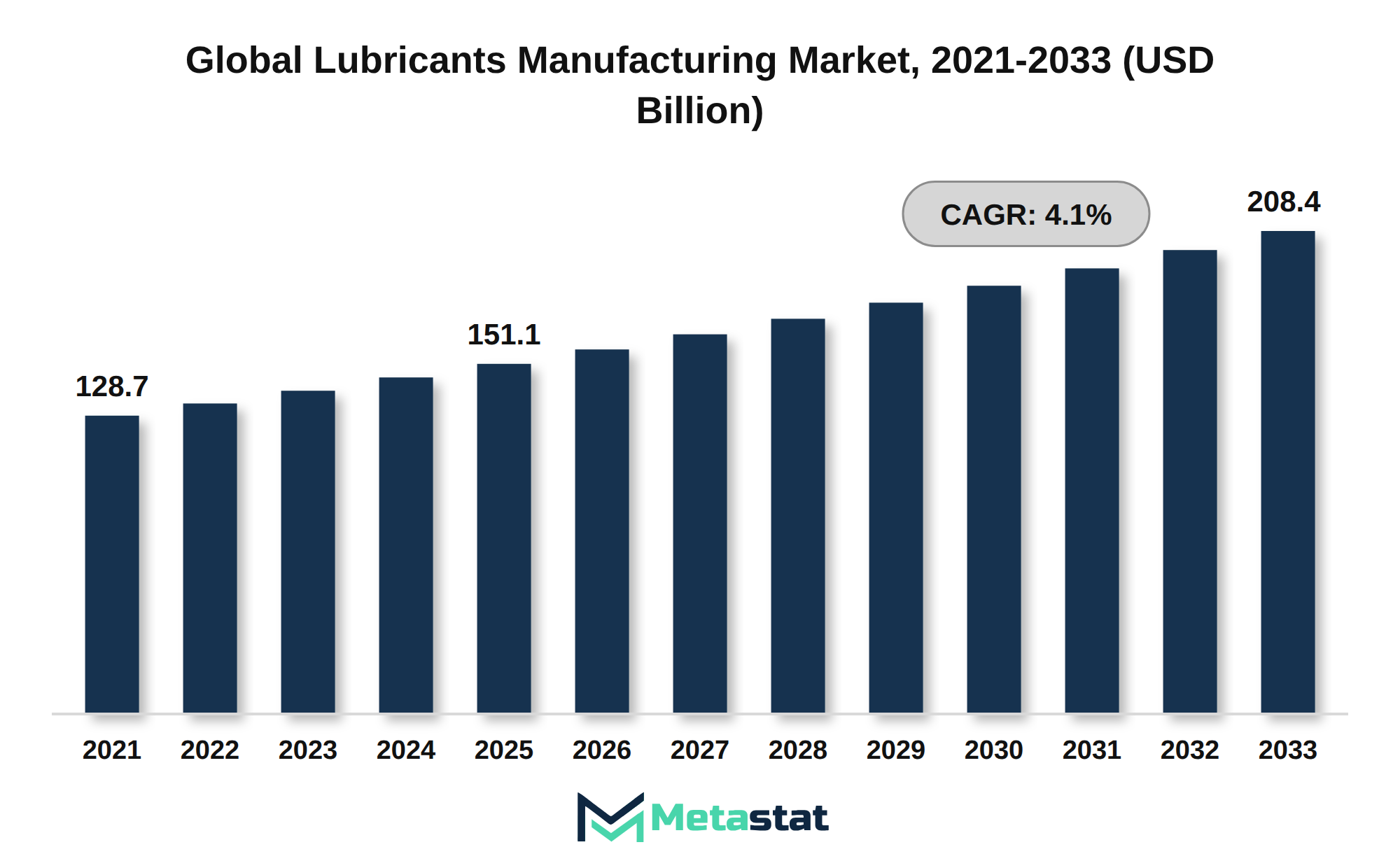
The global Lubricants Manufacturing market was valued at USD 151.1 billion in 2025 and is projected to grow at a CAGR of 4.1% during the forecast period, reaching USD 208.4 billion by 2033.
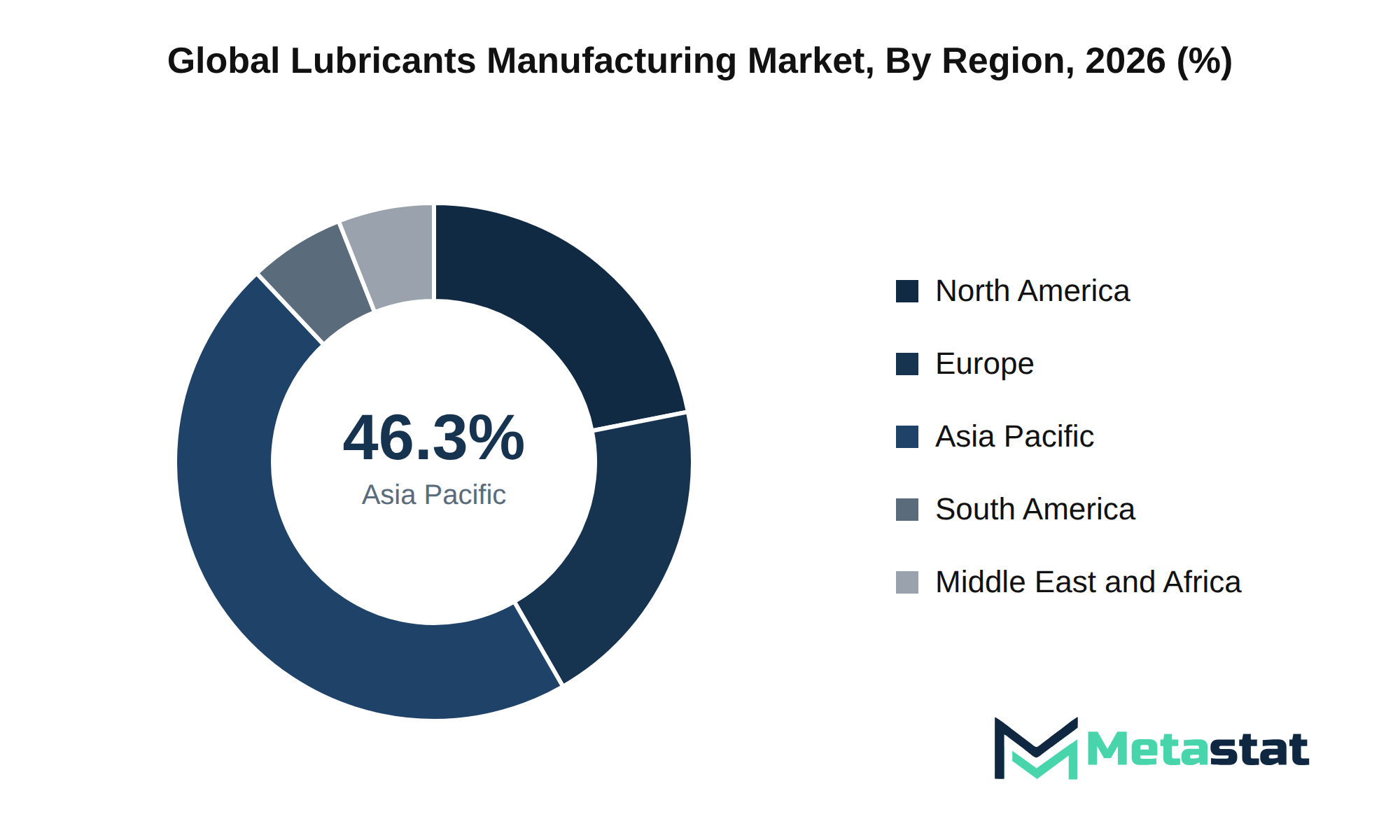
The Lubricants Manufacturing market is positioned for steady growth, with a projected base value of USD 151.1 billion in 2025. The market is expected to reach USD 208.4 billion by 2033, achieving a compound annual growth rate (CAGR) of 4.1% during the forecast period from 2026 to 2033. Regional dynamics play a significant role in shaping market trends, with North America accounting for 21.9% of the market share in 2025. The United States is anticipated to lead the market share in 2026, highlighting its important role in the overall growth of the industry.
Asia Pacific stands out as the largest region, commanding 46.3% of the market. This dominance is driven by increasing industrial activities and a growing automotive sector, particularly in countries like China and India. Europe follows with a 19.8% share, where stringent regulations and a focus on high-performance lubricants are influencing market developments. South America and the Middle East and Africa each contribute 6% to the market, reflecting emerging opportunities amid evolving industrial conditions.
As the market progresses, various factors, including regulatory compliance and sustainability initiatives, are expected to shape future trajectories. Increasing environmental awareness is prompting manufacturers to innovate and develop eco-friendly lubricants, driven by both regulatory requirements and consumer demand. This trend is particularly evident in the rise of bio-based lubricants, which are gaining traction due to their reduced environmental impact.
Research and development trajectories are crucial for the market's evolution. Companies are investing in next-generation lubricants that offer enhanced performance and sustainability. Innovations in synthetic lubricants, for instance, are being prioritized to meet the demands of high-performance applications in automotive and industrial sectors. The shift towards digitalization also presents opportunities for manufacturers to streamline operations, enhance product quality, and improve customer engagement.
Supply chain resilience is another critical aspect, particularly in light of recent global disruptions. The COVID-19 pandemic highlighted vulnerabilities within supply chains, prompting companies to reevaluate sourcing strategies and logistics. Firms are now focusing on building more resilient supply chains to mitigate risks associated with geopolitical uncertainties and economic fluctuations.
In terms of competitive dynamics, the market is characterized by fragmentation, with numerous players competing for market share. Leading companies are leveraging their established brands and extensive distribution networks to maintain competitive advantage. Mergers and acquisitions are becoming increasingly common as firms seek to enhance their product portfolios and expand their market reach.
Value chain analysis reveals that procurement strategies are evolving, with a growing emphasis on sustainable sourcing and partnerships. Collaborations between manufacturers and raw material suppliers are becoming vital as companies seek to align with sustainability goals while ensuring quality and performance standards.
Supply chain resilience is critical in the Lubricants Manufacturing market, particularly in light of recent global disruptions. Companies are increasingly focusing on enhancing their logistics architecture to ensure a steady flow of materials and products. The ongoing geopolitical tensions have highlighted vulnerabilities in supply chains, prompting manufacturers to diversify their sourcing strategies. By establishing multiple suppliers and creating more flexible logistics networks, companies aim to mitigate risks associated with single-source dependencies. This approach enhances operational efficiency and enables quicker responses to market fluctuations.
Capital allocation is important in the Lubricants Manufacturing market. As firms anticipate growth, they are investing in advanced manufacturing capabilities and upgrading existing infrastructure. Such investments are essential for meeting increasing demand and improving product quality. In particular, companies are focusing on enhancing their production capacity for synthetic lubricants, which are projected to experience significant growth. Infrastructure improvements also involve the integration of smart technologies, which improve monitoring and management of production processes, ultimately leading to cost savings and increased competitiveness.
The Lubricants Manufacturing market faces several macroeconomic headwinds that could impact growth trajectories. Inflationary pressures have been felt across various sectors, affecting the cost of raw materials and production. This inflation can squeeze profit margins, compelling manufacturers to explore cost-effective alternatives. Currency volatility presents challenges, particularly for companies operating in multiple regions. Fluctuations in exchange rates can affect pricing strategies and profit realization, prompting companies to reassess their financial strategies and risk management practices.
Digitalization is transforming the Lubricants Manufacturing market, with many companies adopting smart operations to streamline processes and improve efficiency. Integration of Industry 4.0 technologies is becoming commonplace, enabling manufacturers to apply data analytics for better decision-making. This shift allows for real-time monitoring of production lines, predictive maintenance, and enhanced inventory management. As companies invest in digital tools, there is a growing emphasis on training the workforce to adapt to these technologies, ensuring that the labor force is equipped to handle sophisticated systems.
The competitive landscape in the Lubricants Manufacturing market includes a mix of established players and emerging companies. This fragmentation creates a dynamic environment where innovation and strategic partnerships are crucial for maintaining market share. Larger corporations often engage in mergers and acquisitions to strengthen their position, while smaller firms leverage niche markets or specialized products. The presence of numerous manufacturers also spurs competition, driving advancements in product development and customer service, ultimately benefiting end-users.
Looking ahead, companies in the Lubricants Manufacturing market must align their strategies with evolving customer needs and environmental considerations. Emphasis on sustainability is becoming integral to corporate imperatives, with organizations seeking to reduce their carbon footprint and develop eco-friendly products. This shift towards sustainability addresses regulatory pressures and aligns with consumer preferences for greener options. Companies that adapt to these changes are likely to enhance their market positioning and achieve long-term growth.
Growth in the Lubricants Manufacturing market is increasingly influenced by macroeconomic conditions such as GDP growth, interest rates, and levels of public-private spending. Rising GDP often leads to increased industrial activity and automotive production, which subsequently drives demand for lubricants across various sectors. When interest rates are favorable, businesses are more likely to invest in new equipment and technologies that require lubricants for optimal operation. This relationship between economic growth and capital investment is essential for the market's expansion, creating a cycle of demand that supports manufacturers in optimizing their products and operations.
Regions such as Asia Pacific are experiencing the most significant impact from these macroeconomic factors, primarily due to rapid industrialization and urbanization. In this region, both manufacturing and automotive sectors are booming, leading to a surge in lubricant consumption. The demand for high-performance lubricants is particularly strong, as industries strive for efficiency and sustainability during increasing competition. North America and Europe, while also benefiting from economic growth, are more focused on advanced lubricant solutions driven by regulatory compliance and sustainability initiatives. The variations in regional economic activity create distinct opportunities for manufacturers to tailor their offerings to meet local demands.
For suppliers in the lubricants manufacturing sector, understanding these macroeconomic trends is vital. Companies that can adapt their production strategies to align with changing economic conditions stand to gain a competitive advantage. Investment in research and development can lead to innovative products that cater to the evolving needs of consumers and industries alike. Additionally, suppliers that engage in strategic partnerships and collaborations can enhance their market position, ensuring they remain responsive to shifts in demand driven by broader economic forces. This adaptability will be crucial as the market continues to evolve through 2033.
Manufacturers are increasingly adopting digital transformation initiatives to improve operational efficiency in the lubricants manufacturing market. Automation technologies, artificial intelligence (AI), and software implementation are reshaping traditional processes, ultimately driving demand for a variety of lubricant products. Companies are integrating smart technologies that streamline production processes, reduce errors, and enhance product quality. These advancements allow manufacturers to react more swiftly to changing market demands and customer preferences, creating a competitive edge in this evolving market.
This trend is felt acutely across various regions, particularly in Asia Pacific, which holds a substantial share of the lubricants manufacturing market at 46.3%. Within this region, countries like China and India are rapidly modernizing their manufacturing capabilities. As industries in these countries become more automated, the demand for advanced lubricants, particularly synthetic and bio-based options, is expected to rise. The automotive and transportation sector, alongside industrial manufacturing, are leading the way in adopting these technologies, as companies seek to optimize machinery performance and reduce maintenance costs.
Suppliers in the lubricants market must adapt to these technological shifts by investing in innovative formulations and digital solutions. Embracing automation not only improves production efficiency but also aligns with the growing demand for sustainable and high-performance lubricants. As a result, partnerships with tech companies may become crucial for lubricant manufacturers looking to integrate AI and machine learning into their production lines. This evolving situation will challenge suppliers to remain agile and responsive to both technological advances and shifting consumer expectations in the lubricants manufacturing market.
The Lubricants Manufacturing market faces significant restraint due to high capital investment requirements and escalating operating costs. This constraint originates from the need for advanced production technologies, raw material procurement, and adherence to stringent quality standards. As manufacturers strive to enhance efficiency and comply with environmental regulations, the capital required for upgrades and maintenance has seen a marked increase. The ongoing inflationary pressures exacerbate the cost of raw materials and operational expenses, further straining margins across the sector.
Particularly affected by these challenges are regions with high manufacturing intensity, such as Asia Pacific, which holds a 46.3% share of the market. This region's substantial demand for lubricants is accompanied by rising production costs, which can impede growth. In North America, projected to reach USD 43.5 billion by 2033 with a CAGR of 4.1%, manufacturers are grappling with these financial pressures. This situation leads to potential risks of market consolidation and reduced competitiveness.
In response to these challenges, companies are increasingly turning to process optimization and technology integration to mitigate costs. While some manufacturers have adopted automation and smart manufacturing solutions to streamline operations, these initiatives often require substantial upfront investment. As a result, smaller firms may struggle to keep pace, leading to a fragmented market where larger players dominate. Even with these workaround strategies, the underlying issues of high capital requirements and rising costs remain inadequately addressed, limiting the overall growth potential of the Lubricants Manufacturing market.
Firms in the Lubricants Manufacturing market are grappling with significant operational challenges stemming from supply chain instability. This instability is largely driven by feedstock and component volatility, logistics disruptions, and the resulting unpredictability in production schedules. Fluctuations in the availability and pricing of essential inputs create hurdles for manufacturers, complicating their ability to maintain consistent product offerings and meet customer demand. Logistics disruptions, whether due to geopolitical tensions or transportation bottlenecks, further exacerbate these issues, leading to increased lead times and higher operational costs.
Managing these challenges is particularly difficult in regions heavily dependent on specific raw materials or complex supply chains. For instance, manufacturers in Asia Pacific face acute pressures given their reliance on global supply routes and a diverse array of feedstocks. The region, which holds a dominant market share, is susceptible to disruptions that can ripple through the entire supply chain. In contrast, North America and Europe are experiencing separate challenges related to compliance with tightening regulatory standards, which can complicate supply chain operations.
In response to these persistent issues, firms are investing in enhanced supply chain strategies aimed at mitigating risks associated with volatility. Many are prioritizing the establishment of more localized supply sources and diversifying their vendor portfolios to reduce dependency on single suppliers. However, these strategies come with accompanying costs, including potential increases in prices for raw materials and longer lead times during the transition period. Such adjustments necessitate careful financial planning. Firms must balance their immediate operational needs against longer-term sustainability goals in a competitive market.
As the global Lubricants Manufacturing market evolves, emerging regional demands are creating new opportunities for growth. The increasing industrialization in regions such as Asia Pacific, where the market share stands at 46.3%, and rising infrastructure investments in North America and Europe are key drivers. These regions are investing significantly in modernization efforts, particularly in automotive and transportation sectors, which require advanced lubricants for enhanced efficiency and sustainability. This shift towards innovative solutions is accompanied by a growing consumer preference for eco-friendly products, further stimulating demand.
Companies positioned to capture this market opportunity must develop capabilities in innovative product formulations and sustainable manufacturing practices. The focus on bio-based lubricants, which are projected to grow at a CAGR of 8.1%, highlights the need for manufacturers to invest in R&D and create products that appeal to environmentally conscious consumers. Partnerships with local distributors and suppliers can facilitate entry into new markets, allowing firms to diversify their product offerings and adapt to regional preferences. Companies that can navigate the complexities of these emerging markets will be well-equipped to leverage growth opportunities.
To maximize this opportunity, companies need to act promptly, as the window for capturing these emerging demands may close due to increasing competition and shifting consumer preferences. The Lubricants Manufacturing market is projected to grow from USD 151.1 billion in 2025 to USD 208.4 billion by 2033, reflecting a CAGR of 4.1%. However, companies must be agile in their strategies and responsive to technological advancements and regulatory changes to maintain a competitive edge. Failing to adapt quickly could result in missed opportunities within this rapidly developing market.
The Global Lubricants Manufacturing market is segmented based on Product Type, Base Oil, End-Use Industry, and Manufacturing Model.
Engine Oils are projected to be valued at USD 68.5 billion in 2026 and are expected to reach USD 87.3 billion by 2033, reflecting a compound annual growth rate (CAGR) of 3.5% during the forecast period. This segment is primarily driven by the increasing demand for high-performance lubricants in the automotive sector, where enhanced engine efficiency and longevity are critical. Innovations in engine technology and the introduction of next-generation engine oils are playing a significant role in shaping consumer preferences and driving adoption rates.
In addition, regulatory compliance standards are becoming more stringent, urging manufacturers to develop products that meet evolving environmental and performance criteria. This push has resulted in the emergence of advanced synthetic and semi-synthetic engine oils that offer better thermal stability and reduced emissions. The market is also witnessing a shift in consumption patterns as consumers increasingly favor premium lubricants that provide superior protection and fuel efficiency.
Cost structures in the engine oils segment are influenced by raw material sourcing and production processes, impacting pricing volatility and profit margins. As manufacturers seek to maintain competitive pricing while investing in research and development, they must navigate these challenges carefully. Supply chain resilience remains crucial amid potential disruptions in raw material availability, necessitating strategic partnerships and efficient logistics management. The market of the lubricants manufacturing sector continues to evolve as firms capitalize on these strategic opportunities.
The hydraulic fluids segment is projected to achieve a value of USD 38.1 billion by 2033, growing at a compound annual growth rate (CAGR) of 4.3% throughout the forecast period. This growth is driven by increasing demand across various end-use industries, particularly in manufacturing and construction, where hydraulic systems are critical for machinery operation.
Technological advancements are important in enhancing the performance and efficiency of hydraulic fluids. As manufacturers seek to improve operational efficiencies, the need for next-generation hydraulic fluids that offer better thermal stability and improved lubrication properties has become evident. Evolving regulatory compliance standards necessitate that hydraulic fluids meet stringent environmental criteria, encouraging investments in environmentally friendly formulations.
End-use dynamics indicate a robust demand for hydraulic fluids in industrial manufacturing, where hydraulic systems are essential for automation and productivity. The consumption patterns are shifting towards synthetic hydraulic fluids that provide superior performance under extreme conditions. This aligns with the industry's push for high-efficiency solutions.
Cost structures are influenced by raw material sourcing and pricing volatility, making it imperative for companies in the lubricants manufacturing market to explore alternative raw materials and optimize supply chain resilience. Addressing these factors will be crucial for maintaining competitive margins while responding to market demands effectively.
By 2033, the Gear and Transmission Oils segment is projected to achieve a value of USD 34.9 billion. This growth will be propelled by several key factors, including increasing demand in the automotive sector, where the need for high-performance lubricants is essential for enhancing vehicle efficiency and longevity. Advancements in technology are driving the development of next-generation gear and transmission oils, which offer better thermal stability and protection against wear.
End-use dynamics indicate a shift towards more specialized applications, particularly in electric vehicles and advanced machinery. This transition necessitates oils formulated to meet specific performance criteria, thus presenting opportunities for manufacturers to innovate and provide tailored solutions. Regulatory compliance is also important, as stricter environmental regulations push for the adoption of eco-friendly formulations, which can serve as catalysts for growth in this sub-segment.
However, challenges related to cost structures and pricing volatility may affect profit margins. Fluctuations in raw material prices can impact the production costs, necessitating effective supply chain management to ensure resilience. As manufacturers adapt to these market pressures, the focus will likely shift towards optimizing formulations while maintaining compliance with evolving regulatory standards.
The Greases segment is projected to grow at a CAGR of 4.4% during the forecast period. This growth is driven by increasing demand across various end-use industries, particularly in automotive and industrial applications. Greases are essential for reducing friction and wear, enhancing equipment lifespan, and ensuring smooth operations. The expanding automotive and transportation sectors significantly contribute to the rising consumption of greases, as manufacturers prioritize equipment maintenance and performance enhancement.
Technological maturation is important in the evolution of grease formulations. Innovations in synthetic and bio-based greases, which offer superior performance characteristics and environmental benefits, are pushing the market towards more advanced products. As industries face stricter regulatory compliance standards, manufacturers are adapting their offerings to meet these demands, creating further growth opportunities.
Cost structures within the greases segment are influenced by raw material pricing and supply chain dynamics. Volatility in the prices of base oils and additives can affect profit margins. Companies must strategically manage their supply chains to mitigate risks associated with resource availability and logistics vulnerabilities. The shift towards energy-efficient and environmentally friendly lubricants may lead to potential substitution risks as companies explore alternative solutions.
The Greases segment is expected to capitalize on growing end-use applications and technological advancements, reinforcing its position within the broader lubricants manufacturing market.
Valued at USD 86.3 billion in 2026, the Mineral Oil-Based Lubricants segment is projected to reach USD 104.9 billion by 2033, growing at a CAGR of 2.8% during this period. This segment's steady growth is driven by an increase in demand across various end-use industries, particularly in automotive and industrial applications, where reliability and efficiency are critical. As manufacturers continue to innovate within this space, advancements in refining processes and formulation technologies play a crucial role in enhancing the performance characteristics of mineral oil-based lubricants.
End-use dynamics indicate a significant shift towards high-performance products, responding to rising operational standards and regulatory compliance pressures. The segment is influenced by cost structures and pricing volatility, with raw material sourcing being a critical concern. Fluctuations in crude oil prices directly impact production costs and, consequently, profit margins for companies within the market.
Regulatory compliance standards also affect market penetration and product acceptance. Companies are increasingly focused on meeting stringent environmental and safety requirements, which can create both challenges and opportunities. Substitution risks arise as synthetic and bio-based alternatives gain traction in the market, prompting mineral oil-based products to evolve to maintain competitiveness.
Strategic opportunity windows for investment and innovation persist, particularly in regions experiencing industrial growth. This segment is well-positioned to leverage these opportunities, aligning with ongoing trends in sustainability and performance enhancement within the lubricants manufacturing market.
Synthetic lubricants are projected to attain a market value of USD 55.5 billion by 2033, growing at a compound annual growth rate (CAGR) of 5.8% during the forecast period. This segment's expansion is driven by increasing demand for high-performance lubricants in various applications, particularly in automotive and industrial sectors. Manufacturers are focusing on technological maturation, leading to advancements in synthetic formulations that enhance performance and reduce environmental impact.
Adoption rates for synthetic lubricants are on the rise, primarily due to their superior characteristics compared to conventional oils, including better thermal stability, oxidation resistance, and lower volatility. These properties make synthetic lubricants particularly appealing for modern engines and machinery, which require more efficient and durable solutions. As industries increasingly shift towards environmentally friendly products, the market for synthetic lubricants is expected to benefit from regulatory compliance and a growing emphasis on sustainability.
Cost structures within this segment are influenced by fluctuations in raw material prices and manufacturing processes, which can impact margins. Synthetic lubricants often command a premium price; however, the value proposition they offer in terms of performance and longevity justifies this cost for many end-users. The lubricants manufacturing market will likely continue to see innovations that address supply chain vulnerabilities, ensuring consistent availability of high-quality synthetic options.
By 2033, the Semi-Synthetic Lubricants segment is projected to reach USD 28.1 billion, reflecting the growing adoption of these products across various applications. The primary demand drivers for this segment include the increasing need for high-performance lubricants that can offer both cost efficiency and enhanced operational reliability.
Technological maturation in lubricant formulations is leading to the development of next-generation semi-synthetic lubricants that provide superior protection and extended service life. These advancements are crucial as industries increasingly seek to optimize equipment performance and reduce maintenance costs. The shift in consumption patterns, particularly in the automotive and industrial sectors, has heightened the importance of semi-synthetic lubricants due to their versatility across a range of applications.
Regulatory compliance is also a significant factor influencing the market, as stricter environmental standards prompt manufacturers to adopt lubricants that minimize ecological impacts. The segment faces pressures related to cost structures and pricing volatility, as fluctuations in raw material prices can impact margins. Despite these challenges, the outlook for semi-synthetic lubricants remains positive, supported by strategic opportunities for expansion in emerging markets.
Overall, the segment is poised for significant growth within the Lubricants Manufacturing market, driven by continuous innovation and evolving end-use dynamics.
The Bio-Based Lubricants segment is anticipated to grow at a compound annual growth rate (CAGR) of 8.1% during the forecast period. This growth is driven by increasing awareness of environmental issues and a shift towards sustainable alternatives. As manufacturers seek to comply with stringent environmental regulations, bio-based lubricants, which are derived from renewable resources, are becoming a preferred choice across various industries.
The adoption of bio-based lubricants is gaining traction in sectors such as automotive and industrial manufacturing, where performance and environmental impact are critical considerations. These lubricants offer comparable performance to traditional petroleum-based options, often providing superior biodegradability and lower toxicity. This alignment with both regulatory compliance and consumer preferences positions bio-based lubricants favorably in the market.
Supply chain resilience is another factor influencing the growth of this segment. As raw material sourcing shifts towards more sustainable practices, manufacturers are working to ensure that the supply chain can support the increasing demand for bio-based products. Advancements in technology and production processes are enhancing the efficiency and cost-effectiveness of bio-based lubricant production, further supporting market expansion.
In light of these dynamics, strategic investment opportunities within the bio-based lubricants segment are likely to increase, focusing on innovation and product development. As companies continue to emphasize sustainability, bio-based lubricants will play a significant role in the broader lubricants manufacturing market.
Valued at USD 72 billion in 2026, the Automotive and Transportation segment aims to reach USD 93.8 billion by 2033, growing at a CAGR of 3.8% during the forecast period. This segment's expansion is driven by increasing vehicle production and a growing demand for advanced lubricants that enhance performance and efficiency. As automotive technologies evolve, including the shift towards electric vehicles, the need for specialized lubricants will rise, which will boost market demand.
Regulatory compliance is critical in this sector, with stringent emissions regulations pushing manufacturers to develop lubricants that minimize environmental impact while maintaining performance. The adoption of next-generation lubrication formulations, such as synthetic and bio-based lubricants, is becoming more prevalent as they offer superior performance and longer life spans compared to conventional options.
Price volatility of raw materials also presents challenges in this segment, affecting cost structures and profit margins. Fluctuations in crude oil prices can lead to increased production costs, which may impact pricing strategies for manufacturers. Supply chain resilience is crucial as disruptions in logistics or raw material sourcing can hinder production capabilities. The market's future will depend on companies' ability to adapt to these challenges while capitalizing on growth opportunities in emerging markets.
By 2033, the Industrial Manufacturing and Machinery segment is projected to reach USD 61 billion, growing at a CAGR of 4.6% during the forecast period. This growth is primarily driven by increasing demand for advanced machinery and equipment across various sectors, leading to heightened lubricant consumption in manufacturing processes. The integration of next-generation upgrades and technologies into industrial machinery enhances operational efficiency, which propels the segment's expansion.
As manufacturers adopt more sophisticated machinery, the need for high-performance lubricants becomes critical. These lubricants not only improve the efficiency of equipment but also extend the life of machinery, reducing overall maintenance costs. Consequently, the market is witnessing a shift towards synthetic and bio-based lubricants, which offer superior performance and environmental benefits. This transition aligns with regulatory compliance standards that emphasize sustainability and safety in industrial operations.
Cost structures within the segment remain a focal point, as volatility in raw material prices can impact profitability. Manufacturers are increasingly prioritizing supply chain resilience to mitigate risks associated with raw material sourcing and logistics vulnerabilities. Competition from disruptive alternatives and technological obsolescence poses challenges that players must address to maintain market share.
Strategic opportunity windows also exist, particularly in emerging markets where industrialization is accelerating. Investment in capital infrastructure and machinery upgrades is expected, creating robust demand for lubricants in the industrial manufacturing and machinery sector, which is crucial for the overall growth of the lubricants manufacturing market.
By 2033, the Oil and Gas segment is expected to reach USD 19.6 billion. This growth is driven by the essential role lubricants play in enhancing operational efficiency and equipment longevity within the sector. As oil and gas exploration and extraction activities intensify, the demand for specialized lubricants tailored for extreme conditions will rise consistently. Advanced formulations that improve performance while adhering to regulatory compliance standards will be critical for market growth.
Technological maturation and next-generation upgrades are also influencing this segment, with innovations in lubrication technology leading to higher efficiency and reduced downtime. The continuous evolution of these products allows for better performance in various applications, including drilling, refining, and transportation of hydrocarbons. The shift towards environmentally friendly lubricants is becoming increasingly prominent, driven by both regulatory pressures and corporate sustainability goals.
Price volatility in raw materials, coupled with increasing production costs, adds pressure on margin stability within the market. Companies must navigate these cost structures while offering competitive pricing. Ensuring supply chain resilience is vital, as disruptions in raw material sourcing can impact the availability and pricing of lubricants needed for oil and gas operations.
Overall, strategic opportunity windows exist for manufacturers to invest in R&D focused on developing high-performance lubricants that align with evolving industry needs and regulatory frameworks. This will better position players within the lubricants manufacturing market to capitalize on emerging trends and demands.
Projected to expand at a CAGR of 3.6% during the forecast period, the Marine and Shipping segment reflects a steady growth trajectory within the broader lubricants manufacturing market. This growth is primarily driven by the increasing demand for efficient and durable lubricating solutions in maritime operations.
Technological maturation is important in this sector, with advancements leading to the development of next-generation marine lubricants that offer enhanced performance and sustainability. As shipping regulations become stricter, the need for compliance with environmental standards pushes companies to adopt high-performance lubricants that minimize environmental impact while optimizing vessel efficiency.
The marine industry's downstream dynamics indicate a shift towards more specialized applications, such as those for high-speed craft and deep-sea vessels, which require lubricants with specific formulations. This focus on tailored products drives consumption shifts towards premium offerings that can withstand extreme operating conditions, thus influencing purchasing decisions.
Cost structures and pricing volatility are critical considerations within this segment. The fluctuating prices of raw materials can impact profit margins, necessitating strategic sourcing and supply chain resilience. Companies that can effectively navigate these challenges are likely to capitalize on strategic opportunity windows, enhancing their competitiveness in the lubricants manufacturing market.
Valued at USD 84 billion in 2026, the Own-Brand Manufacturing segment is projected to reach USD 106.4 billion by 2033, with a compound annual growth rate (CAGR) of 3.4% during the forecast period. This segment significantly contributes to the overall Lubricants Manufacturing market, driven by increasing demand for customized lubricant solutions tailored to specific customer needs.
Technological maturation is important for this segment's growth. Companies are investing in advanced manufacturing processes and equipment to enhance product quality and reduce production costs. As manufacturers adopt next-generation upgrades, the efficiency of production can improve, leading to a higher output of innovative products. This evolution aligns with broader trends in the lubricants industry where product differentiation is becoming increasingly important.
Cost structures and pricing volatility remain key considerations for players in the Own-Brand Manufacturing segment. Fluctuations in raw material prices can impact profitability, forcing companies to streamline their operations and adopt more resilient sourcing strategies. Manufacturers face margin pressures stemming from competition and rising operational costs, necessitating a focus on efficient resource management.
As the market evolves, strategic opportunity windows are emerging, particularly for companies seeking to expand their presence in niche markets. By leveraging product evolution vectors and targeted marketing strategies, manufacturers can capitalize on consumer preferences for high-performance lubricants. The Own-Brand Manufacturing segment is expected to grow within the larger context of the Lubricants Manufacturing market.
By 2033, the Private-Label Manufacturing segment is estimated to reach USD 48.3 billion, growing at a compound annual growth rate (CAGR) of 4.7% during the forecast period. This segment's expansion is driven by increasing consumer demand for cost-effective lubricants that still meet quality standards. As more retailers seek to offer private-label options, manufacturers are leveraging this trend to capture market share.
Cost structures play a significant role in this segment, as manufacturers must balance quality and pricing to remain competitive. Pricing volatility in raw materials can impact margins, making it essential for companies to optimize their supply chain and sourcing strategies. Logistical vulnerabilities may arise from fluctuations in global supply chains, potentially affecting delivery times and costs.
Regulatory compliance and niche certifications also influence the Private-Label Manufacturing sector. Companies need to adhere to specific standards to ensure their products are marketable across various regions. As environmental concerns rise, the segment might see an increase in demand for lubricants that comply with emerging regulations aimed at reducing ecological impact.
The Private-Label Manufacturing segment within the lubricants manufacturing market is poised for growth, driven by evolving consumer preferences, cost management, and regulatory compliance. Companies that successfully navigate these dynamics are likely to benefit significantly in the coming years.
By 2033, the Contract and Toll Blending segment is expected to reach USD 34.7 billion. This segment is increasingly significant within the Lubricants Manufacturing market due to its ability to cater to diverse client needs and offer tailored solutions. The rise in demand for customized lubricant formulations across various industries supports the growth of contract and toll blending services. As manufacturers seek flexibility to adapt to changing market conditions, this model provides a strategic advantage for those looking to maintain competitiveness.
Technological maturation enhances blending capabilities, allowing for quicker adaptation to new formulations and reducing time to market. This evolution is essential as manufacturers face rising pressure to innovate in response to shifting consumer preferences and regulatory requirements. Supply chain resilience remains a critical factor, as raw material sourcing and logistics challenges can significantly impact operational efficiency.
Cost structures, pricing volatility, and margin pressures specific to this segment also influence strategic decisions. As fluctuating raw material prices impact profit margins, companies must implement effective strategies to mitigate these risks. Overall, the contract and toll blending segment is poised for continued expansion as businesses leverage its potential to meet evolving market demands while navigating operational challenges.
Projected to grow at a compound annual growth rate (CAGR) of 4.3% during the forecast period, the Bulk Export Manufacturing segment represents a significant portion of the lubricants manufacturing market. This growth indicates increasing demand for bulk lubricants across various regions, driven by expanding industrial activities and the automotive sector.
Supply chain resilience is essential in this segment, as effective logistics and raw material sourcing are critical for meeting the rising demand. Companies engaged in bulk export manufacturing must ensure a robust supply chain to manage fluctuations in raw material availability and pricing volatility. Regulatory compliance standards are becoming more stringent, requiring manufacturers to adapt their production processes to meet environmental and safety requirements.
Strategic opportunity windows are emerging as manufacturers seek to optimize production methods and enhance operational efficiencies. Investments in next-generation upgrades and technological maturation are anticipated to drive innovation in product offerings, allowing companies to remain competitive in the market. The evolving end-use dynamics within industries such as automotive, industrial manufacturing, and oil and gas contribute to the demand for efficient bulk lubricant solutions.
Overall, the Bulk Export Manufacturing segment is positioned to thrive within the broader lubricants manufacturing market, driven by a combination of supply chain improvements, adherence to regulatory standards, and strategic investments in technology and innovation.
Based on geography, the Global Lubricants Manufacturing market is divided into North America, Europe, Asia-Pacific, South America, Middle East, and Africa.
North America is a significant player in the Lubricants Manufacturing market, holding a notable share of the global market in 2025. The region is projected to expand at a compound annual growth rate (CAGR) of 4.1%, reaching a market size of USD 43.5 billion by the end of 2033. Key demand drivers include the growth in the automotive and transportation sectors, which will contribute to increased consumption of engine oils and hydraulic fluids.
The United States, Canada, and Mexico are central to this growth, benefiting from infrastructure modernization initiatives. Investments in upgrading manufacturing facilities and supply chain regionalization are expected to support market expansion. In addition, localized manufacturing densities in these countries enhance production capabilities and shorten delivery times, aligning with the evolving needs of end-users.
Mature market dynamics in North America also indicate high-value replacement cycles across various industries. As equipment ages, there is a consistent need for high-performance lubricants that ensure operational efficiency. Incremental growth vectors such as the increasing adoption of bio-based lubricants also reflect a shift towards more sustainable options, appealing to environmentally conscious consumers and businesses.
Geographic regulatory frameworks play a crucial role in shaping the market environment. Local compliance mandates require manufacturers to adhere to specific standards, influencing product formulations and driving innovation. This regulatory environment presents both challenges and opportunities for manufacturers, necessitating adaptation to meet stringent quality and safety requirements.
Regional competitive environments are characterized by domestic market leaders and ongoing vendor consolidation trends. Companies are actively seeking strategic partnerships and mergers to enhance their market positioning and expand their product offerings. The presence of established players creates a competitive environment, driving advancements in technology and product development across the Lubricants Manufacturing market.
Europe commands a significant share of the global lubricants manufacturing market. Major countries in the region, such as Germany, France, the UK, Italy, and Spain, play vital roles in driving demand through diverse industrial applications. The region benefits from established supply chains and strong manufacturing capabilities, especially in automotive and industrial sectors.
Germany is recognized as a leader in high-value replacement cycles, particularly for engine oils and hydraulic fluids. The automotive industry in Germany continues to push for advanced lubricant solutions, thereby enhancing the overall market dynamics. France and the UK exhibit similar trends, with an increasing focus on operational efficiencies and sustainability in lubricants usage, supporting incremental growth vectors.
As the market evolves, localized manufacturing densities are becoming increasingly important. Countries like Italy and Spain are investing in infrastructure modernization, which facilitates better distribution and reduces reliance on imports. This trend is crucial for meeting the rising demand for high-performance lubricants across various end-use industries.
Geopolitical factors are also influencing market dynamics in Europe. Cross-border trade corridors are becoming more significant as countries respond to regulatory changes and local compliance mandates. This regulatory framework shapes procurement strategies, requiring vendors to adapt quickly to varying standards across different markets.
Overall, the competitive landscape in Europe is characterized by strong domestic players and ongoing vendor consolidation trends. The market's future appears promising, with opportunities for growth driven by advancements in lubricant formulations and increasing demand for environmentally friendly products. Established industries coupled with emerging market front-runners position Europe for sustained growth within the lubricants manufacturing market.
Asia-Pacific represents a significant portion of the global Lubricants Manufacturing market, holding a share of 46.3% in 2025. The region is characterized by rapid industrialization and urbanization, particularly in emerging economies like China and India, which drive demand for various lubricant types.
Infrastructure modernization is essential to the growth trajectory of the market. Countries such as India and Southeast Asia are investing heavily in expanding their manufacturing capabilities, thereby increasing the need for high-performance lubricants in sectors like automotive and industrial manufacturing. This trend is compounded by high-value replacement cycles, particularly in countries like Japan and South Korea, where vehicle maintenance and machinery upkeep are critical.
Localized manufacturing densities are emerging as key factors in the supply chain. Companies are increasingly adopting nearshoring initiatives to enhance production capabilities closer to demand centers. This shift allows for better responsiveness to market changes and customer needs, particularly in Australia and the more developed segments of Southeast Asia.
Regulatory frameworks across Asia-Pacific vary significantly, with local compliance mandates influencing lubricant formulations and manufacturing practices. China and India, for example, have stringent regulations aimed at reducing environmental impact, which, in turn, drives the adoption of bio-based and synthetic lubricants.
The competitive landscape in Asia-Pacific is marked by the presence of both domestic and international players, creating a dynamic marketplace. Regional market leaders are leveraging foreign direct investment (FDI) flows to expand their operational footprints, enabling better service to underpenetrated territories. As the market evolves, businesses are focusing on localized procurement dynamics to cater to unique consumer preferences across diverse cultures.
South America accounts for 6.00% of the global lubricants manufacturing market in 2025, indicating a potential for growth in this region. Brazil and Argentina play important roles in shaping market demand, driven by both emerging trends and established industries. Brazil, as the largest economy in South America, benefits from significant investments in infrastructure modernization and an expanding automotive sector that fuels lubricant consumption.
Argentina complements this environment through its agricultural sector, which necessitates considerable lubricant usage for machinery and equipment. Localized procurement dynamics are evident, as businesses increasingly prioritize domestic suppliers to mitigate supply chain disruptions. Cultural nuances influence B2B buying behaviors, with a preference for familiar brands and locally produced products, enhancing the market's competitive environment.
Infrastructure readiness remains a focus, as both Brazil and Argentina pursue initiatives to enhance their energy grids and transportation networks. These efforts create a more resilient market capable of supporting increased lubricant demand across various sectors, including automotive and industrial manufacturing. Strategies to attract foreign direct investment (FDI) are vital, encouraging the establishment of localized manufacturing densities, further reducing reliance on imports.
Overall, the South American lubricants manufacturing market demonstrates a blend of mature market dynamics and opportunities for incremental growth. Key players are positioned to capitalize on high-value replacement cycles by adapting to regional demands, ensuring they meet the unique needs of domestic industries while maintaining competitiveness in the broader market.
In the Middle East and Africa, the lubricants manufacturing market is projected to hold a share of 6.00% of the global market in 2025. The region benefits from emerging market front-runners, particularly Saudi Arabia and the UAE, where rapid infrastructure modernization is driving demand for advanced lubricant solutions. High-value replacement cycles are evident in these countries, as industries seek to upgrade to more efficient products that enhance operational performance.
South Africa also has a crucial position, with a diverse industrial base that necessitates a variety of lubricant types. The demand for specialized products tailored to local needs is increasing. Meanwhile, the rest of the Middle East and Africa represents underpenetrated territories with growing potential, where localized manufacturing densities are expected to expand in response to rising demand.
In terms of supply chain regionalization, nearshoring initiatives are gaining traction as companies look to streamline operations and reduce transportation costs. This shift not only enhances logistics efficiency but also creates opportunities for localized procurement dynamics, enabling businesses to cater to regional B2B buying behaviors more effectively.
Energy grid resiliency and local infrastructure readiness are crucial factors influencing the market. As industries push for sustainable practices, the availability of regional resources is becoming more critical for lubricant manufacturers. These dynamics shape the competitive landscape, where domestic market leaders are positioned to capitalize on the growth opportunities presented by the evolving market conditions.
Overall, the Middle East and Africa are poised for significant developments in the lubricants manufacturing market, driven by infrastructure investments, increased demand for specialized products, and a focus on sustainability. Companies operating in this region must navigate these changes to seize market opportunities effectively.
The Lubricants Manufacturing market is experiencing notable consolidation trends, driven by major players seeking to enhance their market positions through mergers and acquisitions. Larger companies often acquire regional players to expand product lines, gain distribution networks, and access new markets. This trend is visible among global leaders like Shell plc, Exxon Mobil Corporation, and BP p.l.c., which actively pursue strategic alliances to strengthen their foothold in key regions. M&A activities not only facilitate market entry but also allow for the sharing of R&D resources, which enhances innovation in product offerings.
Go-to-market strategies in the market vary significantly across different segments. Major companies such as Chevron Corporation and TotalEnergies SE employ a mix of direct sales and partnerships with distributors to target various customer segments effectively. Pricing architectures are often competitive, with companies leveraging economies of scale to offer attractive pricing while maintaining margins. In response to rising raw material costs, many firms are adopting tiered pricing models that cater to different customer needs, particularly in sectors like automotive and industrial manufacturing.
Product differentiation is a crucial strategy within the market. Companies continually invest in R&D to develop advanced formulations that improve performance and sustainability. For example, the shift towards synthetic and bio-based lubricants reflects a growing consumer preference for environmentally friendly products, which companies like FUCHS SE and PETRONAS Lubricants International are capitalizing on. The emphasis on proprietary technology moats enables firms to safeguard their innovations and maintain competitive advantages.
Strategic alliances and joint ventures play an important role in the Lubricants Manufacturing market, facilitating collaboration between companies with complementary strengths. Partnerships may focus on technology sharing, distribution agreements, or co-development of new products, allowing firms to enhance their offerings while minimizing risks. For instance, collaborations between oil companies and automotive manufacturers can lead to tailored lubricant solutions that meet specific vehicle requirements.
Barriers to entry in the market are significant, with established companies enjoying brand loyalty and economies of scale that pose challenges for new entrants. The complex regulatory environment surrounding lubricant formulations and environmental standards can deter startups. However, the rise of niche players focusing on specialized products or green technologies suggests that there remains room for innovation within the industry.
Value chain integration is increasingly important, as companies seek to dominate the supply chain to enhance their procurement leverage. Vertical integration allows firms to control production processes and reduce reliance on external suppliers. This trend is evident in companies like Indian Oil Corporation Limited and Gulf Oil Lubricants India Limited, which maintain strong control over their supply chains to ensure product quality and availability.
Customer retention strategies are crucial in a competitive market where switching costs can be low. Companies, including Valvoline Global Operations and ENEOS Corporation, invest in building brand equity through quality assurance and customer service initiatives. Programs that enhance customer loyalty, such as reward systems or long-term contracts, can strengthen relationships and reduce churn rates.
Intellectual property (IP) portfolios and patent landscapes significantly impact competitive dynamics in the Lubricants Manufacturing market. Firms with strong IP positions, including HF Sinclair Corporation and Phillips 66 Company, can protect their innovations against competitors, thus maintaining technological defensibility. As the market evolves, companies will likely continue to enhance their IP strategies to secure their innovations.
Looking ahead, the future competitive outlook for the Lubricants Manufacturing market appears robust, with a projected market value of USD 208.4 billion by 2033 and a CAGR of 4.1% from 2026 to 2033. Companies must focus on defensive imperatives to protect market share while pursuing strategic growth vectors through innovation and market expansion. The dynamics of this market will continue to evolve as players adapt to changing consumer demands and technological advancements.
The Lubricants Manufacturing market size is forecast to rise from USD 151.1 billion in 2025 to over USD 208.4 billion by 2033, reflecting a compound annual growth rate (CAGR) of 4.1%. This growth trajectory is shaped by several macroeconomic factors, including downstream demand transformations and structural consumption shifts. The increasing need for advanced lubricants, driven by evolving technologies in various sectors, supports this upward trend.
In a bull scenario, accelerated adoption of next-generation technologies could lead to higher demand for specialized lubricants, particularly in industries such as automotive and manufacturing. This scenario may be reinforced by significant investments in research and development, resulting in quicker commercialization timelines for innovative products. Companies that focus on sustainability and offer bio-based or synthetic lubricants may capture an additional share of the market. Enhanced regulatory frameworks favoring environmentally friendly products could also boost growth in this optimistic outlook.
Conversely, the bear case highlights potential challenges, including economic downturns that could reduce overall industrial activity. Increased competition among manufacturers may lead to price wars, lowering profit margins and hindering investment in new technologies. Regulatory compliance costs could also rise, impacting smaller players in the market. Geopolitical tensions and evolving trade corridors may disrupt supply chains, introducing further uncertainty in raw material availability and pricing.
Strategic capital allocation will be vital for companies operating in the lubricants sector. Firms should prioritize investments that enhance production capabilities, streamline operations, and improve supply chain resilience. Allocating resources towards infrastructure commitments will help mitigate risks associated with supply chain disruptions. Companies should seek to qualify a second supplier outside their current concentration region to reduce dependence on single-source suppliers.
Emerging white-space opportunities exist in niche markets, such as bio-based lubricants and specialized automotive applications. Identifying unmet enterprise needs within these segments can lead to high-growth pockets for innovative firms. Targeting industries that are currently underserved, such as renewable energy and electric vehicles, may also provide avenues for growth. Partnerships with technology developers can provide access to next-generation lubricant formulations, setting the stage for competitive advantage.
Executive-level strategic imperatives must focus on defensibility roadmaps to sustain market position during competitive pressures. Companies should engage in continuous market analysis to stay ahead of trends and anticipate shifts in consumer preferences. This proactive approach will enable better alignment of product portfolios with evolving market demands.
For the base case to hold, it will be essential for macroeconomic stability to prevail, alongside a sustained commitment from businesses to innovate and adapt to regulatory changes. Maintaining a focus on sustainable practices and exploring new business models will be critical for driving growth in the Lubricants Manufacturing market, ensuring alignment with global trends and consumer expectations.
The report strategically identifies and profiles the key market players and analyses their core competencies in each sub-segment of the Lubricants Manufacturing market.
|
Report Attributes |
Details |
|
Study Period |
2021-2033 |
|
Base Year |
2025 |
|
Estimated Year |
2026 |
|
Forecast Period |
2026-2033 |
|
Historical Period |
2021-2025 |
|
Growth Rate |
CAGR 4.1% from 2026 to 2033 |
|
Revenue Unit |
USD billion |
|
Sales Volume Unit |
Kilotons |
|
Segmentation |
By Product Type, Base Oil, End-Use Industry, Manufacturing Model, and Region |
|
By Region |
North America (By Product Type, Base Oil, End-Use Industry, Manufacturing Model, and Country)
|
|
Europe (By Product Type, Base Oil, End-Use Industry, Manufacturing Model, and Country)
|
|
|
Asia Pacific (By Product Type, Base Oil, End-Use Industry, Manufacturing Model, and Country)
|
|
|
South America (By Product Type, Base Oil, End-Use Industry, Manufacturing Model, and Country)
|
|
|
Middle East and Africa (By Product Type, Base Oil, End-Use Industry, Manufacturing Model, and Country)
|
Find answers to common questions about this report
The Lubricants Manufacturing market size was valued at USD 151.1 billion in 2025, according to the Metastat Insights study.
The Lubricants Manufacturing market is expected to experience a growth rate of 4.1% CAGR during the forecast period from 2026 to 2033.
According to Metastat Insights analysis, the North America Lubricants Manufacturing market size is projected to reach USD 43.5 billion by 2033.
Engine Oils leads the Lubricants Manufacturing market with a value of USD 68.5 billion in 2026. This segment is followed by Hydraulic Fluids, which has a projected value of USD 38.1 billion by 2033.
Growth in the Lubricants Manufacturing market is driven by macroeconomic factors such as GDP growth, interest rates, and public-private spending. Regions like Asia Pacific experience significant demand due to industrialization, while North America and Europe focus on advanced lubricant solutions shaped by regulatory compliance and sustainability initiatives.
The Lubricants Manufacturing market faces significant restraints due to high capital investment requirements and escalating operating costs. These challenges stem from the need for advanced production technologies, raw material procurement, and compliance with stringent quality standards, which are further strained by inflationary pressures.
Growth in the Lubricants Manufacturing market is influenced by macroeconomic conditions such as GDP growth, interest rates, and public-private spending levels. Increased GDP leads to higher industrial activity and automotive production, driving demand for lubricants across various sectors. Favorable interest rates encourage businesses to invest in new technologies that require lubricants for optimal performance.
The Lubricants Manufacturing market is estimated to reach a valuation of USD 208.4 billion by 2033.
Key players in the Lubricants Manufacturing market include Shell plc, Exxon Mobil Corporation, BP p.l.c., Chevron Corporation, TotalEnergies SE, and FUCHS SE. These companies are recognized for their significant contributions to the industry and their extensive product offerings.
Asia Pacific holds a significant market share of 46.3% in the Lubricants Manufacturing market. This region is experiencing rapid industrialization and urbanization, driving lubricant consumption.
Choose Your License
Global Lubricants Manufacturing Market
The analysts below cover Chemicals and Materials research at Metastat Insights.
LEAD ANALYST
Utkarsh Khirodkar is a Lead Market Research Analyst at MetaStat Insight, specializing in market intelligence, technology sector assessments, and competitive strategy.

INDUSTRY CONSULTANT - CHEMICALS & ADVANCED MATERIALS
Chemicals and Materials · Machinery & Equipment · Packaging
Amit Gadhekar Consultant for Chemicals and Materials at MetaStat Insight, directing sector-specific intelligence, research, and strategic consulting across global chemical and processing markets.
Last Updated: August, 2026
When evaluating distributed energy resource management systems, standard research summaries tend to gloss over the operational differences between front-of-the-meter utility deployments and behind-the-meter industrial sites. The MetaStat Insight report addressed those distinctions directly, especially regarding software interoperability standards and grid interconnection backlogs. The five-year market sizing across regional transmission organizations provided actionable context for our grid modernization strategy.
Most industry reports on warehouse automation bundle autonomous mobile robots and fixed conveyor installations into the same top-level numbers, which complicates advisory work. This study split the market cleanly by payload tiers, navigation technology, and fleet management software layers. The regional forecast for Western Europe gave our team defensible adoption benchmarks when evaluating capital allocation for logistics clients, saving us days of secondary data scrubbing.
Analyzing the transition from natural gas to green hydrogen in iron ore reduction requires realistic infrastructure timelines. Meta stat insight supplied a detailed regional assessment of DRI plant conversion costs and scrap metal availability in North America and Western Europe. Their report carefully examined pellet quality specs and electrical grid access constraints without making oversimplified market assumptions. The research material served as a practical reference during internal technology roadmap discussions.
Explore related market intelligence reports worth reading alongside this one.