
Global Open Yard Storage Market
Global Open Yard Storage Market Size, Share, By Storage Type (Container Storage Yards, General Cargo Open Yards, Project & Oversized Cargo Yards, Vehicle & Heavy Equipment Yards, Bulk & Breakbulk Cargo Yards, and Bonded Open Yards), By Cargo Type (Containers, General Cargo, Project & Oversized Cargo, Heavy Machinery & Equipment, Vehicles & Automotive Units, Bulk & Breakbulk Cargo, and Construction Materials), By Service Model (Storage-Only, Storage With Cargo Handling, Storage With Transportation & Distribution, Storage With Customs & Bonded Services, and Integrated 3PL & Contract Logistics), By End-Use Industry (Oil & Gas, Construction & Infrastructure, Manufacturing & Industrial, Automotive, Mining & Metals, Ports, Shipping & Maritime, Energy & Utilities, and Retail & Consumer Goods), Industry Analysis, Growth, Trends, and Forecast, 2026-2033
MSI-5052
August 26, 2026
256 Pages
Historical
Base year
Forecast
Forecast period
Report Details
Comprehensive Market Analysis And Insights
Market Overview
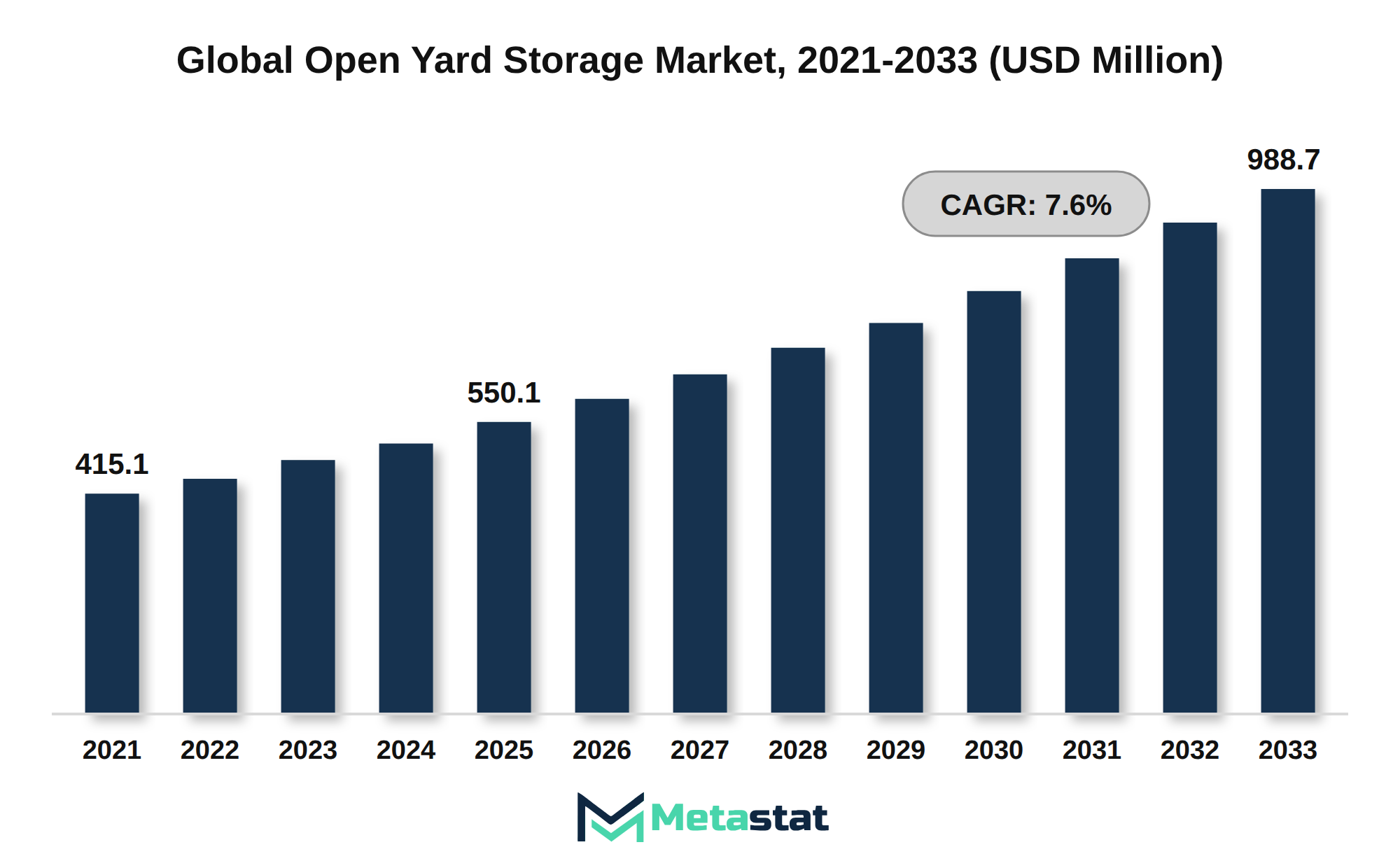
The global Open Yard Storage market was valued at USD 550.1 million in 2025 and is projected to reach USD 988.7 million by 2033, growing at a CAGR of 7.6% over the forecast period.
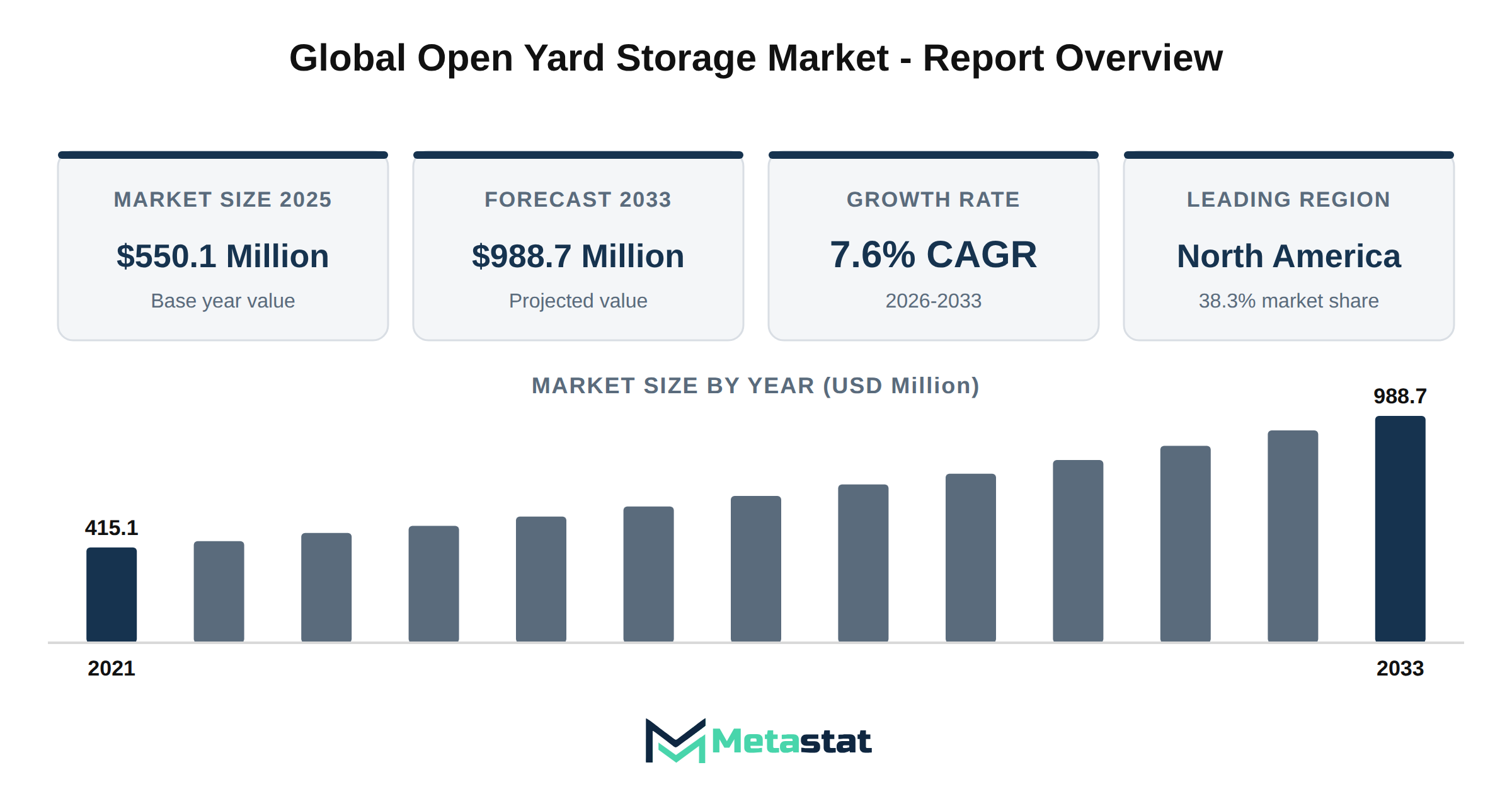
The Open Yard Storage market is projected to grow from USD 550.1 million in 2025 to USD 988.7 million by 2033, reflecting a compound annual growth rate (CAGR) of 7.6%. This growth trajectory stems from rising demand across various industries, including construction, manufacturing, and oil and gas, where the need for effective storage solutions continues to increase.
Regional dynamics play a significant role in shaping the market. North America dominates the market with a share of 38.3%, while Europe and Asia Pacific follow with shares of 26.6% and 22.1%, respectively. This distribution highlights varying levels of infrastructure investment and operational capacities across regions, influencing market performance and creating potential opportunities for stakeholders.
Storage strategies vary by type, with container storage yards expected to grow from USD 174.3 million in 2026 to USD 265 million by 2033, achieving a CAGR of 6.2%. General cargo open yards are projected to reach USD 187.9 million by 2033, driven by increased trade activities and the need for efficient logistics operations. Project and oversized cargo yards contribute to market growth, particularly in sectors requiring specialized storage solutions.
Service models in the Open Yard Storage market exhibit diverse growth patterns. The storage-only model is anticipated to increase from USD 259.5 million in 2026 to USD 385.6 million by 2033, with a CAGR of 5.8%. In contrast, the storage with cargo handling model is set to reach USD 207.6 million by 2033, supported by trends toward integrated logistics solutions and value-added services.
The Open Yard Storage market faces a complex landscape influenced by regulatory compliance and geopolitical risk frameworks. Companies operating in this market navigate a range of regulations that impact operational efficiency and cost structures. Compliance with local and international standards remains crucial for businesses aiming to enhance their market position and avoid disruptions.
Disruption in supply chains has emerged because a significant challenge, affecting logistics architecture and sourcing strategies. The ongoing global shifts necessitate robust supply chain resilience, prompting companies to invest in innovative solutions that enhance flexibility and responsiveness. This trend influences investment in research and development trajectories, supporting next-generation innovations in storage solutions.
Commitments to sustainable transformation and decarbonization are reshaping the market dynamics. Industry players are increasingly integrating circular economy principles within their operations, focusing on waste reduction and resource efficiency. Such initiatives not only align with regulatory expectations but cater to a growing consumer demand for environmentally responsible practices.
Market fragmentation continues to characterize the Open Yard Storage sector, with various players vying for market share. This fragmentation encourages mergers and acquisitions because companies seek strategic alliances to enhance their capabilities and expand their service offerings. Value chain optimization remains a focal point, with firms aiming to streamline operations while delivering quality customer experiences.
Capital allocation strategies are evolving in response to macroeconomic headwinds, including inflationary pressures and currency volatility. Companies are adapting their capital expenditures and operational expenditures to navigate these challenges effectively. Infrastructure investments play a crucial role in positioning companies for future growth, enhancing their competitive edge in a rapidly changing market.
The future strategic outlook for the Open Yard Storage market hinges on corporate imperatives that prioritize agility and innovation. High-value recommendations for market participants include leveraging technology to enhance operational efficiencies, investing in sustainable practices, and building collaborations that drive growth and market penetration.
Market Dynamics
Growing demand for infrastructure development
Increasing investment in infrastructure development significantly drives growth in the Open Yard Storage market. Governments and private entities allocate substantial funds for constructing roads, bridges, and facilities, enhancing logistics capabilities. This trend results from rising urbanization and population growth, which necessitate improved transport and storage networks. While industries expand their operations to meet growing consumer needs, demand for open yard storage facilities surges.
Regional growth patterns illustrate the expansion in this market. North America, Europe, and Asia Pacific report robust investments in infrastructure projects, stimulating the demand for open yard storage solutions. The construction and infrastructure sectors particularly benefit from this trend, requiring significant land and storage space to manage equipment and materials efficiently. Consequently, increased capital expenditures in these regions positively influence market growth.
Technological advancements supporting infrastructure projects enhance operational efficiency. Integration of automation and digital tools in construction processes improves productivity, leading to reduced project timelines and associated costs. The growing focus on optimizing resource use aligns with sustainability initiatives, promoting eco-friendly storage solutions. These developments collectively create a favorable environment for the Open Yard Storage market, driven by businesses seeking efficient solutions to support their expanding operations.
Shifting consumer behaviors drive market growth
Shifts in consumer behaviors significantly impact the Open Yard Storage market. Factors including aging populations, urbanization, and evolving buying preferences lead to increased demand for flexible and accessible storage solutions. Urban areas experience population growth, resulting in heightened demand for efficient storage facilities located near residential and commercial locations.
Changes in lifestyle, particularly trends toward minimalism and urban living, influence storage requirements. Consumers seek convenient access to goods and services, driving the need for open yard storage facilities that accommodate diverse cargo types. This preference aligns with the rise of e-commerce and just-in-time inventory practices, compelling businesses to adapt their storage strategies to remain competitive.
The market experiences heightened interest from industries including retail and logistics, which require agile storage solutions to meet evolving consumer expectations. Operational adaptability becomes essential for businesses aiming to optimize supply chains and meet increasing demands for quick delivery and inventory turnover. In this environment, investments in open yard storage facilities enhance customer engagement and improve service levels.
Rising operational costs restrict market growth
Rising operational costs present significant challenges for the Open Yard Storage market. The increasing expenses associated with labor, utilities, and maintenance directly impact profitability for storage operators. Labor shortages and escalating wages create barriers to maintaining efficient operations, which in turn affects service delivery and customer satisfaction.
Inflationary pressures further compound these challenges, leading to higher costs for materials and services essential to yard operations. Operators face difficulties managing these rising expenses while remaining competitive in pricing. Consequently, companies experience reduced profit margins, which hinder investments in infrastructure and technology upgrades.
The combination of high capital investment requirements and rising operational costs leads to a more cautious approach from potential investors and operators. This restraint impacts the overall growth trajectory of the market, resulting from stakeholders prioritizing cost management over expansion initiatives. In this environment, the Open Yard Storage market is expected to encounter slower growth rates due to these pressing financial constraints.
Geopolitical tensions disrupt supply chains
The Open Yard Storage market encounters significant challenges from geopolitical fragmentation. Rising trade deficits and tariff frictions among countries create uncertainty and instability, impacting the flow of goods and increasing operational costs. This environment complicates logistics management and affects the timely delivery of services across various regions, particularly impacting the North American sector, which holds the largest market share.
Technological disruptions further challenge the market. Rapid advancements require companies to integrate new solutions while managing the complexities of research and development. Interoperability frictions arise owing to businesses struggling to ensure that diverse systems work seamlessly together, hindering efficiency and increasing capital expenditures.
Supply chain instability is exacerbated by geopolitical tensions, leading to volatility in feedstock and component availability. These fluctuations compel companies to adjust their supply strategies, driving up input costs. Rising input cost structures contribute to tighter profit margins, forcing firms to explore alternative solutions to sustain competitiveness in the Open Yard Storage market.
Talent retention pressures and workforce skill gaps present additional barriers. The demand for skilled labor increases with the implementation of advanced technologies, yet a shortage of trained professionals hampers companies' ability to maintain operational efficiency. This talent gap poses risks to productivity and delays project timelines, further complicating market dynamics.
Environmental sustainability demands continue to shape the market landscape. Companies face increasing pressure to reduce their environmental footprints while adhering to tightening global regulatory standards. This transition towards decarbonization involves significant investment in retrofitting existing infrastructure, introducing implementation bottlenecks that limit market growth.
Market saturation further complicates the competitive environment. With numerous players vying for market share, distinguishing services becomes challenging. Substitution vector pressures from alternative storage solutions push companies to innovate continuously, intensifying competition within the Open Yard Storage market.
Emerging technological disruptions drive market expansion
Technological disruptions play a crucial role in shaping the Open Yard Storage market. Innovations in automation, data analytics, and Internet of Things (IoT) technologies enhance operational efficiency and streamline processes. These advancements enable storage facilities to optimize space utilization and improve inventory management, attracting interest from sectors including manufacturing, automotive, and construction.
Geographical expansion opportunities arise due to increased demand for integrated storage solutions. Emerging economies in Asia Pacific and South America show a growing need for open yard storage capabilities to support their industrial growth. This regional demand drives investments in infrastructure modernization and facility upgrades, ensuring facilities meet contemporary operational standards.
Digital transformation significantly impacts procurement strategies, driven by businesses transitioning to data-driven decision-making processes. Companies leverage digital platforms for real-time inventory tracking and management, enhancing their ability to respond to market demands efficiently. This shift promotes collaboration among stakeholders in the Open Yard Storage market, leading to enhanced service offerings and customer satisfaction.
The market experiences growth in niche applications, particularly in sectors requiring specialized storage solutions. Industries including oil and gas, heavy machinery, and oversized cargo benefit from tailored services and dedicated yards, driving revenue growth opportunities. Strategic consolidation efforts among key players enhance service capabilities, allowing them to capture a larger share of the market.
Environmental sustainability increasingly influences market dynamics, with companies aligning their operations with green initiatives. Implementing eco-friendly practices in yard management and emphasizing sustainability metrics appeal to environmentally conscious clients. This alignment with sustainability imperatives positions players favourably in the Open Yard Storage market, enhancing their competitive advantage.
Market Segmentation Analysis
The Global Open Yard Storage market is segmented based on Storage Type, Cargo Type, Service Model, and End-Use Industry.
By Storage Type, the market is further segmented into:
- Container Storage Yards
- General Cargo Open Yards
- Project & Oversized Cargo Yards
- Vehicle & Heavy Equipment Yards
- Bulk & Breakbulk Cargo Yards
- Bonded Open Yards
- Port & Inland Container Depots
- Others (Boat/Yacht & RV Storage)
Container Storage Yards
Container Storage Yards segment is valued at USD 174.3 million in 2026 and is projected to reach USD 265 million by 2033, at a CAGR of 6.2% during the forecast period. Demand for container storage stems from the growth of global trade and the increasing reliance on shipping containers for transportation of goods. Industries including logistics, retail, and manufacturing drive the need for efficient and secure storage solutions, creating opportunities for expansion within this segment.
Technological advancements enhance operational efficiency within container storage yards by integrating automated systems and real-time tracking solutions. These innovations improve inventory management and reduce storage-related delays, appealing to businesses seeking to optimize supply chain processes. The adoption of digital tools and smart technology strengthens competitiveness in the Open Yard Storage market.
Regulatory compliance within various industries influences the demand for container storage solutions. Stringent safety standards and environmental regulations encourage firms to invest in compliant storage solutions, increasing market credibility and reducing potential liabilities. This compliance drives investment in container storage yards, contributing to overall growth.
Cost structures associated with container storage yards affect profitability. Rising land and operational costs require businesses to innovate and implement cost-saving measures, including shared storage facilities or multi-purpose yards. These strategies enhance efficiency and improve profit margins, facilitating sustained growth in the segment.
Market dynamics indicate a shift towards more flexible service models, with companies pursuing integrated solutions that combine storage with additional services including cargo handling and transportation. This trend reflects changing consumer expectations for comprehensive logistics solutions, reshaping the competitive environment of the Open Yard Storage market.
General Cargo Open Yards
Growth in the General Cargo Open Yards segment correlates with increased international trade and logistics activities. This segment is estimated to reach USD 187.9 million by 2033, at a CAGR of 8.2% during the forecast period. Rising demand for efficient handling of diverse cargo types significantly drives this expansion. Enhanced operational efficiencies and the need for storage solutions in urban areas further enhance market engagement.
Adoption patterns highlight a shift towards integrated storage solutions, blending traditional open yard storage with modern technologies. This integration ensures that businesses manage varying cargo types effectively, addressing the specific needs of different end-use industries. Increasing investments in automation and digitization continue to reshape operations in the market, emphasizing the importance of adaptability and innovation.
Factors influencing demand include regulatory compliance standards that enhance operational practices within the industry. The expansion of e-commerce and rising consumer expectations necessitate faster and more reliable service delivery, directly impacting storage practices. Market players are strategically positioning themselves to address these changes, leveraging advanced technologies to optimize their offerings.
Cost structures in this segment reflect the need for competitive pricing strategies to maintain market share. The impact of pricing volatility, particularly in raw materials and labor, creates margin pressures for operators. Strategic opportunity windows arise from companies seeking to enhance their service models and diversify their offerings to capture a broader customer base.
Overall, the General Cargo Open Yards segment demonstrates significant growth potential within the Open Yard Storage market, driven by market demands for efficiency, technological advancements, and evolving consumer expectations.
Project & Oversized Cargo Yards
Growth in the Project & Oversized Cargo Yards segment is driven by increasing demand for specialized storage solutions that accommodate large and heavy items. Industries including construction, energy, and manufacturing require dedicated spaces for equipment and materials that exceed standard dimensions, creating a robust market for these services. Investment in infrastructure projects, particularly in emerging markets, fuels this demand.
Technological advancements enhance the efficiency of storage yard operations, leading to improved space management. Automation and innovative cargo handling systems increase throughput, attracting more businesses to access these facilities. The emphasis on supply chain resilience compels companies to secure reliable storage options, strengthening the market’s appeal.
Regulatory compliance standards continue to evolve, demanding higher levels of safety and security in storage facilities. Businesses that meet stringent guidelines enhance their competitive positioning, while those that fall short risk losing market access. The Project & Oversized Cargo Yards segment is expected to reach USD 148.3 million by 2033, reflecting these trends in regulatory and operational excellence.
Price volatility in raw materials and operational costs influences market dynamics. Businesses strive to manage expenses effectively. Cost structures become critical due to companies navigating fluctuations in pricing, ensuring profitability while maintaining service quality. The Open Yard Storage market adapts to these pressures by emphasizing strategic partnerships and investments in technology, which mitigates risks associated with cost uncertainties.
Vehicle & Heavy Equipment Yards
Investment in construction and infrastructure projects drives demand for Vehicle & Heavy Equipment Yards within the Open Yard Storage market. This segment serves the needs of industries including construction, agriculture, and mining, where the requirement for secure storage of large machinery and equipment is essential. The projected CAGR of 6.4% during the forecast period reflects growth expectations, highlighting the significance of effective yard management strategies that accommodate oversized and heavy equipment.
Technological maturation within storage solutions enhances operational efficiency, contributing to increased adoption rates for these specialized yards. Innovations in equipment tracking, security systems, and storage optimization facilitate better resource management, attracting investments from companies seeking to streamline operations. Enhanced logistics services and integration with supply chain networks influence purchasing decisions, positioning this segment favorably in the competitive environment.
Regulatory compliance standards, particularly concerning safety and environmental considerations, impact operational practices in the Vehicle & Heavy Equipment Yards segment. These standards necessitate investment in infrastructure upgrades and adherence to safety protocols, influencing overall cost structures. Pricing volatility in raw materials and equipment affects profit margins, requiring strategic planning among operators to ensure profitability during fluctuating conditions.
Strategic opportunity windows arise from expanding markets in developing regions, where infrastructure development projects often require substantial equipment storage solutions. The need for localized services enhances supply chain resilience, positioning operators favorably to meet growing demand. Overall, the Vehicle & Heavy Equipment Yards segment supports the Open Yard Storage market, contributing significantly to the projected growth trajectory.
Bulk & Breakbulk Cargo Yards
Demand for bulk and breakbulk cargo yards is driven by the growing need for efficient handling and storage of non-containerized goods. Various industries, including construction, energy, and manufacturing, increasingly rely on these facilities to accommodate diverse cargo types, ensuring effective operations throughout the supply chain. Regulatory compliance and sustainability standards influence the adoption of bulk and breakbulk solutions, prompting investments in advanced storage technologies that improve operational efficiency.
Segment expansion is supported by increasing investments in infrastructure, particularly in emerging markets. These investments facilitate the development of modern facilities equipped to handle larger volumes of bulk and breakbulk cargo. The market experiences a notable shift in consumption patterns, with rising demand for raw materials and equipment in sectors including renewable energy and construction. This trend creates opportunities for providers in the open yard storage market to enhance service offerings and expand their capabilities.
Technological advancements contribute to improvements in loading and unloading processes, reducing turnaround times and enhancing overall productivity. Innovations in automation and data analytics support logistics efficiency, allowing operators to optimize storage configurations and inventory management. Demand for flexibility in service models drives investment, with operators seeking to integrate services that accommodate diverse customer needs, including customs clearance and transportation.
Supply chain resilience influences the market landscape. Disruptions caused by geopolitical tensions or natural disasters highlight the necessity for robust logistics strategies. Companies investing in bulk and breakbulk cargo yards enhance their capacity to adapt to changing market conditions, ensuring continuity of service. The strategic opportunity windows presented by these developments emphasize the importance of aligning operational capabilities with emerging industry trends.
Bonded Open Yards
Strong demand for Bonded Open Yards stems from the need for secure storage solutions that comply with regulatory standards. Industries including oil and gas, automotive, and manufacturing increasingly rely on these facilities to manage sensitive cargo while meeting strict compliance requirements. The growth of international trade has increased the importance of bonded yards, which facilitate customs procedures and reduce delays in shipment processing.
Technological advancements contribute to operational efficiency in bonded open yards. Integration of automated systems and advanced inventory management software streamlines operations, helping operators maintain precise tracking of stored goods. These enhancements promote a smoother workflow, reducing the likelihood of errors during customs clearance and improving overall service delivery.
Market dynamics indicate a shift in consumption patterns, with businesses seeking reliable storage solutions that provide both security and compliance. This trend leads to increased investment in bonded open yard facilities, positioning them because strategic assets in supply chain management. Companies prioritize responsiveness and agility. The demand for these specialized storage solutions is expected to grow within the broader Open Yard Storage market.
Regulatory compliance standards play a critical role in shaping the operational landscape of bonded open yards. While regulations evolve, facilities adapt to comply with new requirements, necessitating ongoing investment in infrastructure upgrades. These compliance challenges influence cost structures and pricing strategies, compelling operators to balance operational efficiency with regulatory obligations.
Strategic opportunity windows arise because businesses increasingly recognize the value of dedicated bonded storage solutions. The complexity of global trade necessitates robust storage options, allowing companies to mitigate risks associated with customs compliance. This evolving market encourages innovation and the development of next-generation storage solutions that cater to the unique needs of various industries.
Port & Inland Container Depots
In the Open Yard Storage market, Port & Inland Container Depots serve a vital role in facilitating efficient logistics and cargo handling. The increasing complexity of global trade demands streamlined operations, leading to growing reliance on these depots for managing containerized cargo. Investment in modernization and expansion of port facilities enhances operational efficiency and contributes to improved turnaround times for vessels and cargo transfer. Such upgrades enable depots to handle higher volumes of goods, accommodating rising trade flows across various regions.
Industry players focus on technological advancements to optimize storage capabilities and enhance the functionality of these depots. Automation and real-time tracking systems improve inventory management, reduce operational delays, and strengthen supply chain resilience. The need for compliance with regulatory standards drives investment in infrastructure and services offered at these depots, ensuring safety and efficiency in cargo handling.
Demand for Port & Inland Container Depots aligns with broader trends in the market, where shifts toward just-in-time inventory practices and e-commerce growth necessitate flexible storage solutions. The expansion of these depots supports industries including manufacturing and retail by providing critical storage and distribution points. Consequently, the outlook for the segment remains positive, driven by ongoing investments and a focus on enhancing service offerings within the Open Yard Storage market.
Others (Boat/Yacht & RV Storage)
Increasing interest in recreational activities significantly boosts demand for storage solutions designed for boats, yachts, and recreational vehicles (RVs). The growth of the leisure and tourism sectors contributes to this trend, driven by more individuals investing in leisure vehicles and requiring secure storage options. Urbanization facilitates a shift towards smaller living spaces, prompting consumers to seek external storage solutions for their larger recreational assets.
Technological advancements in security and monitoring systems enhance the appeal of open yard storage for recreational vehicles. Improved safety features, including surveillance cameras and access controls, attract customers prioritizing protection for their investments. Rising demand stems from evolving consumer preferences toward convenience and security.
Regulatory compliance and standards governing the storage of recreational vehicles create challenges and opportunities within the segment. Adhering to environmental regulations influences operational practices, prompting suppliers to adopt eco-friendly measures in their storage facilities. The market benefits from an increasing emphasis on sustainable practices, aligning with consumer expectations for environmentally responsible services.
Strategic opportunities for growth arise from the potential for expanding service offerings within the segment. Providers explore partnerships with maintenance and repair services, enhancing their value proposition to consumers. The ability to offer comprehensive solutions positions players favorably within the market, strengthening customer loyalty and satisfying diverse storage needs.
By Cargo Type, the market is further segmented into:
- Containers
- General Cargo
- Project & Oversized Cargo
- Heavy Machinery & Equipment
- Vehicles & Automotive Units
- Bulk & Breakbulk Cargo
- Construction Materials
- Industrial & Energy Equipment
- Others (Pipes, Steel & Modular Units)
Containers
Investment in the Open Yard Storage market reflects strong growth potential within the Containers segment, valued at USD 178.3 million in 2026 and projected to reach USD 260.8 million by 2033, at a CAGR of 5.6% during the forecast period. This segment benefits from increasing demand driven by international trade and the rise in e-commerce, which necessitate efficient storage solutions for containerized cargo. The expansion of manufacturing sectors globally further supports this demand, highlighting the segment's critical role in logistics and supply chain management.
Technological advancements in container handling and storage solutions enhance operational efficiency and reduce costs, attracting more investments into the market. Innovations including automated storage systems and real-time tracking technology improve inventory management, providing significant competitive advantages. Regulatory compliance in various regions, including environmental regulations related to storage facilities, pushes stakeholders to adopt advanced systems, driving growth in this segment.
Shifts in consumption patterns, particularly increased reliance on containerized shipping, create favorable conditions for market expansion. Industries including automotive and electronics increasingly employ containers for their logistics needs, significantly impacting storage requirements. Sustained growth within these end-use industries ensures consistent demand for container storage solutions, positioning the market for future success.
General Cargo
Market dynamics drive the growth of the General Cargo segment within the Open Yard Storage market. This segment is estimated to reach USD 168.1 million by 2033, at a CAGR of 8.3% during the forecast period. Increased international trade significantly boosts the demand for general cargo storage solutions, driven by companies seeking efficient handling and storage options for diverse goods. The rise of e-commerce has intensified this need, pushing logistics providers to enhance their capabilities in accommodating various cargo types.
Strategic investments in infrastructure support the expansion of the General Cargo segment. Enhanced transportation networks and warehousing facilities enable smoother supply chain operations, improving greater efficiency. Regulatory compliance standards encourage companies to maintain high storage and handling practices, which further supports the segment's growth trajectory.
Innovation in storage solutions influences market dynamics. Advanced technologies, including automated storage systems and real-time tracking capabilities, enhance operational efficiency and reduce overhead costs. These innovations attract a broader customer base that seeks reliable and scalable storage solutions, contributing to the segment's upward momentum.
The end-use dynamics play a crucial role in shaping demand patterns. Industries including retail, manufacturing, and automotive contribute significantly to the overall demand for general cargo storage. Shifts in consumption patterns toward just-in-time delivery models require more flexible and responsive storage solutions, aligning with the evolving needs of businesses across various sectors.
Project & Oversized Cargo
Growth in the Project & Oversized Cargo sector reflects increasing investments in large-scale construction and infrastructure initiatives. These projects require specialized storage solutions capable of accommodating oversized equipment and materials, driving demand from industries including construction, energy, and transportation. The Project & Oversized Cargo segment is projected to reach USD 138.4 million by 2033.
Technological advancements enhance storage solutions, enabling better handling and management of oversized cargo. The integration of smart technologies and automation into storage facilities improves efficiency and reduces operational costs. Regulatory compliance regarding safety and environmental standards influences the evolution of storage solutions, ensuring alignment with industry requirements.
Downstream applications in sectors including oil and gas, manufacturing, and automotive contribute to segment growth. These industries require efficient and secure storage options for oversized cargo, reflecting broader trends toward increased project size and complexity. The focus on supply chain resilience highlights the importance of robust storage solutions, particularly in managing logistics vulnerabilities associated with oversized cargo.
Strategic investments in storage infrastructure represent significant opportunities, reflecting a shift toward enhancing capacity for oversized materials. Stakeholders explore innovative solutions to meet changing demands and improve operational flexibility. With these dynamics, the Open Yard Storage market is expected to experience continued growth in the Project & Oversized Cargo sector.
Heavy Machinery & Equipment
Primary demand for Heavy Machinery & Equipment in the Open Yard Storage market arises from industrial and construction sectors, where heavy equipment storage is critical for operational efficiency. Increased investments in infrastructure and construction projects drive the need for dedicated storage solutions, allowing companies to manage equipment effectively while reducing downtime.
Heavy Machinery & Equipment segment is projected to grow at a CAGR of 7.8% during the forecast period. Enhanced technological maturation and next-generation upgrades improve operational efficiency, supporting the expansion of dedicated storage facilities. The segment faces minimal substitution risks due to the specialized nature of heavy machinery, which necessitates tailored storage solutions.
Regulatory compliance standards related to safety and environmental concerns influence storage practices. Companies focus on adhering to these standards, ensuring that heavy machinery remains compliant during storage. Increased demand for compliance drives investment in facilities that meet or exceed these standards, promoting growth in the market.
Cost structures associated with heavy machinery storage involve significant capital investment, with facilities designed to accommodate large and often expensive equipment. Pricing volatility tied to fuel costs and material prices impacts operational margins, influencing how logistics providers approach pricing strategies. Strong demand dynamics in the construction and industrial sectors create strategic opportunity windows for service providers, encouraging enhancements in service offerings.
Supply chain resilience becomes critical, especially in industries reliant on heavy machinery. Disruptive alternatives are limited, owing to the specific requirements of heavy equipment storage that create essential barriers to entry for new competitors. This situation encourages established players to focus on capacity expansion and improved service models in the market.
Vehicles & Automotive Units
Demand for Vehicles & Automotive Units within the Open Yard Storage market stems from growth in the automotive industry, characterized by increasing production rates and vehicle sales. Manufacturers require efficient storage solutions for assembled vehicles, components, and heavy equipment, driving the need for open yard storage facilities. The shift towards electric vehicles and advanced automotive technology contributes to heightened demand for specialized storage solutions that accommodate unique requirements.
Investment in infrastructure projects significantly influences the segment's expansion. Construction and logistical support for automotive production facilities grow alongside it. Increased focus on sustainability and regulatory compliance regarding vehicle storage and handling standards pushes manufacturers towards compliant open yard storage options. Technological advancements facilitate better tracking and management of stored automotive units, enhancing operational efficiency and overall supply chain resilience.
Shifts in consumer preferences shape the end-use dynamics, with a notable rise in demand for electric vehicles and smart automotive systems. This evolution necessitates adaptable storage solutions capable of accommodating new vehicle types and sizes. Key players in the market engage in strategic investments to enhance storage capabilities, ensuring alignment with industry trends while optimizing operational costs.
Growing competition among automotive manufacturers contributes to pricing volatility, compelling firms to streamline their supply chains and storage processes. The influence of regulatory compliance increases the urgency for investments in secure and efficient storage facilities. Overall, the segment is positioned for growth, driven by evolving automotive market demands and technological enhancements within the Open Yard Storage market.
Bulk & Breakbulk Cargo
Demand for bulk and breakbulk cargo storage reflects the increasing complexities and operational requirements of various industries. Industries including construction, energy, and manufacturing drive the need for efficient storage solutions to accommodate irregularly shaped cargo and materials that do not fit standard shipping containers. These industries benefit from the flexibility and accessibility provided by open yard storage, allowing for better management of inventory and improved logistics.
Regulatory compliance standards play a critical role in shaping the demand dynamics within this segment. Adherence to safety regulations and environmental guidelines influences the design and operation of bulk and breakbulk cargo yards. This necessitates investments in technologies and processes that enhance safety and operational efficiency, further supporting market expansion.
Pricing volatility associated with raw materials impacts the cost structures within the bulk and breakbulk cargo segment. Fluctuating prices exert pressure on operational margins, prompting companies to seek innovative solutions to enhance efficiency and reduce costs. Businesses adapt to these challenges, enabling them to optimize their storage and handling operations.
Technological maturation in logistics and material handling reinforces the relevance of open yard storage for bulk and breakbulk cargo. The adoption of advanced technologies, including automation and real-time inventory tracking systems, streamlines processes and enhances supply chain resilience. This evolution improves operational performance and creates competitive advantages for players in the market.
In the context of supply chain vulnerabilities, bulk and breakbulk cargo storage serves because a vital component. Effective storage strategies mitigate disruptions caused by logistical challenges, allowing companies to maintain continuity in operations. Strategic positioning of bulk and breakbulk cargo yards in proximity to key industrial hubs further strengthens supply chains and supports growth within the market.
Construction Materials
Shifts in the construction sector significantly influence the demand for open yard storage solutions for construction materials. Increased urbanization and infrastructure development projects require efficient storage solutions for various construction materials, including aggregates, steel, and prefabricated components. These developments necessitate strategic storage locations near construction sites, enhancing operational efficiency and reducing transportation costs.
Regulatory compliance standards related to safety and environmental practices impact the segment, driven by companies increasingly seeking storage solutions that meet stringent requirements. Technological advancements in monitoring and management systems improve segment efficacy by enabling improved inventory tracking and enhanced security measures. Consequently, these advancements support operational resilience and enhance supply chain logistics.
End-use dynamics reflect a growing emphasis on sustainability in construction practices. Companies focusing on green building initiatives increasingly require storage solutions that facilitate the efficient handling of environmentally friendly materials. The open yard storage market adapts to meet the evolving preferences for sustainable practices in the construction industry.
Investment in infrastructure projects presents strategic opportunity windows for the open yard storage market. While construction companies scale operations to meet growing demands, the necessity for reliable and flexible storage options expands. This trend aligns with long-term growth projections and positions the market for sustained expansion through the forecast period.
Industrial & Energy Equipment
Investment in industrial and energy equipment significantly influences the Open Yard Storage market. Industries including oil and gas, construction, and manufacturing require dedicated space for equipment and machinery, driving demand for specialized storage solutions. Growing energy demands and the transition toward renewable sources necessitate robust storage yards for various equipment types, enhancing market relevance.
Technological advancements in equipment design and functionality enable effective storage solutions, resulting in increased efficiency for businesses. Organizations invest in next-generation upgrades to ensure compliance with regulatory standards and improve operational capacity. This ongoing evolution meets the diverse needs of end-users, particularly in sectors focused on energy and infrastructure.
Adoption of advanced storage technologies promotes supply chain resilience by enabling faster retrieval and enhanced inventory management for industrial and energy equipment. Increased competition compels players to innovate and optimize service offerings. Focus on sustainability and compliance with environmental guidelines continues to shape consumer preferences, steering market growth.
Others (Pipes, Steel & Modular Units)
Demand for open yard storage for Pipes, Steel, and Modular Units arises from increased infrastructure projects and industrial activities requiring robust storage solutions. Key sectors driving this demand include construction, manufacturing, and energy, where the need for secure, accessible storage of raw materials becomes critical. The evolution of modular construction techniques contributes to growth, with modular units requiring dedicated space for assembly and storage, enhancing efficiency in project timelines.
Technological advancements in storage solutions facilitate better management and utilization of yard space, leading to optimized operations. This segment experiences interest from companies looking to streamline supply chains, respond to fluctuating market demands, and enhance storage capabilities. Innovations in yard management systems play a significant role in improving tracking and accessibility of stored items, ensuring compliance with industry standards.
Regulatory compliance and safety standards influence operational strategies within the market, requiring companies to adopt practices that meet legal requirements while improving overall efficiency. The need for strategic investments in high-capacity storage facilities emphasizes the importance of this segment in maintaining supply chain resilience. Continued focus on sustainability practices drives investment in environmentally friendly storage solutions, aligning with broader industry trends.
Pricing volatility for raw materials, including pipes and steel, affects cost structures within the market, leading businesses to seek flexible and efficient storage options. Supply chain vulnerabilities, including disruptions due to geopolitical tensions or natural disasters, highlight the importance of diversified storage strategies. Companies investing in these areas mitigate risks associated with fluctuating availability and pricing of materials, ensuring reliable access to essential resources.
By Service Model, the market is further segmented into:
- Storage-Only
- Storage With Cargo Handling
- Storage With Transportation & Distribution
- Storage With Customs & Bonded Services
- Storage With Cross-Docking & Transloading
- Integrated 3PL & Contract Logistics
Storage-Only
Growth in the Storage-Only segment reflects increasing demand for dedicated storage solutions among various industries. Valued at USD 259.5 million in 2026, this segment is projected to reach USD 385.6 million by 2033, at a CAGR of 5.8% during the forecast period. Factors including urbanization and rising consumer expectations contribute to heightened requirements for efficient and secure storage options.
Adoption of advanced storage technologies enhances operational efficiency and safety. Industries including automotive, manufacturing, and construction exhibit significant interest in storage-only facilities for inventory management. These shifts in end-use dynamics highlight the segment's relevance within the broader Open Yard Storage market.
Regulatory compliance standards and certifications play a vital role in shaping the operations of storage-only facilities. Meeting these standards influences operational costs and market competitiveness. In addition, increasing focus on sustainability and environmentally friendly practices promotes investments in innovative storage solutions.
The ongoing evolution of storage technologies presents strategic opportunities within the segment. Embracing next-gen upgrades enables facilities to integrate automated systems and improve service delivery. This trend enhances resilience in supply chains and mitigates vulnerabilities associated with traditional storage methods, thereby increasing the attractiveness of the Storage-Only segment in the Open Yard Storage market.
Storage With Cargo Handling
Growth in the Storage With Cargo Handling segment highlights the increasing integration of logistics services within open yard storage solutions. Enhancements in technology and operational efficiency drive this trend, enabling storage facilities to offer additional handling services that meet evolving customer demands. Industries including construction, manufacturing, and retail benefit from streamlined operations that combine storage with cargo handling, reducing lead times and improving inventory management.
Investment in this segment is projected to reach USD 207.6 million by 2033, at a CAGR of 8.1% during the forecast period. This growth reflects a broader shift towards comprehensive service models that enhance supply chain resilience and responsiveness. The demand for integrated storage solutions aligns with the strategic objectives of businesses aiming to optimize their logistics and reduce operational costs.
Factors including regulatory compliance and the need for certifications drive companies to adopt storage solutions that include cargo handling capabilities. This segment's appeal lies in its ability to accommodate diverse cargo types, ensuring businesses have access to flexible and efficient storage options. The Open Yard Storage market thrives on these developments, driven by industry players seeking to establish competitive advantages through value-added services.
Storage With Transportation & Distribution
Growing demand for integrated services in logistics drives the expansion of the Storage With Transportation & Distribution segment. This segment benefits from the increasing emphasis on optimizing supply chains across various industries, resulting in higher demand for open yard storage solutions that incorporate transportation and distribution capabilities. Customers in sectors including manufacturing, automotive, and construction prioritize streamlined logistics processes, which enhances the attractiveness of storage options that include transportation services.
The segment is projected to reach USD 138.4 million by 2033. Factors including technological advancements in logistics and automation significantly contribute to the segment's growth. Enhanced tracking and management systems enable more efficient use of storage and distribution resources. Regulatory frameworks focusing on compliance and safety standards necessitate advanced storage solutions that integrate transportation services.
Market participants recognize strategic opportunities within this segment, allowing for the development of tailored solutions that meet specific customer needs. By aligning with evolving industry demands and compliance standards, companies offer competitive advantages over traditional storage models. The continuing focus on improving supply chain resilience across the Open Yard Storage market stimulates investment in innovative storage and transportation solutions.
Storage With Customs & Bonded Services
Growth in the Storage With Customs & Bonded Services segment reflects the increasing complexity of global trade regulations. This segment addresses the rising demand for efficient customs processing and compliance solutions, particularly in sectors including automotive and manufacturing. The escalating need for businesses to navigate customs barriers efficiently enhances market potential, driven by organizations striving for smooth supply chain operations.
Storage With Customs & Bonded Services segment is projected to grow at a CAGR of 9% during the forecast period. This growth aligns with the expansion of international trade activities and evolving regulations that necessitate the use of bonded storage solutions. Enhancements in technology and automation further streamline customs processes, contributing to increased adoption among businesses seeking to improve operational efficiency.
Investments in technology aimed at compliance and customs management play an essential role in segment expansion. Integration of advanced tracking and documentation solutions supports businesses in meeting regulatory requirements while minimizing delays. The ongoing digital transformation within the logistics sector further enhances the capabilities of storage solutions, emphasizing their importance within the broader Open Yard Storage market.
While the demand for bonded services continues to rise, firms that offer comprehensive solutions will capture significant market share. This segment's growth reflects broader trends in global commerce, emphasizing the necessity for effective customs management and storage strategies amid evolving trade environments.
Storage With Cross-Docking & Transloading
In the Open Yard Storage market, growing demand for efficient logistics solutions drives interest in the Storage With Cross-Docking & Transloading sub-segment. Increasingly complex supply chains require streamlined processes, making cross-docking an attractive option for businesses aiming to enhance operational efficiency. This sub-segment aligns with the broader trend of integrating value-added services, enabling quicker turnaround times and reducing storage durations.
Technological advancements in logistics and transportation significantly influence the adoption of cross-docking and transloading services. Increased automation and real-time tracking capabilities improve inventory management and optimize cargo flow. Businesses leveraging these technologies respond to fluctuations in demand while maintaining cost efficiency, which strengthens their competitive position in the market.
End-use dynamics play a critical role in shaping demand for cross-docking services. Industries including retail, manufacturing, and e-commerce increasingly rely on rapid distribution methods, enhancing the relevance of this service model. Evolving consumer expectations for faster delivery times drive businesses adopting cross-docking strategies to gain a competitive edge in meeting these demands.
Pricing volatility in raw materials and logistics further emphasizes the importance of efficient storage solutions. Companies navigating fluctuating costs aim to minimize overhead and maximize margins, which makes cross-docking and transloading appealing options. The integration of these services within the broader Open Yard Storage market supports businesses in maintaining profitability amid market fluctuations.
The strategic opportunity window for expanding cross-docking and transloading services remains significant. With ongoing advances in logistics and a growing emphasis on supply chain resilience, businesses that invest in these capabilities meet evolving market demands while positioning themselves for long-term growth. Enhanced logistics infrastructures will support the broader objectives of the Open Yard Storage market, encouraging further investment and innovation in the sector.
Integrated 3PL & Contract Logistics
Demand for integrated services in logistics drives expansion within the Open Yard Storage market, leading companies to seek comprehensive solutions that enhance supply chain efficiency. The growing preference for Integrated 3PL & Contract Logistics is largely influenced by increased complexity in supply chains, prompting businesses to adopt streamlined processes that encompass storage, transportation, and distribution. This trend aligns with the need for improved operational flexibility and cost-effectiveness, positioning integrated solutions because a strategic advantage.
Technological maturation contributes to advancements in the Integrated 3PL & Contract Logistics segment. Innovations including automation, real-time tracking, and data analytics enhance service delivery, allowing providers to offer tailored solutions that meet evolving customer demands. This evolution directly impacts end-use industries, particularly those with fluctuating inventory needs, including retail and manufacturing, which increasingly rely on integrated logistics to maintain competitiveness in the market.
Regulatory compliance plays a critical role in shaping the Integrated 3PL & Contract Logistics landscape. Adherence to safety standards and environmental regulations requires firms to integrate compliance measures into their operations, influencing cost structures and service pricing. Companies that prioritize compliance mitigate risks and enhance their market reputation, ultimately driving demand for integrated services.
Shifts in consumption patterns, driven by the rise of e-commerce and on-demand services, further emphasize the importance of integrated logistics solutions. Businesses increasingly require adaptive storage options that accommodate rapid inventory turnover, necessitating a strong focus on the Integrated 3PL & Contract Logistics segment. This transition presents a strategic opportunity for operators within the Open Yard Storage market to innovate and differentiate their offerings, catering to the unique needs of diverse end-use industries.
The capital investment outlook for Integrated 3PL & Contract Logistics remains positive, because firms recognize the importance of investing in advanced technologies and infrastructure to support their operations. Such investments enable companies to enhance supply chain resilience and address potential logistics vulnerabilities. By prioritizing technological advancements and operational efficiencies, players in the market position themselves for sustained growth and competitive differentiation.
By End-Use Industry, the market is further segmented into:
- Oil & Gas
- Construction & Infrastructure
- Manufacturing & Industrial
- Automotive
- Mining & Metals
- Ports, Shipping & Maritime
- Energy & Utilities
- Retail & Consumer Goods
- Agriculture & Commodities
- Others (Defense, Aerospace and Marine)
Oil & Gas
Valued at USD 86.7 million in 2026, the Oil & Gas segment is projected to reach USD 128.5 million by 2033, at a CAGR of 5.8% during the forecast period. Demand within this segment stems from increasing investment in oil and gas exploration, production, and infrastructure development. This sector's growth relies on the rising need for effective storage solutions to accommodate equipment, machinery, and specialized cargo associated with oil and gas operations.
Expanding energy requirements drive the demand for open yard storage solutions, particularly in regions rich in oil and gas reserves. Adoption of advanced technologies in extraction and processing influences the need for specialized storage facilities capable of handling oversized and heavy equipment. The sector experiences ongoing pressure to comply with strict regulatory standards, which further increases investments in storage solutions that meet safety and environmental guidelines.
Capital investment in the Oil & Gas segment signifies a strategic opportunity window for service providers in the Open Yard Storage market. Companies focus on enhancing service offerings to cater to the specific needs of the oil and gas industry, integrating services including transportation and distribution alongside storage capabilities. These developments contribute to an evolving market, aligning with the sector's ongoing technological maturation and operational efficiency requirements.
Construction & Infrastructure
Investment in the construction and infrastructure sectors drives the demand for open yard storage solutions. The anticipated increase in urban development projects and the expansion of transportation infrastructure contribute to this upward trend. Construction projects require substantial storage space for materials and equipment, creating a consistent need for open yard storage options. The segment is projected to reach USD 158.2 million by 2033, with a CAGR of 8.3% during the forecast period.
Regulatory compliance regarding safety standards and environmental requirements influences the operational strategies within this segment. Companies prioritize adherence to these regulations to enhance their competitive positioning in the market. Pricing volatility, stemming from fluctuating raw material costs, poses challenges, but strategic sourcing and procurement practices help mitigate these impacts.
Technological advancements play a significant role in evolving storage solutions, with automation and digitalization enhancing efficiency and reducing operational costs. Supply chain resilience remains a critical focus, driven by firms striving to streamline operations and reduce vulnerabilities within their logistics networks. Overall, the construction and infrastructure segment within the open yard storage market presents promising growth opportunities driven by robust demand dynamics and strategic investment considerations.
Manufacturing & Industrial
Demand for open yard storage in the manufacturing and industrial sector is driven by increasing production activities and the need for efficient storage solutions. The expansion of manufacturing facilities and the introduction of automation technologies necessitate adequate space for raw materials and finished goods. This growing demand enhances operational efficiency and reduces lead times for manufacturers.
Investment in advanced storage solutions plays a critical role in segment expansion. Manufacturers seek to optimize supply chain management by employing open yard storage for oversized and heavy machinery, which requires specialized handling and storage capabilities. The market is expected to reach USD 148.3 million by 2033, reflecting a strong focus on improving storage infrastructure and logistics capabilities.
Technological advancements in storage and handling equipment facilitate better management of manufacturing resources. Innovations including automated storage systems and real-time inventory tracking improve overall efficiency and accuracy, driving further adoption of open yard storage solutions within this segment. Manufacturers increasingly prioritize sustainability and cost control, leading to a growing demand for adaptable storage solutions.
Economic fluctuations and regulatory compliance standards impact the segment. Manufacturers encounter pricing volatility and margin pressures that necessitate strategic management of storage operations. Consequently, the market adapts to these challenges by offering flexible and scalable storage options that align with manufacturers' evolving needs.
The manufacturing and industrial segment within the Open Yard Storage market presents substantial potential for growth driven by technological innovation, strategic investments, and an increasing focus on operational efficiency. Forward momentum within this segment highlights the ongoing transformation of storage solutions in response to industry demands.
Automotive
Growth in the automotive sector stimulates demand for open yard storage solutions, driven by increased production rates and a rising emphasis on supply chain efficiencies. Automotive manufacturers and suppliers require dedicated storage spaces for vehicles and parts, promoting the need for specialized facilities. Investment in advanced technologies, including electric and autonomous vehicles, influences storage requirements, resulting from companies seeking to accommodate new vehicle types and maintain operational flexibility.
The automotive segment is projected to grow at a CAGR of 6.4% during the forecast period. Regulatory compliance regarding environmental standards and safety regulations impacts storage practices, necessitating facilities that meet specific certifications. While companies adapt to changing market dynamics, a shift toward integrated storage solutions that provide additional services, including customs and bonded storage options, is expected to occur. This evolution enhances the value proposition of open yard storage facilities within the automotive supply chain.
Increased vehicle production and global trade expand the automotive industry's reliance on open yard storage to manage logistics efficiently. The market responds to these trends by offering flexible and scalable storage solutions that cater to diverse automotive needs. The emphasis on sustainability and cost management drives innovation, leading to the development of smarter storage systems designed for improved operational performance.
Mining & Metals
Growth in the Mining & Metals sector drives demand for open yard storage solutions, driven by companies seeking efficient ways to manage raw materials and finished products. Investment in mining operations, alongside increasing commodity prices, fuels the need for expansive storage capabilities. Companies prioritize secure and accessible locations for storing heavy machinery and bulk materials, enhancing operational efficiency and supply chain management.
Technological advancements within the sector enable improved storage solutions, allowing operators to implement real-time inventory tracking and management systems. These innovations lead to optimized resource allocation, reducing downtime during critical operations. The focus on sustainability and environmental compliance influences storage practices, pushing companies to adopt standards that enhance environmental responsibility.
Regulatory compliance standards surrounding mining operations create an impetus for enhanced storage solutions that meet safety and environmental regulations. Companies aligning with these regulations avoid penalties and enhance their market reputation. In the open yard storage market, attention to regulatory frameworks significantly impacts operational strategies and investment decisions.
Logistics vulnerabilities and supply chain challenges in the Mining & Metals sector necessitate robust storage strategies. Companies face the risk of supply interruptions due to geopolitical issues and fluctuating demand. Implementing effective storage solutions allows for greater resilience, enabling companies to adjust to shifting market conditions efficiently.
Financial pressures from fluctuating commodity prices impact the cost structures within the industry, demanding that companies streamline their storage operations. Efficient storage helps mitigate costs, allowing firms to maintain profitability despite market volatility. Capital investment in storage infrastructure is expected to position companies to leverage next-generation technologies and improve their overall competitiveness in the market.
Ports, Shipping & Maritime
Recent developments in the Ports, Shipping & Maritime sector significantly impact the Open Yard Storage market. Key demand drivers include increasing global trade volumes and evolving shipping practices, which require efficient storage solutions for containers and various cargo types. The adoption of open yard storage solutions reflects the growing need for flexible, cost-effective options to accommodate fluctuating freight demands.
Technological advancements in storage management systems enhance operational efficiencies. These upgrades enable real-time inventory tracking and improve logistics coordination, which ultimately leads to better resource allocation within ports and shipping facilities. Investments in next-generation storage infrastructure play a critical role in meeting growing customer expectations for speed and reliability.
End-use dynamics within the maritime sector highlight the need for compliance with regulatory standards and certifications. Adhering to these requirements ensures smooth operations and mitigates risks associated with non-compliance. Increased focus on sustainability and environmental impact pushes stakeholders to adopt greener storage practices, aligning with broader industry trends.
Cost structures related to open yard storage are influenced by factors including land availability and operational costs. Pricing volatility in raw materials exerts margin pressures on key players. Strategic opportunities emerge owing to companies seeking innovative solutions to enhance supply chain resilience and address potential vulnerabilities.
In addition, raw material sourcing strategies evolve due to suppliers seeking to secure reliable resources while minimizing disruptions. Substitution risks arise from new technologies that alter traditional storage methods. Disruptive alternatives, including automated storage solutions, create competitive challenges for existing operators in the market.
Capital investment outlook remains positive, with stakeholders targeting enhanced operational capabilities and capacity expansion. This commitment to growth positions the sector for continued evolution, aligning with the broader trends shaping the Open Yard Storage market.
Energy & Utilities
Investment in energy and utility sectors drives demand for open yard storage solutions tailored for industrial applications. The ongoing shift towards sustainable energy sources necessitates secure and efficient storage for equipment and materials. This sector benefits from advancements in technology that enhance the efficiency of storage operations, leading to improved inventory management and reduced operational costs.
Regulatory compliance standards play a significant role in shaping the requirements for open yard storage within the energy and utilities segment. Adherence to safety and environmental regulations influences the design and layout of storage facilities, ensuring they meet industry standards. Increasing emphasis on sustainable practices within the sector promotes the adoption of open yard storage solutions that align with environmental goals.
Consumption patterns within the energy and utilities sector reflect a shift towards more robust storage options, with companies seeking to strengthen their supply chain resilience. This trend encourages investments in advanced storage technologies that enhance the strategic capacity of storage facilities. The open yard storage market is expected to experience growth driven by these evolving consumption dynamics.
Technological maturation within storage solutions enhances efficiency and operational effectiveness, impacting the overall market. The integration of next-generation upgrades facilitates a smooth flow of operations, further attracting investment in this segment. Strategic opportunity windows arise owing to companies recognizing the benefits of optimizing their storage capabilities to support evolving industry demands.
Retail & Consumer Goods
Growing interest in the retail and consumer goods industry drives demand for open yard storage solutions. This sector experiences increased volume due to rising consumer expectations for quick and efficient delivery. Adoption of innovative technologies within supply chains enhances operational efficiencies, influencing the overall dynamics of the market. Retailers require flexible storage options to accommodate fluctuating inventory levels while maintaining responsiveness to market demands. Evolving consumption patterns place pressure on existing storage infrastructures, compelling stakeholders to invest in expansion and modernization initiatives.
Regulatory compliance standards impact storage operations, particularly concerning safety and environmental controls. Retailers align their storage practices with these regulations to mitigate risks and ensure long-term viability. Capital investment outlook remains optimistic owing to businesses recognizing the strategic importance of robust storage solutions in addressing logistical challenges. Supply chain resilience is essential for maintaining competitiveness, necessitating continual assessment of sourcing strategies and inventory management practices. Technological advancements contribute to enhancing storage capabilities, allowing for improved tracking and management of inventory across multiple channels.
Investment in next-generation upgrades facilitates the evolution of storage options tailored to the specific needs of the retail and consumer goods sector. Strategic opportunity windows arise owing to businesses seeking to differentiate themselves through enhanced service offerings and operational efficiencies. The market's ability to respond to these shifts shapes the trajectory of growth and investment in open yard storage solutions.
Agriculture & Commodities
Increasing focus on food security and sustainable agricultural practices contributes to the growing demand for open yard storage solutions within the agriculture and commodities sector. This trend arises from the necessity to store perishable goods and raw materials efficiently, ensuring quality and minimizing waste. Stakeholders in the agriculture industry prioritize reliable storage options to support supply chain resilience and meet fluctuating market demands, strengthening long-term demand for open yard storage.
Technological advancements in storage solutions enhance operational efficiency, providing stakeholders with innovative options tailored to specific agricultural needs. Investments in automation and monitoring technologies improve inventory management and reduce losses associated with spoilage. The adoption of smart storage systems aligns with industry trends prioritizing data-driven decision-making and sustainability initiatives, expanding the addressable base for open yard storage solutions.
Compliance with regulatory standards in food safety and environmental sustainability influences storage practices. Organizations adapt to evolving regulations governing the storage of agricultural products, ensuring goods meet required safety standards while optimizing storage efficiency. Regulatory pressures drive investments in modern storage facilities that align with best practices in food safety, reinforcing the segment's position in the market.
Investment in infrastructure development supports the growth of the agriculture and commodities segment within the open yard storage market. Enhanced transportation networks and logistics capabilities facilitate better access to storage facilities, ultimately allowing stakeholders to meet the rigorous demands of the agriculture industry. Capital investment in this sector is critical for establishing competitive storage solutions that enhance supply chain efficiency, increasing investment across the value chain.
Shifts in consumer preferences toward organic and locally sourced products influence storage strategies. Stakeholders increasingly focus on ensuring that storage facilities meet the quality standards expected by environmentally conscious consumers. This shift encourages investment in specialized storage solutions that cater to the unique requirements of organic and locally sourced commodities, widening commercial adoption of open yard storage solutions.
Others (Defense, Aerospace and Marine)
Interest in open yard storage for defense, aerospace, and marine applications stems from the need for secure and accessible storage solutions. The unique nature of these sectors demands specialized handling and storage capabilities, particularly for oversized and sensitive equipment. Enhanced military and aerospace spending, alongside the growth of maritime activities, significantly influences demand. Companies operating in these industries prioritize compliance with stringent regulations, driving the necessity for certified storage solutions that meet specific standards.
Investment in next-generation technologies positions players to enhance operational efficiencies and improve service offerings. This investment often leads to the adoption of advanced storage methods, ensuring optimal protection for valuable assets. Strategic opportunities arise from emerging technologies that enhance inventory management and tracking, which are crucial for sectors requiring precision and accountability.
Market participants focus on building resilience within their supply chains to address potential vulnerabilities. A heightened emphasis on risk management mitigates disruptions, ensuring that operations maintain continuity despite external challenges. By prioritizing strategic partnerships and innovative logistics solutions, companies position themselves favorably within the open yard storage market, enhancing their competitive edge.
By Region
Based on geography, the Global Open Yard Storage market is divided into North America, Europe, Asia-Pacific, South America, Middle East, and Africa.
North America
North America Open Yard Storage market is set to expand at a CAGR of 7.6% within the forecast period, reaching a market size (TAM) of USD 357.9 million by the end of 2033. The region accounts for 38.3% of the global market in 2025, reflecting significant demand driven by various industrial sectors.
Demand for open yard storage in North America stems from infrastructure modernization initiatives and a growing emphasis on localized manufacturing. The United States, Canada, and Mexico experience an increase in the demand for efficient storage solutions, especially in sectors including automotive, construction, and energy. Rising investments in infrastructure projects and the establishment of localized manufacturing facilities support this trend.
High-value replacement cycles in equipment for oil and gas, manufacturing, and automotive sectors contribute to market growth. These industries represent key end-users of open yard storage solutions, facilitating better management of inventory and assets. Regional supply chain dynamics evolve with factors including nearshoring initiatives and increased cross-border trade corridors, enhancing demand for open yard storage.
The competitive landscape in North America features several domestic participants that define market trends. Vendors focus on consolidating operations and enhancing service offerings to address the growing needs of diverse end-user segments. Market growth aligns with an increasing push towards sustainability and efficiency, compelling stakeholders to adopt innovative storage and service models that meet evolving customer expectations.
Europe
In Europe, the Open Yard Storage market benefits from robust demand driven by several key sectors, including construction, automotive, and manufacturing. Infrastructure modernization initiatives across countries including Germany, France, and the UK enhance operational capabilities, attracting investments that boost storage capacity. Local compliance mandates and regulatory frameworks shape market dynamics, influencing procurement decisions and supplier engagement.
Germany stands because a vital player within the region, with its advanced manufacturing base necessitating extensive open yard storage solutions. The increasing focus on localized manufacturing densities supports demand for efficient storage options, contributing to the overall growth of the market. Other countries like Spain and Italy experience heightened activity in the construction sector, further accelerating the adoption of open yard storage facilities.
Cross-border trade corridors facilitate logistics operations, enhancing the efficiency of supply chains. Geopolitical considerations, particularly in light of recent tensions, emphasize the importance of regionalization. This trend encourages companies to leverage local resources while mitigating risks linked to global supply chains. Consequently, investments in open yard storage capabilities continue to rise, with various domestic market participants positioning themselves to capitalize on emerging opportunities.
The Open Yard Storage market in Europe is poised for steady growth, driven by evolving consumer behaviors, infrastructure investments, and a shift towards localized supply chains. The ongoing emphasis on efficient resource utilization and compliance with local regulations underpins the market's expansion potential, setting the stage for increased competition among domestic players.
Asia-Pacific
Asia-Pacific accounts for a share of 22.1% in the global Open Yard Storage market in 2025. The region presents significant growth potential, driven by rapid industrialization and urbanization, particularly in countries including China and India. Increasing demand for efficient logistics and storage solutions is fueling the expansion of open yard storage facilities in these countries.
Infrastructure modernization plays a critical role in enhancing the operational capabilities of open yard storage services. Investments in transportation networks, including railways and highways, facilitate improved accessibility to storage facilities. Emerging market front-runners like Southeast Asia demonstrate a growing appetite for open yard storage solutions, driven by expanding manufacturing sectors and a shift towards localized production.
Local compliance mandates and geographic regulatory frameworks influence market dynamics within the region. Adapting to these regulations presents challenges and opportunities for market players, with the potential for consolidation among domestic vendors. Foreign Direct Investment (FDI) flows into the region indicate heightened interest from global players seeking to capitalize on the growing market.
Cultural nuances and regional B2B buying behaviors shape procurement dynamics, necessitating tailored approaches for suppliers. Awareness of these factors enhances competitive positioning among vendors seeking to establish a foothold in the Open Yard Storage market.
South America
In South America, the Open Yard Storage market faces distinct dynamics influenced by local economic activities and infrastructure development. Brazil and Argentina lead the regional market, driven by their significant agricultural and industrial sectors that require efficient storage solutions. The growing demand for open yard storage aligns with efforts in local manufacturing and export activities, particularly in agriculture and machinery.
Infrastructure modernization enhances storage capabilities, driven by investments in road and rail networks that facilitate improved logistical efficiency for cross-border trade. Increased imports and exports of goods necessitate robust storage facilities, particularly in key trade corridors connecting Brazil and Argentina with neighboring countries.
Domestic players focus on expanding their service offerings to meet evolving market demands, including customizable storage solutions tailored to specific cargo types. While operational efficiency remains a priority, the Open Yard Storage market in South America is poised for steady growth, contributing to the overall development and competitiveness of the region.
Middle East and Africa
The Open Yard Storage market in the Middle East and Africa experiences growth driven by rapid urbanization and significant investments in infrastructure development. Countries like Saudi Arabia and the UAE enhance their logistics capabilities, facilitating cross-border trade and positioning themselves because strategic trade hubs. These developments create opportunities for open yard storage solutions, catering to growing demand from various industries, including construction and oil and gas.
In South Africa, increased focus on local manufacturing and supply chain regionalization strengthens demand for open yard storage services. The market benefits from initiatives aimed at improving local infrastructure readiness and energy grid resiliency. Geopolitical factors, including trade agreements and regional compliance mandates, shape the competitive landscape and influence procurement strategies among domestic market participants.
Localized procurement dynamics play a crucial role in shaping the market, with businesses adapting to cultural nuances in B2B buying behaviors. The emergence of vendors focused on sustainable practices aligns with regional goals for economic growth, contributing to the overall expansion of the market. A robust framework for investment, supported by foreign direct investment flows, enhances the attractiveness of open yard storage solutions in underpenetrated territories within the region.
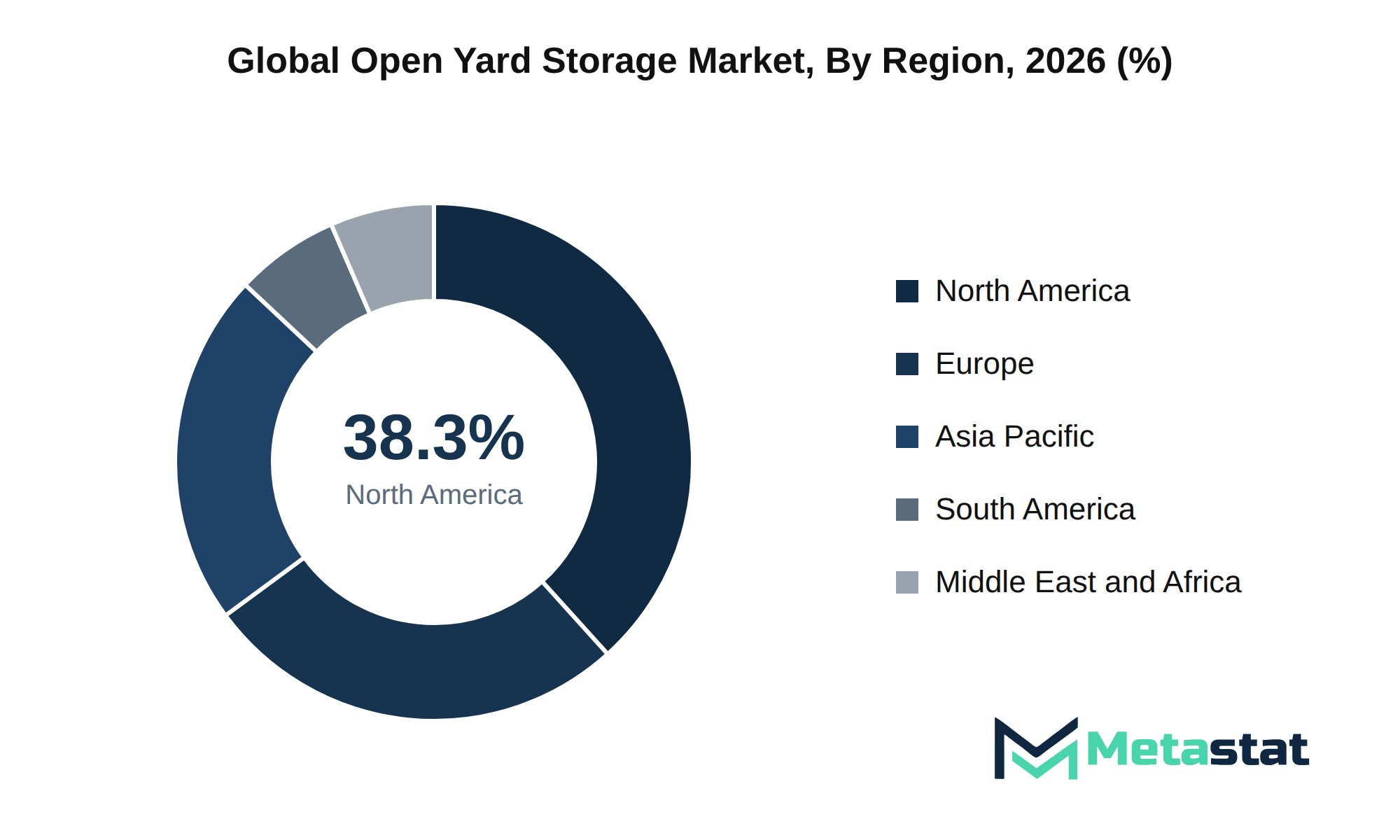
Competitive Landscape and Strategic Insights
The Open Yard Storage market features a diverse array of players, each employing distinct strategies to capture market share and enhance their competitive positioning. Major participants including DP World, Yılport Holding Inc., and Gulftainer focus on expanding their operational capacity and enhancing service offerings through strategic consolidation and partnerships. These firms leverage their extensive networks to optimize supply chain efficiencies and streamline service models, capitalizing on the growing demand for open yard storage solutions.
Companies like International Container Terminal Services, Inc. (ICTSI) and RSA Global engage in value chain integration and strategic alliances to fortify their market presence. These alliances enable them to enhance service delivery and incorporate advanced technologies into their operations, ensuring they remain relevant in a changing environment. The presence of smaller players, including Openyard Storage FZC Logistics and CWT-SML Logistics LLC, introduces competitive dynamics that compel larger firms to innovate and differentiate their offerings.
Pricing architecture within the market reflects various factors, including service model variations and geographic location. Players including Zafco Logistics and Tatvika Logistics Pvt. Ltd. implement competitive pricing strategies that cater to specific customer segments, enhancing brand equity and customer loyalty. The strategic growth vectors for these companies emphasize technological defensibility and the establishment of proprietary technologies, which play a critical role in maintaining market competitiveness while rising barriers to entry.
Overall, the competitive outlook for the Open Yard Storage market indicates a robust environment characterized by ongoing strategic pursuits. Companies that prioritize customer retention, investment in R&D, and innovation will likely emerge because leaders in this dynamic sector.
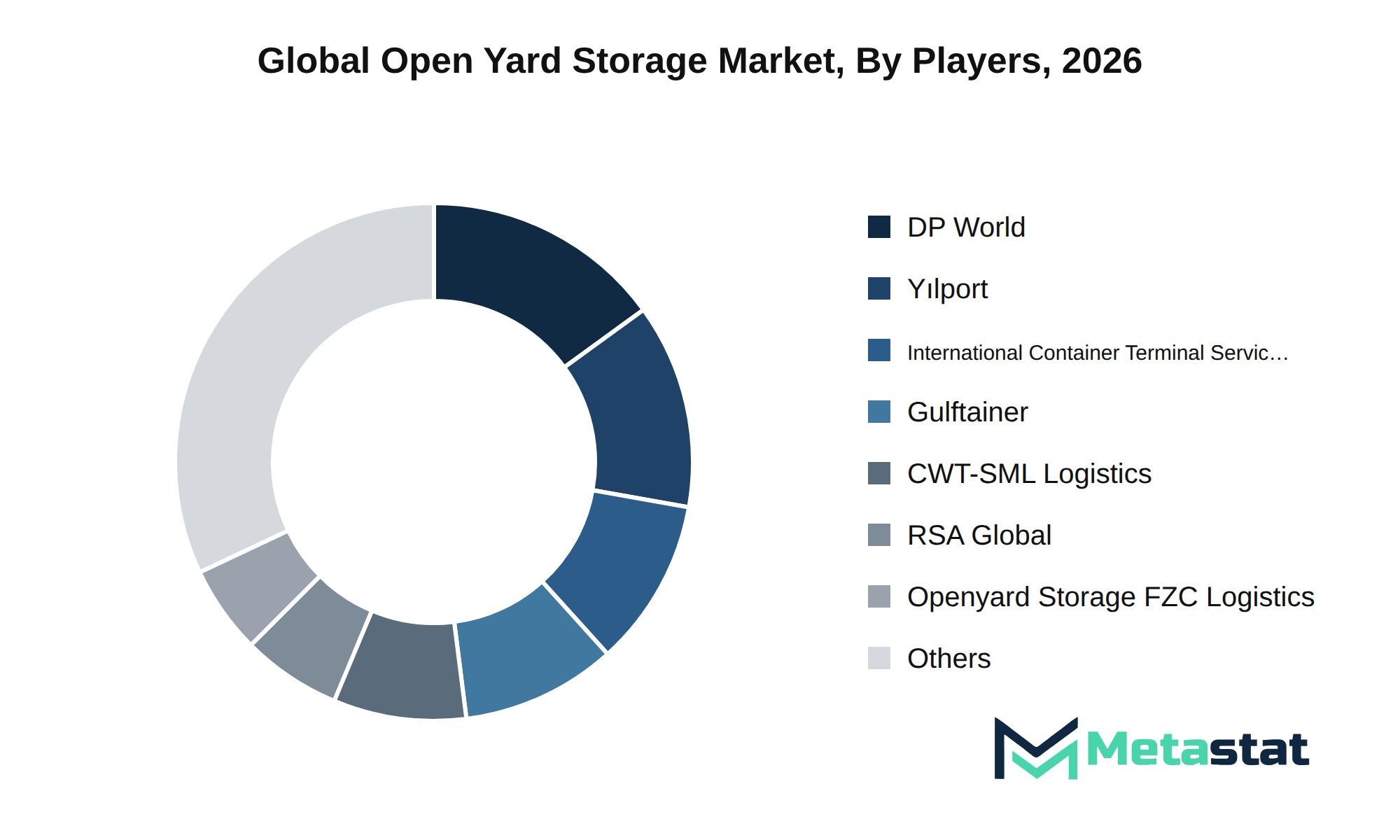
Forecast and Future Outlook
Market size is forecast to rise from USD 550.1 million in 2025 to over USD 988.7 million by 2033. This growth reflects an anticipated compound annual growth rate (CAGR) of 7.6%. The macroeconomic scenario indicates a strong demand trajectory driven by increasing investments in infrastructure and logistics across various sectors.
In the bull case scenario, heightened economic activity and a significant uptick in downstream demand from industries including construction and automotive drive market growth, leading to accelerated adoption of open yard storage solutions. The bear case suggests potential challenges stemming from geopolitical realignments and regulatory pressures, which create delays in infrastructure projects, thereby affecting market momentum.
The integration of next-generation technologies and evolving trade corridors plays a critical role in shaping the future of the market. Companies investing in R&D position themselves advantageously, responding to structural consumption shifts and emerging enterprise needs. Strategic capital allocation towards open yard storage capabilities is expected to improve operational efficiency and competitive positioning within the market.
Anticipated compliance milestones and regulatory evolution timelines will further define the operational environment for market participants. Effective navigation of these changes is essential for maintaining resilience and securing growth opportunities. The open yard storage market exhibits promising potential, with significant avenues for investment and expansion in response to shifting economic conditions.
Open Yard Storage Market Key Segments
By Storage Type:
- Container Storage Yards
- General Cargo Open Yards
- Project & Oversized Cargo Yards
- Vehicle & Heavy Equipment Yards
- Bulk & Breakbulk Cargo Yards
- Bonded Open Yards
- Port & Inland Container Depots
- Others (Boat/Yacht & RV Storage)
By Cargo Type:
- Containers
- General Cargo
- Project & Oversized Cargo
- Heavy Machinery & Equipment
- Vehicles & Automotive Units
- Bulk & Breakbulk Cargo
- Construction Materials
- Industrial & Energy Equipment
- Others (Pipes, Steel & Modular Units)
By Service Model:
- Storage-Only
- Storage With Cargo Handling
- Storage With Transportation & Distribution
- Storage With Customs & Bonded Services
- Storage With Cross-Docking & Transloading
- Integrated 3PL & Contract Logistics
By End-Use Industry:
- Oil & Gas
- Construction & Infrastructure
- Manufacturing & Industrial
- Automotive
- Mining & Metals
- Ports, Shipping & Maritime
- Energy & Utilities
- Retail & Consumer Goods
- Agriculture & Commodities
- Others (Defense, Aerospace and Marine)
By Region:
- North America
- Europe
- Asia-Pacific
- South America
- Middle East and Africa
Key Global Open Yard Storage Industry Players
- DP World
- Yılport Holding Inc.
- Gulftainer
- International Container Terminal Services, Inc. (ICTSI)
- RSA Global
- Openyard Storage FZC Logistics
- CWT-SML Logistics LLC
- Zafco Logistics
- Tatvika Logistics Pvt. Ltd.
- Friends Group
- Genex Logisolutions Private Limited
- Freight Links International
- AAA Freight Services LLC
- Cargoz
- Shipexco
- GRAND SLAM EXPRESS
- Peck Tiong Choon Pte Ltd.
- Somtrade Limited
- Badshah Group
- Herald WLS Private Limited
Report Coverage
The report strategically identifies and profiles the key market players and analyses their core competencies in each sub-segment of the Open Yard Storage market.
Report Attributes | Details |
Study Period | 2021-2033 |
Base Year | 2025 |
Estimated Year | 2026 |
Forecast Period | 2026-2033 |
Historical Period | 2021-2025 |
Growth Rate | CAGR 7.6% from 2026 to 2033 |
Revenue Unit | USD million |
Segmentation | By Storage Type, Cargo Type, Service Model, End-Use Industry, and Region |
By Region | North America (By Storage Type, Cargo Type, Service Model, End-Use Industry, and Country)
|
Europe (By Storage Type, Cargo Type, Service Model, End-Use Industry, and Country)
| |
Asia Pacific (By Storage Type, Cargo Type, Service Model, End-Use Industry, and Country)
| |
South America (By Storage Type, Cargo Type, Service Model, End-Use Industry, and Country)
| |
Middle East and Africa (By Storage Type, Cargo Type, Service Model, End-Use Industry, and Country)
|
What Report Provides
- Company Market Share, Revenue and Ranking for the Open Yard Storage Market
- Key Company Market Leaders and Their Strategies
- Full In-Depth Analysis of the Parent Industry
- Industry Statistics and Important Changes in Market Dynamics
- Segmentation Details of the Open Yard Storage Market
- Historical, Ongoing, and Projected Market Analysis
- Assessment of Niche Industry Developments and Trends
- Competitive Benchmarking of Major Players in the Market
Frequently Asked Questions
Find answers to common questions about this report
The Open Yard Storage market size was valued at USD 550.1 million in 2025, according to the Metastat Insights study.
The Open Yard Storage market is projected to grow at a CAGR of 7.6% during the forecast period from 2026 to 2033.
The North America Open Yard Storage market size is estimated to reach USD 357.9 million by 2033.
General Cargo Open Yards lead the Open Yard Storage market with a projected value of USD 187.9 million by 2033, based on the highest growth rate among the storage type segments.
Increasing investment in infrastructure development significantly drives growth in the Open Yard Storage market. Rising urbanization and population growth necessitate improved transport and storage networks, leading to heightened demand for open yard storage facilities, particularly in North America, Europe, and Asia Pacific.
North America holds the dominant share of the Open Yard Storage market, with a projected value of USD 357.9 million in 2033, representing 38.3 percent of the total market.
Rising operational costs significantly restrain growth in the Open Yard Storage market. Increased expenses related to labor, utilities, and maintenance impact profitability, while labor shortages and inflation create barriers to efficient operations. geopolitical fragmentation and technological disruptions further complicate logistics management, leading to tighter profit margins and cautious investment approaches.
Increasing investment in infrastructure development and rising urbanization significantly favor product adoption in the Open Yard Storage market. The demand for flexible and accessible storage solutions aligns with evolving consumer behaviors, particularly in urban areas, driving the need for efficient facilities that support logistics and supply chain optimization.
The Open Yard Storage market is estimated to reach a valuation of USD 988.7 million by 2033.
Key players in the Open Yard Storage market include DP World, Yılport Holding Inc., Gulftainer, International Container Terminal Services, Inc. (ICTSI), RSA Global, and Openyard Storage FZC Logistics.
Choose Your License
Global Open Yard Storage Market
Related Reports
Explore related market intelligence reports worth reading alongside this one.