
Global Pickup Truck Market
Global Pickup Truck Market Size, Share, By Vehicle Class (Compact Pickup Trucks, Mid-Size Pickup Trucks, Full-Size Light-Duty Pickup Trucks, and Full-Size Heavy-Duty Pickup Trucks), By Propulsion Type (Gasoline Pickup Trucks, Diesel Pickup Trucks, Hybrid Electric Pickup Trucks, Battery Electric Pickup Trucks, and Others (Flex-Fuel and Alternative-Fuel Pickup Trucks)), By Cab Configuration (Single Cab / Regular Cab, Extended Cab / Extra Cab, and Double Cab / Crew Cab), Industry Analysis, Growth, Trends, and Forecast, 2026-2033
MSI-4856
August 5, 2026
Updated
298 Pages
Historical
Base year
Forecast
Forecast period
Report Details
Comprehensive Market Analysis And Insights
Market Overview
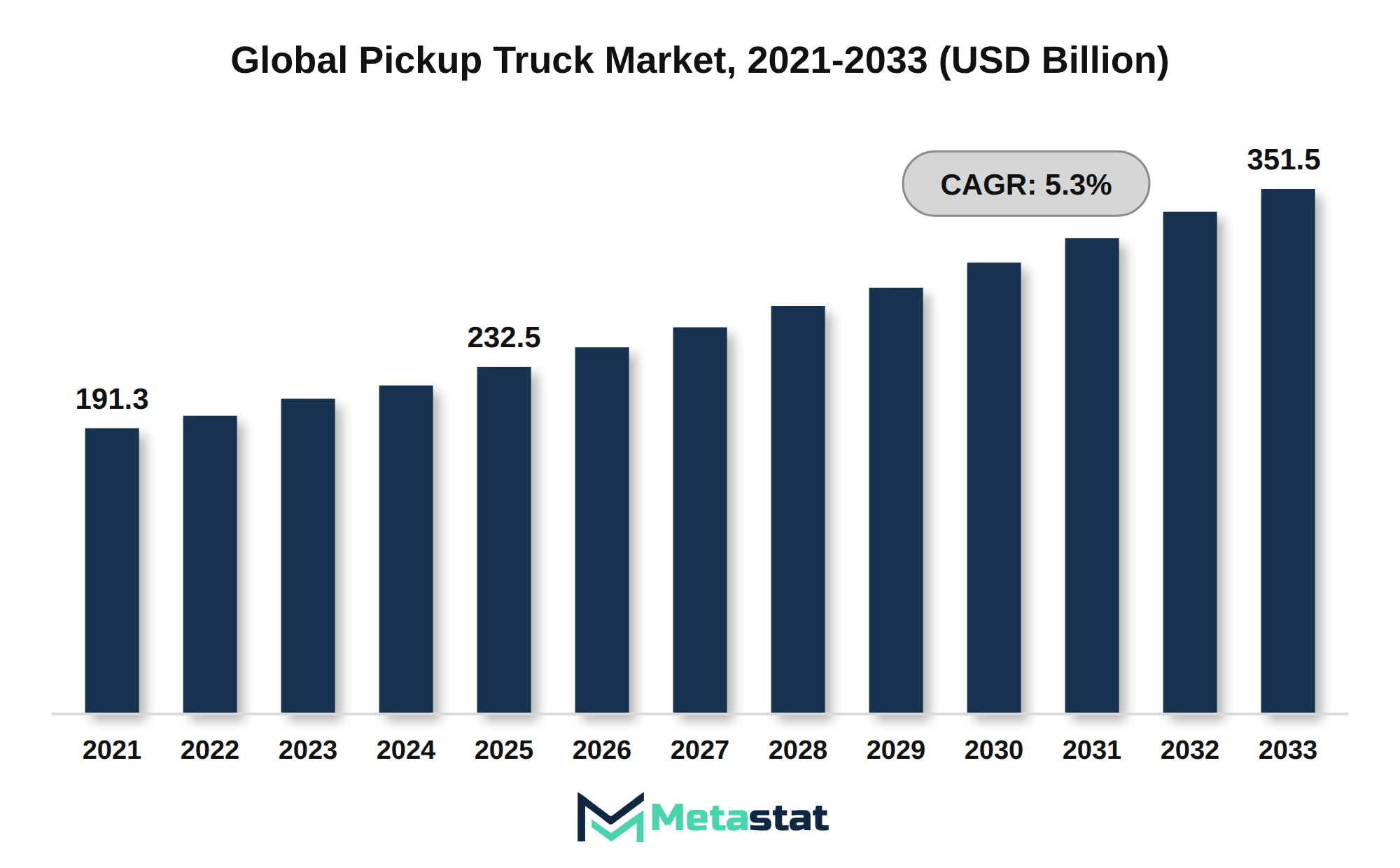
The global Pickup Truck market was valued at USD 232.5 billion in 2025 and is projected to reach USD 351.5 billion by 2033, growing at a CAGR of 5.3% over the forecast period.
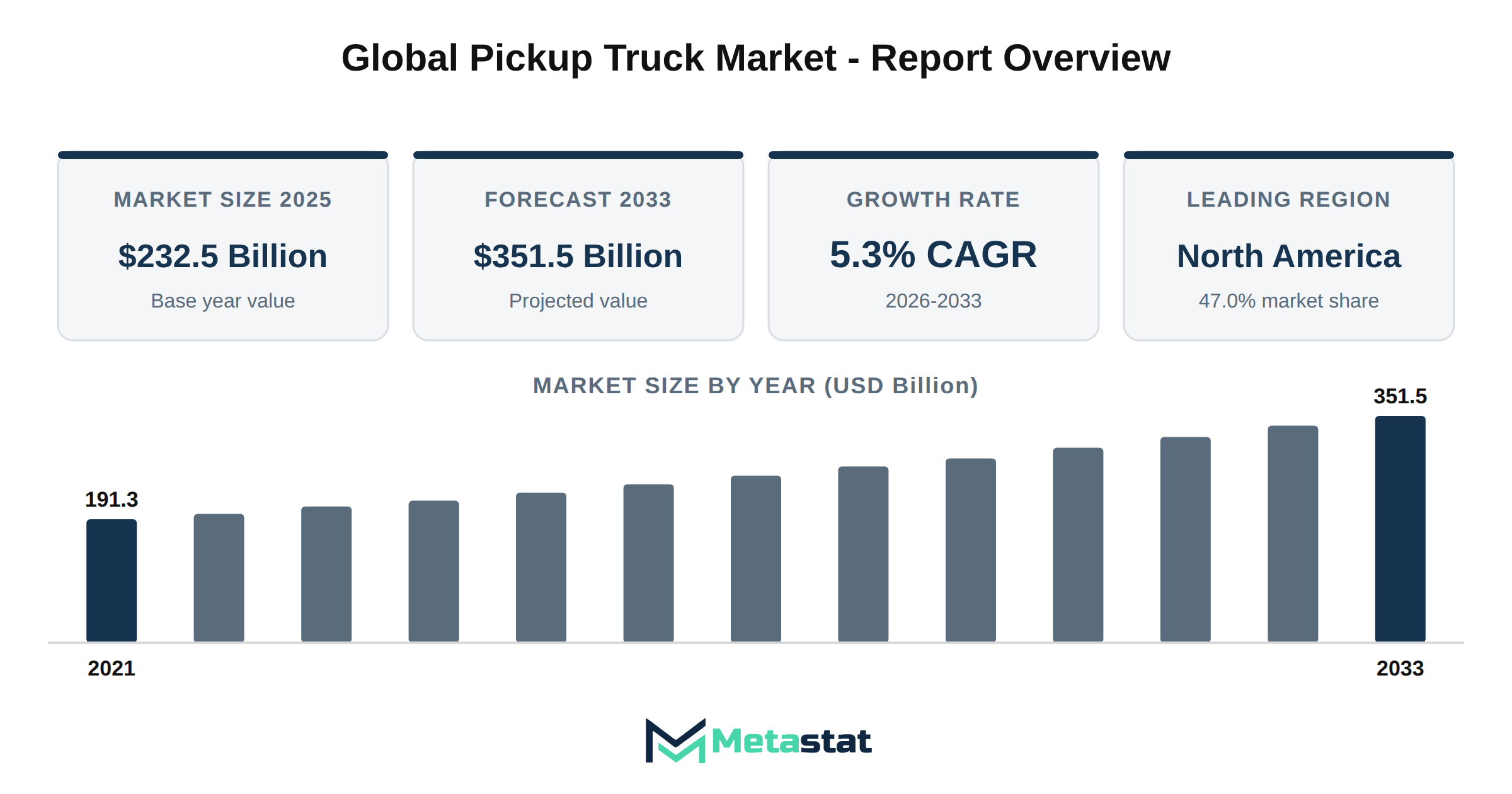
The Pickup Truck market reached a value of USD 232.5 billion in 2025, reflecting a steady increase from USD 191.3 billion in 2021. This upward trend is projected to continue, with an anticipated value of USD 351.5 billion by 2033, representing a compound annual growth rate (CAGR) of 5.3 percent during the forecast period from 2026 to 2033. Shifting consumer preferences towards larger vehicles and the increasing utility of pickup trucks across various sectors influence the market significantly.
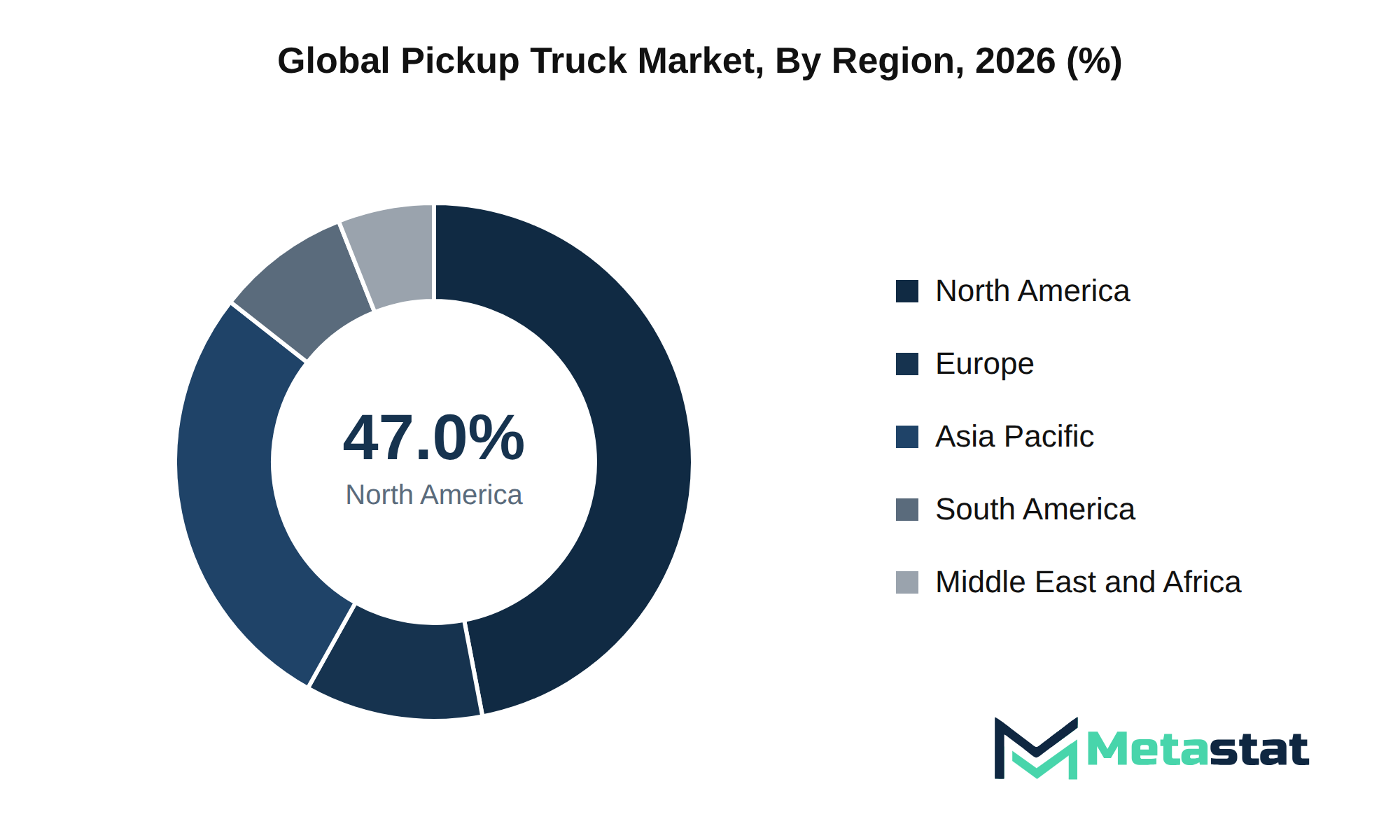
North America dominates the market, accounting for 47 percent of the global share. The region's strong preference for pickup trucks stems from lifestyle choices and practical applications, particularly among commercial users. A robust supply chain and a well-established infrastructure support the market dynamics in North America, facilitating vehicle sales and service. The projected value of the North American market is USD 151.5 billion by 2033, with a CAGR of 5.3 percent.
In terms of vehicle class, full-size light-duty pickup trucks will exhibit significant growth, with a projected value of USD 140.6 billion by 2033. Compact pickup trucks are anticipated to have a CAGR of 6.8 percent, increasing from USD 35.6 billion in 2026 to USD 56.2 billion by 2033. The mid-size pickup truck segment is expected to grow, reaching USD 101.9 billion by 2033. This growth reflects changing consumer preferences for versatility and efficiency.
Propulsion type trends show a growing interest in battery electric pickup trucks, which have a projected CAGR of 21 percent, indicating a shift towards sustainable solutions within the market. Gasoline pickup trucks remain a significant portion, with values expected to rise from USD 111.5 billion in 2026 to USD 126.2 billion by 2033. Diesel pickup trucks will experience growth, reaching USD 123 billion by 2033, driven by efficiency and reliability in commercial applications.
The evolving Pickup Truck market faces several challenges and opportunities shaped by regulatory compliance and geopolitical risk frameworks. Companies navigate complex regulations that affect vehicle emissions, safety standards, and fuel efficiency. Compliance with these regulations influences production costs and shapes the design and features of pickup trucks, impacting consumer choices and market dynamics.
Disruption from advancements in technology and shifting consumer preferences significantly affects the landscape of the market. Research and development trajectories focus on enhancing fuel efficiency, integrating advanced safety features, and adopting next-generation innovations including electric and hybrid powertrains. This focus on innovation enhances competitiveness and aligns with growing consumer demand for environmentally friendly vehicles.
The transition towards sustainable transformation emphasizes decarbonization and the circular economy. Manufacturers invest in sustainable materials and processes to reduce their carbon footprint, reflecting a broader trend towards environmental responsibility. This shift enhances brand reputation and aligns with consumer expectations for sustainability, driving growth in the market.
The supply chain landscape and logistics architecture are crucial for the efficient delivery of vehicles to consumers. Disruptions in global supply chains, influenced by geopolitical tensions and natural disasters, affect production timelines and inventory management. Companies prioritize strategic sourcing and robust logistics networks to mitigate these risks and ensure timely delivery of pickup trucks.
Market fragmentation presents both challenges and opportunities for firms. The presence of numerous players, from established automakers to new entrants, intensifies competition. Mergers and acquisitions dynamics play a vital role in shaping market structure, driven by companies seeking to enhance their product offerings and expand their market share through strategic partnerships and consolidations.
The value chain of the Pickup Truck market encompasses various stages from design and manufacturing to distribution and sales. Effective procurement strategies and customer journey dynamics are essential for maximizing value at each stage. Capital allocation and infrastructure investments focus on enhancing production capabilities and expanding distribution networks, driving long-term growth in the market.
Macroeconomic headwinds, including inflationary pressures and currency volatility, influence market dynamics. Rising costs of raw materials and fluctuating exchange rates impact pricing strategies and profit margins for manufacturers. Companies remain vigilant in adapting their strategies to navigate these economic challenges effectively.
The future strategic outlook for the Pickup Truck market reflects a commitment to innovation and sustainability. Corporate imperatives emphasize investing in research and development, enhancing operational efficiencies, and aligning with consumer trends towards electric and hybrid vehicles. High-value recommendations focus on leveraging technology, building resilient supply chains, and establishing strategic partnerships to capitalize on growth opportunities in the evolving market.
Market Dynamics
Economic growth drives demand for pickup trucks
The Pickup Truck market benefits from robust economic growth, influencing consumer spending and investment patterns. Rising GDP levels enhance disposable income, leading to increased purchasing power among consumers. This trend is evident in developing regions, where urbanization and an expanding middle class contribute to higher demand for personal and commercial vehicles.
Capital investment environments play a crucial role in shaping market dynamics. Lower interest rates facilitate financing options for both businesses and consumers, boosting sales of pickup trucks. The positive correlation between capital availability and vehicle purchases significantly impacts market growth.
Technological integration within the automotive sector enhances operational efficiencies and drives innovation in product offerings. The adoption of advanced technologies, including automation and digital solutions, enables manufacturers to streamline production processes and reduce costs. This capability improves profit margins and supports competitive pricing strategies, appealing to a broader customer base.
Demographic shifts, characterized by changing lifestyles and evolving consumer behaviors, further influence the market. Preferences for versatile vehicles that accommodate both work and leisure activities promote demand for pickup trucks. The combination of these macro-economic factors establishes a solid foundation for growth in the Pickup Truck market, positioning it favorably for future expansion.
Infrastructure investment stimulates market expansion
Investment in infrastructure development significantly influences the Pickup Truck market. Governments and private entities allocate substantial funds towards upgrading and modernizing transportation networks, including roads and bridges. This investment results in increased demand for pickup trucks, particularly from industries relying on robust logistics and transportation capabilities.
Enhanced infrastructure improves accessibility to remote and underserved areas, driving consumer interest in pickup trucks for both personal and commercial use. The construction, agriculture, and mining sectors benefit from these upgrades, because improved access leads to higher productivity and operational efficiency. Consequently, businesses within these sectors increasingly invest in pickup trucks to accommodate their logistical needs.
While infrastructure projects progress, the market is projected to grow. A compound annual growth rate of 5.3% from 2026 to 2033 reflects the anticipated demand for more reliable transportation solutions resulting from enhanced infrastructure and the ongoing evolution of consumer preferences in the Pickup Truck market.
Regulatory compliance and economic pressures
The Pickup Truck market encounters significant restraints arising from regulatory compliance and economic pressures. Regulatory tightening surrounding emissions and safety standards necessitates substantial investments from manufacturers to meet legal mandates. This dynamic places a financial burden on vehicle producers, impacting operational costs and delaying the introduction of new models into the market.
Macroeconomic challenges further complicate market conditions. Inflationary pressures lead to increased material costs and operational expenses, straining profit margins for manufacturers. Supply chain disruptions driven by geopolitical instability create uncertainty in sourcing critical components, adversely affecting production schedules and delivery timelines.
High capital investment requirements for new technologies and production facilities pose a barrier to entry for potential entrants in the Pickup Truck market. Established players with extensive capital reserves maintain a competitive advantage. Smaller firms struggle to secure necessary funding to innovate and expand their offerings.
Technological obsolescence presents another challenge. Rapid advancements in alternative propulsion methods, including electric and hybrid vehicles, compel traditional manufacturers to adapt or risk losing market share. Inadequate infrastructure for electric vehicle charging hampers the growth of battery electric pickup trucks, limiting consumer adoption.
Market fragmentation results from varying regional preferences and cultural barriers that influence consumer choice. Regional adoption resistors hinder growth potential in certain markets. Slowing downstream demand in established markets signals a need for manufacturers to strategize effectively. Overall, a combination of regulatory, economic, and technological factors significantly influences the Pickup Truck market's growth trajectory.
Geopolitical fragmentation and supply chain instability
The Pickup Truck market faces challenges arising from geopolitical fragmentation and supply chain instability. These factors create volatility in trade relationships, leading to tariff friction and trade deficits which disrupt the procurement of essential components. Manufacturers encounter difficulties in securing consistent supply chains, resulting in delays and increased costs for production. The market experiences heightened pressure on pricing and margins, impacting profitability and growth potential.
Technological disruptions intensify these challenges, requiring significant investment in research and development to adapt to evolving market conditions. Complex integrations of new technologies strain resources, complicating product offerings and development timelines. Talent retention pressures continue to grow, driven by skilled labor shortages that hinder innovation and operational efficiency.
The need for compliance with tightening global regulatory standards presents another layer of challenges. Companies face increasing compliance overhead and evolving legal liabilities, which divert resources from core business operations. Environmental sustainability demands further complicate the landscape, because firms strive to meet decarbonization mandates while managing rising input costs associated with greener technologies. These interrelated pressures collectively shape the operational and financial landscapes of the Pickup Truck market.
Emerging buying behaviors drive digital transformation
The Pickup Truck market experiences significant opportunities stemming from emerging buying behaviors, which drive digital transformation across various segments. The increasing adoption of online purchasing platforms influences consumer preferences, leading to a shift towards digital procurement models. This shift allows manufacturers and dealers to engage with customers more effectively, enhancing the purchasing experience and improving sales conversion rates.
Geographical expansion is essential in capitalizing on these opportunities. Regions including Asia Pacific display a growing appetite for pickup trucks, driven by rising urbanization and increasing disposable incomes. The demand for diverse vehicle classes, including compact and mid-size pickup trucks, reflects changing consumer preferences in these emerging markets.
Technological disruptions in the market further enhance growth prospects. Innovations in electric and hybrid propulsion systems respond to sustainability imperatives and environmental concerns. The increasing regulatory focus on emission reductions positions next-generation vehicles favorably, appealing to environmentally conscious consumers and aligning with broader ESG-driven initiatives.
Strategic consolidation among manufacturers and cross-industry mergers create an environment conducive to innovation and competitive advantage. Collaborative efforts among industry players facilitate resource sharing, enhancing research and development capabilities while driving down operational costs. The expanded product offerings resulting from such partnerships support diverse customer needs and preferences.
Local supply chain strategies and asset life-cycle management optimize operational efficiency within the market. Manufacturers increasingly implement strategies focused on supply chain localization, addressing rising transportation costs and enhancing responsiveness to local market demands. This approach improves profitability and strengthens brand loyalty among consumers seeking reliable and accessible service.
Overall, these emerging market opportunities position the Pickup Truck market for growth, with projections indicating an increase from USD 232.5 billion in 2025 to USD 351.5 billion by 2033, representing a compound annual growth rate of 5.3 percent.
Market Segmentation Analysis
The Global Pickup Truck market is segmented based on Vehicle Class, Propulsion Type, and Cab Configuration.
By Vehicle Class, the market is further segmented into:
- Compact Pickup Trucks
- Mid-Size Pickup Trucks
- Full-Size Light-Duty Pickup Trucks
- Full-Size Heavy-Duty Pickup Trucks
Compact Pickup Trucks
Compact Pickup Trucks represent a significant segment within the Pickup Truck market, valued at USD 35.6 billion in 2026 and projected to reach USD 56.2 billion by 2033, achieving a CAGR of 6.8% during the forecast period. This growth stems from various demand drivers, including the increasing preference for smaller vehicles that offer both utility and efficiency, appealing to urban drivers and younger consumers. Compact Pickup Trucks provide a versatile option for individuals and businesses requiring a balance between cargo capacity and maneuverability in congested environments.
Technological advancements contribute to the appeal of Compact Pickup Trucks, with developments in fuel efficiency, safety features, and connectivity enhancing their attractiveness in the market. The rise in eco-conscious consumers drives the adoption of hybrid and electric variants within this segment, aligning with shifting consumer preferences toward sustainability and environmental responsibility. Regulatory compliance standards focusing on emissions and fuel economy further influence the product evolution of Compact Pickup Trucks, driving manufacturers to innovate continuously.
Price sensitivity among buyers plays a critical role in shaping market dynamics. Compact Pickup Trucks typically offer a lower price point compared to larger models, which attracts a broader customer base, including first-time buyers and those seeking cost-effective alternatives. Consequently, intense competition among manufacturers to deliver affordable yet high-quality options enhances market expansion opportunities. The Compact Pickup Trucks segment is projected to benefit from ongoing investments in marketing strategies and dealership networks to increase consumer awareness and drive sales.
Overall, the segment's growth trajectory aligns with broader trends observed in the Pickup Truck market, characterized by evolving preferences, technological maturation, and strategic opportunities for manufacturers. By focusing on innovation and responding to consumer needs, companies enhance their positions within the Compact Pickup Trucks segment, contributing to overall market growth.
Mid-Size Pickup Trucks
Growth in the Mid-Size Pickup Trucks segment is driven by increasing consumer preference for vehicles that offer a balance between functionality and efficiency. Buyers often favor mid-size pickup trucks for their versatility, accommodating urban lifestyles while retaining the capability for off-road and utility tasks. Enhanced fuel efficiency compared to full-size models strengthens their appeal, particularly in markets focused on sustainability.
Technological advancements contribute significantly to the segment's expansion. Manufacturers continually innovate with features including advanced safety systems, improved infotainment options, and upgraded powertrains. These enhancements align with consumer expectations for modern vehicles, prompting increased adoption among buyers seeking the latest technology.
Next-generation upgrades position mid-size pickup trucks to meet evolving market demands. This segment benefits from a trend toward personalization, with consumers desiring unique configurations tailored to individual preferences. The ability to customize vehicles with various cab configurations, towing capacities, and off-road capabilities facilitates deeper market penetration.
Mid-size models demonstrate resilience in fluctuating economic conditions, retaining strong demand in both commercial and personal applications. Businesses increasingly employ these vehicles for light-duty transportation due to their efficiency and lower operational costs. This trend directly influences growth, with segment revenue expected to increase.
By 2033, the Mid-Size Pickup Trucks segment is estimated to reach USD 101.9 billion, at a CAGR of 6.1% during the forecast period. This growth trajectory reflects a robust market response to consumer preferences and technological innovations, positioning the segment because a key player within the overall Pickup Truck market.
Full-Size Light-Duty Pickup Trucks
Demand for Full-Size Light-Duty Pickup Trucks reflects a strong inclination towards versatility and capability, attracting consumers who prioritize both utility and comfort in their vehicles. Increasing disposable income and shifting consumer preferences drive the adoption of these trucks across various demographics. This segment caters to a diverse customer base, including both commercial users and individual consumers, enhancing its growth potential.
Technological advancements play a significant role in the segment's expansion, with manufacturers integrating next-generation features including advanced safety systems, connectivity options, and improved fuel efficiency. Product evolution continues to align with changing consumer expectations, strengthening market engagement. The segment's alignment with increasing regulatory compliance standards regarding emissions and safety enhances its appeal, since buyers prioritize environmentally friendly and safe vehicles.
Cost structures within the market reflect challenges related to raw material sourcing and production processes. Pricing volatility remains a concern, affecting profit margins for manufacturers. Strategic investment in supply chain resilience and innovative sourcing strategies mitigates potential disruptions. Competitive dynamics within the segment intensify, with established players and new entrants vying for market share, driving innovation and reducing costs.
Full-Size Light-Duty Pickup Trucks are projected to reach USD 140.6 billion by 2033, indicating strong growth potential. Strategic opportunity windows arise from emerging markets and evolving consumer preferences, positioning the segment to capitalize on shifts in the automotive landscape. Continued investment in product development and marketing will be crucial for players seeking to enhance their competitive positioning in the Pickup Truck market.
Full-Size Heavy-Duty Pickup Trucks
Growth in the Full-Size Heavy-Duty Pickup Trucks segment reflects increasing demand for vehicles capable of heavy towing and hauling. This demand arises primarily from industries including construction, agriculture, and logistics, where robust performance and durability are crucial. Manufacturers respond to this trend by enhancing fuel efficiency, technology integration, and safety features, enabling these vehicles to meet evolving consumer expectations and regulatory standards.
Technological maturation of powertrains, including advancements in diesel and hybrid electric systems, drives market expansion. Improved engine performance and emissions control technologies attract buyers seeking both power and sustainability. Strategic investments in next-generation upgrades support manufacturers in offering innovative features, including enhanced towing capabilities and superior driver assistance systems.
Pricing volatility affects the Full-Size Heavy-Duty Pickup Trucks segment, driven by fluctuations in raw material costs and supply chain vulnerabilities. Manufacturers face margin pressures due to rising costs of steel and aluminum, essential for vehicle production. In response, companies implement cost-control measures and explore alternative materials to maintain competitive pricing without sacrificing quality.
Regulatory compliance standards significantly impact product development and market strategies. Stricter emissions regulations in various regions lead manufacturers to prioritize cleaner technologies, influencing product evolution and design. Environmental concerns grow, and consumers show a preference for vehicles that align with sustainable practices, further shaping the market.
Capital investment outlook indicates a strong commitment from manufacturers to expand production capabilities and introduce innovative products. The segment is projected to grow at a CAGR of 3.8% during the forecast period, reflecting a steady increase in demand among commercial users and consumers seeking reliable, versatile vehicles. The overall Pickup Truck market benefits from this expansion, enhancing its competitive position and attracting new participants.
By Propulsion Type, the market is further segmented into:
- Gasoline Pickup Trucks
- Diesel Pickup Trucks
- Hybrid Electric Pickup Trucks
- Battery Electric Pickup Trucks
- Others (Flex-Fuel and Alternative-Fuel Pickup Trucks)
Gasoline Pickup Trucks
Gasoline Pickup Trucks are expected to contribute significantly to the overall growth of the Pickup Truck market. Valued at USD 111.5 billion in 2026, this segment is projected to reach USD 126.2 billion by 2033, exhibiting a CAGR of 1.8% during the forecast period. Demand is driven by consumer preferences for traditional gasoline engines due to their familiarity and perceived reliability in daily use. Regional variations in infrastructure and fuel availability further enhance the appeal of gasoline-powered trucks in specific markets.
Technological advancements in gasoline engine efficiency have played a crucial role in maintaining competitive positioning against emerging alternatives, helping manufacturers optimize performance and reduce emissions. These enhancements not only address environmental concerns but align with regulatory compliance standards that seek to minimize the ecological impact of vehicle emissions. Consequently, manufacturers are adapting their product lines to incorporate these technologically mature solutions, appealing to environmentally conscious consumers while retaining established user bases.
The segment's growth is supported by evolving consumer expectations regarding usability and performance. With increasing interest in vehicle personalization, manufacturers are responding by introducing next-generation upgrades, including advanced infotainment systems and enhanced safety features. This evolution in product offerings meets the demands of various end-use applications, including personal, commercial, and recreational use, thereby fueling segment expansion.
Competition within the segment remains robust, with established players including Ford Motor Company, General Motors Company, and Toyota Motor Corporation continuously innovating to capture market share. These manufacturers invest in capital projects to enhance production capabilities and improve supply chain resilience, ensuring efficient raw material sourcing and distribution. Strategic opportunity windows arise from shifting market dynamics, allowing for the introduction of value-added features that enhance the consumer experience and support pricing strategies.
Overall, while the gasoline segment faces challenges from increasing electrification and consumer shifts towards alternative fuel options, its established presence and ongoing enhancements ensure its relevance within the broader Pickup Truck market. This segment is expected to continue adapting and responding to market demands, maintaining its position through continuous improvement and strategic investments.
Diesel Pickup Trucks
Growth in the Diesel Pickup Trucks segment aligns with increasing consumer preference for vehicles with enhanced fuel efficiency and durability. This segment is projected to reach USD 123 billion by 2033, at a CAGR of 2.9% during the forecast period. The robust performance stems from rising demand among commercial sectors that rely on heavy-duty applications. Industries including construction and agriculture seek diesel-powered pickups for their superior torque and towing capacity, making these vehicles essential for demanding tasks.
Technological advancements play a significant role in the evolution of diesel pickups, with manufacturers focusing on improving engine efficiency and reducing emissions. Innovations in turbocharging and fuel injection systems enhance performance while meeting stringent regulatory compliance standards. The ongoing trend towards next-generation upgrades facilitates better fuel economy, attracting environmentally conscious consumers and businesses striving for sustainability.
Cost structures within the segment face pressures from fluctuating diesel prices and evolving regulatory frameworks. Higher production costs related to emissions control technology could impact pricing strategies, influencing market dynamics. Nevertheless, the long-term value proposition of diesel pickup trucks, particularly in terms of fuel savings and durability, is expected to sustain demand.
The Diesel Pickup Trucks segment benefits from strong demand across various industries, ongoing technological advancements, and a focus on sustainability. With a favorable growth trajectory, this segment remains an integral part of the broader Pickup Truck market, poised for continued expansion through 2033.
Hybrid Electric Pickup Trucks
Growth in the Hybrid Electric Pickup Trucks segment aligns with increasing consumer awareness of environmental issues and the demand for energy-efficient vehicles. Automakers invest heavily in hybrid technology, combining traditional internal combustion engines with electric propulsion systems, resulting in improved fuel efficiency and reduced emissions. This dual-powertrain strategy appeals to environmentally conscious buyers while maintaining the power and utility expected from pickup trucks.
Technological advancements play a significant role in segment expansion. Enhanced battery technology and electric drive systems have improved performance and range, making hybrid electric pickup trucks more attractive to consumers. The integration of next-generation features, including advanced driver-assistance systems, enhances their appeal, particularly among tech-savvy buyers seeking modern vehicle capabilities.
Regulatory compliance standards drive adoption in multiple regions, with governments implementing stricter emissions regulations and offering incentives for the purchase of hybrid vehicles. These policy measures encourage manufacturers to develop and market hybrid electric options, contributing to a diverse product lineup in the Pickup Truck market.
While the market evolves, key players focus on strategic opportunities related to hybrid electric vehicle infrastructure. Investment in charging stations and hybrid-specific technology improves consumer confidence and convenience. Increased infrastructure investment stimulates further growth in the segment.
By 2033, the Hybrid Electric Pickup Trucks segment is projected to reach USD 45.7 billion, reflecting substantial profitability and market demand. Companies that effectively leverage technological innovations and align with regulatory trends strengthen their competitive position in this growing segment.
Battery Electric Pickup Trucks
Rapid advancements in battery technology and increasing consumer interest in sustainability drive significant growth in the Battery Electric Pickup Trucks segment. This segment is projected to grow at a CAGR of 21% during the forecast period, reflecting a shift towards zero-emission vehicles. Rising fuel prices and stricter emissions regulations encourage consumers and businesses to adopt electric vehicles, including pickup trucks, driven by a viable alternative to traditional gasoline and diesel options. Major automotive manufacturers are expanding their electric vehicle offerings, enhancing the variety and appeal of battery electric pickup trucks in the market.
Investment in charging infrastructure is essential in supporting the uptake of battery electric pickup trucks. With improved charging networks, consumers experience reduced range anxiety, facilitating broader adoption. The favorable regulatory environment, including government incentives for electric vehicle purchases, promotes market growth. Increased consumer awareness around environmental impacts and operational cost savings associated with electric vehicles further enhances demand.
The Battery Electric Pickup Trucks segment reflects a dynamic evolution within the broader Pickup Truck market. Innovations in vehicle design, performance, and battery capacity contribute to the segment's expansion, positioning it to capture a larger share of the market. While battery electric pickup trucks reach more consumers, the market is expected to witness shifts in consumer purchasing patterns, with an increasing number of buyers prioritizing sustainability and efficiency.
Others (Flex-Fuel and Alternative-Fuel Pickup Trucks)
Flex-fuel and alternative-fuel pickup trucks represent a distinct segment within the Pickup Truck market, increasingly attracting attention due to rising environmental concerns and changing consumer preferences. Demand drivers include a growing emphasis on sustainability and a shift toward fuel efficiency, particularly in regions with strict emissions regulations. Adoption of these vehicles reflects a broader trend among buyers seeking reduced carbon footprints while maintaining functionality. Segment expansion catalysts include advancements in alternative fuel technologies and supportive government incentives encouraging the use of environmentally friendly vehicles.
Technological maturation in fuel systems enhances the performance of flex-fuel and alternative-fuel pickup trucks, making them more viable options for various applications. Product evolution focuses on integrating innovative features that improve performance, safety, and convenience. Downstream applications increasingly encompass urban commuting and recreational use, appealing to diverse consumer bases. Consumption shifts towards these vehicles align with broader societal trends favoring reduced reliance on fossil fuels.
Regulatory compliance standards drive the development of this segment, with manufacturers adapting to stringent emissions regulations imposed by various governments. Certifications for alternative fuels enhance consumer confidence and expand market acceptance. Cost structures associated with production and pricing volatility in raw materials, particularly those used for alternative fuel systems, impact margins within this segment. Strategic opportunity windows arise from aligning product offerings with changing regulations and consumer expectations.
Supply chain resilience remains crucial, particularly in sourcing raw materials for alternative fuel technologies. Vulnerabilities related to logistics and raw material procurement affect production timelines and cost efficiency. Substitution risks exist owing to new technologies emerging, prompting manufacturers to stay ahead of potential disruptive alternatives. Technological obsolescence presents challenges resulting from existing fuel systems evolving, necessitating continuous innovation. Capital investment outlook in this segment appears positive, with stakeholders recognizing the long-term potential of flex-fuel and alternative-fuel pickup trucks within the broader market.
By Cab Configuration, the market is further segmented into:
- Single Cab / Regular Cab
- Extended Cab / Extra Cab
- Double Cab / Crew Cab
- By, the market is further segmented into
Single Cab / Regular Cab
Valued at USD 74.2 billion in 2026, the Single Cab / Regular Cab segment is projected to reach USD 94.9 billion by 2033, representing a CAGR of 3.6% during this forecast period. This segment appeals to customers seeking efficient and compact vehicles, suitable for both personal and commercial use. The increasing popularity of compact vehicles due to urbanization and shifting consumer preferences drives growth in this market. Manufacturers are focusing on enhancing features including connectivity, safety, and fuel efficiency, which aligns with consumer demands for modernized vehicles.
The rise of e-commerce and delivery services significantly influences the demand for Single Cab / Regular Cab pickups, driven by the utility these vehicles provide for transporting goods within urban environments. Regulatory compliance standards focusing on emissions and fuel efficiency encourage manufacturers to innovate and upgrade existing models, ensuring competitiveness in the market. Ongoing investments in production capabilities and supply chain resilience contribute to the segment's growth, allowing manufacturers to meet increasing consumer expectations efficiently.
Pricing volatility amid fluctuating raw material costs challenges profitability within the segment. Strategic partnerships and improved logistics mitigate these risks, allowing manufacturers to stabilize pricing and maintain market competitiveness. The continuous evolution of product features, combined with robust marketing strategies, enhances consumer engagement and expands market reach. The Single Cab / Regular Cab segment presents significant opportunities for growth within the Pickup Truck market, supported by evolving consumer preferences and responsive manufacturer strategies.
Extended Cab / Extra Cab
Demand for the Extended Cab / Extra Cab segment in the Pickup Truck market is driven by the growing preference for vehicles that offer a balance between passenger comfort and cargo capacity. This configuration allows for versatile use, accommodating both personal and business needs effectively. Factors influencing adoption include increased urbanization, which raises the need for multi-functional vehicles that navigate city environments while providing ample space for occupants and goods.
While the market transitions toward technological advancements, manufacturers focus on enhancing features in Extended Cab models, including advanced safety systems, connectivity options, and fuel efficiency improvements. These upgrades attract consumers seeking modern capabilities in their vehicles. The trend toward electric vehicles impacts the segment, with various manufacturers planning electric variants of Extended Cab models, appealing to environmentally conscious buyers.
Pricing strategies within the market reflect the segment's potential for profitability, with consumers willing to invest in vehicles that offer enhanced functionality and comfort. The Extended Cab configuration is projected to reach USD 52.7 billion by 2033, at a CAGR of 3.2% during the forecast period. This growth reflects strong market demand, highlighting the segment's importance in the overall Pickup Truck market.
Strategic initiatives from key players create competitive dynamics within the market. Established companies prioritize expanding their Extended Cab offerings, ensuring they address consumer preferences while managing production costs. These strategies contribute to a resilient supply chain, enabling manufacturers to respond effectively to fluctuating market demands and emerging trends.
Double Cab / Crew Cab
Significant growth in the Double Cab / Crew Cab segment of the Pickup Truck market results from increasing consumer preference for spacious and versatile vehicles. The trend towards family-oriented lifestyles and the demand for multifunctional vehicles drives this preference, contributing to rising sales figures. The market's focus on comfort and advanced safety features plays a crucial role in attracting buyers, particularly in urban areas where space is often limited.
Technological advancements in vehicle design and enhanced performance features increase the appeal of double cab and crew cab configurations. Manufacturers invest in next-generation upgrades, focusing on fuel efficiency and connectivity options, which attract tech-savvy consumers. This focus on innovation supports segment expansion, with investments in electric and hybrid technologies further diversifying the offerings available to potential buyers.
Market dynamics indicate that the Double Cab / Crew Cab segment is projected to reach USD 203.9 billion by 2033. This projection highlights the ongoing demand for larger vehicles capable of accommodating families and recreational activities. The segment aligns well with shifts in consumer behavior, where personal and recreational uses of vehicles continue to grow.
Various end-use industries, including construction and logistics, favor double cab and crew cab configurations due to their superior cargo capacity and passenger space. This trend highlights the adaptability of these vehicles, catering to both personal and commercial applications. While regulations become more stringent regarding emissions, manufacturers in this segment are likely to respond with cleaner technologies, enhancing their market position.
Overall, the ongoing evolution of consumer preferences, technological advancements, and regulatory changes will shape the future of the Double Cab / Crew Cab segment. The projected market growth presents strategic opportunities for manufacturers to align their offerings with evolving customer needs.
By, the market is further segmented into
Demand for the Single Cab / Regular Cab configuration in the Pickup Truck market reflects a blend of user preference for simplicity and operational efficiency. This segment sees adoption driven by consumers seeking a compact and straightforward vehicle, ideal for urban settings and light-duty tasks. Economic factors, including increasing fuel prices and changing consumer behaviors, support this trend. The Extended Cab / Extra Cab configuration caters to buyers requiring additional space without compromising maneuverability. This segment finds traction among families and workers needing extra seating and storage, aligning with the trend of multifunctional vehicles. Technological advancements in safety and comfort features enhance the appeal of these configurations, ensuring compliance with modern standards. The Double Cab / Crew Cab configuration stands out for its spaciousness and versatility, making it popular among various end-users, including construction and logistics providers. This segment benefits from growing demand for larger vehicles capable of accommodating both passengers and cargo effectively. Shifts in consumer preferences toward larger vehicles for recreational and professional use sustain growth in this segment. Overall, the market's dynamics play a significant role in shaping the future of the Pickup Truck market, with each configuration adapting to evolving consumer needs and market conditions.
By Region
Based on geography, the Global Pickup Truck market is divided into North America, Europe, Asia-Pacific, South America, Middle East, and Africa.
North America
North America stands because a major player in the Pickup Truck market, with a projected market size of USD 151.5 billion by the end of 2033, expanding at a CAGR of 5.3% during the forecast period. The region accounts for 47.00% of the global market share in 2025, reflecting strong demand supported by a combination of established consumer preferences and economic factors.
The United States represents the largest market for pickup trucks, influenced by a robust automotive industry and a cultural affinity for larger vehicles. Canada and Mexico contribute significantly, with increasing adoption of pickup trucks for both personal and commercial use in various sectors. These markets benefit from a combination of favorable financing options, growing infrastructure investments, and a rising trend towards outdoor and recreational activities.
Shifts in consumer behavior towards fuel efficiency and sustainability have prompted manufacturers to innovate in areas including hybrid and electric pickup trucks, enhancing their appeal. The introduction of advanced technologies and features attracts a diverse customer base, further driving market growth.
Competition within the North American Pickup Truck market remains intense, with several domestic and international players actively vying for market share. Companies like Ford Motor Company, General Motors Company, and Toyota Motor Corporation invest heavily in product development, marketing strategies, and local manufacturing to strengthen their positions.
The market dynamics are influenced by regional supply chain factors and localized manufacturing densities, facilitating quicker responses to consumer demands. This localized approach, aligned with emerging trends like nearshoring initiatives, enhances operational efficiencies and improves product availability across North America.
Europe
Europe represents a significant portion of the global Pickup Truck market, accounting for a share of 11.1% in 2025. Countries including Germany, France, the UK, Italy, and Spain exhibit strong demand for various pickup truck configurations, driven by a combination of cultural preferences and economic conditions. The region's automotive industry faces challenges from geopolitical factors, which influence supply chains and trade dynamics. Germany stands out with a robust automotive sector that prioritizes innovation, resulting in a higher adoption rate of advanced features in pickup trucks. In France and Italy, increasing consumer interest in versatile vehicles supports growth in the mid-size and compact segments. The UK market shows a preference for dual-purpose vehicles, benefiting from both personal and commercial applications. Russia, with its vast geography, presents opportunities for larger vehicles suited for rugged terrains. However, the market in Russia grapples with economic fluctuations, impacting overall demand for pickups. The Rest of Europe encompasses various markets that differ in consumer behavior and purchasing power, leading to unique growth trajectories across the continent. Infrastructure modernization remains a critical factor influencing the market, with investment in road networks enhancing the usability of pickup trucks for both leisure and utility purposes. The competitive landscape in Europe features several key players, including Ford Motor Company, General Motors Company, and Toyota Motor Corporation, all striving to capture market share through localized manufacturing and tailored offerings. Overall, the Pickup Truck market in Europe is projected to experience incremental growth, driven by evolving consumer preferences and regional dynamics that favor specialized vehicle attributes.
Asia-Pacific
The Asia-Pacific region represents a growing share of the global Pickup Truck market, accounting for 27.5% in 2025. Rapid urbanization and increasing disposable incomes in countries including China, India, and Southeast Asia drive demand for pickup trucks. The region's diverse geographical landscape supports various applications, from agricultural use in India to recreational purposes in Australia. Manufacturers focus on localizing production and supply chains to cater to unique regional demands, enhancing market access and operational efficiency.
Infrastructure modernization across Asia-Pacific plays a critical role in supporting growth in the Pickup Truck market. Countries like China and India invest heavily in road development and logistics infrastructure, facilitating easier access to remote areas. This investment creates opportunities for both consumers and businesses, increasing the adoption of pickup trucks for transportation and commercial purposes. Emerging market front-runners drive competition, prompting manufacturers to innovate and expand their offerings.
Supply chain regionalization is evident, driven by manufacturers establishing localized production facilities to mitigate risks and reduce lead times. Cross-border trade corridors strengthen connectivity within the region, allowing for smoother distribution of vehicles and parts. Geopolitical factors influence trade policies, impacting operational strategies for automakers seeking to establish a foothold in the region. Domestic market participants including Toyota and Ford adapt to evolving consumer preferences by introducing models that cater to local tastes and requirements.
Cultural nuances significantly influence regional B2B buying behaviors, with preferences varying by country. For instance, the demand for versatile models including double cab configurations in Australia contrasts with the popularity of compact pickup trucks in urban areas of Southeast Asia. Understanding these regional dynamics enables manufacturers to effectively target their marketing efforts and optimize product offerings. Strategic entry barriers and foreign direct investment flows contribute to a competitive environment ripe for growth in the Pickup Truck market.
South America
South America contributes significantly to the global Pickup Truck market in 2025. Brazil operates in the market, exhibiting a robust demand for various pickup truck configurations. Argentina follows closely, with increasing adoption rates driven by urbanization and a growing middle class. The Rest of South America demonstrates untapped potential, owing to infrastructure modernization efforts that expand transport networks and enhance vehicle accessibility.
Key demand drivers include economic growth, leading to higher disposable incomes, and a cultural affinity for pickup trucks, particularly in Brazil and Argentina. The market experiences segment expansion through rising interest in compact and mid-size pickup trucks, which align with urban consumer preferences for versatility and fuel efficiency. Emerging market front-runners like Brazil leverage localized manufacturing, reducing costs and improving availability.
Geopolitical dynamics influence the market landscape, because trade corridors facilitate cross-border commerce. Domestic players, including Ford Motor Company, General Motors Company, and Toyota Motor Corporation, adapt offerings to meet regional preferences. The ongoing trend of regional supply chain optimization and nearshoring initiatives supports the expansion of local manufacturing capabilities.
Infrastructure readiness is vital to the market's development, with investments in road maintenance and logistics networks enhancing vehicle distribution. Regulatory frameworks promote compliance and safety, addressing consumer concerns while ensuring market stability. This combination of factors positions the South American Pickup Truck market for consistent growth, with projections indicating continued expansion through 2033.
Middle East and Africa
The Middle East and Africa region holds a share of 6.00% in the global Pickup Truck market in 2025. Economic diversification efforts in countries like Saudi Arabia and the UAE drive increased investment in infrastructure, stimulating demand for pickup trucks. Local manufacturing initiatives enhance supply chain resilience and reduce dependence on imports, making products more accessible to consumers.
South Africa's robust automotive sector contributes significantly to market dynamics within the region, with an increasing preference for durable and versatile vehicles. The growing trend towards outdoor and recreational activities accelerates demand for pickups that blend utility with lifestyle appeal. Emerging markets in the region show substantial potential, characterized by underpenetrated territories where pickup trucks remain a less common choice.
Investment in transportation infrastructure enhances logistics capabilities and creates a favorable environment for pickup truck adoption. The market is projected to experience growth driven by evolving consumer preferences and an expanding middle class, leading to increased purchasing power. Regional players including Ford Motor Company and Toyota Motor Corporation operate in the market, strategically positioning themselves to capitalize on these trends, enhancing competition and innovation within the market.
Competitive Landscape and Strategic Insights
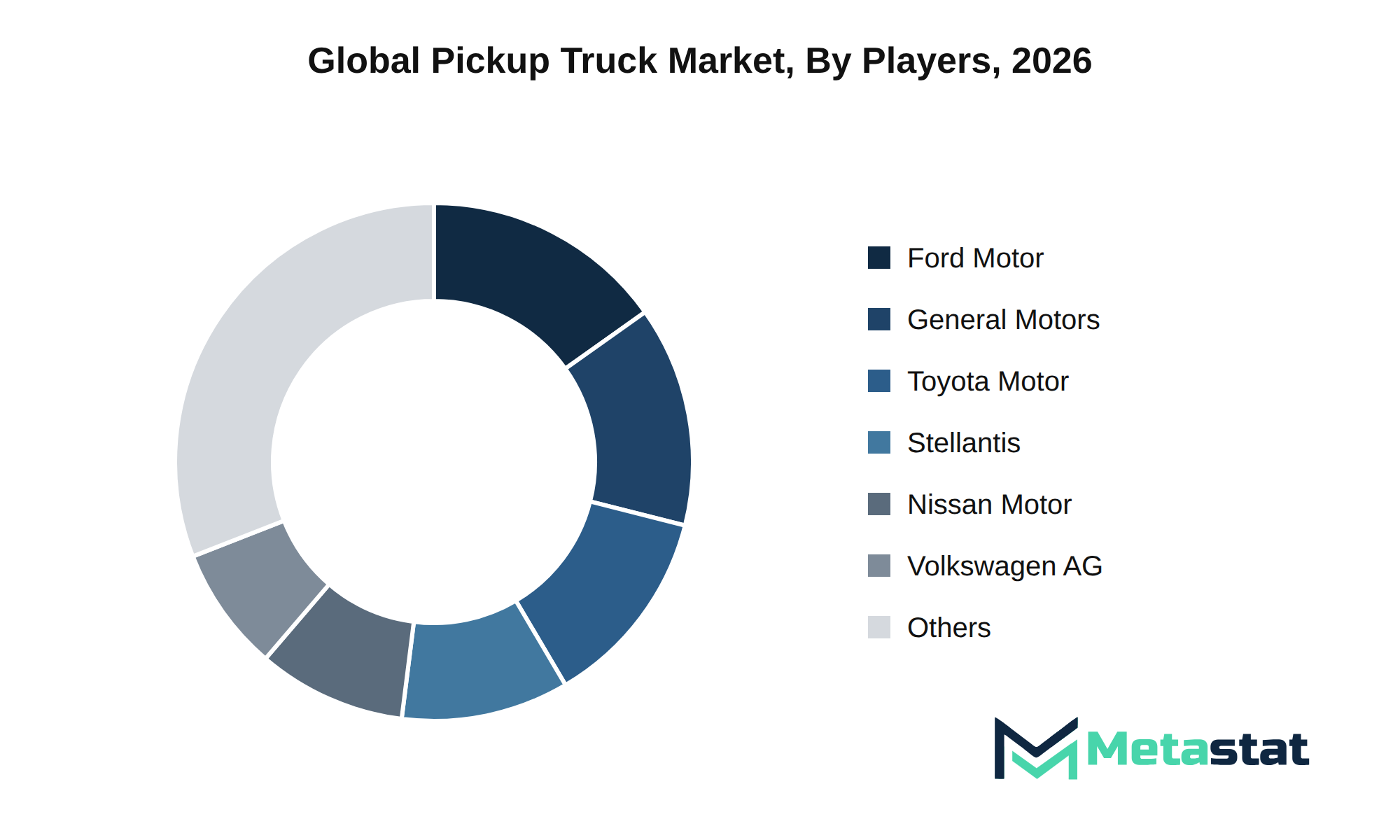
The competitive environment of the Pickup Truck market reflects dynamic strategies among key players including Ford Motor Company, General Motors Company, and Toyota Motor Corporation, focusing on innovation and market penetration. Strategic consolidations and partnerships characterize the landscape, with companies pursuing mergers and acquisitions to enhance market positions and broaden product offerings.
Pricing architectures exhibit variability across regions, highlighting competitive pressures and customer expectations. Companies leverage proprietary technologies and R&D investments to differentiate products, enhancing brand equity and customer retention. The presence of well-established brands generates significant switching costs, reinforcing customer loyalty while posing challenges for new entrants.
The market's growth is influenced by a robust supply chain, with major players like Stellantis N.V. and Volkswagen AG establishing dominant procurement strategies. This vertical integration allows for cost efficiencies and strengthens market positions, enabling firms to respond swiftly to changing consumer demands. High barriers to entry, including substantial capital requirements and existing brand loyalties, moderate the threat of new entrants.
Looking toward the future, the competitive outlook indicates that the focus will shift toward sustainability and electric vehicle adoption, with companies like Tesla, Inc. and Rivian Automotive, Inc. pushing innovation in battery electric pickup trucks. This strategic direction is projected to reshape market dynamics and create new avenues for growth, positioning companies to lead in an evolving market.
Forecast and Future Outlook
Market size is forecast to rise from USD 232.5 billion in 2025 to over USD 351.5 billion by 2033. This growth results from a combination of factors, including shifts in consumer preferences, advancements in technology, and changes in regulatory frameworks. The Pickup Truck market experiences a compound annual growth rate (CAGR) of 5.3% during this period.
In the base case scenario, steady economic growth supports increased consumer spending on vehicles, particularly in North America, the largest market for pickup trucks. Key drivers include rising disposable incomes, an expanding middle class, and the demand for utility vehicles in various sectors. The introduction of next-generation technologies, including electric and hybrid propulsion systems, enhances market attractiveness.
The bull case suggests further acceleration in market growth due to significant investments in infrastructure and a heightened focus on sustainability. This scenario anticipates robust consumer acceptance of electric pickup trucks, fueled by government incentives and advancements in charging infrastructure. In contrast, the bear case highlights potential headwinds. Economic downturns, supply chain disruptions, and stringent regulatory compliance requirements could hinder market expansion.
Overall, the Pickup Truck market's trajectory remains positive. Opportunities exist for manufacturers to explore emerging white-space opportunities and unmet enterprise needs. Strategic capital allocation and R&D commitments are essential for players seeking to capitalize on growth pockets and enhance competitive positioning.
Pickup Truck Market Key Segments
By Vehicle Class:
- Compact Pickup Trucks
- Mid-Size Pickup Trucks
- Full-Size Light-Duty Pickup Trucks
- Full-Size Heavy-Duty Pickup Trucks
By Propulsion Type:
- Gasoline Pickup Trucks
- Diesel Pickup Trucks
- Hybrid Electric Pickup Trucks
- Battery Electric Pickup Trucks
- Others (Flex-Fuel and Alternative-Fuel Pickup Trucks)
By Cab Configuration:
- Single Cab / Regular Cab
- Extended Cab / Extra Cab
- Double Cab / Crew Cab
- By
By Region:
- North America
- Europe
- Asia-Pacific
- South America
- Middle East and Africa
Key Global Pickup Truck Industry Players
- Ford Motor Company
- General Motors Company
- Toyota Motor Corporation
- Stellantis N.V.
- Nissan Motor Co., Ltd.
- Isuzu Motors Limited
- Mitsubishi Motors Corporation
- Volkswagen AG
- Mazda Motor Corporation
- Great Wall Motor Company Limited
- SAIC Motor Corporation Limited
- China Changan Automobile Group Co., Ltd.
- Anhui Jianghuai Automobile Group Corp., Ltd.
- Beiqi Foton Motor Co., Ltd.
- BYD Company Limited
- Geely Auto Group
- Chery Automobile Co., Ltd.
- Mahindra & Mahindra Limited
- KG Mobility Corporation
- Renault Group
- Hyundai Motor Company
- Honda Motor Co., Ltd.
- Kia Corporation
- Tesla, Inc.
- Rivian Automotive, Inc.
Report Coverage
The report strategically identifies and profiles the key market players and analyses their core competencies in each sub-segment of the Pickup Truck market.
|
Report Attributes |
Details |
|
Study Period |
2021-2033 |
|
Base Year |
2025 |
|
Estimated Year |
2026 |
|
Forecast Period |
2026-2033 |
|
Historical Period |
2021-2025 |
|
Growth Rate |
CAGR 5.3% from 2026 to 2033 |
|
Revenue Unit |
USD billion |
|
Segmentation |
By Vehicle Class, Propulsion Type, Cab Configuration, and Region |
|
By Region |
North America (By Vehicle Class, Propulsion Type, Cab Configuration, and Country)
|
|
Europe (By Vehicle Class, Propulsion Type, Cab Configuration, and Country)
|
|
|
Asia Pacific (By Vehicle Class, Propulsion Type, Cab Configuration, and Country)
|
|
|
South America (By Vehicle Class, Propulsion Type, Cab Configuration, and Country)
|
|
|
Middle East and Africa (By Vehicle Class, Propulsion Type, Cab Configuration, and Country)
|
WHAT REPORT PROVIDES
- Key Company Market Share, Revenue and Ranking for the Pickup Truck Market
- Key Market Leaders and Their Competitive Strategies
- Full In-Depth Analysis of the Pickup Truck Industry
- Industry Statistics and Market Dynamics Overview
- Segmentation Details of the Pickup Truck Market
- Historical, Ongoing and Projected Market Analysis
- Assessment of Niche Developments in the Pickup Truck Market
- Company Profiles of Key Players in the Market
Frequently Asked Questions
Find answers to common questions about this report
The Pickup Truck market size was valued at USD 232.5 billion in 2025, according to the Metastat Insights study.
The Pickup Truck market is projected to grow at a CAGR of 5.3% during the forecast period from 2026 to 2033.
The North America Pickup Truck market size is estimated to reach USD 151.5 billion by 2033.
Full-Size Light-Duty Pickup Trucks lead the Pickup Truck market with a projected value of USD 140.6 billion by 2033. This segment surpasses others in terms of revenue generation within the market.
The key drivers for the Pickup Truck market include robust economic growth, rising disposable income, and increased capital investment. Enhanced infrastructure development and technological integration further stimulate demand, particularly in sectors including construction, agriculture, and mining, which rely on efficient logistics and transportation capabilities.
North America holds the dominant share of the Pickup Truck market, accounting for USD 151.5 billion in 2033, representing 47 percent of the total market.
The Pickup Truck market experiences restraints from regulatory compliance costs, economic pressures, and technological disruptions. Regulatory tightening increases operational expenses for manufacturers, while inflation and supply chain instability strain profit margins. the need for adaptation to new technologies and compliance with evolving standards complicates market dynamics and impacts growth potential.
Robust economic growth and rising disposable income enhance consumer purchasing power, particularly in developing regions. Increased capital investment and technological integration within the automotive sector further promote adoption, while infrastructure development drives demand from industries reliant on logistics and transportation capabilities.
The Pickup Truck market is estimated to reach a valuation of USD 351.5 billion by 2033.
Key players in the Pickup Truck market include Ford Motor Company, General Motors Company, Toyota Motor Corporation, Stellantis N.V., Nissan Motor Co., Ltd., and Volkswagen AG.
Choose Your License
Global Pickup Truck Market
Related Reports
Explore related market intelligence reports worth reading alongside this one.