
Global Polycarbonate Films Market
Global Polycarbonate Films Market Size, Share, By Type (Clear and Coloured/Tinted), By Application (Graphic Overlays & Membrane Switches, Display Windows, Touch Panels & HMI Surfaces, In-Mold Decoration & Film Insert Molding, Security Documents & Card Lamination, Electrical Insulation & Die-Cut Components, Light Diffusion & Backlighting, Labels, Nameplates & Printed Graphics, Printed Electronics & Functional Circuits), By Grade (Anti-static, Mirrored, Abrasion Resistant, Flame Retardant), By End-Use Sector (Electrical & Electronics, Automotive & Transportation, Government & Secure Credentials, Industrial Equipment & Automation, Consumer Goods & Appliances, Medical & Healthcare, Printing, Signage & Graphics, Aerospace & Defense, Building & Construction), Industry Analysis, Growth, Trends, and Forecast, 2026-2033
MSI-5016
August 21, 2026
298 Pages
Historical
Base year
Forecast
Forecast period
Report Details
Comprehensive Market Analysis And Insights
Market Overview
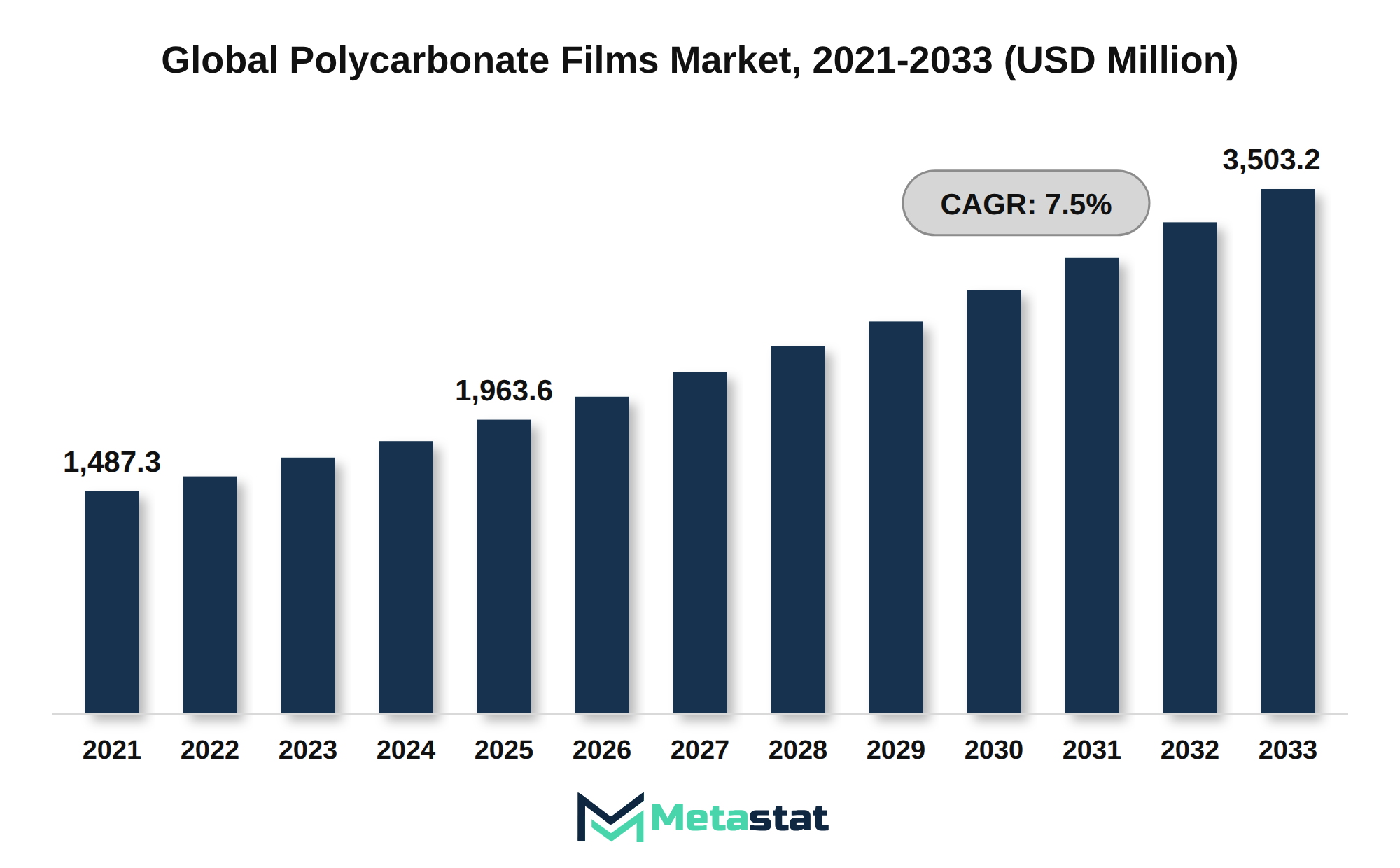
The global Polycarbonate Films market was valued at USD 1,963.6 million in 2025 and is projected to reach USD 3,503.2 million by 2033, growing at a CAGR of 7.5% over the forecast period.
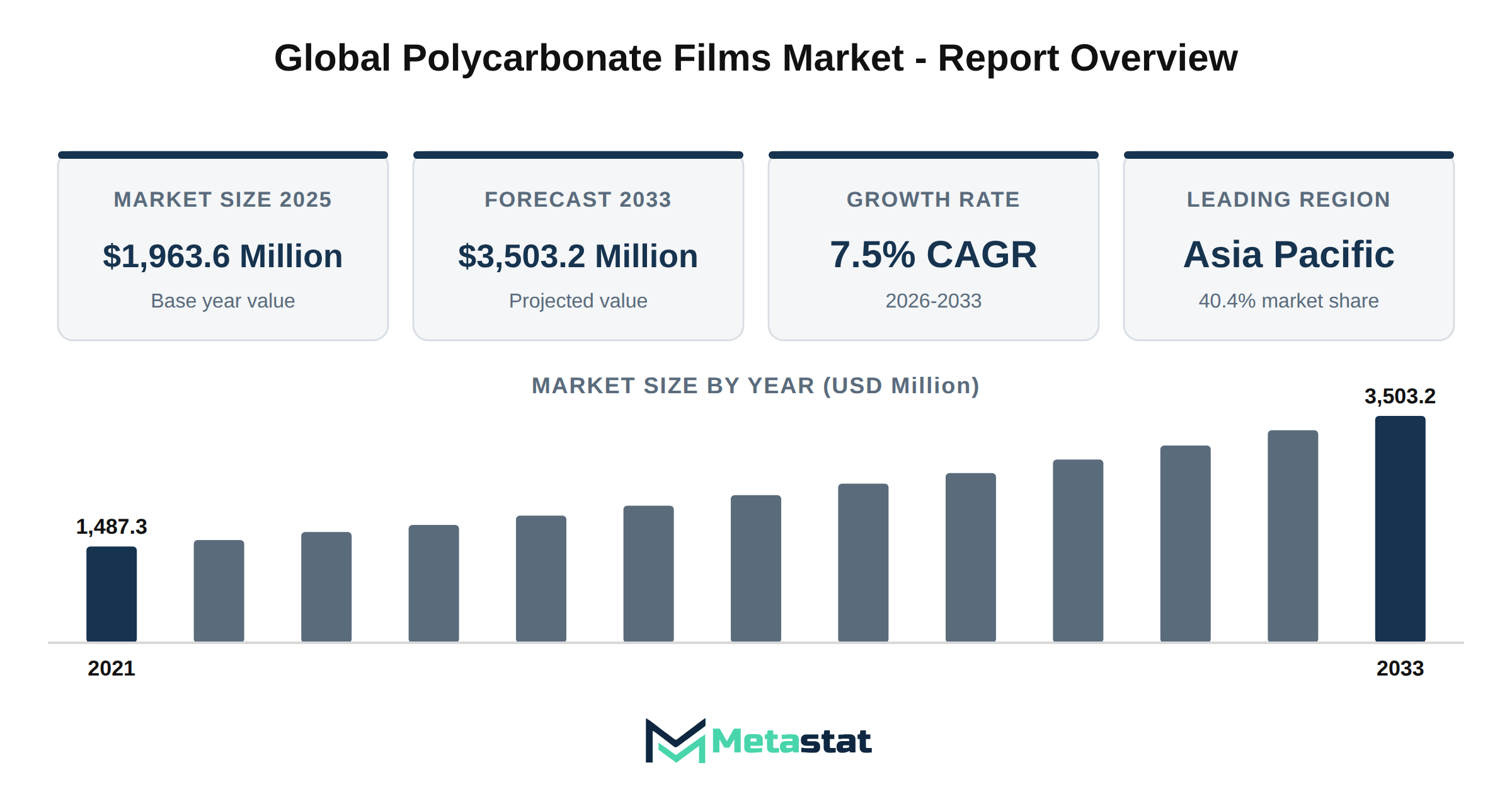
The Polycarbonate Films market generated a base value of USD 1,963.6 million in 2025. The forecast for 2033 anticipates the market reaching USD 3,503.2 million, reflecting a compound annual growth rate (CAGR) of 7.5% during the period from 2026 to 2033. Historical data indicates steady growth, starting from USD 1,487.3 million in 2021 and increasing to USD 1,820.4 million in 2024.
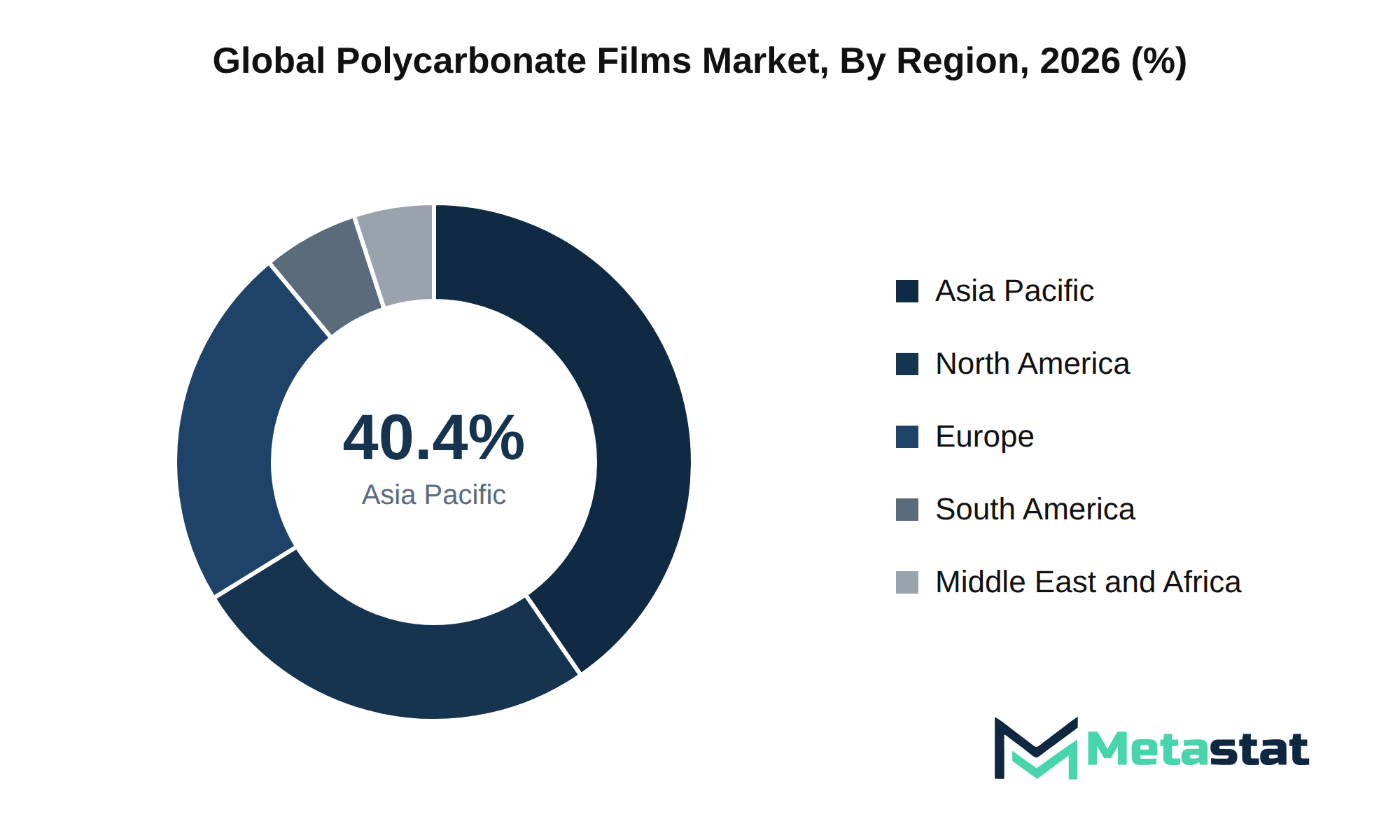
Regional dynamics show that the Asia Pacific region holds the largest market share at 40.4%, followed by North America at 25.8% and Europe at 22.8%. The remaining shares are divided between South America at 6% and the Middle East and Africa at 5%. By 2033, North America is projected to contribute USD 841.5 million to the market, with a CAGR of 7.5%.
The Polycarbonate Films market includes distinct segments categorized by type, including Clear and Coloured/Tinted films. The Clear segment is expected to grow from USD 1,641.9 million in 2026 to USD 2,662.4 million by 2033, achieving a CAGR of 7.1%. The Coloured/Tinted segment is anticipated to reach USD 840.8 million by 2033, with a CAGR of 8.5%.
The Polycarbonate Films market is characterized by a complex supply chain that influences production and distribution dynamics. Strategic sourcing and procurement decisions directly impact operational efficiency, driving companies to refine their logistics architecture to meet increasing demand across various sectors. This complexity requires ongoing investments in infrastructure to ensure timely delivery and quality assurance throughout the supply chain.
Market fragmentation presents challenges in achieving economies of scale. Numerous players operate within the market, leading to varying levels of innovation and product offerings. This fragmentation encourages competition and innovation, which are vital for meeting the diverse needs of end-users, particularly in high-demand applications including electrical and electronics, automotive, and medical sectors.
Inflationary pressures and currency volatility have influenced cost structures, compelling manufacturers to adopt advanced procurement strategies. These strategies aim to mitigate risks associated with fluctuating raw material prices and exchange rates while maintaining profitability. Ongoing research and development trajectories focus on developing next-generation products that align with sustainability goals and market demands for more environmentally friendly materials.
Corporate imperatives emphasize the importance of sustainable transformation within the Polycarbonate Films market. Companies increasingly invest in decarbonization initiatives to reduce their environmental impact while adhering to evolving regulatory compliance and standards. This shift enhances brand reputation and positions companies competitively within a market that values sustainability.
The future strategic outlook for the Polycarbonate Films market indicates growth driven by advancements in technology and materials. Continued capital allocation toward innovative solutions and sustainable practices is critical for companies aiming to capture market share and respond to shifting consumer preferences. High-value recommendations focus on leveraging emerging technologies and sustainable practices to enhance product offerings and drive market expansion.
Market Dynamics
Macro-economic factors drive investment growth
The Polycarbonate Films market experiences growth driven by macro-economic factors including GDP growth and capital investment environments. Increasing economic stability enhances venture funding and public-private spending power, increasing the financial resources available for expanding production capacities. This influx of investment translates into the development of innovative products and improved technologies within the market.
Digital transformation and technological integration, including automation and software adoption, significantly contribute to operational productivity and cost-efficiency initiatives. Companies in the market leverage these advancements to streamline processes and optimize labor, leading to reduced overhead costs and enhanced profitability. Higher operational efficiency positions manufacturers to respond effectively to rising consumer demand.
Shifting demographic patterns and evolving consumer behaviors play a critical role in shaping the market. Aging populations and urbanization drive demand for durable and high-performance materials in applications including electronics and automotive components. This demand influences manufacturers to innovate and expand their product offerings, aligning with changing consumer preferences.
Overall, these macro-economic dynamics create a conducive environment for the growth of the Polycarbonate Films market, facilitating investments and technological advancements that address emerging consumer needs while ensuring operational efficiency and competitiveness.
Digital transformation accelerates adoption
Technological advancements significantly impact the Polycarbonate Films market, driving demand through increased efficiency and improved product offerings. Companies invest in automation, artificial intelligence, and software adoption to streamline processes. These innovations enhance operational productivity and support the development of advanced polycarbonate films with superior performance characteristics, meeting the evolving requirements of various end-use sectors.
Investments in digital solutions contribute to reduced production costs, enabling manufacturers to offer competitive pricing while maintaining profitability. Enhanced data analytics and digital tools facilitate informed decision-making, leading to better resource allocation and risk management. Consequently, the market experiences accelerated growth driven by organizations committing to embracing digital transformation initiatives.
The integration of advanced technologies allows for greater flexibility in production methods, supporting customization and rapid response to market trends. This flexibility attracts a diverse range of applications, including automotive, electronics, and construction, which increasingly rely on polycarbonate films for their unique properties. Consequently, the market is well-positioned to capture emerging opportunities stemming from technological advancements and digital integration.
Market challenges stemming from high capital investment
Significant capital investment requirements present a challenge within the Polycarbonate Films market. The initial setup costs for production facilities and equipment limit the entry of new participants, thereby reducing competitive dynamics. Established players benefit from economies of scale, further exacerbating the barriers for smaller firms attempting to penetrate the market. This situation leads to a concentration of market share among a few large manufacturers, restricting innovation and price competition.
In addition, escalating operating costs impact profitability across the value chain. Rising energy prices, raw material costs, and labor expenses contribute to financial strain for producers. Such conditions hinder capacity expansion and research and development initiatives, essential for maintaining competitive edges. Consequently, the market faces potential stagnation in growth rates, attributed to existing firms allocating more resources to operational sustainability rather than innovation.
Global supply chain disruptions further complicate market dynamics. Factors including geopolitical instability and resource scarcity create uncertainties in material availability and pricing. These disruptions delay production schedules and increase lead times, affecting customer satisfaction and market trust. Such instability leads to a cautious approach among businesses regarding large-scale investments, thereby restraining overall market performance.
Inflationary pressures contribute to a challenging economic landscape. While inflation rises, consumer purchasing power declines, resulting in decreased demand for end-use products that incorporate polycarbonate films. This situation directly translates into reduced revenue for manufacturers and challenges in meeting financial projections. The combination of these factors continues to create a restrictive environment for the Polycarbonate Films market, requiring strategic adjustments to navigate the evolving landscape.
Geopolitical tensions impact supply chain stability
The Polycarbonate Films market faces significant challenges owing to geopolitical fragmentation and trade deficits, which disrupt established supply chains. Tariff friction complicates the import and export of raw materials, leading to increased costs and uncertainties for manufacturers. Such conditions adversely affect operational efficiency and delay market entry for new products.
Technological disruptions within the industry create additional hurdles, particularly in research and development integration. Companies struggle to maintain interoperability across various systems, impacting production timelines and costs. These factors contribute to unpredictable fluctuations in feedstock and component availability, further destabilizing the market.
Logistics disruptions intensify because supply chain instability becomes more prevalent, affecting the timely delivery of essential materials. This scenario leads to increased pricing pressures and margin compression across the market. Rising input costs, driven by these logistical challenges, force companies to reconsider pricing strategies to maintain profitability.
Workforce skill gaps pose a significant obstacle for the Polycarbonate Films market, where advanced manufacturing techniques require specialized knowledge. Automation displacements lead to talent retention pressures, because companies compete for skilled labor. This situation hampers productivity and innovation, complicating efforts to meet evolving market demands.
Environmental lifecycle footprints and decarbonization mandates increasingly drive sustainability demands within the industry. Tightening global regulatory standards require companies to adapt quickly, often incurring compliance overhead. Failure to meet these standards could result in legal liabilities, impacting long-term operational viability.
Infrastructure gaps and retrofitting barriers impede efficient production processes, creating implementation bottlenecks. Addressing these obstacles requires substantial investment, which diverts resources away from research and development initiatives. Intellectual property protection deficits introduce further risks, because companies navigate complex legal landscapes while protecting innovative technologies.
Cybersecurity risks and data vulnerabilities continue to threaten operational integrity, particularly because digital transformation accelerates. Companies in the Polycarbonate Films market prioritize safeguarding sensitive information to mitigate potential breaches that could disrupt business operations and erode customer trust.
Finally, changing downstream demands and market saturation create substitution vector pressures, compelling manufacturers to innovate continuously. Companies that fail to adapt risk losing market share and relevance in an increasingly competitive environment.
Emerging regional demands drive market expansion
Growing demand for polycarbonate films across various regions presents significant opportunities for expansion. The Asia Pacific region leads in adoption, driven by rapid industrialization and increasing infrastructure projects. Countries like China and India invest heavily in construction, automotive, and electronics sectors, increasing the need for advanced materials like polycarbonate films. This trend boosts local production capacities and attracts foreign investment, enhancing market dynamics.
Infrastructure modernization initiatives contribute to the rising demand for polycarbonate films. Governments prioritize upgrading aging infrastructure, which requires durable and versatile materials. The market benefits from these initiatives, supported by polycarbonate films that find applications in various sectors, including building and construction, automotive, and consumer goods. These developments create avenues for sustainable growth and innovation in product offerings.
Technological disruptions and next-generation innovations shape the polycarbonate films market. Advances in manufacturing processes enable the development of films with enhanced properties, appealing to diverse applications. Digital transformation facilitates the adoption of smart manufacturing practices, leading to increased operational efficiency and product quality. The convergence of these trends positions the market for substantial growth in the coming years.
Strategic consolidation through mergers and acquisitions enhances competitive positioning within the market. Companies seek to diversify their portfolios by integrating complementary technologies and expanding their geographic reach. This trend creates an environment of collaboration and innovation, allowing industry players to better meet evolving customer demands.
Sustainability imperatives drive significant shifts in production practices and product offerings. Environmental, social, and governance (ESG) considerations influence consumer preferences, prompting manufacturers to prioritize eco-friendly materials. The transition towards sustainable solutions creates niche markets within the polycarbonate films sector, further supporting growth and diversification.
Overall, the polycarbonate films market is poised for robust expansion driven by emerging regional demands, technological advancements, and a strong focus on sustainability. Companies that align with these trends are likely to capture increased market share and achieve long-term success.
Market Segmentation Analysis
The Global Polycarbonate Films market is segmented based on Type, Application, Grade, and End-Use Sector.
By Type, the market is further segmented into:
- Clear
- Coloured/Tinted
Clear
Valued at USD 1,641.9 million in 2026, the Clear segment is projected to reach USD 2,662.4 million by 2033, at a CAGR of 7.1% during the forecast period. Demand for clear polycarbonate films stems from various applications, particularly in industries including automotive, electronics, and construction. The optical clarity, lightweight nature, and durability of these films support adoption in applications like display windows, touch panels, and HMI surfaces.
Technological maturation within the clear segment has facilitated enhancements in film quality and performance, leading to the development of next-generation products. Manufacturers focus on innovation to meet evolving customer needs, driving competition and investment in the market. Regulatory compliance standards emphasize safety and environmental concerns, pushing suppliers to enhance product formulations and meet consumer demands for sustainable solutions.
Consumption shifts towards lightweight, high-performance materials influence purchasing decisions, particularly in the automotive and aerospace sectors. Clear polycarbonate films serve critical roles in reducing weight and improving energy efficiency in vehicles and aircraft. Strategic opportunities for manufacturers lie in expanding product offerings to cater to emerging applications, including printed electronics and functional circuits.
Pricing volatility remains a concern, influenced by fluctuations in raw material costs and demand dynamics within the market. Manufacturers face margin pressures, requiring effective cost management strategies to maintain competitiveness. Overall, growth potential for the Clear segment is robust, driven by diverse applications, technological advancements, and evolving consumer preferences within the Polycarbonate Films market.
Coloured/Tinted
Demand for Coloured/Tinted polycarbonate films is expected to rise sharply within the market, driven by an increasing preference for aesthetics in various applications. Industries including automotive, consumer goods, and electronics prioritize these films for their visual appeal and functionality, enhancing product differentiation. This segment is projected to reach USD 840.8 million by 2033, at a CAGR of 8.5% during the forecast period.
Technological maturation in production techniques enables the development of high-performance coloured films, expanding their applicability across diverse sectors. The evolution of product offerings, including advanced coatings and additives, supports enhanced durability and visual characteristics, which increases their adoption in high-end applications.
End-use dynamics indicate a shift towards customization, with consumers seeking products tailored to specific needs. This trend influences production strategies, compelling manufacturers to diversify their portfolios to include various colours and functionalities. Regulatory compliance regarding safety and environmental impact enhances market credibility, while certifications ensure product quality across different applications.
Pricing volatility in raw materials, linked to supply chain fluctuations, exerts pressure on profit margins for manufacturers. Strategic opportunity windows appear for players focusing on raw material sourcing resilience and developing innovative, cost-effective solutions. The combination of these factors contributes to a competitive environment, pushing companies to innovate continually and optimize their operations within the Polycarbonate Films market.
By Application, the market is further segmented into:
- Graphic Overlays & Membrane Switches
- Display Windows, Touch Panels & HMI Surfaces
- In-Mold Decoration & Film Insert Molding
- Security Documents & Card Lamination
- Electrical Insulation & Die-Cut Components
- Light Diffusion & Backlighting
- Labels, Nameplates & Printed Graphics
- Printed Electronics & Functional Circuits
- Others (Protective Surface Laminates and Specialty Optical Applications)
Graphic Overlays & Membrane Switches
Graphic overlays and membrane switches play an essential role in various applications, particularly in the automotive, electronics, and industrial sectors. Increased demand for user-friendly interfaces and advanced functionality drives the adoption of polycarbonate films in these applications. The market experiences segment expansion due to technological advancements, including the integration of touch-sensitive features and improved durability in harsh environments.
Regulatory compliance in safety and performance standards influences product development in this segment. Manufacturers focus on achieving certifications that ensure their products meet industry requirements, enhancing market competitiveness. Cost structures and pricing volatility represent significant factors affecting profitability, driven by raw material prices that fluctuate and influence overall margins.
Supply chain resilience emerges because a critical concern for producers, particularly in sourcing raw materials and managing logistics. Disruptive alternatives, including emerging materials that compete with polycarbonate films, pose threats to market stability. Strategic opportunity windows exist for companies willing to innovate and adapt their offerings to meet evolving consumer demands.
Continuous product evolution is vital for maintaining relevance in the polycarbonate films market. Investment in research and development supports the creation of next-generation products that offer enhanced performance, durability, and cost-effectiveness, ensuring sustained growth in this segment.
Display Windows, Touch Panels & HMI Surfaces
In the context of polycarbonate films, Display Windows, Touch Panels, and HMI Surfaces represent a vital application segment, driven by rising demand for high-performance materials. Increased adoption of advanced technologies in consumer electronics, automotive displays, and industrial devices supports this demand. Enhanced durability, optical clarity, and lightweight properties of polycarbonate films make them suitable for use in screens and interfaces, where these attributes are critical.
Technological maturation in the production of polycarbonate films influences the evolution of this segment. Manufacturers focus on innovations including improved scratch resistance and anti-reflective coatings, which address user preferences for enhanced visual quality and longevity. These advancements align with trends toward thinner and lighter devices, further propelling the adoption of polycarbonate films in display technologies.
End-use dynamics demonstrate a strong correlation between the growth of smart devices and the demand for polycarbonate films. Industries prioritizing high-definition displays and touch-sensitive interfaces directly influence consumption patterns, highlighting the role of this segment in the broader polycarbonate films market. Increasing regulatory standards for safety and performance in electronics drive manufacturers to choose materials that meet stringent criteria, enhancing the appeal of polycarbonate films.
Strategic opportunity windows emerge from ongoing shifts in consumer behavior, particularly in sectors including automotive and consumer electronics. Manufacturers invest significantly in research and development to create next-generation products that leverage the unique properties of polycarbonate films. This investment enhances competitive positioning within the market, ensuring that companies capitalize on evolving trends and emerging applications.
In-Mold Decoration & Film Insert Molding
In-Mold Decoration and Film Insert Molding serves because an essential application within the Polycarbonate Films market, driven by its capacity to improve product aesthetics and functionality. Industries including automotive, consumer goods, and electronics increasingly adopt this technology to enhance the durability and visual appeal of their products. The demand for lightweight and impact-resistant materials fuels the growth of this sub-segment, addressing the need for efficient designs in manufacturing environments.
Technological maturation in polymer processing techniques supports advancements in In-Mold Decoration and Film Insert Molding. These innovations result in improved production efficiency and reduced waste, aligning with sustainability goals across various sectors. The evolution of materials and processing equipment expands design possibilities and raises product standards, creating an environment conducive to market growth.
Regulatory compliance standards and industry certifications drive manufacturers to prioritize quality and performance in their products. Such measures ensure that materials used in In-Mold Decoration and Film Insert Molding meet safety and environmental benchmarks, contributing to increased consumer confidence and market acceptance. The scrutiny of material safety and environmental impact promotes a shift toward green alternatives, further influencing product development strategies.
While end-use dynamics evolve, manufacturers adapt their strategies to meet the changing preferences of consumers for customization and uniqueness in products. This shift results in heightened competition within the market, pushing suppliers to innovate continuously. Strategic opportunity windows emerge for firms that focus on research and development, creating tailored solutions that cater to diverse consumer demands.
Security Documents & Card Lamination
Increasing security concerns drive the demand for polycarbonate films in the Security Documents & Card Lamination sub-segment. This sector benefits from the need for durable and high-quality materials that provide protection against tampering and counterfeiting. Industries focusing on secure credentials, including government, financial institutions, and event management, prioritize reliable solutions to safeguard sensitive information.
Technological advancements enhance product offerings within this sub-segment. Innovations in film manufacturing processes lead to improved optical clarity and enhanced durability, meeting the evolving requirements of end-users. The demand for customized solutions, including holographic and anti-counterfeit features, further drives segment expansion.
Regulatory compliance standards significantly influence the market. Products that meet stringent security certifications become essential for organizations aiming to protect their credentials and ensure authenticity. Increased awareness of the importance of secure documentation builds confidence among consumers, encouraging adoption across various sectors.
Cost structures impact pricing strategies within the Security Documents & Card Lamination segment. Fluctuations in raw material prices affect profitability, compelling manufacturers to optimize production processes and enhance supply chain resilience. In response, organizations invest in research and development to innovate and reduce operational costs, ensuring competitiveness in the market.
The growing emphasis on sustainability influences consumption shifts. End-users increasingly seek eco-friendly materials that align with corporate social responsibility initiatives, prompting manufacturers to explore sustainable sourcing and production methods within the polycarbonate films market. This trend supports long-term growth prospects, driven by companies positioning themselves favorably for changing consumer preferences.
Electrical Insulation & Die-Cut Components
Demand for Electrical Insulation and Die-Cut Components within the Polycarbonate Films market experiences strong growth, fueled by the increasing need for reliable electrical insulation materials across various industries. This segment benefits from the evolving technological landscape, which emphasizes the importance of high-performance materials in applications including automotive, electronics, and industrial equipment. The continuous advancement in production techniques enhances the properties of polycarbonate films, making them more suitable for demanding applications requiring insulation and durability.
Strong adoption of polycarbonate films in electrical insulation stems from their excellent thermal stability and impact resistance, which are critical for ensuring the longevity and reliability of electronic components. End-use sectors like automotive and electronics prioritize materials that offer superior performance under varying conditions, driving manufacturers to choose polycarbonate films for their insulation needs. The shift towards more compact and efficient electronic devices increases the demand for lightweight and high-performance insulation materials.
Regulatory compliance and certification standards significantly influence the market, driven by industries increasingly seeking materials that meet stringent safety and performance requirements. This aspect becomes crucial because manufacturers face pressure to adopt materials that comply with evolving regulations, ensuring that end products maintain high safety standards. Consequently, manufacturers investing in polycarbonate films not only enhance their product offerings but position themselves favorably in a competitive landscape.
Cost structures within this segment reflect the balance between the need for high-quality materials and the pressures of pricing volatility. Fluctuations in raw material prices impact the overall cost of production, prompting manufacturers to seek efficient sourcing strategies. Maintaining supply chain resilience is essential to mitigate risks associated with sourcing and logistics vulnerabilities, ensuring consistent supply and quality of polycarbonate films for electrical insulation applications.
Strategic opportunity windows arise because technological maturation creates opportunities for next-generation upgrades in polycarbonate films. Innovations in material properties, including enhanced flame retardancy and abrasion resistance, provide avenues for product evolution, enabling manufacturers to cater to emerging applications. This evolving landscape presents significant growth potential for the market, supported by firms capitalizing on opportunities to expand their product lines and meet diverse customer needs.
Light Diffusion & Backlighting
Growing interest in energy efficiency drives developments in light diffusion applications. Manufacturers prioritize optimizing light diffusion properties to enhance performance in various downstream applications, including display technologies and automotive lighting. Innovations in materials and processing techniques support advancements in this segment, allowing for the production of films that offer superior optical clarity and uniform light distribution.
Adoption within the automotive and electronics sectors highlights the evolving end-use dynamics. The trend toward integrated lighting solutions enhances the need for effective light diffusion and backlighting products. Strategic investments in research and development ensure continuous upgrades, keeping pace with technological maturation and market demands.
Competition within the Polycarbonate Films market intensifies, driven by manufacturers seeking to differentiate their products. Regulatory compliance standards increasingly influence product development, compelling companies to ensure their offerings meet specific performance criteria. This focus on certification and quality assurance builds consumer confidence and drives demand for high-performance materials.
Emerging consumption shifts towards eco-friendly and recyclable options create strategic opportunity windows for market players. Companies that align their product portfolios with sustainability trends establish a competitive edge. Ongoing investments in raw material sourcing and supply chain resilience enhance capacity to meet evolving market needs.
Labels, Nameplates & Printed Graphics
In the application field of Labels, Nameplates & Printed Graphics, demand is primarily driven by the need for high-quality, durable, and visually appealing products. This segment benefits from advancements in printing technologies, allowing for more intricate designs and clear colors compared to traditional methods. The escalating importance of branding across various industries increases the consumption of these products, driven by companies seeking to enhance their visibility and consumer engagement.
Technological maturation significantly influences the evolution of this segment. Innovations in materials and printing processes have led to superior product offerings that meet the evolving needs of end-users. For instance, improvements in adhesion and weather resistance enhance the longevity and effectiveness of labels and graphics, making them suitable for diverse applications across sectors including automotive, consumer goods, and industrial equipment.
Market expansion relies on the growing trend of customization and personalization. Consumers increasingly favor tailored products, prompting manufacturers to adapt their offerings accordingly. This shift in consumer behavior encourages companies to invest in advanced printing solutions, resulting in broader applications within the Labels, Nameplates & Printed Graphics market.
Regulatory compliance and standards significantly shape product development within this segment. Adherence to safety and environmental regulations enhances product credibility, thereby influencing purchasing decisions. Companies that successfully navigate these regulations often gain competitive advantages, positioning themselves favorably within the market.
Cost structures impact the profitability of products in this segment. The fluctuation of raw material prices, particularly for polycarbonate resins, affects overall production costs. Manufacturers manage these fluctuations effectively to maintain profitability while offering competitive pricing.
Strategic opportunity windows emerge from ongoing innovations and shifts in consumer preferences. Brands that leverage emerging technologies and sustainable practices tend to capture greater market share. A focus on developing eco-friendly alternatives aligns with increasing consumer awareness regarding environmental issues, opening avenues for growth in the Labels, Nameplates & Printed Graphics market.
Printed Electronics & Functional Circuits
Technological advancements in printed electronics stimulate demand for polycarbonate films, particularly in the production of functional circuits. The integration of polycarbonate films within electronic devices enhances durability and performance, appealing to manufacturers looking for lightweight and flexible materials. Increased adoption across various sectors, including consumer electronics and automotive applications, supports growth in this sub-segment. Innovations in electronic designs further increase the market, driving the need for high-performance films that withstand rigorous operating conditions.
End-use dynamics reflect a shift toward more sustainable and efficient production methods, with manufacturers seeking solutions that contribute to overall environmental goals. Regulatory compliance standards push for materials that not only meet performance requirements but adhere to sustainability criteria. This trend encourages investments in research and development, focusing on next-generation upgrades that enhance the properties of polycarbonate films. Strategic opportunity windows arise due to companies investing in new technologies that improve film characteristics, including enhanced electrical conductivity and thermal stability.
Challenges including pricing volatility and margin pressures affect the competitive landscape of the market. Fluctuations in raw material costs impact production budgets, prompting manufacturers to optimize their supply chain resilience. Substitution risks from alternative materials require ongoing innovation to maintain market share. Capital investment outlook remains positive, driven by the growing demand for printed electronics and functional circuits, positioning polycarbonate films because a critical component in future electronic applications.
Others (Protective Surface Laminates and Specialty Optical Applications)
Innovations in protective surface laminates and specialty optical applications drive demand within the Polycarbonate Films market. The increasing need for advanced materials in sectors including electronics and automotive contributes to segment growth. Enhanced performance characteristics, including durability and optical clarity, facilitate the adoption of polycarbonate films for specialized applications.
Technological maturation plays a significant role in the evolution of this segment. Enhanced manufacturing processes have allowed for the development of unique properties, meeting the requirements of various industries. While product evolution continues, the integration of smart technologies within these films becomes feasible, attracting interest from multiple end-use sectors.
End-use dynamics heavily influence consumption shifts in the market. The rise of digital printing and personalized products increases reliance on advanced materials, enhancing the functionality of protective surface laminates. Regulatory compliance standards, particularly in electronic devices and automotive components, necessitate the use of high-performance materials, further boosting demand.
Cost structures present challenges within this segment. Fluctuations in raw material prices impact overall production costs, influencing pricing strategies. Despite these pressures, higher margins from specialized applications encourage continued investment in innovation and development.
Strategic opportunity windows emerge owing to manufacturers exploring new applications for polycarbonate films. The expansion of sustainable and eco-friendly materials aligns with global trends, offering avenues for growth. Understanding these dynamics positions stakeholders to capitalize on emerging market trends within the Polycarbonate Films market.
By Grade, the market is further segmented into:
- Anti-static
- Mirrored
- Abrassion Resistant
- Flame Retardant
- Others (Weatherable)
Anti-static
Anti-static polycarbonate films experience robust demand driven by the increasing need for static control in various applications. Industries including electronics and automotive place a high value on these films for their ability to minimize static discharge, which damages sensitive components. The trend toward miniaturization and the integration of advanced technologies within electronic devices enhances the adoption of anti-static solutions.
Technological maturation within the materials used for anti-static films supports market expansion. Advances in polymer science allow for the development of films with enhanced performance characteristics, including improved durability and superior static dissipation. These advancements cater to the evolving needs of downstream applications, particularly in environments that require stringent static control measures.
End-use dynamics play a critical role in shaping the demand for anti-static films. Industries including medical and healthcare increasingly rely on these materials to maintain the integrity of sensitive equipment and to ensure compliance with regulatory standards. The emphasis on safety and reliability across these sectors increases the importance of anti-static properties in film applications.
Consumption shifts towards sustainable and environmentally friendly materials influence market trends. Manufacturers focus on producing anti-static films from recycled or bio-based materials, responding to consumer preferences for greener options. This shift aligns with global sustainability goals and positions the market favorably for changing regulatory landscapes.
The cost structures associated with producing anti-static films affect pricing volatility. Fluctuations in raw material costs and production processes contribute to margin pressures for manufacturers. Ensuring supply chain resilience through strategic raw material sourcing becomes vital to maintain competitive pricing in the market.
Strategic opportunities arise within the anti-static segment driven by industries seeking innovative solutions to enhance product performance. Capital investment in research and development focuses on next-generation upgrades and product evolution, promoting growth opportunities. This proactive approach positions the market to capitalize on emerging trends and technological advancements.
Mirrored
Growing interest in the aesthetics and functionality of various products drives demand for Mirrored polycarbonate films. These films find applications in diverse sectors, including automotive, electronics, and architecture, where reflective properties enhance product appeal and performance. Manufacturers strive to advance technology, leading to improved optical clarity and durability in mirrored film products.
Next-generation upgrades in production techniques support the evolution of this sub-segment, enabling the creation of thinner and lighter films without compromising quality. Regulatory compliance standards in safety and performance influence the development of Mirrored polycarbonate films, ensuring that products meet industry requirements and enhancing marketability.
End-use dynamics shift toward sustainable practices, prompting producers to explore eco-friendly raw materials for Mirrored films. This transition aligns with consumer preferences for environmentally responsible products, expanding the potential customer base. Strategic opportunity windows arise from these trends, incentivizing investment in innovative solutions and diversifying offerings within the Polycarbonate Films market.
Supply chain resilience becomes crucial during fluctuations in raw material sourcing, particularly for high-quality inputs required in mirrored film production. Cost structures vary significantly based on material choices and production methods, influencing pricing volatility in the market. Capital investment in advanced manufacturing technologies remains essential for maintaining competitive advantages and responding to evolving consumer demands.
Abrassion Resistant
Increasing adoption of Abrasion Resistant polycarbonate films results from their significant durability and resilience in various applications. Industries including automotive and electronics prioritize materials that offer enhanced protection against scratches and impact, driving demand within these sectors. The need for robust performance in challenging environments creates a strong preference for this grade of polycarbonate films, supporting long-term demand.
Technological advancements contribute to the segment's growth. Continuous improvements in manufacturing processes lead to higher-quality materials that meet stringent performance standards. Downstream applications, including protective covers and automotive components, benefit from these enhancements, which improve both product lifespan and user satisfaction, reinforcing competitive positioning in the market.
Regulatory compliance plays a role in shaping demand dynamics. Compliance with safety and environmental regulations encourages manufacturers to select materials that meet specific performance criteria. This focus on regulatory standards ensures that Abrasion Resistant films align with market expectations, further strengthening their position in the Polycarbonate Films market.
Investment in research and development facilitates product evolution within this segment. Companies actively explore new formulations and processing techniques to enhance abrasion resistance and overall material performance. This commitment to innovation supports ongoing market expansion, creating strategic opportunities for manufacturers.
Flame Retardant
Flame retardant polycarbonate films cater to industries prioritizing safety and compliance with stringent regulations. Growing emphasis on fire safety standards across sectors including construction, automotive, and electrical equipment significantly influences demand. Applications requiring enhanced safety features increasingly rely on these films, driving adoption among manufacturers focused on meeting regulatory requirements.
This segment benefits from continuous technological advancements leading to the development of more effective flame retardant materials. Enhanced performance characteristics in fire resistance allow manufacturers to offer products that align with evolving market standards. The incorporation of innovative additives and treatment processes further enhances the product's reliability and performance, appealing to end-users seeking high-quality solutions.
Investment in research and development to improve flame retardant properties fuels competition among suppliers. Firms explore new formulations and production techniques to create advanced solutions, addressing specific needs in various end-use applications. This competitive environment encourages strategic partnerships and collaborations aimed at expanding product offerings and enhancing market reach.
Cost structures associated with flame retardant materials impact pricing strategies within the market. Manufacturers face pressures from fluctuations in raw material costs and the need for compliance with regulatory standards. Effective supply chain management becomes crucial to mitigate risks associated with sourcing and logistics, ensuring product availability and maintaining competitive pricing.
While industries shift towards sustainable practices, flame retardant polycarbonate films encounter emerging opportunities. The demand for eco-friendly products grows, prompting manufacturers to explore sustainable alternatives while retaining performance standards. This aligns with market trends favoring environmentally responsible solutions, creating a strategic opportunity window for companies to innovate further.
Understanding consumption shifts among end-users enhances market positioning for flame retardant suppliers. The increasing focus on safety and regulatory compliance drives demand in sectors including building and construction, automotive, and electrical applications. This trend encourages investments in product development and market expansion strategies, reinforcing the importance of flame retardant materials within the broader polycarbonate films market.
Others (Weatherable)
Weatherable polycarbonate films target various applications requiring durability and resistance to environmental factors. Industries increasingly prioritize materials that withstand temperatures, UV exposure, and moisture, driving demand in outdoor applications including signage and protective coverings. Adoption of weatherable films occurs in sectors including construction, automotive, and consumer goods, reflecting a shift toward long-lasting and reliable materials.
Technological maturation in the production of weatherable polycarbonate films enhances performance characteristics. Innovations in formulation and processing techniques lead to better weather resistance, expanding the potential for usage across different environments. The resulting versatility opens strategic opportunities in niche markets, leading to increased capital investment in research and development.
Shifts in consumer preferences toward sustainable and resilient materials influence market dynamics for weatherable films. Regulatory compliance standards focusing on environmental impact and safety encourage manufacturers to innovate and improve product offerings. This evolution aligns with growing trends in green building and eco-friendly design, fueling demand in the broader Polycarbonate Films market.
Cost structures related to raw material sourcing and production processes impact pricing volatility for weatherable films. Manufacturers face margin pressures due to fluctuating costs in raw materials and competitive pricing strategies among key players. Strategic management of supply chain resilience and sourcing strategies enables companies to maintain profitability, allowing them to navigate potential disruptions and remain competitive.
Disruptive alternatives and substitution risks exist within the market, with advancements in competing materials challenging the position of weatherable polycarbonate films. Continuous monitoring of market trends and innovations in raw material alternatives is essential for stakeholders aiming to sustain long-term growth and market relevance.
By End-Use Sector, the market is further segmented into:
- Electrical & Electronics
- Automotive & Transportation
- Government & Secure Credentials
- Industrial Equipment & Automation
- Consumer Goods & Appliances
- Medical & Healthcare
- Printing, Signage & Graphics
- Aerospace & Defense
- Building & Construction
- Others (Sports, Recreation and Specialty Applications)
Electrical & Electronics
Rapid advancements in technology fuel demand for polycarbonate films in the Electrical & Electronics sector. The increasing integration of electronic devices into everyday life generates a higher requirement for durable and lightweight materials, making polycarbonate films an attractive option. This sub-segment thrives on the growing need for electrical insulation and die-cut components, which are essential for ensuring the reliability and performance of various electronic applications.
Ongoing product evolution influences market dynamics. Manufacturers focus on developing films with enhanced properties, including improved flame retardancy and abrasion resistance, which cater to stringent industry standards. These innovations support the adoption of polycarbonate films in critical applications, including touch panels, graphic overlays, and security documents.
Regulatory compliance standards drive further growth in the Electrical & Electronics segment. Stringent safety regulations necessitate the use of materials that withstand high temperatures and resist chemical exposure. Consequently, polycarbonate films emerge because a preferred choice for manufacturers looking to meet compliance requirements while optimizing performance and safety.
Consumption shifts towards more sustainable and energy-efficient options influence the market. The rising awareness of environmental issues prompts manufacturers to seek materials that minimize their ecological footprint. Consequently, polycarbonate films gain traction due to their recyclability and lightweight properties, which contribute to energy savings in transportation and manufacturing processes.
The supply chain resilience of the polycarbonate films market influences the growing demand. Reliable raw material sourcing ensures that producers maintain consistent quality and availability of products. Challenges related to logistics and potential substitution risks necessitate strategic partnerships and diversification of suppliers to mitigate disruptions and maintain competitive pricing.
Strategic opportunity windows present themselves because manufacturers continue to innovate and adapt to changing market conditions. Increasing investments in research and development enhance the capabilities of polycarbonate films, facilitating new applications and further market penetration. Overall, the Electrical & Electronics segment demonstrates significant potential for growth within the broader Polycarbonate Films market.
Automotive & Transportation
Demand for polycarbonate films in the automotive and transportation sector stems from the increasing focus on lightweight materials that enhance fuel efficiency. Stringent regulations regarding emissions and fuel consumption drive manufacturers to incorporate lighter and more durable materials in vehicle design. Polycarbonate films provide excellent impact resistance and flexibility, essential for applications including windows, headlamp covers, and interior components, supporting operational efficiency and performance.
Technological advancements in manufacturing processes have expanded the applications of polycarbonate films within this sector. These films are used in advanced driver assistance systems (ADAS) and infotainment displays, contributing to enhanced user experience and safety features in modern vehicles. The integration of polycarbonate films in these high-tech applications results in increased consumer acceptance, strengthening market demand.
Regulatory compliance standards concerning safety and environmental impact influence purchasing decisions in the automotive and transportation market. Manufacturers prioritize materials that not only meet these regulations but offer long-term performance and sustainability. Polycarbonate films fulfill these criteria, offering products with superior durability and recyclability, which enhances their attractiveness to manufacturers.
While vehicle electrification rises, the demand for polycarbonate films is expected to expand. These films play crucial roles in insulating electrical components and reducing the weight of electric vehicles. Innovations in this field contribute to competitive advantages for manufacturers adopting polycarbonate films, impacting overall market dynamics. The ongoing evolution of design and functionality in vehicles ensures a steady demand for polycarbonate films, reinforcing their position within the market.
Government & Secure Credentials
Increasing focus on security and authentication drives demand for polycarbonate films in the Government & Secure Credentials segment. Various government initiatives and regulations necessitate high-performance materials capable of withstanding tampering and forgery. While governments and private entities enhance security protocols, the demand for durable and reliable materials, including polycarbonate films, rises. This segment is essential in the production of secure credentials, including ID cards, passports, and various government documents.
Advancements in technology introduce next-generation features in polycarbonate films, enhancing their applicability in secure credentials. The evolution of product offerings includes features including enhanced durability, lightweight properties, and superior optical clarity. Regulatory compliance standards further influence the adoption of polycarbonate films, ensuring that credential materials meet stringent security requirements.
Capital investment in R&D supports the development of innovative solutions tailored to the needs of secure credentials. Downstream application dynamics indicate a shift toward more secure, tamper-proof materials driven by increasingly sophisticated threats to security. The Government & Secure Credentials segment reflects a blend of regulatory pressures and technological maturation, making it significant in the broader polycarbonate films market.
Industrial Equipment & Automation
Increased automation and efficiency in manufacturing processes significantly influence the demand for polycarbonate films in the Industrial Equipment & Automation sector. Manufacturers prioritize lightweight and durable materials, driving the adoption of polycarbonate films, which offer superior performance characteristics. The rapid advancement of smart technologies and Industry 4.0 initiatives creates a strong need for high-quality films that enhance the functionality of electronic devices. Demand for polycarbonate films is further supported by the growing emphasis on safety and compliance with stringent regulatory standards, impacting the design and production of industrial equipment.
Technological maturation significantly influences the evolution of polycarbonate films, with innovations in production techniques enabling enhanced properties including improved optical clarity and resistance to environmental stressors. Next-generation upgrades in equipment that incorporate these films expand their application, leading to wider acceptance across various industries. Downstream applications in the sector benefit from the unique properties of polycarbonate films, facilitating the development of advanced machinery and equipment that require lightweight yet strong materials.
Shifts in consumption patterns towards more sustainable and efficient solutions contribute positively to the growth of the Polycarbonate Films market. Manufacturers increasingly seek alternatives to traditional materials, recognizing the advantages offered by polycarbonate films in terms of performance and environmental footprint. The ongoing push for innovation and product evolution within the sector ensures a continuous demand for polycarbonate films, with strategic opportunity windows emerging owing to businesses expanding their reach and product offerings.
Supply chain resilience remains a key consideration, with raw material sourcing strategies adapting to market fluctuations to minimize disruptions. Pricing volatility and margin pressures associated with raw materials impact the overall cost structures of products using polycarbonate films, necessitating strategic partnerships and sourcing agreements. Strategic investments in technology and infrastructure are essential for firms to capitalize on opportunities within the market and address the challenges posed by disruptive alternatives and technological obsolescence.
Consumer Goods & Appliances
Consumer Goods & Appliances experience significant growth within the Polycarbonate Films market, driven by evolving consumer preferences for lightweight and durable products. The increasing focus on sustainability and energy efficiency among manufacturers enhances the appeal of polycarbonate films, attributed to these materials offering superior performance characteristics compared to traditional alternatives.
Technological maturation supports product innovation, leading to next-gen upgrades that enhance the functionality of polycarbonate films. Advances in manufacturing processes facilitate the development of films with specialized properties, catering to diverse applications in consumer electronics and home appliances.
Downstream applications continue to expand, with polycarbonate films being used in various segments, including packaging and household products. Regulatory compliance standards, particularly concerning safety and environmental impact, influence purchasing decisions, compelling manufacturers to adopt polycarbonate films that meet stringent requirements.
Consumption shifts towards products that combine aesthetics with functionality, driving demand for polycarbonate films in decorative applications. This trend encourages investment in research and development to create films that are visually appealing and offer enhanced utility.
The market faces challenges related to pricing volatility, impacting the cost structures of manufacturers. Fluctuations in raw material prices influence the overall profitability of producers, necessitating strategic planning to maintain margins while ensuring product competitiveness.
Supply chain resilience remains crucial for meeting market demands and mitigating potential disruptions. Effective raw material sourcing and logistics management contribute to the timely availability of polycarbonate films, enabling manufacturers to respond swiftly to shifting consumer needs.
Strategic opportunity windows arise for companies that leverage technological advancements and address evolving market dynamics. By focusing on innovation and sustainability, players in the Polycarbonate Films market position themselves to capitalize on growth in the Consumer Goods & Appliances sector.
Medical & Healthcare
Growing demand for polycarbonate films in the Medical & Healthcare sector arises from the need for high-performance materials that meet stringent safety and regulatory standards. Enhanced durability, clarity, and impact resistance make these films suitable for various applications, including medical device covers, protective equipment, and pharmaceutical packaging. Increasing emphasis on patient safety and comfort drives further adoption of polycarbonate films, which offer clarity and light weight compared to traditional materials.
Technological advancements in medical applications expand the scope of polycarbonate films, enabling innovations in product design and functionality. The constant evolution of medical devices and equipment requires materials that withstand sterilization processes while maintaining integrity and performance. This aspect highlights the segment's importance within the broader Polycarbonate Films market.
Regulatory compliance remains a critical factor for manufacturers in this sector. Compliance with international standards and certifications for medical products necessitates rigorous testing and validation, impacting supply chain dynamics. Manufacturers invest in R&D to develop specialized formulations that meet these requirements, ensuring a competitive edge in the market.
The Medical & Healthcare segment of the polycarbonate films market presents significant growth opportunities driven by advancements in technology, regulatory demands, and the need for high-quality materials in various applications.
Printing, Signage & Graphics
Visual communication trends intensify the demand for polycarbonate films in printing, signage, and graphics applications. The shift towards high-quality visual displays and branding solutions drives growth in this segment, where businesses seek materials that offer clarity, durability, and design flexibility. Polycarbonate films effectively meet these requirements, providing significant advantages in terms of lightweight characteristics and resistance to wear.
Adoption of polycarbonate films in signage applications aligns with the rising emphasis on vivid color reproduction and long-lasting performance. Businesses benefit from using these films, driven by enhanced visibility and longevity of signage solutions in various environments. This trend creates a competitive advantage in sectors including retail and advertising.
Technological maturation of printing techniques further influences the segment, allowing for innovative applications that employ polycarbonate films. Increased capability in digital printing and advanced graphic overlays expands the creative possibilities for designers and marketers, presenting new opportunities within the polycarbonate films market.
Environmental considerations prompt companies to explore sustainable materials, driving interest in polycarbonate films, which offer recyclability and lower environmental impact compared to alternative substrates. This shift aligns with regulatory compliance standards, compelling businesses to adopt eco-friendly practices while maintaining high-quality production standards.
Overall, the evolving dynamics of the printing, signage, and graphics segment within the polycarbonate films market highlight the interconnectedness of technological evolution, environmental responsibility, and consumer preferences, positioning this segment for sustained growth in the coming years.
Aerospace & Defense
Increased focus on aerospace and defense applications increases demand for polycarbonate films, primarily driven by their lightweight properties and durability. The ability to withstand extreme temperatures and provide impact resistance positions these films because essential materials for creating aircraft components and military equipment. Regulatory compliance standards in this sector emphasize safety and performance, stimulating investment in high-quality polycarbonate films that meet specific certifications.
Technological maturation within the aerospace and defense industry drives innovation in the use of polycarbonate films for advanced applications. Next-gen upgrades, including enhanced optical clarity and UV resistance, attract manufacturers looking to improve product performance. The evolving nature of defense technologies further encourages the adoption of specialized films, contributing to the growth of the Polycarbonate Films market.
End-use dynamics indicate a shift towards more efficient and resilient materials in aerospace applications, driving adoption among manufacturers. The need for lightweight yet robust solutions influences purchasing decisions, particularly in sectors focusing on reducing fuel consumption and improving overall efficiency. This trend underlines the importance of polycarbonate films in meeting the demands of modern aerospace engineering.
Strategic opportunity windows emerge because industries seek to enhance product offerings with innovative materials. Investment in research and development plays a critical role in expanding the potential applications of polycarbonate films, ensuring alignment with the evolving needs of aerospace and defense sectors. The market for polycarbonate films is expected to capture significant growth because these opportunities address emerging challenges and demands.
Building & Construction
In the construction sector, the demand for Polycarbonate Films arises from a collective focus on energy efficiency and sustainability. Architects and builders increasingly opt for materials that provide durability and insulation properties, enhancing the overall performance of structures. The ability of polycarbonate films to withstand extreme weather conditions while maintaining transparency adds significant value to building applications, making them a preferred choice for both residential and commercial projects.
Technological advancements continue to influence this sector, leading to innovations in film production and application techniques. Enhanced properties including UV resistance and impact strength contribute to the appeal of polycarbonate films in building and construction. The growing emphasis on safety and compliance with regulatory standards creates additional opportunities for market expansion. Construction firms prioritize materials that meet stringent building codes, ensuring structural integrity and safety for end users.
Investment in smart buildings drives the adoption of Polycarbonate Films, aligning with trends in energy-efficient designs and automation. Integrating these films into architectural designs improves aesthetics and provides functional benefits, further enhancing their role in the market. Environmental concerns gain traction, and the utilization of polycarbonate films in construction aligns with broader sustainability initiatives, positioning the segment for long-term growth and relevance.
Supply chain resilience remains vital for the steady availability of raw materials critical to polycarbonate film production. The stability of sourcing materials influences pricing strategies and overall cost structures within the segment. Fluctuations in raw material costs impact profit margins, necessitating strategic management to mitigate potential challenges. The continuous evolution of this market, driven by innovation and strategic investment, reflects a promising outlook for the building and construction applications of polycarbonate films.
Others (Sports, Recreation and Specialty Applications)
Growing interest in sports and recreational activities generates demand for polycarbonate films in specialized applications. The characteristics of these films, including lightweight, impact resistance, and UV protection, align with the requirements of various sporting goods, outdoor equipment, and specialty applications. Increased participation in sports and outdoor activities boosts the need for durable and lightweight materials that enhance performance and safety.
Technological advancements contribute to expanding applications of polycarbonate films in this sector. Innovations in film production and processing allow manufacturers to create products that cater to aesthetic and functional needs. The market benefits from the incorporation of advanced coatings and surface treatments, enhancing properties including scratch resistance and optical clarity.
End-use dynamics indicate a shift toward customized solutions that meet the specific needs of users in the sports and recreation segment. Manufacturers increasingly focus on developing tailored solutions that address the demands of different activities and settings. This trend drives market growth, with companies investing in research and development to create next-generation products.
Regulatory compliance standards in safety and performance drive demand for polycarbonate films. Certifications that validate the reliability and quality of materials used in sporting goods and outdoor equipment encourage manufacturers to adopt polycarbonate films, reinforcing their position in the market. The expectation for high-performance materials in competitive sports further fuels this adoption.
While consumer preferences shift toward sustainable and eco-friendly products, manufacturers explore alternative sourcing strategies for raw materials. This trend aligns with the growing demand for transparency and sustainability in product offerings within the market. Companies that prioritize sustainable practices capture a larger share of the evolving consumer base.
By Region
Based on geography, the Global Polycarbonate Films market is divided into North America, Europe, Asia-Pacific, South America, Middle East, and Africa.
North America
North America stands because a significant player in the Polycarbonate Films market, with a share of USD 841.5 million of the global market in 2025. The market is set to expand at a CAGR of 7.5% within the forecast period, reaching a market size (TAM) of USD 841.5 million by the end of 2033. Growth stems from increasing applications across diverse industries, including electrical and electronics, automotive, and healthcare.
Countries including the United States, Canada, and Mexico contribute to regional demand through investments in modern infrastructure and technological advancements. The automotive and electronics sectors prioritize lightweight and durable materials, enhancing the attractiveness of polycarbonate films. Localized manufacturing densities facilitate supply chain efficiencies, while nearshoring initiatives support rapid response to market changes.
Competitive dynamics within the region feature established domestic market participants and emerging players. Vendor consolidation trends support strategic collaborations, enhancing product offerings and distribution capabilities. Cultural nuances and B2B buying behaviors influence procurement strategies, ensuring alignment with regional preferences and compliance mandates.
Investment in energy grid resiliency and infrastructure readiness strengthens market potential. The focus on sustainable practices and regulatory frameworks encourages the adoption of high-performance materials across various applications. Overall, the North America Polycarbonate Films market exhibits significant growth potential through continued innovation and alignment with evolving industry demands.
Europe
The Polycarbonate Films market in Europe exhibits a strong presence, driven by the increasing adoption of advanced materials across various industries. Countries including Germany, France, and the UK highlight significant demand for polycarbonate films, particularly in sectors like automotive, electronics, and construction. The market's growth benefits from a robust manufacturing infrastructure, which supports local production capabilities and increases efficiency in supply chains.
Innovations in film technology enhance product offerings, catering to diverse applications including graphic overlays, display windows, and electrical insulation. The European market is essential for developing specialized film grades, including anti-static and abrasion-resistant types. Local compliance mandates and regulatory frameworks influence procurement strategies, compelling businesses to align with stringent standards while maintaining competitive pricing.
In addition to established players, new entrants emerge, creating a competitive environment that drives innovation and product differentiation. The presence of domestic market participants enables the region to maintain its position in the global market, contributing to a share of 22.8% in 2025. This competitive environment encourages investment in research and development, facilitating the introduction of advanced solutions tailored to local needs.
Challenges including geopolitical factors and cross-border trade dynamics shape market strategies, influencing how companies operate within Europe. Despite these hurdles, demand for polycarbonate films continues to rise, supported by incremental growth vectors and the need for high-value replacement cycles. While the market evolves, localized procurement dynamics and cultural factors will further define purchasing behaviors, representing an essential aspect of the overall market.
Asia-Pacific
The Asia-Pacific region stands because a significant player in the Polycarbonate Films market, holding a 40.4% share of the global market in 2025. Rapid industrialization and increasing demand for lightweight, durable materials across various sectors contribute to the market's expansion in this region. Key countries including China, Japan, and India drive substantial growth, supported by infrastructure modernization and technological advancements.
Emerging markets within Southeast Asia and Australia display an increasing adoption of polycarbonate films, particularly in applications including electrical insulation and automotive components. The region's evolving supply chain dynamics, characterized by localized manufacturing and nearshoring initiatives, further enhance market penetration and operational efficiency.
Growth is supported by a robust competitive landscape, featuring domestic market participants that influence procurement behaviors and local compliance mandates. Collaborative efforts among regional vendors drive innovation and strengthen market presence, ensuring that the polycarbonate films market continues to thrive in Asia-Pacific.
South America
The Polycarbonate Films market in South America presents unique dynamics influenced by various factors. Brazil and Argentina emerge because key players in the region, capitalizing on increasing local demand for durable and versatile materials. The expected growth in sectors including automotive, construction, and consumer goods drives this demand, with the market projected to account for 6.00% of the global share by 2025.
Localized manufacturing initiatives support market expansion while reducing supply chain complexities. Rising foreign direct investment (FDI) flows enhance local production capabilities, improving the availability of polycarbonate films, enabling competitive pricing and improved accessibility to end-users. Infrastructure modernization efforts in urban areas further enhance adoption in applications like building and construction, where resilient materials are essential.
Emerging market front-runners in the region leverage domestic procurement dynamics to secure reliable sources of polycarbonate films. Cultural nuances and regional B2B buying behaviors influence purchasing decisions, demonstrating a shift towards localized materials that align with sustainability goals. Overall, the South American market demonstrates significant potential for growth, driven by targeted investments and increasing penetration across various end-use sectors.
Middle East and Africa
The Middle East and Africa represents an emerging market for polycarbonate films, characterized by a share of 5.00% of the global market in 2025. This region experiences growing demand driven by various sectors, including automotive, consumer goods, and construction. Manufacturers increasingly seek advanced materials for their projects, enhancing product performance and durability.
The adoption of polycarbonate films in this region is influenced by ongoing infrastructure modernization and the need for durable, lightweight materials. Countries including Saudi Arabia and the UAE focus on construction and infrastructure projects, fueling demand across residential and commercial sectors. South Africa demonstrates a growing interest in high-value applications, including electrical and electronics, which further supports market expansion.
Localized manufacturing densities and nearshoring initiatives enhance supply chain efficiency within the region. Domestic manufacturers meet regional demands while minimizing reliance on imports, consequently driving market growth. Geopolitical factors and regional compliance mandates influence trade dynamics, impacting the overall landscape of the market.
The competitive landscape features several domestic players, with an emphasis on vendor consolidation trends that strengthen local market positions. Regional participants adapt to cultural nuances and procurement dynamics, ensuring alignment with buyer preferences and requirements. The market expands through strategic entry barriers and foreign direct investment flows, facilitating geographic expansion opportunities across the region.
Competitive Landscape and Strategic Insights
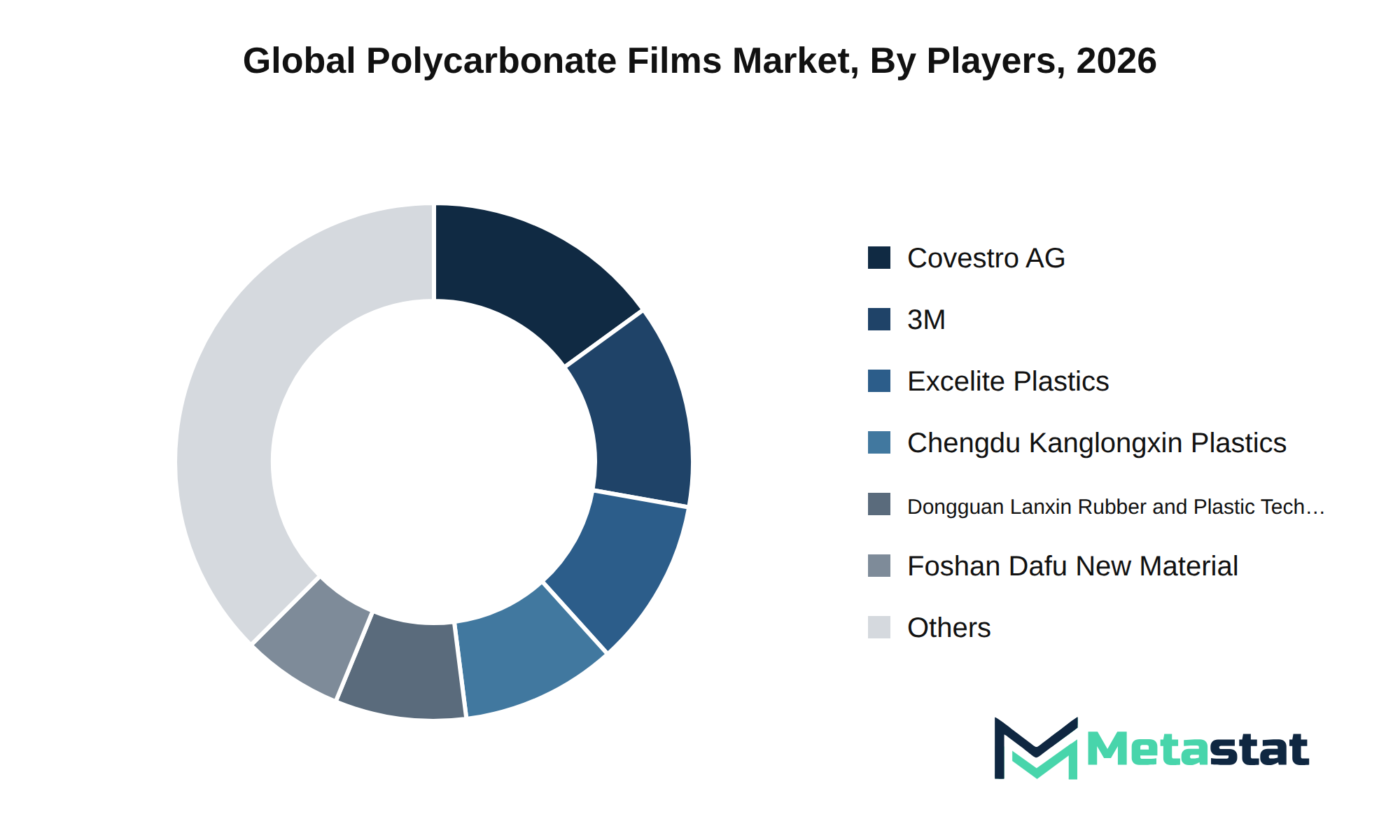
The Polycarbonate Films market experiences significant competitive dynamics driven by strategic consolidation and innovation. Companies including 3M Company, Covestro AG, and Mitsubishi Chemical Corporation implement various go-to-market strategies and pricing architectures to enhance their market positions. Research and development pipelines focus on product differentiation, addressing diverse applications across different end-use sectors, including automotive, electronics, and healthcare.
Strategic alliances and joint ventures emerge because key tactics for market players to expand their reach and capabilities. Companies like Palram Industries Ltd. and Teijin Limited engage in cross-industry partnerships, enhancing collaboration to strengthen their product offerings. Barriers to entry and the threat of new entrants create a competitive environment that encourages innovation and customer retention strategies. With robust intellectual property portfolios, firms including KIMOTO Co., Ltd. and ORAFOL Europe GmbH focus on maintaining technological defensibility, ensuring long-term success in the evolving landscape of the Polycarbonate Films market.
Market size is forecast to rise from USD 1,963.6 million in 2025 to over USD 3,503.2 million by 2033. This growth reflects a 7.5% CAGR, driven by several macroeconomic factors influencing the Polycarbonate Films market. The overall economic cycle plays a significant role, where periods of economic expansion typically correlate with increased demand in various sectors including automotive, electronics, and construction.
Changes in downstream demand further shape market dynamics, with industries increasingly focusing on sustainable materials and innovative applications. The maturation of core industries, combined with structural consumption shifts toward lightweight and durable solutions, enhances market potential. Integration of next-generation technologies, particularly in manufacturing processes, enables improved product offerings and operational efficiencies.
Research and development timelines impact the commercialization of advanced polycarbonate films, aligning with evolving regulatory frameworks emphasizing safety and environmental standards. Imminent compliance milestones necessitate strategic adjustments from manufacturers, driving investments in R&D and production technologies.
Geopolitical realignments and shifting trade corridors influence global supply chains, affecting material costs and availability. Strategic capital allocation directives focus on enhancing production capabilities and expanding geographic reach. Infrastructure commitments and capital expenditure investment vectors support the development of new facilities and enhance the scalability of existing operations.
Emerging white-space opportunities arise from unmet enterprise needs, particularly in applications including security documents, functional circuits, and specialty optical applications. These high-growth pockets present lucrative prospects for stakeholders in the Polycarbonate Films market. Executive-level strategic imperatives focus on defensibility roadmaps and identifying avenues for future growth, ensuring competitive positioning within a changing environment.
Polycarbonate Films Market Key Segments
By Type:
- Clear
- Coloured/Tinted
By Application:
- Graphic Overlays & Membrane Switches
- Display Windows, Touch Panels & HMI Surfaces
- In-Mold Decoration & Film Insert Molding
- Security Documents & Card Lamination
- Electrical Insulation & Die-Cut Components
- Light Diffusion & Backlighting
- Labels, Nameplates & Printed Graphics
- Printed Electronics & Functional Circuits
- Others (Protective Surface Laminates and Specialty Optical Applications)
By Grade:
- Anti-static
- Mirrored
- Abrassion Resistant
- Flame Retardant
- Others (Weatherable)
By End-Use Sector:
- Electrical & Electronics
- Automotive & Transportation
- Government & Secure Credentials
- Industrial Equipment & Automation
- Consumer Goods & Appliances
- Medical & Healthcare
- Printing, Signage & Graphics
- Aerospace & Defense
- Building & Construction
- Others (Sports, Recreation and Specialty Applications)
By Region:
- North America
- Europe
- Asia-Pacific
- South America
- Middle East and Africa
Key Global Polycarbonate Films Industry Players
- 3M Company
- Chengdu Kanglongxin Plastics Co., Ltd.
- Covestro AG
- Dongguan Lanxin Rubber and Plastic Technology Co., Ltd.
- Eksim Teknoloji ve Güvenlik Çözümleri A.Ş. (EXIM)
- Excelite Plastics
- Foshan Dafu New Material Co., Ltd.
- Gallina India
- Huisenyuan New Material Technology Co., Ltd.
- HX Production Group Limited
- Işık Plastik
- Jiangsu Zhenzhen New Material Technology Co., Ltd.
- Jiangxi Polyrise Technology Co., Ltd.
- KIMOTO Co., Ltd.
- Koscon Industrial S.A
- MacDermid Alpha Electronics Solutions
- MGC Filsheet co. Ltd
- Mitsubishi Chemical Corporation
- ORAFOL Europe GmbH
- Palram Industries Ltd.
- POLYVANTIS GmbH
- Rowland Technologies, Inc
- SABIC
- Shandong Top Leader Plastic Packing Co., Ltd.
- Sichuan Longhua Film Co., Ltd.
- SUMIKA ACRYL Co., Ltd.
- Sumitomo Bakelite Co., Ltd.
- Suzhou Omay Optical Materials Co., Ltd.
- Teijin Limited
- Tüm hakları saklıdır.
- Wavelock Advanced Technology Co., Ltd.
- Wiman Corporation
- Zhejiang Kaixin Optoelectronics Technology Co., Ltd.
Report Coverage
The report strategically identifies and profiles the key market players and analyses their core competencies in each sub-segment of the Polycarbonate Films market.
Report Attributes | Details |
Study Period | 2021-2033 |
Base Year | 2025 |
Estimated Year | 2026 |
Forecast Period | 2026-2033 |
Historical Period | 2021-2025 |
Growth Rate | CAGR 7.5% from 2026 to 2033 |
Revenue Unit | USD million |
Segmentation | By Type, Application, Grade, End-Use Sector, and Region |
By Region | North America (By Type, Application, Grade, End-Use Sector, and Country)
|
Europe (By Type, Application, Grade, End-Use Sector, and Country)
| |
Asia Pacific (By Type, Application, Grade, End-Use Sector, and Country)
| |
South America (By Type, Application, Grade, End-Use Sector, and Country)
| |
Middle East and Africa (By Type, Application, Grade, End-Use Sector, and Country)
|
What Report Provides
- Company Market Share, Revenue and Ranking for the Polycarbonate Films Market
- Key Company Market Leaders in the Polycarbonate Films Industry
- Full In-Depth Analysis of the Parent Industry
- Industry Statistics and Important Changes in Market Dynamics
- Segmentation Details of the Polycarbonate Films Market
- Historical, Ongoing and Projected Market Analysis
- Assessment of Niche Industry Developments
- Competitive Benchmarking and Key Strategic Recommendations
Frequently Asked Questions
Find answers to common questions about this report
The Polycarbonate Films market size was valued at USD 1,963.6 million in 2025, according to the Metastat Insights study.
The Polycarbonate Films market is projected to grow at a CAGR of 7.5% during the forecast period from 2026 to 2033.
The North America Polycarbonate Films market size is estimated to reach USD 841.5 million by 2033.
The Clear segment leads the Polycarbonate Films market with a projected value of USD 2,662.4 million by 2033, compared to the Coloured/Tinted segment, which is expected to reach USD 840.8 million in the same year.
Key drivers for the Polycarbonate Films market include macro-economic factors including GDP growth and capital investment environments, which enhance financial resources for expanding production capacities. technological advancements and digital transformation initiatives contribute to operational productivity, enabling manufacturers to meet rising consumer demand and innovate product offerings.
Asia Pacific holds the dominant share of the Polycarbonate Films market, accounting for 40.4% of the total market. This region is projected to experience significant growth, driven by increasing demand across various applications.
Significant capital investment requirements and escalating operating costs present challenges in the Polycarbonate Films market. Geopolitical instability and supply chain disruptions create uncertainties in material availability and pricing, further complicating market dynamics. These factors hinder capacity expansion and innovation, leading to potential stagnation in growth rates.
Technological advancements and digital transformation significantly favor product adoption in the Polycarbonate Films market. Companies invest in automation and software to enhance operational productivity and reduce costs, while shifting consumer behaviors driven by aging populations and urbanization increase demand for high-performance materials across various applications.
The Polycarbonate Films market is estimated to reach a valuation of USD 3,503.2 million by 2033.
Key players operating in the Polycarbonate Films market include 3M Company, Covestro AG, Excelite Plastics, Mitsubishi Chemical Corporation, SABIC, and Teijin Limited.
Choose Your License
Global Polycarbonate Films Market
Related Reports
Explore related market intelligence reports worth reading alongside this one.
Global Specialty Coating and Surface-Finishing Chemicals Market
Starting from
$2950